How Long Does It Take to Replace a Window? Easy Timing Guide 2026
How long does it take to replace a window? A professional crew needs roughly 30 to 60 minutes of active install time for a standard interior insert, and 4 to 6 hours when the entire frame and surrounding trim come out. Most homes finish inside a single day; the rest of the calendar is lead time.
That gap is where most people get confused. The labor is an hour or two. The project is four to fifteen weeks, because the window is measured, manufactured and delivered before anyone touches your wall.
Contents
Here is the split that actually helps with planning.
- Install time, per window: 30-60 minutes for a pocket or insert replacement, 4-6 hours for a full-frame replacement
- Install time, whole home: 8-12 standard windows in one day for a two-person crew; 1-3 days for larger or more complex houses
- Total project time, first consultation to finished job: 4-8 weeks for standard sizes, 8-15 weeks for custom shapes, impact-resistant glass or wood-to-vinyl conversions
- DIY on your own time: allow two to four times the professional figure for a first attempt, plus finishing days
Fall is a good season to start measuring. Spring books out weeks ahead with every contractor in the region, while a fall or winter install often means shorter scheduling queues and easier access on a dry day.
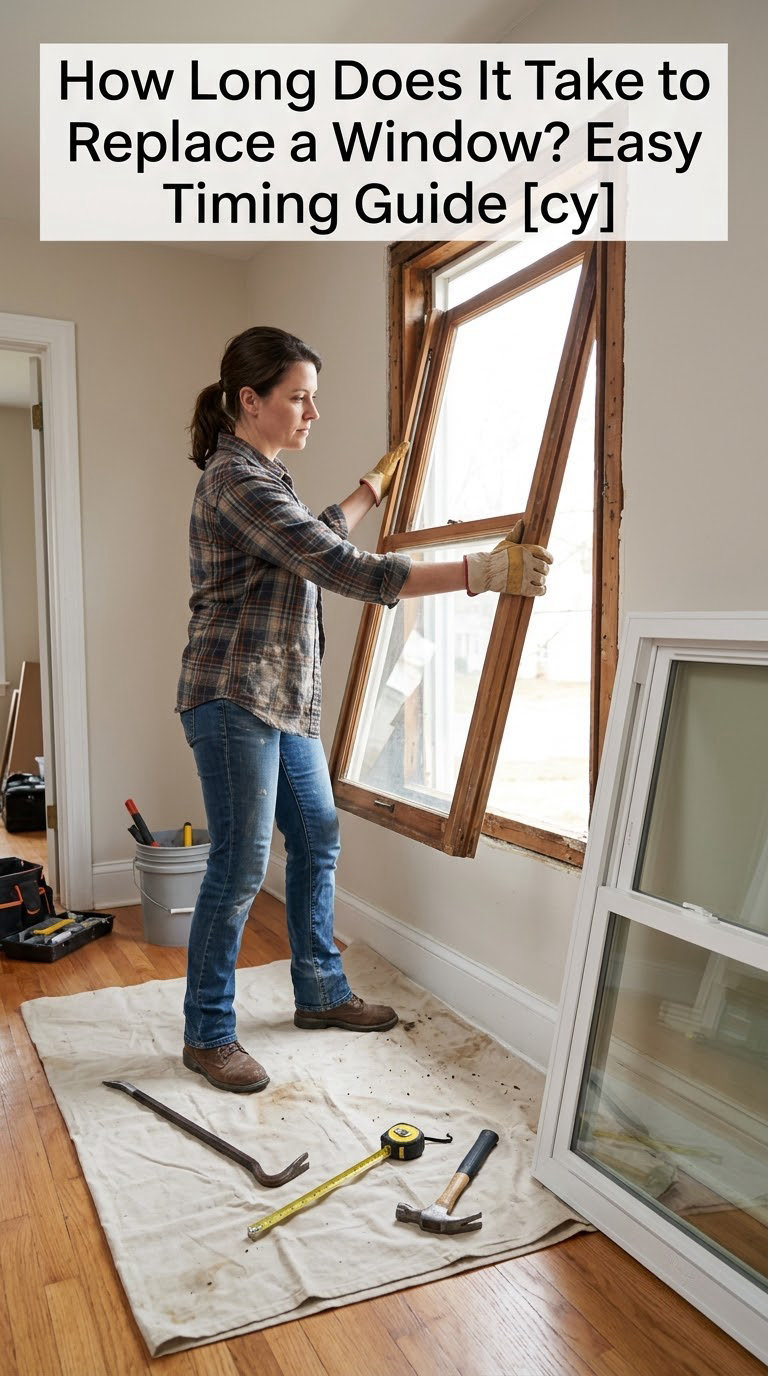
How Long Does It Take to Replace a Window?
Answering the question properly means separating two clocks. One measures hands-on work at the opening, the other measures the months of waiting that happen before the crew arrives.
Installation day breakdown, step by step
A trained two-person crew moves through a predictable sequence. Knowing each chunk helps you decide whether a contractor’s estimate is sensible.
- Protect the room (10-20 minutes): drop cloths on the floor and a sheet over anything you cannot move
- Remove trim and the old unit (15-30 minutes for insert, 60+ minutes for full-frame): interior stop, sash and hardware for insert work; sash, frame, brick molding and sill for full-frame
- Check and prep the opening (5-15 minutes): square, plumb, clean, shim as needed
- Set and fasten the new window (20-40 minutes): shim, square, screw through the flange or nailing fin
- Insulate and seal (15-25 minutes): low-expansion foam in gaps, flashing tape or shingle-style flashing at the head, exterior sealant at the perimeter
- Reinstall trim and interior casing (20-40 minutes): interior casing back on, exterior trim or brick molding fitted and caulked
- Clean up and walkthrough (15-30 minutes): debris out, sashes cycled and locked, operation and warranty paperwork explained
Add those chunks up and a clean insert swap lands around an hour. Nothing about the individual step is complicated. The surprises come from the house around the opening, and that is where a one-hour job turns into a five-hour one.
How many windows can a crew finish in a day?
Simple throughput math tells you what a realistic quote looks like. Two installers on an eight-hour day give 16 labor-hours. At roughly 1.5 labor-hours per insert window, that supports 8 to 10 windows. Add an hour of reset and haul-off time per room and you land at 6 to 8 windows in a well-run day.
Skilled crews push 10 to 15 windows when the openings are accessible, standard sized and dry. If a quote promises 20 windows in one day with no crew size attached, ask who is doing the work.
Full-frame changes the math. At 8 to 12 labor-hours per window, a two-person crew manages two to four openings a day, so a 12-window full-frame job is a two to three day visit.
Window Replacement Time by Project Type
Four project types cover almost every homeowner situation. The install time is what happens on site; the total project time includes measuring, ordering and manufacturing.
| Project type | Install time | Total project time | Main skill involved |
|---|---|---|---|
| Interior insert (pocket) replacement | 30-60 min per window | 2-4 weeks for standard sizes | Accurate measurement and shimming to square |
| Full-frame retrofit replacement | 4-6 hours per window | 4-8 weeks | Framing, flashing and weatherproofing details |
| New-construction window | 4-8 hours per window | 4-8 weeks | Plumb install into a framed rough opening |
| Multi-window project (8-15 openings) | 1-3 days on site | 4-15 weeks depending on units | Sequencing rooms and protecting the house |
A wood-to-vinyl conversion lands in the full-frame column almost by definition. The existing wood sash and frame cannot host a vinyl insert properly, so the frame comes out, the opening gets reframed, and the wall gets patched. That is the single biggest reason a quote lands higher and a schedule lands longer than a homeowner expects.
What Changes the Window Replacement Timeline?
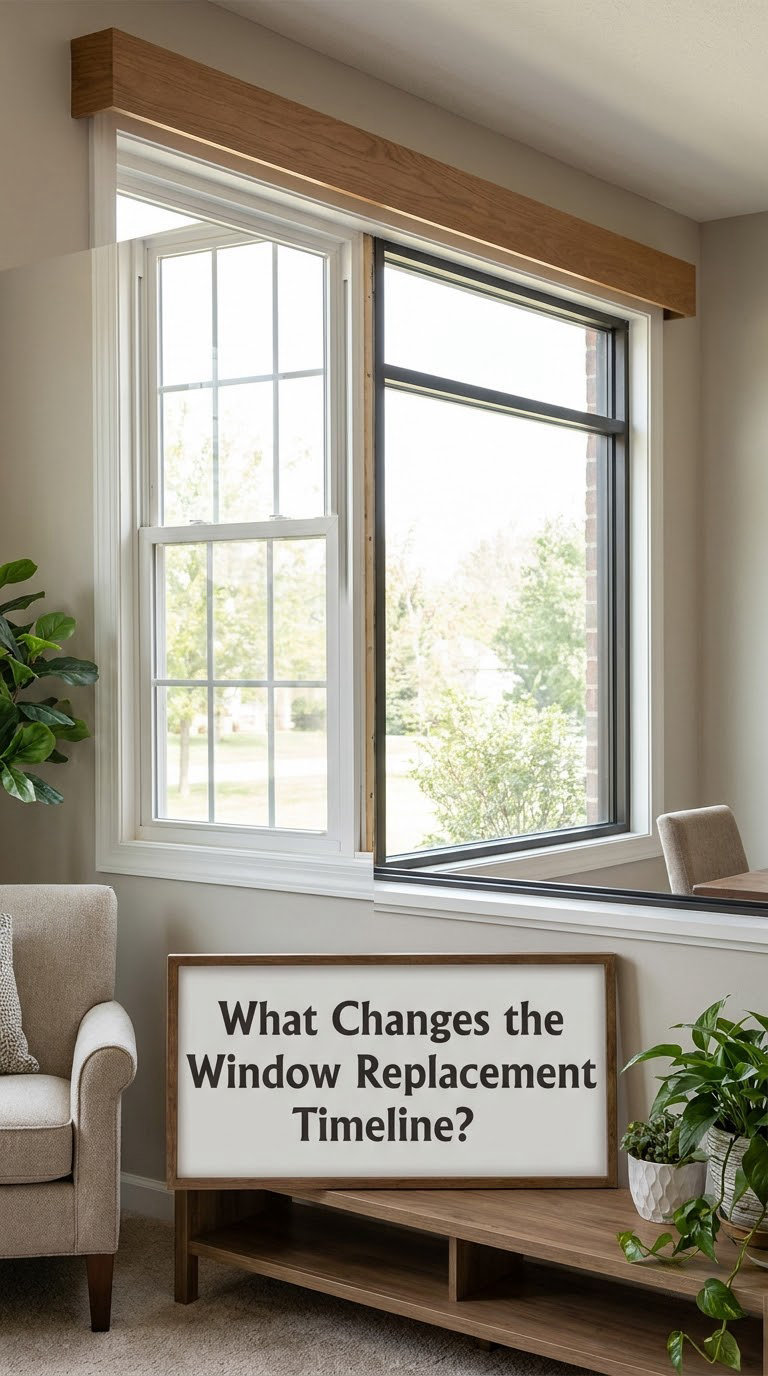
Size and material change the per-window number more than anything else on the list.
| Window type | Typical install time | What slows it down |
|---|---|---|
| Standard double-hung insert | 30-45 minutes | Almost nothing, if the opening is square |
| Single-hung or casement insert | 45-60 minutes | Hardware and hinge alignment |
| Large slider or picture window | 60-90 minutes | Weight, handling, two people plus a crane for glass over 60 lbs |
| Bay or bow window | 90-120 minutes or more | Three openings, a header to level and custom trim |
| Custom shape, arched or radius | 60-90 minutes | Template measurement, non-standard sizing, longer lead time |
Then there is the house itself.
How many windows. Six to eight accessible inserts in matching openings let a crew keep a rhythm. Ten different sizes in a 1920s house with heavy casings and tight trim do not.
Access and location. A second-story opening typically adds 15 to 30 minutes per window, and ladders or scaffolding add setup time on top of that. A bay projecting out over a garden bed takes longer than a flush wall window because the crew works from all three sides.
Frame material going out. Older wood sashes often need extra care to free painted-in hardware. Fiberglass and steel replacement units are noticeably heavier than vinyl, and the crew sets them with two people every time.
Hidden condition. Once the old unit is out, the opening can reveal rotted sill, water damage, mold or a framing member that has softened. Budgeting 30 minutes to several hours per opening for that possibility is not pessimism, it is planning. In the r/Homebuilding thread on window installs, homeowners described rot discovered behind trim that had looked fine from the room side.
Weather. Sealing work needs a dry surface and workable temperatures. Contractors will install in winter and will often carry panes into a heated space to warm them before setting, but a wet forecast will push the job a day or two.
Paint, siding and electrical. Interior casing removal can expose paint that needs sanding and priming before the new trim goes back. Exterior cladding that must be cut back or patched adds a step. Blinds, curtains and any wiring in the wall add a few more minutes.
Permits and HOA approval. Neither is universal. In some jurisdictions a window replacement requires a permit, and in planned communities exterior changes can need architectural review. Both add days, occasionally weeks, and both should be confirmed before the order is placed.
How Much Does It Cost to Replace a Window?
Time and cost move together here, because the installed price of a window is mostly labor. A quote that looks high is often a quote that budgets more hours.
Three things explain most of the spread between two quotes for the same house.
- Size. Glass area drives the unit cost and the handling time, and above roughly 60 lbs a pane may need a crane or a second installer with a suction lift.
- Frame material. Vinyl sits at the accessible end of the range, fiberglass and aluminium sit above it, and clad or solid wood sit at the top. Wood also adds hours because interior casing and sill often get sanded, primed and painted after install.
- Install method. An insert is a smaller job than a full-frame replacement. A wood-to-vinyl conversion is larger again, and it brings reframing and wall patching into the scope.
Region matters too. Labor rates, permit fees and how far the crew has to travel all move the final number, so two houses in different states can see very different installed prices for the same window.
For a ten-window project, the practical way to read quotes is per window, not as a total. Divide the installed figure by ten, and check whether the quote includes removal of the old units, exterior trim work, haul-off and any reframing. A quote missing those lines tends to grow once the old windows are out.
Related projects run on their own clocks, and it helps to plan those separately. Painting a room after trim work has its own drying schedule, which we covered in how long bathroom paint takes to dry.
Window Replacement Costs by Size and Material
The figures below are typical installed US ranges, meaning the unit plus removal of the old window, labor, and a standard exterior seal. Prices vary by region and project conditions, so treat them as a shape rather than a quote. Small means roughly 2 to 3 square feet of glass, standard means 3 to 5, and large means 6 square feet or more.
| Frame material | Small window | Standard window | Large window |
|---|---|---|---|
| Vinyl | $350-$650 | $450-$900 | $900-$1,800 |
| Aluminium | $400-$750 | $550-$1,000 | $950-$1,900 |
| Fiberglass | $500-$900 | $700-$1,300 | $1,200-$2,400 |
| Wood or clad wood | $700-$1,200 | $900-$1,700 | $1,600-$3,200 |
Read that table as a shape rather than a figure. A large window costs more than a small one in every material, and a wood window costs more than a vinyl one at every size. What moves a quote between tiers is the install method behind it, which is exactly what the timing sections above describe.
Custom shapes, impact-resistant glass and wood-to-vinyl conversions push any window up at least one tier. If you are choosing between two quotes at very different positions, ask each one which install method it assumed, and read our guide to replacing hardware with hidden bolts for the same kind of stuck-fastener problem many old sashes have.
DIY Window Replacement vs. Hiring a Pro
The honest comparison is uncomfortable for the do-it-yourself crowd, and the r/Homebuilding thread made that clear. One homeowner installing two 5’x7′ windows reported at least three days of work, including cutting through new trim. Other people in the same discussion said some professional crews need one to two days per window in tricky openings, far more than the hour quoted in most advertising.
The gap between those numbers and the industry figure is not a contradiction. A crew has the tools for every opening, knows which problems are normal, and removes debris. A first-timer meets every one of them for the first time at 9pm on a Sunday.
| Factor | DIY insert replacement | Professional installation |
|---|---|---|
| Time for one insert window | 2-4 hours of work, often spread over a weekend | 30-60 minutes active install |
| Time for a full-frame window | Most of a day or more, plus patching and paint | 4-6 hours, weatherproofed the same day |
| Tools needed | Reciprocating saw or oscillating tool, pry bar, drill driver, shims, square, caulk and foam gun, flashing tape, stud finder, tape measure | All of the above plus lifts, access equipment and specialized flashing |
| Skill | Comfortable with measuring, shimming to plumb and caulking neatly | Framing and weatherproofing experience |
| Risk | Water intrusion, failed seals, misaligned sashes and a visible gap in the trim | Low, with a workmanship warranty attached |
| Best fit | One ground-floor insert in a square opening in a house you can inspect yourself | Full-frame work, second story, custom shapes, older homes, whole-house projects |
One more practical note. Your house is never left with an open hole overnight. Crews set and seal each opening as they go, or cover it with a temporary panel before they pack up. Homeowners worry about this constantly, and professionals treat it as a basic rule of the job.
Pros and Cons of DIY Window Replacement
Here is the tradeoff in plain terms.
| DIY | Professional crew |
|---|---|
| Labor is the main line item, so removing it changes the equation most | Labor is bundled into the installed price |
| You control the schedule and the pace | Fixed install dates, sometimes weeks out |
| Good sense of accomplishment and a repaired opening | No risk of a failed seal or a wet wall behind the trim |
| Real risk of damage to casing, wall or glass | Access equipment for upper floors and oversized panes |
| Measuring errors are hard to undo | Measurement errors are corrected before ordering |
| Weatherproofing depends on your technique | Flashing and sealant details done to spec |
| Hauling away old units is your problem | Removal and haul-off included in most scopes |
| No warranty if a leak shows up later | Workmanship warranty on the installation |
Plenty of people do inserts successfully and save real money doing it. The line I would draw is simple: if the opening stays put, you are on the ground floor and the existing frame is sound, a weekend is a fair ask. Anything beyond that belongs with a crew.
How to Plan the Replacement So It Goes Smoothly
The order of operations matters more than the hours themselves. A week of prep saves a day of frustration.
Measure accurately, three ways
Measure the width at the top, the bottom and the middle, and measure the height on the left, the center and the right. Use the smallest figure on each axis, then subtract a quarter inch to half an inch for the shim gap.
Get three measurements from each opening and write them down with a photo of the old window. It takes ten minutes and it removes the single most expensive mistake in a DIY job, ordering a unit that does not fit the opening.
Order early and confirm the lead time in writing
Standard sizes are usually the quickest path. Custom shapes, unusual glazing and impact-resistant glass regularly run six to eight weeks from order, and forum reports of longer waits appear whenever supply is tight. Ask for the manufacturing date in writing rather than a delivery estimate.
If something breaks unexpectedly, an emergency board-up takes an hour and a temporary fix stops water entry while the permanent window is ordered. It is worth keeping a piece of plywood and a few fasteners in the garage for exactly this.
Prepare the opening the day before
Clear three to five feet in front of the window, take down blinds and curtains, and move furniture that blocks the wall. Cover what stays with a sheet. Move pets and kids out of the room, and label the windows that are not being replaced so nobody opens the wrong one.
Save the NFRC and ENERGY STAR labels from the old windows before removal. Comparing them with the new labels is the quickest way to see whether the replacement actually improves performance.
Check the forecast, not just the calendar
Sealant and flashing need a dry surface, and most exterior caulk needs a few hours of decent weather to cure. A dry stretch matters more than the season. Winter installs are normal, and a professional crew will work around rain by sealing the opening before stopping.
How long does it take to replace a window once it arrives?
Plan on the install-day figures plus finishing. After the last window is sealed, add 30 to 60 minutes per room for trim touch-ups and paint drying, plus however long your chosen primer and paint need to cure before the sashes hang free. Reserve the morning after for touch-up painting.
Inspect before the crew packs up
Open and close every sash, lock every window, and check for daylight between the sash and the frame. Run your hand along the sealed perimeter to feel for cold spots, then look for gaps in the interior caulk line. Photograph each finished opening before anything is covered by trim or furniture, and keep the paperwork, warranties and NFRC labels together in one folder.
Frequently Asked Questions
How long does it take to replace one window in a typical home?
A standard interior insert takes 30 to 60 minutes of active install for a two-person crew. A full-frame replacement runs 4 to 6 hours per window because the frame, brick molding and sill come out. Add time for hidden rot, upper-story access or unusual sizes.
Can I replace a window during the winter or in bad weather?
Yes, winter installs are routine. Exterior sealant needs a dry surface and workable temperatures, so crews warm glass panes indoors before setting them and stop if rain starts. What delays a job is a wet forecast, not the cold itself.
Do I need a permit to replace a window?
It depends on where you live. Many jurisdictions treat a like-for-like replacement as maintenance, while a change of size or a structural opening can require a permit. Planned communities may also need architectural review. Confirm with your local building department before ordering.
Why can replacing a window in an older house take longer?
Older homes often have painted-in sashes, heavy wood casings and trim that was glued or nailed from the original build. Walls in older houses also run out of square, so more shimming is needed, and rot behind the trim can add hours once the opening is exposed.
Should I order a replacement window before removing the old one?
Almost always yes. Removing the old unit first leaves an open hole while the order is measured, manufactured and delivered, which is how projects turn into multi-week gaps. Measure the opening three ways, photograph it, and order against the smallest of those figures.
When is it better to hire a professional instead of replacing a window myself?
Hire a crew for full-frame work, second-story openings, bay and bow windows, custom shapes, older homes, or a whole-house project. The risk is not skill, it is water getting behind the trim where you cannot see it. A professional also carries workmanship responsibility.
Start With the Opening, Not the Order
Measure three times in each direction, take a photo of the old window, and write down every opening you want done before you call anyone. That list plus those measurements tells a contractor whether you need inserts or a full-frame job, which is the answer that sets both the timeline and the bill.
Then get one written lead time. Knowing how long does it take to replace a window means knowing both clocks: about an hour of install labor for a clean insert, and four to eight weeks before that window even exists.
While you are planning the room, it helps to know what else is running on a timer. Drying times for bathroom paint and the electrical draw of a window air conditioner both shape the same renovation schedule.