20 Flower Bed Ideas in Front of a House (October 2026)
The best 20 flower bed ideas in front of a house do one thing well: they frame the entry and read cleanly from the street. A good front bed softens the joint between siding and lawn, hides the strip of weeds that always grows along the foundation, and makes a house look cared for without a single trip to the nursery.
Most of these are weekend projects. The trick is picking the one that matches your actual conditions — how much sun the spot really gets, how wide the bed can be without blocking the walkway, and how much attention you want to give it in August.
Contents
20 Flower Bed Ideas in Front of a House at a Glance
Every idea below carries a cost range, a difficulty rating and a realistic time estimate. Figures are typical US ranges for materials and plants, and they swing a lot by region and by season, so treat them as a guide rather than a quote.
| Idea | Cost | Difficulty | Time |
|---|---|---|---|
| 1. Curved foundation bed | $250–$600 | Easy DIY | One weekend |
| 2. Matching entry beds | $120–$350 | Easy DIY | Half a day |
| 3. Flowering shrub border | $300–$800 | Easy DIY | One weekend |
| 4. Narrow side-entry bed | $80–$250 | Easy DIY | Half a day |
| 5. Tiered bed on a slope | $1,200–$6,000 | Hire a pro | One to two weeks |
| 6. Pollinator-power bed | $60–$200 | Easy DIY | Half a day |
| 7. White-and-green palette | $250–$700 | Easy DIY | One weekend |
| 8. Tropical curb bed | $200–$600 | Easy DIY | One weekend |
| 9. Gravel drought bed | $400–$1,200 | Moderate DIY | One weekend |
| 10. Raised bed | $150–$500 | Moderate DIY | One day |
| 11. Four-season bed | $300–$900 | Moderate DIY | Two weekends |
| 12. Groundcover carpet | $70–$250 | Easy DIY | Half a day |
| 13. Formal boxwood border | $350–$1,000 | Moderate DIY | Two weekends |
| 14. Bed around a small tree | $60–$220 | Easy DIY | Half a day |
| 15. Cottage-style border | $80–$250 | Easy DIY | One weekend |
| 16. Vertical planting | $50–$200 | Easy DIY | Half a day |
| 17. Containers in a built-in bed | $150–$450 | Easy DIY | Half a day |
| 18. Island bed | $300–$800 | Moderate DIY | One weekend |
| 19. Herb and edible flower bed | $60–$180 | Easy DIY | Half a day |
| 20. Modern monochrome bed | $250–$700 | Moderate DIY | One weekend |
1. Create a Neatly Curved Foundation Bed
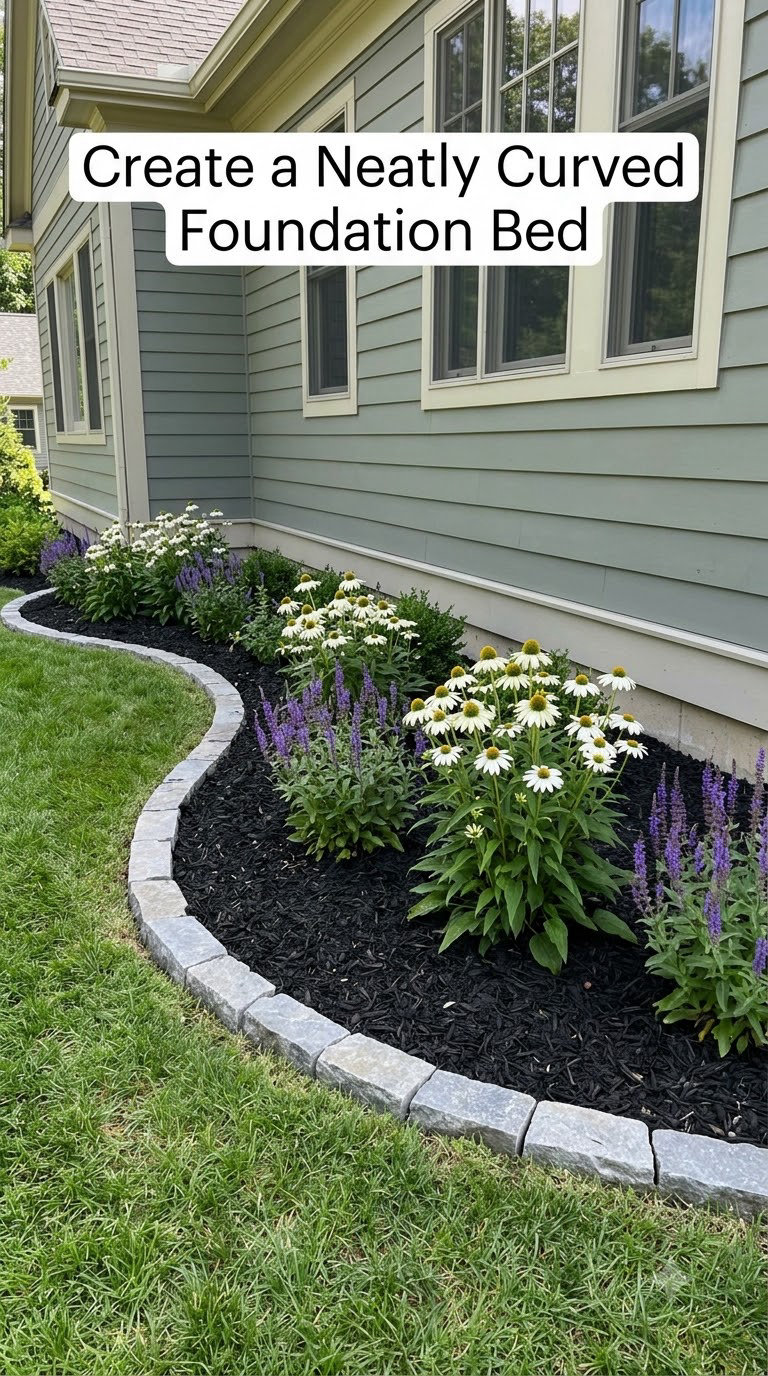
A sweeping curve along the front wall softens a flat facade and stops grass from marching back into the bed every season. A straight bed against siding reads as a strip; a curve reads as a garden. It also gives you a defined edge to walk beside, which keeps the path to the door clear.
How to do it: Lay the bed 2 to 3 feet (60 to 90 cm) deep at the deepest point and taper it to 18 inches where it meets a corner. Mark the curve with a hose, then add 4 to 6 inches (10 to 15 cm) of soil amendment across the whole footprint before you set edging. Set the edging 3 inches (8 cm) deep so it will not rock. Plant in drifts of five to seven rather than single specimens, then finish with 2 to 3 inches (5 to 8 cm) of mulch.
Cost: $250–$600 for edging, compost, mulch and plants · Difficulty: Easy DIY · Time: one weekend for a 4 by 12 foot bed.
How to Shape a Curved Front Foundation Bed
The mistake almost everyone makes is digging the bed straight down from the edge. Instead, cut the sod in thin strips, lift it, and reuse it as patches to fill bare lawn elsewhere. Work the soil with a fork rather than a tiller so you do not destroy the structure underneath. Once the curve is cut, walk the outline once a week for the first month and pull any grass that resprouts.
2. Frame the Front Door With Two Matching Beds
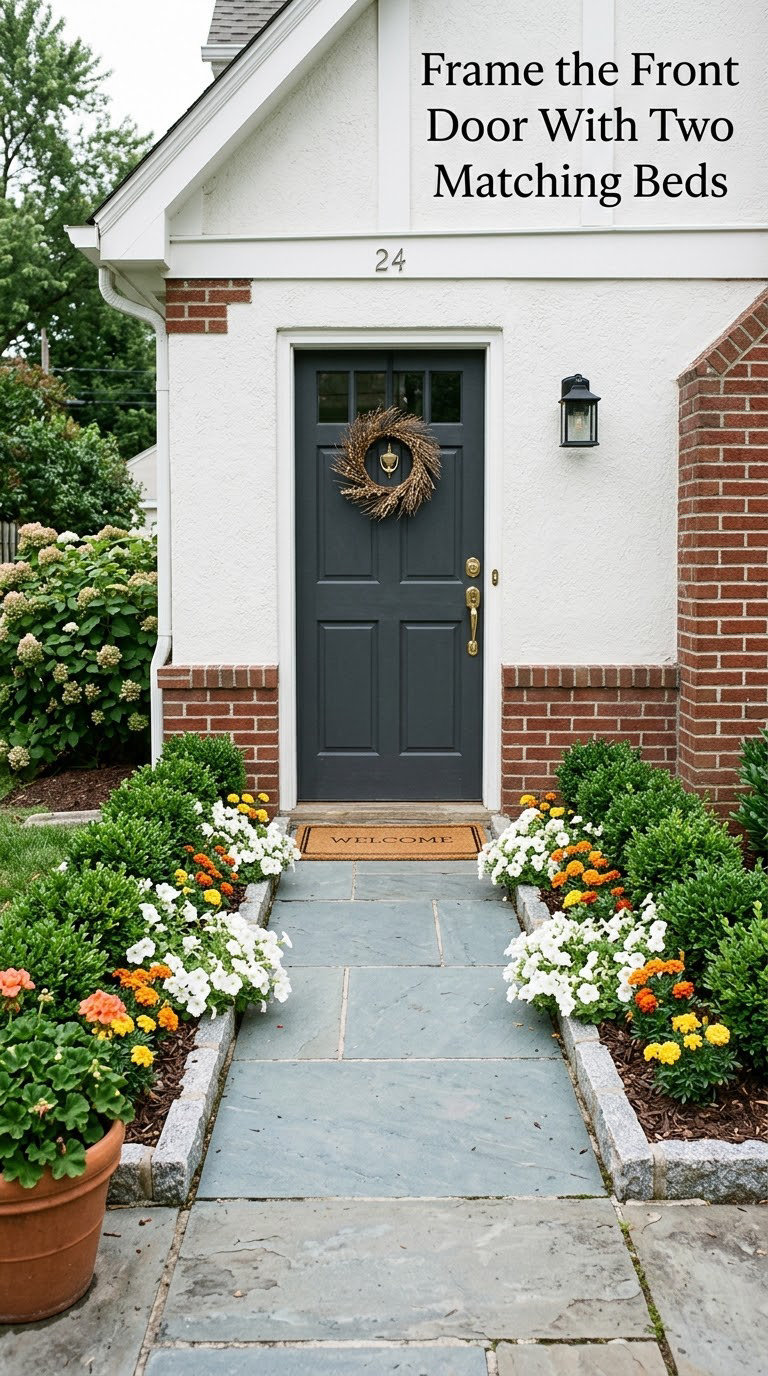
Two identical beds either side of the door is the fastest way to make an ordinary entrance feel deliberate. The symmetry does the work, so you can keep the planting simple and let the layout carry it. People notice the balance before they notice the individual plants.
How to do it: Keep each bed 3 to 4 feet (90 to 120 cm) wide and 5 to 7 feet (1.5 to 2 m) long, stopping well clear of the door swing and the steps. Repeat the same three plants in each bed so they match at maturity, not just at planting. Set the same plant at the same distance from the door on each side — use a tape measure, not your eye. If you want to push the entry further, our 20 Small Front Porch Decor Ideas covers the porch side of the same zone.
Cost: $120–$350 for two beds of mixed perennials · Difficulty: Easy DIY · Time: half a day if the sod is already removed.
Good to know: Check the mature width of any shrub you put near the steps. Rhododendrons and certain boxwoods flop across a walkway within three seasons, which is the single most common complaint from people redoing an old front bed.
3. Add a Colorful Shrub Border
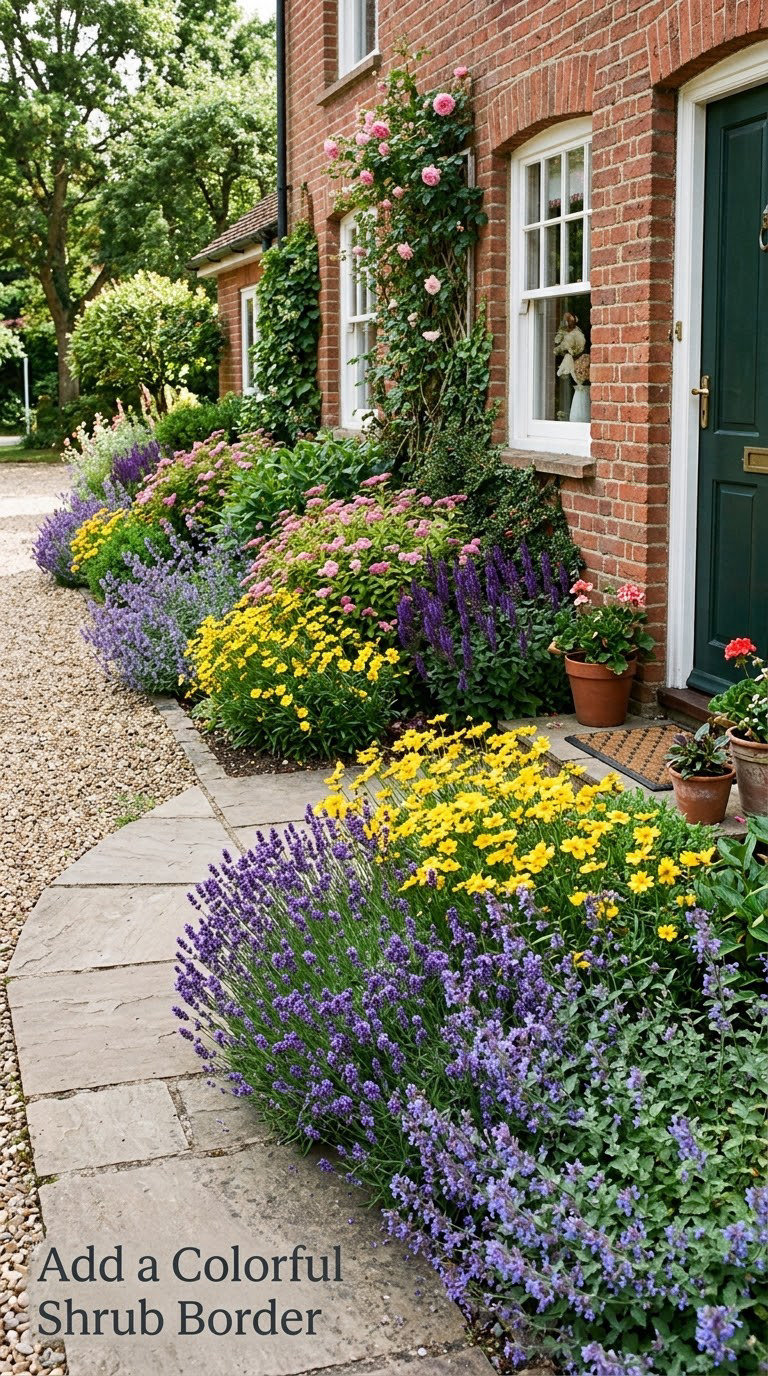
A mixed border of compact shrubs and perennials gives you height and colour without the yearly replanting a pure annual bed demands. The shrubs hold the structure in winter and early spring, when everything else is bare sticks. Perennials fill the gaps between them from late spring onward.
How to do it: Put shrubs in the back row at their mature spacing, not their current pot size — most retail shrubs are sold a third of their final width. Keep shrubs at least 18 inches (45 cm) off the wall so air can move behind them. Then fill forward in two bands: mid-height perennials at 18 to 30 inches, and low growers along the front edge. Choose shrubs that suit your hardiness zone rather than the zone the tag was printed in.
Cost: $300–$800, and shrubs drive most of it · Difficulty: Easy DIY · Time: one weekend including soil work.
4. Plant a Narrow Side-Entry Bed
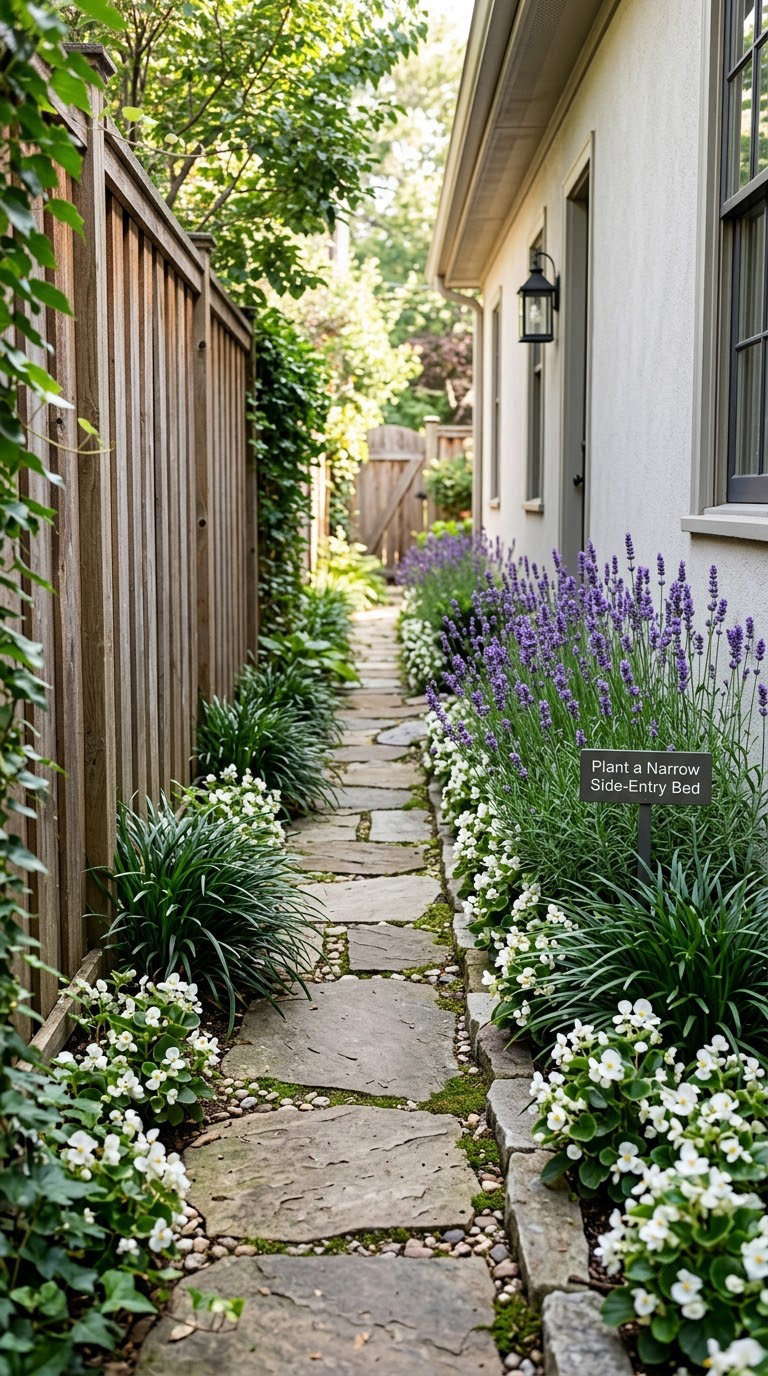
A slim bed down the side return turns the least-loved strip of the property into a feature you see every time you leave the house. It also solves a real problem: side entries tend to collect weeds, shaded debris and a general sense of neglect. Planting it fixes the look and the maintenance in one move.
How to do it: Aim for a bed 24 to 30 inches (60 to 75 cm) wide, which leaves a comfortable 18 inches (45 cm) of walking clearance beside it. Stick to upright plants so nothing leans into the path — liriope, upright lavender, ferns and compact begonias all behave. Improve drainage first by loosening the soil and adding compost, because a side bed collects runoff from the roof overhang. Mulch lightly so you can still see the ground and catch slugs early.
Cost: $80–$250 · Difficulty: Easy DIY · Time: half a day.
5. Build a Tiered Bed on a Sloped Front Yard
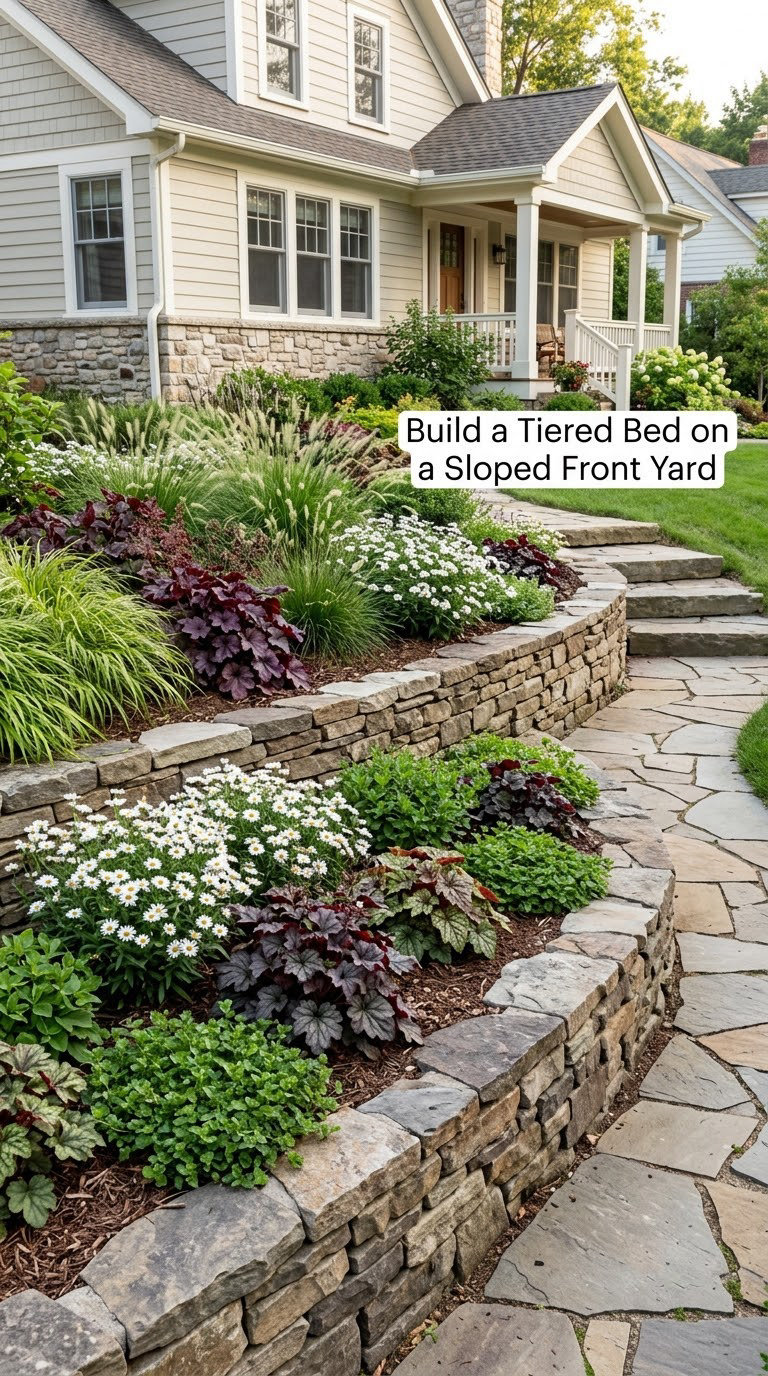
If your front yard falls away from the house, terracing turns dead, hard-to-mow slope into usable planting. Each terrace catches runoff, holds soil where you put it, and creates flat shelves for plants that would otherwise slide downhill. It also makes the walk up to the front door feel intentional instead of awkward.
How to do it: Have the slope surveyed before you dig, and check whether your municipality requires a permit for retaining walls above a certain height. Walls over about 3 feet (90 cm) generally need engineering, and taller ones may need footing and drainage behind the wall. Below that height, stacked block or gabion baskets are reasonable DIY work. Always install a drain pipe or gravel drainage layer behind the wall — that is what stops it leaning over time.
Cost: $1,200–$6,000 for two terraces, or $3,000+ with engineering · Difficulty: Hire a pro for structural work · Time: one to two weeks.
6. Make a Pollinator-Power Front Bed
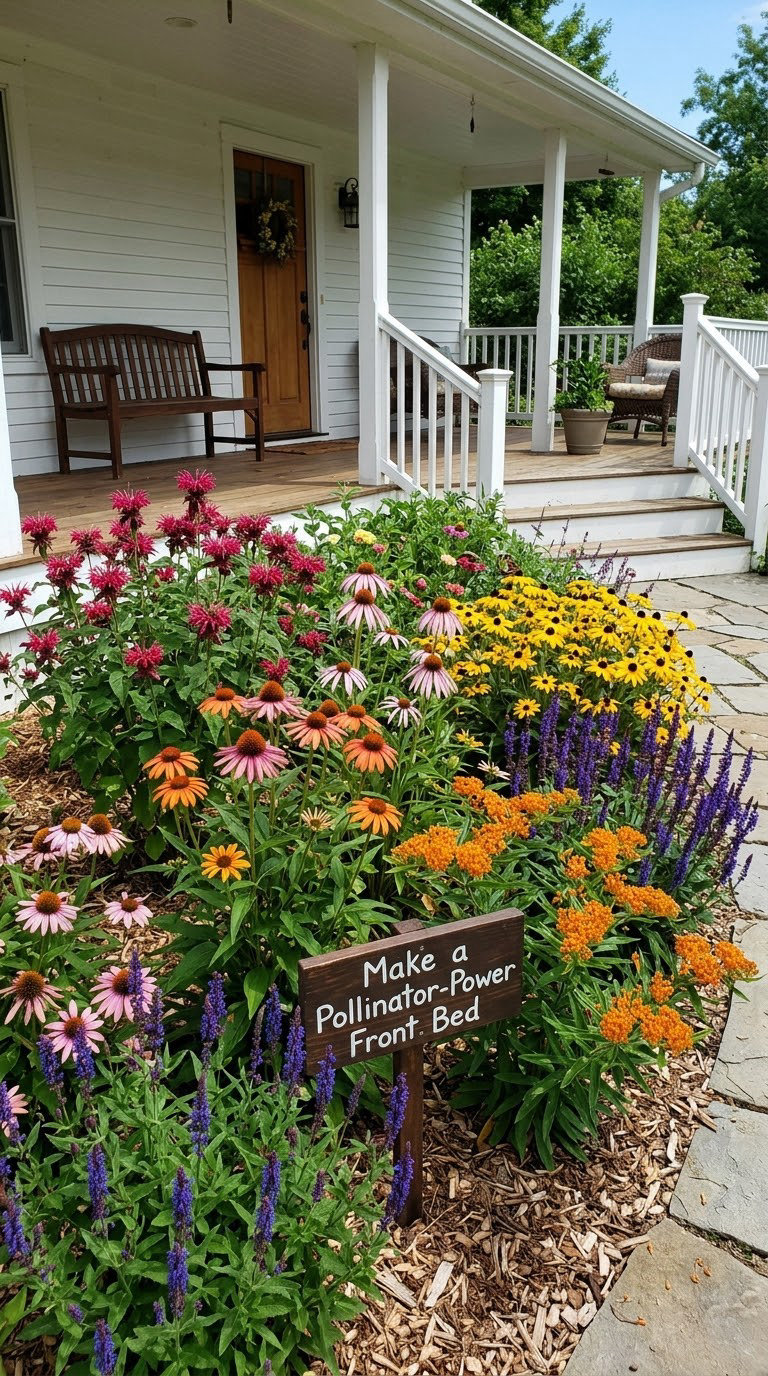
Nectar-rich perennials pull bees and butterflies to the front door, and the movement they bring makes a static bed feel alive. It is the one front-bed style where doing nothing for a season is genuinely part of the appeal — seed heads left standing over winter are what the next season’s insects need.
How to do it: Choose plants with overlapping bloom windows so something is open from early spring into autumn — early bulbs, then bee balm and salvia, then echinacea and black-eyed Susans, then asters. Skip insecticides entirely, including the organic ones, and let a portion of the bed go to seed. Space at full mature spread, which for most of these is wider than the tag suggests. Milkweed should sit toward the back where nobody brushes past it.
Cost: $60–$200 if you buy in plugs · Difficulty: Easy DIY · Time: half a day for a small bed.
7. Use a White-and-Green Palette for a Clean Look
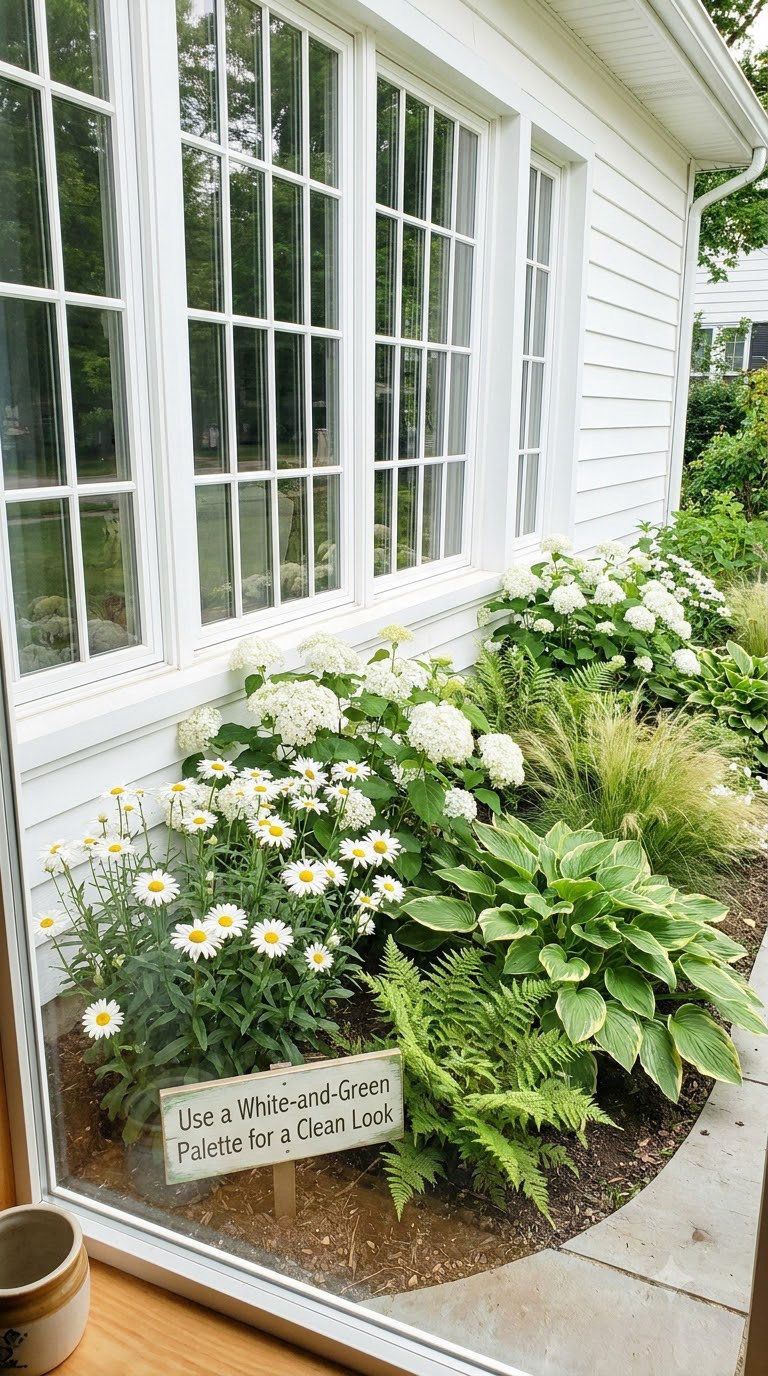
White blooms against varied green foliage give the crispest, least cluttered frontage you can build without a single structural change. It suits ranch homes and anything with light-coloured siding particularly well, because the bed doubles the brightness of the elevation.
How to do it: Break up the white with foliage contrast rather than more colours — burgundy heuchera, blue-grey lamb’s ear and upright grasses all read as part of the palette. Stagger bloom times with early daffodils and later hydrangeas so the bed is never blank. Keep everything in full sun, since most white-flowering perennials flop in shade. A white-heavy design turns sterile fast, so aim for roughly two-thirds bloom and one-third foliage.
Cost: $250–$700 · Difficulty: Easy DIY · Time: one weekend.
8. Plant a Tropical-Looking Curb Bed
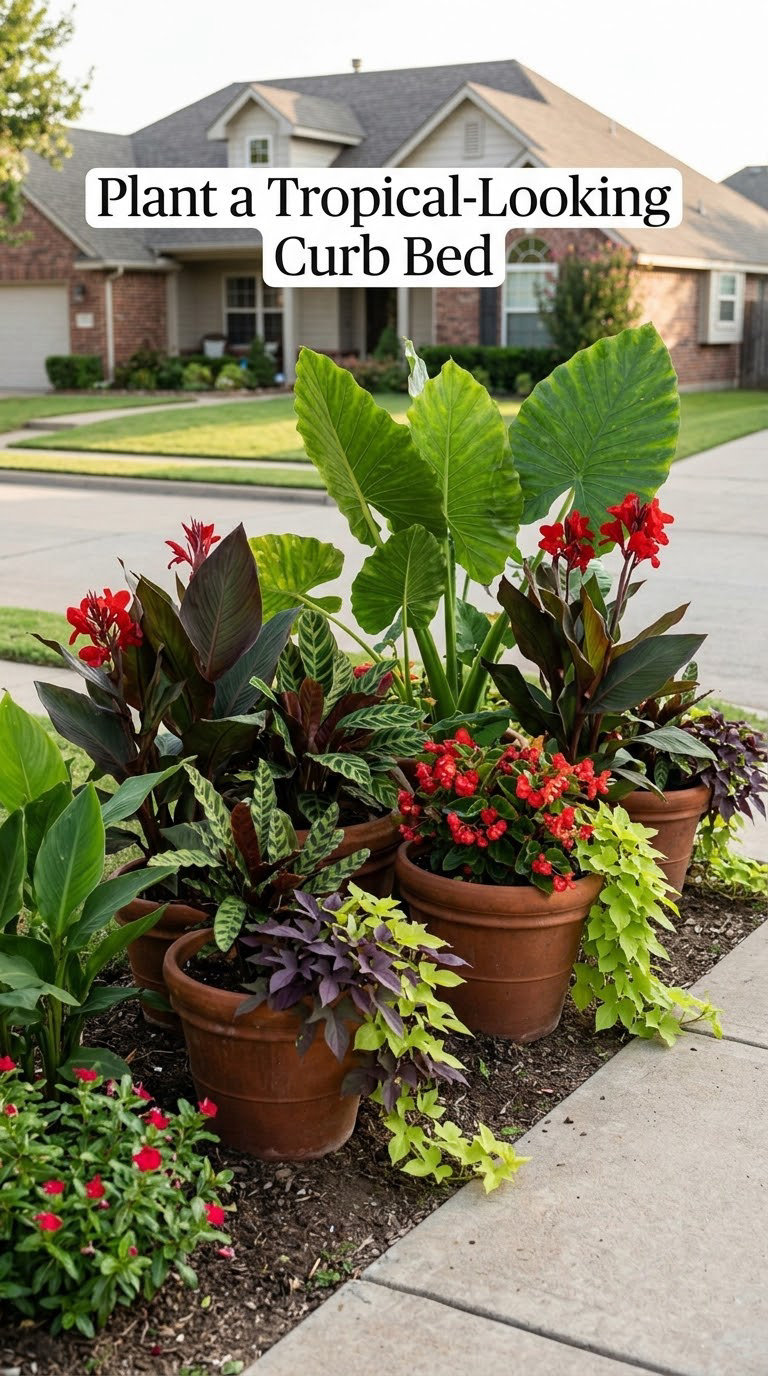
Big leaves and saturated colour create a lush, exotic look that works surprisingly well against a plain facade. In warm zones this is a permanent planting. Further north it works as a summer display that you swap out in autumn, which is still a fine way to spend a weekend.
How to do it: Use containers so you can bring tender plants in before the first frost, and drill drainage holes if you reuse anything without them. Give cannas and elephant ears rich soil and steady water — they collapse quickly when dry. Plant the tall elements toward the house and let trailing sweet potato vine spill over the front edge. In cold zones, substitute colocasia tubers and caladium bulbs, which come back from tubers rather than seed. Our greenhouse interior ideas cover a protected spot to overwinter tender plants in.
Cost: $200–$600 including pots · Difficulty: Easy DIY · Time: one weekend each spring.
9. Create a Drought-Tolerant Gravel Bed
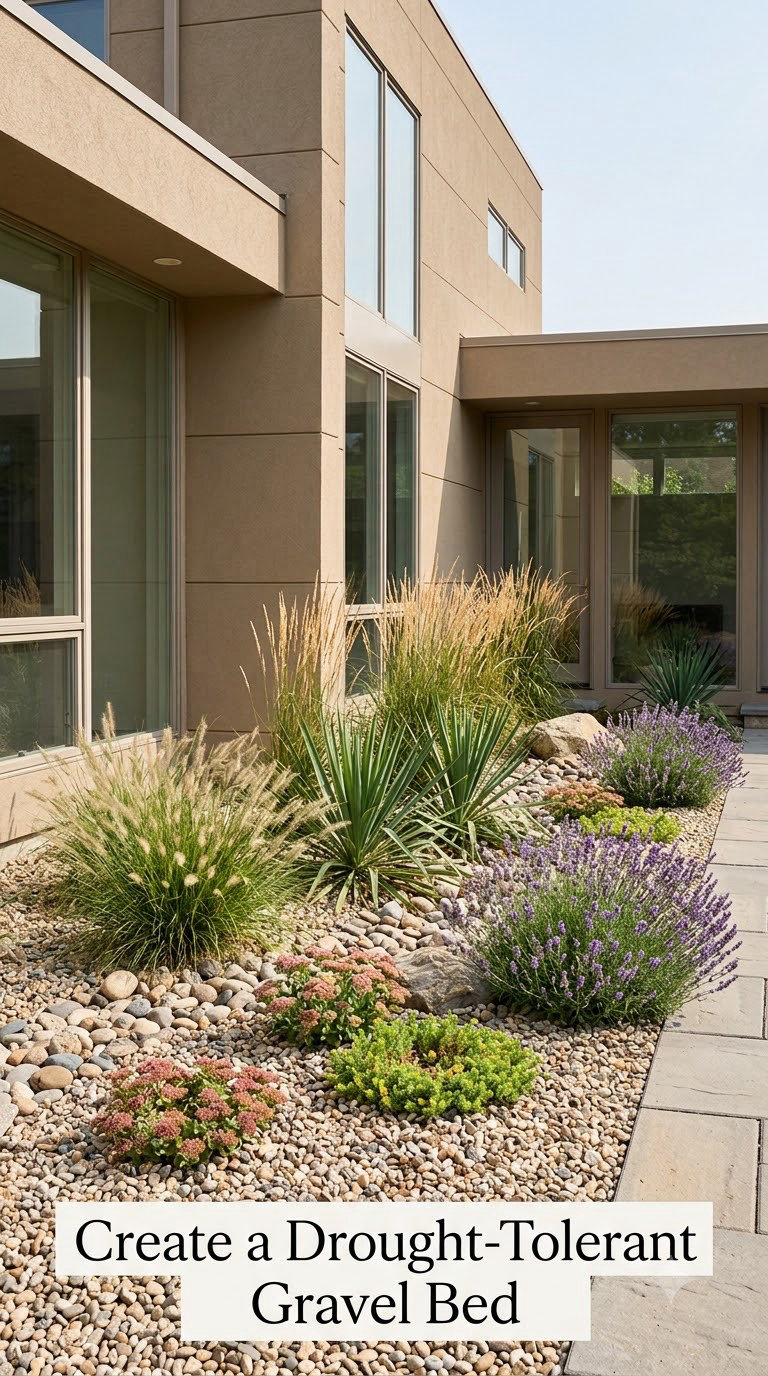
A gravel bed reads crisp and contemporary, and it uses a fraction of the water a lawn or lush perennial border needs. The tradeoff is upfront effort: this one is more about building the base correctly than about choosing plants afterwards.
How to do it: Build in layers — landscape fabric over the graded soil, a 3 to 4 inch (8 to 10 cm) layer of compacted road base, then 3 inches (8 cm) of washed gravel on top. Slope the finished surface about 1 inch per foot (2 cm per 30 cm) away from the house so rain runs off rather than pooling against the foundation. Choose plants rated for your heat zone and dry side of the range, and expect to top up gravel once or twice a year as it settles.
Cost: $400–$1,200, mostly base material and gravel · Difficulty: Moderate DIY · Time: one weekend for a small area.
Good to know: Check local water restrictions before you plan the irrigation. A gravel bed in a district with strict rules still needs you to be able to water new plants in.
10. Install a Raised Bed for Easy Access
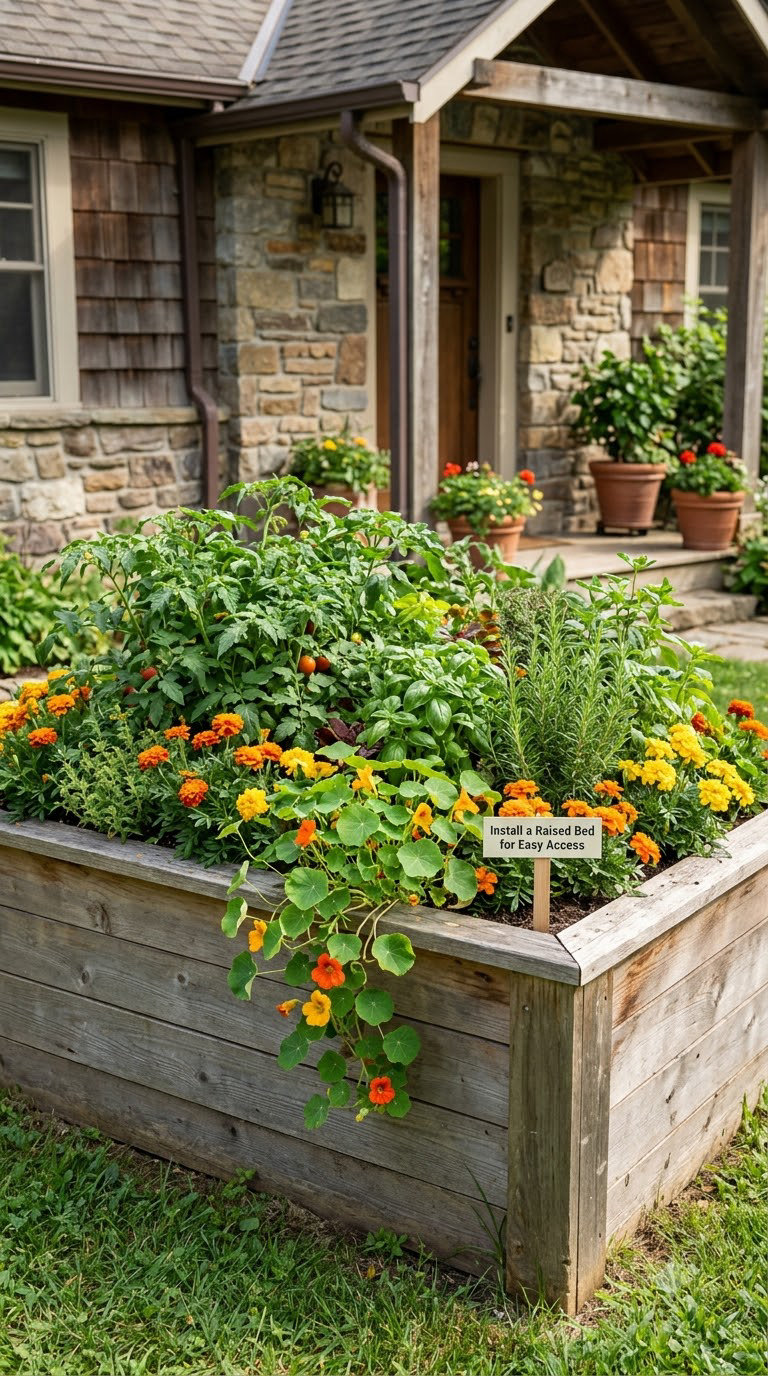
A raised bed adds visible height to a flat frontage and puts the soil at a height where you can reach it without kneeling. That reach matters most if planting is a chore you enjoy rather than one you tolerate.
How to do it: Use untreated rot-resistant lumber — cedar, locust or ground-contact-rated pine — and avoid untreated softwood that will rot within a couple of seasons. A 4 by 4 foot bed at 12 inches (30 cm) deep holds roughly 16 cubic feet, enough for a full season of root crops. Line the bottom with landscape fabric if rabbits are a problem in your area, and leave the sides open so the bed drains. Corners need posts or the whole thing slowly bows outward.
Cost: $150–$500 for lumber and soil · Difficulty: Moderate DIY · Time: one day, plus soil fill.
11. Design a Four-Season Bed
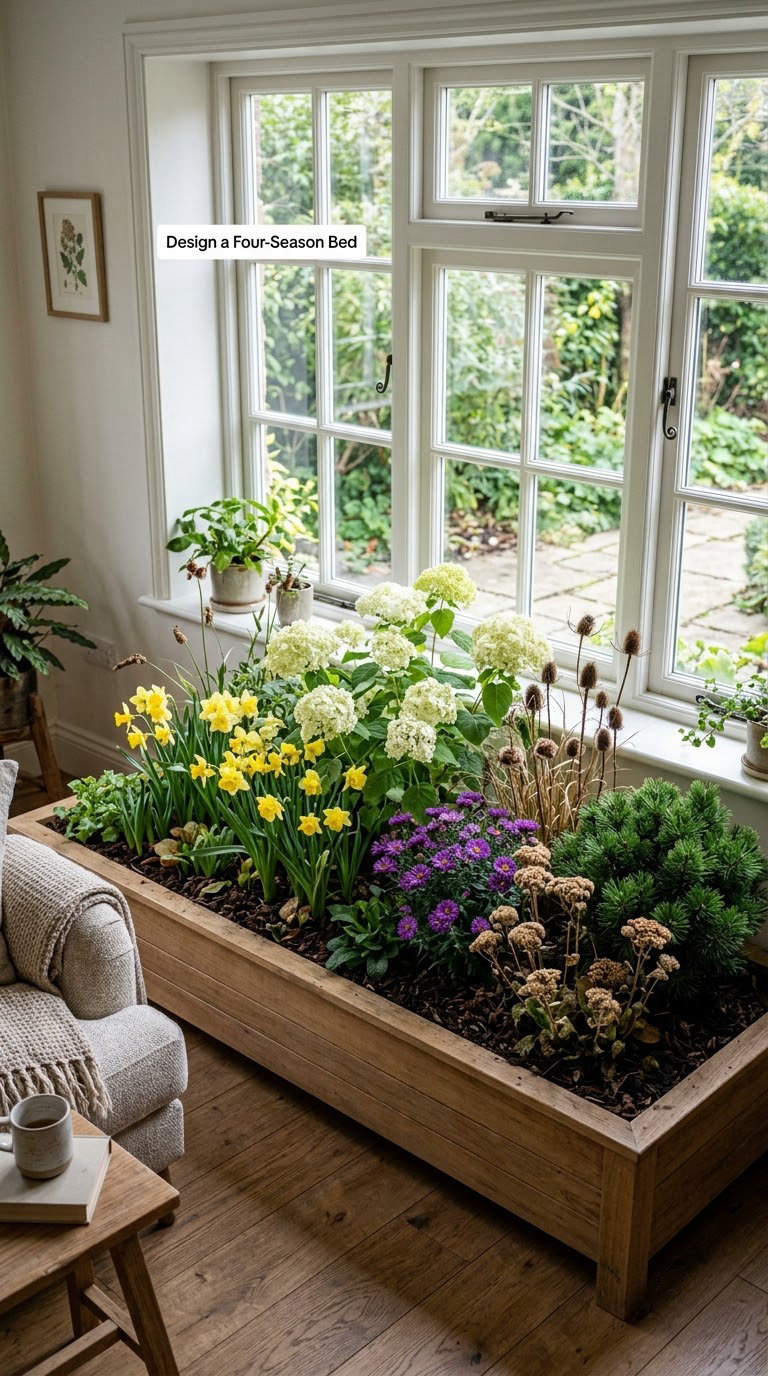
A bed designed for all four seasons solves the most common complaint about front beds, which is that they look bare for eight weeks in spring and dead by November. Layering bulbs under perennials under shrubs gives you something in frame year round without adding a single plant to the plan.
How to do it: Plant spring bulbs in autumn at three times their listed depth, in the spaces between perennials that will later grow over them. Choose shrubs for the local zone that hold shape or evergreen foliage through winter. Leave late-season seed heads standing rather than cutting everything back in October. Deadhead only the plants that flop or seed everywhere; anything else can stay for winter structure.
Cost: $300–$900, since bulbs add up in bulk · Difficulty: Moderate DIY · Time: two weekends across two seasons.
12. Add a Low Groundcover Carpet
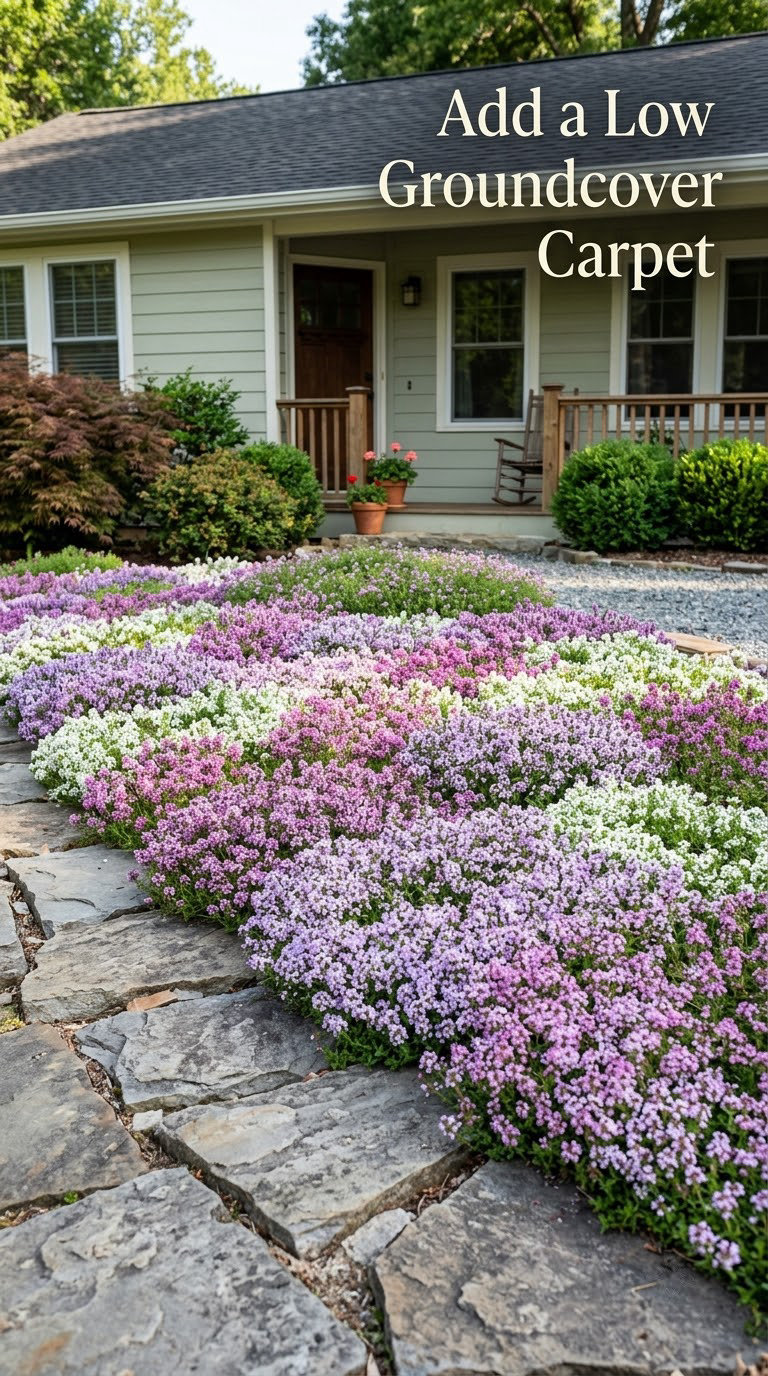
A carpet of one flowering groundcover is the lowest-maintenance front bed you can build, and it stays tidy without deadheading or staking. It suits long, low ranch-style elevations where a taller bed would cover the windows.
How to do it: Space groundcover plants at roughly half their mature spread so they knit together in one season instead of three. Bury weeds before you plant by clearing the area and letting it sit covered for two weeks. Check drainage — groundcovers rot in wet soil faster than almost anything else. Stay away from species listed as invasive in your region, and check whether the one you want is considered invasive in a neighbouring state you might move to.
Cost: $70–$250 in flats · Difficulty: Easy DIY · Time: half a day.
13. Create a Formal Boxwood-and-Perennial Bed
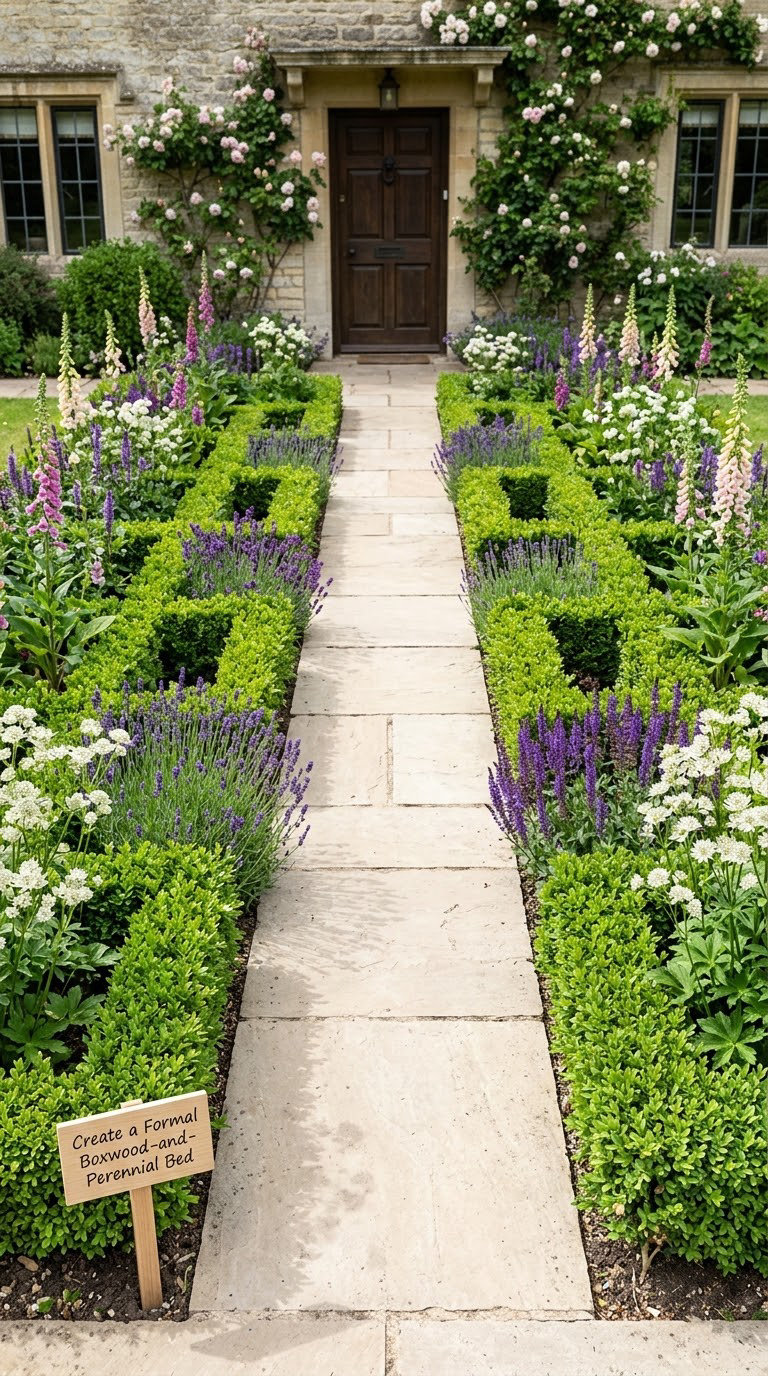
Clipped evergreen edging with loose perennial planting inside gives a traditional, finished look that photographs well from the street. It suits colonial, craftsman and farmhouse homes where a looser bed would fight the architecture.
How to do it: Set small boxwood squares along the path edge at their mature spacing, typically 15 to 18 inches (38 to 45 cm) apart, not touching. Improve the whole bed with 2 to 3 inches (5 to 8 cm) of compost before planting, since boxwood declines in compacted soil. Leave a few inches of clearance between hedge plants and perennials so air can move and you can get a pruner in. Trim hedges once or twice a year depending on species, and cut perennials back hard in late winter.
Cost: $350–$1,000, and boxwood sets the price · Difficulty: Moderate DIY · Time: two weekends including the first trim.
Good to know: Boxwood moth and boxwood blight are the two problems to watch for. If you have seen either nearby, ilex or inkberry holly is a lower-risk evergreen substitute for the same formal look.
14. Build a Front Bed Around a Small Tree
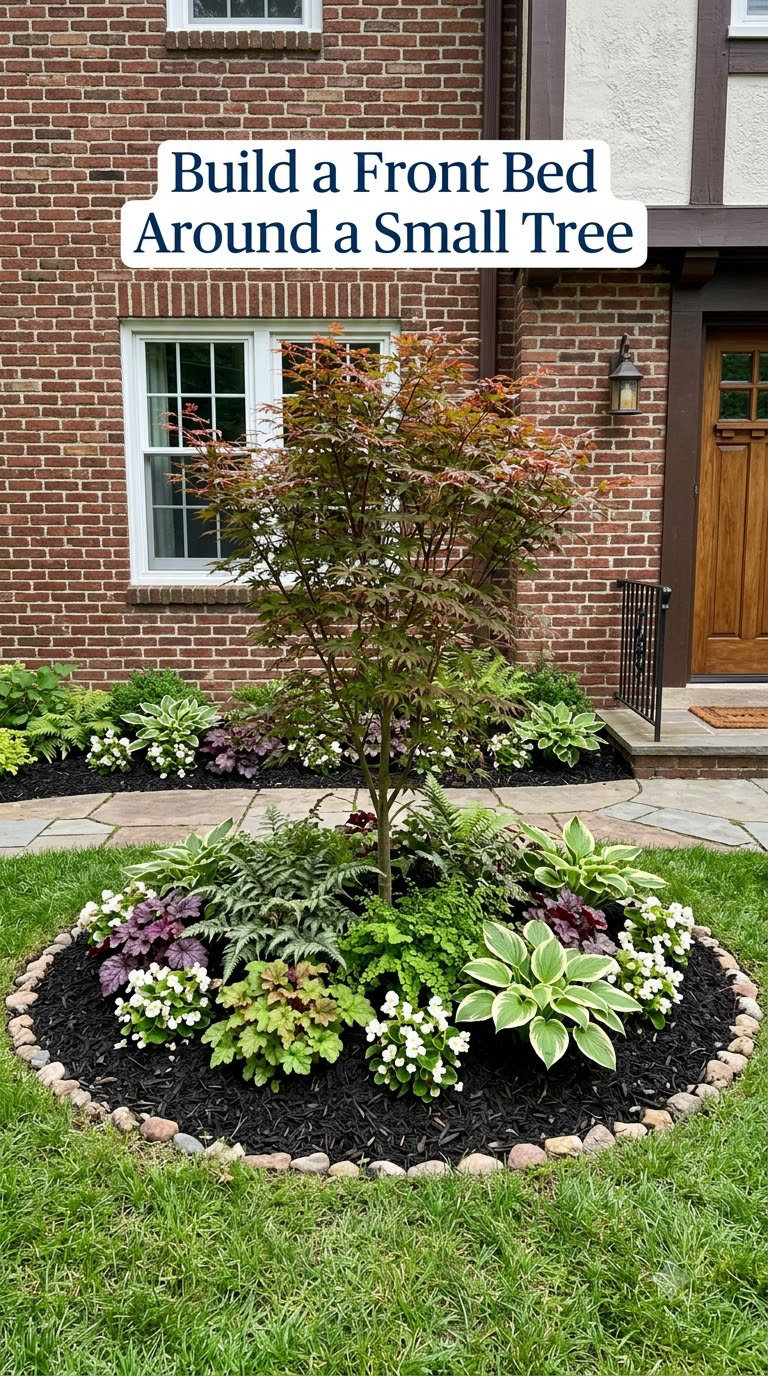
A ring bed around a young ornamental tree gives you a focal point and a planting area at once, and it hides the ugly circle of bare soil around new trunks. Done well it becomes the feature of the frontage rather than a sapling waiting to grow.
How to do it: Keep mulch 6 to 8 inches (15 to 20 cm) off the trunk — volcano mulching against the bark invites rot and disease. Plant shade-tolerant companions at the outer edge, outside the trunk’s drip line, so their roots do not compete for the tree’s first years of growth. Do not raise or lower the soil grade around an existing tree; both stress it more than most people realise. Water the tree deeply and separately from the surrounding plants for its first three summers.
Cost: $60–$220 · Difficulty: Easy DIY · Time: half a day.
15. Plant a Cottage-Style Informal Border
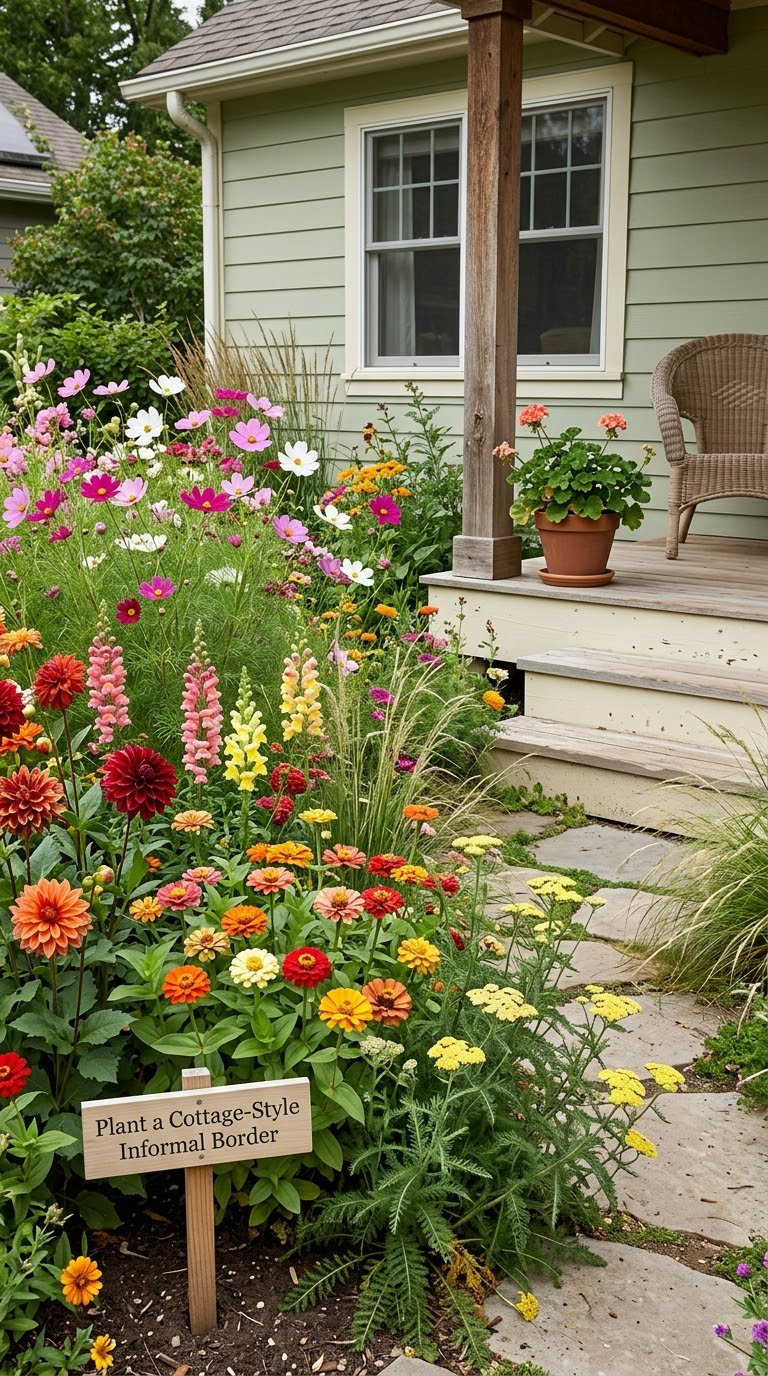
Relaxed, self-seeding flowers in mixed textures soften any facade and hide the boundary between garden and house. This is the style to pick if you would rather spend twenty minutes a week cutting than a full Saturday reshaping the bed.
How to do it: Work compost into the top 8 inches (20 cm) before planting, since cottage plants are hungry. Give tall plants something to lean on — a simple obelisk or a few short stakes — before they flop in rain. Decide early whether you will deadhead or let things seed; self-sown cosmos and calendula will spread a foot in every direction otherwise. Keep a shovel within reach, because you will want to divide clumps every two or three years.
Cost: $80–$250, mostly annual plugs and seed · Difficulty: Easy DIY · Time: one weekend to plant, then 20 minutes a week.
16. Make a Small Bed Feel Bigger With Vertical Plants
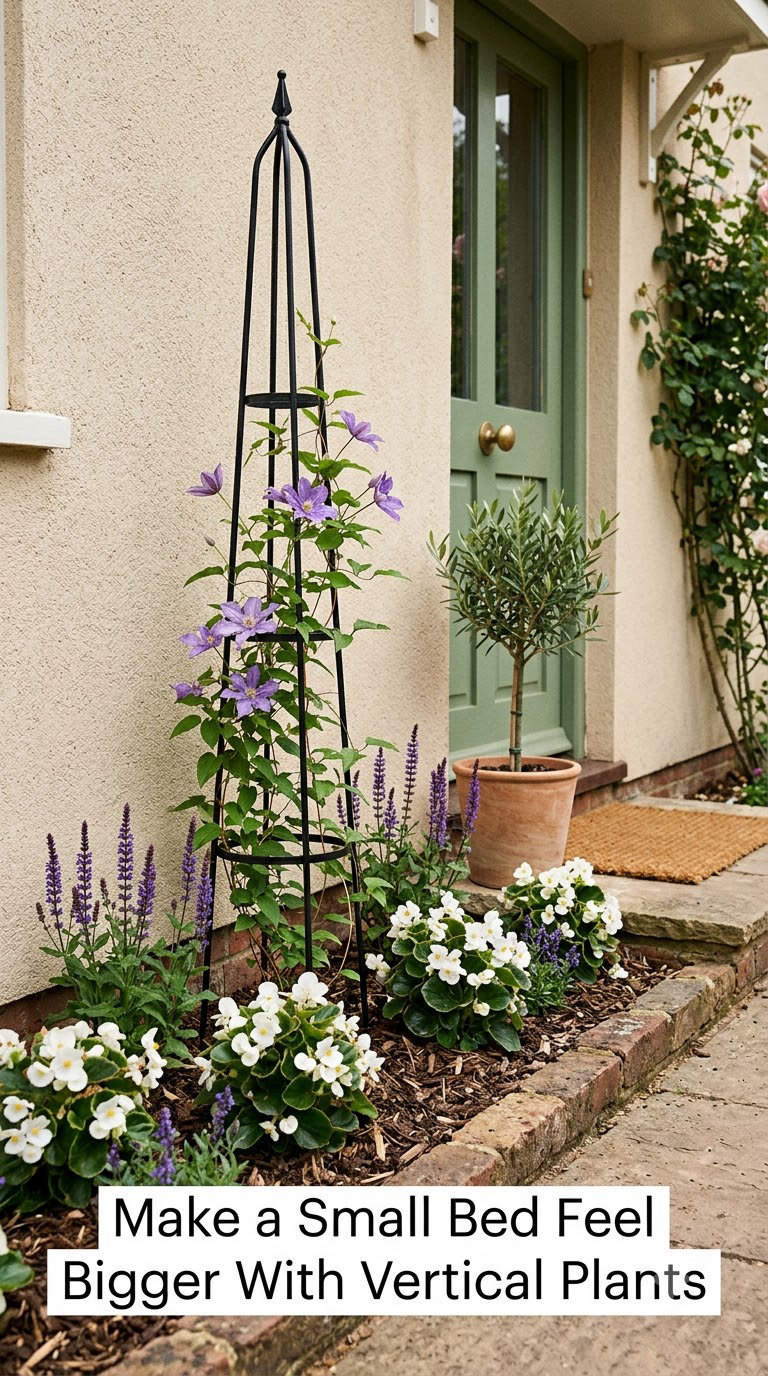
When you have a shallow bed against a wall and no room to grow outward, height is the only dimension left. A single well-anchored climber can double the apparent height of a bed and give it something to look at from a passing car.
How to do it: Anchor obelisks and trellises into actual soil or a heavy base, not into mulch — winter wind is what pulls them out. Set climbers 12 to 18 inches (30 to 45 cm) from the wall so air can circulate and you can get behind to prune. Pick a climber that suits your light level; most need six hours of sun. Keep foliage clear of any windows, drains and exterior vents, and check mature spread before choosing a variety.
Cost: $50–$200 for the obelisk and climber · Difficulty: Easy DIY · Time: half a day.
17. Use Containers Inside a Built-In Bed
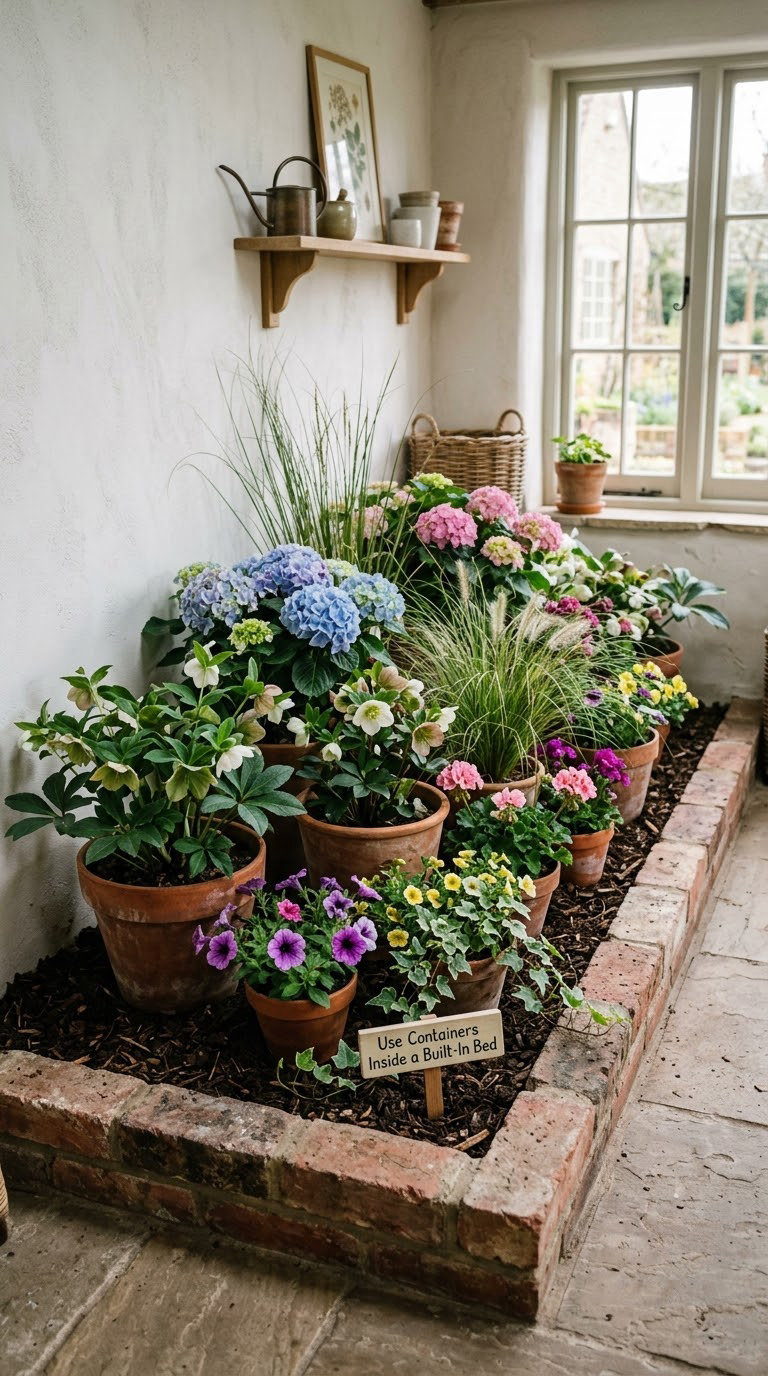
Pots dropped into a permanent bed give you height a flat planting cannot, plus the ability to swap the whole display twice a year without disturbing anything else. It is also a practical answer for renters and for anyone who moves often. If you are still working out where pots will look best, our front porch decor ideas cover the planting-adjacent corner.
How to do it: Use terracotta or glazed ceramic with drainage holes, and sit each pot on pot feet so water can escape. Fill only the top third with soil so the pot is stable and light enough to lift. Bury the plastic pot rim slightly below the surrounding mulch so it does not read as a drop-in. Group in odd numbers, and pick container plants with the same sun and water needs as the bed itself.
Cost: $150–$450 for a five-pot display · Difficulty: Easy DIY · Time: half a day per seasonal swap.
18. Build a Layered Front-Yard Island Bed
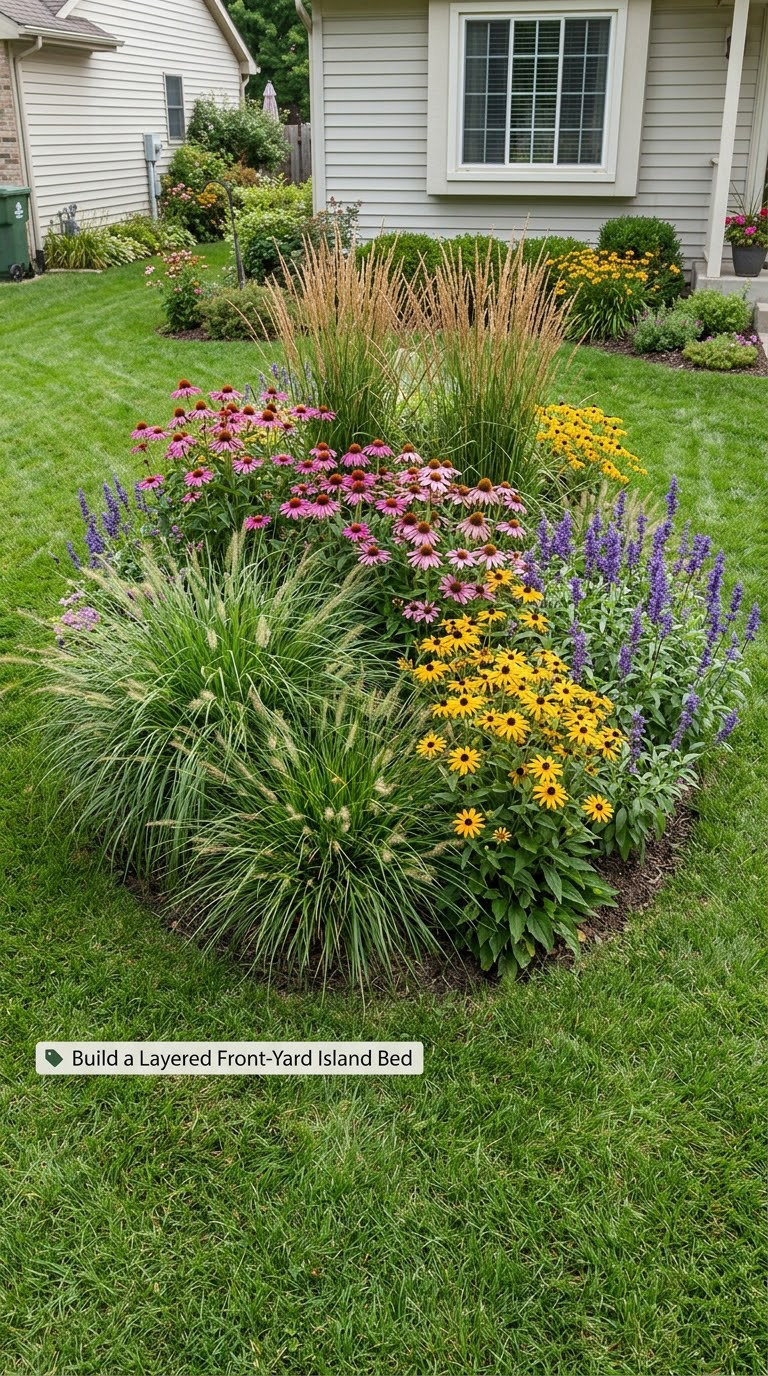
An island bed floating in the lawn stops the eye in the middle of the yard instead of at the fence line, and it works well on a lot with no obvious place to put a border. Done properly it makes a small lawn look bigger.
How to do it: Keep at least 30 inches (75 cm) of mowable lawn between the island edge and any walkway or curb — narrower and you will scalp the grass with a mower every time. Build the centre up in tiers: a tall grass or shrub in the middle, mid-height perennials around it, low plants at the rim. Shape it as one long oval rather than a circle, so it reads as intentional from the road. Plan access on at least one side so you can reach the middle without standing on the planting.
Cost: $300–$800 for an 8 by 12 foot oval · Difficulty: Moderate DIY · Time: one weekend.
19. Create an Edible Herb-and-Flower Welcome Bed
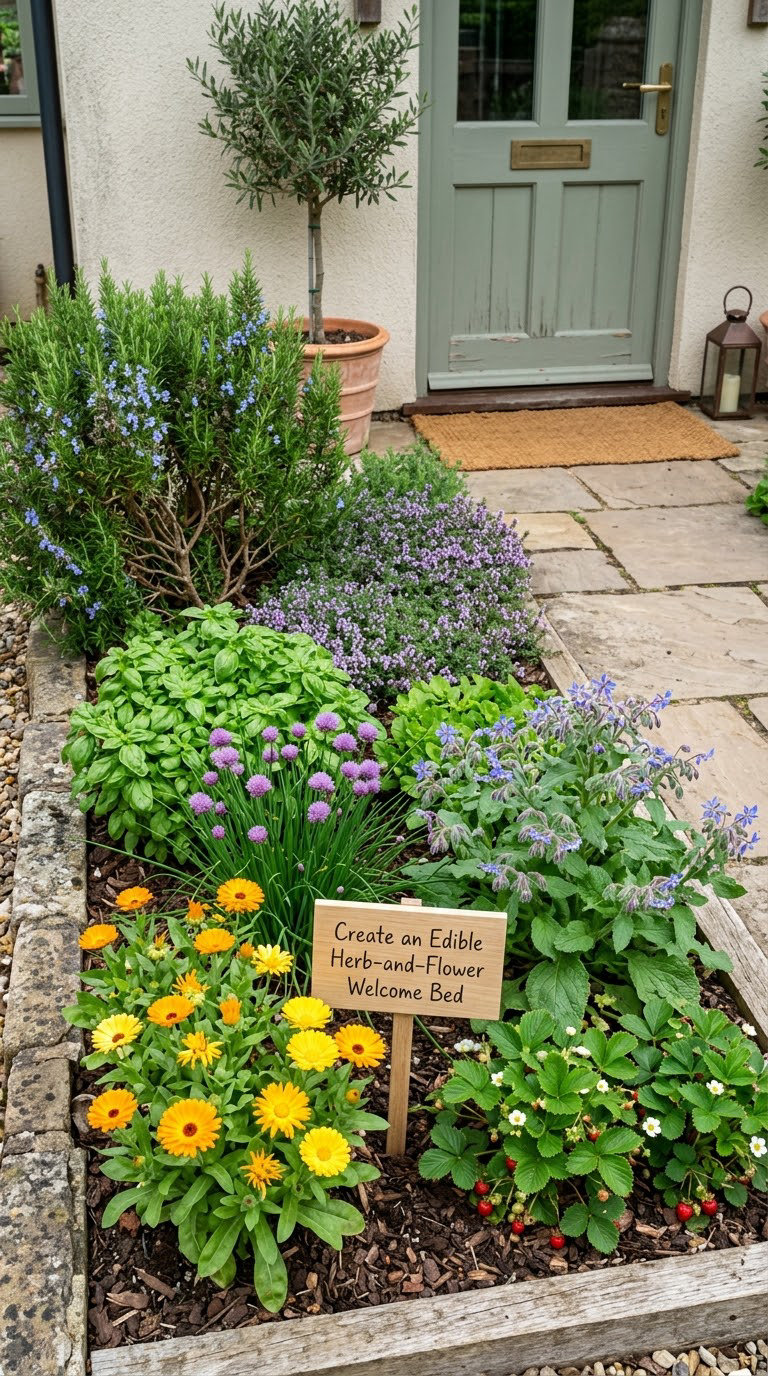
Fragrant herbs by the door mean you smell the bed before you see it, and it gives you something to do in the bed that is genuinely useful. Edible flowers bridge the gap between a vegetable patch and an ornamental one.
How to do it: Plant in clear blocks rather than mixed rows so the bed still reads as designed and you can rotate crops without unravelling it. Keep everything within 24 inches (60 cm) of the walk so it is reachable, and keep sprawling crops out — squash and full-size tomatoes will swamp the planting. Drainage is the make-or-break here; herbs rot in wet ground. Skip chemical pesticides so the bed stays edible and stays attractive to pollinators, which also handles the borage and calendula on their own.
Cost: $60–$180 · Difficulty: Easy DIY · Time: half a day, replanting seasonally.
20. Design a Modern Monochrome Bed
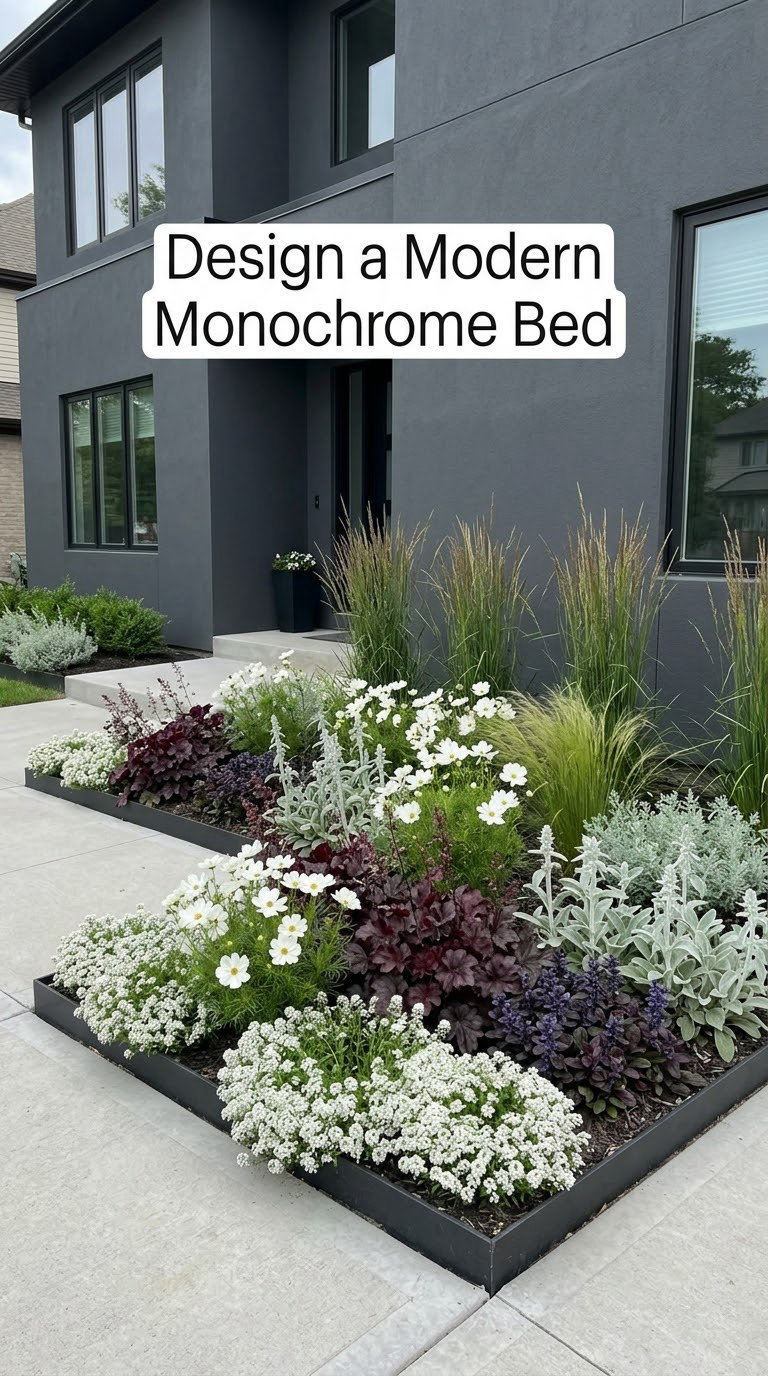
One flower colour plus varied foliage forms gives a display that looks deliberate, calm and contemporary — and it hides the gaps that come with a mixed bed because the structure does the work instead of the blooms.
How to do it: Build the contrast in foliage, not petal count: burgundy, silver and blue-green leaves against deep black mulch or dark stone. Choose plants with the same bloom window where you can, so the bed reads as one colour mass rather than a stripe of purple and a stripe of white. Grasses and seed heads add movement and winter interest. Keep the layout clean and edges sharp — this style fails more often from messy edges than from too few plants.
Cost: $250–$700 · Difficulty: Moderate DIY · Time: one weekend.
Planning Tips
- Map the sun before you buy anything. Spend one clear day noting where shadows fall at 9 a.m., noon and 4 p.m. in summer. Most plant labels assume full sun, which means six or more hours of direct light.
- Measure twice, plant at mature size. Buy plants for the footprint they will occupy in three years, not the pot they arrive in. That single change prevents the overcrowded, sprawling look people try to fix the summer after planting.
- Stay 18 inches (45 cm) off the foundation. Beds hugging the wall trap moisture against the siding and restrict airflow.
- Check clearances before you dig. Locate downspouts, utility lines, irrigation heads and vents. Leave a clear path at least 18 inches (45 cm) wide so beds never force anyone to step into the planting.
- Test your soil. Most front beds under a roof overhang are dry, compacted and low in organic matter. Two to three inches (5 to 8 cm) of compost worked into the top 8 inches (20 cm) does more than any fertiliser.
- Hold back 10 to 15 percent of your budget for a second trip. Plants get damaged, seasons surprise you, and a gap at the front of a bed is the first thing the eye catches.
- Install edging before you plant, not after. It is roughly a third of the work to redo once roots are in the ground.
Frequently Asked Questions
What flowers are best for the front of a house?
Pick plants with a long bloom window, clean structure and no messy self-seeding. Repeat a small number of varieties in drifts rather than buying one of everything. For foundation beds, stay 18 inches (45 cm) off the wall and choose shrubs sized for your hardiness zone, since anything oversized will need constant cutting back. Low-maintenance standouts include catmint, coreopsis, heuchera and compact ornamental grasses.
Should I put a flower bed in front of my house?
Usually yes, because the strip along the foundation is where weeds collect and grass fights hardest. A planted bed there removes the mowing problem entirely and softens the transition between siding and lawn. Skip it only if your foundation is unlined masonry prone to splash-back, or if the area stays waterlogged. Keep 18 inches (45 cm) clearance from the wall and check drip lines before you dig.
How do I make a small front flower bed look attractive?
Keep the bed narrow and the plants proportionally small, then use odd-numbered groupings of one or two species to give it rhythm. Repeat plants rather than adding varieties — a tight palette reads as designed, a varied one reads as leftovers. Add one upright element for height, mulch to a consistent 2 to 3 inch (5 to 8 cm) depth, and make sure the edge between bed and lawn is crisp.
What is the best soil for front-yard flower beds?
Well-drained loam with plenty of organic matter. Under most roof overhangs the existing soil is compacted clay or sandy fill, so plan to work in 2 to 3 inches (5 to 8 cm) of compost across the whole bed before planting. Loosen at least 8 inches (20 cm) deep rather than just top-dressing, and correct drainage problems with a slight slope away from the house. A soil test costs little and tells you what you are actually starting with.
How far should flower beds be from a house foundation?
Leave at least 18 inches (45 cm) between the bed edge and the wall. Closer than that, mulch and foliage trap moisture against the siding, airflow drops, and insects find a damp corridor. Wider than about 3 feet (90 cm) and you are back to mowing grass. If you want a bed that hard against the wall, add a lined drainage channel at the bottom and keep shallow-rooted plants only.
Conclusion
Start with three measurements: the width of your usable bed, the hours of direct sun the spot actually gets, and how far you are willing to walk past it with a hose. Pick one layout from this list that matches those answers rather than the one that photographs best, and build it in stages.
Whatever you choose, plant for mature size and pick for your hardiness zone. Those two decisions do more for curb appeal than any amount of extra colour, and they are the difference between a bed that improves every year and one you are pulling up next spring.