
Cost to Replace a Garage Door: 2026 Prices and Savings
The cost to replace a garage door runs about $1,200 to $2,500 for a standard residential door, fully installed and hauled away. Most single-car jobs land nearer the bottom of that range and double-car insulated jobs sit at the top. What you pay depends on size, material, insulation, hardware and how much of the work the opening needs.
Fall is the busiest season for this job, and doors ordered in September and October often wait longer for an install slot. If you are replacing a door that has started sticking, sagging or rattling, get your numbers now rather than in January.
Contents
Here is what a realistic budget looks like, what actually moves the number, and which line items on a quote are worth arguing about. All figures are US ranges and shift with your region, contractor and the condition of the opening.
What Does It Cost to Replace a Garage Door in 2026?
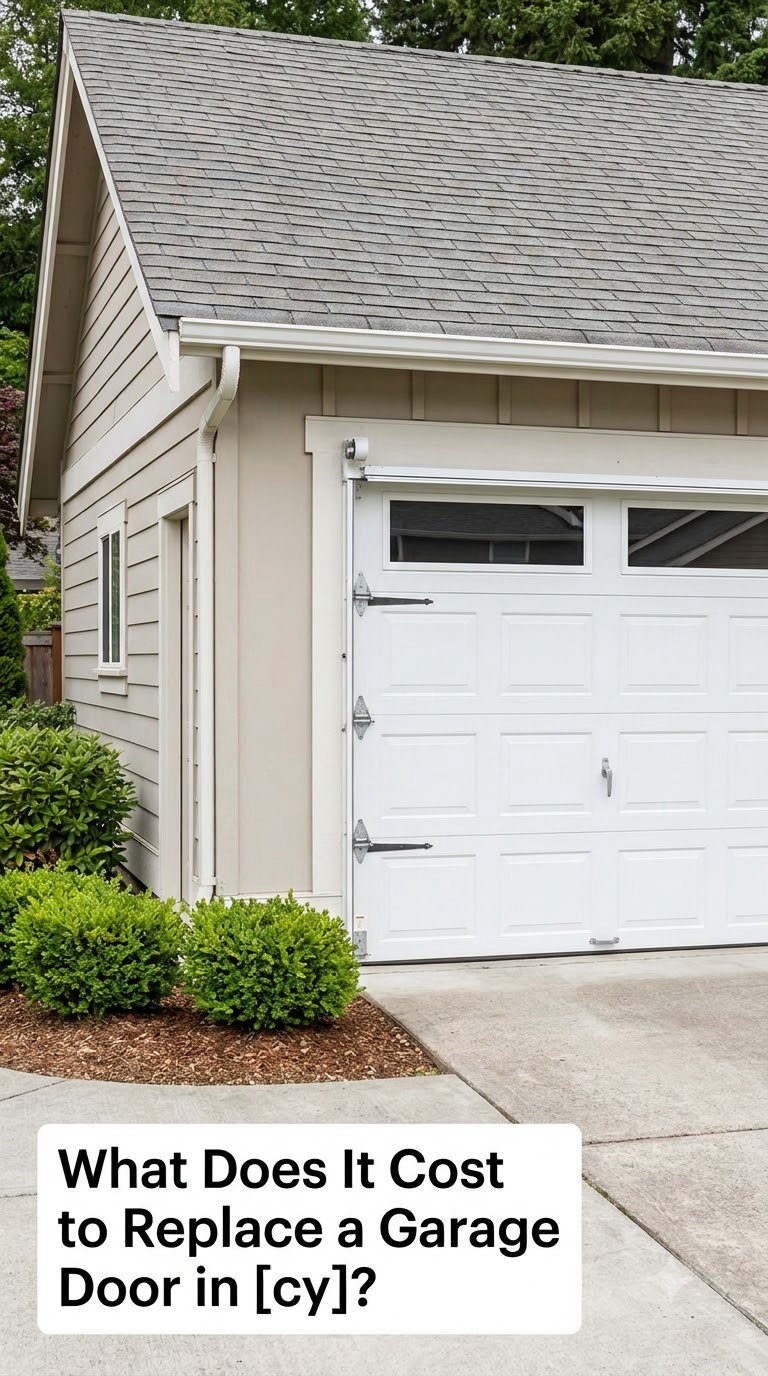
Most homeowners pay $1,200 to $2,500 for a standard replacement, which includes the door, professional installation and removal of the old one. National averages cluster around $1,400 to $1,850 for a single-car door and roughly $1,800 for a basic double.
Total installed cost by door size
| Door size | Typical average (installed) | Common range |
|---|---|---|
| Single 8 ft x 7 ft | about $900 | $700 to $1,400 |
| Single 9 ft x 7 ft | about $1,000 | $800 to $1,600 |
| Single 10 ft x 7 ft | about $1,100 | $900 to $1,800 |
| Double 14 ft x 7 ft | about $1,300 | $1,000 to $2,100 |
| Double 16 ft x 7 ft | about $1,500 | $1,200 to $2,400 |
| Double 18 ft x 7 ft | about $1,700 | $1,400 to $2,800 |
| Three-car (custom size) | about $2,500 | $2,000 to $4,000 |
| Custom size or commercial | about $3,200 | $2,500 to $6,000 |
Non-standard sizes run 30 to 50 percent above standard, because the door is built to order and the installer may need a lift or an extra crew member.
Door only versus door plus installation
| Door size | Door only | Door plus professional installation |
|---|---|---|
| Single 9 ft x 7 ft | $600 to $1,100 | $900 to $1,600 |
| Double 16 ft x 7 ft | $1,100 to $2,000 | $1,600 to $2,800 |
| Double 18 ft x 7 ft | $1,300 to $2,400 | $1,900 to $3,200 |
The gap between the two columns is labor, and labor is where quotes differ most. Most installers work in pairs and charge $50 to $75 per hour per installer, with a straightforward install taking 2 to 4 hours. A door-only figure from a retail listing usually excludes removal, haul-away and any wiring, so the final invoice comes in higher than the shelf price suggested.
Regional spread is real. Door-only pricing on major retail sites runs roughly $844 to $3,498 depending on material and size, and published installed averages range from about $824 to $1,363 for a single door in low-cost markets to well above that in high-cost metros. Prices vary by region, contractor, permits and the condition of the existing opening, so treat every number here as a planning range.
What Changes the Cost to Replace a Garage Door?
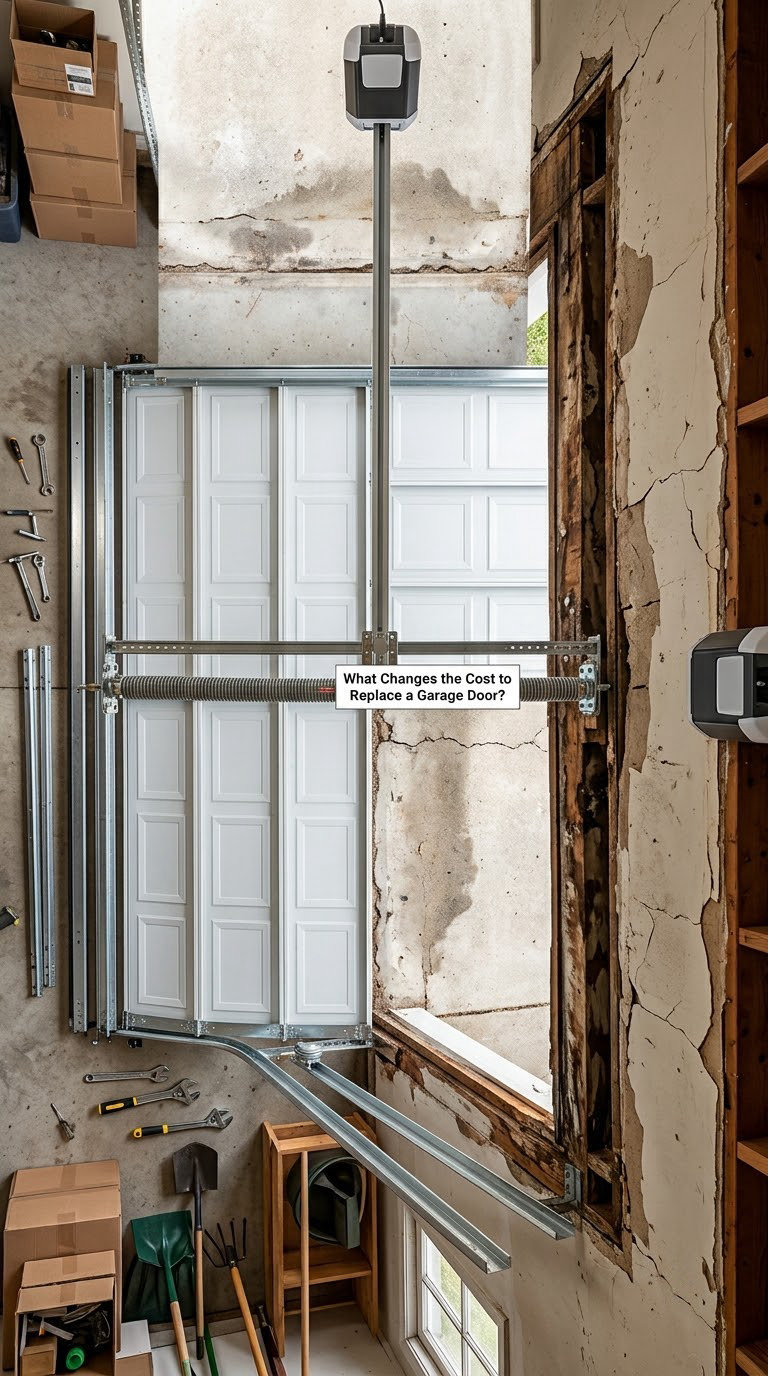
Two quotes for the same 16 ft door can differ by $1,000 with no wrong answer anywhere. Here is where that gap usually comes from.
Size, height and headroom
Width and height drive the door price more than any other factor. So does the space above the opening. Standard single and double doors need roughly 12 inches of headroom plus the opener rail, and low-headroom installations need a low-headroom track, a rear torsion spring or a wall-mount unit. Our wall-mount opener picks for low-ceiling spaces cover the hardware side of that problem.
Low headroom is the single most common reason a job runs over the quoted price. In older two-car garages the standard track often will not fit under an existing ceiling, and the installer discovers it after the old door is removed.
Material, insulation and R-value
Insulation is measured in R-value, and residential steel doors typically run from R-6 on a two-layer model to R-18 on a thick three-layer insulated door. A two-layer insulated steel door adds roughly $200 to $500 over a single-layer skin in most markets.
Insulation pays for itself fastest on an attached garage with living space above it, and it matters most in cold regions. In a hot climate it still helps, just less dramatically.
Windows, hardware and style
A row of lite inserts runs about $50 to $150 each depending on size and frame. Carriage house style, raised panel wood and decorative hardware packages add anywhere from $300 to $1,500 to the door price. They are purely appearance choices and they are the easiest line item to trim if the budget is tight.
What else lands on the invoice
- Removal and haul-away: commonly $150 to $300. Ask whether the old door is taken off the property, because some quotes include removal only.
- Opener: $150 to $500 installed, depending on drive type. Budget models run belt or chain drive, jackshaft models sit in the middle, and wall-mount direct drive units cost more and save floor space.
- Electrical work: a new outlet or a longer run to the opener is often billed separately. Our garage door opener reviews break down the drive types worth paying for.
- Framing and track repair: rotted jambs, bent tracks or a sagging header add $100 to $400, and more if the framing has to be rebuilt.
- Separately billed springs and cables: replacing a torsion spring or cable set on its own is a common add-on, so ask whether new springs are included with the door.
- Permits and sales tax: permits run $50 to $200 where required. Sales tax applies to materials, and separately stated labor is usually taxed differently than materials in many states. Check your local rule.
A budget formula that holds up
Door price by size, plus 2 to 4 hours of two-person labor at local rates, plus $150 to $300 removal, plus opener and electrical if needed, plus sales tax on materials. That sum is your realistic number, and it is the one to hold quotes against.
Compare estimates on the same basis. Get each one itemized into door, labor, removal, opener, electrical and tax, written down. If one quote is a single lump number, ask for the breakdown before you compare it to anything else.
Garage Door Materials: Pros and Cons
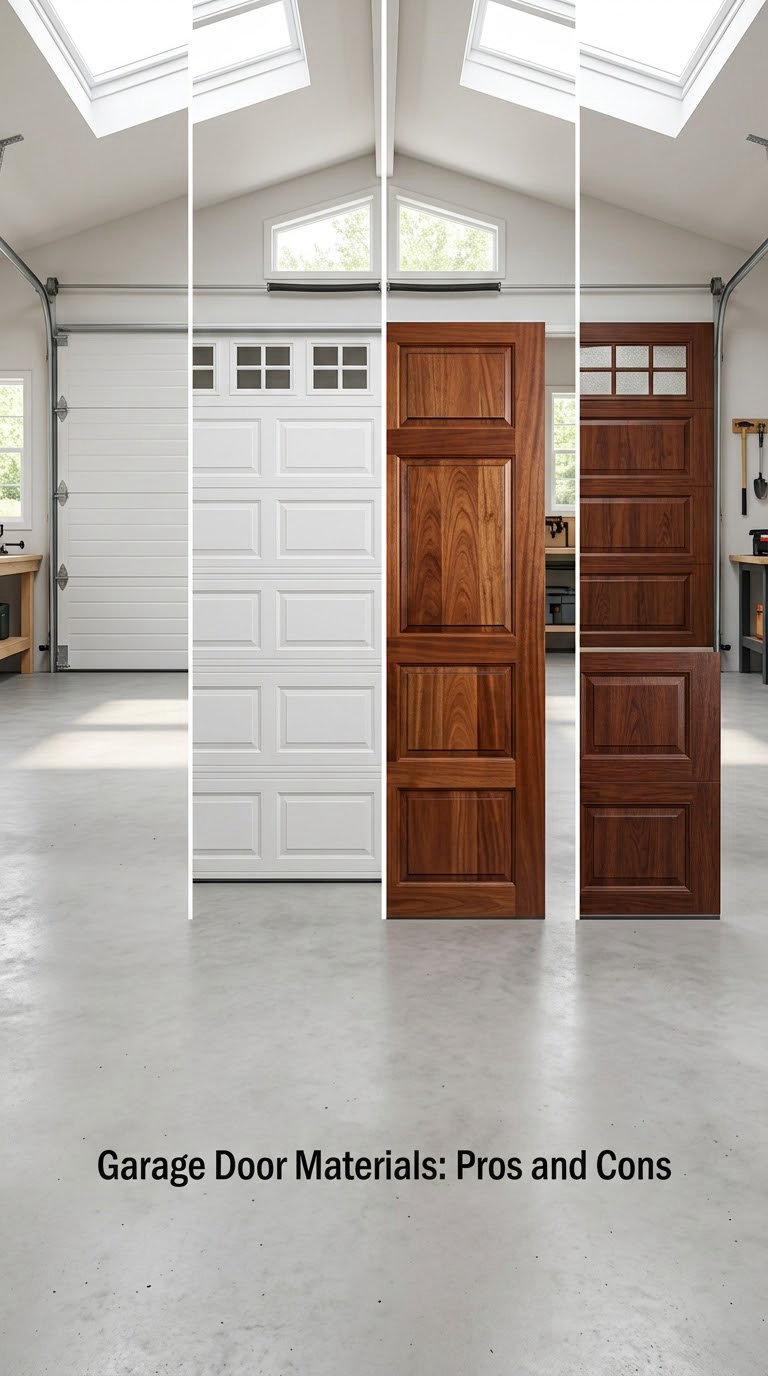
| Material | Typical cost (door only) | Durability | Insulation | Maintenance | Weight | Best use |
|---|---|---|---|---|---|---|
| Single-layer steel | $400 to $800 | Moderate | Low | Low | Light | Budget single-car garages in mild climates |
| Insulated steel | $800 to $1,800 | High | High (R-6 to R-18) | Low | Medium | Most homes, attached garages especially |
| Wood | $1,200 to $3,000 | Moderate | Moderate | High, needs painting or staining | Heavy | Craftsman and carriage house styles |
| Fiberglass | $900 to $2,000 | Moderate | Moderate | Low | Medium | Coastal and humid climates |
| Aluminum | $1,000 to $2,200 | Moderate | Low | Low | Light | Glass-heavy and lightweight designs |
Insulated steel is the best value for most US homes. It carries the widest range of R-values, needs almost no upkeep, and a two-car version sits in the middle of the price range rather than at the top.
Choose wood when the house is a craftsman or carriage house and the door is meant to match the architecture, and expect to repaint or restain every few years. Fiberglass holds up better than wood in salt air and damp coastal air, while plain single-layer steel makes sense for a detached garage in a mild climate where comfort is not the point.
Pay for a professional assessment of the opening when the headroom is tight, the jambs are soft or rotten, the tracks are visibly bent, or the wall above the door has been moved. A 30-minute inspection upfront is cheaper than a change order halfway through the install. If your opener is old, we round up our smart and Wi-Fi opener shortlist at the same time so the whole system gets checked.
Frequently Asked Questions
Is a garage door opener included in the cost to replace a garage door?
Usually not. Most quotes price the door, labor and removal, then list the opener as an optional add-on running $150 to $500 installed. Some bundled quotes do include a standard belt- or chain-drive unit, so read the itemization rather than the headline total. Ask directly: is the opener included, and if not, what model and drive type would I be getting?
Can I keep my old garage door opener and install the new door around it?
Sometimes. If the opener is under about 10 years old and both the door and the tracks are replaced, many installers will reuse it after checking the rail length and the motor head size against the new door. Reusing an opener saves $150 to $500, but an undersized rail or an old chain-drive unit on a heavy insulated door can cause early failure. Have the installer confirm compatibility in writing first.
How much does insulation really matter when replacing a garage door?
It depends on what is above the door. On an attached garage with living space overhead, a door moving from single-layer steel to R-13 or R-18 noticeably cuts heat loss and utility bills. On a detached garage you mostly buy comfort and a quieter close. Comparing quotes, insulation is often the line worth spending on: it adds roughly $200 to $500 and lasts as long as the door itself.
Can I install a garage door myself?
You can order a door yourself and have a crew hang it, and that often costs less than a fully bundled quote. Hanging it yourself is a different story. Torsion springs under real tension store enough energy to kill, and the door sections are heavy. Most homeowners who go it alone end up hiring a technician for the springs and hardware anyway, having already paid to have the door delivered.
What hidden costs come up in a garage door replacement?
The four that catch people: removal and haul-away billed separately, new torsion springs or cables not included with the door, an electrical run or new outlet for the opener, and a low-headroom track needed once the old door is off. Damaged jambs or a bent track can also add $100 to $400. Ask every installer for these four in writing before you sign, since all four show up on real projects.
Conclusion
The cost to replace a garage door is a planning range, not a quote, and it lands somewhere between $900 and $2,500 for most residential work once it is installed and hauled away. Four things to do before you order anything:
- Measure the opening. Width and height at the floor and at the header, plus the depth of the opening. Photos of the tracks, springs and opener help a contractor quote accurately over the phone.
- Choose material and insulation. Insulated steel in the R-6 to R-13 range suits most homes; go higher when living space sits above the garage.
- Photograph the existing hardware. The opener head, rail type and torsion spring setup tell you whether the opener can be reused.
- Get at least three itemized quotes. Each one split into door, labor, removal, opener, electrical and tax. Then compare like with like and put the contract in writing.
Two installers quoting wildly different totals on the same door is normal, and the difference is usually line items rather than the door itself. Once the quotes are broken down the same way, the right choice usually becomes obvious.
