
How Long Does Primer Dry Before Painting? October 2026 Guide
Most primers are ready for paint in 1 to 3 hours. If you have typed how long does primer dry before painting into a search box at eleven at night, the answer depends on the type, not on what the can’s label says. Water-based latex primer is usually recoat-ready in about an hour, shellac primer in under 45 minutes, and oil-based alkyd primer needs 4 to 8 hours or overnight. Touch-dry is not the same as ready, and that gap is where most peeling paint comes from.
October is a popular month to paint a room, and it is also when indoor humidity starts climbing. That combination is exactly why the drying questions get asked right now.
Contents
How Long Does Primer Dry Before Painting? Quick Guide
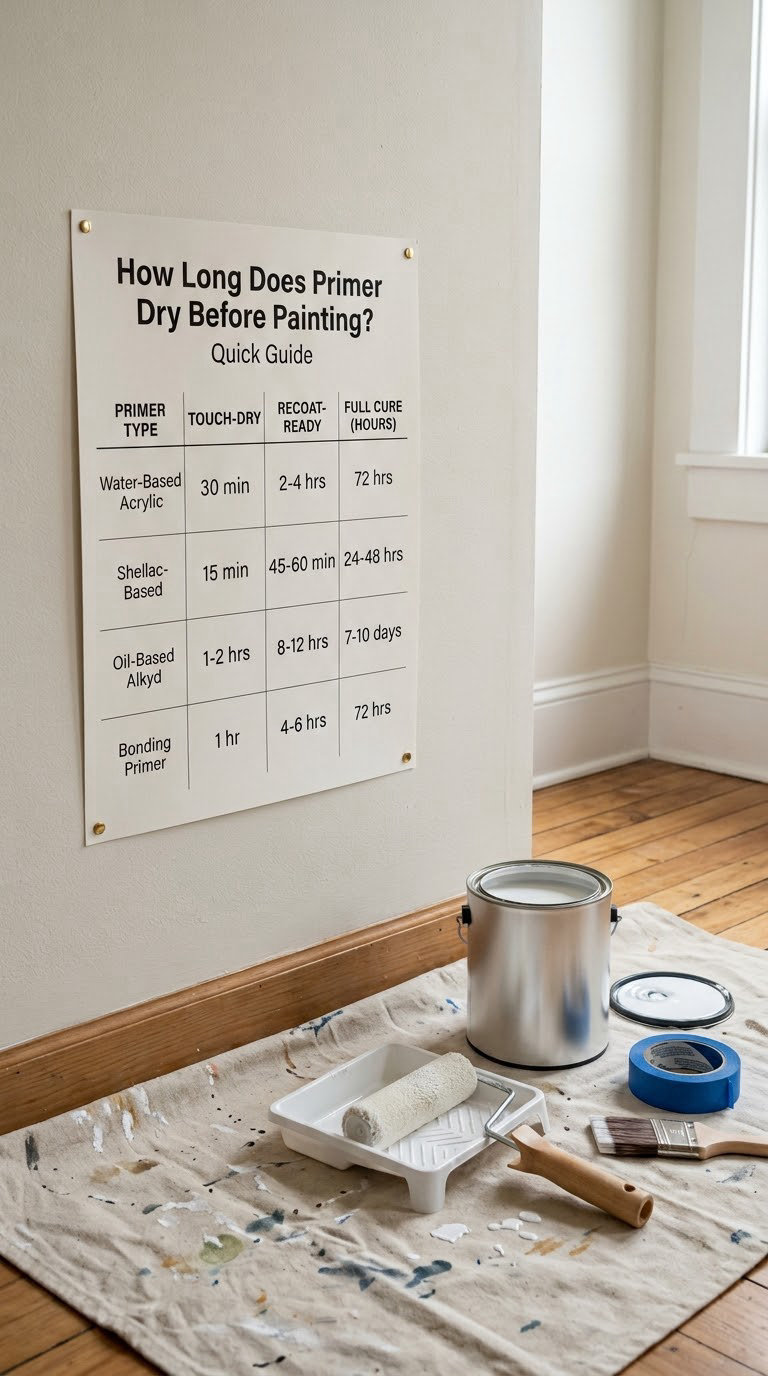
Here is the short version. Primer passes through three stages before it is truly finished, and only the middle one matters when you are deciding whether to start painting.
| Primer type | Dry to the touch | Ready to topcoat | Fully cured |
|---|---|---|---|
| Water-based latex | 30 minutes to 1 hour | 1 to 4 hours | 24 to 72 hours |
| Modern alkyd (hybrid) | 1 to 2 hours | 4 to 6 hours | 24 to 48 hours |
| Traditional oil-based alkyd | 3 to 6 hours | 8 to 24 hours | 48 to 72 hours |
| Shellac-based | 10 to 20 minutes | 30 to 60 minutes | 4 to 6 hours |
| Spray and aerosol | 15 to 30 minutes | 1 to 3 hours | 4 to 24 hours |
Those ranges come from manufacturer technical data sheets, which assume roughly 70 to 80F and 50% relative humidity. Cooler or damper conditions stretch every number in that table.
The three stages, and which one you care about
| Stage | What it means | Can you paint? |
|---|---|---|
| Dry to the touch | A film has formed on the surface, but water or solvent is still moving underneath | No |
| Recoat-ready | The film has hardened enough to accept a topcoat without lifting or bubbling | Yes |
| Fully cured | Final hardness and adhesion, stain resistance and scrub resistance are reached | Not needed to start |
Paint over primer that only feels dry and you will seal moisture in. The topcoat may look fine for weeks before it blisters or peels, which means sanding back to bare surface anyway.
Spray primers deserve their own note. Aerosol cans are touch-dry in 15 to 30 minutes and bond-ready in 1 to 3 hours, so hobby and cabinet jobs can be done in an afternoon. Mini painters on hobby forums regularly treat the 24-hour figure printed on their cans as a safe ceiling rather than a required wait.
There is also a ceiling in the other direction. Most primers want a topcoat within about 30 days, because bare primer collects dust, holds dirt and slowly degrades. Primer sitting for months is not patiently waiting, it is just getting dirty.
Primer Types: Costs, Coverage, and Trade-Offs
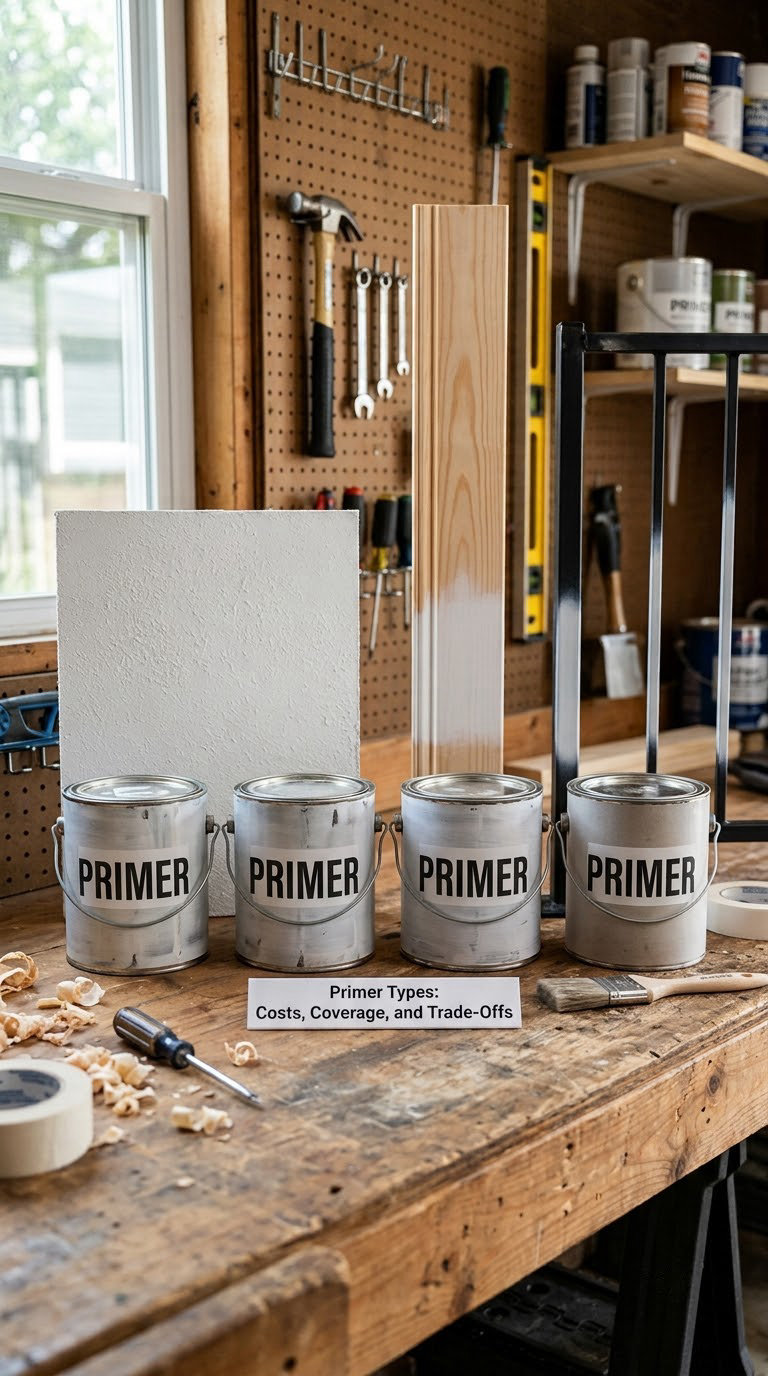
Primer choice changes both the clock and the finish. Water-based products clean up with soap and water and cover a lot of surface per gallon, while oil-based primers are slower and thinner but seal better over bare wood.
| Primer type | Coverage per gallon | Typical US cost tier | Best for |
|---|---|---|---|
| Water-based latex | 300 to 400 sq ft | Lowest | New drywall, previously painted walls, general repaints |
| Shellac-based | 300 to 400 sq ft | Low | Water stains, smoke and odor, tough adhesion problems |
| Modern alkyd | 300 to 350 sq ft | Medium | Bare trim, cabinets, doors that need a hard finish |
| Traditional oil alkyd | 300 to 350 sq ft | Medium to high | Metal with rust, knotty wood, bleeding tannins |
| Bonding primer | 300 to 400 sq ft | Medium to high | Surfaces that will not accept paint otherwise, glossy trim |
Primer prices swing by region and by retailer, so treat the tiers above as relative rather than exact.
Water-based latex primer
Pros: fast drying, low odor, soap-and-water cleanup, and it will not yellow over a light topcoat. Cons: it can raise the grain of bare wood and it needs more coats over stains than shellac does.
Shellac-based primer
Pros: the fastest dry of the main types, and it seals water and smoke stains better than anything else in a can. Cons: it smells strongly, it is unforgiving about humidity above about 80%, and cleanup needs thinner or alcohol-based cleaner.
Traditional oil-based alkyd primer
Pros: excellent adhesion on bare wood and metal, good tannin and rust resistance, and it sands smoothly for a level finish. Cons: long dry times, a heavy odor that needs real ventilation, and mineral spirits for cleanup. Alkyds dry in two stages, first evaporating solvent then hardening by reacting with oxygen in the air, which is why they take hours rather than minutes.
Bonding primer
Pros: it grips surfaces that regular paint slides off, so it saves sanding on glossy trim. Cons: it is expensive, thin, and needs two full coats for a uniform result.
What Changes Primer Dry Time and Cost
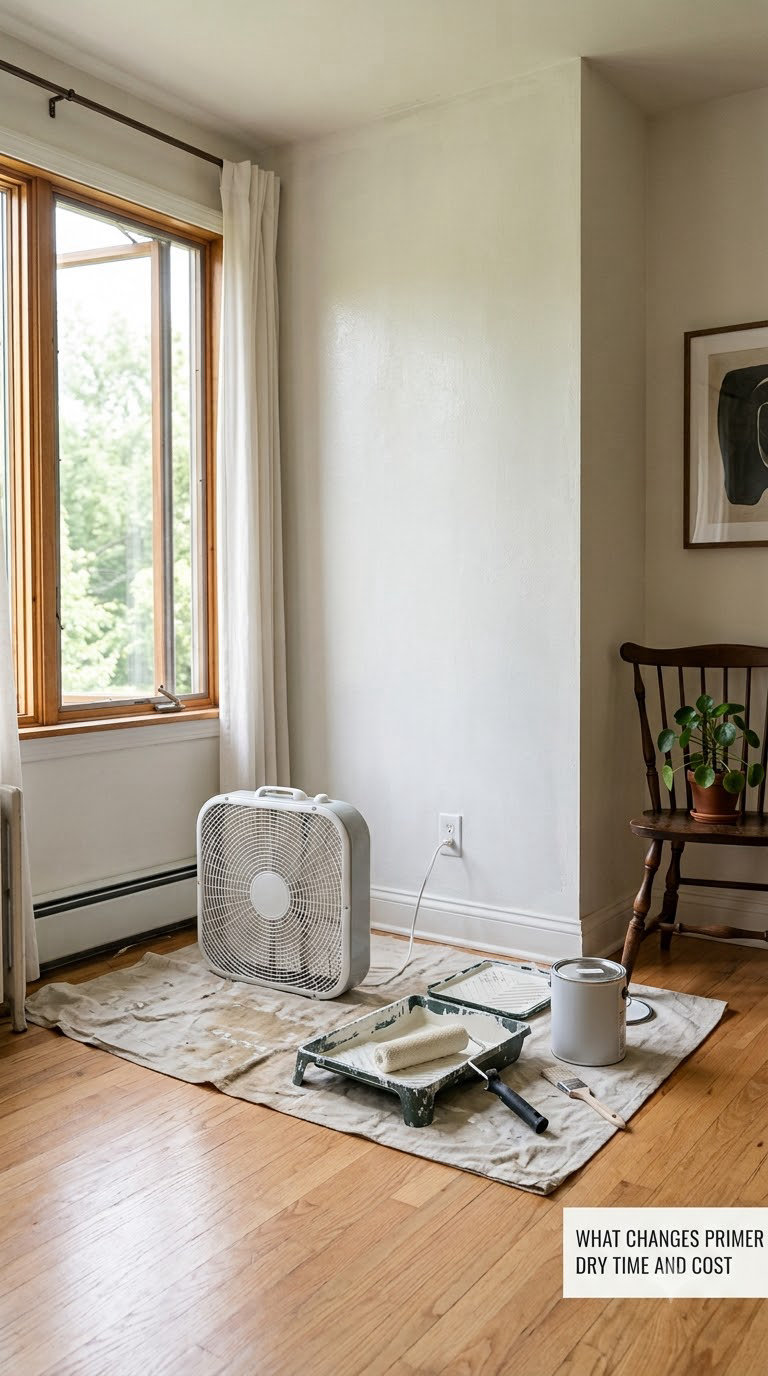
Temperature and humidity do most of the damage to a drying schedule. Manufacturers quote recoat times at 77F and 50% relative humidity, and a cold basement can be four times slower than that.
| Conditions | Water-based latex | Oil-based alkyd |
|---|---|---|
| 77F (25C) and 50% humidity | 1 to 2 hours | 8 to 12 hours |
| 85F (29C) and 50% humidity | 30 to 60 minutes | 6 to 8 hours |
| 50F (10C) and 50% humidity | 6 to 8 hours | 24 hours or more |
| 70F (21C) and 80% humidity | 3 to 4 hours | 24 hours or more |
Below about 50F drying essentially stalls, and above roughly 85% humidity water-based primer loses water too slowly to film properly. Wet lumber, fresh drywall mud and unventilated bathrooms all behave the same way, and they are the surfaces most likely to hold primer tacky for days.
Coat thickness is the variable you control. Primer applied with a brush sits noticeably thicker than the same product sprayed, which is why brush and roller jobs need a longer wait. Two thin coats that each dry in an hour beat one heavy coat that takes all afternoon.
Airflow and ventilation matter as much as temperature. A fan moving air across the surface shortens drying without adding heat, while a dehumidifier helps in a damp basement. Direct sun is the one thing to avoid, since the skin forms first while the coat underneath stays wet, and that thin skin is what you end up painting over.
What happens if you paint too early is predictable. Trapped moisture or solvent causes blistering, peeling and uneven sheen, often weeks after the job looked successful. The fix is to scrape or sand back to sound primer, wipe with a clean cloth, apply a fresh thin coat and wait the full stated time.
For longer projects, watch the other end of the window too. Aim to topcoat within about 30 days of priming, because primer that sits exposed picks up dust and grease that the topcoat then bonds to.
How Long Does Primer Dry Before Painting? Check the Surface
Use the same four checks every time, and you will stop guessing.
- Touch test. Press the back of your hand lightly on the wall. Cool and slightly tacky is normal. Cool and slick means water is still leaving the film.
- Fingernail test. Scratch a hidden spot with a fingernail. Any mark means you need more time. A clean surface with no drag is recoat-ready.
- Tape test. Press a strip of painter’s tape on a low-visibility area and pull it off slowly. Any lifted edge or primer sticking to the tape means it is not ready.
- Label check. Compare the clock on your coat against the can’s stated recoat window and the conditions in the room. The label wins whenever the two disagree.
For an even topcoat, lightly sand a water-based primer after it reaches recoat-ready, usually an hour or two of dry time followed by about 15 minutes of sanding with 180 to 220 grit. Skim any nail holes first, then remove the dust with a tack cloth before paint goes on.
Budget roughly one coat of primer on sound previously painted walls, two on bare wood or patched drywall, and two coats of stain-blocking primer over water marks.
Frequently Asked Questions
Can I paint over primer as soon as it feels dry?
Not safely. Dry to the touch only means a film has formed on top, and water or solvent is still moving underneath. Painting at that stage traps moisture in the film, which shows up weeks later as blisters, peeling or uneven sheen. Wait until the fingernail and tape tests come back clean, or until you reach the can’s stated recoat time, whichever is longer.
Does primer need to cure completely before painting?
No. Full cure, often 24 to 72 hours depending on the type, is about final hardness and scrub resistance, not about whether paint will stick. You can safely topcoat once primer is recoat-ready. Giving it the full cure time before a hard-working topcoat like cabinet enamel does help the finish last longer under daily handling.
How do I know if primer is dry enough for paint?
Run three quick checks. Press the back of your hand to the surface, scratch a hidden spot with a fingernail, and pull a strip of painter’s tape off slowly. If the surface is not cool and tacky, the scratch leaves no mark, and no primer sticks to the tape, primer is dry enough for paint. Still tacky means give it another hour and retest.
Why does my primer take longer to dry than the label says?
Labels are printed for 77F and 50% relative humidity, so any cooler or damper room stretches the stated time. A 50F basement can take four times the quoted recoat window, and humidity above 80% is the single biggest cause of tacky latex primer. Thick brushed coats dry slower than sprayed ones too, and fresh drywall mud holds moisture for days.
Can I paint over primer the same day?
Yes, for water-based latex and shellac primers in a warm, dry, ventilated room. A one-hour recoat window means prime in the morning and topcoat the same afternoon. Oil-based alkyd primers are the exception, needing 8 to 24 hours, so those usually wait overnight. Always check the specific can, since fast-drying formulas exist and so do slow ones.
What To Do First
Start with the can, not the internet. Read its recoat window, then run the fingernail and tape tests before the first coat of paint goes on.
In most rooms, the honest answer to how long does primer dry before painting is 1 to 3 hours for water-based product and a full overnight for oil-based. Add airflow, keep the coat thin, and topcoat within a month. If you are focused on a specific room, our guide on how long bathroom paint takes to dry covers the topcoat side, and this one on when you can use a painted bathroom comes next in the schedule.
