
How to Remove Soap Scum from Shower Doors (2026) Guide
The fastest way to figure out how to remove soap scum from shower doors is chemistry, not elbow grease: equal parts white vinegar and dish soap in a spray bottle, warm water, and about 10 to 15 minutes of dwell time before a gentle scrub, rinse, squeegee and buff. That mix clears ordinary film in a single pass, while pale, gritty mineral crust needs a longer acid dwell or a limescale remover instead of more scrubbing.
The reason soap scum sticks is chemistry, not laziness. Soap, body oils and shampoo combine with the calcium and magnesium left behind as hard water evaporates, then bond into a waxy layer that turns cloudy under lights. Once it layers for a year or more, no single wipe fixes it.
Contents
Before you start, note the surface: frameless glass, framed glass with an aluminium rail, tinted plastic, and a coated or frameless enclosure each behave differently. If your door has a factory water-repellent coating, the method changes, and skipping that check is how people scratch glass that cannot be repaired.
Time: 25 to 40 minutes including dwell · Cost: under five dollars using supplies you probably already own · Difficulty: Easy DIY · Skill level: complete beginner
Tools and Materials
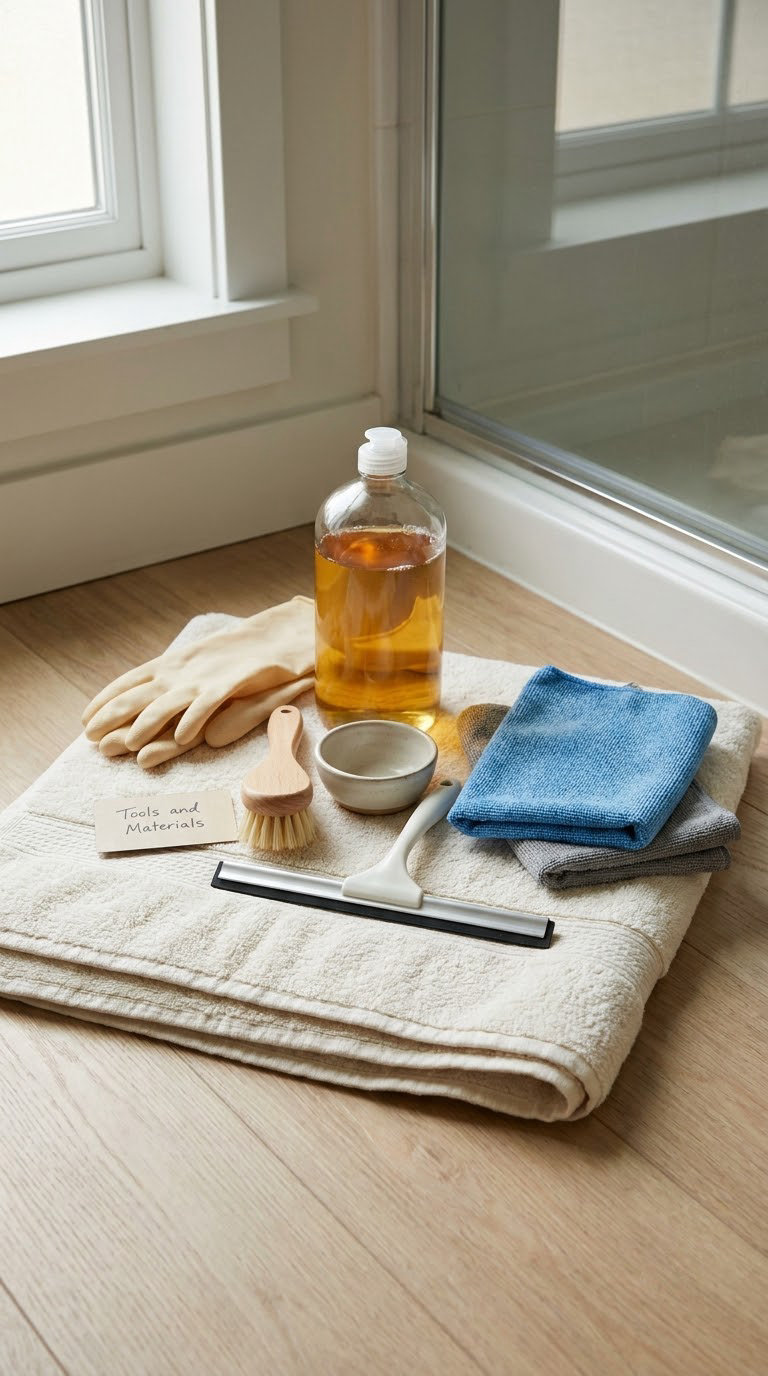
Gather everything before the door gets wet. Most people already own half of this list, and the rest is a short walk to the grocery aisle.
Tools
- 1 rubber squeegee, 10 to 12 inch (25 to 30 cm) wide, with a clean rubber edge
- 3 microfiber cloths, roughly 16 by 16 inch (40 by 40 cm), one for soapy water, one for rinsing, one dry
- 1 soft nylon brush or toothbrush for tracks, seals and the bottom edge
- 1 spray bottle that holds about 16 oz (500 ml)
- 1 pair of rubber gloves, plus a spare toothbrush for the hinge-side frame channel
- 1 small bowl for mixing cleaner as you need it
Cleaning materials
- Mild dish soap, about 1 tablespoon (15 ml) per cup (240 ml) of warm water for the DIY spray
- White vinegar for a mild acid, or citric acid solution at about 2 tablespoons per 500 ml of hot water for hard-water areas
- A nonabrasive limescale remover for pale, gritty mineral crust, used strictly to the label directions
- Plain water for the final rinse, and a clean dry microfiber cloth for buffing
Before You Start
Run your fingertip across the film first. A greasy film that wipes off in a smear is soap scum and comes out with dish soap. A hard, gritty crust that feels like sandpaper is limescale, and it needs acid. A haze that stays after a full clean, sometimes with a rainbow shimmer, is etching in the glass itself and no cleaner will remove it.
Test every cleaner in a bottom corner near the threshold, where the glass is least visible. Wait the full dwell time, rinse, and look at the spot in daylight before you treat the whole door. If the test spot clouds or dulls, stop and check what kind of door you have.
Clear the shower floor first. A folded towel or a couple of old towels catches drips and keeps you from tracking cleaner onto the tile, where a slip hazard is a real problem and acid on travertine or marble etches the stone within minutes.
Open the window or run the exhaust fan. Spray chemistry in a small, windowless bathroom gets uncomfortable fast, and limescale removers in particular are harsh on lungs. Never mix vinegar or any acid with bleach, ammonia or ammonia-based glass cleaner; the combination can release a toxic gas, so open a different window too if you have mixed cleaners earlier.
Keep water away from powered lighting, ceiling fans and any outlet inside the enclosure. Switch off the breaker for lights inside the wet zone rather than reaching near a wet fixture to flip it.
Check for a coating before you start. Many frameless and new-construction doors ship with a factory water-repellent layer, and acidic or abrasive products dull it permanently, leaving hazy patches that look exactly like the scum you were trying to remove. If your door is coated, stay with a pH-neutral soap and water solution, check the door manufacturer’s care instructions, and avoid Magic Eraser, scouring powders and steel wool.
How to Remove Soap Scum from Shower Doors Step by Step
Work top to bottom. Cleaner runs, and if you start at the bottom you rinse your own work back onto clean glass.
Step 1: Remove Loose Dirt and Identify the Buildup
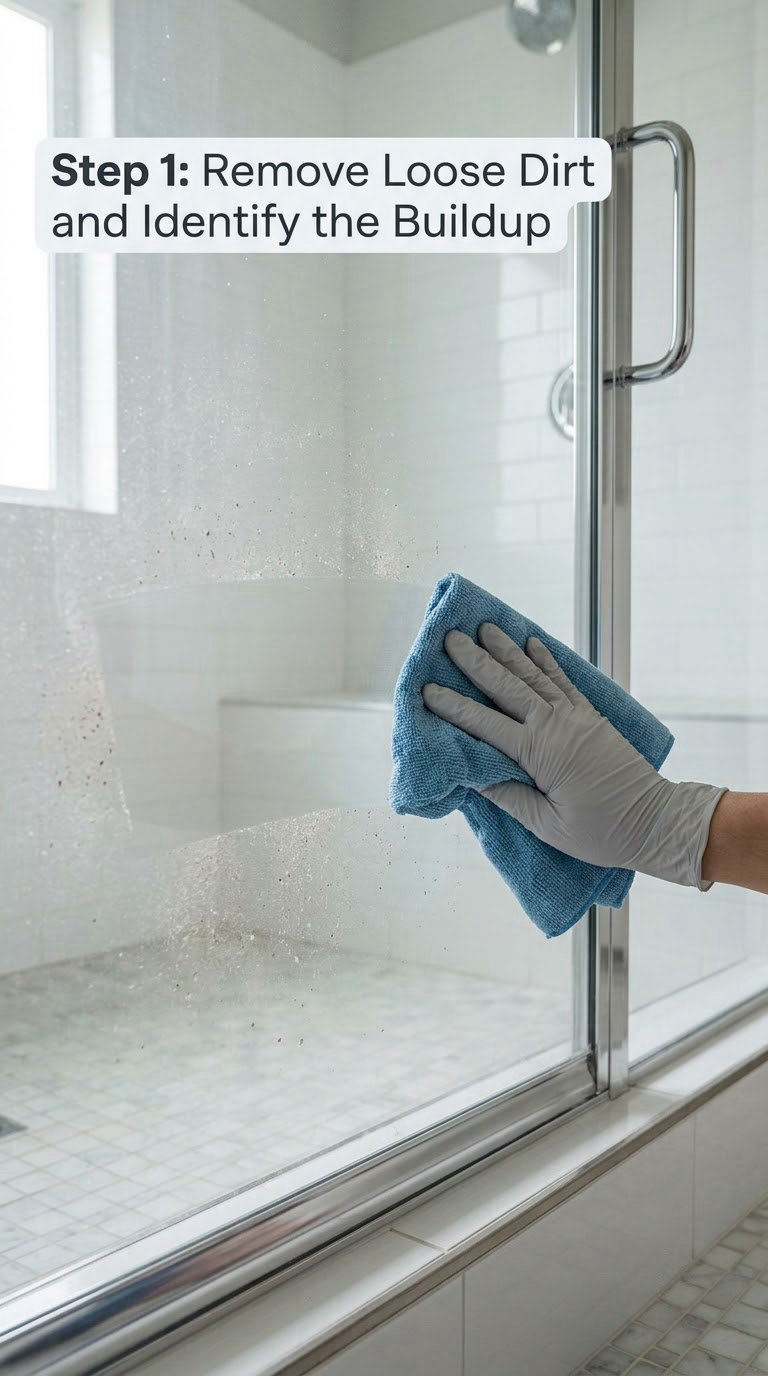
Rinse the door with plain warm water or wipe it down with a damp microfiber cloth to lift hair, dust and loose grit first. Grit left on the surface is what turns a gentle cloth into a micro-scratching tool.
Now look at what remains. Thin, greasy and slightly yellow means soap scum and oil film. Chunky, white and rough to the touch, often concentrated in the bottom 6 inches (15 cm) and around the handle where water drips, means mineral deposit. Once you know which one you are looking at, you can stop guessing at products.
Step 2: Choose a Cleaner That Matches the Door
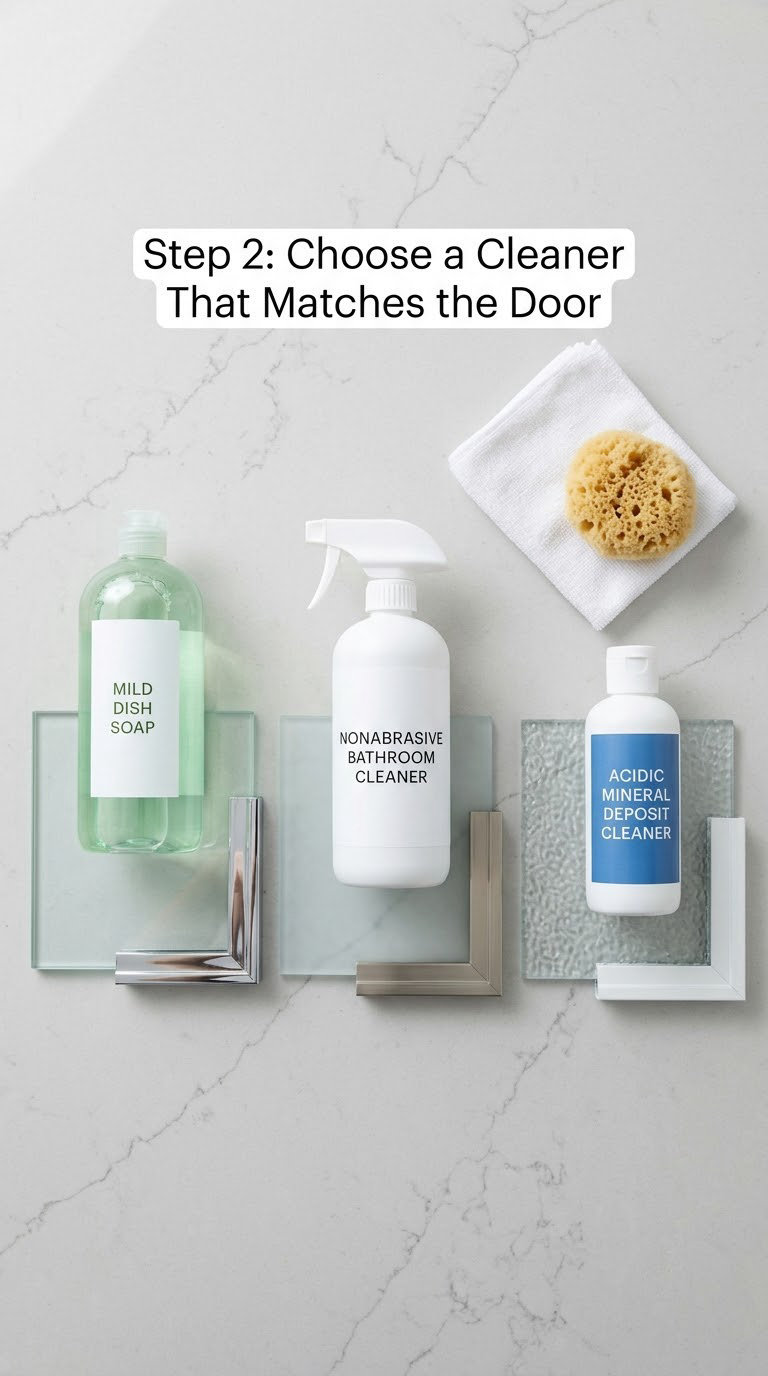
Match the treatment to the deposit, not to the marketing on the bottle.
- Light haze or greasy film: 1 tablespoon of mild dish soap in a cup of warm water, in a spray bottle.
- Stubborn film that a soap solution leaves behind: a nonabrasive bathroom cleaner, applied and rinsed the same way, following its label dwell time.
- Pale, gritty hard water crust: white vinegar or a citric acid solution, left wet for 10 to 15 minutes. A commercial limescale remover works too; read the ventilation guidance on the label first.
| What you see | Treatment | Dwell time | Coated glass safe |
|---|---|---|---|
| Greasy film, light haze | Dish soap and warm water | 5 minutes | Yes |
| Layered scum, dull clouding | Bathroom cleaner or vinegar spray | 10 to 15 minutes | Check the manufacturer first |
| White gritty crust, bottom edge | Acidic limescale treatment | 10 to 15 minutes | Not without checking |
Skip abrasive pads, steel wool and gritty powders such as powdered cleanser on any glass door, and stay well away from them on coated doors and coloured plastic frames. Melamine foam sponges work on uncoated glass in a pinch, but they dull coatings and leave a haze that looks like the problem you started with, so treat them as a between-cleans touch-up rather than a full clean.
Step 3: Apply the Cleaner and Work the Glass
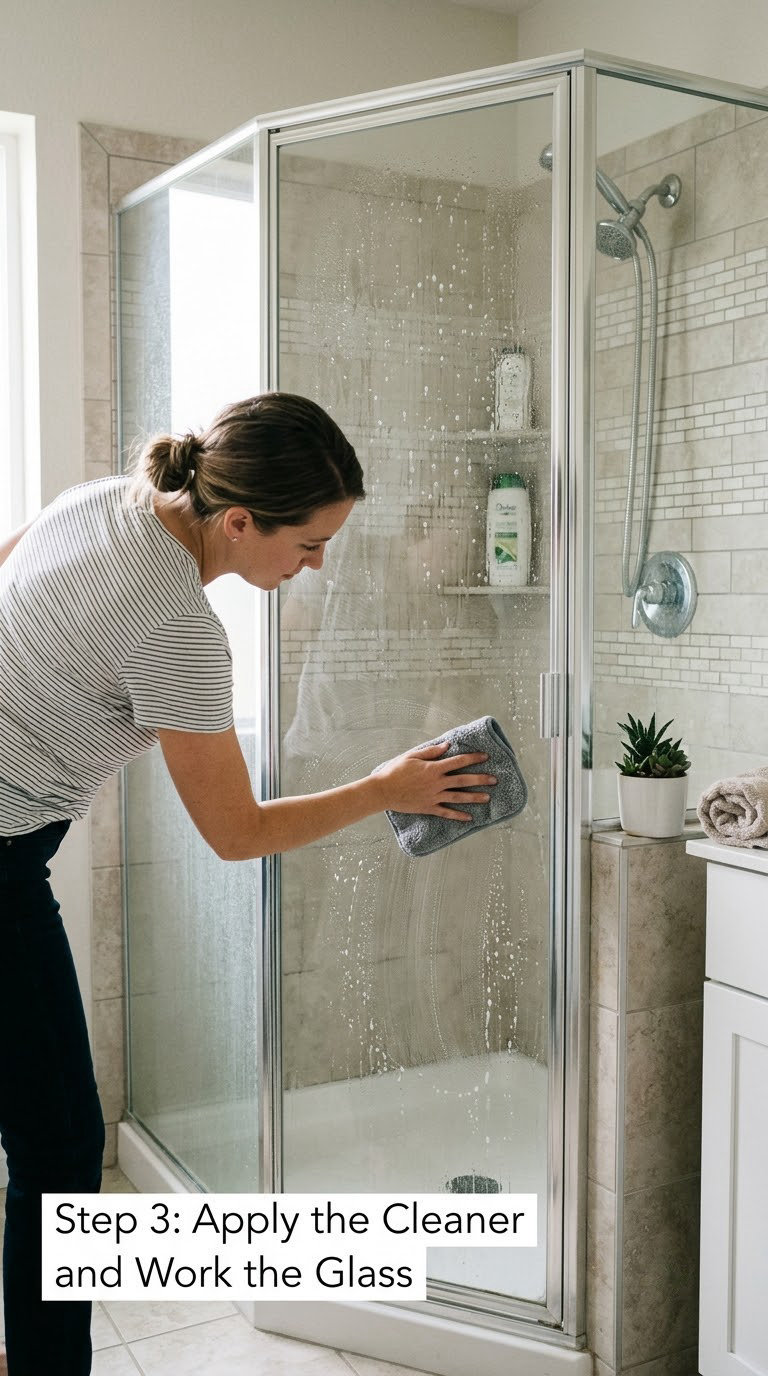
Wet the glass with warm water first, then spray your cleaner on in sections about 12 inch (30 cm) wide. Warm water softens the film and gives the cleaner something to spread through.
Let the cleaner sit wet for the full dwell time. Five minutes is enough for the dish soap mix, and 10 to 15 minutes for vinegar or citric acid on mineral crust. Keep the section visibly damp; if it dries early, mist it again rather than scrubbing a dry panel, because dried cleaner turns into an abrasive.
This is the part of the method that gets rushed. Put a clean damp microfiber cloth or a non-scratch sponge on the wet section and work it in gentle overlapping strokes, light pressure first. To remove soap scum from shower doors effectively, add more dwell time and another damp pass instead of leaning harder on the glass, and finish with long top-to-bottom strokes to catch what the circles left behind.
The bottom edge and the area around the handle deserve their own pass. Water runs and dries there, so buildup is thickest, and the handle area is where drips concentrate over time.
Step 4: Rinse and Remove Streaks
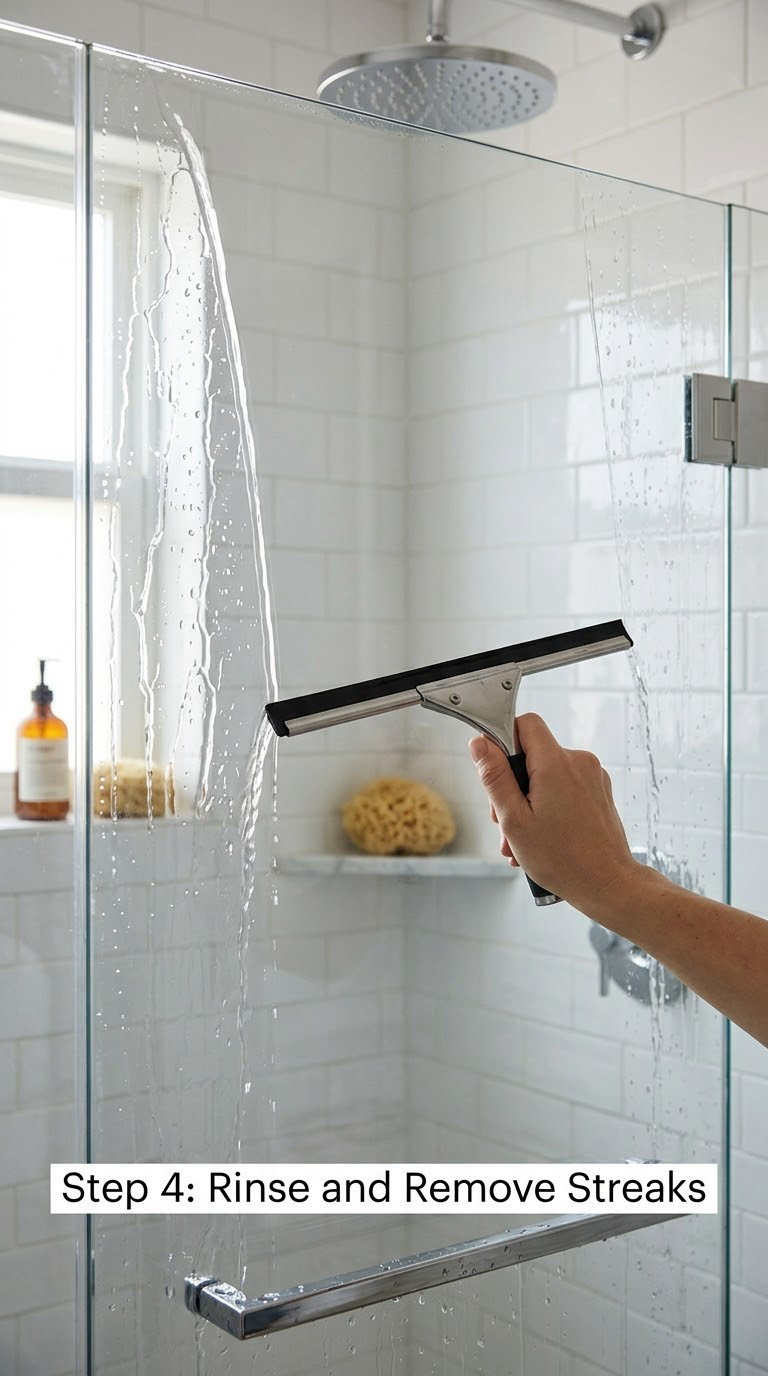
Rinse with a low-pressure shower stream or a handheld sprayer, starting at the top and moving down. High pressure drives cleaner into the frame channel and the bottom sweep, where it sits and dries.
Streaks come from two things: cleaner drying on the glass, and rinsing residue downward instead of away. Wash each section until you see through it before moving to the next one, and keep the rinse stream moving so it does not sit in one spot.
Step 5: Dry and Inspect the Door
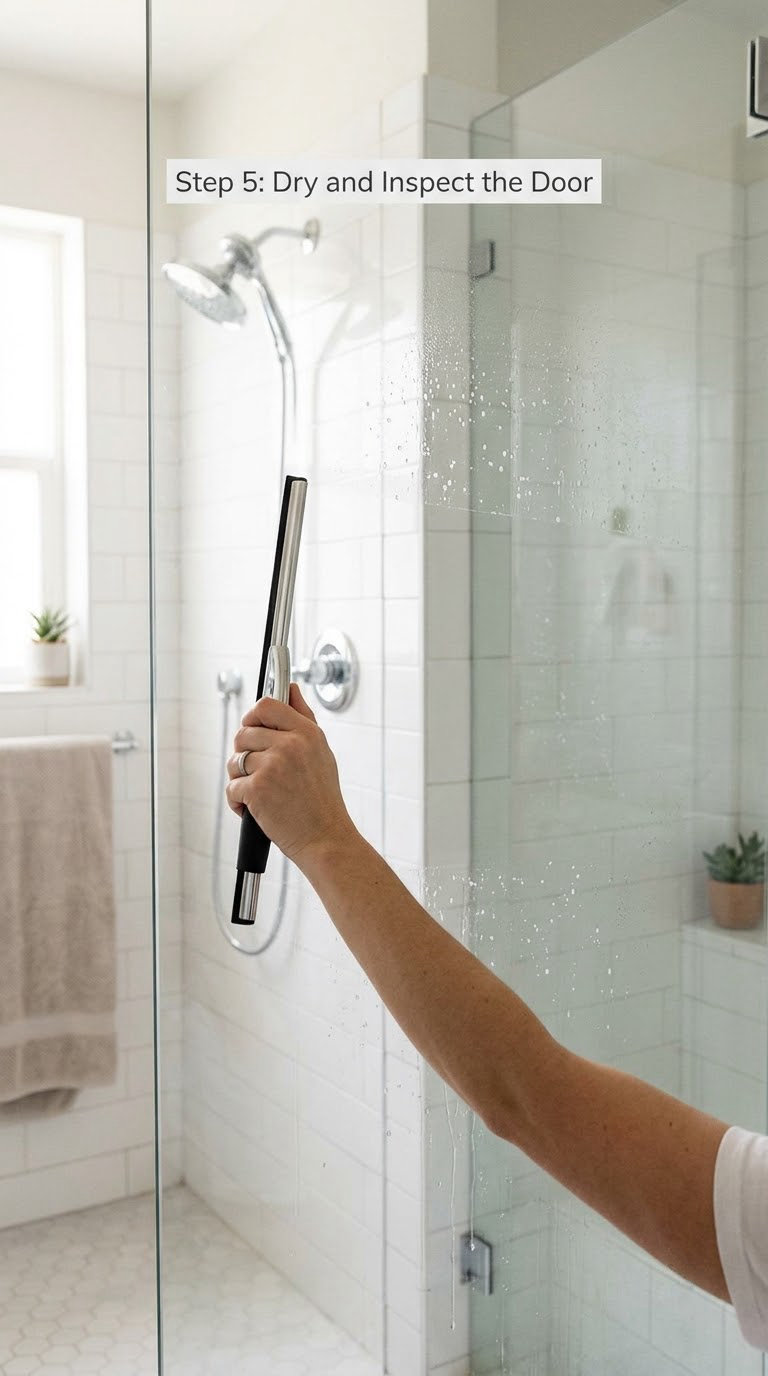
Squeegee from the top down in one long pass per section, wiping the blade on your microfiber cloth between sections so trapped grit does not streak the next strip. Tight corners and the frame channel need a second pass with a damp cloth, since a straight blade cannot reach them.
Now check the work from a few angles, including low, looking up toward the bathroom light. Haze that only shows at one angle is usually a remaining film you can fix with one more damp pass. Haze that looks the same from every angle, right after a full clean, is etching in the glass rather than dirt on it.
Leave the shower open to air-dry completely before closing the door or running the fan off. A door that gets shut while damp traps moisture against the glass and starts the cycle again within days.
Step 6: Prevent Soap Scum from Returning
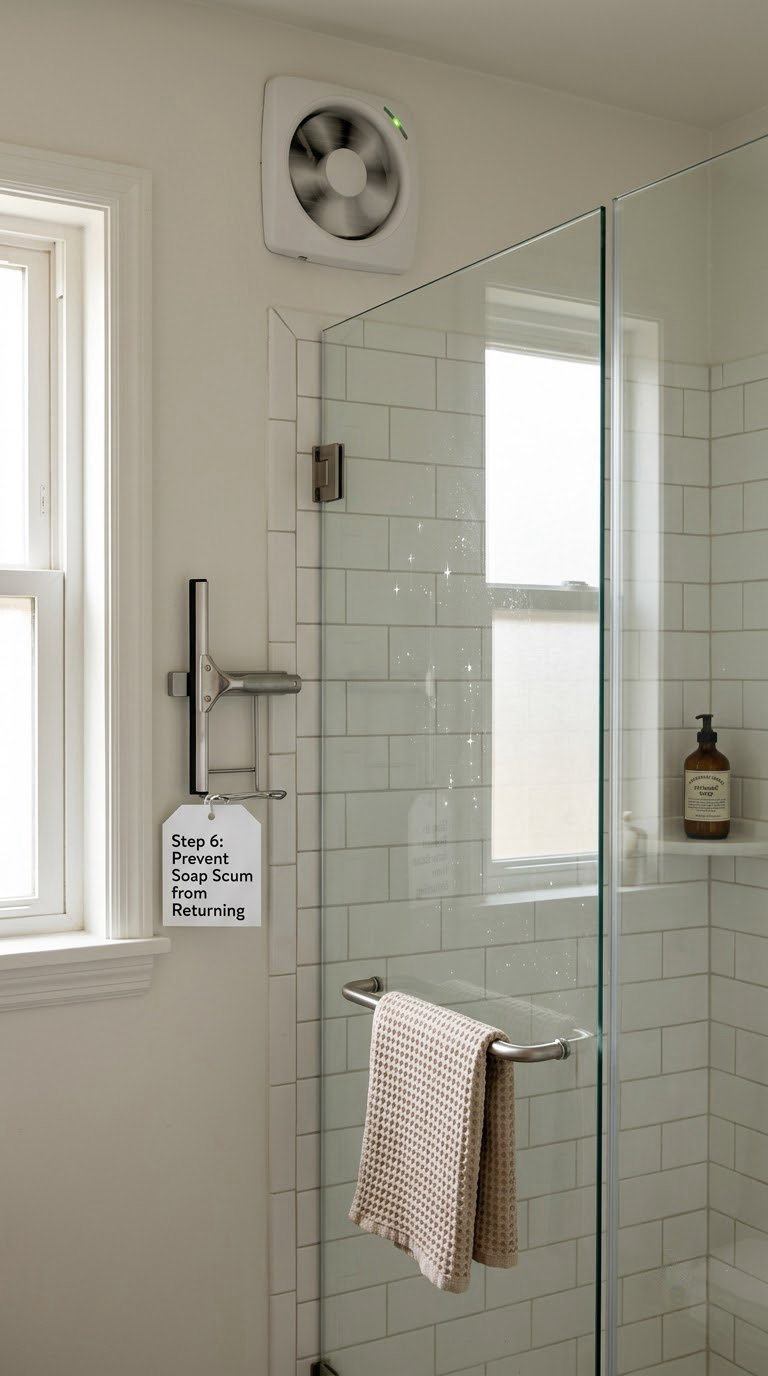
The fastest way to keep a door clear is to keep water off it. Squeegee the glass from the top down after each shower or bath, and leave the fan running for 15 to 20 minutes so the room dries instead of sitting humid.
Wipe the glass weekly with plain water and a clean microfiber cloth. Routine wiping should not need soap; if plain water no longer shifts the film, that is your signal to do a proper treatment before the layer gets thick.
If you can, switch from bar soap to a liquid body wash. Bar soap leaves more residue in the pan and on the glass, and that is the single habit change homeowners report cutting their cleaning time most. Keep bottles of shampoo off the shower floor edge so drips run down the wall rather than onto the door.
In a hard water area, expect a deeper mineral treatment every six to eight weeks rather than monthly. A water-repellent treatment made for shower glass adds a few more months between deep cleans, but check that it is safe on your coating first.
Common Mistakes to Avoid
Almost every soaked door I have cleaned had at least one of these going on.
- Mixing cleaners. Never combine vinegar with bleach, ammonia or ammonia-based glass cleaner, and never combine two different acidic products. Rinse the glass with plain water between products.
- Scrubbing dry glass. Dry glass plus dry cleaner equals micro-scratches. Keep the section wet and re-damp it whenever it dries.
- Letting cleaner dry on the panel. Drained acid film is harder to remove than wet film. Rinse on the label’s dwell time, not an hour later.
- Rinsing from the bottom up. That carries dirty water over clean glass and creates the streaks people blame on the product.
- Wiping with a grimy cloth. A cloth used on the tub or floor puts grit back onto glass. Keep separate cloths for glass and use a clean dry one for buffing.
- Reaching for abrasives on coated glass. Steel wool, scouring pads and melamine foam will permanently dull a factory coating. That haze cannot be cleaned off later.
- Ignoring the frame, seals and bottom sweep. The glass can look perfect while the channel holds grey sludge and mildew. Use the soft brush with dish soap solution, then rinse and dry.
- Cleaning a fully enclosed door in place. Cleaner trapped behind a sliding door has nowhere to go. Open the door fully so you can rinse and dry both faces.
When to Call a Pro
Stop cleaning and get a professional involved in a few situations. If the door’s protective coating is peeling or flaking, replacement glass is the fix and no cleaner restores the layer.
Cloudiness that survives a full acid treatment and rinse from every angle is etching, which is permanent micro-damage to the glass surface. Some people polish mild etching, but deep etching is a replacement job, and I would rather tell you that up front than watch you scrub a door for an afternoon with no result.
Call the manufacturer or a bathroom professional when a framed door has failed magnetic seals or a sweep and water now reaches the floor, when the enclosure is leaking, or when residue appears in a bathroom where nobody has touched it in months, which usually means a plumbing or drainage issue rather than soap. Nothing in a soap scum clean touches wiring, plumbing or a sealed enclosure, and those are not DIY jobs.
Maintenance
A simple schedule does more work than any product. Squeegee after every shower, run the fan for 15 to 20 minutes, and give the glass a plain-water wipe once a week.
Check the seals, the bottom sweep and the sliding door track monthly. Grime in a track is the reason doors stick and rattle, and it holds moisture against the glass right where scum starts.
When white marks come back, do a full acid treatment rather than waiting. Replace microfiber cloths when they start leaving lint, and swap out a squeegee blade that has gone hard and is streaking the glass instead of cleaning it.
If you are refreshing the whole room, our picks for shower doors and soap holders that do not leave residue both cut down on the buildup you just cleaned off. If residue keeps collecting on a caddy or ledge, removing the adhesive cleanly gives you a surface you can actually wipe clean.
Frequently Asked Questions
Can I remove soap scum from shower doors with dish soap?
Yes, for ordinary film. Mix about 1 tablespoon of mild dish soap with a cup of warm water, spray it on the wet glass, and leave it for 5 minutes before wiping with a clean microfiber cloth. Rinse and squeegee straight after. Dish soap breaks down soap and body oils but it does not dissolve hard water crust, so switch to vinegar or a limescale treatment for pale, gritty marks.
What is the best cleaner for soap scum on a glass shower door?
For a standard uncoated glass door, equal parts white vinegar and dish soap in a spray bottle, with a 10 to 15 minute dwell, handles both soap film and light mineral haze. For heavy layered buildup, a limescale remover such as CLR Brilliant Bath or lime-a-way is faster, but open the window first and never mix it with bleach or ammonia. Coated glass needs a pH-neutral soap and water solution only.
How do I remove hard-water deposits from shower glass?
Hard water deposits are calcium and magnesium, so they need acid rather than soap. Use white vinegar or a citric acid solution of about 2 tablespoons per 500 ml of warm water, spray the wet glass and leave it for 10 to 15 minutes. Work it with a non-scratch sponge, rinse from the top down, then squeegee. Reapply once rather than scrubbing harder, and skip acids on a coated door without checking the manufacturer.
Will vinegar damage a shower door coating?
It can. Factory water-repellent coatings on frameless and new-construction doors are damaged by acids and abrasives, and the damage shows as dull, hazy patches that no cleaner removes afterwards. If your door came with coating instructions, follow them. Where the coating is unknown, start with dish soap and water, test in a bottom corner, and only step up to acid if the test spot comes through clean.
How often should I clean soap scum from my shower door?
Squeegee the glass after each shower and leave the fan running 15 to 20 minutes, then wipe with plain water once a week. In a hard water area, plan a deeper acid treatment every six to eight weeks. Most scum builds from water drying on the panel with soap in it, so removing the water daily does far more than any weekly product. Watch for pale, gritty marks and treat them early, before they become crust.
Start with the gentlest method that matches the buildup, give it its full dwell time, and dry the door properly at the end. If the haze survives all of that from every angle, it is etching rather than scum, and no amount of scrubbing will change it.
