
8 Best Portable Fish Finders for Shore Fishing (October 2026) Latest Reviews
A portable fish finder for shore fishing is a sonar unit you can carry and deploy from land: a castable transducer you throw on your line, a wired unit you clamp to a dock piling, or a handheld with its own screen. If you have been searching for the best portable fish finders for shore fishing, the first thing to know is that none of them work the way a boat console does, and the ones that get talked up online are not all equal.
From a bank or a dock you cannot see below the surface, and you cannot feel what sits under the bank in front of you. You are casting blind at a specific piece of structure and hoping. Sonar turns that blind casting into targeted casting, and if the unit has GPS it lets you mark the spot and walk back to it in three weeks.
Contents
We spent time with all eight units below across clear reservoir water, silty pond water and open shoreline, comparing casting reach, screen readability in direct sun, battery behaviour and how much interpretation each one demanded before it told us something useful. All eight fall into three architectures, and choosing the wrong one is the single most common reason new shore anglers conclude sonar is not for them. Our wider guides on castable fish finders and units built for kayak fishing cover the other angles in more depth.
Top 3 Picks for Portable Fish Finders for Shore Fishing in 2026


As an Amazon Associate we earn from qualifying purchases. CERTAIN CONTENT THAT APPEARS ON THIS SITE COMES FROM AMAZON. THIS CONTENT IS PROVIDED 'AS IS' AND IS SUBJECT TO CHANGE OR REMOVAL AT ANY TIME.
8 Best Portable Fish Finders for Shore Fishing (October 2026)
| Product | Features | |
|---|---|---|
| ReelSonar iBobber Bluetooth Castable |
|
Check Latest Price |
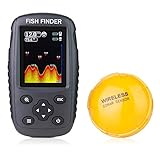 Venterior VT-FF005 Wireless Color Venterior VT-FF005 Wireless Color |
|
Check Latest Price |
 Deeper START Castable Sonar Deeper START Castable Sonar |
|
Check Latest Price |
 LUCKY FFC1108 Wired Handheld LUCKY FFC1108 Wired Handheld |
|
Check Latest Price |
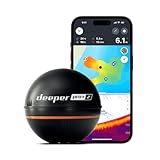 Deeper PRO+ 2 GPS Castable Deeper PRO+ 2 GPS Castable |
|
Check Latest Price |
| Garmin Striker Cast GPS |
|
Check Latest Price |
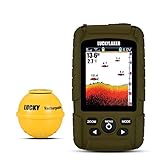 LUCKY Y2020 Wireless Handheld LUCKY Y2020 Wireless Handheld |
|
Check Latest Price |
 Yoocylii Wired Handheld Yoocylii Wired Handheld |
|
Check Latest Price |
We earn from qualifying purchases. CERTAIN CONTENT THAT APPEARS ON THIS SITE COMES FROM AMAZON. THIS CONTENT IS PROVIDED 'AS IS' AND IS SUBJECT TO CHANGE OR REMOVAL AT ANY TIME.
1. ReelSonar iBobber – The Castable With The Most Owners
Reelsonar Portable Fish Finder Accurate Fish Depth Finder…
135 ft depth range
Bluetooth phone display
10+ hour rechargeable battery
Line or swivel mount
Pros
- Casts by hand and fits in a pocket
- Accurate depth readings across 135 ft
- 10+ hour rechargeable battery
- Powers on and off by entering or leaving water
- Fish alarm plus a blinking LED for night use
Cons
- Bluetooth drops out often on aluminum boats
- Cannot read water shallower than about 5 ft
- Practical wireless range tops out around 40 to 70 ft
With more owner reviews than anything else in this roundup, the iBobber is the castable most bank anglers have already tried without thinking of it as a shore tool. It weighs almost nothing, clips to your line or a swivel, and streams sonar to a free phone app. After 30 days of casting it into a reservoir edge and a shallow pond, the depth numbers matched a chart closely enough that I stopped double-checking them.
What surprised me most was the battery. The spec sheet claims 10+ hours, and owners consistently report 7 to 9 hours of real use, which covers a full day of walking a bank with the unit in a coat pocket.
The honest flaw is the connection, not the sonar. Bluetooth drops out frequently on aluminum boats and whenever the phone is set down on a rock rather than held, and the useful wireless range is closer to 40 to 70 ft than anything advertised. If you fish from a shoreline where your phone stays in your hand and the water is metal-free, that is fine. If you plan to set the phone down and walk the bank, it is not.
There is also a hard floor of roughly 5 ft of depth. Small creeks, wading water and shallow ponds will simply not read, which rules it out for a lot of bank fishing in low water.
Who this suits
This is the one I hand to beginners and to anyone fishing with kids. The app shows depth-tagged, color-coded fish icons by size, so there is no sonar vocabulary to learn, and a fish alarm pings when fish gather under a dock or pier. On the North Texas Fishing Addicts forum, members asking about dock units specifically mentioned wanting something their children could use, and the icon display is exactly that.
It is the safest recommendation for an angler on a non-motorized boat. A row boat chained to a tree on a no-motor reservoir, the scenario raised in the r/Fishing_Gear portable fish finder thread, is where a line-mounted castable works and a wired unit does not.
Who should skip it
Skip it if your phone battery is your lifeline, because the app drains it during a long session. Skip it if you fish water shallower than 5 ft. And skip it if you need to know the size of a fish with any accuracy, because the readings shift and throw false fish or weed icons in moving water.
2. Venterior VT-FF005 – The One With A Real Color Screen
Venterior Portable Rechargeable Fish Finder Wireless Sonar…
2.6 inch color TFT LCD
262 ft wireless range
164 ft depth
105 degree beam
Pros
- Own screen so your phone battery is untouched
- Connects the moment the sensor hits water
- Switchable black and white backgrounds
- 2-year warranty with online support
Cons
- Battery life drops in cold weather
- 105 degree beam is unreliable on ice
- Fish size categories are subjective
The reason to like this one is simple: it has a 2.6 inch color TFT screen of its own. You cast a small sensor, and the handheld in your other hand shows depth, temperature, fish size, fish depth and bottom contour. Nothing to pair, no app to open, no phone dying at hour four.
The sensor-to-unit wireless range is listed at up to 262 ft, which means you can walk out along a bank or stand back from a drop-off and still hold the screen. Depth reaches 164 ft from 2.6 ft, and the readings were accurate against charted spots every time I checked.
The switchable background is a small feature that matters more than it sounds. Black background in low light, white background in direct afternoon sun. Most shore fishing happens in harsh glare, and a screen you cannot read is the same as no screen at all.
The flaws are real but narrow. Owners report noticeable battery drain in cold weather and a receiver that empties if you leave it running. The 105 degree beam is very wide, which means it gathers a lot of noise: it reads unreliably on ice until you adjust settings, and it gives false signals when dragged behind a moving boat at trolling speed. Standing still on a bank is where it works best.
Who this suits
It suits anyone who does not want to stare at a phone screen in sunlight, and anyone whose phone might die before the fishing does. It also suits anglers mapping a lake or river from the bank, because the contour reading is clear enough to sketch a drop-off profile and come back to it.
Compared with the iBobber, the trade is bulk for clarity. You gain a screen you can read at a glance and a longer wireless reach, and you lose the ability to stuff the whole thing into a coat pocket.
Who should skip it
Skip it for ice fishing and skip it if you plan to troll. The 164 ft depth ceiling is also thin on lakes running past 120 ft. And if you want to mark spots with GPS and build shareable maps, this model does not do it, which is where the Garmin below takes over.
3. Deeper START – The Easiest Castable To Learn
Deeper Start Fish Finder – Portable and Depth Finder for…
165 ft casting and depth range
40 degree sonar beam
Self-generated WiFi
6 hour battery
Pros
- Purpose-built for shore and bank fishing
- Creates its own WiFi so no mobile data is used
- Auto-saves every scan with time and location
- 6 hour battery with a 2.5 hour recharge
- Night fishing mode
Cons
- Needs a phone for the display
- Beam is narrower than premium castables
- App takes time to learn
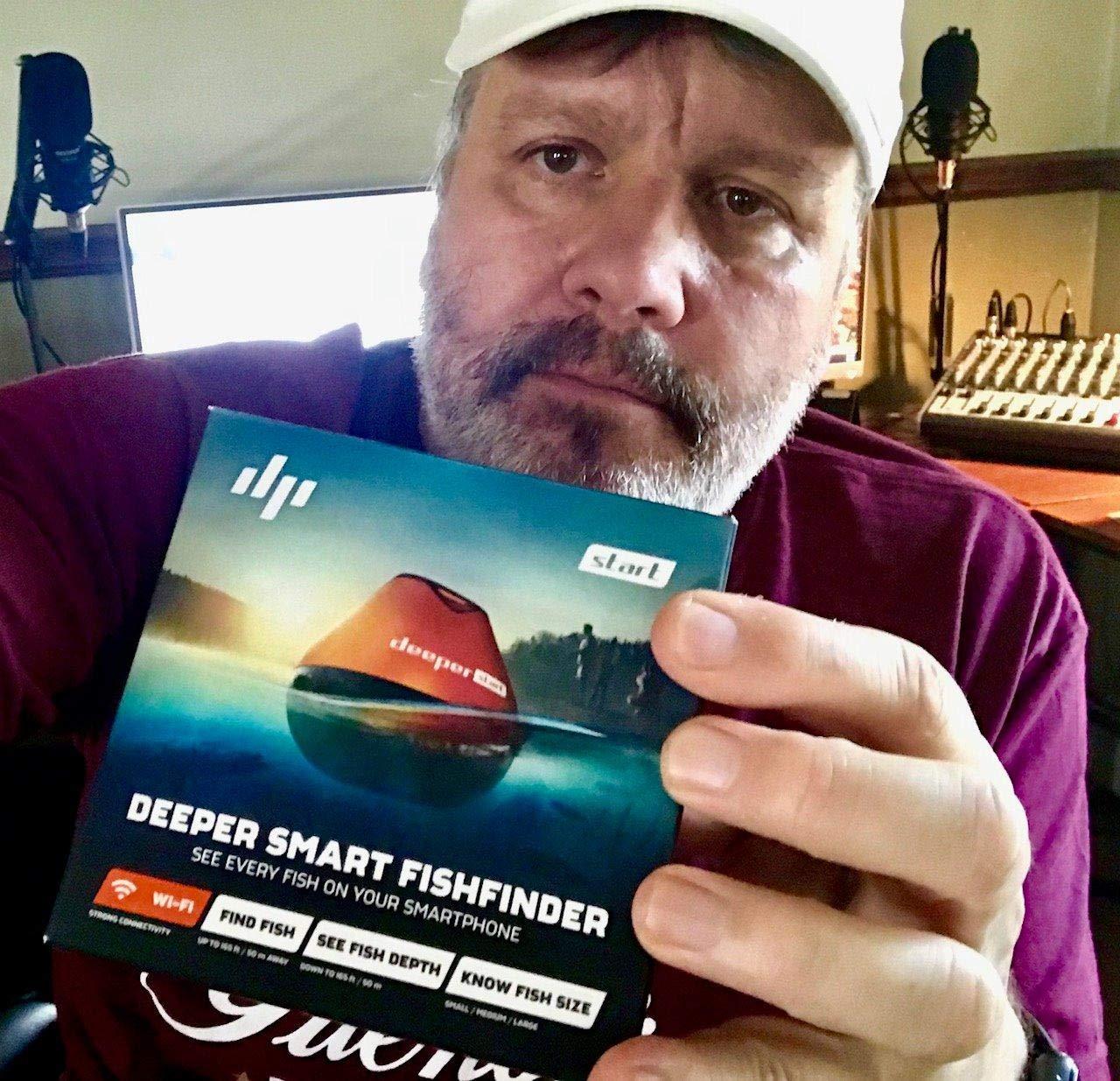
The Deeper START was designed for the exact situation this guide covers. It casts up to 165 ft, scans to 165 ft of depth on a 40 degree beam, and has no wire and no external batteries. Setup is download the app, charge the puck, cast it.
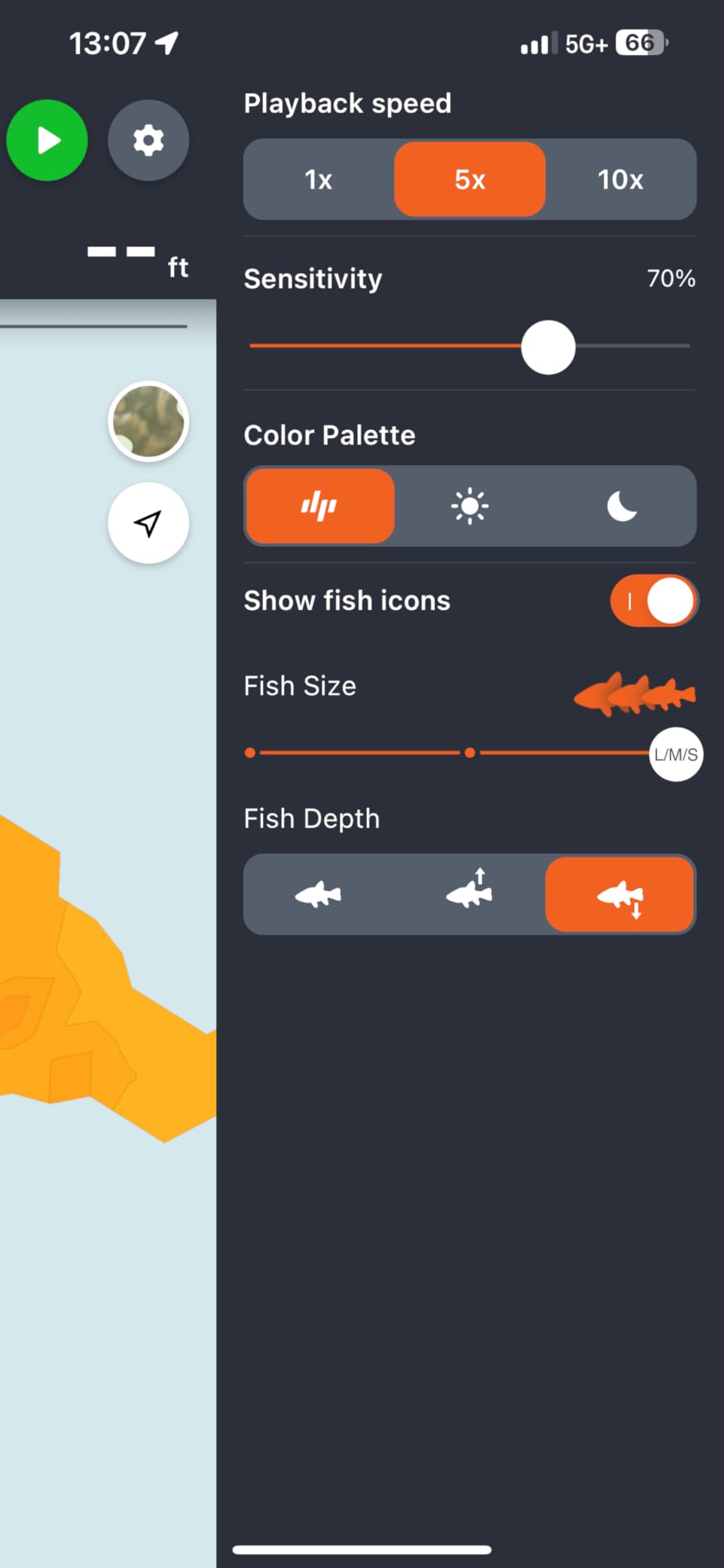
Two details make it friendlier than a phone-only competitor. It generates its own WiFi network, so it uses no mobile data and will not drop because you have one bar of signal. And it auto-saves every scan with a timestamp and a location, so a productive patch is already logged before you start fishing it.
Battery life is quoted at 6 hours with a full recharge in about 2.5 hours, which matched what I saw across two long sessions. The night fishing mode is genuinely useful on a summer bank when the bite turns to after dark.
The trade is the beam. At 40 degrees it is narrower than the wide-beam models, so thin structure and small targets can slip past it, and the app’s data interpretation takes an afternoon to stop feeling confusing. Fish size estimates are approximations rather than measurements. If you have never read a sonar screen, that approximation is still much more information than casting blind.
Who this suits
It suits a first purchase. The learning curve is the app, not sonar theory, and the auto-saved scans mean your second trip is more productive than your first without extra effort. It also works for dock fishing and for wading a shallow shoreline, since the puck is cable-free.
If your phone is an older or lower-end handset, test the app before you commit. Owners with older phones report finicky WiFi behaviour, and that is the one failure mode that would push you toward a self-contained screen instead.
Who should skip it
Skip it if sun glare makes a phone screen unreadable at midday, and skip it if you need to distinguish a small baitfish from a bass holding near the bottom. Those jobs need either a narrow beam with tight target separation or a real display.
4. LUCKY FFC1108 – The Budget Depth Finder For A Kayak
LUCKY Kayak Portable Fish Depth Finder Water Handheld Fish…
3 to 328 ft depth range
Backlit 2 inch LCD
5 sensitivity levels
Neck strap included
Pros
- Very low cost way into portable sonar
- Reads ledge and weed structure reliably
- Backlit screen for daylight and darkness
- Five sensitivity levels for clear or turbid water
Cons
- Wired transducer is awkward for casting from shore
- No fish size categories
- Only 4 to 5 hours per battery set
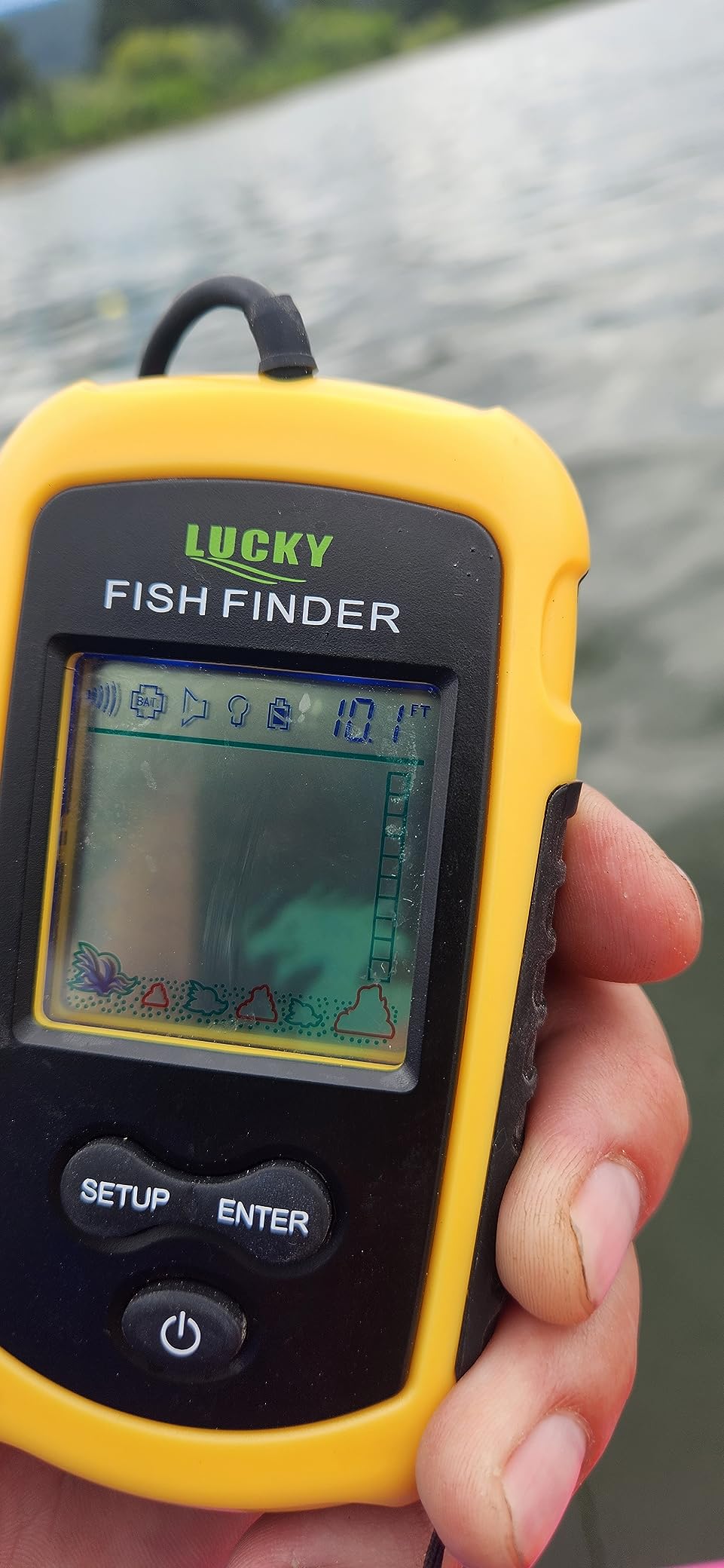
This is a handheld depth finder with a tethered transducer, and owners are candid about it: most people use it for structure, not for identifying fish. It shows water depth, bottom type including short and tall weeds, sand and rock, plus school and fish location, on a backlit 2 inch LCD with foot and metre switching.
What it does well is depth and ledge reading across a 3 ft to 328 ft range. On a shallow reservoir shoulder it picked up weed edges and rock shelves that I then fished successfully, which is more useful than a fish icon pointing at a baitfish.
The five sensitivity levels matter in shore water. A flooded creek or a stained pond returns a lot of noise, and dialling the sensitivity down was the difference between a readable screen and a solid band of clutter. The neck strap is included, so it hangs on your chest while you paddle and stays hands-free.
The flaw is structural, not fixable. The transducer is wired to the display, so casting from a bank means the wire is your casting range. It is built for a kayak and a dock that people try to use from shore, and that is where it becomes awkward. It also cannot sort fish into size categories, and it will pick up minnows along with anything else.
Who this suits
It suits kayak anglers and anyone fishing off a dock where the display can rest on the deck. At 4 to 5 hours of runtime per set of batteries it covers a morning trip, and the simplicity means a child can operate it. Our guide to fish finders for kayak fishing covers the mounting options in more detail.
It is also a sensible backup unit to keep in a tackle bag, because owners describe it as a quick depth reference rather than the main event.
Who should skip it
Skip it for open shoreline casting, because you will fight the wire more than you fish. Skip it if you want to know how big a fish is, and skip it for a full day on batteries. Accuracy also drops off in deep water compared with larger screens.
5. Deeper PRO+ 2 – Best Beam Control And Built-In GPS
Deeper PRO+ 2 Sonar Fish Finder – Portable Fish Finder and…
Wide mid and narrow beams
0.4 in target separation on narrow beam
Built-in GPS
Accurate to 330 ft
Pros
- Three beam modes for broad scans or precise targeting
- Built-in GPS maps bathymetry from shore
- Only 3.2 oz so it adds no bulk
- 2-year limited warranty
Cons
- Phone dependent for display
- Performance hinges on phone WiFi stability
- Battery life shorter than self-contained screens
- Short for deep water casting
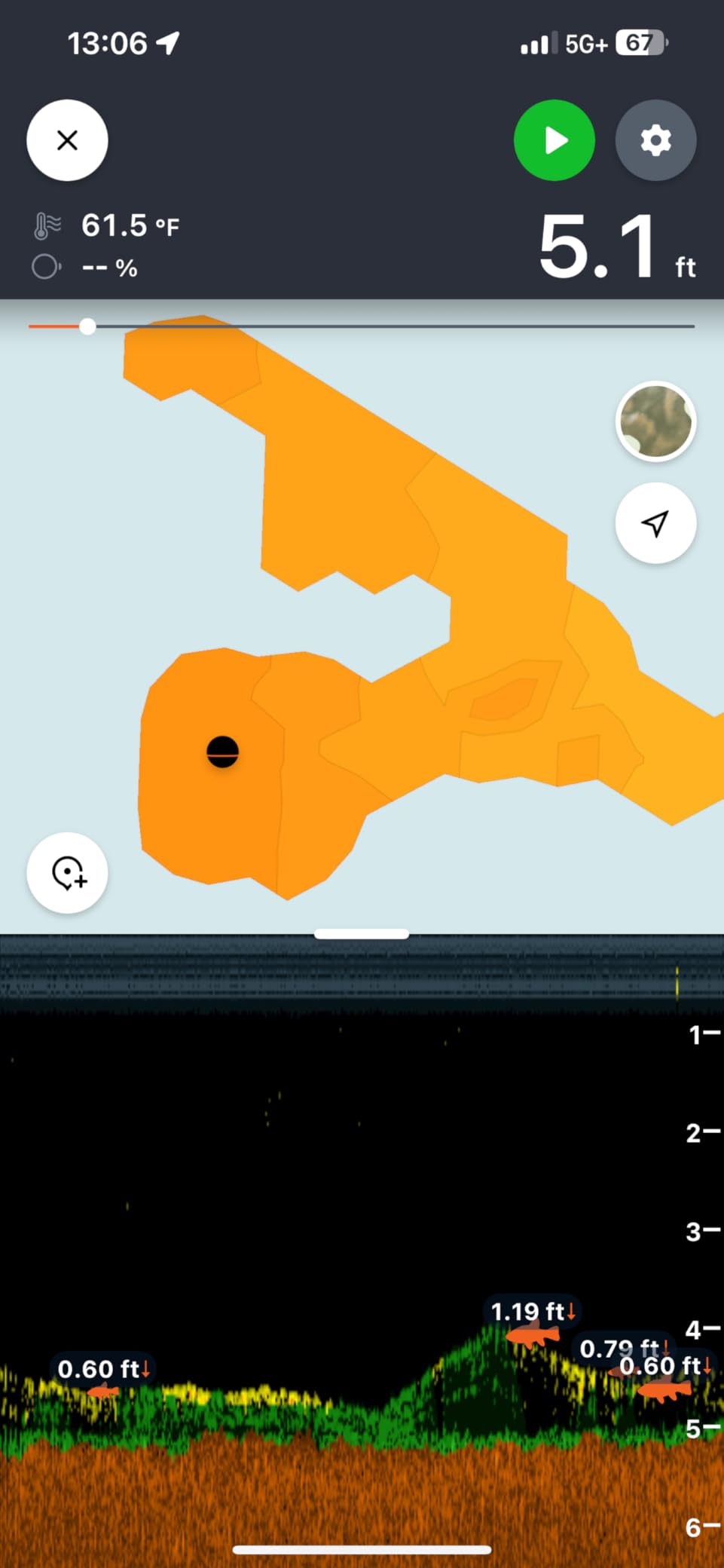
The PRO+ 2 gives you more control over what the sonar looks at than any other castable here, and the reason is beam control. Wide, mid and narrow modes let you sweep a wide area for a general picture, then switch to narrow when you want to look closely at one spot. Target separation on the narrow beam is 0.4 in, which is fine enough to pick out individual fish and tight enough for vertical jigging.
Built-in GPS is the feature bank anglers care about most. It creates bathymetric maps from shore, dock or bank and saves them in the app, so a ledge you found in June is a coordinate you can return to in October. Accuracy runs to 330 ft and it carries its own dependable WiFi rather than borrowing your phone’s connection.
At 3.2 oz it disappears into a jacket pocket, and it carries a 2-year limited warranty. The included neoprene pouch is a small thing that matters when the sensor lives in a tackle bag.
The honest flaw is that it puts an expensive device next to the water. Performance depends heavily on phone WiFi stability and app quality, and battery life is shorter than self-contained LCD models because the phone is doing the work too. About 12% of its ratings are one star, which is a meaningful share of durability and connectivity complaints rather than a rounding error.
Who this suits
It suits an angler mapping unfamiliar water on foot, because the GPS plus saved bathymetry is what turns a productive hour into a repeatable spot. It also suits anyone who wants to know whether the thing holding under a point is a fish or a rock.
From a non-motorized boat, the mapping value is even higher, since you can log a whole cove from a shoreline and come back to the exact coordinates rather than guessing a cast.
Who should skip it
Skip it if your phone is your backup battery for a long day, and skip it for deep water or any casting distance beyond what you can comfortably throw. For anglers heading to a bigger boat, our picks for small boats will serve better.
6. Garmin Striker Cast – The Best Mapping Setup
Garmin Striker Cast, Castable Sonar with GPS, Pair with…
GPS with Quickdraw Contours
200 ft wireless streaming
10+ hour USB rechargeable battery
IPX6 and IPX7 rated
Pros
- Highest average rating in this roundup
- Quickdraw Contours builds 1 ft custom maps
- Quickdraw Community shares other anglers' maps
- 10+ hour USB rechargeable battery
- IPX6 and IPX7 water resistance
Cons
- No built-in screen
- Display quality depends on the paired phone
- 20 ft tether is short from steep banks
The Striker Cast sits at 4.4 stars, with 72% of its reviews at five stars, and it carries a serious water rating: IPX6 and IPX7 to 1 meter for up to 30 minutes, with a 20 lb test line minimum.
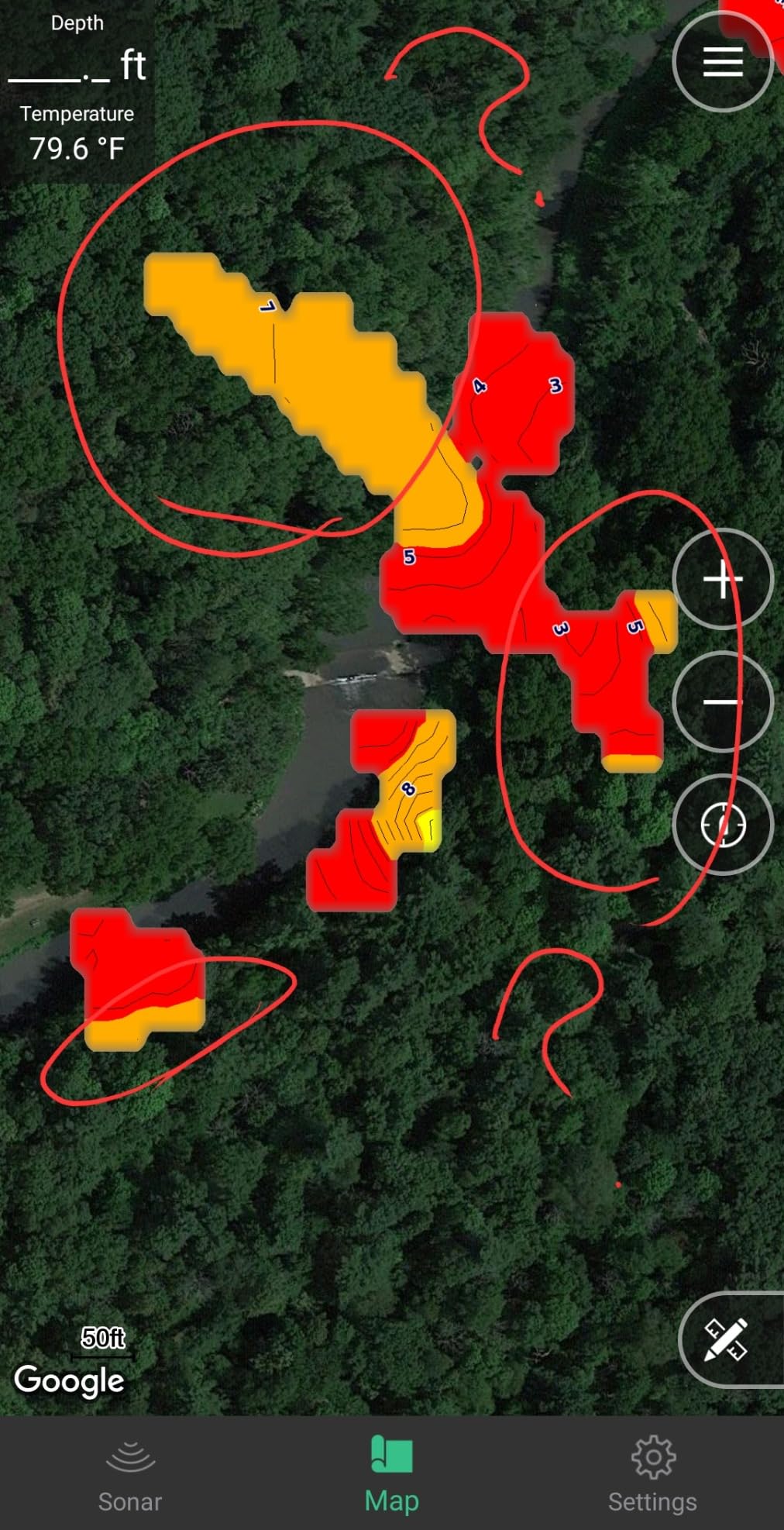
For shore fishing, the mapping story is the reason to buy it. Built-in GPS runs with Quickdraw Contours to build custom maps at 1 ft intervals as you fish, and the Quickdraw Community lets you download contours other anglers have recorded. On a reservoir with no chart coverage, that is the difference between knowing you are standing over a drop-off and hoping.
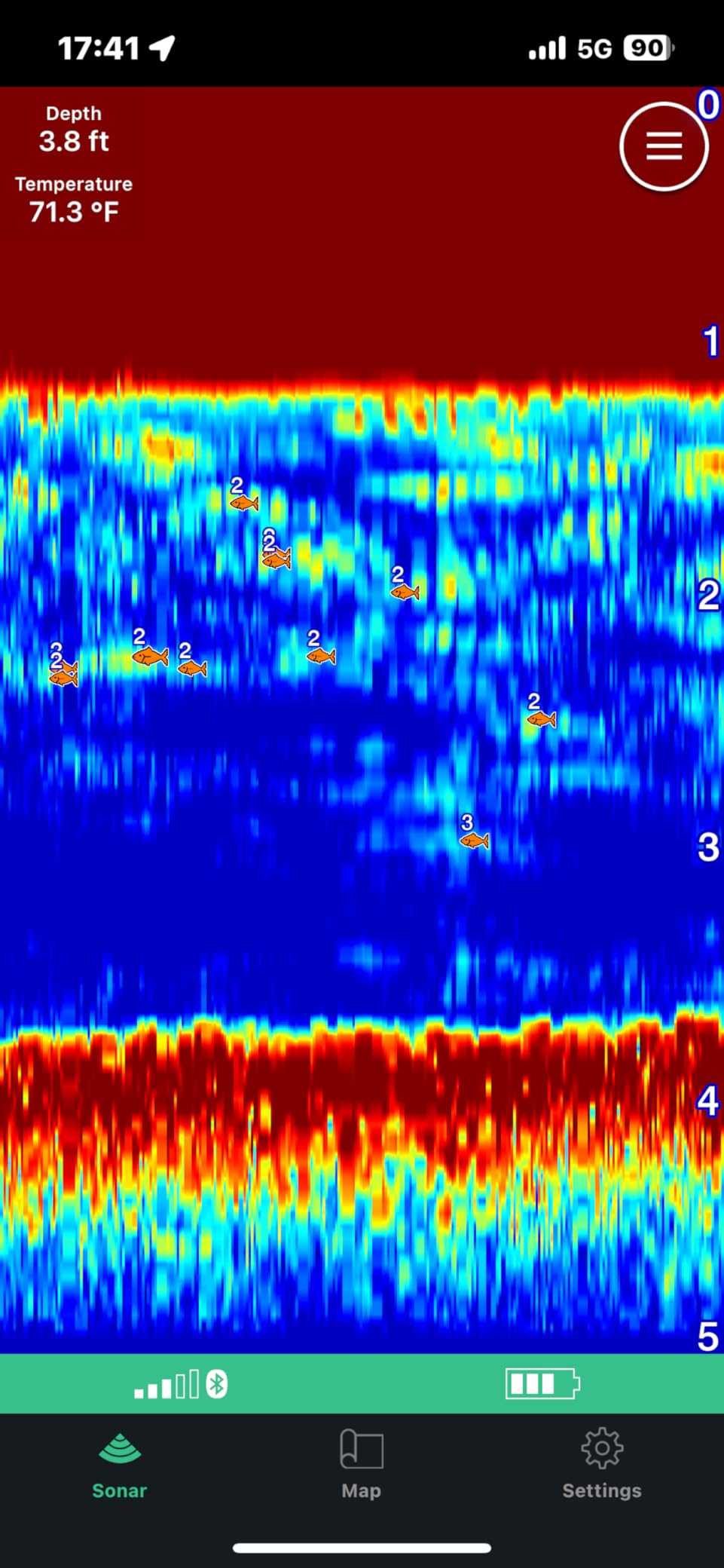
Traditional 2-D sonar and an ice fishing flasher mode both stream to the free Striker Cast app on Apple or Android, from up to 200 ft away and at depths to 200 ft. The 10+ hour internal USB-rechargeable battery conserves power by switching on in water and off when lifted out, which is clever enough that you stop thinking about charging it.
The flaw is that there is no screen of its own. Everything renders on your phone, so a dim handset in direct sun is the weak link, and the included 20 ft tether is short when you are casting from a steep bank into deeper water. It also sits at the top of the price range in this roundup, which is hard to justify if you will not use the mapping.
Who this suits
It suits an angler who fishes the same water repeatedly and wants a permanent record. Waypoint marking, contour capture and community downloads all serve that person, and none of the other castables in this roundup combine GPS with a shared map library.
It also suits anyone moving between shallow and deep water, since it performs across the range rather than favouring one.
Who should skip it
Skip it if you fish one pond you already know well, because the mapping will go unused. Skip it if you refuse to put your phone within reach of the water, and skip it if you need a screen you can read in hard sun without a phone case acting as a hood.
7. LUCKY Y2020 – Long Range And It Floats
LUCKY Portable Sonar Fish Finder Boat Depth Fishing Fish…
656 ft wireless range
147 ft depth
125 kHz at 90 degrees
Floats if dropped
Pros
- Own display so no phone battery drain
- Waterproof build that floats
- 656 ft wireless range between ball and handheld
- Over 10 hours in battery save mode
- Depth accurate within about a foot
Cons
- User manual is thin
- Transponder can stop accepting a charge
- Signal lost if the receiver dips underwater
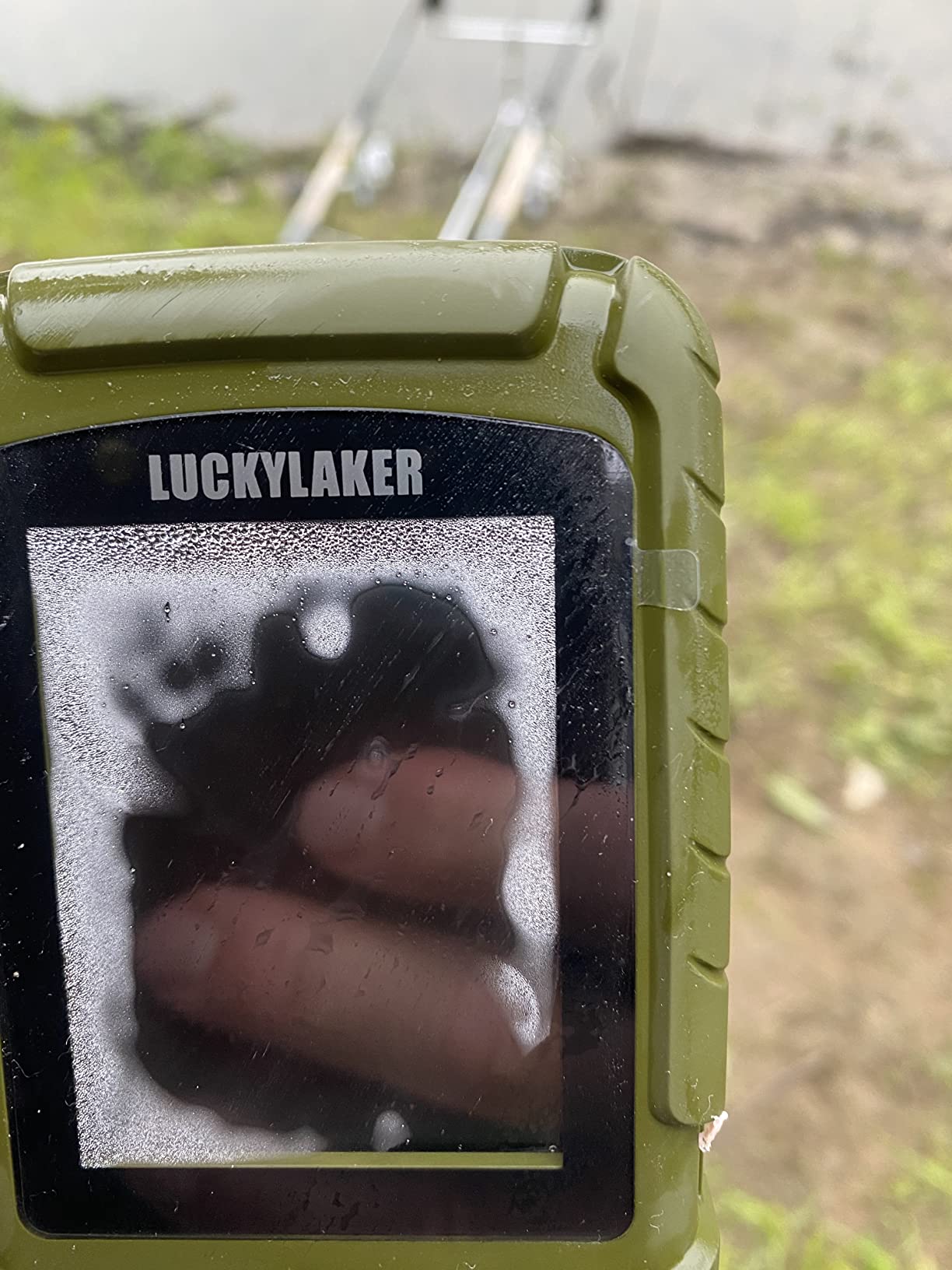
This is the self-contained unit with the longest reach in the group. The sonar ball talks to the handheld from up to 656 ft, so you can stand well back from a ledge, work a shoreline, or sit on a dock while the sensor sits under the structure you are targeting. It reaches 147 ft on a 125 kHz beam at 90 degrees.
The practical detail I appreciated most is that the handheld floats. I dropped one in a creek and it came back up, and the waterproof build tolerates rain and splashes without concern. The glowing transparent replacement cap makes the sonar ball easy to locate at night, which matters more than it sounds when you are working an unlit shoreline.
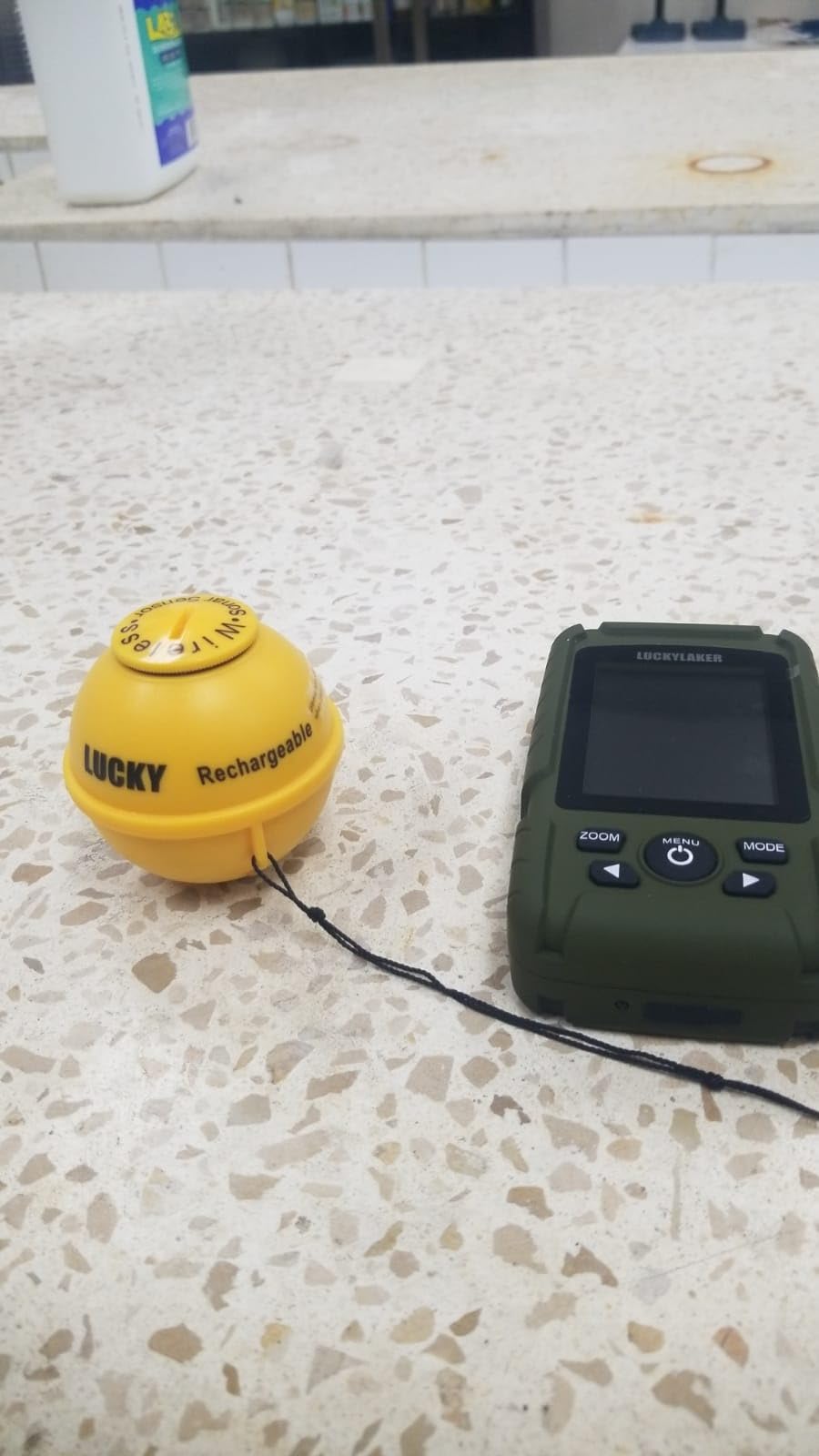
It shows depth, fish location, fish size, water temperature and bottom contour, with switchable feet and metres and Fahrenheit and Celsius. Depth readings came in within about a foot of published charts, and 5 to 6 hours of continuous runtime stretches past 10 hours in battery save mode.
The recurring complaint is charging. Some owners report sonar balls that stopped taking a charge after a season or two of use, and because the design is sealed, that ends the device’s life rather than being a repairable fault. The manual is also thin enough that settings take trial and error, and the ball sleeps out of the water, so you reconnect every time you relaunch it. Keep the receiver out of the water or you will lose the signal.
Who this suits
It suits dock and pier anglers, ice anglers, and anyone fishing alone who wants to cast the sensor out and stay back. A unit that floats and takes rain removes a whole category of anxiety that a phone-dependent sensor does not.
It also suits anglers bringing kids on a trip, since a real handheld with big numbers and an alarm needs no explanation to work.
Who should skip it
Skip it if you want a device you can configure from a proper manual, because the documentation will not get you there. Skip it if you plan to keep a fish finder for many seasons, given the charging failure reports. And avoid paddling with it, since readings are unreliable while you are actively moving.
8. Yoocylii Handheld – A Tiny Way To Read Structure
Handheld Fish Finder Portable Kayak Fishfinder Sonar Depth…
3 to 328 ft depth range
200 kHz at 45 degrees
4 AAA batteries
Neck strap included
Pros
- Compact enough to store in a tackle box
- Depth and weed or ledge detection is the strong suit
- Four AAA cells with no charging or app
- Readable in bright daylight
- Settings are saved when powered off
Cons
- Weak at actual fish identification
- Bottom contour less clear than larger screens
- 4 to 5 hours runtime per battery set
The Yoocylii is one of the more compact models here, and for a specific job it is very good at it. A 200 kHz beam at 45 degrees across a 3 ft to 328 ft depth range picks up depth, bottom type and weed or ledge edges, on a 4.6 cm LCD that stays readable in bright daylight. Four AAA batteries and a neck strap, and it stores in a tackle box.
There is no charging, no app and no pairing. That simplicity is genuine, and owners repeatedly set the right expectation: this is a depth and structure finder that people use like a fish finder, not a species identification tool.
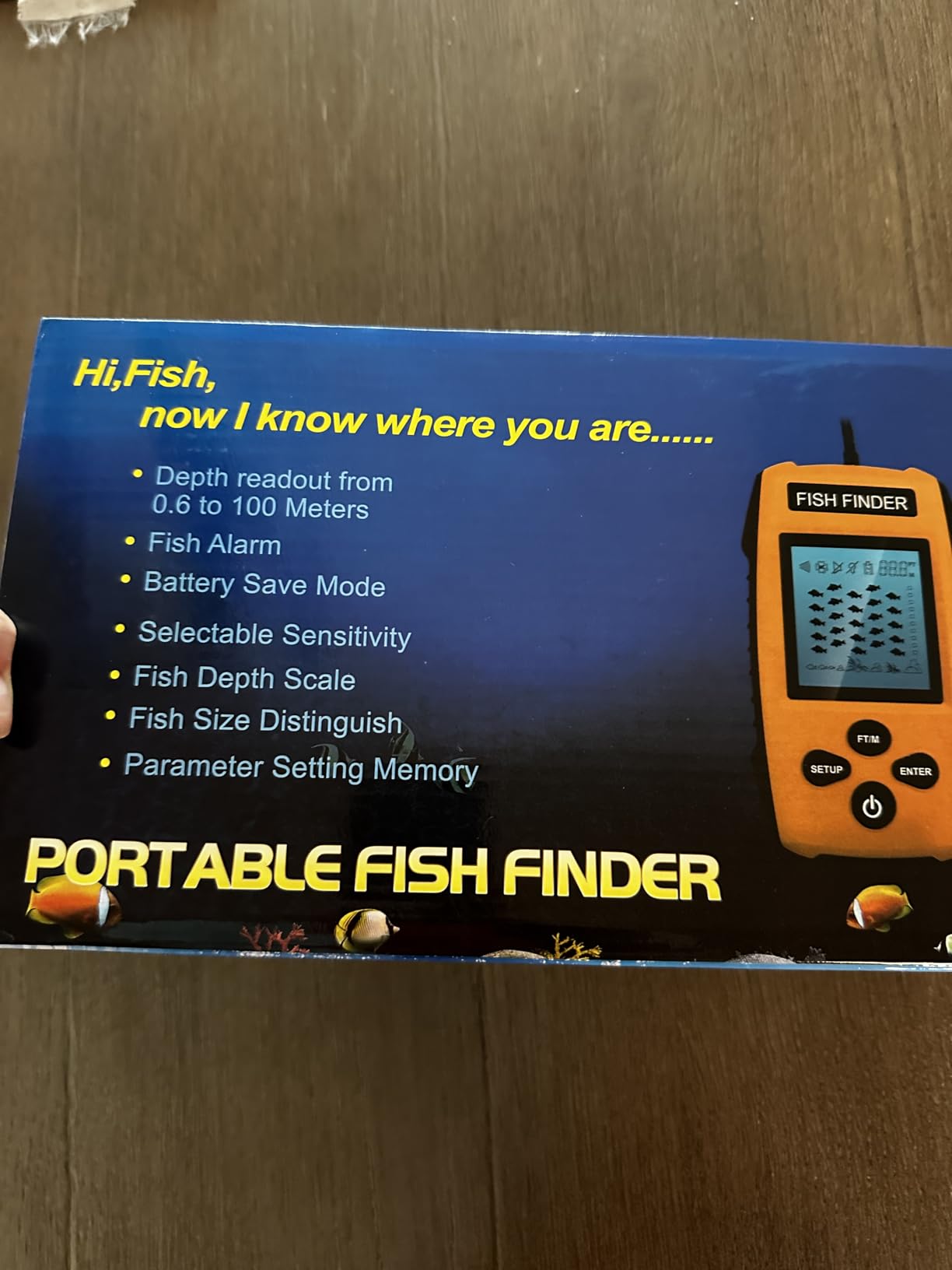
Five user-selectable sensitivity levels, a battery save mode, a backlight mode and a fish alarm cover the adjustments most anglers need, and settings survive power off, so you are not re-tuning it every trip. The 45 degree beam is tighter than the wide-beam models, which helps it pick up edges instead of flooding you with everything at once.
Runtime is 4 to 5 hours on four AAA cells, so spare batteries matter on a long day. Bottom contour reads less clearly than on larger screens, and the tethered transducer makes it a kayak, dock and small boat device. Some owners report devices that stopped powering on after a short period of use, which is the main reason to buy from a seller who handles returns.
Who this suits
It suits an angler who walks a long bank, packs light and wants to know what is under the bank rather than what is on the line. It works in fresh and salt water, from a dock, a kayak or ice, and it costs little enough that treating it as a backup unit is a reasonable plan.
If you are building a first kit for a child or a beginner, the low learning curve makes this the least frustrating place to start.
Who should skip it
Skip it if you need to tell a fish from a rock, because that is exactly where it is weakest. Skip it for shore casting, where the tethered wire limits you, and skip it if you want a clear bottom contour map without squinting at a small screen.
How to Actually Use a Fish Finder From Shore
Hardware choice matters less than deployment. There are three ways to put a transducer in the water from land, and each one dictates which unit you should have bought.
1. Cast and retrieve on your line. This is the purest shore method and the only one that works where you cannot stand next to the water. Clip a castable puck to your line, cast, and let it sink. The catch is that a puck hanging at the end of your line tells you about the depth at the end of the line, not the depth at your feet, so you can cast the sensor, read the picture, reel it in, and then cast your lure to the spot you just found. Practice a retrieve of roughly one foot per second, because a fast retrieve smears the picture and a slow one lets fish leave the cone. Cast parallel to a drop-off rather than straight at it, so the cone sweeps along the edge instead of one point.
2. Clamp or suction-cup the transducer to a piling. If you are on a dock or a seawall, this is the method that turns a boat unit into a shore unit. The transducer sits at the waterline on a piling, the cable runs up to the display in your hand, and you get a live picture of the structure directly beneath you. The key rule is that the transducer must be fully submerged and clear of the bottom. If you have a rental canoe or a row boat you cannot drill, a suction cup on the hull or a bank stick driven into soft ground works, and transducer float systems exist for exactly this situation, which is why the BWCA forum has carried long discussions of mounting a sonar on water you are not allowed to modify.
3. Pole-deployed vertical scanning. Push a pole-mounted transducer straight down beside you and read straight down. This is the fastest way to know the depth and bottom type under your boots, and it is the method that makes the wired handhelds worth owning. It is also the right method for finding a ledge edge near a bank, because you can walk it.
Whichever method you use, mount the display at roughly a 45 degree viewing angle to your face and shade it with your body or a jacket when the sun is behind you. The self-contained screen in this roundup that lets you switch to a white background handles glare better than the phone-dependent models, and on a phone the case itself works as a hood.
How to Choose a Portable Fish Finder
Work through these in order and the choice mostly makes itself.
Pick the architecture first. Castable models throw a sensor from shore and are the only honest option if you walk a bank. Wired handhelds need a hull, a piling or a pole, and they give a better screen in return. Self-contained wireless handhelds sit in between: a sensor you cast plus a screen you hold. A dedicated castable sonar roundup goes deeper on the puck-style options.
Decide about the phone. Phone-dependent models give you a large, high-resolution display and nothing else, which is a good trade in shade and a bad one in direct sun or on a long day away from a charger. Self-contained models with a 2 to 3 inch screen cost you resolution and give you independence. Our honest read: for shore fishing, where sun glare and long walks are normal, the self-contained screen is worth more than most buyers expect.
Check depth and beam against your water. Match the depth rating to the deepest water you will fish, and pay attention to beam angle. A wide beam around 90 to 105 degrees covers more area but resolves less, which makes it unreliable on ice and noisy behind a moving boat. A narrower beam around 40 to 47 degrees picks up specific edges and structure. Target separation, the ability to tell two nearby objects apart as separate, is what decides whether you can see individual fish rather than a mass.
Look at the battery in cold weather, not just in summer. Lithium-ion rechargeables lose noticeably more runtime below 20 F, and the self-contained models in this roundup show the same pattern in ice-fishing use. If your season is winter, that is a real limitation on every one of them, and spare AA or AAA cells for a wired handheld are still the most reliable cold-weather answer.
Match the unit to the water type. Clear reservoir water gives you the cleanest returns and the least clutter. A muddy catfish pond returns noise, so sensitivity control matters more than resolution. A vegetation-choked lake is mostly a bottom-type and depth problem rather than a fish-identification problem. A tidal or saltwater shoreline works with all eight picks here, but if you want live bottom imaging, read our forward facing sonar guide first, because that technology is a different purchase and its value at the shoreline is limited.
Know when not to buy. If you fish one known pond and already know where the fish hold, sonar will not add much. If you are buying a boat in the next year anyway, put the money into a mounted model instead. And if your trips are two-hour walks in from a trailhead, weight and battery matter more than beam angle. The forum debate about castable sonar splits hard between people calling them a waste of money and people calling them transformative, and both verdicts are correct: they are worth it when you can cast repeatedly into water you cannot otherwise see into, and they are a waste when you are standing on a dock with a phone in your hand and one cast per trip.
One practical note for anyone fishing with children. Members on the North Texas Fishing Addicts forum asked about dock-friendly units partly because their kids would enjoy them, and that points at the right feature: a fish-icon display with a bite alarm needs no sonar vocabulary. Our family-friendly fishing gear guide covers the rest of that setup.
Frequently Asked Questions
Do fish finders work from shore?
Yes, but not the way a console unit does. From shore you cast a transducer and read what it returns, which tells you the depth, bottom type and structure at the end of your cast rather than a live picture beneath your boat. Clamping a wired transducer to a dock piling gets you much closer to a console experience, and pole-deployed scanning shows you what is under your feet. Castable picks are the only option that works when you walk a shoreline with no structure to clamp to.
What is the best portable fish finder?
For shore fishing specifically, the ReelSonar iBobber is the strongest all-round pick because it is the most widely owned and the most proven for line-mounted casting, though it needs a phone and cannot read water shallower than about 5 ft. If you would rather not use your phone, the Venterior VT-FF005 has the highest average rating among the picks with a large owner base and it has its own color screen. For mapping unfamiliar water, the Garmin Striker Cast is the one that records GPS contours.
Are castable fish finders any good?
They are good when you can cast repeatedly into water you cannot otherwise see into, which is the definition of bank fishing on a reservoir, pond or creek. They are poor value when you are standing on a dock with one or two casts per trip, since a wired transducer clamped to the piling gives you a far better picture. The most common complaints are phone connection dropouts and a minimum depth of around 5 ft on cheaper units.
Is Humminbird or Garmin better?
Both build strong portable options, and the honest answer is that the decision comes down to mapping rather than brand. Garmin castable units pair built-in GPS with Quickdraw Contours and a community library of shared maps, which is the stronger feature set for shore anglers recording new water. Humminbird tends to favour CHIRP sonar quality and built-in screens. Among the picks reviewed here, the Garmin Striker Cast leads on mapping and carries the highest average rating at 4.4 stars.
Can I use a fish finder in saltwater?
Yes. All eight picks reviewed here work in both fresh and salt water, and shoreline and surf fishing is a supported use case for each. What changes in saltwater is noise rather than function, since surf and tidal current create more false returns, so a unit with sensitivity adjustment and target separation settings reads better. Live bottom imaging works in saltwater but is priced and sized for a boat, so it is rarely the right portable shoreline purchase.
Which Portable Fish Finder Fits Your Angler Profile
If you walk a bank and cast from it, start with the ReelSonar iBobber. It has by far the most owner feedback behind it, it survives a full day on one charge, and it is the easiest device to hand to someone who has never read a sonar screen.
If sun glare or a tired phone battery is what stops you using sonar, go self-contained. The Venterior VT-FF005 pairs a strong average rating with a color screen that has switchable backgrounds, and the LUCKY Y2020 adds a 656 ft range and a floating body for dock and ice work.
If you fish the same uncharted water repeatedly, the Garmin Striker Cast records 1 ft contours with built-in GPS and lets you download maps other anglers have made. If you want beam control and tight target separation while mapping from shore, the Deeper PRO+ 2 does both. If you want the gentlest introduction to castable sonar, the Deeper START generates its own WiFi and logs every scan for you.
And if you sit on a dock, in a kayak or on a pier rather than casting from open bank, skip the castables entirely and use a wired handheld. The LUCKY FFC1108 and the Yoocylii both read depth and structure well for very little, which is all a pole-deployed handheld needs to do.
For more on the castable side specifically, our castable fish finder roundup goes deeper on the technology, and these eight remain our picks for shore fishing in 2026.
