How to Remove Hard Water Spots from Faucets Without Damage (2026)
To remove hard water spots from faucets, soak the fixture in diluted white vinegar for 15 to 30 minutes, then scrub the loosened mineral crust with a soft toothbrush and rinse with warm water. The method changes with your faucet finish, so read the finish notes before you start.
The white chalky crust on a faucet is not soap. It is limescale, mostly calcium carbonate, left behind as hard water evaporates and its dissolved minerals crystallise on the metal. Acid dissolves it; abrasives just scratch the deposit around and take the shine with it.
Contents
Time: 20 to 40 minutes for light to moderate buildup, plus an overnight soak for heavy scale · Cost: a few dollars for pantry staples · Difficulty: Easy DIY · Skill level: beginner, as long as you check the finish first
Updated for 2026.
Tools and Materials
Most people never need more than what is already in the cupboard. The whole job runs on acid plus friction plus a lint-free cloth.
- White distilled vinegar, enough to cover the cloth or fill a bag
- Warm water for rinsing and diluting
- Microfiber cloth for soaking, wiping and drying (2 clean ones)
- Soft-bristled toothbrush, an old one is fine
- Mild dish soap
- Small bowl or cup to mix the solution
- Rubber gloves, and a plastic bag plus rubber band for the overnight soak
- Toothpick or a thin pin for the aerator holes
For stubborn scale or finishes that rule out vinegar, add these.
- A limescale remover labelled safe for chrome, stainless steel or bathroom fixtures
- Citric acid powder as a middle-strength option
- Baking soda for a mild paste on chrome and stainless only
- Furniture wax for oil-rubbed bronze, once the metal is clean and dry
- A soft sponge or melamine pad for chrome, used sparingly
Read our guide on cleaning hard water spots on glass shower doors if the same water is clouding your enclosure. Glass and metal fail in different ways, so the method does not carry over.
Before You Start
Know your finish first. It decides everything else. Chrome and polished brass tolerate vinegar well. Brushed nickel, matte black, oil-rubbed bronze and most plated or PVD finishes do not, and a dull patch you cannot buff out is permanent.
Look at the faucet in good light and under the handle. Chrome is mirror-bright and cool to the touch. Brushed nickel has a dull, grainy look. Matte black absorbs light and shows fingerprints and white spotting badly. If you cannot tell, treat it like the delicate option and stay with soap and warm water.
Next, protect the surroundings. Put a folded towel under the faucet base so drips never sit on porcelain, stone or a stainless bowl. Stone counters and grout lines dislike acid, and a stray splash will etch them.
Ventilate the room and put on gloves. You do not need to shut off the water for a surface clean. You do need to turn the hot and cold shutoffs off if you plan to unscrew the aerator, and never energise an outlet or switch your breaker off inside a wet sink cabinet.
Finally, test in a hidden spot. Put a small dab on the underside of the spout where nobody sees it and leave it for the full dwell time you plan to use. If the finish dulls, tints or loses its grain, stop and drop down to dish soap and warm water only.
Step-by-Step Instructions
Step 1: Wipe Away Loose Dirt and Soap Residue
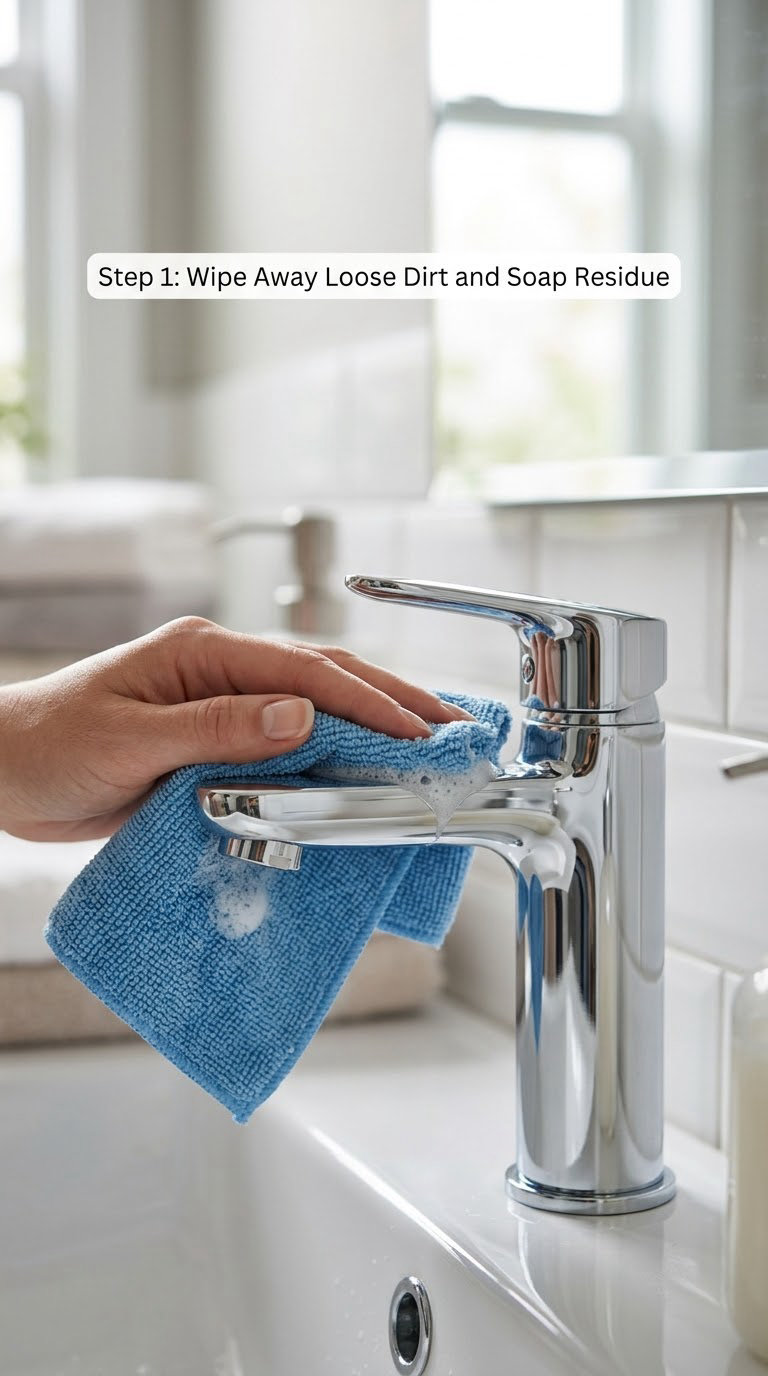
Start with a drop of mild dish soap on a damp microfiber cloth and wipe the whole fixture, spout, handles and base. This takes off grease, soap scum and loose dust, and it gives you a clean surface to judge the deposit against afterwards.
Work top to bottom so you are not pushing grime onto a part you already cleaned. Rinse with warm water and dry. Now you can see how much of what is left is actual limescale rather than soap film.
Step 2: Try a Mild Soap and Vinegar Solution
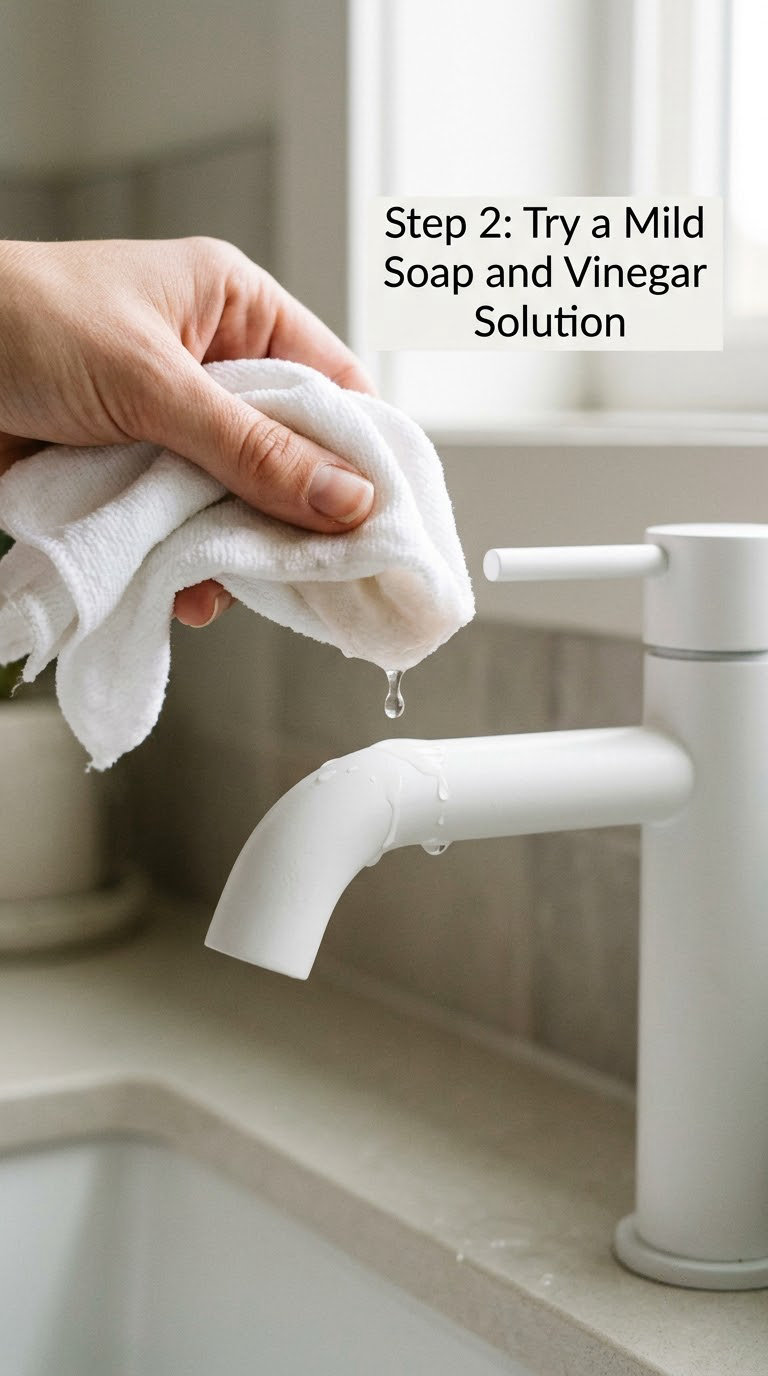
Mix one part white distilled vinegar with three parts warm water in a bowl. That ratio is gentle enough for polished chrome and strong enough for most light to moderate crust. Undiluted vinegar is only worth it on heavy scale on chrome, and never on nickel, black or bronze.
Soak a microfiber cloth in the solution, wring it out until it is damp rather than dripping, and lay it over the spotted areas. Wrap it around the spout and over the handle if you can, then press it down so it stays wet against the metal. A plastic bag with a rubber band over the cloth keeps the acid in constant contact and is the trick most readers in cleaning forums swear by.
Leave it 15 to 30 minutes for light film and moderate crust. Go overnight for heavy scale. Keep checking that the cloth stays damp; topping it up with a squeeze of the mixture is easier than scrubbing dried vinegar crust.
Step 3: Scrub Stubborn Spots Gently
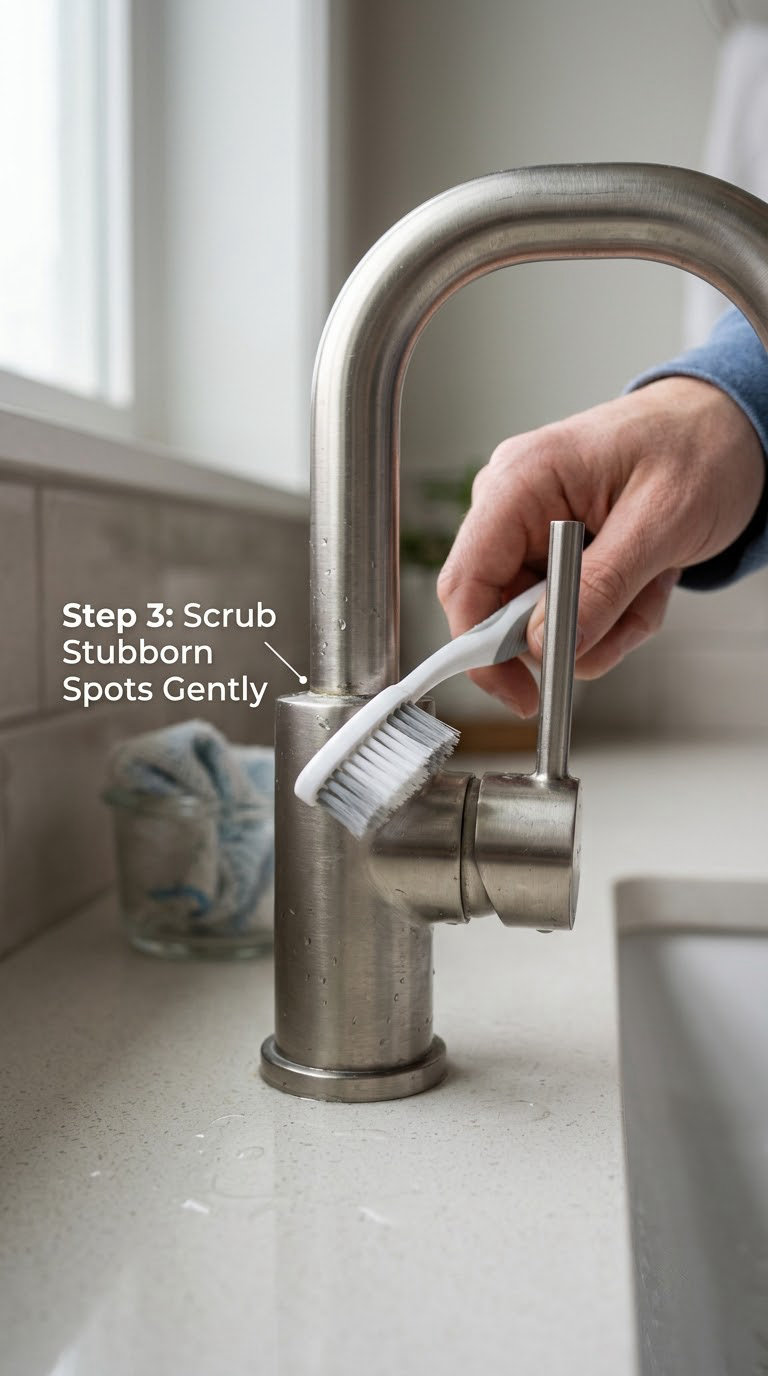
Take a soft-bristled toothbrush and work the deposit along the seam where the spout meets the body, under the handle lever, and around the base ring. Short light strokes, not pressure. The acid has already done most of the work, so the brush is only lifting what softened.
Keep the brush off brushed nickel, stainless steel and matte black if you can. On brushed nickel the bristles catch and pull the grain; on stainless they leave fine scratch lines that show up later as dull streaks. A melamine pad works on chrome, and even there only on deposits that will not budge otherwise.
Step 4: Use a Faucet-Safe Mineral Cleaner for Heavy Deposits
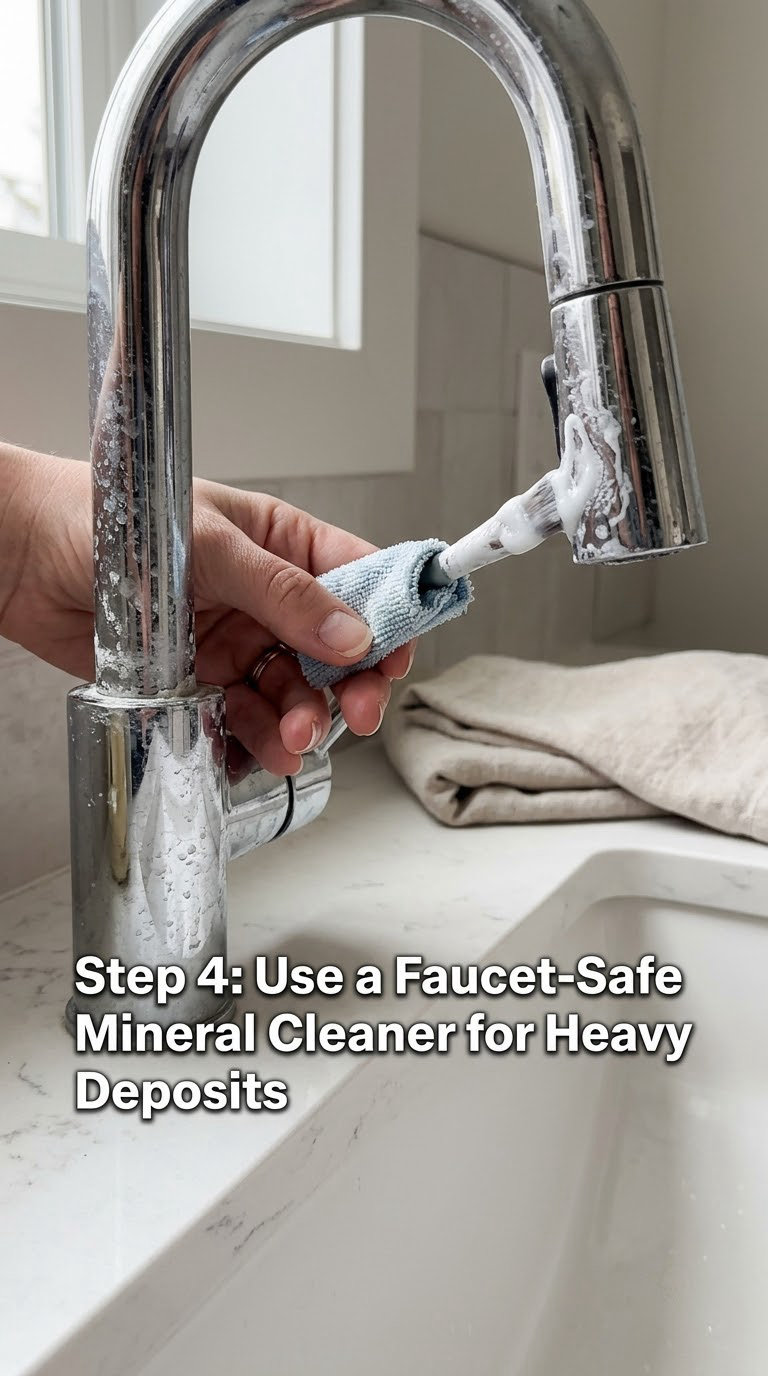
If the acid soak loosened nothing, move up one rung rather than up five. Citric acid powder mixed with warm water is the gentler middle step and works well on chrome. After that a commercial limescale remover labelled for chrome or stainless is the honest answer for scale that has been building for years.
Follow the label contact time exactly and set a timer. Commercial removers are strong enough to etch a finish if they sit too long, and they must never reach natural stone, marble or grout. Some also tell you to keep the room well ventilated, which is worth doing.
Never mix two cleaners, and never mix an acid with bleach. Vinegar plus bleach releases chlorine gas, which is genuinely dangerous in a small bathroom.
Step 5: Rinse and Dry the Faucet
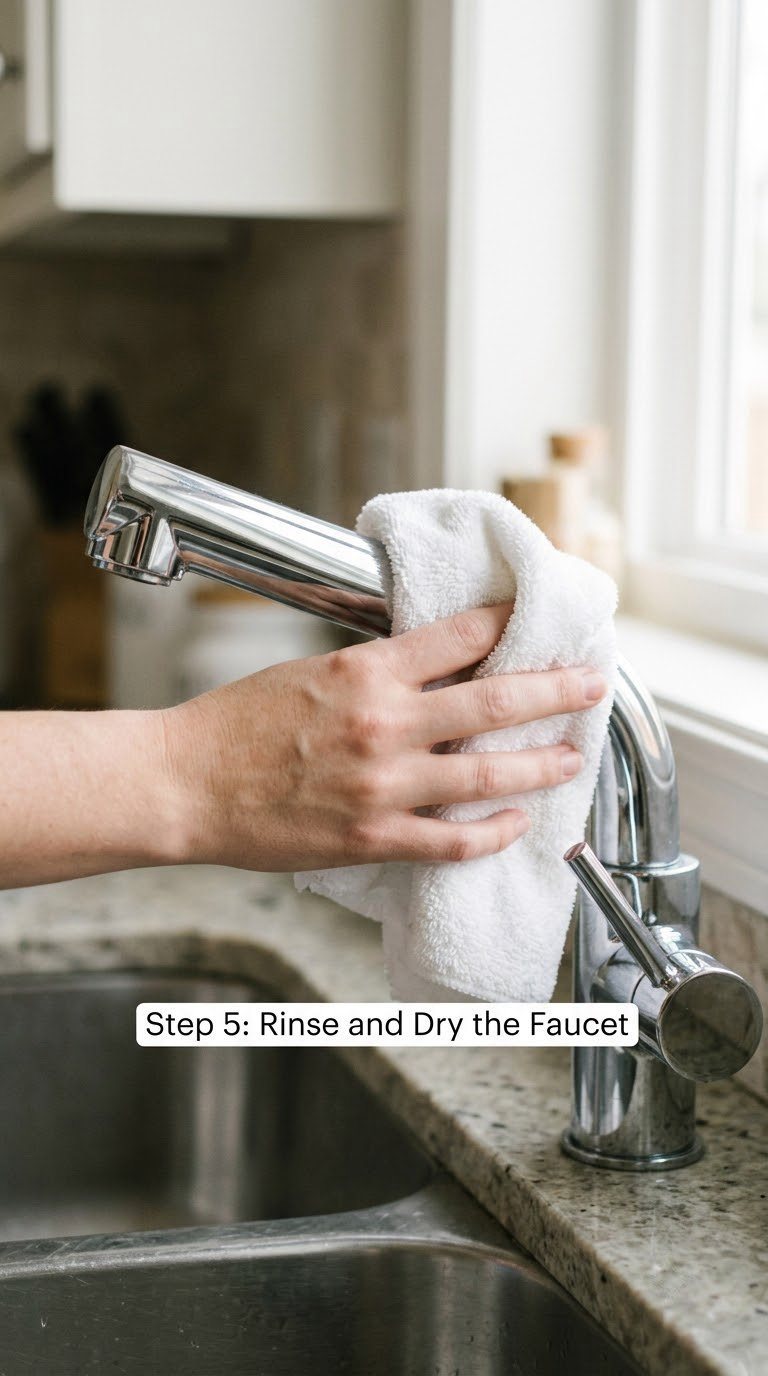
Rinse with warm water until every trace of solution is gone, then dry with a clean, dry microfiber cloth. This is the step most people skip and the reason a faucet looks worse five minutes after a proper clean: the water you rinsed with evaporates and leaves the same mineral ring again.
While the faucet is wet and clean, take the small screw-on tip off the spout, the aerator. Soak it in vinegar for 30 to 60 minutes, clear each hole with a toothpick, rinse, and refit it by hand. If flow has been weak or sputtery before the clean, this is usually why, because the mesh inside traps the same scale you just removed from the outside.
Step 6: Prevent New Hard Water Spots
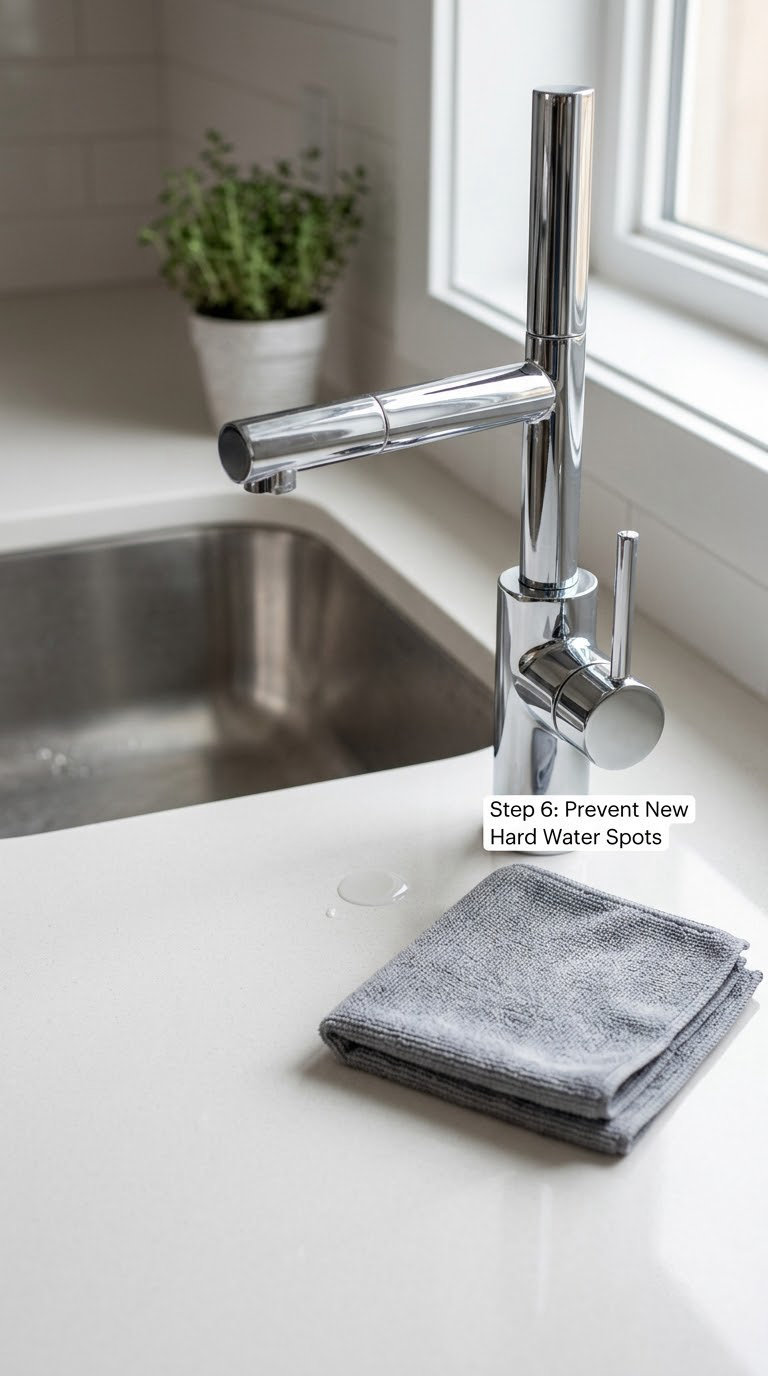
Leave water spots alone by wiping the faucet down after you use it. Ten seconds with a dry microfiber cloth while you are already at the sink stops the droplet from ever becoming a ring.
Then set a light cadence: a soap-and-water wash weekly, a vinegar soak monthly, and an aerator check every couple of months. On oil-rubbed bronze, a thin coat of furniture wax after drying keeps the patina even.
The root fix lives in your water, not your faucet. If your hardness sits high enough that spots return within days, a softener is the only thing that stops the cycle. Our picks for whole-home water softeners for hard water cover the sizes and capacities that matter for a family home.
Common Mistakes to Avoid
- Steel wool or scouring pads. They cut a permanent scratch into chrome and nothing will make it shine again. Use a melamine pad or a soft toothbrush instead.
- Abrasive powder cleansers and bleach powder. Manufacturers are blunt about this one: finish-care guidance from Moen, Delta and Kohler all rule out abrasives, ammonia, bleach and solvents. Use dish soap.
- Boiling or very hot water. Heat sets some mineral deposits faster than it loosens them, and it can craze sealants and damage plastic trim. Warm water and time do the job.
- Mixing cleaners. Vinegar and bleach makes chlorine gas. Never pour one cleaner over another to see what happens.
- Soaking a faucet with electronics. Touchless and sensor faucets, pull-down sprayers with a wired head and anything with a battery pack should be wiped, never submerged.
- Letting it air dry. Air drying is what leaves streaks and rings. Dry it.
- Skipping the spot test on dark finishes. Black and bronze coatings show damage immediately and permanently. Two minutes of checking beats a replacement.
When to Call a Pro
Cleaning is the wrong job when the problem is the faucet rather than the water. Call a plumber if scale has etched visible pits into the plating, because no cleaner restores missing metal.
Get someone in when water seeps from under the handle or the base ring, when the handle has gone slack, or when the spout will not stop dripping after the cartridge is replaced. Constant dripping keeps a wet film on the fixture, which rebuilds scale in days no matter how often you clean.
Stuck or stripped aerator threads, a spout that will not stop running after cleaning, and white deposits inside the aerator housing all point to a part that needs replacing rather than a surface that needs scrubbing. If scale is appearing on every fixture in the house at the same rate, that is a water-treatment question, not a faucet one, and our breakdown of water heater elements in hard water covers the rest of the system where scale does the most damage.
Maintenance
Weekly: wipe with a damp microfiber cloth and a drop of dish soap, then dry. That single habit prevents most of the work below.
Monthly: run the vinegar soak, thirty minutes, then rinse and dry. If the finish is brushed nickel, matte black or bronze, substitute warm soapy water and a soft cloth, and accept that some spotting is part of those looks.
Every couple of months: pull the aerator, soak it, clear the holes. If your water is very hard, check flow while you are there, since a sputtering stream is the earliest sign of a scale blockage.
Yearly: test your water hardness. If it is well above the middle range and spots still come back between cleanings, the softener needs salt, a resin flush or a service visit. If you have never measured it, testing is cheaper than another year of scrubbing.
Frequently Asked Questions
What is the safest way to remove hard water spots from a faucet?
The safest method is a diluted white vinegar soak: one part vinegar to three parts warm water, left on for 15 to 30 minutes, then lifted with a soft toothbrush and rinsed. Warm water and a drop of dish soap is gentler still and works on every finish. Always test on a hidden spot first, and dry the faucet afterwards so it does not leave new rings.
Can white vinegar damage chrome or brushed nickel faucets?
On polished chrome, vinegar is safe and is the fastest way to dissolve calcium carbonate, especially diluted. On brushed nickel it can dull the grain and leave the finish looking patchy, and it is best avoided there. The same goes for matte black, oil-rubbed bronze and plated finishes. Use warm water with dish soap and a microfiber cloth on anything that is not chrome.
How do I clean hard water deposits without scratching the finish?
Never use steel wool, scouring pads or abrasive powder. Use a soft-bristled toothbrush or a melamine pad, keep the strokes light, and let the acid do the dissolving rather than forcing it. On brushed nickel and stainless steel, use a cloth only, because bristles catch the grain and leave scratch lines that show later as dull streaks.
What should I use on a black, matte, or oil-rubbed bronze faucet?
Stick to warm water, mild dish soap and a microfiber cloth, with the cloth left on for a few minutes rather than scrubbed. Acids and abrasives both attack matte and PVD coatings, and any mark you make stays. Once the metal is clean and completely dry, a light coat of furniture wax on bronze helps slow future spotting.
Why do hard water spots keep coming back after I clean the faucet?
Usually one of three things. The water is hard enough to redeposit within days, so a softener or consistent drying habit is the real fix. You rinsed the faucet but let it air dry, which leaves a fresh mineral ring from the rinse water alone. Or the aerator inside the spout is scaled, spraying water unevenly and wetting the whole fixture instead of a clean stream.
When should faucet spot removal be handled by a plumber?
Call a plumber when the plating is pitted or peeling, when water leaks from under the handle or base ring, when the handle is loose, or when the spout keeps dripping after a cartridge change. Constant dripping leaves a wet film that re-deposits scale faster than any cleaning routine can fix. Stuck aerator threads are a small job but not one to force with pliers.
Conclusion
The safest place to start is warm water, a drop of dish soap and a microfiber cloth, because it costs nothing and cannot hurt a finish. If the deposit is real limescale on polished chrome, move to a one-to-three vinegar soak for 15 to 30 minutes and lift it with a soft toothbrush.
Then rinse and dry properly, and pull the aerator while the faucet is still clean. The single habit that prevents most of this is wiping the faucet down after every use, so the water never gets the chance to dry into a ring.