How to Remove Rust Stains from a Bathtub Without Damage 2026
Most orange-brown bathtub stains come off in 20 minutes with a mild paste and a soft cloth, then start working back toward the drain. This guide walks through how to remove rust stains from a bathtub without scratching the finish, starting with the gentlest method and escalating only when the stain does not move. The first thing to do is work out what your tub is made of, because the material decides which cleaner is safe.
Rust is iron oxide. It forms when water carrying dissolved iron sits on a surface and oxidises, so the stain itself is only the symptom. The source is usually a dripping faucet, a corroded water heater, older galvanised pipe or a metal can someone stood on the tub rim. If you clean without fixing that source, the mark comes back within days.
Contents
If your problem is at the overflow plate or the drain flange instead of the tub surface, our bathtub overflow rust repair guide covers that separately. And if the tub is acrylic or fibreglass, check the plastic bathtub stain guide before you reach for anything abrasive.
Time: 20 to 40 minutes per treatment, plus drying time · Cost: a few dollars from the pantry for light stains, more for a commercial rust remover · Difficulty: Easy DIY · Skill level: Beginner
Tools and Materials
For one light to moderate stain, this is everything you need. Quantities assume a single mark up to about 4 inches across.
General Tools
- Nitrile gloves, 1 pair — the cheap nitrile kind, not thin cotton liners
- Safety goggles or glasses that seal at the sides
- Microfiber cloths, 2 or 3 (one for the solution, one clean for checking the result)
- Soft nylon brush or a medium-bristle toothbrush, for drain-area stains
- Spray bottle, 1, for wetting the tub and diluting a powder cleaner
- Small bowl, 1, for mixing a paste
- Optional: a box fan pointed at the tub, plus a window open, if the bathroom has no extractor fan
Cleaning Materials
- Baking soda, roughly 2 tablespoons for one light stain
- 1 lemon, juice only — bottled juice works but is weaker
- OR a labelled tub-safe oxalic acid rust remover, one tub, if the gentle paste fails
- Clean lukewarm water for rinsing
- A damp towel and a plug for the drain and overflow opening
Product labels govern everything else. If the label gives a dilution or a maximum contact time, that number beats anything written here. That matters most for the oxalic acid powders, where an improvised mix can etch the finish instead of cleaning it.
Before You Start
Identify the tub first. Porcelain enamel and acrylic sound similar but behave nothing alike. Enamel is fired vitreous china over cast iron or steel: hard, glassy and quite resistant to mild acids, though hard scrubbing will still scratch the glaze. Acrylic and fibreglass tubs carry a thin resin gel coat over the mould, and that coat dulls permanently under a pumice stone or a scouring pad. A cast iron tub is usually enamel over iron, which means any chip in the glaze becomes a rust site. Cultured stone and cast stone blends are engineered stone, and they tolerate acid better than gel coat but not steel wool.
Look under the rim for a stamped brand name and model number, then search the manufacturer’s site for the material and its care instructions. The number on the tub matters more than the colour. If you cannot find it, test the gentlest method in a concealed spot and watch how it behaves.
Set Up for Safety
- Run the extractor fan or open a window before you open anything with fumes.
- Put on nitrile gloves and goggles. Acid powders irritate skin quickly, and a splash in the eye is genuinely painful.
- Take off rings, watches and any metal jewellery. A watch band resting in a wet patch will print a fresh orange ring on the enamel while you work.
Never mix bleach with vinegar, ammonia, or any other cleaner, in any order. The combination releases a gas that will irritate your lungs in a small bathroom. Never use steel wool, abrasive pads or scouring powder. Skip hydrochloric-acid drain cleaner entirely, even though it lives in the same cabinet as the things you need.
Protect the Area
Clear bath items out of the tub and lay the damp towel in the overflow opening so solution cannot travel into the wall cavity. Plug the drain. If the stain sits near the overflow and you need to remove the plate to reach it, shut the water off at the valve before you touch the fixture, and see our bathtub faucet handle removal guide for the habit of labelling and bagging every part you take off.
Step-by-Step Instructions
Six steps take you from a gentle paste through to a label-diluted oxalic acid treatment, then neutralising, rinsing and drying. Start at the top of this ladder every time and move down one rung only if the stain stays put. Follow the product label wherever it disagrees with the times below, and stop the moment the finish dulls, etches or changes colour. More chemical is not better here — dwell time past the label is how a removable stain turns into a permanent one.
Step 1: Identify the Bathtub Finish and Test the Cleaner
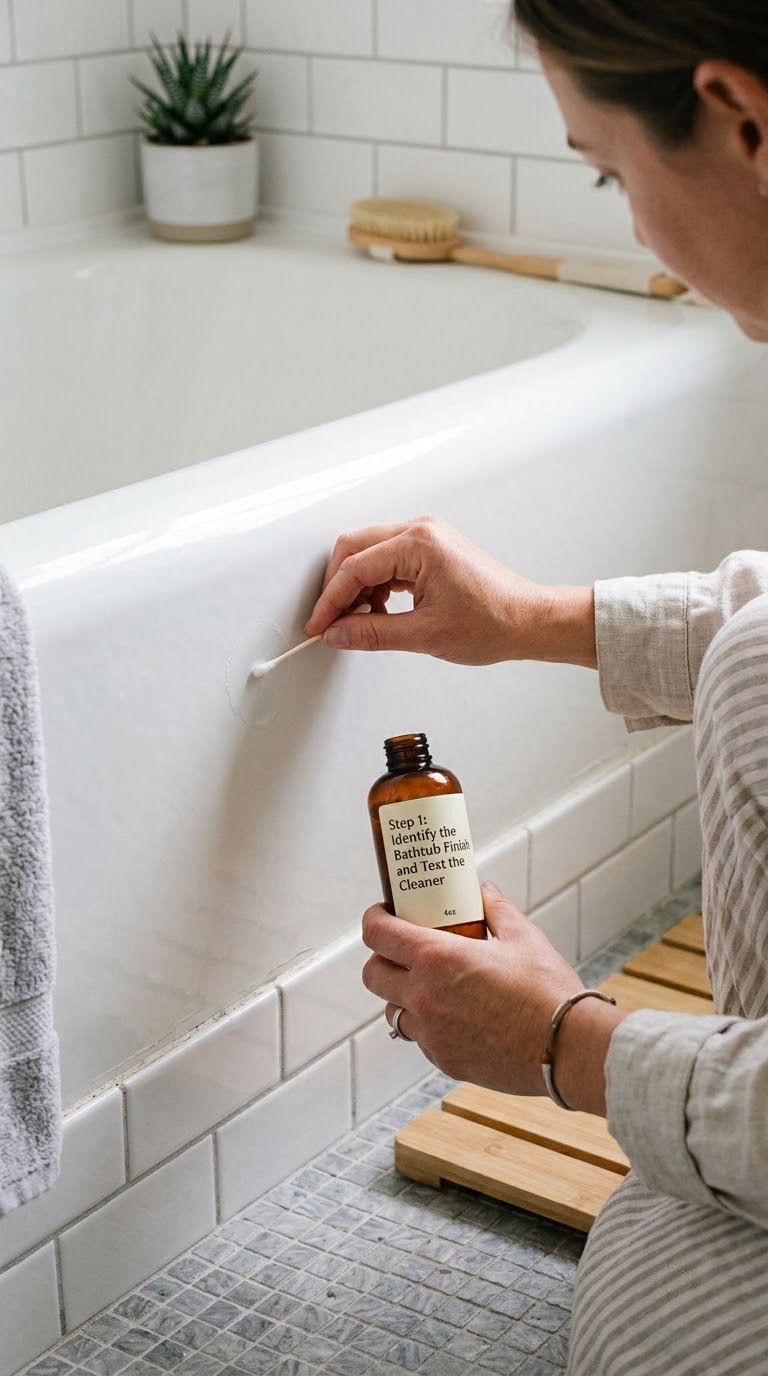
Find the manufacturer or model information on the tub, then match what you see. Glossy, glassy and slightly cold to the touch usually means porcelain enamel or vitreous china. A uniform colour with a faintly textured, warmer surface, often with a flex of movement in it when you press the side, points to acrylic or fibreglass with a gel coat.
Patch test before you treat the full stain. Pick a spot the size of a coin behind the faucet lip or down in the concealed corner. Wet it, apply your chosen cleaner, and wait only for the label-approved time. Then rinse and dry, and look at the area in daylight. Etching shows as a dull patch or a change in gloss, and some gel coats yellow slightly. If you see any of that, stop and move to a milder method.
Step 2: Dry and Prepare the Rust Stain
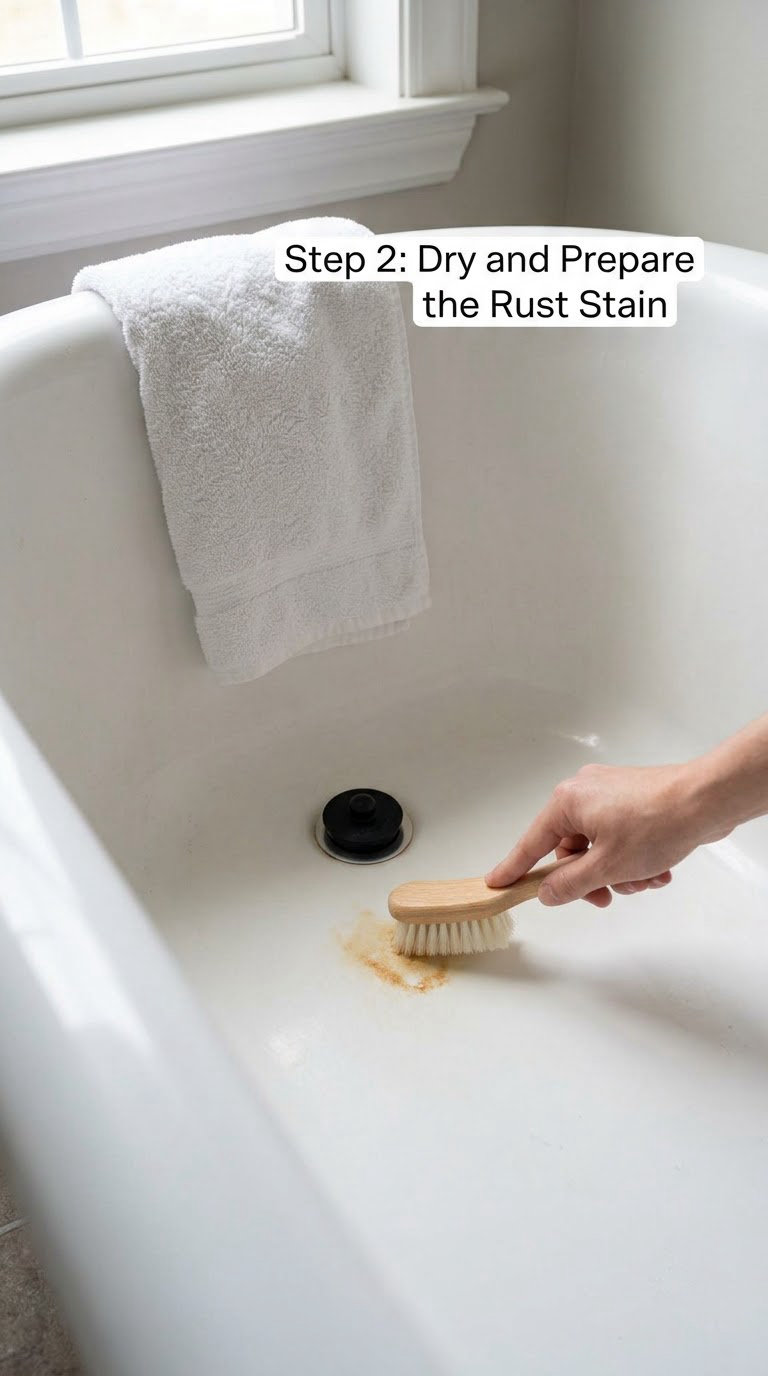
Take every bottle, sponge and toy out of the tub. Wipe the stain and the whole surrounding area until it is dry, then wet the entire mark generously — damp enamel protects itself better than dry enamel when a paste goes on. Wetting also stops powder from turning into a dusty smear halfway through.
Loosen surface residue with a soft nylon brush and a little dish soap, working in circles with light pressure. If the stain is reachable at the drain, plug the drain and press the damp towel into the overflow opening now. Keep a plastic scraper or an old card handy to lift dried paste later, and skip anything sharper. Scraping is what scratches.
Step 3: Try a Baking Soda and Lemon Treatment
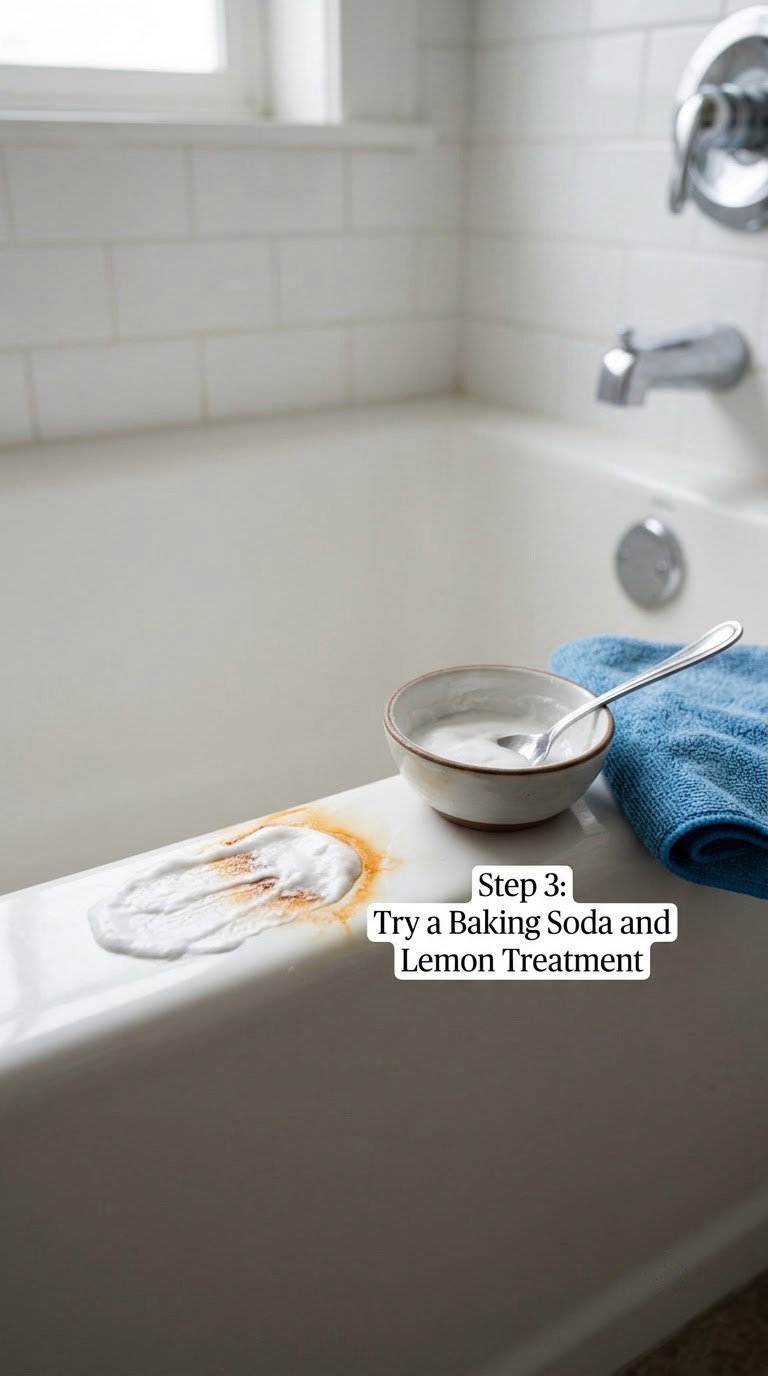
Mix 1 to 2 tablespoons of baking soda with just enough lemon juice to make a spreadable paste. It should hold its shape on the enamel rather than run off. Spread it over the damp stain in a layer thick enough to cover the orange colour completely, then leave it for up to five minutes.
Citrus is the gentlest thing on this list but it still etches gel coat if you walk away. Work the paste in with a fingertip or a soft cloth, not a brush, and keep the motion light. Rinse with lukewarm water straight away and dry the patch to see the result. If the stain is noticeably lighter, you are done — a second gentle pass often beats moving to something stronger.
Step 4: Use Oxalic Acid for Stubborn Rust Stains
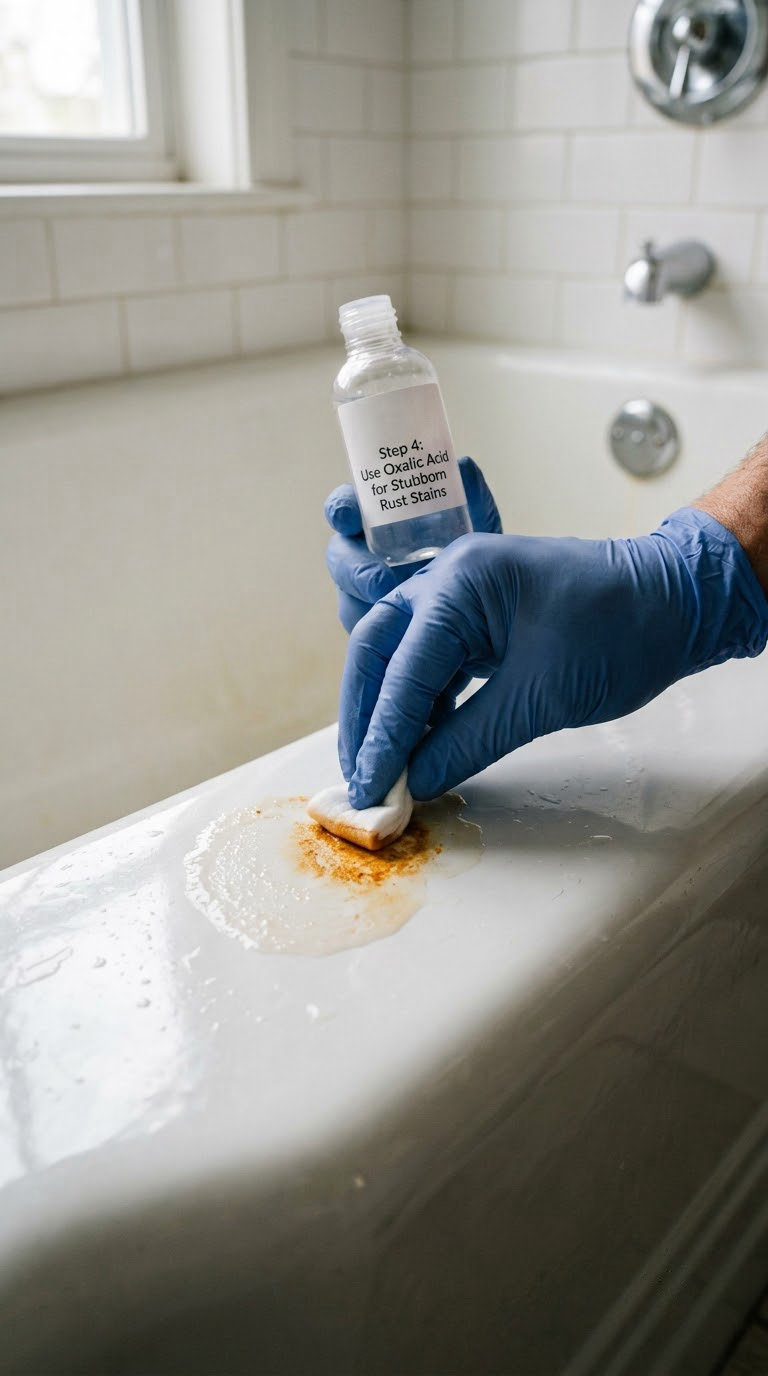
Oxalic acid is what most dedicated rust removers and powdered bathroom cleaners are built around. It binds the iron and lifts it off the surface, which is why it beats scrubbing for a stain that has set in. Follow the label exactly: it tells you the water volume for a paste or a solution, and it tells you the contact time.
Apply only to enamel, or to a surface the label specifically approves. Keep it well away from the drain, away from children and pets, and never in a closed tub with a plug in, because you will want to pour it straight back out. Observe the stated contact time and rinse immediately. Undiluted acid and improvised concentrations are the fastest route to etching a tub you cannot unetch, and going longer than the label says does not make the stain go faster.
Step 5: Rinse, Neutralize and Check Your Work
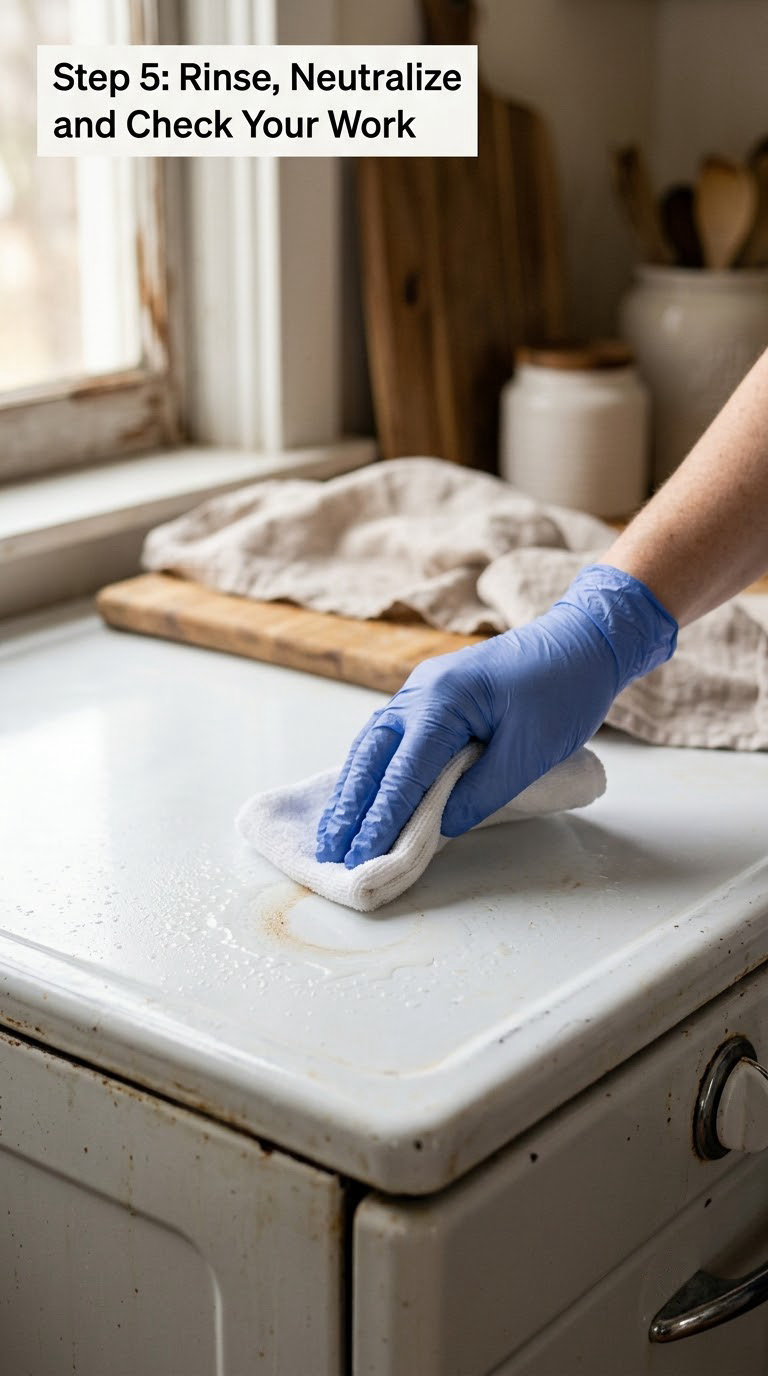
If the label calls for a neutralising step after an acid-based cleaner, do it now and only as the manufacturer directs — some products want a rinse of clean water and nothing more, and a neutraliser you mixed yourself can be its own problem. Then rinse the tub thoroughly with lukewarm water until no odour, no residue and no colour in the runoff remain.
Wipe the treated patch dry with a clean white microfiber cloth. The white weave makes any remaining orange show up instantly. Repeat the gentler method once if there is a shadow left, then stop. If progress has stalled after two careful attempts, do not scrub harder and do not increase the acid strength. Moving up the ladder is the only thing that helps at that point.
Step 6: Dry the Tub and Prevent New Rust Marks
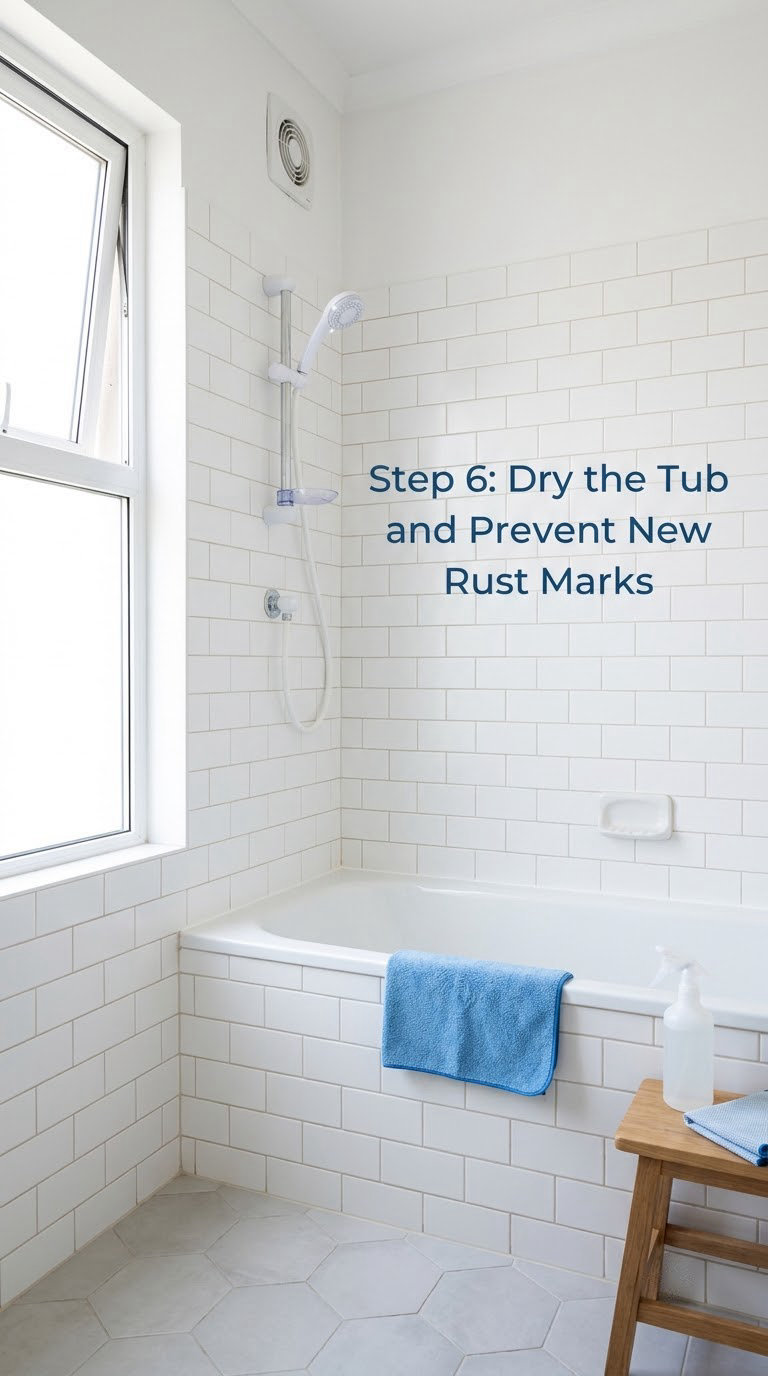
Wipe the whole tub down with a soft microfiber cloth right away, then let it air dry. Where practical, wait 30 to 60 minutes before anyone showers in it, and confirm the surface is dry to the touch, not just dry-looking. Trapped moisture under a film of cleaner is what dulls a finish.
Now deal with the source. Replace any corroded metal showerhead, hose or shower curtain rings, and keep standing water from covering the tub floor after a long soak. Our bathtub drain removal guide covers lifting the flange if a rusted ring is staining the surface right at the drain. A dry or damp cloth run over the tub after each use costs you ten seconds and stops most fresh deposits.
Common Mistakes to Avoid
Scrubbing too hard. Pressure does not remove rust faster than the chemistry does; it just wears the finish. Use a cloth or a soft nylon brush and let the dwell time do the work.
Steel wool and scouring pads. They scratch enamel and permanently dull gel coat. A scratch traps dirt and the next stain sets in faster.
Bleach. It does not dissolve rust, and on a porcelain-on-iron tub it can be the reason you have a stain at all. People on cleaning forums report bleaching a tub, watching the finish later go porous, and finding the iron base corroding through it.
Leaving a cleaner on past its label time. Excess dwell time etches porcelain and dulls acrylic. Set a timer.
Mixing chemicals. Bleach with vinegar or ammonia can release a gas that will clear a small bathroom in seconds. If the tub is still full of suds from a previous attempt, rinse thoroughly before you start.
Cleaning around a leaking metal drain without fixing it. The stain returns in a week and none of that work mattered. Repair the leak first; our stain removal basics covers the same logic on softer surfaces.
When to Call a Pro
Stop cleaning and bring in a bathtub refinisher or a qualified plumber when rust has gone past the surface. Signs include deep pitting you can feel with a fingernail, a gel coat or enamel coating that is flaking, cracking or peeling, a stain that has spread across several square feet, or a leak you have not been able to stop.
Refinishing or replacing a tub often costs less than three more cycles of aggressive cleaning, and it protects the fixture as well as the appearance. Do not attempt to sand or coat the tub yourself without the manufacturer’s specific instructions for your model, because a DIY coating over an unidentified finish is very hard to undo. If you are a renter, tell the landlord before buying anything, and ask for a refinisher quote rather than a full replacement quote.
Maintenance
The routine is short. Wipe the tub down after each bath, pH-neutral and non-abrasive weekly, and check metal fixtures and supply lines for weeping or orange weeps once a month. Replace a leaking accessory straight away rather than wiping it.
Rust returns whenever the underlying metal is still oxidising, even after a perfect clean. If stains keep reappearing in the same spots within 48 hours, stop treating the tub and treat the plumbing — a dripping spout, a corroded water heater or galvanised pipe in a hard water area will outlast any cleaner you own. Testing the water for iron content is a cheap first step before you commit to a filtration system.
Frequently Asked Questions
Will baking soda and lemon remove rust stains from a bathtub?
Yes, on light to moderate surface rust, and it is the safest place to start. Mix one to two tablespoons of baking soda with enough lemon juice to make a paste, spread it over the wet stain and give it no more than five minutes before rinsing. Citrus is mildly acidic, so leaving it longer than that can dull an acrylic gel coat. Patch test first, and if the stain is set in, move up to a tub-safe oxalic acid remover.
Is vinegar safe for removing rust stains from porcelain and acrylic?
Vinegar is mild enough for porcelain enamel but it is not the right choice for acrylic or fibreglass gel coat. Acetic acid dulls a soft resin surface, sometimes visibly, and the dullness does not polish back out. On porcelain enamel, a diluted vinegar soak can help a light film, but it works more on soap scum and lime than on iron oxide. Skip it on stone and cultured stone unless the maker approves it.
Why do bathtub rust stains keep coming back after cleaning?
Because you have cleaned the deposit but not the source. Rust keeps arriving whenever iron-laden water touches the tub, a metal accessory corrodes in place, or a nearby fitting drips on the surface. Watch the pattern: stains returning within a day or two point to a drip or a failing seal, while an overall orange tint that builds up over weeks points to iron in the water supply or galvanised pipe. Fix the plumbing before cleaning again.
How do I remove rust from a bathtub drain or overflow?
Treat the metal and the surrounding surface separately. Remove the drain flange or overflow plate, bag and label every screw, and soak the metal parts in a label-approved rust remover off the tub, where overspill cannot etch the finish. Clean the stain around the opening with a tub-safe remover and a soft nylon brush. A damp towel packed in the overflow opening stops solution entering the wall cavity while you work.
Can I use bleach to get a rust stain out of a bathtub?
No. Bleach does not dissolve iron oxide, and on a porcelain-on-iron tub it can open up the problem rather than close it. Repeated bleaching has been reported to leave the enamel finish porous, letting moisture reach the iron base until it corrodes and rusts through from underneath. It also fades dye, attacks some sealants and releases dangerous gas when mixed with vinegar or ammonia. Use an acid-based rust remover instead.
Updated for October 2026.
Start With the Finish, Not the Cleaner
If you take one thing from this guide, make it the patch test. Knowing what your tub is made of, and confirming a cleaner on a hidden spot first, is the difference between a stain you removed in twenty minutes and a finish you cannot repair. Start with baking soda and lemon, keep the dwell time short, and move up to a label-diluted oxalic acid remover only when the gentle method fails.
If the mark returns within a few days of a good clean, stop cleaning the tub and chase the drip, the corroded fitting or the iron in the water. That is the part most people skip, and it is the reason the same orange patch comes back every month.