How Long Does It Take for Caulk to Cure? (2026) Guide
How long does it take for caulk to cure? Most tubes go dry to the touch in 30 minutes to 3 hours, but full cure — the point where the bead is waterproof, flexible, and at full strength — takes 24 hours to 14 days. The chemistry, the depth of the joint, and the room itself decide which end of that range you land on.
That gap between “dry” and “cured” is where most failed jobs come from. A bead can feel like firm rubber on the surface while the middle is still soft putty, and the first shower or first coat of paint turns it to soup. In the fall, when people in colder states plan their bathroom work around the first freeze, the waiting question comes up more than any other.
Contents
Everything below assumes a thin bead, an indoor joint, and a room sitting somewhere around 70°F (21°C) with ordinary airflow. Change one of those and the numbers move. The label on your tube always wins over a table on the internet, including this one — the times here are what these products normally do, not what yours promises.
How Long Does It Take for Caulk to Cure? Quick Guide
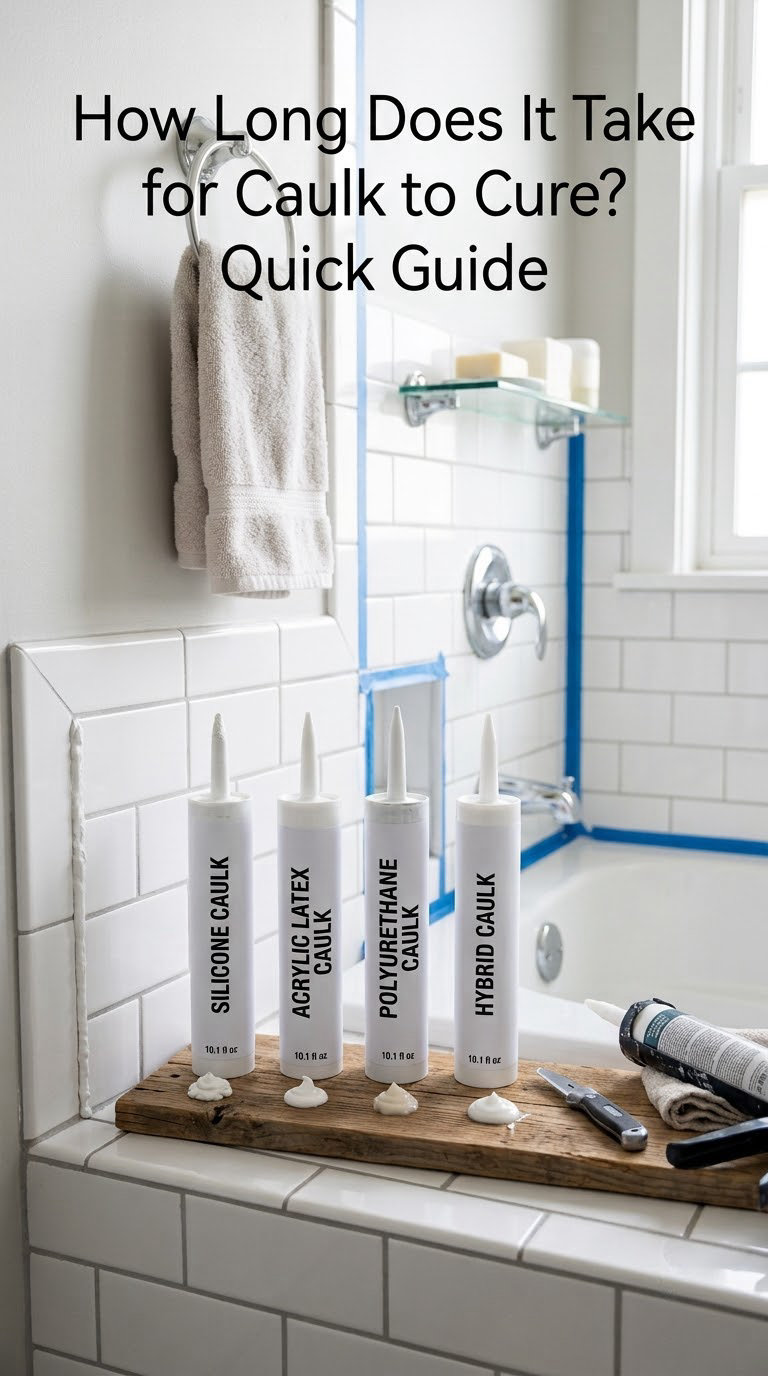
The short version: dry to the touch is a surface event, full cure is a chemical event that works from the outside inward. Water-based acrylics dry as water leaves the bead; silicones and hybrids react with moisture in the air and in the joint itself, which is why a silicone bead in a steamy bathroom often beats its label.
| Caulk type | Dry to the touch | Full cure | Where it belongs |
|---|---|---|---|
| Silicone (kitchen and bath) | 30 minutes to 3 hours | 24 to 48 hours | Tub surrounds, showers, counters, plumbing joints |
| Siliconized acrylic | 30 minutes to 1 hour | 24 to 72 hours | Trim, baseboards, drywall, interior corners |
| Acrylic latex | 30 minutes to 1 hour | 3 to 5 days | Painted trim and drywall; needs paint on top |
| Hybrid MS polymer | 1 to 3 hours | 3 to 7 days | Wet rooms where you want paintability and movement |
| Polyurethane sealant | 1 to 3 hours | About 7 days | Structural gaps, framing, construction joints |
| Butyl rubber | Stays tacky by design | About 30 days | Roofing and flashing; not for exposed finished joints |
On cost, a 10.1 ounce tube of acrylic latex runs roughly three to six dollars, kitchen and bath silicone about five to nine, and polyurethane sealant four to eight, depending on your region and the brand on the shelf. Treat those as planning figures and confirm them locally, because prices move and the gap between a mid-grade and a premium tube is usually narrower than the gap between a tube and a can of latex paint.
Caulk Cure Times by Material and Application
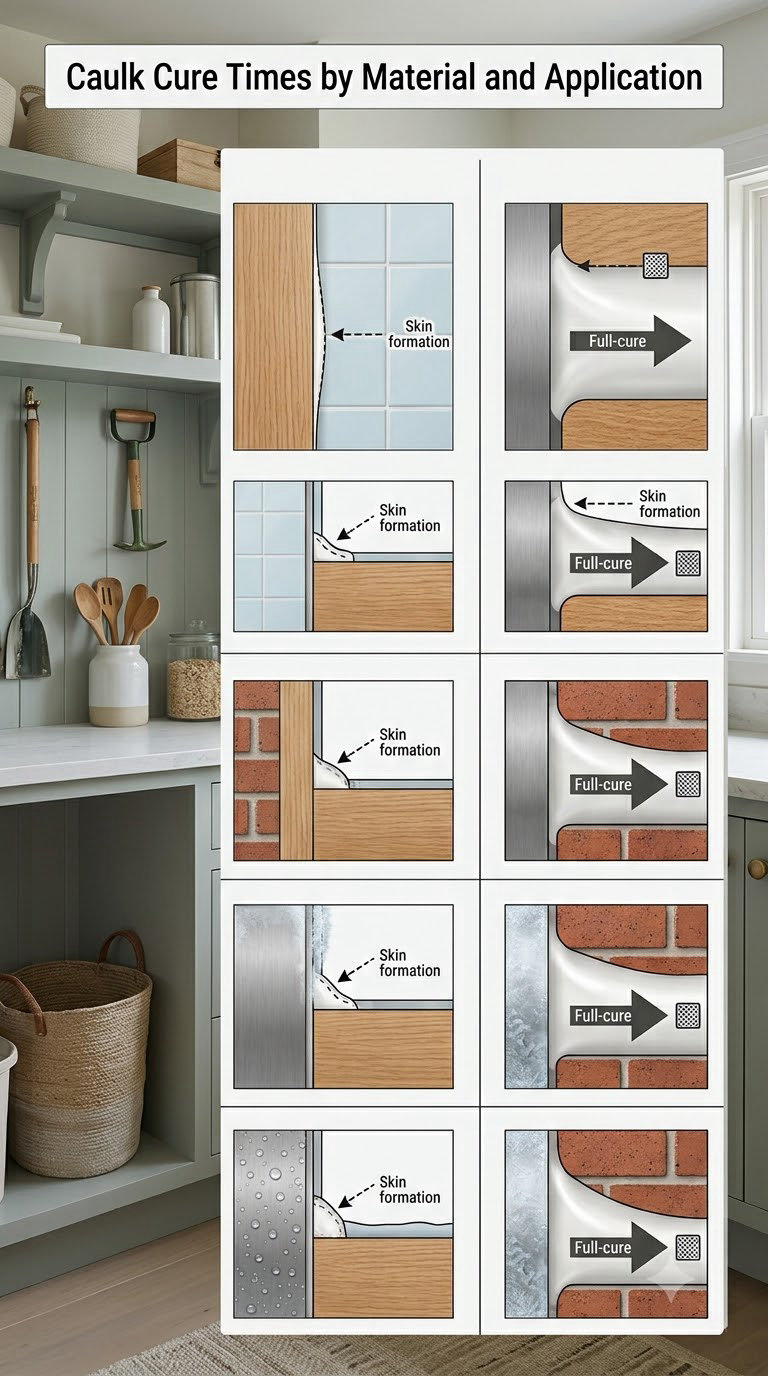
Bathroom and kitchen joints
A tub-to-wall or shower-corner bead is usually 1/4 inch, and that is the case every label time is written for. Twenty-four hours is the number most people find is enough for a silicone kitchen and bath bead in a normally conditioned room, which is why it is quoted so constantly.
It is a baseline, not a law. A renter in r/DIYHome described a bead that felt dry the next morning but was still very soft underneath and was not sure whether it was safe to shower — that is the normal behaviour of a partially cured joint, not a defect. Wait the full label time anyway.
Exterior joints and rain timing
Exterior work follows the same chemistry with two harder constraints: the joint moves more, and rain will arrive on your schedule rather than the label’s. A silicone or hybrid bead on siding, trim, or around a window is typically rain-ready after 24 hours, and many manufacturers extend that to 48 or 72 hours for cold or damp conditions. Anything below 50°F (10°C) pushes most exterior cure times well past the label, and several manufacturers simply will not warrant application below 40°F (4°C).
Check the forecast and give yourself a full dry day with no rain afterward. Squeezing the job into a gap between showers is the classic way to end up with a bead that never bonded.
Wet rooms and deep gaps
Joint depth is the variable nobody puts on the front of the tube. Curers on r/Tile describe silicone hardening at roughly 2 mm per day at 73°F and 50% relative humidity, which means a bead cures from the surface in and the center is the last part to firm up. A person on diy.stackexchange caulked a 1 inch gap and found it dried in about 48 hours but stayed pliable for close to a month.
That rate is the most useful number in this whole guide. Multiply your joint width by it and you get a realistic full-cure estimate for anything deeper than a normal bead.
| Joint width | Typical full cure at 70°F, 50% humidity |
|---|---|
| 1/8 inch | About 24 hours |
| 1/4 inch | 24 to 48 hours |
| 1/2 inch | 5 to 7 days |
| 1 inch or deeper | Several weeks, sometimes a month |
Fill deep gaps with backer rod or foam sealant first and caulk only the last half inch or so. Nobody wants to redo a joint they filled three inches deep with pure bead.
How long does it take for caulk to cure in cold weather?
Longer than the label, and the difference is not small. Chemistry slows dramatically as temperature drops: a bead that needs 24 hours at 70°F can be sitting soft well past 48 hours in a 50°F basement or an unheated garage in January. Warm the room first if you can, and if you cannot, accept the longer clock rather than fighting it.
Silicone vs. Acrylic vs. Polyurethane Caulk
Choose by where the joint is and what it has to survive, then the cure time follows. Here is the honest comparison for the three types most homeowners actually buy.
| Silicone | Acrylic latex | Polyurethane | |
|---|---|---|---|
| How it cures | Reacts with moisture in the air and joint | Water evaporates out of the bead | Chemical reaction with moisture, very strong bond |
| Flexibility | Excellent, holds movement | Low, can shrink and crack | Rigid once cured |
| Moisture resistance | Waterproof, mildew resistant | Water-resistant only when painted | Waterproof, not for long-term wet zones |
| Paintable | No, unless labeled paintable | Yes, in 2 to 4 hours | Yes, and sandable when cured |
| Temperature sensitivity | Stays flexible down to cold, weak in extreme heat | Brittle in cold, soft in heat | Brittle if flexed after cure |
| Odor and cleanup | Vinegar smell, needs a scraper not soap | Mild, washes off with warm water | Strong solvent smell, cleans with solvent |
| Best joints | Shower surrounds, tubs, exterior trim | Dry interior trim, drywall, baseboards | Framing gaps, construction, subfloor |
Silicone stays flexible because its cross-linked polymer network never fully hardens at the molecular level; acrylics harden as the water leaves, which is why an unpainted acrylic bead in a wet room shrinks and cracks. Polyurethane forms an exceptionally strong bond and then stops moving, which makes it excellent for gaps that will not flex and a poor choice for anything that settles.
If you are sealing around a toilet base, the choice is narrower and the [curing time matters more than usual](https://www.rosenberryrooms.com/what-type-of-caulk-for-toilet-base/). And if you are painting the room the same week, plan the cure alongside the [bathroom paint drying schedule](https://www.rosenberryrooms.com/how-long-does-bathroom-paint-take-to-dry/) rather than separately.
What Changes the Price and Cure Time
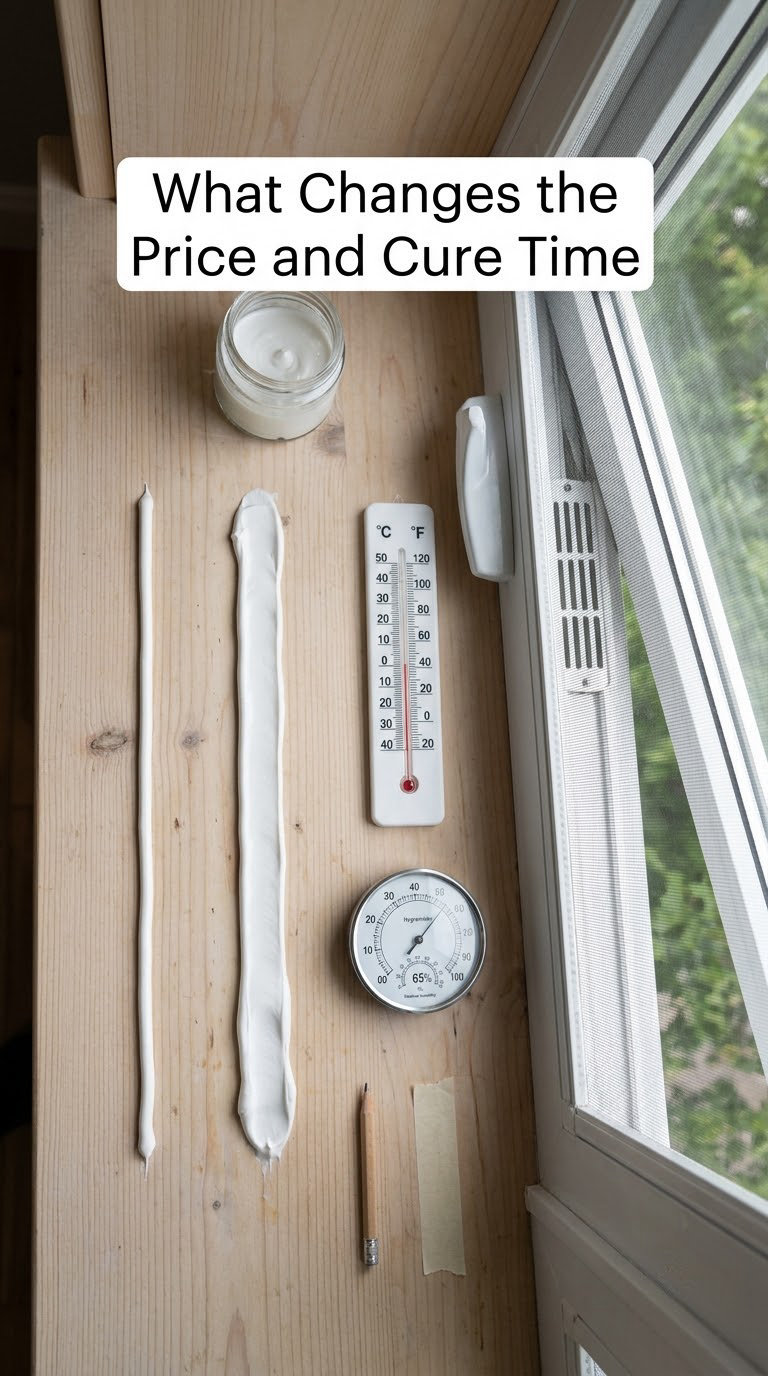
Price and cure time are driven by the same handful of variables, so it is worth knowing which ones you can change.
- Tube size and coverage. A 10.1 ounce tube covers roughly 24 to 30 linear feet at a 1/4 inch bead, so a standard tub surround at 8 to 12 feet needs one tube and a large shower may need two. Bigger tubes are cheaper per foot until the caulk has already cured in the nozzle.
- Water-based versus solvent chemistry. Water-based acrylics are cheaper and clean up with soap but take longer to lose their water. Solvent silicones and polyurethanes cost more and cure faster.
- Bead volume and joint depth. This is the big one for time. Deeper joints take longer because cure moves inward, not across.
- Temperature. The 40°F to 80°F range printed on most tubes is where the published cure times were measured. Outside it, expect slower.
- Humidity and ventilation. Silicone and hybrid sealants need airborne moisture to react, so a dry winter house slows them. Good airflow helps water-based products shed the water they need to lose.
- Substrate condition. Caulk does not bond to dust, soap film, old peeling caulk, or damp wood. Prep failure is the number one cause of a bead that never hardens properly.
- Accelerated formulas. Fast-cure silicones and shower-ready hybrids advertise water-ready times of 30 minutes to 3 hours. They cure faster for a real chemical reason and usually cost more per tube.
For cost examples: a bathroom reseal at 10 linear feet is one mid-range silicone tube, roughly six to nine dollars. Interior trim on a small room at 30 linear feet of 1/8 inch bead is about two acrylic latex tubes, five to ten dollars. Exterior window and siding trim at 20 linear feet is two exterior-grade silicone or hybrid tubes, roughly twelve to twenty dollars.
Speeding up cure safely
Moderate warmth, moving air, and steady humidity are the only real accelerants. Direct heat is not, and it is the reason a lot of well-intentioned advice fails.
| Method | What happens | Verdict |
|---|---|---|
| Room at 70°F or warmer | Chemistry runs at published speed | Safe |
| Fan or open window for airflow | Helps water-based caulk dry | Safe |
| Humidifier in a dry winter room | Feeds moisture-reactive silicones | Safe |
| Hair dryer on cool, moving | Skin forms unevenly, surface cracks | Avoid |
| Heat gun | Outer skin cures, core stays soft, bond weakens | Avoid |
| Oven or heater vent blowing on the bead | Dries the surface only, traps moisture | Avoid |
How to Tell When Caulk Is Fully Cured
Dry to the touch means the surface skin has formed. Full cure means the bead has hardened all the way through and reached its rated strength. You can check for the second without guessing much, but no check replaces the stated cure time — it tells you whether to wait longer, not whether to ignore the label.
- Press test. Press firmly along the bead with your thumb for a few seconds. A cured bead barely dents and springs back. A soft one takes a fingerprint you can still see.
- Fingernail indentation test. Press a fingernail into the middle of the bead, not the edge. If it leaves a mark that stays, the core is still soft and you need more time, especially in a deep joint.
- Careful tool check. On a scrap or hidden section, drag a plastic caulk tool lightly along the surface. A cured bead shaves cleanly and holds its shape; an uncured one smears and pulls.
Wait longer when the room is cold or very dry, when the joint is deeper than a quarter inch, when the tube is more than a year old, or when the bead sits in a shaded corner with no airflow. People report waiting a full week and still finding sticky caulk, and in those cases the answer is to remove it rather than wait longer — the product or the conditions were the problem.
Frequently Asked Questions
How long does it take for caulk to cure before water exposure?
For a thin bead in a normal indoor bathroom, most silicone and kitchen and bath caulks need a full 24 hours before showering, and 48 hours is the safer number if the room is cool or the bead is thicker than a quarter inch. Fast-cure shower-ready silicones can be water-ready in 3 to 6 hours, but only if the label says so. Water exposure before cure washes out binders and weakens the bond, so the label always wins.
Can you use caulk after 24 hours even if the label says longer?
You can, but you are gambling. The 24-hour figure is a baseline for a quarter inch bead at room temperature, not a rule that overrides the tube in your hand. If the label says 48 hours or 7 days for your product, bead depth, and temperature, give it that time. A bead that fails because you showered a day early means cutting it out and starting over, which costs far more than waiting.
Does caulk cure faster in a humid or cold room?
Humid rooms speed up moisture-reactive silicones and hybrid sealants, which need water in the air to react, so a steamy bathroom can actually help them. Cold does the opposite for every type. Chemistry slows sharply below 60°F and most manufacturers publish times only for a 40°F to 80°F range, so a cold basement or garage needs a longer clock than the label, sometimes several days more.
Can you paint over caulk once it feels dry?
Paint the surface-dry time printed on the tube, which is usually 2 to 4 hours for acrylic latex and longer for silicone, and make sure the paint is a quality exterior or interior latex. Dry to the touch is not the same as paintable, because paint applied over a soft bead can sink in and peel. Standard silicone will not hold paint at all unless the label specifically says paintable silicone.
Why is my caulk still soft after the stated cure time?
The usual culprits are a room colder than the label assumes, a dry winter interior starving silicone of moisture, a bead much deeper than a quarter inch, and expired or frozen caulk. Deep joints cure from the outside in, so a one inch gap can stay pliable for a month. If the tube is old, the bead was thick, or the room was cold, cut it out and redo it rather than waiting on a cure that will never complete.
Bottom Line: Read the Label, Then Plan Around It
Pick the chemistry for the joint, tool a consistent quarter inch bead, and then set your calendar to the longest time printed on the tube rather than the shortest one you read online. For most bathroom work in 2026, that means treating 24 hours as the floor and 48 hours as the plan, then moving on to the paint schedule once the bead passes the fingernail test.