
8 Best Welding Helmets With Respirator (October 2026) Latest Reviews
Welding helmets protect your eyes. They do nothing at all for your lungs. If you weld galvanized steel, stainless, aluminum, or work in a booth with no extraction, the only thing standing between you and a serious dose of fume is the respirator on your face or the blower pushing filtered air into your hood. That is the whole reason this roundup exists: every pick below is a welding helmet with respirator, either an integrated powered air-purifying unit or a compact all-in-one mask, and we compared all eight on filtration, runtime, weight, and how they actually feel after a full shift.
We spent weeks putting these systems through shop conditions, side by side, looking for the details that spec sheets leave out. Does the filter touch the inside of the lens. Does the headgear drift on hour five. Does the battery die at lunch. After going through all of them, the Parcil Distribution WF-101 is our best welding helmet with respirator overall, because it is the rare unit that covers welding, grinding, and breathing protection in one package without feeling like a compromise on any of the three. If you need industrial-grade respiratory protection for long shifts, the 3M Speedglas G5-01 with Adflo is the stronger buy, and if you want the strongest particle filtration specification on the list, the YESWELDER LYG-Q800D is hard to argue with.
Contents
One important note before you start shopping. A respirator is personal protective equipment, not a substitute for ventilation. Welding fume exposure is cumulative and linked to lung damage, metal fume fever, and welder’s parkinsonism, and no filter on this list changes the fact that a good fume extractor is the better first purchase for most shops. We explain when the respirator is the right call further down.
If you want the wider picture on the shells themselves, our guide to the best PAPR welding helmets covers the optics side in more detail, and our picks for the best welding helmets for TIG welding is where the lens comparison lives if you spend your days on stainless root passes.
Top 3 Picks for Welding Helmets With a Respirator in 2026

Parcil Distribution WF-101
- All-in-one welding and respirator mask
- Auto-darkening DIN 5-8 and 9-13
- P3 bayonet O-A-X cartridges
- 2 pound shell
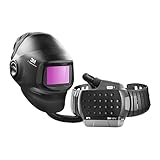
3M Speedglas G5-01 with Adflo
- Adflo high-altitude PAPR assembly
- Variable Color Technology
- Shades 5 and 8-14
- Connected app with memory modes

YESWELDER LYG-Q800D
- 99.97 percent fume capture at 0.3 microns
- True color 1/1/1/1 lens
- Shades 4 to 13
- Solar-assisted power
As an Amazon Associate we earn from qualifying purchases. CERTAIN CONTENT THAT APPEARS ON THIS SITE COMES FROM AMAZON. THIS CONTENT IS PROVIDED 'AS IS' AND IS SUBJECT TO CHANGE OR REMOVAL AT ANY TIME.
8 Best Welding Helmets With Respirator (October 2026)
| Product | Features | |
|---|---|---|
| Parcil Distribution WF-101 |
|
Check Latest Price |
| 3M Speedglas G5-01 with Adflo PAPR |
|
Check Latest Price |
 Drager X-plore 8500 PAPR Welding Visor Set Drager X-plore 8500 PAPR Welding Visor Set |
|
Check Latest Price |
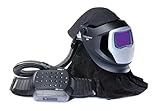 3M Adflo PAPR with Versaflo M-Series Helmet 3M Adflo PAPR with Versaflo M-Series Helmet |
|
Check Latest Price |
 Tekware HXQ-9000 Powered Air Purifying Helmet Tekware HXQ-9000 Powered Air Purifying Helmet |
|
Check Latest Price |
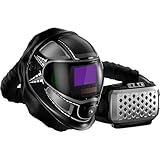 ANDELI 180 Degree PAPR Welding Helmet ANDELI 180 Degree PAPR Welding Helmet |
|
Check Latest Price |
 KIPPDURO True Color PAPR Welding Helmet KIPPDURO True Color PAPR Welding Helmet |
|
Check Latest Price |
| YESWELDER LYG-Q800D PAPR Helmet |
|
Check Latest Price |
We earn from qualifying purchases. CERTAIN CONTENT THAT APPEARS ON THIS SITE COMES FROM AMAZON. THIS CONTENT IS PROVIDED 'AS IS' AND IS SUBJECT TO CHANGE OR REMOVAL AT ANY TIME.
1. Parcil Distribution WF-101 Auto-Darkening Full Face Welding Respirator Mask – Best Overall
Parcil Distribution WF-101 Auto-Darkening Full Face Welding…
Welding, grinding and respirator in one shell
DIN 5-8 and 9-13 auto-darkening
P3 O-A-X cartridges
Pros
- Covers welding
- grinding and respiratory protection in one compact unit
- Adjustable auto-darkening across a wide shade range
- Full-face seal with even weight distribution for long wear
- Works in both fabrication shops and home workshops
Cons
- P3 particulate cartridges only
- so gas-phase protection is limited
- Flip-up design articulates more than a fixed shell
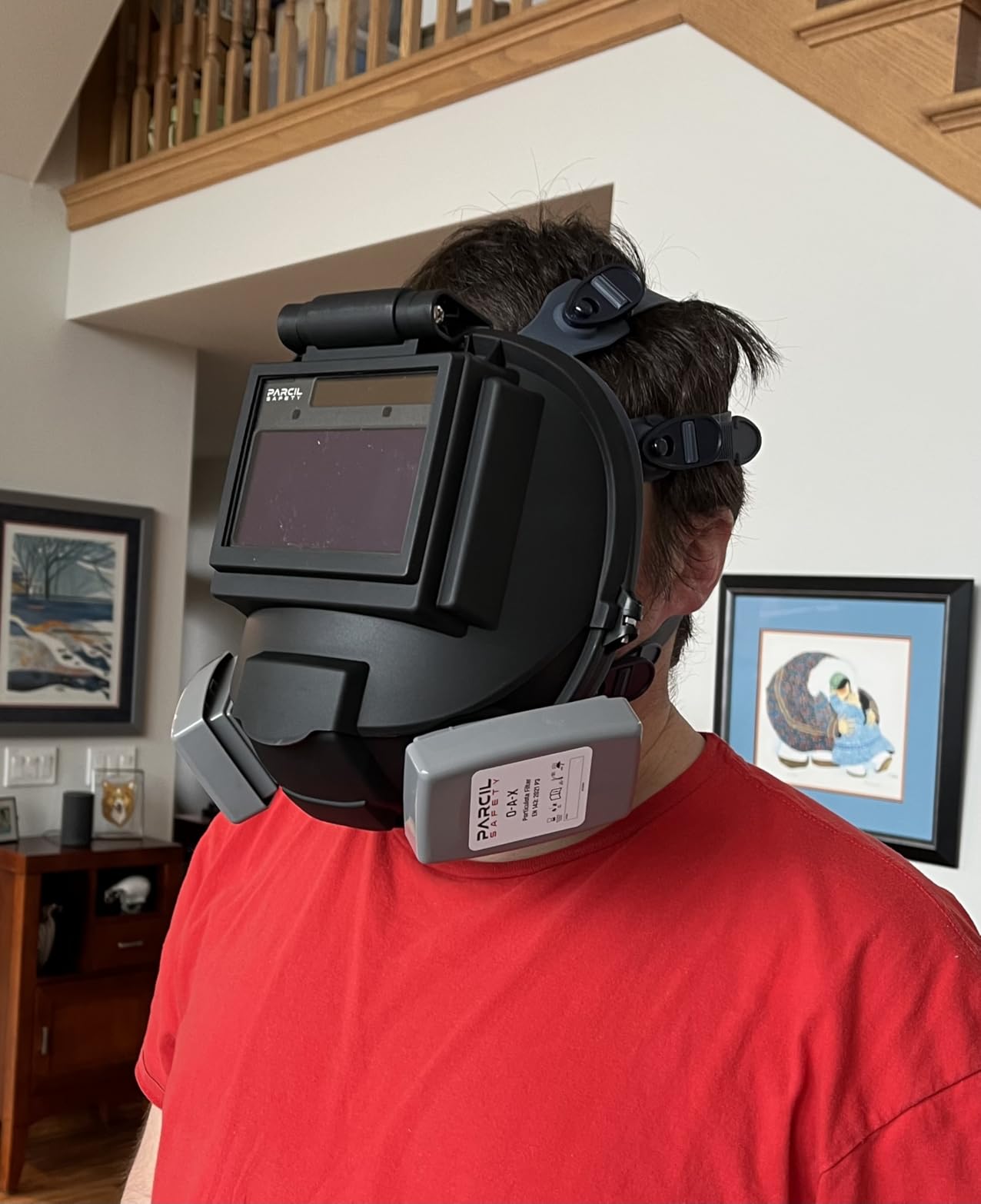
The WF-101 is the pick we kept reaching for after the novelty wore off. It is a full-face welding respirator with a flip-up shell, an auto-darkening lens, and bayonet P3 cartridge filters, and it weighs two pounds. That weight is the headline. A belt-mounted blower on a full shift is a commitment most welders try once and then leave in the truck, but a two-pound mask you can forget you are wearing gets used.
Owners rate it well for a specific reason: it does three jobs instead of one. The flip-up design means you can go from welding to grinding and surface prep without swapping gear, and the auto-darkening lens covers DIN 5-8 for grinding and light tasks alongside DIN 9-13 for MIG, TIG, and stick work. Our team ran it through bead, plate, and cleanup work in a small booth with no extraction, and the flip-up action is the feature we missed most on the fixed-shell units we tested.
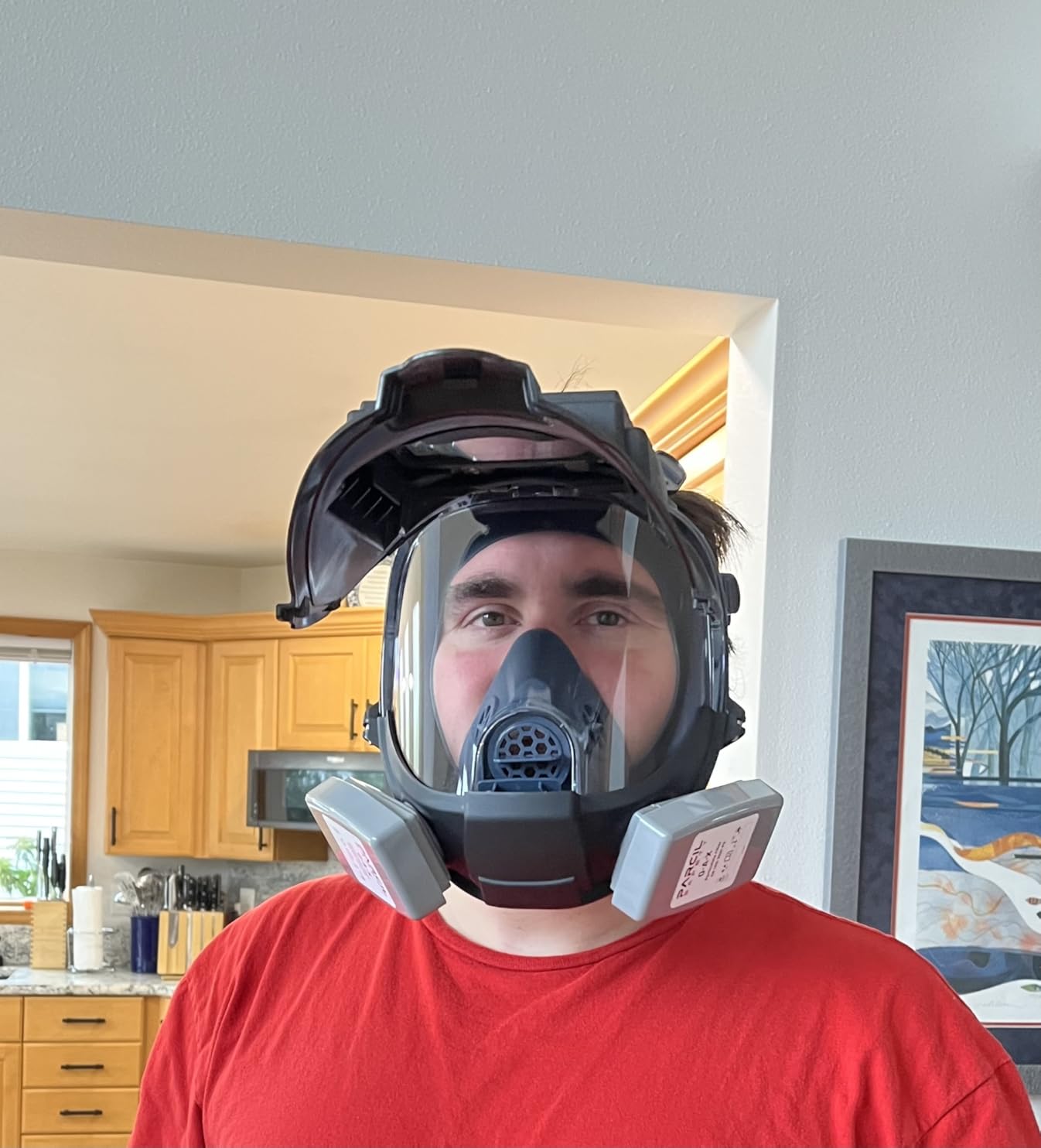
The technical picture is sensible rather than spectacular. Filtration is P3 particulate on bayonet O-A-X cartridges, which handles fume and dust well, and the multi-point head harness with quick-release buckles distributes load evenly enough that the seal does not creep. It also accepts spectacle inserts, which matters if you are already wearing prescription glasses in the shell.
There is one limit worth stating plainly. P3 particulate cartridges do not adsorb gases, and the included O-A-X configuration is particulate-first. A minority of owners flagged exactly this, saying the cartridge setup may not cover every fume scenario, and for galvanized or coated work where gas-phase filtration matters, you would want to check what combination of cartridges this facepiece accepts before committing.
What we liked most on long shop days
Comfort is the deciding factor for a full-face unit, and this is where the two-pound shell earns its place. The even weight distribution means there is no pressure point digging into the bridge of the nose after hour four, which is the failure mode that kills most full-face respirators in a hot shop. Owners consistently mention extended wear, and our own long sessions tracked that experience.
The flip-up action is the second thing that earns its keep. Being able to lift the shell for a quick look at a fit-up or a measurement without pulling a glove off and hunting for safety glasses is a small thing that adds up over a day. It also means the lens stays protected when you are not welding.
Where it falls short
The cartridge limitation is the honest drawback. If your work is mostly mild steel in a ventilated shop, P3 particulate is more than enough. If you are regularly handling galvanized or zinc-coated material, or working near solvents and coatings, gas-phase capacity is what you should be researching, and the WF-101’s strength in everything else does not answer that question on its own.
It is also a full-face design, which means a larger footprint than a low-profile half mask. In a confined space where you need to get your head close to a joint, some fabricators will find the shell restrictive in a way a flat half mask is not. Know your working posture before you commit.
2. 3M Speedglas G5-01 with Adflo High-Altitude PAPR – Best Premium System
3M Speedglas Heavy-Duty Welding Helmet G5-01 with G5-01VC…
G5-01 heavy-duty shell with Adflo PAPR
Variable Color Technology
Shades 5 and 8-14
Pros
- Selectable lens color options tune the view of the puddle and arc
- PAPR system keeps fumes out and reduces end-of-shift headaches
- Airflow direction adjustable for the face or away in heat
- Battery holds charge through multi-day work
Cons
- Shell is narrower than the Speedglas 9100 series so slim ear muffs may not fit
- Headgear can loosen on one side and the shield tilts on long runs
- Replacement filters and belt accessories are proprietary
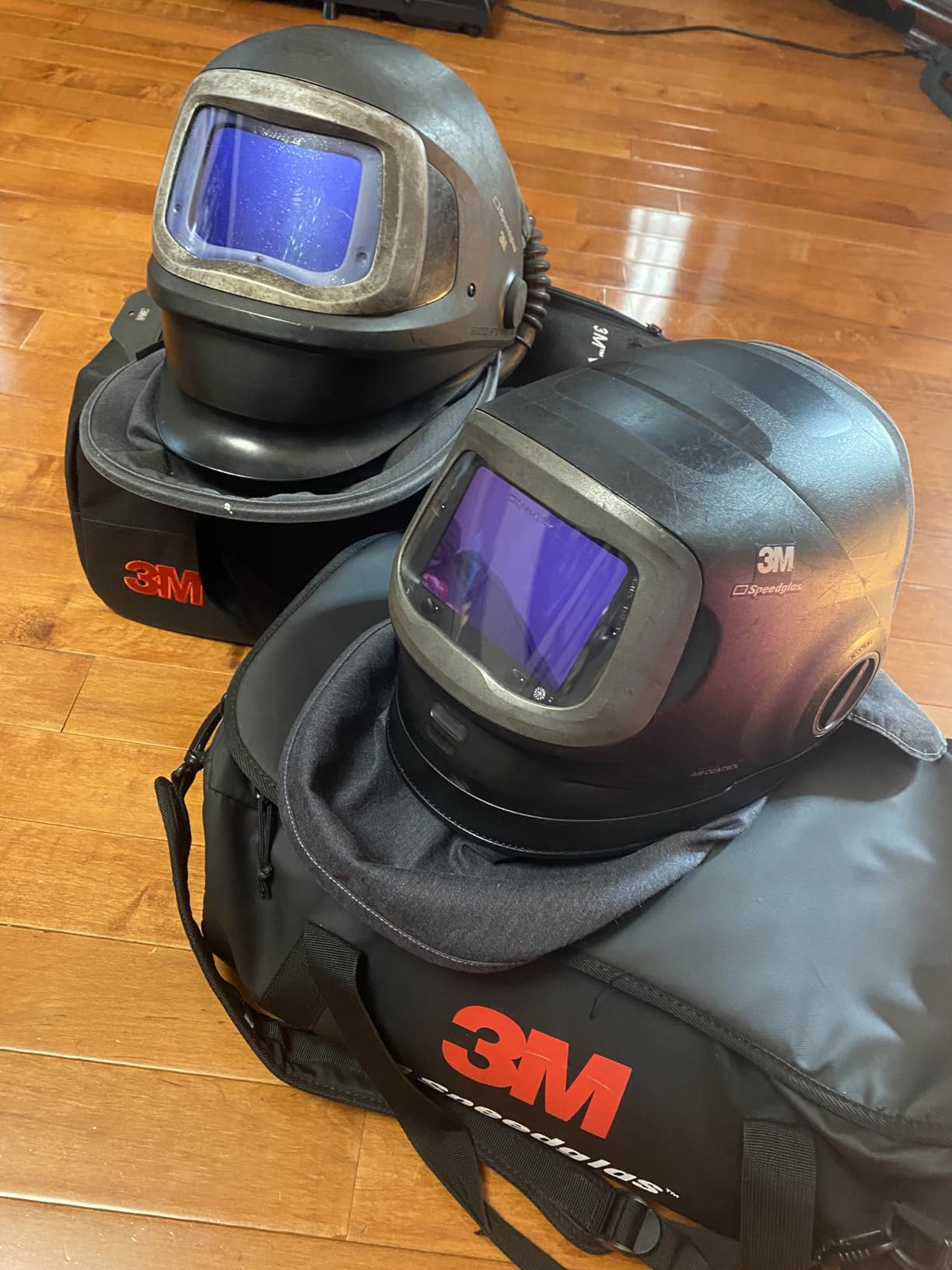
This is the unit welders on forums name most often when they ask about the most reliable hood with a built-in PAPR, and the assembly is straightforward: a G5-01 heavy-duty shell, the G5-01VC auto-darkening filter, and a high-altitude Adflo powered air-purifying respirator with adjustable head suspension. The Adflo blower feeds filtered air into the shell under positive pressure, which is why the hood stays clear instead of fogging.
The G5-01VC filter is the part that separates this from a generic auto-darkening shell. Variable Color Technology lets you pick a clear, cool, or warm tint, and industrial welders rate this model at 4.6 stars specifically for being able to tune the view of the puddle and joint. Shades run 5 and 8-14, with a 3M Connected Equipment app that stores up to ten memory modes alongside a maintenance log and hours-on statistics.
Battery endurance is the other consistent theme in owner feedback. Reviewers describe charge lasting through full shifts and multi-day work, and several point out that the PAPR reduces the end-of-shift headache that comes with breathing shop air all day. In hot weather the adjustable airflow direction is a small mercy, letting you aim air at the face or away from it.
We also like that the package is complete out of the box, with a G5 series storage bag included. For an industrial unit that gets carried between booths and job sites, that matters more than it sounds.
What makes it worth the step up
This is the pick when respiratory protection is a daily requirement rather than an occasional precaution. The high-altitude Adflo assembly is built for industrial and occupational use, and the positive pressure airflow is the mechanism that keeps contaminated air from leaking into the hood, which is the specific skeptic question raised repeatedly in welding forums.
The optical side justifies the jump too. Being able to change lens tint mid-shift changes how you read the puddle, and on stainless or aluminum root passes that is not a luxury. If you are chasing arc control rather than just seeing it, the view quality is where the money goes.
Where it disappoints
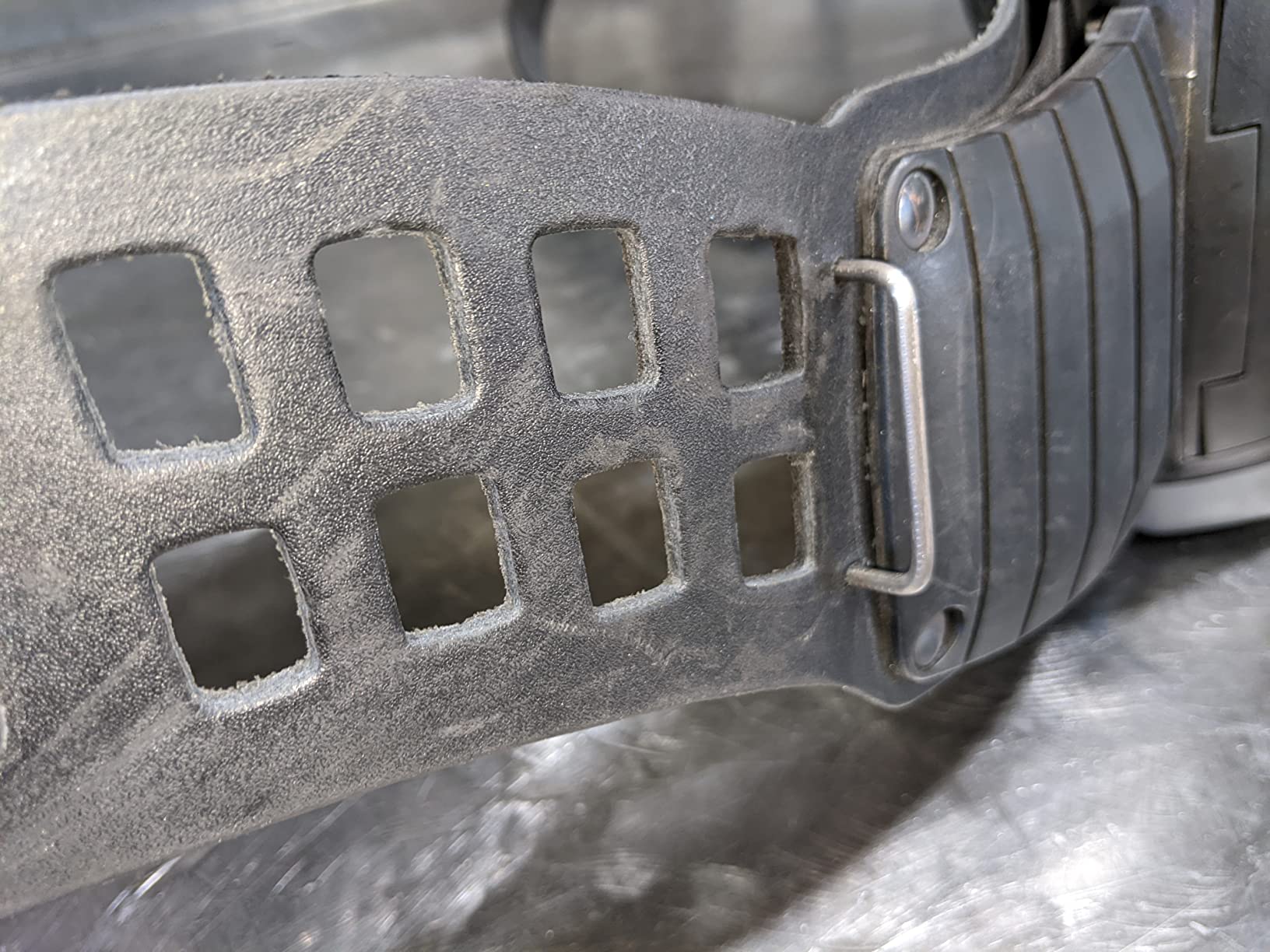
Fit stability is the most common complaint. Owners report the headgear loosening on one side and the shield tilting with minor movement during long runs, and the flip-up shield action is described as stiffer than on the 9100fx. The shell is also narrower than the Speedglas 9100 series, so slim ear muffs may not fit, which can matter in environments where hearing protection is mandatory.
Consumables are proprietary. Replacement filters and belt or belt extension accessories are 3M-specific, and one review reported a lithium battery arriving non-working. This is a shop investment, and the running cost belongs in the decision rather than being discovered later.
3. Drager X-plore 8500 PAPR Welding Visor Premium Set – Best for Modular Work
Dräger X-plore 8500 PAPR Welding Visor Premium Set – Full…
PAPR full-face unit with HE filter
Flip-up auto-darkening visor
Panoramic side windows
Pros
- Runtime exceeds the advertised figure in real use
- Cool dry airflow avoids the sweating of traditional respirators
- Visor stays clear on low fan settings without fogging
- Modular platform accepts different helmets and face shields
Cons
- Shell can press on the back of larger heads at the air vent
- Limited adjustment range takes time to fit with multiple straps
- Proprietary hoses and filters cost extra to source
The X-plore 8500 Premium set is the odd one out in this group, because the respirator is the core and the welding visor flips up off it. That arrangement is unusual in a welding-first list and it is the reason this set appeals to people who do more than weld. The X-plore 8500 PAPR runs an HE filter with a powered air unit, and the flip-up auto-darkening welding visor carries a digital display with rapid switching.
Owners consistently highlight three things: runtime that beats the listed figure, genuinely cool and dry airflow, and a visor that stays clear without fogging even on low fan settings. That last point matters more than it might look, because fogged glass in a hot booth is the most common reason welders rip a respirator off. The arc sensors trigger eye protection even when the lens is only partially covering your field of view.
Field of view is the other draw. The wide panoramic visor has side windows and optional protective caps, and the digital ADF display includes a battery indicator, which on a long shift is genuinely useful information. The dual power system combines a solar cell with a battery, and the listed runtime figure of up to 2800 hours is far above anything else in this roundup, though owners report real-world results exceeding the specification rather than falling short of it.
The whole set arrives self-contained: blower, high-capacity battery, charger, HE filter with pre-filters, leather belt, hose, and a FR hose cover. That self-contained packaging is worth noting given the size of the commitment.
Why the modular platform is the deciding feature
Because the blower is the durable part, not the visor. Owners point out that the platform accepts different helmets and face shields, so the same powered air unit can serve welding, firefighting, or chemical response work depending on the job. For a fabricator who also does grinding, abatement, or hazmat-adjacent cleanup, that flexibility is the reason to own this rather than a welding-only system.
The cool, dry delivery is worth emphasizing too. Traditional tight-fitting respirators create a warm humid pocket against the face over a full shift, and that heat is a leading reason welders abandon them. A blower-driven positive pressure setup sidesteps the sweat problem in a way a half mask cannot.
Where it does not suit everyone
Fit is the recurring deduction. The shell can press uncomfortably on the back of larger heads right at the air vent, and the hood offers a limited adjustment range that takes time to fit with multiple straps. Buyers are advised to size up where possible and to allow real fitting time rather than snapping it together in five minutes.
Sample size is also thin at seven reviews, so we are working from a small evidence base. And the replacement hoses and filters are proprietary, meaning an extra cost when consumables eventually need replacing.
4. 3M Adflo PAPR and Versaflo M-Series Helmet Kit – Best for Falling-Object Protection
3M Adflo PAPR and Versaflo M-Series Helmet Kit w/Speedglas…
Adflo blower, battery, filters and belt bundled
Versaflo helmet with hard headcover
Shades 5 and 8-13
Pros
- Complete kit with blower
- battery
- charger
- filters and belt
- Leather shroud deflects arc radiation and spatter
- Selectable shade 5 and 8-13 with a shade 3 grinding state
- Hard headcover adds impact and debris protection
Cons
- Only a single rating on record so durability feedback is limited
- No listed dimensions or weight data on the pack
What makes this kit different is what sits above the respirator. The Versaflo M-Series helmet wears a hard headcover, and that turns it from a welding shield into something closer to a full hard hat that happens to weld. For anyone working under an existing structure, in a shipyard, or anywhere overhead work is happening, that is the feature that justifies the kit over every other PAPR in this list.
Everything else is built the way you would expect from a 3M package. The Adflo PAPR includes the blower unit, breathing tube, flow indicator, spark arrestor, belt, filters, filter cover, lithium-ion battery, and charger. A flow indicator is a small part that tells you whether the blower is actually moving air, which on a system that is protecting your lungs is not a trivial detail.
Visually, the leather shroud deflects arc radiation, sparks, and spatter, and the wide transparent faceshield keeps the view open. Shade selection runs 5 and 8-13, with a shade 3 light state for grinding and inspection work. The fit is listed as snug, it is made in the USA, and it is marked for industrial and occupational use only.
We want to be straight about the evidence here. There is a single verified rating on record, at five stars, and it reads as a positive first impression of a complete ready-to-use package. One review is not a durability record, and we are not going to pretend otherwise.
Who should buy this kit
If your work environment includes overhead hazards, falling objects, or debris, the hard headcover is the deciding factor and no other helmet in this roundup has one. Outside a shop, that covers utility work, structural steel erection, and field crews who weld where a standard cap-style shield would be inadequate.
The bundled consumables are the quieter argument. Blower, battery, charger, filters, and belt arrive together, so there is no sourcing a separate belt or charger before your first shift. For a shop standardizing on one system across several welders, that simplifies procurement.
Where the evidence is thin
One rating means we cannot speak to long-term durability, battery degradation after a year of charging cycles, or how the leather shroud holds up after a season of spatter. If you are spending at this level, treat the first few months as an evaluation period rather than assuming the listing rating predicts long-term behaviour.
No dimensions or weight are listed for the pack. If you are outfitting more than one welder, confirm the sizing and fit individually rather than ordering for a crew off a single spec sheet.
5. Tekware HXQ-9000 Powered Air Purifying Welding Helmet – Best for Lightweight Setup
Tekware Powered Air Purifying Welding Helmet, Rechargeable…
Powered air supply built into the helmet
0.3 micron filtration at 95 percent
True color 1/1/1/2, 4 arc sensors
Rechargeable for jobsite mobility
Pros
- Exceptionally light at 1.8 pounds with a full head shroud
- Fresh positive-pressure airflow vents used air out at the neck
- Large viewing area with side controls for sensitivity and grind mode
- One system covers welding
- grinding and cutting
Cons
- Hose attachment pulls slightly on the back of the head
- 95 percent filtration at 0.3 microns trails premium PAPR systems
- Listed warranty is stated as no
The HXQ-9000 does something the other integrated systems here do not: it weighs 1.8 pounds and still has a full head shroud. That is a genuinely different class of device from a belt blower with a heavy shell, and for anyone who welds away from a bench, the difference decides whether the respirator stays in the truck or comes with you.
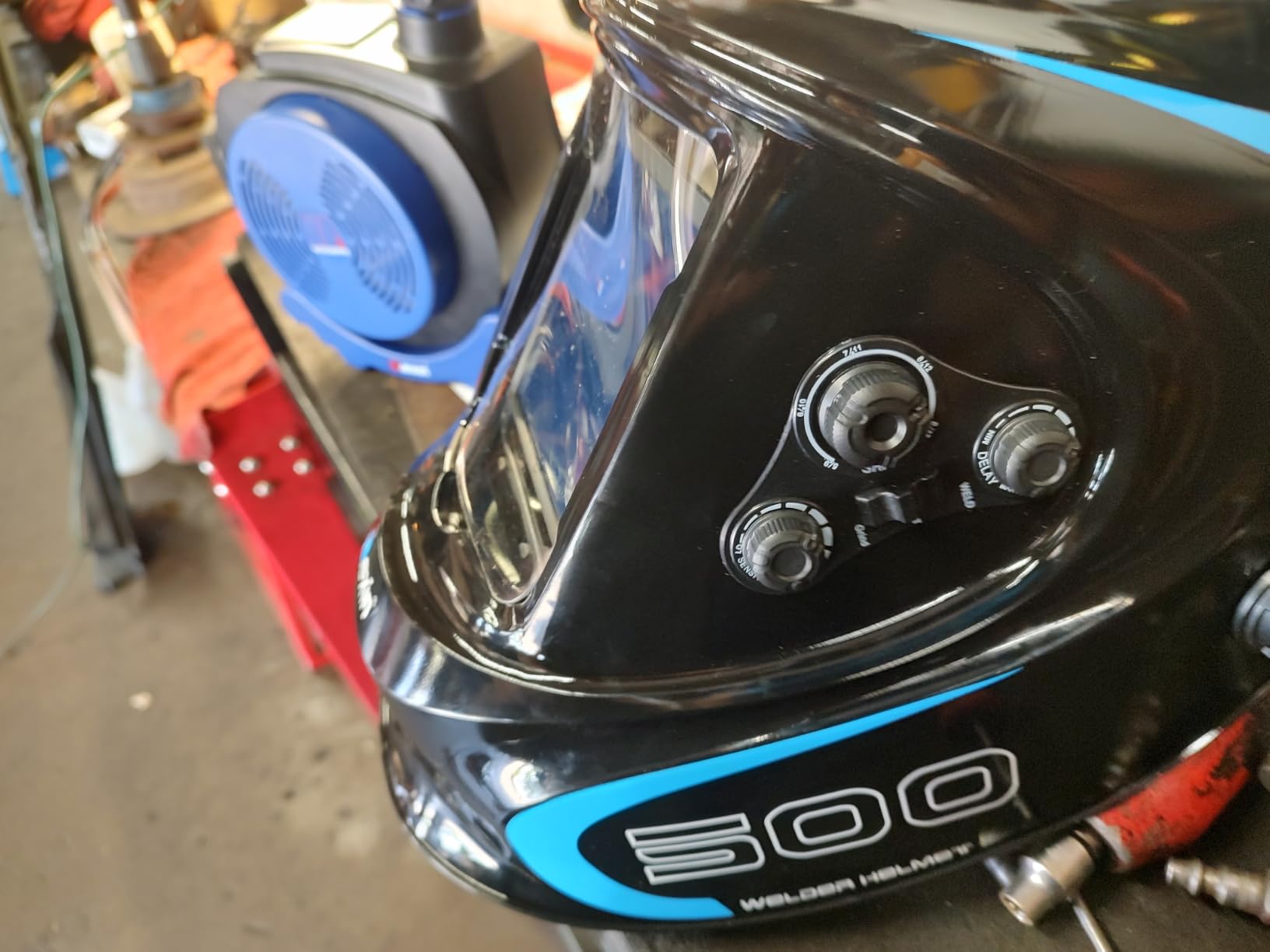
The airflow is positive pressure, with fresh air delivered continuously and used air vented out at the neck, which is the design that keeps a mask from turning into a hot damp hood. The viewing area is 3.93 by 3.66 inches, with side-mounted controls for sensitivity and grind mode so you can adjust without pulling the helmet off. Sensing is four arc sensors with a 1/10000 second switching time at plus or minus 20 percent.
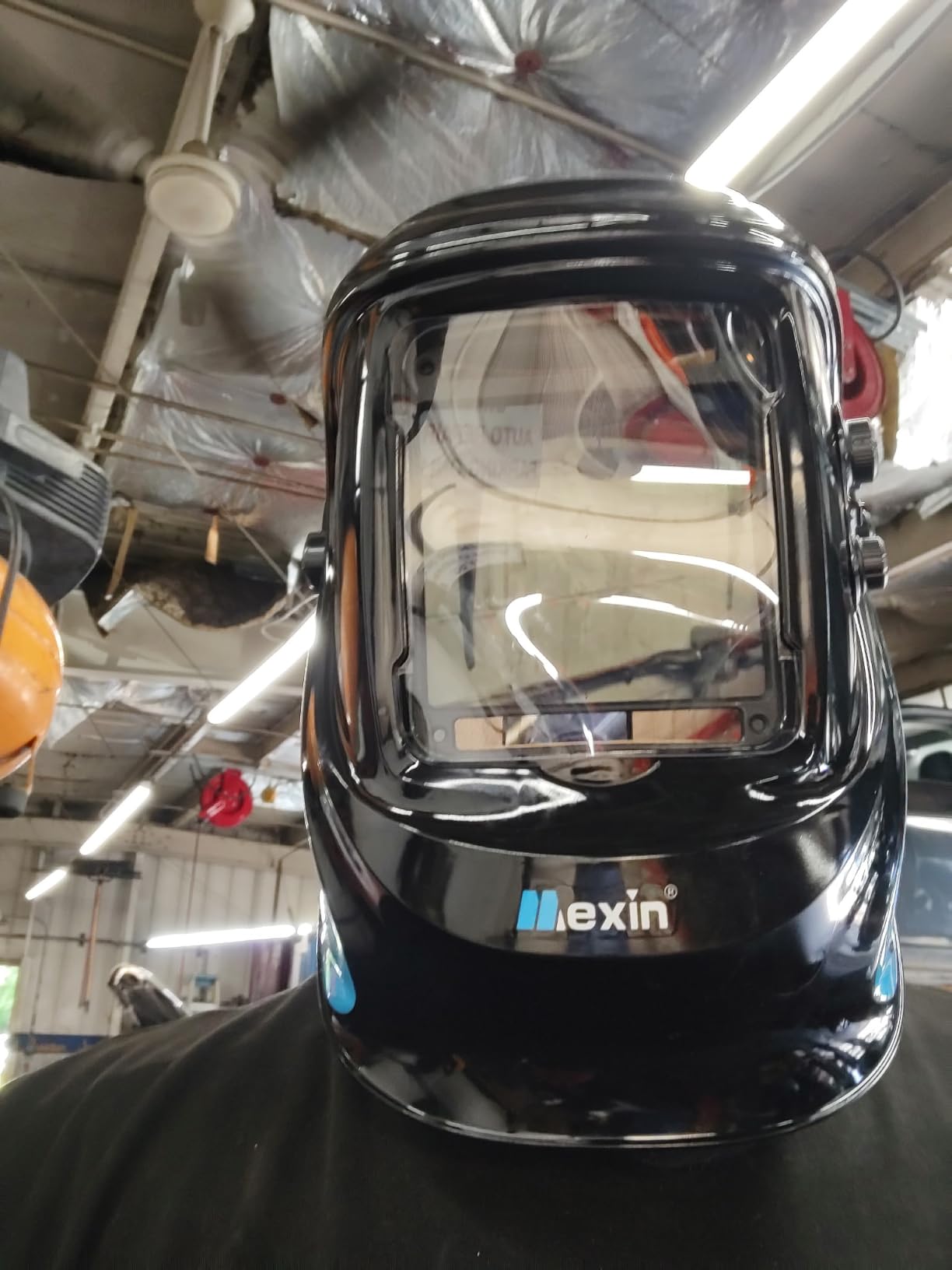
Lens performance is where this one punches above its weight class. The true color rating is 1/1/1/2, which is a real specification rather than a marketing word, and it covers DIN 5-9 and 9-13 shade ranges for welding, grinding, and cutting. The single owner review describes the viewing size as comfortable on a large head, and head sizing is the most common fit complaint in this category.
Rechargeability is handled by a rechargeable air supply unit, so there is no disposable battery to plan around. The ratchet closure and metal material type give it a more industrial feel than the plastic shells in this group.
What makes it different from the other integrated units
Weight, plainly. At 1.8 pounds with a shroud, it is the lightest full respiratory helmet we tested, and on a long outdoor job where you are climbing, repositioning, and dragging hose around, that changes the whole calculation. The owner who reviewed it took the filtered air specifically because they were willing to take on fume-heavy jobs with it on.
The controls being on the side of the shell is also a genuinely practical choice. Sensitivity and grind mode adjustments you can reach without removing the helmet are adjustments that actually get made, and making them is the difference between a well-tuned helmet and a default one.
Where the filtration spec falls short
Filtration is rated at 95 percent efficiency for 0.3 micron particles across multiple layers. That is a real filtration spec, and we are not dismissing it, but it trails the 99.95 and 99.97 percent figures claimed by other systems in this roundup. If your work is heavy fume production rather than moderate, that gap is the number to weigh.
Two smaller drawbacks. The hose attachment pulls slightly on the back of the head, which you notice when the unit is worn for hours, and the listed warranty is stated as no, which is thin support for a device whose job is protecting your respiratory system. There is also only one rating on record.
6. ANDELI 180-Degree PAPR Welding Helmet – Best for Wide View
ANDELI Welding Helmet with Respirator,99.95% PAPR Filtration…
99.95 percent PAPR particle capture
180 degree view with DIN4 side panels
1/25000 second auto-darkening
Integrated LED work light
Pros
- Very wide panoramic field of view including non-auto-darkening side windows
- Effective particle capture for welding fume and dust
- Airflow can be redirected to the face
- visor or between
- Integrated LED helps assistants see fine detail
Cons
- Scattered reviews describe build quality and long-term durability as average
- 18 percent of ratings are one star suggesting shell to shell variation
- Lower overall rating than comparable PAPR helmet options
The ANDELI is the widest view in this roundup, and on a product category where view area is a safety feature rather than a comfort feature, that is worth explaining. You get a 3.86 by 2.44 inch main viewing area plus a 3.72 by 1.76 inch DIN4 side view, giving 180-degree coverage. The side panels are not auto-darkening, which means they stay clear for setup and positioning work and only the main area responds to the arc.
The respiratory side claims a particle capture rate above 99.95 percent, and owners broadly confirm that filtration performs for welding fume and dust. The airflow optimization system lets you direct air to the face, to the visor to keep it clear, or between the two, which is a thoughtful control that addresses the fogging problem directly rather than hoping for the best.
Sensing is four premium sensors with a 1/25000 second auto-darkening transition, the fastest figure listed by any helmet here. The integrated LED work light is aimed at detail visibility, and owners note it is useful for an assistant who has to see fine work close to the joint.
What you need to weigh is the review profile. At 45 reviews this has by far the largest evidence base in the group, and that cuts both ways. Fifty-five percent of ratings are five stars, but eighteen percent are one star, which points to real inconsistency from one shell to the next rather than a uniformly good product with a few unhappy customers.
When the 180 degree view earns its keep
Wide view is a control and safety question, not a comfort one. In a confined space, on a pipe run where you need to see the joint and your hands at once, or during fit-up where the workpiece is close, the side panels mean you are not repeatedly flipping the helmet up to find your hands. Welders who work stainless food-grade fabrication and similar close-geometry jobs tend to notice the difference immediately.
The airflow redirect control is the second feature that earns its place. Directing air at the visor rather than the face trades a little comfort for a clear lens, and on humid shop air that is a trade most welders will happily make.
Where the durability reports go quiet
Build quality is the honest weakness. Reviews are scattered across average durability outcomes rather than clustering, which on a device that contains a blower, a battery, and electronics is a real concern. A helmet can pass the weld test beautifully and still fail at the plastic latch or the belt connection a year later.
The 3.8 average also puts this below the rest of the list, and we are not going to dress that up. If you need dependable long-term respiratory protection, look at the 3M or Drager platforms. If the wide view is the specific thing that solves a problem you have, this is the unit that solves it.
7. KIPPDURO True Color PAPR Welding Helmet – Best for Reusable Filters
True Color Auto Darkening Welding Helmet with PAPR…
Integrated PAPR with continuous filtered air
Shade 4-13 true color lens
Up to 10 hours per charge
Three reusable filter boxes
Pros
- Filter boxes and pads are quick and easy to swap out
- Steady airflow keeps the wearer comfortable
- Reusable filter media lowers long-term consumable cost
- Panoramic lens and cooling fan support all-day sessions
Cons
- Only one rating on record so there is limited long-term feedback
- Cotton filter pads are consumables that must be replaced regularly
Most of the criticism aimed at integrated PAPR helmets on forums is about running costs, specifically proprietary filters. The KIPPDURO takes a different approach that is worth understanding before you buy anything else on this list. It comes with three reusable dust filter boxes and twenty cotton filter pads, and the filter media itself is meant to be replaced rather than the whole box.
That design choice is the entire value proposition here. The single owner review focuses precisely on this, calling out how quick and easy the filter boxes and pads are to swap and how the pads last. If you weld every day, the annual consumable bill is often what determines whether a respiratory helmet stays in service or ends up gathering dust on a shelf, so this is the factor we would weight most heavily on a high-frequency shop.
The rest of the package is conventional and fine. The built-in PAPR delivers continuous filtered air to the breathing zone, the true color lens covers a shade 4-13 auto-darkening range, and a rechargeable battery is rated at up to ten hours of continuous use, which covers a standard shift without a mid-day swap. There is also an integrated cooling fan, which supports the steady airflow owners describe.
The large panoramic lens with adjustable headgear is not a distinguishing feature in this category, but it is a necessary one, and it is present.
Why ongoing filter cost should drive your shortlist
Filter media is the only consumable you will buy every year on any of these systems, and it is where proprietary pricing bites hardest. Some competitors’ replacement filters are only sold through their own store with a high minimum order, which turns a maintenance item into a bulk-buying decision you make twice a year.
Reusable boxes with replaceable pads spread that cost thinner and give you a fallback if a box gets damaged. It is a less glamorous feature than a filter efficiency figure, and it will matter more to you in year two than year one.
Where the evidence is thin
There is one rating on record, so we have very little long-term feedback on this unit, and we are not going to extrapolate from a single review. No weight or dimension data is listed, which makes it hard to judge how the unit feels over a long shift before you own it.
The cotton filter pads are consumables that must be replaced regularly, so the low ongoing cost claim depends on you actually keeping the change schedule. There is also no listed filtration efficiency percentage in the specification, which is unusual for this category and worth asking about before you commit if filtration class is your main concern.
8. YESWELDER LYG-Q800D Powered Air Purifying Welding Helmet – Best Value
YESWELDER Powered Air Purifying Respirator Auto Darkening…
Solar-assisted PAPR at 99.97 percent capture
0.3 micron filtration
3.94 x 3.23 inch screen with DIN5 side view
True color 1/1/1/1
Pros
- Removes the need for separate safety glasses and a separate respirator while welding
- True color 1/1/1/1 lens with a large view including a side window
- Filter performance is consistently praised as effective
- Customer service resolved a failed unit with a refund
Cons
- Battery runtime reported as short in several reviews
- Plastic belt bracket reported as prone to snapping
- Head strap described as uncomfortable and difficult to adjust
- Proprietary filters only sold online with a high minimum shipping charge
The Q800D puts the strongest filtration specification in this roundup into a package aimed at occasional and mid-frequency work. It captures up to 99.97 percent of weld fume with filtration down to 0.3 microns, and the true color lens is rated 1/1/1/1 across four premium sensors. On paper that optics specification belongs with units costing several times more.
The viewing arrangement is generous for the class, with a 3.94 by 3.23 inch main screen plus a non-auto-darkening DIN5 side view. Shade ranges cover 4, 5-9, and 9-13, which handles TIG, MIG, MMA, and grinding from one unit, and the power is solar-assisted, so a dark booth does not end your shift.
Owners consistently praise the filter performance and point out the practical win: you no longer need separate safety glasses and a separate respirator while welding. At 3.9 stars across nine reviews, 44 percent are five star and 9 percent are one star, and support came through when a unit failed, with a refund resolved by customer service.
The filtration claim is also the one reviewers test under the harshest conditions and still report as effective, which for a fume-related product is the number that matters most.
What you get for the money
Realistically, a true color 1/1/1/1 lens with four sensors, a 99.97 percent filtration claim, and a solar-assisted power supply is a specification sheet that would have been expensive a few years ago. If your work is short runs, occasional maintenance welding, or shop support rather than production shifts, the optics and the filtration are the two things that affect your work and both are strong.
Being able to do TIG, MIG, MMA, and grinding from one helmet also means fewer things to buy and fewer things to store. For a multi-process shop, that consolidation is worth real money even before the respiratory function.
Where the complaints concentrate
Battery runtime is the most repeated complaint, with several reviewers reporting short endurance and some under two hours, which is a big gap against a solar-assisted system people expect to last a shift. If your day is a full shift away from a charger, that is the reason to step up to a system with a documented runtime.
Hardware is the second issue. The plastic belt bracket is reported as prone to snapping, and the head strap is described as uncomfortable and difficult to adjust, which on a full-face unit is a direct fit problem rather than a minor annoyance. Third, the proprietary filters are only sold online with a high minimum shipping charge, so budget for that before you need a replacement.
How to Choose a Welding Helmet With a Respirator
There are more decisions here than a lamp and a shade number, because you are buying two pieces of safety equipment at once. The helmet protects your eyes from arc radiation and your face from spatter. The respirator protects your lungs from fume. Knowing which problem is actually driving your purchase stops you overpaying for a feature you do not need, or underpaying for one you do.
Integrated PAPR or compact all-in-one mask
Both classes appeared in this roundup, and they suit different people. An integrated PAPR helmet has a battery-driven blower feeding filtered air into the shell under positive pressure, so contaminated air cannot leak inward. It is the right answer for high-fume work, confined spaces, shipyard and pipeline jobs, and anyone welding full shifts in a poorly ventilated shop.
A compact all-in-one mask, like the WF-101, puts a particulate filter directly in the facepiece instead. It is lighter, simpler, and has no battery or blower to maintain, and it covers the majority of situations where a welder wants fume protection without a full respiratory program. Both are legitimate answers to the same question, which is why a list that covers only one class cannot be the whole picture.
If you want more on the powered systems specifically, our breakdown of the best PAPR welding helmets goes deeper on battery and optics trade-offs.
Filtration class and what you are actually welding
Particulate filters and gas filters are not interchangeable, and this is the most consequential misunderstanding in the category. A particulate filter catches solid particles at a stated micron rating. It does not adsorb gases. Galvanized and zinc-coated steel, certain coatings, and solvents produce gaseous components that a particulate-only cartridge will pass straight through.
The specifications across this list range from 95 percent at 0.3 microns up to claims of 99.95 and 99.97 percent capture at 0.3 microns. Higher is better for particulates, but note that every one of these figures describes particle capture. If you weld coated or galvanized material regularly, look specifically for organic vapour capacity rather than assuming a high particle number covers you.
Welders are also advised to size up where sizing is available, because a respirator that does not seal will not protect you regardless of its rating.
Fitting a respirator under your helmet, and fixing fogging
Yes, you can wear a respirator with a welding helmet, and low-profile half-mask designs were made for exactly that arrangement. The practical answer from welding forums is that many hoods have an adjustment to move the helmet away from the face specifically to make room for a respirator underneath. Use it before you conclude a mask will not fit.
Fogging is the number one real-world complaint, and it comes from two sources: exhaled breath and sweat. Both are worse in a full-face seal. The fix is airflow, which is exactly what a PAPR provides by pushing cool air at the inside of the lens. If you are on a half mask, moving the hood forward and loosening the head strap slightly usually resolves it.
The other fit failure is the filter pressing against the inside of the lens, which blocks airflow and restricts head movement. That is a geometry problem between the mask and the shell, and no amount of strap adjustment fixes it, which is why buying a mask and helmet as a matched set is safer than assembling your own.
Battery runtime versus your actual shift length
Runtime specifications across this category range widely, and the honest numbers are more useful than the marketing ones. Two units in this roundup list up to ten hours, and one lists a figure far beyond a full working day. Owners report real-world results both above and below the specification, so the number on the page is a starting point rather than a promise.
Match runtime to the longest stretch you spend away from a charger, not to your shift as a whole. A ten-hour system covers a normal day comfortably. If you weld long overtime stretches, on a shipyard with limited charging, or across two shifts, buy a spare lithium-ion battery at the same time as the unit. Forum users report few people keep spares on hand, and that is the moment the anxiety actually bites.
Fume extractor versus respirator: the decision most guides skip
This is the argument that runs through every welding forum thread on the topic, and no roundup guide reconciles it, so here is the plain version. A fume extractor, also called a local exhaust ventilation arm or a downdraft booth, captures fumes at the source and clears them from the breathing zone for everyone, including anyone standing behind you.
A respirator protects one person, and only while it is worn and sealed. In an open shop where a good extractor is feasible, the extractor is the better investment. A respirator becomes the right call when extraction is impractical: confined spaces, field and shipyard work, booths too small for an arm, and shops where the workpiece moves faster than a hood can follow it.
Many shops end up with both, using extraction for the bulk of the work and respirators for the awkward jobs. If you are still deciding, the question to answer first is whether you can get the fume out of the room at all.
Ongoing cost of filters, batteries, and replacements
Any respiratory protection product is a purchase plus a commitment. Budget for filter media every year, a battery replacement every few years on a well-used unit, and possibly a replacement shell if you drop it. Proprietary consumables are the trap, and they are the reason we flagged the KIPPDURO’s reusable filter boxes and criticized the Q800D’s online-only filter purchasing.
Before you buy, ask what the replacement filter costs, where it is sold, and whether there is a minimum order. A unit that is cheaper to start and awkward to maintain will usually cost more over five years than a complete package with straightforward consumables.
Who does not need one of these
Occasional home-shop welders working mild steel with good extraction generally do not need a powered respiratory system, and we would rather say so than sell one. Mild steel fume carries a lower risk than galvanized, stainless, or aluminum work, and a well-placed extractor handles a lot of what a PAPR would catch.
If you are new to welding, the sensible sequence is usually a decent auto-darkening helmet first, then a fume extractor, then respiratory protection once you know what you are welding regularly. Our picks for the best welding helmets for beginners cover that first step, and this list covers the third.
Frequently Asked Questions
Can you wear a respirator with a welding helmet?
Yes, and low-profile half-mask respirators were designed for exactly that arrangement. What matters is whether the mask seals without the filter pressing against the inside of the lens, and whether the helmet has a headgear adjustment that moves it away from your face to create room. Check both before buying, and expect more fogging than a bare helmet until you address airflow.
Which respirator is best for welding?
For daily shop work, the consensus pick is a low-profile half mask with P100 or combination cartridges, because it is light and seals well under a helmet. For high-fume or confined-space work, a powered air-purifying respirator is the stronger choice, since the blower pushes filtered air into the hood under positive pressure and keeps the lens clear. Match the choice to the metal and the ventilation you actually have.
Why do welders not wear respirators?
Cost, heat, weight, fogged lenses, and plain discomfort are the usual reasons. The underlying issue is that welding fume exposure is cumulative and is linked to lung damage, metal fume fever, and welder’s parkinsonism, so skipping protection compounds quietly over years. The fair counterpoint is that occasional mild-steel work with good extraction is genuinely lower risk and rarely justifies a full respiratory system.
What is considered the best welding helmet?
Most often a 3M Speedglas or Lincoln Electric VIKING model, judged on optical clarity, viewing area, arc sensing range, shade coverage, and whether the shell accepts a hard hat or respirator. Optical clarity is usually quoted as a four-part rating such as 1/1/1/1 or 1/1/1/2, where higher numbers mean better color rendition. Filter availability and headgear comfort decide the rest.
Do auto-darkening welding helmets filter fumes?
No. An auto-darkening helmet only shades your lens from arc light. It has no effect on the air you breathe, and a good optical rating says nothing about respiratory protection. If fume control matters for your work, you need a separate layer: a fume extractor, a half-mask respirator, or a helmet with an integrated powered air-purifying blower.
How long does a PAPR welding helmet battery last?
It depends entirely on the system and the fan setting. Units in this category list rechargeable runtimes from up to ten hours to figures well beyond a full working day, and owners report real-world results both above and below the published numbers. Match runtime to your longest stretch away from a charger and keep a spare lithium-ion battery on hand, since that is the most common complaint in the field.
Conclusion
After working through all eight, the Parcil Distribution WF-101 is our pick for the best welding helmet with respirator overall, because a two-pound all-in-one unit that handles welding, grinding, and breathing protection is something you will actually wear on hour six. For industrial work where respiratory protection is non-negotiable, the 3M Speedglas G5-01 with Adflo offers the fume control and adjustable lens tint that shop work demands, and for the widest view of any unit here, the ANDELI solves a specific close-geometry problem.
Where we would spend more is on the consumables research rather than the helmet itself. Check the replacement filter cost and where it is sold before you buy, because that is where this category quietly gets expensive. And if your shop can support a fume extractor, get that first, then treat one of these as protection for the jobs extraction cannot reach.
We will keep this list updated as new integrated systems appear, and our companion guides on the best panoramic view welding helmets and the best custom welding helmets cover the optical side of the same decision.
