Cost to Level a Yard in 2026: Materials, Labor, and DIY
The cost to level a yard runs roughly $1,000 to $3,300 for most suburban lots, which works out to about $1 to $2 per square foot. Small, easy-access yards land near the low end. Steep, wooded, or tightly fenced lots push toward the high end or well past it.
That headline number is where most online cost guides stop, and it is where the surprise starts. Labor runs 90% or more of the total, contractors have minimum charges that ignore the size of your yard, and a “small” 400 square foot project can still land above $1,500. This guide breaks the number into real line items so you can see what you are actually buying.
Contents
If your goal is a flatter surface for mowing, a level pad for a shed or pool, or drainage that runs away from the house, the cost picture changes completely. Starting in spring, most people have 6 to 10 weeks of workable ground before it gets too wet or too dry.
Cost to Level a Yard by Size and Project Type
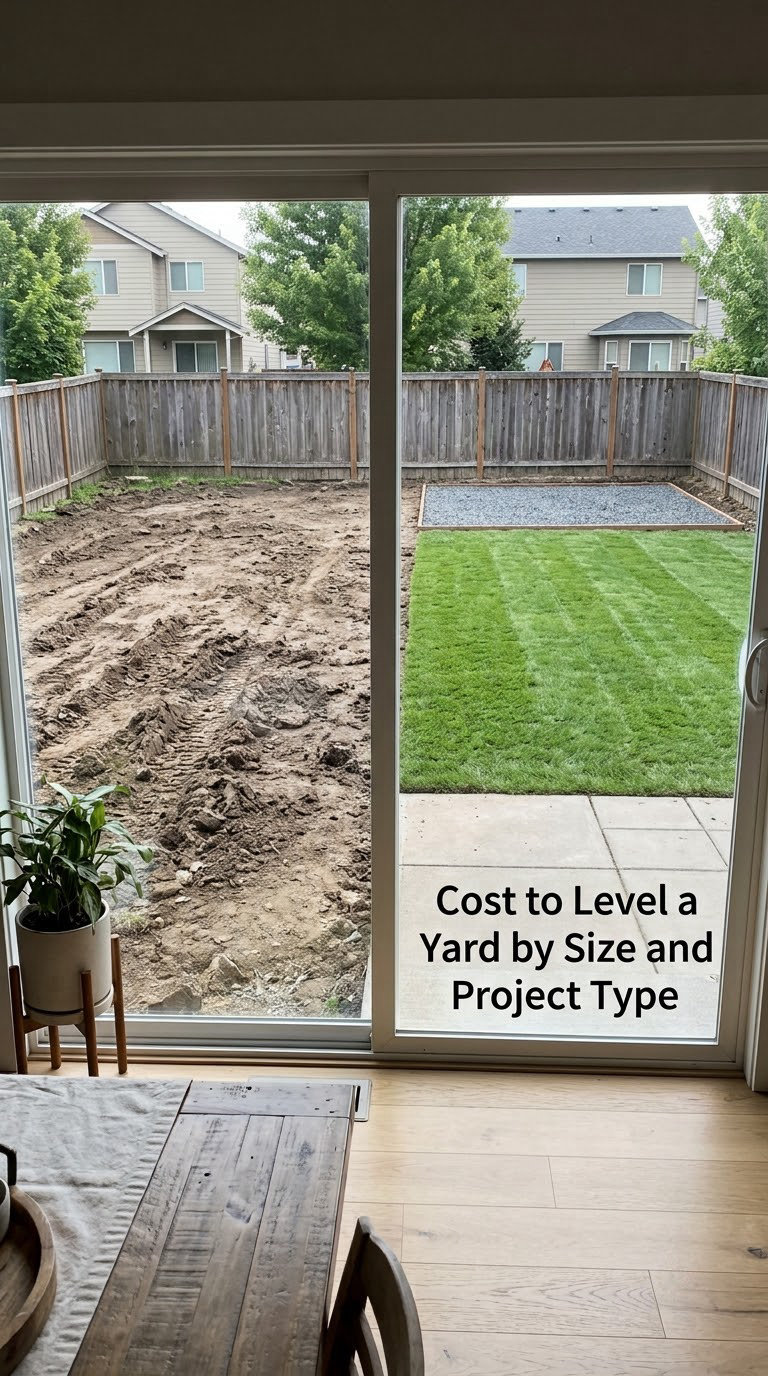
The cost to level a yard depends mostly on square footage, then on how hard the crew has to work to move that dirt. Here are real US ranges drawn from national cost data published by Angi, Bob Vila, LawnLove, and Thumbtack.
| Yard size | Typical cost to level |
|---|---|
| 400 sq ft (20 by 20) | $450 to $1,500 |
| 1,000 sq ft | $1,000 to $2,000 |
| 2,000 sq ft | $1,800 to $3,300 |
| 5,000 sq ft | $3,000 to $7,000 |
| 10,000 sq ft (just under a quarter acre) | $6,000 to $14,000 |
| Half acre | $12,000 to $25,000 |
| 1 acre | $20,000 to $45,000 |
The wide spread above is not a mistake. Two homeowners can have 5,000 square foot yards and get quotes more than $4,000 apart.
How Much Does It Cost to Level a Yard?
A standard residential yard leveling project averages about $2,100 to $2,350 nationally, most people pay roughly $1 to $2 per square foot, and the published national range runs about $1,000 to $3,330. Square footage alone does not set the price, though.
Two other numbers matter more than most people expect. Labor is 90% to 95% of the total, so dirt is cheap and machine time is expensive. And a lot of the yard leveling cost is fixed regardless of area, which is why a tiny job can hit a contractor minimum charge.
By project type, the ranges look like this.
| Project | Typical cost |
|---|---|
| Cosmetic leveling to improve mowing and appearance | $1,000 to $3,000 |
| Structural regrading to fix drainage toward the house | $1,500 to $4,500 |
| Patio or deck base preparation | $900 to $2,500 |
| Shed pad, crushed stone base | $600 to $2,000 |
| Above-ground pool pad leveling | $500 to $2,500 |
| Driveway regrading | $1,200 to $4,000 |
| Fence line leveling | $600 to $2,400 |
| Flattening a hill or removing a slope | $2,500 to $12,000 |
| Full-yard regrade plus new sod | $3,000 to $8,000 |
Hills and driveways run high because they are cut-and-fill jobs. Soil has to come off a high point and go somewhere, and the somewhere is usually a trailer load away.
Regional pricing varies a lot across the US. Labor cost of living sets the labor rate, and local soil changes the difficulty: heavy clay holds water and resists compaction, while rocky ground slows every bucket.
What Materials and Equipment Cost
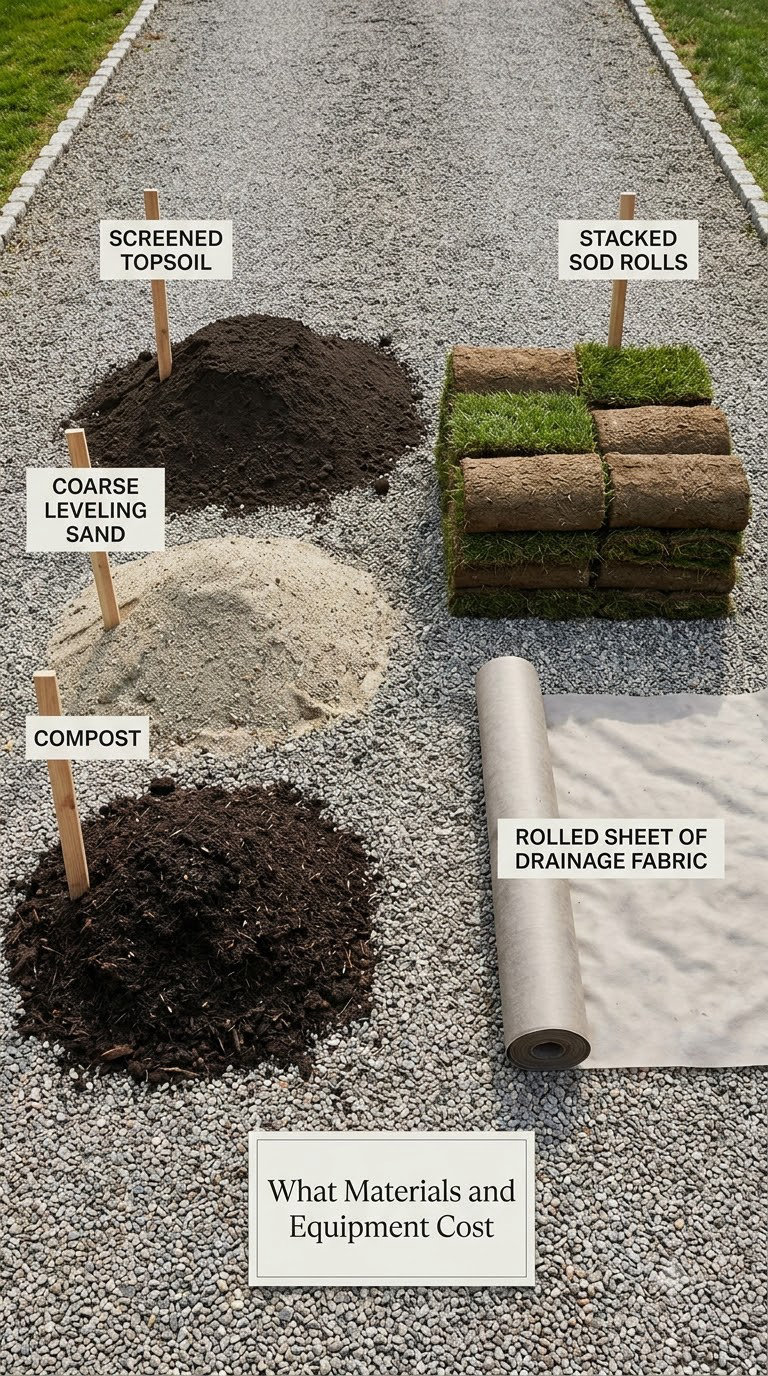
Materials are the small half of the bill. Fill dirt and topsoil are cheap by weight, and delivery is usually the bigger line.
| Material | Typical price per cubic yard | Best used for |
|---|---|---|
| Fill dirt, screened | $18 to $40 | Building up low areas, structural fill |
| Topsoil, screened | $30 to $60 | Final 3 to 4 inch layer before seed or sod |
| Coarse leveling sand | $25 to $55 | Leveling lawns without breaking soil structure |
| Screened compost | $45 to $90 | Mixing into sandy soil for water retention |
| Blended compost and sand mix | $90 to $200 | Topdressing, the priciest yard material by far |
| 3/4 inch minus crushed stone | $40 to $75 | Shed and equipment pads |
Sod runs $0.50 to $2.00 per square foot installed or picked up. Hydroseeding runs $0.08 to $0.25 per square foot and is the cheaper way to cover a large bare area.
A cubic yard covers about 81 square feet at one inch of depth. Most leveling jobs move far more material than people expect, and blending materials drives the price up quickly. One r/lawncare thread had a homeowner quoted 7 cubic yards of compost and sand at $395 per cubic yard, roughly $2,765 for a 3,200 square foot yard, which felt steep until they compared it to the topsoil rate.
Rental rates for the DIY path, per day:
| Equipment | Per day | Per week |
|---|---|---|
| Skid steer loader with bucket | $265 to $350 | $795 to $1,100 |
| Mini excavator | $320 to $450 | $1,000 to $1,300 |
| Backhoe | $380 to $500 | $1,200 to $1,515 |
| Compact bulldozer | $450 to $650 | $1,500 to $2,000 |
| Dump truck or dump trailer | $180 to $300 | $600 to $900 |
Add delivery fees of $50 to $200 per load depending on distance, plus landfill or disposal fees of $40 to $90 per cubic yard if you haul off what you scrape up. A hand-tool-only job on a small area comes to roughly $270 in materials and tools, which is the floor of the DIY path.
DIY Yard Leveling vs. Hiring a Contractor
Doing it yourself is realistic on flat or gently sloping lots with clear access. Hiring out wins on steep ground, wooded lots, tight side yards, and anything involving drainage near a foundation.
| Factor | DIY | Hiring a contractor |
|---|---|---|
| Labor cost | Your weekend | $40 to $180 per hour crew rate |
| Equipment | $265 to $650 per day rented | Included |
| Accuracy | Within an inch or two, uneven | Tolerance to a tenth of a foot |
| Project duration | Two to four weekends | One to three days |
| Drainage responsibility | Yours | Usually in scope, get it in writing |
| Buried utilities and irrigation | Your risk after 811 | Locates and repairs in scope |
| Permits | You check and file | Contractor handles |
| Disposal and cleanup | You haul it | Usually included or itemized |
The minimum charge is the fact most homeowners miss. In an r/lawncare pricing thread, a contractor quoted $325 to $350 per 1,000 square feet plus about $100 for extra fill material, with a $1,500 minimum. That floor applies whether you have 300 square feet or 3,000.
Once you count rental, delivered dirt, and disposal, a DIY total often lands within a few hundred dollars of the professional quote. One recommended community path was three delivered loads of topsoil plus a rented skid steer with a bucket, about $2,000 all in. A machine operator quoted roughly $1,500 for a single day of skid steer and Harley rake work, plus topsoil, on a similar job.
That is the honest answer to can I level my yard myself. Yes. Whether it saves money depends on access, not on your effort level.
What Changes the Cost to Level a Yard?
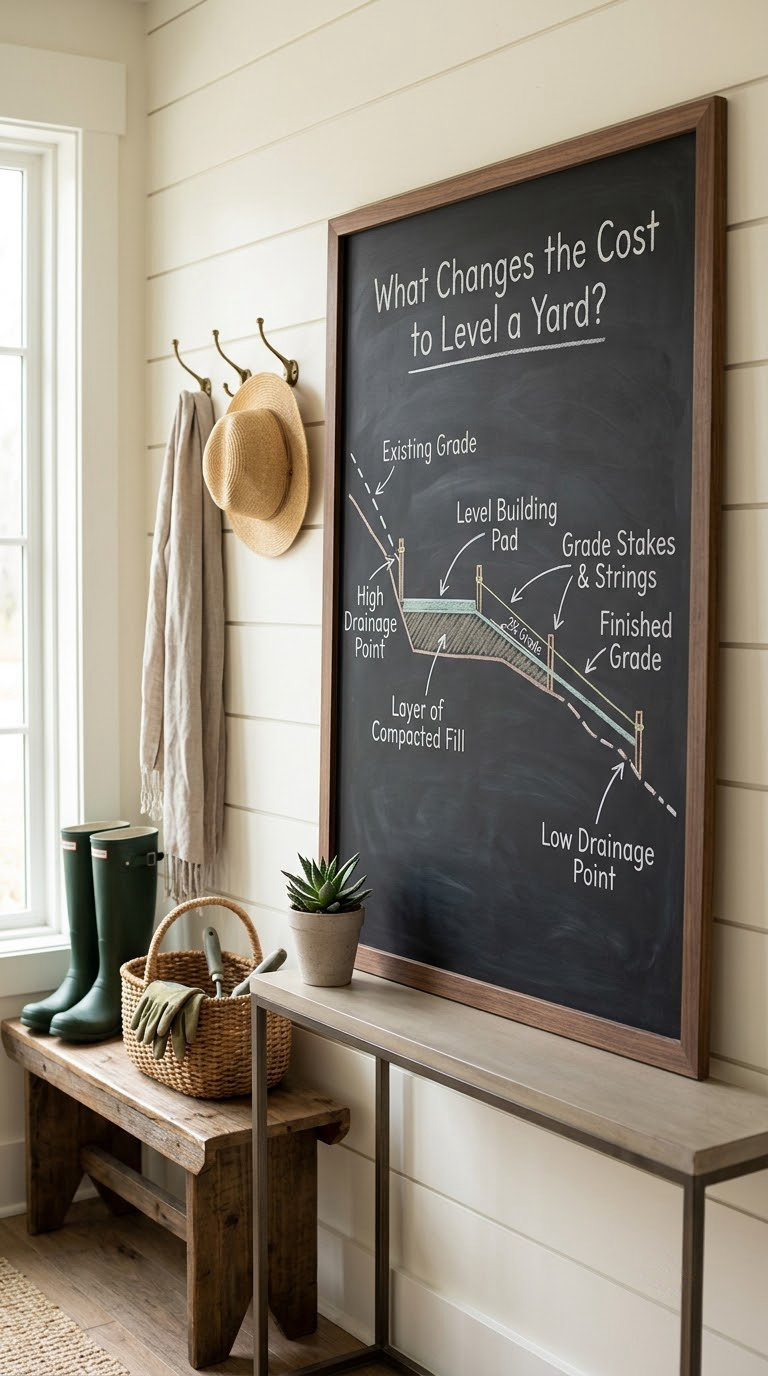
Slope is the big one. Graders charge more for steep lots because cut-and-fill volume grows with the square of the height difference. Access is second. If a skid steer cannot reach the work from the street, the machine comes in on a trailer or by hand, and either way the quote goes up.
Other price movers:
- Vegetation and debris. Shrubs, stumps, fencing, and concrete driveways have to go before grading. Land clearing typically runs $500 to $2,500 for a residential lot.
- Soil condition. Clay and rock both slow the work. A lot with heavy clay can absorb the entire budget in cut-and-fill alone.
- Topsoil depth. Existing topsoil gets stripped and stockpiled, then replaced. If none exists on site, that is a delivered material cost.
- Hauling distance. Every extra mile from the nearest source of clean fill adds to the load price.
- Drainage needs. A French drain runs $1,000 to $3,500 installed. A dry well runs $500 to $2,000. Erosion control blanket adds $1 to $3 per square foot.
- New sod or seed. Full resodding on a 5,000 square foot yard adds $2,500 to $10,000 including material and labor.
- Irrigation relocation. Heads, lines, and boxes have to be raised or moved after grade changes. Runs $300 to $1,500 depending on the system size.
- Local labor rates. $40 to $180 per hour is the published spread, and that is where most of the difference between a $900 quote and a $4,000 quote lives.
One worthwhile detail: aim for a finished grade of 2% to 6%, which is roughly 6 inches of fall in the first 10 feet, sloping away from the house. Soil should finish about 4 to 6 inches below siding. Getting that right the first time is cheaper than correcting a yard that drains toward the foundation. If water is coming up inside the house, that is a different problem, and you can read about bathtub drain replacement cost separately.
How to Estimate the Materials You Need
Start with area and average depth. Measure the footprint, then find the average low spot depth by probing with a ruler or auger in five or six places.
Multiply square feet by average depth in inches, divide by 12 for depth in feet, then divide by 27 for cubic yards. A 1,000 square foot yard averaging 2 inches of fill needs about 6 cubic yards before any allowance.
Then apply two adjustments. Loose fill shrinks 10% to 15% once compacted, so order that much more than the raw calculation. And add 10% for waste, uneven distribution, and spots you did not measure.
A 1,000 square foot yard averaging 2 inches works out to roughly 7 cubic yards ordered. Most suppliers deliver in 2 to 4 cubic yard loads, so that is three loads, plus a delivery fee each time.
If you are checking grade yourself between passes, a laser tripod setup holds a consistent reference height far better than eyeballing. You can compare laser level tripods for accurate grading before renting heavier equipment.
When Permits, Professionals, or Specialized Work May Be Required
Ordinary cosmetic leveling on your own property usually needs no permit. Several cities require review when you disturb more than 5,000 square feet of ground, and a formal grading plan when the area exceeds 20,000 square feet. Rules vary widely, so call your building department before you start.
Always call 811 before any digging. Irrigation lines are the most common thing homeowners hit, and they are not on most utility locate requests because they are privately owned. Mark them yourself with flags before the machine shows up.
Bring in a professional when you are dealing with structural fill near a foundation, retaining walls above 3 or 4 feet of height, a major elevation change, drainage that crosses property lines, or anything within a buffer of a septic system. Wall and footing work has its own permit and inspection requirements in most jurisdictions.
If water pools in one spot after rain every time and regrading has not fixed it, stop spending money on grading and look at drainage instead. Interior standing water has its own set of causes and fixes.
Frequently Asked Questions
How much does it cost to level an acre of yard?
Leveling a full acre runs about $20,000 to $45,000 in most US markets, which works out to roughly $0.50 to $1.25 per square foot. Acreage jobs price closer to per-acre rates than per-square-foot rates because equipment access and travel matter more than square footage. Hills, wooded ground, or clay soil push toward the top of the range.
Is it cheaper to level a yard yourself or hire a grading contractor?
It depends on access. On flat ground a skid steer can reach, DIY totals often land within a few hundred dollars of the professional quote once you add rental, delivered dirt, and disposal. On steep, wooded, or fenced-in lots the contractor is usually cheaper because hauling equipment in by hand is slow. Labor runs 90% or more of any professional quote.
Do I need a permit to regrade my yard?
Cosmetic leveling on your own property usually needs no permit. Local rules tighten when you disturb more than 5,000 square feet of ground, and some jurisdictions require a grading plan past 20,000 square feet. Structural fill, retaining walls, utility relocation, or drainage changes near a property line almost always need approval. One call to your building department settles it.
How much topsoil or sand does a yard-leveling project need?
Multiply square footage by the average fill depth in inches, divide by 12, then by 27 to get cubic yards. A 1,000 square foot yard averaging 2 inches of fill needs about 6 cubic yards, and you should order 7 after allowing for compaction shrinkage and waste. Most suppliers deliver 2 to 4 cubic yards per load with a delivery fee each trip.
Can yard leveling fix standing water or drainage problems?
Sometimes. Pooling water in a low spot usually responds to regrading with a 2% to 6% slope, running about 6 inches of fall in the first 10 feet away from the house. Water that keeps returning despite regrading points to a deeper problem like a clay hardpan, a failed French drain, or a neighboring grade issue. Regrading repeatedly without solving the cause just moves the puddle.
Should I install sod after leveling my yard?
Sod gives you an instant finished look and costs about $0.50 to $2.00 per square foot installed. Hydroseeding runs $0.08 to $0.25 per square foot and is the better choice for a large area or a budget. Seeding yourself is cheapest. Wait until the graded ground settles and stops moving mud, and keep the area watered daily until roots take.
Where to Start With Your Yard-Leveling Project
Measure the area and mark every low spot, then watch where water goes after a heavy rain. That tells you whether you are chasing appearance or drainage, and the second one changes the design.
Next, decide if you truly need a machine. Cosmetic smoothing on flat ground can be handled with a rented skid steer for a day or two. Steep lots and foundation drainage work belong with a contractor.
Call 811, flag your own irrigation lines, and then get two or three quotes written down with line items. Ask each one directly about their minimum charge, whether cleanup and disposal are included, and where the fill dirt comes from. Comparing those three numbers tells you more than comparing the totals.
One more practical note. If you are reseeding or laying sod afterward, leave the graded area to settle a couple of weeks before you cover it. Fresh fill that still moves will push new grass out just as fast as you put it down.