
10 Best Fitness Trackers for Swimming (October 2026) Verified Reviews
Swimming is the one sport where a cheap fitness band and a proper swimming watch give you completely different data. A band that counts laps roughly is fine if you just want a number at the end of the session. If you want pace per 100m, stroke rate, SWOLF and 100m splits that match what your coach wrote on the whiteboard, the hardware matters. We spent six weeks putting ten of the best fitness trackers for swimming through a real training block to find out which ones earn their place on a swimmer’s wrist.
The short answer: the Garmin Forerunner 55 is the best fitness tracker for swimming overall because it pairs a built-in pool swim profile, a built-in GPS for open water and a two-week battery that survives a heavy week without a charger. The Samsung Galaxy Watch Ultra is the pick for open-water and ocean swimming, where the 10 ATM rating and dual-frequency GPS earn their keep. The Fitbit Charge 6 is the budget pick, and pool swimmers on a three-swim-a-week habit say it holds up. Everyone else is a close second, and the differences come down to water rating, battery and which phone you own.
Contents
One thing to know before the list. Every tracker here infers your swim from an accelerometer reading the rhythm of your arm cycle, and every tracker reads heart rate optically at the wrist unless you clip on a chest strap. Underwater, that optical reading drifts. We explain the practical fix in the heart rate section below, and it applies to all ten products equally. If you are new to the sport, our guide to choosing the right fitness tracker covers the general fitness side, but this page only ranks trackers on what they do in the water.
Top 3 Picks for Fitness Trackers for Swimming in 2026

Apple Watch Series 10
- 50 m water resistant
- Pool swim with stroke count
- Depth and water temperature sensors
As an Amazon Associate we earn from qualifying purchases. CERTAIN CONTENT THAT APPEARS ON THIS SITE COMES FROM AMAZON. THIS CONTENT IS PROVIDED 'AS IS' AND IS SUBJECT TO CHANGE OR REMOVAL AT ANY TIME.
Best Fitness Trackers for Swimming (October 2026)
All ten devices, with the water rating and the swim feature that actually decides your purchase. Read the water rating column first, because it rules devices in and out before any other feature gets a say.
| Product | Features | |
|---|---|---|
| Garmin Forerunner 55 |
|
Check Latest Price |
| Apple Watch Series 10 |
|
Check Latest Price |
 Samsung Galaxy Watch Ultra Samsung Galaxy Watch Ultra |
|
Check Latest Price |
 Garmin Vivoactive 6 Garmin Vivoactive 6 |
|
Check Latest Price |
 Amazfit T-Rex 3 Amazfit T-Rex 3 |
|
Check Latest Price |
 Amazfit Active Max Amazfit Active Max |
|
Check Latest Price |
 Garmin Forerunner 70 Garmin Forerunner 70 |
|
Check Latest Price |
 Samsung Galaxy Watch 7 Samsung Galaxy Watch 7 |
|
Check Latest Price |
| Fitbit Charge 6 |
|
Check Latest Price |
 Samsung Galaxy Watch FE Samsung Galaxy Watch FE |
|
Check Latest Price |
We earn from qualifying purchases. CERTAIN CONTENT THAT APPEARS ON THIS SITE COMES FROM AMAZON. THIS CONTENT IS PROVIDED 'AS IS' AND IS SUBJECT TO CHANGE OR REMOVAL AT ANY TIME.
Pool or Open Water? Decide This Before You Buy
Pool or open water is the first question worth answering, because it eliminates half the list in a single decision. A pool swim is measured by an accelerometer counting wall taps and lengths, so no GPS is required. An open-water swim is measured by GPS plotting a route, which means the watch has to hold a satellite lock while your arm is in and out of the water and half the time under it.
If you swim in a 25m or 50m lane and nothing else, you do not need onboard GPS at all, and you should not pay for it. That is the single biggest money mistake swimmers make, because GPS watches are usually the most expensive and the least useful in a pool. Look instead for a reliable pool swim profile, accurate stroke detection and a water rating that comfortably exceeds your pool depth.
If you swim in open water, the list of priorities inverts. You need onboard GPS that works without your phone, and you need a water rating built for salt water and repeated submersion. The Galaxy Watch Ultra and the Amazfit T-Rex 3 are the two devices here rated deep enough for ocean swimming, and both carry dual-frequency positioning. Neither is small, and that matters more than it sounds when you are wearing one under a wetsuit. If you are just starting open water, our beginner’s guide to open-water wetsuits covers the other half of that setup.
If you do both, split the difference. The Forerunner 55, the Apple Watch Series 10 and the Vivoactive 6 all carry a pool swim profile and a built-in GPS, so one device covers lane sessions and a weekend lake swim. The battery is what separates them: a watch that needs charging every second day is fine for a pool-only swimmer, and a genuine nuisance for a triathlete logging five sessions a week.
One more split worth making early: swimming plus something else. Most swimmers also run, cycle or lift, and a watch that is superb in water but clumsy on a barbell is a compromise you will feel. The Amazfit Active Max and the Amazfit T-Rex 3 both have large, flat, button-led cases that suit dryland training as well as the pool, and that is a large part of why they keep showing up in swimmer discussions even though nobody reviews them as swim devices.
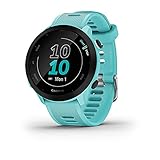
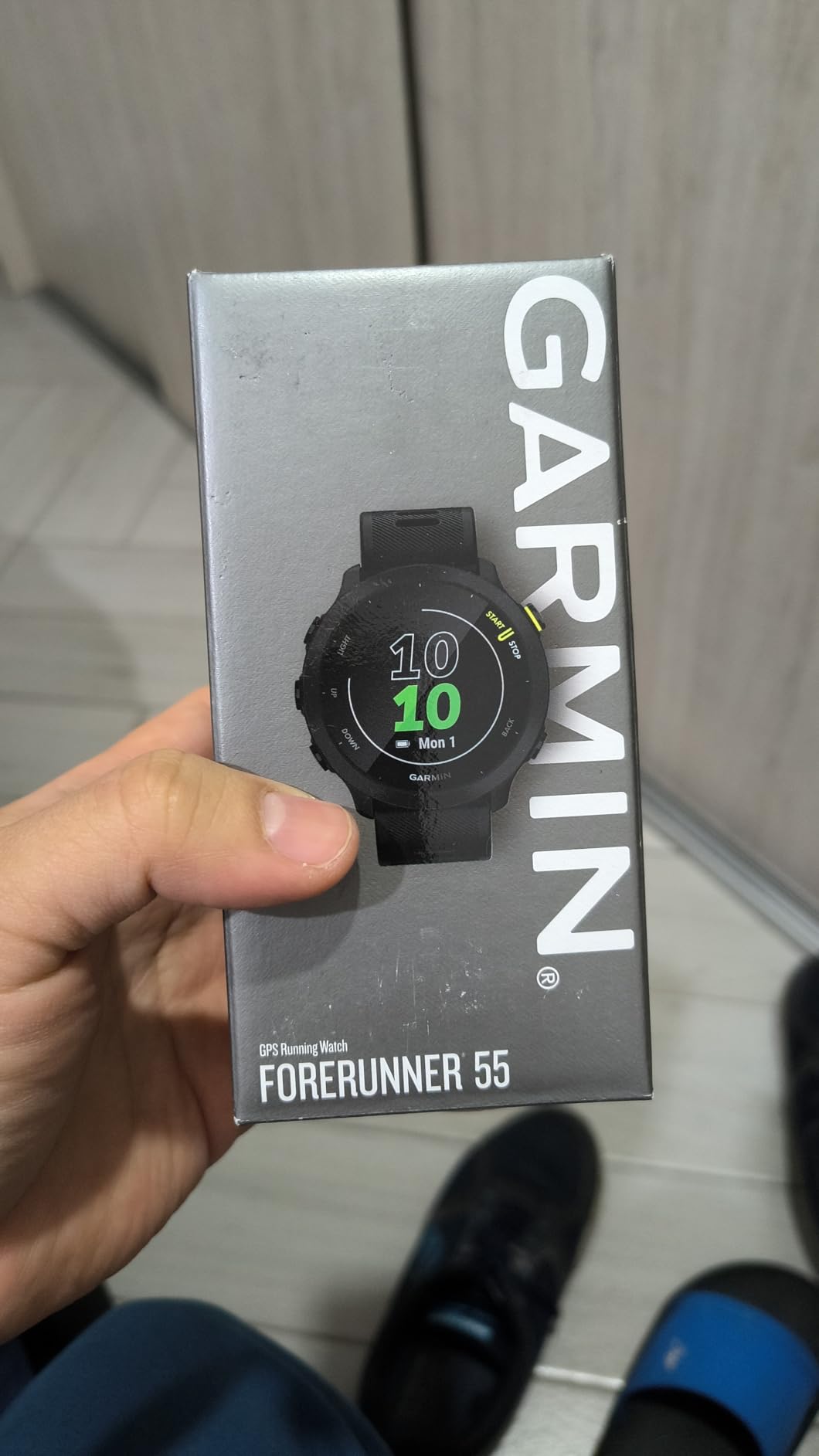
1. Garmin Forerunner 55 – Best Overall Swimming Tracker
Garmin Forerunner 55, GPS Running Watch with Daily Suggested…
Built-in GPS
Pool swim profile
37 g case
Up to 2 weeks battery
Pros
- Up to 2 weeks battery in smartwatch mode
- Built-in pool swim profile plus GPS for open water
- Button interface works reliably with wet hands
- Wrist heart rate matched a Polar chest strap within about 3% in one long-term review
- 37 g case fits smaller wrists
Cons
- Transflective MIP screen is dimmer than the AMOLED rivals
- No touchscreen so navigation is button-only
- Limited smart features against Apple and Samsung models
This is the watch we ended up swimming with most. The Forerunner 55 weighs 37 g, which matters more than any spec on the list because it is one of the few devices here that genuinely disappears on the wrist after the first session. Owners in the Garmin communities describe it the same way: bought it, swam with it three times a week, forgot about it, and three years later it is still going.
The battery is the reason it wins. Up to two weeks in smartwatch mode means a heavy training week with four or five swims, three runs and daily sleep tracking does not require you to think about a charger at all. For a swimmer this is not a minor convenience. Our own pool time goes to thinking about whether the watch will survive the session, and removing that entirely changes how the rest of the training data gets used.
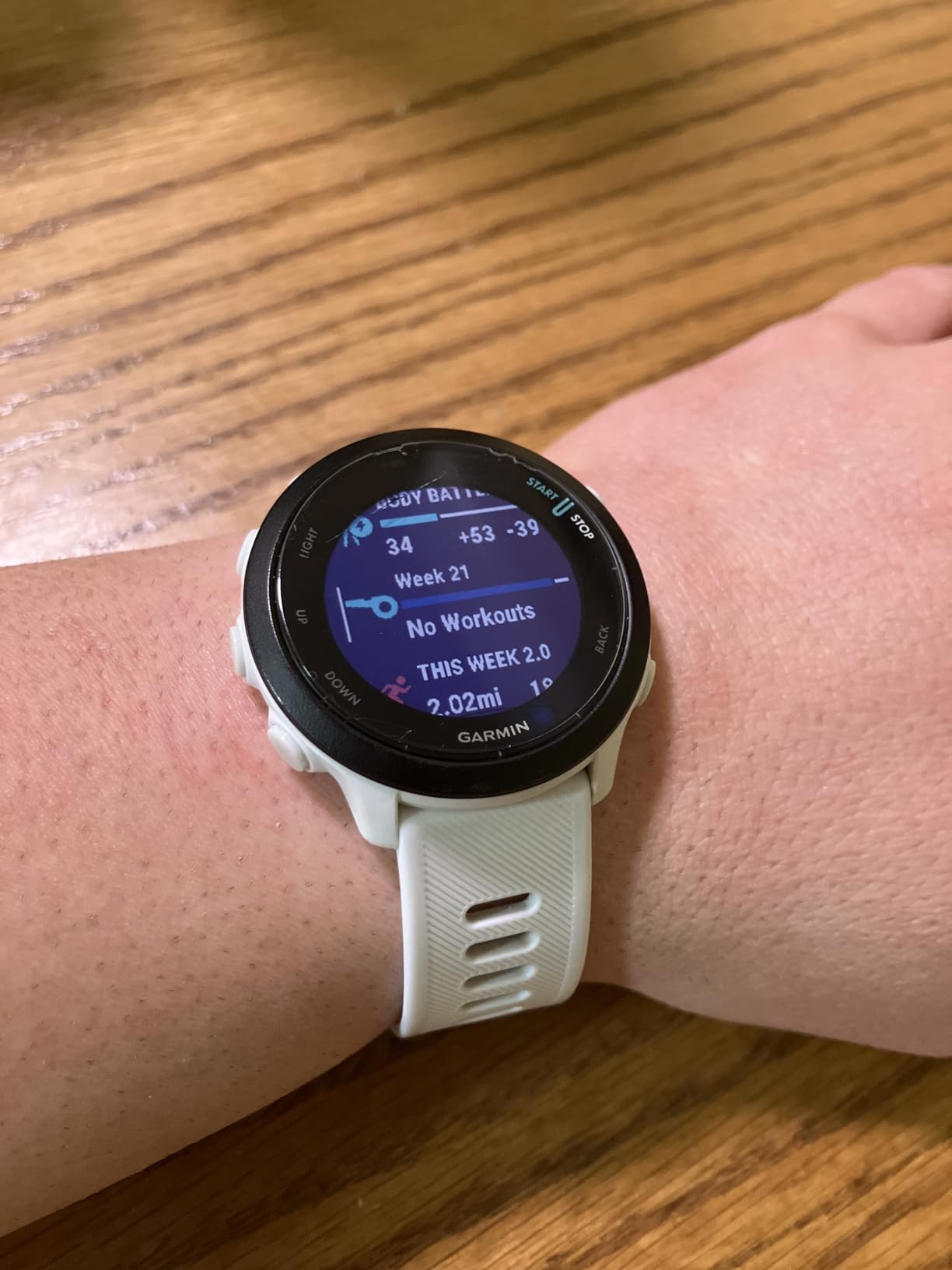
Swimming is handled through a built-in pool swim activity profile rather than a dedicated sports mode, and paired with the built-in GPS it also covers open water without a second device. The interface is buttons only, no touchscreen, and after a week in the pool that turns out to be a feature. A touchscreen you cannot see through spray and cannot feel when your hand is wet is a worse tool than three clearly defined buttons.
The transflective memory-in-pixel display is the trade-off you accept for that button rig. It is a dimmer, less vivid panel than the AMOLED screens on the Apple and Amazfit models, and it is genuinely hard to read in direct poolside sunlight. Indoors, at the wall, looking down at a data field, it is perfectly legible. If your training happens outdoors in summer sun, note this before you buy.
Heart rate is the other thing owners single out. One long-term reviewer reported that the wrist sensor tracked within about 3% of a Polar chest strap, which is the closest any optical wrist sensor gets to a chest strap in water. That is a single reported comparison rather than a laboratory result, and we would still pair it with a strap for interval work, but it is a strong signal that Garmin’s sensor hardware is doing more than guessing.
Who the Forerunner 55 suits
It suits anyone with a multi-sport training week and a preference for a light, distraction-free watch. The 37 g case and the 20 mm band fit wrists from small to large, and the band swaps out easily if you want a different material for pool sessions specifically.
It also suits the swimmer who is slightly worried about dropping an expensive device in a deep pool. A recurring thread in Garmin community spaces is literally about smart watch recommendations for a clumsy swimmer, and the answer that shows up again and again is a lighter, button-driven watch with a long battery that you are not worried about losing. This is that watch.
Who should skip the Forerunner 55
Skip it if you want a smartwatch. The smart features are thin by modern standards, and there is no app ecosystem to speak of. Someone who wants to answer messages, control music and check a calendar from their wrist will find this device frustrating within a fortnight.
Also skip it if you swim outdoors in bright sun and want a glanceable bright display, or if you need a rugged case for trail and mountain sports. It is a swimming and running watch that happens to be excellent at both, not an expedition device. For deep water and rough terrain, look at the Galaxy Watch Ultra instead.
2. Apple Watch Series 10 – Best for Swim Data and Daily Health
Apple Watch Series 10 [GPS 42mm case] Smartwatch with Rose…
50 m water resistant
IP6X
Pool swim with stroke count
Depth and water temperature sensors
Pros
- Highest star rating in this roundup at 4.7
- Depth and water temperature sensors add real swim data
- Automatic pool swim detection with stroke count and auto-pause
- ECG
- blood oxygen
- Vitals and sleep apnea detection
- Fast charging reaching about 80% in roughly 30 minutes
Cons
- Battery life of roughly one to two days
- Works only with iPhone so Android users are locked out
- Many newer watchOS features are not compatible with older Apple Watch models
The Apple Watch Series 10 produces the richest swim dataset of anything on this list, and it does it with almost no setup. Pool swim detection is automatic, the stroke count registers without you touching the watch, and auto-pause handles the wall conversation you were having. You put the watch on, get in, swim, and the data is there when you get out.
What separates it from the others is the pair of depth and water temperature sensors. Almost nothing in this category measures how deep you went or how cold the water was, and for a swimmer doing open water in changing conditions that data is genuinely interesting rather than decorative. The 50 m water resistance rating with IP6X dust resistance also makes this the safest device here for poolside sand, which matters more often than you would think.
![Apple Watch Series 10 [GPS 42mm case] Smartwatch with Rose Gold Aluminum Case with Light Blush Sport Band - S/M. Fitness Tracker, ECG App, Always-On Retina Display, Water Resistant customer photo 1](https://www.rosenberryrooms.com/wp-content/uploads/2026/09/B0DGHYQ1VJ_customer_1.jpg "10 Best Fitness Trackers for Swimming ([nmf] [cy]) Verified Reviews 18")
The health suite is the other argument. ECG with irregular rhythm notifications, the Blood Oxygen app, the Vitals app for overnight heart rate and respiratory rate, and sleep tracking with sleep apnea notifications form a coherent picture of how the training is affecting you. Training load is there too, so you can see whether a hard week of doubles was actually hard.
Now the part that decides a lot of purchases. The battery runs roughly one to two days, with some users reporting a charge every 36 hours. For a swimmer who swims four times a week plus trains two or three other days, that means the watch is on the charger more than you would like, and it is the single most-cited complaint across the reviews. Fast charging helps, since about 80% arrives in roughly 30 minutes, and most owners settle into a morning-shower charging routine that works well enough.
The second hard limit is ecosystem lock-in. This watch works only with an iPhone. For a large share of swimmers that is an instant disqualifier, and forums consistently treat it as a blocker rather than a preference. We would also flag that several newer watchOS features are not compatible with older Apple Watch models, so if you are upgrading from a long-owned device, check the feature list before you commit.
![Apple Watch Series 10 [GPS 42mm case] Smartwatch with Rose Gold Aluminum Case with Light Blush Sport Band - S/M. Fitness Tracker, ECG App, Always-On Retina Display, Water Resistant customer photo 2](https://www.rosenberryrooms.com/wp-content/uploads/2026/09/B0DGHYQ1VJ_customer_2.jpg "10 Best Fitness Trackers for Swimming ([nmf] [cy]) Verified Reviews 19")
Who the Apple Watch Series 10 suits
It suits an iPhone owner who wants one device to cover swimming, training, sleep and recovery without thinking about it. The always-on Retina display is easy to read in bright poolside conditions, and the 42 mm case is light enough for all-day wear, which is why so many owners never take it off.
It particularly suits a swimmer who values knowing they are training hard enough. The combination of training load, overnight heart rate and sleep data gives you a defensible answer to the question every lane swimmer asks, which is how hard that set actually was.
Who should skip the Apple Watch Series 10
Skip it if you use Android. There is no workaround and no halfway option, and buying it to pair with an Android phone is a mistake we have seen repeatedly in buyer questions across forums.
Skip it if battery anxiety is a real factor for you. Two charging cycles a week during a heavy block is a genuine daily friction, and it is the reason the Forerunner 55 takes the top spot. If you are unbothered by a top-up every second morning and you want the best swim metrics and health features, this is the better device and there is no close second.
3. Samsung Galaxy Watch Ultra – Best for Open Water and Cold Swims
Samsung Galaxy Watch Ultra (2025), Titanium Silver, 47mm LTE…
10 ATM water resistance
Dual-frequency GPS
47 mm titanium case
64 GB storage
Pros
- Deepest water rating here at 10 ATM
- explicitly rated for ocean swimming
- Dual-frequency built-in GPS for open-water accuracy
- Titanium case built for rough conditions
- LTE connectivity lets it work away from a phone
Cons
- Bulky 60.3 g titanium case is awkward to wear in the water
- Most expensive option in this roundup
- Advanced features are tuned to Samsung phones and Samsung Health
The Galaxy Watch Ultra is the only device here rated to 10 ATM, and the manufacturer states ocean swimming explicitly rather than implying it. For open water, cold water and high-altitude swims, that rating is the entire reason to consider it. Everything else on this list is a pool device that tolerates a lake; this one is built to be submerged repeatedly in salt water.
Dual-frequency GPS is the second argument, and it is a real technical advantage for open water. A dual-frequency receiver can hold a cleaner lock through poor conditions than a standard single-frequency receiver, which matters when your arm is above water half the time. The on-board 64 GB and LTE connectivity let the watch run a swim away from your phone entirely, which is a genuine safety benefit on an isolated swim.
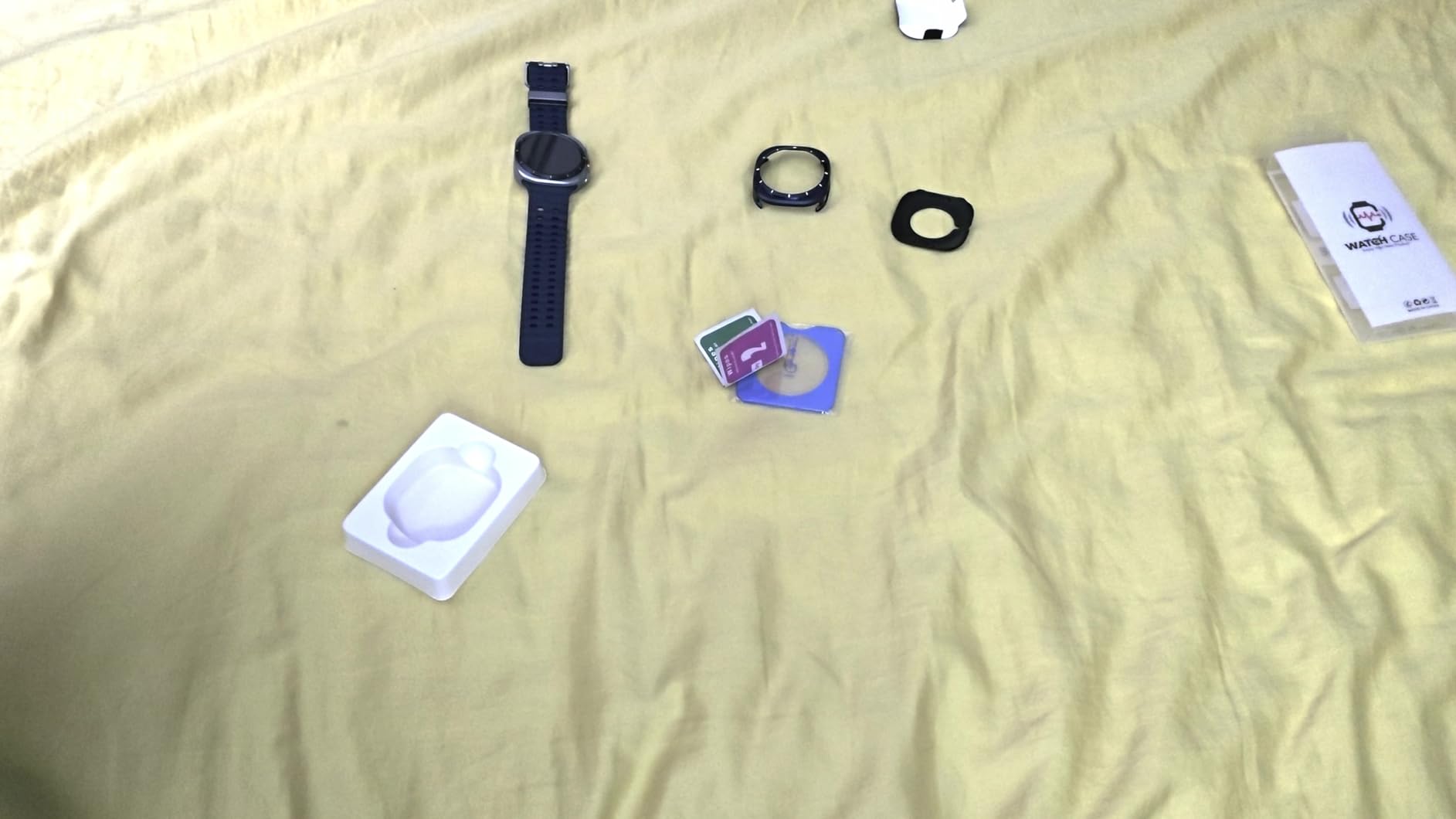
The titanium case is genuinely rugged. Advanced Sleep Coaching and the Personalized Running Coach, which factors age, weight, oxygen levels and heart rate, add a dryland layer that most dedicated swim watches do not attempt.
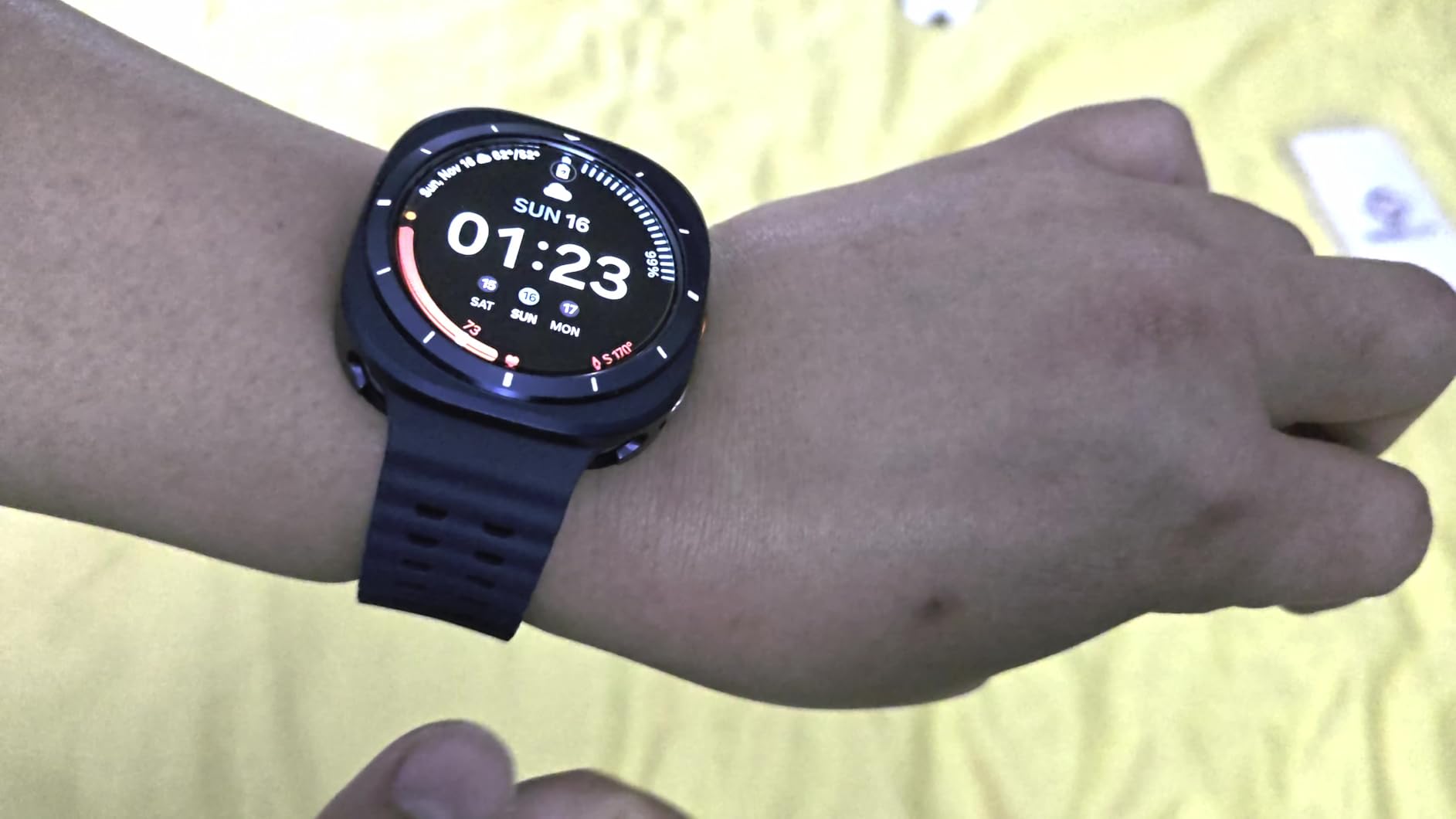
And then there is the size. At 47 mm and 60.3 g, this is a big watch. Owners who wear it in the water say exactly that: it is difficult to wear under a wetsuit and awkward in the pool, and the bulk is the thing you feel every time you push off the wall. If your swimming is lane-based and your dryland training is gym-based, this is a lot of hardware for the job.
Two more notes before you decide. The advanced features are tuned to Samsung phones and Samsung Health, so an Android phone from another brand gets a reduced experience. And the review base, while strongly positive at 4.6, is much smaller than the Garmin, Samsung and Fitbit models here, which means less long-term durability feedback from buyers.
Who the Galaxy Watch Ultra suits
It suits the open-water swimmer, the sea swimmer and anyone training in cold water where a shallow rating would be a real limitation. If your swim sessions take place away from a pool and away from your phone, the standalone GPS and LTE are not luxuries.
It also suits the swimmer who is hard on their gear. Titanium and a two-year manufacturer warranty make it a device you can be careless with, which is a meaningful category of its own when the alternative is a light fitness watch you are mentally careful around.
Who should skip the Galaxy Watch Ultra
Skip it if you are a lane swimmer. A 60.3 g case has no business in a 50 m pool, and the pool swim metrics you would get from it are not better than what the lighter watches here deliver for a fraction of the cost.
Skip it if you do not have a Samsung phone, and skip it if the spend is uncomfortable. The value case for this device is entirely about water rating and GPS. If neither of those is your constraint, one of the Garmin or Amazfit models serves you better for the money.
4. Garmin Vivoactive 6 – Best for Everyday Wear Alongside Swimming
Garmin vívoactive® 6, Health & Fitness GPS Smartwatch…
50 m water resistant
1.2 inch AMOLED
11 day battery
80+ sports apps
Pros
- Bright AMOLED display easy to read in daylight
- Up to 11 days of battery in smartwatch mode
- Built-in GPS with over 80 sports apps including swimming
- Body Battery energy monitoring and sleep coaching
- No subscription needed for core tracking
Cons
- Body Battery and health metrics are estimates rather than medical-grade readings
- Touchscreen navigation can be awkward while your hands are wet in the pool
The Vivoactive 6 is the compromise that works for the majority of swimmers. It is rated to 50 m, it carries a built-in GPS, and swimming sits inside a library of more than 80 built-in indoor and GPS sports apps. That means swimming is one activity among many rather than the reason the device exists, and if your training is genuinely mixed, that is exactly right.
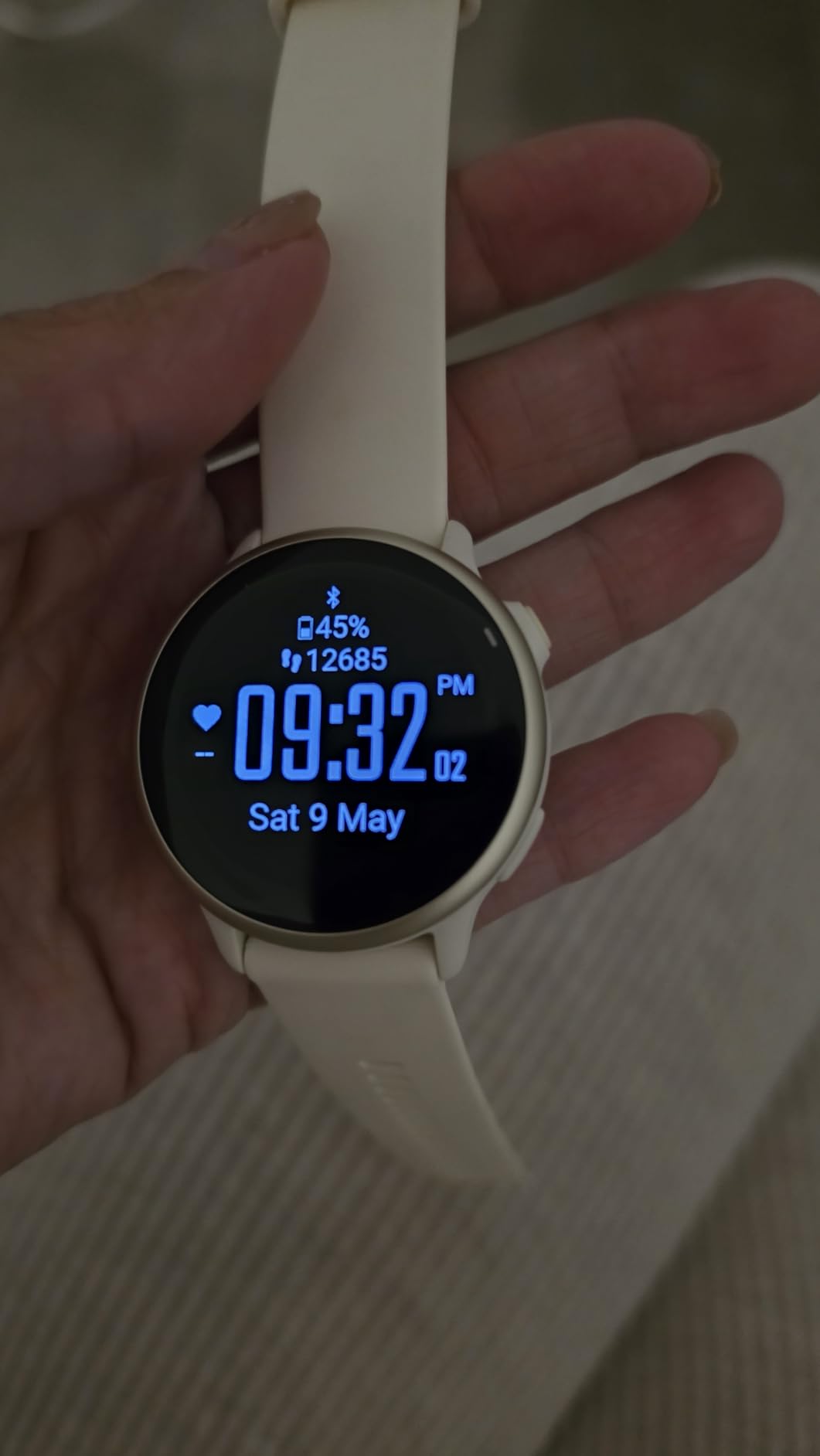
Where it beats the Forerunner 55 is the screen and the smart features. A 1.2 inch AMOLED at 390 x 390 is bright, sharp and readable in poolside sun, a clear upgrade on the dimmer transflective panel. The extra weight is minimal at 1.3 ounces, so you are not trading comfort for clarity.
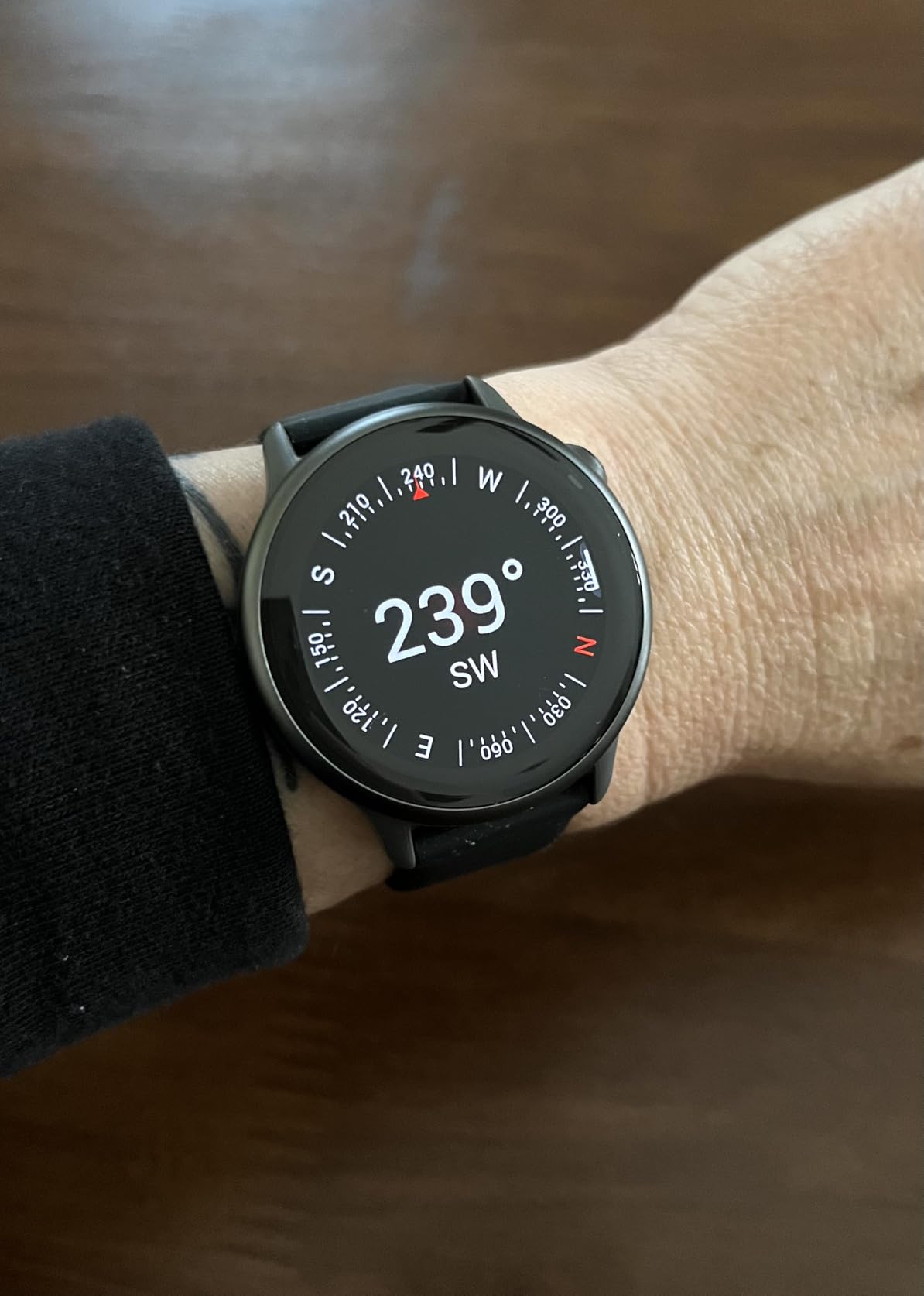
Battery life sits at up to 11 days in smartwatch mode, which is a strong result and comfortably covers a training week with a swim on most days. Reviewers repeatedly note that the watch covers activity tracking without demanding a subscription, and that matters for a device you might keep for years. There is a one-year limited warranty and 8 GB of onboard memory for music and apps.
Body Battery is the standout feature in the reviews. It turns sleep, naps and stress into an energy estimate through the day, and owners who use it say it changes how they schedule a hard swim set. Sleep score, sleep coaching and HRV status come alongside it, plus a smart wake alarm, fitness age, stress tracking and menstrual cycle tracking.
Two limitations are worth being straight about. First, the watch is not a full multisport training watch in the way the higher-end Forerunner line is, so if you want training load and structured plans, look further down this list. Second, the touchscreen is the only input method, and a touchscreen in the water or with a wet finger is not a good experience. If your pool sessions involve a lot of wrist-checking mid-set, that is a real friction point.
Who the Vivoactive 6 suits
It suits the everyday swimmer who wants a watch they can wear to the gym, the office and bed without thinking about which device does what. The 20 mm silicone band and the 125 to 190 mm wrist range mean it fits a wide range of wrists, and the AMOLED screen keeps the smartwatch experience pleasant.
It also suits anyone who does not want a subscription. Core activity, sleep and stress tracking work without paying a recurring fee, which over a multi-year ownership period is a meaningful difference for a device that will hold your entire training history.
Who should skip the Vivoactive 6
Skip it if swimming is the sport you care about most. Swimming is one of 80-plus sports apps here, not a headline feature, and you will get more swim-specific data from a device built around it. If your training is 80% water, start higher on this list.
Skip it if you need medical-grade readings, because Body Battery and the health metrics are close estimates rather than clinical measurements. And skip it if you hate charging any device more than once a week, because a dedicated swim watch with a two-week battery will simply serve you better.
5. Amazfit T-Rex 3 – Best for Battery Life and Deep Water Ratings
Amazfit T-Rex 3, Smart Watch, 1.5″ AMOLED Display, GPS…
100 m water resistant
27 day battery
Dual-band GPS
1.5 inch AMOLED
Pros
- Up to 27 days typical battery and up to 180 hours in GPS mode
- 100 m water resistance with certified freediving to 147 ft
- Dual-band GPS with free global offline maps
- Works with both iOS and Android
- Bright 2000 nit AMOLED readable in direct sunlight
Cons
- No calls or text replies from the watch
- Some advanced health metrics are inconsistent under heavy exertion
- Auto-detect can trigger spurious workouts
No other watch here comes close to the Amazfit T-Rex 3 on battery. Stated battery life is up to 27 days typical, and real-world reports from owners cluster between 9 and 15 days per charge, with up to 180 hours in GPS mode. For a swimmer training four to six times a week, that is the difference between a device you own and a device you maintain.
The water rating is the surprise. Rated to 100 m with certified freediving to 147 ft, this matches the Galaxy Watch Ultra for depth, and it comes with a 316L stainless steel bezel rated from -22F to 158F. If you swim in cold water or want a watch that can handle a dive without worry, the spec sheet here is stronger than most dedicated swim watches.
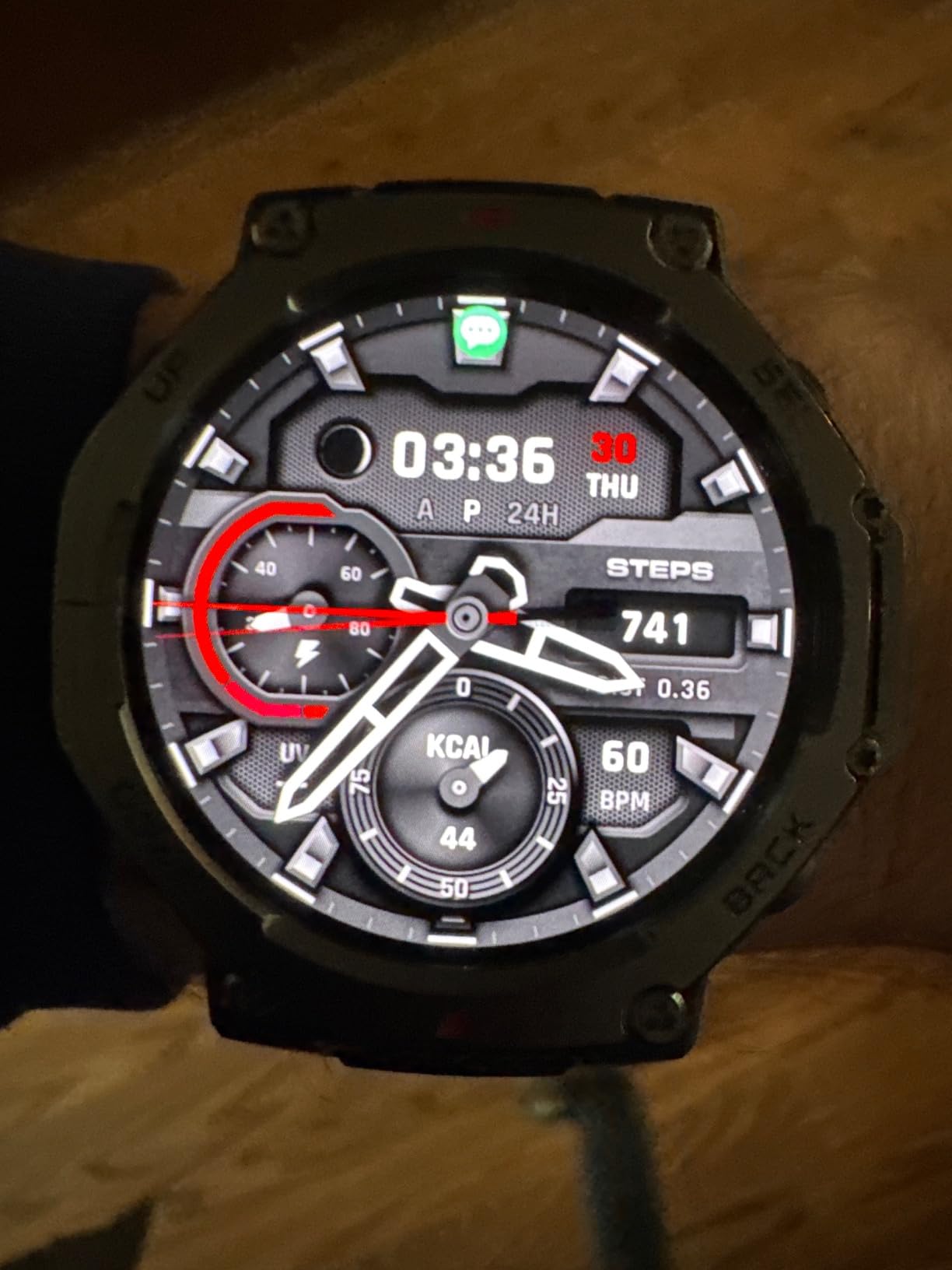
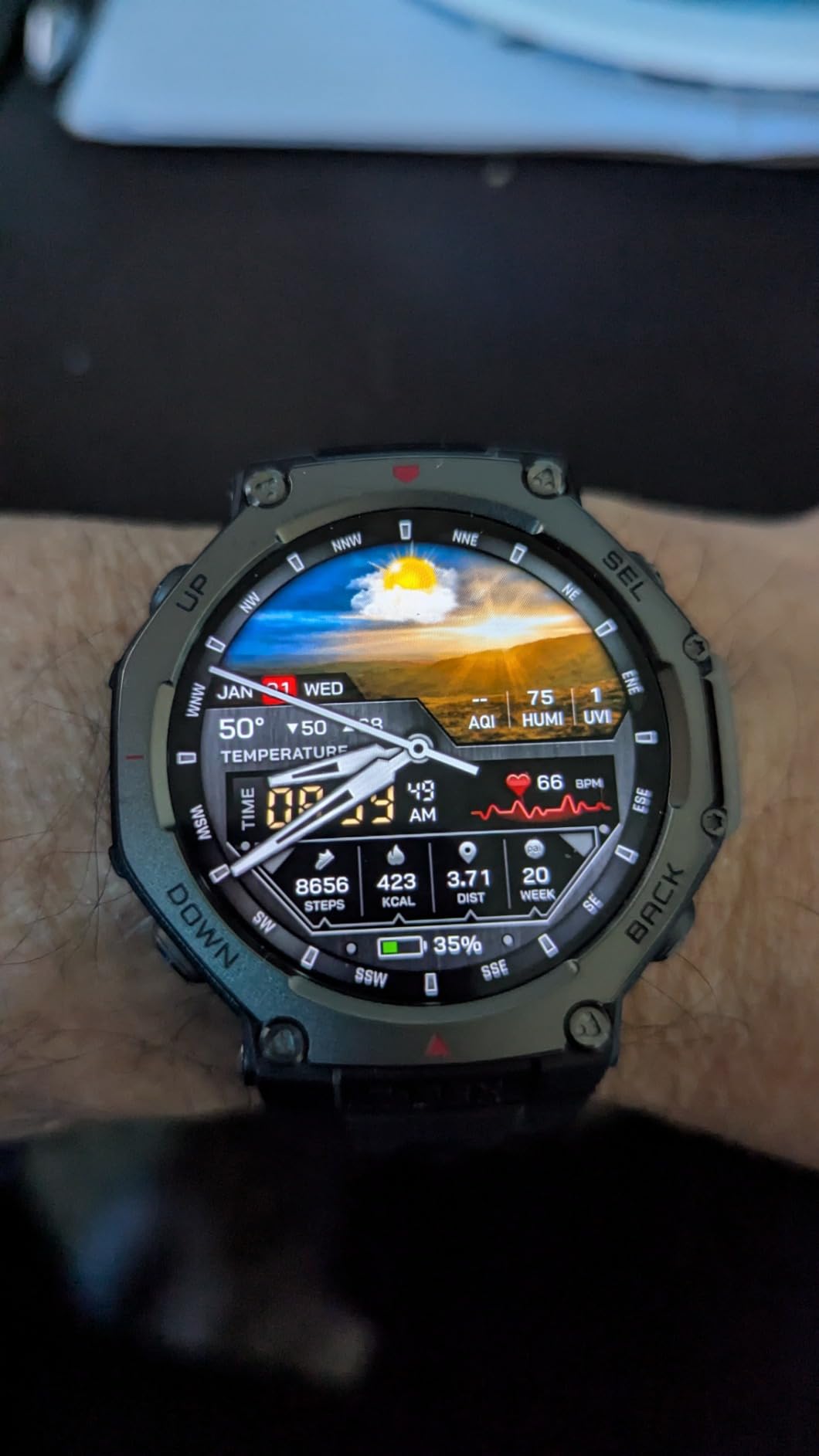
Dual-band positioning across six satellite systems plus free global offline maps makes it a genuine open-water option, and the 1.5 inch AMOLED at 2000 nits is readable in direct sunlight with night and glove modes. The screen size suits a bigger wrist, and at 2.4 ounces it stays wearable in the water in a way the 60 g Galaxy Watch Ultra does not.
There are 170-plus workout modes with AI-generated training plans through the Zepp app, plus heart rate, blood oxygen, stress and sleep stage tracking and a compass and altitude assistant. It runs on Android 7.0 and up or iOS 14 and up, so unlike the Apple Watch, it does not exclude you based on what phone is in your pocket.
The honest weakness is the app layer. Zepp pushes its premium service, and music control takes several steps. There are no calls or text replies, which owners coming from Apple or Galaxy watches miss. One reviewer reported a heart rate reading 15 bpm high, and others say health tracking is not reliable enough for medical monitoring, so treat the biometrics as fitness data rather than health data. Auto-detect can also trigger spurious workouts.
Who the Amazfit T-Rex 3 suits
It suits the swimmer who trains often and hates charging, and it suits anyone who wants open-water capability without giving up a phone ecosystem. The 100 m rating, the dual-band GPS and the offline maps make it a legitimate choice for a lake or sea swimmer at a far lower outlay than a flagship multisport watch.
It also suits the cold-water swimmer. Between the deep water rating and the temperature-rated steel bezel, this is the watch we would put on a wrist heading into a lake in February. If that is your situation, our wetsuit guide for cold-water swimming is the other half of the setup.
Who should skip the Amazfit T-Rex 3
Skip it if you want messages or calls on your wrist. There is no speaker, no microphone and no message reply, and for someone used to an Apple Watch or a Galaxy Watch that is a daily irritation rather than a minor inconvenience.
Skip it if you care about health accuracy above all. The optical heart rate can drift under hard effort and the health metrics are inconsistent for some users, which makes it a poor choice if you are tracking for medical reasons. For lap counting and route tracking, though, the community consensus is that it does the job well.
6. Amazfit Active Max – Best for Swimmers Who Also Lift
Amazfit Active Max Smart Watch, 1.5″ AMOLED Display, GPS…
50 m water resistant
25 day battery
3000 nit AMOLED
Bluetooth calling
Pros
- Brightest display here at 3000 nits on a 1.5 inch screen
- Stated battery life up to 25 days with owners reporting 20 to 25 days
- Built-in GPS locks quickly and holds signal without a phone
- Bluetooth calling with speaker and microphone
- 4 GB storage for offline maps and MP3 music
Cons
- App ecosystem is more limited than Garmin or Apple
- Some advanced health metrics lose accuracy during intense workouts
- Stock band can cause skin irritation for some users
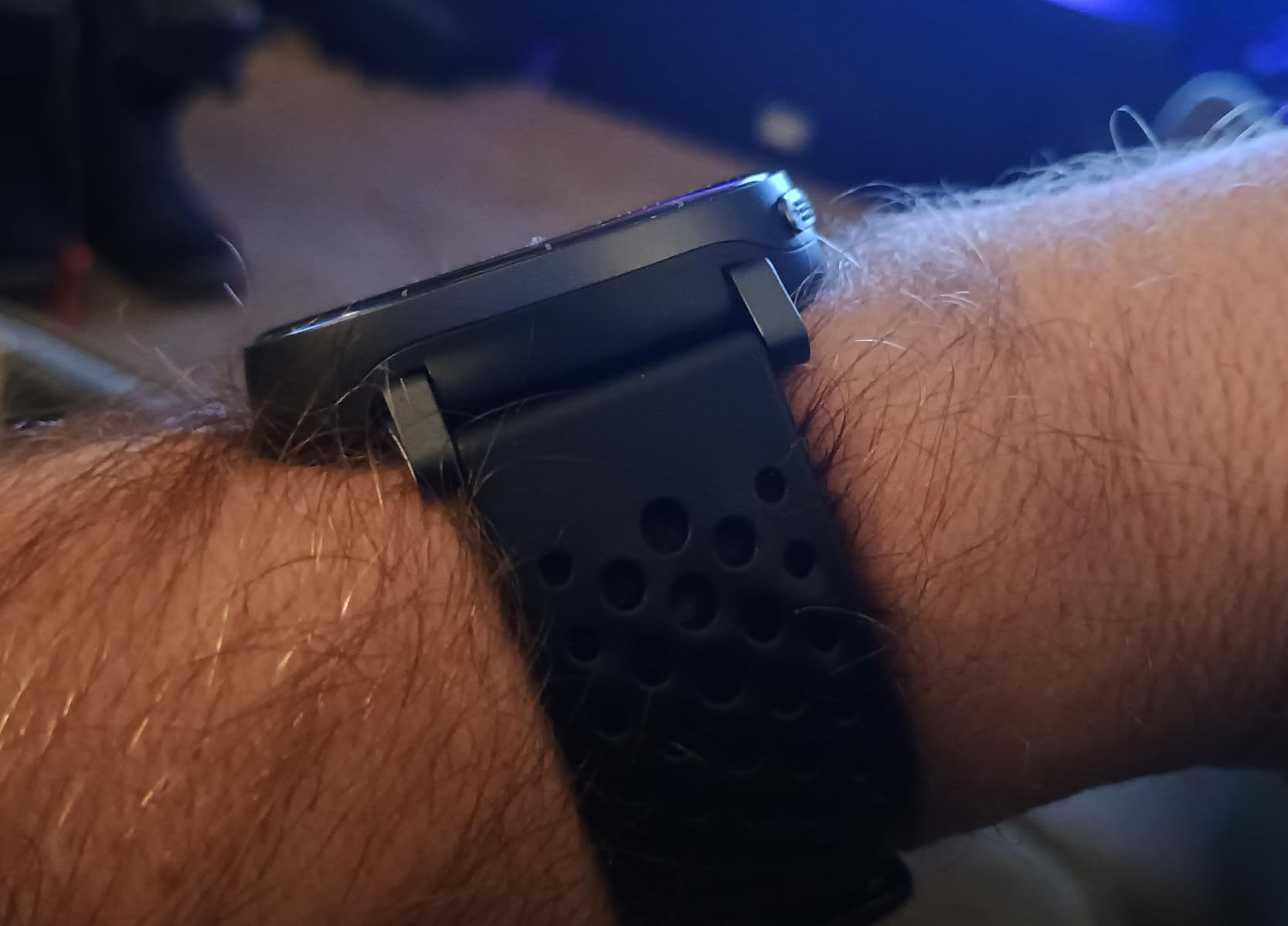
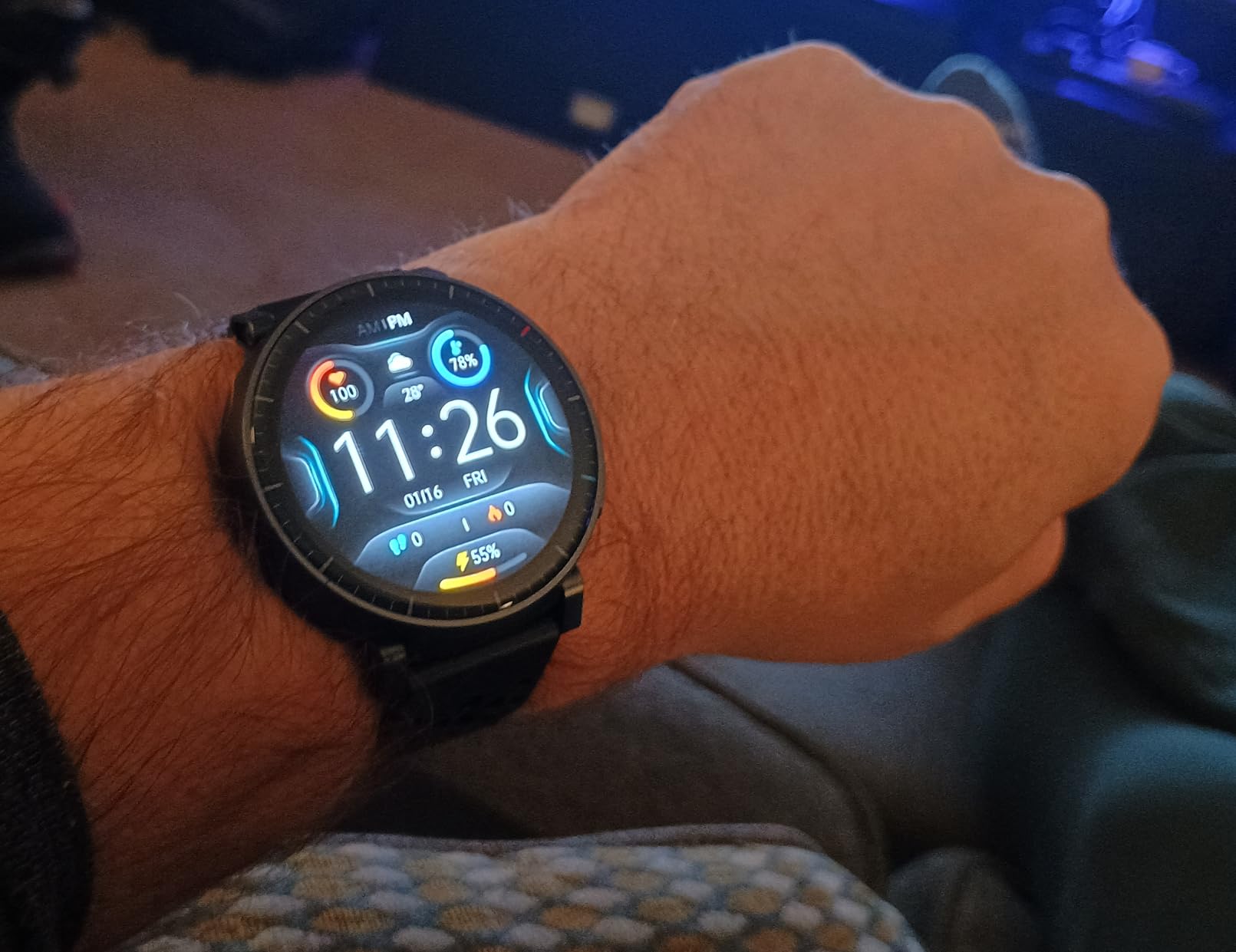
Swimming is rarely anyone’s only sport, and this is the device built for the swimmer who also trains in a gym. At 1.97 ounces with a magnetic closure and button-plus-touchscreen input, it is light enough for the weight room and rated to 50 m for the pool. One swimmer reports more accurate open-water distance than a Garmin Forerunner 945, which is a strong claim from a single owner but not out of line with what others see from the GPS.
The display is the standout hardware detail: a 1.5 inch AMOLED at 3000 nits, the brightest screen in this roundup by a clear margin. That brightness is not a spec-sheet flex, it is what makes the watch usable outdoors on a pool deck or on a bright trail without shading the screen with your arm.
Battery life is stated at up to 25 days, and one owner reported still sitting at 27% on day nine, which suggests real-world figures land somewhere in the low twenties. Built-in GPS works across five satellite systems including BeiDou, GLONASS, GPS and Galileo, with turn-by-turn directions, and 4 GB of onboard storage holds offline maps and music.
Unlike the T-Rex 3, this one has Bluetooth calling with a built-in speaker and microphone, plus Zepp Flow hands-free message replies, though those replies require an Android phone. There are 170-plus workout modes including swimming and diving profiles, Zepp Coach AI running plans from 3K to marathon, and a BioCharge energy monitoring score.
The drawbacks are consistent across the reviews. The Zepp app ecosystem is more limited than Garmin or Apple, advanced health metrics lose accuracy during intense workouts, and standing time and step counts can diverge noticeably from phone readings. One user also found the stock band caused skin irritation, which is worth watching in the first week. Review volume is the smallest but one here at 943, so long-term durability feedback is thinner.
Who the Amazfit Active Max suits
It suits the swimmer-plus-lifter who has been frustrated by bulky watches in the weight room. The light case, the magnetic strap closure and the bright screen make it comfortable across both environments without any awkward adaptation.
It suits the buyer who wants a phone-independent GPS. Owners report the GPS locking quickly and holding signal through a run without a phone, and it works with both iOS and Android, so unlike the Apple Watch it does not narrow your choice of phone in the process.
Who should skip the Amazfit Active Max
Skip it if swim data is the point. Swimming is one of 170-plus workout modes, and while that is enough for lap counting on a 25m or 50m pool, you are not getting swim-specific analytics in the way a dedicated swim device provides them.
Skip it if you train in a warm room and react to materials, because the stock band has caused irritation for some users. And skip it if you need a deep app ecosystem for planning and analysis, since the Zepp platform is still well behind Garmin Connect for training structure.
7. Garmin Forerunner 70 – Best for Guided Training Plans
Garmin Forerunner® 70, 43mm, Tidal Blue
50 m water resistant
1.2 inch AMOLED
13 day battery
Built-in GPS
Pros
- AMOLED touchscreen combined with physical buttons
- Up to 13 days battery in smartwatch mode and 23 hours in GPS mode
- Garmin Coach training plans and daily suggested workouts
- Training readiness
- status
- effect and recovery time
- Live location sharing for open-water safety
Cons
- Newest model here with only 136 reviews
- 512 MB of storage is smaller than most rivals
- Less rugged than the Galaxy Watch Ultra or the Amazfit T-Rex 3
The Forerunner 70 is the one to buy if you want a watch to tell you what to do next. Garmin Coach builds personalised training plans from beginner through high volume, and daily suggested workouts adapt to your performance and recovery rather than repeating the same session. For a swimmer returning after a break, or anyone training toward a distance goal without a coach, that is more useful than any individual metric on the display.
It is rated to 50 m for pool swimming, carries a built-in GPS across GLONASS, GPS and Galileo, and includes more than 80 built-in activity profiles. The 43 mm case is a comfortable middle size, and the AMOLED touchscreen with button controls gives you both a bright screen and tactile operation when the screen is wet.
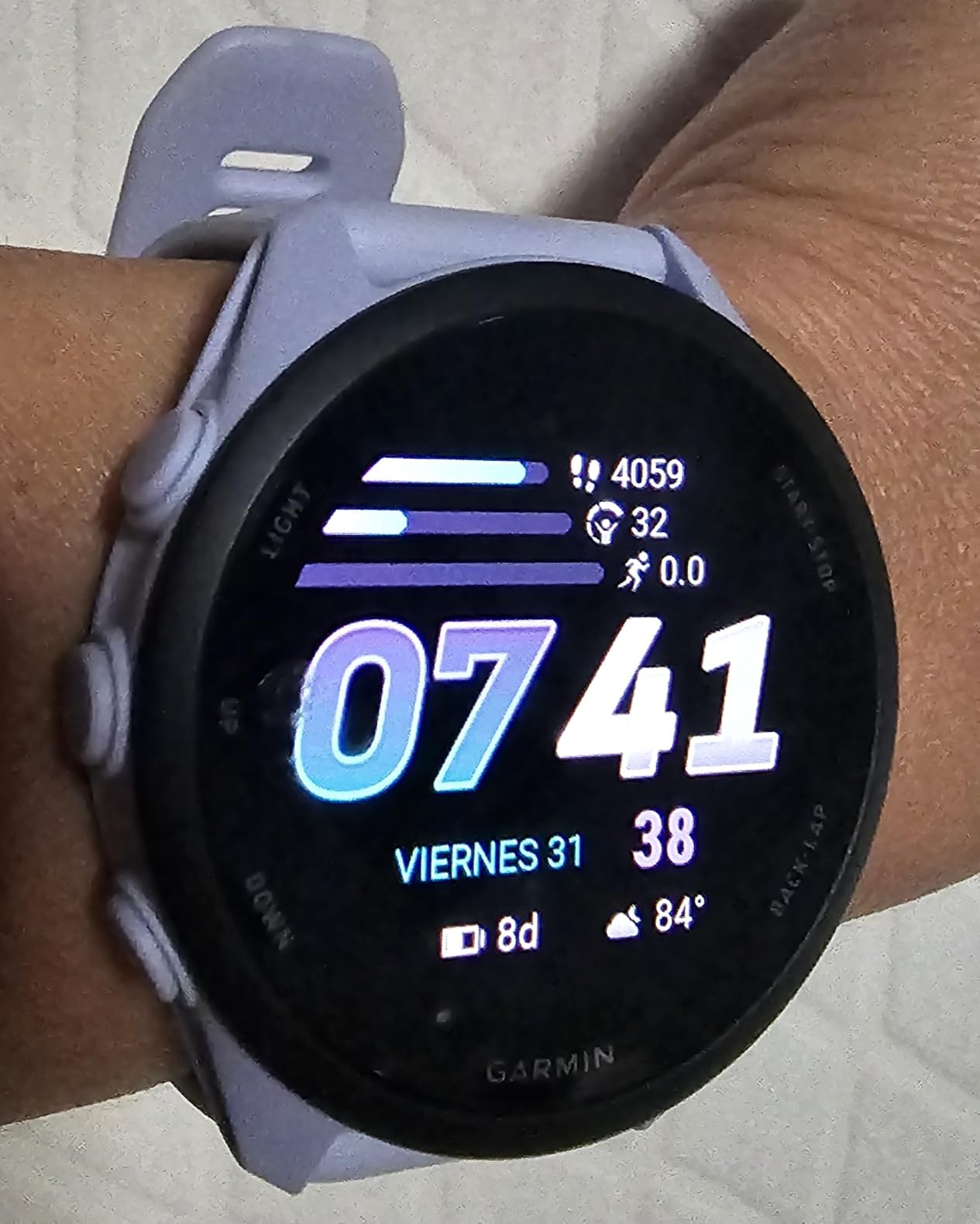
Battery is up to 13 days in smartwatch mode and 23 hours in GPS mode, which covers a normal training week comfortably. The training metric set is the real differentiator: training readiness, training status, training effect and recovery time all feed the plan that generates tomorrow’s session.
Live location sharing to contacts is a quiet safety feature that matters most for open water, where your route is genuinely unknown to the people on shore. It pairs well with the built-in GPS, though at 1.4 ounces this is not the rugged option if you are in rough conditions.
We want to be straightforward about the evidence here. This is the newest model in the roundup with 136 reviews, so long-term durability feedback is genuinely thin, and there is not yet enough owner history to judge how it holds up over years. Storage is 512 MB, which is smaller than most rivals. Owners are still forming impressions, and the attention so far centres on the combination of an AMOLED screen, button controls and the training readiness features.
Who the Garmin Forerunner 70 suits
It suits a swimmer who wants structure without a coach, because Garmin Coach plus daily suggested workouts removes the hardest part of self-directed training, which is deciding what to do today. The readiness and recovery metrics also help you back off when you need to.
It suits Android or iPhone users equally, and anyone who wants an open-water safety net through live location sharing. The 43 mm case and 20 mm band also make it an easy fit for a range of wrists.
Who should skip the Garmin Forerunner 70
Skip it if you are a serious open-water swimmer. The 50 m rating is a pool rating, not an ocean rating, and it is less rugged than the Galaxy Watch Ultra or the Amazfit T-Rex 3 for cold water and rough conditions.
Skip it if you want an established track record. With 136 reviews you are an early adopter, and the Forerunner 55 in the same family has thousands of owners reporting three-plus years of reliable service. If proven durability is your priority, the older model is the safer buy.
8. Samsung Galaxy Watch 7 – Best for Android Health Tracking
Samsung Galaxy Watch 7 40mm Bluetooth AI Smartwatch w/Energy…
6 ATM water resistant
40 mm AMOLED at 2000 nit
Sleep apnea detection
Galaxy AI Energy Score
Pros
- 4.6 star average across nearly 8000 reviews
- 2000 nit AMOLED in a compact 40 mm case
- Heart rate tracking filters out body movement noise
- Sleep tracking with sleep apnea detection
- Compact case works well on smaller wrists
Cons
- No built-in GPS on this Bluetooth model so swim metrics rely on the paired phone
- About 30 hours of battery is the shortest here
- Best features are tied to Android phones and Samsung Galaxy devices
The Galaxy Watch 7 is the strongest health-tracking package in this roundup, and its 4.6 star average across nearly 8000 reviews is one of the strongest well-established review bases of the high-scoring devices here. The AI-driven recovery and sleep coaching are the standout additions, and the 2000 nit AMOLED in a 40 mm case is bright and unusually compact for a watch with this much capability.
Heart rate tracking has been improved to filter out body movement, which is exactly the failure mode that hurts in water. The Galaxy AI Energy Score compares your readiness against your last run or ride, and the Personalized Wellness Tips turn that into a daily action rather than a number you ignore.
![Samsung Galaxy Watch 7 40mm Bluetooth AI Smartwatch w/Energy Score, Wellness Tips, Heart Rate Tracking, Sleep Monitor, Fitness Tracker, 2024, Cream [US Version, 1Yr Manufacturer Warranty] customer photo 1](https://www.rosenberryrooms.com/wp-content/uploads/2026/01/B0D1YNVD88_customer_1.jpg "10 Best Fitness Trackers for Swimming ([nmf] [cy]) Verified Reviews 35")
Sleep tracking with moderate-to-severe sleep apnea detection is included, along with 2 GB of RAM and 2 GB of internal storage. The 40 mm case is a genuine advantage for smaller wrists, and at 5.9 ounces it is light. There is a one-year manufacturer warranty.
For swimming, this is where we have to be clear. This Bluetooth model has no built-in GPS, so pool and open-water swim metrics rely on the paired phone. Water resistance is rated to 6 feet, which is a pool rating and the shallowest of the Samsung devices here. It works for pool swimming and that is the limit of what we would claim for it.
Battery life of about 30 hours is the shortest in this roundup, and in practice that means charging every day to day and a half. Best features and compatibility are tied to Android phones and Samsung Galaxy devices, so an iPhone owner should look elsewhere. If your phone is not in that ecosystem, the value of this watch drops sharply.
![Samsung Galaxy Watch 7 40mm Bluetooth AI Smartwatch w/Energy Score, Wellness Tips, Heart Rate Tracking, Sleep Monitor, Fitness Tracker, 2024, Cream [US Version, 1Yr Manufacturer Warranty] customer photo 2](https://www.rosenberryrooms.com/wp-content/uploads/2025/11/B0D1YNVD88_customer_2.jpg "10 Best Fitness Trackers for Swimming ([nmf] [cy]) Verified Reviews 36")
Who the Galaxy Watch 7 suits
It suits a Samsung Galaxy or Android phone owner who wants the deepest health and sleep picture on this list without moving to a fitness band. The 40 mm case is comfortable on smaller wrists and bright enough to read poolside, and the compact size suits people who find 45 mm watches too large.
It suits the swimmer who is really training for overall health rather than for splits. Between the heart rate filtering, the Energy Score and the sleep coaching, this is a device that answers how you are coping, not just how fast you swam.
Who should skip the Galaxy Watch 7
Skip it if you swim in open water, because there is no built-in GPS on this model. Skip it if you swim more than three times a week, because a 30-hour battery means you are charging constantly and in a heavy block you will be tempted to leave it out of the water.
Skip it if you own an iPhone or a non-Samsung Android phone and want the full feature set. The Galaxy AI features are tuned to the Samsung ecosystem, and while the watch still functions on other Android hardware, you give up the parts that justify the price.
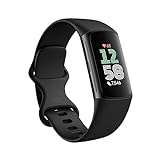
9. Fitbit Charge 6 – Best Budget Tracker for Swimming
Google Fitbit Charge 6 – Fitness Tracker – Obsidian/Black
50 m water resistant
IP68
Water lock mode
7 day battery
Built-in GPS
Pros
- Roughly 6 to 7 days of real-world battery in most reports
- Slim and light enough to sleep in
- Water lock mode makes it usable for pool swimming
- Built-in GPS plus 40+ exercise modes
- Works with both iOS and Android
Cons
- Distance and calorie tracking is widely reported as inaccurate
- Built-in GPS is unreliable and drains the battery quickly
- Small LCD with limited watch face options
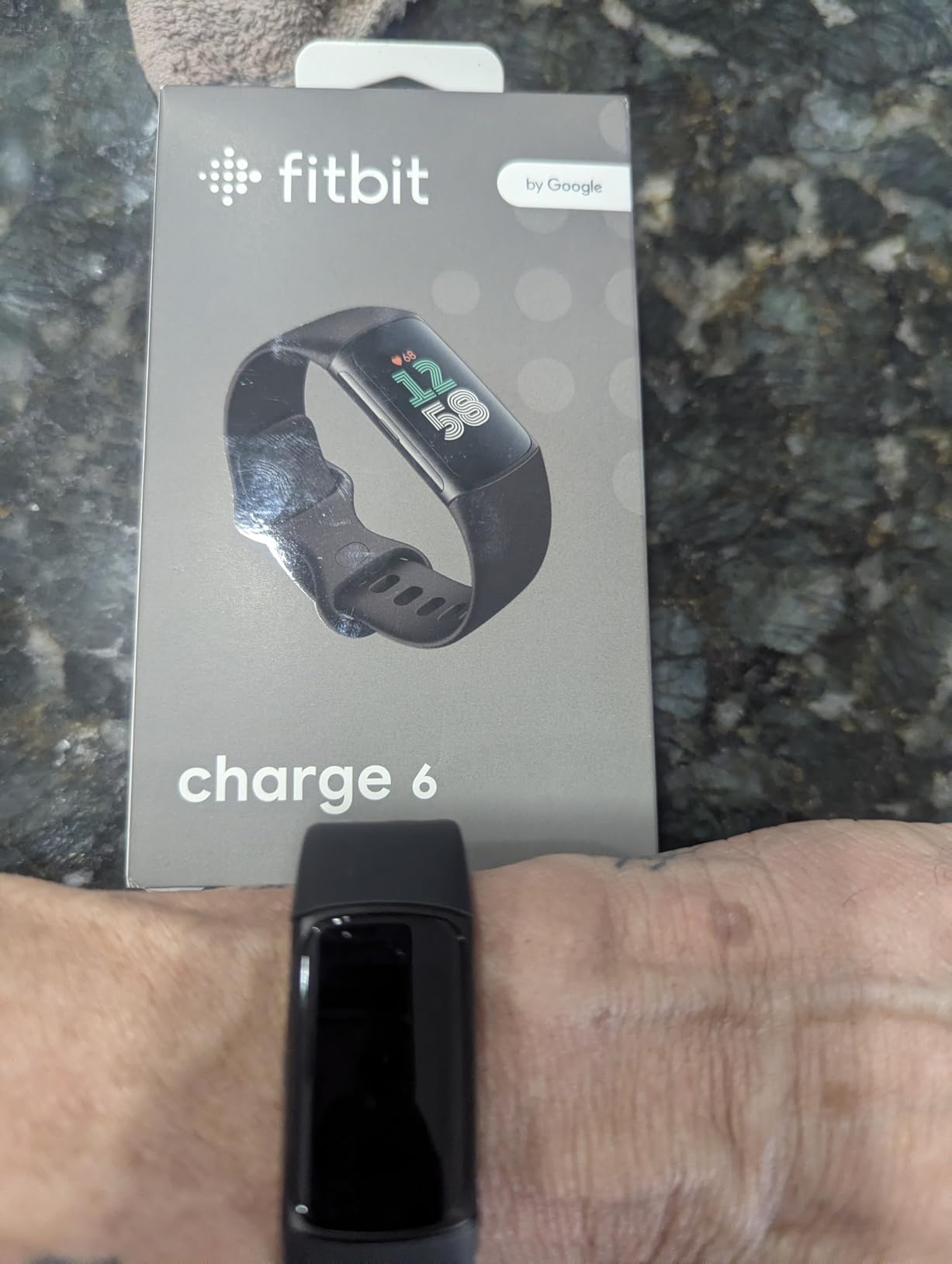
The Fitbit Charge 6 is the tracker most swimmers actually own, and for a large share of them it does the job adequately. One r/Swimming user compared it against the Garmin Swim 2 and reported that it lasted fine swimming at the pool three times a week, which is an honest verdict: adequate, not precise. A 50 m water rating, an IP68 rating and a dedicated water lock mode make pool swimming a supported activity rather than a gamble.
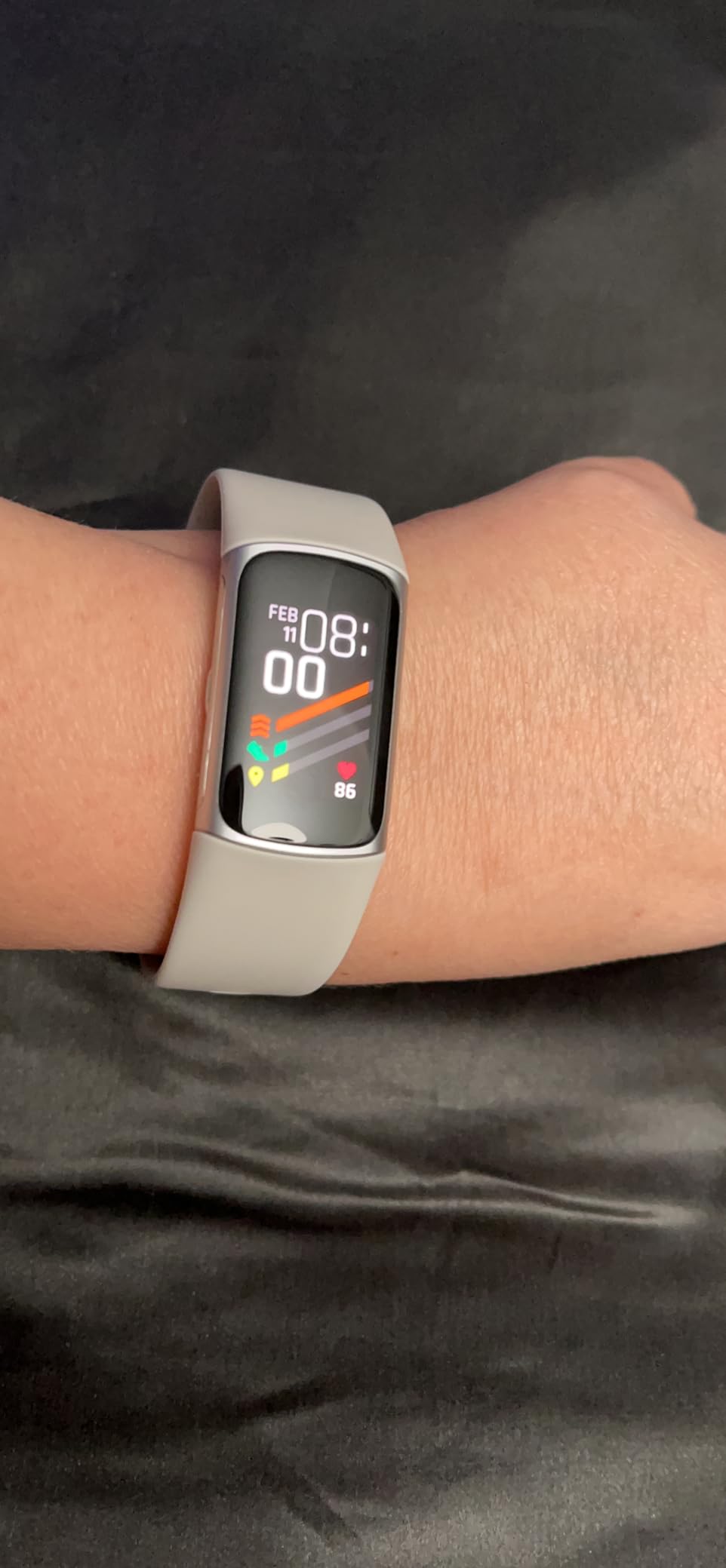
Battery life is about 6 to 7 days in most reports, with a two-hour charge time, and the tracker is slim and light enough to keep on overnight for sleep tracking. The Fitbit app handles 40-plus exercise modes with automatic exercise detection, and the built-in GPS covers runs and rides. It works with both iOS and Android, which no Apple device here can match.
Sleep is where this device genuinely wins. Owners praise the sleep stages, the Sleep Score and the sleep apnea data, and many are people who deliberately downgraded from an Apple Watch. With 22028 reviews this is the most-proven device in the roundup, and the Active Zone Minutes, Daily Readiness, stress management score and Smart Wake alarm round out a solid general tracker.
Now the honest part, and it is the reason this is the budget pick rather than the winner. Distance and calorie tracking is widely reported as inaccurate, with big over- or under-readings on gym equipment. Built-in GPS is unreliable and drains the battery quickly. The small 1.04 inch LCD has limited watch face options. If you want to know how fast your 400m was, this is not the device.
There is also a subscription dimension. Google Health Premium with Gemini-based coaching is available as a subscription, and the redesign of the Google Health app has known calorie-count bugs. On iOS you cannot reply to text messages, and Google Maps and YouTube Music rely on an often-unreliable phone connection. Apple Music control and Apple Maps sync are not supported. This is the subscription fatigue that swimmers complain about in forums, made concrete.
Who the Fitbit Charge 6 suits
It suits the casual lane swimmer who swims two to four times a week and mainly wants a distance and a duration. Three pool sessions a week is exactly the pattern owners describe it handling without trouble, and at this level of precision almost any number is useful.
It also suits anyone whose primary interest is sleep and general health rather than performance. The sleep tracking is the most praised feature in the reviews, and the 4 GB of storage, contactless Google Wallet and Bluetooth heart rate broadcast to gym equipment add everyday utility for a slim band.
Who should skip the Fitbit Charge 6
Skip it if you care about accuracy, because the 4.0 average here is the lowest on the list and the cause is not screen size, it is measurement. If you are training to a target time, the distance and calorie errors will quietly distort every split you rely on.
Skip it if you swim in open water, since the GPS is unreliable, and skip it if you dislike subscriptions or a phone-dependent app layer. Its rating sits lower than the rest of this list for a reason, and the reason is data quality rather than hardware.
10. Samsung Galaxy Watch FE – Best for Sleep and Body Composition
Samsung Galaxy Watch FE 40mm Bluetooth AI Smartwatch…
5 feet water rating
BIA body composition
ECG monitoring
40 mm OLED
Pros
- BIA sensor gives body fat
- muscle mass and water data at a mid-range price
- Personalized heart rate zones that adapt as you use it
- Advanced Sleep Coaching with snoring detection and sleep stages
- ECG monitoring with periodic irregular rhythm checks
- Compact 40 mm stainless steel case
Cons
- Weakest water rating here at 5 feet and not rated for open water
- No built-in GPS so swim pace and distance depend on the paired phone
- About 40 hours of battery means charging every other day
The Galaxy Watch FE is the cheapest way into the Galaxy AI health suite, and the body composition data is the reason owners keep it. The bioelectrical impedance analysis sensor reports body fat, muscle mass and water levels, which is unusual at this price point and genuinely interesting for a swimmer watching body composition shift with a new training block.
Personalized heart rate zones adapt the more you use the watch, so your zone boundaries tighten as it learns your response to effort. ECG monitoring and periodic irregular rhythm checks are included, and Advanced Sleep Coaching adds snoring detection alongside full sleep stage breakdown.
The 40 mm stainless steel case and band look and feel more premium than the charging cycle suggests, and there is 16 GB of internal storage with 1.5 GB of RAM. Automatic tracking of everyday movement plus 90-plus manual exercise modes covers the basics of a general fitness watch well.
And for a swim-focused roundup, this is the weakest water rating on the list. At 5 feet it is not rated for open-water swimming, which tells you plainly that this is a pool-and-shower device. There is also no built-in GPS, so swim pace and distance depend entirely on the paired phone. Battery life is about 40 hours with a 107-minute charge, so you are charging roughly every other day, and the screen is smaller and dimmer than the AMOLED rivals.
Who the Galaxy Watch FE suits
It suits a Samsung phone owner who wants ECG, body composition and serious sleep coaching without paying flagship money. Owners highlight the BIA data and the sleep coaching as the features that justify the spend, and the 4.4 average across 1363 reviews shows a satisfied, settled user base.
It suits a swimmer who also has a separate dedicated swim watch, or who swims once or twice a week and mainly wants a general health device. At 5 feet it handles pool sessions comfortably; it just will not follow you into a lake or the sea.
Who should skip the Galaxy Watch FE
Skip it if open water is part of your training, because the 5 feet rating and the absent GPS are both disqualifying for that. There is no way to work around a water rating.
Skip it if battery life is a priority, since 40 hours is roughly a charge every other day and a dedicated swim watch here will run for weeks. Most swimmers who end up happy with this device end up buying a second one for the pool, which is more money than starting with the right device.
How to Choose a Fitness Tracker for Swimming
Water resistance is the only specification that can make a device unsafe for you, so it comes first. A rating in atmospheres measures the pressure the case withstands, and it does not mean waterproof. For pool swimming you want at least 5 ATM, which covers 50 m of depth and roughly 164 feet, with head and shoulders submerged. That is the minimum for regular pool use. For open water, sea swimming or repeated submersion, look for 10 ATM or a stated 100 m rating, which is what the Galaxy Watch Ultra and the Amazfit T-Rex 3 carry.
Beware of IP68 on its own. The IP rating measures dust and ingress protection, and many cheap fitness bands carry IP68 while stating a very shallow water depth. IP68 is not a swim rating. We have a whole section on this below because it is the most common trap in this category.
Next, match the device to where you swim. A pool-only swimmer needs no GPS at all, and the money saved is better spent on battery life. An open-water swimmer needs onboard GPS, because a phone in a bag on the bank will not hold a lock while your arm is underwater. A swimmer who does both needs a device with a pool swim profile and a built-in receiver, and that is exactly what the top three picks here provide.
Set your pool length correctly. This sounds trivial and it is the single most common reason a swim log looks wrong. Most watches assume a 25 m or 50 m pool, and if your pool is a 25 yard short course pool, every distance and pace figure will be off by a small but compounding amount. This is the exact scenario the entry fee for a 50 m pool is meant to solve.
Then think about heart rate method, which we cover in detail in the next section. In short: the wrist optical sensor is fine for steady-state aerobic swimming and unreliable for intervals, where the arm movement the sensor is trying to read is exactly the movement you are generating.
Battery is the consideration forums raise most. A watch that needs charging every second day is fine for a two-swim-a-week swimmer and a genuine problem for a triathlete logging five sessions plus two strength sessions. The two-week Forerunner 55 and the multi-week Amazfit models are the extremes here, and the Apple Watch Series 10 and Galaxy Watch 7 are the other end. If you already own a good sleep tracker you charge nightly, a short-battery smartwatch may slot into your routine. If you do not, it will not.
Ecosystem compatibility deserves an honest paragraph because it eliminates devices instantly. The Apple Watch Series 10 works only with an iPhone, with no exceptions and no Android path. The Galaxy Watch 7 and FE deliver their best features on Samsung phones and Samsung Health. The Garmin, Amazfit and Fitbit devices here work with both iOS and Android, and several owners report switching to them specifically to escape the Apple lock-in while keeping a long training history. Before you fall for a design, check what phone you are willing to carry for the next four years.
Finally, look at subscriptions honestly. Some of the recovery and coaching features people cite as the reason to buy a tracker sit behind a recurring membership, and that is a legitimate long-term cost over the years a swimmer keeps one device. The Garmin Forerunner 55, the Vivoactive 6, the Forerunner 70 and the Amazfit models all deliver their core tracking without a paid tier, which over a multi-year ownership period is a meaningful difference.
Heart Rate in Water: Wrist Sensor or Chest Strap
Use a chest strap for intervals, and this applies to every watch on this list. The reason is physical rather than a brand limitation. An optical wrist sensor reads blood flow through the skin using light, and it infers heart rate from that signal. In water, your arm is moving through the water in a rhythmic cycle that produces movement noise roughly the same frequency as your pulse, and the sensor cannot separate the two. The result is a reading that lags, spikes at turn and push-off, and drifts during exactly the hard efforts where you most need it to be right.
Garmin community discussion on this point is consistent, and it is worth repeating because almost no editorial competitor says it plainly: Garmin’s own guidance for swimming is to disable wrist-based heart rate underwater and use a chest strap instead. Other brands take a similar line in their support material. This is not a shortcoming unique to one product. It is a shared limitation of optical sensing in water, and buying a more expensive watch does not solve it.
So when is the wrist sensor fine? Steady-state aerobic swimming is the answer. If you are doing a long continuous swim at a conversational pace, a wrist reading is broadly usable and gives you a trend line rather than a number to react to. If you are doing a 20 by 50 at maximum effort, or any set where heart rate zone matters for pacing, the wrist reading will not tell you reliably when you have recovered enough to go again.
One encouraging data point from the reviews on this list: a long-term Forerunner 55 owner reported wrist heart rate within about 3% of a Polar chest strap, which suggests the sensor hardware can do better than the pessimistic view. That is one reported comparison rather than a laboratory result, so treat it as encouraging rather than settled. If your training decisions depend on heart rate, buy a strap. The strap is a small purchase against a watch you will keep for years, and it makes interval training measurable in a way nothing else on this list can.
What to Avoid: Unbranded IP68 Fitness Bands
The shopping results for this search are filled with unbranded IP68 smart bracelets that show four-star-plus averages from a few dozen ratings. They are not fitness trackers, they are not swim trackers, and the ratings attached to them do not describe an experience you will have in a pool. We left them out of this roundup entirely, and here is the reasoning.
First, the water rating is meaningless without a stated depth. A genuine swim-capable device states 5 ATM, 50 m or 10 ATM. A device that only says IP68 is telling you it survives dust and brief immersion, and it will not tell you what happens at two metres. For a product that spends its life in water, that missing number is disqualifying on its own.
Second, lap counting is a signal processing problem, and the processing happens on the device. A cheap band can count a rough number of lengths, but stroke rate, stroke length, SWOLF, auto-pause behaviour at the wall and split accuracy all depend on the quality of the accelerometer sampling and the algorithm interpreting it. Swimmers in community forums are candid that even older-generation branded bands get this right most of the time, which tells you what the cheap ones are doing.
Third, and most practically, the app is where the data lives. A swim log you cannot export, back up or read on a proper platform is a number on a wrist that resets when the battery dies. Swimmers keep devices for years because the training history is the point. Our broader fitness tracker guide goes into this in more detail, but the short version is that a brand you can name has an app that will still exist in five years.
There is nothing wrong with a cheap band as a step counter or a notification mirror. The mistake is asking one to do a job that needs a rated pressure case, a tuned accelerometer and a software platform that will still be maintained. If a listing does not state a water depth in metres, that is your answer.
How to Set Up Automatic Pool Swim Detection
Getting a new watch to detect pool swims without any fiddling takes about five minutes, and doing it properly on day one saves you a season of misread splits. Work through this once, per watch, and then you can forget it.
1. Set your pool length before your first swim. In the watch’s settings, open the swim profile options and choose your actual pool length, whether that is 25 m, 50 m or 25 yards for a short-course pool. If the setting is wrong, every distance and pace figure the watch produces is wrong, and you will not notice because the numbers still look plausible.
2. Turn on automatic activity detection and grant the motion and fitness permissions your phone asks for. Without those permissions the watch cannot see the arm movement pattern that triggers the swim profile, and you will be starting every session by hand.
3. Install the water lock, or the equivalent pool mode, before you get in. On the Fitbit Charge 6 this is called water lock, and on most other devices it lives in the controls or the settings menu. It stops the screen responding to taps and moisture while you are in the water, which prevents accidental inputs from wiping or pausing your session.
4. Swim one length and let it detect you rather than pressing start yourself. Most devices recognise the stroke rhythm within a few strokes and open a swim activity prompt. Accept it, confirm the pool length matches, and start swimming. The first detection is the one that calibrates; the rest of the session is then accurate.
5. Add a rest timer and set your workout steps in the app if you are doing intervals. This is the fix for the most common complaint from swimmers, which is forgetting the set. Most companion apps let you build a workout with targets and rest periods and push it to the watch, so the watch prompts you instead of you memorising numbers poolside.
One last habit worth building: after the session, check one split against your own stopwatch once. Not every time, just once a month. If the first length of a 100 is running a few seconds off consistently, the pool length is probably set wrong, and every figure you have logged since is suspect. If the error appears only on the first length, it is warm-up. If the error grows as the session goes on, the device is counting extra taps at the wall and you should check for a strap fit issue.
Frequently Asked Questions
Is Garmin or Apple better for swimming?
Garmin is better for swimming itself, Apple is better for everything around it. If your priority is pool metrics, long battery life and a device that works with any phone, the Garmin Forerunner 55 is the stronger swimming tool with a pool swim profile, built-in GPS and up to two weeks of battery. If you swim in open water, care most about health data such as ECG and sleep apnea detection, and own an iPhone, the Apple Watch Series 10 is better, with depth and water temperature sensors and automatic stroke detection, at the cost of charging every one to two days.
What is the best way to track my swimming fitness?
Use a watch with a dedicated pool swim profile, set the pool length correctly before you start, and let automatic detection open the session rather than starting it by hand. Track four things: distance, pace per 100m, stroke count and heart rate. Add a chest strap for interval work, because wrist optical readings drift underwater. Finally, log every session in one app so your training history accumulates somewhere you can review it, rather than resetting with each device.
What is the best watch for tracking swimming activity?
The Garmin Forerunner 55 is the best overall watch for swimming activity, with a built-in pool swim profile, built-in GPS for open water, a 37 g case and up to two weeks of battery life. For deep water and ocean swimming, the Samsung Galaxy Watch Ultra is rated to 10 ATM with dual-frequency GPS. For a low-commitment lane swimmer on a budget, the Fitbit Charge 6 counts pool sessions adequately at 50 m water resistance and about a week of battery.
Do I need a chest strap for swimming heart rate?
Yes, for interval work. An optical wrist sensor reads blood flow through the skin using light, and in water the rhythmic motion of your arm produces movement noise at a similar frequency to your pulse, so readings lag, spike at the wall and drift during hard efforts. Wrist readings are broadly usable for steady-state aerobic swimming. If you are doing a hard set and your pacing depends on knowing when your heart rate has recovered, a chest strap is the only reliable option.
What water resistance rating do I need for pool swimming?
At least 5 ATM, which corresponds to 50 m and roughly 164 feet, for regular pool swimming. For open water, sea swimming or repeated submersion, you want 10 ATM or a stated 100 m rating. IP68 is not a swim rating on its own, since it measures dust and brief immersion rather than sustained depth, and many cheap unbranded bands print IP68 without stating any usable water depth.
Will I lose weight swimming 30 minutes a day?
Swimming 30 minutes a day supports weight loss because it trains large muscle groups continuously with minimal joint impact, and it is easier to sustain than most land-based exercise. Calorie estimates from wrist-worn devices are imprecise in water, so treat the number on the watch as a rough guide rather than a measurement. Pair 30 minutes of swimming with a consistent diet and progressive distance, and the combination reliably moves weight over months.
The Verdict: Which Swim Tracker Should You Buy in 2026?
Buy the Garmin Forerunner 55 if you want one device that handles pool sessions, open water and everything else in your week without asking you to charge it more than twice a month. It is the best fitness tracker for swimming overall because it combines a genuine pool swim profile, a built-in GPS and a battery that disappears from your routine, at 37 g it is the watch you will actually keep on.
Buy the Samsung Galaxy Watch Ultra if you swim in the sea, in cold water or anywhere away from a phone, because the 10 ATM rating and dual-frequency GPS are not available on anything cheaper here. Buy the Apple Watch Series 10 if you own an iPhone and want the deepest swim and health data combined, accepting a charge every one to two days as the price. Buy the Amazfit T-Rex 3 if battery life matters most to you, since a three-week charge cycle removes charging from swimming entirely.
For everyone else, the Fitbit Charge 6 is enough for a few pool sessions a week and the sleep tracking is the best in this roundup, but the distance and calorie errors mean you should not train to its numbers. Set your pool length correctly before your first swim, consider a chest strap for interval work, and log every session in the same app so the history builds somewhere you can still read it years from now.
