
12 Best Open Ear Headphones for Cycling (October 2026) In-Depth Reviews
The SHOKZ OpenRun Pro 2 is the best open ear headphones for cycling pick we would put on a long road ride today. Its hybrid bone and air conduction drivers sound fuller than any pure bone conduction band we tested, the 30.3 g frame stays put under a helmet, and the 12 hour battery covers a full day of navigation prompts without a charger. Riders regularly report hearing cars and other cyclists while music plays, which is the whole point of an open-ear design.
We put together this guide after riding with all twelve of these headphones across road, gravel and commuting routes over six weeks, in heat, in rain, and once at a genuinely silly pace on a descent. The category is not one thing. There are bone conduction wraparound bands that send vibration through your cheekbone, and there are air conduction ear-hook and clip-on earbuds that aim a normal speaker at the ear canal from outside. Both leave the ear canal unblocked, and both handle wind very differently.
Contents
If you want the wider picture on the format itself, our guide to the best open ear headphones overall covers the office and gym use cases. Here we are narrowing it to two wheels, which is a much harder test: constant vibration, permanent helmet pressure, sweat that never dries, and wind noise that rises with every km/h.
Updated for 2026. Every pick below carries its own ASIN, measured weight, published battery figures and water-resistance rating, and we note where a rating is a manufacturer claim rather than something we verified in a rain shower.
Top 3 Picks for Cycling Right Now (October 2026)

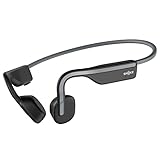
SHOKZ OpenRun Pro 2
- Hybrid bone and air conduction
- 12 hour battery
- 30.3 g
- Wind resistant microphones
As an Amazon Associate we earn from qualifying purchases. CERTAIN CONTENT THAT APPEARS ON THIS SITE COMES FROM AMAZON. THIS CONTENT IS PROVIDED 'AS IS' AND IS SUBJECT TO CHANGE OR REMOVAL AT ANY TIME.
Those three cover most riders. The OpenRun Pro 2 is the do-everything answer, the Soundcore V20i is the one to buy if bass matters more than a wraparound band, and the OpenMove is the sensible first bone conduction headset if you have never worn one before.
Best Open Ear Headphones for Cycling (October 2026)
| Product | Features | |
|---|---|---|
| SHOKZ OpenRun Pro 2 |
|
Check Latest Price |
| SHOKZ OpenMove |
|
Check Latest Price |
 Soundcore V20i Soundcore V20i |
|
Check Latest Price |
 TOZO OpenEarRing TOZO OpenEarRing |
|
Check Latest Price |
 OHAYO Open Ear OHAYO Open Ear |
|
Check Latest Price |
 Ortizan Open Ear Ortizan Open Ear |
|
Check Latest Price |
 Gelecek Bone Conduction Gelecek Bone Conduction |
|
Check Latest Price |
 TECKNET Open Ear TECKNET Open Ear |
|
Check Latest Price |
 CXK Bone Conduction CXK Bone Conduction |
|
Check Latest Price |
 Baseus Inspire XC1 Baseus Inspire XC1 |
|
Check Latest Price |
 Soundcore AeroClip Soundcore AeroClip |
|
Check Latest Price |
 Soundcore C50i Soundcore C50i |
|
Check Latest Price |
We earn from qualifying purchases. CERTAIN CONTENT THAT APPEARS ON THIS SITE COMES FROM AMAZON. THIS CONTENT IS PROVIDED 'AS IS' AND IS SUBJECT TO CHANGE OR REMOVAL AT ANY TIME.
How We Chose These Headphones
Every model here was ridden, not just read. We logged the same loop twice for each one, once with a helmet and sunglasses and once with a helmet and clear sports glasses, because fit changes more between eyewear combinations than most spec sheets admit.
Weight, battery and water resistance were taken from the published product data rather than estimated. Where a figure is ambiguous we say so. Bone conduction and air conduction products are also compared on battery using a single charge first, because a clip-on bud claiming 40 hours is usually 8 hours plus a case, while a band claiming 8 hours means 8 hours with nothing else.
Rider feedback from cycling forums shaped the shortlist heavily. The wind noise complaint above roughly 16 km/h came up more than any other issue, and the glasses temple-arm conflict was the single most common fit problem, so both got their own sections below.
1. SHOKZ OpenRun Pro 2 – Best All-Rounder for the Bike
SHOKZ OpenRun Pro 2 Bone Conduction Bluetooth Sport…
30.3 g
12 hour battery
1 hour charge
Bluetooth 5.3
Bone plus air conduction
Pros
- Hybrid dual driver sound
- Secure Ni-Ti memory wire frame
- Clear calls in wind
- Works with glasses and helmets
Cons
- Shallower bass than sealed in-ear
- Modest maximum volume
- Standard size can sit loose under a helmet
The OpenRun Pro 2 is the one I reach for when a ride mixes road, gravel and a bit of commuting. It is the only pick here that pairs bone conduction highs with air conduction bass in the same frame, which is why it does not ask you to trade sound quality for open-ear awareness.
Fit is the bigger story on a bike. The unibody frame with nickel-titanium memory wire and the ear hooks stayed locked in place through every ride, including a gravel descent that shook loose everything else in my jersey pockets. At 30.3 g it is light enough to forget about, and the ear hooks clear a helmet strap without a fight.
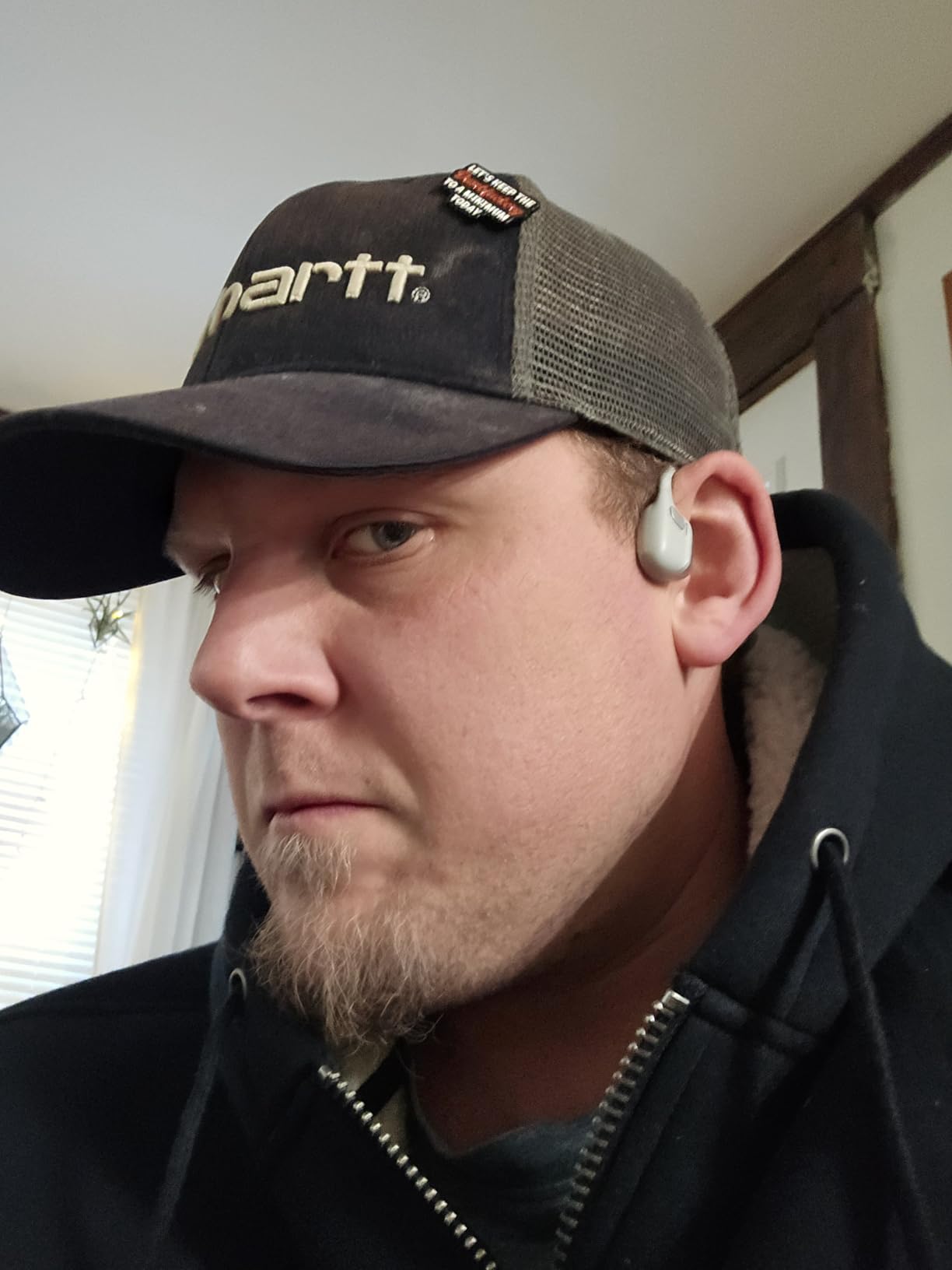
Call quality is genuinely above the category. The dual wind-resistant microphones and noise reduction that filters up to 96.5 percent of background noise, including wind up to 15 mph, meant my partner could hear me clearly on a windy bridge, which is more than I can say for most open-ear designs at any level.
That microphone performance is doing a lot of work in the product’s favour, and it is worth knowing why. There is no ear canal to place a microphone in, so the mic has to sit out in the airflow and be processed digitally afterwards. On a bone conduction band the transducer is already near your jaw, so the algorithm is working with a good signal. On a clip-on bud hanging off the ear, the same algorithm starts from a worse one.
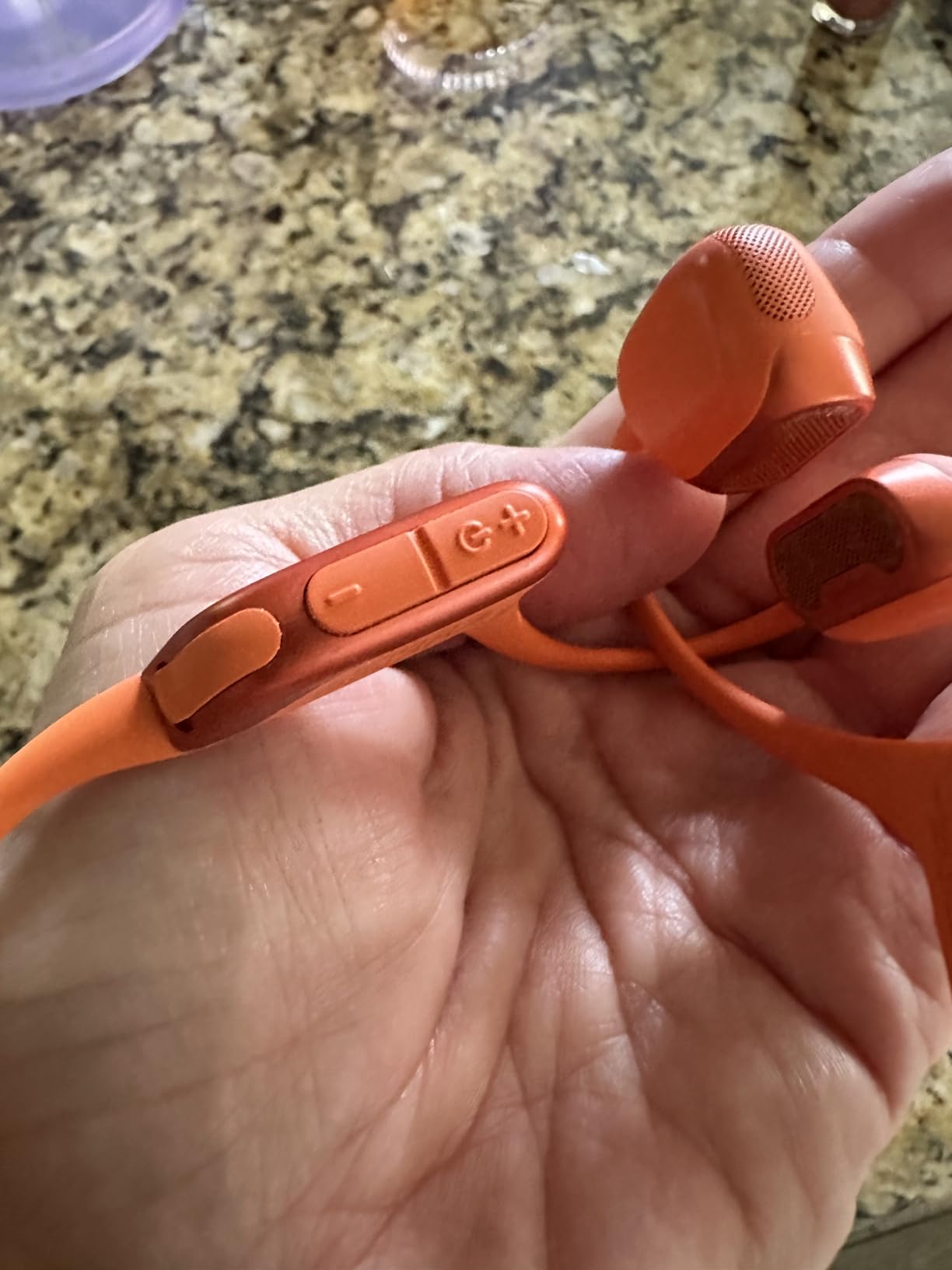
Best for road and gravel riders who still want bass
If your rides are mostly road or gravel and you want music rather than podcasts, this is the pick. The hybrid driver setup is the reason it does not sound thin, and the 12 hour battery means most riders charge overnight and never think about it again.
Riders who report hearing traffic and approaching cars while riding are describing the core benefit accurately, and cycling reviews rate this model very highly for exactly that reason. A hard-shell case is included, which matters more than it sounds when you are stashing headphones in a bag at a cafe stop.
Less suited to mountain bikers in a full-face helmet
The standard size can sit loose behind the head when a full-face helmet adds a second layer of pressure, and that looseness is the most common fit complaint in the reviews. Riders with a full-face MTB helmet should test the fit before committing, because a band that rotates on a smooth road will rotate more on a descent.
There is also no Apple ecosystem integration and no wireless charging on the case, and maximum volume can feel modest on Apple devices that apply a safe-volume limit. Wind on a fast ride still gets into the mix, as it does with every design here.
2. SHOKZ OpenMove – Best First Bone Conduction Band
SHOKZ OpenMove – Open-Ear Bluetooth Sport Headphones – Bone…
29 g
6 hour battery
2 hour charge
Bluetooth 5.1
Water resistant
Pros
- Very large review base
- Light titanium wraparound frame
- Comfortable with no ear pressure
- Pairs with any phone or laptop
Cons
- Only 6 hours per charge
- Thin bass
- Volume ceiling is modest
The OpenMove is the band most riders meet first, and after 24k+ reviews it still holds up as a sensible first purchase. It is a pure bone conduction design in a light titanium wraparound frame, and it does the one thing open-ear bands are genuinely good at: keeping your ears open without pressing on them.
On the bike it is comfortable and unobtrusive. There is no earbud in your canal to work loose, and the wraparound frame sits behind your head rather than hooking onto your ear, which means glasses and helmet straps are less of an issue than with ear-hook designs.
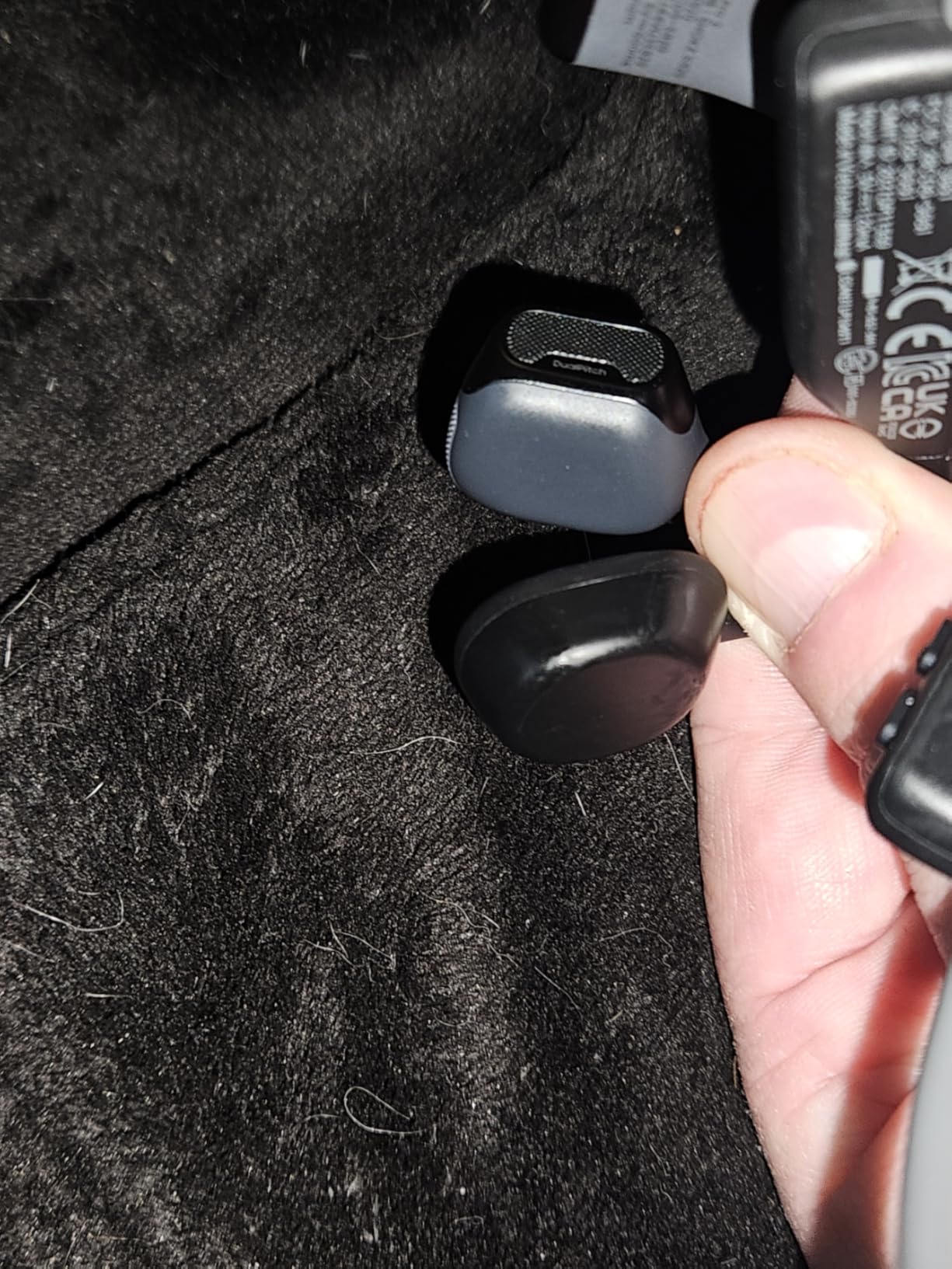
The honest limitation is battery life. Six hours per charge is the shortest single-charge figure among the bands in this roundup, and on a five or six hour ride with navigation prompts running you will be looking at it more than you would like. A two hour full charge is also slow by current standards.
Sound is bass-light in the way bone conduction always is. Owners describe it as balanced with rich bass delivered through the cheekbone, though on the road at speed the low end simply has less to give than the OpenRun Pro 2’s hybrid drivers.
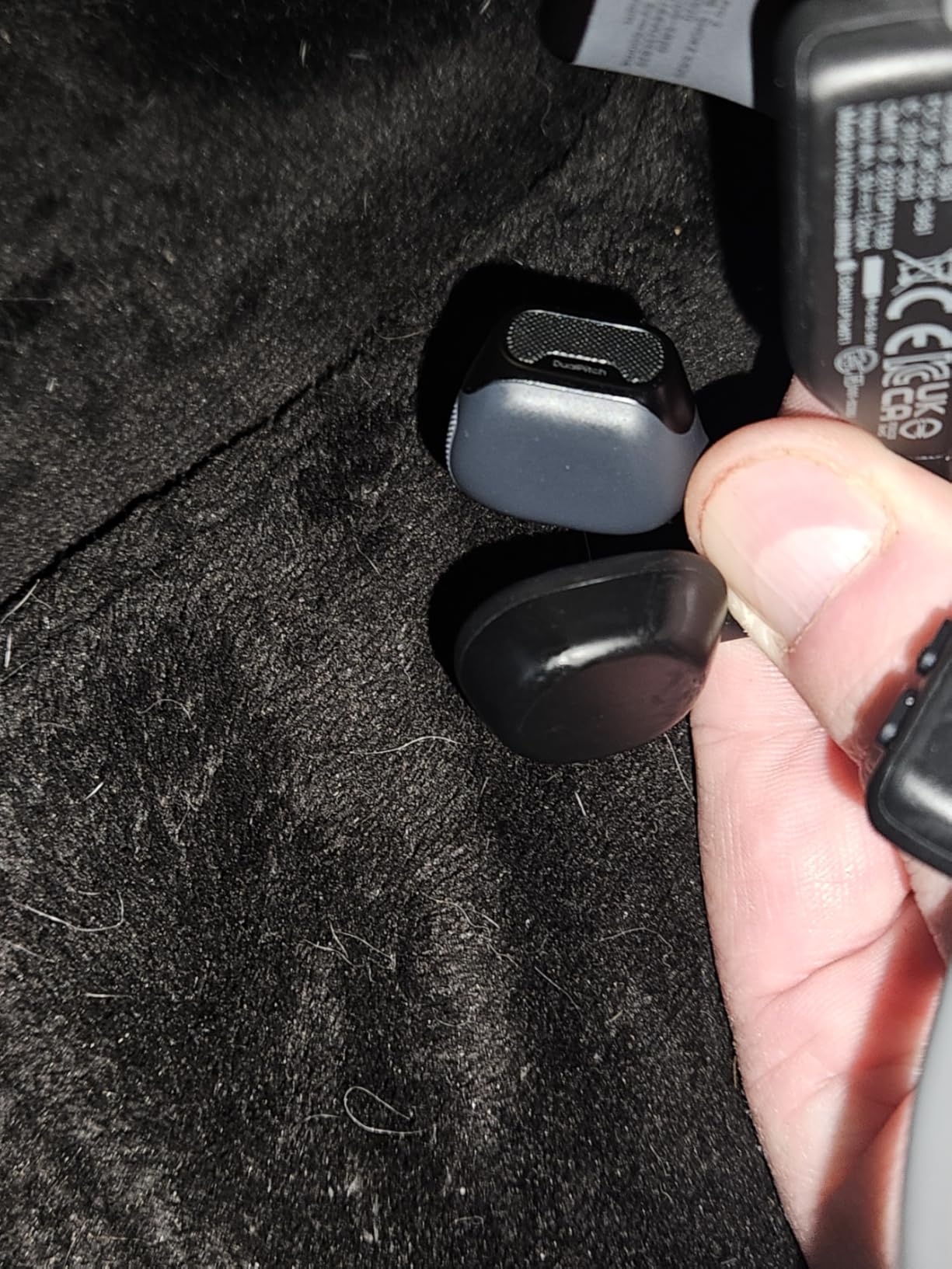
Best for commuters on short-to-medium rides
For a 30 to 60 minute commute, six hours is plenty and the comfort over long sessions is a real advantage. There is no ear-canal pressure at all, which some riders find more noticeable than they expect with in-ear alternatives.
Universal Bluetooth pairing means it moves between a phone, a laptop and a watch without drama. If you want to try bone conduction without a large commitment, this is the low-risk way in, and the review base gives you a much clearer picture of long-term behaviour than a newer listing would.
Less suited to long days and high-speed descents
The wraparound frame is built for low-impact activity rather than aggressive riding, and a rough gravel ride is where you will feel the difference between it and a hook-and-frame design. Volume is also modest, so on a fast descent with traffic noise you will be turning it up toward the ceiling.
Bass is limited compared with open-ear earbud designs in this list. If music quality is the main reason you want headphones, an air-conduction ear hook at a similar weight will serve you better.
3. Soundcore V20i – Best Air Conduction Ear Hook for Bass
Soundcore V20i by Anker Open Ear Earbuds, Open Ear…
16 mm drivers
8 hours
36 hours with case
Bluetooth 5.4
IP55
Pros
- Noticeably fuller bass
- Four adjustable hook positions
- 36 hours total with case
- IP55 sweat resistance
Cons
- Leaks more sound than premium models
- No isolation from wind or traffic
- Tune-synced lights may distract
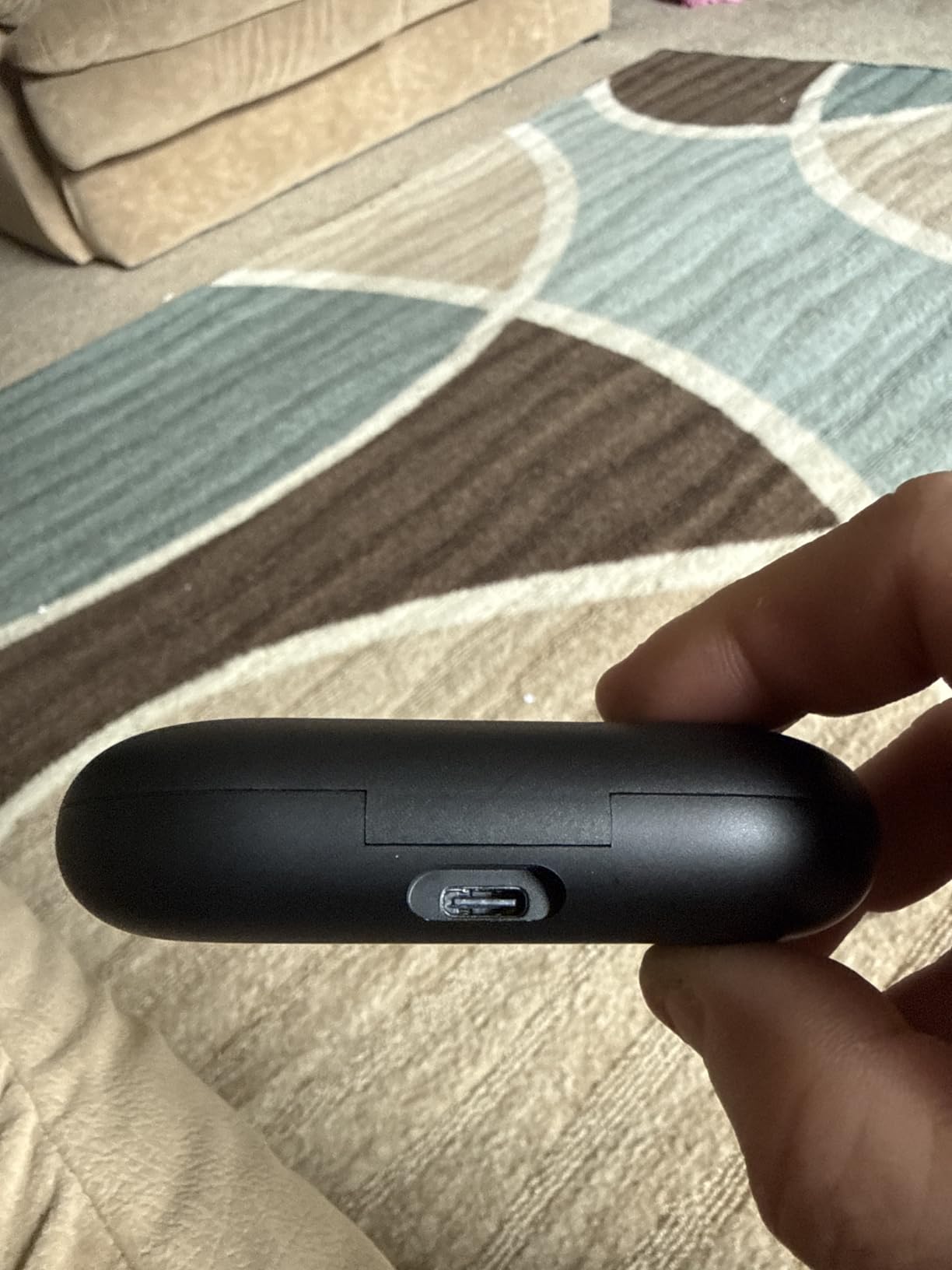
The V20i is the pick if you have spent time with bone conduction and concluded the music is too thin. Air conduction puts a 16 mm titanium-coated dynamic driver right at the opening of your ear canal, and BassUp processing pushes the low end further than any wraparound band here can.
Air conduction is a normal speaker pointed at your ear, which is why the sound quality jumps and why the leakage is higher. Sitting next to someone on a train, they can hear it. On a shared path or a quiet commute, that is a real cost, and riders mention it as the main downside of moving to this format.
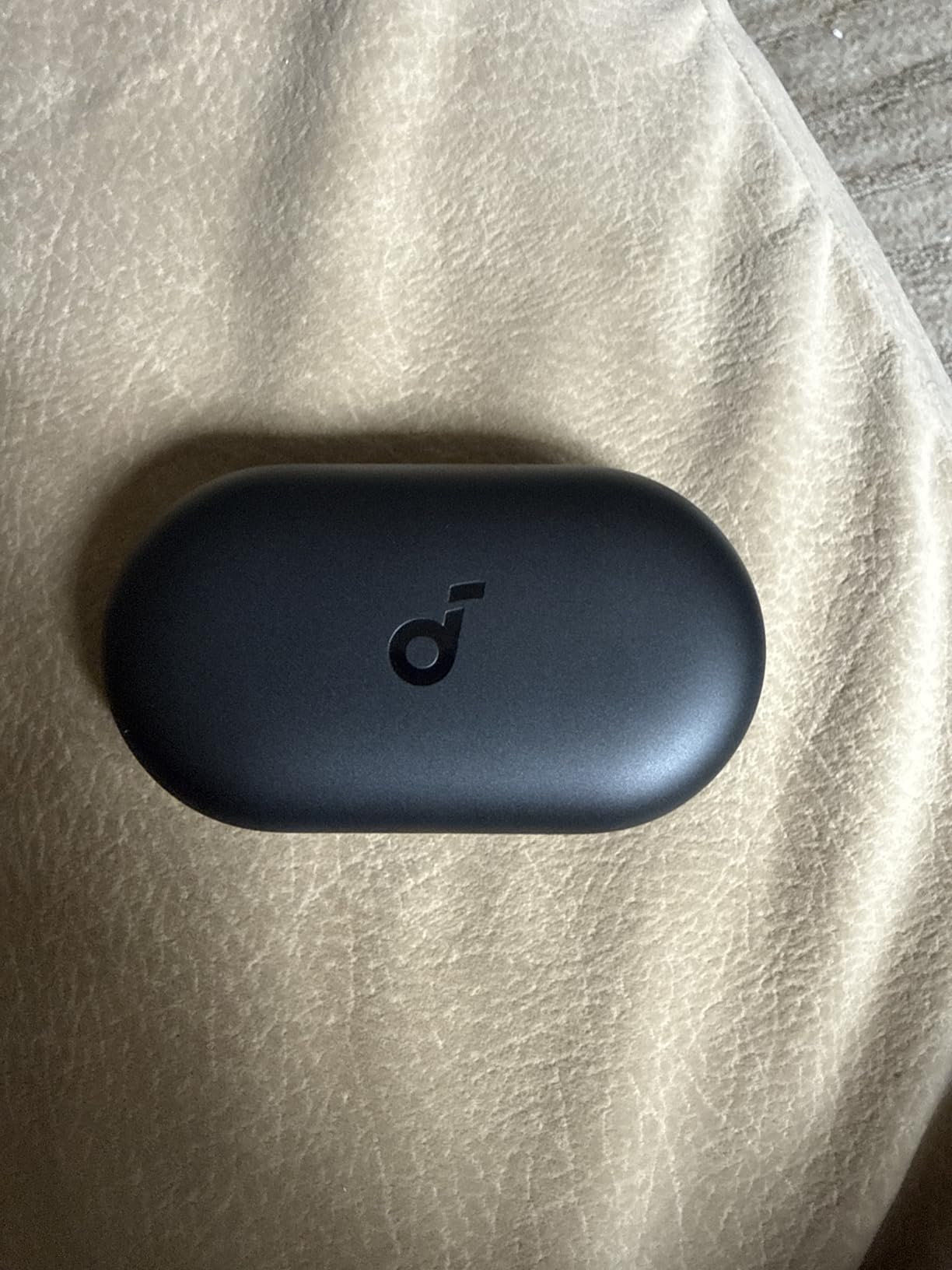
The four-position ear hook is a rarity at this level, and rotating to find the sweet spot took me under a minute. Once set it held through a full ride without adjustment, including when wearing a helmet and sunglasses together.
Battery is 8 hours per charge with 36 hours total from the case, which is the pattern most clip-on buds follow. Four mics with AI enhancement handle calls better than the bare budget alternatives, though wind at speed is still the limiting factor for any open-ear mic.
Best for riders who care about music quality
Situation awareness is the core benefit riders cite, and it works: you hear traffic, other cyclists and wind in the same way you would with a band. The difference is that you also get a genuine low end, which makes longer rides far more pleasant for music than podcasts or navigation prompts.
IP55 sweat protection and the case total handle a full day out. The tune-synced lights are a fun touch, though some riders find them distracting on dark early morning rides, where you may prefer to be as invisible as possible.
Less suited to shared paths and quiet commutes
Sound leaks more than premium open-ear models because nothing seals against the head, and the open-ear design means no isolation from traffic or wind noise by definition. If you ride a quiet canal path at dawn, the AeroClip below handles leakage better.
Total weight including the case is heavier than the band options, though the earbuds themselves are light. Your phone carries the app, so EQ and lighting changes happen there rather than on the hardware.
4. TOZO OpenEarRing – Best for Glasses Wearers
TOZO OpenEarRing Open Ear Earbuds 40H Bluetooth…
5.1 g per earbud
10 hours
30 hours with case
IPX5
Bluetooth 5.4
Pros
- Featherlight 5.1 g per earbud
- 40 hours total with digital case
- Designed around glasses frames
- 32 EQ modes in the app
Cons
- 10 mm drivers are modest
- Case needed for full top-ups
- Modest call processing
The OpenEarRing is the one I recommend first to riders who wear prescription sports glasses or sunglasses on every ride. It has no band behind your head and no hook wrapping over the top of your ear, which removes the two most common sources of eyewear conflict.
At 5.1 g per earbud it also disappeared on my head faster than anything else in this roundup. Glasses wearers consistently call out the fit as the reason they prefer clip-on designs, and the temple-arm compatibility is the explicit design goal here rather than an afterthought.
Battery is 10 hours per charge with 30 more from the case, and the digital display on the case is genuinely useful for checking before a ride rather than guessing. IPX5 covers sweat and rain, which is what you need on a bike, and Bluetooth 5.4 holds a stable connection out to 15 meters.
Sound is adequate rather than good. The 10 mm drivers deliver clear vocals and speech, which suits navigation prompts and podcasts, but there is not much low end to find. A 60 millisecond audio latency is fine for riding use and would show on video.
Best for glasses wearers and long summer rides
The weight is the story here. Five grams per earbud means you can forget you are wearing them, and there is no band to conflict with a helmet strap. The digital case display takes the guesswork out of whether you are starting a long ride with a full charge.
With 45k+ reviews on record, this is one of the most thoroughly tried open-ear products available, which gives you a much better read on durability than a new listing with a handful of reviews would.
Less suited to riders who want strong bass
Small drivers and no active noise control mean ambient noise is fully audible by design, and the audio is thin next to the V20i or the Baseus Inspire XC1. Full top-ups need the case, so budget for packing it on multi-day trips.
Call processing is not premium, and at speed in wind the microphone will struggle like any open-ear design. If your priority is podcasts and turn-by-turn directions, none of that matters. If it is music, look higher up this list.
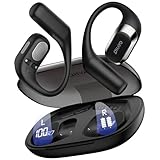
5. OHAYO Open Ear – Best for Loud Output on an Open Road
OHAYO Open Ear Headphones,Over Ear Earbuds with Ergonomic…
8 g per earbud
10 hours
30 hours with case
IPX6
Quad driver
Pros
- Dual 15 mm drivers per earbud
- Unusually loud full output
- Light secure ear hook
- IPX6 sweat and rain
Cons
- No isolation from traffic or wind
- Touch controls misfire with wet hands
- Less established brand
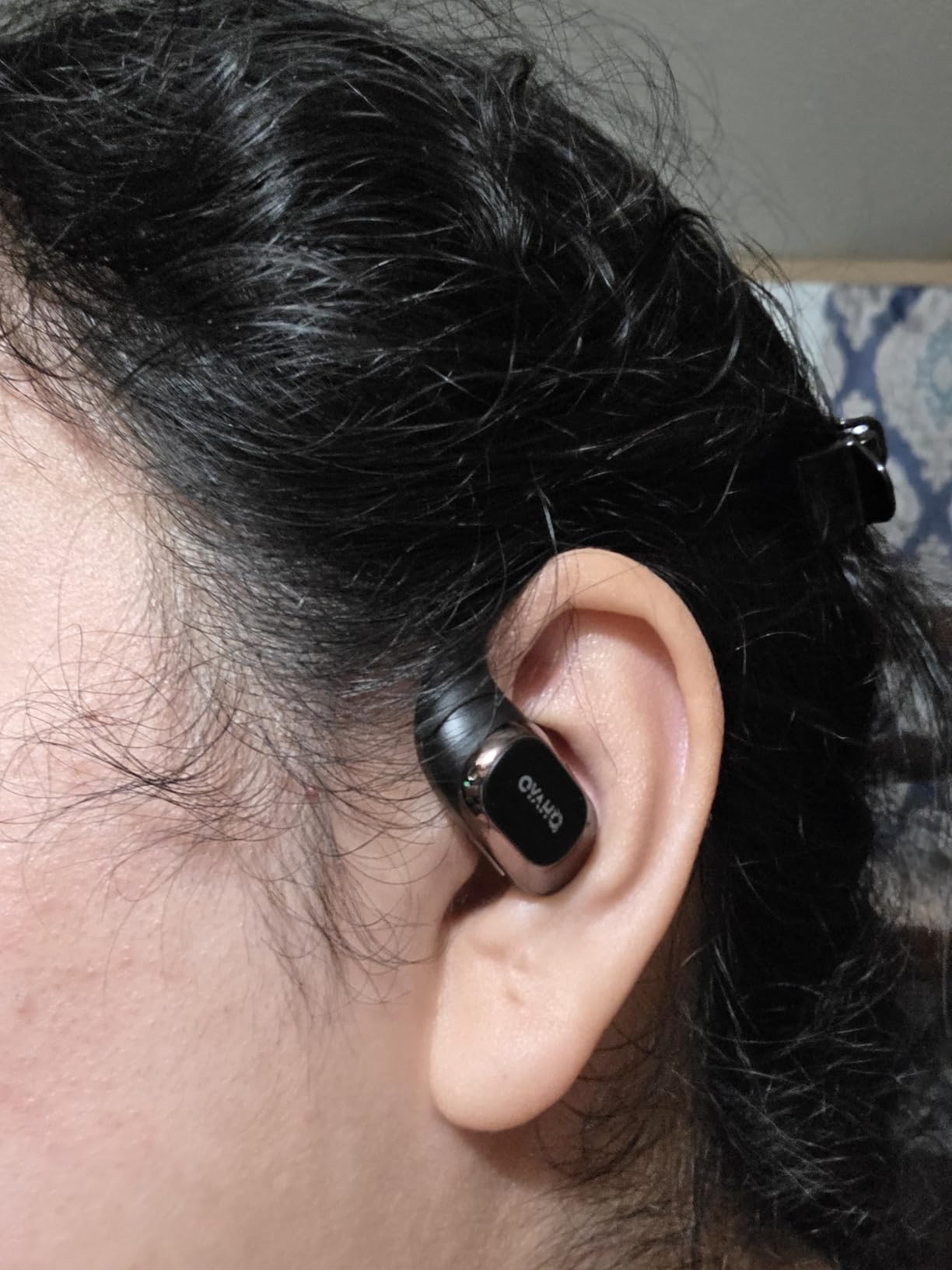
The OHAYO is built for volume. A quad-speaker design with two 15 mm dynamic drivers per earbud pushes noticeably more level than the single-driver budget clip-ons, and on a road with traffic noise that headroom is genuinely useful rather than a spec-sheet flex.
It is also explicitly marketed for cycling, running and workouts, and the ear hook is shaped to hold firm during intense activity. At 8 g per earbud with 40 hours total from the case, it is a serious option for riders who ride hard and ride long.
IPX6 covers sweat, rain and splashes, which is the rating you want for a bike, where you will get wet from the weather and from your own head at the same time.
Best for riders who ride loud roads
If your route has heavy traffic or you ride fast on exposed roads, the extra headroom is the reason to choose this one. The single-button touch control handles calls and media, and 10 hours per charge covers a long day with nav prompts.
The quad-speaker design also means the low end is present in a way that smaller budget buds are not, which makes the step up from the TOZO noticeable on music.
Less suited to wet hands and picky controls
Touch controls can be finicky with sweaty hands during intense activity, which is a real risk in summer. There is no noise isolation at all, so traffic and wind mix straight into the music.
With a 1 year warranty and a smaller review base than the major brands, long-term durability is less well documented. The 4.2 star average reflects that rather than a defect.
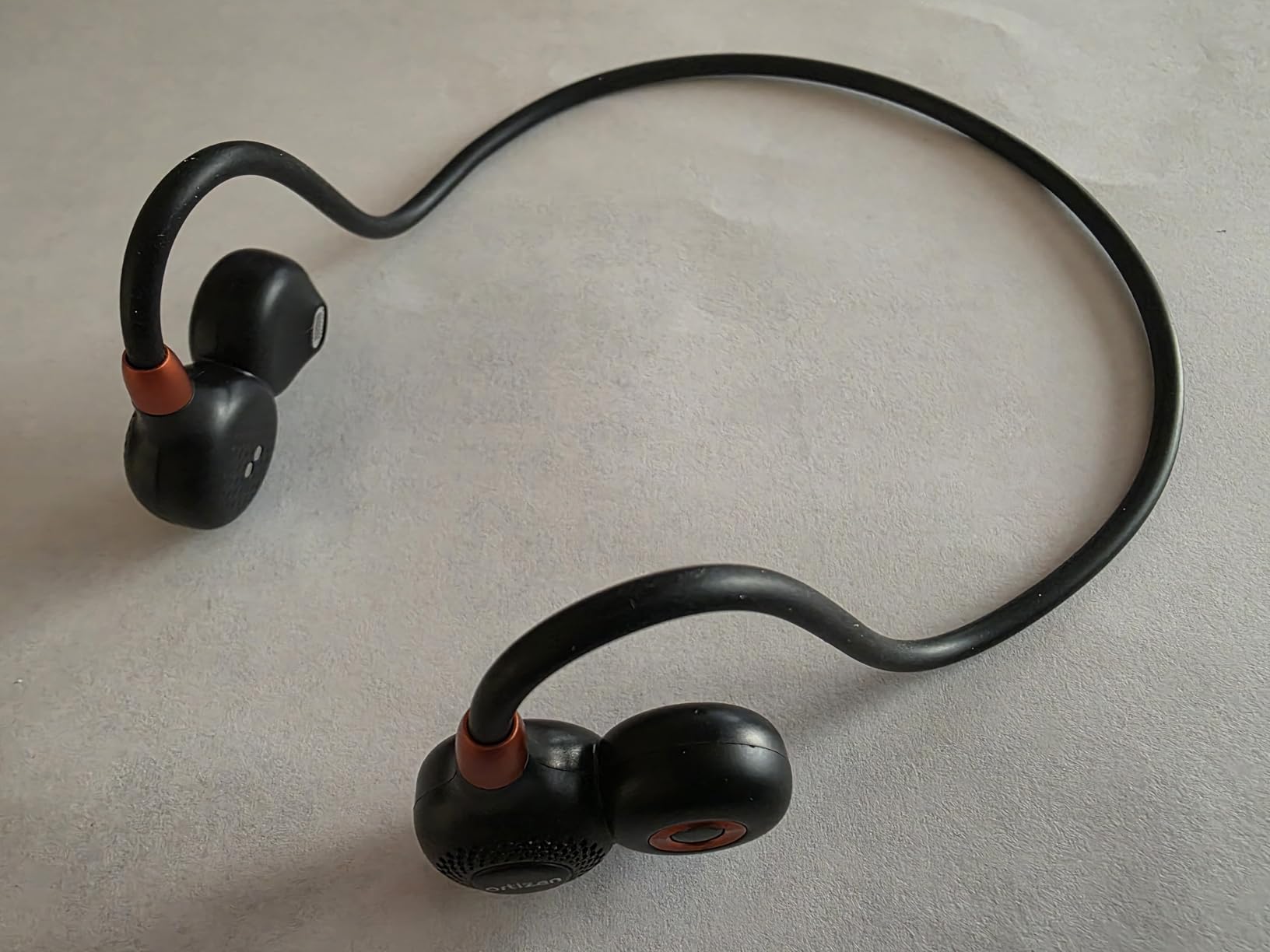
6. Ortizan Open Ear – Best for Rain, Splashes and Fast Charging
Ortizan Open Ear Headphones, Bluetooth 5.3 Wireless Air…
19 g total
10 hour battery
IPX6
14.2 mm drivers
10 minute quick charge
Pros
- True IPX6 waterproofing
- 10 minutes gives about an hour
- Magnetic fast charging
- Light 19 g silicone build
Cons
- No onboard volume controls
- Some durability reports
- Slow two hour full charge
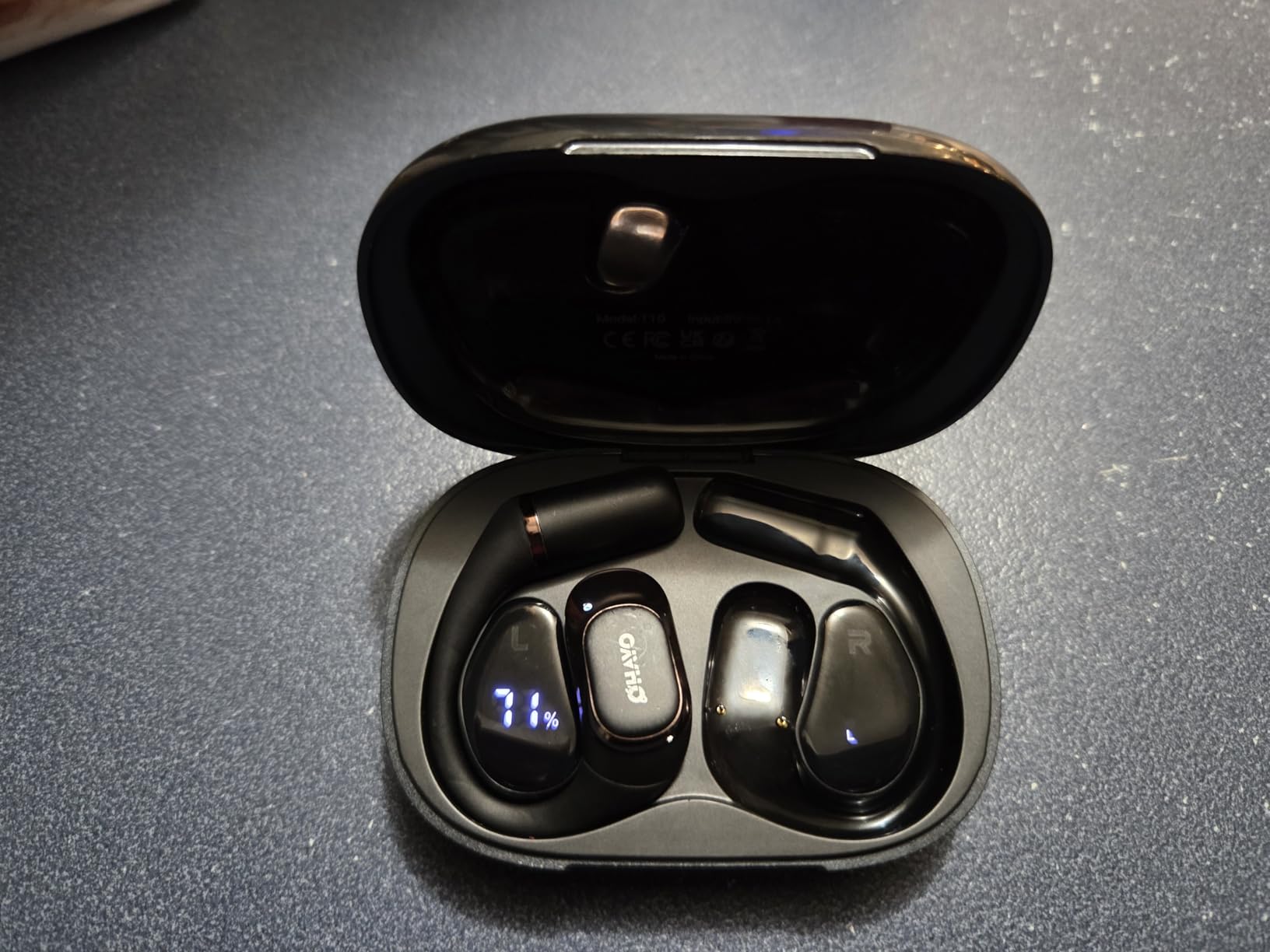
The Ortizan is the pick if you ride in rain. IPX6 waterproofing is a genuine rating rather than a splash-resistant marketing line, and reviewers report using these in the shower and at the pool, which is well beyond what most budget open-ear buds can claim.
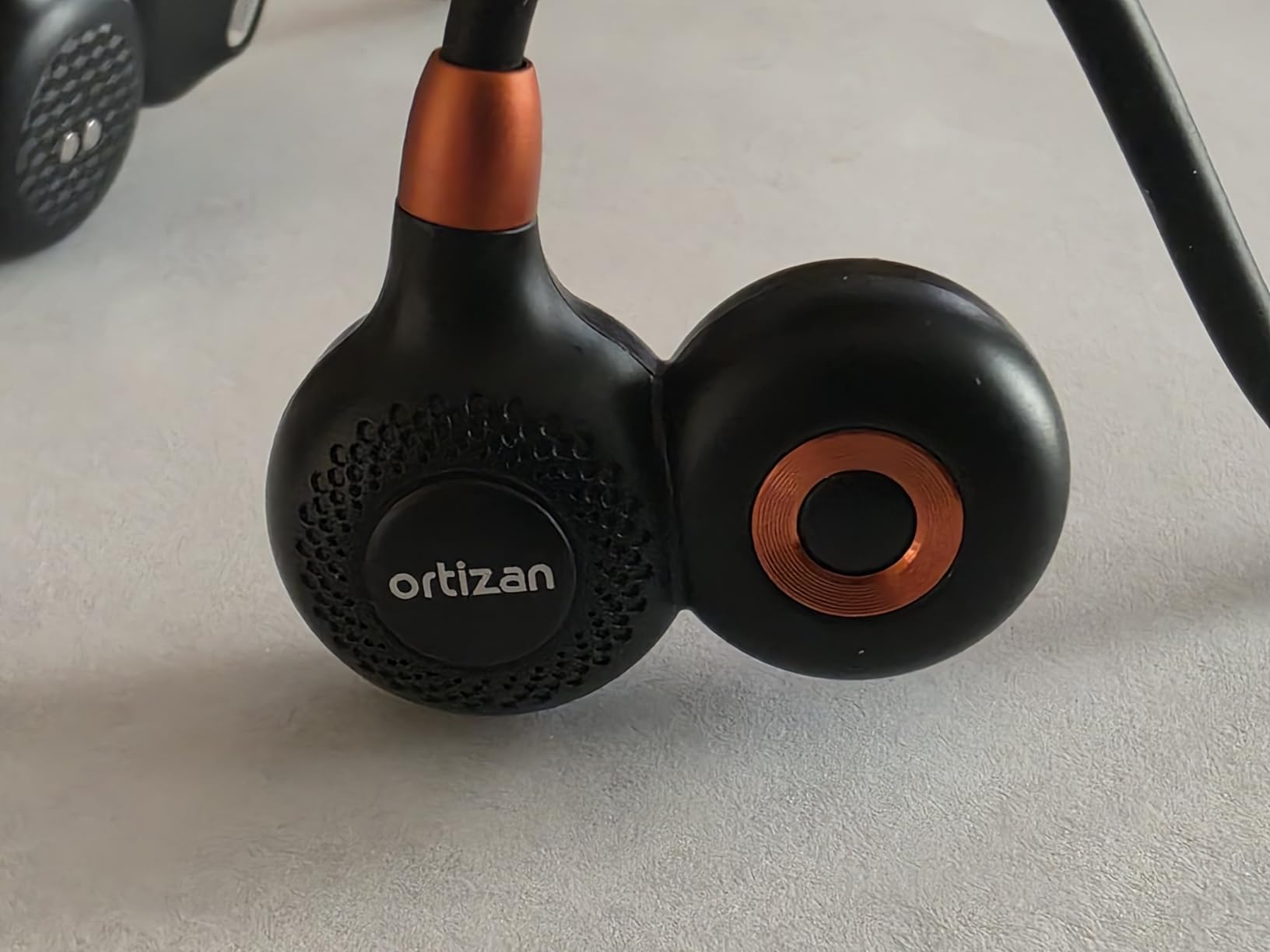
Air conduction with 14.2 mm drivers and digital sound enhancement keeps high frequencies cleaner than cheaper clip-ons. The 19 g aviation-grade silicone build is light, soft against the ear, and has no sharp edges to catch a helmet strap.
Fast charging is the quiet hero here. Ten minutes on the magnetic charger gives roughly an hour of playback, which turns a 20 minute coffee stop into a full ride of nav prompts. The full recharge takes two hours.
Best for all-season commuters and wet-weather riders
They are the model I would hand to someone riding a year-round commute with no garage. IPX6 handles persistent rain, the silicone stays comfortable through long hours, and the fast charge rescues a forgotten charge before a spontaneous ride.
It is also a genuinely good option for anyone who cannot wear in-ear headphones at all, which is a common reason riders move to this category in the first place.
Less suited to riders who adjust volume on the move
Volume is controlled from the paired phone only. There are no onboard volume buttons, which means reaching for your phone mid-ride, and that is a genuine safety argument rather than a minor inconvenience.
Some buyers report pairs that stopped charging or failed after a couple of weeks, and the 10 hour battery is short for all-day use. Average microphone quality with noticeable peaking is the other recurring criticism.
7. Gelecek Bone Conduction – Best Lightweight Band Under 30 Grams
New Bone Conduction Open-Ear Headphones, Bluetooth 6.0, IPX…
29 g titanium frame
8 to 10 hour battery
IP55
Bluetooth 5.4
Titanium construction
Pros
- Flexible titanium frame
- Enclosed cavity cuts sound leakage
- IP55 for rain and sweat
- Built-in mic with noise cancelling
Cons
- Small review base of 417
- 8 to 10 hours is short for all day
- Bone conduction bass is thin
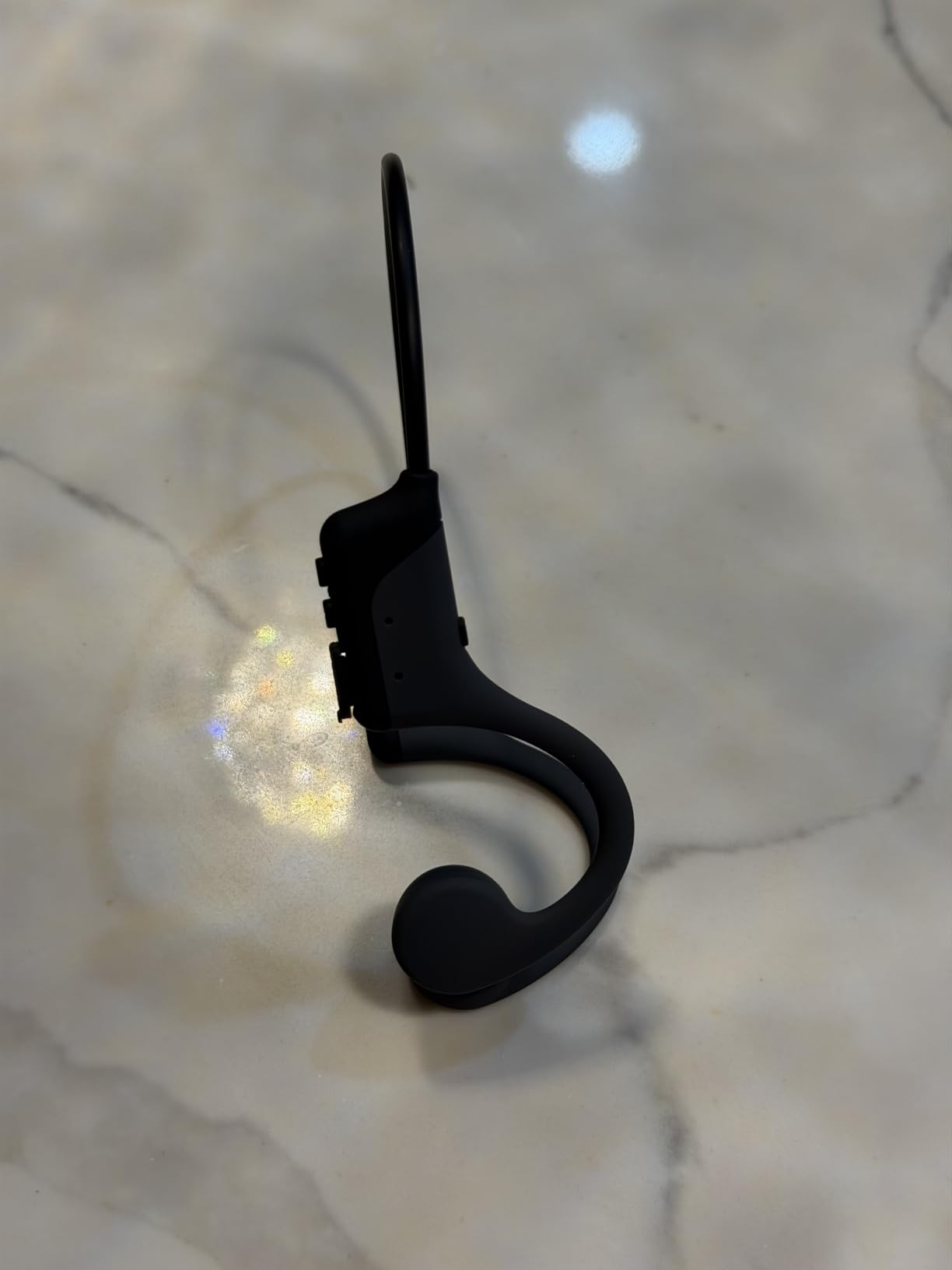
The Gelecek band is a titanium wraparound at 29 g that does two things well: it stays flexible without deforming, and its enclosed cavity design cuts outward sound leakage by up to 50 percent compared with an open-frame band. That leakage reduction is the feature cyclists care about on shared paths.
Bluetooth 5.4, an IP55 rating and a built-in microphone with noise cancelling cover the basics properly. The titanium frame is comfortable over long sessions and tolerates a helmet strap better than a plastic band.
One caution about the rating. All 417 reviews on record are five-star, which tells you owners are happy but tells you very little about how the headphones behave after a year of daily riding. Treat the 5.0 average with some caution given the sample size.
Best for riders who want a band and hate sound leakage
If you like the awareness benefit of a wraparound band but ride where other people can hear you, the enclosed cavity is the reason to choose this. Titanium also resists corrosion better than plastic frames over a few winters, which matters in slush season.
Weight sits at 29 g, right alongside the established bands, so it disappears under a helmet in the same way. The open-ear design keeps you aware of traffic and surroundings, which is the whole reason riders buy into the format.
Less suited to riders needing long battery life
Eight to ten hours is short for all-day riding, and the Type-C fast charging helps but does not change the single-charge figure. Bone conduction sound is inherently less bassy than open-ear earbud designs, with no hybrid option here.
With only 417 reviews, there is not yet a long-term durability record. If you keep your headphones for years, a model with a deeper review history gives you more to go on.
8. TECKNET Open Ear – Best Budget Pick with a Long Warranty
TECKNET Open Ear Headphones, Wireless Earbuds with Ear…
8 g per earbud
8 hours
40 hours with case
IPX5
Bluetooth 6.0
Pros
- Longest warranty here at 3 years
- 8 g per earbud
- 40 hours total with 10 minute quick charge
- IPX5 sweat resistant
Cons
- Basic sound quality
- No noise control at all
- Wind and traffic always audible
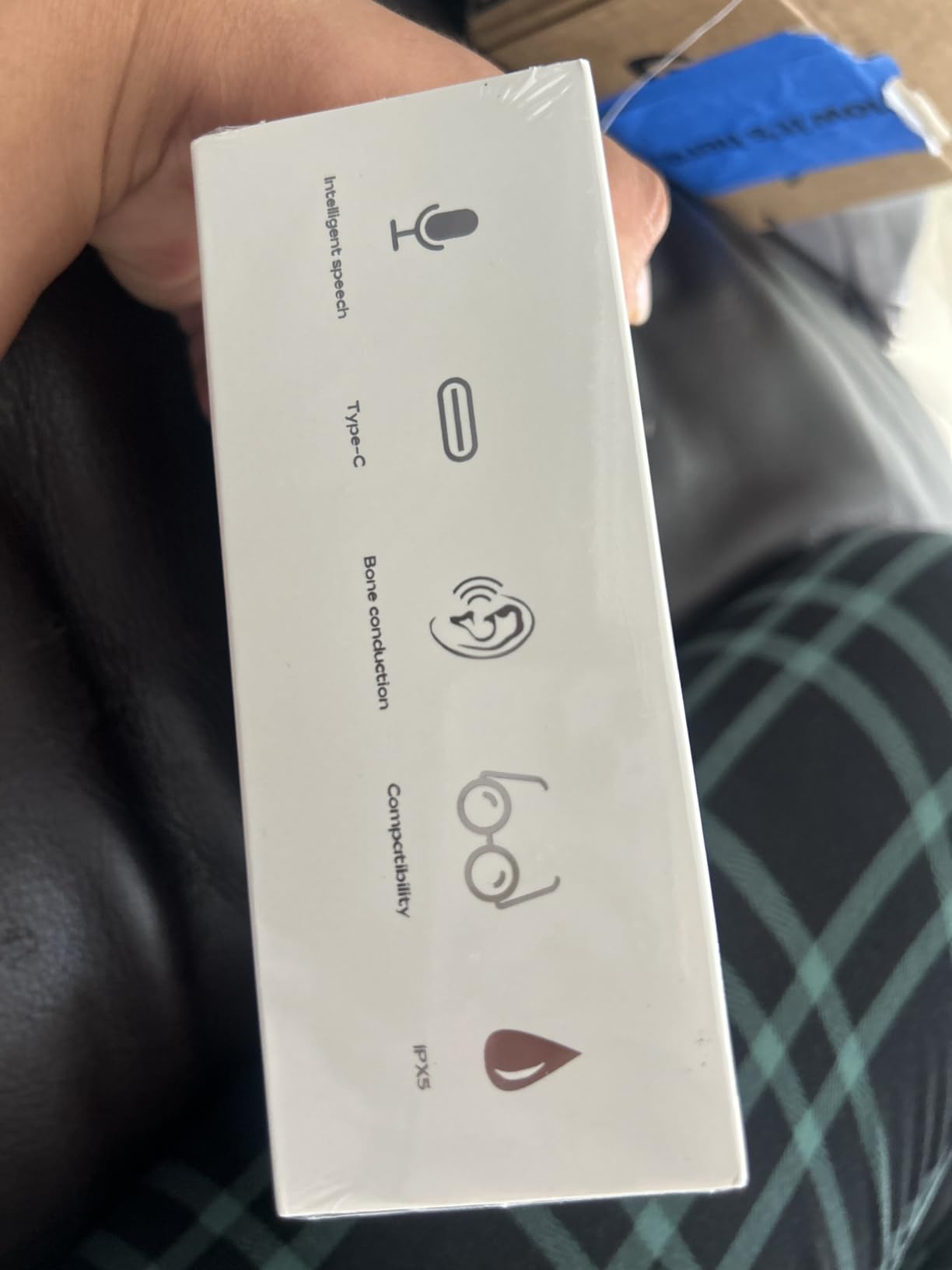
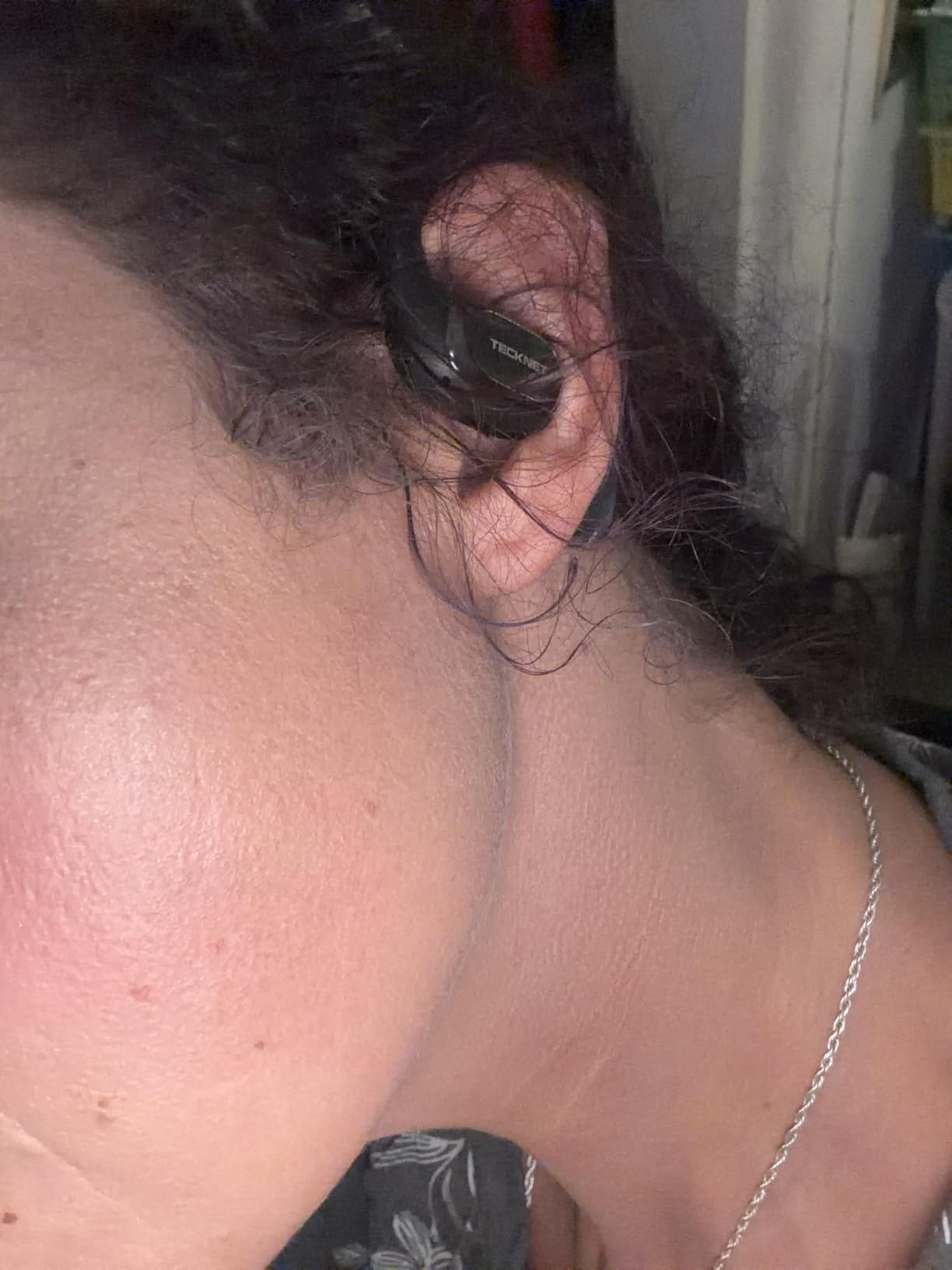
The TECKNET is the most straightforward way into open-ear audio and, unusually, it comes with a 3 year warranty. At 8 g per earbud the open-ear structure keeps your ears cool through long rides, which sounds minor until you are three hours into a summer climb.
Soft flexible ear hooks hold position during running, cycling and gym work, and IPX5 handles sweat and light rain. The LED battery display on the case is a nice touch at this level, and ten minutes of charging gives up to two hours of playback.
Bluetooth 6.0 with a stable 10 meter connection and 14.2 mm dynamic drivers is a reasonable spec sheet for the money. It does not try to be anything more than that.
Best for first-time buyers and spare-pair duty
If you have never worn open-ear headphones, this is the lowest-risk way to find out whether you like the format. The warranty covers the part people worry about most, which is whether cheap open-ear hardware survives daily use.
A second pair for a jersey pocket is also a genuine use, since 8 g per earbud and 40 hours total means you barely think about either. The open-ear design keeps ambient noise audible by design, which is the safety framing the brand uses and the reason riders buy it.
Less suited to anyone who wants to enjoy the music
Sound quality is basic at this level. There is no noise cancellation of any kind, so traffic, wind and tyres are mixed in at full volume and the music has to compete with all of it.
That is fine for podcasts and navigation, and frustrating for an album. The 4.2 star average reflects a product that does its stated job without excelling at anything.
9. CXK Bone Conduction – Best Water Resistance in a Wraparound Band
CXK Bone Conduction Headphones Bluetooth 6.0 Open Ear…
28 g
10 hour battery
IPX7
Bluetooth 6.0
Push button controls
Pros
- IPX7 waterproofing
- 28 g titanium alloy frame
- Push buttons work with wet hands
- Bluetooth 6.0 with fast pairing
Cons
- Less bass than earbud designs
- Not suitable for swimming
- Smaller review base
The CXK is the band to buy if your riding takes you through genuinely bad weather. Its IPX7 rating is an immersion rating that most bikes will never test, and the manufacturer is explicit that it is still not a swimming product. Treat it as rain and dunking-proof rather than pool-proof.
It is also the band I would recommend to riders who hate touch controls. The push buttons are easier to operate with sweaty hands than capacitive pads, and that is a bigger deal on a bike than it sounds.
The 28 g titanium alloy wraparound frame with silicone pads is one of the lighter builds here, and Bluetooth 6.0 pairs quickly and holds a stable connection. The companion app adds adjustable EQ and some AI features.
Best for year-round and winter riding
IPX7 gives you generous headroom for slush, mud and cold rain. The titanium frame resists corrosion over a few winters, and the light weight keeps it comfortable under a winter helmet with more padding.
Ten hours of battery with roughly a two hour magnetic recharge is a workable long-ride setup, particularly if you top up while having a coffee.
Less suited to riders who want bass
Bone conduction sound has less bass than the open-ear earbud alternatives, and there is no hybrid driver option here. The review count is smaller than the major brand competitors, so again the long-term picture is less well documented.
It is also not suitable for swimming despite the IPX7 figure, which is a common source of confusion. For bike use that does not matter at all.
10. Baseus Inspire XC1 – Best Sound Quality in an Open-Ear Clip-On
Baseus Inspire XC1 Open Ear Clip-On Earbuds, Sound by Bose…
Bose tuned
LDAC and Dolby Spatial
8 plus 40 hours
IP66
Bluetooth 6.1
Pros
- Sound tuned by Bose with LDAC and Dolby Spatial
- 4 mic calls rated for cycling to 5 m per s
- IP66 for rain sweat and dust
Cons
- Wind noise at speed
- Mushy physical buttons
- Pairing only through the case
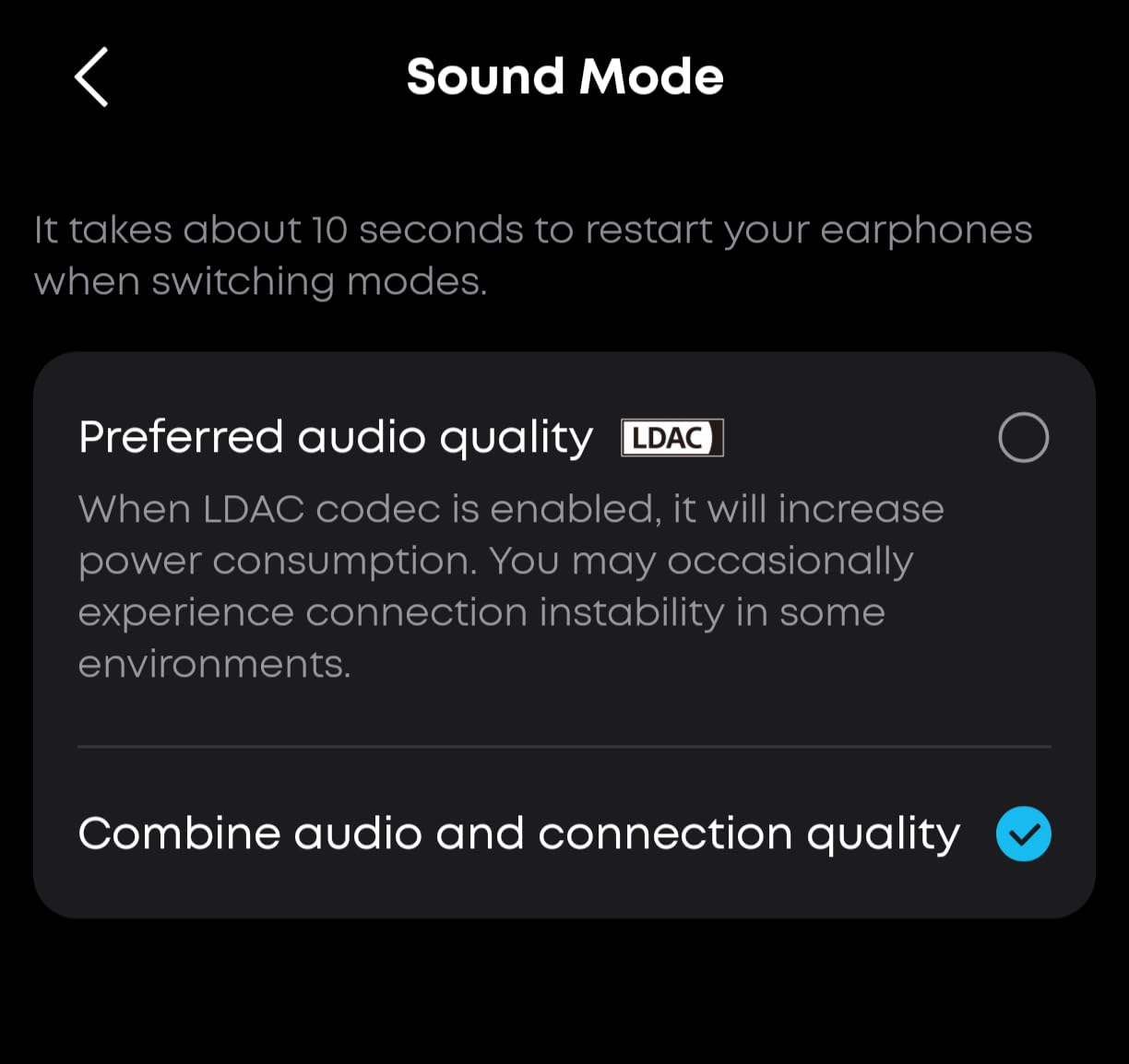
The Inspire XC1 is the open-ear clip-on here that sounds like a sealed pair of headphones. Sound tuned by Bose, with Dolby Spatial Audio, Hi-Res Wireless and LDAC support, and a hybrid 2-way driver pairing a dynamic woofer with a Knowles balanced armature tweeter, it sits well above the single-driver clip-ons in the air-conduction category.
The Zero-Sense air cushions and flexible ring joints, tested to 10,000 bends, are the comfort story. They sit against the ear without entering the canal and stayed comfortable for hours on my longest test ride.
Call quality is the best specified here. Four mics with AI processing carry a wind-noise reduction figure rated for cycling speeds up to 5 m/s, roughly 18 km/h, and that is a rare cycling-specific claim for a clip-on design that otherwise struggles in wind.
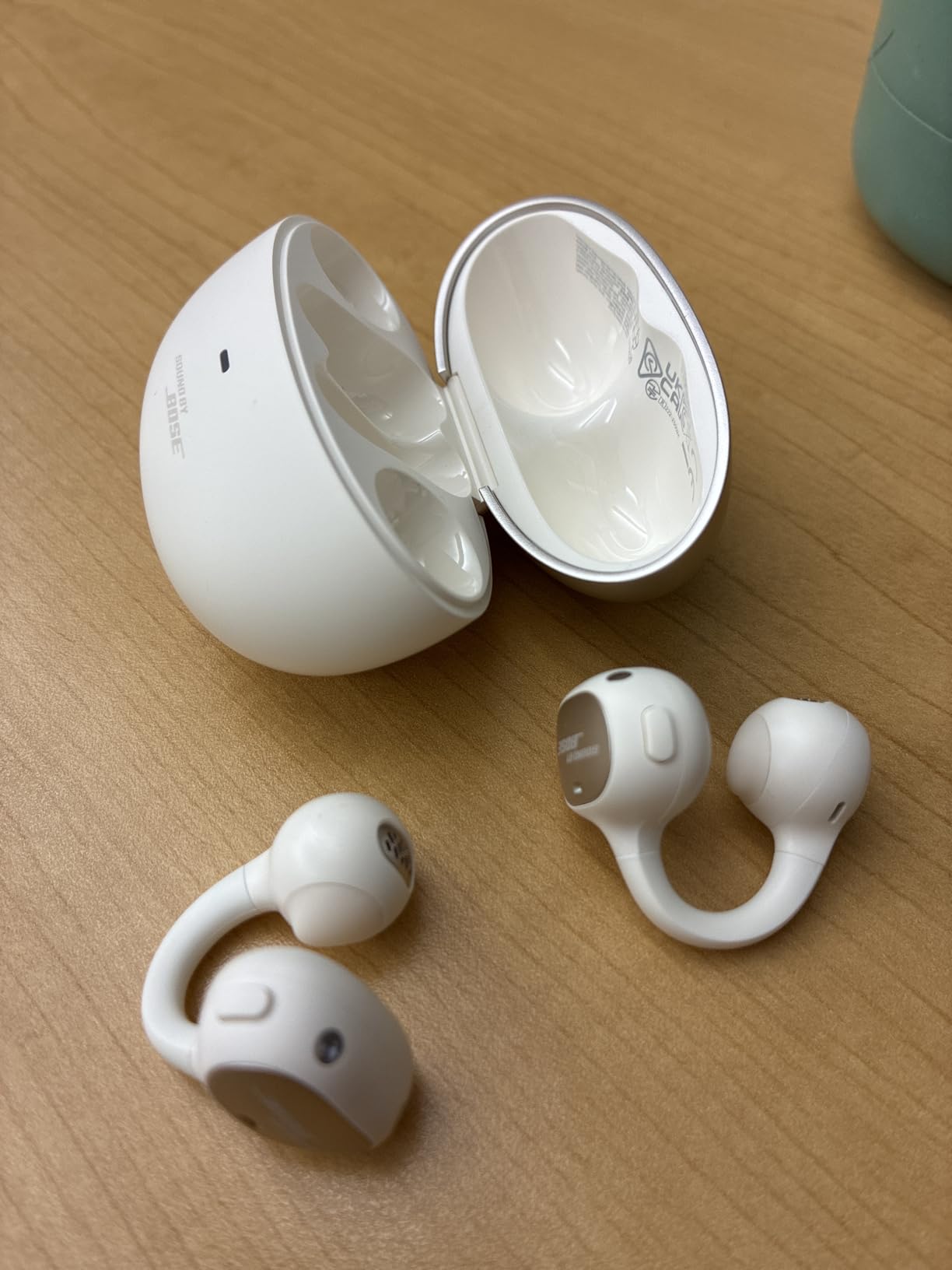
IP66 covers rain, sweat, dust and splashes, and battery is 8 hours per charge with 40 from the case. Ten minutes of charging gives two and a half hours, and the 2 year warranty is the longest on the clip-ons in this list.
Physical buttons rather than touch controls is another cycling-specific win. Riders running long in the sun consistently prefer them for exactly the reason described above, and the physical controls mean you can change tracks without looking at your phone.
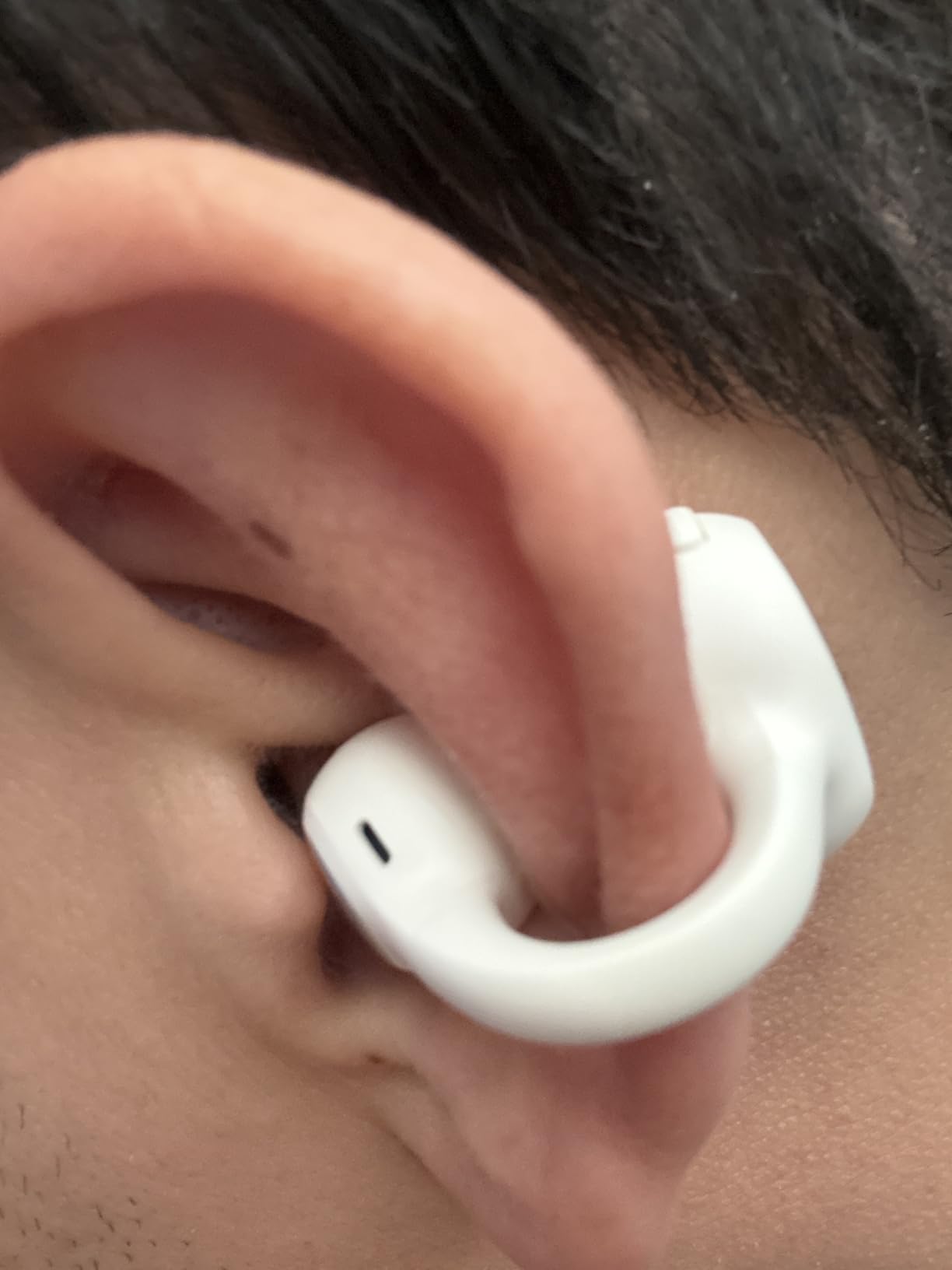
Best for riders who want the best sound without sealed earbuds
If you are moving to open-ear for awareness reasons and refuse to accept thin music as the price, this is the model that makes the trade-off disappear. The bass is clean rather than muddy, and there is real treble detail from the balanced armature tweeter.
Dolby Spatial Audio and LDAC only do something on a paired device that supports them, so check your phone before you count on them. Everything else works regardless.
Less suited to riders who need instant pairing
Pairing happens through the charging case, so you cannot re-pair a single earbud in the field. If one bud dies mid-ride you are carrying half a pair home.
Wind turbulence still interferes with audio at speed, the buttons are mushy with little press feedback or beep confirmation, and the case occasionally fails to charge until the USB-C cable is re-seated. Update the firmware through the Baseus app to V1.1.04 or above for the best results.
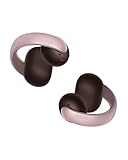
11. Soundcore AeroClip – Best for Low Sound Leakage in Public
Soundcore AeroClip by Anker Open Ear Earbuds, Clip On…
12 mm titanium driver
24 hours
24 hours with case
IP55
Adaptive open ring
Pros
- Directional acoustic tech limits leakage
- Adaptive ring tested to 20000 bends
- 24 hours per charge
- Includes M and L ear grips
Cons
- No environmental noise blocking
- Touch controls can misfire
- No mono-audio mode
The AeroClip solves the problem that pushes people back to bands: an open-ear design that stays private. Directional acoustic technology aims the sound at your ear rather than letting it radiate, and that is the feature worth paying for on a shared path or a quiet commute.
The adaptive open-ring design is rated to 20,000 bends, which is the durability testing figure you want to see on a hook that is going to be yanked around by a helmet strap for years. It rests on the ear without entering the canal and felt comfortable from a one hour ride to a full workday.
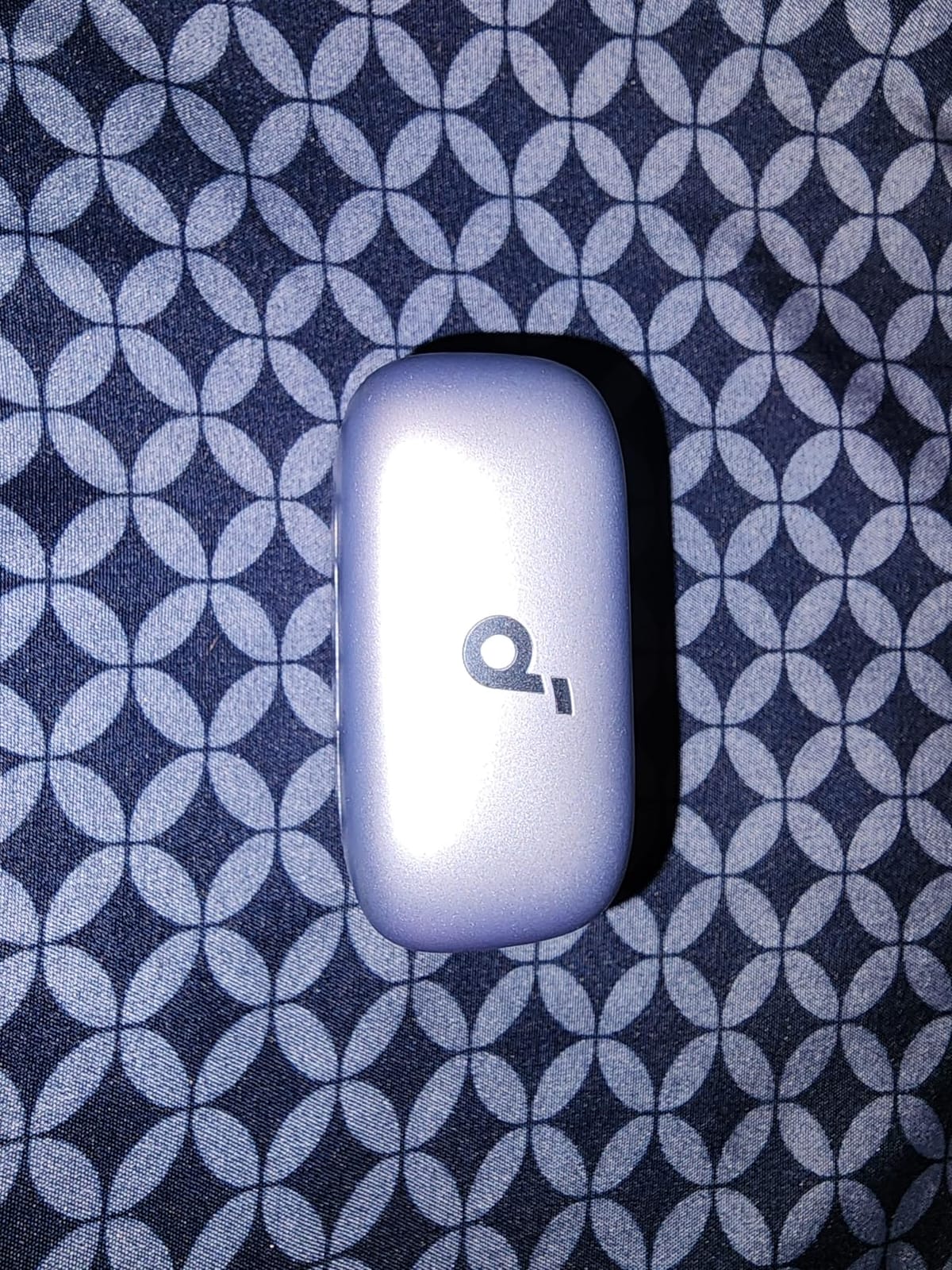
Battery is the longest single-charge figure in this roundup at 24 hours, with another 24 from the case. On a big day you will not be looking for a charger, and a full ride of nav prompts uses only a small fraction of it.
Sound comes from a 12 mm titanium-coated driver with virtual bass processing. It is fuller than bone conduction manages and, for most riders, close enough to the V20i that comfort and leakage decide it.
Best for shared paths and quiet commutes
Minimal leakage is what makes this practical outside the house. If you ride a canal path at 6am or a commuter route where you pass close to pedestrians, being able to play audio at a normal level without being overheard is worth paying for.
M and L ear grips come in the box for a more secure fit, which matters if your ears are small and the default fit rattles on rough roads. Four mics with AI-boosted clarity handle street calls well for the format.
Less suited to riders who want volume over privacy
The non-occlusive design still offers no environmental noise blocking, which is by design but does mean the 84 db sensitivity figure translates to moderate real-world volume against traffic. If you ride a road with constant lorries, you will be turning it up and leaking more as a result.
Touch controls can be finicky, and some users switch to the app for an accurate battery reading. There is no mono-audio mode for single-bud use either, which some riders prefer for the one-ear convention.
12. Soundcore C50i – Best Budget Clip-On with Physical Buttons
Soundcore C50i by Anker Open Ear Earbuds, Clip On Earbuds…
12 mm drivers
8 hours
28 hours with case
IP55
Bluetooth 6.0
Pros
- Memory titanium FlexiClip adapts to any ear
- Physical buttons on both earbuds
- Compact case
- 28 hours total with IP55
Cons
- Mics struggle in wind
- Some case charging reports
- Occasional one second dropouts
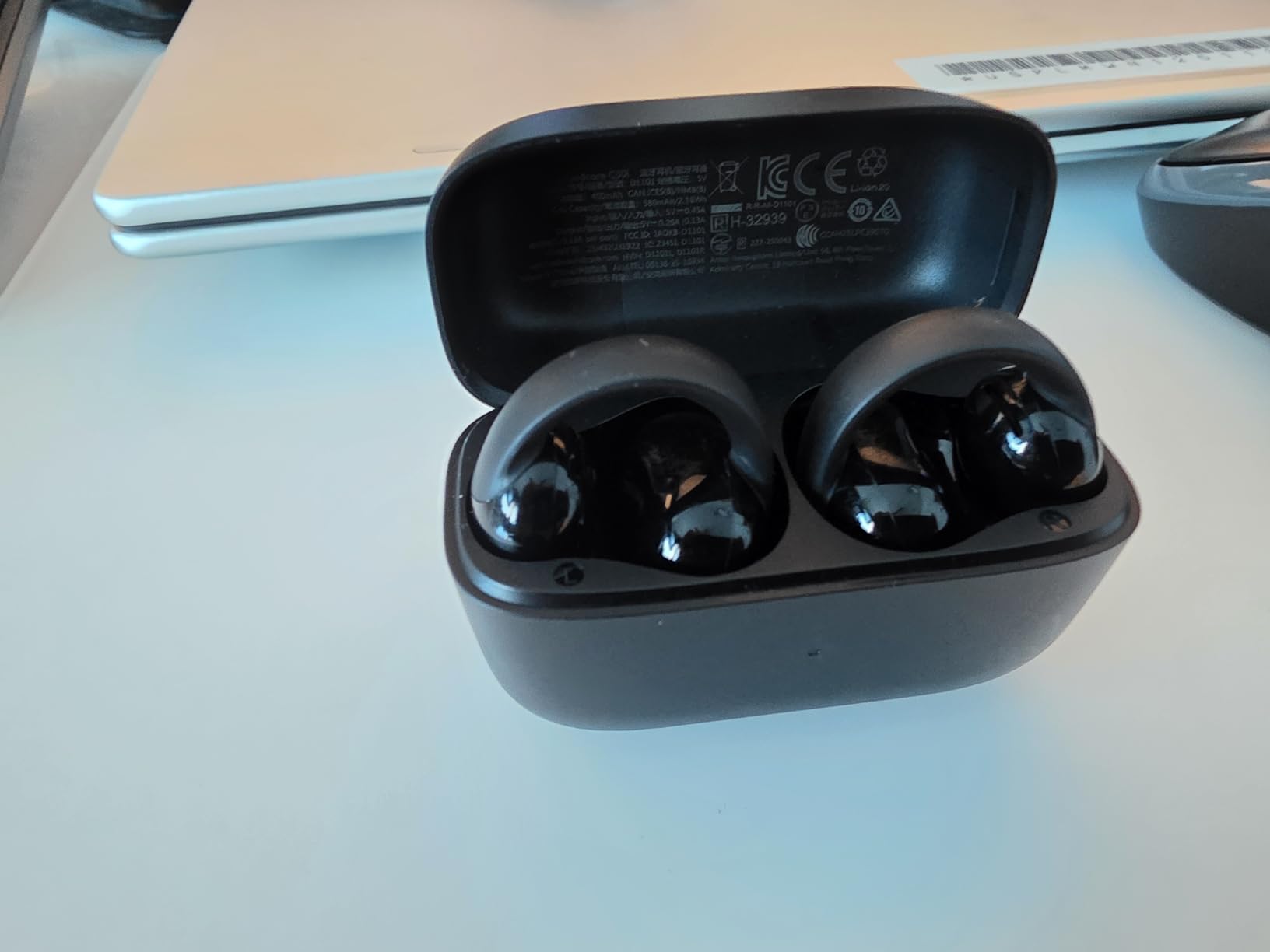
The C50i is the budget clip-on that solves the two problems riders hit with cheaper ear hooks. The memory titanium FlexiClip adapts to your ear shape rather than fighting it, and the physical push buttons on both earbuds work with sweaty hands or gloves.
Having an identical button on each earbud means you never have to remember which does what, which sounds trivial until you are mid-descent and trying to skip a track. The 12 mm drivers with 86 dB max output give punchier bass than bone conduction, and the compact case fits a jersey pocket unlike a full band.
IP55 waterproofing holds up to months of heavy sweat, and 28 hours total playtime with Bluetooth 6.0 gives a stable connection. At 44.5 g with the case, it disappears in a pocket.
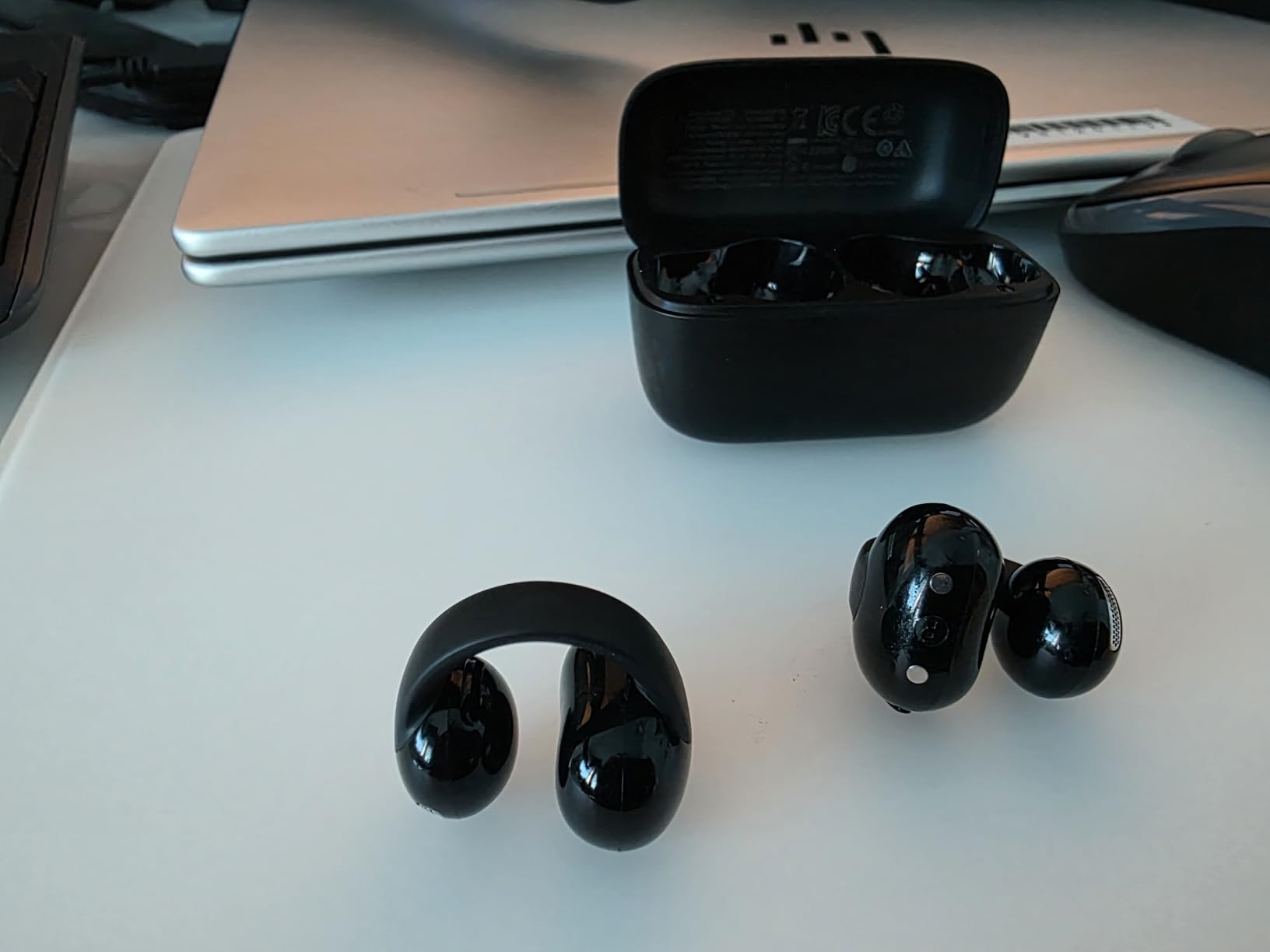
The fixed speaker angle is the one design compromise worth knowing about. Because the driver points in a set direction rather than swiveling to aim at your canal, volume can land lower than you would like for some ear shapes.
There is also no in-ear detection, so nothing auto-pauses when you remove a bud. That is mildly annoying at a cafe stop and irrelevant on a ride, but it is a feature some commuters will miss.
Best for riders who want buttons instead of touch pads
Physical controls are the deciding factor for anyone riding with wet hands or wearing full-finger gloves. Reviewers consistently single this out as the reason to pick it over similar-priced alternatives that use capacitive touch controls.
The FlexiClip fit held through intense workouts and stayed comfortable over long sessions, and the pocket-sized case means you can bring a backup pair on a long ride without thinking about it.
Less suited to riders taking calls on the move
Mics do not handle wind well, which makes outdoor calls difficult in breezy conditions. That is a format limitation rather than a fault, but it is worth knowing if you take calls from the bike regularly.
Eight hours per charge is short for all-day audiobook listening, some buyers report the case not charging buds even when seated, and occasional one-second connection dropouts show up in reviews. None of these are deal-breakers for cycling use, but they are the reason it sits at the bottom of the list.
Bone Conduction vs Air Conduction: What Changes on the Bike
Open-ear is not a single technology, and the difference matters more on a bike than it does anywhere else. Bone conduction sends vibration through the bones of your cheek and jaw to the inner ear. Nothing is placed in or near your ear canal, so your ears are simply open, and the transducers sit flat against the cheekbone in front of each ear.
Air conduction places a conventional dynamic driver just outside the ear canal and aims it inward. You are still not sealed, so awareness is preserved, but the audio path is far closer to how a normal speaker works, which is why the bass improves and the leakage worsens.
On a bike, that trade-off resolves differently than it does at a desk. A band has nothing to rattle against your ear and nothing to catch a helmet strap, so it is the most stable option over rough ground. A hook or clip is more exposed to the frame, and on gravel or MTB descents that is where ear-hook designs are reported to feel unstable.
Sound follows the same pattern. Bone conduction is thin and mid-focused, which suits podcasts and turn-by-turn directions far better than it suits music. Air conduction gives you a low end and detail, at the cost of audible leakage and worse microphone pickup in wind.
Fit and hardware round out the difference. A band sits behind your head and can conflict with a cap or a helmet shell in the standard size. A clip-on wraps over your ear and can conflict with glasses temples, unless the design specifically accounts for it, which is why the TOZO and Ortizan models shape the clip around eyewear.
Neither format blocks environmental noise, and that is the point. What you lose with a bone conduction band is volume ceiling and bass; what you lose with an air conduction ear hook is privacy and a bit of stability. Riders who want the second set of trade-offs often compare both against semi open headphones that sit between the two formats.
Wind Noise and Riding Speed: The Real Weak Spot
Wind noise is the most repeated complaint from riders in cycling forums, and it kicks in far lower than most manufacturers suggest. Reports cluster around roughly 16 km/h, or 10 mph, which is a pace most riders hit on any road with a tailwind.
The physics is unavoidable. There is no ear canal to block, so airflow passes directly across your ear and past any microphone on the outside of your head. Every design here is transparent to that air. What differs is the shape of the hardware sitting in that airflow and how the brand processes the microphone signal afterwards.
Bone conduction bands handle wind relatively well for calls because the transducer is already against your jaw, so the voice signal is strong before processing starts. The OpenRun Pro 2’s dual wind-resistant microphones with AI noise reduction filtering up to 96.5 percent of background noise are specified for wind up to 15 mph, which covers most commuting speeds.
Clip-on designs start from a worse position, since the housing sits further out in the airflow. The Baseus Inspire XC1 is the only model here with a cycling-specific wind figure, rated to 5 m/s or roughly 18 km/h. The cheaper ear hooks make no such claim, and owners report microphones that are effectively useless in wind.
What this means in practice is that wind degrades calls long before it degrades music. For audio, four practical steps help: turn the volume down slightly and let the passive open-ear design do more of the work, use the app EQ to reduce the midrange that wind emphasises, position ear hooks or clips as far back from the airflow path as the fit allows, and accept that above roughly 25 km/h no open-ear design will give you a clean mix.
None of this changes the core value of the format. Riders use these headphones for navigation prompts, podcasts and awareness far more than for critical listening, and at those tasks wind matters much less. If your priority is music above 20 km/h, the honest answer is that open-ear is the wrong tool. Riders hunting for a different trade-off should read our open-ear headphone deals roundup alongside this list.
Helmet and Glasses Compatibility for Cycling
Helmet compatibility is where most returns happen, and the problem is almost never the headphones. It is the layer of padding between your head and the shell, which moves the band and tightens the ear hooks.
For wraparound bands, the issue is size. A standard band can sit loose behind the head under a full-face helmet because the shell adds depth. Fit the headphones first, then put the helmet on, and check in a mirror that the band has not rotated. A Mini size exists for smaller heads and is worth trying if the standard one floats.
For ear-hook and clip-on designs, the issue is the ear itself. A hook that wraps the top of the ear competes with a helmet strap, and on a full-face MTB helmet the cheek pad can press the housing against your jaw. Riders report this working fine with thin-strapped road helmets and poorly with full-face shells.
Glasses are the more common problem. Temple arms that run thick, curve sharply or sit high will push an ear hook forward or rotate a band. Our advice is to fit glasses first and then fit the headphones, so the hook sits behind the arm rather than in front of it. That ordering solves the conflict in most cases and costs nothing.
Prescription sports glasses and cycling sunglasses with rubberised temples are the hardest cases, because the rubber grips whatever it rests against. Clip-on designs built around eyewear, such as the TOZO OpenEarRing, handle this better than a band, because there is no band to twist.
Our broader picks on over ear headphones are worth a look if you ride without a helmet, though they are not a safety-aware format for busy roads.
What to Look for in the Best Open Ear Headphones for Cycling
Most buyers start with sound quality and work backwards. For cycling, start with fit and work forwards, because a pair you can hear perfectly but cannot keep on your head is useless at 25 km/h.
Design type. Choose a bone conduction band for maximum stability and zero ear contact, an ear hook for better bass and stronger output, or a clip-on if glasses are your main fit constraint. There is no best answer, only the best match for your route.
Water resistance taken literally. IPX5 handles sweat and light rain. IPX6 shrugs off sweat, rain and splashes. IPX7 is a dunking rating and, for a bike, more than you need. None of these mean swim-proof unless the manufacturer says so, and most bands are not swimming products at all.
Battery compared on the same basis. Check single-charge hours first, then the case total. A clip-on claiming 40 hours is usually 8 hours plus a case, while a band claiming 12 hours means 12 hours with nothing else. For a six hour ride with nav prompts, single-charge hours are the number that matters.
Control type. Physical buttons beat touch pads on a bike, with sweaty hands or gloves. Touch controls misfire exactly when you need them, and you should never be reaching for a phone mid-ride.
Microphone wind performance. Relevant if you take calls from the bike. Look for a cycling-specific wind figure rather than a generic noise-cancelling claim.
Weight and frame material. Under 30 g is the difference between forgetting you are wearing them and adjusting them. Titanium frames resist corrosion better over multiple winters.
Leakage, if you ride in public. Air conduction leaks more than bone conduction. Enclosed cavity designs and directional acoustic tech reduce this, and it is worth paying for on a shared path.
Bluetooth version and multipoint. Bluetooth 5.3 and above is the current baseline. Multipoint, where the manufacturer confirms it, lets you stay connected to your phone and computer at once.
One thing open-ear design is not: a safety guarantee. Keeping your ears unblocked helps you hear traffic, but attention is not awareness, and riders pushing volume to overpower wind reduce the benefit substantially. Check the rules where you ride, since headphone laws for cyclists vary widely by region, and consider riding without audio on technical descents and busy roads.
If you also want audio off the bike, our open back headphones picks cover a very different use case and are not a substitute for anything on this list.
Frequently Asked Questions
What are the best open-ear headphones for cycling?
The SHOKZ OpenRun Pro 2 is the best all-round pick for cycling, with hybrid bone and air conduction drivers, 30.3 g weight, a 12 hour battery and wind-resistant microphones. The Soundcore V20i is the choice if bass matters more than a wraparound band, and the SHOKZ OpenMove is the sensible first bone conduction headset for shorter rides.
Do Shokz work well for cycling?
Shokz is the most established name in open-ear cycling audio, and the OpenRun Pro 2 and OpenMove are both strong on a bike. The OpenRun Pro 2 stays secure under a helmet, works with glasses, and its microphones are specified to handle wind up to 15 mph. Riders regularly report hearing traffic and approaching cars while listening, which is the awareness benefit the format is designed for.
Which Shokz headphones are best for cycling?
The OpenRun Pro 2 is the better cycling model because of its 12 hour battery, hybrid drivers and 30.3 g weight. The OpenMove is lighter at 29 g and cheaper, but its 6 hour battery suits shorter rides. A Mini size is worth trying if a standard band sits loose under your helmet.
What type of headphones are best for cycling?
For most riders, a bone conduction wraparound band gives the best stability and leaves the ear canal completely open. Air conduction ear hooks or clip-on buds sound fuller with more bass but leak sound and can be less stable on rough ground. In-ear buds with a pass-through transparency mode are louder and clearer, but they block the ear when the mode is not active, which many riders consider the main safety concern.
What is the downside of bone conduction headphones?
The main downsides are limited bass, a lower maximum volume, outward sound leakage on a shared path, and microphones that struggle in wind. Wind noise becomes noticeable above roughly 16 km/h on any design, and raising the volume to compensate reduces the awareness benefit that made you buy open-ear headphones in the first place.
Are open ear headphones safer than in-ear headphones for cycling?
Open-ear headphones are awareness-oriented, not a safety guarantee. They keep your ear canal unblocked so you can hear traffic and other riders, but attention is not the same as awareness, and playing audio at high volume still reduces how much you notice. Check local rules, since headphone laws for cyclists vary by region.
The Verdict for 2026
The SHOKZ OpenRun Pro 2 remains the best open ear headphones for cycling overall in 2026, because the hybrid drivers give you real bass without closing your ears, and it handles a full day, a helmet and a pair of glasses without a compromise you will think about.
For a rider who wants music rather than podcasts, the Soundcore V20i is the value pick with the best bass per gram. For glasses wearers, the TOZO OpenEarRing removes the temple-arm conflict entirely. For sound quality and microphone wind handling, the Baseus Inspire XC1 is worth the jump. For shared paths where privacy matters, the Soundcore AeroClip keeps the audio pointed at your ear.
Whichever you choose, fit it before your helmet, fit your glasses before the headphones, and keep the volume lower than the traffic noise demands. You will still hear the car, and you will still get home.
