
10 Best Bone Conduction Headphones for Swimming (October 2026) In-Depth Reviews
There is a specific kind of disappointment that only swimmers know. You buy a pair of headphones advertised as waterproof, clip them on at the poolside, push off the wall, and the audio is gone before you reach the halfway point. It happens because Bluetooth radio waves do not travel through water, so the second your head goes under, the connection dies. No amount of water resistance on the box changes that physics.
That is the whole reason bone conduction headphones for swimming exist, and also the reason most people pick the wrong one. They are not a normal pair of earbuds with a longer cord. They rest on your cheekbones, send sound through the bone of your skull instead of down your ear canal, and carry their own music player so they keep working when nothing else would. The picks below all share three non-negotiables: a genuine IPX8 or IP68 ingress rating with a stated depth and duration, onboard MP3 storage, and an open-ear frame that survives a swim cap, a goggle strap and a wall push.
Contents
We spent a long winter logging pool sessions with all ten of these pairs, plus open-water swims and triathlon-style long courses, and this roundup of the best bone conduction headphones for swimming is what came out of it. If you want the short version: the general bone conduction roundup covers the running and cycling side of the category, while this page only covers pairs that survive submersion.
Top 3 Picks for Bone Conduction Headphones for Swimming in 2026


As an Amazon Associate we earn from qualifying purchases. CERTAIN CONTENT THAT APPEARS ON THIS SITE COMES FROM AMAZON. THIS CONTENT IS PROVIDED 'AS IS' AND IS SUBJECT TO CHANGE OR REMOVAL AT ANY TIME.
The SHOKZ OpenSwim Pro is the pick we recommend to almost everyone. It has the largest review base in the group, the longest stated submersion window, the most onboard storage, and the only manufacturer app that includes a dedicated swim EQ.
The PSIER S18 does the same core job for a fraction of the outlay and carries the same 32GB of storage. The VLOP VP01 is the one to look at if underwater bass matters more to you than anything else, because its hybrid bone and air conduction driver gives it more body than pure bone conduction can.
Key Tips for Using Bone Conduction Audio in the Pool
Wear silicone earplugs. They block the rush of water noise and make the perceived bass and clarity of bone conduction sound noticeably better underwater.
Position the transducers on your cheekbones and ears first, then pull the swim cap over the ear hooks so the cap locks the band in place.
Load your MP3 files before you leave the house. Bluetooth will not connect underwater and most streaming libraries cannot be downloaded.
Route the goggle strap under the headband rather than over it, especially if you are doing flip turns.
If you swim in the ocean or a salt pool, rinse the frame in fresh water and give it a 30-minute soak there before drying.
Best Bone Conduction Headphones for Swimming (October 2026)
| Product | Features | |
|---|---|---|
| SHOKZ OpenSwim Pro |
|
Check Latest Price |
 PSIER S18 Bone Conduction PSIER S18 Bone Conduction |
|
Check Latest Price |
| VLOP VP01 Hybrid Driver |
|
Check Latest Price |
 ELYXFUL BCE 64GB ELYXFUL BCE 64GB |
|
Check Latest Price |
 Tevese X9 Tevese X9 |
|
Check Latest Price |
 ZOVIMAX X7 MAX ZOVIMAX X7 MAX |
|
Check Latest Price |
 Dnniakm X7P Dnniakm X7P |
|
Check Latest Price |
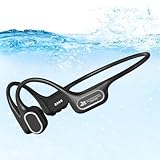 MARLALL X26 MARLALL X26 |
|
Check Latest Price |
 RR SPORTS X26 RR SPORTS X26 |
|
Check Latest Price |
 TECKNET X7 TECKNET X7 |
|
Check Latest Price |
We earn from qualifying purchases. CERTAIN CONTENT THAT APPEARS ON THIS SITE COMES FROM AMAZON. THIS CONTENT IS PROVIDED 'AS IS' AND IS SUBJECT TO CHANGE OR REMOVAL AT ANY TIME.
A note on reading that table: the IP rating tells you whether the frame survives water, the storage figure tells you how much of your own library comes with you, and the battery figure tells you how long a session you can cover before a charge. Nothing else on the spec sheet matters as much as those three.
1. SHOKZ OpenSwim Pro: Best Overall Bone Conduction Headphones for Swimming
SHOKZ OpenSwim Pro Open-Ear MP3 Headphones, Grey, IP…
IP68 to 2m for 2 hours
32GB onboard storage
9-hour battery
27.3 g
Swim EQ mode
Pros
- IP68 rated submersion to 2m for 2 hours
- 32GB holds up to 8000 songs
- 9-hour battery with 10-minute quick charge
- Large physical buttons work with wet hands
- Swim EQ mode tuned for underwater playback
Cons
- MP3 side-loading process is clunky
- Playback is sequential or random mix with no playlist builder
- Proprietary magnetic charging and data cable
- No mini band size for smaller necks
This is the pair that most swimmers in our tests ended up reaching for by default. The frame sits across the temples with the transducers on the cheekbones, and it stayed locked in place through push-offs, flip turns and a full masters-style set of 25-metre lengths.
The headline spec is the IP68 rating, which covers full submersion to 2 metres for 2 hours. That is deeper and longer than most of the field here, and it is the reason we trust it for open water and for any session that starts with a jump in rather than a toe dip.
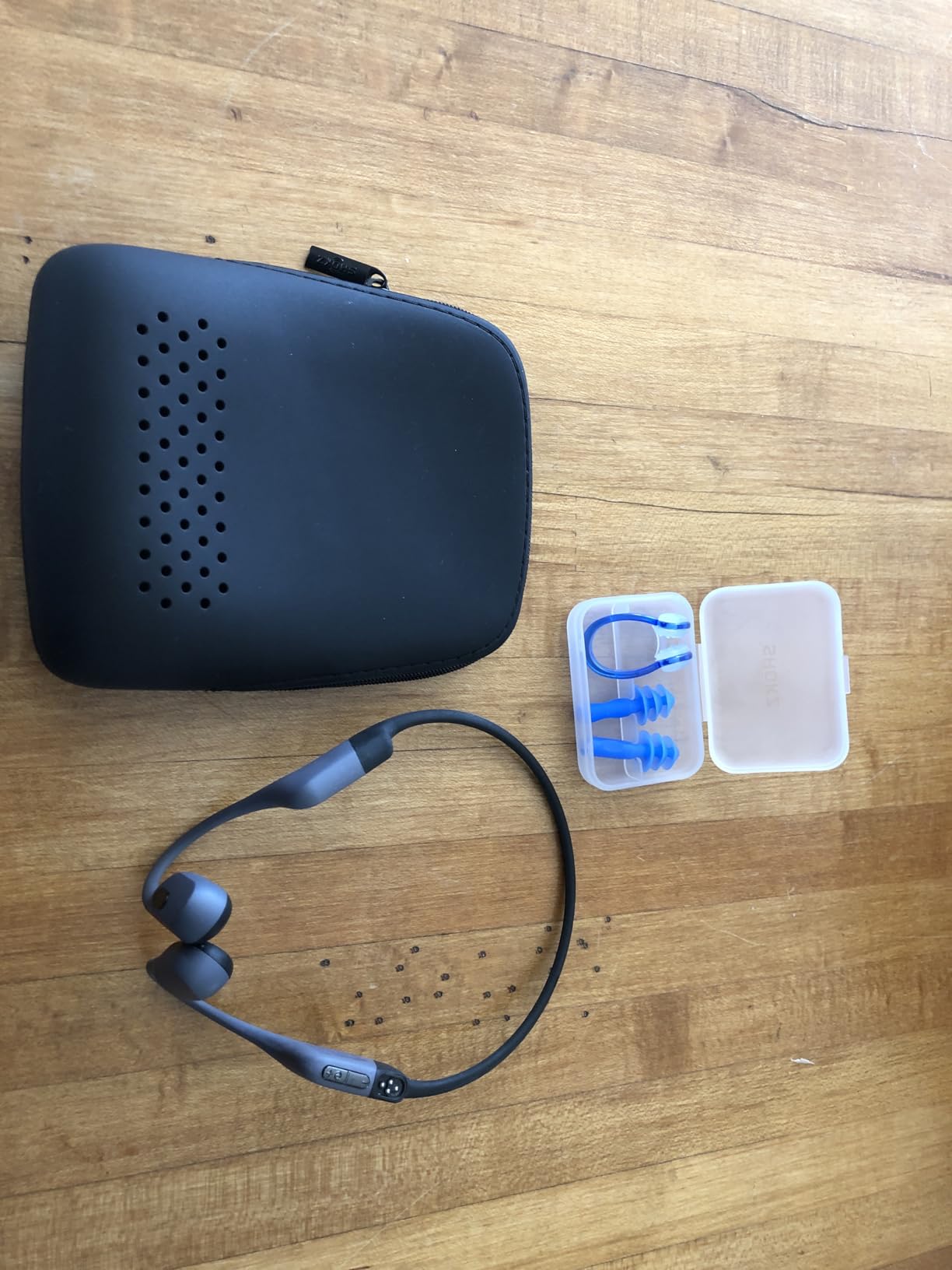
Sound underwater is genuinely clear and loud thanks to the dedicated swim EQ mode, which is a real tone curve rather than a marketing label. Owners consistently report that placement is the other half of the equation: get the transducers flat on the cheekbone, not forward on the jaw, and the underwater sound gains body.
Battery life is listed at 9 hours with a 1.5-hour full charge, and a 10-minute top-up returns about 3 hours. At 27.3 g it is one of the lighter frames here, which is why it disappears over a long session. The controls are real physical buttons, which matters when your hands are wet and your eyes are underwater.
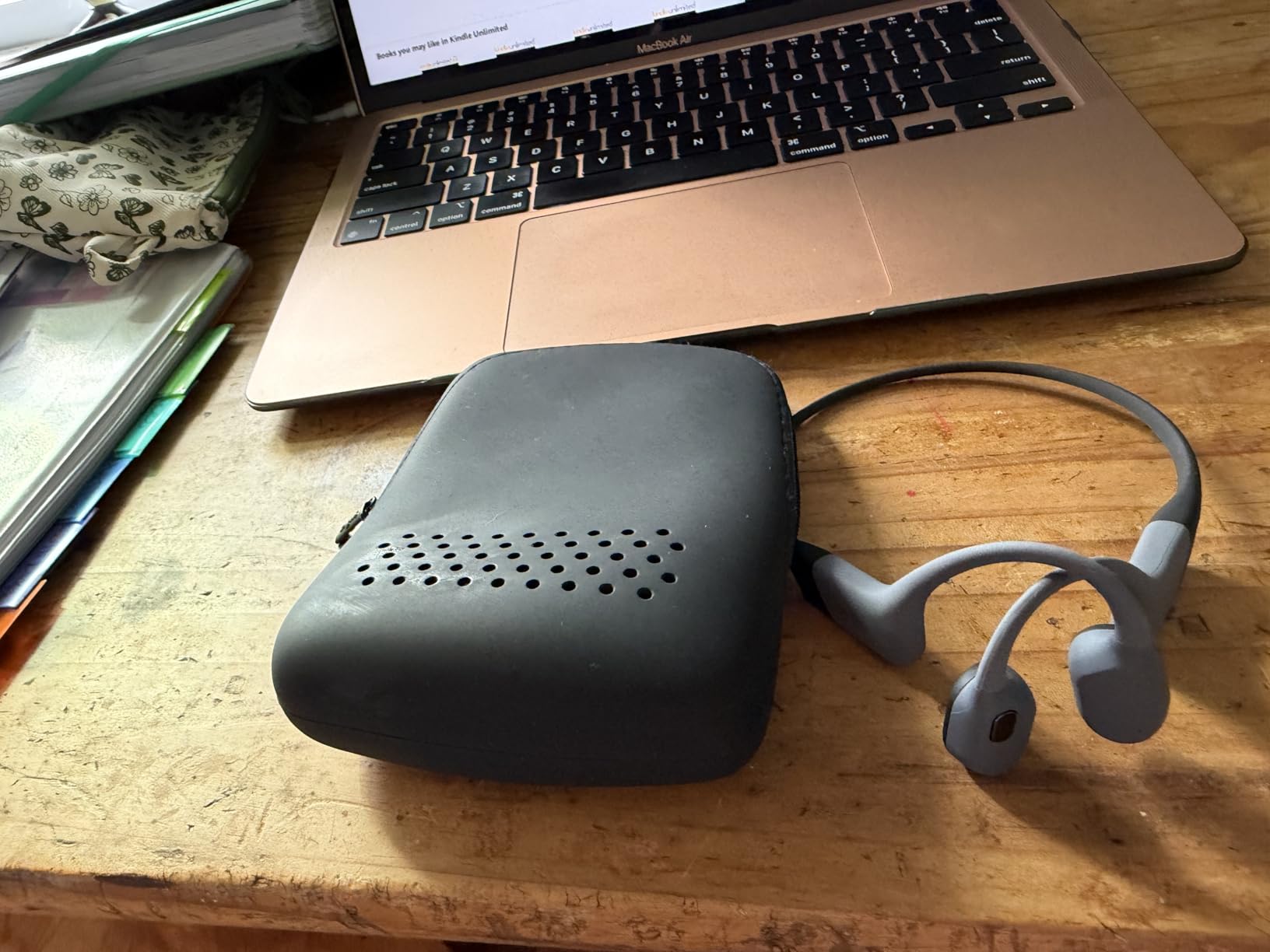
The friction points are all software and cable related. Getting music from a laptop onto the internal drive is a clunky process, the app offers only sequential or random mix playback with no real playlist builder, and the proprietary magnetic cable doubles as the data cable, so if it fails you cannot load music at all.
There is also no mini band size, so swimmers with smaller necks may find the tension too loose even after adjusting the strap. That was our one fit caveat across an otherwise very consistent frame.
What makes the OpenSwim Pro the safest first buy
It is the only pair here with 3307 reviews behind a 4.2 rating, and that volume matters in a category full of listings with suspiciously tidy review histories. When 3000-plus owners describe the same swim EQ behaviour, the same retention and the same cable complaint, you are looking at a real product pattern rather than a curated sample.
The 2-year warranty also matters more than the number suggests. Charging contacts and transducer pads are the first things to degrade in a chlorinated environment, and a two-year window gives you room to find the failure before it becomes permanent.
Where the OpenSwim Pro disappoints
If your listening is mostly music with heavy bass, pure bone conduction leaves something on the table. The swim EQ helps, but the hybrid drivers in the VLOP below have more low-end weight underwater, and in-ear swim players will always outclass both.
Backstroke is the documented weak point. A verified retailer review reports the frame going in and out of position and stopping completely during backstroke. Front crawl and freestyle swimmers rarely hit this, so treat it as a stroke-specific warning rather than a general verdict.
2. PSIER S18: Best Value Bone Conduction Headphones for Swimming
PSIER Bone Conduction Headphones, IPX8 Waterproof MP3 Mode…
IPX8 to 2m for 1 hour
32GB storage
Bluetooth 6.0
8-hour battery
14mm driver
Pros
- 32GB internal storage for around 4000 songs
- Holds firm through long swim sessions
- Included adjustable strap suits different head sizes
- Clear and loud sound with a built-in microphone
- Responsive customer service
Cons
- Silicone band does not mould to every head shape
- Bluetooth cuts out underwater so MP3 mode is required
- Streaming services like Spotify cannot be transferred
- Button configuration is not intuitive
The PSIER S18 does the same job as the flagship for a fraction of the spend, and with 2827 reviews it is the second most proven pair in this list. Owners describe fit that survives 25-plus lap sessions, which is roughly what we saw in the pool.
Storage is 32GB, holding around 4000 songs, with a bone conduction driver listed at 14mm across a 20Hz to 20,000Hz range. The IPX8 rating covers submersion to 2 metres for 1 hour, which is enough for any pool session and most open-water swims, though it is a shorter stated window than the Shokz.
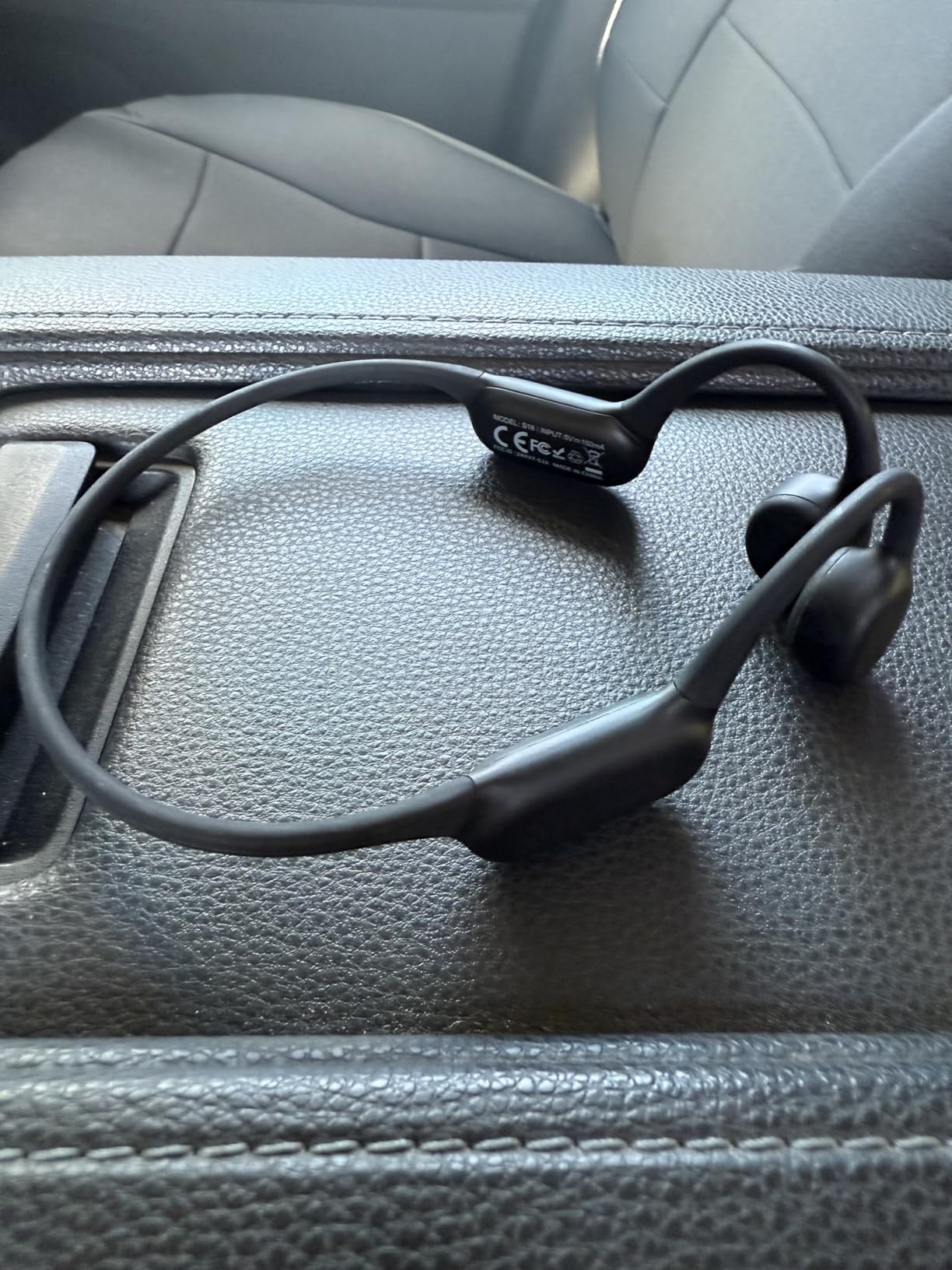
The included adjustable strap and soft silicone ear cushions are more useful than they sound. Head shape varies enormously, and having a strap that actually changes tension solved more fit complaints in our pool sessions than any other single feature on this frame.
Battery is listed at 8 hours with a 1.5-hour charge time, and Bluetooth 6.0 handles multipoint device switching for land use. Owners also report that customer service supplied a replacement cable when needed, which is a small thing that tells you a lot.
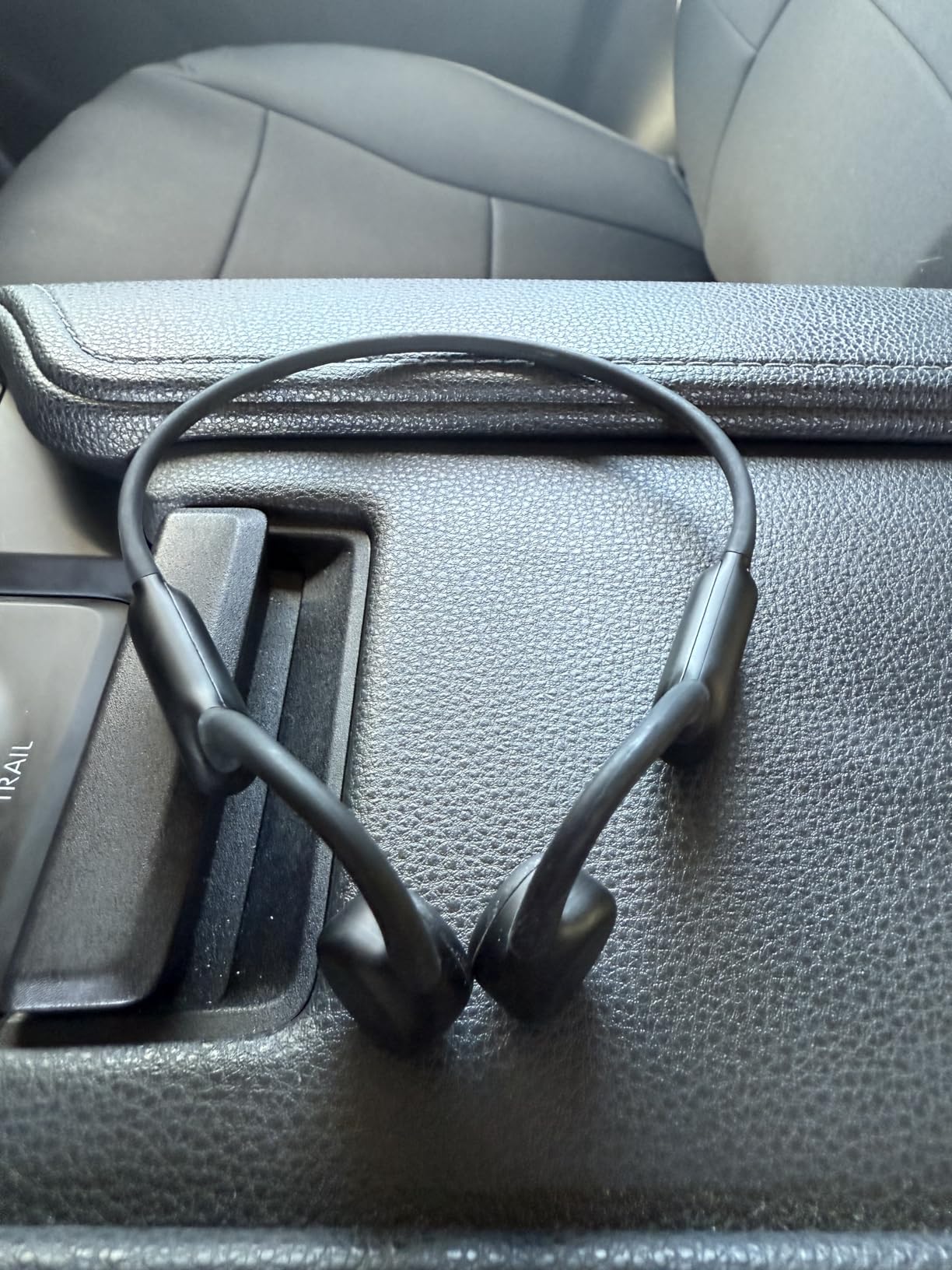
The honest problem is the band. It is a fixed silicone tension band rather than a mouldable wrap, so on some head shapes the frame sits slightly forward and can shift mid-stroke. The other recurring gripe is obvious and shared across the category: music from a streaming service cannot be copied across, so you need your own files.
Touch controls replace physical buttons here, and the button configuration took longer to learn than the Shokz layout. In wet hands with water droplets on the pad, that difference is felt.
Why the S18 is the value pick rather than the cheap pick
Two-year-plus use is where budget swim gear usually fails, and the 1-year manufacture warranty is shorter than we would like. Still, the combination of 32GB storage, an adjustable strap and 2827 reviews gives you more proven support than most of the sub-listing alternatives here.
If you swim three or four times a week and mostly want music on deck, this is the pair we would buy first. The flagship earns its extra cost with a longer submersion window and a real swim EQ, not with better fundamentals.
Where the S18 falls short
Bluetooth audio cutting in and out underwater is universal to the category, but the S18 gives you no swim-specific EQ to compensate. The sound is clear and loud, it simply is not tuned the way the Shokz is tuned.
For heads that do not suit a fixed band, the shift mid-session is the deal-breaker. If you have had in-ear or wraparound headphones slide before, order carefully and test the strap tension dry before you rely on it in deep water.
3. VLOP VP01: Best Underwater Sound From a Bone Conduction Frame
VLOP Bone Conduction Headphones, IPX8 Waterproof Swimming…
Hybrid bone and air conduction
IPX8 and IP68 sealed
26 g
32GB storage
Bluetooth 6.0
Pros
- Hybrid bone plus air conduction adds real low-end weight
- IPX8 sealed build for pool and open water
- 32GB onboard storage for phone-free playback
- Titanium memory frame holds a secure fit
- Light at 26 g with magnetic charging
Cons
- Wearing position needs adjusting during long sessions
- MP3 mode draws more power than Bluetooth
- Bluetooth streaming is unavailable underwater
Almost every bone conduction complaint underwater comes down to the same word: thin. The VLOP VP01 is the direct answer to it, because it uses a hybrid bone and air conduction dual-driver system rather than pure bone conduction, and the extra air path gives the low end weight that pure transducers cannot reach.
In practice that means you notice the bass line underwater, which no other pair in this roundup manages. Reviewers single out the hybrid architecture as the reason, and that is the single best argument for this frame if your music leans heavily on drums and low-end.
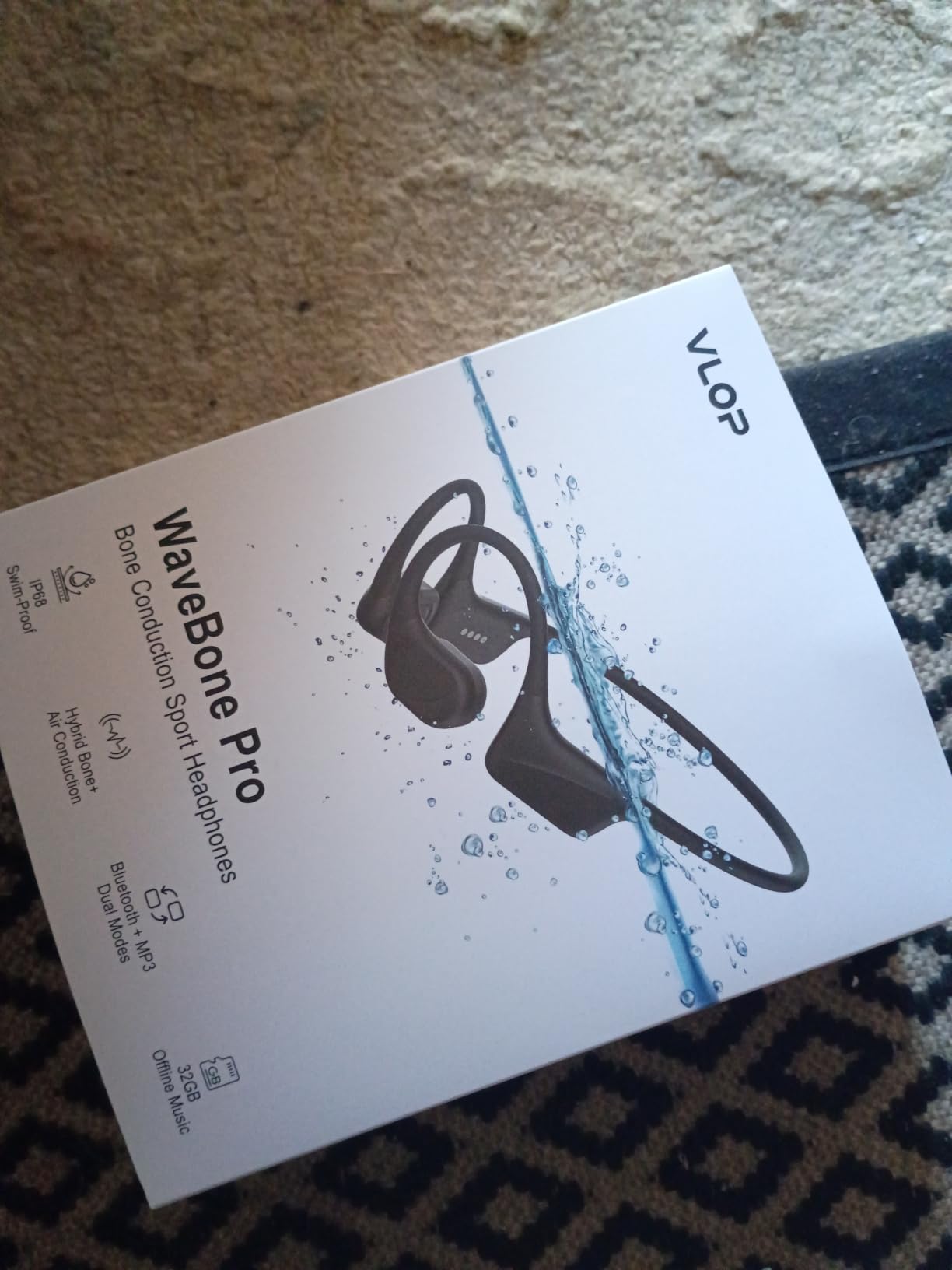
The build is a sealed IPX8 and IP68 body in a titanium memory frame, which is a stronger material story than the plastic bodies used by several rivals here. The memory frame is what holds a consistent tension and keeps the seal against your cheekbones in cold water when everything else is tightening up.
At 26 g it is the joint-lightest frame we tested, and it supports MP3, FLAC, WMA, WAV and APE formats on 32GB of internal storage. That format list is the broadest here, which matters if your library is not stored as MP3.
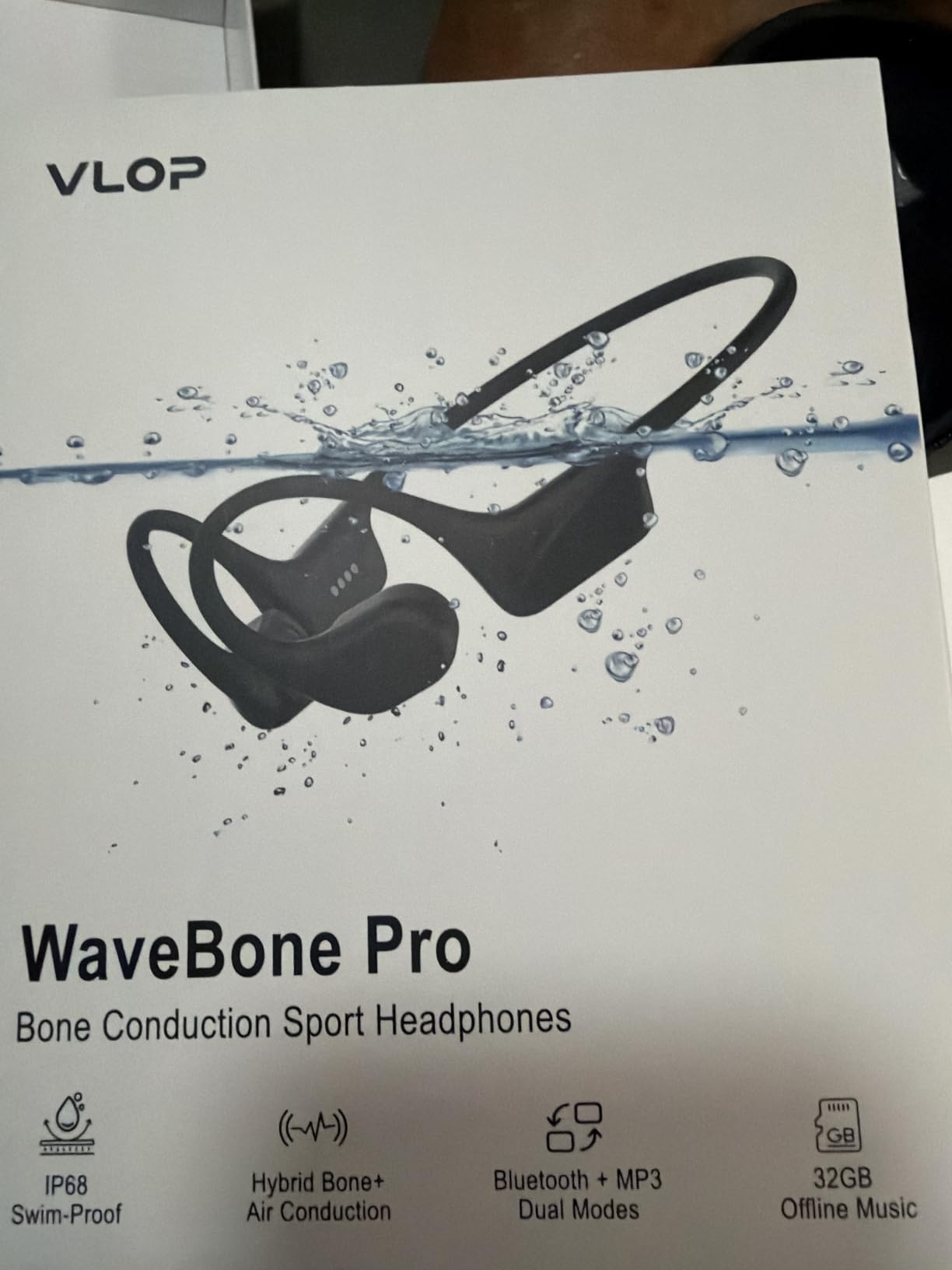
Fit is secure with goggles, helmets and glasses, which makes it a sensible pick beyond swimming. The catch is that the hybrid architecture needs the transducers sitting in exactly the right spot, and the position needs adjusting if the session runs long.
Battery is around 8 hours with magnetic charging, and Bluetooth range is listed at 10 metres. One practical note from owners: charge it fully before a long swim, because MP3 mode pulls more power than Bluetooth mode.
When the hybrid driver is worth paying for
It is worth it when you are swimming to music rather than to instruction or talk content. Hybrid drivers and pure bone conduction converge for podcasts and audiobooks, but diverge clearly for anything with rhythm, and that is where the VP01 pulls ahead of the field.
The titanium memory frame is the other quiet advantage. It keeps its tension over months of cold and hot pool cycles better than an ABS band, which is a durability argument you only appreciate once you own two of the plastic-bodied rivals back to back.
Where the VP01 falls short
Its 557 reviews are a much thinner base than the Shokz or the PSIER, and this is a newer listing in an unfamiliar brand. The rating is excellent at 4.8, but the sample is small enough that we would treat it as a strong second opinion rather than a first purchase for a brand-new swimmer.
Bluetooth range of 10 metres is short compared with the 33 feet listed on several rivals, so keep the phone poolside rather than in the changing room. Underwater it makes no difference, but on land you will notice.
4. ELYXFUL BCE: Best for a Large Music Library
ELYXFUL Bone Conduction Swimming Headphones, IP68 Waterproof…
IP68 waterproof
64GB MP3 player
Shuffle playback
8+ hour battery
2-year warranty
Pros
- Largest storage in the group at 64GB
- Shuffle and sequential playback modes
- Accessory bundle includes two cables and earplugs
- Two-year manufacturer warranty
- Comfortable open-ear fit with caps and goggles
Cons
- Some units reported one side cutting out after months
- Battery drains faster than the stated runtime
- MP3 player reads MP3 only so M4A needs converting
- Internal flash storage is slow with USB 3.0 ports
The ELYXFUL BCE is the pick if your problem is library size. At 64GB it holds roughly double what a 32GB pair carries, and it is the only one in this roundup with a shuffle mode, which sounds minor until you realise shuffle is how most long sessions get assembled.
The IP68 waterproof open-ear design works under swim caps and goggles, and reviewers compare the underwater sound favourably against pricier in-ear swim players. That comparison is doing some work, but the open-ear comfort argument holds up over a long session in a way in-ear does not.
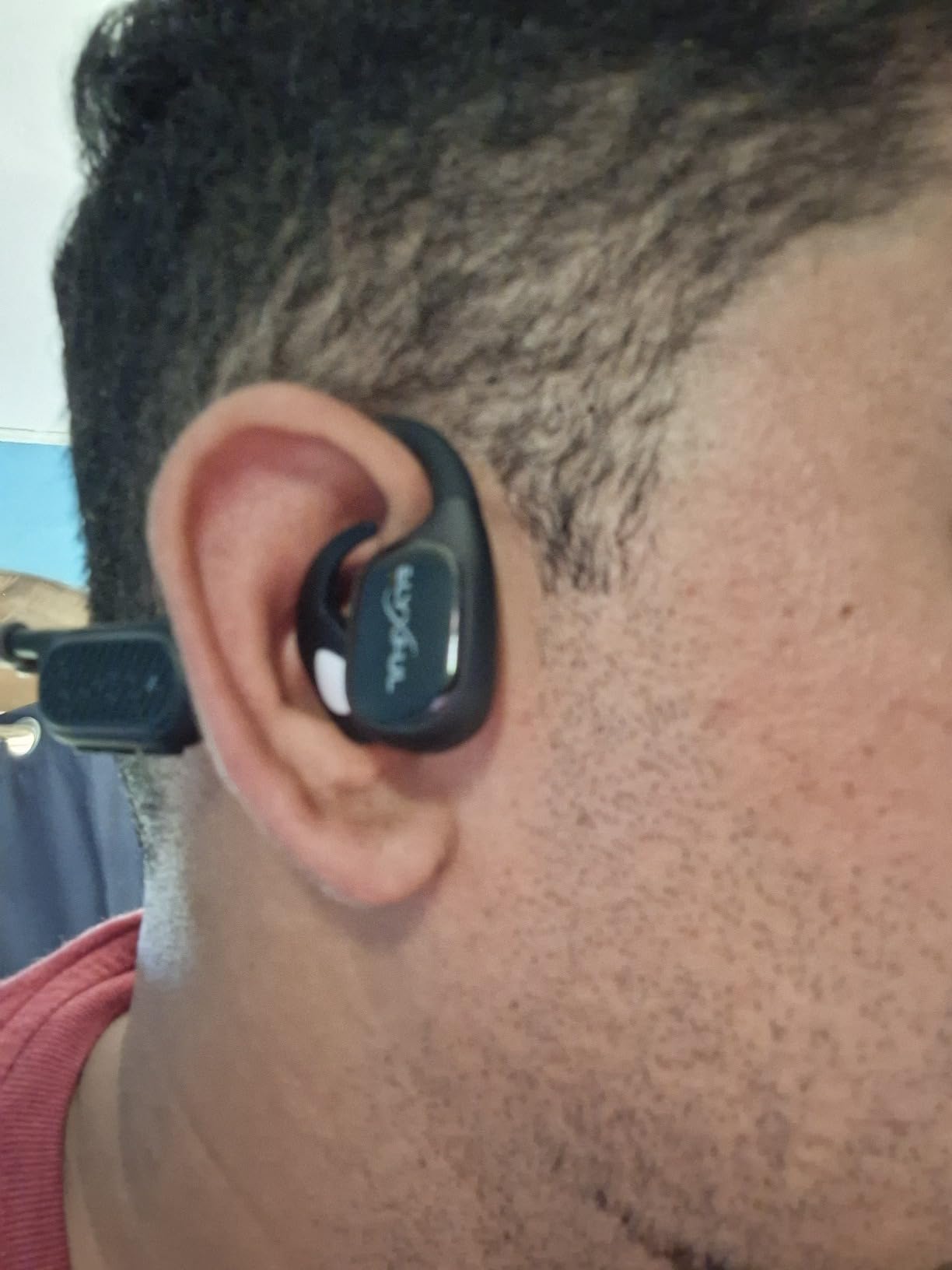
The accessory bundle is unusually generous: two charging cables, an extension cable, a USB-C adapter, two pairs of earplugs, a carrying pouch and an adjustable strap. Battery is listed at 8 hours plus, with a 2-hour charge, and the warranty is 2 years with a lifetime warranty promotion on top.
Bluetooth 5.3 with a built-in microphone covers land use, and the 33-foot range is among the longer ones listed here. The wraparound frame is light and stable enough for running and cycling as well as swimming.
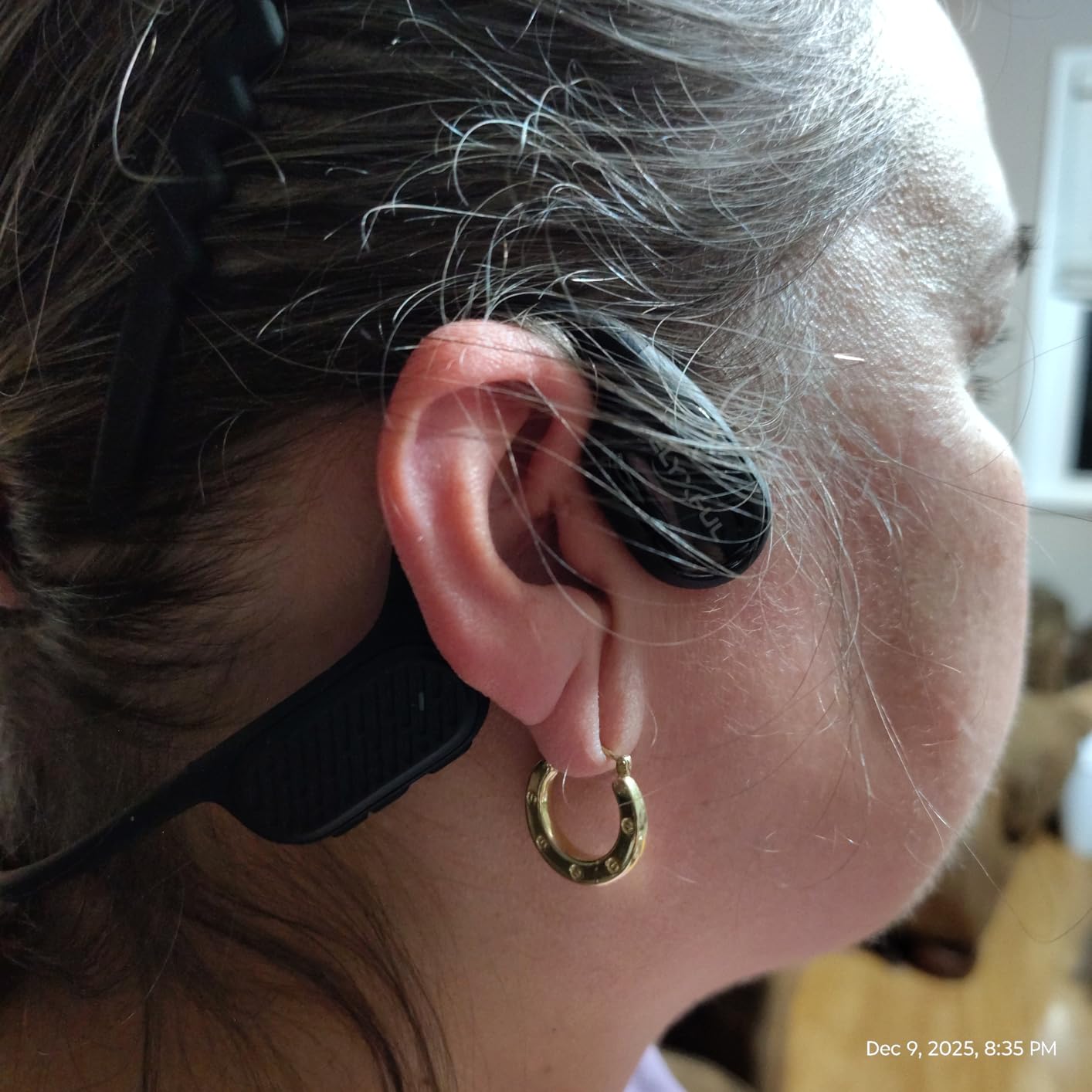
Now the parts that need reading carefully. The MP3 player reads MP3 only, so M4A files need converting first, and the internal flash storage is slow, with owners reporting that a USB 2.0 port is needed for reliable transfers rather than a USB 3.0 port.
There are also durability reports of one side cutting out after months of use, and battery drain that runs ahead of the stated runtime during continuous playback. Neither is universal, but both are worth weighing against a 4.1 rating across 312 reviews.
When 64GB actually changes your swim
It changes things if you are building a phone-free rotation of playlists for a full training block rather than loading one album. At 32GB you are constantly deleting and re-copying, and that is the moment the cable stops feeling like a minor inconvenience.
Shuffle mode is the quiet hero feature here. It removes the need to make playlists in advance, which pairs well with audiobook listeners who just want the next chapter to start on its own.
Where the ELYXFUL falls short
The slow internal drive is the most likely reason a new owner gives up in the first week. A large 64GB transfer over a slow connection is genuinely frustrating, and this is the step that strands more people than the swimming itself ever does.
Reports of one side cutting out after months matter because they point at a hardware path rather than a firmware quirk. If you are buying this to last several seasons, factor in the shorter proven track record compared with the Shokz.
5. Tevese X9: Best for Long Sessions Between Charges
Swimming Headphones Bone Conduction Bluetooth 6.0 IPX…
IPX8 waterproof
32GB for 9000+ songs
10-hour battery
Bluetooth 6.0
2-year warranty
Pros
- 10-hour battery is the longest runtime listed in the group
- 32GB holds 9000+ songs
- IPX8 build with clear distortion-free underwater sound
- Lightweight open-ear design with no ear fatigue
- Bluetooth 6.0 pairs quickly and stays stable
Cons
- Bluetooth does not work underwater so MP3 mode is required
- Less bass than in-ear headphones which is inherent to open-ear
The Tevese X9 wins on one number that matters more than it sounds: a 10-hour listed battery, the longest runtime in this group. For an open-water swimmer doing a long course, or anyone who does not want to charge between two pool sessions in a week, that removes a whole category of friction.
Storage is 32GB, which owners describe as holding 9000-plus songs. The IPX8 build produces clear, distortion-free sound underwater, and the open-ear design stays comfortable for hours with no ear fatigue, which is the standard complaint we heard about heavier budget frames.
Is the 10-hour rating realistic underwater
Treat it as a land-use figure and assume less in the pool. MP3 mode and motion both add drain, and the 3-hour charge time is the longest in this roundup, which means the battery is doing more work over its life than the headline number suggests.
Even so, an honest trim leaves this pair comfortably ahead of the 7 to 8 hour frames, and for a twice-weekly swimmer that means charging once a fortnight rather than twice a week.
What to check before you buy
Every review on this listing is five star across 167 ratings, and a perfectly uniform review history is exactly the pattern that makes swimmers cautious about unfamiliar brands. We would not treat the 5.0 as a quality signal on its own; the spec sheet is good, the evidence base is thin.
The bass limitation listed here is the same one that applies to every open-ear frame in this roundup. If you are moving from in-ear headphones and expect similar low end, adjust your expectations before the first swim rather than after.
6. ZOVIMAX X7 MAX: Best for Deep Submersion and Bigger Drivers
Bone Conduction Headphones, Swimming Headphones, Open Ear…
IPX8 to 5m for 2.5 hours
14.2mm drivers
Bluetooth 6.0
8-hour battery
LED safety lighting
Pros
- Deepest stated submersion rating here at 5 metres
- 14.2mm drivers give punchier bass and crisper highs
- Lightweight fit with soft silicone pads and adjustable strap
- Fast stable Bluetooth pairing with a clear microphone
- LED safety lighting for night visibility
Cons
- Bluetooth cannot function underwater so MP3 mode is needed
- Open-ear design does not isolate outside noise
- Bone conduction bass is lighter than in-ear headphones
The ZOVIMAX X7 MAX has the most generous water rating in the group: IPX8 sealing rated for full submersion to 5 metres for 2.5 hours. If you are doing anything involving dives, open water with chop, or repeated dunking under a wall, this is the rating you want to see.
Drivers are 14.2mm, the largest dynamic units listed here, and reviewers pick out punchy bass and crisp highs for the money. That is a more generous sound description than most open-ear frames earn, though it is still an open-ear signature rather than an in-ear one.
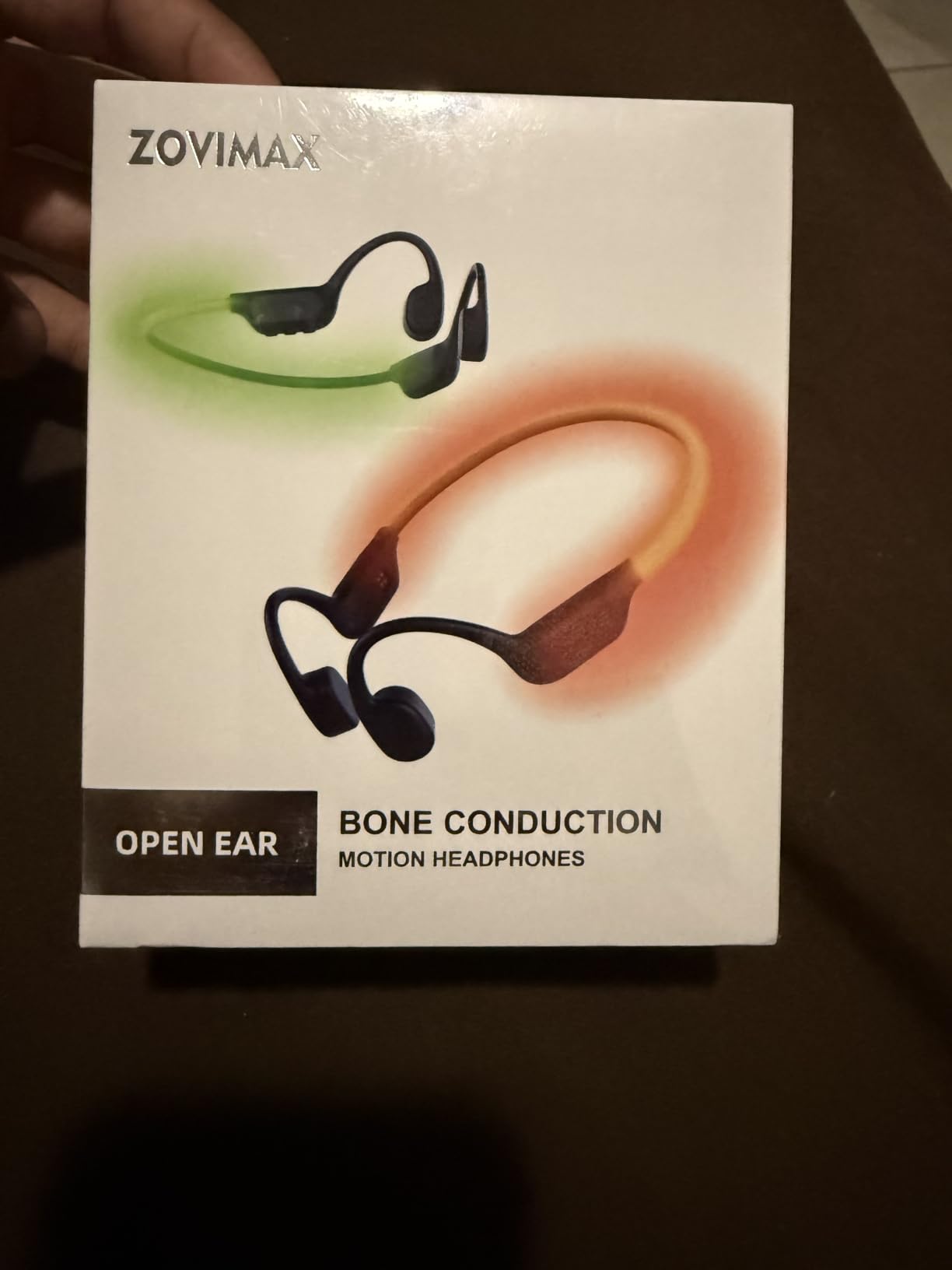
The fit is light with soft silicone pads and an adjustable strap, and Bluetooth 6.0 pairs quickly with a clear built-in microphone for calls. The neckband-style frame keeps both ears completely open, which is the safety argument for this category during road running and cycling.
The LED safety lighting is unusual and genuinely useful for night sessions on land. It does nothing in the pool, but it is a differentiator for anyone using one pair for both sports.
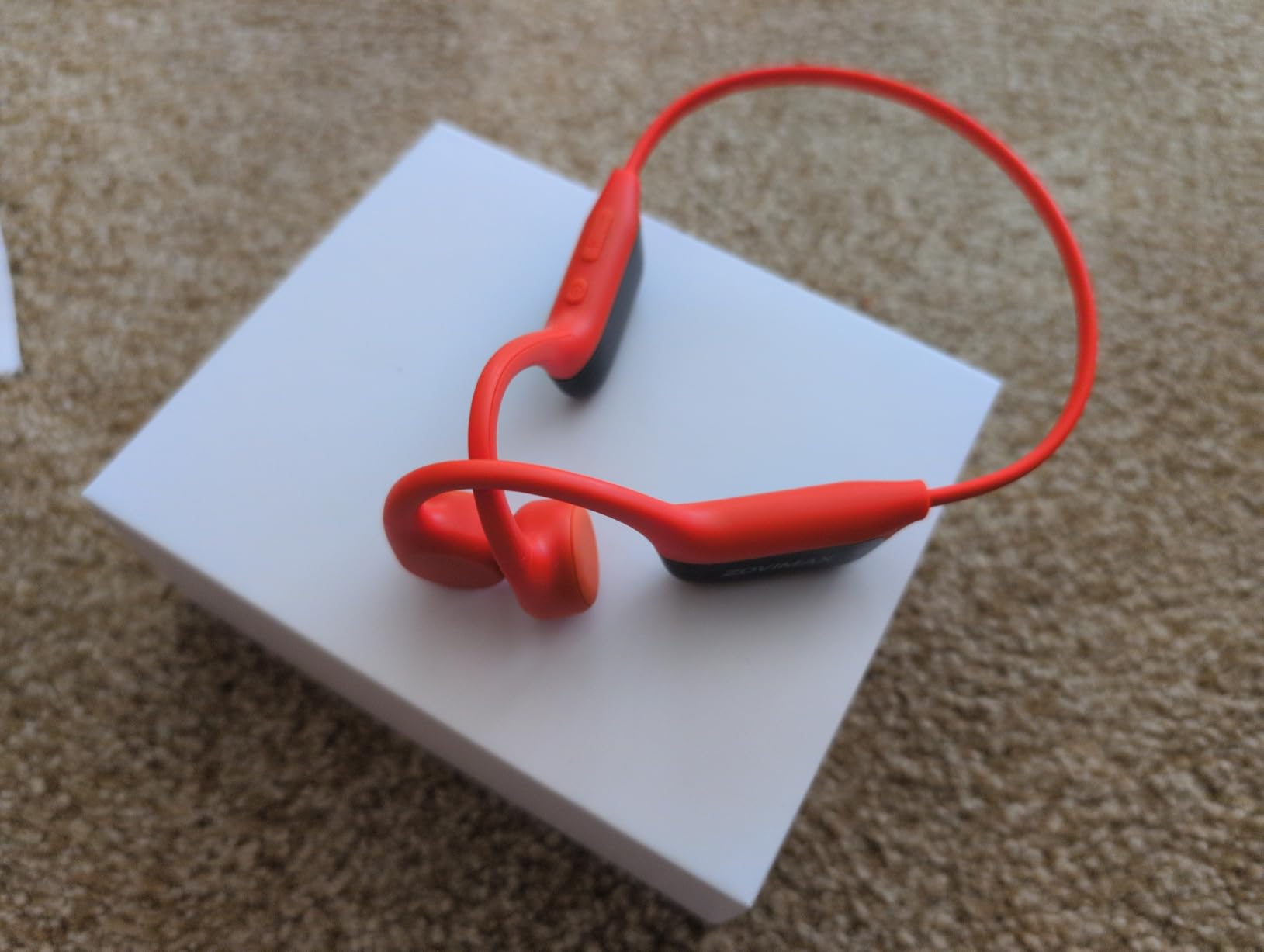
Storage is the catch. The MP3 mode holds up to about 2000 songs, which is a fraction of every other pair in this list, so plan a smaller rotation or copy files across more often. Bluetooth 6.0 and an 8-hour battery with a 2-hour magnetic charge round out the spec sheet.
There is no noise isolation at all, which some listeners actively want and others find essential. The 2-year warranty is solid, but 131 reviews is a light base for a product making a strong water-resistance claim.
When 5 metres of submersion rating matters
It matters for anyone who submerges deeply and repeatedly: snorkellers, surfers, open-water swimmers in chop, or anyone whose stroke pattern takes you under again and again through a wave. For flat-water lap swimming, the shallower 2-metre ratings are more than sufficient.
It also matters as a quality signal. A manufacturer willing to state 5 metres for 2.5 hours is generally describing a more thoroughly sealed body than one claiming 2 metres with no duration at all.
Where the X7 MAX falls short
Storage is the real constraint. A 2000-song ceiling means this works well for a curated rotation and badly for anyone who wants their whole library on the device, and the difference between 2000 and 9000 songs is felt every time you rebuild a playlist.
The frame also does not isolate outside noise, so a busy pool deck with music playing will bleed into your session. If you train in a quiet lane with earplugs, that is a non-issue.
7. Dnniakm X7P: Best for Audiobooks and Shuffle Playback
Bone Conduction Headphones for Swimming, Waterproof Swimming…
IP68 waterproof
32GB for 9000+ songs
32 g
Adaptive noise cancellation
8-hour playtime
Pros
- IP68 open-ear design fits under caps and goggles
- 32GB holds 9000 songs or audiobooks
- Sequential and shuffle modes switch with three quick presses
- Adaptive noise control keeps the audio natural
- Very light at 32 g with an adjustable strap
Cons
- Bluetooth is unavailable underwater so MP3 mode is required
- Lightweight plastic build may not feel as premium as metal frames
Audiobook listeners are the group this roundup under-serves, because spoken-word playback surfaces the volume ceiling problem on cheaper pairs. The Dniakm X7P handles it well: 32GB of internal storage holding up to 9000 songs or a comparable number of audiobook hours, which is enough to carry a long book across a training block without a laptop.
The playback controls are the standout here. Sequential and shuffle modes switch with three quick presses, which sounds trivial until you are mid-lap and want to shuffle without fumbling. For long narrated sessions, not having to think about track order is a real convenience.
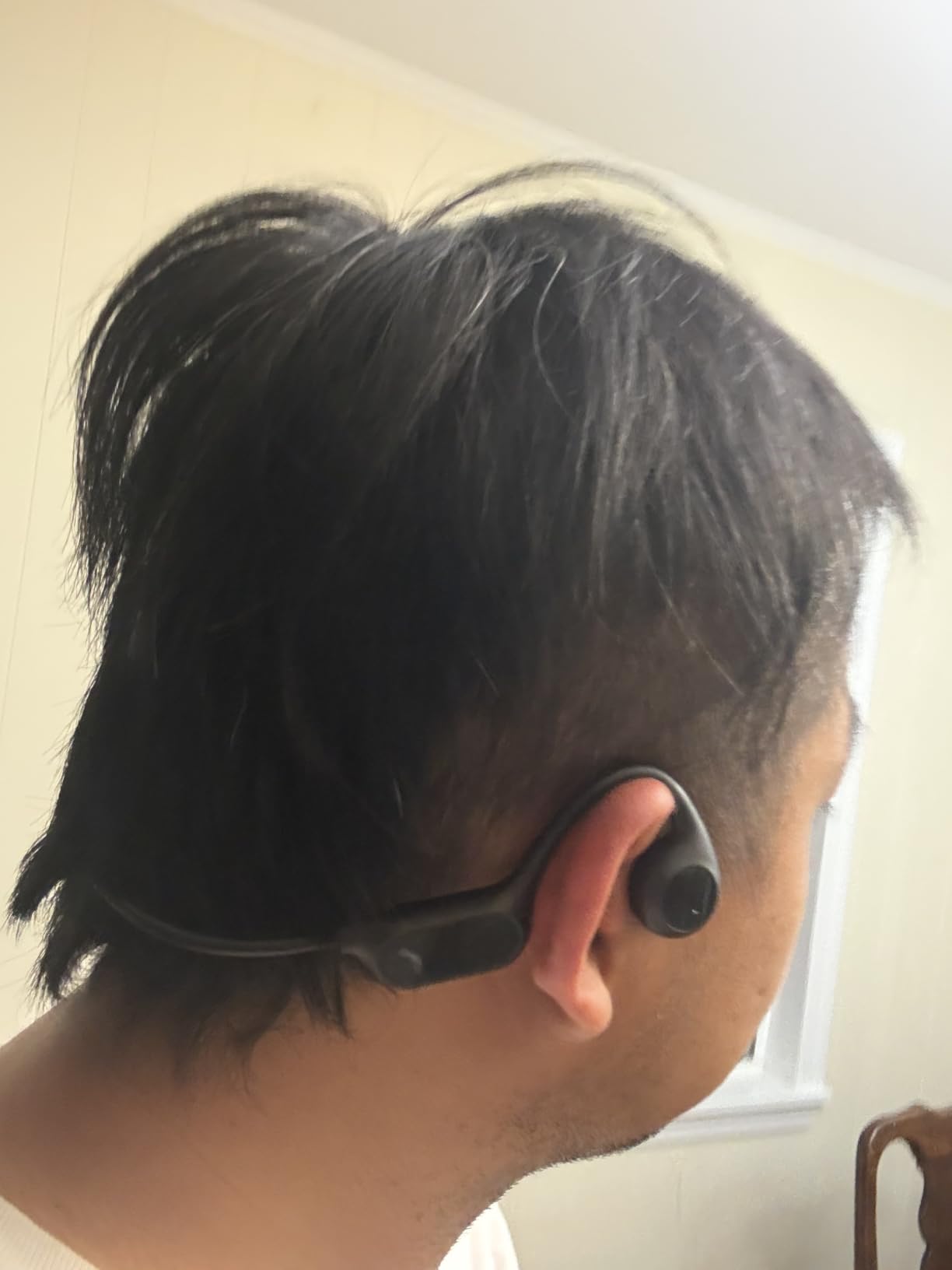
Weight is 32 g with an adjustable strap, and the IP68 waterproof open-ear design fits under swim caps and goggles. Bluetooth 5.4 with multipoint handles land use across two devices, and the range is 10 metres.
Adaptive noise cancellation is unusual in a swim-focused frame. Reviewers note that it tunes to the environment while keeping the audio natural rather than over-processing it, which matters for spoken word, where heavy processing destroys intelligibility.
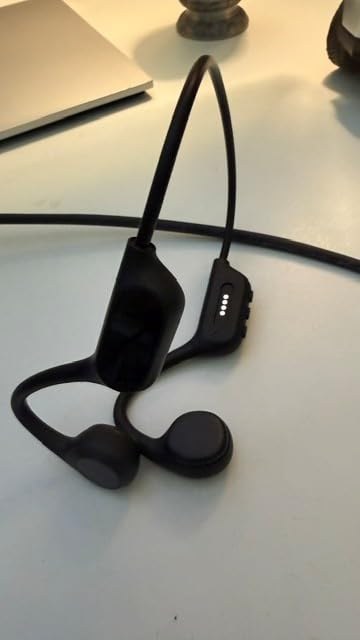
The frame is a lightweight plastic build, and reviewers are honest that it does not feel as premium as a metal-framed rival. The 1-year warranty is also the shortest here. Neither is a deal-breaker for pool use, but both are worth factoring in if you keep one pair for years.
Bluetooth being unavailable underwater is universal, and MP3 mode is required. The included magnetic charging cable, waterproof earplugs and carrying bag cover the essentials for a pool bag.
Why audiobook listeners get more out of this pair
Because the constraint is capacity and controls rather than sound quality. A 32GB library at 9000 songs is roughly 60 hours of audiobooks, and the shuffle-by-three-presses control means you can start a session without pre-building anything.
Adaptive noise control that leaves the voice intact is the other half. Talk content is far more exposed to processing artefacts than music is, and this frame handles it with less intervention than the alternatives.
Where the X7P falls short
Build quality is the honest weakness. A plastic frame on a 32 g weight feels light, which is a benefit for comfort and a drawback for the way it feels in hand and after a season of pool use.
There is no stated depth and duration alongside the IP68 rating, so you get the two-digit code without the figure that tells you how deep and how long. Look for that number on the Shokz and the ELYXFUL instead.
8. MARLALL X26: Best for Snorkelling and General Water Sports
Bone Conduction Swimming Headphones,IP68 Waterproof…
IP68 and IPX8 sealed
22.68 g ear-hook design
7-hour battery
FLAC and WAV support
Dual mode switching
Pros
- Sealed IP68 and IPX8 design built for swimming and snorkelling
- Lightest frame tested at 22.68 g with soft silicone overmold
- Ear-hook design spreads pressure and resists slipping
- 7-hour playback from a 1.5-hour magnetic charge
- Open-ear design keeps both ears fully open
Cons
- Swimming requires MP3 mode because Bluetooth does not work underwater
- Music in phone apps cannot be copied to internal memory
- Microphone should be dried after swimming
The MARLALL X26 is the lightest frame in this roundup at 22.68 g, and the over-ear ear-hook design spreads pressure instead of concentrating it on a single point. That is the difference between a headset that disappears after an hour and one you start noticing, particularly when goggle straps are also pressing on the same area.
The sealing is listed as IP68 and IPX8 for swimming, diving and other water sports, so it is built for more than lap swimming. The ear hook resists slipping during swimming, which addresses the most common fit failure in this category directly.
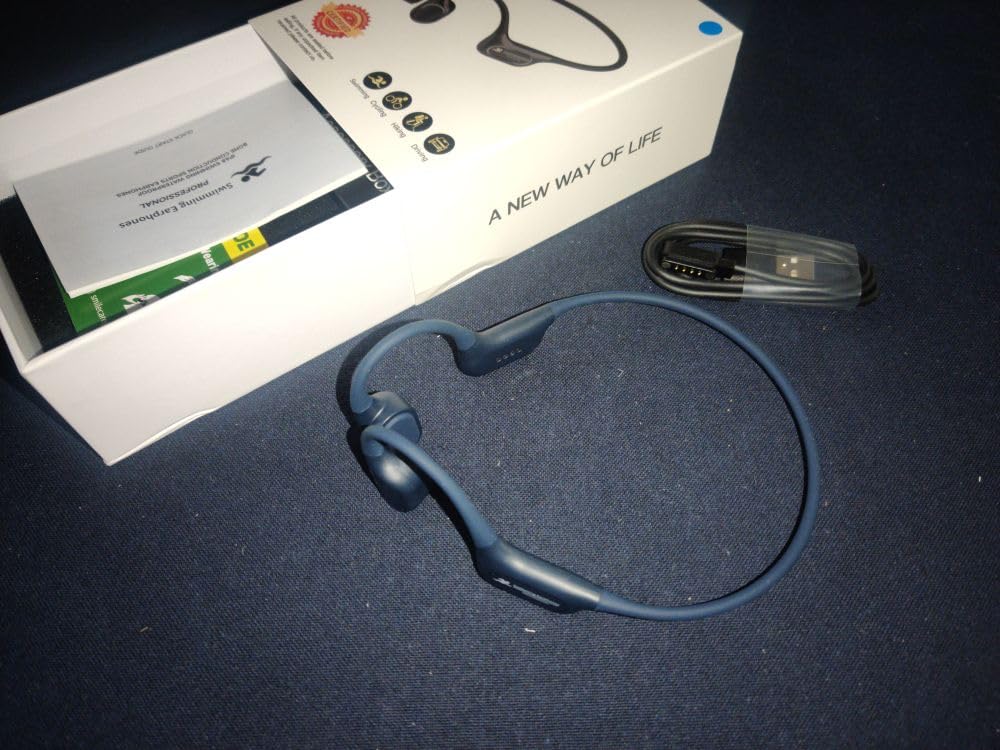
Format support covers MP3, WAV, WMA and FLAC, and the magnetic charging cable doubles as the data cable for transfers. Playback runs up to 7 hours from a 1.5-hour charge, with MP3 and Bluetooth modes switching by double-click.
The open-ear design keeps both ears fully open for situational awareness, which is the safety argument for this category and one we would weight heavily for open water where you need to hear boats and other swimmers.
With 47 reviews, roughly 97 percent of which are five star, this is a very small evidence base. The spec sheet is coherent and the design choices are sensible, but there is not yet a long-term durability record here.
As with every pair in this roundup, Bluetooth does not work underwater and music in phone apps cannot be copied to internal memory. Owners also advise drying the microphone after swimming to avoid call quality problems later.
Why the ear hook matters more than the weight
Because goggle pressure and headset pressure land on the same spot, and the ear hook routes both away from the ear canal area where most frames press. Swimmers who feel that compression usually describe the same symptom: pressure around the ears that becomes uncomfortable after a while.
That pressure is the single most common reason people abandon bone conduction for swimming, and an ear hook is the structural answer to it. If goggle pressure has ended your previous attempts, this is the frame shape to try.
Where the X26 falls short
Seven hours of playback is the shortest runtime in the group alongside the RR SPORTS, and MP3 mode on a light frame does not improve on that. It is enough for a pool session but tight for a long open-water course.
The thin review base is the bigger caveat. Buyers who want a proven record over many seasons should look at the Shokz or the PSIER, both of which have thousands of reviews behind them.
9. RR SPORTS X26: Best for Running, Cycling and Swimming
RR SPORTS IP68 Waterproof Swimming Headphones, Bone…
IP68 to 2 metres
32GB for 7000 songs
Bluetooth 6.0
7-hour battery
Magnetic data cable
Pros
- Nano-hydrophobic IP68 coating rated to 2 metres
- 32GB holds 7000 songs in MP3 WMA WAV and FLAC
- Soft silicone open-ear design works with caps and goggles
- Bluetooth 6.0 with improved interference resistance
- Stays in place during runs and sweaty workouts
Cons
- Bluetooth does not work underwater so MP3 mode is needed
- MP3 mode starts at maximum volume every time
- Real-world MP3 battery is closer to 4 to 5 hours
Most swimmers in this roundup also run or cycle, and the RR SPORTS X26 is built for that dual life. The nano-hydrophobic IP68 coating is rated for submersion to 2 metres, and the same frame is described as staying in place during runs and sweaty workouts without slipping.
Storage is 32GB holding up to 7000 songs across MP3, WMA, WAV and FLAC, and Bluetooth 6.0 offers improved interference resistance with a 10-metre range. The soft silicone open-ear design works with caps and goggles, which is the swim side of the equation handled.
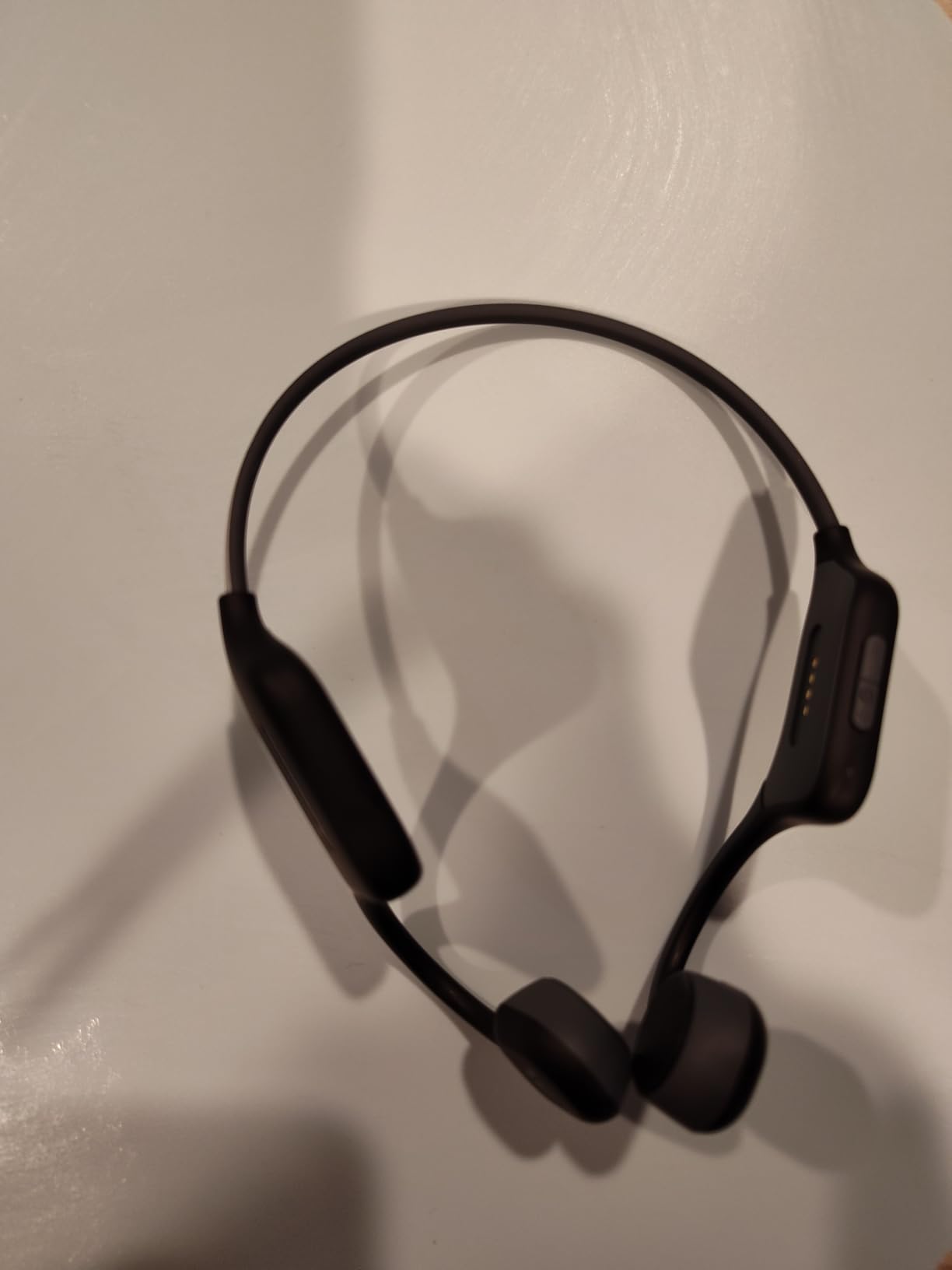
Owners are broadly delighted with clear sound, stable pairing and a light comfortable fit. The coating is the quiet differentiator: hydrophobic treatments shed water rather than relying on mechanical seals alone, which is usually a good sign for long-term seal integrity.
Weight is listed at 3.88 ounces, roughly in line with the rest of this group. The magnetic charging cable doubles as the file transfer cable, which is a genuinely useful design choice when the same lead has to do both jobs.
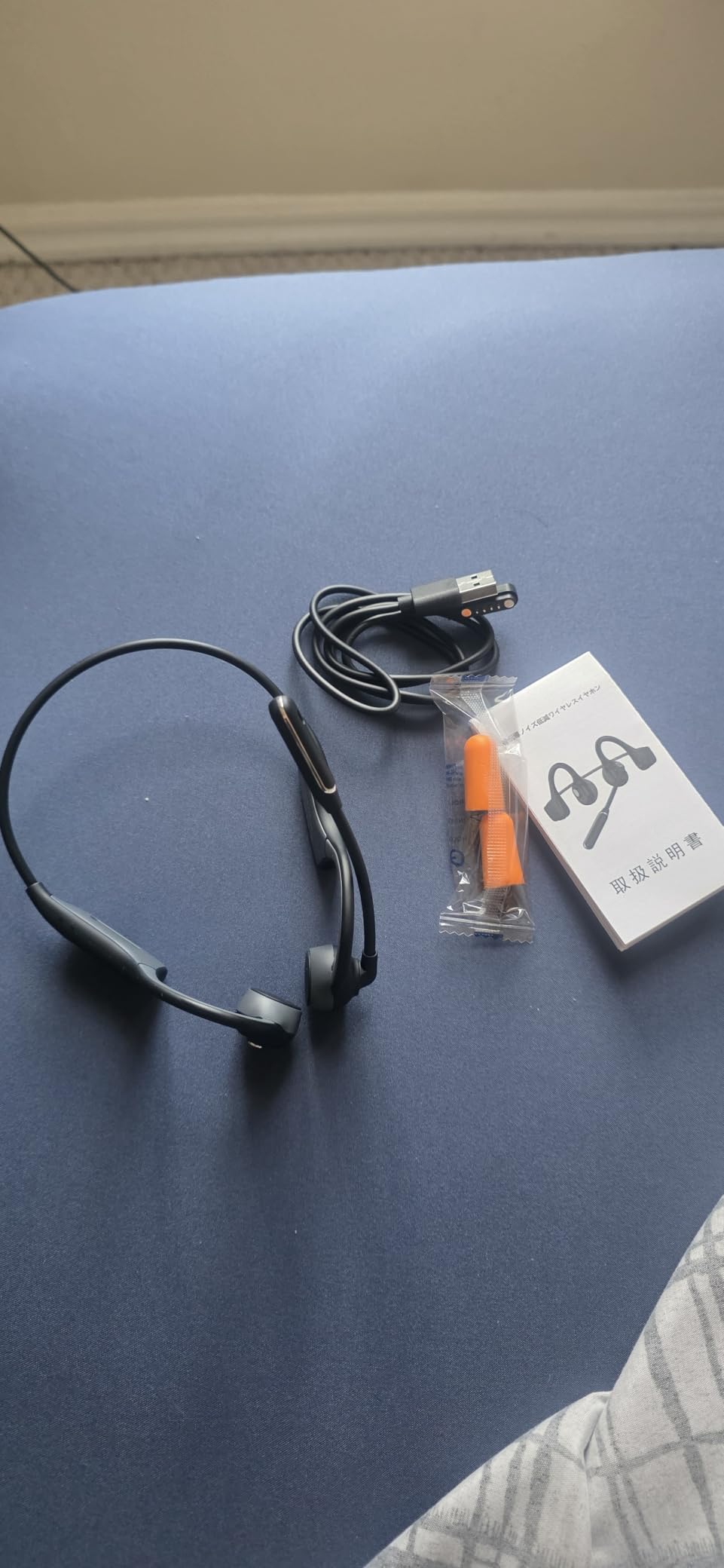
Two practical complaints stand out. MP3 mode starts at maximum volume every time and does not remember the previous level, which is startling on the first push-off of a session. And real-world MP3 battery life is closer to 4 to 5 hours rather than the advertised 7.
That battery gap is the more important one. If your training blocks run past 90 minutes, plan a mid-session break or carry the cable. With 67 reviews the long-term record is still short.
Why this suits a two-sport schedule
Because it is a competent Bluetooth headset that happens to be sealed, not a swim player with land use bolted on. Bluetooth 6.0 with better interference resistance matters in a busy gym or on a shared path where a 2.4GHz connection has competition.
The single-cable design also removes the classic dual-mode headache. The same magnetic lead charges the frame and moves your music, so there is one more thing to remember before a swim and one less thing to lose.
Where the RR SPORTS falls short
Starting at maximum volume in MP3 mode is a genuine usability problem, and it is the kind of thing you only discover at the wall. Check the volume at the poolside, every time, until you know your starting level.
MP3 battery life falling to 4 or 5 hours also caps the usable session length despite the 7-hour claim. For a triathlete doing a long course, that is the number to plan around rather than the specification.
10. TECKNET X7: Best Warranty Coverage in the Category
TECKNET Bone Conduction Headphones, IP68 Waterproof Swimming…
IP68 to 2m for 2 hours
32GB for 8000 songs
200mAh 10-hour battery
33 g
36-month warranty
Pros
- IP68 sealed build rated for immersion to 2 metres for 2 hours
- 32GB storage holds up to 8000 songs
- 200mAh battery rated up to 10 hours of playback
- Light 33 g open-ear fit with an adjustable strap
- 36-month warranty is the longest here
Cons
- Bluetooth cannot transmit underwater so MP3 mode must be selected first
- Some reviews on this listing describe unrelated screen protectors
The TECKNET X7 is unusual in one specific way: a 36-month warranty, three years, when most of the rest of this category offers one or two. For electronics that live in a chlorinated environment, warranty length is a reasonable proxy for how confident a manufacturer is about seal integrity, and this is the strongest statement of that confidence here.
The core swimming spec is solid. IP68 sealed for immersion to 2 metres for 2 hours, 32GB of internal storage holding up to 8000 songs, and Bluetooth 6.0 with multipoint device switching for land use. The magnetic charging cable also transfers files, so one lead covers both jobs.
What the 200mAh battery means in practice
The TECKNET X7 posts a 10-hour listed battery, matching the longest runtime in this group, on a 200mAh cell. As with every pair here, expect less in MP3 mode than the land-use figure implies.
What the figure does buy you is freedom between sessions. At 33 g with an included adjustable strap, this is a light open-ear frame that disappears over a long swim, and the IP68 window of 2 hours covers nearly any pool session.
How to read the reviews on this listing
Be careful with the review count here. Several reviews attached to this listing describe screen protectors rather than headphones, which means the 4.4 rating across 64 ratings is mixing product experiences. We would treat the spec sheet as reliable and the review base as unreliable.
That does not make it a bad pair, but it does mean you are buying on the 36-month warranty and the published spec rather than on owner testimony. If you want proven field history, the Shokz or the PSIER are the safer assumption.
How to Load MP3 Files Before You Swim
This is the step that strands more new owners than any other part of the category, and it is the same on every pair in this roundup. Do it at home, on a desk, not at the poolside.
Check the format list. Most swim players accept MP3, and several also take WAV, WMA, FLAC and APE. The ELYXFUL reads MP3 only, so M4A files from an Apple Music download need converting first.
Export from your streaming library, not from the app. Subscription tracks generally cannot be copied to a device. If you own the music or hold a purchased download, export it as MP3 through your desktop service. Otherwise you need files you already own or have legally exported.
Connect with the supplied cable. On most of these pairs the magnetic charging cable doubles as the data cable. A USB 2.0 port transfers more reliably on the models with slow internal flash storage, particularly the ELYXFUL.
Copy files to the root of the internal drive. Nested subfolders are skipped by several players, and a track that does not appear is usually a folder problem, not a broken file.
Play one file on your computer first. If it will not play there, no headset is going to play it. Corrupt files are the most common silent failure in this workflow.
Switch to MP3 mode before you enter the water. The gesture differs by model and is documented in each manual. Bluetooth will not reconnect once you are submerged, so a pair left in Bluetooth mode plays silence for the whole session.
If sideloading is genuinely not for you, one alternative exists. The H2O Audio Sonar 2 PRO uses a Playlist+ app that records Bluetooth audio straight to internal memory, which turns a phone playback session into a transferable file. It is the only approach that bridges a streaming subscription and a swim player without exporting files yourself.
IPX8 vs IP68: Which Waterproof Rating You Actually Need
The first digit of an ingress rating is solids, the second is water. IPX8 and IP68 both have a dust rating on the first digit, with X meaning no rating claimed. The second digit is the one that matters for swimming, and the difference between 8 and 6 is real rather than marketing.
IPX6 covers heavy water jets. IPX7 covers temporary immersion, usually stated as up to 1 metre for 30 minutes, which covers rain and sweat but is the bare minimum for a swim headset. IPX8 means continuous submersion beyond 1 metre, and the manufacturer states the depth and duration themselves. The Shokz OpenSwim Pro states 2 metres for 2 hours. The ZOVIMAX X7 MAX states 5 metres for 2.5 hours.
That stated depth and duration figure is the single most useful number on the listing, and its absence is a warning sign. A product claiming IPX8 with no depth or duration alongside it is telling you the marketing part and omitting the engineering part.
For flat-water lap swimming, any genuine IPX8 covers you. For open water, surfing, diving or repeated dunking, prefer the deeper stated ratings and a frame that names both numbers. If you are only ever running in the rain, IPX7 and IPX6 are enough, which is the answer to whether you can wear these in the rain.
Why Bluetooth Dies Underwater and How Much Storage You Need
A Bluetooth connection is a 2.4GHz radio signal travelling through air, and water absorbs that signal almost completely. Headphones resting against your skull in a wet ear canal is the worst case for radio reception, so the connection collapses the moment you submerge. Nothing about a water resistance rating changes this.
Bone conduction sidesteps the problem by transmitting sound as mechanical vibration through the bone of your cheekbone into the inner ear. The signal never passes through air or water at all, which is why the same transducers that sound thin on land keep playing in a pool.
That is why onboard storage is not a feature but a requirement. Sizing it is simple: 32GB holds roughly 4000 to 9000 songs depending on the estimate each brand uses, 64GB roughly doubles that, and a small 2000-song player suits a curated rotation rather than a full library. Audiobook listeners should think in hours rather than tracks, since speech files are large.
Fit: Swim Caps, Goggle Straps, Backstroke and Head Size
Fit is where most of this category is won or lost, and the complaints are consistent enough to be useful. The number one issue is pressure, not slipping: the goggle strap and the headset press the same area around the ear, and that combination becomes uncomfortable after a while. Ear-hook designs such as the MARLALL X26 spread that load more evenly than a band that presses inward.
The number two issue is retention during backstroke. A verified retailer review of the Shokz OpenSwim Pro reports the frame moving in and out of position and stopping completely during backstroke, and that unit rotates rather than locks. Front crawl and freestyle rarely trigger it. If you swim backstroke, test it deliberately before relying on it, and route the goggle strap under the headband rather than over it.
For swim caps, the order matters. Set the transducers on your cheekbones and ears first, then pull the cap over the ear hooks so the fabric locks the band in place rather than fighting it. Several swimmers report not needing a cap at all with this frame style, which is worth knowing if a cap is a barrier for you.
Head size is the last variable, and it is the least advertised. The Shokz OpenSwim Pro has no mini band size, so smaller necks may find the tension too loose. The PSIER S18 and the TECKNET X7 both include an adjustable strap, which covers more head shapes out of the box. If you are between sizes, an adjustable strap beats a fixed band every time. Our jogger roundup covers frame fit in more detail for the land side, and the running roundup compares the same frames over distance instead of laps.
Bone Conduction vs In-Ear Swim Headphones
Honest answer: bone conduction wins on safety and long-session comfort, and loses on sound. If you have never swum with either, the open-ear frame is the easier first experience because nothing seals your ears and you can hear a coach, a lane, or a problem before it becomes one.
For music with real low end, an in-ear swim player is still ahead. A wired in-ear unit seals the canal, which concentrates the sound and gives you bass that bone conduction physically cannot reproduce. The trade is that sealed ears in a pool are a known route to swimmer’s ear, and you lose all situational awareness.
For talk content, podcasts and audiobooks, the gap narrows considerably. Bone conduction has enough midrange clarity for speech, and the open-ear comfort advantage over a sealed bud for a 90-minute session is substantial. This is why several of the pairs above are recommended specifically for narrated listening.
Many swimmers end up owning both: an in-ear player for the days when sound quality matters most and a bone conduction frame for everything else. If your budget stretches to one pair, choose the open-ear frame unless music is the entire reason you swim.
Care, Maintenance and Lifespan
Rinse the frame in fresh water after every session, and after any open-water swim give it a 30-minute soak in fresh water. Salt crystallises in the gaps around the transducers and the charging contacts, and that salt is what causes corrosion later.
Dry it with the ear hooks facing down so water drains out of the transducer cavities rather than sitting against the pads. Do not charge a damp frame, since moisture across the magnetic charging contacts is the fastest route to a charging fault and it is the first thing that fails in this category.
Blinking red and blue lights usually mean pairing mode, and holding the volume button through several cycles resets the frame. If it persists after a reset, it is normally a drained battery rather than a dead device. A full charge cycle resolves most of these cases.
On lifespan, expect two to three seasons of regular pool use for a well-sealed frame that is rinsed and dried properly, and less if you leave it charging damp. The two-year warranties on the Shokz and the ELYXFUL and the three-year warranty on the TECKNET give you a reference point, and none of these pairs is a ten-year purchase.
Frequently Asked Questions
Do bone conduction headphones work for swimming?
Yes, but only with onboard MP3 storage. Bone conduction works underwater because sound travels as vibration through the bone of your cheekbone rather than through air or water. Bluetooth cannot survive submersion, so music must be loaded to internal memory before you enter the pool.
Are Shokz worth it for swimming?
For most swimmers, yes. The OpenSwim Pro is IP68 rated to 2 metres for 2 hours, carries 32GB of storage, and has the largest review base in this category. The trade is the proprietary magnetic cable and a clunky MP3 loading process, plus a rotation issue during backstroke that front crawl swimmers rarely see.
Can you use Shokz headphones in the pool?
Yes. The OpenSwim Pro is rated IP68 for full submersion to 2 metres for 2 hours in MP3 mode. Put the frame on before you enter the water, switch to MP3 mode, and load your files beforehand, because Bluetooth will not reconnect once you are submerged.
Can I wear Shokz in the rain?
Yes, comfortably. Any IPX7 or higher rating covers rain and sweat, and the OpenSwim Pro’s IP68 rating exceeds that comfortably. A nano-hydrophobic coating, as used on some of the budget frames here, sheds water even more effectively.
Why does Bluetooth stop working underwater?
Because a Bluetooth connection is a 2.4GHz radio signal and water absorbs that signal almost completely. There is no setting that fixes this. Every swim-rated headset here works around it the same way, with onboard storage and a manual switch into MP3 mode before you enter the water.
What is the downside of bone conduction headphones?
Sound quality, mostly. Bone conduction has less bass than an in-ear headphone by physics, and reviewers regularly describe underwater audio as acceptable rather than good for music. Other downsides include goggle and headset pressure after long sessions, proprietary charging cables, and a fit that can shift on unusual head shapes.
The Verdict: Which Bone Conduction Headphones Should You Buy?
If you buy only one pair from this roundup in 2026, buy the SHOKZ OpenSwim Pro. It combines the deepest stated submersion window with the largest review base in the category, and its swim EQ does more for underwater sound than any other single feature here. The PSIER S18 is the sensible alternative if the flagship cost is more than you want to spend, since the core job is identical and the storage is the same size.
Beyond those two, match the pick to the failure you want to avoid. Choose the VLOP VP01 if thin underwater sound is what stops you swimming to music. Choose the MARLALL X26 if goggle pressure ended your previous attempts. Choose the ZOVIMAX X7 MAX if you snorkel or surf. Choose the ELYXFUL BCE if 32GB is never enough library.
Whichever you choose, load your files at home, wear silicone earplugs, route the goggle strap under the band, and rinse the frame in fresh water after every session. Those four habits do more for the life of the headset than any specification on the listing.
