
How to Remove Paint from Hardwood Floors Safely (October 2026)
A can of paint tips over, and now there are white drips on a honey-toned oak floor that took years to earn its patina. Learning how to remove paint from hardwood floors is mostly about restraint: you work from the gentlest method upward, you find out what the floor is made of before you put anything wet or hot on it, and you never reach for sanding until every loose flake of paint is already gone.
Most paint accidents are a scraper and a bottle of warm soapy water away from a clean floor. Oil-based paint and a full coat of old paint from a previous owner are the two situations where this turns into a real restoration job.
Contents
Time: 30 minutes for a fresh spill, half a day for scattered drips, several days for a painted room
Cost: a small spend on tools and solvents you will use again
Difficulty: Easy DIY for spatter, Moderate DIY for a whole room
Skill level: Careful beginner with a test patch
Tools and Materials
Gather everything before you touch the floor. Half of a paint job goes badly because the rag ran out before the paint did.
- Safety goggles, one pair
- Nitrile gloves, two pairs
- Dust mask or respirator with organic vapor cartridges for solvent work
- Plastic scraper or 4-inch plastic putty knife, plus a single-edge razor blade in a holder
- Clean white cotton cloths, 6 to 10 of them, plus a microfiber towel
- Painter’s tape and a plastic drop cloth
- Box fan for ventilation
- Warm water, mild dish soap, stiff nylon brush, old toothbrush for edges
- 70% isopropyl alcohol for water-based paint residue
- Mineral spirits or odorless paint thinner for oil-based paint
- Fine-grit sandpaper, 120 to 180 grit, plus 0000 steel wool for waxed floors
- Matching stain and a compatible satin polyurethane or paste wax
- Vacuum with a hard-floor or upholstery attachment
Before You Start
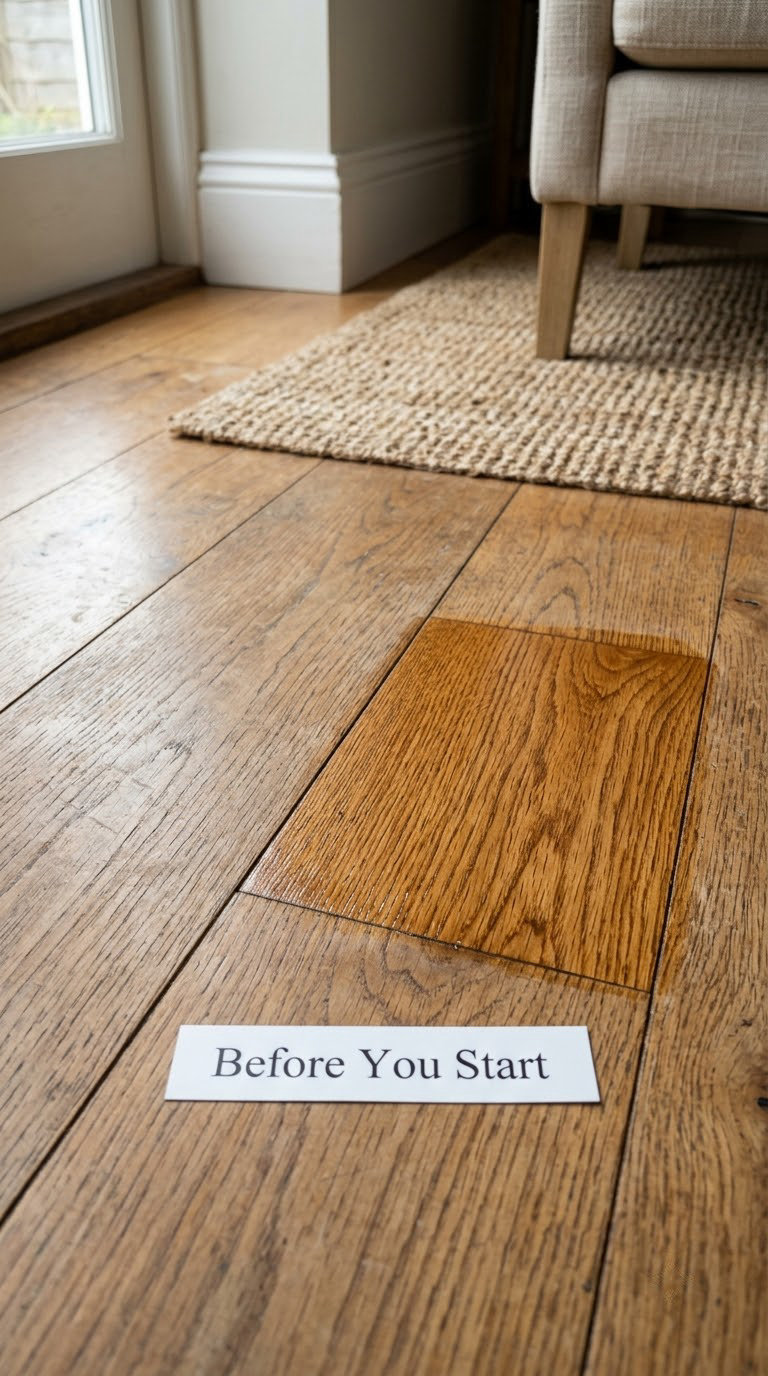
You have about two minutes of detective work before you need any tools. It decides everything that comes after.
Solid hardwood is thick enough to sand and refinish several times over. Engineered hardwood is a thin veneer of real wood glued to a composite core, and its factory finish is only a few mils thick. Sand through it and you are into the core, not the wood.
Next, identify the finish. Polyurethane feels slightly slick and beads water. Wax feels dull and scuffs under a fingernail. Shellac has a hard, glassy feel and is thin enough that solvents can dissolve it. Oil finish penetrates the wood, so there is no surface layer to spare.
Protect the room before you start. Tape a drop cloth to the baseboards, move furniture and rugs out, and open windows or set up a fan. Nothing about this job needs a torch, and any solvent you use needs air moving through the space.
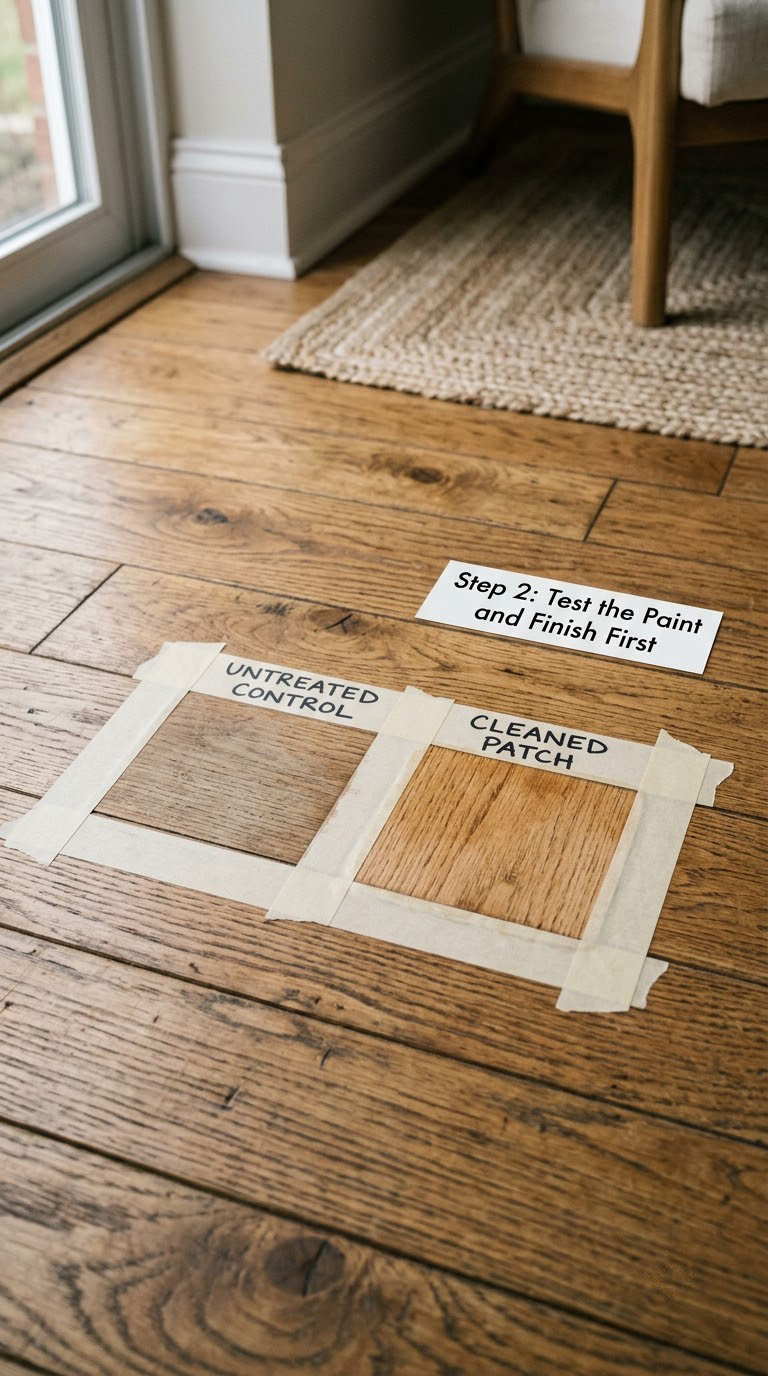
Then test in the smallest area you can find, usually behind a door or under a heavy rug. Apply your chosen product, leave it the recommended time, and look again the next day. A dull spot means that chemical is too strong for that finish. Stop there and move down a step.
Step-by-Step Instructions
Step 1: Identify the Floor and Finish
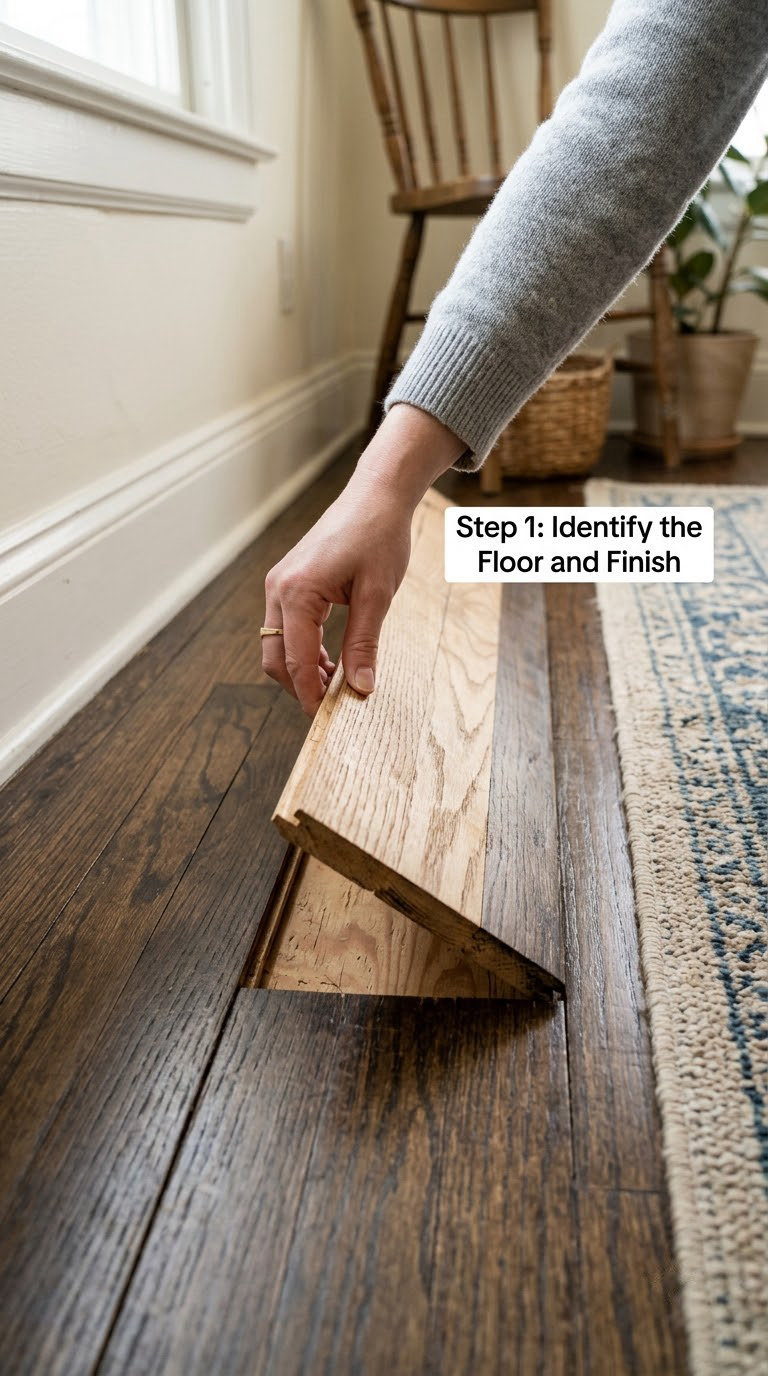
Most factory floors have a loose board at a closet or a wall where you can lift an edge with a pry bar. Underneath is bare wood, unstained and unfinished, and it tells you the true color of the floor before any paint or clear coat went on.
Turn a coin-sized spot of waxed or oiled finish with a cotton swab. If the swab comes back colored, the surface carries a coating you can remove. If it comes back clean, the finish has soaked into the wood and no solvent will lift it without taking the wood with it.
Step 2: Test the Paint and Finish First
You also need to know what kind of paint you are dealing with. Put a drop of warm water on a spot and leave it five minutes, then rub it with a fingertip. Water-based latex softens and smears. Oil-based paint stays hard and untouched.
For a second read, press a white cotton ball soaked in 70% isopropyl alcohol onto the paint and scrub gently. Oil-based paint grabs onto the ball and comes away in a colored smear. Latex mostly stays put.
Mark your test patch with tape and come back in 24 hours. Look for softened paint, color transferring onto the cloth, a dulled finish, or bare wood. Any of those four means the chemical went too far.
Step 3: How to Remove Paint from Hardwood Floors Without Sanding
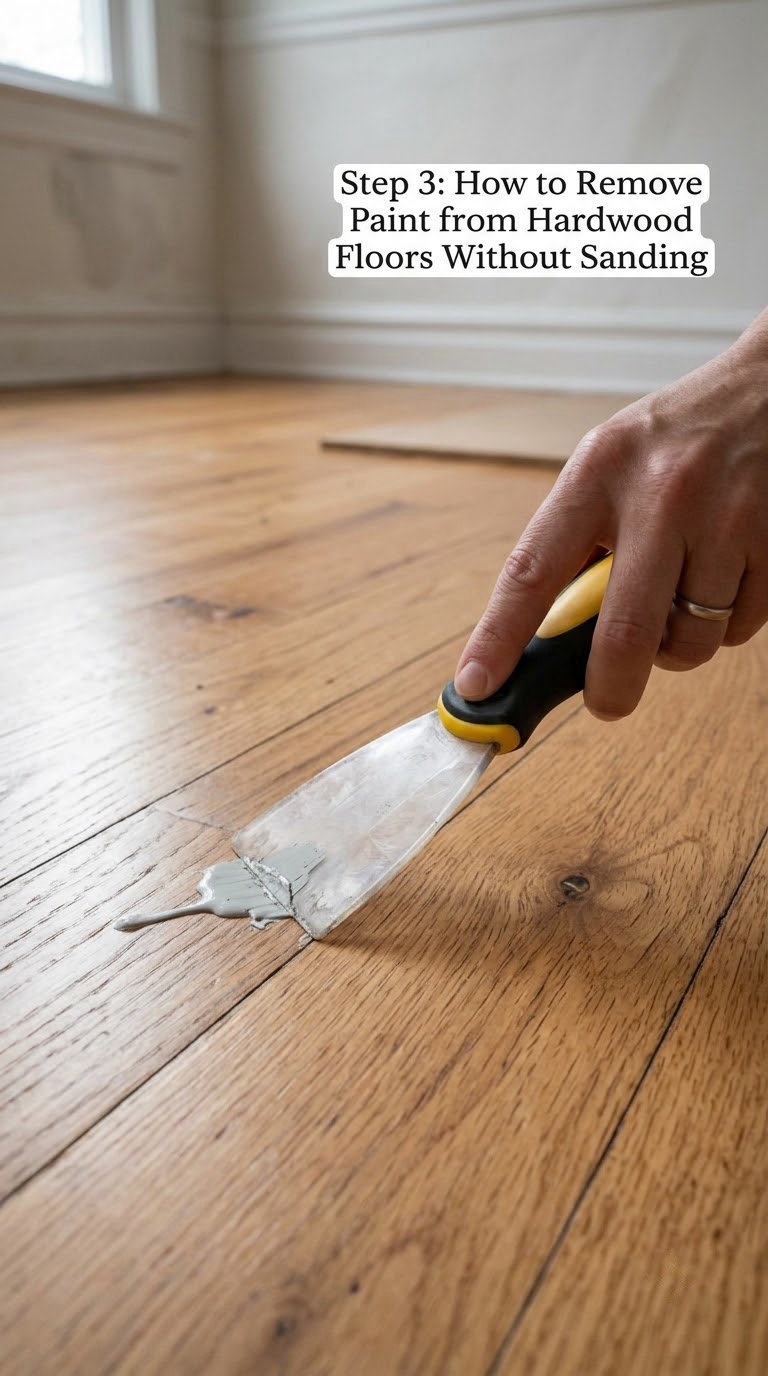
This is the main event, and it works for nearly every spill. Scrape first, soften second. Reversing that order just spreads the paint thinner.
- Let the paint dry fully. Warm water on soft paint pushes moisture into the wood.
- Score the drip lightly with the edge of the plastic scraper held at about a 30-degree angle.
- Push along the grain, not across it, so any scratch follows the board instead of cutting against it.
- Flip to a fresh edge as soon as the blade starts to drag or dull.
- For flat spatter, a single-edge razor glides along the surface and lifts the film without biting into the finish.
- Vacuum or wipe up every chip before you wet anything, so you are not pushing debris into the grain.
For water-based paint, warm water with a drop of dish soap on a microfiber cloth softens what the scraper left. Lay the cloth over the spot for two or three minutes, then wipe with the grain. A stiff nylon brush works in the grooves and board edges, and an old toothbrush gets into the seams.
Rubbing alcohol is the next step up for stubborn latex residue. Dampen a white cloth with 70% isopropyl alcohol and blot, do not soak. Let it sit one minute, then wipe. Blotting keeps the liquid on the paint instead of letting it travel into the seams of the floor.
Step 4: Treat Stubborn Paint with Controlled Heat
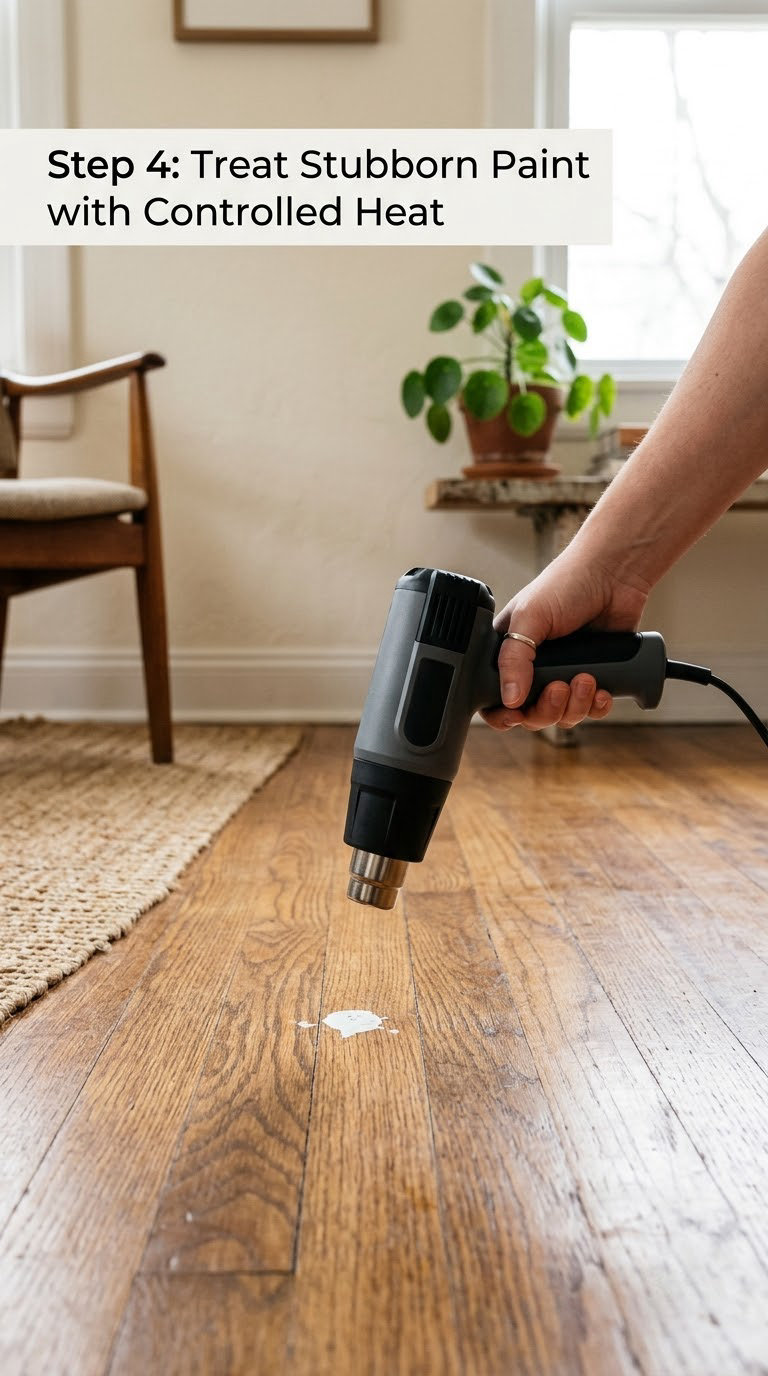
Heat works on paint that has hardened right onto the finish, but it is unforgiving. Keep the gun moving, hold it 4 to 6 inches off the floor, and stay on the lowest setting that actually softens the paint.
Work in patches the size of a dinner plate. When the paint goes rubbery, scrape it off immediately while it is soft. Then wait 15 to 20 minutes for the floor to cool before you touch it again.
Heat melts wax, and melted wax on an old floor is a bigger problem than the paint was. If your finish test came back waxy, skip the gun. Really hot water on a terry cloth softens old paint just as well with none of that risk, and it is the approach people recommend most often on hardwood forums.
Step 5: Use Solvents Only When the Finish Allows
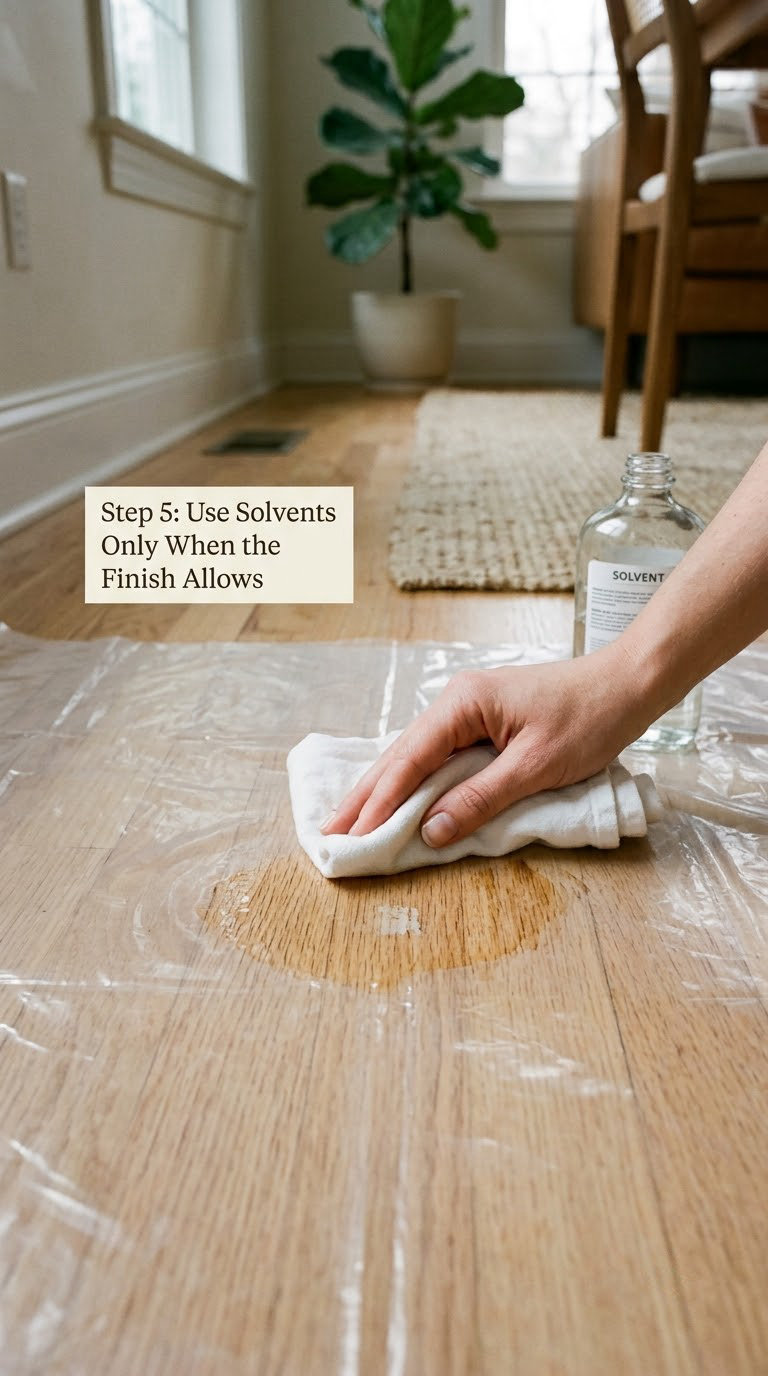
Oil-based paint needs a solvent to soften it. Mineral spirits is the gentler starting point, and odorless paint thinner is the gentler option for a closed room. Apply a small amount to a white cloth rather than pouring it on the floor, then blot and lift the paint.
Change the cloth for every pass. Paint that has lifted but stays behind is usually sticky residue, and a clean cloth with fresh solvent removes it in a second or two.
Stop the moment you see color on the cloth or the gloss going dull. That is the chemical eating the stain or the shellac, not lifting paint.
A store-bought paint splatter remover works on both types of paint and is worth trying before anything stronger, but it is a solvent in a bottle and follows the same test-patch rule. Never use acetone, ammonia, or a metal blade on a finished floor, and skip WD-40 as a first move. It will lift paint and leave an oily film that traps dust.
Step 6: Sand Damaged Areas and Restore the Finish
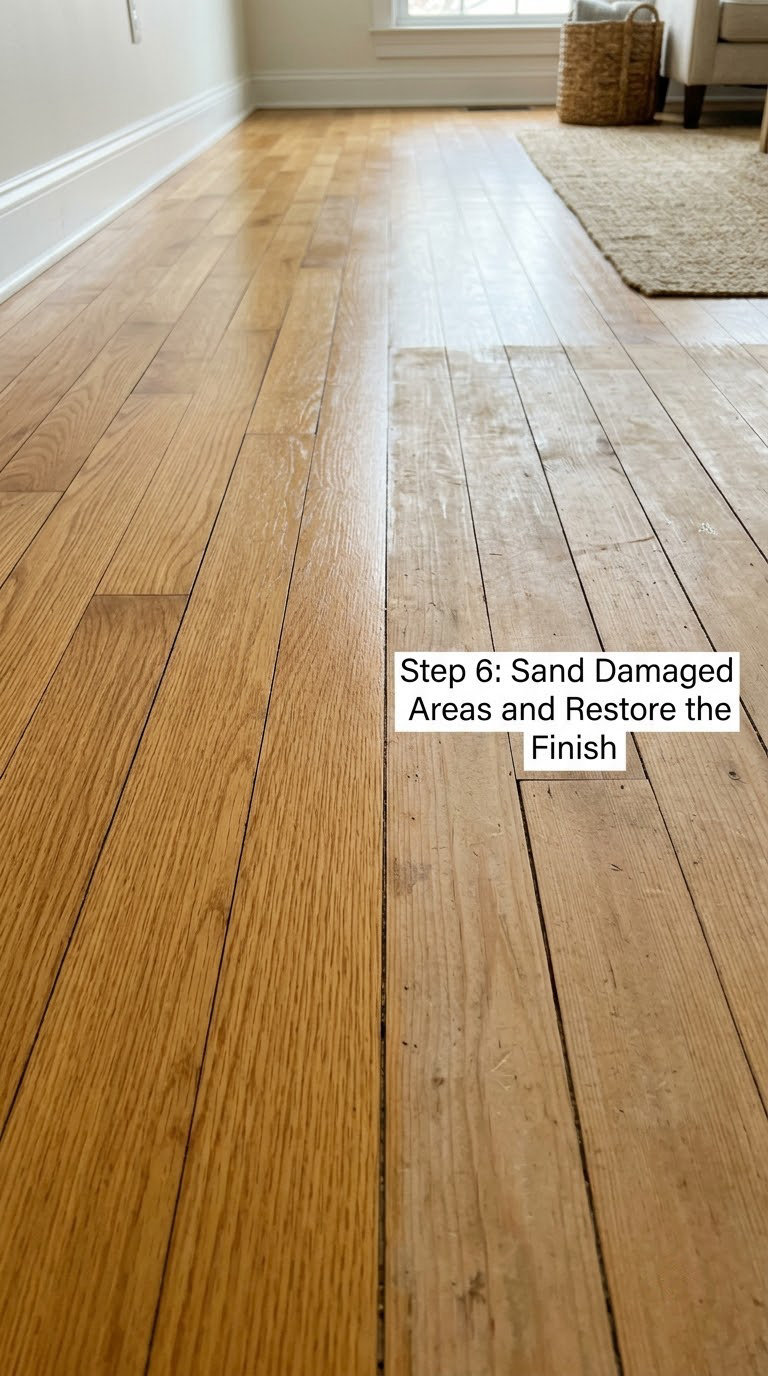
If bare wood is showing, the paint took the finish with it. Blend that patch by hand with 120 to 180 grit sandpaper, feathering the edges outward about 6 inches so there is no hard line. A wax repair stick in a matching tone handles small nicks before you touch sandpaper at all.
For a dulled area where no bare wood shows, screening and recoating is enough. A floor polisher with a fine screen, or a scrub pad worked by hand, roughens the gloss so fresh finish grips it.
Match the stain first if bare wood is exposed, then seal with the same sheen already on the floor. Water-based polyurethane dries to the touch in 2 to 4 hours and takes 24 to 48 hours before light foot traffic. Oil-based needs a full 24 hours before you walk on it and up to 7 days to cure fully. Paste wax buffs up in about 30 minutes but wants a day before traffic.
Common Mistakes to Avoid
- Scraping across the grain. Drag the scraper along the board, so any mark reads as part of the grain instead of a gouge.
- Soaking the floor. Water and solvent travel into seams and swell the wood. Blot, and use the least amount that works.
- Heat on wax or shellac. Both soften or melt under a gun, and the repair costs more than the paint did.
- Sanding before every loose flake is off. You grind the paint into the grain and drag loose chips across the wet finish. Remove the bulk first.
- Assuming engineered flooring can be sanded. Check the wear layer first. If it is thin, spot repairs only.
- Skipping the test patch. Every finish and every paint combination behaves differently. One hidden test costs nothing.
- Reaching for a metal blade. A razor or putty knife edge cuts urethane and stain as easily as paint.
- Leaving a sticky layer. Paint over oil or grease stays gummy and defeats scraping. Go straight to the solvent step for that residue.
When to Call a Pro
Call a floor refinisher when the paint covers whole rooms rather than spots. Full-coat removal takes stripping, sanding off a layer of wood, and refinishing, and no spot method will shortcut that.
Hand the job over if the floor is waxed or oil finished and you care about the patina. Removing those layers changes the color of the wood permanently, which is exactly why the Preservation Trust of Vermont suggests testing two or three methods in small areas first.
Stop and get a professional if the paint sits on engineered flooring, if water or solvent has swollen boards, if there are deep gouges or lifted seams, or if the floor is in a rental and the lease calls for written permission before any refinishing.
One more boundary matters. In a home built before 1978, treat any paint on the floor as lead paint until a test says otherwise. Wet sanding or heat on lead paint puts a genuinely dangerous dust in the air, and that is a job for a certified lead-safe abatement contractor.
Maintenance
Vacuum grit the same day you finish. Sanding dust and paint chips scratch a fresh finish underfoot, so vacuum with a hard-floor attachment before anyone walks the room.
Clean with a finish-compatible hardwood cleaner and a barely damp cloth, and skip the steam. Steam forces moisture and heat into the seams, and even the best of the [steam mops for hardwood floors](https://www.rosenberryrooms.com/best-steam-mops-for-hardwood-floors/) will dull a waxed or shellac surface over time.
Wipe paint and oil up immediately rather than letting them cure. Dried paint is a scraping job; fresh paint is a cloth and thirty seconds.
While the finish cures, check the repaired area under angled light at day three and again at day seven. Low spots and grain raise show up as dull patches, and a second coat on those spots fixes it without touching the whole floor.
Put down a breathable rug or a mat rated for hard floors, such as the [office chair mats for hardwood floors](https://www.rosenberryrooms.com/best-office-chair-mat-for-hardwood-floor/) we tested. Rolling casters trap grit and grind it into the finish no matter how good the mat is underneath.
Keep grit out at the door with a vacuum picked for hard floors. Our picks in [battery powered vacuums for hardwood floors](https://www.rosenberryrooms.com/best-battery-powered-vacuums-for-hardwood-floors/) handle sealed floors well, and the [cordless vacuums for hardwood floors](https://www.rosenberryrooms.com/best-cordless-vacuums-for-hardwood-floors/) roundup covers pickup on stairs and edges.
On future paint jobs, tape a drop cloth to the baseboards instead of draping it. Most floor paint damage happens at the edge where an untaped cloth lets a roller run off the wall and onto the wood.
Frequently Asked Questions
Can I remove paint from hardwood floors without refinishing the entire floor?
Yes, if the damage is spatter, drips, or splatter rather than a full coat. Scrape with a plastic scraper along the grain, soften residue with warm soapy water for latex or mineral spirits for oil paint, then blot with a clean cloth. A full coat of paint across the whole room needs stripping and refinishing, because no spot treatment reaches every layer.
Is vinegar safe for removing paint from hardwood floors?
Vinegar is mild enough not to harm most sealed floors, and diluted it can soften dried latex slightly. It is a weak remover, so expect it to help only with thin or already-loose paint. It will not touch oil-based paint. Test it first, and never mix vinegar with a bleach or ammonia cleaner.
What is the easiest way to remove water-based paint from hardwood?
Score the dried paint with a plastic scraper and lift it along the grain. Then lay a microfiber cloth soaked in warm water with a drop of dish soap over the residue for two or three minutes and wipe with the grain. A stiff nylon brush gets into board grooves. Use 70% isopropyl alcohol only for what the soap leaves behind.
What is the easiest way to remove oil-based paint from hardwood?
Oil-based paint does not respond to water or soap. Dampen a white cloth with mineral spirits, blot the spot, and let it sit for a few minutes before lifting. Repeat with a clean cloth. Escalate to odorless paint thinner or a paint splatter remover if the first pass leaves residue, and always test on a hidden patch first.
How do I know whether my hardwood floor can be sanded?
Check the board edge. Solid hardwood is usually three-quarter inch thick and can be sanded several times. Engineered hardwood has a thin wear layer over a plywood core, often one-eighth inch or less, and sanding can cut through to the core permanently. Lift a loose board near a closet and measure before you touch a sanding pad.
How long should I stay off a hardwood floor after repairing it?
Water-based polyurethane needs about 24 hours before light foot traffic and 72 hours before moving furniture back. Oil-based finish wants a full 24 hour and up to 7 days to cure. Paste wax can take foot traffic after about 24 hours. Keep rugs off the repaired area while it cures so airflow is even across the patch.
Start with a hidden test patch and a plastic scraper, not with the strongest bottle in the cabinet. Scrape along the grain, soften what is left with soapy water for latex or mineral spirits for oil paint, and stop as soon as a clean cloth starts lifting color.
The order is what really matters: test the finish, lift the bulk mechanically, soften only what is left, and restore last.
If the paint covers the whole floor, or the floor is waxed, oiled, or engineered, that is a refinishing decision rather than a cleaning one. Get a sample of the floor before you buy anything.
