Concrete Countertops Pros and Cons: Honest October 2026 Guide
Concrete countertops pros and cons come down to a real trade-off: you get a one-of-a-kind, handcrafted surface that no slab yard can match, and you agree to a little more care than you would with quartz. Most homeowners I talk to fall in love with the look first, then quietly panic about sealing schedules and hairline cracks. This guide walks through both sides honestly, with real cost ranges and a clear maintenance picture, so you can decide whether concrete belongs in your kitchen.
What Concrete Countertops Are and Why Homeowners Choose Them
Concrete countertops are handcrafted cement-based surfaces cast in a mold, cured, ground, and sealed for everyday use. There are two main ways they get made: cast in place right on your cabinet boxes, or precast in a shop and delivered as finished slabs. Both end up looking similar once installed, but the lead time and the install day feel very different.
Contents
People pick concrete because it bends to their imagination. You can choose the color, the edge profile, the aggregate (the stones or glass mixed in), and even the shape of the sink. A polished gray island with a waterfall edge, a warm terracotta bar top, or a charcoal vanity with a built-in drainboard are all within reach. If you have ever browsed granite bathroom countertop ideas and felt boxed in by what the stone yard stocks, concrete is the antidote.
The trade-off is that concrete is a living material. It cures for weeks, breathes with humidity, and ages into a patina that many owners love and some never warm up to. Before you commit, it helps to see both sides side by side.
Concrete Countertops Pros and Cons at a Glance
Here is the short version. Skim this table first, then dive into the sections that matter most to you.
- Pros: fully custom shape and color, seamless look with integrated sinks, strong heat tolerance, durable enough to last decades, develops character with age, works for indoor and outdoor kitchens.
- Cons: needs sealing every 1 to 3 years, can develop hairline cracks, stains if the sealer wears off, heavier than most countertop materials, longer lead time from order to install, higher cost than mid-range quartz.
If the cons list feels heavier than the pros, concrete is probably not your material. If the pros list reads like the kitchen you have been sketching, keep going.
Pros of Concrete Countertops
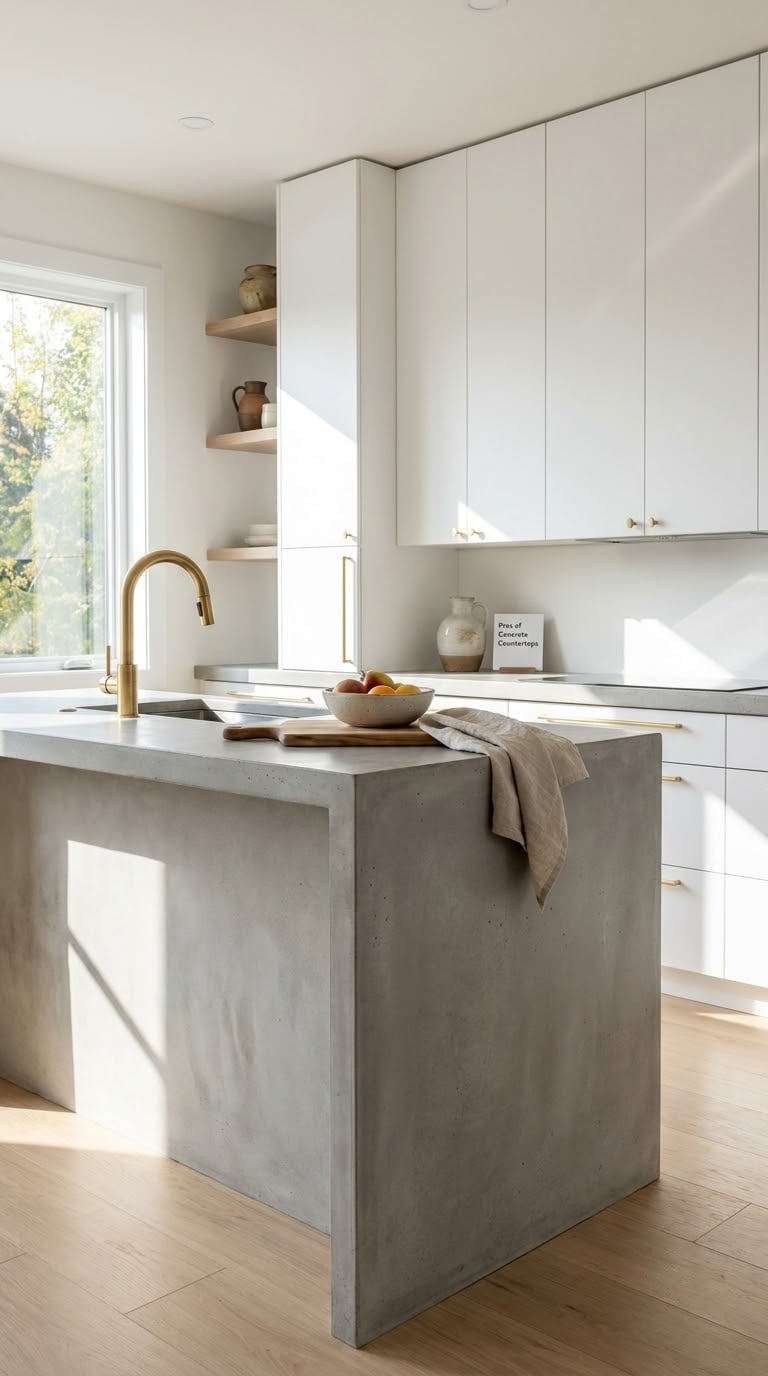
Concrete is one of the few countertop materials that genuinely lets you design the slab, not just pick from it. That freedom shows up in the strengths that draw people in.
- Customization is unmatched. Edge profiles, curves, integral sinks, drainboards, built-in trivets, color pigments, and exposed aggregates are all part of the spec sheet, not add-ons. A fabricator can match a paint chip, replicate a stone you saved a photo of, or build a one-piece island that flows to the floor.
- Durable enough to outlast the cabinets. A well-built concrete counter can last 30 years or more. It does not delaminate, the color goes all the way through, and small chips blend in rather than show as glaring white like they do on solid surface.
- Heat tolerance is genuinely useful. A hot pan set down briefly will not scorch the surface the way it can on solid surface or laminate. The sealer can discolor from extreme heat, so a trivet still belongs in the rotation, but everyday cooking is not a stress test.
- Seamless, modern look. With cast-in-place or well-fitted precast slabs, you can cover a large island with almost no visible seam. That clean line is hard to get from stone, which is quarried in fixed block sizes.
- Character that grows with the kitchen. Concrete patinas. The surface softens, the color warms, and small marks become part of the story. Homeowners who embrace this tend to love it; homeowners who want the counter to look brand new forever tend to fight it.
Reviewers on r/kitchenremodel often say once sealed, concrete feels “pretty much indestructible,” and that lines up with what fabricators see in real homes after the first few years.
Cons of Concrete Countertops
No material is perfect, and concrete asks more of you than most. Here is where the trade-offs bite.
- Cracking is normal, not catastrophic. Hairline cracks show up as the slab cures and as the house settles. Most are cosmetic and add to the look, but a few will telegraph through the sealer and need patching. Plan for one or two in the first year, then rarely after.
- It is porous until it is sealed. Skip a reseal and you will start to see dark rings from wine, coffee, lemon juice, and oil. Acidic spills are the worst offenders and can etch the sealer if left overnight.
- Resealing is not optional. Most sealers last 1 to 3 years depending on use and product. A kitchen island that sees daily cooking needs the schedule; a low-use bar top can stretch it longer.
- Weight requires reinforced cabinets. Concrete runs roughly 18 to 25 pounds per square foot at a standard 1.5-inch thickness. A large island can easily cross 500 pounds, so the base cabinets need to be rated for it or reinforced before the pour.
- Lead time is longer than a slab purchase. From template to install, expect 3 to 6 weeks for precast and 1 to 2 weeks of cure time after a cast-in-place pour. Rush jobs cost more and the result is usually worse.
On Houzz, owners who skipped sealing or ignored maintenance almost always end up the most frustrated. The ones who set a phone reminder for resealing tend to stay happy for the long run.
How Much Do Concrete Countertops Cost?
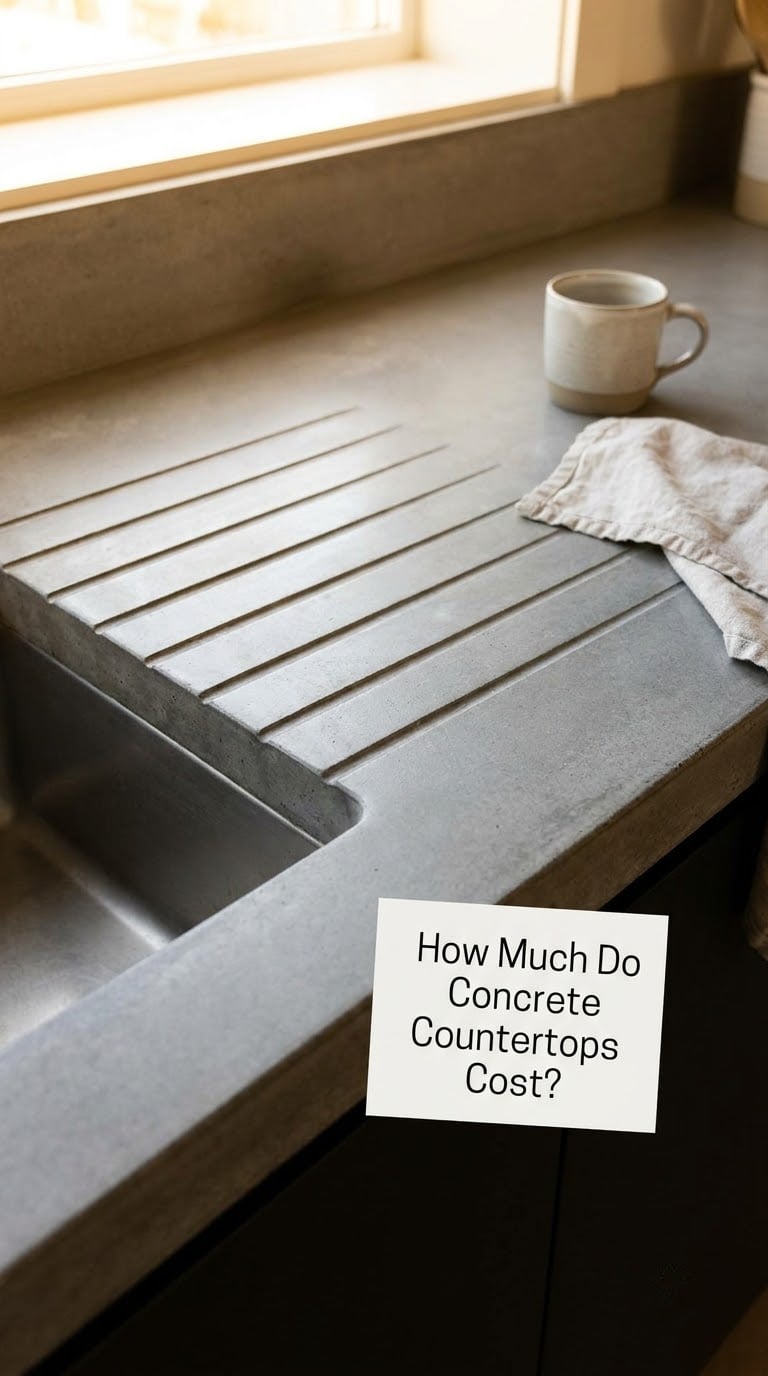
Concrete countertops usually land in the upper third of the countertop price range, well above a builder-grade laminate and roughly comparable to high-end granite or premium quartz before custom features are added. The final number depends on your region, the complexity of the design, and whether you go precast or cast in place, so the only way to lock a real budget is to get two or three fabricator quotes.
A small DIY precast vanity can drop the material cost dramatically, often by half or more compared with a pro install of the same piece, but you trade your time and accept the risk of a pour gone wrong. A custom kitchen with integral sinks, curves, and a polished finish climbs higher than a simple slab job, sometimes by 30 to 50 percent once all the add-ons are tallied.
Here is a rough size-based estimate to anchor your thinking. Real quotes vary by region, so treat these as a sanity check rather than a final number.
- Small vanity (about 15 sq ft): a short-day pro install with a simple edge; a DIY precast kit is much cheaper in materials but adds a full weekend of labor.
- Average kitchen (about 40 sq ft): a typical pro install with a standard edge and one sink cutout; DIY precast cuts the material cost by roughly half but adds several long weekends.
- Large kitchen with island (about 70 sq ft): a multi-day pro install with seams, polishing, and often a waterfall end; DIY material cost can still be modest, but the labor and risk scale fast.
Several design choices push the price up. Integral or built-in sinks add labor. A polished or ground finish costs more than a troweled one because of the equipment and time. Decorative aggregates, custom pigments, and complex edge profiles all add to the line item. The sealer system itself ranges from a basic penetrating sealer to a multi-coat food-safe topcoat, and that choice is worth talking through with the fabricator.
For comparison, mid-range quartz is often a bit cheaper per square foot than a custom concrete job, and granite spans a similar range depending on the slab you pick. Concrete is competitive with the higher end of those ranges before you add custom features, and it can climb well past them once you do. Material cost is only part of the picture, though, so it helps to see how the counter number fits into the wider kitchen budget you are planning at the same time.
How Long Do Concrete Countertops Last?
A well-built, well-maintained concrete countertop can last 30 years or longer, often outlasting the cabinets underneath it. The slab itself is not the weak point; the sealer and the joints usually are. A proactive homeowner who reseals on schedule and wipes up acidic spills can easily push past the 20-year mark without a major repair.
Hairline cracks are part of the deal. Concrete shrinks a little as it cures, and houses settle, so almost every slab develops one or two fine lines in the first year. Most are thinner than a credit card and sit near stress points like sink cutouts or inside corners. They do not usually affect performance, and many fabricators include a check-in at 6 to 12 months to patch anything that has opened up.
The cracks that matter are wider than a hairline, run all the way through the slab, or line up with a structural issue like a sagging cabinet. If you see those, call your fabricator before you try a DIY fix. A resurfacing or patch by the original maker is usually a one-day job; a bad DIY patch can trap moisture and make the next repair harder.
Maintenance: Sealing, Stains, and Resealing
Concrete maintenance is not hard, but it is recurring. The biggest mistake homeowners make is treating the counter like quartz and then wondering why a wine spill leaves a mark. Here is the routine that actually works.
- Seal on a schedule. Most concrete sealers last 1 to 3 years in a working kitchen. A simple water test tells you when to reseal: flick a few drops on the surface, and if the water does not bead up, the sealer has worn off and it is time to refresh.
- Clean with pH-neutral soap. A mild dish soap and a soft cloth handle 95% of daily messes. Skip vinegar, citrus cleaners, and abrasive pads, all of which can etch or dull the sealer.
- Wipe acidic spills quickly. Wine, lemon juice, tomato sauce, and coffee will not stain a healthy sealer, but they can etch it if they sit for hours. A 30-second wipe is enough.
- Use cutting boards and trivets. Concrete tolerates heat better than most surfaces, but extreme heat can discolor the sealer. A trivet under a screaming-hot pan is cheap insurance.
- Treat oil stains fast. Cooking oil left on the surface overnight is one of the few things that can penetrate even a good sealer. Blot, do not wipe, and clean with a degreasing dish soap. For a stubborn spot, a poultice made from baking soda and water drawn under plastic wrap overnight usually pulls it out.
One Reddit homeowner described their three-year-old sealed counter as still looking new, while another admitted a year of skipped resealing had left a permanent tea stain. The difference was almost entirely the maintenance habit, not the slab.
Concrete vs. Quartz, Granite, and Butcher Block
Concrete lives in the same consideration set as the three most common alternatives, so a quick side-by-side helps.
Concrete vs. quartz. Quartz is harder to stain, never needs sealing, and is faster to install. Concrete wins on customization, integrated features, and a softer, more handmade look. If you want zero maintenance and a wide color range, quartz is the easier pick. If you want a one-off piece that nobody else has, concrete is worth the extra care.
Concrete vs. granite. Granite is naturally heat- and scratch-resistant, comes in dramatic patterns, and costs less in many markets. Concrete beats granite on shape freedom, color control, and the ability to pour a seamless island. Granite can chip along veins and has visible seams on big runs; concrete hides seams better but asks for sealing.
Concrete vs. butcher block. Wood is warm, quiet under dishes, and easy to sand and refinish when it gets scratched. Concrete is harder, more heat-tolerant, and more stain-resistant once sealed. Wood needs oiling every few months; concrete needs sealing every 1 to 3 years. If you cook a lot with citrus or red wine, concrete is the safer surface.
For a deeper look at how different stone and engineered surfaces compare in real kitchens, our granite bathroom countertop ideas guide walks through slab selection, edge profiles, and finish options that translate to the kitchen, too.
Are Concrete Countertops Right for You?
Concrete is a great match if you are redesigning a kitchen and want a surface that nobody else in the neighborhood has. It is the right call for custom builds, modern farmhouse remodels, industrial-style lofts, and outdoor kitchens where the slab can take a little weather. If you are the kind of homeowner who enjoys a patina and does not mind a reseal every couple of years, you will probably love it.
Concrete is the wrong call if you want a set-and-forget surface, you are flipping a house, or your cabinets cannot be reinforced to handle the weight. Renters and busy families with no patience for a maintenance calendar usually do better with quartz. So do kitchens with very long single runs that need to install in a single weekend.
One last thing worth thinking about: the trade-off you are really making is customization for maintenance. If that trade feels fair, concrete will probably make you happy for decades. If it does not, there is no shame in a beautiful quartz slab that lets you cook without thinking about your counter.
Frequently Asked Questions
Do concrete countertops crack over time?
Almost every concrete countertop develops one or more hairline cracks within the first year as the slab cures and the house settles. These fine cracks are usually cosmetic, do not affect performance, and are easy to patch. Wider cracks that run through the slab or line up with a sagging cabinet are a different issue and should be inspected by the original fabricator.
Are concrete countertops stain-proof once sealed?
A fresh, properly cured sealer resists most everyday spills including coffee, wine, and oil. Concrete is not fully stain-proof though. Acidic liquids like lemon juice or vinegar can etch the sealer if left to sit for hours, and skipping a scheduled reseal will leave the surface open to dark rings from wine, oil, and similar spills.
Can you put a hot pan on a concrete countertop?
Concrete handles heat better than solid surface or laminate, and a brief set-down of a warm pan is fine. Very hot pans straight from the oven can discolor or scorch the sealer over time, so a trivet is still the safer habit, especially on a polished finish where any heat mark shows clearly.
How much do concrete countertops cost per square foot in 2026?
Most professionally installed concrete countertops in 2026 fall in the upper third of the countertop price range, often comparable to or higher than premium quartz once custom features are added. A simple precast vanity can be one of the cheaper DIY material projects in a kitchen, while a fully custom kitchen with integral sinks, complex edges, and decorative aggregates climbs well past mid-range stone. The only way to know your number is to get two or three fabricator quotes in your region.
Can I install concrete countertops as a DIY project?
Yes, but with caveats. A precast vanity or small bar top is a realistic weekend project if you are comfortable with mold-building, mixing, and finishing. A full kitchen with a large island is harder, because the weight, the cure time, and the finish quality all punish shortcuts. Most DIYers hire a pro for the install day and do the templating and sealing themselves to save money.
Are concrete countertops better than quartz?
Neither is universally better. Concrete wins on customization, integrated features, and a handmade look that no engineered stone can match. Quartz wins on stain resistance, zero sealing, faster install, and a wider range of consistent patterns. The right pick depends on whether you value design freedom or low-maintenance living more.