Sanded vs Unsanded Grout: Which to Pick October 2026
The real difference between sanded and unsanded grout comes down to one thing: fine silica sand. Sanded grout mixes that sand into the Portland cement, which adds strength, fills wider joints and resists shrinkage. Unsanded grout leaves the sand out, so the cured joint stays smooth, sticks well in narrow gaps and won’t scratch delicate tile surfaces.
That single ingredient is why picking the wrong one costs you time, money and sometimes a tile you have to replace. If you’re staring at two bags at the home center and not sure which fits your project, walk through this guide first. For background on curing and dry times once you’ve chosen, our breakdown on how long grout takes to dry is a good follow-up read.
Contents
What Is the Real Difference Between Sanded and Unsanded Grout?
Sanded grout is Portland cement mixed with fine silica sand, designed for grout joints 1/8 inch and wider. The sand acts as a filler and a binder, giving the cured joint compressive strength, crack resistance and the ability to stand up to foot traffic on a floor.
Unsanded grout is the same Portland cement base without the sand, so it has a smoother, almost creamy texture when mixed. It is meant for grout joints narrower than 1/8 inch, where sand particles would either not fit, would slump out of the joint, or would scratch soft, polished, or glass tile faces.
The 1/8 inch threshold is the rule of thumb most manufacturers print on the bag. Cross it the wrong way and you’ll see cracking, shrinkage or surface scratches within weeks. The right match depends on your joint width, your tile material and where the tile is going (floor, wall, shower, backsplash).
Sanded vs Unsanded Grout at a Glance
| Feature | Sanded Grout | Unsanded Grout |
|---|---|---|
| Joint width | 1/8 inch and wider (up to about 1/2 inch) | Narrower than 1/8 inch |
| Best for tile | Porcelain, ceramic, natural stone with wider joints, quarry tile | Glass, polished marble, metal, ceramic mosaics, soft-glazed tile |
| Texture | Gritty, coarse finish | Smooth, almost creamy finish |
| Durability | High compressive strength, resists cracking in wide joints | Lower strength, prone to shrinkage in wide joints |
| Shrinkage | Minimal, sand holds volume | Higher, can crack or pull away on wide joints |
| Best location | Floors, high-traffic areas, shower walls with wider joints | Vertical walls, delicate tile, tight joints, mosaics |
| Scratch risk | Can scratch polished or soft surfaces | Safe on glass, polished stone and soft glazes |
| Ease of use | Slightly harder to push into tight joints | Smoother to apply, easier to work into narrow gaps |
| Sealing | Cement versions need sealing; many are pre-sealed | Cement versions need sealing; pre-sealed options exist |
When to Use Sanded Grout
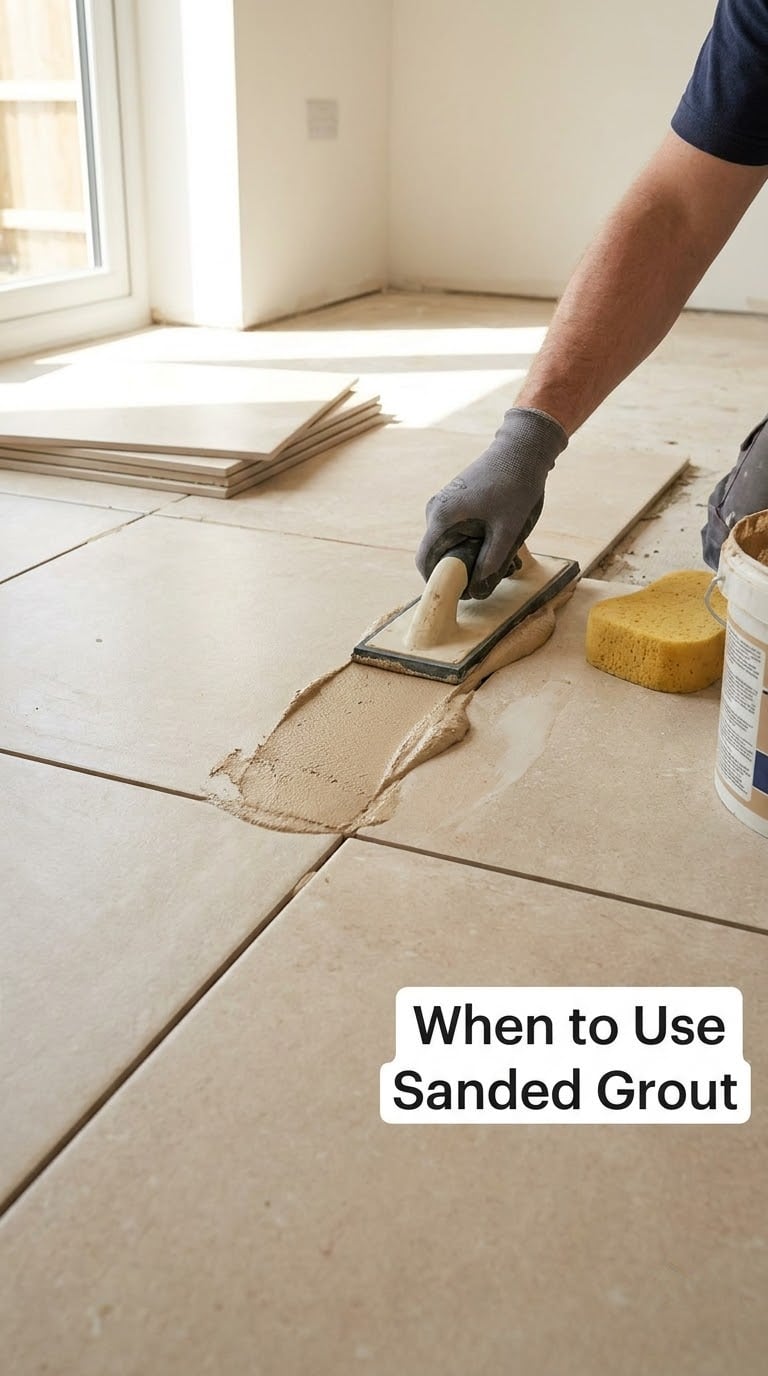
Reach for sanded grout any time your joints are 1/8 inch or wider, and almost always on a floor. The sand gives the cured joint body and compressive strength, so it can handle the weight of foot traffic, rolling loads and the small flex of a wood subfloor without cracking apart.
Use sanded grout in these situations:
- Floor tile with standard joints. Porcelain or ceramic floor tile with 1/8 to 3/8 inch grout lines is the most common use.
- Large format tile and plank tile. Many of these still call for a 3/16 inch or wider joint, which needs sanded grout to fill properly.
- Natural stone with wide joints. Travertine, slate and tumbled stone often have 1/4 inch or wider grout lines that unsanded grout would shrink right out of.
- Shower walls with wider joints. A pre-mixed or polymer-modified sanded grout rated for wet areas works well on shower walls, especially with larger tile.
- High-traffic zones. Entryways, kitchens, laundry rooms and commercial floors all benefit from the harder, more wear-resistant surface.
One caution: avoid sanded grout on soft, polished or metal tile, where the silica particles can leave fine scratches as you work the grout across the face. Stick to the right side of that 1/8 inch threshold, and sanded grout is the most forgiving option for most DIYers.
When to Use Unsanded Grout
Unsanded grout is the right call for narrow joints under 1/8 inch and for tile surfaces that sand would damage. Because there’s no aggregate, the cured joint is smoother, sticks better to vertical surfaces without slumping, and won’t scratch delicate tile faces.
Use unsanded grout in these situations:
- Joints narrower than 1/8 inch. Most 4×4 inch subway tile, 1×1 inch mosaics on mesh sheets, and many glass tiles call for tight grout lines that sanded grout can’t pack properly.
- Polished marble, travertine or limestone. Even on a wall, sand will leave visible micro-scratches on a polished finish.
- Glass tile and glass mosaics. The smooth face scratches easily, and unsanded grout is the standard recommendation.
- Metal tile, mirrored tile or porcelain with a soft glaze. Anything you’d worry about scuffing with a float should use unsanded.
- Vertical wall applications. Unsanded grout sticks better in vertical joints and is less likely to slump or fall out before it cures.
Unsanded grout does have a real limitation: it shrinks as it cures, so if you force it into a joint wider than 1/8 inch, it can crack or pull away from the edges. Stay under that threshold and use the right water-to-powder ratio, and unsanded grout is a clean, easy-to-work-with option.
What Changes the Price Between Sanded and Unsanded Grout
Material cost is one of the smaller line items in a tile project, but it adds up fast over a whole floor or shower. Sanded and unsanded cement grout sit at similar price points, with unsanded typically running a little higher per pound.
| Grout type | Typical price per pound | Best for |
|---|---|---|
| Cement-based sanded | Lowest of the group | Standard floor and wall joints 1/8 inch and wider |
| Cement-based unsanded | Slightly higher per pound than sanded | Narrow joints, polished tile, vertical walls |
| Polymer-modified cement | Mid-range, often pre-mixed in tubs | Wet areas, color hold, less sealing |
| Urethane grout | Higher per pound, sold pre-mixed | Stain resistance, no sealing, color consistency |
| Epoxy grout | Highest of the group, two-part system | Chemical resistance, commercial kitchens, high-stain areas |
A few other things shift the final number:
- Project size. Bagged cement grout is cheaper per pound but you mix what you need and waste the rest. Pre-mixed tubs cost more but reduce waste on small jobs.
- Brand tier. Premium names like Mapei, Laticrete, Custom and Bostik are typically priced higher than store-brand bags, with better color consistency and polymer additives.
- Color. Bright whites, deep blacks and custom colors often cost more than standard gray, buff or bone.
- Specialty additives. Some lines offer built-in sealers, mold inhibitors or rapid-cure formulas that add to the per-pound cost.
For a typical 30 square foot backsplash, a 5 to 10 pound container of unsanded grout is usually enough. For a 100 square foot floor with 1/4 inch joints, a 25 pound bag of sanded is the common starting point. Buy 10 to 15% more than your math says you need, since waste and a small re-do are cheaper than a second trip to the store.
Pros and Cons of Sanded Grout
Sanded grout is the workhorse of most tile jobs, and a few clear advantages explain why it ends up on most floors.
Pros:
- Strong, durable joints. The sand gives the cured joint high compressive strength, so it holds up to foot traffic and weight.
- Resists shrinkage and cracking. In wider joints the sand acts as a filler, so the cement paste doesn’t shrink as it cures.
- Color holds well over time. Sanded grout pigments are mixed through the cement, so light traffic doesn’t expose a different color underneath.
- Slip resistance. The slightly gritty texture adds grip, which helps on shower floors and entryways.
- Cheaper per pound. Sanded cement grout is generally the most affordable option in the cement family.
Cons:
- Can scratch delicate tile. The silica sand will leave fine scratches on glass, polished marble, soft glazes and metal tile.
- Cracks in narrow joints. Forced into a tight 1/16 inch line, sanded grout has no room to flex and tends to crack out.
- Cement versions need sealing. Untreated cement grout absorbs water and stains, so most need a separate sealing step after curing.
- Harder to push into small joints. The grit makes sanded grout a little more work to float into tight spaces.
Pros and Cons of Unsanded Grout
Unsanded grout earns its place on delicate tile, vertical walls and tight joints, where the smooth texture and adhesive feel make the job easier and safer for the surface.
Pros:
- Won’t scratch soft or polished surfaces. No sand means no risk of micro-scratches on glass, polished stone, metal or soft glazes.
- Smooth, clean finish. The cured joint looks more refined, which suits glass mosaics and high-end stone.
- Sticks well in vertical joints. The stickier, paste-like consistency holds in wall joints without slumping.
- Easy to press into narrow gaps. Without sand, unsanded grout flows into 1/16 inch lines where sanded grout would clog.
Cons:
- Shrinks and cracks in wide joints. Without the sand filler, unsanded grout pulls back from joint edges when used over 1/8 inch.
- Higher price per pound. Unsanded cement grout typically costs more than the sanded version of the same brand.
- Stains more easily. Without aggregate, the surface is more porous and picks up oil, dirt and food stains faster on a kitchen floor.
- Not for high-traffic floors. The softer cured surface wears down faster in doorways and busy paths.
How to Choose for Your Specific Tile Project
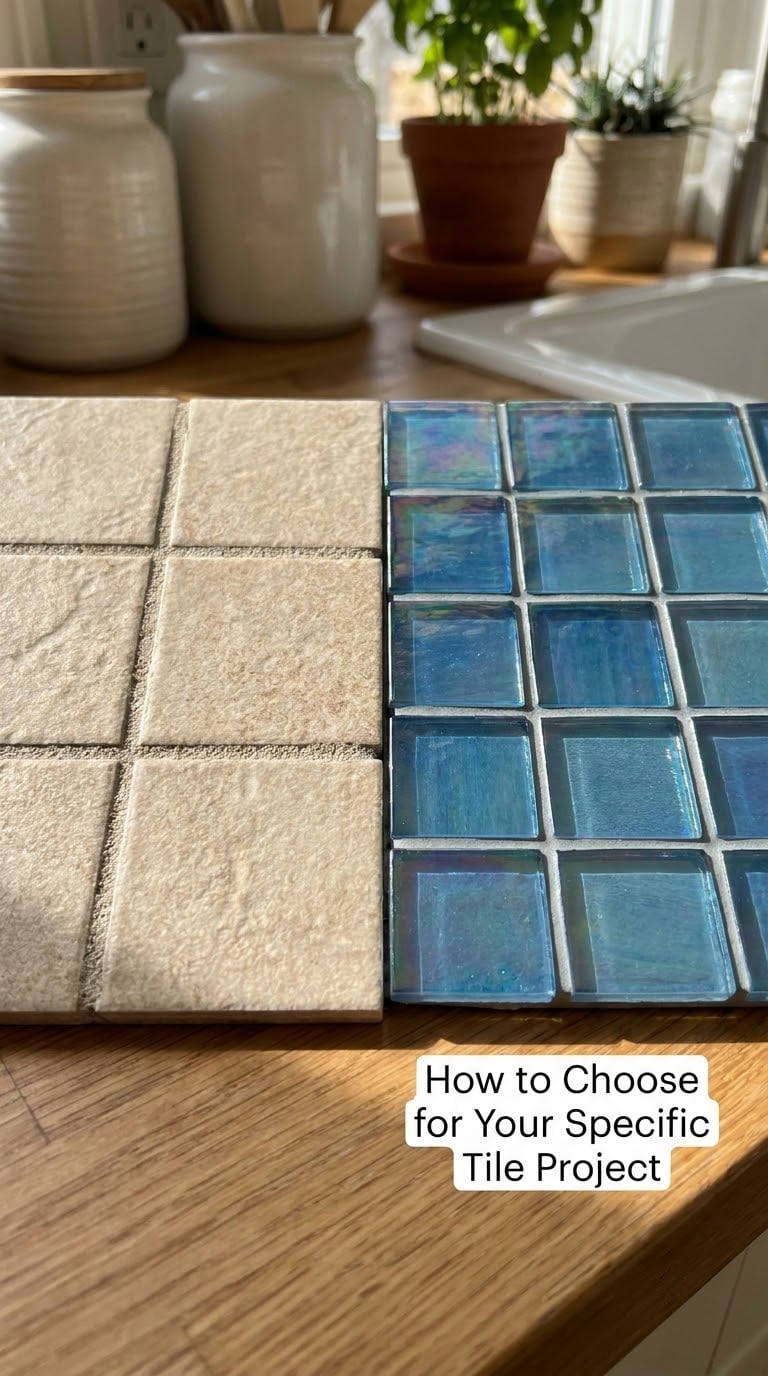
Choosing between sanded and unsanded grout is a quick decision once you walk through four checks. Most people get it wrong by skipping the first one.
1. Measure the joint width. Lay a ruler across several joints. If they’re 1/8 inch or wider, sanded grout. If they’re tighter, unsanded. When in doubt, sanded is usually the safer default for anything above 1/8 inch, but check the bag for the manufacturer’s recommended range.
2. Identify the tile material. Glass, polished marble, soft glaze, metal and mirror tile all need unsanded to avoid scratching. Standard glazed ceramic, porcelain, quarry and most natural stone handle sanded without trouble.
3. Think about location. Floors, high-traffic paths, entryways and shower walls with wider joints want sanded for strength. Backsplashes, decorative mosaics, polished stone feature walls and shower walls with tight joints want unsanded.
4. Consider wet versus dry and stain exposure. A kitchen floor near the stove or a mudroom entry will stain and soil faster with unsanded grout. For those spots, sanded grout with a good sealer, or stepping up to urethane or epoxy, is the better long-term call.
For ongoing care once everything is cured, our grout cleaning guide covers the safe methods for both cement types.
Common Mistakes Homeowners Make When Choosing Grout
Most grout problems aren’t from the product itself but from using the wrong one for the application. A few patterns come up over and over.
Using sanded grout on glass or polished marble. Even one pass with a float leaves fine scratches that show up in direct light. Once the surface is scratched, the only fix is replacing the tile. Always check the tile maker’s grout recommendation before you buy.
Using unsanded grout in wide floor joints. The grout looks fine on day one, then shrinks, cracks and pulls away from the edges within weeks. Once that happens, water gets in and the tile can loosen.
Skipping the sealer on cement grout. Cement-based grout, sanded or unsanded, is porous. Without a sealer, it stains, holds moisture and grows mildew in showers. Most manufacturers call for a penetrating sealer 48 to 72 hours after the grout cures.
Ignoring the joint-width limit on the bag. Manufacturer specs usually list a range like 1/8 to 1/2 inch for sanded and 1/16 to 1/8 inch for unsanded. Going outside those numbers is the fastest way to get a failure, no matter how carefully you mixed and applied it.
Mixing grout too wet. Adding too much water makes the grout easier to spread but weakens it and causes more shrinkage. Mix to a smooth, peanut-butter consistency, let it slake for 10 minutes, then remix briefly before use.
Pick the right grout, follow the joint-width limits, and seal cement grout once it’s cured. The tile work you do this weekend should look the same in 10 years.
Frequently Asked Questions
Can I use sanded grout on 1/16 inch joints?
No, sanded grout is not recommended for 1/16 inch joints. The sand particles are too large to pack into that narrow a gap, and the cured joint will crack and pull away from the tile edges. Use unsanded grout for any joint narrower than 1/8 inch, including 1/16 inch lines on mosaics and subway tile.
Is unsanded grout stronger than sanded grout?
No, sanded grout is stronger. The fine silica sand acts as an aggregate, giving the cured joint higher compressive strength and better crack resistance, especially in wider joints. Unsanded grout has no aggregate, so it cures softer and is more prone to shrinkage and wear, which is why it stays in narrow joints and walls rather than floors.
Do I need to seal sanded or unsanded grout?
Cement-based grout of either type needs sealing because cured Portland cement is porous and absorbs water, oil and stains. Apply a penetrating grout sealer 48 to 72 hours after the grout cures, then reapply every year or two in high-traffic and wet areas. Pre-sealed, urethane and epoxy grouts are the exceptions and usually don’t need a separate sealer.
Can I use unsanded grout on a bathroom floor?
You can, but only if the joints are narrower than 1/8 inch and the tile is a softer material like polished stone or glass. For most bathroom floors with standard porcelain or ceramic tile and 1/8 inch or wider joints, sanded grout is the better choice because it resists shrinkage, cracking and wear much better than unsanded.
What grout should I use for glass or polished marble tile?
Use unsanded grout for glass tile, polished marble, polished granite, metal tile and any soft-glazed surface. The sand in sanded grout leaves fine scratches on these finishes as you work the grout across the face. Unsanded grout flows into the joint, sticks to vertical surfaces and cures smooth without marking the tile.
How do I tell which grout is already in my tile?
Look closely at the grout line. Sanded grout has a slightly gritty, sandy texture and a matte finish, especially visible on the surface and at the edges. Unsanded grout looks smoother and more uniform, almost like a fine cement paste. If the grout is cracking, crumbling or pulling away from the tile edges, it was likely unsanded used in joints wider than 1/8 inch.