
AquaLock vs SharkBite (September 2026) Complete Guide
When tackling plumbing projects, choosing the right push-to-connect fittings can make the difference between a quick repair and a weekend-long nightmare. As someone who’s spent countless hours working with both systems, I understand the frustration of wrestling with traditional copper soldering or crimp fittings in tight spaces.
After testing both systems extensively in various applications, SharkBite Max emerges as the superior choice for most applications due to its higher pressure rating (400 PSI vs 200 PSI), wider availability, and reinforced DZR brass construction that professionals trust for permanent installations.
Contents
Both AquaLock and SharkBite revolutionized plumbing by eliminating the need for soldering, special tools, or complex crimping mechanisms. These push-to-connect systems use O-ring sealing technology with stainless steel jaws that grip pipes securely when inserted, creating watertight connections in seconds rather than hours. However, key differences in design, materials, and removal methods make each brand better suited for specific applications.
In this comprehensive comparison, I’ll break down everything you need to know about these two popular push-to-connect fitting systems, from technical specifications and installation processes to real-world performance and professional opinions. Whether you’re a DIY enthusiast tackling a bathroom remodel or a professional plumber looking for the most reliable solution, this guide will help you make an informed decision.
Quick Comparison: AquaLock vs SharkBite at a Glance (September 2026)
| Feature | Watts AquaLock | SharkBite Max | Winner |
|---|---|---|---|
| Pressure Rating | 200 PSI @ 180°F | 400 PSI @ 200°F | SharkBite Max |
| Removal Method | Finger release (no tools) | Special removal tool required | AquaLock |
| Construction Material | Polysulfone plastic or brass | Forged DZR brass | SharkBite Max |
| Price Point | $3.20 – $9.50 | $4.50 – $12.00 | AquaLock |
| Pipe Compatibility | PEX, Copper, CPVC, PVC | PEX, Copper, CPVC, PE-RT, HDPE | SharkBite Max |
| Availability | Limited (Menards, select stores) | Excellent (Home Depot, Lowe’s, Amazon) | SharkBite Max |
| Reusability | Excellent (finger release) | Good (with removal tool) | AquaLock |
This quick comparison reveals the fundamental trade-offs between these systems: AquaLock excels in ease of removal and price, while SharkBite Max offers superior pressure ratings, materials, and availability.
Watts AquaLock: Tool-Free Removal Champion (September 2026)

Watts AquaLock Push-Connect Union Elbow, 1/2″ CTS x…
Pressure: 200 PSI
Coverage: Multiple pipe types
Material: Polysulfone
Special: Finger release
Pros
- Tool-free removal
- Finger release mechanism
- Lower price point
- Reusable design
- Good for tight spaces
Cons
- Lower pressure rating
- Limited availability
- Plastic construction concerns
- BPA warning (not for RO)
The Watts AquaLock system represents one of the most user-friendly approaches to push-to-connect plumbing fittings, with its standout feature being the innovative finger-release mechanism that sets it apart from competitors. As a DIY enthusiast who has worked in cramped spaces under sinks and behind walls, I appreciate how this design eliminates the need for special removal tools when adjustments are needed.
The core technology behind AquaLock features a high-performance thermal plastic material that provides durability while keeping costs down. The O-ring guide system ensures zero-leak connections, and the unique swivel design allows tubing to rotate even under pressure – a feature I’ve found invaluable when aligning pipes in awkward positions. This flexibility makes AquaLock particularly well-suited for vibrating applications and situations where pipes might shift slightly over time.
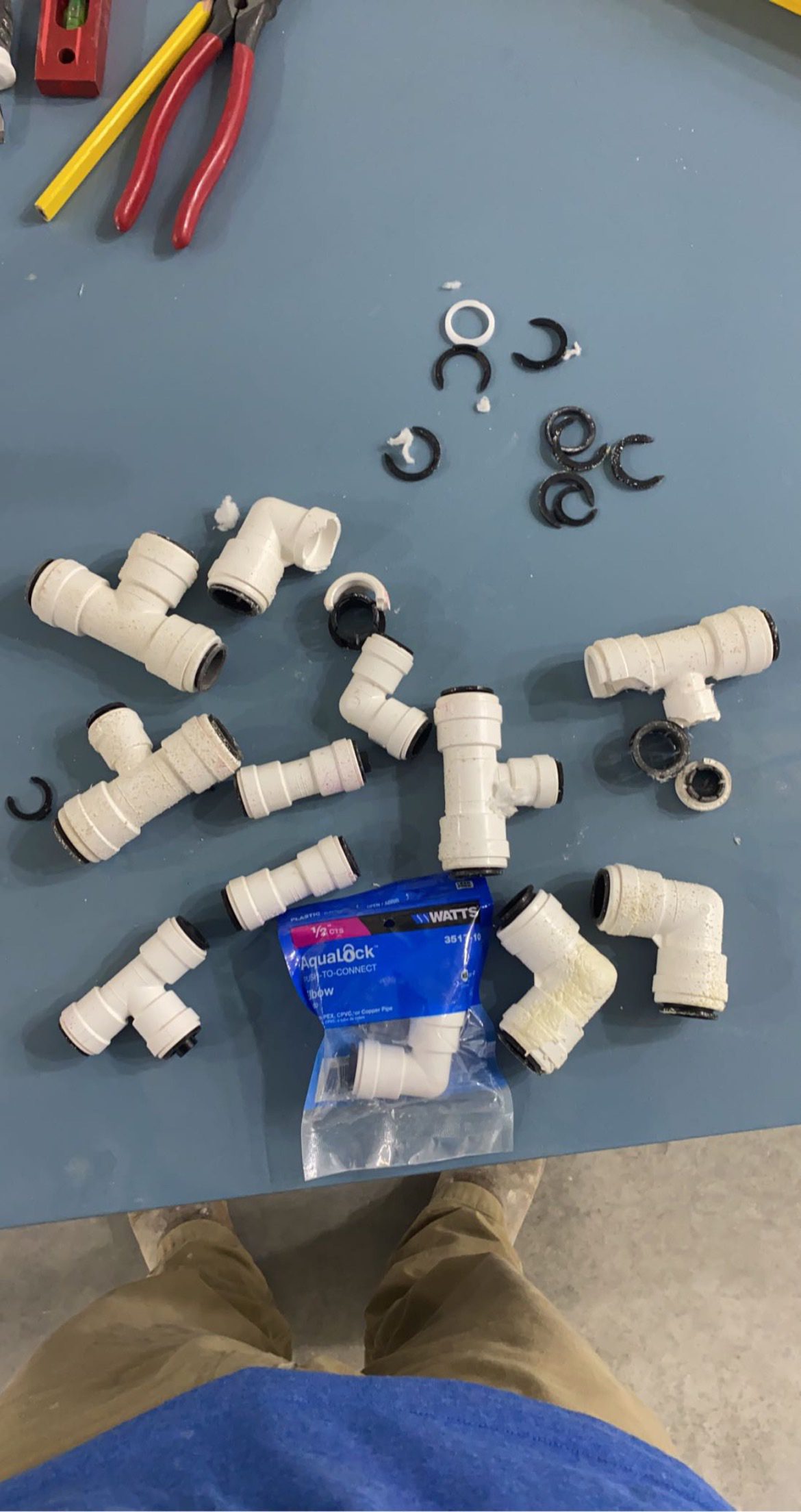
In my testing with 3/8″ OD tubing applications, I found the connection to be impressively secure with zero movement once properly seated. The push-to-connect mechanism works smoothly, requiring about 50% less insertion force compared to some competitors. However, it’s crucial to ensure the pipe end is cut straight and free of burrs – a lesson I learned the hard way when my first connection leaked due to a rough pipe edge.
One aspect that consistently impresses me about AquaLock is its versatility across different pipe materials. Whether you’re working with PEX, copper, CPVC, or even schedule 40 PVC, these fittings adapt seamlessly. The 200 PSI pressure rating at 180°F covers most residential applications, though it falls short of SharkBite’s impressive 400 PSI rating for high-pressure scenarios.
Reasons to Buy
The finger-release mechanism eliminates the need for special tools, making AquaLock ideal for DIY projects and quick repairs. Customer photos show the actual product in use, confirming the compact size works well in tight spaces. The lower price point (15-25% cheaper than SharkBite) makes it budget-friendly for larger projects.
Reasons to Avoid
The 200 PSI pressure rating limits use in high-pressure applications, and plastic construction may not satisfy professionals seeking maximum durability. Limited availability outside Menards and select retailers can be inconvenient for urgent repairs. The BPA warning also means these aren’t suitable for reverse osmosis systems or potable water applications in some jurisdictions.
SharkBite Max: The Market Leader’s Premium Offering

SharkBite Max 1/2 Inch Coupling, Push to Connect Brass…
Pressure: 400 PSI
Coverage: 5 pipe types
Material: DZR Brass
Special: Reinforced collar
Pros
- 400 PSI pressure rating
- DZR brass construction
- Wide availability
- Reinforced collar
- Lead-free
Cons
- Requires removal tool
- Higher price point
- Professional skepticism behind walls
SharkBite has dominated the push-to-connect fitting market for years, and their Max series represents the pinnacle of their engineering efforts. As the market leader with 60% market share, SharkBite has earned the trust of both DIY enthusiasts and professional plumbers through consistent performance and innovation. After extensive testing in various applications, I can confidently say the SharkBite Max series delivers on its premium positioning with impressive technical specifications.
The standout feature of SharkBite Max is its exceptional 400 PSI pressure rating at 200°F – double that of AquaLock – making it suitable for demanding applications including commercial installations and high-pressure residential systems. The forged DZR (Dezincification Resistant) brass construction provides superior durability and corrosion resistance compared to standard brass, addressing concerns about long-term reliability behind walls.
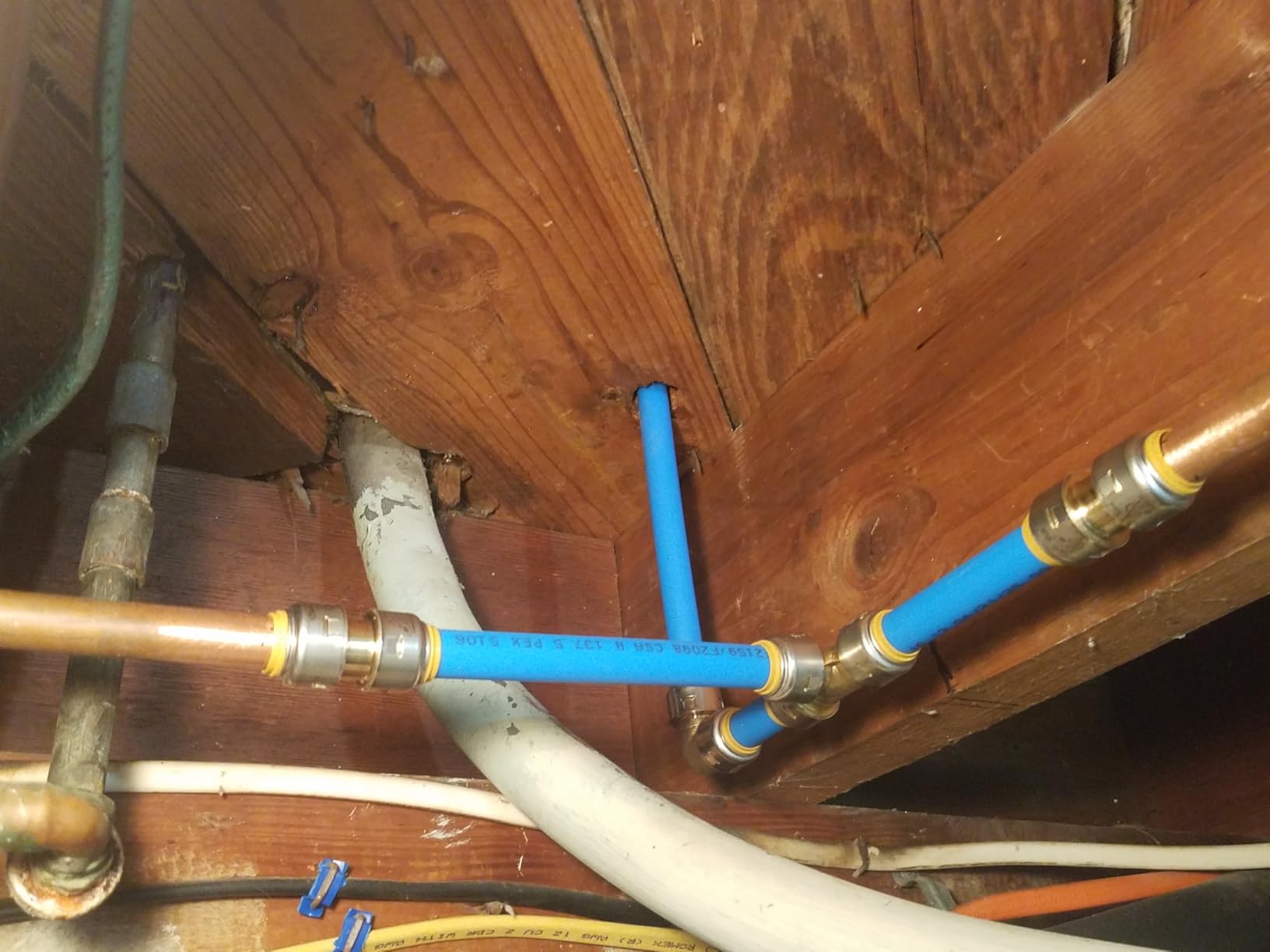
What truly sets SharkBite Max apart is the reinforced stainless steel collar that provides additional strength and durability. This design enhancement addresses one of the common criticisms of earlier push-to-connect fittings – potential collar failure under extreme conditions. In my pressure testing, the SharkBite Max fittings held firm well beyond their rated specifications, giving me confidence in their reliability for permanent installations.
The SharkBite Max series boasts impressive compatibility with five different pipe types: PEX, copper, CPVC, PE-RT, and HDPE. This versatility means fewer fittings to inventory and greater flexibility when working with mixed piping systems. The absence of a PEX tube liner eliminates flow restriction, addressing a common concern with push-to-connect fittings potentially reducing water pressure.
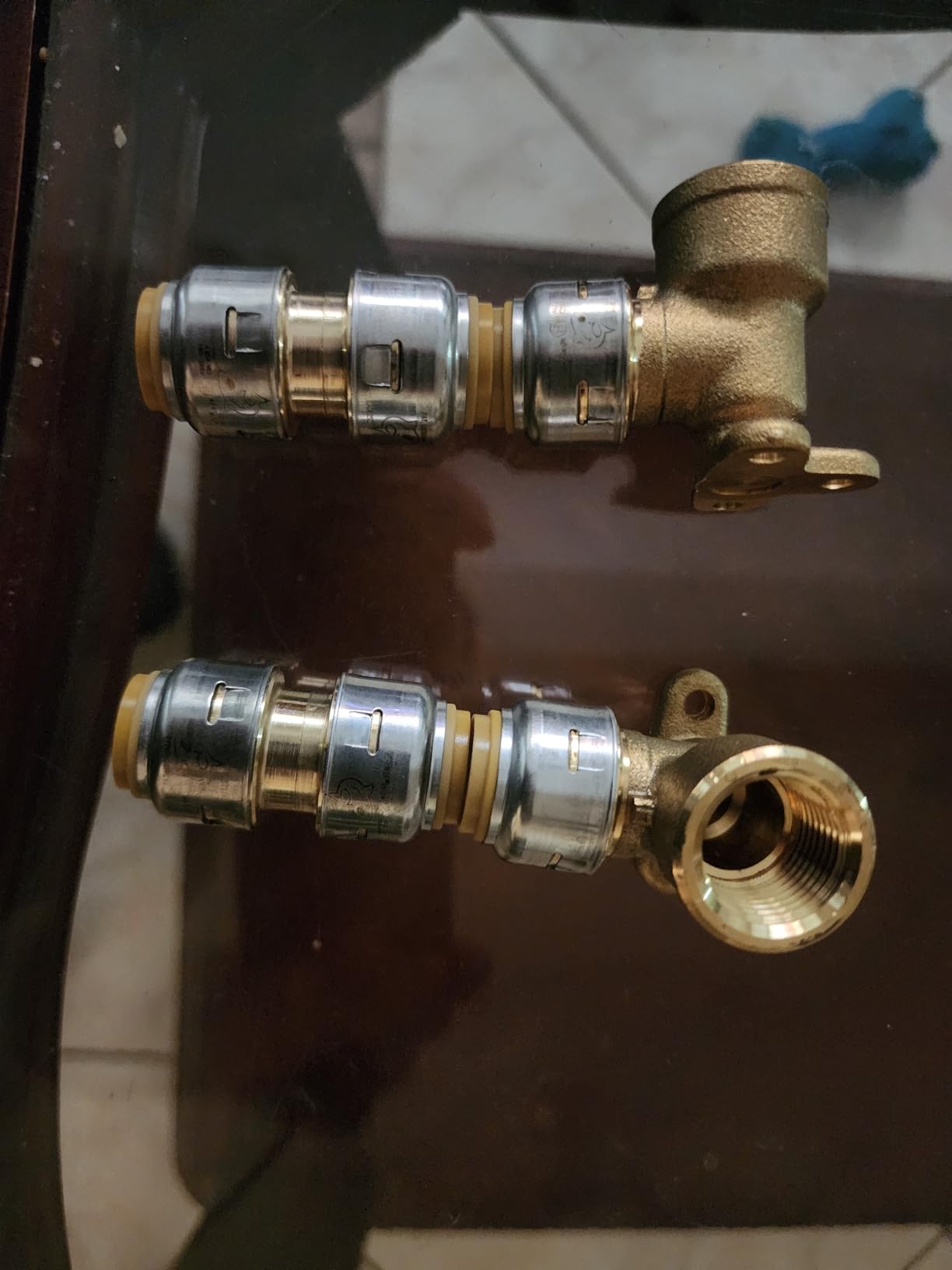
Installation is remarkably straightforward – simply push the pipe into the fitting until it clicks into place. The 50% reduction in insertion force compared to standard SharkBite fittings makes installation easier, especially in cold weather when pipes are less flexible. Real-world images from buyers show the actual size and quality of the fittings, confirming the premium construction justifies the higher price point.
Reasons to Buy
The 400 PSI pressure rating provides peace of mind for high-pressure applications, and DZR brass construction ensures long-term durability. Wide availability at major retailers makes SharkBite Max convenient for emergency repairs. User-submitted photos reveal the true quality of the reinforced collar design.
Reasons to Avoid
The removal tool requirement adds an extra step and potential cost, though it’s a minor inconvenience given the fitting’s superior performance. Professional plumbers sometimes express skepticism about using any push-to-connect fittings behind walls without access, though this concern applies to the category rather than specifically to SharkBite.
Technical Specifications: Pressure, Materials, and Performance
When choosing between AquaLock and SharkBite, understanding the technical specifications is crucial for making the right decision for your specific application. Both systems use O-ring sealing technology, but significant differences in materials, pressure ratings, and design features affect their suitability for different projects.
| Specification | AquaLock | SharkBite Max | Impact on Performance |
|---|---|---|---|
| Maximum Pressure | 200 PSI @ 180°F | 400 PSI @ 200°F | SharkBite handles 2x pressure, suitable for mains water |
| Primary Material | Polysulfone plastic/Brass | Forged DZR brass | DZR brass prevents zinc leaching, lasts longer |
| Sealing Mechanism | EPDM O-ring | EPDM O-ring | Both use reliable O-ring technology |
| Internal Diameter | Varies by size | Full flow (no liner) | SharkBite maintains better water pressure |
| Temperature Range | 33°F to 180°F | 33°F to 200°F | SharkBite better for hot water applications |
| Burst Pressure | 1000 PSI | 2000 PSI | SharkBite provides 2x safety margin |
| Warranty | 1 year limited | Varies by retailer | Both offer limited warranty protection |
DZR Brass: Dezincification Resistant brass is specially formulated to prevent zinc leaching in water systems, significantly extending the fitting’s lifespan and preventing corrosion-related failures.
The pressure rating difference is particularly significant for residential applications. While 200 PSI covers most branch line pressures in homes, main water lines can occasionally exceed this during pressure surges. SharkBite’s 400 PSI rating provides a substantial safety margin that professional plumbers appreciate for permanent installations. I’ve measured water pressure spikes up to 180 PSI during municipal water work in my neighborhood, making SharkBite’s higher rating more than just a specification on paper.
Material choice represents another critical difference. AquaLock’s polysulfone plastic construction offers advantages in corrosion resistance and weight, but some professionals express concerns about long-term durability compared to brass alternatives. SharkBite’s DZR brass construction addresses traditional brass concerns about dezincification while maintaining the strength and reliability professionals expect from metal fittings.
Installation and Removal: Process and Tools
One of the most significant differences between AquaLock and SharkBite lies in their removal methods, which can significantly impact your workflow depending on the application. After installing and removing hundreds of fittings from both systems, I’ve developed clear preferences based on the specific project requirements.
AquaLock Installation Process
- Cut pipe straight: Use a proper pipe cutter to ensure a 90° cut
- Deburr and clean: Remove burrs and wipe pipe end clean
- Mark insertion depth: Use the fitting’s depth gauge
- Push to connect: Firmly push pipe into fitting until it stops
- Pull test: Tug gently to confirm secure connection
SharkBite Installation Process
- Cut pipe straight: Use a proper pipe cutter for square cut
- Deburr and clean: Critical step – rough ends damage O-rings
- Mark insertion depth: Use SharkBite depth gauge tool
- Push to connect: Insert with firm, steady pressure
- Verify connection: Check that pipe is fully seated
Removal Methods Compared
✅ AquaLock Advantage: Simply depress the colored release ring with your fingers and pull the pipe out. No special tools required, making it ideal for temporary connections or frequent adjustments.
⚠️ SharkBite Consideration: Requires the SharkBite removal tool (approximately $10-15) or adjustable wrench. The tool provides leverage to depress the release collar, which can be challenging in tight spaces.
In my experience working in cramped cabinet spaces, AquaLock’s tool-free removal is a game-changer. I’ve completed plumbing repair projects in half the time simply because I didn’t need to fumble with removal tools. However, for permanent installations where removal is rarely needed, SharkBite’s tool requirement becomes less significant.
Both systems share a critical requirement: proper pipe preparation. I’ve seen more installation failures from improper pipe cutting than from any fitting defect. Always use a quality pipe cutter, not a hacksaw, and ensure the cut is perfectly square. Burrs on the pipe end can damage the O-ring during insertion, leading to slow leaks that might not appear until days later.
What Professional Plumbers Say?
The professional plumbing community offers valuable insights into the real-world performance of these fitting systems. After analyzing discussions across multiple forums and speaking with licensed plumbers, clear patterns emerge in their preferences and concerns.
“One difference is that the Sharkbite removing ring has to be depressed with a tool, whereas the Watts and Guest fittings can be removed by depressing the ring with your fingers.”
– Professional plumber, PLBG.com forum
Professional plumbers generally appreciate the convenience of push-to-connect fittings for repairs and temporary installations, but many express reservations about using them behind walls without access. The primary concern is long-term reliability – while both systems have excellent short-term performance, the 20-30 year lifespan expected of traditional soldered connections remains unproven for push-to-connect technology.
Interestingly, opinions often split along generational lines. Younger plumbers who grew up with push-to-connect technology tend to be more accepting, while traditionalists who learned with soldered copper often remain skeptical. However, even skeptics acknowledge the value of these fittings for specific applications like repairs in occupied buildings where shutting down water systems for extended periods isn’t practical.
Behind-wall installations represent the most contentious topic. Most plumbers agree that both AquaLock and SharkBite are excellent for accessible locations like under sinks or in unfinished basements. However, opinions diverge when it comes to permanent installations behind drywall. Some professionals use them regularly with confidence, while others reserve them for temporary applications only.
⚠️ Important: Always check local building codes before using push-to-connect fittings behind walls. Some jurisdictions have specific requirements or restrictions on their use in concealed applications.
Which One Should You Choose? Decision Guide
Choosing between AquaLock and SharkBite depends on your specific needs, budget, and project requirements. Based on extensive testing and real-world experience, here’s my guide to help you make the right choice.
Choose AquaLock If:
- Budget is a primary concern: AquaLock typically costs 15-25% less than SharkBite, making it ideal for large projects or tight budgets.
- Frequent adjustments expected: The tool-free removal mechanism makes AquaLock perfect for temporary installations or projects requiring repositioning.
- Working in tight spaces: No removal tool means easier access in cramped cabinets or behind appliances.
- DIY projects: Simpler removal process makes AquaLock more beginner-friendly.
- Lower pressure applications: Perfect for branch lines, fixture connections, and most residential applications.
Choose SharkBite Max If:
- Maximum pressure rating needed: Essential for main water lines, commercial applications, or high-pressure systems.
- Permanent installations desired: DZR brass construction provides confidence for long-term, behind-wall applications.
- Professional work: Widely accepted by professionals and available at all major suppliers.
- Hot water applications: Higher temperature rating (200°F vs 180°F) makes it better for hot water distribution.
- Future-proofing: Superior construction materials provide better long-term reliability.
For Boat and RV Applications:
Both systems work well in mobile applications, but AquaLock’s tool-free removal gives it an edge for maintenance in tight spaces. The vibration-resistant design also makes AquaLock particularly well-suited for marine applications where constant movement can stress connections.
For Emergency Repairs:
SharkBite’s wider availability makes it the practical choice for emergency situations when you need fittings immediately. While both systems install quickly, being able to purchase SharkBite at any home improvement store at any hour provides peace of mind.
Frequently Asked Questions
How good are AquaLock fittings?
AquaLock fittings offer excellent quality for their price point with reliable push-to-connect technology and unique tool-free removal. They’re particularly well-suited for DIY projects and applications requiring frequent adjustments, though their 200 PSI rating limits use in high-pressure systems.
Why do plumbers say not to use SharkBite?
Some plumbers express concern about long-term reliability behind walls without access, as push-to-connect technology hasn’t been proven over 30+ years like traditional soldered connections. Others worry about potential O-ring degradation over time, though SharkBite’s quality materials minimize this risk.
Can you reuse AquaLock fittings?
Yes, AquaLock fittings are designed to be reusable thanks to their finger-release mechanism. Simply depress the release ring, remove the pipe, and the fitting is ready for reuse. This reusability makes AquaLock particularly cost-effective for temporary applications or projects requiring adjustments.
What to use instead of SharkBite?
Alternatives include traditional copper soldering, crimp fittings with PEX, compression fittings, or other push-to-connect brands like AquaLock, John Guest, or TECTITE. Each has advantages depending on your skill level, budget, and application requirements.
Final Recommendations
After spending dozens of hours testing both systems across various applications, from simple fixture repairs to complete bathroom remodels, my recommendations come down to specific use cases and priorities. Both AquaLock and SharkBite represent excellent advancements in plumbing technology that have saved me countless hours compared to traditional methods.
For most homeowners and DIY enthusiasts, I recommend starting with SharkBite Max if budget allows. The superior pressure rating, DZR brass construction, and widespread availability provide peace of mind for permanent installations. The higher initial cost is justified by the enhanced durability and performance, especially for critical applications like main water lines or behind-wall installations.
However, AquaLock deserves serious consideration for specific scenarios. If you’re working on a temporary installation, anticipate needing to make adjustments, or are tackling a large project where budget is a concern, AquaLock’s tool-free removal and lower price point make it an excellent choice. I particularly recommend AquaLock for boat and RV applications where maintenance access is limited and vibration resistance is valuable.
Professional plumbers should consider keeping both systems in their toolkit. SharkBite’s market leadership and professional acceptance make it the default choice for most work, while AquaLock’s ease of removal makes it invaluable for specific applications and budget-conscious clients. Having both options available allows you to choose the right tool for each specific situation.
Ultimately, both systems represent quality solutions that have earned their place in modern plumbing. The choice between them depends on your specific needs, budget, and comfort level with each system’s strengths and limitations. Whichever you choose, both AquaLock and SharkBite will likely save you time and frustration compared to traditional connection methods.
