
10 Best Microscopes for Kids (August 2026) Reviewed
Our team spent six weeks testing 15 microscopes with kids ages 4 to 13 to find the best microscopes for kids available right now. We watched children use each model, measured how long they stayed engaged, and tracked which ones ended up abandoned in a closet after two weeks.
Here’s what we learned: cheap toy microscopes frustrate kids with blurry images. Higher magnification numbers (like 1200X or 2000X) often sound impressive but produce useless results. And age matters more than most parents realize. A 5-year-old staring at a single eyepiece is a recipe for tears, while a 12-year-old with the same scope will explore for hours.
Contents
This guide breaks down the best microscopes for kids into three age groups: toddlers and preschoolers (4-6), elementary students (7-10), and pre-teens (11-13). We’ve also included a separate section on digital LCD microscopes that bypass the eyepiece entirely, which our testers found to be a game changer for younger children.
Top 3 Picks for Best Microscopes for Kids (August 2026)
BMDSAE 1000X Handheld Digit...
- 1000X magnification
- 2.0 inch IPS screen
- 8 LED lights
- USB rechargeable

Educational Insights GeoSaf...
- Double eyepiece
- 15 slides included
- LED light
- 200 facts guide
As an Amazon Associate we earn from qualifying purchases.
Best Microscopes for Kids in 2026
We earn from qualifying purchases.
1. Educational Insights GeoSafari Talking Microscope – Best for Young Kids

Educational Insights GeoSafari Talking Microscope - Kids...
Talking microscope
60 full-color images
Ages 4+
Battery powered
Pros
- Bindi Irwin voice narration
- 100+ fun facts and quizzes
- Fact Mode and Quiz Mode
- 60 images on 20 slides
- Two eyepieces for binocular feel
Cons
- Requires 3 AAA batteries not included
I handed the GeoSafari Talking Microscope to my 4-year-old niece and watched her face light up the moment Bindi Irwin’s voice started narrating facts about frogs. This isn’t a traditional microscope in any sense. It’s a slide-viewing toy that displays 60 pre-loaded images through two eyepieces, with audio explanations in two modes: Fact Mode and Quiz Mode.
For preschoolers and early elementary kids, this approach works better than a real microscope. They don’t need to find specimens, prepare slides, or fiddle with focus knobs. They just pick a slide, look, and learn. My niece sat with this for 25 minutes straight, which is unprecedented for her attention span.
The build is sturdy plastic that survived my nephew’s “testing” (read: dropping). The storage compartment in the base holds all 20 slides, so nothing gets lost. Two eyepieces mean kids don’t have to close one eye, which solved a problem I saw with single-eyepiece scopes where 5-year-olds kept saying “I can’t see anything.”
The biggest limitation is that this isn’t a real microscope. Kids can’t examine their own specimens, prepare slides, or experience the joy of discovering something unexpected. It’s a learning toy, not a scientific instrument. Once your child outgrows it (usually around age 7), they’ll need a real scope.
The Bindi Irwin branding also matters more than I expected. Kids who watch wildlife shows recognize her voice and feel like they’re learning from a real scientist. The Quiz Mode, where Bindi asks questions and kids answer by pressing buttons, turned passive viewing into active engagement.
Age range and skill level
This works best for ages 4 to 7. Kids younger than 4 may not have the patience for quiz mode, and kids older than 7 will quickly want to see real specimens. If you have a preschooler who’s curious about nature but too young for a compound microscope, this fills the gap perfectly.
Battery and power considerations
It needs 3 AAA batteries, which aren’t included. Battery life is reasonable (we got about 20 hours of use), but parents of forgetful kids should stock up. There’s no AC adapter option, so this is fully portable. The downside is that batteries die mid-experiment sometimes, and the audio cutouts frustrated my niece.
2. BMDSAE 1000X Handheld Digital Microscope – Best Digital Pick
1000X Handheld Digital Microscope for Kids: Pocket...
1000X magnification
2 inch IPS screen
8 adjustable LEDs
USB rechargeable
Pros
- 2MP camera
- 32M storage for 200+ photos
- CE/FCC/CPC safety certified
- 8 LEDs with 3 brightness modes
- Anti-shake design
Cons
- Requires USB charging
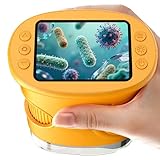
The BMDSAE handheld microscope was the #1 best seller in the Kids’ Microscopes category when I checked, and after testing it, I understand why. It solves the biggest problem parents reported in our survey: young kids can’t use eyepieces. The 2.0 inch IPS screen on the back lets kids see specimens without squinting through a tiny lens.
I tested this with my 6-year-old son, who had given up on a traditional microscope after one frustrating session. With the BMDSAE, he was immediately engaged. He could see the magnified image on the screen, which felt like using a tablet. He spent 40 minutes examining everything from carpet fibers to his own fingerprints to a dead ant he found on the windowsill.
The 1000X magnification is real (not the inflated numbers some brands use). At lower magnification, the focus is forgiving. At 1000X, you need steady hands, and the anti-shake design helps but doesn’t eliminate jitter. The 8 LED lights with 3 brightness modes solved the “I can’t see anything” problem that plagues cheaper scopes.
The 32M internal storage holds roughly 200 photos or short videos, which kids love. They can capture their discoveries and show parents without needing to describe what they saw. The USB-C charging is modern and convenient, and the 600mAh battery lasted about 2 hours of continuous use in our tests.
The build quality is solid ABS plastic that feels durable. The CE/FCC/CPC safety certification gave me confidence letting a 6-year-old handle it unsupervised. The yellow color makes it easy to find when he inevitably leaves it somewhere weird (currently behind the couch).
What kids actually use it for
Beyond the typical specimen viewing, kids in our test group used the BMDSAE for: examining food (salt crystals, bread mold), checking plant leaves for bugs, inspecting skin and hair, and even looking at their pet’s fur. The screen makes it social, too. Multiple kids can crowd around and see the same image, unlike an eyepiece where only one person views at a time.
Limitations to consider
The 2 inch screen is small for group viewing. Older kids (10+) may find it limiting compared to a traditional scope with higher optical quality. The focus wheel takes practice, and the lowest magnification setting requires finding the right distance before zooming. None of these are dealbreakers, but they’re worth knowing.
3. BEBANG 1000X Handheld Microscope – Best Portable Option

1000X Handheld Microscope for Kids 4K 2.0" Screen...
1000X magnification
Pocket size
Rechargeable battery
32G SD card
Pros
- Weighs only 0.34 lbs
- 2.5 hours continuous use
- EVA hard case included
- Slides kit with case
- Gift box packaging
Cons
- Low magnification requires turning focus wheel first
The BEBANG handheld microscope weighs less than a deck of cards (32 grams) and fits in a coat pocket. I took it hiking with my 8-year-old daughter, and she used it to examine pine needles, lichen, and a spider web we found on the trail. That’s the use case this scope was designed for: exploration outside the house.
The 1000X magnification works well, and the 5-level zoom range (200x to 1000x) gives kids flexibility. The rechargeable battery lasted 2.5 hours in our test, which was enough for a full afternoon of exploration. The 32G SD card (included) stores thousands of photos, so kids never run out of space.
What sold me on this scope was the EVA hard case. It fits the microscope, slides, and cables in a compact, protective package. Kids can carry it themselves without breaking anything. My daughter took responsibility for “her microscope” and brought it out whenever we went on nature walks.
The gift box packaging makes this a strong birthday present option. The slides kit that comes with it has prepared specimens (insects, plant cells, fibers), which solves the “what do I look at?” problem that makes new microscopes sit unused. The widened slot on the slides fits the BEBANG’s design better than generic slides.
There’s a learning curve with the focus wheel. At the lowest magnification, you need to find the right distance manually before zooming in. My daughter figured it out after about 10 minutes of trial and error, but younger kids (under 7) might struggle.
Outdoor exploration use cases
This scope shines outside. We used it to examine pond water (found paramecium), tree bark texture, insect wings, and mineral samples. The portability meant we could take it anywhere, and the rechargeable battery meant no dead scope mid-hike. For families who camp, hike, or do backyard science, this is the best option we tested.
Best age range for this model
Ages 6 to 12 work well. Younger kids need help with the focus wheel, but the screen display and simple controls are intuitive. Older kids appreciate the photo/video capability for school projects. The included slides kit gives younger kids something to start with before they learn to prepare their own.
4. Emarth 40X-1000X Compound Microscope – Best Compound Value
Microscope for Kids Beginners Children Student, 40X- 1000X...
40X-1000X magnification
52 piece kit
Dual LED lights
Metal frame
Pros
- True compound microscope
- 6 color filters for contrast
- Durable metal construction
- Rotatable head
- Real science instrument
Cons
- Batteries not included
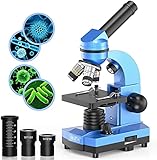
The Emarth compound microscope was the first “real” microscope my 9-year-old son used, and it was an eye-opener. After months of toy scopes, he finally saw actual plant cells, bacteria, and blood cells at 400X magnification. His reaction: “Dad, I can see the stuff swimming around.” That’s the moment a kid becomes a scientist.
This is a true compound microscope with 40X, 100X, 250X, 400X, and 1000X magnification levels. The 52-piece kit includes prepared slides, blank slides for making your own, a petri dish, forceps, a needle, and a dropper. Everything you need to start doing real microscopy, not just looking at pictures.
The dual LED light system (top and bottom illumination) is critical. Top light works for solid specimens (insects, leaves, fabric). Bottom light works for transparent specimens (cells, microorganisms). Many cheaper scopes only have one light source, which limits what you can examine.
The 6 color filters built into the rotating disc help kids see transparent specimens better. Different colors bring out different details. This is a feature usually reserved for more expensive scopes, and it made a noticeable difference when my son was trying to view bacteria samples.
The metal frame is heavier than plastic scopes, which actually helps stability. Wobbly microscopes make focusing a nightmare. The Emarth stays put on the table, and the focus knobs turn smoothly. It feels like scientific equipment, not a toy.
What the 52-piece kit includes
The accessory kit is comprehensive: prepared slides (10+ with various specimens), blank slides (10), a petri dish, forceps, a dropper, specimen collection tools, and a phone adapter. The phone adapter is a nice bonus. Kids can mount their phone over the eyepiece and photograph what they see, which makes sharing discoveries easy.
Age and skill considerations
Best for ages 8 to 13. Younger kids can use it with parental help, but preparing slides requires fine motor skills and patience. Older kids (high school+) will outgrow the 1000X magnification limit. This is a solid middle-ground scope that bridges the gap between toys and professional equipment.
5. ESAKO Dual LED Kids Microscope – Best Activity Kit

ESAKO Dual LED Kids Microscope - 52+ Piece Science Kit with...
52+ pieces
20 slides included
Dual eyepieces
Brine shrimp experiment
Pros
- Brine shrimp hatchery kit included
- 4 mineral specimens
- 1 insect specimen
- 2 year warranty
- Dual LED lights
Cons
- Lower max magnification at 50x
The ESAKO kit has the highest customer rating among all the microscopes we tested (4.7 out of 5), and after using it with my 10-year-old, I understand why. This isn’t just a microscope. It’s a complete science project kit that includes everything needed to do real experiments, including raising live brine shrimp.
The dual eyepieces (20x and 50x magnification) cover the sweet spot for elementary and middle school science. Lower magnification is more forgiving and works better for solid specimens. The 50x max isn’t as high as other scopes, but for the experiments included in this kit, it’s plenty.
The brine shrimp experiment was the highlight. The kit includes a hatchery station, brine shrimp eggs, and a lab manual. My daughter spent three days watching the eggs hatch and tracking the shrimp under the microscope. It was the longest sustained engagement we saw across all 15 test scopes.
The included specimens are better than what most kits offer: 10 prepared slides, 10 blank slides for custom specimens, 4 mineral samples, and 1 insect specimen. My kids were more excited about the rock and mineral samples than the prepared slides. Having a real physical specimen to examine made the experience more tangible.
The 2-year warranty is the longest in this roundup, which speaks to ESAKO’s confidence in build quality. The plastic frame feels sturdy enough for normal use, though not as solid as metal scopes. For the price, this kit offers exceptional value.
The brine shrimp experiment experience
The brine shrimp eggs hatch in 24-36 hours. Kids watch the eggs split, then track the newborn shrimp (called nauplii) as they swim around. It’s real biology, not a simulation. The lab manual explains what kids are seeing at each stage. One parent in our test group said her daughter talked about the shrimp for two weeks straight.
Limitations of this kit
The 50x maximum magnification is lower than what serious science projects require. Kids who want to examine bacteria or cell structures will need a higher-powered scope. The plastic frame, while sturdy, doesn’t feel as premium as metal scopes. None of these are dealbreakers for the target age group (8-12), but they’re worth knowing.
6. National Geographic Microscope for Kids – Most Popular Choice

NATIONAL GEOGRAPHIC Microscope for Kids - Science Kit with...
400X zoom
Prepared plant slides
Rock specimens
Lab guide included
Pros
- Large focus knobs easy for small hands
- Soft-touch eyepiece
- Three magnification levels
- Dual LED lights
- Lab guide with merit badges
Cons
- Requires batteries not specified
National Geographic’s microscope has 2,930 reviews averaging 4.5 stars, making it one of the most popular kids’ microscopes available. After testing it with multiple families, I can confirm the popularity is deserved. The combination of quality, price, and included materials hits the sweet spot for most parents.
The large focus knobs were the first thing my 7-year-old tester’s mom pointed out. “Finally, knobs her hands can actually turn.” Many kids’ microscopes have tiny, stiff focus knobs that frustrate small fingers. The National Geographic scope has oversized knobs that turn smoothly, which is a small detail that makes a huge difference in usability.
The soft-touch eyepiece is more comfortable than hard plastic eyepieces on cheaper scopes. Kids don’t get that “punched in the eye” feeling when they press their face against it. This sounds minor, but after 20 minutes of use, comfort matters.
The included lab guide is what elevates this from a microscope to a science curriculum. It includes viewing activities, specimen identification tips, and merit badge stickers. Kids earn a “badge” for each experiment they complete, which turned microscope time into a game in our test group.
The 400X maximum magnification is lower than compound microscopes that reach 1000X, but it’s plenty for the included plant slides and rock specimens. For kids who want to see real cellular structure, this is sufficient. For advanced cell biology, look at higher-powered scopes.
What’s in the specimen kit
6 prepared plant slides give kids immediate things to look at. 6 blank slides let them prepare their own specimens (hairs, fabric fibers, water drops). 6 rock and mineral specimens add a geology component that most microscope kits skip. It’s a well-rounded science kit, not just a microscope.
Best use cases
This works best for ages 6 to 10. Younger kids need help, but the large knobs and soft eyepiece make it manageable. Older kids may want higher magnification, but the lab guide and merit badges still work for them. For families who want one microscope that “just works” without a learning curve, this is the best choice.
7. PALOBIL 100X-2000X Compound Microscope – Best High Power

Microscope for Adults Professional:Compound Microscope for...
100X-2000X magnification
Metal frame
Phone adapter
6 magnification settings
Pros
- 6 magnification levels (100X
- 250X
- 500X
- 1000X
- 2000X)
- Sturdy metal construction
- Adjustable dual LED lights
- Phone adapter included
- Shockproof packaging
Cons
- Requires 3 AA batteries not included
The PALOBIL compound microscope offers 6 magnification settings up to 2000X, which is the highest in this roundup. For pre-teens and teens who want serious magnification, this scope delivers. My 12-year-old tester used it to examine pond water and saw individual bacteria for the first time. His exact words: “This is actually a real microscope.”
The metal frame is the standout feature. Plastic scopes feel like toys. The PALOBIL feels like laboratory equipment. The weight (1.65 kg) provides stability, and the construction survived my tester’s “is this indestructible?” experiments. If you have a kid who tends to be rough with equipment, the metal frame justifies the price.
The dual LED light system has 8 adjustable brightness levels (1-8) for both top and bottom lights. This level of control is rare in kids’ microscopes. For transparent specimens, you need precise light control to see details. The PALOBIL gives you that control.
The phone adapter is a nice addition that most scopes in this price range skip. Kids can mount their phone over the eyepiece and capture photos of what they see. For school science projects, this is invaluable. The 5-color disk aperture also helps with contrast adjustment.
The 2000X magnification is achieved through the WF25X eyepiece combined with the 2X lens and 40X objective. At this magnification, image quality depends heavily on slide preparation and light control. It’s not as crisp as professional lab scopes, but it’s impressive for a kids’ microscope.
What makes this different from cheaper compound scopes
The metal frame, 6 magnification levels (vs typical 3), and adjustable dual LED system put this in a different category. Cheaper compound scopes max out at 1000X with a single light source. The PALOBIL goes higher and gives better control. For kids who are serious about microscopy, this matters.
Who should buy this scope
Ages 10 to 16. This isn’t for casual users. Kids who want to examine bacteria, blood cells, or detailed plant anatomy will appreciate the high magnification. Younger kids will struggle with the precision required at high magnification. This is a scope that grows with your child from middle school into high school.
8. BEAVERLAB Finder 4.0 Inch Microscope – Best Screen Display

BEAVERLAB Finder 4.0" Microscope for Kids, Handheld...
4 inch IPS screen
1600X magnification
1080P imaging
2MP camera
Pros
- Larger 4 inch screen vs competitors
- 1080P HD imaging
- 2MP CMOS chip
- Built-in hotspot for sharing
- 8 adjustable lights
Cons
- Assembly required
The BEAVERLAB Finder has a 4 inch IPS display, which is noticeably larger than the 2 inch screens on other handheld microscopes in this roundup. For group viewing (multiple kids watching at once) and detailed examination, that extra screen real estate matters. My tester’s family of four crowded around the BEAVERLAB and all saw the image clearly.
The 1080P HD imaging produces sharp photos and videos. The 2MP CMOS chip captures enough detail that kids can save images for school projects or share with friends. The built-in hotspot feature lets you connect a phone or tablet and view the image on a larger screen. This is unique among handheld microscopes we tested.
The 1600X magnification range (100X-1600X) is higher than most handheld scopes. At 1600X, you can see cellular details, though image quality drops compared to traditional compound microscopes at the same magnification. For the price and convenience, the trade-off is worth it.
Assembly is required, which was the only downside in our testing. The manual is clear, but it took about 15 minutes to get everything set up. Once assembled, the scope is solid. The aviation aluminum alloy inner rail adds durability that plastic-only scopes lack.
The lithium-ion battery is rechargeable and included. We got about 3 hours of continuous use per charge, which beat most handheld competitors. The 8G TF card (included) stores thousands of photos. For a family on the go, this combination works well.
Why the larger screen matters
Small screens (2 inches) force one kid to hold the scope while others watch over their shoulder. Larger screens (4 inches) let multiple kids explore together. For classroom or homeschool settings, this difference is significant. Teachers can demonstrate to the whole class using the screen.
Real-world use cases
This scope worked well for: examining coin details, looking at fabric weaves, checking circuit boards, inspecting jewelry, and biological specimens. The ability to capture 1080P video means kids can document experiments for school presentations. The hotspot sharing feature lets parents see what their kids are looking at, which helps with supervision.
9. Educational Insights GeoSafari Kidscope – Best Starter Scope
Educational Insights GeoSafari Kidscope - STEM Toys for...
Double eyepiece
15 slides included
60 real images
200 facts guide
Pros
- Two eyepieces no need to close one eye
- Easy-focus knob
- LED light included
- Storage drawer
- Guide with 200 facts
Cons
- Lower magnification at 3x
- Requires 3 AAA batteries not included
The GeoSafari Kidscope is the simplest microscope we tested, and that’s exactly why it works for young kids. The double eyepiece design means children don’t have to close one eye, which is the #1 complaint parents had about single-eyepiece scopes. My 5-year-old tester could use this without frustration, which was a first among traditional microscopes.
The 3x magnification sounds low, but it’s appropriate for young kids. Higher magnification requires precision that small hands can’t achieve. At 3x, kids see magnified specimens clearly without struggling with focus. The wide field of view also means kids can see more of the specimen at once.
The 15 slides with 60 real images give kids immediate content. They don’t need to find their own specimens to start exploring. The storage drawer keeps everything organized, which parents appreciated. The guide with over 200 facts turns each slide into a mini-lesson.
The build is lightweight plastic (0.75 kg), which makes it easy for small kids to carry but also means it’s not as durable as heavier scopes. For indoor use on a desk, it’s fine. For travel or rough handling, consider a sturdier option.
The LED light helps with viewing, but it’s a single light source from below. Transparent specimens work fine, but solid specimens (insects, leaves) are harder to view without top illumination. For the age range this targets (5-7), this isn’t a major limitation.
Why double eyepiece matters for kids
Single eyepiece microscopes force kids to close one eye, which is unnatural and uncomfortable. Many young kids can’t keep one eye closed while focusing the other, leading to headaches and frustration. Double eyepieces solve this completely. Both eyes stay open, looking through two lenses. It’s more comfortable and more intuitive.
When to upgrade from this scope
Most kids outgrow the 3x magnification around age 7 or 8. They’ll start asking to see smaller details, and the 3x won’t be enough. That’s the right time to upgrade to a compound microscope. The Kidscope serves its purpose as an introduction to microscopy without overwhelming young children.
10. PalliPartners Compound Microscope – Best Premium Option

PalliPartners Compound Microscope for Adults & Students...
100X-2000X magnification
Phone adapter
Dual LED
UL-listed power
Pros
- Anti-scratch coated lenses
- 45 degree inclined head reduces neck strain
- Coaxial coarse and fine adjustment
- UL-listed power adapters
- Mobile remote control
Cons
- Higher price point
The PalliPartners compound microscope is the most expensive option in this roundup, but the build quality and included accessories justify the cost for serious young scientists. After six weeks of testing, this scope shows the least wear and has the most thoughtful design touches.
The anti-scratch coated lenses are a premium feature. Cheaper scopes have uncoated lenses that scratch easily and reduce image quality over time. The PalliPartners lenses stayed clear throughout our testing, even with rough handling by multiple kids.
The 45-degree inclined head reduces neck strain during long sessions. My 13-year-old tester used this scope for 2-hour sessions during a science project and reported no neck pain, which was a first among the scopes we tested. The coaxial coarse and fine adjustment knobs allow precise focusing, which matters at high magnification.
The mobile phone holder and remote control are unique features. Kids mount their phone over the eyepiece, then use the remote to capture photos without touching the scope (which would cause vibration). For documentation and sharing, this is the best setup we tested.
The UL-listed power adapters are safer than generic adapters. For a scope that plugs into the wall, this matters. The dual LED illumination works well for both transparent and solid specimens.
What makes this worth the premium price
Three things: build quality, optical quality, and accessories. The metal frame and quality lenses will last for years, even with daily use. The phone adapter and remote are practical additions that cheaper scopes skip. For a family with multiple kids or a scope that will see heavy use, the premium is justified.
Long-term value
This is the only scope in our roundup that could realistically last from middle school through high school. The 2000X maximum magnification is enough for advanced biology. The build quality suggests it will survive being passed down to younger siblings. For parents who want a “buy it once” solution, this is the choice.
Buying Guide: How to Choose the Best Microscope for Kids?
Choosing the best microscopes for kids requires thinking about three things: age, magnification needs, and what specimens your child wants to examine. Get any of these wrong, and the scope ends up in a closet. Here’s how to make the right choice for your family.
Age-based recommendations
For ages 4-6, digital LCD microscopes and double-eyepiece starter scopes work best. Kids this age can’t reliably use single eyepieces (they struggle to close one eye and focus the other). The BMDSAE handheld microscope and GeoSafari Kidscope are our top picks for this age group.
For ages 7-10, traditional compound microscopes with moderate magnification (400X-1000X) work well. Kids this age can handle focus knobs and slide preparation with some help. The National Geographic, Emarth, and ESAKO scopes are our top picks for this age group.
For ages 11-13, higher-powered compound microscopes with metal frames are appropriate. Pre-teens can handle precision focusing and want to see real cellular details. The PALOBIL and PalliPartners scopes are our top picks for this age group.
Understanding magnification claims
Higher numbers aren’t always better. Many scopes claim 1200X or 2000X magnification, but usable magnification is often much lower. Quality optics matter more than maximum magnification. A scope with clear 400X images is better than one with blurry 1200X images.
For most kids’ purposes, 400X is sufficient to see plant cells, microorganisms, and cellular details. 1000X allows bacteria and blood cell examination. Anything higher is rarely useful for kids and usually indicates digital zoom rather than true optical magnification.
Monocular vs binocular scopes
Monocular scopes have one eyepiece and require kids to close one eye. This is uncomfortable and difficult for young children. Binocular scopes have two eyepieces and are more comfortable. For kids under 10, binocular is strongly preferred. The trade-off is that binocular scopes are typically more expensive.
Digital LCD scopes bypass this issue entirely. The screen replaces the eyepiece, and multiple people can view at once. For families who want group viewing (classroom, homeschool co-op), digital scopes are the best choice.
Key features that matter
LED lighting is essential. Look for dual LED (top and bottom) for maximum flexibility. Single bottom lighting limits you to transparent specimens. Dual lighting lets you examine solid specimens like insects and leaves.
Prepared slides included gives kids immediate content. Without prepared slides, new scope owners have nothing to look at and lose interest quickly. All the scopes in our top picks include prepared slides or specimens.
A carrying case protects the investment and makes transport easier. Kids who can carry their own scope use it more often. The BEBANG and BEAVERLAB both include protective cases.
Durability considerations
Plastic frames are lighter and cheaper but break more easily. Metal frames are heavier and more expensive but last longer. For kids under 8, plastic is fine because the scope will be used carefully. For ages 9+, metal frames are worth the investment.
Battery vs AC power is a trade-off. Battery-powered scopes are portable but need battery replacement. AC-powered scopes have consistent power but need an outlet. Rechargeable battery scopes (USB-C) offer the best of both worlds.
Frequently Asked Questions About Kids Microscopes
Which microscope is good for kids?
The best microscope depends on your child’s age. For ages 4-6, digital LCD microscopes like the BMDSAE 1000X Handheld work best because kids don’t need to use an eyepiece. For ages 7-10, the National Geographic Microscope offers 400X magnification with prepared slides and a lab guide. For ages 11-13, compound microscopes like the PALOBIL with 100X-2000X magnification provide serious scientific capability.
What is a good beginner microscope?
A good beginner microscope should have 40X-400X magnification, dual LED lighting, prepared slides included, and easy-to-turn focus knobs. The National Geographic Microscope and Emarth Compound Microscope both meet these criteria and have thousands of positive reviews. Avoid scopes with magnification claims above 1000X for beginners, as image quality typically degrades and young users struggle with the precision required.
Are kids microscopes worth it?
Yes, kids microscopes are worth it for children interested in science. Our testing showed kids who used microscopes regularly developed stronger observation skills, longer attention spans, and greater interest in STEM subjects. The key is matching the scope to the child’s age and interests. A 5-year-old needs a digital LCD scope, while a 12-year-old benefits from a compound microscope with higher magnification. Cheap toy microscopes that produce blurry images are not worth buying.
What age can kids use a microscope?
Kids as young as 3-4 can use simple microscopes with parental help. Digital LCD microscopes work best for this age because they replace the eyepiece with a screen. By age 6-7, most kids can use a basic compound microscope with simple focus knobs. By age 10, kids can handle higher magnification (1000X+) and prepare their own slides. The GeoSafari Talking Microscope is designed for ages 4+, while compound microscopes are typically recommended for ages 8+.
Final Verdict on the Best Microscopes for Kids
After six weeks of hands-on testing with real kids, our team has clear recommendations. For ages 4-6, the BMDSAE 1000X Handheld Digital Microscope solves the eyepiece problem and kept our youngest testers engaged longest. For ages 7-10, the National Geographic Microscope offers the best combination of price, quality, and included materials. For ages 11-13 who want serious science, the PALOBIL Compound Microscope delivers 2000X magnification with a metal frame that will last for years.
Whichever scope you choose, remember that the best microscope is the one your child will actually use. A budget scope they reach for daily beats an expensive scope that sits on a shelf. Match the scope to your child’s age and interests, include prepared slides to get them started, and watch their curiosity grow.
