Cost to Replace a Bathtub With a Shower: October 2026 Guide
The cost to replace a bathtub with a shower runs 3,000 to 15,000 US dollars for a standard 5 by 8 foot bathroom, and most homeowners land somewhere between 7,000 and 11,000. That figure assumes the drain and supply lines stay roughly where they are and nobody is opening up a wall. Move either of those things and you are looking at a different number.
Published ranges for this job swing wildly, from barely above 1,000 dollars on a prefab kit all the way past 18,000 on a custom build. Almost all of that spread comes down to five things: where the plumbing is, what the walls are made of, whether the shower has a curb, how much tile you want, and whether you are paying a general contractor or doing part of it yourself.
Contents
Below is a straight cost model with no lead form in the way. One caveat before we start: labor rates vary by region, so treat every range here as a US planning range rather than a quote from your area.
Cost to Replace a Bathtub With a Shower at a Glance
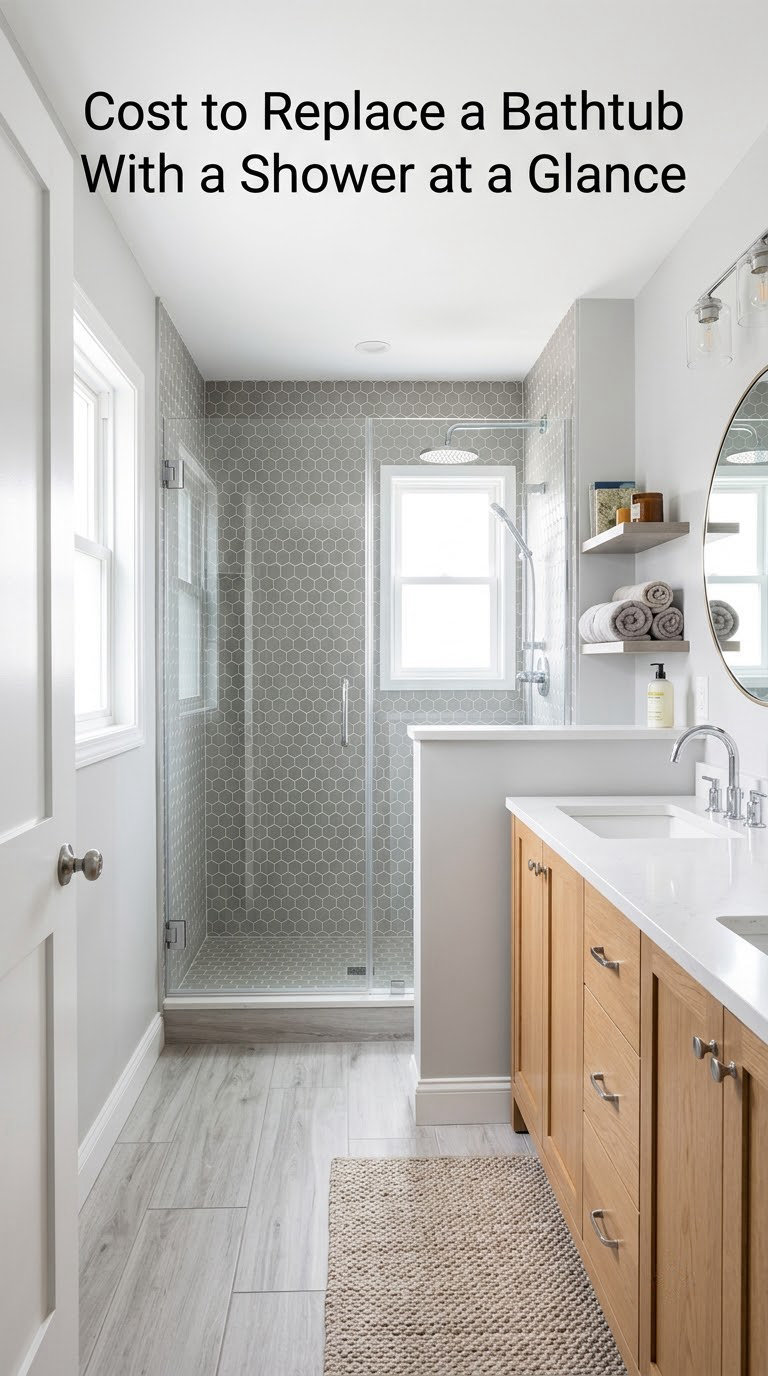
Four price bands cover almost every tub-to-shower conversion. The differences between them are not cosmetic, they change whether the job is a two-day swap or a two-week rebuild.
| Project type | Typical total | What is in scope |
|---|---|---|
| Basic prefab conversion | 3,000 to 5,500 | Drain and supply lines stay put. Molded acrylic or fiberglass surround, standard shower pan, framed or sliding glass door, new valve and trim. Nothing but the surround and the floor gets touched. |
| Mid-range tile conversion | 6,000 to 9,000 | Tiled walls with a tiled floor, solid brass pressure-balanced valve, handheld head on a slide bar, semi-frameless glass, niche cut into the back wall. |
| Custom tile, expanded footprint | 9,000 to 15,000 | Shower grows past the old tub alcove. New subfloor work, waterproofing across more surface, larger-format tile, bench seat, frameless glass, thermostatic valve. |
| Curbless (zero-entry) | 11,000 to 20,000 | No threshold at all. Linear drain, recessed or reworked subfloor, blocking for grab bars, higher waterproofing standard, often a permit and inspection. |
The single most useful thing you can do before calling anyone is measure your tub alcove. The standard American tub recess is 30 by 60 inches, and a shower that fits neatly inside those dimensions is the cheapest kind of conversion by a wide margin.
Homeowners posting in the r/homeowners thread about this exact project report that a straightforward install with plumbing already in general condition runs about 2,000 to 2,500, closer to 6,000 for a basic job once everything is counted, and around 20,000 for a large curbless shower. Those numbers came from people who had already done it, which makes them more useful than a vendor estimate.
What Changes the Cost to Replace a Bathtub With a Shower?
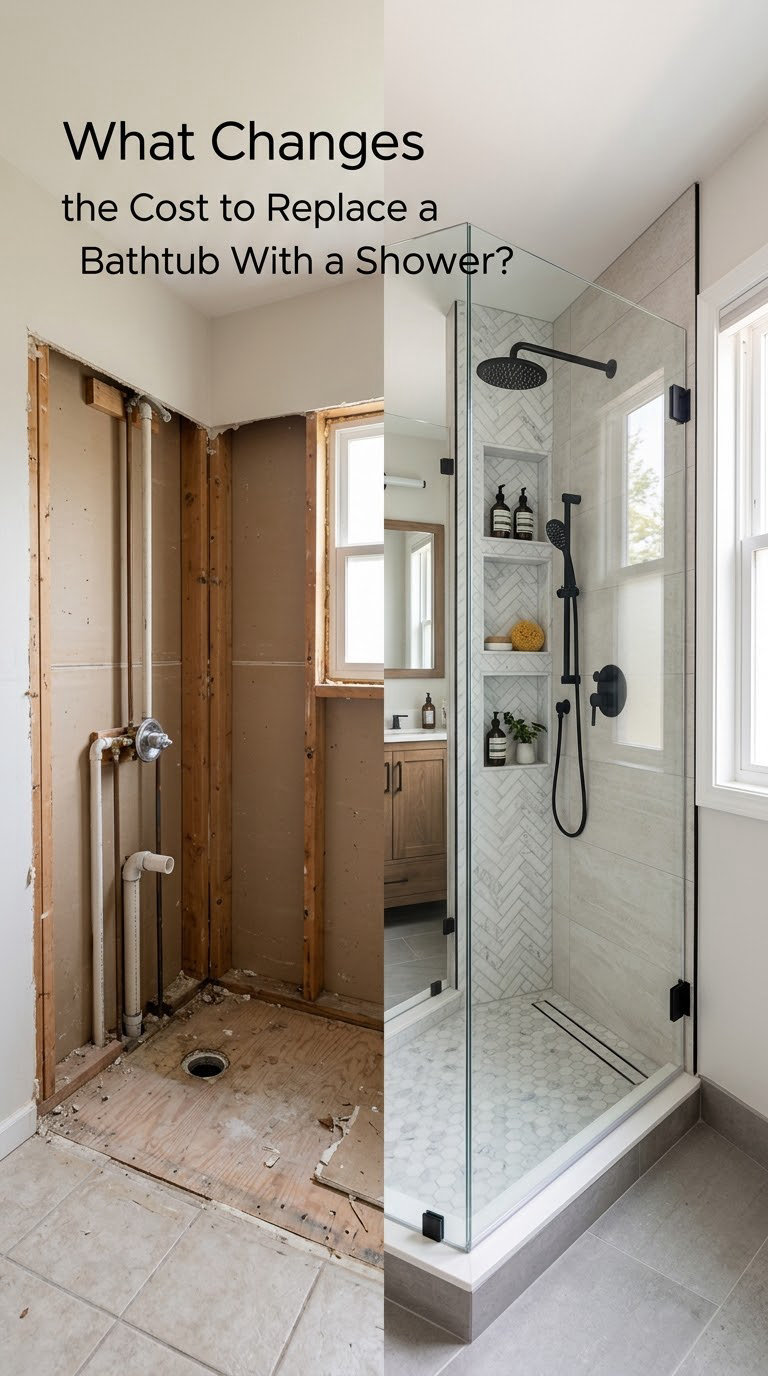
The total is really four buckets: labor, materials, plumbing changes, and everything that goes wrong behind the wall. On most jobs labor is 45 to 60 percent of the invoice, which is why the number that matters most is how many hours the crew is on site, not how nice the tile is.
| Line item | What it covers | Share of the total |
|---|---|---|
| Labor | Demo, framing, plumbing, waterproofing, tile, trim, glass, cleanup | 45 to 60 percent |
| Wall surround or tile | Acrylic panels, or tile on the back and two walls | 15 to 25 percent |
| Glass door or enclosure | Framed slider, semi-frameless, or frameless swing door | 10 to 18 percent |
| Shower pan and waterproofing | Pan, membrane, backer board, flood test before tile goes up | 8 to 12 percent |
| Demolition and disposal | Tear-out, tub haul-away, dumpster or junk removal | 5 to 10 percent |
| Valve, trim and showerhead | Pressure-balanced or thermostatic valve, handheld on slide bar | 5 to 10 percent |
| Plumbing rough-in | Drain, supply lines, valve relocation, mixing valve set | 5 to 15 percent |
| Framing, subfloor, curb work | Only when the floor or a wall has to change | 0 to 15 percent |
| Permit and inspection | Where your jurisdiction requires one | 1 to 3 percent |
Plumbing is the sleeper. If the existing drain sits under the old tub and the new shower floor can slope to it, plumbing runs cheap. If you want the drain moved, a new linear drain run, or the shower head relocated to a different wall, you are paying for new drain pipe, new supply lines, and possibly opening up a wall that nobody priced in.
Existing conditions matter more than style choices here. Older homes frequently turn up with a subfloor that is soft from years of slow leaks, a lead or cast-iron drain that some codes no longer allow you to tie into, or asbestos-containing adhesive under old surround panels from the 1980s. Any one of those discoveries adds a day and a chunk of money.
Some homeowners also hit a snag nobody mentions: the old tub drain and trap. If it is seized or cracked, replacing it during demo is a small job in principle. You can read how that part works in our guide to replacing a bathtub drain elbow before the crew arrives.
How to Estimate the Cost to Replace a Bathtub With a Shower
Start with the measurement, not the catalog. Measure the alcove, mark where the drain center sits, and check whether the studs are where the drawings say they are. Every surprise you find in that first hour is a surprise you find before you sign anything.
- Measure the space. Photograph the alcove, note the drain location, and confirm the finished ceiling height.
- Probe for hidden problems. Press the subfloor near the drain. If it feels soft, or you see staining on the base of the studs, get it looked at before quoting.
- Choose a system, not a mood board. Acrylic surround, fiberglass, or tile. Decide on a curb or curbless. Those two decisions move the number more than any fixture you will pick.
- Get three written, itemized quotes. Labor, materials, permits and disposal each on their own line. If two quotes are within a few hundred dollars of each other, you have real competition.
- Reserve 10 to 15 percent. On a 8,000 job that is 800 to 1,200 held back for whatever demolition turns up. Contractors who quote without a contingency line are guessing.
Ask every bidder the same five questions: is the permit included, who disposes the old tub, what happens if we find water damage, do you subcontract the tile, and is the glass measured and ordered after the walls are done. The answers tell you more than the bottom line does.
Costs That Surprise People After Demolition Starts
Every conversion has a small list of things that were not in the original quote. None of them are unreasonable, which is exactly why they are annoying.
- Subfloor repair. Water sits under the tub edge for years. Replacing a rotted section runs into the hundreds and adds a day, because nothing can be closed up until it is dry.
- Old drain pipe that will not pass code. Cast iron and some lead connections are fine on an existing tub and not acceptable on a new shower in many jurisdictions. Replacing it is a plumber’s job with a plumber’s price.
- Adhesive containing asbestos. Common in surround panels installed in the 1970s and 80s. It cannot be sanded or broken up normally, and handling it has to be priced in.
- Out-of-plumb walls. Older alcove walls are rarely perfectly square. Tile setters charge more for a substrate they cannot trust, and acrylic panels tolerate it better.
- Disposal fees. A standard tub is straightforward. A cast-iron claw-foot tub, a jetted spa, or a large drop-in unit is heavy, awkward, and frequently carries a separate removal charge.
- Fast-track scheduling. If you need the crew inside a specific week, expect to pay more. That is a scheduling cost, not a materials cost, and it shows up in the labor line.
If your quote has no contingency line and no allowance for any of the above, assume the contractor is planning to eat those costs and their margin is already built in. Ask directly rather than assuming either way.
How Long a Tub to Shower Conversion Takes
A same-footprint conversion is a short job. The reason some of these projects stretch out is almost never the tile setting, it is the work that has to happen before anything can be closed up.
| Phase | Duration | What happens |
|---|---|---|
| Demo and haul-away | Half day to 1 day | Tub and surround come out, framing exposed, trash out. Findings are assessed here. |
| Plumbing rough-in | Half day to 1 day | Drain and supply lines verified or replaced, valve set at the right height, blocking added for grab bars and the showerhead. |
| Pan, backer board, waterproofing | 1 day plus cure | Pan installed, cement board or waterproof backer set, membrane applied and flood tested before anything covers it. |
| Tile or surround panels | 1 to 3 days | Walls and floor finished. Large-format tile and any expansion beyond the alcove add the most time here. |
| Grout, silicone, cure | 1 day plus 24 hours | Grout cures, silicone cures. The shower stays out of use for about a day after this. |
| Glass, trim, final inspection | Half day | Enclosure measured and fitted, hardware set, inspection if a permit was pulled. |
Run the numbers end to end and a mid-range tile conversion lands at one to two weeks of work with a few days of cure time in the middle. A prefab surround with the plumbing untouched is closer to a long weekend.
Getting Quotes You Can Actually Compare
Two bids that differ by 4,000 dollars are usually not pricing the same job. Before comparing anything, check that each quote names the same shower pan, the same glass type, the same valve, and the same amount of wall tile. A quote that includes tile on three walls and a quote with an acrylic surround are not competing bids.
Regional labor rates are the biggest single reason the published ranges disagree with each other. The same mid-range conversion can run well below the national midpoint in a low-cost market and well above it in a high-cost one, and the gap is entirely in the labor line. Get all three quotes from contractors working in your own area, because a national average will not tell you what your block costs.
On timing, one useful test is to ask each contractor what the project timeline looks like from their start date. A crew that will not commit to anything vaguer than a two-week window is telling you something about their backlog.
Shower Conversion Materials and Their Cost Impact
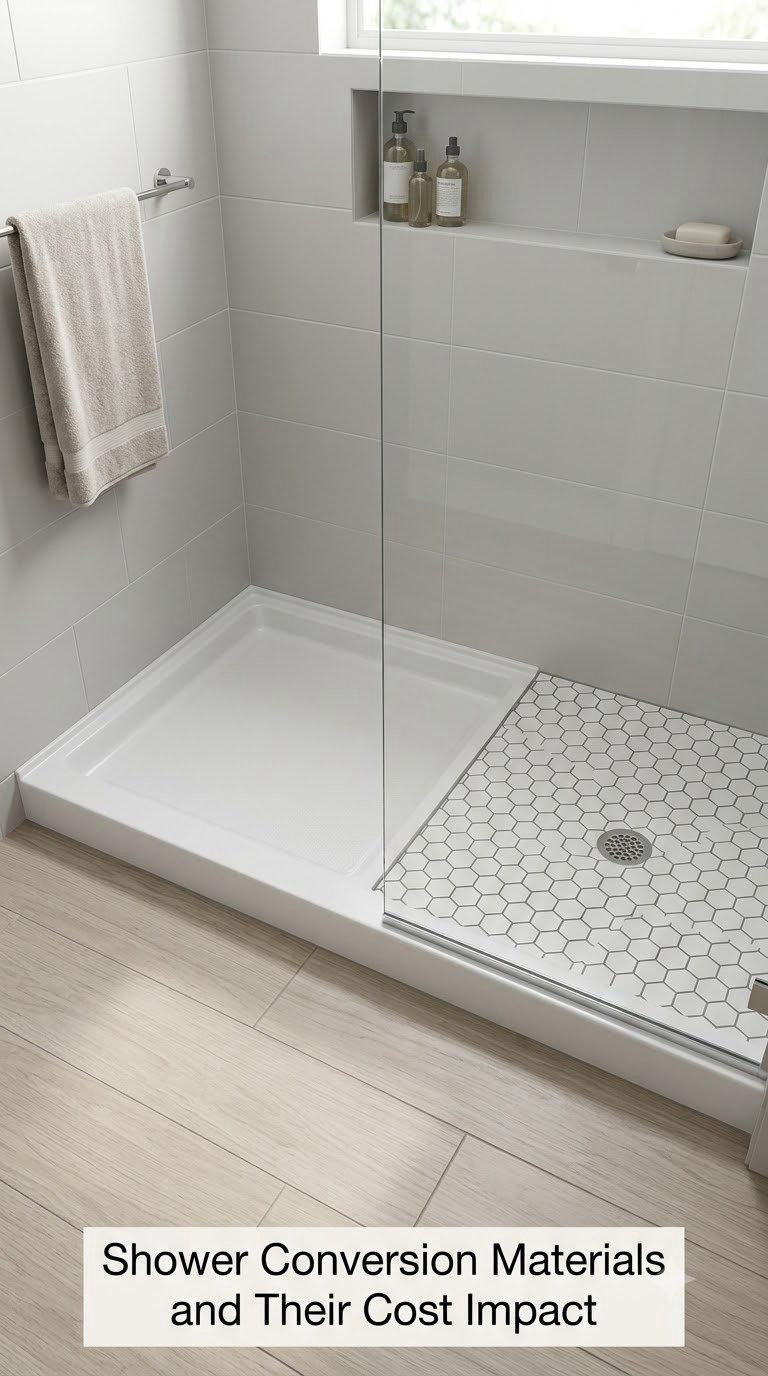
Acrylic and fiberglass are the budget path, tile is the durable path, and a low-threshold or curbless pan is the accessibility path. They are not really comparable on the same axis, so here is how they actually differ.
| System | Material cost | Durability | Upkeep |
|---|---|---|---|
| Acrylic surround panels | Low | 15 to 25 years | Wipe clean, no grout to scrub. Panels can flex slightly in the cold and the seams can open over time. |
| Fiberglass surround | Lowest | 10 to 20 years | Same low maintenance, but the gelcoat scratches more easily and dulls faster than acrylic. |
| Low-threshold molded unit | Moderate | 20 to 30 years | One-piece units have few seams. The threshold is the weak point and it is the part most likely to need replacing. |
| Custom tile shower | High | 50 years and beyond | Grout every few years, and the whole job depends on the waterproofing underneath being done right. |
| Curbless tile with linear drain | Highest | 50 years and beyond | The drain body itself becomes a service item that can be reached from above. |
On resale, tile reads as an upgrade to most buyers, which is partly why a custom tile conversion returns more of its cost at sale than a prefab one does. That said, if your home has two full bathrooms, converting the one nobody uses from tub to shower does very little for resale and everything for how the room works every morning.
The genuine tradeoff is risk. A prefab surround is a contained system with fewer places to fail. Tile looks better and lasts longer, but a shower that leaks behind the tile will cost you several times what the tile saved you, and you will not find out until the drywall is open.
One thing worth deciding early: the showerhead and trim. If you want a handheld on a slide bar alongside a standard head, say so during the rough-in so both supply locations get set while the wall is open. Retrofitting a second showerhead later means cutting into a finished wall, and our guide to bathtub drain replacement cost covers how that same wall-open-and-close cycle adds up on the plumbing side too.
DIY or Hire a Bathroom Contractor?
Hire a contractor for anything involving the drain, the valve, or the waterproofing. Demolition and painting you can reasonably do yourself, and doing so is where most of the realistic DIY savings come from.
| Task | DIY friendly? | What happens if you get it wrong |
|---|---|---|
| Removing the tub and old surround | Yes | Mostly cosmetic damage. The one risk is hitting a supply line or a nail in an old valve. |
| Haul-away and disposal | Yes, if you have a truck or trailer | Nothing structural, but fees climb fast if the contractor has to arrange it. |
| Framing changes, new niche, moving a stud | Borderline | Out-of-square walls show immediately in a tiled shower and are expensive to correct. |
| Drain relocation or linear drain | No | Improper slope traps water in the pan, and plumbing work of this kind usually needs a permit. |
| Valve rough-in and supply lines | No | Leaks inside a wall, or an anti-scald valve installed wrong and failing inspection. |
| Waterproofing membrane and flood test | No | This is the failure that costs the most. Water gets behind tile and into framing. |
| Tiling | Advanced DIY only | Cosmetic and slope errors. Large-format tile on a flat substrate is genuinely specialist work. |
| Glass enclosure installation | Borderline | Heavy panels, drilled into hardened glass. Wrong and you crack a door that cost real money. |
Code and permits are worth understanding before you start. Most jurisdictions require a permit when plumbing is altered, when a new curbless pan or linear drain is installed, or when the shower is moved. A same-footprint prefab conversion often does not need one, but check your local building department rather than assuming. Electrical work, such as adding a fan, an exhaust upgrade, or moving a receptacle, always needs a licensed electrician and a permit in most places.
One practical note on savings: homeowners who DIY the demolition usually save somewhere in the range of 800 to 1,800 on a mid-range job, and more than that on a tub that is awkward to get out of the alcove. Take that saving only if you already know what a properly sloped, properly waterproofed pan looks like. Otherwise you have traded a known cost for an unknown one.
Frequently Asked Questions
Is it a good idea to convert a tub to a shower?
Usually yes, especially in a bathroom where the tub is cramped, hard to get into, or rarely used. The main argument against it is resale: if you are removing the only bathtub in the house, some buyers see that as a loss of function, particularly families with young children. With a second full bathroom in the house, the tradeoff largely disappears.
How much does it cost to take out a bath and replace with a shower?
Most homeowners spend 7,000 to 11,000 US dollars for a full conversion in a standard bathroom, with a realistic total range of 3,000 to 15,000. A prefab acrylic conversion with plumbing left in place sits at the low end. A custom tile shower with an expanded footprint or a curbless pan sits at the high end.
Can I reuse the existing plumbing when converting a tub to a shower?
Usually, yes. The drain under the old tub and the nearby supply lines can almost always feed a new shower if the layout stays the same, which is the cheapest possible outcome. Moving the drain, adding a linear drain, or relocating the showerhead means new pipe and possibly opening a wall, which can add several hundred to a couple thousand dollars.
How long does a tub to shower conversion take?
A same-footprint prefab conversion with plumbing in place runs two to three working days. Add a day or two for new tile and waterproofing. A custom tile shower with an expanded footprint or a curbless pan takes one to three weeks, because the subfloor, drain, and framing work happen before anything can be closed up.
Do I need a permit for a tub to shower conversion?
It depends on your building department. A straightforward conversion that keeps the existing drain and footprint often needs no permit. Altered plumbing, a curbless pan, a linear drain, a moved shower, or any new electrical work usually does. If a permit is required, an inspection on the waterproofing happens before tile goes up.
What is the cheapest way to replace a bathtub with a shower?
Keep the footprint, keep the drain, and keep the existing supply lines in place. Use a molded acrylic or fiberglass surround, a standard pan, a framed or sliding glass door rather than frameless, and a pressure-balanced valve instead of a thermostatic one. Skip the niche, the bench, and the tile, and do the demolition yourself.
Start With Two Written Quotes
Measure the alcove, photograph the drain location, and press the subfloor near it. Those ten minutes tell you which of the four price bands above you actually belong in, and every contractor you call will quote from that same set of facts instead of the most expensive version they can imagine.
Then get three itemized quotes in writing, compare them line by line, and hold back 10 to 15 percent for whatever demolition reveals. If you have a bathtub faucet you also need replaced, our step-by-step guide to replacing a bathtub faucet covers that job on its own.
Keep the plumbing where it is and the shower inside the old tub footprint unless you have a real reason not to. That single decision is usually the difference between a four-figure job and a five-figure one.