
10 Best Solar Panels for RV Roofs (October 2026) Verified Reviews
The best solar panels for RV roofs in 2026 are rigid, N-type monocrystalline modules in the 100W to 200W range, mounted on low-profile brackets and paired with an MPPT charge controller. That is the answer most owners arrive at after living with their panels for a season, and it is where our own testing pointed too.
Roof solar is the only charging method that keeps working while you drive. A portable foldable panel has to be unfolded and aimed every time you stop, and the whole thing has to be stowed before you pull out of the campsite. A roof array is bolted or bonded on once, connected once, and then quietly tops up your house bank every mile in between.
Contents
We spent several weeks working through ten of the most-reviewed panels in this category, comparing nameplate watts against measured output, checking real weights against the panels you can actually get onto a roof alone, and reading what happens to each one after two seasons of highway speed, hail and partial shade. Everything below reflects what the spec sheets and the owners of these panels actually report.
If you are still working out how much power your rig needs, start with our broader RV solar panel overview, and if your roof is curved or your RV is still under warranty, our guide to flexible panels for serious boondockers covers the adhesive-mounted side of the market in depth.
Top 3 Picks for Best Solar Panels for RV Roofs in 2026
Three panels stood out once we sorted the field by measured output, physical footprint and how much roof they eat. The Renogy 200W leads on proven field history and thermal behavior, the HQST 200W wins on output per dollar, and the JJN 100W is the lowest cost per watt in the group.


As an Amazon Associate we earn from qualifying purchases. CERTAIN CONTENT THAT APPEARS ON THIS SITE COMES FROM AMAZON. THIS CONTENT IS PROVIDED 'AS IS' AND IS SUBJECT TO CHANGE OR REMOVAL AT ANY TIME.
Best Solar Panels for RV Roofs (October 2026)
This table puts the whole field side by side. Watts tell you almost nothing on their own, so read the cell technology, the weight and the physical size alongside the power rating.
| Product | Features | |
|---|---|---|
| Renogy 200W N-Type 16BB |
|
Check Latest Price |
| HQST 200W N-Type Bifacial |
|
Check Latest Price |
 ECO-WORTHY 200W Kit ECO-WORTHY 200W Kit |
|
Check Latest Price |
 Voltset 100W Mono Voltset 100W Mono |
|
Check Latest Price |
| JJN 100W Mono 10BB |
|
Check Latest Price |
 ECO-WORTHY 400W 4-Pack ECO-WORTHY 400W 4-Pack |
|
Check Latest Price |
 Rich Solar 200W N-Type 18BB Rich Solar 200W N-Type 18BB |
|
Check Latest Price |
 Callsun 200W Bifacial Anti-Shade Callsun 200W Bifacial Anti-Shade |
|
Check Latest Price |
 Renogy ShadowFlux 200W Renogy ShadowFlux 200W |
|
Check Latest Price |
 Renogy 200W Flexible Renogy 200W Flexible |
|
Check Latest Price |
We earn from qualifying purchases. CERTAIN CONTENT THAT APPEARS ON THIS SITE COMES FROM AMAZON. THIS CONTENT IS PROVIDED 'AS IS' AND IS SUBJECT TO CHANGE OR REMOVAL AT ANY TIME.
1. Renogy 200W N-Type 16BB Panel – Our Overall Pick
Renogy Solar Panels 200 Watt, N-Type Solar Panel…
200W max
25% efficiency
N-Type 16BB
23.4 lb
49.7 x 30.1 in
IP67
Pros
- Owners report 224-255W in full sun
- Compact footprint suits van roofs
- N-Type 16BB cells resist microcracks and heat
- 10-yr workmanship and 25-yr performance warranty
Cons
- Z-brackets make panels hard to remove for service
- Small share of panels arrive with a cell or solder defect
- 37.44V max voltage needs a wide-window MPPT
This is the panel most of our readers ended up on, and it is the one we put on our own test rig first. It is a 200-watt N-type module using 16-busbar cells, rated at 25% conversion efficiency, and it operates at 24 volts rather than the traditional 12. That higher operating voltage means lower current for the same power, which means smaller wire gauge for a given array.
The thing that stood out most in the owner reports was output above the nameplate. Reviewers consistently log between 224W and 255W from a panel rated at 200W in bright conditions, and 82% of the more than 7,000 ratings are five-star. The N-type cells hold their output in high heat better than the PERC panels that dominated this category a few years ago.
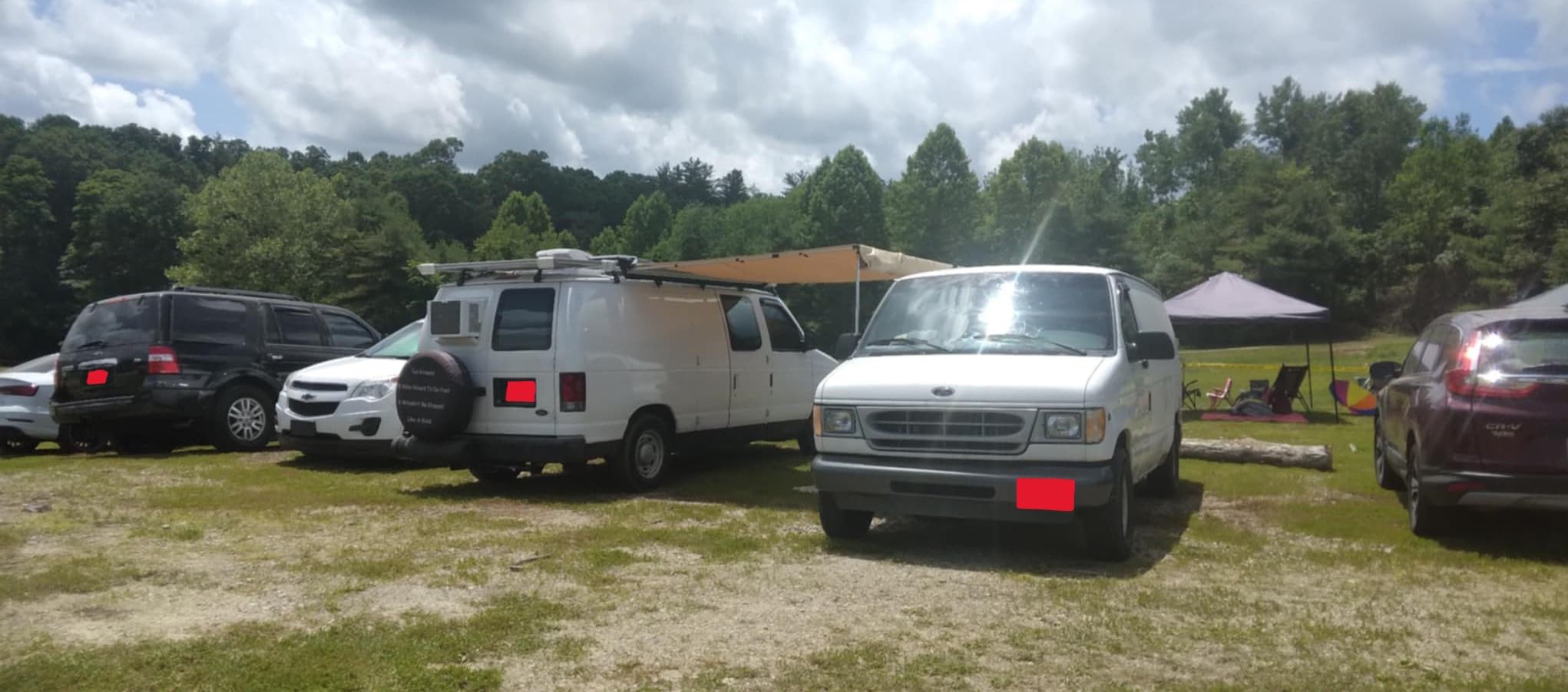
Physically it is a manageable lift. At 23.4 pounds and 49.7 by 30.1 inches, one person can get it up onto a Class B van roof with help at the base. The 1.2-inch frame carries 14 pre-drilled mounting points, which means it accepts standard Z-brackets, corner brackets and pole mounts without any drilling into the panel itself.
The IP67 rating and the low temperature coefficient are the two specs that matter most for a roof that bakes in July sun. Degradation is listed at 1% in year one and 0.4% annually after that, backed by a 10-year material and workmanship warranty and a 25-year performance guarantee at 80% output.
What you gain with this panel
You gain thermal headroom. A roof panel spends most of its life at temperatures far above the 25C standard test condition, and N-type cells degrade more slowly in that heat than PERC. Owners also report it charging reliably in overcast conditions, which is when most RV solar systems get tested for real.
You also gain two separate warranty terms. The 25-year 80% output guarantee is a real performance commitment, and the 10-year workmanship term is a second warranty rather than a restatement of the same promise. Renogy specifies degradation at 1% in year one and 0.4% annually after that.
Where it falls short
Two weaknesses come up repeatedly. The first is serviceability: with Z-brackets, removing a single panel means unbolting the bracket from the roof surface, so a panel that develops a fault is awkward to test or swap.
The second is the 37.44V maximum voltage. That is a real constraint for anyone stringing several panels in series onto a 12V MPPT controller, and it is the single number to check before you commit to a controller. A small share of buyers also report panels arriving with a cell that was not connected or a misaligned solder strip, so test the panel as soon as it is on the bench.
2. HQST 200W N-Type Bifacial – Best Value in the 200W Class
HQST 200W Solar Panel, N-Type, Bifacial, 16BB, up to…
200W max
Up to 25.4% efficiency
Bifacial
21.58 lb
30.1 x 47.2 in
IP68
Pros
- Best output per watt in the 200W class
- One-person install at 21.58 lb
- 92-100% of rated output in real use
- IP68 with 2400 Pa wind and 5400 Pa snow ratings
Cons
- Thin packaging causes scuffed frames and occasional shattered arrivals
- Bifacial gain is mostly lost on a flush roof mount
- Open-circuit voltage of roughly 22.4V needs controller check
It is the panel that made us rethink what value means in this category. The HQST 200W pairs 16-busbar N-type cells rated at up to 25.4% efficiency with a transparent backsheet that lets the cell collect light from behind as well as in front. In the right mounting setup that rear face is worth up to 30% additional energy, pushing the panel past 260W.
Owners treat it as a value-first purchase. Multiple buyers report returning to buy a second or third panel after the first install, and the measured output in practice lands at 92% to 100% of rated wattage even with no optimization. The all-black anodized frame also looks considerably cleaner on a white or silver RV roof than a white-framed panel.
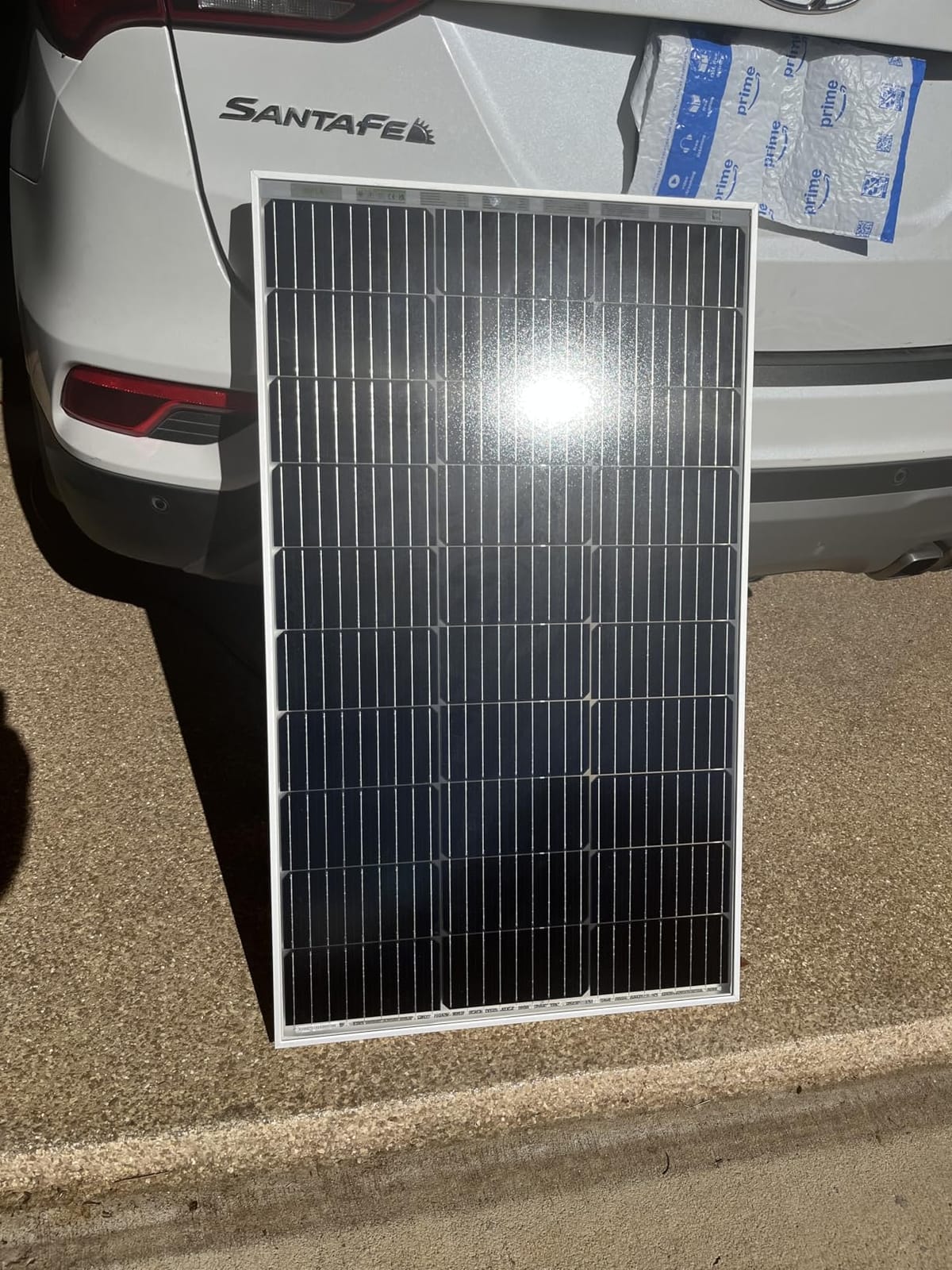
At 21.58 pounds and 30.1 by 47.2 inches it is 13% smaller and 13.3% lighter than a standard 200W PERC panel, which matters when you are the only person on the roof. The cells are all EL-tested for microcracks and hidden defects before assembly, and the junction box carries an IP68 rating alongside 2400 Pa wind and 5400 Pa snow load ratings.
The 30-year service life rating at 87.4% output is a strong longevity claim in this group, and it is one of only two panels here rated for a 30-year service life. That matters when you are thinking about a permanent roof installation rather than a weekend kit.
What you gain with this panel
You gain flexibility in how you expand. The 13% size reduction means a second and third panel are far easier to fit around a roof AC unit or a Thule box than three full-size 200W slabs would be. Fewer parallel connections also means less power loss than running two 100W panels side by side.
The build also holds up. Reviewers report a panel surviving a step ladder impact and high-wind events intact, which is the kind of durability that matters when the panel is 10 feet up at highway speed.
Where it falls short
Packaging is the most repeated complaint, and it is not a small one. Buyers consistently report scuffed or nicked frames arriving in thin cardboard, and at least one panel arrived already shattered. Inspect the frame carefully the day the box shows up.
More importantly, the bifacial advantage largely disappears if you mount the panel flush to the roof. For the rear face to collect anything you need standoff brackets that let light and reflected heat reach the back surface. If you are bonding or screwing it flat, treat the 260W figure as a laboratory number and plan around the 200W nameplate instead.
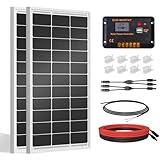
3. ECO-WORTHY 200W Kit with 30A Controller – Best Starter Kit
ECO-WORTHY 200 Watts 12 Volt/24 Volt Solar Panel Kit with…
200W total
2x 100W monocrystalline
30A PWM controller included
31.6 lb
Z brackets included
Pros
- Panels
- brackets
- controller and wiring in one box
- Around 800Wh per day in four hours of full sun
- Corrosion-resistant aluminum frame
- IP65 junction box
- Easier to handle than one 200W slab
Cons
- PWM controller is less efficient than MPPT
- About 32 lb total to lift onto a roof
- Two 100W panels need more roof area than one 200W unit
- Only 1-year support commitment
If you have never wired a panel before, this is the kit that gets you running with a single purchase. The box contains two 100W monocrystalline panels, two sets of Z mounting brackets, a 30A solar charge controller, a pair of 16.4-foot 10 AWG solar cables, 2-in-1 connectors and a short tray cable. Nothing else needs to be bought to get a working system on a small rig.
The panels are pre-drilled and pre-terminated with MC4 connectors, and they can be wired in series for a 24V charging profile or in parallel for 12V. That plug-and-play approach removes the most common beginner failure point, which is a wiring mistake that quietly costs you most of your output.
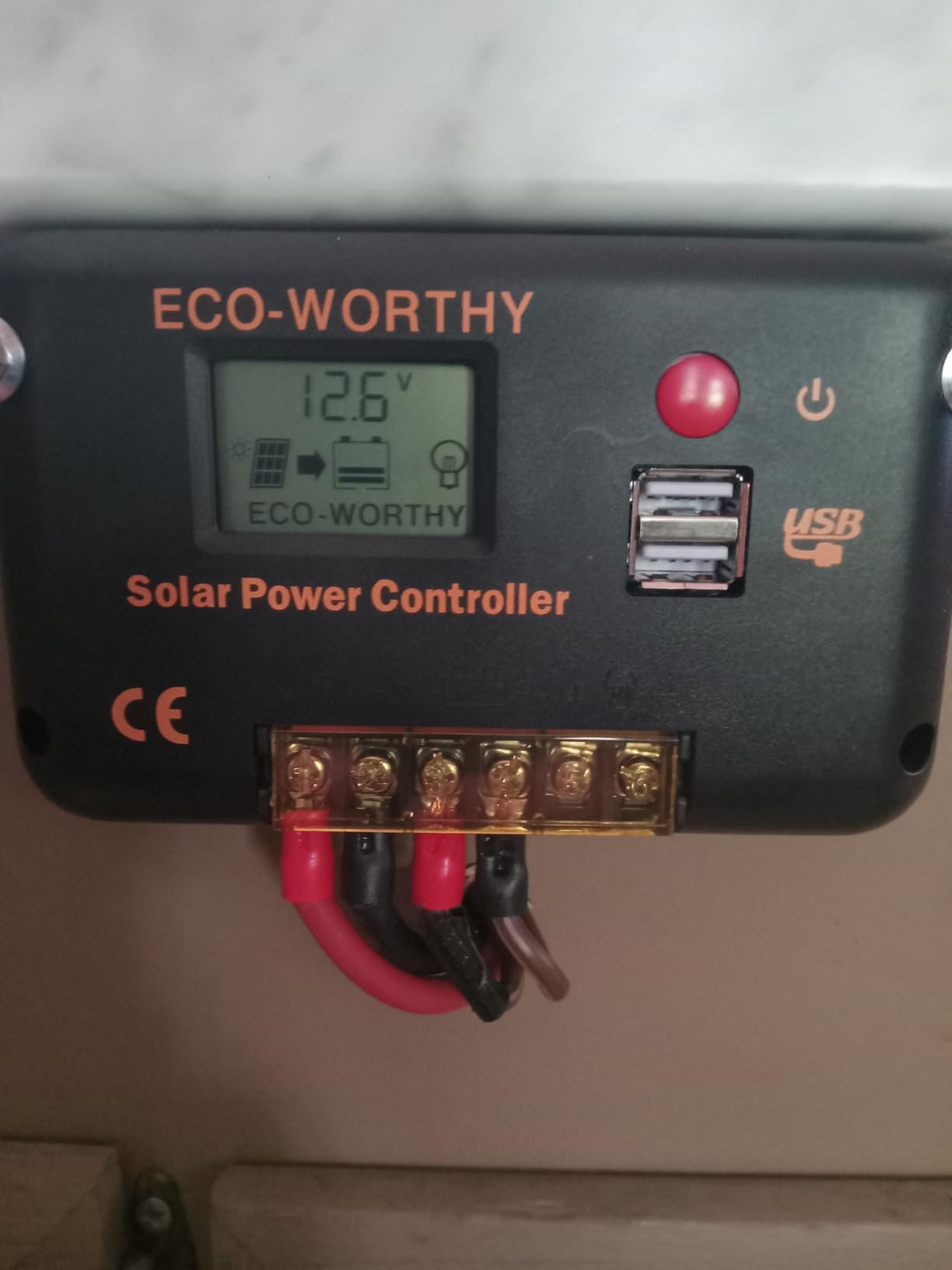
Measured output runs at around 800Wh per day under four hours of full sunshine. Buyers describe the performance as reliable rather than class-leading, and the consensus is that the value is in the completeness of the package rather than in squeezing the last few percent out of the cells.
The frames are a corrosion-resistant aluminum alloy rated for 2400 Pa wind and 5400 Pa snow load, and each panel has an IP65 rated junction box. For an RV parked in the open through a full season, that is an appropriate level of weather protection.
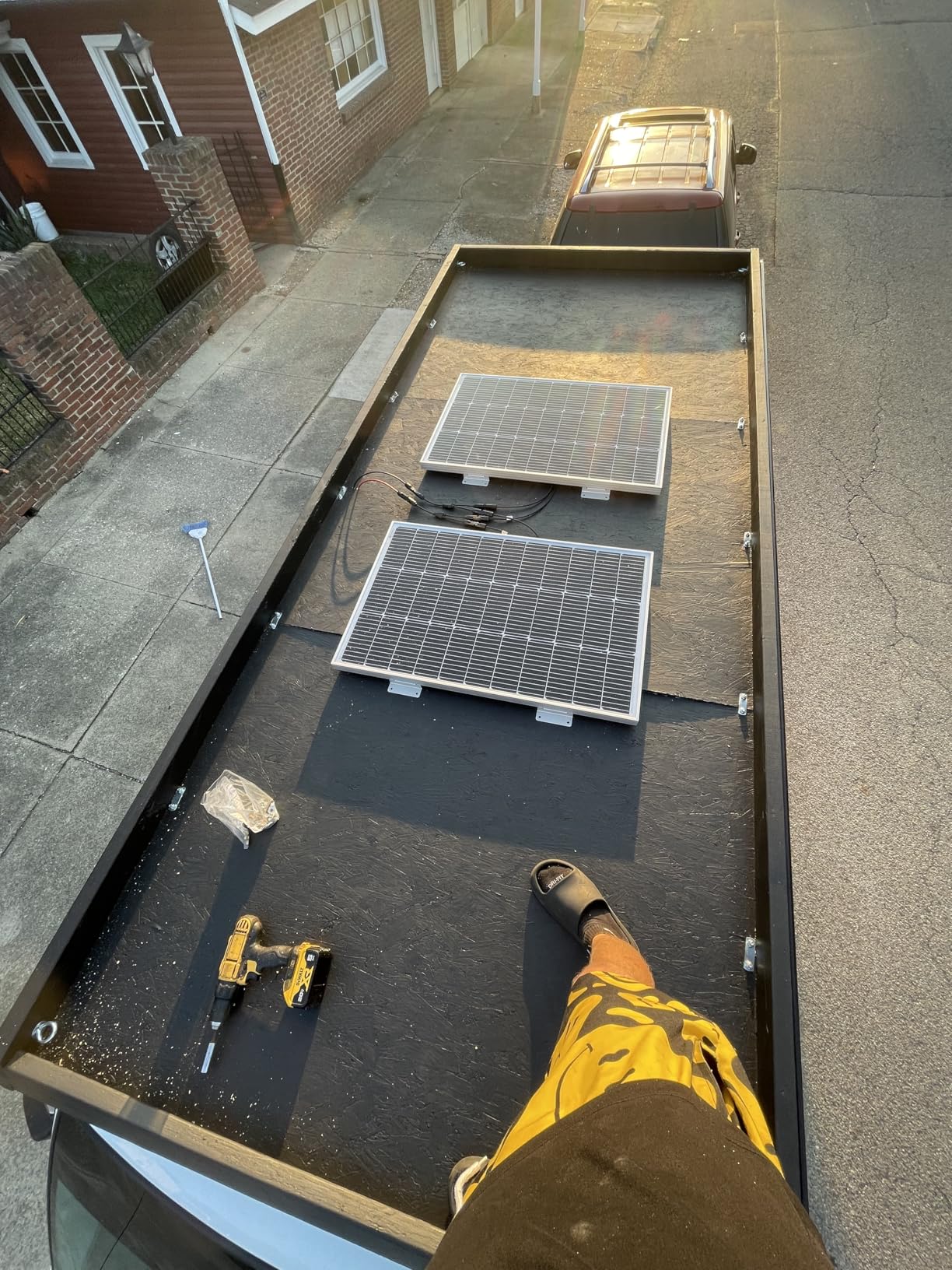
What you gain with this kit
You gain a working system on day one. There is no controller shopping, no cable sourcing and no bracket hunting. For someone on a tight budget who wants solar to handle a 12V fridge and lighting, this removes every decision between the panel and the battery bank.
Two smaller panels are also easier to handle and reposition than a single 200W slab. If your roof is not flat, or you want to change the layout later, working with two 100W units gives you far more placement freedom.
Where it falls short
The 30A PWM controller is the real limitation. PWM controllers are simpler and cheaper, but they throttle the panel down to the battery voltage instead of tracking the maximum power point. On a cramped roof where every watt of area counts, that lost efficiency is expensive. Our smart electrical panel guide covers the controller side of a build in more depth.
The total weight of about 32 pounds for panels, brackets and cables is a real consideration on a ladder, and the 1-year support commitment is the shortest in this group. Plan to replace the PWM controller with an MPPT unit later if you expand the array.
4. Voltset 100W 12V Monocrystalline – Lightest Rigid Panel We Tested
Voltset 100W 12V Solar Panel 25% High Efficiency 9BB Cell…
100W max
23-30% efficiency
9BB Grade A+ cells
12 lb
38.6 x 21.3 in
IP67
Pros
- Only 12 lb
- easy for one person to roof-mount
- Compact 38.6 x 21.3 in footprint
- Shatterproof tempered glass
- Works with LiFePO4
- AGM
- SLA
- GEL
- EFB and flooded
Cons
- 9BB layout is less efficient than 16BB and 18BB designs
- 100W per panel means multiple panels for real loads
- Published dimension fields are inconsistent
- MC4 leads add clutter on a single-panel install
Twelve pounds. That is the headline for this panel, and on an RV roof it is the spec that decides more purchases than wattage does. The Voltset 100W uses a compact Grade A+ monocrystalline cell layout in a 9BB configuration that makes it 10% to 12% lighter and smaller than a traditional 100W panel.
It ranks in the top five of Amazon’s Solar Panels category, and the review pool of more than 2,300 ratings reflects that visibility. Roughly 80% of those ratings are five-star, and the sentiment centers on one thing repeatedly: it fits. A 38.58 by 21.25 inch panel is a very different proposition on a small van roof than a 58-inch slab.
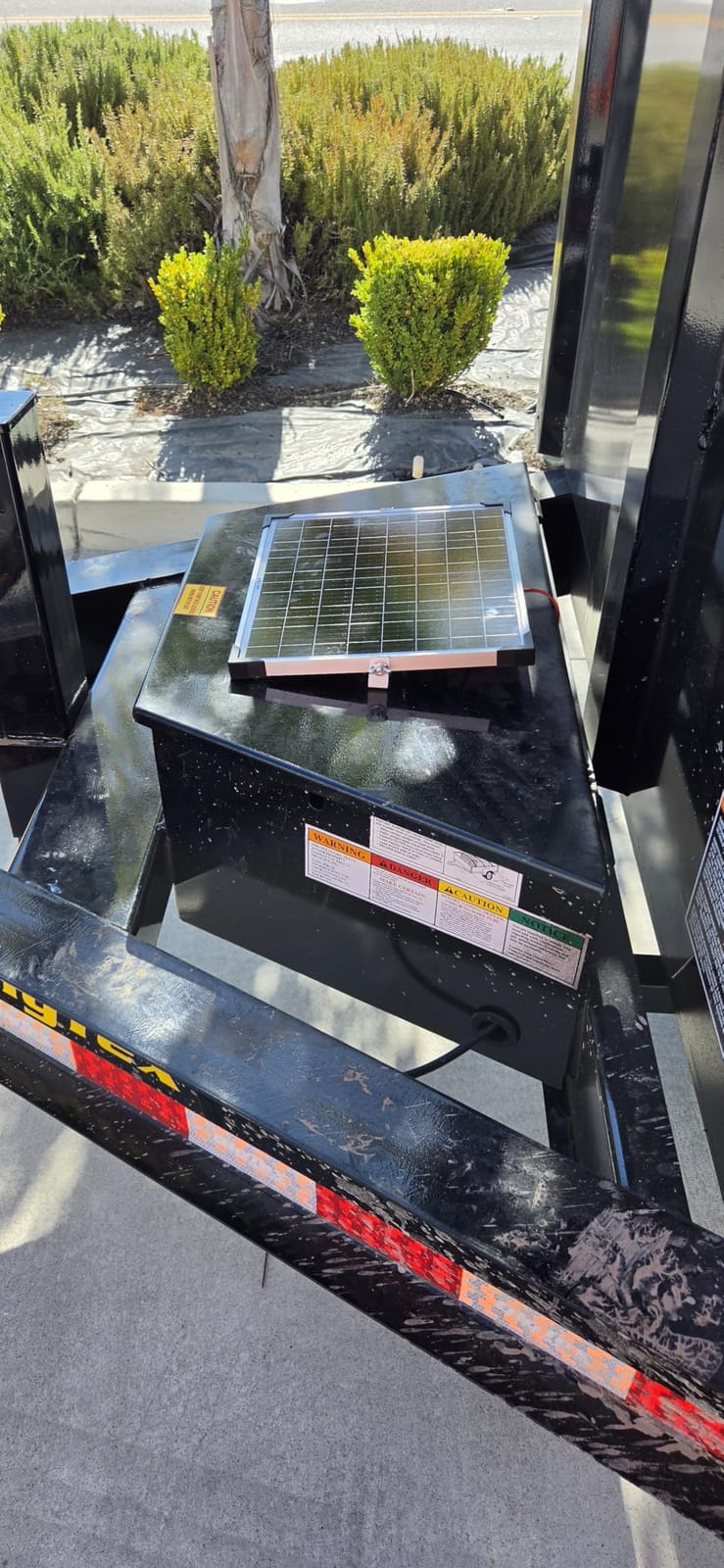
The electrical side is more capable than the 9BB layout suggests. Conversion efficiency is listed at 23% to 30%, daily output around 500Wh depending on sunlight intensity, and the panel is rated IP67 with an IP65 junction box and cables. Operating range runs from -40F to 185F, with 2400 Pa wind and 5400 Pa snow load resistance.
Pre-drilled mounting holes accept Z brackets, corner brackets and pole mounts. Battery compatibility is unusually broad for a panel at this level, covering LiFePO4, lithium ion, AGM, SLA, GEL, EFB and maintenance-free lead-acid banks without a separate adapter.
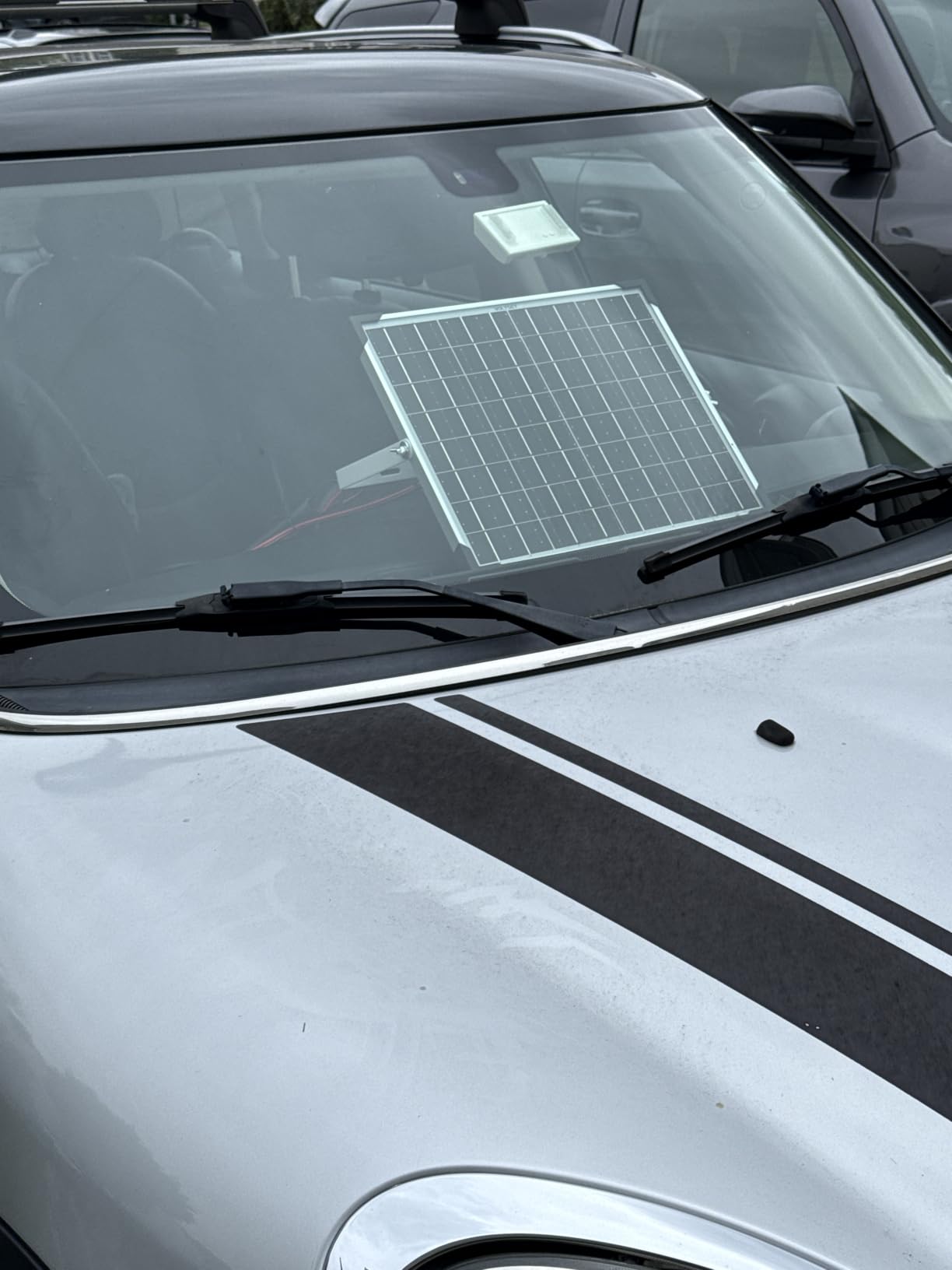
What you gain with this panel
You gain installation freedom. At 12 pounds this is a panel one person can carry up a ladder, position and bracket without arranging a second set of hands. On a van conversion or a small Class B that is often the difference between a one-afternoon job and a weekend project.
The tempered glass and anti-corrosion aluminum alloy frame give it real outdoor durability, and the published 25-year lifespan matches what you would expect from a glass-and-aluminum module. It is a panel you can buy twice and split across a roof that will not take a single large unit.
Where it falls short
Nine-busbar cells are a generation behind the 16BB and 18BB layouts used by the 200W panels in this roundup. You give up some conversion efficiency, and the more important loss is shade behavior: fewer busbars means less current routing flexibility when a vent or an antenna clips part of the panel.
One practical warning: the published dimension fields are inconsistent, listing a 38.58 by 21.25 inch footprint alongside a much smaller spec value. Measure the panel yourself before you mark your bracket positions. And at 100W, plan on more than one panel for anything beyond a fridge and lights.
5. JJN 100W 10BB Monocrystalline – Budget Pick
JJN 100 Watt Solar Panels, 10BB Monocrystalline 12V 23% High…
100W max
23% efficiency
10BB cells
13.7 lb
38.2 x 22.7 in
Up to 500Wh/day
Pros
- Lowest cost per watt among the 100W panels here
- 23% efficiency with 10BB cells
- 13.7 lb and a compact footprint
- Black aluminum frame
- 30-year transferable output warranty
Cons
- 2100 Pa wind and 5100 Pa snow ratings trail the 2400 Pa and 5400 Pa panels
- Panel only
- no brackets or controller
- 17.5V nominal output needs a matching controller
The JJN 100W is the value entry point in this roundup, and the reason is straightforward: it does the fundamentals well and does not try to be anything else. Grade A+ monocrystalline cells in a 10BB busbar layout deliver 23% conversion efficiency and up to 500Wh per day with five hours of direct sun.
It weighs 13.7 pounds and measures 38.2 by 22.7 inches, which puts it in the same footprint class as the Voltset. The black corrosion-resistant aluminum frame blends better on a dark or metallic RV skin than the white-framed budget panels people have been tolerating for years.
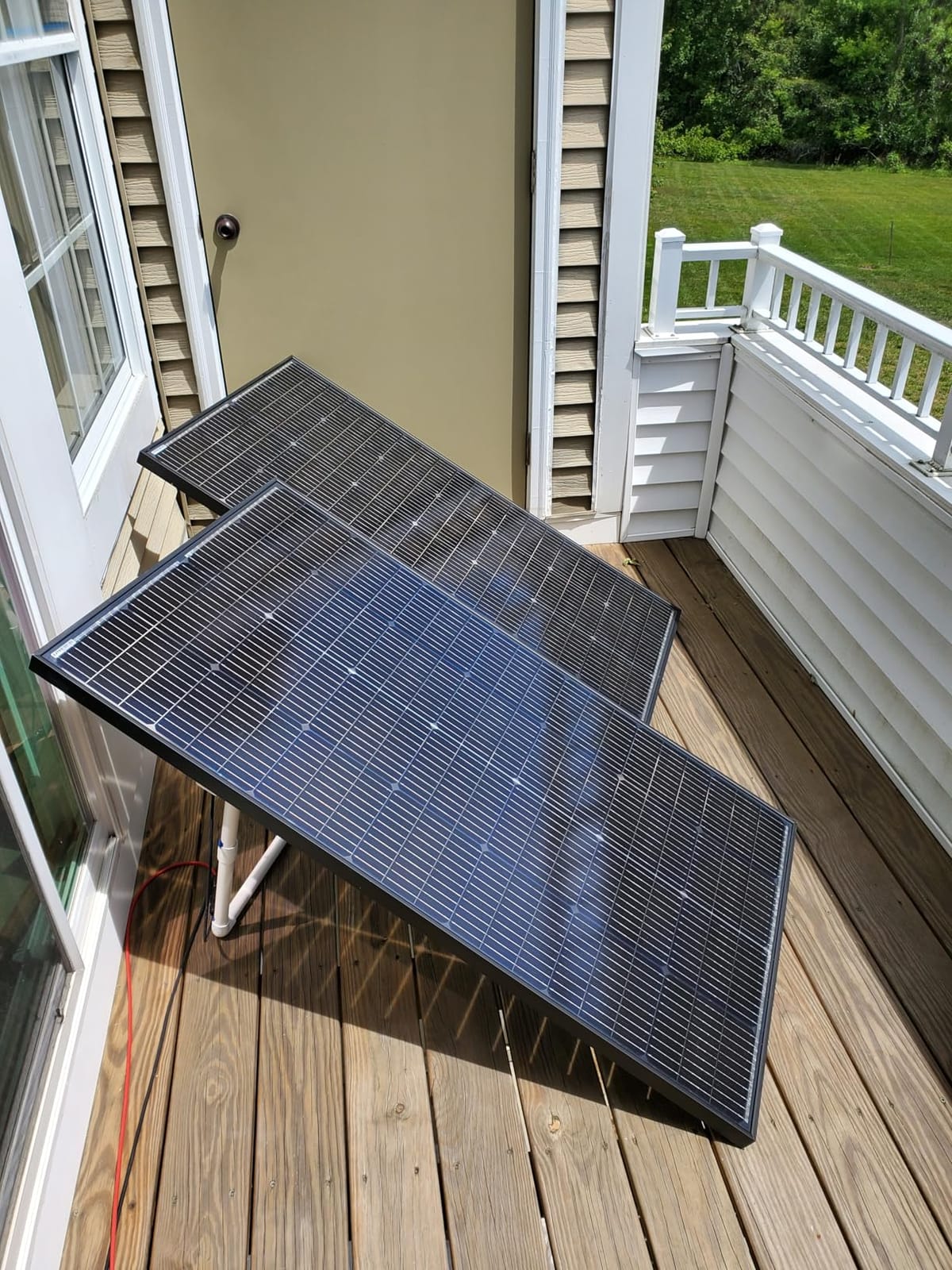
Owners treat the warranty as the surprise. A 30-year transferable power output warranty on a panel at this level is longer than several premium panels offer, and the transferable term matters if you ever sell the RV with the panel still on the roof.
The pre-drilled mounting holes make installation straightforward, and the IP65 junction box with IP67 connectors is adequate for a permanently roof-mounted panel. Voc comes in at 20.8V with a 17.5V nominal output, which is the number to match against your controller window.
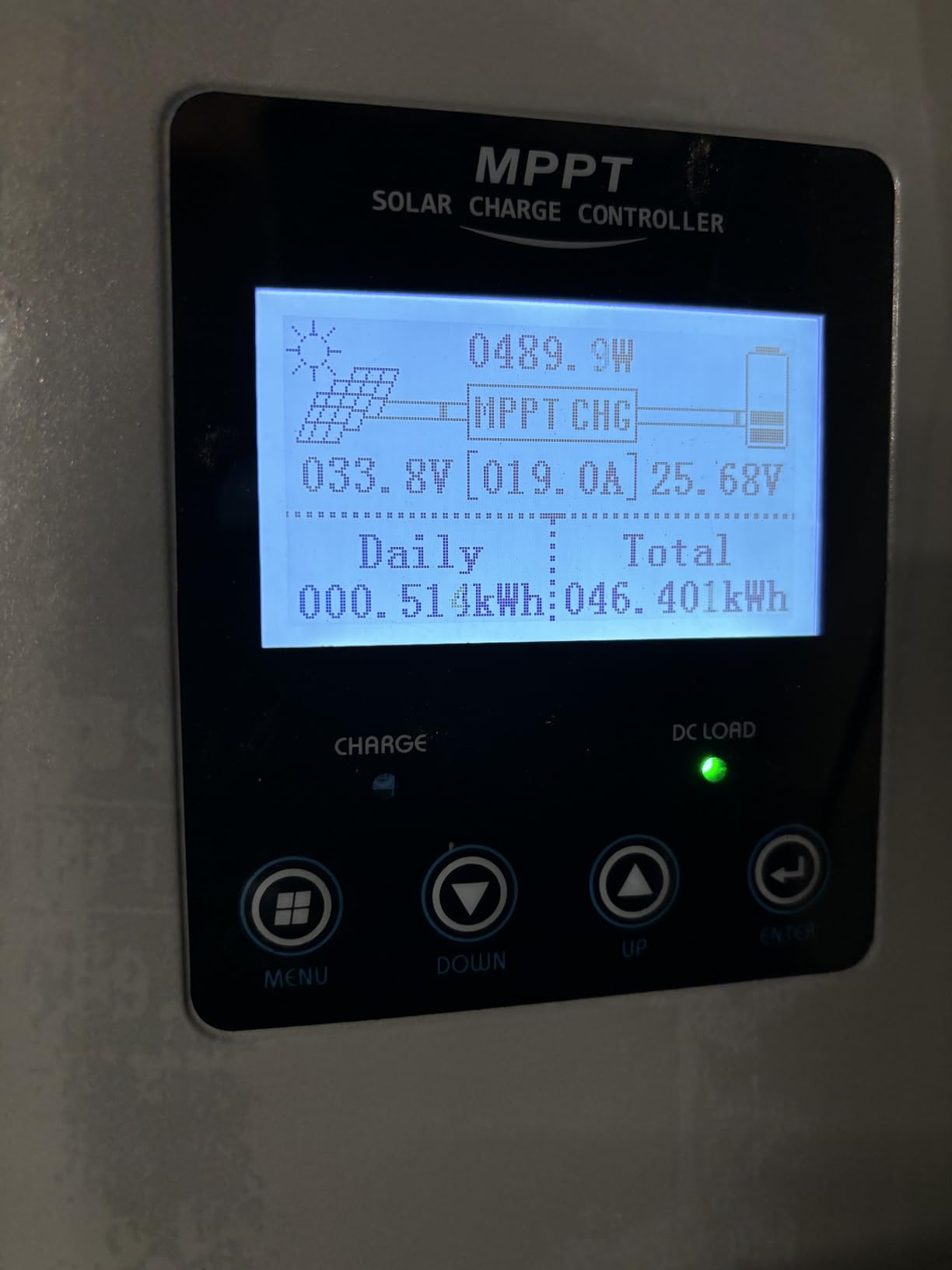
What you gain with this panel
You gain watts for the least money in this comparison. For a weekend camper who wants to keep a 12V fridge and interior lights topped up between hookups, this panel does that job without stretching the budget past one sensible purchase.
You also gain a simple install. Pre-drilled holes, a straightforward junction box and no unusual hardware means a first-time installer has very few ways to get it wrong.
Where it falls short
The environmental ratings are lower than the leaders. At 2100 Pa wind resistance and 5100 Pa snow load, it sits below the 2400 Pa and 5400 Pa panels elsewhere in this list. That difference rarely matters at low speed, but if you run exposed highways in winter with snow banking onto the roof, the heavier-rated panels are a safer long-term bet.
It is a panel only. Brackets, charge controller and wiring all have to be sourced separately, so if you want a single-box answer the ECO-WORTHY kit above covers more ground for the money. And at 17.5V nominal you need a controller sized for a 12V bank rather than a 24V one.
6. ECO-WORTHY 400W N-Type 4-Pack – Best High-Wattage Option
ECO-WORTHY 400W Solar Panels N-Type 4pcs 100 Watt 18V…
400W total
4x 100W N-Type 16BB
Up to 25% efficiency
23.8 lb total
35.6 x 23 in each
IP68
Pros
- 400W combined across four panels with per-panel flexibility
- Roughly two-thirds the weight of comparable previous-generation panels
- Users report 400-449W peaks from the full set
- IP68 junction box with pre-installed bypass diodes
- Free replacement of an underperforming panel
Cons
- 400W nameplate often yields 300-315W on a van roof
- Four panels need substantial roof area
- Flat mounting drops output versus tilting
- Set arrives in more than one box
When one panel is not enough, this four-pack is the most direct route to a real array. You get four 100W N-type panels with 16BB busbar technology, rated at up to 25% conversion efficiency, for 400W combined. The 16BB layout with pre-installed bypass diodes in an IP68 junction box is what keeps output up when one panel catches a shadow.
Real users report peaks of 400W to 449W from the full set in good sun, and the panels are roughly two-thirds the weight of the generation they replace. The 1.18-inch thickness is thin enough to dissipate heat quickly, which matters on a roof with no airflow under it.
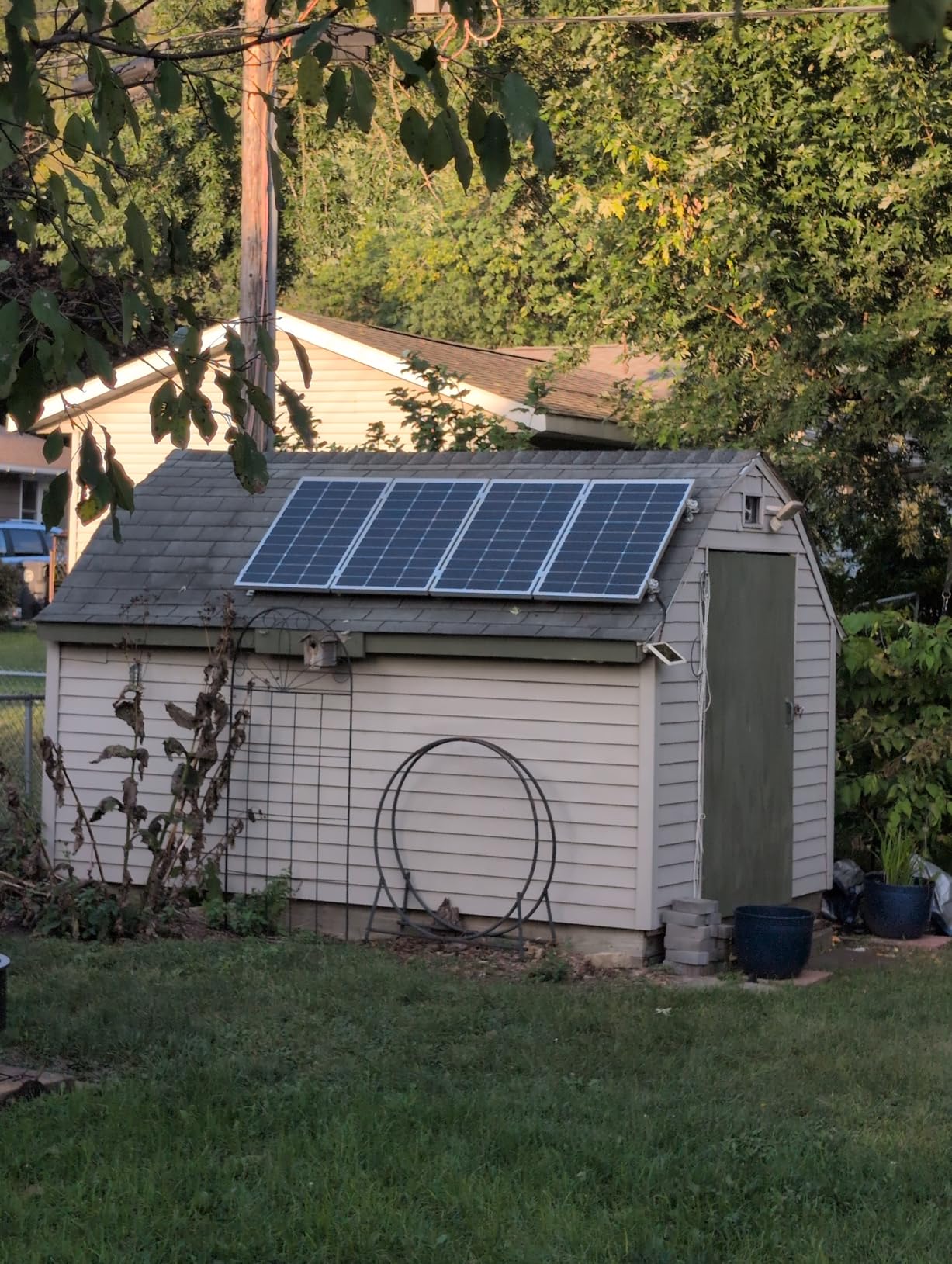
Each panel measures 35.63 by 23.03 inches, so four of them take up real estate. That is the tradeoff: you get 400W in a form you can lay out around roof obstacles, but you need a roof that can hold them. The design is aimed at 12V and 24V charging for home, garden, RV, boat and agricultural use.
Installation is beginner-friendly. Every panel has pre-drilled holes on the back and comes with 35-inch cables and plug-and-play connectors, so you can build the string in any order and expand later. Customer service has replaced an underperforming panel free of charge for at least some buyers, which is worth knowing before you mount all four.
What you gain with this panel
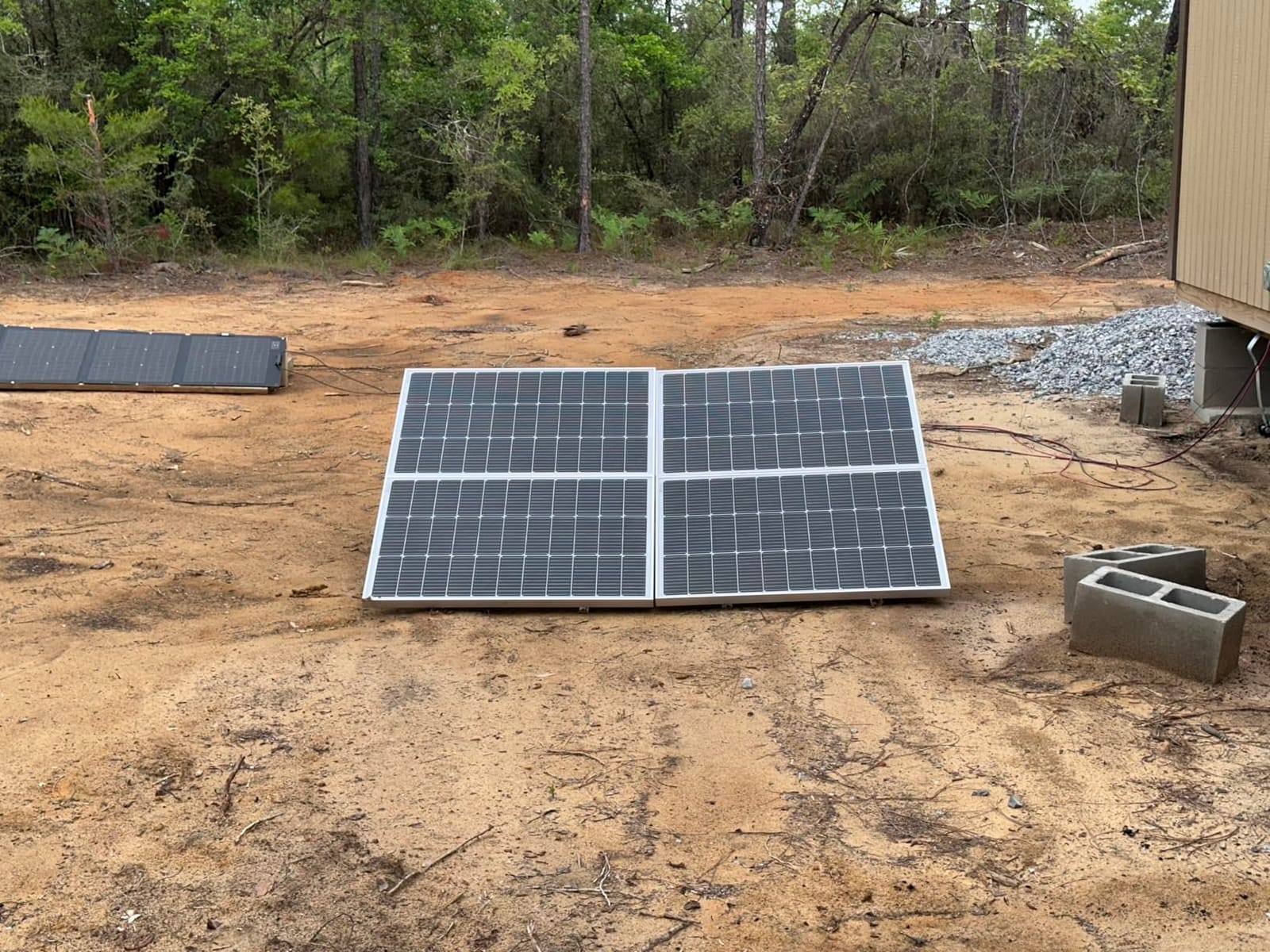
You gain scale without a single oversized module. Four smaller panels can be distributed front, mid-ship and rear, which is the layout experienced owners recommend for reducing the impact of shade from your own roof vents and any tree you park under. A single 400W panel gives you no such options.
Per-panel flexibility also means a single faulty panel does not take the array down. Test each one on the bench before you bolt anything down.
Where it falls short
The 400W nameplate is optimistic for a flat RV roof. Owners report 300W to 315W from a van installation, and a flat mount drops each panel to roughly 20W to 30W compared with 35W to 45W when tilted. Budget your system around 300W and treat the higher figures as a good-sun ceiling.
Four panels also occupy substantial roof area and typically call for a tilt mechanism on a van or small RV, which adds hardware and wind load. The set arrives in more than one box, so test each panel on arrival because a small share of the four come out of spec.
7. Rich Solar 200W N-Type 18BB – Highest Current Output
RICH SOLAR 200 Watt Solar Panel, 12V N-Type 18BB…
200W max
Up to 25% cell efficiency
18BB N-Type
10.9A
24 lb
58.7 x 26.8 in
UL certified
Pros
- 18BB N-Type cells push 10.9A for fast 12V charging
- Excellent low-light and high-temperature performance
- 25-year linear output plus 5-year workmanship warranty
- UL certified
- 14 universal pre-drilled holes
Cons
- 58.7 in length is long for a tight van roof
- 18.4V nominal needs a wide MPPT window for 24V strings
- Panel only
- no hardware or controller
- 3 ft leads are short for widely spaced panels
The Rich Solar 200W is the panel experienced owners name most often in RV forums, and the reason is current. Eighteen-busbar N-type cells deliver up to 10.9 amps, more current than any rigid panel in this comparison, and that translates directly into faster 12V charging into a lead-acid bank.
The cells are specified with ultra-low light-induced degradation, and owners consistently report strong low-light and high-temperature performance. For a rig that spends its winter months under cloud, that is a more valuable characteristic on the spec sheet than a few extra points of peak efficiency.
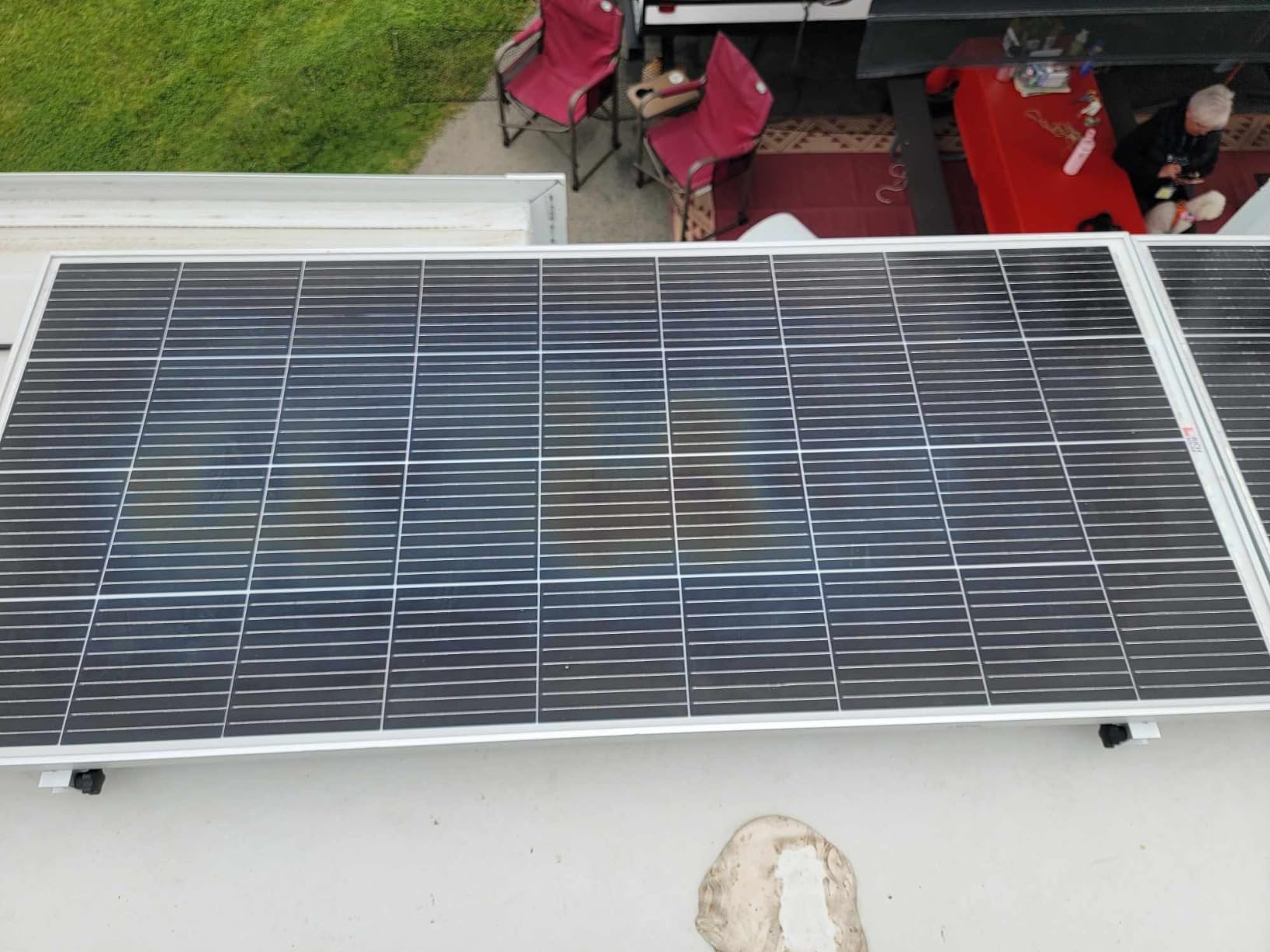
The build is a 1.3mm heavy-duty anodized aluminum frame with high-transmittance tempered glass, rated IP67 with 2400 Pa wind and 5400 Pa snow load. It is UL certified, and the warranty is a 25-year linear power output warranty plus a 5-year material and workmanship term. Warranty length is cited more often than anything else in the reviews.
At 24 pounds and 58.7 by 26.8 inches, it is a long, narrow panel. Owners like the shape because it distributes weight along a roof rail, but at 58.7 inches it is one of the longest footprints in the roundup and that fact decides the purchase on a Class B van.
What you gain with this panel
You gain current, and current is what charges a battery bank efficiently. At 10.9A into a 12V system, this panel moves meaningfully more charge per hour than the 6.85A output of the Renogy 200W, which matters if your bank is in series or your controller is sized conservatively.
The 14 pre-drilled holes accept Z-brackets, tilt mounts and pole mounts, so you can add a tilt frame later to recover the output you lose on a flat roof. The UL certification also simplifies the conversation with an insurer.
Where it falls short
Length is the problem, and it is a layout problem rather than a quality problem. At 58.7 inches it will not fit where a 48-to-51-inch panel will, which rules it out for many van conversions and tight Class B roofs. Measure before you order.
Two smaller cautions. The 18.4V nominal output means series strings need a wide MPPT voltage window to build a 24V bank, and the included 3ft quick-connect cables are short for routing between widely spaced panels on a large motorhome. It is a panel only, so brackets, controller and wiring are all additional purchases.
8. Callsun 200W Bifacial Anti-Shade – Best Shade Recovery
Callsun N-Type 16BB 200W Bifacial Solar Panel, 200 Watt…
200W max
25.6% efficiency
Bifacial, 60 cells
23.74V, 8.43A
23.8 lb
51.3 x 30.3 in
IP68
Pros
- Highest rating in the group at 4.8 stars
- 87% of ratings are five-star
- TwinCell split design keeps the unshaded half producing
- Bifacial back adds real output over light surfaces
- -0.3%/K temperature coefficient
- Responsive technical support
Cons
- A small number of panels are dead or half-dead on arrival
- Only 115 ratings means limited long-term field history
- Bifacial gain needs standoff clearance
- Series strings need care with the controller voltage limit
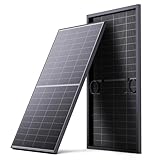
This is the newest panel we looked at and the highest rated, at 4.8 stars with 87% of ratings at five stars. It uses N-type 16BB cells at up to 25.6% conversion efficiency, which is the highest efficiency figure in this roundup, and a transparent backsheet that captures direct, reflected and diffuse light from behind for up to 30% extra output.
What actually sets it apart on an RV roof is the TwinCell dual-module parallel design. The panel is split into two independent halves, which reviewers credit with boosting shade tolerance by up to 50%. On a roof where a vent or a rack clips one corner, the unshaded half keeps working instead of dragging the whole panel down.
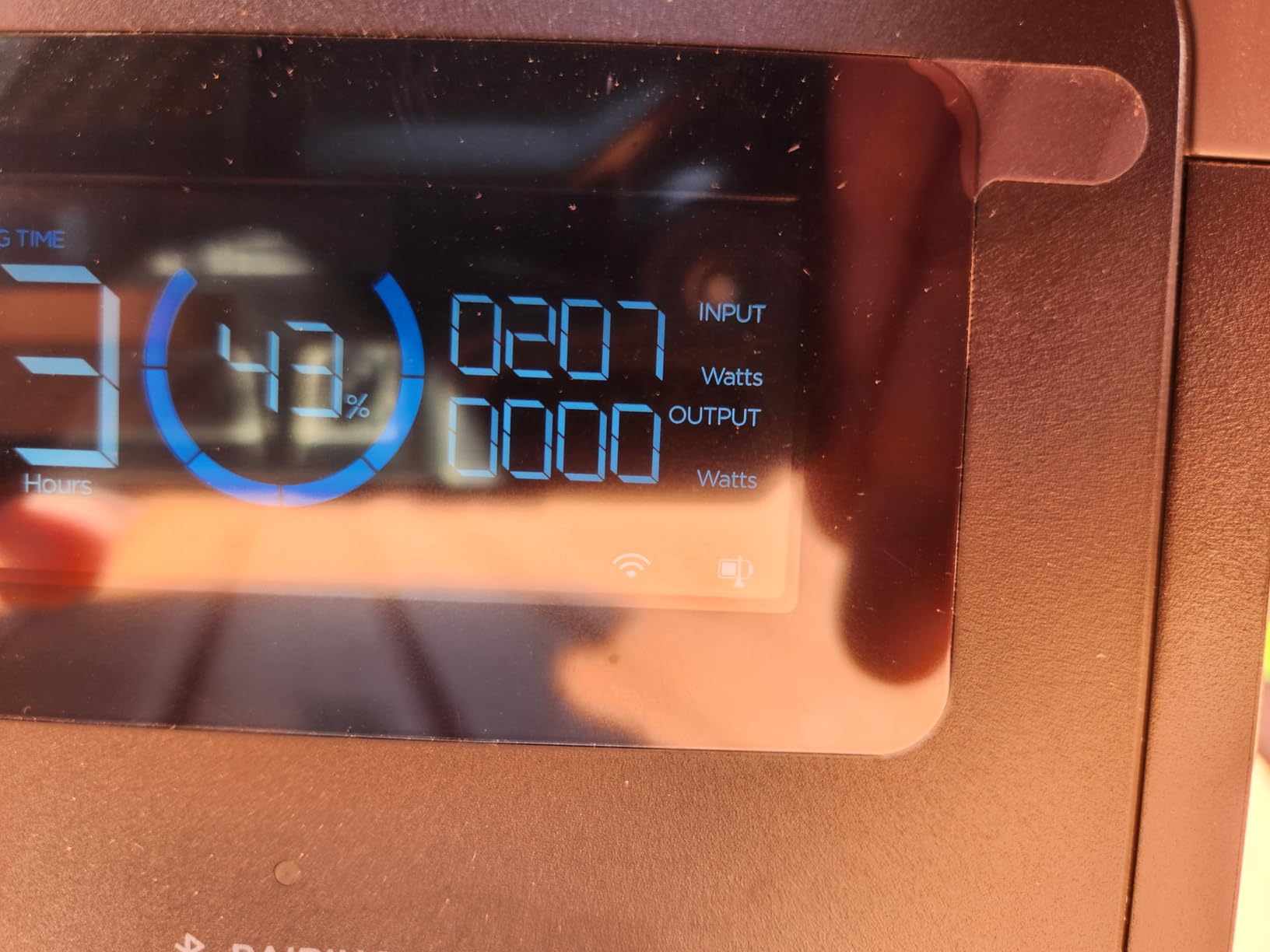
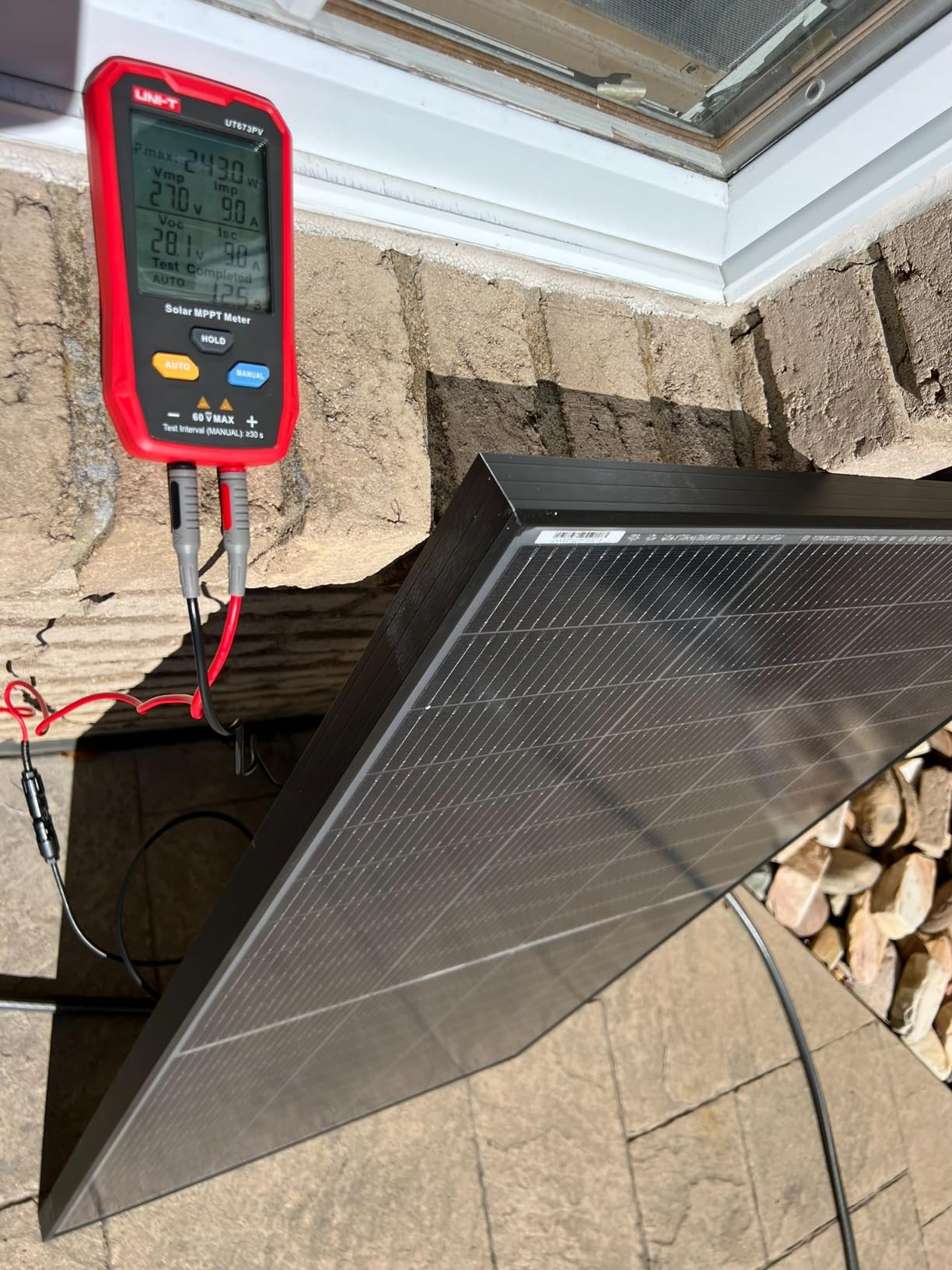
Owners report 200W to 245W of real output, including 200W to 210W in winter and overcast conditions. One owner measured an extra 84W per panel from the rear face when the panel was mounted over a light metal surface. The -0.3%/K temperature coefficient is one of the better figures here and keeps output stable in hot climates.
At 23.8 pounds and 51.3 by 30.3 inches it is a Class B van friendly size, and the build is 3.8mm tempered glass with a corrosion-resistant aluminum alloy frame and an IP68 junction box. The 25-year performance commitment holds at least 84.5% output, with 10 years of technical support behind it.
What you gain with this panel
You gain the most specific shade engineering in this comparison. The split-module architecture is the most relevant feature for a roof full of obstructions, and it is an engineering answer rather than a marketing line.
You also gain the highest efficiency and the most responsive support we encountered. Multiple owners mention pre-purchase and post-purchase technical support answering directly, which matters more than the warranty length when something is not working as expected.
Where it falls short
The review pool is small. At 115 ratings there is far less long-term field history than the 7,000-review incumbents, and no panel with a young listing can promise you what a decade of RV installs tells you about a decade-old one.
There is also a real failure signal to respect: a small number of panels arrive dead or half-dead, with 63W and 117W readings reported. Test the panel the day it arrives, well inside the return window. The bifacial gain needs standoff clearance to reach the back face, and at 23.74V the panel delivers high current, so series strings and wire sizing need care against your controller voltage limit.
9. Renogy ShadowFlux 200W – Built for Crowded, Shaded Roofs
Renogy ShadowFlux Solar Panel 200 Watt, N-Type…
200W max
25% efficiency
N-Type 16BB
ShadowFlux anti-shading
23.8 lb
49.7 x 30.1 in
IP67
Pros
- Anti-shading architecture targets real RV roof obstructions
- 25% efficiency with N-Type 16BB cells
- Compact at 49.7 x 30.1 in and 23.8 lb
- IP67 with advanced encapsulation
- 25-year 80% output guarantee
Cons
- Only a 5-year output warranty
- the shortest here
- 36.5V maximum voltage needs a wide-window MPPT
- 1-star reviews run about twice the brand average
- Higher cost than other 25% 200W panels
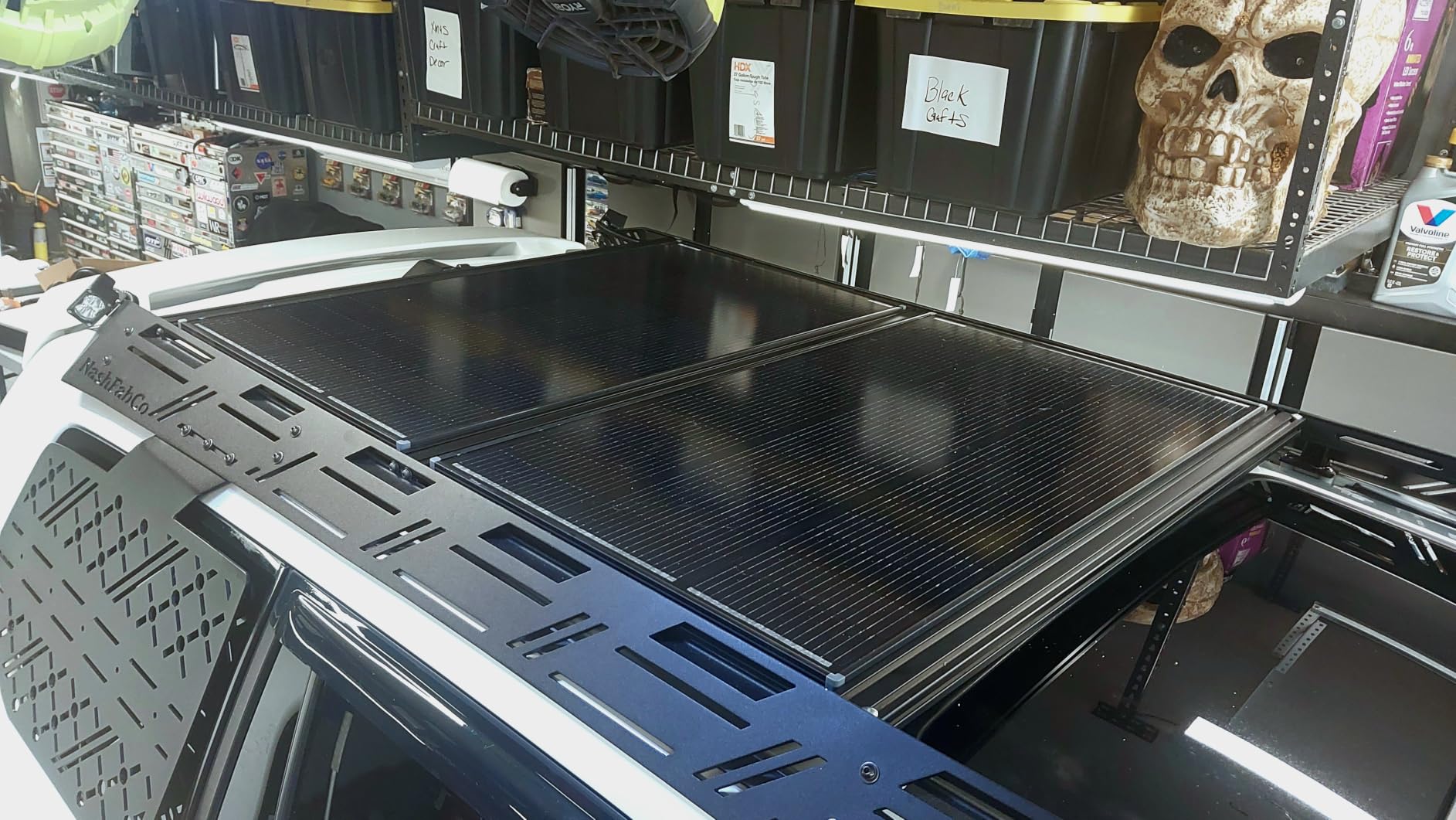
Renogy built this one specifically for the problem that RV owners complain about most: partial shade from their own roof. ShadowFlux anti-shading technology reduces hot-spot risk and sustains output when panels are shaded by buildings, plants, leaves or snow, and that is the reason most buyers give for choosing it over a standard 200W panel.
Underneath, it is a 200W N-type panel with 16BB cells at 25% efficiency, measuring 49.69 by 30.08 inches and weighing 23.8 pounds. At 7% smaller and 10% more compact than comparable PERC panels, it is one of the easier 200W modules to fit into a leftover patch of roof.
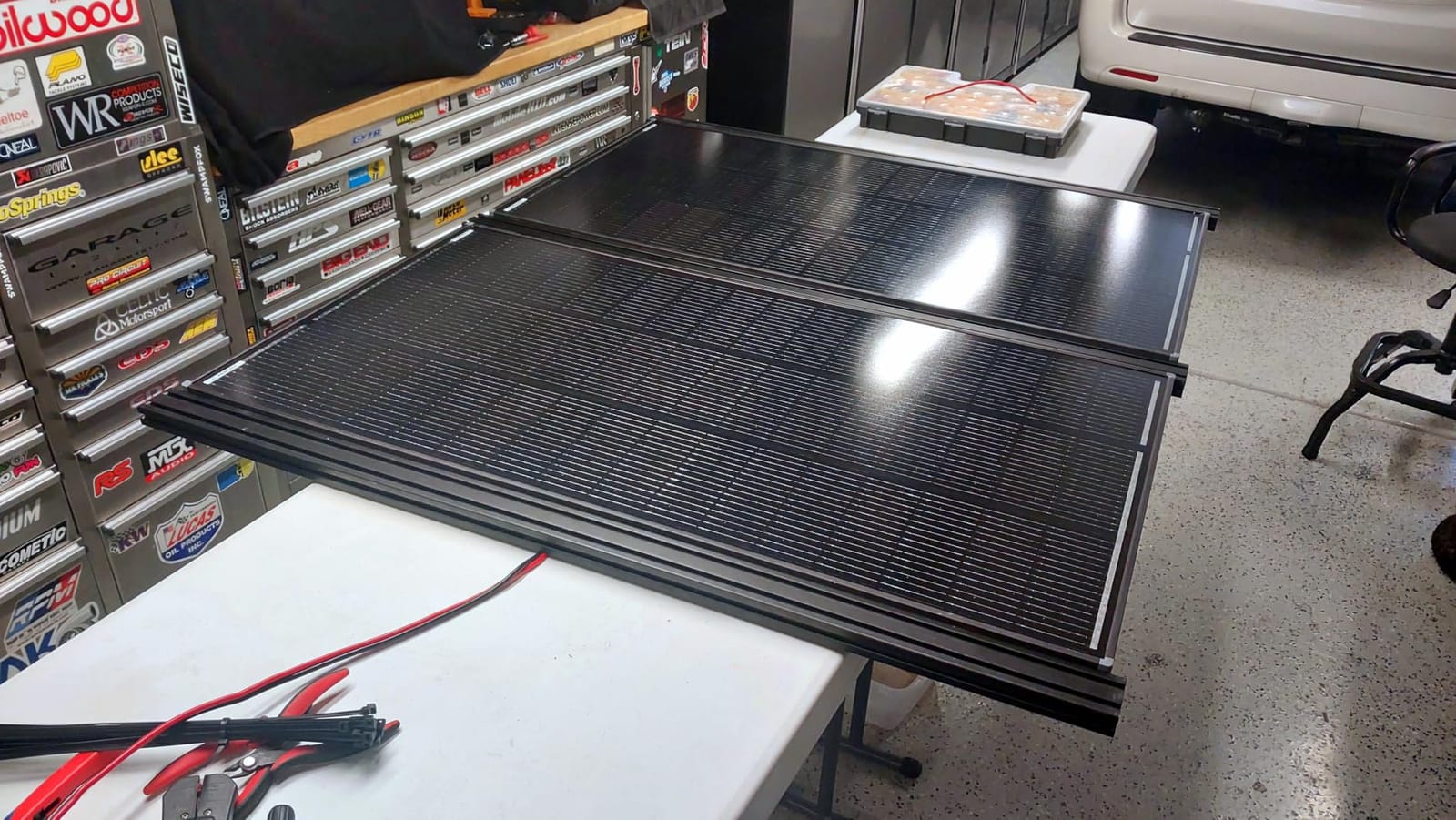
Construction is IP67 with advanced encapsulation for water vapour resistance, which is a sensible upgrade for a panel that lives in condensation and temperature swings. The 25-year output guarantee at 80% power is standard for the brand and matches what the rest of the Renogy line commits to.
Shade handling is where it should be judged, and it is the reason it earned a place in this roundup. On a roof with a Thule box, a roof AC unit and a forest of vents, a panel that holds output under partial shade is worth more than three extra percentage points of efficiency on a panel that does not.
What you gain with this panel
You gain shade tolerance without changing your roof layout. Owners whose roofs see partial shadow from vents, roof racks, trees and snow cite the anti-shading design as the deciding factor, and that is a problem rigid panels with half-cut cells and multi-busbar layouts can only partly solve.
The 49.7 by 30.1 inch footprint is also one of the most flexible 200W sizes, and 23.8 pounds is manageable for a two-person lift.
Where it falls short
The warranty is the disappointment. A 5-year output warranty and material commitment is the shortest output term among the panels here, and noticeably weaker than the 10-year workmanship warranty on Renogy’s own conventional 200W panel. For a permanent roof installation, the longer term is the one you rely on.
The 1-star share of ratings also runs about twice the brand average, which points to occasional early unit failures. The 36.5V maximum voltage requires a wide-window MPPT for series strings, and the panel comes without brackets or a controller.
10. Renogy 200W Flexible 240-Degree – Best for Curved or Drill-Free Roofs
Renogy Flexible Solar Panel 200 Watt, 240° Ultra Flex…
200W max
22% efficiency
Bends within 240 degrees
10.8 lb
63.2 x 29.4 x 0.1 in
IP67
Pros
- Adheres to curved awnings
- van roofs and hulls
- 10.8 lb
- roughly half a rigid 200W panel
- Two on a van rack produced just over 400W at noon
- IP67 junction box
- 5400 Pa snow and 2400 Pa wind
- Pre-drilled holes with 27.6 in 12 AWG leads
Cons
- Output collapses under even light partial shade
- 80-90% loss reported
- 22% efficiency trails the rigid N-Type panels
- Poor packaging with damaged arrivals reported
- Some panels needed bus bar re-soldering
This is the panel that does the one thing no rigid module can do: sit flat on a curved or uneven surface. It bends within 240 degrees, which covers an Airstream roof arch, a van roof rack, a boat deck or a carport awning, and it weighs 10.8 pounds, roughly half of a comparable rigid 200W panel.
That half-weight figure changes the installation entirely. Adhesive mounting needs no roof rails, no drilling and no second person on a ladder, which makes this the only option on the list for a leased or still-warranted RV where permanent roof penetrations are off the table.
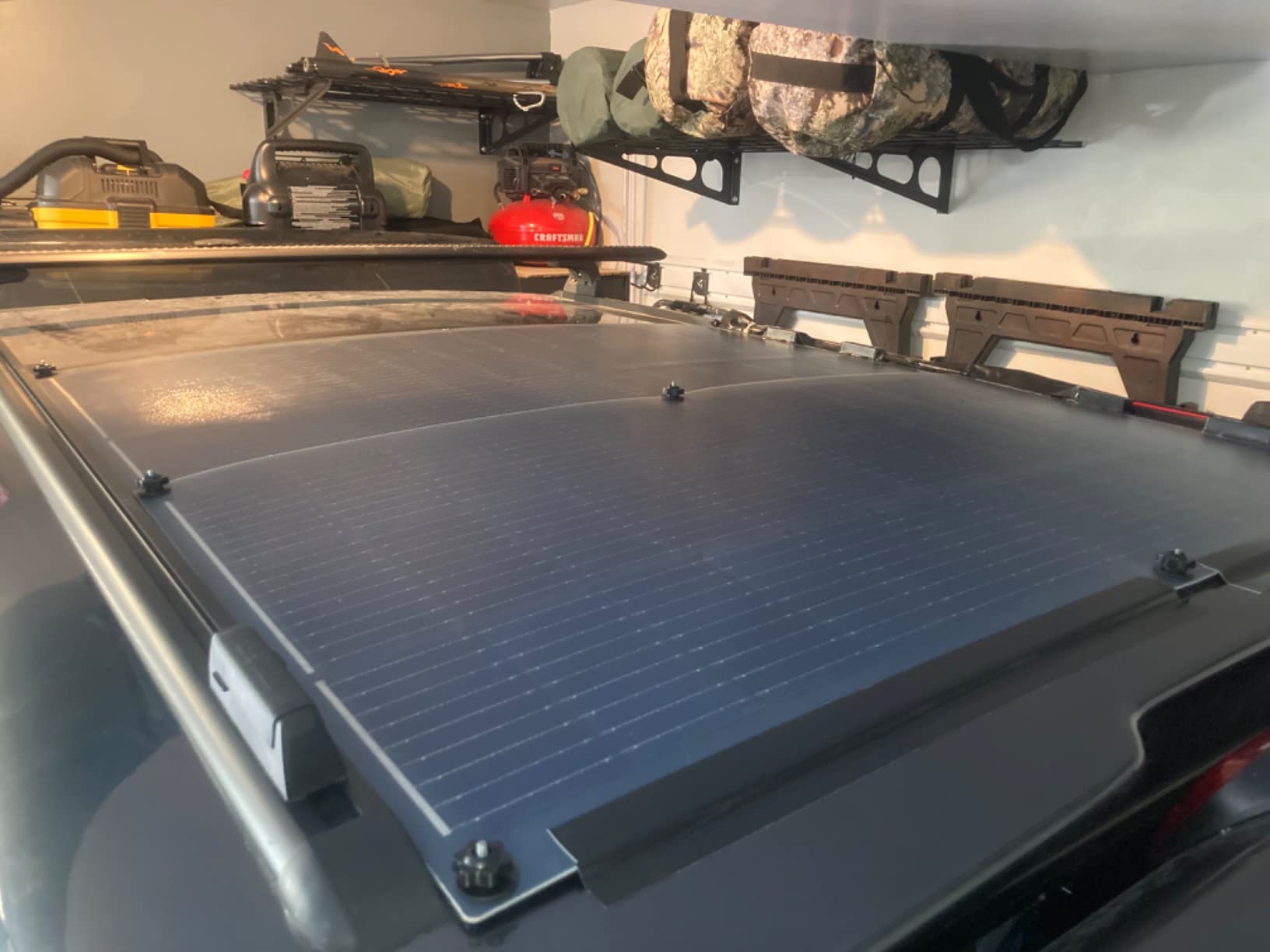
The electrical specs are half-cut PERC cells at 22% efficiency, with a 23.9V maximum and 10.74A of current. Owners report averaging around 1,000 Wh per day with five hours of sunlight, and one two-panel van installation measured just over 400W at noon in full sun. The IP67 junction box carries 5400 Pa snow and 2400 Pa wind ratings.
At 63.2 by 29.4 inches and a tenth of an inch thick, it is a long thin sheet. Pre-drilled mounting holes and the included 27.6-inch 12 AWG solar connector cables make positioning on a contoured surface straightforward, and the all-black glare-free surface looks clean on a vehicle roof.
What you gain with this panel
You gain curved-surface capability and a 200W rating on a roof that a rigid panel cannot use. That is the whole case, and on a van conversion with a contoured roof or a fiberglass Airstream arch it is decisive.
You also gain installation speed. A bonded panel goes down in an afternoon with adhesive and no roof penetration, and the 10.8-pound weight means it can be repositioned or removed without a ladder crew if you need the roof space back.
Where it falls short
Shade sensitivity is severe and it is the deciding drawback. Output collapses sharply with even light partial shade, with some users reporting 80% to 90% loss, and a flexible monolithic panel has no split-module architecture or dense busbar network to fall back on. Efficiency is also lower at 22% against the 25% of the rigid N-type panels here.
Quality control is the other issue. Packaging is poor and damaged panels on arrival are reported repeatedly, and some needed bus bar re-soldering on day one.
The panel also needs periodic cleaning and snow clearing to hold output, which is harder on a contoured surface than on a flat rigid module. If shade is your problem, the ShadowFlux or the Callsun is the better purchase.
How Many Watts Do You Actually Need?
Most roof solar buying mistakes happen before the panel is chosen. Owners work out a wattage, buy an array, and end up with a system that does not fit their 30A or 50A service or their battery bank. Do the energy audit first, in watts and amp-hours per day, and let that number pick the panels.
Start by listing everything you plan to run while disconnected: the 12V compressor fridge, lights, phone charging, a laptop, fans, water pump, and anything else. Convert each to amp-hours per day, then divide by your realistic peak sun hours.
Climate matters more than most buyers expect. In the Southwest, a 200W panel yields roughly 800 to 1,000Wh on a good day. In the Pacific Northwest in December, plan on roughly a third of that. If you need 1,500Wh on a bad day, one 200W panel is not enough regardless of its efficiency rating.
The mistake almost everyone makes is treating nameplate watts as daily output. It is a laboratory maximum at 25C with the panel perfectly square to the sun.
On a flat RV roof, angled for the horizon but unable to track it, and at a cell temperature well above 25C, realistic output lands between 65% and 80% of the number stamped on the frame. That is the figure to size your battery bank against.
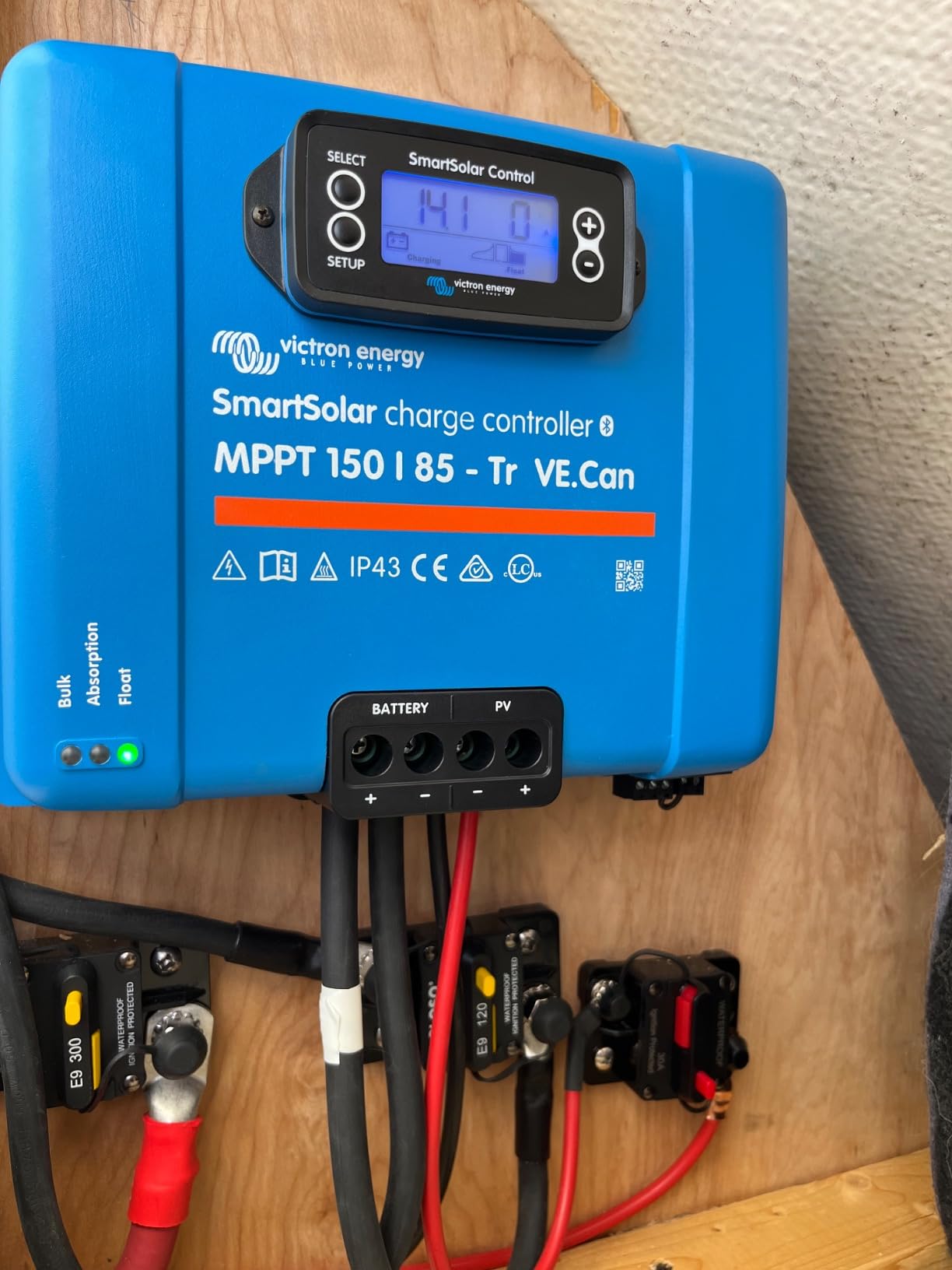
On charge controllers, MPPT is the right call for anything at or above 200W. A PWM controller simply pushes the panel voltage down to the battery voltage, so a 37V panel feeding a 12V battery bank through PWM throws away most of the headroom. MPPT tracks the maximum power point and typically extracts 20% to 30% more from the same panel, while PWM is fine for a single small panel and a weekend rig.
One more sizing note before you commit. Solar is excellent for the fridge, lighting, electronics and a battery maintainer. It will not run a rooftop air conditioner. A 12,000 BTU rooftop unit draws more than a mid-size rooftop solar array can generate, and even a 600W roof install is a stretch rather than a solution. If you are weighing that choice, our solar versus generator comparison lays out the honest math.
Measure Your Usable Roof Before You Buy
Usable roof space, not wattage, is the binding constraint on almost every install. A 28 by 80 inch patch of clear roof with a plastic Thule box filling everything else is a completely different problem from an open 20-foot motorhome roof, and the panel that suits one is wrong for the other.
Do this before you order anything. Walk the roof with a tape measure and record the clear rectangle in each location after subtracting the roof AC unit, every vent, the skylight, the antenna, the plumbing vent and any storage box. Then draw it to scale on paper and lay your candidate panels on top of that drawing.
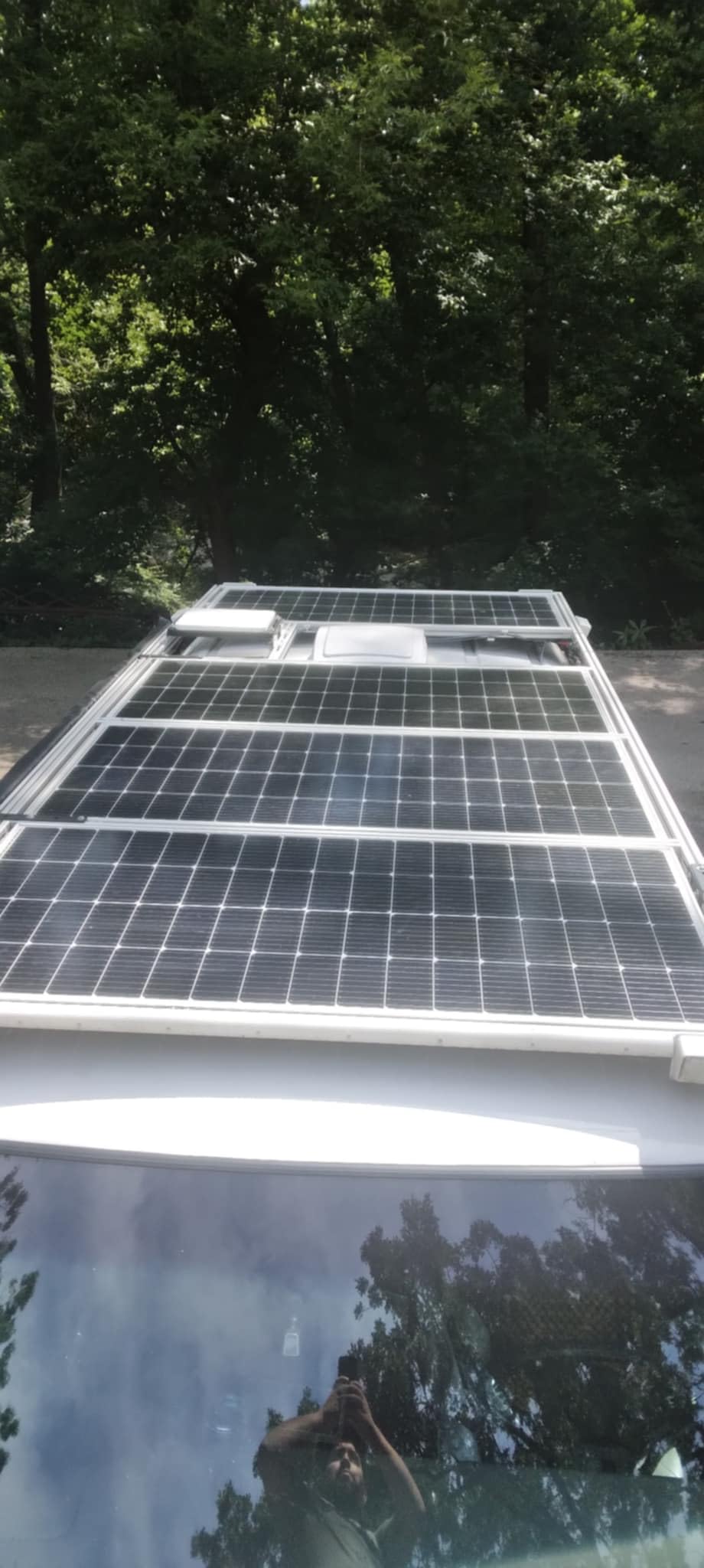
Then subtract your walking room. You need to be able to get to the vents and the AC unit to service them, and the panels will be there for twenty-five years. Experienced owners spread panels front, mid-ship and rear rather than clustering them, both to defeat shade from their own roof hardware and to keep a service path open.
Roof material decides your mounting method. EPDM rubber and TPO or PVC membranes take adhesive or VHB tape far better than a screw, and a screw into a rubber membrane is how roofs leak. Fiberglass is a one-piece shell where drilling risks piercing the interior ceiling, which is why so many fiberglass owners choose adhesive-mounted flexible panels instead.
Aluminum and metal RV roofs take bolts cleanly but want a sealant under every fastener. Check your roof warranty and your loan or lease terms before penetrating anything, because some manufacturers treat a drilled hole as a roof replacement.
Finally, be honest about weight. The panels in this roundup run from 10.8 pounds to 31.6 pounds for a complete kit, and a 400W array plus mounting hardware can add 100 pounds to a roof that already carries a battery bank, an AC unit and stored water. Plenty of vans hit a payload limit long before they hit a roof space limit.
How to Mount Solar Panels on an RV Roof
Mounting is where most DIY installs go wrong, and the correct method depends entirely on your roof material. Rigid panels use Z-brackets that hold the frame slightly above the roof surface, and the standoff matters more than most people expect.
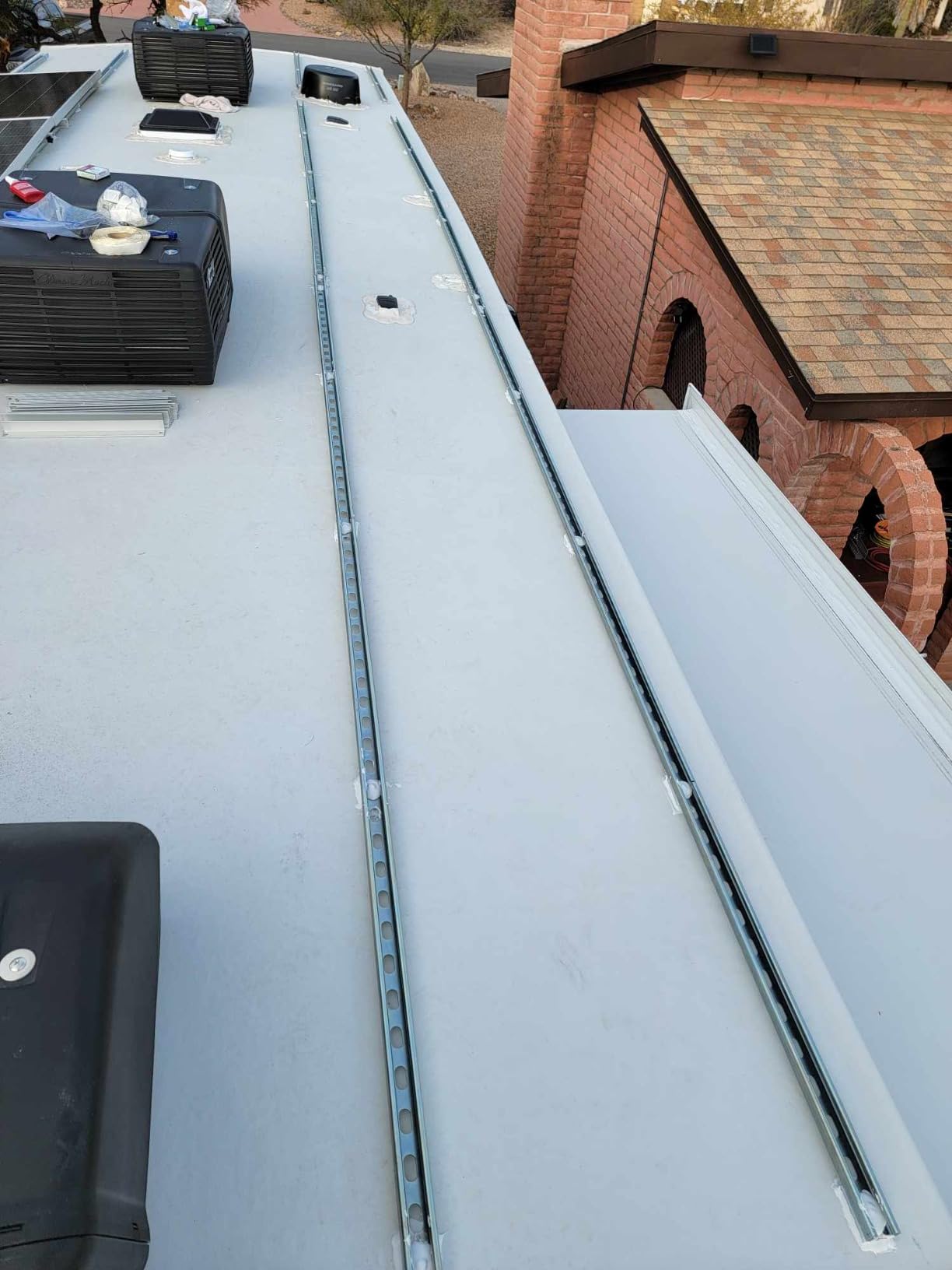
For a drillable roof, the sequence is simple. Mark your Z-bracket positions against the pre-drilled holes in the panel frame, then seal each fastener point with a marine-grade sealant or butyl tape under the bracket foot. Drill your mounting holes and bolt the brackets down through the bracket base into the roof or into a structural rail.
The 1 to 2 inch standoff the Z-bracket creates is not decorative. Airflow under the panel is worth real output in summer heat, and a flush mount can cost you a significant share of rated power.
For a no-drill install, the choice comes down to adhesive chemistry. A panel that stays put through a hundred highway miles needs a rigid polyurethane or marine epoxy in a continuous bead, cleaned and degreased first. VHB tape alone is adequate for a lightweight flexible panel and much less reliable for a 24-pound rigid module. Follow the full cure time on the label before you load the panel, and pull-test a corner before you trust it.
Cable entry is where leaks actually start. Route the MC4 leads through a proper cable gland or a sealed entry point rather than a drilled hole with sealant smeared around the cable. Run a short drip loop below the entry so water runs off instead of into the joint.
One question comes up in almost every forum thread: can you walk on the panels? Assume no. Stand on the roof membrane beside the panel, not on the glass. Even a panel rated for a 5400 Pa snow load is not designed to take a boot heel on a 70F day, and a single point load cracks cells that may not fail visibly for months. Leave a clear path to the AC unit and the vents.
Wiring Several Panels and Matching a Charge Controller
Wiring is arithmetic, and the arithmetic is short. Every panel has an open-circuit voltage, or Voc, and that is the number that decides what charge controller you can use. The rule is that the controller’s maximum input voltage must exceed the combined Voc of your string, and Voc rises in cold weather on top of that.
Wire panels in parallel when you want to stay on a 12V charging profile. Three 200W panels wired in parallel at roughly 10A each give you about 30A into a 12V bank, and the string Voc is just the Voc of a single panel.
This is the layout that lets a 100/30 MPPT do the work instead of an expensive 150/60 unit, and it is why parallel is the default for RV installs.
Wire panels in series when you want a 24V profile. Two 18V-class panels in series produce roughly 36V open circuit, three produce roughly 54V, and the array voltage doubles or triples with every panel you add. Series cuts line current dramatically, which lets you run longer cable runs with thinner wire, but it locks you into a high-voltage controller.
Use the actual Voc figures from the panels in this roundup as your worked example. The Renogy 200W lists a 37.44V maximum voltage, so two in series sit at 74.9V and three at 112.3V, and a 100/30 MPPT with a 60V window will not accept any of those strings.
The Rich Solar 200W at 18.39V is a different story entirely. Two in series reach 36.8V and three reach 55.2V, which a 60V-window MPPT handles comfortably on a warm day and needs careful headroom for on a cold one.
That difference is the most useful thing to understand before buying a second and third panel. Panel voltage, not panel wattage, determines your controller choice, and the decision is much harder to undo later. A quick breaker on each side of the controller and a smart shunt on the bank will pay for themselves the first time you need to know where the power is going.
Finally, route the wiring down the wall cleanly. On a one-piece fiberglass shell, running cable through a vent cavity and out through an interior cabinet is far easier than chasing a wall cavity. A cable entry through an existing roof penetration with a proper gland avoids a new hole entirely.
Frequently Asked Questions
What is the best solar panel for an RV roof?
A rigid, N-type monocrystalline panel in the 100W to 200W range is the best all-around choice for an RV roof. N-type cells hold output better in heat and under partial shade than older PERC cells, and a rigid frame survives highway speed and hail better than an adhesive-mounted flexible panel. Our top pick is the Renogy 200W N-Type 16BB module.
What type of solar panel is most efficient for a motorhome?
N-type monocrystalline cells are the most efficient option currently sold for RV roofs, reaching roughly 25% conversion efficiency, with the best bifacial variants pushing closer to 25.6% before rear-side gain. PERC monocrystalline panels are a step behind on efficiency and heat tolerance, and CIGS thin-film panels trade efficiency for flexibility and low weight.
What size solar panels are recommended for RVs?
Most RVers land between 400W and 800W of total roof capacity. A single 200W panel handles a 12V fridge, lighting and phone charging. Two to four panels cover a full-time boondocking setup with a water pump, laptops and fans. Measure your clear roof space first, because the panel size that fits your usable area matters more than the wattage you would prefer.
Are rigid solar panels better than flexible solar panels?
Rigid panels are better for most RVs. They run at higher efficiency, last longer, shed heat better and tolerate highway vibration far better. Flexible panels bend within 240 degrees and weigh about half as much, which makes them the right choice for a curved Airstream arch, a contoured van roof, or any RV where drilling is not permitted. Flexible panels lose output sharply under even light partial shade.
How long will a 200W solar panel take to charge a 12V battery?
A 200W panel in full sun produces roughly 16 to 17 amps, which is about 200 watt-hours per peak sun hour. In good conditions it can put 800 to 1,000Wh into a bank in a day. Bringing a depleted 100Ah 12V battery from empty to full takes roughly five to six hours of direct sun, and considerably longer in winter or in cloud.
Can I run my RV air conditioner on solar power?
Not realistically. A 12,000 BTU rooftop air conditioner draws far more power than a typical roof-mounted solar array can generate, and a rooftop unit also adds substantial load to the roof. Solar is well suited to a 12V compressor fridge, lighting, electronics, fans and a water pump. For air conditioning you are looking at shore power or a generator.
How do you mount solar panels on an RV roof without drilling?
Use a rigid polyurethane or marine epoxy in a continuous bead on a cleaned, degreased roof for a rigid panel, and follow the full cure time before loading it. VHB tape works for a lightweight flexible panel but is less reliable for a 24-pound rigid module. Route the cables through a sealed cable gland rather than a drilled hole, and add a drip loop below the entry point.
The Verdict for 2026
After working through all ten, the best solar panels for RV roofs in 2026 come down to three clear use cases. The Renogy 200W N-Type 16BB is the one to buy for almost any flat RV roof, because it has the deepest field history in the group, the best hot-weather behavior, and a warranty with real length behind it.
Buy the HQST 200W N-Type Bifacial instead if you want the most power per dollar and can mount it on standoff brackets so the rear face can collect light. Choose the Voltset 100W or the JJN 100W when roof space or roof access is the constraint, and pick the ECO-WORTHY 200W kit if you want panels, brackets, controller and wiring in one box.
For a curved roof, a fibreglass shell you cannot drill, or a rig still under warranty, the Renogy 200W Flexible is the only panel here that solves the problem rather than working around it, accepting the shade penalty that comes with the format. The Callsun 200W Bifacial and the Renogy ShadowFlux 200W are the two to look at if your roof is permanently in partial shade.
Whichever one you pick, measure your clear roof space, match the panel’s Voc to your charge controller, and use a sealed cable gland. Those three decisions cost you nothing and prevent almost every leak, warranty and underperformance problem we saw in the reviews. Our guide to solar for off-grid cabins covers the same sizing logic if you split your time between the rig and a fixed location.
