
7 Best Gravel Bikes for Bikepacking (September 2026) Quality Reviews
Most gravel bikes are built for racing, not for carrying a tent, a sleeping bag and four days of food. The best gravel bikes for bikepacking are the ones with wide tire clearance, more mounting points than a race frame has any use for, and gearing low enough to keep you pedalling on a steep grade with the bike fully loaded.
We spent weeks reading owner reviews, comparing spec sheets and working through the arithmetic that actually decides a bikepacking trip: bike weight plus bags plus water, checked against what the frame, fork and post can carry. What follows is a seven-bike roundup built around that, not around marketing language.
Contents
One thing worth saying up front. The bikes that dominate roundups on search are mostly the ones engineered for unloaded speed, and the middle of the market has thinned out badly. Riders in r/bikepacking keep saying the same thing in different words: either the bike is cheap and needs rebuilding immediately, or it is a carbon super-bike that is uncomfortable and light on mounts. The seven bikes here are the complete gravel bikes we could find that arrive rideable, and each one tells you where it stops being a good bikepacking tool.
Start with our [gravel bikes under this price tier](/best-gravel-bikes-under-1500-dollars/) if budget is the deciding factor, and check the [best bikepacking bags for adventure cycling](/best-bikepacking-bags-for-adventure-cycling/) guide once you have picked a frame. Riders shopping for complete builds will also want our [high-end gravel bike guide](/best-high-end-gravel-bikes-for-adventure-cycling/) and the [gravel wheelsets roundup](/best-gravel-bike-wheelsets/) for future upgrades.
Top 3 Picks for Gravel Bikepacking in 2026
These are the three we would put on a shortlist first, and the reasoning behind each is different. One wins on gearing, one on how little fuss it causes, one on the shape of its drivetrain.

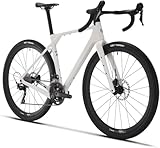
SAVADECK T800 GRX400 20-Speed
- T800 carbon frame and fork at 10.4 kg
- Shimano GRX400 2x20 drivetrain
- 700x40c tires with hydraulic discs
- Fully internal cable routing

SAVADECK Carbon U6000 11-Speed
- T800 carbon at 10.4 kg
- Shimano U6000 11-speed drivetrain
- 700x40c tires on 45-spoke wheels
- Hydraulic disc brakes
SAVADECK T800 GRX610 12-Speed
- T800 carbon frame and carbon fork
- Shimano GRX610 12-speed single ring
- M6100 cassette for a wide range
- GRX410 hydraulic discs
As an Amazon Associate we earn from qualifying purchases. CERTAIN CONTENT THAT APPEARS ON THIS SITE COMES FROM AMAZON. THIS CONTENT IS PROVIDED 'AS IS' AND IS SUBJECT TO CHANGE OR REMOVAL AT ANY TIME.
Best Gravel Bikes for Bikepacking at a Glance in 2026
Every bike below is in the table with the specs that matter for a loaded bike. Two of these are the same frame in different trim, so read the drivetrain line carefully before deciding between them.
| Product | Features | |
|---|---|---|
| SAVADECK T800 Carbon GRX400 20-Speed |
|
Check Latest Price |
| SAVADECK Carbon U6000 11-Speed |
|
Check Latest Price |
| SAVADECK T800 Carbon GRX610 12-Speed |
|
Check Latest Price |
 KABON T800 Carbon 105 R7000 22-Speed KABON T800 Carbon 105 R7000 22-Speed |
|
Check Latest Price |
 KABON T800 Carbon Sora R3000 18-Speed KABON T800 Carbon Sora R3000 18-Speed |
|
Check Latest Price |
 Tommaso Sentiero Aluminum Claris 24-Speed Tommaso Sentiero Aluminum Claris 24-Speed |
|
Check Latest Price |
 Tommaso Siena Aluminum Tourney 21-Speed Tommaso Siena Aluminum Tourney 21-Speed |
|
Check Latest Price |
We earn from qualifying purchases. CERTAIN CONTENT THAT APPEARS ON THIS SITE COMES FROM AMAZON. THIS CONTENT IS PROVIDED 'AS IS' AND IS SUBJECT TO CHANGE OR REMOVAL AT ANY TIME.
1. SAVADECK T800 Carbon GRX400 20-Speed – Best All-Round Bikepacking Gravel Bike
SAVADECK Carbon Gravel Bike – T800 Carbon Frame & Fork…
T800 carbon frame and fork
10.4 kg (22.92 lb)
Shimano GRX400 2x20
700x40c tires
Hydraulic discs
Pros
- 2x20 drivetrain gives a wide usable spread on loaded climbs
- Light 10.4 kg carbon frame and fork
- Internal cable routing keeps housing out of the grit
- Comfortable upright geometry for long days
- Sizes from 47cm to 58cm
Cons
- Rear derailleur often arrives out of adjustment
- Some bikes need a shop tune before shifting is clean
- Size chart needs checking carefully
This is the bike we kept coming back to while assembling the list. The frame and fork are T800 R21 carbon at a listed 10.4 kg, and the drivetrain is a Shimano GRX400 2×20 rather than the single-ring gravel setup most carbon bikes in this class ship with. That double ring matters more for bikepacking than it does for fast gravel riding, because the small ring gives you a genuinely low gear without asking you to swap to a mountain-bike cassette.
Owners report sub-21 lb assembled weights in the larger frames, and a 700x40c all-terrain tire on durable rims is a sensible starting point for gravel fire roads and hardpack. One owner had it ride-ready in about 20 minutes using the included tool kit, and another with four decades of cycling called the bike “truly something else.”
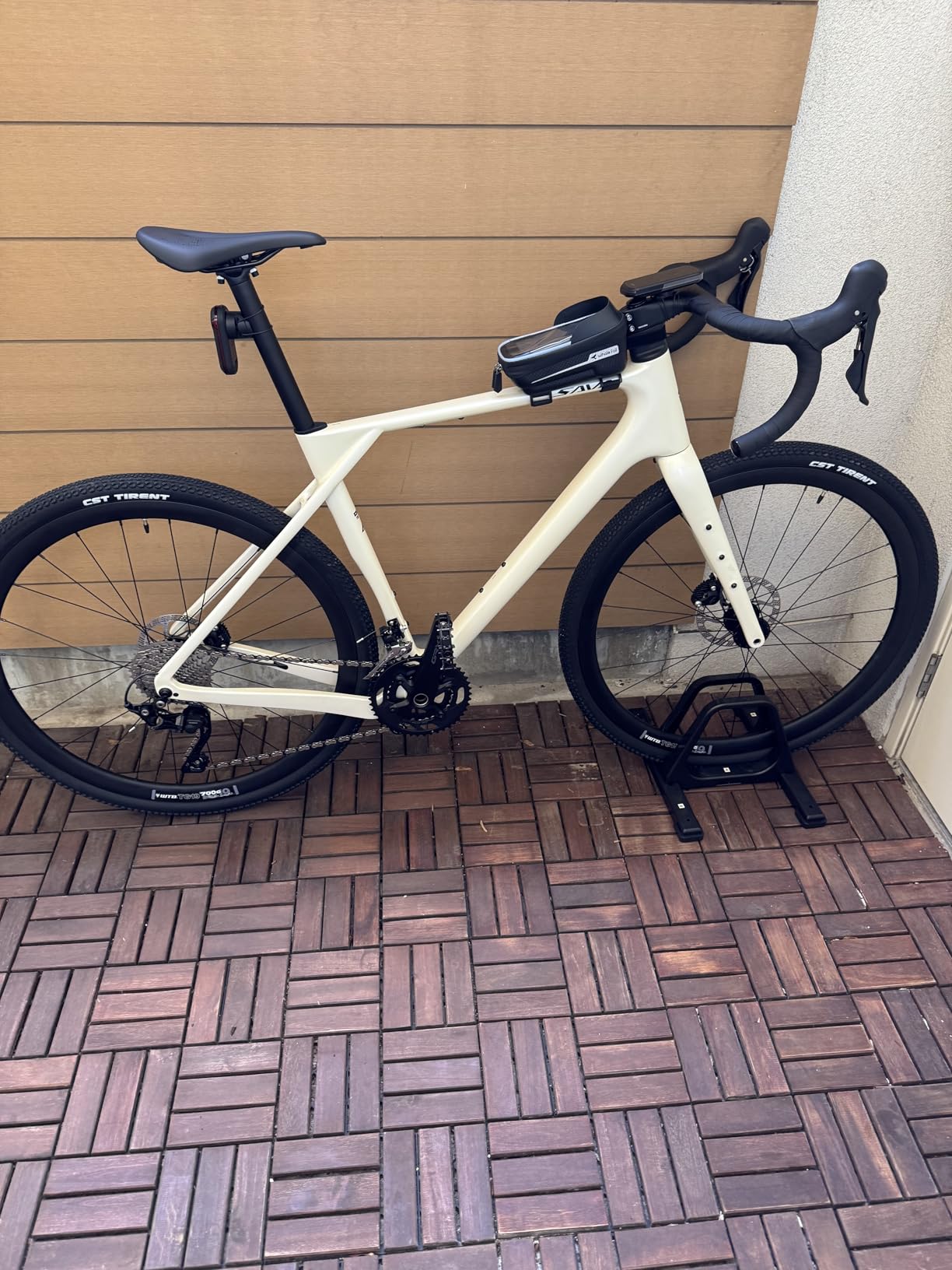
The honest drawback is factory setup. Across reviews, the rear derailleur frequently arrives out of adjustment, producing overshifting and a tangled chain until somebody tunes it. Shifting can also feel clunky until the indexing is aligned, and a few owners needed a shop visit to stop noise under pedalling. None of that is a dealbreaker, but budget an hour and a service visit before your first loaded trip.
There is also a sizing trap. With 22 frame sizes from 47cm to 58cm, almost everyone can find a height match, which is not the same as a good fit. Read the size chart properly before choosing, and remember that this frame carries no listed fork or top tube bag mounts, so plan a handlebar roll, a seatpack and a frame bag that straps on rather than bolts on.
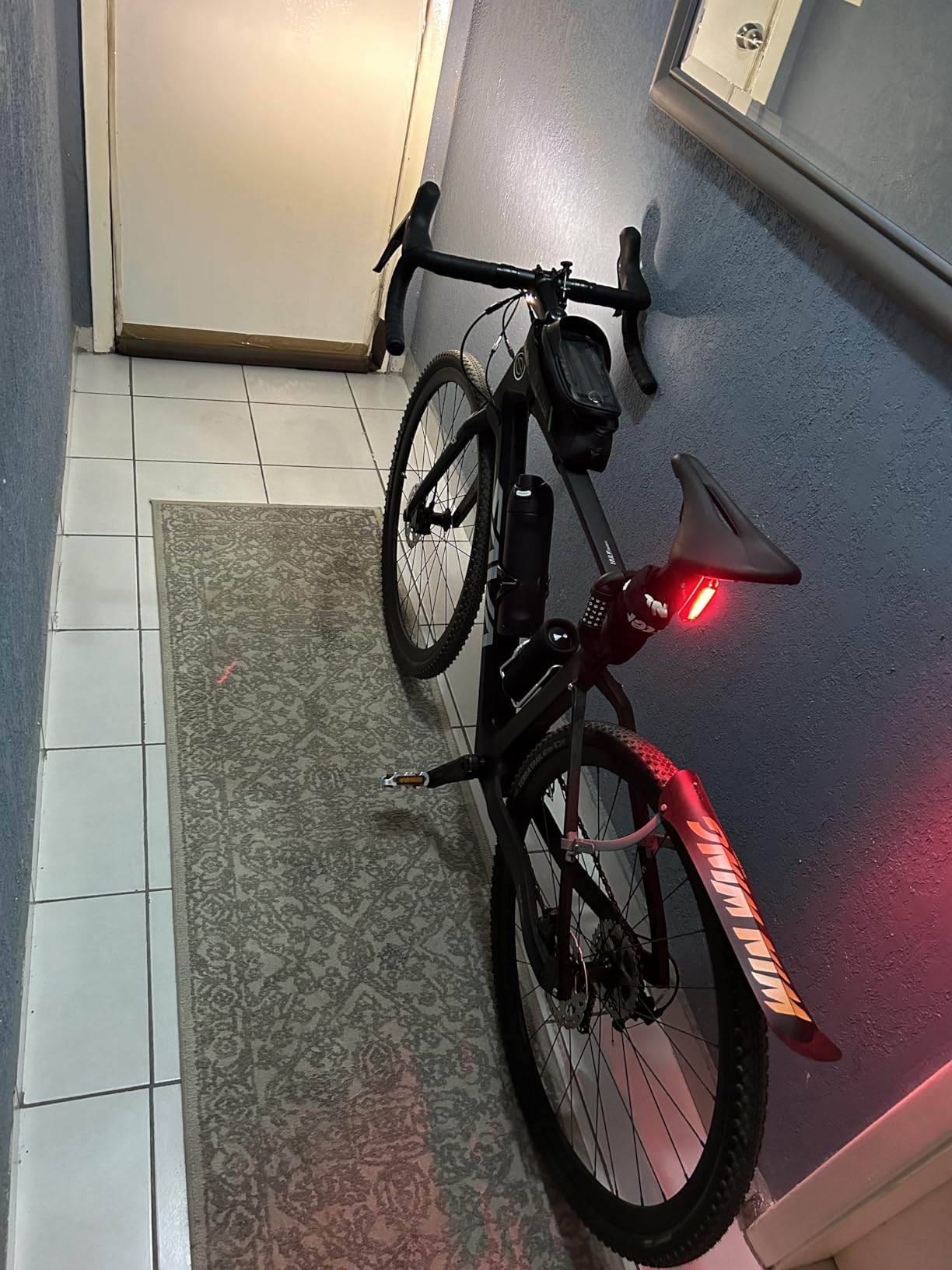
Where the bikepacking load actually goes
The GRX400 shift levers run mechanical 2×20 with fully internal routing, so you can run a bar roll and a top tube bag without cable interference. The upright geometry and tapered head tube are the quiet strengths here: owners describe a ride that stays comfortable over a full day, which is what a loaded weekend needs more than low weight does.
At 10.4 kg before bags, this is not a race weight for a bikepacking rig. It is a sensible compromise, and it is lighter than the aluminum builds below it while carrying a hydraulic brake that does not fade in the rain.
Where it frustrates riders
Skip it if you want integrated frame storage or a rack-ready frame. Nothing in the listed specification suggests load points, so a full front-and-rear rack rig would be a DIY project rather than a bolt-on. Riders also flag thin packaging that can be punctured in transit and single-carrier tracking on the delivery.
And if your route is steep, rough two-track rather than gravel roads, this is a light road-leaning bike with 40c tires. It is fast on the surface it was designed for, and less composed on the surface bikepacking sometimes demands.
2. SAVADECK Carbon U6000 11-Speed – The One That Arrives Ready to Ride
SAVADECK Carbon Gravel Bike – T800 Carbon Frame & Fork…
T800 carbon
10.4 kg
Shimano U6000 11-speed
700x40c on 45-spoke wheels
Hydraulic discs
Pros
- Owners report it arrives ride-ready with brakes and gears set
- 45-spoke wheels and 40c tires give confident grip
- Shimano U6000 shifts crisply
- Responsive vendor support that checks sizing before dispatch
- Light carbon frame and fork
Cons
- Seat tube usually needs cutting to length for the frame size
- Correct brake pads for the rims may not be fitted
- Technical singletrack is outside its comfort zone
Every one of the 27 reviews on this bike is five stars, and the reason is consistent: it comes essentially finished. Owners describe a light, handsome carbon bike that worked well on road and gravel with minimal tuning, and several report thousands of kilometres from the same machine. Several long-distance owners also mention a resolved rear wheel issue handled well by support.
The specification is 10.4 kg T800 carbon frame and fork, Shimano U6000 shifters and rear derailleur with an LG400 cassette, hydraulic discs, and 700x40c wide-profile tires on 45-spoke wheels. That 45-spoke count is worth noticing for bikepacking: more spokes mean more redundancy when you are riding shale and rock gardens far from a shop.
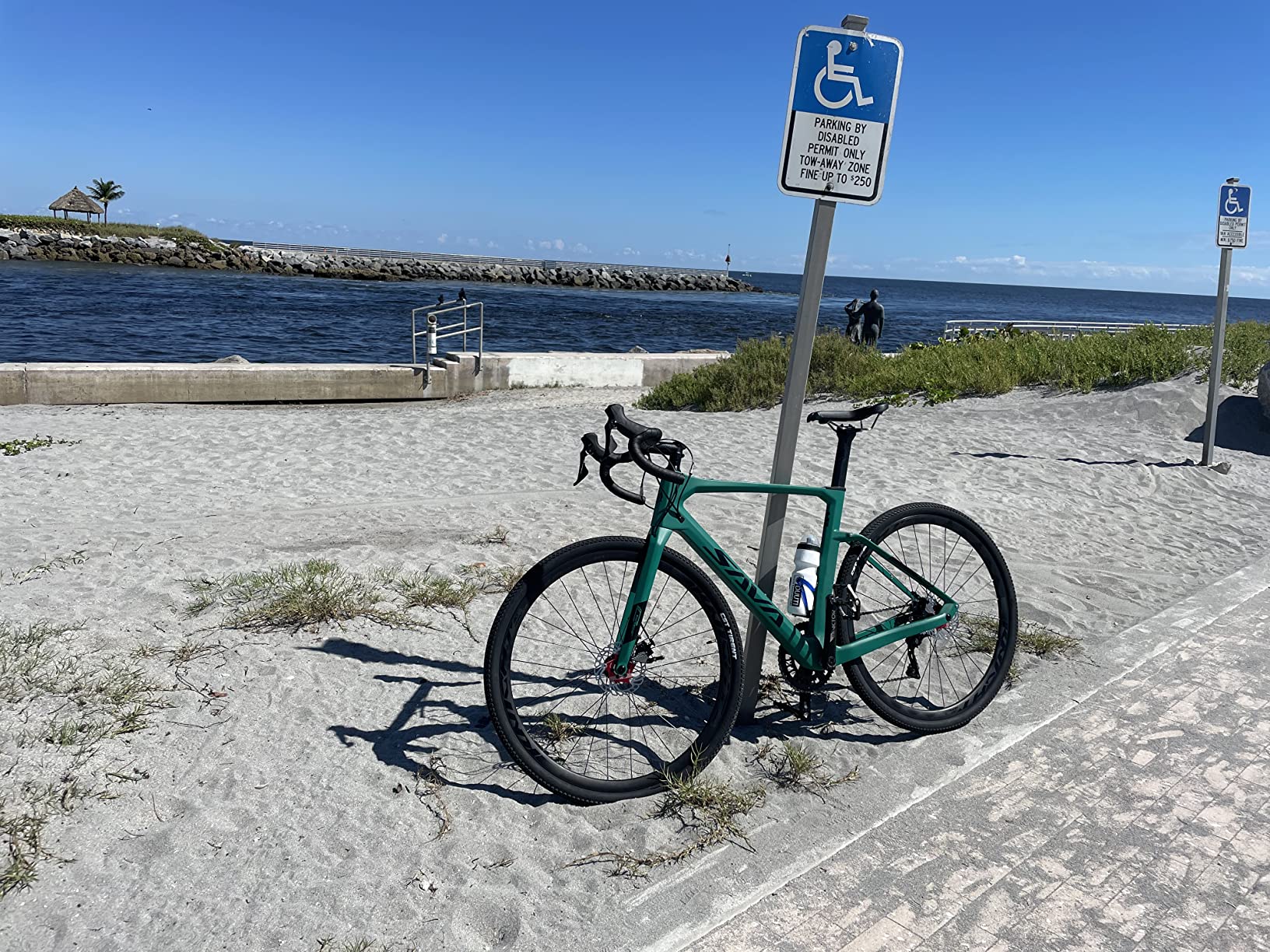
The catch is that final assembly is not quite finished. The saddle tube often has to be cut to length for the frame size, the correct brake pads for carbon rims may not be fitted at the factory, and drivetrain and brake indexing need a pass after assembly. None of these are difficult, but they are real steps between the box and the road.
The single-ring 11-speed setup is also worth thinking hard about. It is clean and low-maintenance on a bike-and-camp commute, but it is the narrowest gear range here alongside the Sora build, and narrow is the word loaded climbing cares about most.
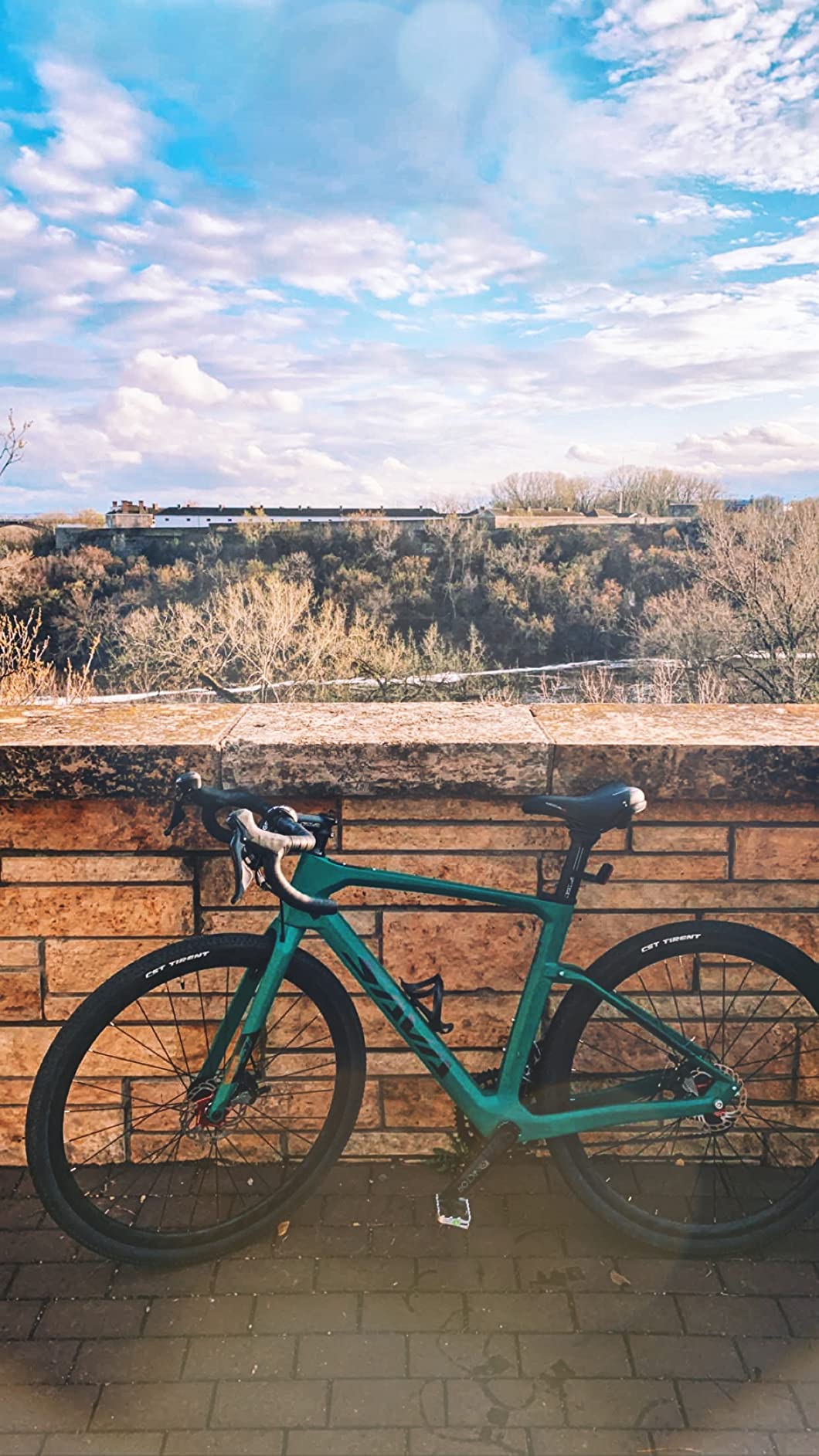
Why owners rate it so highly
Sales reps check sizing before dispatch, which matters when 22 sizes from 47cm to 58cm are on the table and fit problems are the most common complaint in the owner reviews we read for this group. The tapered head tube and upright frame design are aimed squarely at riders who want a drop-bar gravel bike without an aggressive position.
For a bikepacking build, the practical strength is the wheel and tire package rather than the drivetrain. 40c tires on 45-spoke wheels across pavement, gravel and hardpack is a good starting point for a weekend away.
Where it is the wrong tool
Do not choose it for rough mountain-bike trails or technical singletrack; owners explicitly place that outside its comfort zone. And if your trip has sustained 15 percent grades with a full load, the 11-speed range is not the asset you want, and no amount of bag-lightening fully compensates for it.
Rear mechanical parts are described as working but needing constant maintenance, which is a fair trade for a simpler single-ring system on long dirt stretches.
3. SAVADECK T800 GRX610 12-Speed – Best for Loaded Climbs
SAVADECK T800 Carbon Gravel Bike, with Shimano GRX…
T800 carbon
10.4 kg
GRX610 12-speed with M6100 cassette
700x40c
GRX410 hydraulics
Pros
- Widest single-ring gear range of the seven
- Light carbon frame with a stiff responsive feel
- GRX410 hydraulic brakes stop consistently
- Wheelset arrived true and tracks straight
- One owner reports zero mechanical problems over extended mixed riding
Cons
- No assembly instructions for the stem step
- Brakes squeal until the pads bed in
- Deep carbon rims catch crosswind hard
This is the gearing answer in this roundup. The Shimano GRX610 12-speed drivetrain runs a wide-range M6100 cassette, and owners consistently describe it handling climbs and flats with confident, flawless shifting. On a bike carrying a full week of gear, that range is the feature you will be most grateful for on a long climb out of a valley.
The frame and fork are T800 carbon at a listed 10.4 kg, with 700x40c all-terrain tires on 45-spoke rims, full internal cable routing and a tapered head tube. The wheelset arrived true, so the bike tracks straight from the start, and one long-term owner reports no mechanical problems at all across extended mixed-surface riding.
It also carries carbon wheels, which is unusual at this specification level and explains both the lively handling and one of its real drawbacks.
What you get for the gearing advantage
A 12-speed wide cassette gives you the usable spread of a double ring without the chain gap and without the front derailleur to tune. For riders moving from a hardtail, that single-ring simplicity plus a low bailout gear is a comfortable transition. A long-term reviewer also benchmarks the value favourably against name-brand builds costing more than twice as much.
The padded frame wrapping protects the bike well in transit, and the vendor service is described as prompt and responsive.
Where it annoys people
There are no assembly instructions, and the handlebar stem step has to be worked out or looked up. Brakes also squeal on the first ride until the pads bed in, which alarms people who do not expect it.
Deep carbon rims behave like a sail in a crosswind and demand more steering attention, and some reviewers found small paint chips on a bike straight out of the box. There is no customer image set for this model either, so what you are buying here is specification on paper plus eight owner reports, not a deep gallery of real rigs.
4. KABON T800 Carbon 105 R7000 22-Speed – Lightest Build on Paper
KABON Carbon Gravel Road Bike, T800 Carbon Fiber Frame…
Full carbon at 8.7 kg
Shimano 105 R7000 2x11,22-speed
Mechanical discs
5-year warranty
Pros
- Full carbon frame fork bar and post at 8.7 kg
- 105 R7000 shifting is fast and responsive
- Carbon bars and post damp vibration on rough ground
- 5-year frame warranty is the longest fixed term here
- Internal routing protects cables from weather
Cons
- Mechanical discs rather than hydraulics
- Road-oriented 2x11 range is narrow for loaded climbs
- Only 4 customer reviews so long-term feedback is thin
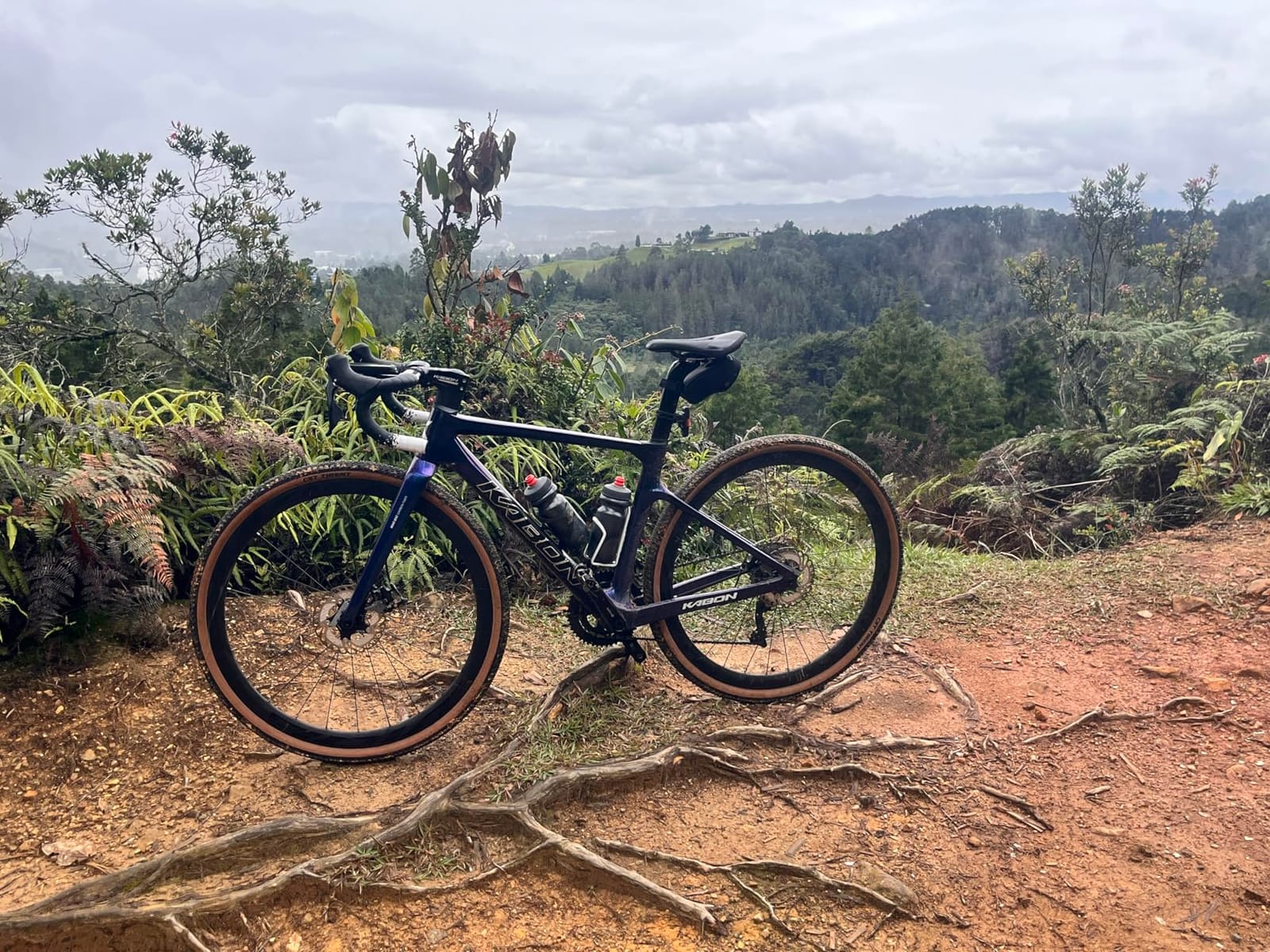
The KABON carries the lowest listed complete build weight in this group, at 8.7 kg with carbon frame, fork, handlebar and seatpost. That full-carbon contact set is the real story here: carbon bars and a carbon post damp vibration on rough surfaces in a way that matters enormously once you are spending nine hours in the saddle on washboard forest road.
The drivetrain is Shimano 105 R7000 2×11 across 22 speeds, with mechanical disc brakes and 700x40c fast-rolling high-traction tires. Internal routing runs through wind-tunnel-shaped stays, seatpost and seat tube, and the frame is rated for riders up to 150 kg, which is a useful number to know when you add 15 kg of luggage.
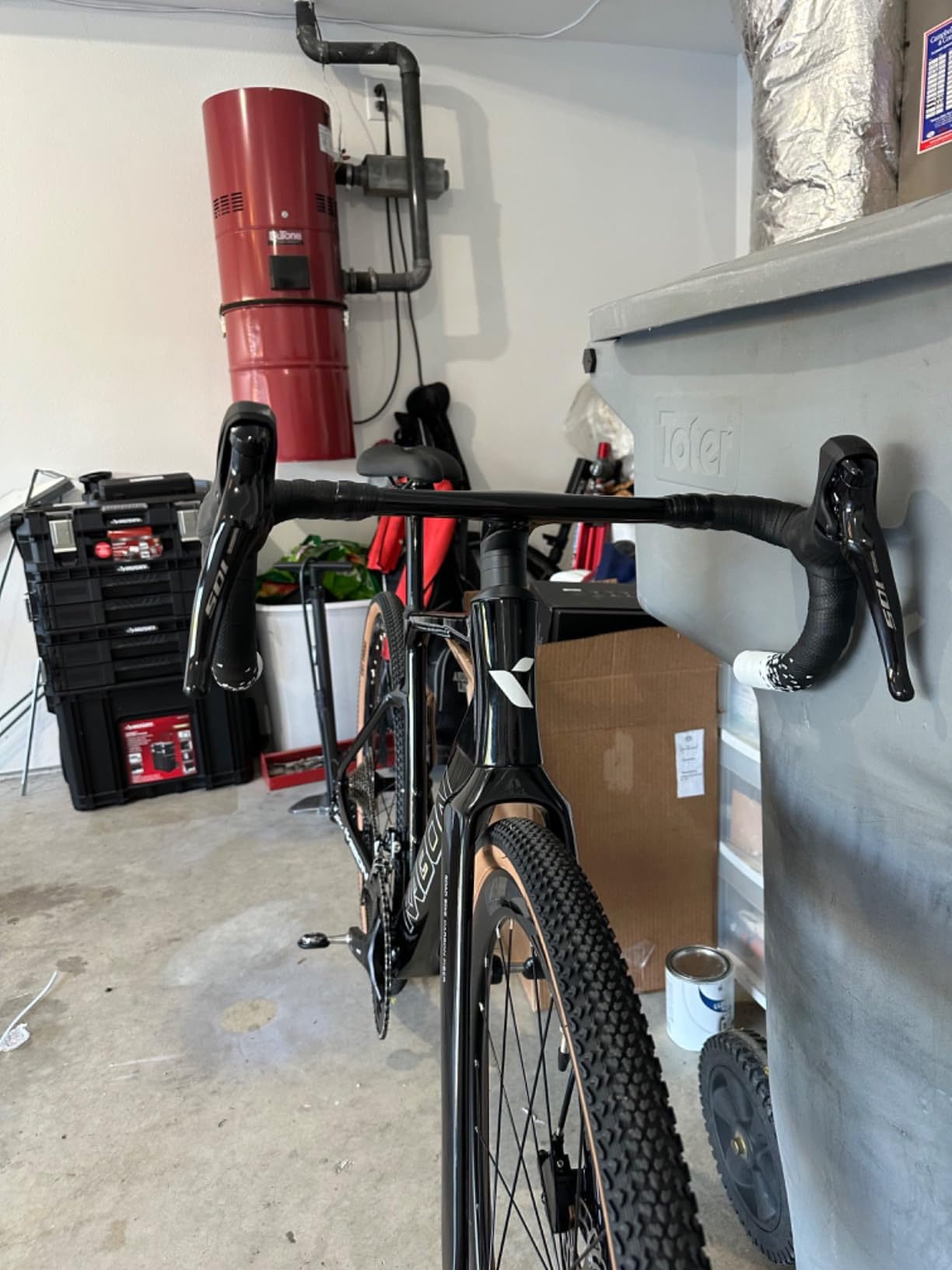
Mechanical disc brakes are the compromise. They are serviceable with basic tools, which riders heading far from civilization appreciate, but they deliver less consistent power in prolonged descent or heavy rain than a hydraulic system. Fully internal routing also means brake and shift hose replacement is not a roadside job.
The 2×11 road-oriented range is narrow for loaded climbing, and the listing of 22 speeds oversells what a bikepacking rider actually needs. There are only four customer reviews, all five stars, which means strong early enthusiasm and very little long-term durability evidence.
Why a full-carbon build earns its place here
Weight is not a vanity metric on a bikepacking rig. Every kilogram you remove from the bike is a kilogram you do not have to lift over a headwall, so a bike listed at 8.7 kg starts a loaded trip roughly 1.7 kg lighter than the 10.4 kg carbon builds, before bags and water.
The five-year frame warranty is the longest fixed term listed in this roundup, and the frame, fork, bar and post all in carbon is a combination you normally see far higher up the range. Owners highlight the 105 shifting as fast and responsive and the wide tires as adding stability on uneven surfaces.
Where it is the wrong choice
Do not buy it for technical mountain terrain or long loaded climbs; the gear range is the limitation, and mechanical brake feel in wet descents is the second. The wheel size is also listed inconsistently at 62.2 cm against a 700c tire specification, so confirm the wheel standard before you plan any wheel upgrade.
Four reviews is a thin foundation. Treat the 8.7 kg figure and the warranty as the purchase case, and read owner feedback as early rather than long-term data.
5. KABON T800 Carbon Sora R3000 18-Speed – Full Carbon on an Entry Budget
KABON Carbon Gravel Road Bike, T800 Carbon Fiber Frame 700C…
Full carbon at 8.7 kg
Shimano Sora R3000 2x9,18-speed
Mechanical discs
Carbon handlebar
Pros
- Full carbon frame fork and seatpost at 8.7 kg
- Integrated carbon handlebar adds stiffness and dampening
- 700x40c tires grip well on hardpack and gravel
- Smooth durable shifting for the class
- Arrives almost fully pre-assembled
Cons
- Very narrow gear range for loaded climbing
- Mechanical discs fade in wet long descents
- 3-year frame warranty is shorter than the 105 build
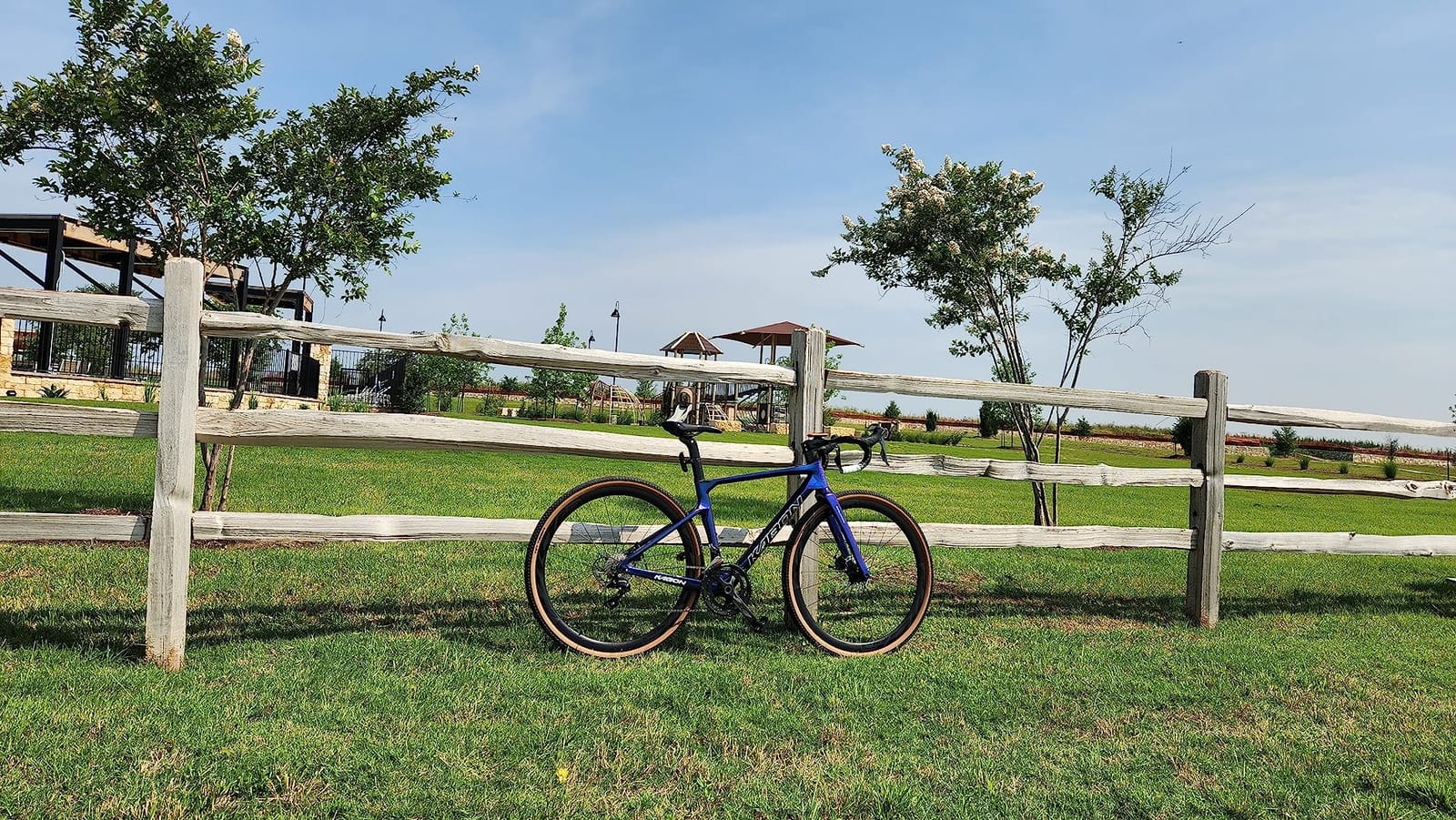
This is the same T800 carbon platform and the same 8.7 kg complete build weight as the 105 version, but with a Shimano Sora R3000 2×9 drivetrain instead, and the narrowest gear range of the seven. On a fully loaded bike, gearing is the first thing to check.
What you get instead is value, and consistently positive owner feedback on the frame, the tires and the shifting. Thirteen reviews average 4.4 stars, with 57 percent at five stars and 25 percent at four, and nobody rated it one or two stars. That distribution matters more than the average: there is a small dissatisfied minority, not a pattern of failures.
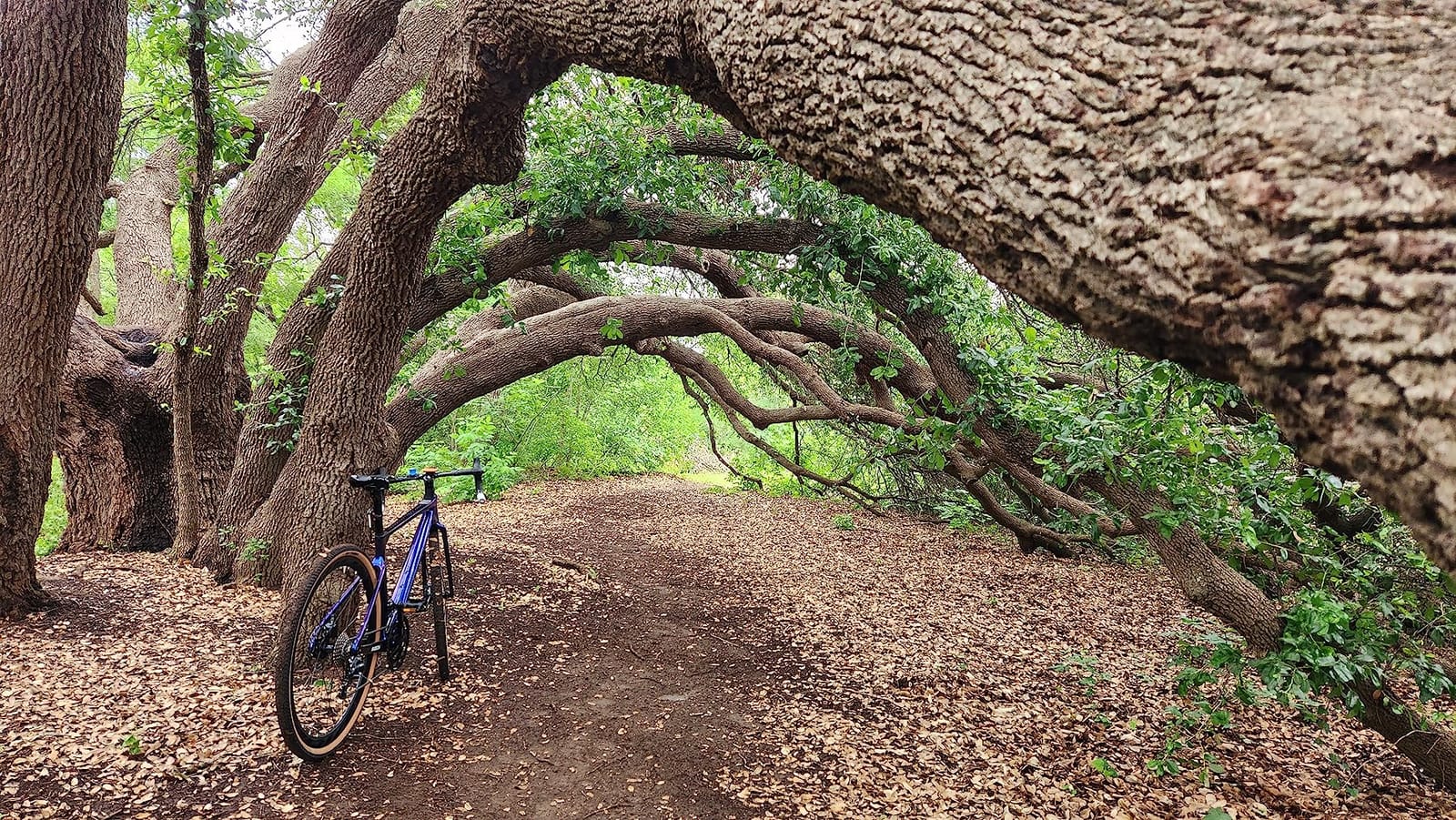
The integrated carbon handlebar is the detail that carries over from the more expensive build. Owners describe it adding stiffness and vibration dampening, and combined with the carbon seatpost it does more for long-day comfort than the groupset tier does.
700x40c tires give good grip and stability on uneven pavement, hardpack and gravel, and disc brakes shorten stopping distance in varied conditions. The bike arrives almost fully pre-assembled with a pedal and tool kit in the box.
Where it makes sense for bikepacking
If your route is more road than dirt, more weekend than expedition, and you want a light bike that is pleasant on pavement for the ride to the trailhead, this makes real sense. The value theme is consistent across reviews: a full-carbon build with disc brakes at a price that undercuts most entry gravel bikes from established brands.
Riders upgrading from a hardtail who want drop bars and low weight without a large jump in cost will find this an easy first step.
Where it disappoints
Skip it for loaded climbing. The 18 percent of three-star reviews aligns with owners who found the mechanical discs and the lower gearing wanting, and those are exactly the two things a bikepacking bike lives or dies on. Brake feel and power fade in wet, long descents is the other recurring note.
The warranty is three years on the frame and six months on accessories, shorter than the five years on the sibling 105 build, and it comes with a plastic saddle that most riders replace before a multi-day trip.
6. Tommaso Sentiero Claris 24-Speed – Best First Bikepacking Gravel Bike
Tommaso Sentiero Sport Performance Aluminum Gravel Bike…
Aluminum frame
Shimano Claris 2x8 24-speed
Disc brakes
Compact upright geometry
Pros
- Most reviewed of the seven at 69 ratings
- Real climbing gears from the 24-speed Claris
- Fully Shimano drivetrain rather than mixed parts
- Lifetime warranty replacement promise on the frame
- Riders report 100+ miles without issues
Cons
- Only one S frame size listed from 5 ft 6 in to 5 ft 8 in
- Reach runs long for the size so a shorter stem helps
- Professional assembly is required and costs extra
The Sentiero is the most reviewed bike in this roundup with 69 ratings, and for a first bikepacking gravel bike the argument is simple: a full Shimano Claris 2×8 drivetrain across 24 speeds gives you real climbing gears, which is the thing most cheap bikes in this category cannot do.
Owners describe a smooth, fast ride that works on both road and gravel, and compact upright geometry that is approachable for newer riders moving to a bikepacking setup. One rider put more than 100 miles on it within weeks without issues. The aluminum frame carries a lifetime warranty replacement promise, which is genuinely rare at any price.
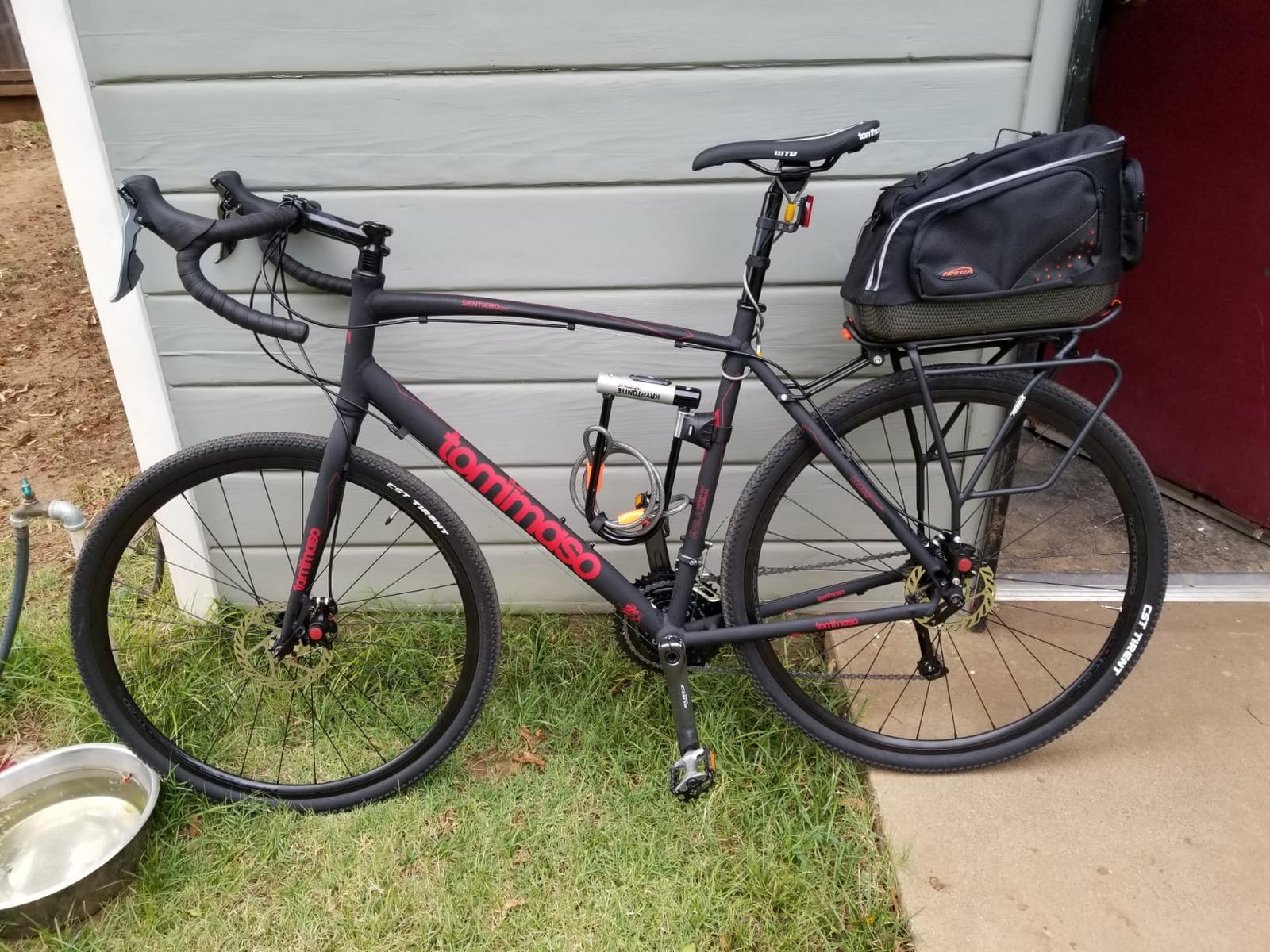
The catch is sizing, and it is the most-cited complaint among the reviews of that bike. Only one frame size is listed, an S for riders between 5 ft 6 in and 5 ft 8 in, and within that size the reach runs longer than expected, so some riders need a shorter stem to compensate. Riders under 165 cm should treat this as a dealbreaker unless the geometry works for them in person.
It also arrives un-tuned, with professional assembly required to validate the warranty, which owners typically budget at roughly 75 to 80 for the service. Plan that into your first-week setup. The saddle becomes uncomfortable past about an hour, which on a bikepacking bike is a real limitation.
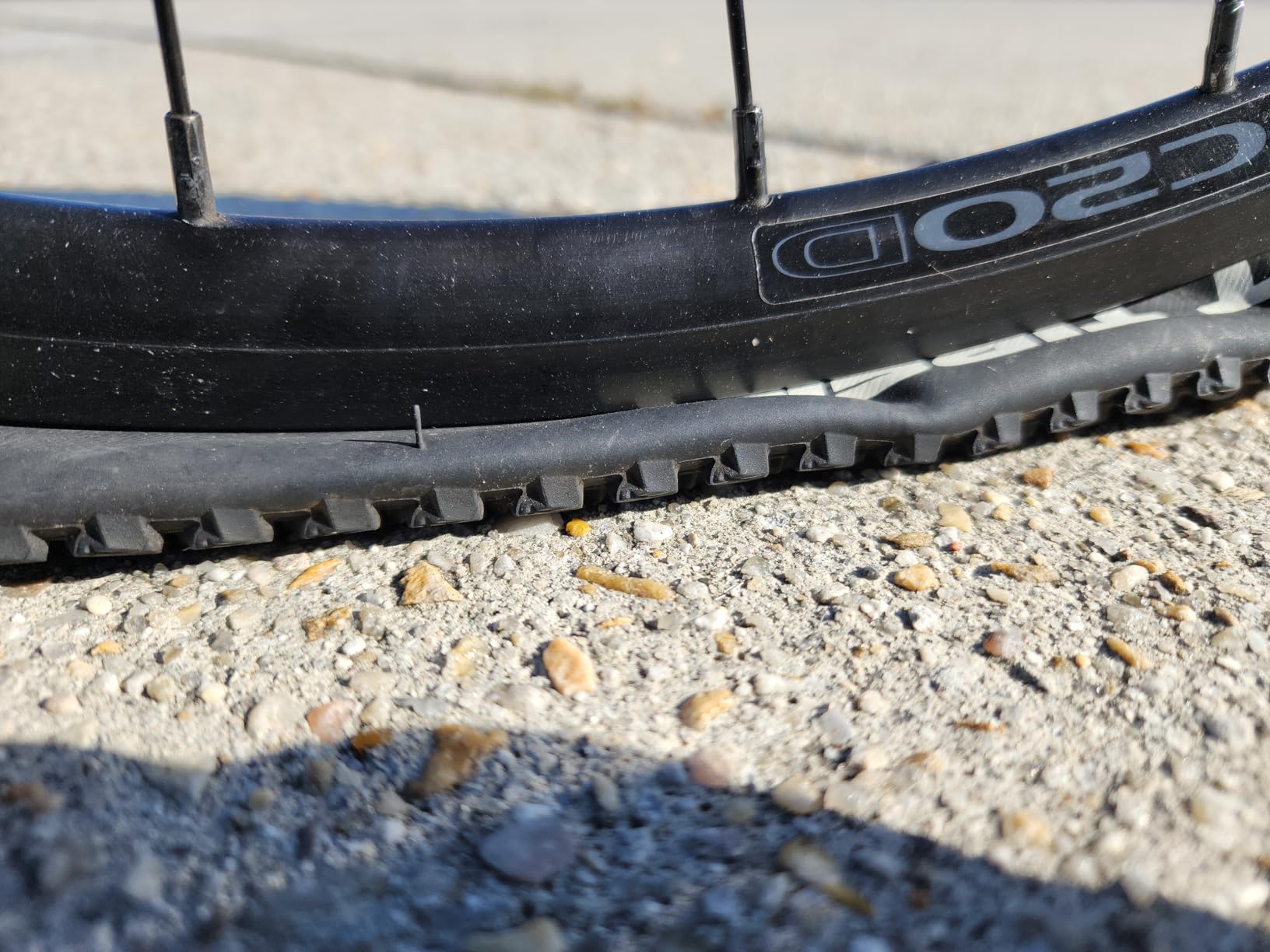
Why the 24-speed drivetrain matters for a loaded bike
A triple-class 2×8 spread gives you a low gear and a high gear from the same crankset, which is exactly what a rider carrying gear on a steep grade needs. Riders coming from a mountain bike often find that a road bike with real low gears is more comfortable loaded than a race-oriented drop-bar bike that is not.
The fully Shimano drivetrain with Acera Rapid Fire shifters also means parts are easy to source, which is a genuine advantage in the kind of remote riding bikepacking points you toward.
Where riders report trouble
Quality control at delivery accounts for the 11 percent of one-star reviews, with reports of stripped pedal threads, a warped front rotor, forks assembled backwards and a pedal shearing after roughly 20 miles. A squeaky noise in the rear wheel and a tight shifter cable are also reported, and shops have difficulty resolving the latter.
Heavy riders report repeated inner tube replacements, and the flat handlebar cockpit is less useful for carrying a handlebar roll than a flared drop bar. This is a capable first bike, not a loaded expedition machine.
7. Tommaso Siena Tourney 21-Speed – Budget Pick With Triple Gearing
Tommaso Siena – Shimano Tourney Gravel Adventure Bike with…
Aluminum frame
Shimano Tourney 21-speed triple
Avid BB5 mechanical discs
700x40c TC-20D rims
Pros
- Best value of the seven against entry name-brand gravel bikes
- Triple chainring gives both long and steep climbing gears
- Disc brakes stay dependable in rain and mud
- 100 percent Shimano drivetrain
- Loyal owners report 1000+ trouble-free miles
Cons
- 700x40c tires exceed the width spec for the 13.5 mm internal rims
- 130 mm rear dropouts are an outdated standard
- Front derailleur and caliper usually need adjustment
The Siena has the lowest listed figure of the seven, and owners often compare it favourably to entry models from major brands at roughly twice the price. Fifty-two ratings averaging 4.1 stars, with 61 percent at five stars, and loyal owners reporting more than 1,000 trouble-free miles after a single tune-up.
The Shimano Tourney 21-speed drivetrain with a triple chainring is the reason. It covers both long and steep climbs from one crankset, which is the same advantage the Sentiero’s 24-speed double offers and the same thing the carbon bikes here cannot do. Riders describe hybrid manners: fast like a road bike, stable on dirt.
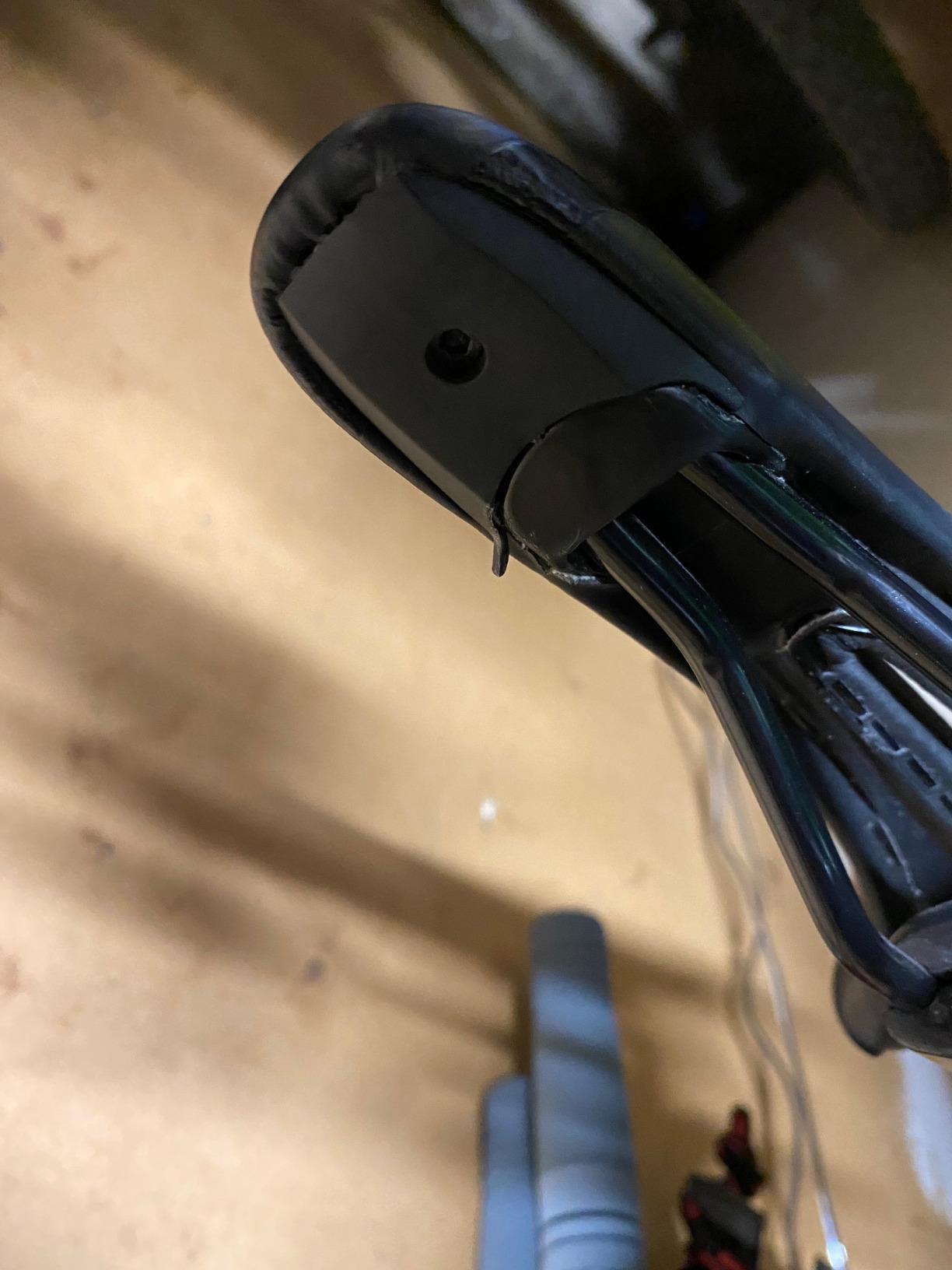
Two technical points deserve real weight here. First, the 700x40c tires exceed the ERTRO width recommendation for the 13.5 mm internal rim width on the supplied TC-20D rims, which one owner flags as a cornering stability concern on loose surfaces. On a bikepacking bike carrying weight, that is a setup you should address, not ignore.
Second, 130 mm rear dropouts are an old standard, so modern 135 mm or wider wheelsets are harder to fit. That limits you to the stock wheels for the life of the bike, which matters more for bikepacking than for ordinary road riding because wheels take the punishment.
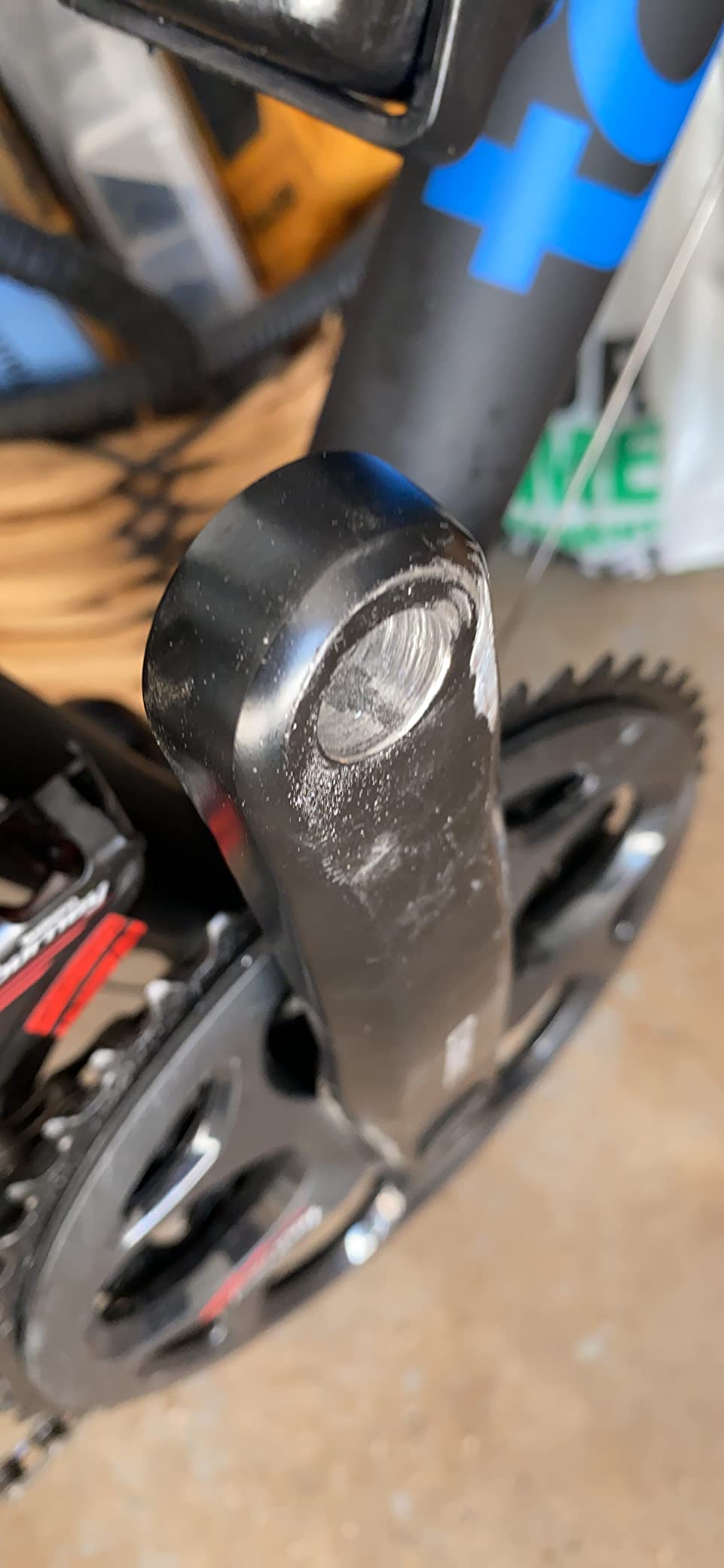
Where the budget is best spent here
The lifetime warranty replacement promise on the frame is a real long-term asset, and a 100 percent Shimano drivetrain with a triple ring is a sensible, serviceable starting point. Customer service is described as friendly and responsive, resolving issues within a day, and the bike arrives mostly assembled so finishing the build takes only a few tools.
Paint chips on spokes and fasteners, plus an unsealed jar of touch-up paint that spills in the box, are cosmetic complaints rather than mechanical ones. The frame geometry and paint scheme draw consistent compliments.
Where it falls short for bikepacking
It arrives un-tuned and the front derailleur and brake caliper frequently need adjustment out of the box, so budget a service visit. Quality control failures within the first few rides include a sheared pedal and a front derailleur that would not reach the top gear, and one-star reviews cite return shipping costs the brand does not cover.
Shifting is also a little slow, and with a single listed size plus long reach for a 53 cm frame, fit is a gamble. Buy it if your budget is the deciding factor and you ride mostly road-plus-gravel; look at the Sentiero if climbing gears matter more to you.
How to Choose a Gravel Bike for Bikepacking
Specs decide this purchase, and the order of importance is not what spec sheets suggest. Tire clearance, gearing, mounting points and geometry under load matter far more than frame material or groupset tier. Here is how we would weigh them on the bikes above.
Tire clearance and why the sidewall number lies
All seven bikes here run 700x40c tires, which is a sound bikepacking starting point. But the number on the sidewall tells you only half the story: what matters is clearance against rim internal width. A 40c tire on a 13.5 mm internal rim, as on the Tommaso Siena, sits outside the recommended range and can feel vague on the downstroke when loaded.
The 45-spoke wheels on the U6000 and GRX610 builds are the better-equipped wheels here for rough ground, because more spokes mean more redundancy over shale and rock. If you plan to run wider tires than 40mm, confirm actual frame clearance with the manufacturer rather than trusting a listing.
Gearing: the 20 gear inch benchmark
The community benchmark for a bikepacking bike is a lowest gear near 20 gear inches, which is roughly a 32t chainring with a 10-52t cassette, or a 46/30t double with an 11-34t cassette. Bike setters and riders both arrive at that figure independently, which is why it is worth using.
Against that target, the two Tommaso builds with triple chainrings and 24- and 21-speed ranges are the only ones here designed around climbing from the start. The GRX610 12-speed with its M6100 cassette is the closest single-ring equivalent. The 2×11 105 build and the 2×9 Sora build are road-oriented, and that shows on a steep grade with 15 kg of luggage.
Mounting points: what a bikepacking rig actually needs
Look for specific locations, not a vague rack-compatible claim. The full list to check is three bottle bosses in the main triangle, one mount under the down tube, two pairs of bosses on the fork legs, a top tube mount for a bento bag, and front and rear rack eyelets. None of the seven bikes here lists that full set, which is the honest answer to the question of why frame storage is the thing you will build yourself.
For a bar roll and seatpack setup, internal cable routing on the SAVADECK and KABON builds is a genuine advantage because it removes cable interference from your bag straps. For a rack rig, you are looking at racks that clamp to the fork and seatstay bridge rather than bolts to eyelets, and the 130 mm rear dropouts on the Siena complicate that further.
Steel, titanium, carbon or aluminum for loaded riding
For bikepacking specifically, material is a durability and repairability argument more than a weight argument. In r/bicycletouring, the case for titanium is made on mounts and geometry rather than on how light it is, which is a good instinct. Titanium frames are comfortable, tolerant of luggage welds and effectively permanent; the downside is price, and the fact that the riding qualities of a well-made frame come from geometry and tubing, not from the material name.
Steel is the community default. Riders in r/bikepacking say it plainly: steel over everything else for bikepacking, comfortable with a 2x drivetrain, hard to break and easy to true and repair. Titanium’s common problems are bent or cracked dropouts, hard-to-true chainstays and a price that makes you nervous on remote routes. Carbon is the fastest and the most expensive to replace after a crash, and its flexing seatpost is a comfort advantage but a repair liability. Aluminum is stiff, welds less gracefully and is the most likely to crack at a mount under repeated load, but it is cheap and light, which is why two of the bikes here are aluminum.
Gravel bike or hardtail mountain bike for bikepacking?
If your route is gravel fire roads, forest service tracks, two-track and some pavement, a gravel bike is faster, lighter on the feet and more comfortable on long stretches of smooth surface, and it carries luggage lower and more centrally. A hardtail wins decisively on technical singletrack, mud, and anything with roots and rock gardens, and it has bigger tires and stouter wheels as standard.
Most riders who come from mountain biking tell the same story in r/bikepacking: they keep the hardtail for the rough trips and add a drop-bar bike for the road-and-gravel work, because the two jobs genuinely differ. The forum consensus is also that the buying question is which slot in your rotation is empty, not which bike is best in the abstract.
Fit, and the riders almost no guide covers
If you are between 150 and 165 cm, this deserves more attention than it usually gets. Small frame sizes help only if the reach is right for you, and long reach is the single most common fit complaint in this group. The Sentiero and Siena each list a single size, and both have reach that runs long for it, so riders inside that height range should assume a shorter stem or a different bike.
By contrast, the SAVADECK builds list sizes from 47cm to 58cm with height guidance, which gives you room to fit properly rather than compensating. Ask for a stack and reach chart before you commit to any of them.
Frequently Asked Questions
Is a mountain bike or a gravel bike better for bikepacking?
A gravel bike is better on gravel fire roads, forest service tracks, two-track and pavement because it is faster, keeps luggage lower and more central, and stays comfortable on long smooth stretches. A hardtail wins on technical singletrack, mud, roots and rock gardens, and it takes bigger tires and stonger wheels by default. Riders who do both usually keep one of each, because the jobs are genuinely different.
Which is better for a gravel bike, a steel frame or a titanium frame?
For bikepacking, steel is the safer default: it is comfortable, tolerant of luggage welds, easy to true and repair, and the r/bikepacking consensus is steel over everything else. Titanium gives similar comfort with better corrosion resistance and effectively permanent frames, but costs more and the common problems are bent or cracked dropouts and chainstays that are hard to true. Geometry and tubing matter more to ride quality than the material name.
What tire clearance do I need for bikepacking?
Around 45mm or wider covers most gravel and hardpack bikepacking, and 40mm is a sound all-round starting point for pavement, fire roads and two-track. The listing number is only half the story because what matters is the tire against rim internal width, and a tire wider than the rim is recommended for can feel vague on the downstroke when loaded. Wider tires also mean lower pressure and more comfort on washboard surfaces.
How much gearing do I need for loaded bikepacking?
Aim for a lowest gear near 20 gear inches, roughly a 32t chainring with a 10-52t cassette, or a 46/30t double with an 11-34t cassette. That is the figure bike retailers and riders both arrive at for climbing steep grades with 10 to 20 kg of luggage. Road-oriented 2×9 and 2×11 groupsets and narrow single-ring setups are the first thing to check, because gearing is what bails on a fully loaded climb.
Is a gravel bike better for touring than a touring bike?
A modern gravel bike is usually better for mixed-surface touring because it is faster on pavement, lighter, and takes wider tires and more mounting points than a traditional touring bike. A traditional touring bike wins on steel or titanium durability, integrated rack and fender eyelets, and long days in the saddle with panniers. If your route is mostly road with the occasional gravel section, either works; if it is mostly gravel, choose the gravel bike.
Which gravel bike is best for all-around riding?
The SAVADECK T800 Carbon with the Shimano GRX400 20-speed drivetrain is the best all-round pick in this roundup, because the double ring gives the widest usable low gear while hydraulic brakes and a 10.4 kg carbon frame keep it fast and predictable. For a cheaper all-rounder the Tommaso Sentiero 24-speed is the strongest option, since a full Shimano drivetrain at that level is unusual.
Final Verdict
The best gravel bikes for bikepacking in 2026 come down to which job you are actually doing. For most riders carrying a load on mixed surfaces, the SAVADECK T800 Carbon GRX400 20-speed is the pick, because a double ring gives you a usable low gear and hydraulic brakes keep the descents controlled, and you can live with a factory tune and a strap-on bag setup.
Buy the GRX610 12-speed instead if steep loaded climbs are the defining feature of your route and you want single-ring simplicity with a wide-range cassette. Buy either KABON if the lowest complete build weight matters most, and check the mechanical brake choice carefully before you commit to long descents. Start with the Tommaso Sentiero or Siena if budget comes first, and treat the required service visit and the single listed frame size as costs of entry.
Whichever one you choose, budget the setup, not just the bike. A professional tune, a handlebar roll or frame bag, and a set of tires matched to your rims will do more for a trip than any component in the spec sheet.
