
9 Best Down Imaging Fish Finders for Crappie (September 2026) Quality Reviews
Crappie fishing is structure fishing. The fish that matter to you are not pelagic and they do not cruise open water in clean water — they hang in schools against brush piles, stake beds, stump fields and the edges of creek channels, often in 8 to 20 feet of water, and they want a jig or a minnow dropped straight down onto their noses. That single fact drives every recommendation in this guide. If you want the best down imaging fish finders for crappie, you are not shopping for range or raw power, you are shopping for the ability to tell a brush pile apart from a rock pile and to see whether fish are attached to it.
Down imaging is the feature that does that work. The transducer fires a broad beam straight down beneath the boat and paints an image of the bottom and everything standing on it, so timber, pilings, stumps and brush read as distinct shapes with a fish-sized return beside them. Traditional CHIRP sonar runs alongside it for crisp arches and target separation. A crappie angler reading a stake bed at 14 feet on a down image can count fish and pick the one worth dropping a jig on. That is a capability 2D sonar alone does not give you.
Contents
Here is how we chose. We compared nine current down imaging fish finder models from Garmin, Humminbird and Lowrance, weighting them 70 percent on real crappie fit — how well the down image resolves cover, how much screen you get for the price tier, whether you can mark and return to structure — and 30 percent on feature differentiation like mapping, networking and live sonar readiness. We also read the review base on every model and cross-checked it against what anglers actually argue about on crappie.com, nchuntandfish and r/jonboards-style threads. Our honest limitation: we did not run every one of these for a full season, so treat the field notes as a synthesis of spec sheets, review consensus and forum experience rather than a controlled test. We have flagged where the review base is thin.
If you want the wider picture first, our guides to the best combo units with down imaging and the best fish finders for small boats cover the install side of things. This guide is about crappie specifically.
Top 3 Down Imaging Fish Finders for Crappie (September 2026)

Garmin STRIKER Vivid 4cv
- CHIRP traditional plus ClearVu scanning
- GT20 transducer included
- Built-in Quickdraw Contours
- Bright 4-inch color display

Garmin STRIKER 5CV
- CHIRP ClearVu scanning sonar
- Split screen 2D plus down view
- Transom and trolling motor mounts
- Quickdraw Contours mapping

Humminbird PiranhaMAX 4 DI
- True Down Imaging on timber and brush
- Dual Beam narrow and wide
- 4.3-inch color LCD
- Lightweight for a kayak
As an Amazon Associate we earn from qualifying purchases. CERTAIN CONTENT THAT APPEARS ON THIS SITE COMES FROM AMAZON. THIS CONTENT IS PROVIDED 'AS IS' AND IS SUBJECT TO CHANGE OR REMOVAL AT ANY TIME.
Best Down Imaging Fish Finders for Crappie (September 2026)
| Product | Features | |
|---|---|---|
| Garmin STRIKER Vivid 4cv |
|
Check Latest Price |
| Garmin STRIKER 5CV |
|
Check Latest Price |
| Humminbird PiranhaMAX 4 DI |
|
Check Latest Price |
 Lowrance Elite FS 10-Inch Lowrance Elite FS 10-Inch |
|
Check Latest Price |
 Humminbird Helix 5 G3 CHIRP DI Humminbird Helix 5 G3 CHIRP DI |
|
Check Latest Price |
 Lowrance HOOK Reveal 5 SplitShot Lowrance HOOK Reveal 5 SplitShot |
|
Check Latest Price |
 Humminbird Helix 7 G4N Humminbird Helix 7 G4N |
|
Check Latest Price |
 Lowrance Eagle 9-Inch Lowrance Eagle 9-Inch |
|
Check Latest Price |
 Garmin STRIKER Vivid 7cv Garmin STRIKER Vivid 7cv |
|
Check Latest Price |
We earn from qualifying purchases. CERTAIN CONTENT THAT APPEARS ON THIS SITE COMES FROM AMAZON. THIS CONTENT IS PROVIDED 'AS IS' AND IS SUBJECT TO CHANGE OR REMOVAL AT ANY TIME.
1. Garmin STRIKER Vivid 4cv – The Best Down Imaging Fish Finder for Crappie Overall
Garmin Striker Vivid 4cv Fishfinder with Transducer – 4-inch…
4-inch color LCD
CHIRP traditional plus ClearVu
GT20 transducer included
Quickdraw Contours built in
Pros
- CHIRP ClearVu down imaging genuinely resolves brush and timber
- Compact 4-inch screen fits a kayak or small aluminum boat
- High-sensitivity GPS for waypoints and speed
- Vivid color palettes separate fish from cover
- Quickdraw Contours included at no extra cost
Cons
- 4-inch screen is cramped for split views
- No Wi-Fi or preloaded mapping on this model
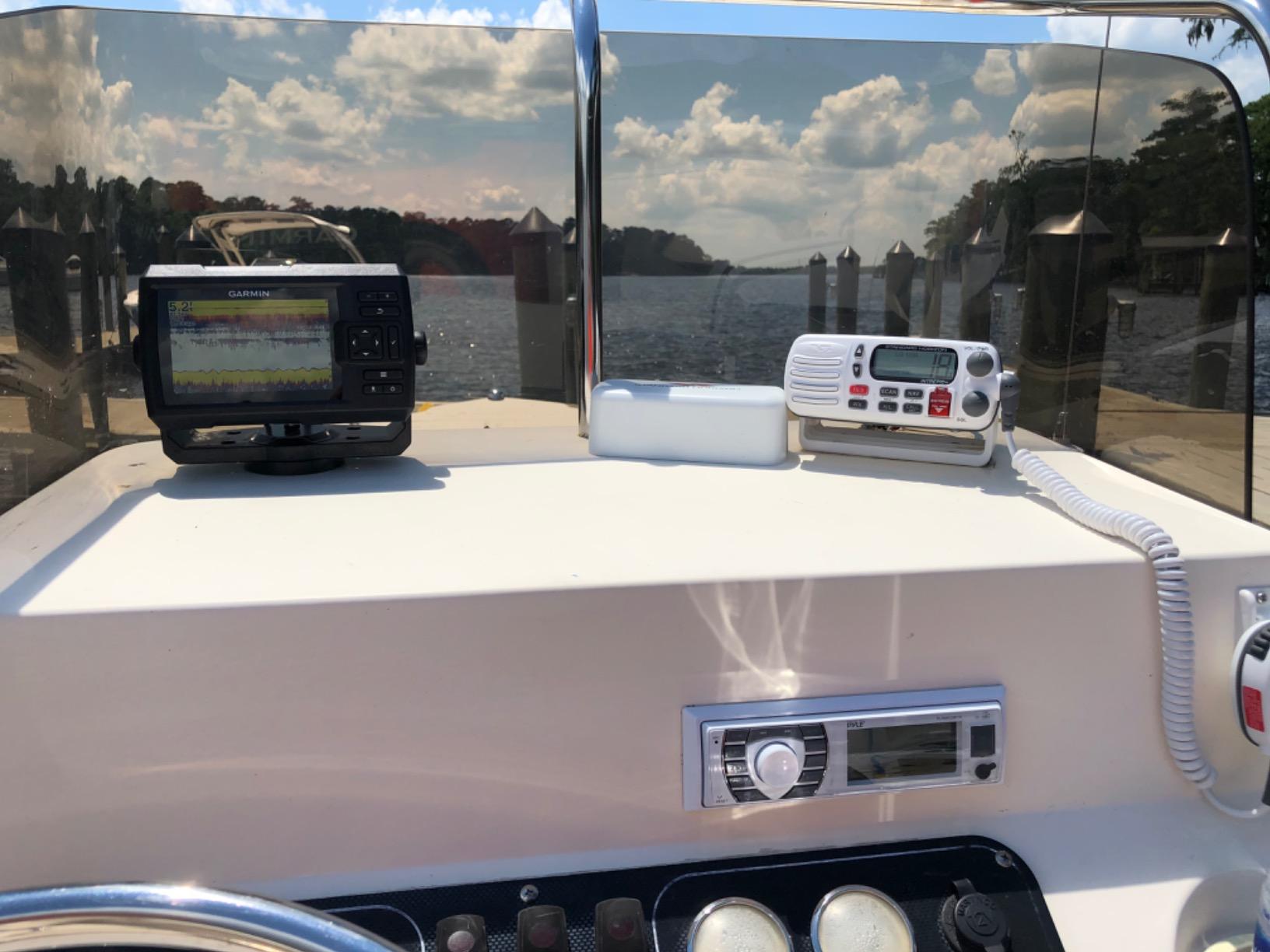
I keep coming back to this one because it does the single job crappie anglers need most, without asking you to learn a new ecosystem. The GT20 transducer in the box sends CHIRP traditional and CHIRP ClearVu scanning sonar, and that ClearVu beam is what gives you the photographic look at a brush pile or a stake bed directly under the bow. Owners consistently point out how cleanly it separates a fish return from the timber next to it.
At 4.7 stars across 1861 reviews, it also has the largest proven ownership base here, which matters more than it sounds. When a model has thousands of owners, the known quirks surface early and get documented, and the failure reports you will read about later units are already filtered out.
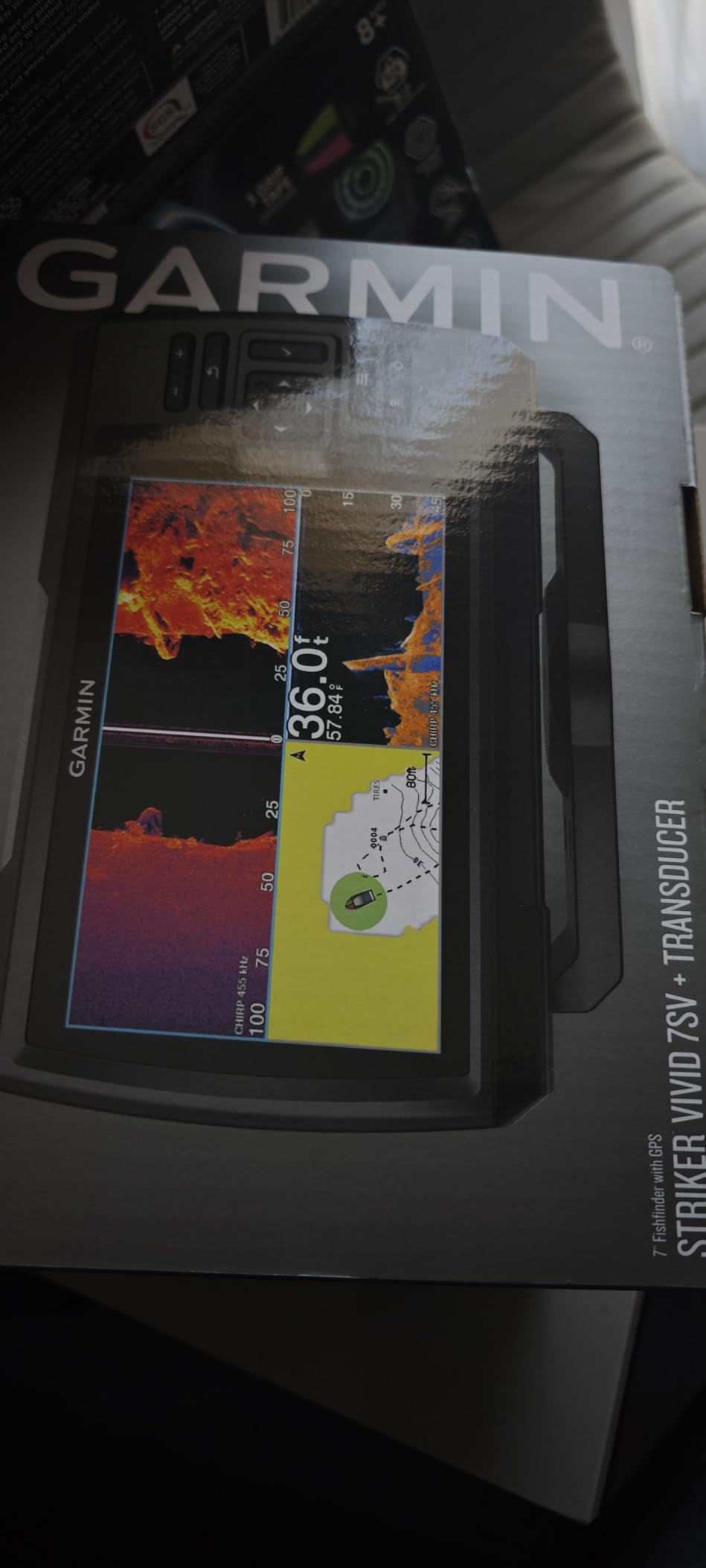
The 4-inch screen is bright and the Vivid color palettes let you pick a scheme where fish glow against dark timber instead of disappearing into a brown bottom. Quickdraw Contours is built in, so you can record your own 1-foot contour lines on any lake you fish repeatedly and mark your productive crappie spots as waypoints. Reviewers report the menus are simple enough that a first-timer is productive in a single trip.
What you give up is screen real estate and connectivity. Four inches is tight when you want a side-by-side map and sonar view, and there is no Wi-Fi, no networking and no preloaded basemap — your mapping is entirely self-generated. For a dedicated crappie boat, that trade is completely acceptable. For a multi-purpose console setup, the 7-inch model further down handles it better.
What crappie anglers like about it
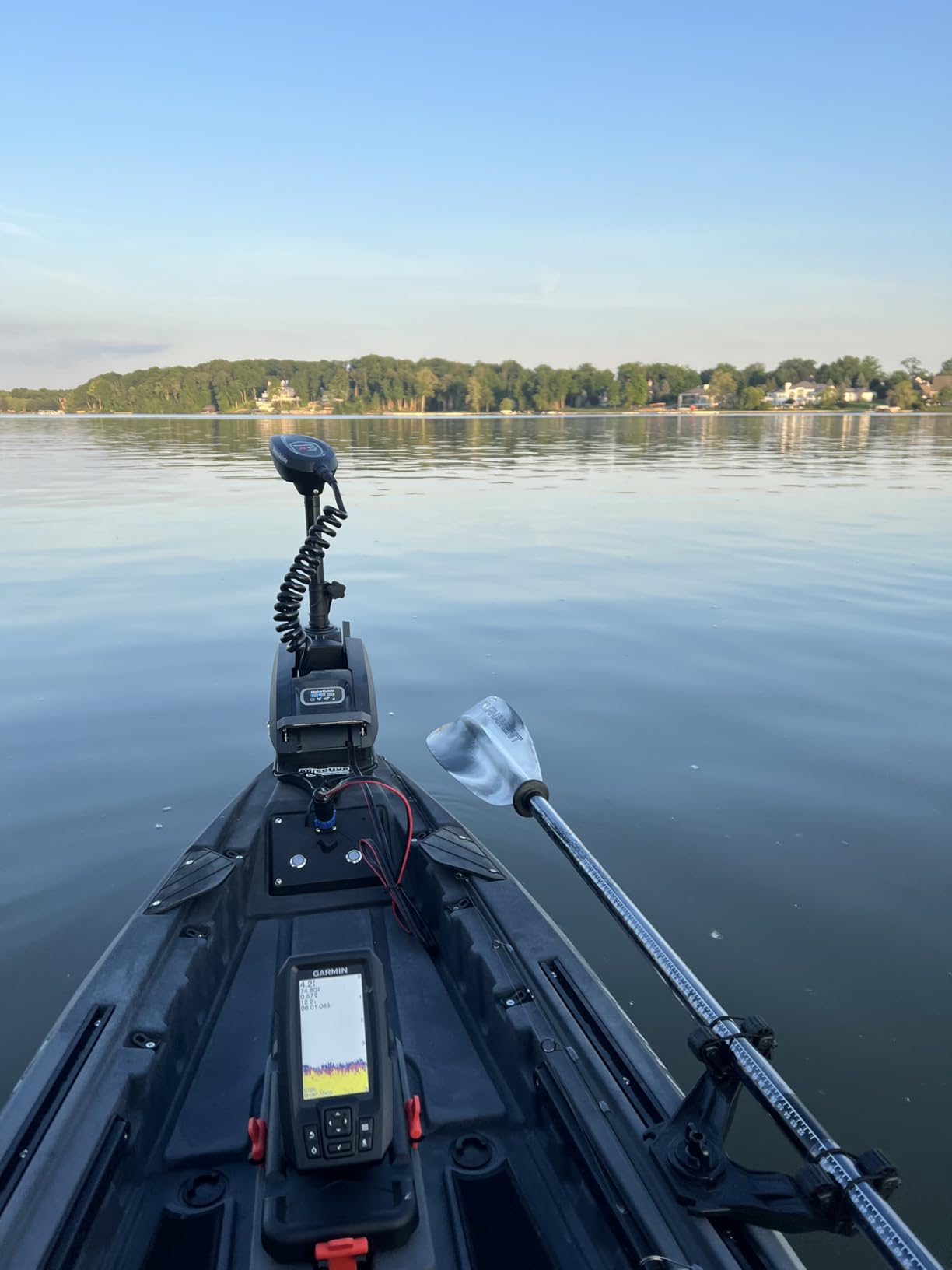
It weighs 11.2 ounces and mounts on a bail or tilt bracket, which makes it the easiest unit here to move between a kayak, a jon boat and a bass boat without rewiring. The high-sensitivity GPS tracks well enough to return to the same brush pile in wind or current, and the 2-year limited warranty is the longest in this roundup.
Where it falls short for crappie
If your lake is one you have never fished, you start with a blank screen and no map. There is also no side imaging here, so a wide fast search of a flat still means running 2D traditional sonar and reading the arches. If you routinely cover a lot of water before you find brush, pair this with a side imaging and down imaging set like the Lowrance Eagle further down.
2. Garmin STRIKER 5CV – More Screen for Anglers Who Cover a Lot of Water
Garmin 010-01872-00 STRIKER 5CV with Transducer, 5″ GPS…
5-inch WVGA color
CV20-TM transducer
Quickdraw Contours
Maximum depth 2300 feet
Pros
- Split screen 2D and down imaging together
- Transom and trolling motor mounts in the box
- Very simple menu system
- Quickdraw supports up to 2 million acres
Cons
- No preloaded maps so mapping is self-generated
- No Wi-Fi or SD card slot
- Occasional reports of saved contours not reloading
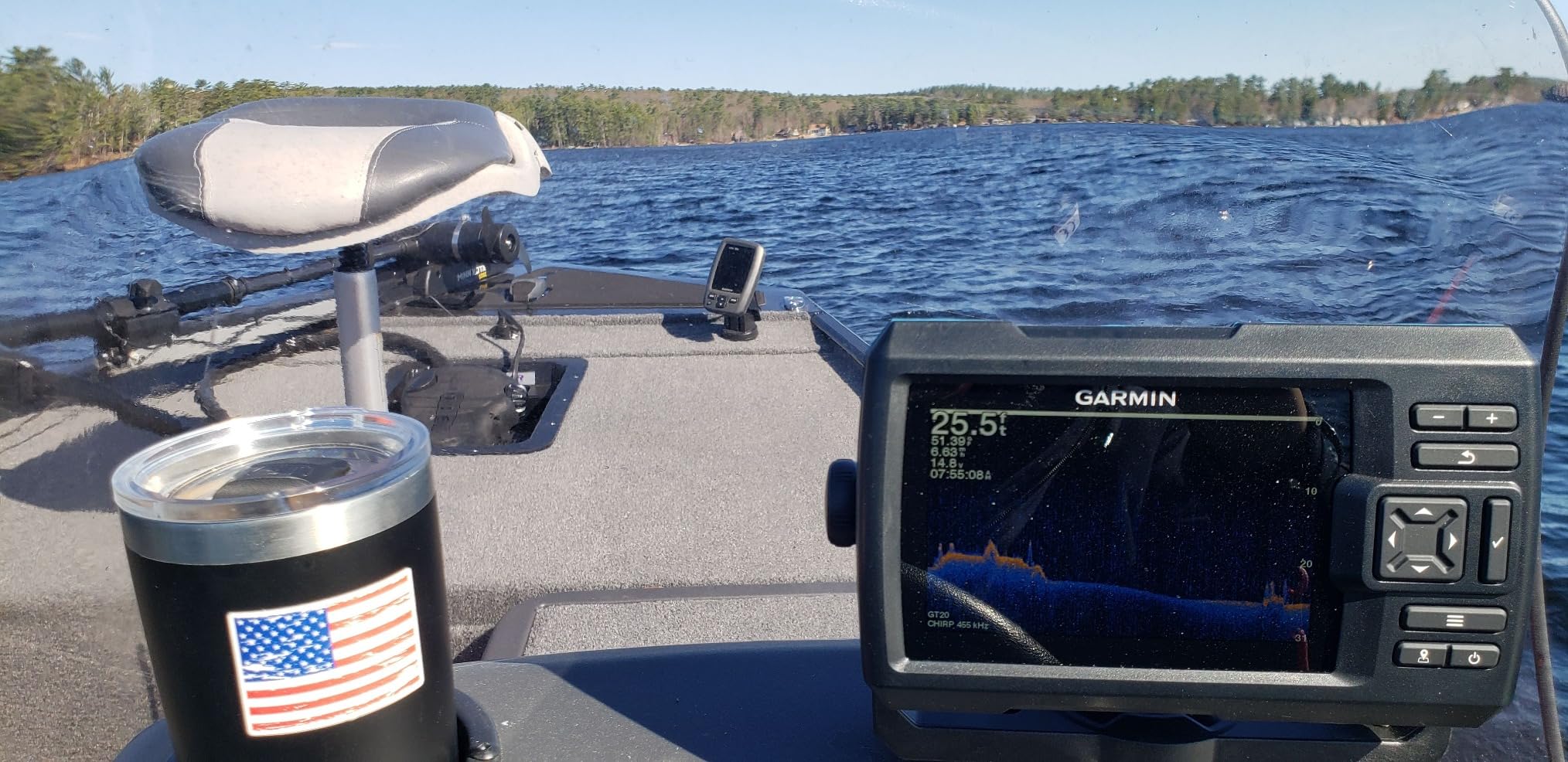
This is the unit I recommend to someone who fishes one lake hard, from a boat with a trolling motor, and wants the same ClearVu image on a bigger screen. The 5-inch WVGA display is bright enough to read through polarized sunglasses on a bright July afternoon, and owners frequently mention that the split-screen capability — CHIRP traditional on one side, ClearVu down imaging on the other — is the feature they use most while jigging over a stake bed.
Included are both a transom mount and a trolling motor mount, which matters for crappie because the two install very differently. A trolling motor mount lets the transducer track the motor shaft, so the down image stays steady as the boat holds over a spot instead of panning off target when you drift.
Quickdraw Contours here records 1-foot contours and supports up to 2 million acres, so if you build a map of your home lake you are not fighting a storage ceiling. The maximum measuring depth is listed at 2300 feet, which is far more than crappie water ever needs, but it tells you the transducer is not depth-limited in practice.
The recurring complaint in reviews is that there are no preloaded lake maps, so every contour line has to be recorded before it is useful. There is also an isolated report of saved Quickdraw contours failing to load in a later season, which is worth keeping in mind if you depend on a mapped lake to fish. No Wi-Fi and no SD slot means no community contour sharing on this model.
Who it fits best
Anglers on a trolling motor, on a modest boat with limited console space, or anyone who wants the split-screen 2D plus down view that the 4-inch screen cannot comfortably show. The 16-ounce weight and included mounts make it a straightforward permanent install for a small aluminum or jon boat.
Where it disappoints
The 1-year limited warranty is shorter than the 2-year warranty on the Garmin STRIKER Vivid models, and the wiring job is yours. Cord length and cable routing are the part that catches new owners, so budget time for it before the first trip rather than the night before launch.
3. Humminbird PiranhaMAX 4 DI – True Down Imaging at the Entry Point
Humminbird Piranhamax 4 DI
4.3-inch color TFT
Down Imaging beam
Dual Beam narrow and wide
XNT 9 DI T transducer
Pros
- True Down Imaging at the entry point
- 4.3-inch color LCD readable in direct sun
- Simple menu with no manual needed
- Light and simple to run from a kayak
- Fish ID+ and depth alarms included
Cons
- Down image detail is coarser than larger Humminbird models
- No GPS and no preloaded mapping
- One report of a storm-related failure
This is the model to buy if down imaging is non-negotiable for you and the budget is tight. Most cheap units in this category give you CHIRP 2D and no imaging beam at all, and the ones that do claim down imaging sometimes build it from side-scan data. The PiranhaMAX 4 DI runs a genuine down imaging beam, and reviewers describe it resolving timber, brush, pilings and rock clearly enough to pick a school off a log.
Dual Beam sonar gives you a narrow beam for detail and a wide beam for coverage, which is a genuinely useful pairing for crappie water. Wide finds you the drop-off; narrow resolves whether that smudge on the edge is a fish or a rock.
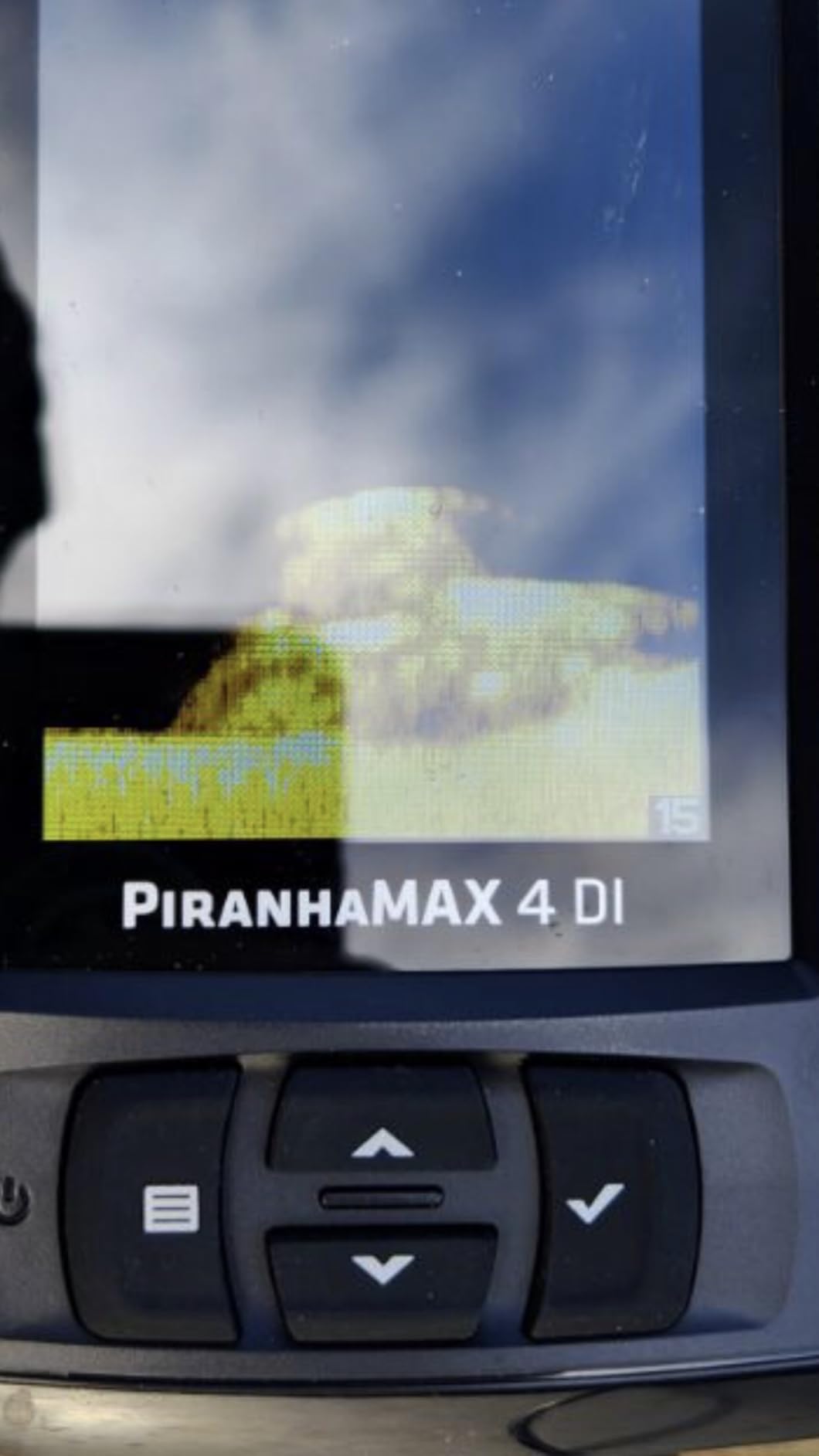
The 4.3-inch color TFT is described by owners as staying readable in direct sunlight, and the redesigned interface is simple enough that first-time users navigate it without opening a manual. Fish ID+ fish recognition, depth alarms and zoom are all in the box, alongside a tilt and swivel mount and the XNT 9 DI T transom transducer. The included transducer is not optional, which is rare in this category.
Be clear-eyed about the two trade-offs. First, there is no GPS at all, so no waypoints, no routes and no speed — you find brush piles by memory and pattern. Second, the down image detail is genuinely coarser than on the larger Humminbird models here, so close-range structure resolves more softly. One international reviewer also reported a unit dying during a storm with no repair option, which is a single report but worth knowing.
What it does well for crappie
It is the lightest and simplest way to get a real down image onto a kayak or a small jon boat. Owners call out strong sunlight readability and menu simplicity, and the 4.6-star average from 641 reviews with roughly three quarters of those at five stars is a solid reliability signal for the price tier.
Where it will frustrate you
Without GPS you cannot mark a brush pile and come back to it in fog, wind or current, and a crappie spot is defined by coordinates more than almost any other freshwater target. Plan on pairing it with a handheld GPS if you fish new water, and expect to re-approach structure by eye and pattern rather than by pin.
4. Lowrance Elite FS 10-Inch – A Full Chartplotter for Working the Structure Line
Lowrance Elite FS 7 Fish Finder with Active Imaging 3-in…
10-inch multi-touch display
Active Imaging 3-in-1 transducer
1000 foot maximum depth
3.7 pounds
Pros
- CHIRP SideScan and DownScan in one transducer
- 10-inch screen with room for split views
- Preloaded C-MAP DISCOVER charts
- Wireless NMEA 2000 and Ethernet
- Live sonar ready for ActiveTarget
Cons
- Heaviest and most involved install here
- Menus take real time to learn
- Extra install hardware and suncover
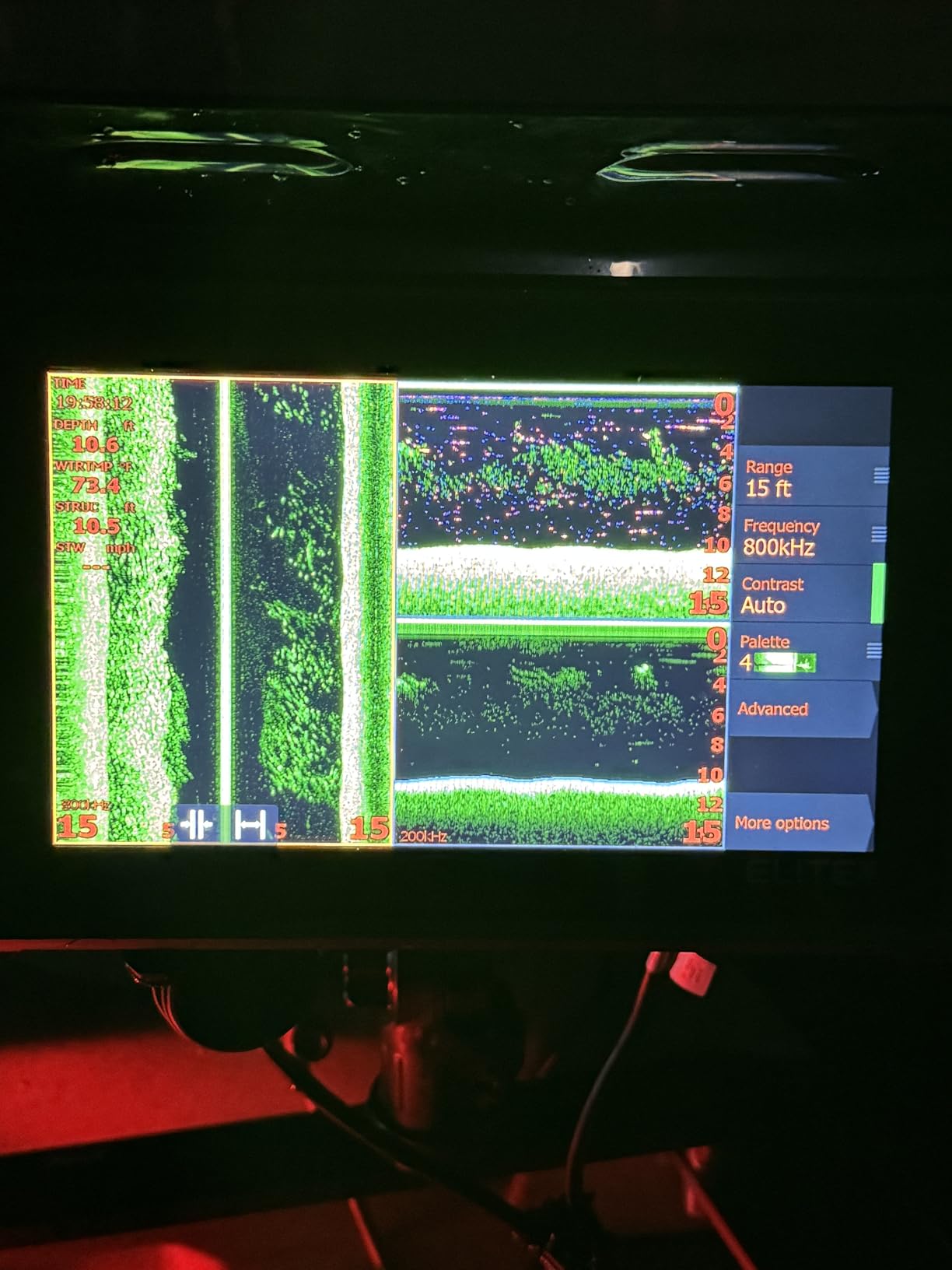
The Elite FS is the most capable crappie tool in this roundup, and the Active Imaging 3-in-1 transducer is the reason. One transducer gives you CHIRP, SideScan and DownScan with FishReveal, so you can run a wide fast search across a flat, then drop into the down image to pick individual fish off the brush you found. Forum posters consistently describe a 3-in-1 transducer as the crappie sweet spot because you need both search speed and down-image resolution in the same trip.
The 10-inch multi-touch screen is the real advantage over everything else here. It is wide enough to run a chart on one side and a sonar view on the other, which means you can see a marked waypoint and the structure under the boat at the same time instead of flipping between them.
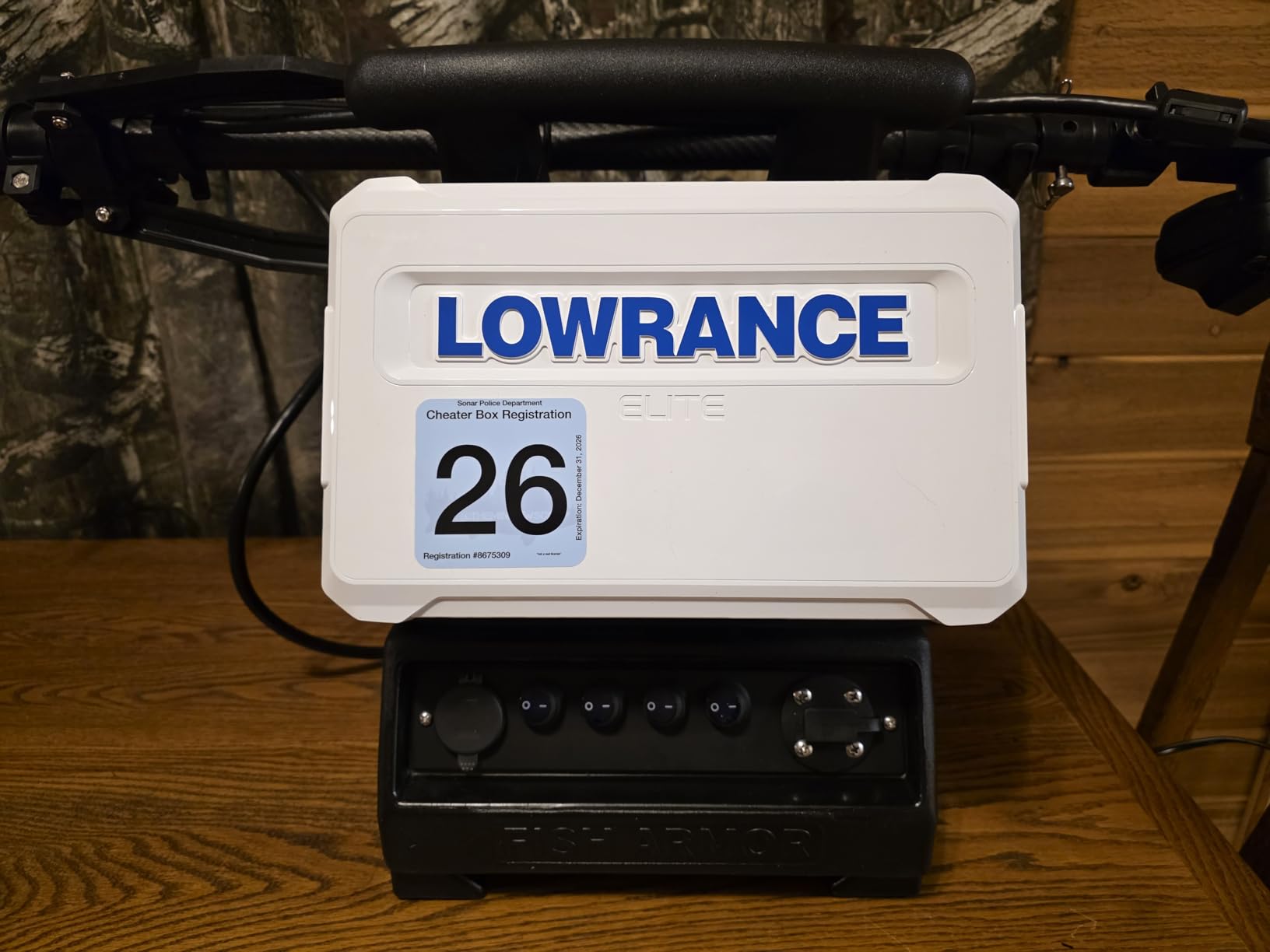
It also comes with preloaded C-MAP DISCOVER charts covering inland, coastal and Canadian waters, so unlike the Garmin models in this list you are not recording every contour yourself before you can navigate. Maximum measuring depth is listed at 1000 feet, well beyond crappie range, and networking covers wireless, NMEA 2000 and Ethernet for a multi-display boat. It is live sonar ready for ActiveTarget 2 or ActiveTarget 2 XL, which is the upgrade path anglers argue about most.
The costs are real. At 3.7 pounds it is the heaviest display here, the menu system has a genuine learning curve, and the suncover, corner clip kit and mounting hardware mean the install is a project rather than an afternoon. Owners who come from a simple Garmin describe the first week as a study period.
Why crappie anglers pick it
SideScan plus down imaging from a single mounting means you cover ground fast and still read fish accurately, which is exactly what structure fishing on a big lake demands. Preloaded charts mean you can navigate to a satellite-identified hump without having surveyed it first, and the 10-inch screen makes split-screen use practical rather than cramped.
Where it is the wrong buy
A small aluminum boat, a jon boat or a kayak is the wrong platform for a 3.7-pound head and a suncover. If you are fishing one tight lake and already know your spots, the mapping and networking you are paying for goes unused. Our 4.6-star average comes from 515 reviews, which is a healthy base for a premium model.
5. Humminbird Helix 5 G3 CHIRP DI – The Best Mid Tier Mapping Package
Humminbird Helix 5 G3 GPS Fish Finder with Transducer, Dual…
5-inch color TFT
CHIRP Down Imaging
Dual Spectrum CHIRP
AutoChart Live recording built in
Pros
- Dual Spectrum Wide and Narrow modes
- CHIRP Down Imaging filters visual noise
- Basemap with 10000+ lakes and US coastlines
- AutoChart Live records your own contours
- Good high-sensitivity GPS in river conditions
Cons
- Inline fuse and holder not included
- Awkward gimbal mounting bracket
- Down Imaging menu takes practice
Humminbird’s approach to down imaging here is filtering. CHIRP Down Imaging is paired with Dual Spectrum CHIRP sonar, which gives you Wide and Narrow modes, and the low-Q transducer handles 2D target separation precisely. For crappie that combination is useful because you alternate constantly: Narrow mode to confirm whether a return beside the log is a fish, Wide mode to sweep for the next stake bed.
Where this one separates from the Garmin units at similar sizes is mapping. You get a Humminbird Basemap covering more than 10,000 lakes and US coastlines out of the box, plus AutoChart Live with 8 hours of built-in recording. That means you can navigate a lake you have never fished and still build your own contour detail as you go.
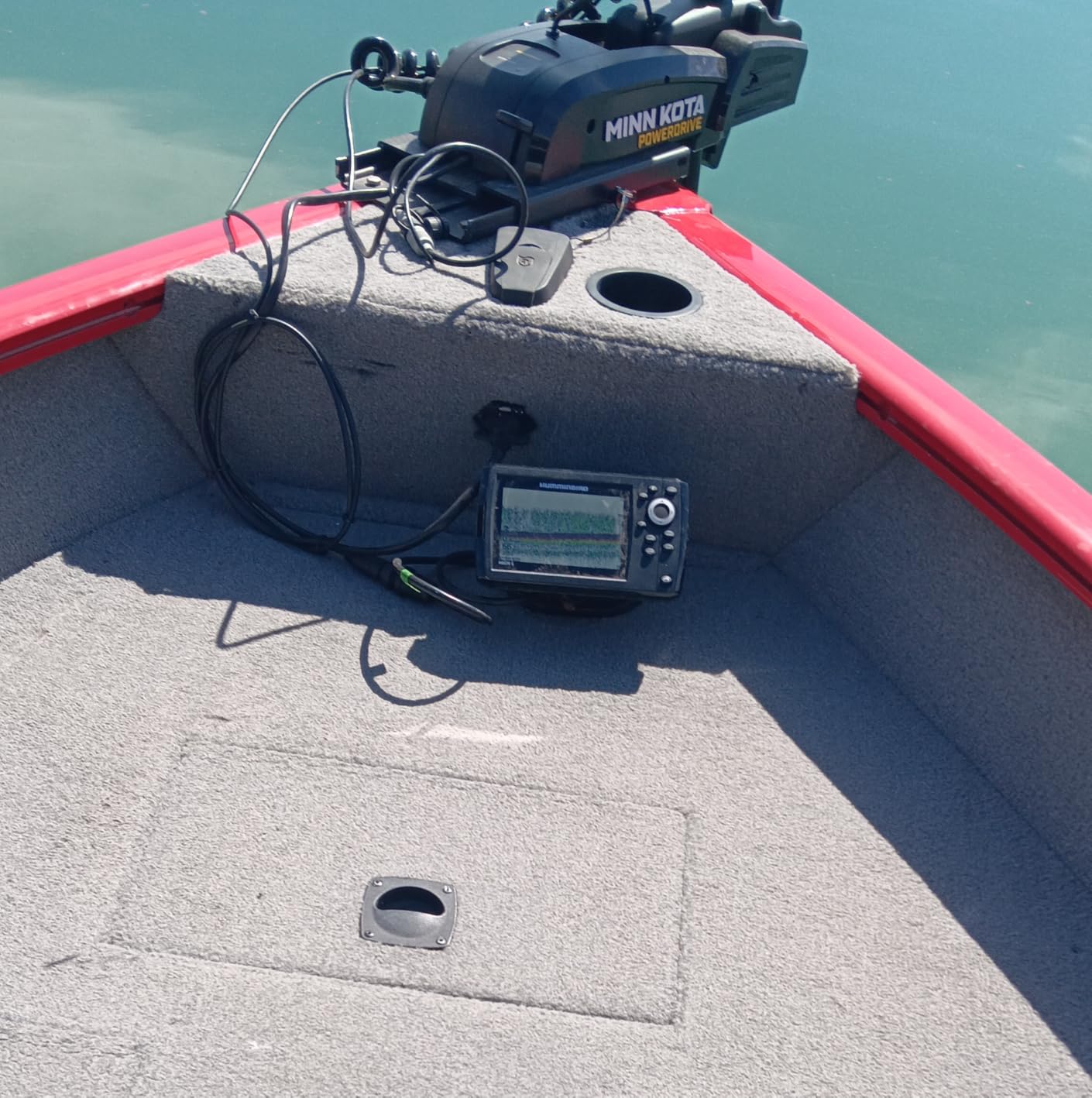
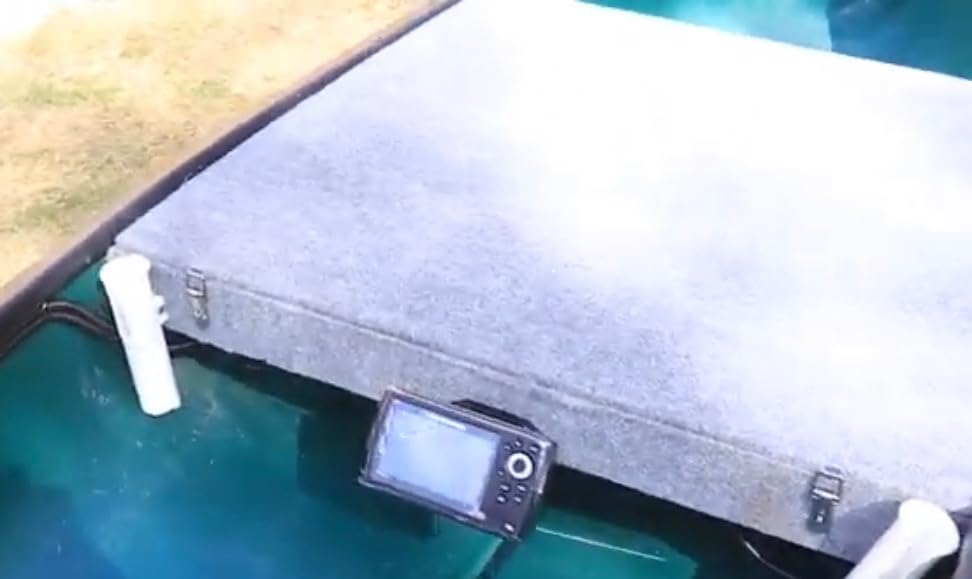
Owners report accurate bottom tracking, good sensitivity on small fish in shallow water, and a screen with strong color contrast in bright sun. The XNT 9 HW DI T transducer is described as rugged enough for weeds and debris, which matters if you work flooded timber. High-sensitivity GPS holds within a few feet even in river conditions, where a crappie spot and its neighbors can be only a few feet apart.
Two practical notes before you buy. The 3 amp fuse and fuse holder are not in the box, and a crappie angler will be running one of these on a trolling motor that pulls more current than a small unit expects. The gimbal mounting bracket is also awkward to attach and remove, so plan your mounting position carefully. The 4.5-star average comes from 338 reviews.
Best for mapping-heavy anglers
If you fish lakes you rotate through rather than one home lake, the included basemap plus AutoChart Live is the combination that gets you fishing faster on new water. It is also the natural upgrade path to a HELIX with side imaging later, because the Humminbird ecosystem lets you add a display without abandoning your recorded contours.
Where the learning curve bites
Switching from 2D sonar to the Down Imaging view takes real practice, and the sensor controls on the softkey keypad are not as immediate as a touchscreen. Reviewers flag the transition as the main early frustration, so give yourself a few trips before you judge the image quality.
6. Lowrance HOOK Reveal 5 SplitShot – Down Imaging With Charts on a Small Screen
Lowrance HOOK Reveal 5 SplitShot – 5-inch Fish Finder with…
5-inch SolarMAX display
SplitShot CHIRP plus DownScan
FishReveal overlay
Preloaded C-MAP maps
Pros
- SplitShot gives wide CHIRP plus DownScan from one unit
- Preloaded inland maps on a 5-inch screen is unusual
- Autotuning sonar removes manual settings work
- SolarMAX screen readable in direct sun
- Fuse and fuse holder included in the box
Cons
- Lowest rating in the roundup at 4.2 stars
- Transducer and head unit failures reported
- Configuration menus are complicated
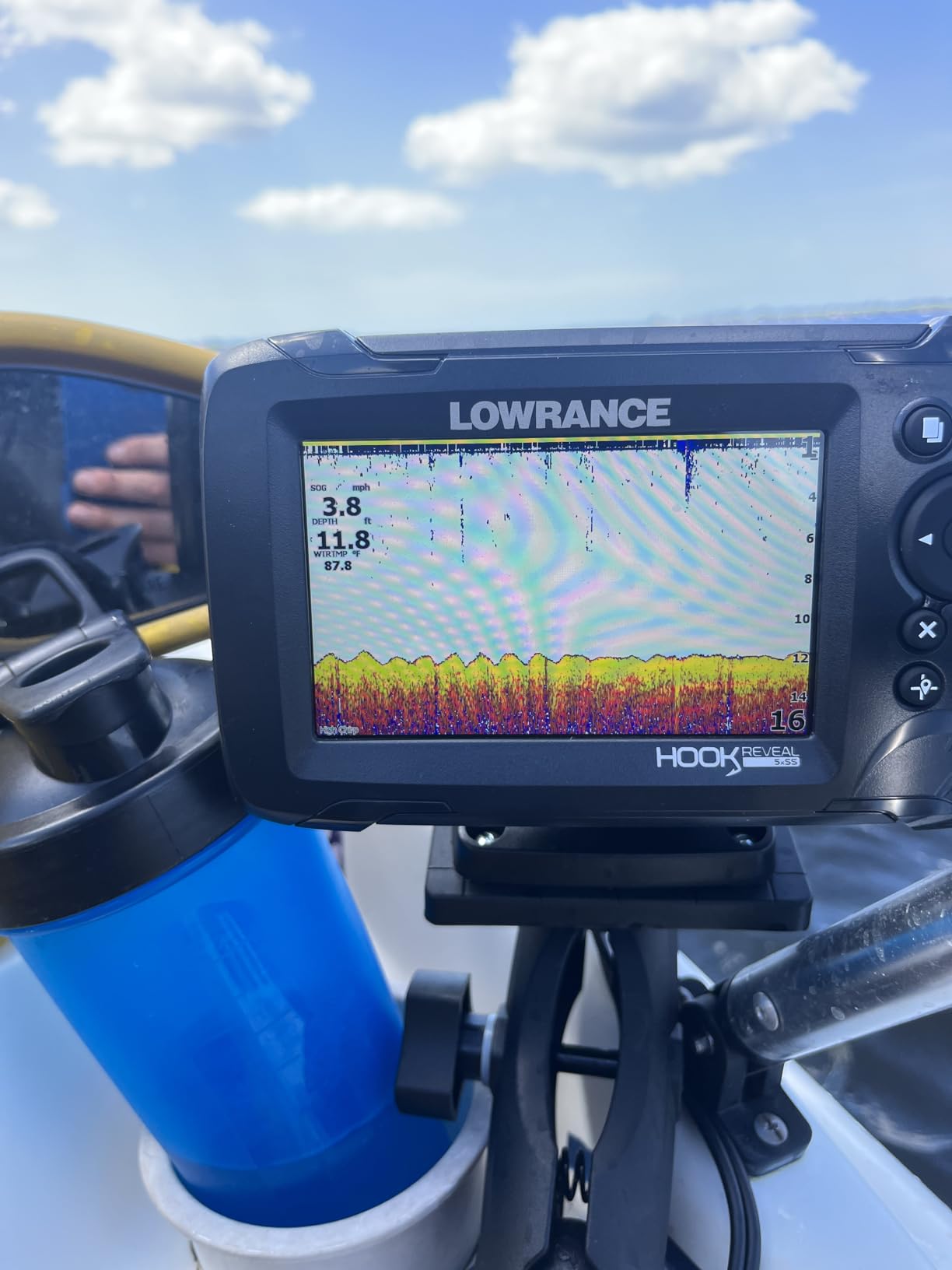
The thing that stands out here is FishReveal. It overlays CHIRP target separation onto DownScan structure detail, so a fish holding beside a brush pile shows as a bright return against a dark silhouette rather than a vague smudge. That overlay is the closest thing in this roundup to what a larger 3-in-1 transducer does, and it comes on a 5-inch screen.
The SplitShot transducer pairs a wide-angle high CHIRP beam with high-resolution DownScan Imaging in one housing, and autotuning sonar adjusts settings as conditions change. Owners like not having to re-tune gain every time the wind picks up, which is exactly what happens when you are holding over a spot in a crappie bite window.
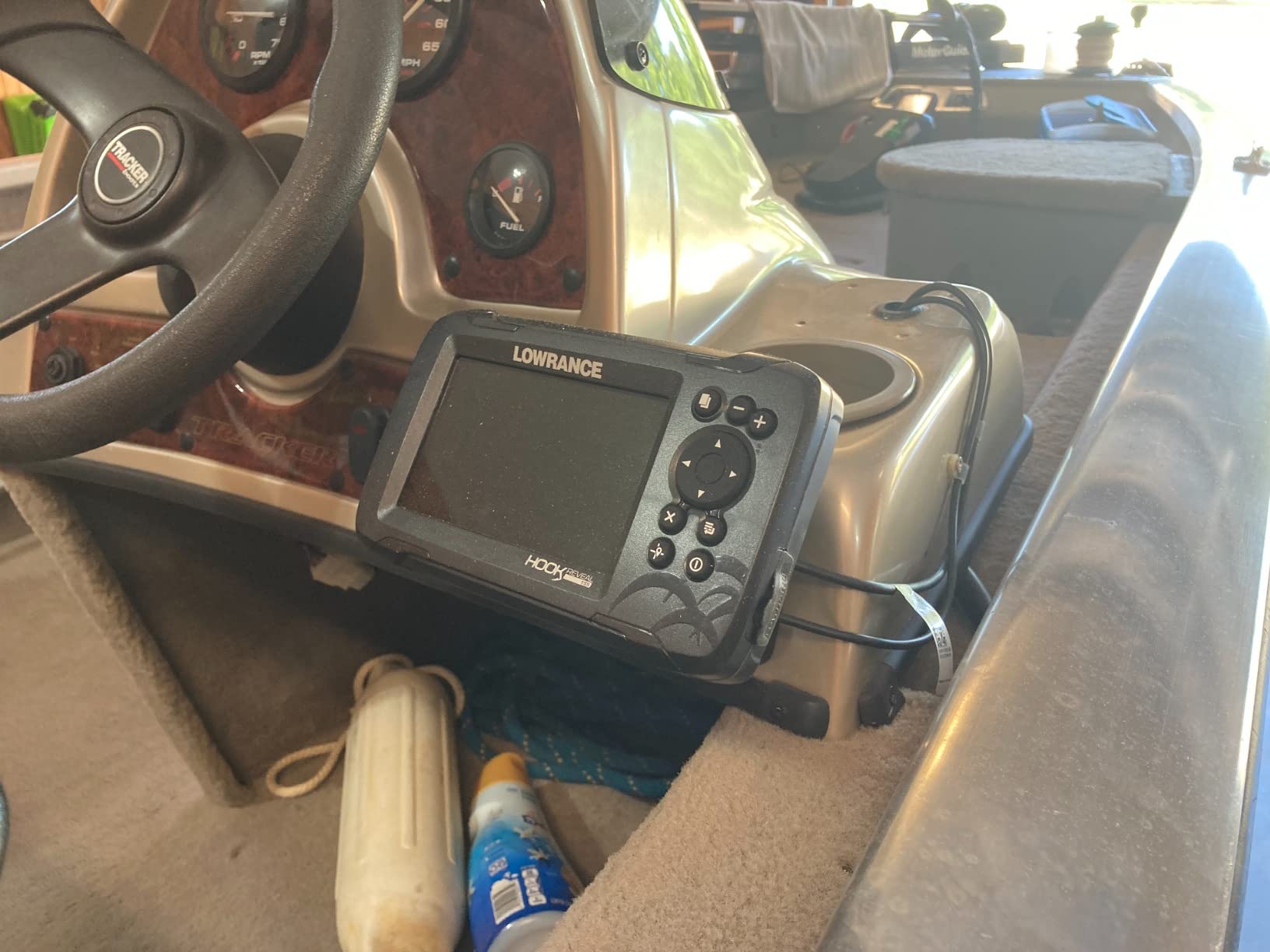
Preloaded C-MAP US inland maps covering nearly 4,000 lakes are included in the box, and Genesis Live handles custom contour mapping. The SolarMAX 5-inch display is consistently reported as crisp and readable in direct sunlight, and the fuse, fuse holder and corner clips are all included — a small thing that saves a trip to the tackle store before the first trip.
Be aware of the review profile. At 4.2 stars from 424 reviews, this is the lowest average in the roundup, with about 13 percent one-star, and the recurring theme in those reviews is transducer and head unit failures after a short period of use. The 5-inch screen is also too small for older anglers or for comfortable side-by-side map and sonar viewing, and the configuration menus are more complicated than the marketing suggests.
Where it earns its spot
Getting preloaded inland charts on a 5-inch unit at this tier is unusual, and for an angler who moves between public lakes that is worth more than a larger screen. If you want down imaging, chartplotter function and autotuning in one modest package without stepping up to a full network display, this is the one to compare against the Helix 5 G3.
Why we rank it mid list
Failure reports in the reviews are the deciding factor, along with the fact that a 5-inch display limits the split-screen work crappie anglers rely on. Verify the unit early and keep the packaging, because that is what protects you if a transducer problem shows up in the first season.
7. Humminbird Helix 7 G4N – The Sharpest Down Image Pictured Here
Humminbird HELIX 7 G4N GPS Fish Finder with Dual Spectrum…
7-inch color TFT
MEGA Down Imaging to 125 feet
Control head only
Dual Spectrum CHIRP sonar
Pros
- MEGA Down Imaging gives roughly three times the detail of standard imaging
- 7-inch screen shows drop-offs and timber far better
- Networks with Ethernet Bluetooth and NMEA 2000
- Pair with MEGA Live or MEGA 360 for full coverage
Cons
- Control head only so a transducer must be bought separately
- Reports of models failing to power up on arrival
- Only 54 reviews so the sample is thin
This is the resolution answer in the roundup. MEGA Down Imaging is listed as carrying roughly three times the detail of standard imaging sonar, to 125 feet, and the 7-inch color TFT is where you can actually see the difference. A crappie hanging three feet off a stump edge reads as a fish on a 7-inch MEGA screen in a way it does not on a 4.3-inch entry unit.
Networking is the other story. Ethernet, Bluetooth and built-in NMEA 2000 mean it can pair with a MEGA Live or MEGA 360 transducer for front-to-back coverage, and integrate with a trolling motor and other displays on a multi-unit boat. One reviewer came from a 15-year-old unit specifically for the added features.
There are two things to weigh before you commit. This configuration is control head only, so the transducer is a separate purchase and the total matters more than the head. And the maximum measuring depth is listed at 125 feet, which is the shallowest of any maximum depth in this roundup — irrelevant for crappie lakes, but it is a hard ceiling if you ever fish deep water with the same boat.
The review base is the biggest caution. At 4.5 stars from only 54 reviews, this is the thinnest sample here, and several reviews report models failing to power up or shutting down shortly after arrival. We are not telling you not to buy it — the imaging is genuinely the sharpest in this list — but we are telling you to test it thoroughly the moment it lands and know your return window before you mount it permanently.
Who should buy this one
An angler who already knows crappie structure, has a boat set up for networked electronics, and wants the best down image available in a head unit. It is also the natural platform if you are planning to add a live sonar transducer later, because the networking backbone is already there.
What the thin review base means for you
Small samples overstate the good and hide the bad. A 4.5 average from 54 ratings tells you early owners are largely satisfied, not that long-term reliability is established. Treat it as an early-generation platform and give it a full season of use before you wire it into anything permanent.
8. Lowrance Eagle 9-Inch – Side Imaging and Down Imaging From One Transducer
Lowrance Eagle 9 TripleShot HD Fish Finder with C-MAP…
9-inch IPS display
TripleShot HD transducer
500 foot maximum depth
C-MAP microSD included
Pros
- TripleShot HD gives SideScan DownScan and CHIRP from one mounting
- 9-inch IPS screen with room for sonar and charting
- C-MAP DISCOVER microSD included for US and Canada
- Auto-Tuning sonar and twist-lock connector speed installation
- Highest average rating in the roundup
Cons
- Only 36 reviews so long term data is limited
- Networking features are thinner than the Elite FS line
- Largest and heaviest option for tight consoles
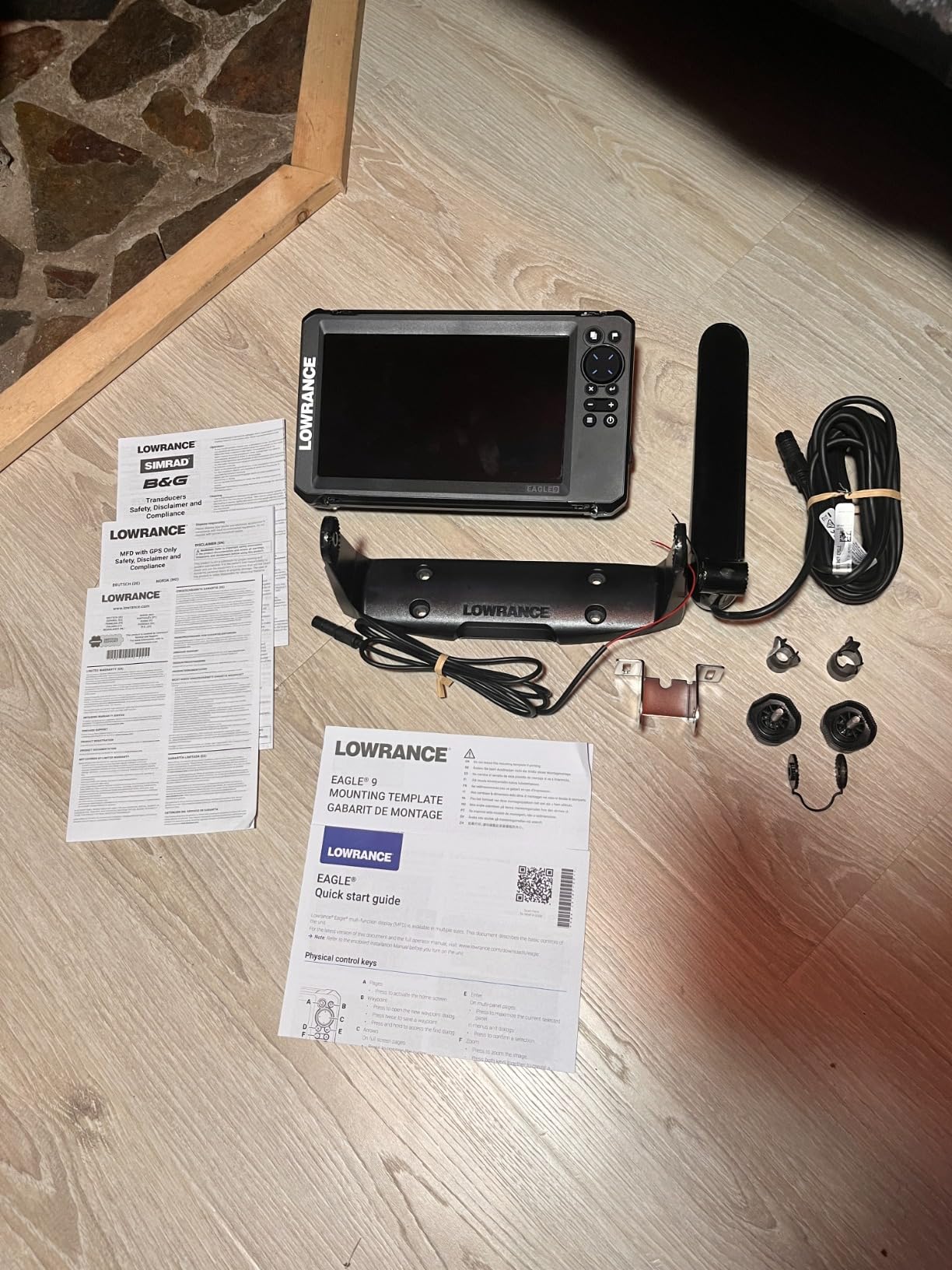
The TripleShot HD transducer is the reason to look here. It combines SideScan, DownScan Imaging and CHIRP sonar from a single mounting, which answers the down-versus-side question by giving you both. On crappie water that means you can sweep a bay with SideScan at speed, spot a brush pile on the beam, then switch to the down image to count what is holding on it. A poster on r/jonboards put it simply: side imaging is key to finding schools of crappie and structure, and down imaging is what tells you the fish are there.
The 9-inch IPS display is bright and wide, and IPS panels hold their viewing angle better than the cheaper TFT screens, which matters when you glance down at the screen from a standing position at a console.
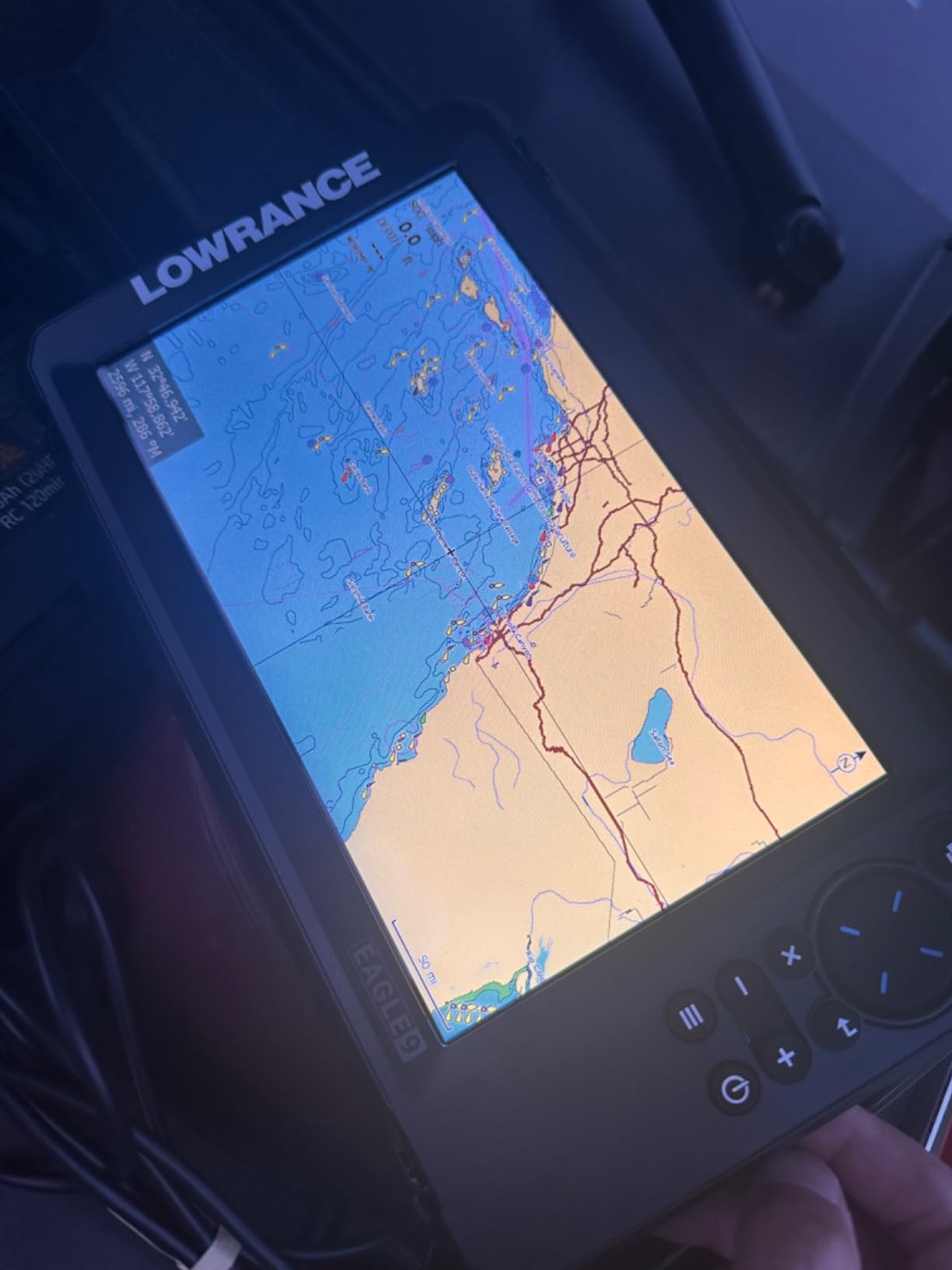
FishReveal overlays CHIRP targets on DownScan detail, and the included C-MAP DISCOVER microSD gives US and Canadian coverage without a separate purchase. Auto-Tuning sonar and the twist-lock connector speed up installation, which is a genuine advantage on a trolling motor where a bad connector means wet connections. Maximum measuring depth is listed at 500 feet, more than enough for any crappie lake.
The rating is the highest in the roundup at 4.7, with 89 percent five-star, but the base is 36 reviews. That is a small enough sample that we would not read it as proven long-term durability. The networking features are also thinner than the Elite FS line, and at 9 inches and 2 pounds it is the least friendly option for a tight console or a small boat.
Why crappie anglers like it
One transducer covering all three sonar types is the cleanest answer to the most common argument in crappie circles, where anglers routinely insist that down and side imaging are both required. With a twist-lock connector and autotuning, the whole package is also one of the faster installs here.
Where you are trading away something
Compared with the Elite FS, you give up deeper networking and live sonar readiness, and you get a 9-inch screen rather than a 10-inch multitouch one. If you are building a multi-display boat, step up. If you want one display that covers down, side and CHIRP cleanly, this is the unit.
9. Garmin STRIKER Vivid 7cv – The Best Garmin With Phone Connectivity
Garmin Striker Vivid 7cv, U.S. with GT20-TM Transducer…
7-inch color LCD
CHIRP ClearVu scanning
Wi-Fi with ActiveCaptain app
GT20-TM transducer
Pros
- 7-inch screen is bright enough to read in direct sun
- Good fish separation on ClearVu scanning sonar
- Works from a kayak as well as a small boat
- Wi-Fi connects to the ActiveCaptain app
- Comes with everything needed for setup
Cons
- 4.4 pounds is heavy for a kayak or small craft
- No preloaded maps so mapping is Quickdraw only
- Feature set takes study time
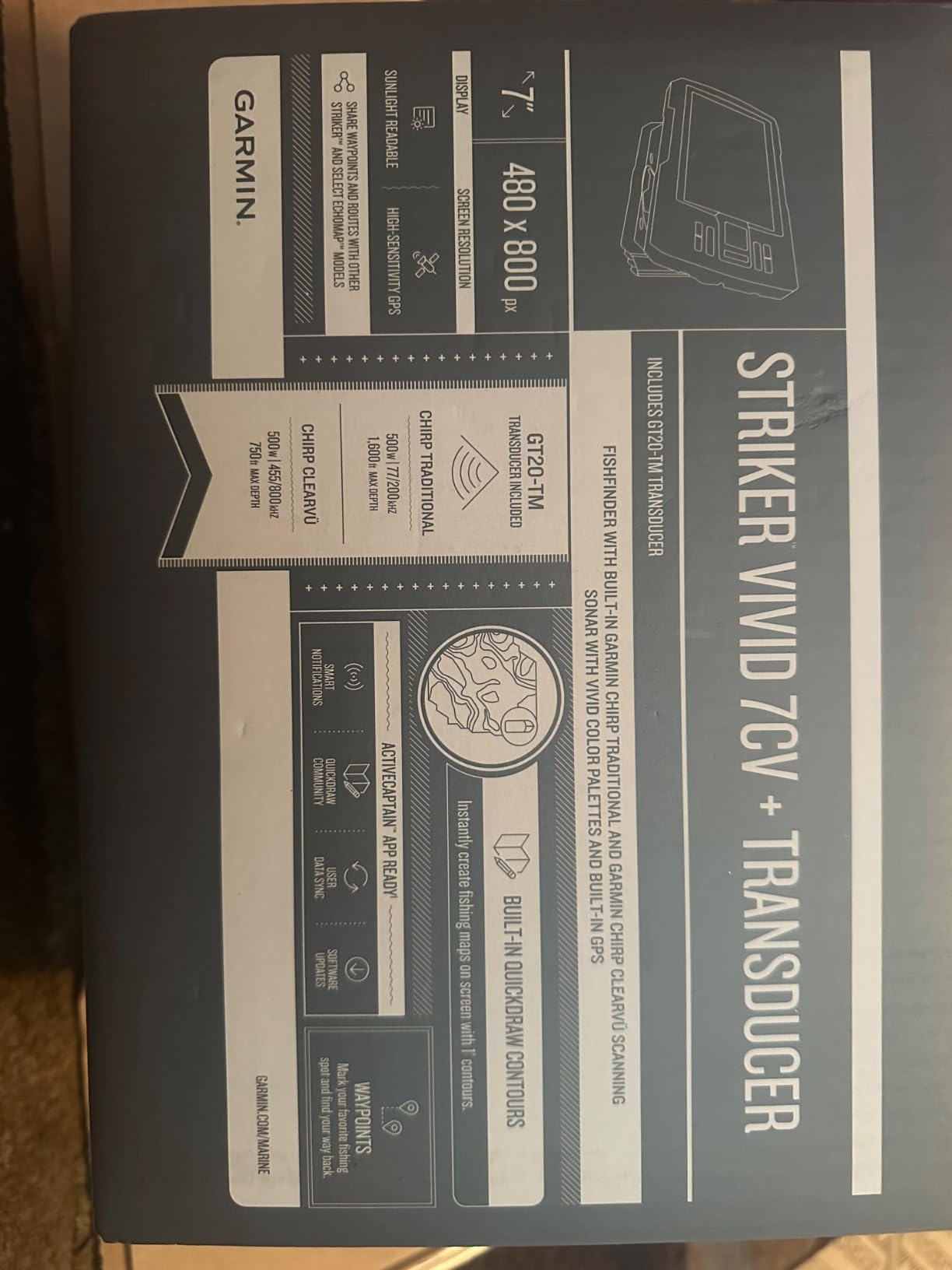
If you want Garmin’s ClearVu down imaging on a screen you can actually read while standing and working a jig, this is the model. The 7-inch color display is reported by owners as bright enough to read in direct sun, and the 7-inch footprint is the point — it is the smallest Garmin in this roundup that gives you room for a side-by-side view without feeling cramped.
The real differentiator is Wi-Fi. The ActiveCaptain app connection handles waypoints, smart notifications and the Quickdraw Community, which is how you get access to contour lines recorded by other anglers on the lakes you fish. Owners with a family or a group boat find the notification feature genuinely useful, and the sharing side of Quickdraw Community shortens the mapping process considerably.
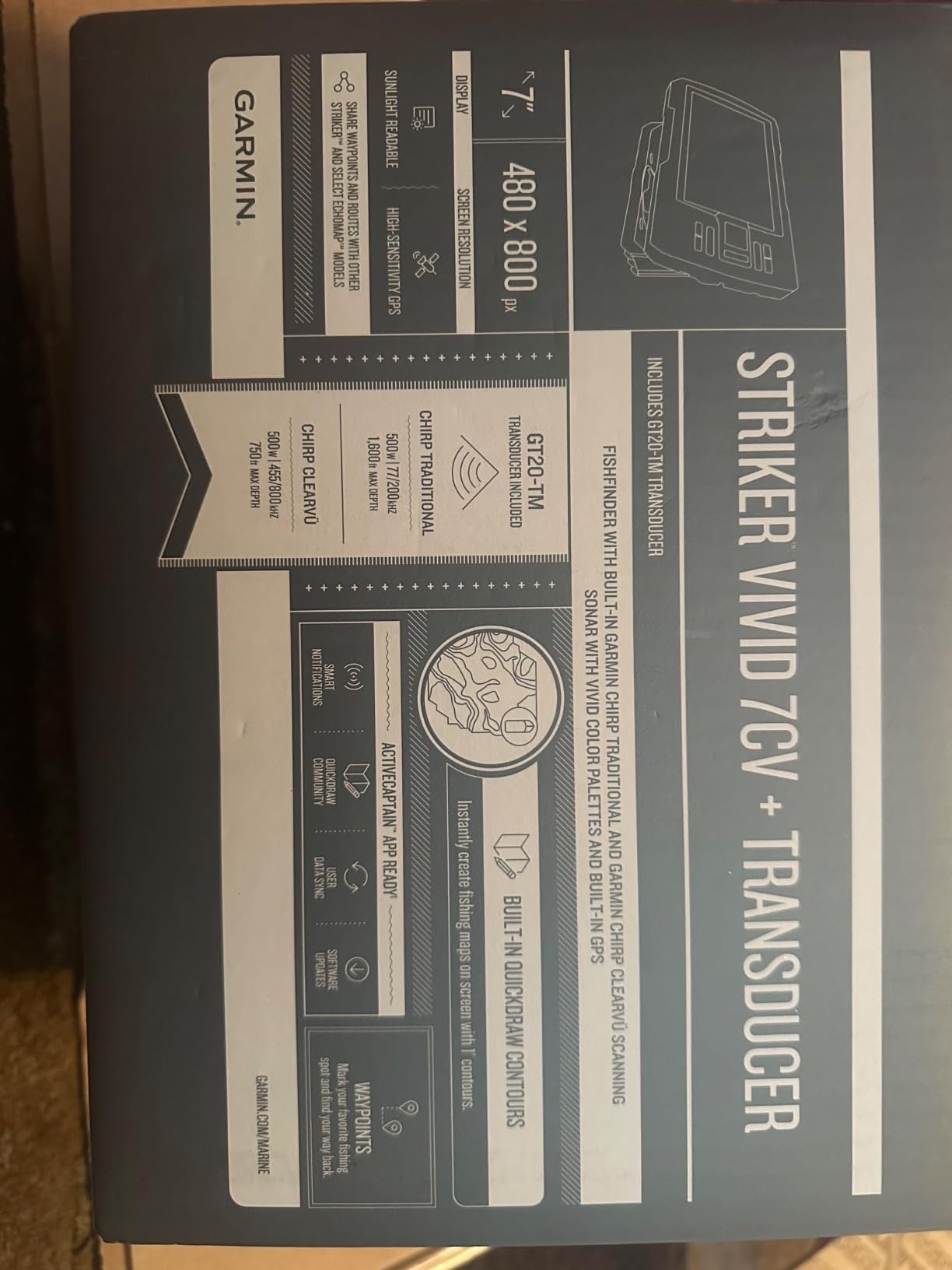
Everything needed for setup is in the box, including the GT20-TM transducer, power and data cable, and a tilt/swivel mount. CHIRP traditional and CHIRP ClearVu scanning sonar are both there, along with the Vivid color palettes and high-sensitivity GPS for waypoints, routes and speed. Owners consistently report good target separation on both ice and open water, and a clear menu system a new user picks up quickly.
Two cautions. At 4.4 pounds it is heavy for a kayak or a small craft, and reviewers who do fish from one describe the mounting as the limiting factor rather than the electronics. There are also no preloaded maps, so a new lake still means recording contours yourself, and the feature set — Wi-Fi, community contours, Vivid palettes — takes study time to use properly.
Where it fits a crappie boat
A medium-size boat with a console, an angler who shares waypoints with a group, and anyone who wants to build a home lake map cooperatively rather than alone. The 2-year limited warranty is the longer of the two Garmin warranty lengths in this roundup.
When a smaller Garmin is the smarter call
If your boat is a jon boat, a small aluminum or a kayak, the STRIKER Vivid 4cv gives you the same ClearVu sonar at a third of the weight. The extra screen and the Wi-Fi are worth exactly what your platform can carry, and no more.
What Crappie Actually Look Like on Down Imaging
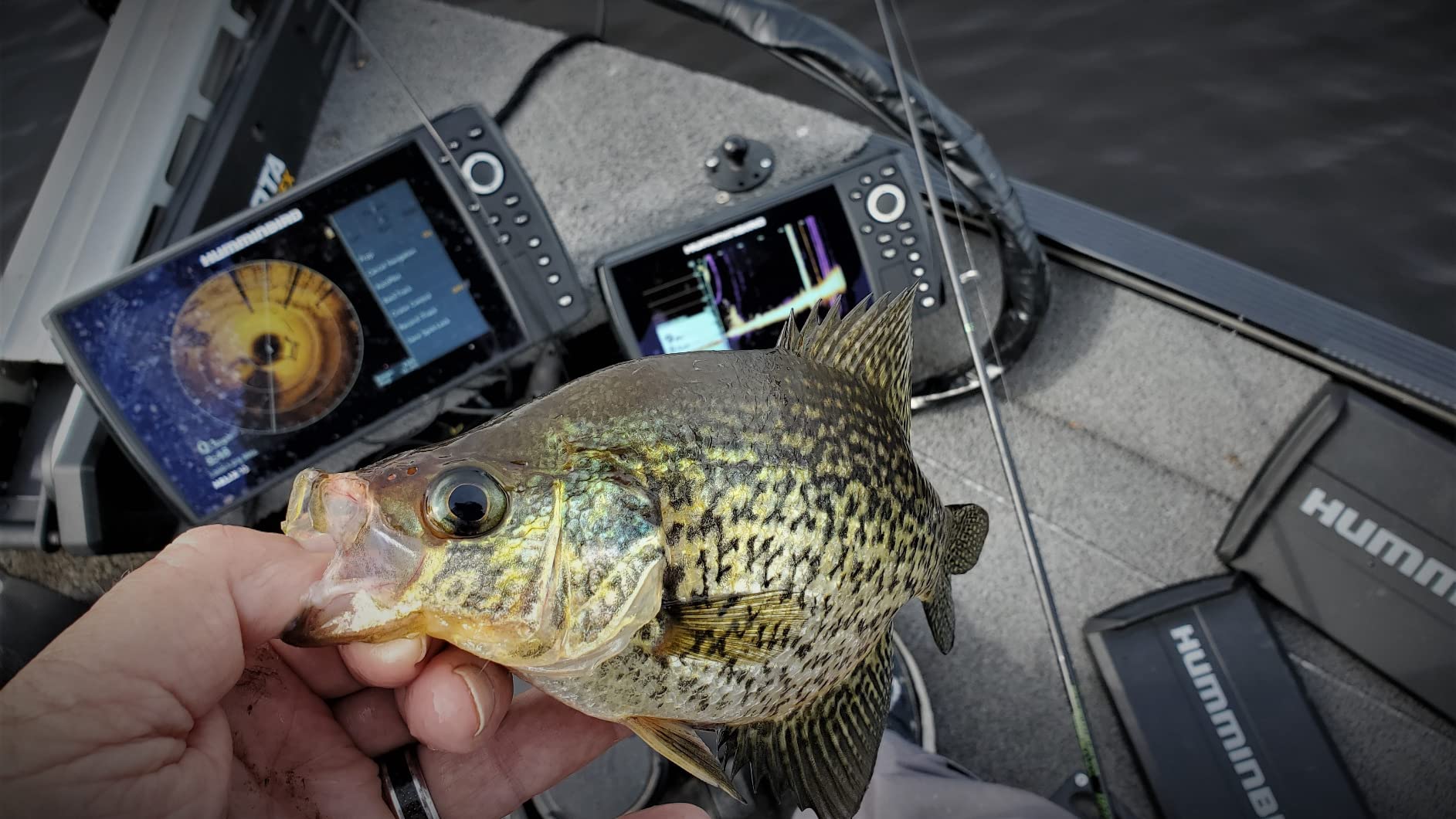
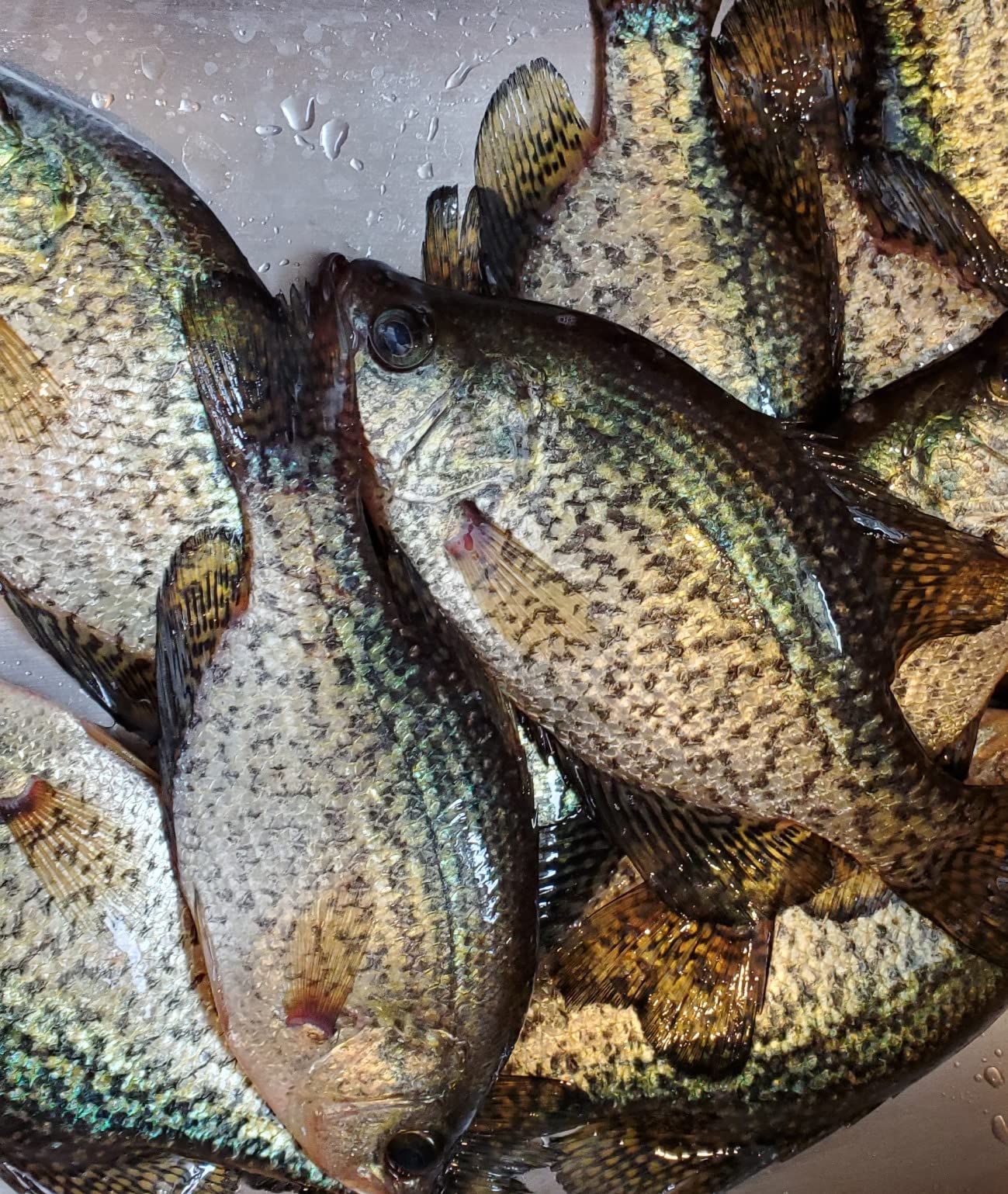
No competitor answers this one, so here is the direct version. A crappie on a down image appears as a bright, tightly defined return — usually a small blob or a short streak — sitting a few pixels away from a hard, sharply drawn structure edge. Against a brush pile, the timber reads as a textured, irregular mass and the fish read as a clean, brighter shape right at its edge. Baitfish in open water read differently: a loose scatter of faint, drifting points rather than a single solid return.
The practical skill is separating the two. Crappie are structure-oriented, so a bright return touching or nearly touching a hard edge is almost always a fish. A bright return floating free in the column with no structure nearby is more likely a baitfish or debris. One crappie.com veteran made the case for down imaging with side-by-side photos of the same stump in 2D traditional sonar and down imaging, noting the down image was easier to read — he told the thread he showed the photos to non-fishing friends who accused him of cheating.
Settings matter as much as hardware. Start with the sensitivity in the middle, drop the color palette to a high-contrast scheme with a dark background so the bright fish returns pop, and if the fish disappear into the timber, back the sensitivity off rather than turning it up. Gain turned too high paints the bottom so bright that a fish beside it becomes invisible. An experienced crappie.com poster described an older Humminbird DI as being computer generated rather than true down imaging, which is a useful warning: if the image looks like a side view rotated 90 degrees, you are looking at derived imagery, not a real down beam.
Side Imaging vs Down Imaging for Crappie
Down imaging wins for accuracy at one spot; side imaging wins for search speed across a lot of water. Down imaging gives you a narrower picture directly beneath the boat, but the fish and the cover are rendered at a resolution and a perspective that let you tell them apart. Side imaging scans port and starboard to cover a wide swath quickly, which is how you find brush piles and stake beds you did not know were there — but the fish is rendered in profile on a slanted plane, so judging its position above the bottom takes more practice.
For crappie structure, the forum consensus leans toward using both. Anglers on crappie.com and nchuntandfish repeatedly argue that targeting crappie requires down and side together, and Garmin is frequently named as having the most affordable models that add side imaging. The practical pattern: side imaging to search, down imaging to decide, CHIRP traditional to confirm.
Pick down imaging alone if you are vertical jigging over spots you already know, fishing a lake you have mapped and memorized, or running a kayak where screen space and power are limited. Pick a 3-in-1 or TripleShot combination if you routinely cover new water, cast long distances to unseen structure, or fish a big reservoir where the brush is spread across miles of channel edges. The two Lowrance models with 3-in-1 and TripleShot transducers answer that search-then-decide need in a single mounting, which is why they rank high for anglers who cover ground.
Live sonar is the third debate. Forum users split on whether LiveScope-style forward viewing or a 360 view puts you on fish faster, with one poster arguing that MEGA 360 is a fast search tool that will put you on fish faster than LiveScope, while others credit LiveScope with showing fish in 3D at a level of detail nothing else matches. The consensus we found: live sonar is the deciding purchase criterion if you jig fish you cannot see on a down image, and unnecessary if you are confident reading what is already on screen.
Garmin vs Lowrance vs Humminbird for Crappie
All three build down imaging differently, and the naming is where most confusion comes from. Garmin calls its down beam ClearVu, Lowrance calls it DownScan, and Humminbird calls it Down Imaging or MEGA Down Imaging. Side imaging equivalents are SideVü at Garmin, SideScan at Lowrance and MEGA Imaging at Humminbird. None of those names tell you much, so compare the transducer type and the screen instead.
Garmin wins on simplicity and the size of its proven range. The ClearVu units in this roundup have the largest review bases, the simplest menus, and the longest warranty, and the 4-inch STRIKER Vivid is the least confusing way into down imaging. The tradeoff is mapping: Garmin relies on Quickdraw Contours, which you record yourself, with no preloaded basemap on these models.
Lowrance wins on mapping and transducer consolidation. Both Lowrance models here ship with preloaded C-MAP charts, and both use a single multi-mode transducer that folds CHIRP, down imaging and side imaging into one wiring job. The Elite FS adds live sonar readiness and deep networking. Lowrance is the choice for an angler who moves between lakes and wants charts on screen the first day.
Humminbird wins on sonar flexibility and the upgrade path. Dual Spectrum CHIRP with Wide and Narrow modes, plus the option to pair a HELIX with a MEGA Live or MEGA 360 transducer, gives you a clear path from a down imaging head unit today to a full front-to-back system later. It is also the brand with the longest history in down imaging among the three.
How to Choose a Down Imaging Fish Finder for Crappie
1. Put target separation ahead of everything else. Crappie live tight to cover, so the ability to render a fish as a distinct arch rather than merging it into the bottom or the timber is the feature that decides your trip. CHIRP and the various wide/narrow mode options all serve this. A unit that produces a pretty picture but merges every fish into the brush will cost you strikes all season.
2. Size the screen to your boat, not your ambition. Four inches is genuinely workable on a kayak or a jon boat for one angler working one spot. Seven to nine inches becomes necessary the moment you want a side-by-side map and sonar view, or want to read a stake bed without leaning in. Brightness and screen technology matter as much as size on a sunny lake, and owners on several of these models mention reading through polarized sunglasses directly, so check for that before buying.
3. Decide between recorded mapping and preloaded charts. Garmin’s Quickdraw Contours, Lowrance’s Genesis Live and Humminbird’s AutoChart Live all record your own contours, and all three let you mark waypoints on the structure you find. What they differ on is whether you get a usable chart before you have recorded anything. If you fish familiar water, recorded contours are enough. If you rotate through new lakes, preloaded C-MAP or Humminbird basemap coverage saves real time.
4. Check the transducer and the mount before anything else. If you run a trolling motor, a trolling motor transducer mount keeps the down image steady while you hold over a spot instead of panning off when the boat drifts. If you fish from a transom, the included transom mount is all you need. Crucially, decide whether you want to add side imaging later, because transducers are proprietary — a unit shipped with a down imaging only transducer usually cannot accept a side scan beam from the same head. Units with 3-in-1 and TripleShot transducers solve this by design.
5. Consider flasher mode for vertical fishing. When you are dropping a jig straight down, a vertical sonar view that shows your jig and any fish crossing the beam is the fastest read you will get. Several models here support it. It is not down imaging, but it is the tool that matches the way crappie are actually fished.
6. Size the display for your electronics ecosystem, and leave a path. NMEA 2000 and Ethernet determine how many displays you can run on one boat, and whether an accessory like a live sonar transducer can be added later. Our guide to forward facing sonar covers that tier in detail. For anglers on a kayak who need something they can cast from a bank, our castable fish finder picks are the relevant comparison, and the kayak fish finder guide covers mounting there.
Frequently Asked Questions
What is the best fish finder for finding crappie?
For most crappie anglers, the Garmin STRIKER Vivid 4cv is the best down imaging fish finder for crappie. Its CHIRP ClearVu scanning sonar resolves brush piles, stake beds and timber, it weighs 11.2 ounces so it works on a kayak or a jon boat, and it includes a transducer plus Quickdraw Contours mapping. If you want a bigger screen and a trolling motor mount, step to the Garmin STRIKER 5CV.
What does crappie look like on down imaging?
A crappie appears as a bright, tightly defined return or short streak sitting right beside a hard structure edge. Timber and brush render as a textured irregular mass, while a fish beside it reads as a clean, brighter shape. Baitfish in open water look different, showing as a loose scatter of faint drifting points. Crappie holding tight to cover touch the edge, which is the giveaway.
Which fish finder has the best down imaging?
The Humminbird Helix 7 G4N has the sharpest down image here, with MEGA Down Imaging listed at roughly three times the detail of standard imaging sonar to 125 feet on a 7-inch screen. Among complete packages that include a transducer, the Lowrance Eagle 9-Inch and the Lowrance Elite FS use multi-mode transducers that add side imaging to the down beam. The best value for most crappie anglers is the Garmin STRIKER Vivid 4cv.
Which is better, side imaging or down imaging?
Down imaging wins for accuracy at one spot. Side imaging wins for search speed across wide water, but its fish are rendered in profile on a slanted plane, so judging their position above the bottom takes practice. For crappie structure fishing, most anglers use both: side imaging to locate brush piles and stake beds, then down imaging to confirm fish are holding on them.
What fish finder is better, Garmin or Lowrance?
Garmin is simpler and cheaper to start with, with the largest proven review base and the simplest menus, but its mapping is entirely self-recorded through Quickdraw Contours with no preloaded charts. Lowrance ships preloaded C-MAP charts and multi-mode transducers that combine CHIRP, down imaging and side imaging in one wiring job. Choose Garmin for simplicity and Lowrance for mapping and transducer consolidation.
How big should a fish finder screen be for crappie fishing?
Four inches works for one angler working a known spot from a kayak or jon boat, and 5 inches is comfortable for a single view on a small boat. Seven inches or more becomes necessary if you want a side-by-side map and sonar view or need to read a stake bed without leaning in. Brightness matters as much as size on a sunny lake, so check for sunlight readability through polarized sunglasses.
Do I need side imaging to find crappie?
Not to start. If you are vertical jigging over spots you already know or fishing a mapped lake, down imaging plus CHIRP traditional is enough to pick fish off brush piles. Side imaging earns its place when you cover new water or cast long distances to unseen structure, because it searches a wide swath far faster than a down beam. A 3-in-1 or TripleShot transducer gives you both from one mounting.
Is live sonar worth it for crappie?
Live sonar is worth it if you jig fish you cannot resolve on a down image, because forward viewing and 360 views show individual fish and your bait in real time. Anglers are split on which is faster for getting onto fish, so treat it as a personal call. If you are confident reading ClearVu, DownScan or MEGA Down Imaging already, the money is better spent on a larger screen or a multi-mode transducer.
Final Verdict
The best down imaging fish finders for crappie come down to one question: do you fish one familiar lake, or do you cover new water? If it is the first, the Garmin STRIKER Vivid 4cv is the pick — ClearVu down imaging, an included transducer, Quickdraw Contours, and 11.2 ounces of portability, backed by the largest proven review base in this roundup. If you want a bigger screen on a boat with a trolling motor, the Garmin STRIKER 5CV splits the screen between 2D and down imaging and includes both mounts.
If you rotate through new lakes, the Lowrance Elite FS is the strongest all-round crappie tool, with a 3-in-1 Active Imaging transducer, a 10-inch screen and preloaded charts. The Lowrance Eagle 9-Inch gives you TripleShot at a step up. And if you want the sharpest down image and already run networked electronics, the Humminbird Helix 7 G4N is worth the extra steps — just confirm it powers up before you mount it.
Whichever you choose, spend your first few trips on the sensitivity and color palette settings. Reading a fish off a brush pile is a skill, and the best down imaging fish finders for crappie only make it easier once you know what to look for.
