10 Best Portable Keyboards for Gigging Musicians (October 2026) Trusted Reviews
A gigging keyboard gets judged on things a practice-room keyboard never has to survive. You carry it up a flight of stairs at a wedding venue, it sits in a van in August, and a front of house engineer wants to know what line output you have before the soundcheck even starts. The best portable keyboards for gigging musicians are not the ones with the prettiest sounds at home. They are the ones that are light enough to carry twice in one night, flexible enough on power, and honest about what they output to a PA.
We compared ten boards across the range that working players actually consider: entry arrangers under 10 lb, weighted 88-key pianos from the mid tier, and synthesiser workstations for players who never touch piano parts. Weight is the first number in every section below, because it decides more gigs than tone does. Every pick also carries one real drawback, since a keyboard that has none is not being described honestly.
Contents
If you want the wider home-and-practice side of the market rather than stage readiness, our portable keyboard guide covers that angle. This one is written for the person whose keyboard comes out of the van with them.
Top 3 Best Portable Keyboards for Gigging Musicians (October 2026)

We earn a commission on qualifying purchases at no extra cost to you. CERTAIN CONTENT THAT APPEARS ON THIS SITE COMES FROM AMAZON. THIS CONTENT IS PROVIDED 'AS IS' AND IS SUBJECT TO CHANGE OR REMOVAL AT ANY TIME.
Quick Overview: Best Portable Keyboards for Gigging Musicians in 2026
| Product | Features | |
|---|---|---|
 Casio CT-X700 61-Key Casio CT-X700 61-Key |
|
Check Latest Price |
 Yamaha P-45 88-Key Weighted Yamaha P-45 88-Key Weighted |
|
Check Latest Price |
| Roland FP-30X 88-Note |
|
Check Latest Price |
 Korg Kross 2-61 Workstation Korg Kross 2-61 Workstation |
|
Check Latest Price |
 Korg i3 Arranger Korg i3 Arranger |
|
Check Latest Price |
 Casio PX-S1100 Privia Casio PX-S1100 Privia |
|
Check Latest Price |
 Roland FP-60X 88-Note Roland FP-60X 88-Note |
|
Check Latest Price |
 Casio CT-X5000 Flagship Arranger Casio CT-X5000 Flagship Arranger |
|
Check Latest Price |
 Casio CDP-S160 88-Key Casio CDP-S160 88-Key |
|
Check Latest Price |
 Korg EK-50 61-Key Korg EK-50 61-Key |
|
Check Latest Price |
We earn from qualifying purchases. CERTAIN CONTENT THAT APPEARS ON THIS SITE COMES FROM AMAZON. THIS CONTENT IS PROVIDED 'AS IS' AND IS SUBJECT TO CHANGE OR REMOVAL AT ANY TIME.
1. Casio CT-X700 61-Key Portable Keyboard – Best Overall for Gigging
Casio CT-X700 61-Key Portable Keyboard | 600 Tones | AiX…
61 touch-sensitive keys
9.5 lb
600 tones and 195 rhythms
USB-MIDI
Battery capable
Pros
- Only 9.5 lb so it fits a strap case
- 600 AiX tones plus 195 rhythms
- Good touch response on unweighted keys
- USB-MIDI works with phones and laptops
Cons
- No Bluetooth radio
- 61 keys force bottom-octave reshuffling
- Menus are deep for deeper features
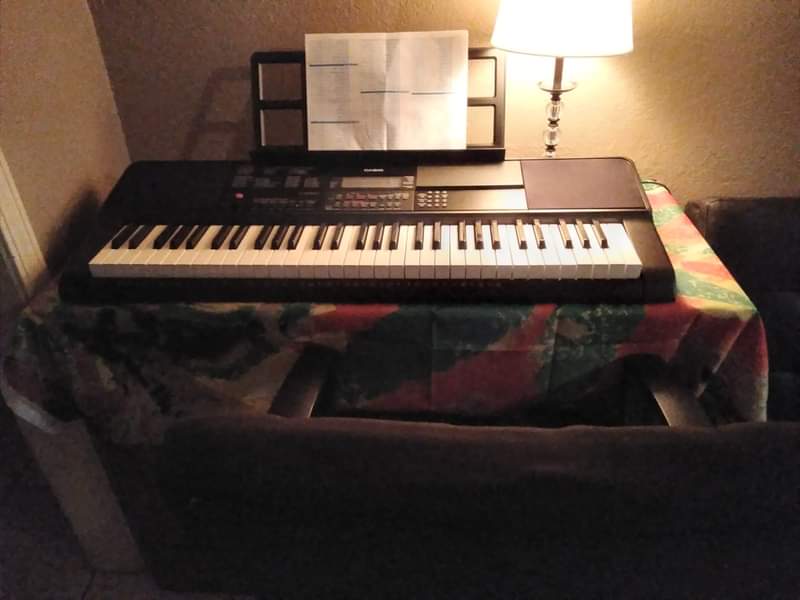
We kept coming back to this one because the weight figure does more for a working player than any spec on the sheet. At 9.5 lb the CT-X700 is the board we would happily carry up two sets of stairs in one night without thinking about it. For a worship leader covering three songs, a solo singer-songwriter at a wine bar, or a function band member who needs a piano and a rhythm section in one case, that number removes a lot of friction.
The 600 AiX tones and 195 rhythms cover the usual worship, pop and ballad territory without hunting. Touch sensitivity is good enough that dynamics respond even though the keys are unweighted. Owners report five-plus years of reliable use, which matters more than the feature list for anyone buying a board they intend to keep.
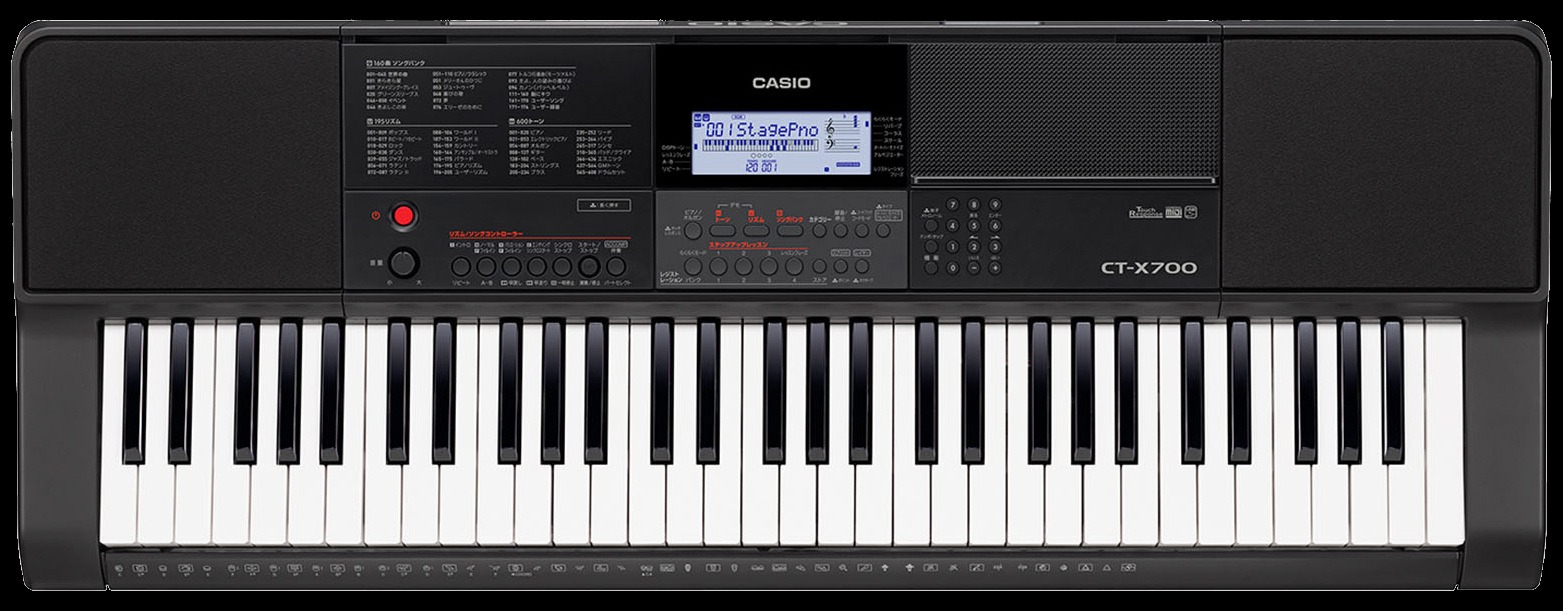
Stage integration is where you compromise. It has class-compliant USB-MIDI and standard line output, so a front of house engineer can take a feed, but there is no balanced output and no XLR. Plan on a DI box if the venue snake is long or the room has mains hum.
There is no Bluetooth, so wireless audio or MIDI means an adapter in the bag. The 61-key layout also means the lowest octave is moved up an octave and a half, which is the one genuine skill adjustment for players who learned on an 88.
Why it works for church and function players
Styles and rhythms trigger from chords alone, so one player can cover a full arrangement and still fill in when the band cuts the rhythm track. Battery capability means an outdoor ceremony or a park busking spot does not force you to hunt for a mains outlet.
At 9.5 lb it is also the easiest board here to hand to a bandmate who needs to run a show while you are elsewhere.
Where it falls short on stage
The deep menu structure is the honest drawback. Reaching the arpeggiator or editing a sound takes several button presses, and doing that under stage light between songs is not fun. Practise your soundsets before the gig rather than building them on stage.
The song bank is also dated and heavily weighted to traditional repertoire, so it will not replace a modern worship or worship-band track list.
2. Yamaha P-45 88-Key Weighted Digital Piano – Budget Pick Weighted Board
Yamaha 88-Key Weighted Portable Digital Piano Keyboard with…
88 weighted touch-sensitive keys
11.5 kg
10 onboard voices
Built-in stereo speakers
Sustain switch included
Pros
- Full 88-key weighted action at a modest weight
- Very fast setup with one-button controls
- Clean and immediate grand tone
- Reliable build over four-plus years of use
Cons
- Only 10 onboard voices
- No Bluetooth
- Weighted action softens with heavy years of use
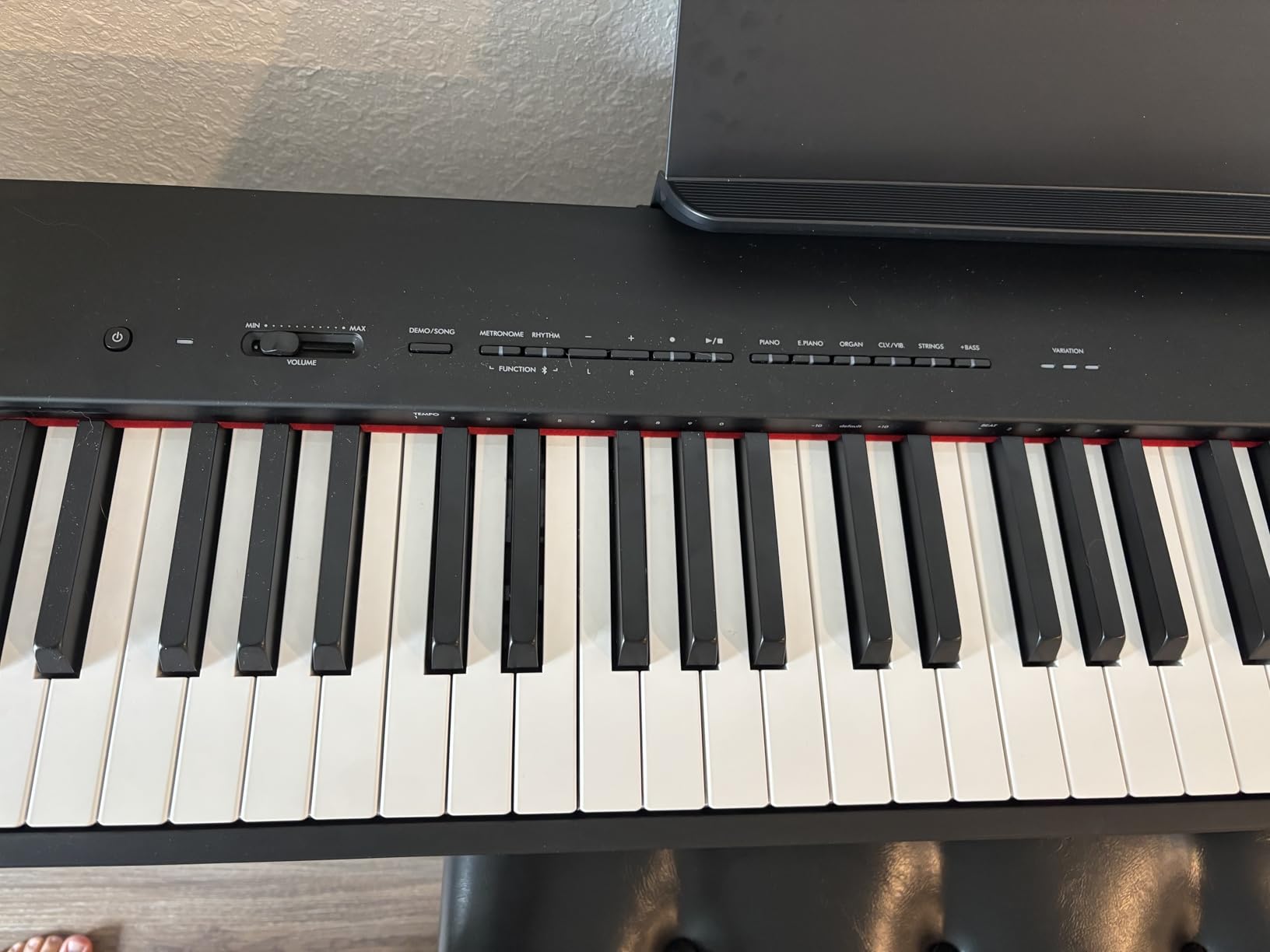
The P-45 answers the question gigging pianists ask most: can I get a real 88-key weighted action without a 50 lb carry. At 11.5 kg, roughly 25 lb, it is one of the lighter full-size weighted boards here, and the graded action is consistently praised as close to an acoustic. For a jazz trio in a bar or a singer-songwriter who plays real left-hand parts, that combination is the whole point.
Setup is almost instant. One button handles the main controls, so sound changes between tunes are a single press. Multiple owners report four-plus years of dependable use, which lines up with what we see about the action before it starts to show age.
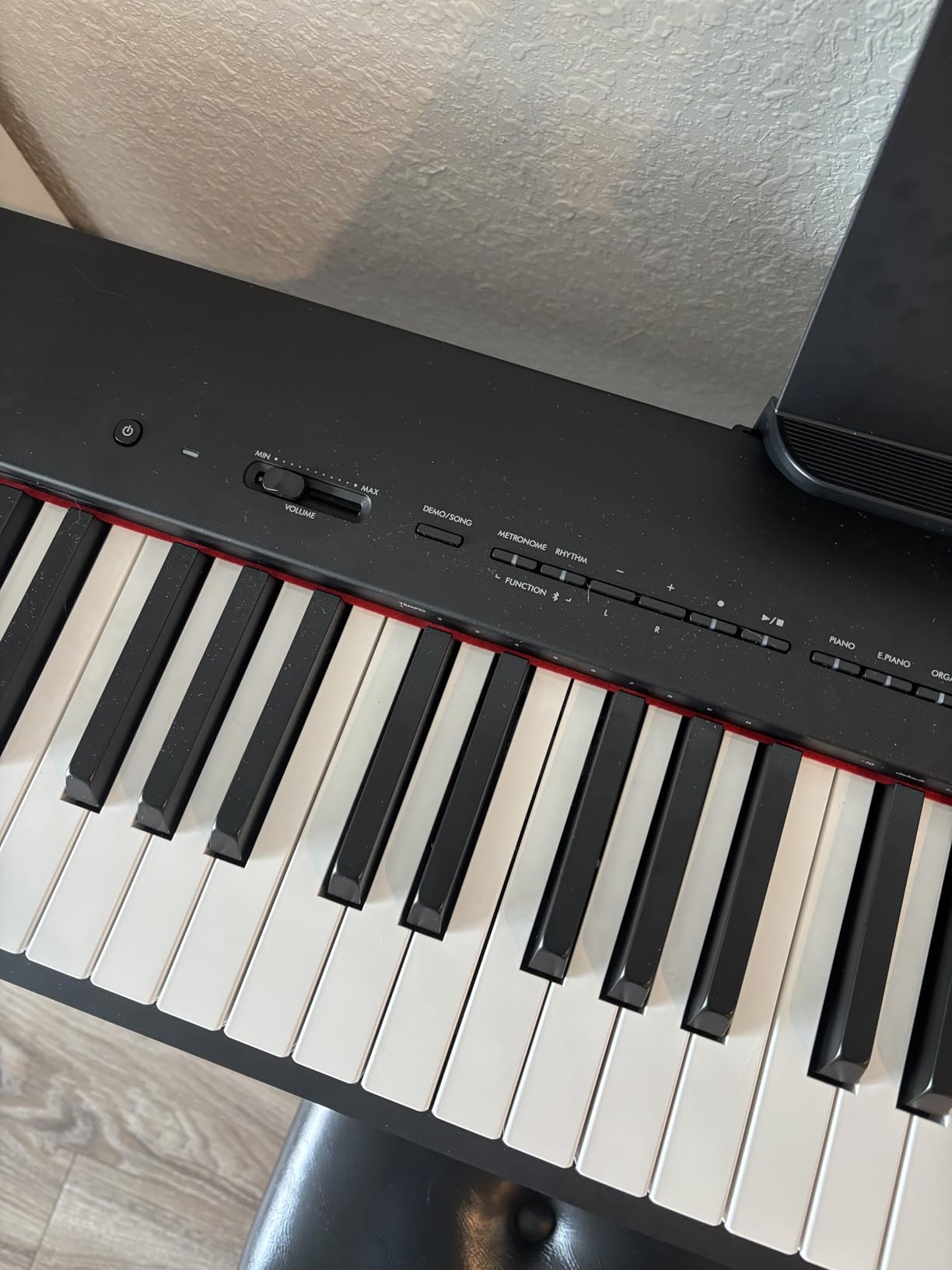
It doubles as a USB MIDI controller for software instruments, which makes it useful on a hybrid worship set where tracks come from a laptop. It also handles acoustic piano parts without the octave shifting that a 61-key board forces on you.
The sound set is the limitation. Ten voices is enough for a wedding ceremony and a ballad, and not enough for a full band set that needs electric piano, strings, organ and synth layers in the same night.
Why it works for acoustic players and duos
Because the range is complete, you can play the parts as written instead of transposing them in your head. That removes an entire category of rehearsal hours and stops the bottom-octave clashing that a 61-key board can create in a duo.
The built-in stereo speakers make it a decent soundcheck and small-room instrument before you get amplification sorted.
Where it falls short on stage
Two things to plan around. There is no Bluetooth, so audio and MIDI are wired, and there is no balanced or XLR output, so a DI remains standard practice. The onboard speaker set is basic compared with newer slim designs.
Owners also report that after roughly four years of heavy use the weighted action softens and picks up a faint clicking sound under quiet passages. That is a wear curve, not a defect, but plan for it if you gig hard.
3. Roland FP-30X 88-Note Digital Piano – Best for Loud Internal Speakers
Roland FP-30X 88-Note Digital Piano, Black
88 weighted keys with ivory feel
32.7 lb
22-watt stereo speakers
Bluetooth audio and MIDI
Pros
- PHA-4 weighted action with ivory-feel keys
- 22-watt speakers genuinely fill a room
- Strong onboard sound variety
- Bluetooth removes cable clutter
Cons
- 32.7 lb is heavy for stairs
- No Bluetooth headphone support
- No stand or pedal beyond the basic switch
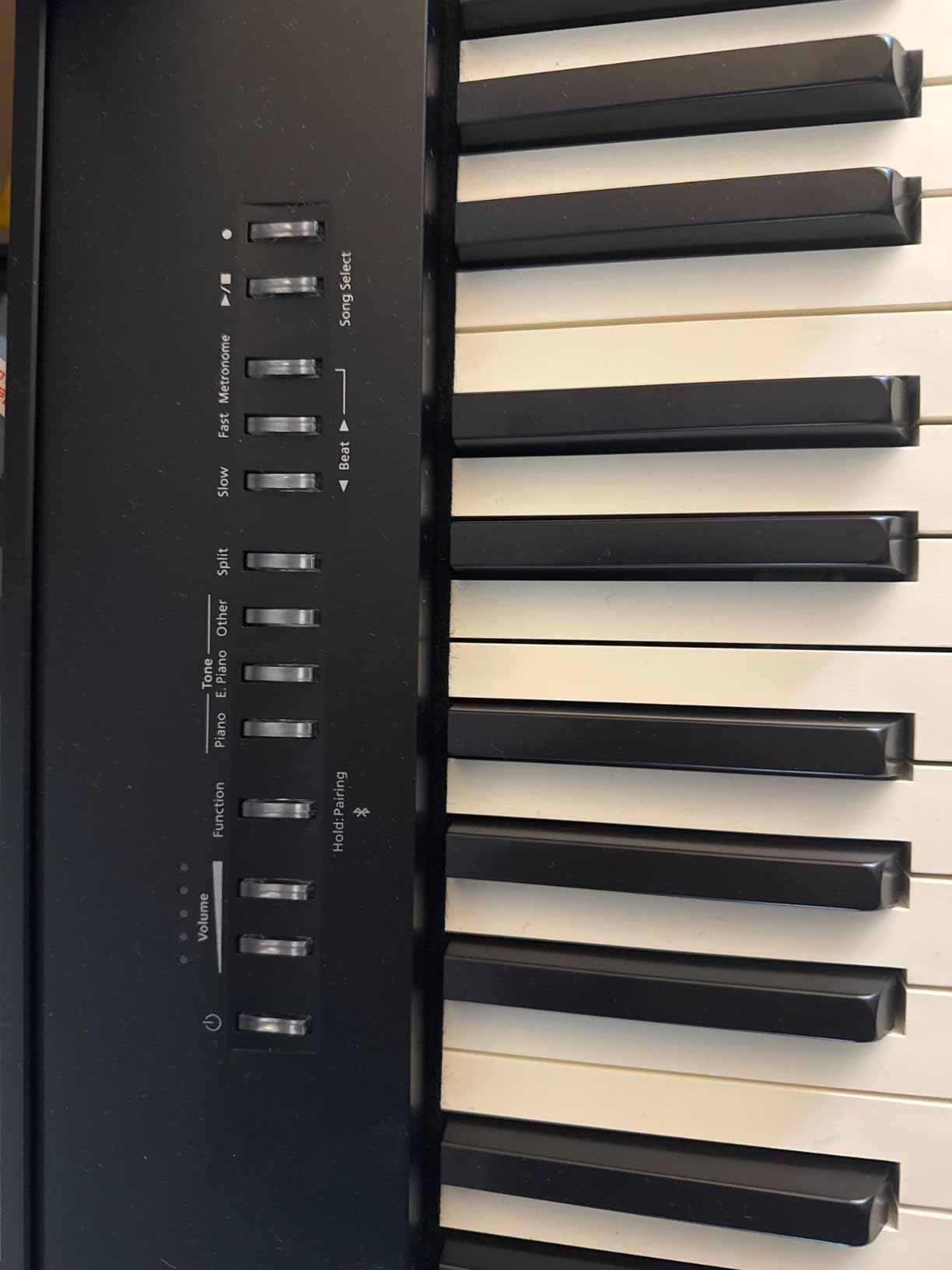
This is the pick for a player who relies on the onboard speakers. At 22 watts the FP-30X pushes real volume, and reviewers consistently say it fills a small room without distorting. For a living-room concert, a church fellowship hall before the main service, or a rehearsal where nobody brought a PA, that beats almost every other board here.
The PHA-4 Standard keybed with ivory-feel keys holds up for players who care about grip. Onboard sound variety covers piano, organ, strings and synths, which is a broader palette than the Yamaha at number two. Bluetooth audio and Bluetooth MIDI are both supported, so pre-show playlists and backing tracks stay wireless.
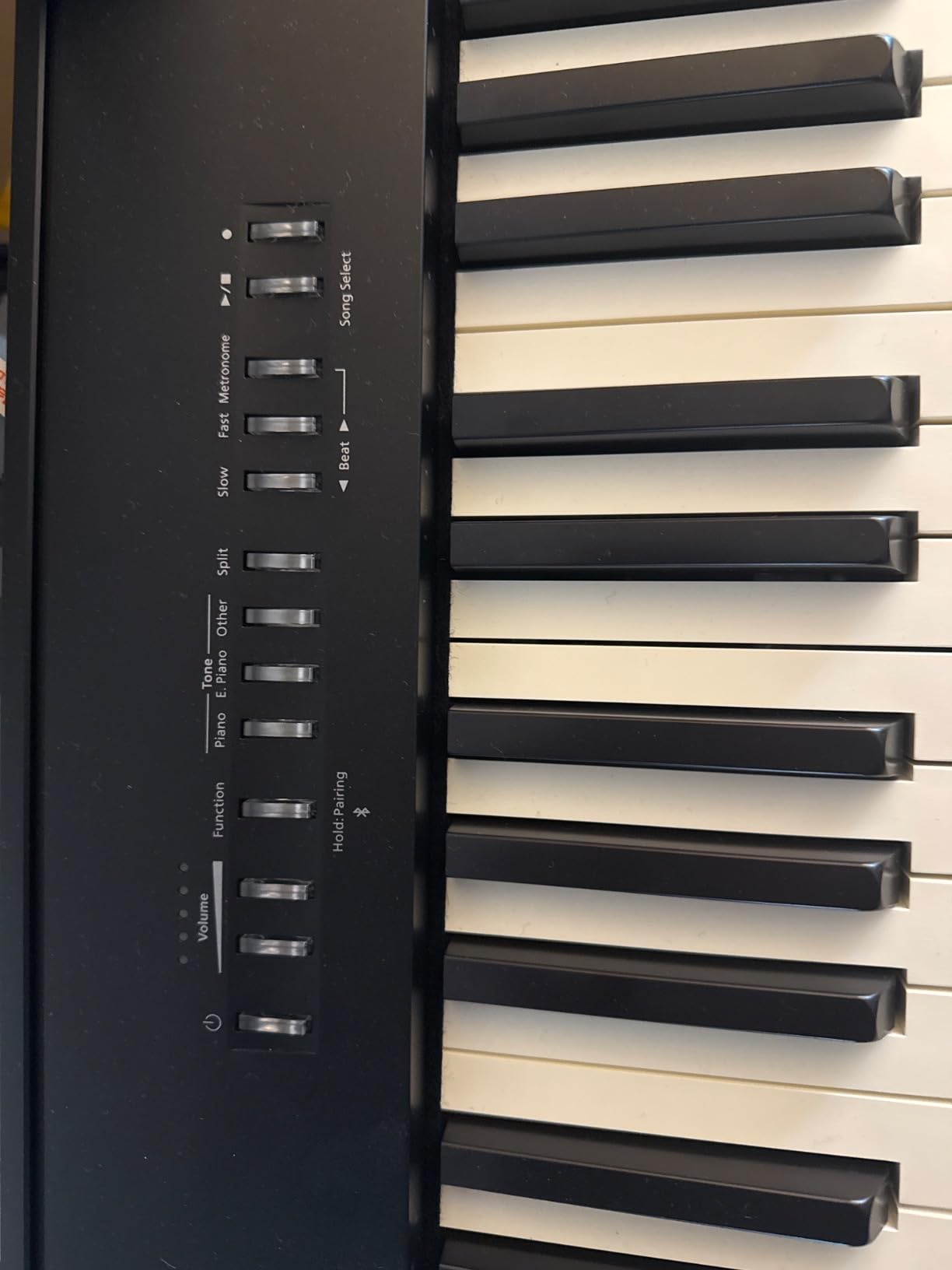
Weight is the trade. At 32.7 lb it is one of the heavier 88-key instruments in this roundup, and slim chassis does not change how it feels on a stair. If your load-in involves stairs rather than a ground-floor function room, budget for a second pair of hands.
Bluetooth headphone support is absent, so monitoring through wireless headphones is out. Included in the box are the AC adaptor and the DP-2 pedal switch, nothing more.
Why it works for small-room and hybrid players
A Desktop Optimization setting adjusts the sound for a close listening position, which matters when the board sits on a table at a coffee shop gig rather than on a stand facing an audience. That combination of volume, tone shaping and desk-aware voicing is rare at this level.
The Piano Partner 2 app integration also makes it easy to pull extra sounds onto a gig without hunting through menus.
Where it falls short on stage
At 32.7 lb this is a two-person carry for many players. If stairs are part of your regular route, look at the lighter 88-key options in this roundup instead of convincing yourself it will be fine.
The speaker output is also modest next to the flagship FP-60X, and there is no balanced or XLR output listed for long snake runs.
4. Korg Kross 2-61 Synthesizer Workstation – Best for Synth and Pad Players
Korg Kross 2-61 61-Key Synthesizer Workstation
61 synth-action keys
3.8 kg
EDS-i sound engine
Mic and line inputs
Audio recorder
Pros
- Exceptionally crisp sound engine for the tier
- Very light at 3.8 kg
- Large sound library for broad repertoire
- Mic and line inputs plus audio recording
Cons
- Menu-heavy interface is awkward live
- Download-only manual
- Unweighted synth-action keys
- Needs external amplification
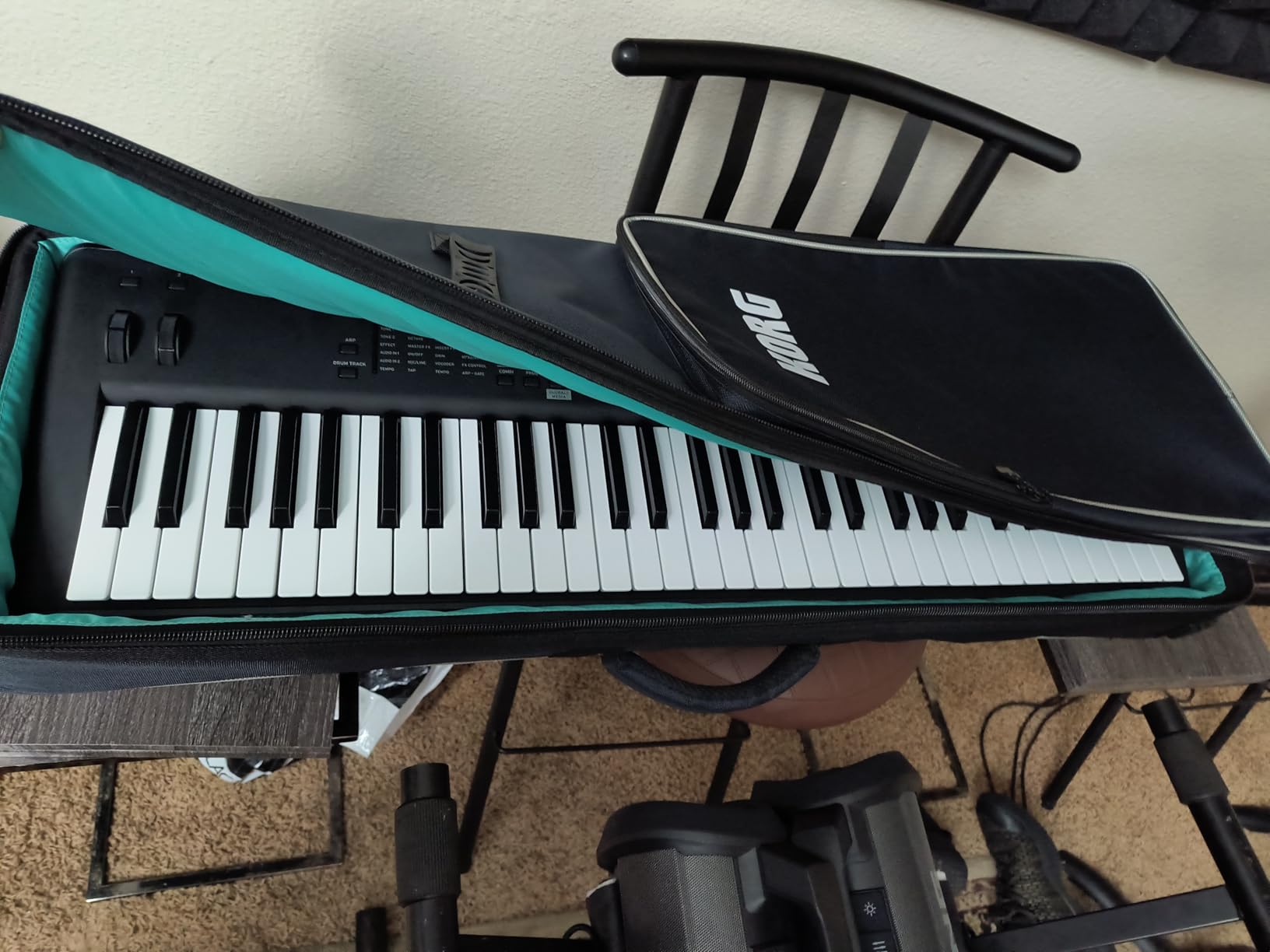
The Kross 2-61 is the lightest board we tested for this roundup at 3.8 kg, and it is the one we would hand a player who never plays acoustic piano parts. The EDS-i engine delivers a crisp, realistic tone, and the sound library is large enough that a pop function band or an electronic-leaning worship set will not run out of options.
Mic and line inputs mean you can run a vocal or a second instrument straight into the board, and the audio recorder captures ideas quickly. Sequencer functions work even on the small display, and favourites save without fuss.
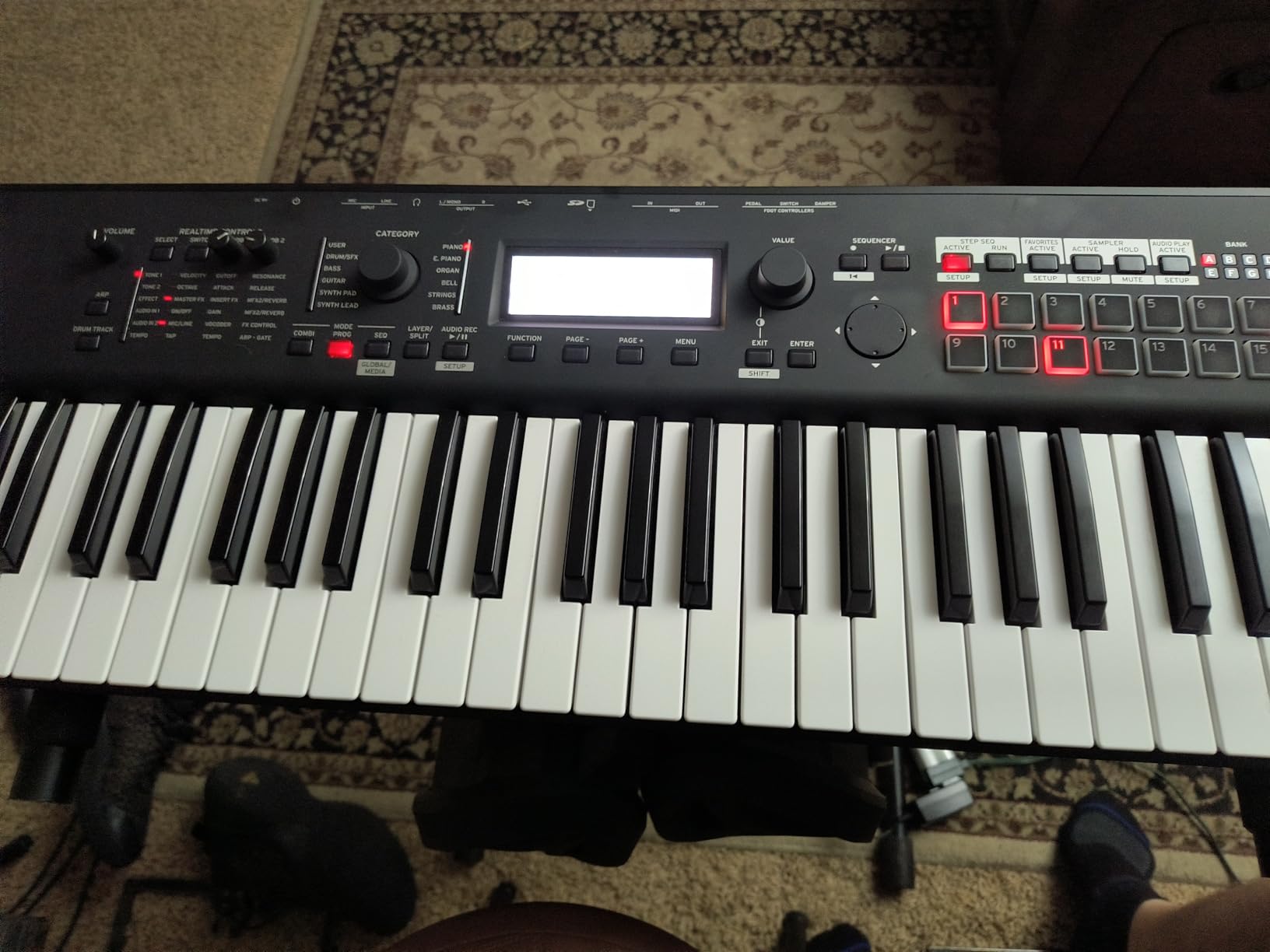
Stage reality is that this is a synth-action, unweighted 61. Players who learned on weighted actions tend to push too hard and get an unwanted attack. Practise dynamics with headphones before a set rather than calibrating live.
The interface is the main complaint. It is menu-heavy and slow to navigate under pressure, and the manual is a download rather than a printed booklet, which slows first-time setup.
Why it works for pop and electronic-leaning players
Weight is the headline. At 3.8 kg it fits in a backpack or a back seat and still plays a full set. For a busker, a festival slot, or a player doing two venues in a day, that is the difference between a board you bring and one you leave behind.
The input and recording combination also makes it a good scratch board for writing on the road.
Where it falls short on stage
External amplification is needed for serious volume in most setups, so budget for a small powered speaker in the rig. The unweighted action is a genuine mismatch for a piano-forward set even though the tone is good.
There is no arranger engine here, so if your gig depends on styles and rhythms triggered from chords, this is the wrong board.
5. Korg i3 Arranger Keyboard – Best for Singer-Songwriters
Korg i3 Arranger Keyboard – Silver
61 velocity-sensitive keys
12.9 lb
800+ sounds and GM2 set
6 AA battery operation
WAV and MIDI export
Pros
- Intuitive layout with illuminated function buttons
- 800+ sounds and arranger styles
- Runs on six AA batteries
- Records to WAV and exports MIDI
- Bundled software suite
Cons
- Speakers are weak without amplification
- No MIDI IN port
- No built-in arpeggiator
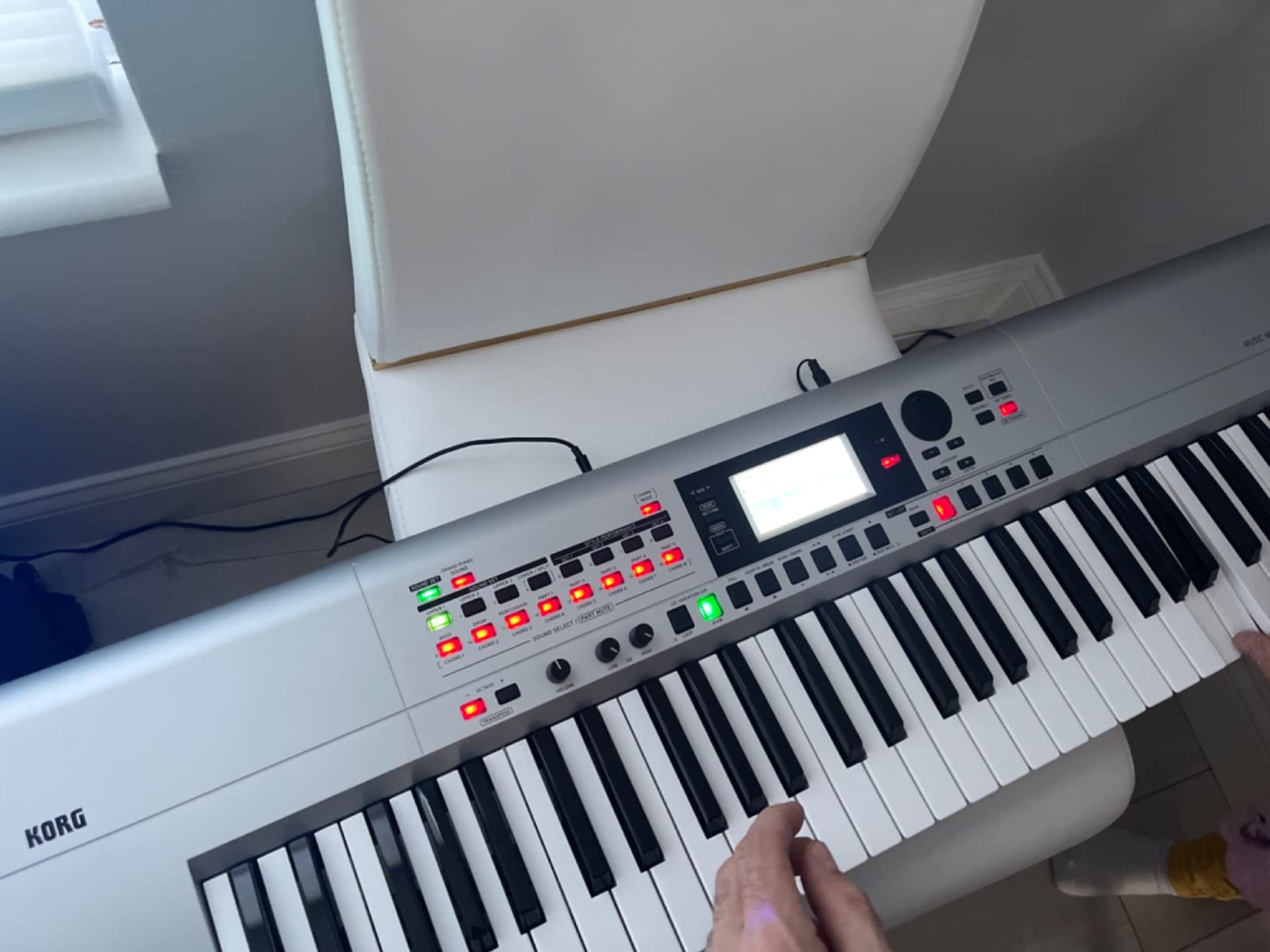
The i3 is built for the singer-songwriter who plays and sings at the same time. Over 800 sounds including a full GM2 set and 59 custom drum kits means you can cover a wide song list without a second board, and the illuminated function buttons make it readable at a low-lit venue.
At 12.9 lb it stays portable, and it runs on six AA batteries, which makes outdoor gigs and busking straightforward. Performance Recording exports MIDI and captures audio WAV, so a good idea from a rehearsal can become a real track later.
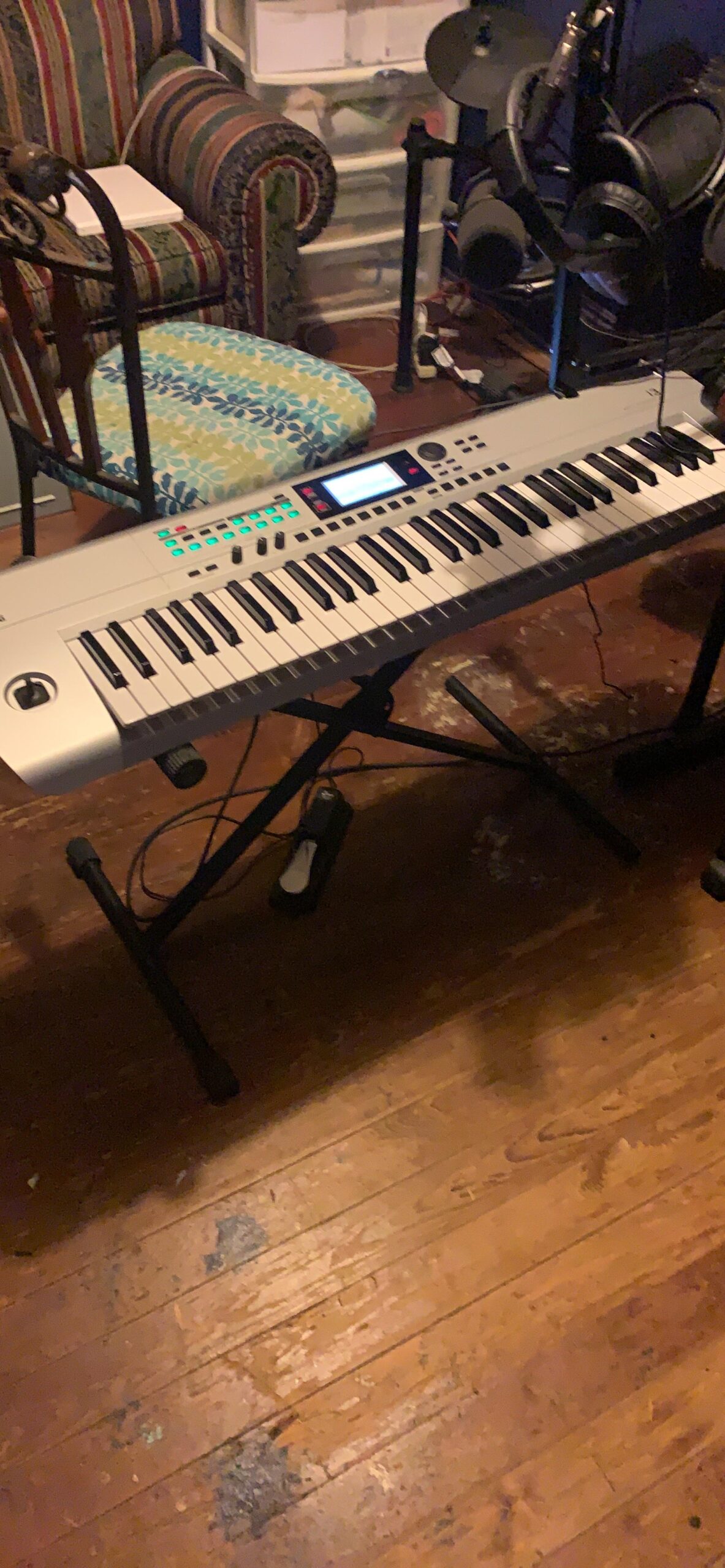
Fifty registration slots across ten banks give you room to store complete gig soundsets, and the bundled software suite adds real value if you work in a home setup between gigs.
The honest drawback is sound tier. Owners are split on how it compares with Korg’s higher-tier instruments, and the rating sits below the rest of this list for a reason. It is a very good arranger, not a flagship workstation.
Why it works for solo and accompaniment work
Velocity-sensitive full-size keys with customisable touch curves let you set up the board to suit your playing, and the arranger styles handle accompaniment while you concentrate on singing and playing melody.
Quick WAV recording to a flash drive means you can capture a rehearsal without a laptop in the van.
Where it falls short on stage
The onboard speakers are weak. Several owners report needing an external amplifier for anything beyond practice, so treat this as a board you amplify rather than one that covers a room.
There is no MIDI IN port, which limits syncing with an external setup, and no built-in arpeggiator for players who use one live.
6. Casio PX-S1100 Privia 88-Key – Best Lightweight 88 for Touring
Casio Privia PX-S1100 – 88-Key Touch-Responsive Weighted…
88 action-weighted keys
24.7 lb
German grand tone
Bluetooth adapter included
Battery operation
Pros
- Exceptionally slim and light for an 88-key weighted board
- Rich grand tone with string and damper resonance
- Bluetooth adapter in the box
- Runs on batteries away from an outlet
Cons
- Action is lighter than full hammer boards
- 2.5 mm headphone jack
- Modest speaker volume
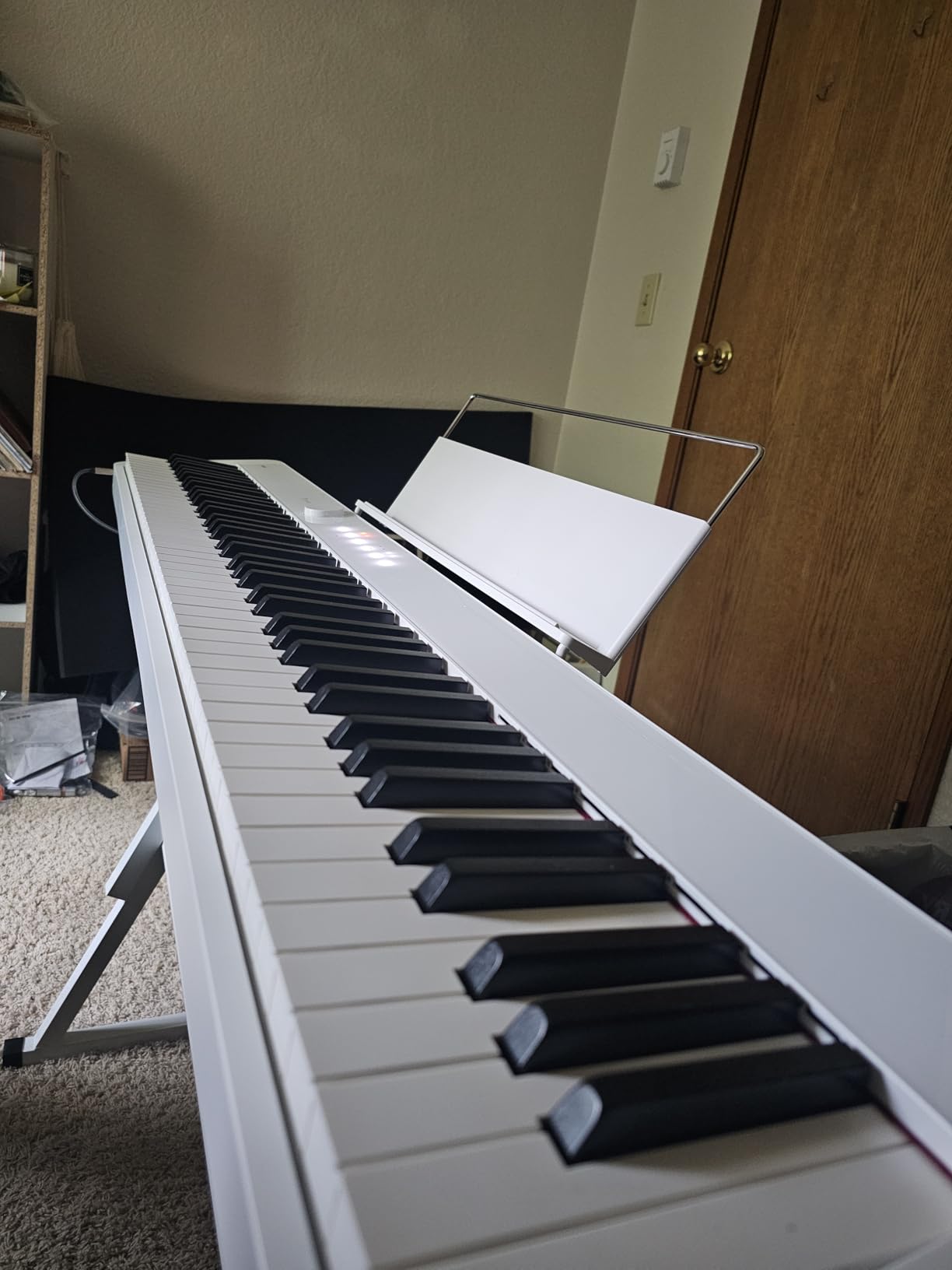
For touring players who still want a full 88, the PX-S1100 is the most interesting shape on this list. At 24.7 lb with a slim chassis, it is easier to fit in a van and much easier to get through a doorway than the heavier weighted boards here. The footprint is 43 percent smaller than earlier Privia models, and that matters in a dressing room.
The German grand piano tone includes enhanced string and damper resonance modelling, which gives it a more alive character than most boards at this weight. It also runs on batteries and ships with a Bluetooth audio and MIDI adapter, so wireless operation is included rather than an add-on.
Eighteen onboard tones is a thin palette for a band set, and the built-in recorder and Duet Mode are more useful for practice and teaching than for a stage rig.
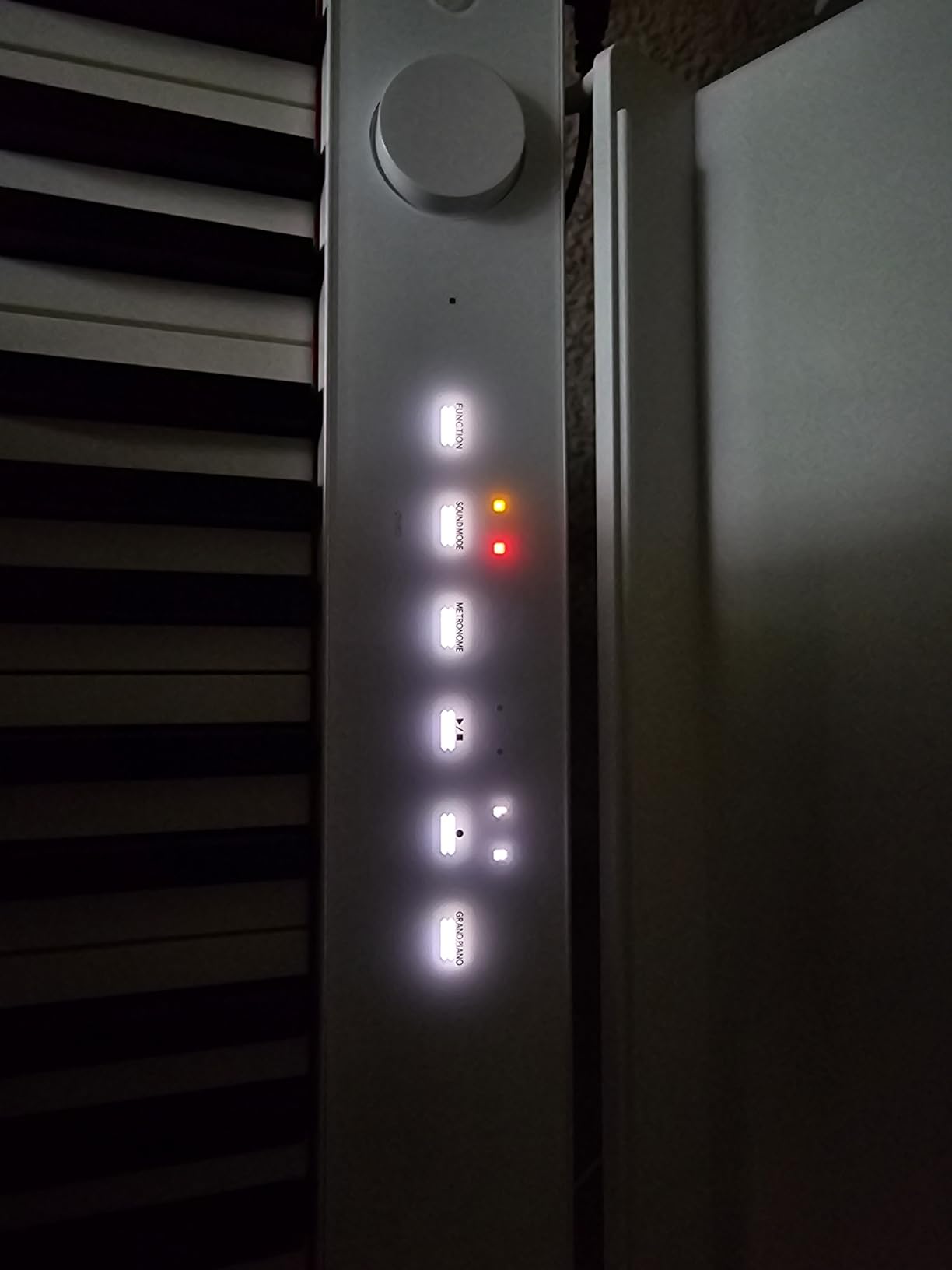
The illuminated touch controls are a real adjustment period. They look premium but new players report they are less intuitive than physical buttons until you learn where they are.
Why it works for touring and small stages
Battery operation plus real 88 keys is a combination very few weighted boards offer. It suits a street busker with no power, a ceremony in a park, or a hotel-room practice stop between drives.
Under 25 lb is light enough that one person can manage a load-in without waiting for help.
Where it falls short on stage
The action-weighted keys are lighter than a full hammer-action board. Classical and jazz pianists who push dynamics will find the response shallower, and the action is not a substitute for a real graded hammer feel.
The 2.5 mm headphone jack rather than standard 3.5 mm is an annoying detail, and speaker volume is modest for an 88-key instrument in a live room.
7. Roland FP-60X 88-Note Digital Piano – Best for Tone Customisation
Roland FP-60X | Pro Performance 88-Note Digital Piano…
88 PHA-4 weighted keys
42.6 lb
26-watt stereo speakers
Piano Designer
Mic input with vocal effects
Pros
- PHA-4 action feels close to an acoustic
- 26-watt speakers with a wide spread
- Piano Designer allows per-note tweaking
- USB Type-B for computer recording
Cons
- Heaviest board here at 42.6 lb
- No display screen
- Bluetooth headphone support not included
- Only a single pedal included
The FP-60X is the board for a player who has a specific tone in mind and wants to build it. The onboard Piano Designer function lets you adjust character per note, and the curated library already covers piano, electric piano, organ, strings and synths. That, plus a mic input with vocal effects, makes it a genuine front-of-house board for a one-person show.
On the action side, the PHA-4 Standard weighted keyboard is praised by classical players as well as pop players, and the 26-watt stereo system spreads further than most onboard systems. USB Type-A and Type-B mean it can serve as an audio input for computer recording.
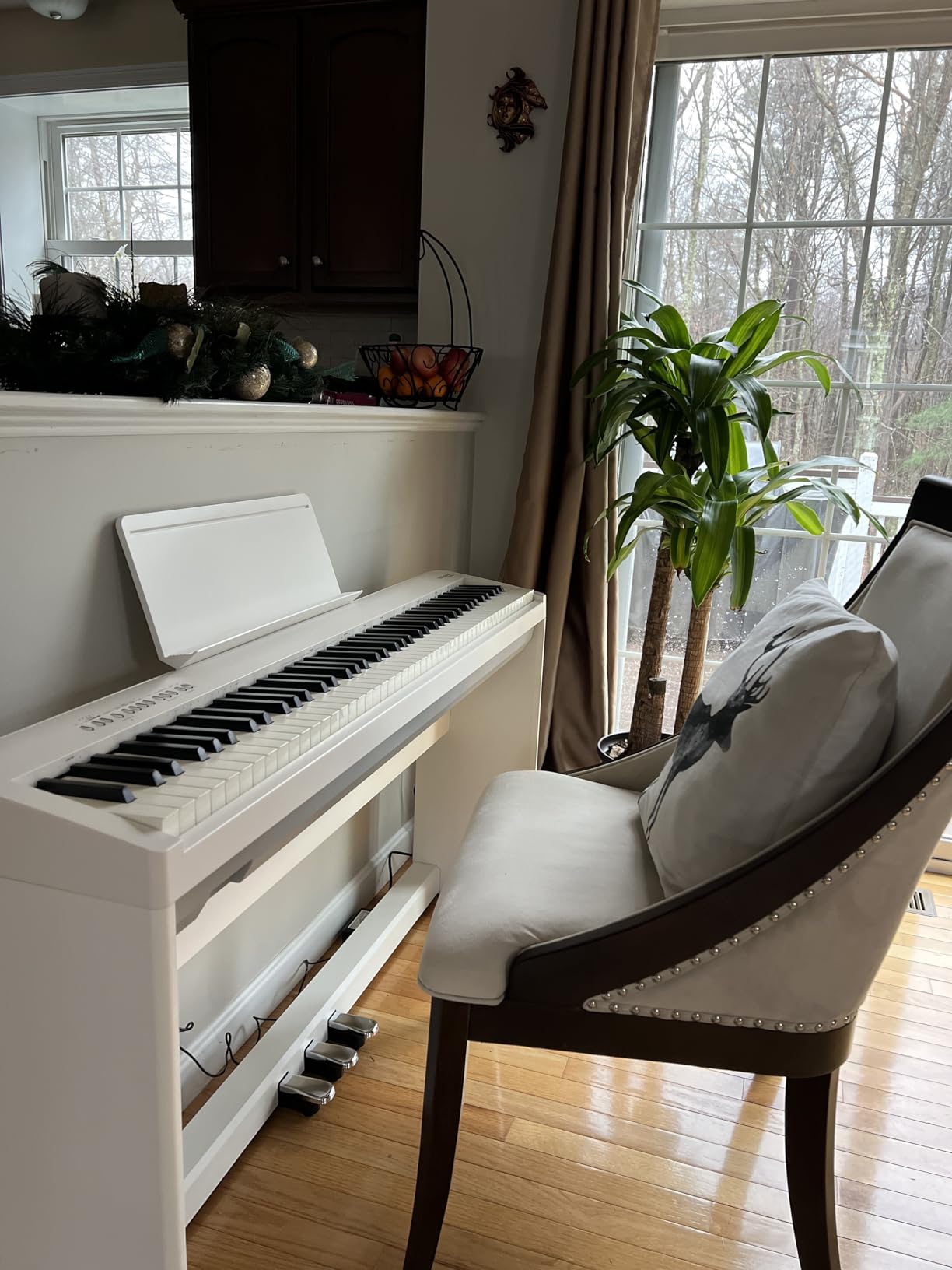
At 42.6 lb it is the heaviest portable model here. Plan the load-in around it rather than hoping it goes unnoticed, and check the stairs at venues you play regularly.
There is no display screen, so sound changes mean memorising button commands. That is fine once learned and frustrating in the first month.
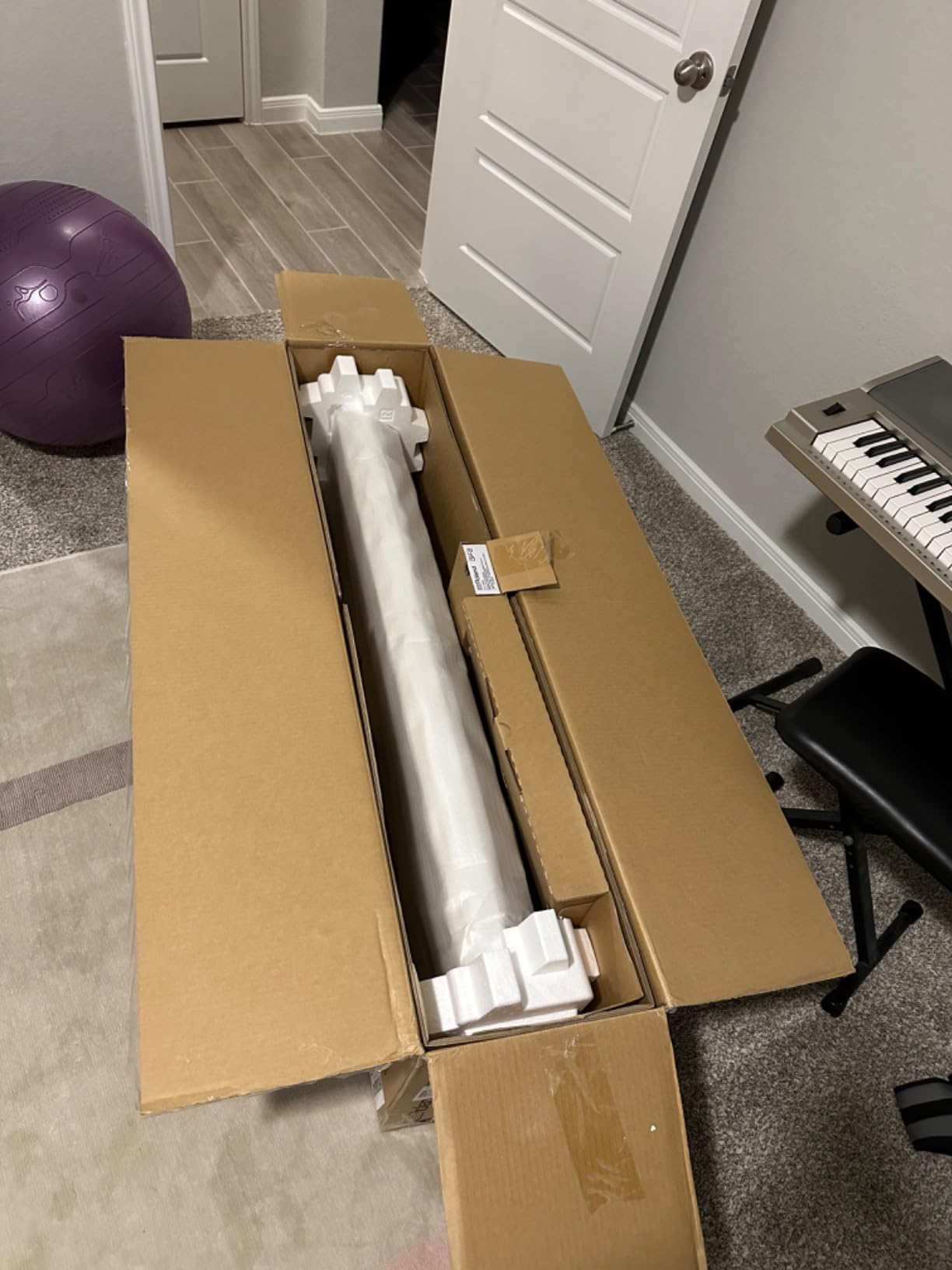
Why it works for players who build their own sound
Tone tweaking plus a mic input means one person can handle a solo concert set with a vocal, an instrument feed and custom keyboard sounds without a separate mixer desk or an engineer.
Three-pedal capability is supported, which matters for players who use sostenuto and soft pedals live.
Where it falls short on stage
Weight is the dominant drawback and there is no workaround beyond a good case and a cart. Only a single sustain pedal is included, and Bluetooth headphones are not supported.
Speaker volume tops out modest even with 26 watts, so in a loud room you are still going to want an external amplifier.
8. Casio CT-X5000 61-Key Flagship Arranger – Best for Full Stage Output
Casio CT-X5000 61-Key Flagship Arranger Keyboard | 800 Tones…
800 editable tones and 235 rhythms
30W onboard speakers
Line outs and mic input
17-track recorder
128 registration slots
Pros
- Best-in-class onboard speakers in its tier
- Full stage I/O with line outs and mic input
- 800 tones and 235 rhythms
- 128 registration slots for gig soundsets
Cons
- Steep menu-based learning curve
- No DIN MIDI
- Keys feel slightly clacky
The CT-X5000 is the most complete stage box in this roundup for an arranger. It has quarter-inch line outs, a mic input and expression pedal support, which means it can feed a front of house engineer properly and still take a vocal. For a worship leader or a function player who runs a full rig, those ports matter more than the sound count.
The 30-watt onboard speakers are the strongest here for the class, and 800 editable tones with 235 rhythms give you a lot of arranger ground to cover. A 17-track recorder and 128 registration slots make it useful for players who write as well as perform.
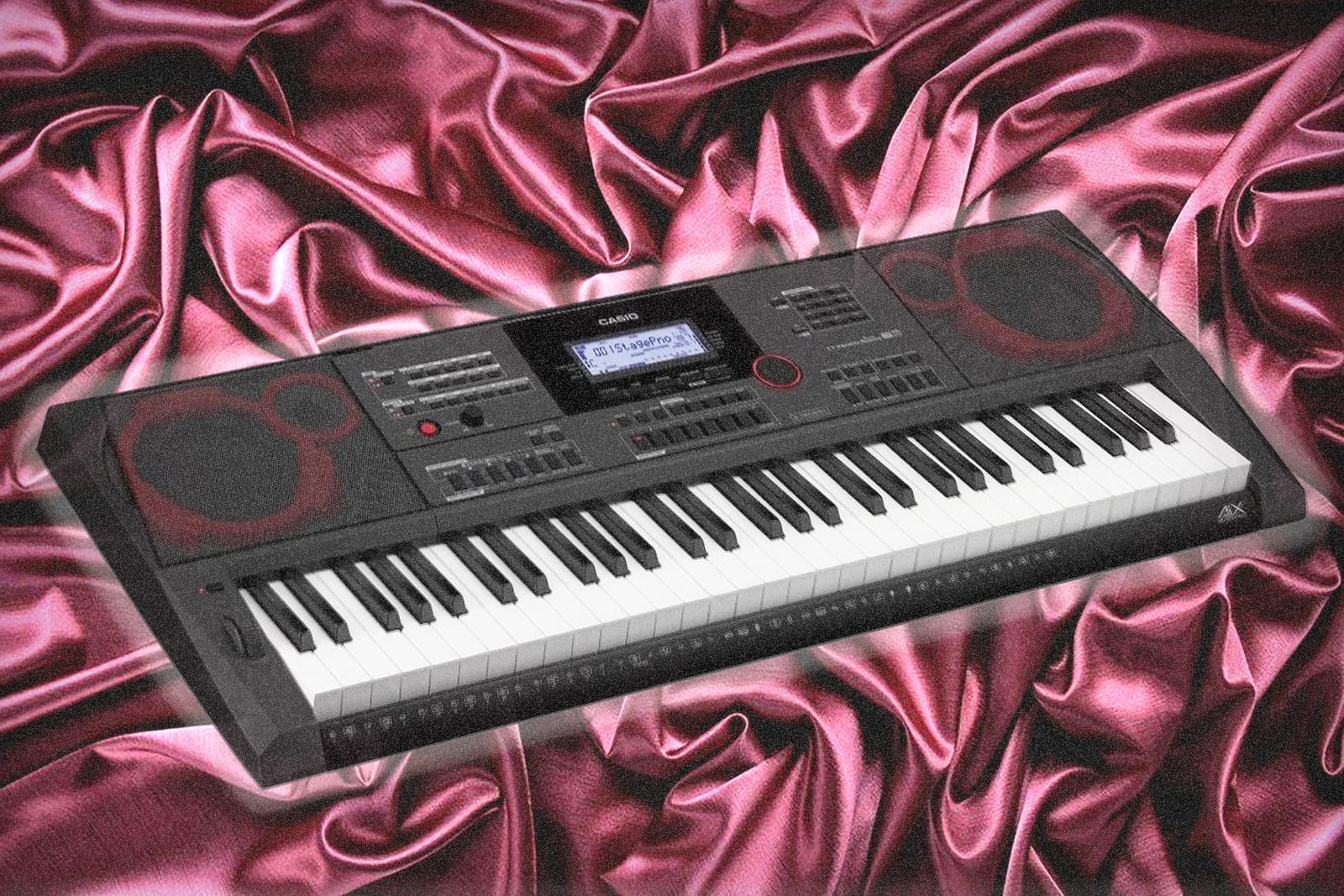
Phrase pads, pitch bend and modulation, and a backlit display round out a control surface you can actually read mid-set. Semi-weighted keys feel solid and the buttons respond quickly once you know the layout.
The learning curve is the real cost. Editing sounds and using the sequencer both run through deep menus, and factory organ, electric piano and pad edits need work before they sound stage-ready out of the box.
Why it works for worship leaders and function bands
Registration slots are the quiet winner here. You can store a complete soundset per song or per service, then recall it in a couple of presses instead of rebuilding sounds between numbers.
The mic input and vocal effects also let one person handle their own vocal alongside the accompaniment.
Where it falls short on stage
USB MIDI only, with no DIN MIDI, is a real limitation at this level if you integrate with older equipment. The keys are also described as slightly clacky with abrupt velocity switching, which can expose itself in a quiet room.
It is heavier than other 61-key Casio models because of the larger speaker system, so the weight advantage of the smaller arrangers is reduced here.
9. Casio CDP-S160 88-Key Weighted Piano – Best Battery-Powered 88
Casio CDP-S160 – 88-Key Weighted Digital Piano with Scaled…
88 scaled hammer-action keys
23.2 lb
10 built-in tones
6 AA battery or AC adapter
Duet Mode
Pros
- Scaled hammer action with good key grip
- Light for a full 88-key weighted piano
- Runs on six AA batteries
- Duet Mode and app support for teaching
Cons
- Limited polyphony noticed on dense passages
- Only 10 built-in tones
- Included pedal is weak for recital use
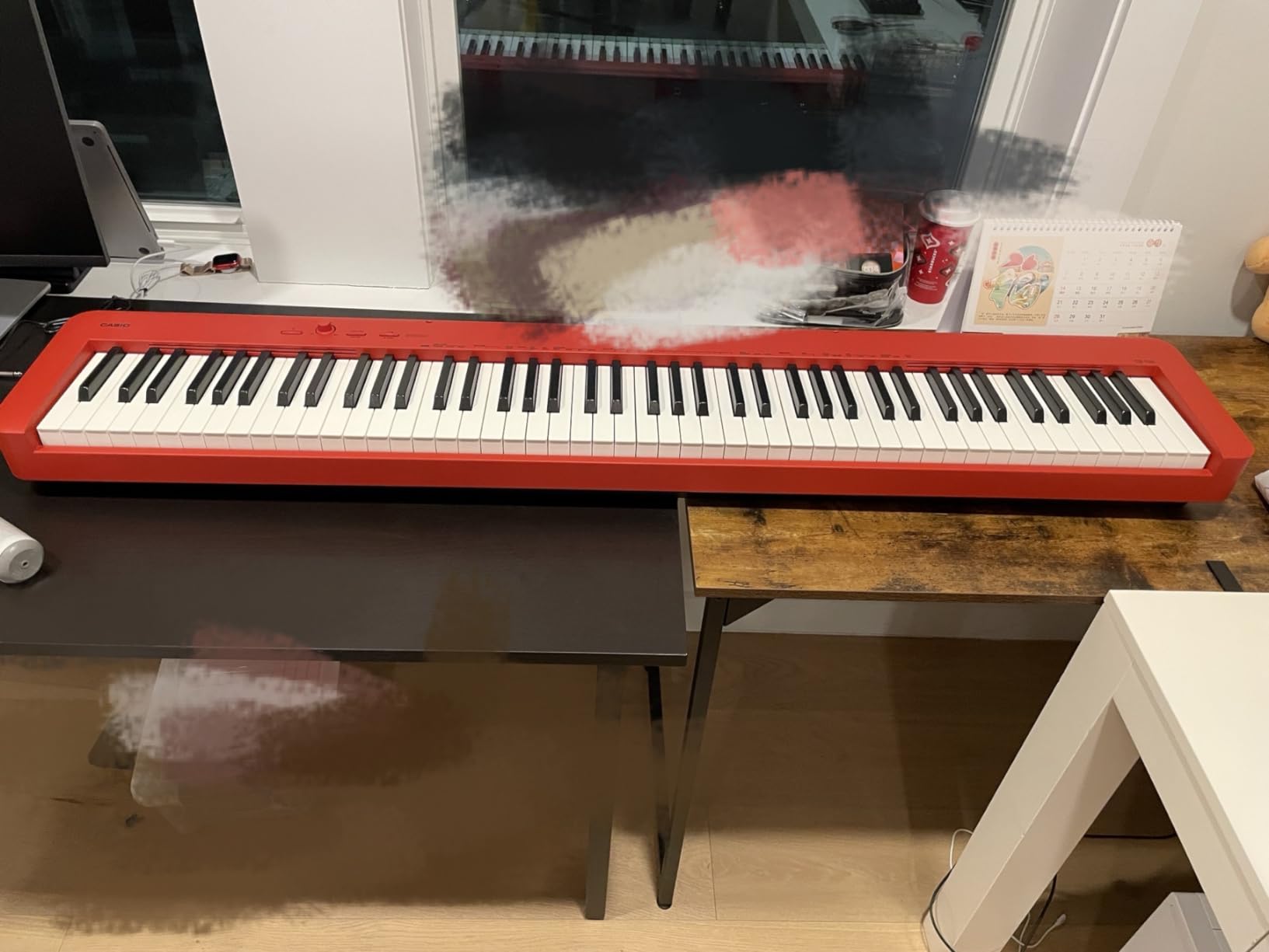
The CDP-S160 is unusual and useful: 88 scaled hammer-action keys at 23.2 lb that also run on six AA batteries. For a musician who teaches in one room and plays an outdoor set in another, having a full weighted board that does not need an outlet solves a specific problem well.
The keybed has textured ivory and ebony-style surfaces that grip well, and the slim body suits small rooms and practice desks. USB-MIDI works with no drivers, which saves setup time on unfamiliar laptops.
Duet Mode splits the board for lessons and performances, and the Casio Music Space app support adds remote control from a phone.
Owners report limited polyphony that becomes noticeable on dense passages, and only 10 built-in tones means a thin live palette.
Why it works for teaching and travelling players
One board covering teaching and performance means one instrument to maintain and one thing to load into the vehicle. Battery operation removes the cable hunt at venues with awkward power placement.
The slim 3.9-inch body depth means it fits in places a full console will not.
Where it falls short on stage
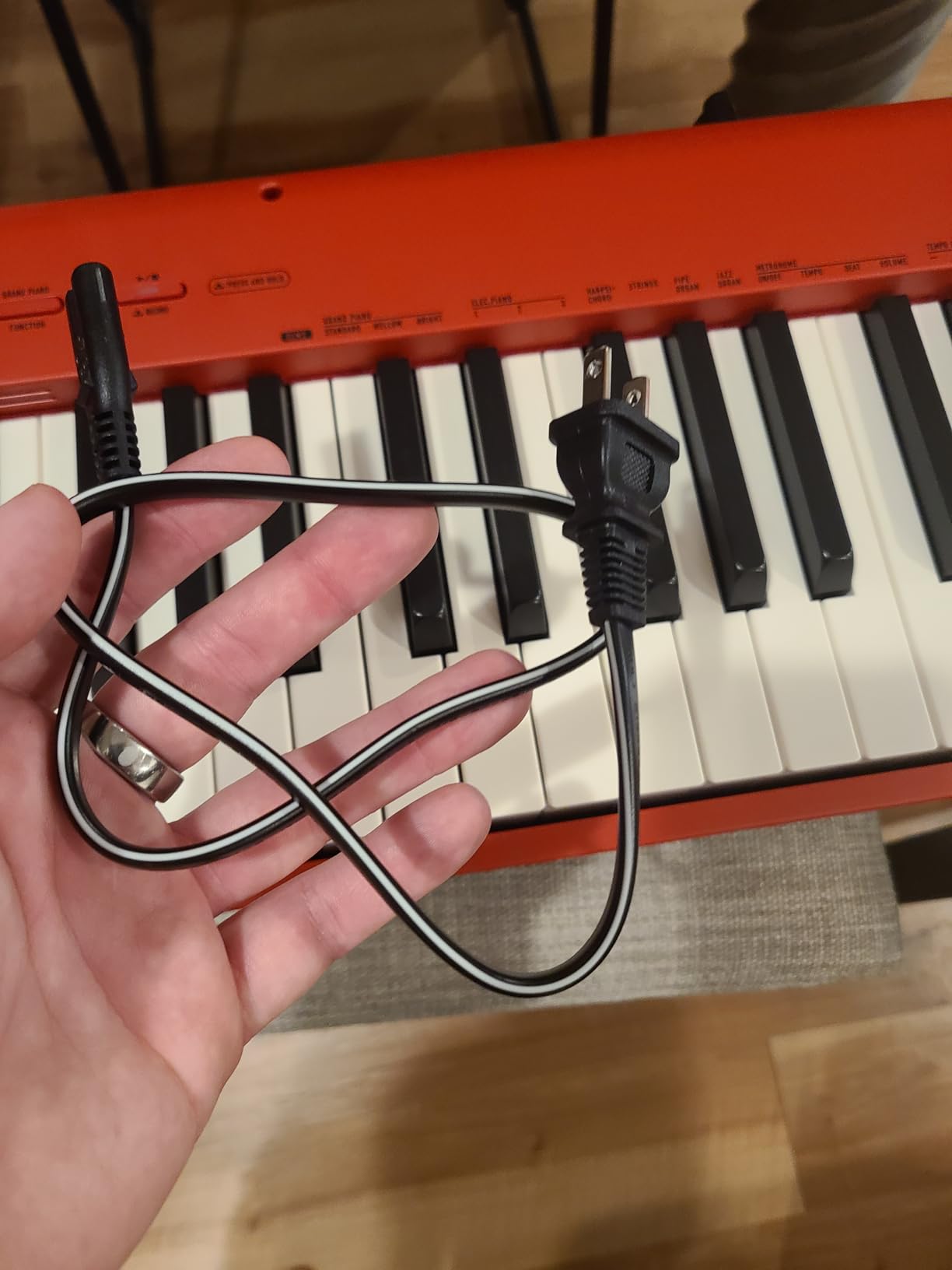
Ten tones is not enough for a varied band set, and some buyers point out that this is a practice and teaching instrument rather than professional performance kit. The included pedal suits practice but is weak for recital use, and some owners report an incorrect power adapter substitute.
10. Korg EK-50 61-Key Keyboard – Best Budget Arranger
Korg, 61-Key Keyboards & Pianos (EK50)
61 unweighted keys
16.5 lb
702 sounds and 280 Styles
2 x 10W stereo speakers
12-track sequencer
Pros
- Large sound and style library for the tier
- 2 x 10W stereo speakers reviewers call terrific
- Illuminated buttons and clear display
- Recording and 12-track sequencer included
Cons
- Sequencer is limited for full multi-track layering
- Some owners report dropouts and hanging notes
- Only 61 unweighted keys
The EK-50 is the value pick, and the speakers are the surprise. Two 10-watt stereo speakers at 16.5 lb is a lot of onboard output for an arranger at this level, and reviewers repeatedly single them out as terrific for practice and small rooms.
702 sounds and 280 Styles cover a broad song list, the split function lets you run two sounds at once, and illuminated buttons plus a clear display make it readable on a dim stage. Recording and a 12-track linear sequencer cover composition between gigs.
USB Type-A, USB Type-B and MIDI connectivity is more generous than most boards in this list at the same tier.
Why it works for practice-heavy and entry players
It is the easiest board here to learn, and the illuminated control surface reduces the menu confusion that trips people up on the larger arrangers. For a player building confidence on styles and rhythms before gigging, that matters.
At 16.5 lb it stays carryable, though it is heavier than the sub-10 lb entry boards.
Where it falls short on stage
The sequencer is a simple linear recorder rather than a true multi-track arranger engine, so full layered productions are out of reach. Only 61 unweighted keys are available, which returns us to the bottom-octave shift for players used to a full range.
Some owners report dropouts and hanging notes that need a reset, and the rating on this board sits below the rest of the list. Speakers and overall output need external amplification in louder settings.
How to Choose a Gigging Keyboard: Buying Guide
How many keys do you actually need?
Sixty-one keys covers two and a half octaves. That is enough for pop, function, worship and singer-songwriter work, and it is why so many stage boards are 61. The cost is real: the lowest octave has to be moved up, so left-hand parts need rewriting, and full piano parts do not fit.
Seventy-three keys give a middle C to top C range that covers most ensemble repertoire without the awkward gaps. Eighty-eight keys are for players who learned on a real piano and cannot play correctly without the full range.
Our advice is to work backwards from your set list, not from the spec sheet. If you play real arrangements, test your hardest part on the shorter board before buying.
Weighted versus semi-weighted versus unweighted keys
Weighted and hammer-action keys reproduce the leverage of an acoustic action, which controls dynamics by touch rather than by an expression pedal. For acoustic players, that is the feature that makes a digital board playable at volume.
Semi-weighted keys are a middle ground. Synth-action and unweighted keys are fastest and lightest, which suits electronic repertoire and heavy touring, but pianists tend to over-play them.
Weighted action is also the part that wears. Long-tenure owners of stage boards commonly report a decade of service, so a board you intend to keep for years should have replaceable-keybed options and local service.
Weight and load-in logistics
Weight is the number gigging players argue about most. A board under 10 lb is a one-person carry. A board above 40 lb is a two-person job on any venue with stairs. Between 20 and 30 lb is the band of most weighted 88-key boards.
Measure your actual route. Count the stairs at your three most common venues and test whether you can carry the board with a keyboard stand in one hand. Players with back problems consistently push toward lighter boards, and we agree.
Outputs and stage integration
Unbalanced quarter-inch line outputs work fine into a stage box in a clean room. Balanced outputs or XLR are what you want for long snake runs and rooms with power hum, and almost none of the boards here have them. Assume a DI box in your rig.
MIDI in and out, USB MIDI and audio-over-USB decide how well the board integrates with a laptop, a DAW or external equipment. Check whether DIN MIDI matters to your setup; the flagship arranger in this roundup offers USB only.
Ask the front of house engineer what inputs they take before a tour rather than at the first date.
Power, batteries and preset backups
Battery operation matters more than most roundups admit. An outdoor ceremony, a park busking spot or a venue with awkward power placement will end a set otherwise. Check which battery type the board takes and how long a full set lasts on it.
Back up your gig soundsets before you leave home. Export to SD or USB where supported, keep a MIDI dump of your patches, and photograph your registration list. Rebuilding fifty sounds at a venue the night before a show is the avoidable disaster in this hobby.
Also worth doing: never leave a board in a hot vehicle for a season. Heat and cold stress electronics and screens, and forum reports of failing gear after that habit are common enough to take seriously.
Alongside the keyboard itself, the rest of your rig matters. Our guides to gigging trumpet stands and guitar amps for gigging cover the hardware that has to survive the same load-in, and our travel guitars for musicians guide covers the case you will wish you had when the stairs are steep.
Frequently Asked Questions
What is the best keyboard for gigging?
The Casio CT-X700 is our best overall pick for gigging because at 9.5 lb it is one of the lightest boards here, while still offering 600 tones, 195 rhythms, battery operation and class-compliant USB-MIDI. For players who need weighted keys, the Yamaha P-45 gives a full 88-key action at roughly 25 lb. Choose by key count first, then weight against your stairs, then outputs against what the venue PA takes.
Are weighted keyboards better for gigging?
Weighted keys are better if you play acoustic piano parts or learned on a real piano, because the resistance lets you control dynamics by touch at stage volume instead of reaching for an expression pedal. For synth, pad and electronic work, unweighted synth-action keys are lighter, faster and perfectly playable. The trade is weight, since graded hammer action adds pounds to every load-in.
What is the best portable keyboard with weighted keys?
The Yamaha P-45 is the strongest value among weighted boards, giving 88 weighted touch-sensitive keys with a clean grand piano tone at roughly 25 lb and a very fast one-button setup. If battery operation matters, the Casio CDP-S160 runs 88 scaled hammer-action keys on six AA batteries at 23.2 lb. If you want the lightest full 88, the Casio PX-S1100 comes in under 25 lb with a slimmer body.
Do I need XLR or balanced outputs for a gig?
Not always, but you will want them or a DI box for long cable runs and rooms with power hum. Most portable boards in this roundup, including the Casio CT-X5000, output unbalanced quarter-inch line level, which works into a stage box in a clean room. Ask the front of house engineer what inputs they take before you commit to a board, and carry a DI as standard.
How many keys do gigging musicians need?
Sixty-one keys suits pop, function, worship and singer-songwriter work, but the lowest octave shifts up so piano parts need rewriting. Seventy-three keys cover most ensemble repertoire with fewer gaps, and 88 keys are for players who cannot play correctly without the full range. Test your hardest part on the shorter board before buying, and consider renting for a one-off rather than buying for a single event.
Our Final Verdict for 2026
The best portable keyboards for gigging musicians in 2026 come down to weight, key count and outputs rather than tone alone. Our overall winner is the Casio CT-X700 at 9.5 lb, because a board you can carry twice in one night gets played more than a board you leave in the van.
For weighted-key players the Yamaha P-45 is the value pick, the Roland FP-30X wins on internal speaker power for small rooms, and the Casio PX-S1100 is the one to take on the road when you need a full 88 that runs on batteries. Audition with your own set list, carry a DI, and back up your soundsets before you leave home.