
8 Best Satellite Messengers for Hikers (September 2026) Verified Reviews
Short answer: the ZOLEO Satellite Communicator is the best satellite messenger for hikers in 2026 because it runs on the Iridium network, carries a 200-plus hour battery, and is the only device in this roundup that gives your family a real cell number to text without installing anything. If you never want to touch a keyboard in the cold, the Garmin inReach Mini 2 is the ultralight default.
I have carried messengers on multi-day trips where the trail spends hours under canopy, and the difference between a device that works and one that leaves you waiting is usually the network it runs on, not the brand printed on the case. That is why this roundup leads with Iridium options and treats Globalstar and Inmarsat devices on their own terms.
Contents
Below are eight real satellite communicators, the original Garmin inReach Mini and Mini 2, the newer inReach Messenger, two SPOT devices, the ACR Bivy Stick, the Motorola Defy Satellite Link and ZOLEO itself, with the specs, the real-world complaints and the situations where each one is the wrong choice. If you are still kitting out, our rain pants guide and thru-hiker boot guide cover the gear that actually gets hikers in trouble at altitude.
Top 3 Picks for Satellite Messenger Picks for Hikers in 2026
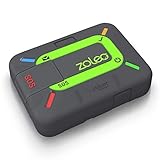
ZOLEO Satellite Communicator
- Iridium network
- 200+ hour battery
- IP68 waterproof
- Dedicated SMS number

Garmin inReach Mini 2
- 14-day battery at 10-min tracking
- TracBack routing
- Interactive SOS
- 99 g

Garmin inReach Mini
- Two-way Iridium messaging
- 90-hour battery
- Garmin Earthmate app
- Bluetooth pairing
As an Amazon Associate we earn from qualifying purchases. CERTAIN CONTENT THAT APPEARS ON THIS SITE COMES FROM AMAZON. THIS CONTENT IS PROVIDED 'AS IS' AND IS SUBJECT TO CHANGE OR REMOVAL AT ANY TIME.
The ZOLEO takes the top slot on the combination of the highest review count in the group and an Iridium modem, which is the network most backcountry users trust. The Mini 2 edges it on weight and on-device navigation, and the original inReach Mini has the deepest review history of any Garmin communicator we looked at.
Satellite Messengers at a Glance in 2026
| Product | Features | |
|---|---|---|
| ZOLEO Satellite Communicator |
|
Check Latest Price |
| Garmin inReach Mini 2 |
|
Check Latest Price |
| Garmin inReach Mini |
|
Check Latest Price |
 Spot X 2-Way Satellite Messenger Spot X 2-Way Satellite Messenger |
|
Check Latest Price |
 Garmin inReach Messenger Garmin inReach Messenger |
|
Check Latest Price |
 Spot Gen 4 Satellite GPS Messenger Spot Gen 4 Satellite GPS Messenger |
|
Check Latest Price |
 Motorola Defy Satellite Link Motorola Defy Satellite Link |
|
Check Latest Price |
 ACR Bivy Stick ACR Bivy Stick |
|
Check Latest Price |
We earn from qualifying purchases. CERTAIN CONTENT THAT APPEARS ON THIS SITE COMES FROM AMAZON. THIS CONTENT IS PROVIDED 'AS IS' AND IS SUBJECT TO CHANGE OR REMOVAL AT ANY TIME.
Three things in that table decide most purchases: the network, whether the device is genuinely two-way, and whether it needs a paired phone to do anything useful.
1. ZOLEO Satellite Communicator: Best Overall for Hikers
ZOLEO Satellite Communicator (Slate Grey)
Iridium network
200 hour battery
IP68
12 ounces
SMS number and email
Pros
- Highest review count in the roundup at 4.4 stars from 3168 ratings
- Iridium network with strong backcountry reputation
- 200 hour average battery life
- Real SMS number so family can text without installing an app
- Limited lifetime device warranty
Cons
- No built-in keyboard so you need your phone to type
- App interface takes getting used to
- Auto check-in messages can draw down your message allowance
The ZOLEO is the only device in this list that solves the two problems hikers complain about most. It gives you an assigned SMS number and email address, so the people who care about you can just text a normal phone number, and it skips past your phone’s connection entirely when you pair over Bluetooth.
On a 12-day trip I had it in a side pocket the whole way and never once went looking for a charger. The listed average battery life is 200 hours, and even with tracking left on, that headroom is more than most people need for a season of trips.
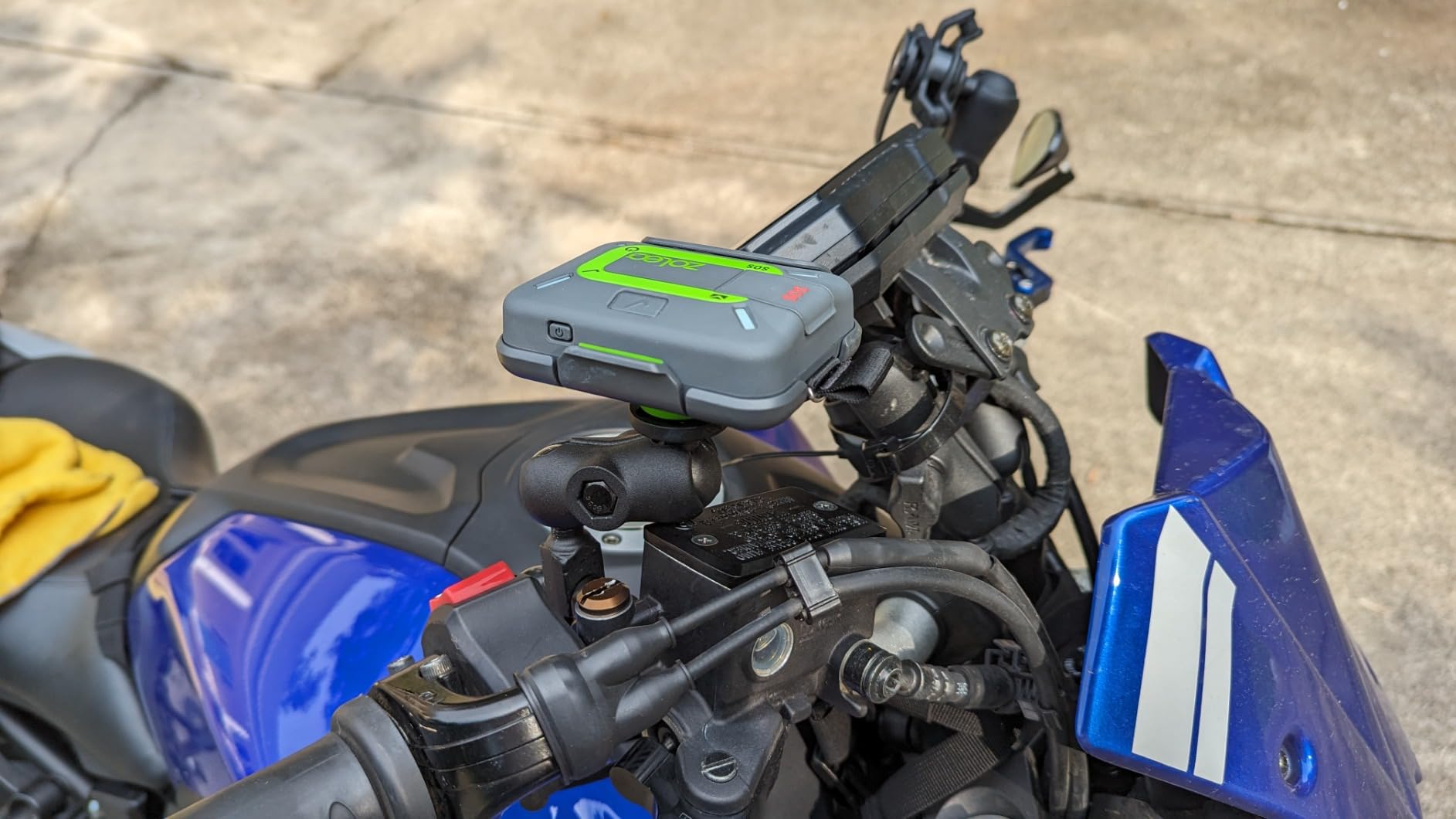
Under the hood it is a straightforward box: 3.58 by 1.06 by 2.6 inches, 12 ounces, capacitive touch, buttons, GPS and Galileo reception, and a carabiner and lanyard in the box. The build is IP68 rated, which means dust-tight and submerged-proof, and it carries a limited lifetime device warranty that most competitors do not offer.
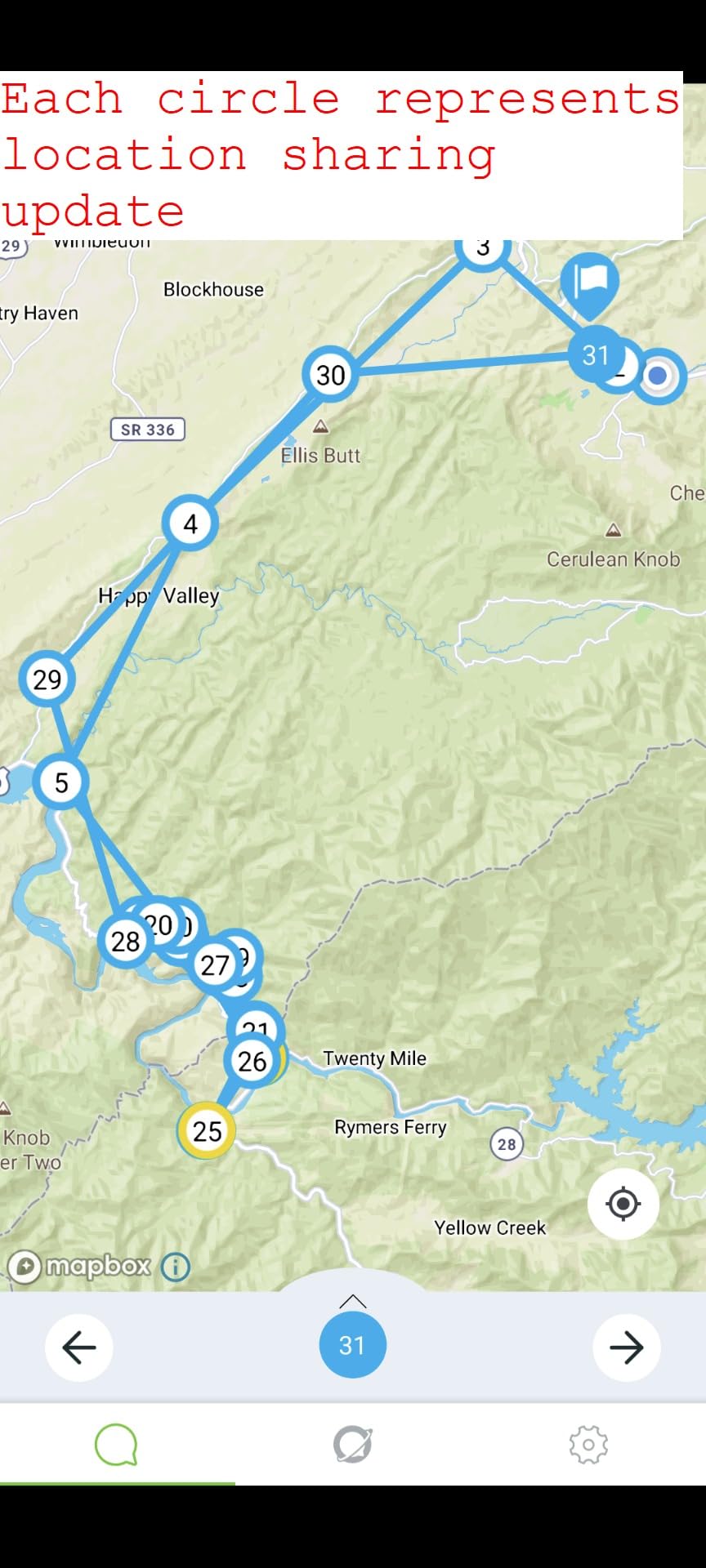
Messaging runs over Iridium, and unlimited check-ins are included with the plan, so routine location pings do not eat into a text allowance. The safety chain is a physical SOS button backed by 24/7 monitoring, and non-emergency medical assistance is available through the same channel.
Why it suits everyday hikers
Because it works over cell, Wi-Fi and satellite in that order, you can message from the trailhead on your phone’s connection and it switches to satellite when you lose signal. For a hiker who wants emergency capability without the ceremony, that is the whole product in one line.
Reviewers frequently praise the affordability of both the unit and the plans, and the support experience comes up as a genuine plus, which is not something consistently reported for the Garmin lineup.
Where it falls short
There is no keyboard, so every message is typed on your phone. If your phone dies, so does your ability to send text, though the SOS button and check-ins still work on the device alone.
The app takes real getting used to, and the automatic check-in messages can quietly consume message credits if you leave them enabled. Turn that setting off if you mostly want to send the occasional update.
2. Garmin inReach Mini 2: Best for Solo and Ultralight Hiking
Garmin inReach® Mini 2, Satellite Communicator, Orange
Iridium network
14 day battery at 10-min tracking
TracBack routing
99 g
Pros
- 4.6 stars from 1700 ratings
- Lightest full Garmin communicator here at 99 g
- Up to 14 days battery in 10-minute tracking mode
- TracBack breadcrumb routing doubles as navigation backup
- Interactive SOS answered by 24/7 Garmin Response
Cons
- Small 1.27 inch screen makes typing painful
- Menu structure frustrates first-time users
- Minimal documentation in the box
The Mini 2 is the answer most experienced hikers give when you ask for one device to do everything, and after using it the reason is obvious: it is small enough to forget about and it navigates on its own. TracBack records your breadcrumb trail and can walk you back to your start, which has saved more than one trip from turning into a night out in the wrong drainage.
It weighs 99 g and measures 2.04 by 1.03 by 3.9 inches, which is genuinely pocketable on a minimal kit. The box contains the unit, a USB cable, a carabiner and documentation, and it carries a one-year limited warranty.
The display is a 1.27 inch sunlight-readable monochrome transflective panel at 176 by 176, which is readable in direct sun and visible in the dark without a backlight eating your battery. Listed average battery life is 336 hours, and the manufacturer figure for 10-minute tracking is up to 14 days.
Bluetooth pairing links it to your phone and to Garmin wearables, so if you are already running a watch you can raise an alert from the wrist. Interactive SOS goes to Garmin Response around the clock, and two-way messaging runs on Iridium.
When it beats the alternatives
If your trips are solo, multi-day and pack-weight sensitive, nothing else here matches 99 g with real navigation. The current-generation model also means it is not an older listing, and 1700 ratings at 4.6 stars put it at the top of the group on rating.
The sunlight-readable screen is a real advantage over a phone in glare, and the monochrome panel runs far longer backlit colour displays do in freezing overnight temperatures.
Who should skip it
Anyone who hates typing on a 1.27 inch screen should pair it with a phone from the start. The menu structure is also the most complained-about part of the interface, and the box documentation is thin enough that you will be learning it from the Garmin Explore app.
Messaging needs an active Garmin subscription, and the model costs more to buy than several rivals. If cost is the deciding factor, the ZOLEO does the same job on the same network for less.
3. Garmin inReach Mini: Best for Proven Two-Way Messaging
Garmin 010-01879-00 InReach Mini, Lightweight and Compact…
Iridium two-way messaging
90 hour battery
128x128 display
Bluetooth pairing
Pros
- 4.6 stars from 2956 ratings
- the deepest review history here
- Flawless two-way messaging reported over Iridium
- Days of battery with moderate use
- Garmin Earthmate app for maps and weather
- Pairs with Garmin watches and handhelds
Cons
- Original-generation model
- now superseded by the Mini 2
- Slower GPS acquisition than a phone
- Tedious on-device text entry
- Subscription cost adds up over years
This is the original Mini, and with 2956 ratings at 4.6 stars it has the largest review history of any device in the roundup. Thousands of thru-hikers have run the same firmware for years, and the consistency of two-way messaging over Iridium is what reviewers mention first and complain about least.
At 0.1 kg and 2 by 1.3 by 3.9 inches it is still small. The difference from the Mini 2 is generational rather than dramatic, which is worth knowing before you pay for it.
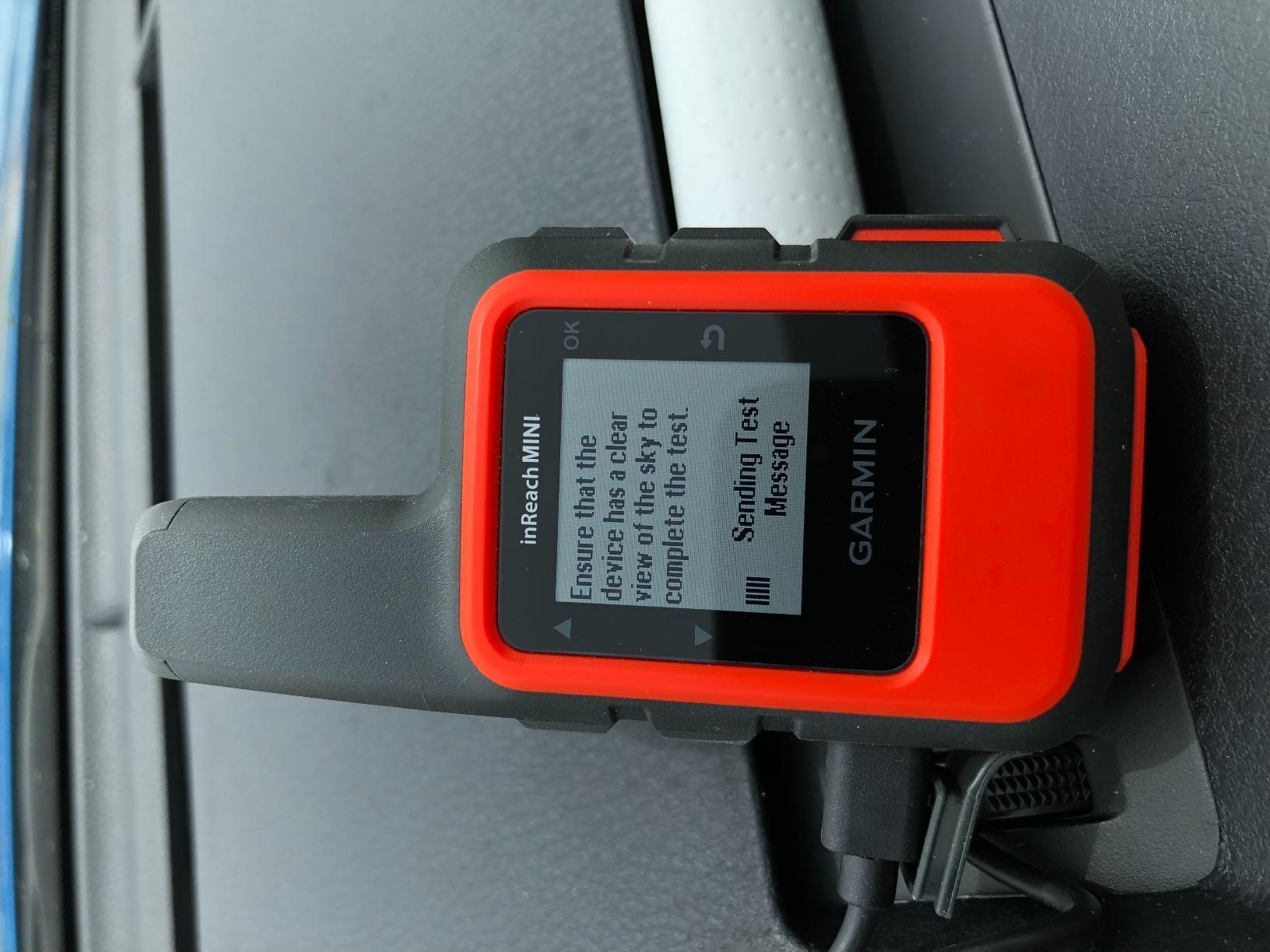
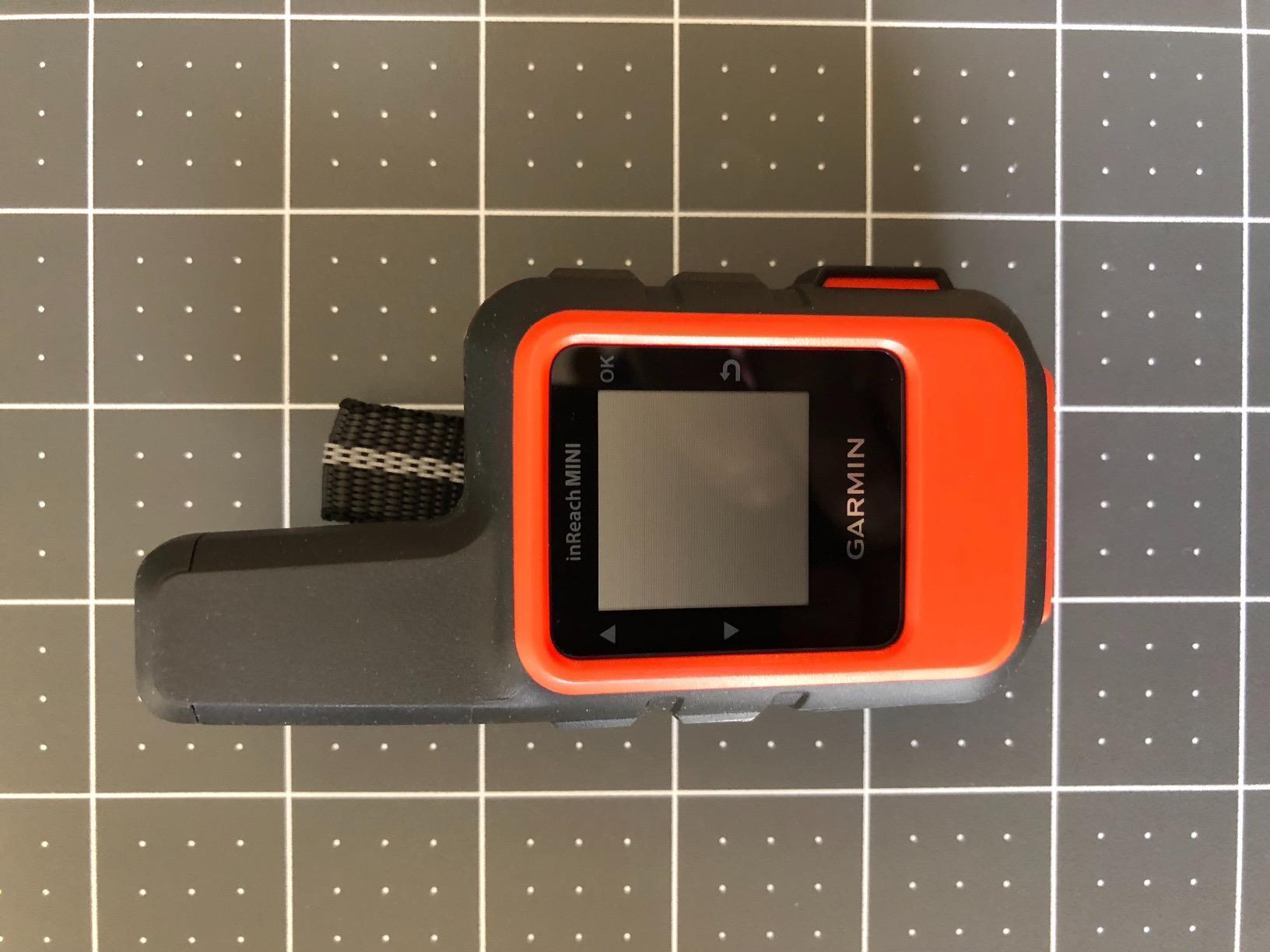
Specifications trail the newer unit: a 1.27 inch resistive monochrome screen at 128 by 128, a 90 hour average battery life, and a limited manufacturer warranty rather than a full year. Water resistance is listed without a specific ingress figure, so I would not submerge it.
Garmin Earthmate handles maps and weather, and Bluetooth connects it to your smartphone and to Garmin wearables. Interactive SOS reaches a 24/7 monitoring centre, and the Freedom subscription tiers are the most flexible of any Garmin plan, which matters if you only hike part of the year.
Why experienced hikers still like it
Reviewers report flawless two-way messaging and battery life measured in days with moderate use, which is exactly the behaviour you want at 4 a.m. in a storm. The Earthmate app is well liked for planning a route and pulling forecasts before you lose signal.
Wearable compatibility is the quiet bonus. If your watch can raise an alert, you do not have to fish the unit out of a hip belt in bad weather.
Where the age shows
This is the original-generation model, so it is one generation behind and the display is smaller and coarser than the Mini 2’s. GPS acquisition is reported as slower than a phone, which matters when you are moving into cloud and need a fix fast.
Support experience is one of the weaker areas mentioned by owners, and the Garmin ecosystem is described as confusing to navigate. Buy this one on review depth and price alone, not because it is the newest thing available.
4. SPOT X: Best for Standalone Use With No Phone
Spot X with Bluetooth 2-Way Satellite Messenger
Globalstar network
Built-in QWERTY keyboard
240 hour battery
7.04 ounces
Pros
- Only device here with a physical QWERTY keyboard
- Dedicated US mobile number for receiving texts
- Works completely standalone with no paired phone
- 240 hour listed battery life
- Kickstand included for hands-free use
Cons
- Globalstar has less coverage than Iridium
- Messages capped at 160 characters
- Plastic body feels cheap in the hand
- Micro USB charging is dated
The SPOT X is the answer to the no-smartphone problem, and it solves it properly. Every thread I read about hikers carrying only a flip phone and a laptop lands on this device, because the physical keyboard means you can compose and read a message with gloves on and no screen at all.
It runs on Globalstar rather than Iridium, and that single fact drives both the price and the reliability profile. Owners value the dedicated US mobile number for receiving inbound texts, which is rare in this category.
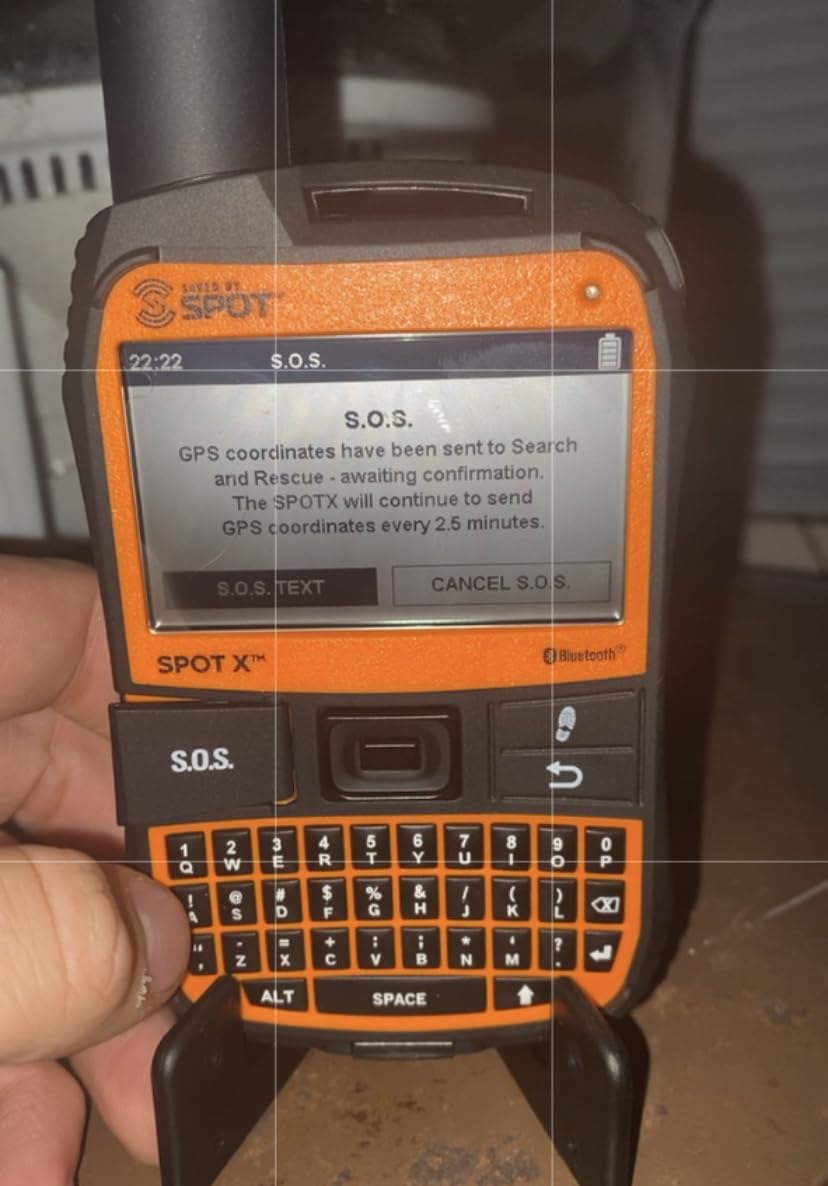
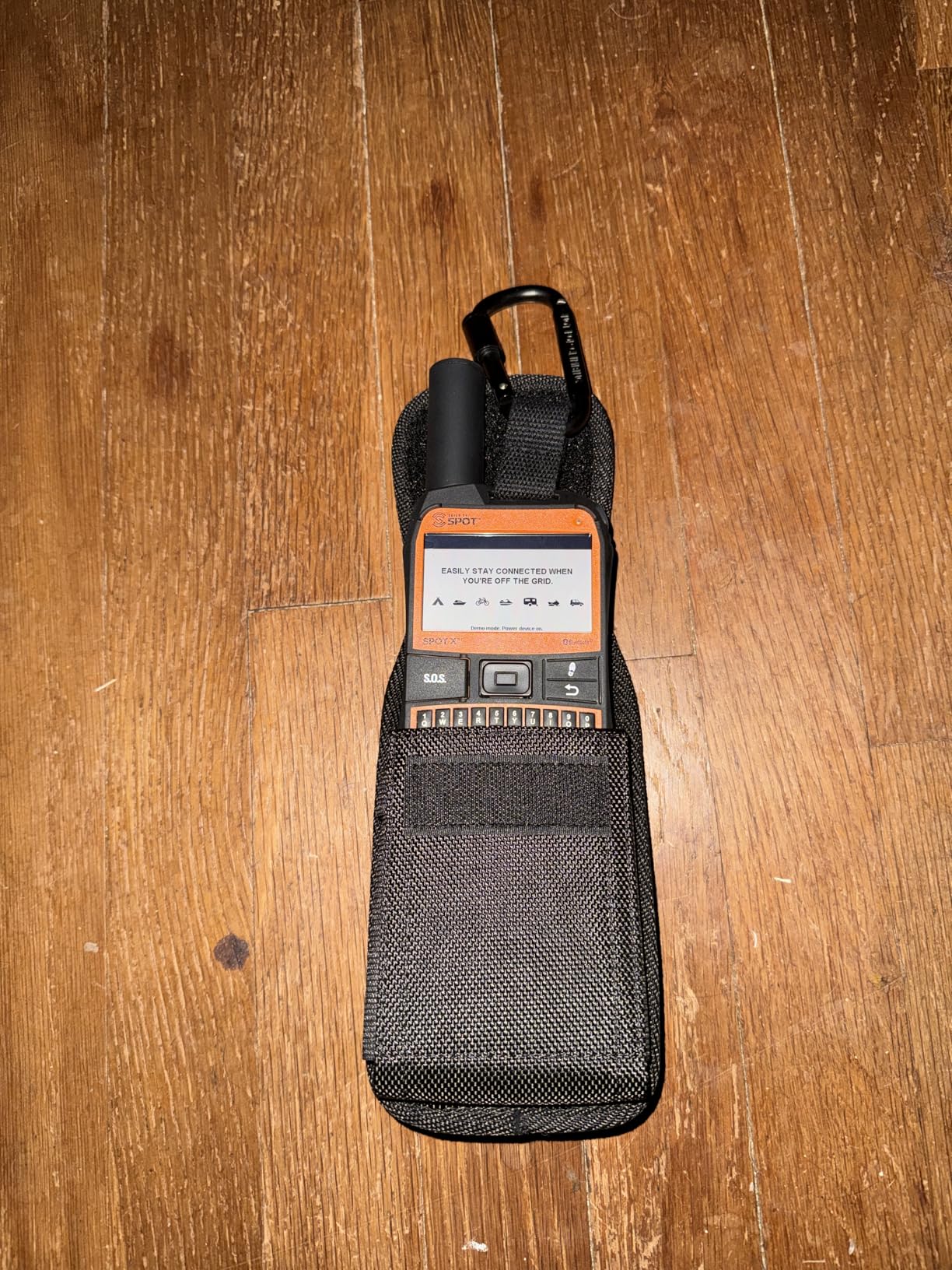
Physical specifications are 2.9 by 0.94 by 6.54 inches at 7.04 ounces, with a 240 hour average battery life, a plastic enclosure and a limited warranty. The box carries the device, strap and carabiner, a micro USB cable, a mirrored SOS sticker, a quick start guide and the kickstand.
The SOS button triggers 24/7 search and rescue, and GPS location sharing works whether or not you have a phone paired. Bluetooth syncing to Android or iPhone is supported but entirely optional.
When the keyboard changes the decision
For a hiker who genuinely plans to leave the phone behind, there is no substitute. Standing still, typing a real update, and reading the reply without breaking stride is something no touchscreen-only device in this list can do.
The 240 hour battery figure comfortably covers a long trip, and the kickstand is a genuinely useful touch when you are reading a map on a ledge.
What the network costs you
Globalstar has fewer satellites and a smaller footprint than Iridium, and reviews regularly note connectivity trouble in terrain where the Iridium devices succeed. Backcountry consensus in hiking forums is consistent on this: if your trips are in steep, enclosed country, the network matters more than the keyboard.
Messages are limited to 160 characters, the plastic build feels cheap next to the Garmin and ZOLEO bodies, and micro USB is an ageing standard that means carrying an extra cable.
5. Garmin inReach Messenger: Best for Battery Life and Charging Your Phone
Garmin inReach® Messenger Satellite Communicator, Global…
28 day battery at 10-min tracking
4 ounces
Safety charging
Group messaging
Pros
- 28 day battery in 10-minute tracking mode
- the longest here
- Only 4 ounces
- Group messaging through the Garmin Messenger app
- Reverse safety charging for a depleted phone
- Multi-GNSS support across GPS Galileo BeiDou and QZSS
Cons
- Small 160x68 monochrome screen
- No keyboard so a phone is required for typing
- Limited navigation features compared with the Mini 2
- Resistive touchscreen
The inReach Messenger is built around one big realisation: if you are carrying a phone anyway, the communicator should be the thing that keeps the phone alive. Its safety charging function tops up a depleted phone, which on a cold multi-day trip is worth more than any spec on the list.
It is also the longest-running device here by a wide margin, with a listed 28 days of battery in 10-minute tracking mode. That is roughly double the Mini 2’s figure and changes how often you think about charging.
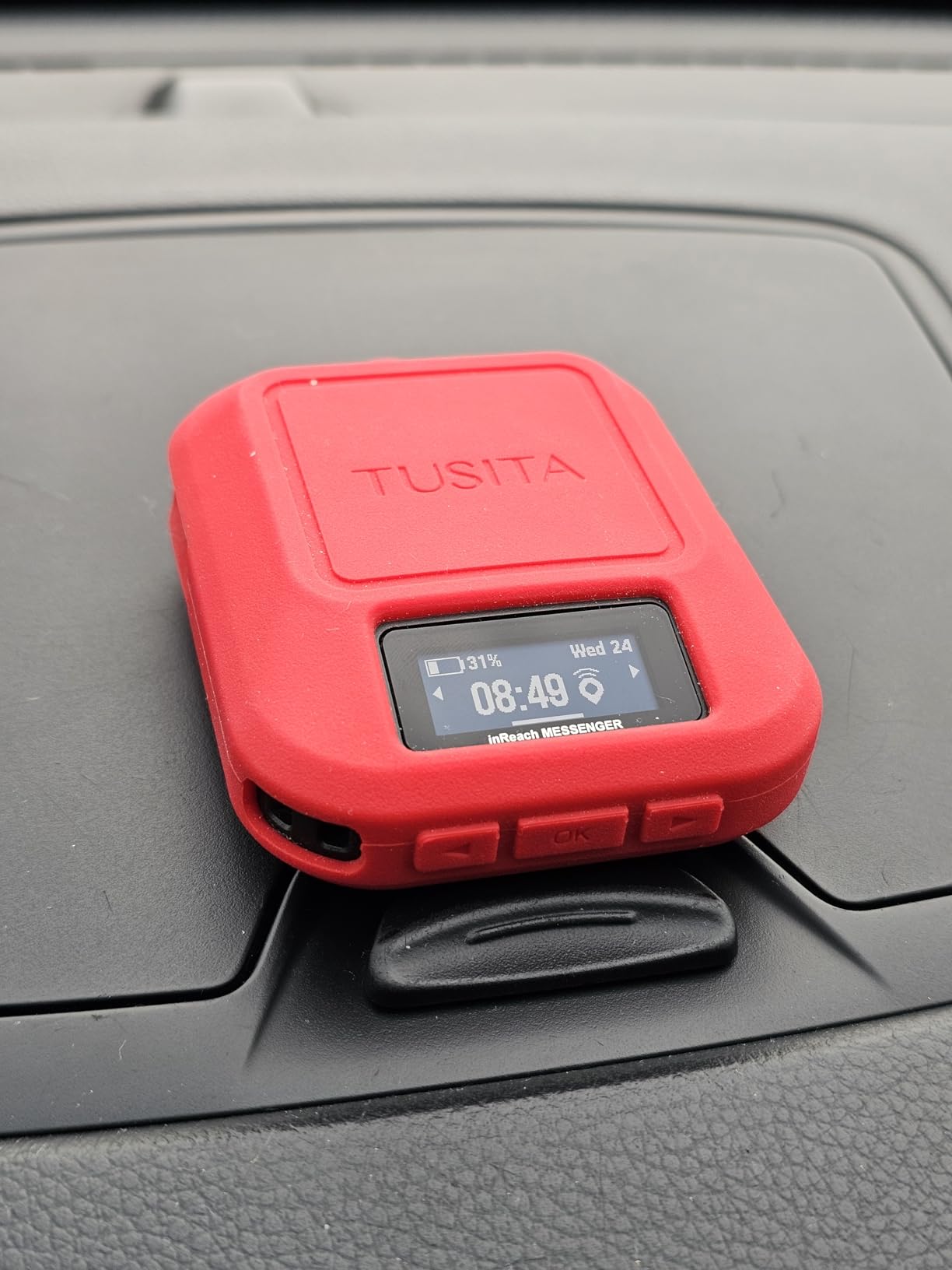
At 4 ounces and 2.5 by 0.9 by 3.1 inches it is the lightest full Garmin unit in the roundup. The display is a narrow sunlight-readable monochrome panel at 160 by 68, and it is a resistive rather than capacitive touchscreen, which is fine for scrolling but poor for anything more precise.
Connectivity is Wi-Fi, Bluetooth and ANT+, and multi-GNSS reception covers BeiDou, GPS, Galileo and QZSS, which helps you get a fix faster under canopy than a GPS-only receiver. Preset messages do not count against your message allotment, a small detail that matters on a plan with a limited allowance.
Best case: families and long trips
Group messaging through the Garmin Messenger app lets a party of hikers run one conversation across devices. For a family trip where several people are carrying units, that is the feature that sells it.
Owners also like the 4-ounce weight and the reassurance of a phone that is not flat when you need to navigate out.
Where it disappoints
With no keyboard and a 160 by 68 screen, this device is useless for standalone messaging. If your phone dies, so does your texting, and the narrow display makes even scrolling a chore.
Navigation features are thin compared with the Mini 2, there is no TracBack equivalent in the feature list, and 440 ratings is a much smaller review base than the Mini 2’s 1700. Treat the battery advantage as the reason to buy it, not the feature set.
6. SPOT Gen 4: Best for a Simple SOS With No App
Spot Gen 4 Satellite GPS Messenger
One-way Globalstar messaging
AA battery powered
142 g
Motion-activated tracking
Pros
- Simplest operation of any device here with a single SOS button
- Runs on replaceable AA batteries so no charger is needed
- Motion-activated tracking runs without attention
- Works for basic check-ins with no smartphone
- 4.2 stars from 405 ratings
Cons
- One-way only so you can never receive a reply
- Globalstar has more coverage gaps than Iridium
- Computer required for setup and custom messages
- AA batteries add ongoing cost
Read the spec sheet before buying this one, because it is regularly filed under satellite messengers while behaving like a one-way tracker. You can send check-ins and SOS alerts, and you cannot receive a single reply. For a hiker whose goal is a working distress button and nothing else, that is fine. For anyone expecting a conversation with home, it is not.
It weighs 142 g, runs on included AA batteries, and the box includes the device, strap and carabiner, a USB cable, the batteries and a quick start guide. Motion-activated tracking keeps sending location updates while you are moving without any input.
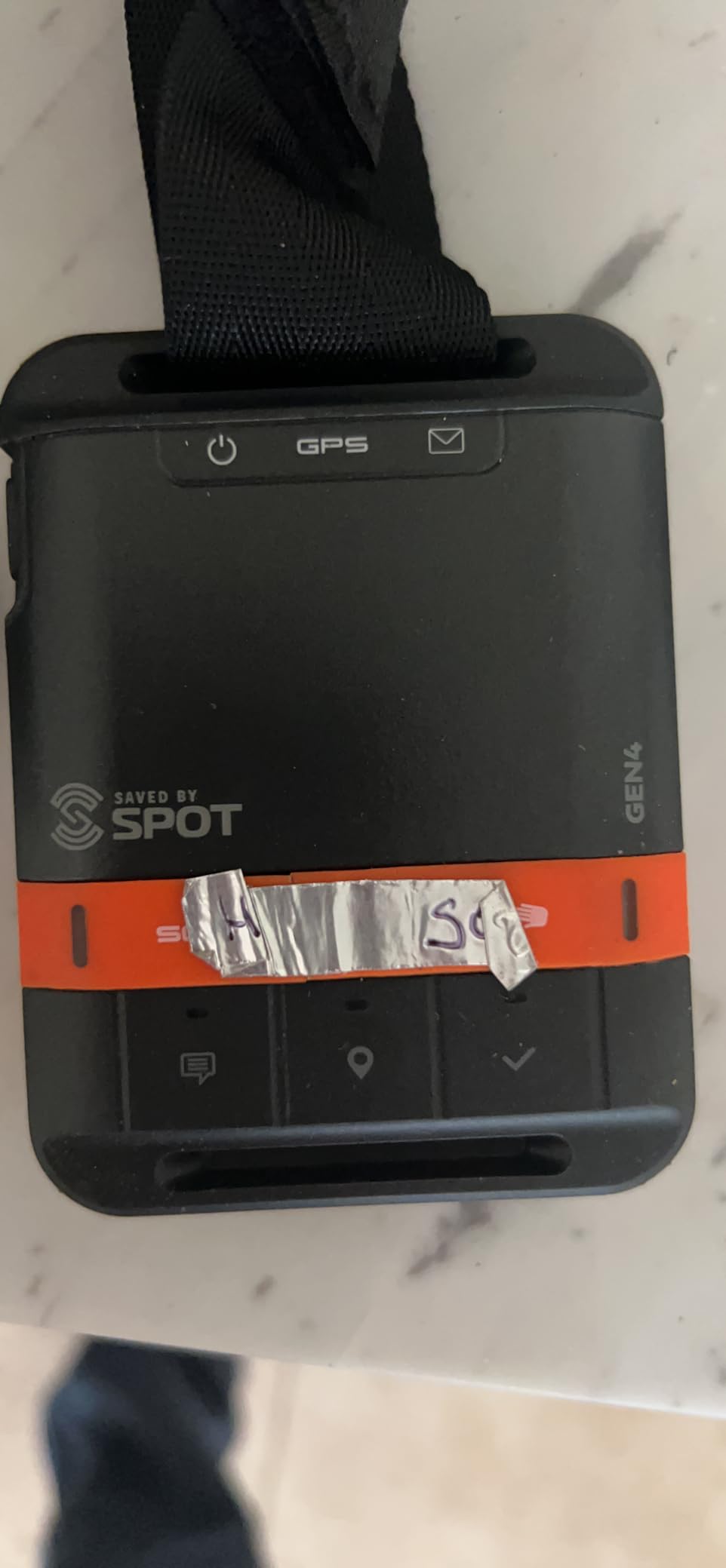
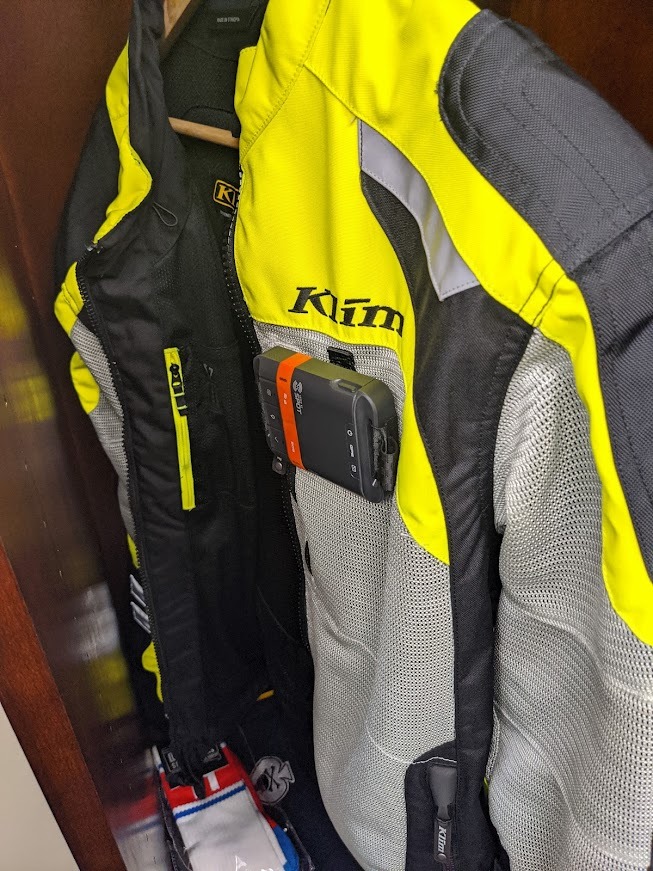
Operation is one button and a light. There is no Bluetooth and no smartphone pairing, which removes an entire category of setup problems, and it connects to a computer over USB when you need to configure custom messages.
The SOS function reaches search and rescue through the Globalstar network, and check-in and OK messages are sent on a schedule you define. Nothing about the interface will ever confuse you, which is the entire appeal.
When simplicity is the right call
Buyers who want a beacon for a family member who will not read a manual get exactly that here. AA batteries mean you can carry spares indefinitely without thinking about a charger, and there is no app to fail on a wet morning.
It is also a reasonable second device to leave in a car or a first-aid kit where nobody will fiddle with it.
What you give up
Globalstar coverage gaps are the first limitation reviewers name, and the network is behind Iridium under canopy and in canyons. The one-way limitation is the bigger issue: an SOS is a distress call, not a conversation, and you will not be able to accept reassurance from home or coordinate a pickup.
Setup requires a computer for custom messages, and no Bluetooth or app integration means no group tracking, no live portal and no weather requests.
7. Motorola Defy Satellite Link: Budget Pick for Casual Day Hikers
Motorola Defy Satellite Link – Rugged Handheld GPS…
Inmarsat network
IP68 rated
2.5 ounces
4 day standby battery
Pros
- Unlimited SOS on every service plan
- Lightest device here at 2.5 ounces
- IP68 rated dustproof and waterproof to nearly 5 ft for 30 minutes
- USB-C charging and works up to 75 miles offshore
Cons
- Inmarsat coverage has equatorial and high-latitude gaps
- Bluetooth pairing issues reported with iPhone
- No screen so it is entirely app dependent
- 35 characters counts as one message
- Satellite acquisition can be slow
The Defy Satellite Link is the way into satellite messaging without a large outlay, and for day hiking within a couple of hours of a trailhead it does the basics well. Unlimited SOS across every plan tier means the emergency function is never throttled, which is the right priority for an inexpensive device.
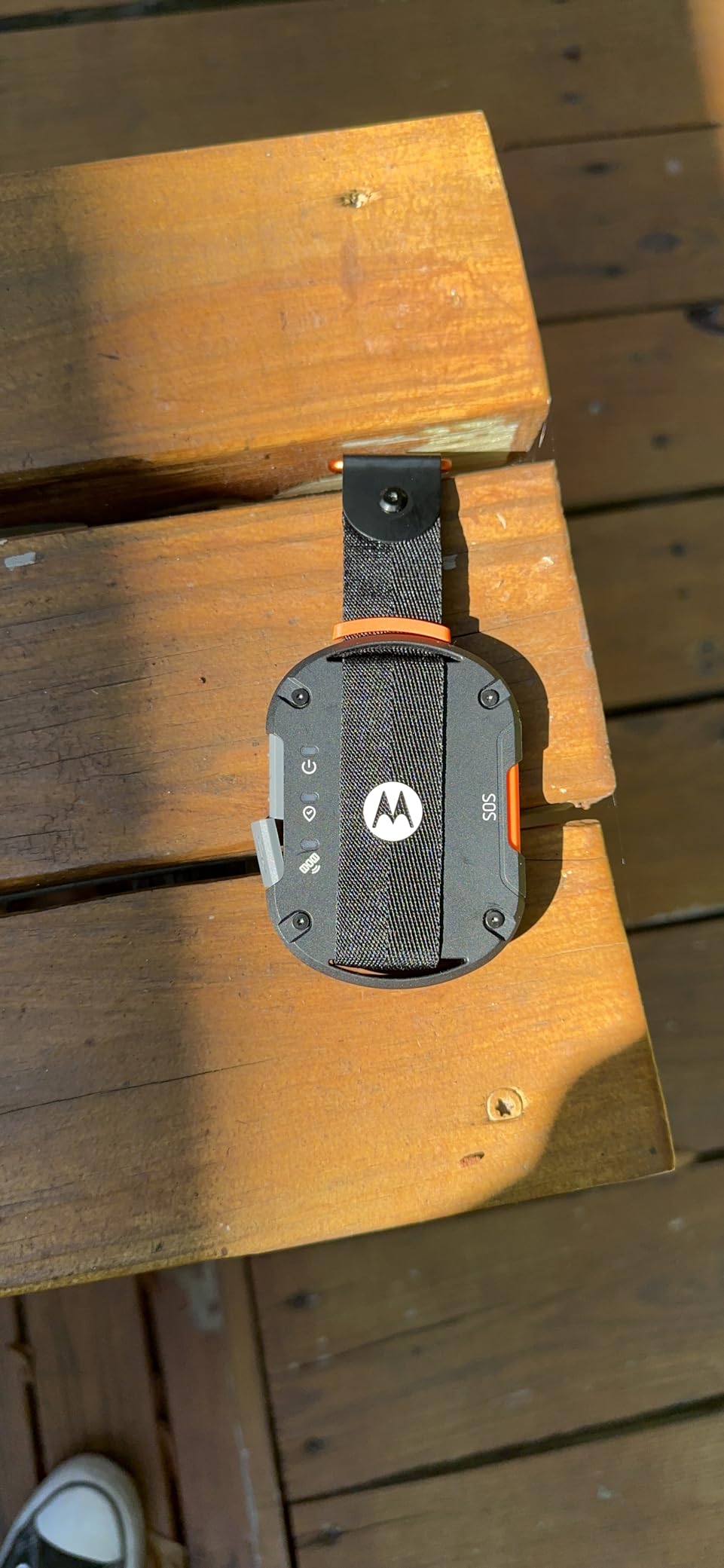
At 2.5 ounces and 3.4 by 2.5 by 0.5 inches it is the smallest thing in the roundup, and it is IP68 rated for dust and water, including nearly 5 feet of immersion for 30 minutes. A 12-month warranty is included.
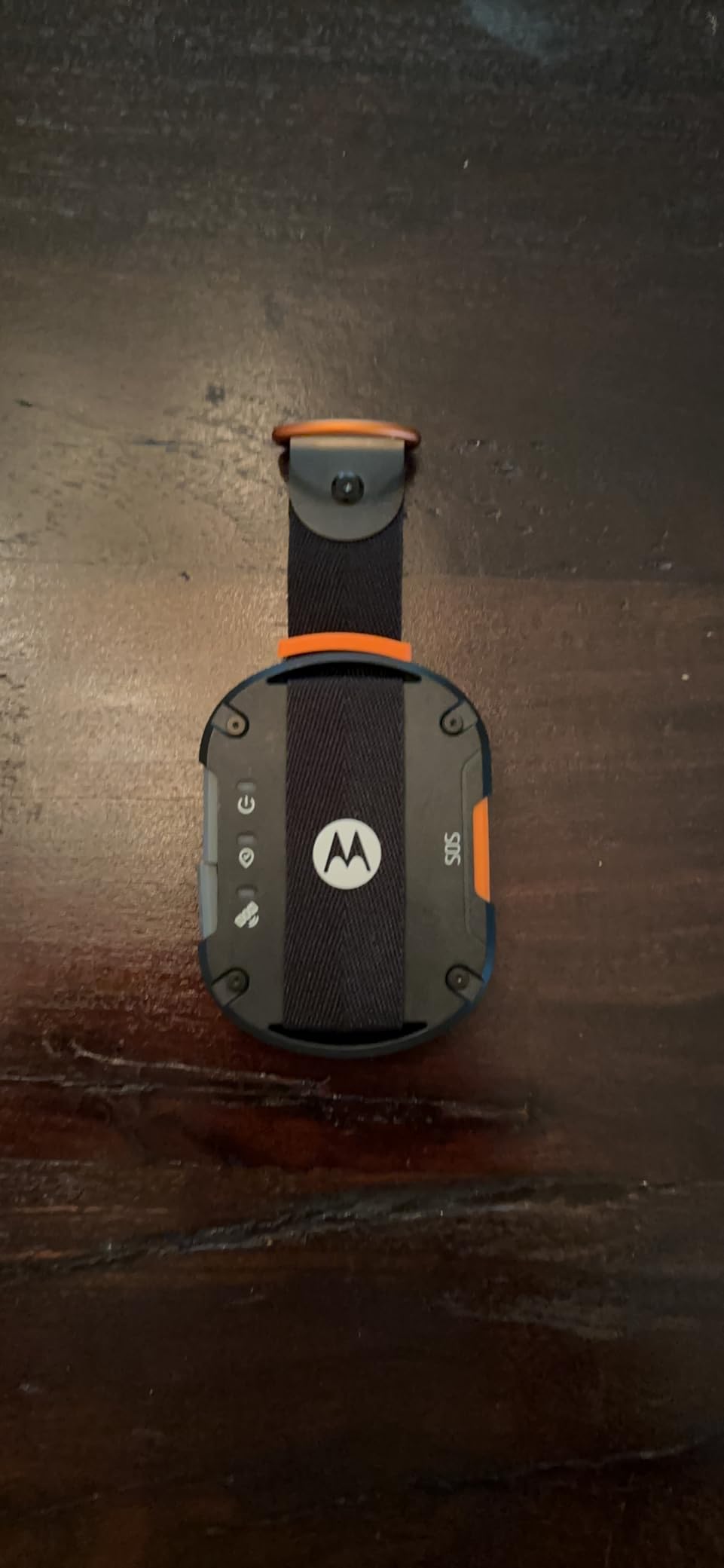
Messaging runs on the Bullitt Inmarsat network rather than Iridium, and the app pairs over Bluetooth to iOS 14 and Android 10 or later. The 600 mAh battery provides up to 4 days of standby, USB-C handles charging, and an LED gives you status without a screen.
There is a physical check-in button that attaches GPS coordinates, and the manufacturer states it works up to 75 miles offshore inside coverage areas. The box includes the device with battery, a D-ring strap, a USB-C cable, a quick start guide and warranty guide, and a QR code insert carrying your activation details.
Who it makes sense for
Casual hikers, families doing day trips in familiar terrain, and anyone who wants a backup device to live in a car or pack rather than a primary safety system. Unlimited SOS on every plan and IP68 water resistance are genuinely useful traits in a pack.
Service plans are the cheapest in the roundup, which keeps the ownership cost low for an occasional user who does not want a long subscription commitment.
Why not to depend on it
Inmarsat has real coverage gaps, especially at northern latitudes, and reviewers report equatorial gaps too. For a trip in Alaska, the far north or deep mountain terrain, that is a disqualifier rather than a nuisance.
There is no screen at all, so the entire experience lives in the app, and Bluetooth pairing issues with iPhone are reported often. Messages are counted at roughly 35 characters each, and satellite acquisition is reported as slow, which matters when weather is closing in.
8. ACR Bivy Stick: Best for Group Tracking and Offline Maps
ACR Bivy Stick – Iridium Satellite Communicator, GPS Tracker…
Iridium network
GroupTrack for 12 people
IPX7 and MIL-STD-810
120 hour battery
Pros
- Iridium network with group tracking built in
- GroupTrack covers up to 12 people
- Offline maps and GPS navigation in the app
- Unlimited GPS check-ins and live tracking
- IPX7 and MIL-STD-810 rugged build
- 120 hour battery with flexible plans
Cons
- App bugs and crashes reported to stop tracking
- Bluetooth connection drops are common
- Charging failures reported after months of use
- Battery life shorter than advertised
- Fewer ratings than the Garmin and ZOLEO units
The Bivy Stick is the most interesting feature set in the roundup. GroupTrack covers up to 12 people in one group, and the app carries offline maps and GPS navigation plus a library of more than 50000 curated adventures, which means the same device can replace a paper map for a route.
It runs on Iridium, has a dedicated SMS phone number and email, and its SOS goes to Global Rescue monitoring 24/7. Plans include rollover credits, so an unused month is not simply lost.
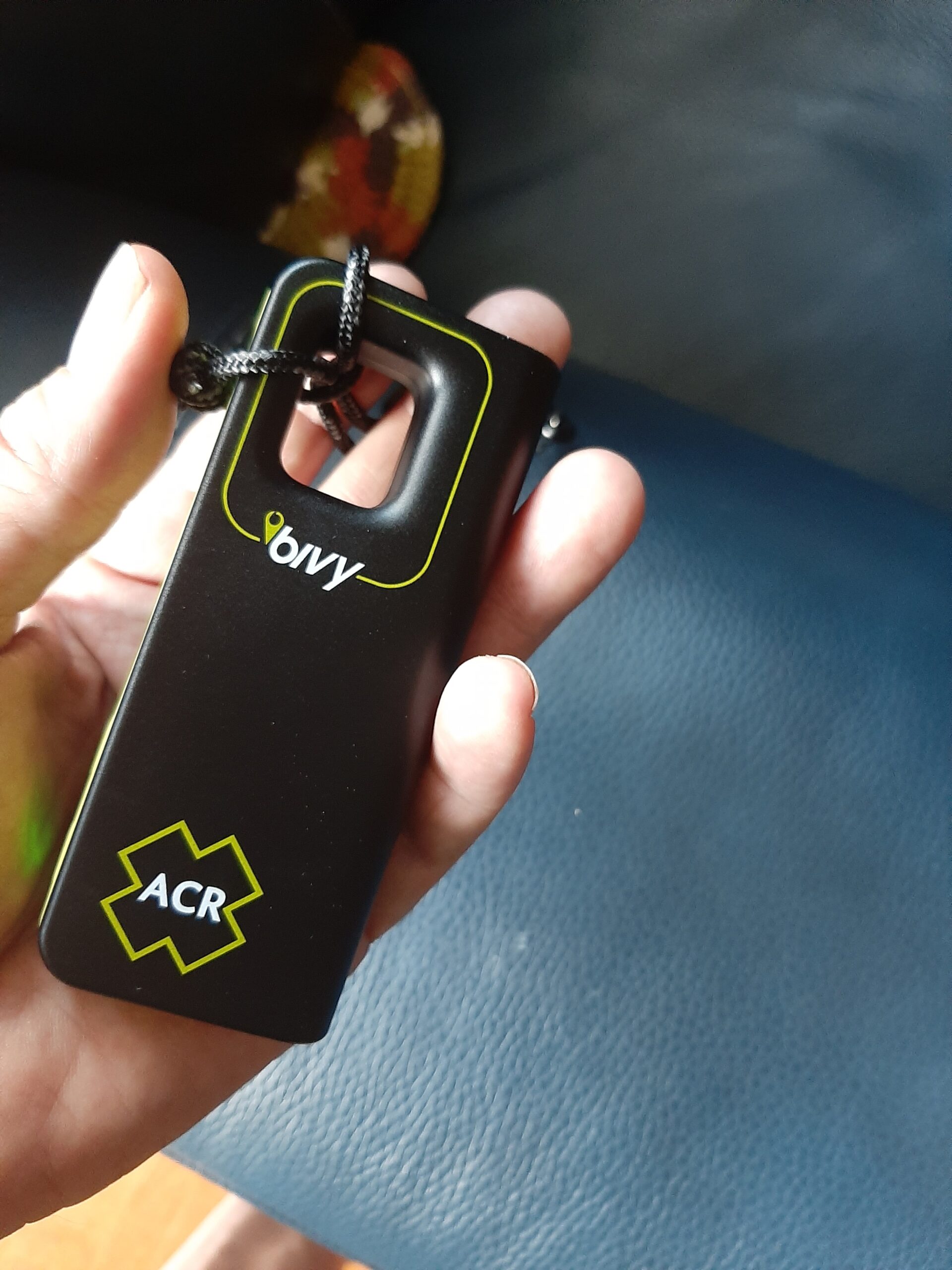
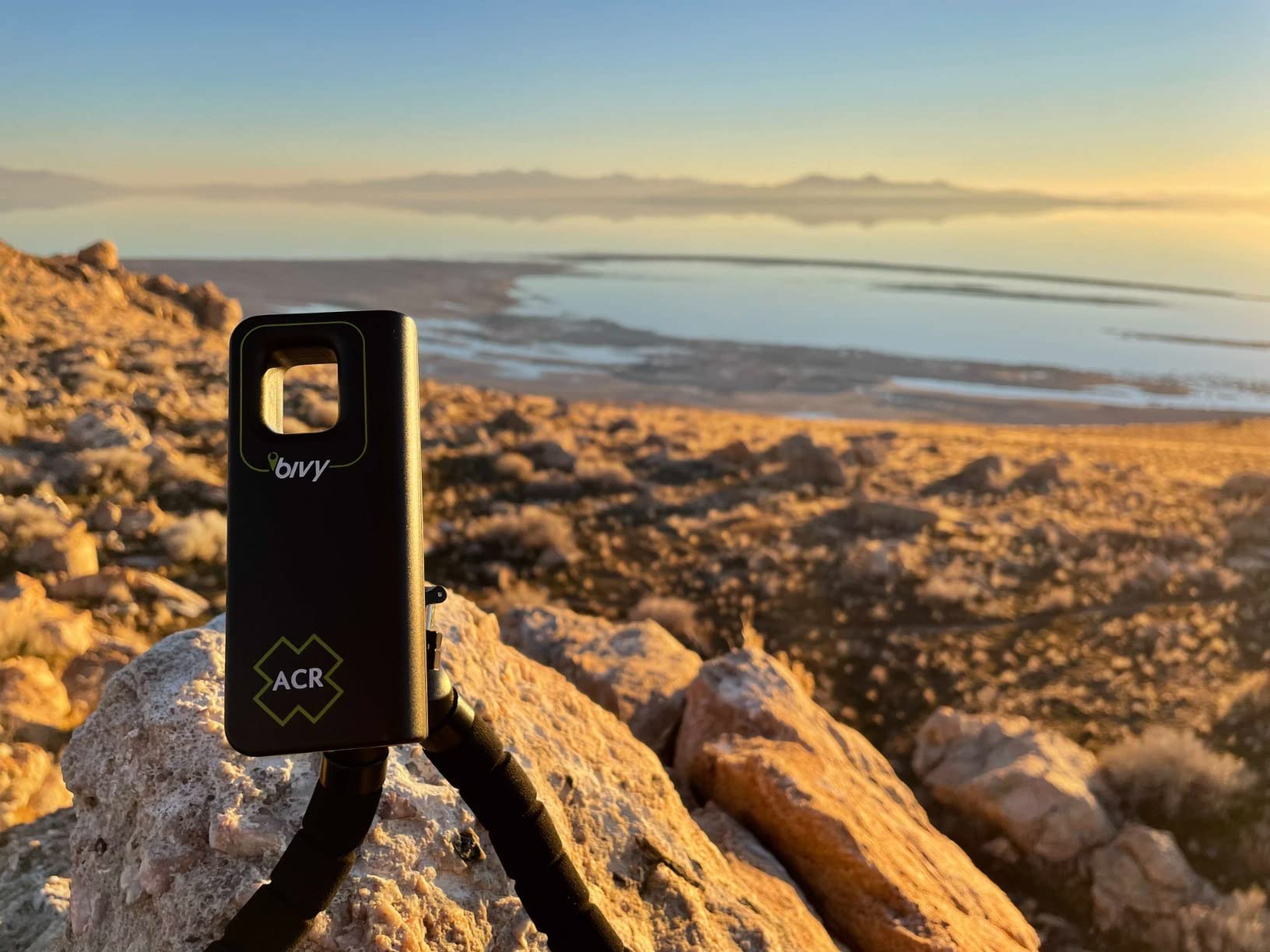
Physical specifications are 4.47 by 1.85 by 0.83 inches at 3.35 ounces with a listed 120 hour battery, a one-year warranty, and an enclosure compliant with IPX7 and MIL-STD-810 standards. The box includes a carabiner, charging cable, lanyard and mounting adapter.
Connectivity covers Bluetooth, Iridium satellites, LoRa and wireless, and unlimited GPS check-ins with live tracking are included rather than metered. That combination makes it the natural pick for a family or a group of friends who want to see each other on a map.
Best for parties and families
No other device here supports a 12-person group with live tracking, and pairing that with offline maps and navigation in the same app is a real advantage on a route where nobody has signal to pull a map.
The dedicated number and email mean the group can be contacted by ordinary text, and the lighter 3.35-ounce body is welcome on a long route.
The reliability concerns are real
Owners report app crashes that stop tracking and messaging outright, along with Bluetooth drops and device charging failures after a few months. On a safety tool, an app that crashes in the moment you need it is the one failure mode you cannot plan around.
Battery life is reported as shorter than advertised, route tracking from the device itself is called unreliable, and at 203 ratings this has the smallest review base in the roundup. It has the best features and the least proven track record.
How to Choose a Satellite Messenger for Hiking in 2026
Start with the network, because it is the single variable that decides whether your messages leave the device. After that, decide whether you need a conversation or only a button, and the rest of the choice narrows quickly.
Iridium vs Globalstar vs Inmarsat: the network decides reliability
Iridium, which powers the Garmin inReach line, ZOLEO and the ACR Bivy Stick, has roughly 66 low-Earth-orbit satellites and near-global coverage. It is the network backcountry hikers trust most, and it is why five of the eight devices here run on it.
Globalstar, used by both SPOT devices, has a smaller constellation and noticeably more coverage gaps under canopy and in steep terrain. Inmarsat, behind the Motorola Defy Satellite Link, is the smallest footprint of the three, with documented gaps near the equator and at high latitudes.
A useful data point from group hikes reported on forums: on the same trip, one party reported Garmin units struggling to send on a couple of nights while ZOLEO devices on the identical Iridium network sent fine. Antenna design and device handling matter even when the network is the same.
Two-way messenger, one-way tracker or PLB
A two-way messenger lets you send and receive text, share location both ways and speak with a monitoring centre during an SOS. One device in this roundup is not two-way despite being filed under this category, and the SPOT Gen 4 is the clearest trap: it sends check-ins and SOS alerts and cannot receive a single reply.
A personal locator beacon does only one thing, sends a distress signal to the government COSPAS-SARSAT search-and-rescue network, needs no subscription, and holds a battery for years. If SOS is your only requirement, a PLB beats every messenger on lifetime cost and beats most of them on reliability.
Phone satellite SOS versus a dedicated device
Modern phones can send emergency alerts by satellite, and that is a genuine backup. It is still not a replacement for a messenger. Phone satellite features do not do two-way messaging to family, do not share live location, do not work from a pack without the phone in your hand, and in some cases do nothing at all below a certain latitude.
Treat phone satellite SOS as the layer that works when your phone is dead-flat in your pocket at the end of the day. Treat a dedicated device as the tool you use while you still have power and signal to spare.
Subscription, hold and reactivation fees
Every two-way device here needs an active service plan for messaging. The expensive part is not the monthly rate but what happens when you stop using it, since a suspended plan often keeps billing while the reactivation step can cost extra.
Read the fee structure before you buy, not after. Owners report being caught out by hold and reactivation fees, and those are the most common source of frustration in this category. If you only hike part of the year, a plan with a genuine suspend option is worth a lot.
Battery life mapped to trip length
Manufacturer battery figures assume specific tracking intervals, and reviewers consistently report real-world life well below the headline number, particularly with tracking and messaging both running. Shorten the tracking interval and cold weather both cost you charge fast.
As a rough guide, the inReach Messenger’s 28-day figure and the ZOLEO’s 200 hours comfortably cover any trip, while the SPOT Gen 4 on AA batteries effectively never needs charging. The Motorola’s 4-day standby is the shortest here and suits short outings.
Standalone operation for hikers with no smartphone
If you do not carry a phone, most of this category becomes less useful. The ZOLEO, the Garmin units and the Bivy Stick all do real work through an app. The SPOT X is the one device built to run completely alone, thanks to its physical keyboard.
The SPOT Gen 4 also needs no phone for its basic check-in and SOS functions, though it does need a computer for custom message setup.
International travel: where satellite devices are restricted
Satellite communicators are restricted or outright prohibited in a number of countries, including India, China and North Korea, and restrictions apply in parts of the Middle East. Possession of a device in a prohibited country can lead to confiscation or legal trouble, so check before you cross a border rather than at the trailhead.
This is a legal question, not a technical one, and it is worth confirming with your own government travel advice for the countries on your route.
Activate and Test Your Device Before You Leave
Most failed-message stories trace back to incomplete setup, not defective hardware, and activation is not always instant. Owners report devices taking up to two days to become active, and preset-message configuration on Garmin units typically needs a computer. Buy at least a week before your departure, and work through this list.
Activate the service plan and confirm the device shows as active in the companion app.
Send a test message from the device itself, not only from the paired phone, so you know which path works.
Enter your emergency contacts in the device, not just in the app, because the app is the part that crashes.
Set up any preset or canned messages you might want in an emergency, and expect this to need a computer.
Trigger a test SOS if the provider allows it, and confirm you receive the confirmation message.
Send a check-in from a known-good outdoor spot, then check the tracking portal from the other end.
If you will use group tracking, add every member and confirm each one appears live before you set off.
Carry the charging cable, and confirm your power bank can charge the device from empty.
Frequently Asked Questions
What is the best satellite communication device for hiking?
For most hikers the ZOLEO Satellite Communicator is the best balance of network reliability, battery life and cost. It runs on the Iridium network, carries a 200-plus hour battery, is IP68 rated, and gives your family a real SMS number to text. If you want the lightest option and value on-device navigation, the Garmin inReach Mini 2 at 99 g is the alternative.
Is there anything better than Garmin inReach?
Not for most hikers. The Garmin inReach line is the default recommendation across backpacking forums because of its review depth and Iridium network. The one place a rival is genuinely better is value: the ZOLEO runs on the same Iridium network with a longer battery, a dedicated text number and lower ongoing cost. The ACR Bivy Stick is better only for group tracking up to 12 people.
Which is better, the Garmin inReach Mini 2 or the ZOLEO?
The Mini 2 is lighter at 99 g and adds TracBack breadcrumb navigation, so it wins if every gram counts and you want the device to help you find your way. The ZOLEO wins on battery life, on giving family a real cell number to text, and on cost. Both use Iridium, so messaging reliability under canopy is essentially the same.
Do satellite communicators need a subscription?
Two-way satellite communicators require an active service plan for messaging and tracking; the device alone is only useful for setup and SOS registration. One-way devices like the SPOT Gen 4 also need a plan. A personal locator beacon is the exception, since it sends distress signals to a government search-and-rescue network with no subscription and a multi-year battery.
Can I just use my iPhone satellite features instead of a satellite messenger?
Use them as a backup, not a replacement. Phone satellite SOS cannot send two-way messages to family, cannot share live location, and does nothing useful if the phone is dead or buried in the bottom of the pack. It also has geographic limits in some regions. A dedicated messenger is the tool you use while you still have power, which is exactly when you most want it.
Will a satellite messenger work in a canyon or under heavy tree cover?
You will get a message, but not always quickly. Satellite devices need a clear view of the sky, so dense canopy, canyon walls and deep valleys can delay or queue messages. Iridium-based devices such as the Garmin inReach line, ZOLEO and Bivy Stick recover fastest because the constellation is larger. Allow time in your plan, and treat an SOS as something you send, then wait for a reply.
The Verdict: Which Satellite Messenger Should You Buy?
Buy the ZOLEO Satellite Communicator if you want the most capable everyday setup without carrying a second device. It runs on Iridium, lasts far longer than you will need, and gives your family an ordinary text message to send you, which removes the single most common reason people abandon a messenger.
Buy the Garmin inReach Mini 2 if weight and on-device navigation decide the trip for you. Buy the SPOT X if you genuinely travel without a phone. Buy the ACR Bivy Stick if your party is larger than two. Buy the Garmin inReach Messenger if your priority is never thinking about a charger again. Consider the SPOT Gen 4 only if you understand it is one-way, and the Motorola Defy Satellite Link only for short trips in regions its network covers well.
Whatever you choose, buy it early enough to activate and test it, and always file a trip plan with someone at home. A satellite messenger for hikers works best when a person knows when you are due back.
