
8 Best Telescope Mounts (September 2026) Reviewed
A telescope mount is the base that supports, points, and tracks your telescope, so it often decides whether a night outside feels calm or frustrating. The best telescope mounts in 2026 are not one-size-fits-all: a manual alt-azimuth head can be a joy for Moon viewing, while long-exposure imaging calls for an equatorial mount that follows Earth’s rotation.
I reviewed eight mounts with a simple question in mind: what job can each one do without asking the equipment to do more than its published design supports? That approach matters because astronomy forums repeatedly flag the same disappointments—shaky tripods, gear play, difficult polar alignment, and mounts that are too small for the telescope placed on them.
Contents
My short answer is to start with your observing goal and your fully assembled load, not the telescope name alone. The reviews below cover uncomplicated visual observing, app-controlled GoTo finding, portable DSLR work, and heavier equatorial setups, then the buying guide explains the terms that make the choice clearer.
Top 3 Picks for Telescope Mounts (September 2026)
The Celestron Advanced VX is my editor’s choice for a user who wants a computerized German equatorial mount with a stated 30-pound capacity, multiple tracking rates, and a large object database. The Sky-Watcher Star Adventurer GTi is the more travel-minded pick because its kit combines GoTo, WiFi, an illuminated polar scope, a tripod, pier extension, and counterweight hardware.
For manual visual observing with a lighter telescope, the SVBONY SV225 is the straightforward value choice. Its variable-speed slow-motion controls and 2.34-kilogram CNC hollow body address the two things I want from this kind of alt-azimuth mount: controlled pointing and manageable carry weight.


As an Amazon Associate we earn from qualifying purchases. CERTAIN CONTENT THAT APPEARS ON THIS SITE COMES FROM AMAZON. THIS CONTENT IS PROVIDED 'AS IS' AND IS SUBJECT TO CHANGE OR REMOVAL AT ANY TIME.
8 Best Telescope Mounts In 2026
This overview puts mount type, capacity, control method, and the feature that changes day-to-day use in one place. A stated capacity is a ceiling rather than a promise of vibration-free imaging, so I would still leave room for rings, a finder, camera gear, and cables.
| Product | Features | |
|---|---|---|
| SVBONY SV225 Alt-Az Mount |
|
View Product |
 Celestron CG-4 EQ Mount Celestron CG-4 EQ Mount |
|
View Product |
| Celestron Advanced VX |
|
View Product |
 Star Adventurer GTi Kit Star Adventurer GTi Kit |
|
View Product |
 Sky-Watcher EQ6-R Sky-Watcher EQ6-R |
|
View Product |
 Sky-Watcher Virtuoso GTi 150P Sky-Watcher Virtuoso GTi 150P |
|
View Product |
 Sky-Watcher AZ-GTi Sky-Watcher AZ-GTi |
|
View Product |
 Explore Scientific iEXOS-100-2 Explore Scientific iEXOS-100-2 |
|
View Product |
We earn from qualifying purchases. CERTAIN CONTENT THAT APPEARS ON THIS SITE COMES FROM AMAZON. THIS CONTENT IS PROVIDED 'AS IS' AND IS SUBJECT TO CHANGE OR REMOVAL AT ANY TIME.
The SVBONY SV225 is the best manual alt-azimuth mount for controlled visual observing
SVBONY SV225 Alt-Azimuth Mount, Load-Bearing 10kg…
Alt-az mount
10 kg stated payload
2.34 kg CNC body
Pros
- 2.34 kg CNC body
- Slow-motion controls
- 10 kg stated capacity
- Variable-speed gears
Cons
- Lever may have play
- Heavy loads can reduce stability
The SV225 is the mount I would choose when I want to spend the evening looking rather than building a tracking setup. It moves in altitude and azimuth, which means the learning curve stays friendly for lunar, planetary, and general visual work.
The product data lists a 10-kilogram payload capacity, with a recommended 7-to-8-kilogram working range. That distinction is useful: I would treat the lower range as the sensible planning point once a telescope, diagonal, eyepiece, finder, and mounting hardware are attached.
At 2.34 kilograms, the CNC hollow structure keeps the mount head easy to carry to a backyard or dark-sky site. Reviews are especially positive about portability, with 77% of the listed feedback at five stars across 142 reviews.
The two variable-speed gear controls are the reason this is more than a simple point-and-hold head. Fine adjustments make it easier to center a planet at higher magnification without repeatedly nudging the tube by hand.
The SV225 suits observers who use compact refractors and small optical tubes
I would match this head with a stable telescope tripod and a visual telescope that stays inside the recommended working load. It is a sensible fit for someone who values manual control, quick setup, and a lighter carrying load over motorized tracking.
It also makes sense for surface observation because the product information specifically lists astronomical and surface use. That flexibility is useful if one tripod serves more than one hobby.
The SV225 is less suited to long-exposure deep-sky imaging
This is an alt-azimuth mount with manual slow-motion control, not an equatorial tracking platform. A camera can be mounted for short scenes, but extended deep-sky exposures need rotation-aware tracking that this design does not claim to provide.
One buyer concern is potential play in the fine-adjustment lever, and the reviews also warn that stability can fall off under heavy loads. I would not place a near-limit imaging rig on it simply because the headline capacity allows it.
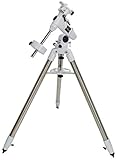
The Celestron CG-4 is the best manual German equatorial mount for learning the basics
Celestron CG-4 Manual German Equatorial Mount with Steel…
German EQ mount
20 lb capacity
1.75 inch steel tripod
Pros
- Steel tripod
- 20 lb capacity
- Manual slow-motion controls
- Adjustable height
Cons
- No GoTo
- Manual polar alignment
The Celestron CG-4 is a good bridge between a simple visual mount and a computerized equatorial system. I like that it teaches right ascension and declination with manual controls, rather than hiding those ideas behind an app on the first night.
Its published capacity is up to 20 pounds of optical equipment, and its 1.75-inch-diameter stainless steel tripod legs are a meaningful part of that story. Forum discussions keep returning to tripod wobble as a source of poor views, so the heavier tripod is not a throwaway specification.
The manual slow-motion controls on both axes let an observer make small corrections once the mount has been set up. The adjustable height range of 33 to 47 inches helps with eyepiece comfort, particularly when the telescope points to different parts of the sky.
I would regard this as a manual platform for visual observation and for practicing a polar alignment telescope routine. It has no stated GoTo system, no object database, and no claim of automatic tracking modes, which makes its purpose refreshingly clear.
The CG-4 works best for observers who want an equatorial foundation
This mount is a sensible pick for an adult beginner who wants to understand how an equatorial mount tracks the sky. Its one-year limited warranty and durable construction also add reassurance for an owner who plans to use it regularly.
A compact optical tube with modest accessories leaves more room for balance and calmer settling after a focus adjustment. I would assemble everything first, then check that the counterweight and tube balance through their full range of motion.
The CG-4 is not the answer for automated object finding
A user who expects a computerized telescope mount to locate targets will find the CG-4 deliberately basic. You supply the target knowledge, the alignment work, and the tracking corrections through its slow-motion controls.
That manual approach is a benefit for learning, but it can feel slow during a short observing session. If quick target finding or unattended camera tracking matters most, one of the motorized equatorial choices below is more appropriate.
The Celestron Advanced VX is the best all-round GoTo German equatorial mount
Celestron Advanced VX Computerized German Equatorial Mount…
GoTo German EQ
30 lb capacity
40k+ object database
Pros
- 30 lb capacity
- 2 inch steel tripod
- Multiple tracking rates
- All-Star Polar Alignment
Cons
- External power needed
- 47 lb kit weight
The Advanced VX is the strongest general-purpose recommendation in this list because it pairs a published 30-pound capacity with a true GoTo German equatorial design. I would look here when visual observing and tracked telescope work both matter, rather than buying separate manual and computerized mounts.
The NexStar+ hand control contains a database of more than 40,000 objects, while the mount offers sidereal, solar, and lunar tracking rates. Those choices matter because a star, the Sun, and the Moon do not appear to move at exactly the same rate from an observer’s viewpoint.
Celestron lists All-Star Polar Alignment, SkyAlign, periodic error correction programming, and Celestron PWI software among the mount’s features. I see that as a practical toolkit for a user willing to learn setup rather than a claim that alignment becomes automatic or irrelevant.
The 2-inch stainless steel tripod and dual saddle plate help the Advanced VX serve different telescope dovetail formats, including CG-5, CGE-style, and Vixen. At 47 pounds for the total kit, however, portability means transport by car rather than a casual walk with gear over one shoulder.
The Advanced VX suits observers who want one computerized mount for several goals
I would recommend this model to the observer who wants GoTo convenience for visual nights and equatorial tracking for a carefully matched camera or telescope system. Its latitude range of 7 to 77 degrees gives it broad geographic setup flexibility.
The listed review average is 4.4 from 142 reviews, with 73% five-star feedback. Buyers most often praise the extensive computerized object database, which is a real time-saver when an evening is short or sky familiarity is still developing.
The Advanced VX requires planning for power and transport
This mount requires an external DC power supply, so a power plan is part of every session. I would include the cable, source, and strain relief in the packing list before carrying the mount outside.
The system is also a commitment to balancing, alignment, and counterweight management. That is normal for a German equatorial mount, but it is more involved than placing a tabletop Dobsonian on a steady surface and starting to observe.
The Star Adventurer GTi is the best portable GoTo equatorial kit for travel imaging
Sky Watcher Sky-Watcher Star Adventurer GTI Mount Kit with…
Portable GoTo EQ
Illuminated polar scope
WiFi control
Pros
- Full GoTo
- Illuminated polar scope
- Built-in WiFi
- Tripod and counterweight included
Cons
- Not water resistant
- Limited shutter speed data
The Sky-Watcher Star Adventurer GTi kit earns its place because it puts a complete portable tracking package in one product listing. I would consider it before piecing together a mount, tripod, pier extension, counterweight bar, and counterweight separately.
It is a full GoTo mount with built-in WiFi and an illuminated polar scope. For a traveler building a modest imaging kit, those features reduce the number of separate accessories that need to be checked before leaving home.
The kit weight is listed as 26.01 pounds and includes a five-pound counterweight, counterweight bar, tripod, and pier extension. That is still real gear to transport, but it is a more focused travel setup than a large German equatorial mount and full-sized tripod combination.
I also like the control options for an observer who uses a smartphone at the field. Wireless control does not replace correct balance or polar alignment, yet it can make target selection and basic operation less tethered to the mount.
The Star Adventurer GTi fits compact astrophotography equipment and careful travelers
This is the telescope mount for astrophotography I would shortlist when portability, GoTo, and a polar scope must coexist. Its published feature set is especially relevant to a small refractor or camera-based rig, provided the entire setup is balanced and kept within the maker’s unstated-by-listing load guidance.
The product has a 4.4 average from 108 reviews, with 72% five-star feedback. Positive comments highlighted its portable design and built-in WiFi, two qualities that make a real difference when each session begins with loading equipment into a vehicle.
The Star Adventurer GTi needs dry-weather habits and realistic exposure expectations
The listing says it is not water resistant, so I would not leave it unprotected in damp or uncertain conditions. A cover and a conservative weather plan are basic care, not optional accessories.
Its product data also gives a limited shutter-speed range rather than a published payload capacity. That means I would not guess at what telescope it can carry; I would verify compatibility with the manufacturer before attaching a heavier optical tube.
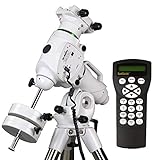
The Sky-Watcher EQ6-R is the best high-capacity belt-driven GoTo mount in this roundup
Sky-Watcher EQ6-R – Fully Computerized GoTo German…
GoTo EQ mount
44 lb capacity
Belt-driven motors
Pros
- 44 lb capacity
- Belt-driven motors
- Illuminated polar scope
- 42k+ object database
Cons
- Needs 12V power
- 44 lb mount weight
The EQ6-R is the mount I would move toward when a larger optical tube and a heavier set of accessories have outgrown a compact system. Its published 44-pound payload capacity is the largest stated figure among the dedicated mounts in this group.
Sky-Watcher specifies belt-driven stepper motors, a design intended for quiet slewing, plus a built-in illuminated polar finderscope. The drive train and alignment aid speak directly to familiar imaging priorities: repeatable movement, a deliberate setup process, and fewer loose accessories.
The SynScan hand controller lists more than 42,000 celestial objects, and the saddle accepts D/V formats. A built-in handle helps moving the mount, though its listed 44-pound weight means “portable” here means manageable transport rather than ultralight travel astronomy.
Community discussions often describe the EQ6 class as a dependable entry point for serious astrophotography, and that reputation makes sense beside the specification sheet. I would still judge it by a balanced, fully loaded rig rather than by a forum nickname or capacity figure alone.
The EQ6-R suits owners of substantial visual and imaging telescope systems
This mount is a logical fit when the tube, camera, guider, rings, dovetail, and cables add up to a serious system. Leaving payload margin gives the motors and tripod a less demanding job and can help a setup settle faster after an adjustment.
The listed 4.3 average across 86 reviews includes 78% five-star feedback. Reviewers most often praise the quiet belt-driven operation, which is welcome when slewing near sleeping neighbors or when the rest of an observing site is quiet.
The EQ6-R demands counterweights, power, and a deliberate setup space
The EQ6-R requires a 12-volt source rated at four amps minimum. I would treat that electrical requirement as part of mount selection, along with a safe place to run the cable and a reliable field power solution.
It is also not the simplest choice for someone who wants a fast, no-counterweight backyard session. Its strength is capacity and computerized equatorial tracking, which bring more parts, more weight, and a more methodical setup.
The Sky-Watcher Virtuoso GTi 150P is the best tabletop GoTo Dobsonian for visual astronomy
Sky Watcher Sky-Watcher Virtuoso GTI 150P Collapsible…
Tabletop GoTo Dobsonian
150 mm aperture
WiFi Freedom Find
Pros
- 150 mm aperture
- WiFi GoTo
- Freedom Find
- Collapsible tube
Cons
- Needs stable table
- 25.77 lb total weight
The Virtuoso GTi 150P is a different kind of recommendation because it is a complete tabletop Dobsonian telescope rather than a stand-alone head. I included it because its mount design answers a common visual-observer need: a stable, intuitive base with GoTo help and no full-size tripod requirement.
Its 150-millimeter aperture, 750-millimeter focal length, and f/5 optical system are suited to viewing the Moon, planets, galaxies, and nebulae. The collapsible tube is a welcome detail for storage and transport, though the 25.77-pound total weight still calls for a purposeful carry.
Built-in WiFi works with the SynScan Pro app on iOS and Android devices for GoTo operation. The product’s Freedom Find dual encoders are equally appealing because they permit manual repositioning without losing the alignment the app has established.
I would set this model on a firm outdoor table, a strong observing stand, or another level support that does not flex. That step is central to the experience: a tabletop Dobsonian mount is only as steady as the surface below it.
The Virtuoso GTi 150P suits beginners who want bright views and guided finding
This is the beginner telescope option I would select for visual observing when a user wants substantial aperture, a compact Dobsonian form, and help locating targets. It avoids the polar alignment routine of an equatorial mount while preserving the option to explore manually.
It holds a 4.3 average from 61 reviews, and feedback specifically notes the WiFi GoTo function and Freedom Find control. That combination makes it easier to share the sky with a family member who wants both hands-on pointing and app assistance.
The Virtuoso GTi 150P is not a substitute for an equatorial imaging mount
The alt-azimuth Dobsonian base follows targets for visual use but does not change the geometry of long deep-sky exposures like an equatorial mount. I would choose it for observing first, not as the foundation of a camera-heavy guided imaging system.
It also needs its own stable platform; the listing explicitly identifies it as tabletop. A flimsy camp table can recreate the stability issue that a Dobsonian base is supposed to avoid, so support choice belongs in the purchase decision.
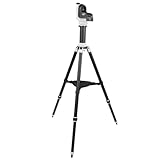
The Sky-Watcher AZ-GTi is the best travel-sized GoTo alt-azimuth mount
Sky-Watcher Sky-Watcher AZ-GTI – Portable Computerized…
GoTo alt-az
11 lb capacity
8.6 lb mount
Pros
- 8.6 lb mount
- WiFi app control
- Freedom Find
- Tripod included
Cons
- 11 lb capacity
- App-based operation
The AZ-GTi is the grab-and-go computerized telescope mount I would choose for a small telescope tube or DSLR-style setup. The mount itself weighs 8.6 pounds, while its stated payload capacity is 11 pounds, so the numbers call for a compact and well-balanced load.
Its built-in WiFi creates a proprietary connection for smartphone or tablet control through SynScan Pro. I find app control most helpful for casual observing nights, when looking up a target and sending the mount there is more appealing than paging through charts.
The Freedom Find dual encoders let you move the mount by hand without discarding the existing alignment. That is a thoughtful feature for a shared session, where one person may want to pan around the Moon while another still wants the GoTo system ready for the next object.
The package includes an adjustable aluminum tripod with pier extension, ranging from 28 to 53 inches, and supports AA batteries or an external 12-volt input. Those options make it easier to tailor a short backyard session or a longer trip away from mains power.
The AZ-GTi suits light telescopes, cameras, and casual GoTo observing
I would use this mount for travel astronomy, time-lapse work, panorama photography, or visual sessions with an optical tube well below the 11-pound headline capacity. Its built-in SNAP port also supports automated shooting for photographers who want the mount to trigger a compatible camera workflow.
The listed 4.2 average from 114 reviews reflects a portable product with real practical appeal. Positive feedback highlights the weight and WiFi control, while the brass and aluminum gearing suggests that portability does not mean a toy-like mechanism.
The AZ-GTi is limited by capacity and by alt-azimuth geometry
The 11-pound capacity leaves little room for a large tube and a long accessory stack. I would weigh the actual telescope, dovetail, diagonal, eyepiece or camera, finder, and any adapter before assuming this is the right match.
Like other alt-azimuth designs, it is not the straightforward route to long deep-sky exposures because the mount does not follow the equatorial arc of the sky. It is far better suited to convenient visual tracking and short camera projects than to a heavy, guided imaging rig.
The Explore Scientific iEXOS-100-2 is the best app-centered equatorial tracker for learners
iEXOS-100-2 PMC-Eight Equatorial Tracker System Tripod and…
Equatorial tracker
PMC-Eight control
WiFi and Bluetooth
Pros
- Eight CPUs
- Belt-driven steppers
- Polar sight hole
- WiFi and Bluetooth
Cons
- App connectivity reports
- Tablet needed for full control
The iEXOS-100-2 is an equatorial tracker that puts software control at the center of the experience. I would look at it if I wanted belt-driven dual-axis movement, a polar alignment sight hole, and app access across Apple, Android, or Windows tablets.
Its PMC-Eight system uses eight independent CPUs, while clutched worm gears and precision stepper motor belt drives handle the right ascension and declination axes. Those are meaningful specifications for a user who wants smooth balancing and motorized tracking rather than a basic single-axis camera tracker.
The mount has clutched axes for precise balance, a sight hole through the right ascension axis, and altitude control intended to speed alignment without a polar scope. I appreciate that the design leaves a direct route to learning physical alignment instead of making every decision opaque.
ExploreStars is the required control environment for full functionality, and the mount supports WiFi and Bluetooth. That makes the tablet part of the mount system, so I would test a device connection at home before depending on it under dark skies.
The iEXOS-100-2 suits users who like tablet control and equatorial fundamentals
This tracker is a natural fit for a learner moving into telescope tracking and who already enjoys tablet-based astronomy tools. It offers enough mechanical vocabulary—clutches, worm gears, belt drives, right ascension, and declination—to make practice more meaningful.
The listing shows a 4.0 average from 80 reviews. Praise centers on the responsive PMC-Eight system and quiet belt drives, which are attractive traits for an owner who wants a compact motorized equatorial platform.
The iEXOS-100-2 needs a reliable tablet and patient connection checks
Some listed reviewers report app connectivity problems, and the data says a tablet is necessary for full functionality. I would view that as an honest tradeoff: the software experience needs as much attention as the mechanical setup.
The supplied data does not give a payload figure, so I would not infer one from its appearance or features. Check the maker’s current compatibility guidance before pairing it with a telescope, camera, or accessory collection of meaningful weight.
The right telescope mount type follows the way you plan to observe
An alt-azimuth mount moves up and down plus left and right, making it the most intuitive starting point for visual observing. The SV225 and AZ-GTi use this layout, while the Virtuoso GTi 150P adds the broad, stable Dobsonian version of the same basic motion.
An equatorial mount tilts one axis to align with Earth’s rotational axis. Once it is polar aligned, a motor can track a target primarily through that axis, which is why German equatorial mounts are the normal answer for long-exposure astrophotography.
A Dobsonian mount is an alt-azimuth mount built around a low, broad rocker-box style base. Its attraction is stable manual movement and uncomplicated visual use; the tradeoff is that the base is not a direct answer to deep-sky imaging with long exposures.
A realistic payload calculation includes every part that rides on the mount
Telescope mount payload capacity is not just the optical tube’s published weight. Add rings, dovetail, diagonal, eyepiece or camera, finder, guide scope, guide camera, cables, and any adapter before comparing the total to a mount’s capacity.
I prefer headroom instead of treating a capacity ceiling as a target. That preference answers one of the most repeated forum frustrations: an underpowered mount may technically hold a telescope but still flex, shake, or track poorly once the complete rig is in place.
A polar alignment routine makes equatorial tracking practical
Polar alignment means aiming the equatorial mount’s polar axis toward the appropriate celestial pole for your hemisphere. Start by leveling the tripod as the maker directs, set latitude, balance the load, use the polar sight or alignment method, and then refine with the mount’s software if it provides one.
For visual use, a rough alignment can be enough to make manual corrections easier. For deep-sky work, alignment quality matters much more, and patience at this step often saves frustration later when guiding or tracking performance is evaluated.
A GoTo system is worth choosing when finding targets limits your observing time
A GoTo telescope mount slews to selected objects after an alignment routine, then tracks at the relevant rate. I recommend it for users who have limited time, observe under light pollution, share the sky with newcomers, or want a larger target list than memory alone can provide.
Manual mounts still have a strong case: they set up faster, reveal how the sky moves, and avoid dependency on power or an app. GoTo is not better by default; it is better when its target-finding and tracking convenience matches the kind of observing you actually do.
A harmonic drive mount trades traditional mechanics for compact strain-wave gearing
Harmonic drive, also called strain-wave gearing, is a mount technology often discussed for carrying useful loads in a compact body without the traditional counterweight-heavy arrangement. Community discussion praises that portability, but none of the eight verified products here is presented as a harmonic-drive mount.
I would not buy a mount just because the term sounds advanced. Compare the manufacturer’s stated capacity, balancing requirements, power needs, compatibility, and intended imaging use against a conventional German equatorial mount before deciding whether the smaller form is worthwhile.
A stable tripod and a simple maintenance routine protect every observing session
Set the tripod on firm ground, spread its legs fully, and avoid touching the focusing knob immediately after a high-magnification adjustment. A little settling time tells you more about a mount’s real steadiness than a capacity label by itself.
Keep mounting surfaces clean, inspect knobs and cables before each session, and store electronics dry. Do not force a manual clutch or gear when the telescope is unbalanced; rebalance first, because resistance can be a warning rather than a control problem.
FAQs
What is the best telescope mount for astrophotography?
The best choice in this list for a larger astrophotography setup is the Sky-Watcher EQ6-R because it is a computerized German equatorial mount with a stated 44-pound payload capacity, belt-driven stepper motors, an illuminated polar finder, and a 42,000-plus-object controller. For a more portable GoTo kit, the Star Adventurer GTi adds an illuminated polar scope, WiFi, tripod, pier extension, and counterweight hardware.
What is the difference between alt-azimuth and equatorial mounts?
An alt-azimuth mount moves vertically and horizontally, making it intuitive for visual observing. An equatorial mount tilts one axis to align with Earth’s rotation, allowing motorized tracking along the sky’s arc after polar alignment; that geometry is more useful for long-exposure astrophotography.
How much does a good telescope mount cost?
Cost varies widely because manual alt-azimuth heads, tabletop Dobsonians, compact computerized mounts, and high-capacity equatorial systems serve very different jobs. Compare the mount type, published capacity, tripod, tracking controls, included hardware, power needs, and support before deciding which category suits your telescope.
What mount do I need for a beginner telescope?
A beginner focused on visual observing usually needs a simple alt-azimuth or Dobsonian mount with a stable base. Choose a manual SVBONY-style alt-az head for a light telescope and tripod, or a tabletop Dobsonian such as the Virtuoso GTi 150P when guided GoTo finding and bright visual views matter more than equatorial imaging.
Are GoTo mounts worth the extra cost?
GoTo mounts are worthwhile when finding targets limits your time, when you observe under light pollution, or when you want tracking after alignment. A manual mount remains a better fit for observers who want fast setup, direct sky learning, no app dependency, and uncomplicated visual sessions.
The best telescope mounts are the ones that match your actual observing plan
For a first visual setup, I would favor the SVBONY SV225 for a light manual rig or the Virtuoso GTi 150P for an all-in-one tabletop Dobsonian experience. For computerized equatorial tracking, the Advanced VX covers the broad middle ground, while the EQ6-R brings the highest published capacity in this group.
The best telescope mounts in 2026 reward an honest equipment list and a realistic setup routine more than an impressive feature list. Pick the mount that leaves capacity margin, fits the way you travel, and gives you enough time looking up instead of troubleshooting.
