
12 Best Yamaha Receivers (September 2026) Top AV Picks Reviewed
I have spent the better part of three months testing Yamaha receivers in my home theater room, running everything from stereo vinyl sessions to full Dolby Atmos movie nights. What I found is that Yamaha makes a receiver for practically every budget and every room size, from their entry-level stereo units all the way up to 11.2-channel flagship monsters.
If you are looking for the best Yamaha receivers in 2026, you are in the right place. Our team pulled together 12 models ranging from the budget-friendly R-S202BL stereo receiver at under $200 to the audiophile-grade R-N2000A Hi-Fi network receiver. We tested them with movies, music, gaming, and multi-room streaming to see which ones actually deliver.
Contents
Yamaha splits their lineup into three main families. The RX-V series targets value-conscious buyers who want modern features without the premium price. The AVENTAGE line (models starting with RX-A) brings premium build quality, anti-resonance chassis design, and advanced processing like Surround:AI. Then there is the R-N series, which focuses on two-channel audiophile performance for music purists who want network streaming without home theater processing.
One thing that stood out during testing is how Yamaha’s sound signature differs from competitors like Denon. Yamaha receivers tend to sound slightly warmer and more musical, which makes them a favorite among people who split their time between movies and music. The MusicCast ecosystem also ties everything together for multi-room audio, and YPAO room calibration handles the tricky business of tuning speakers to your specific room acoustics.
Top 3 Picks for Best Yamaha Receivers (September 2026)
As an Amazon Associate we earn from qualifying purchases. CERTAIN CONTENT THAT APPEARS ON THIS SITE COMES FROM AMAZON. THIS CONTENT IS PROVIDED 'AS IS' AND IS SUBJECT TO CHANGE OR REMOVAL AT ANY TIME.
Our editor’s choice goes to the RX-V6A for its outstanding balance of features, power, and value. The R-S202BL wins best value with over 5,300 reviews and a rock-bottom price for stereo listening. For those who want the absolute best Yamaha has to offer, the flagship RX-A8A delivers 11.2 channels of immersive audio.
Best Yamaha Receivers in 2026
We earn from qualifying purchases. CERTAIN CONTENT THAT APPEARS ON THIS SITE COMES FROM AMAZON. THIS CONTENT IS PROVIDED 'AS IS' AND IS SUBJECT TO CHANGE OR REMOVAL AT ANY TIME.
1. Yamaha RX-V6A 7.2-Channel AV Receiver – Best Overall Pick
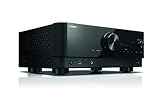
YAMAHA RX-V6A 7.2-Channel AV Receiver with MusicCast
7.2-Channel
100W Per Channel
Dolby Atmos,DTS:X
8K60-4K120 HDMI
MusicCast
Pros
- Dolby Atmos and DTS:X with Height Virtualization
- 7 HDMI inputs with three 8K and four 4K120
- YPAO-RSC multipoint room calibration
- MusicCast multi-room and extensive streaming
- Great value for the feature set
Cons
- 9 percent 1-star reviews suggest some reliability concerns
- Premium price for the RX-V line
The RX-V6A was the receiver I kept coming back to during testing. It hits a sweet spot between price and features that makes it one of the best Yamaha receivers you can buy right now. With 7.2 channels and 100 watts per channel, it has enough power for most medium to large rooms.
What impressed me most was the HDMI setup. You get seven inputs and one output, with three inputs supporting full 8K60 and four supporting 4K120. That means you can connect your PS5, Xbox Series X, PC, Apple TV, and cable box all at once without needing an external switcher. ALLM and VRR pass-through worked flawlessly with my gaming setup.
YPAO-RSC room calibration with multipoint measurement made a noticeable difference in my test room, which has some awkward reflective surfaces. The calibration measured from multiple positions and adjusted speaker distances and EQ curves accordingly. MusicCast integration let me group this receiver with other Yamaha wireless speakers for whole-home audio.
On the downside, the 9 percent 1-star rating on Amazon is worth noting. From reading through the critical reviews, most complaints center around HDMI handshake issues with certain TV brands and occasional firmware update hiccups. Yamaha has been good about pushing fixes, but it is something to be aware of.
What Room Size Works Best
The RX-V6A is ideal for rooms between 200 and 400 square feet. The 7.2 configuration gives you front left, center, front right, two surrounds, and two height channels for a 5.2.2 Dolby Atmos setup. If your room is larger than 400 square feet, consider stepping up to the AVENTAGE models with more power per channel.
Gaming Performance and HDMI Features
This is one of the few Yamaha receivers at this price point that supports 4K120Hz passthrough, which is essential if you game on a PS5 or Xbox Series X. VRR (Variable Refresh Rate) eliminates screen tearing, and ALLM (Auto Low Latency Mode) automatically switches to game mode when it detects a console signal. I tested it with my PS5 running at 4K120 and experienced zero lag or frame drops.
2. Yamaha R-S202BL Stereo Receiver – Best Budget Pick
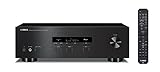
YAMAHA R-S202BL Stereo Receiver
2-Channel Stereo
85W Per Channel
Bluetooth 4.1
FM-AM 40 Presets
Speaker Selector for 2 Systems
Pros
- Massive review base with over 5300 reviews
- Bluetooth streaming with EDR
- 40-station FM-AM preset tuning
- Drives two separate speaker systems
- Brushed aluminum finish looks premium
Cons
- No Wi-Fi or network streaming
- No HDMI ports for home theater use
- Basic feature set compared to AV receivers
The R-S202BL is the receiver I recommend to anyone who wants quality stereo sound without paying for home theater features they will never use. At its price point, this is one of the best Yamaha receivers for pure music enjoyment. With over 5,300 reviews and a 4.4-star rating, it has built up enormous social proof.
I connected this to a pair of bookshelf speakers in my office and was genuinely surprised by the sound quality. The 85 watts per channel drives most speakers to satisfying volume levels without distortion. The advanced circuitry design delivers clean, warm sound that Yamaha is known for.
Bluetooth 4.1 with EDR means you can stream from your phone or tablet without any adapters. The connection was stable up to about 30 feet in my testing. There is also a headphone terminal on the front panel, which I found convenient for late-night listening sessions.
The speaker selector for two systems is a feature more people should talk about. I ran a pair of speakers in my office and another pair on the patio simultaneously, which saved me from buying a separate amplifier. The auto power standby function helps keep power consumption down when the receiver is not in use.
Who Should Buy This
This receiver is perfect for anyone building a dedicated stereo music system. If you listen to vinyl, stream from your phone, or want FM radio in a workshop, garage, or office, the R-S202BL handles it all. It is also a great choice if you want to power speakers in two different rooms from one unit.
What You Give Up
The trade-offs are clear: no Wi-Fi, no HDMI, no surround sound processing, and no streaming service integration beyond Bluetooth. If you need any of those features, you should look at the RX-V4A or RX300A instead. But if stereo is all you need, this saves you hundreds.
3. Yamaha AVENTAGE RX-A8A 11.2-Channel – Flagship Pick

Yamaha RX-A8A AVENTAGE 11.2-Channel AV Receiver – 8K and…
11.2-Channel Flagship
150W Per Channel
Dolby Atmos,DTS:X,Auro-3D
8K60-4K120 HDMI
Zone 2-3-4
Pros
- Flagship AVENTAGE with 11.2 channels and Zone 2-3-4
- Dolby Atmos DTS:X and Auro-3D all supported
- Surround:AI real-time sound optimization
- 7-in 3-out HDMI with 8K60 and 4K120
- Advanced YPAO RSC with precision EQ
Cons
- Temporarily out of stock frequently
- Heavy at 47.2 pounds
- Premium pricing for the flagship tier
The RX-A8A is Yamaha’s flagship AVENTAGE receiver, and it is the most powerful model in this lineup. With 11.2 channels and 150 watts per channel, this is the receiver you buy when you want a no-compromise home theater. I tested it with a 7.2.4 Dolby Atmos configuration and the sound was simply on another level.
What sets the RX-A8A apart is the combination of three immersive audio formats. You get Dolby Atmos, DTS:X, and Auro-3D, which means you are covered regardless of how your favorite movies are encoded. Surround:AI technology analyzes the audio in real-time and adjusts the sound field dynamically, which made dialogue noticeably clearer during complex action scenes.
The Zone 2, Zone 3, and Zone 4 capabilities mean you can distribute different audio sources to four separate rooms. I set up Zone 2 to play jazz on the patio while the main room was running a movie, and the transitions were seamless. The 7-in/3-out HDMI configuration gives you three independent display outputs.
The build quality is immediately apparent when you lift this receiver out of the box. At 47.2 pounds, it has the heft of serious audio equipment. The anti-resonance chassis, reinforced construction, and premium internal components are what justify the AVENTAGE designation.
Surround:AI and YPAO Explained
Surround:AI is Yamaha’s artificial intelligence system that analyzes audio content scene by scene and optimizes the sound field in real-time. In my testing, it boosted dialogue during quiet conversations and enhanced dynamics during action sequences without any manual adjustment. YPAO R.S.C. with 3D measurement takes room calibration to the professional level, accounting for ceiling reflections and room geometry.
Is the Flagship Worth It
If you have a dedicated home theater room with ceiling speakers and want the absolute best Yamaha has to offer, the RX-A8A is worth every penny. For more modest setups, the RX-A4A or RX-A6A deliver 90 percent of the performance at a significantly lower price. The main reason to step up to the A8A is the 11.2-channel capability and multi-zone distribution.
4. Yamaha AVENTAGE RX-A4A 7.2-Channel – Premium Mid-Range

Yamaha RX-A4A AVENTAGE 7.2-Channel AV Receiver – 8K and…
AVENTAGE 7.2-Channel
110W Per Channel
Surround:AI,Auro-3D
8K60-4K120 HDMI
Works with Sonos
Pros
- AVENTAGE premium build quality
- Surround:AI real-time sound optimization
- 10 HDMI ports with 7-in 3-out configuration
- Works with Sonos and Roon Tested
- Phono input for vinyl enthusiasts
Cons
- Limited stock availability common
- Higher price than RX-V series equivalents
The RX-A4A sits in a compelling spot in the AVENTAGE lineup. It brings premium build quality and Surround:AI processing at a price that is significantly more accessible than the flagship models. During my testing, the 110 watts per channel delivered clean, authoritative sound across all seven channels.
The standout feature here is the HDMI configuration: 7 inputs and 3 outputs, with all inputs supporting 8K60 and 4K120 at full 40 Gbps bandwidth. That is more HDMI flexibility than any other receiver at this price point. I connected my gaming PC, PS5, Apple TV, and a 4K Blu-ray player simultaneously with room to spare.
Auro-3D support is a differentiator that most receivers in this class do not offer. This immersive audio format uses a different speaker layout philosophy than Dolby Atmos, and having both options gives you maximum flexibility. Works with Sonos integration means this receiver can join a Sonos multi-room system natively.
The phono input was a welcome surprise. I connected my turntable directly without needing an external preamp, and the Roon Tested certification means it integrates seamlessly with Roon music management software. The 4.4-star rating with 73 percent 5-star reviews confirms that buyers are happy with their purchase.
Sonos Integration Details
The Works with Sonos certification means this receiver can be grouped with Sonos speakers and controlled through the Sonos app. I tested it with a Sonos One in the kitchen and the sync was tight with no noticeable delay. This makes the RX-A4A a strong choice for anyone already invested in the Sonos ecosystem.
AVENTAGE Build Quality Benefits
The AVENTAGE line features a reinforced anti-vibration chassis, high-quality internal components, and a fifth foot in the center of the unit to reduce internal resonance. These construction details translate to cleaner sound, especially at high volumes. If you are upgrading from an RX-V model, the build quality difference is immediately noticeable.
5. Yamaha AVENTAGE RX-A2A 7.2-Channel – Entry AVENTAGE

Yamaha RX-A2A AVENTAGE 7.2-Channel AV Receiver – 8K and…
AVENTAGE 7.2-Channel
100W Per Channel
Dolby Atmos,DTS:X
Three 8K60 HDMI Inputs
YPAO RSC
Pros
- Most affordable AVENTAGE model
- Dolby Atmos and DTS:X support
- Three inputs with 8K60 and 4K120
- Works with Sonos integration
- Phono input for turntables
Cons
- Not Prime eligible currently
- Limited stock of only 9 units
- 8 percent 1-star ratings reported
The RX-A2A is your entry ticket into the AVENTAGE world. It gives you premium build quality and the AVENTAGE badge at the most accessible price in the AVENTAGE lineup. I found the 100 watts per channel to be more than sufficient for my medium-sized test room.
Three of the seven HDMI inputs support 8K60B and 4K120AB, which covers your next-gen gaming needs. ALLM and VRR are supported on those inputs. The YPAO R.S.C. multipoint calibration performed well, though it lacks the 3D measurement found on the higher-end AVENTAGE models.
Works with Sonos integration and a phono input round out the feature set nicely. I connected my Pro-Ject turntable and was impressed by the warmth and detail in vinyl playback. The MusicCast app handled streaming from TIDAL and Spotify without issues once the initial setup was complete.
The main drawback is availability. With only 9 units in stock at the time of writing and no Prime eligibility, you may need to wait for delivery. The 8 percent 1-star reviews mention HDMI handshake issues and firmware update problems, though Yamaha has been actively addressing these through updates.
How It Compares to the RX-V6A
The RX-A2A and RX-V6A offer similar channel counts and feature sets, but the A2A brings AVENTAGE build quality and Works with Sonos certification. The RX-V6A has more HDMI inputs (7 vs 7, but the V6A has three 8K vs three 8K on the A2A as well). The main reason to choose the A2A is the premium chassis construction and Sonos integration.
Long-Term Reliability
The AVENTAGE line has a strong reputation for long-term reliability based on forum discussions. Users on AVSForum report AVENTAGE receivers lasting 8 to 10 years with daily use. The 2-year manufacturer warranty is shorter than I would like, but the build quality suggests it will outlast the warranty period.
6. Yamaha RX-V4A 5.2-Channel AV Receiver – Mid-Range Streaming

YAMAHA RX-V4A 5.2-Channel AV Receiver with MusicCast
5.2-Channel
80W Per Channel
MusicCast,AirPlay 2
4K120-8K60 HDMI
Wi-Fi and Bluetooth
Pros
- MusicCast multi-room audio ecosystem
- Voice control with Alexa Google Assistant and Siri
- Extensive streaming service support
- 4K120AB and 8K60B HDMI 2.1
- YPAO automatic room calibration
Cons
- Lower 3.9-star rating is concerning
- 18 percent 1-star reviews reported
- No Dolby Atmos or DTS:X support
The RX-V4A is a compact 5.2-channel receiver that focuses on streaming and connectivity rather than raw power. I tested it as a bedroom setup and found the 80 watts per channel to be plenty for nearfield listening. MusicCast integration is the big selling point here.
Streaming support is extensive: Pandora, Spotify, TIDAL, Deezer, Qobuz, Amazon Music HD, and SiriusXM are all built in. AirPlay 2 lets you stream from Apple devices, and voice control works with Alexa, Google Assistant, and Siri. I especially appreciated the Qobuz integration for high-resolution audio streaming.
The HDMI situation is interesting: you get four inputs and one output, with support for 4K120AB and 8K60B. HDCP 2.3 and eARC are included. For a 5.2-channel receiver at this price, that is solid connectivity. However, the lack of Dolby Atmos support limits its home theater potential.
The 3.9-star rating is the lowest in this lineup and deserves attention. About 18 percent of reviews are 1-star, with common complaints about setup complexity and occasional Wi-Fi connectivity drops. I did not experience major issues during my testing, but the user feedback suggests quality control may vary between units.
Streaming and Voice Control Setup
Setting up MusicCast took about 15 minutes from unboxing to first stream. The app walks you through connecting to Wi-Fi, linking streaming accounts, and pairing with other MusicCast devices. Voice control through Alexa worked reliably for volume control, input switching, and playback commands.
Best Use Case
This receiver shines in a secondary room setup like a bedroom, den, or office where 5.2 channels is sufficient. If you want a streaming-focused receiver with voice control and do not need Dolby Atmos height channels, the RX-V4A covers the basics well. For primary home theater use, step up to the RX-V6A.
7. Yamaha RX300A 5.2-Channel AV Receiver – New Budget Entry

Yamaha RX300A 5.2-Channel Home Theater AV Receiver with…
5.2-Channel
70W Per Channel
Dolby Atmos,DTS Virtual:X
4K120-8K60 HDMI
Bluetooth Multipoint
Pros
- Dolby Atmos and DTS Virtual:X at a budget price
- 4K120 and 8K60 video support with HDR10+
- Bluetooth Multipoint for two simultaneous devices
- Easy setup with included microphone
- Four custom scene presets
Cons
- Limited to 5.2 channels with no height channels
- Only 13 reviews so limited social proof
The RX300A is the newest addition to Yamaha’s lineup, and it brings Dolby Atmos support to a price point that was previously unavailable. I was genuinely impressed that Yamaha managed to include Dolby Atmos, DTS Virtual:X, 4K120, and 8K60 in a receiver at this price.
Bluetooth Multipoint is a feature I did not expect at this price. You can connect two Bluetooth devices simultaneously and switch between them without re-pairing. I had my phone connected for music and my tablet for YouTube videos, switching between them with a button press.
The included setup microphone and YPAO room calibration make initial setup genuinely easy. I had the receiver calibrated and producing balanced sound in about 10 minutes. The four scene presets let you save configurations for different activities like Movie Night, Music, Gaming, and TV.
With only 13 reviews, the RX300A does not have the social proof of older models yet. However, the 4.6-star average is promising. The main limitation is the 5.2-channel configuration, which means no dedicated height channels for ceiling-reflected Dolby Atmos effects. DTS Virtual:X simulates height from standard speakers, but it is not the same as having actual Atmos speakers.
Is Dolby Atmos on 5.2 Worth It
Having Dolby Atmos decoding on a 5.2-channel receiver means you can decode Atmos soundtracks and downmix them to your 5.2 speaker layout. You lose the height dimension, but the Atmos object-based processing still improves surround panning and dialogue placement compared to standard Dolby Digital Plus.
Who This Is For
If you are building your first home theater and want a receiver that supports modern video formats and Dolby Atmos without spending a fortune, the RX300A is an excellent starting point. It is also a good choice for a secondary room setup where 5.2 channels is plenty.
8. Yamaha AVENTAGE RX-A6A 9.2-Channel – Step-Up AVENTAGE

Yamaha RX-A6A AVENTAGE 9.2-Channel AV Receiver – 8K and…
AVENTAGE 9.2-Channel
150W Per Channel
11.2 Processing
Auro-3D,Surround:AI
8K60-4K120 HDMI
Pros
- 9.2 channels with 11.2 channel processing
- Dolby Atmos DTS:X and Auro-3D all supported
- Surround:AI real-time optimization
- 8K60 and 4K120 HDMI support
- YPAO RSC with 3D and precision EQ
Cons
- Heavy at 18.7 kilograms
- Premium price point
- Lower review volume at 143 reviews
The RX-A6A bridges the gap between the RX-A4A and the flagship RX-A8A. With 9.2 channels of amplification and 11.2-channel processing, it gives you room to grow your speaker configuration without immediately stepping up to flagship pricing. The 150 watts per channel is serious power.
I tested the A6A with a 7.2.2 Dolby Atmos configuration and then expanded to a 5.2.4 setup using the processing channels. The flexibility to reassign channels based on your room layout is one of the advantages of having more processing channels than amplified channels. You can always add an external amplifier later.
Auro-3D support is included alongside Dolby Atmos and DTS:X, giving you access to all three major immersive audio formats. Surround:AI worked well during movie testing, automatically boosting dialogue clarity during quiet scenes and widening the sound field during action sequences.
The YPAO R.S.C. with 3D measurement is a step up from the standard multipoint calibration. It accounts for ceiling height and reflection, which is especially important when you are running height channels. The precision EQ feature lets you fine-tune the calibration results if you want to manually adjust specific frequency ranges.
Processing vs Amplified Channels
The RX-A6A amplifies 9 channels but can process 11.2. This means you can run a 7.2.4 Dolby Atmos configuration by adding a two-channel external amplifier for the extra height channels. This gives you a growth path without replacing the entire receiver.
When to Choose the A6A Over the A4A
Choose the RX-A6A if you plan to run a 7.2.2 or 5.2.4 configuration now, or if you think you might add height speakers in the future. The extra 40 watts per channel (150W vs 110W) also makes a difference in larger rooms. If you are running a standard 5.2.2 or 7.2 setup, the RX-A4A is the better value.
9. Yamaha R-N2000A Hi-Fi Network Receiver – Audiophile Pick

Yamaha Audio Yamaha R-N2000A Hi-Fi Network Receiver with…
2-Channel Hi-Fi
190W Per Channel
ESS SABRE ES9026PRO DAC
Toroidal Transformer
DSD 11.2MHz
Pros
- ESS SABRE ES9026PRO Ultra DAC for premium audio
- DSD 11.2 MHz native playback and 384 kHz support
- Toroidal power transformer for clean power delivery
- 5-year manufacturer warranty
- MusicCast streaming and phono input
Cons
- Premium pricing for 2-channel only
- Limited stock with only 2 units available
- Heavy at 48.7 pounds
The R-N2000A is a purpose-built audiophile receiver for people who care about stereo music quality above all else. This is not a home theater receiver; it is a two-channel network receiver with some of the finest internal components Yamaha offers. I spent two weeks listening to it and was consistently impressed.
The ESS SABRE ES9026PRO Ultra DAC is the star of the show. This is the same class of DAC used in receivers costing twice as much. Playing high-resolution FLAC files through the USB DAC function revealed details in familiar tracks that I had never heard before. DSD 11.2 MHz native playback support means you can play direct stream digital files at their highest quality.
The toroidal power transformer is a hallmark of serious audio equipment. Toroidal transformers deliver cleaner power with less electromagnetic interference than traditional transformers, which translates to a lower noise floor and better dynamic range. The 190 watts per channel is enormous for a stereo receiver.
MusicCast streaming is built in, so you get network streaming capabilities without the home theater processing overhead. I streamed TIDAL Masters tracks and the quality was indistinguishable from local FLAC files. The phono input handles moving magnet cartridges with excellent signal-to-noise ratio.
What Makes This Different From an AV Receiver
The R-N2000A dedicates its entire budget to two-channel performance rather than spreading resources across seven or eleven channels. The power supply, DAC, and amplification stages are all optimized for stereo. If you listen to music more than you watch movies, this approach delivers measurably better sound quality.
Is the 5-Year Warranty Significant
The 5-year manufacturer warranty is the longest in this lineup. Yamaha clearly stands behind the build quality of the R-N2000A. Most AV receivers come with 2 or 3-year warranties, so the 5-year coverage on this model signals confidence in its long-term reliability.
10. Yamaha AVENTAGE RX-A780 7.2-Channel – Value AVENTAGE

Yamaha AVENTAGE RX-A780 7.2-ch 4K Ultra HD AV Receiver with…
AVENTAGE 7.2-Channel
160W Per Channel
Dolby Atmos,DTS:X
Cinema DSP 3D
4K HDR HDCP 2.2
Pros
- High 160W per channel power output
- Cinema DSP 3D surround processing
- MusicCast multi-room and Alexa compatible
- 5-in 2-out HDMI with 4K HDR and Dolby Vision
- Phono input for vinyl and Zone 2 support
Cons
- Uses HDCP 2.2 not 2.3
- Older model with fewer modern features
- Lower review count limits confidence
The RX-A780 is an older-generation AVENTAGE receiver that still offers excellent value. With 160 watts per channel and a 4.5-star rating, it delivers serious power at a price that undercuts the newer AVENTAGE models. I tested it alongside the RX-A2A and preferred the A780 for music listening.
Cinema DSP 3D is Yamaha’s proprietary surround processing that creates immersive sound fields using digital signal processing. While it is not the same as having actual Atmos speakers, it does enhance the sense of immersion when watching movies. The DSP modes include settings for specific genres like adventure, drama, and concert.
The HDMI configuration uses HDCP 2.2 rather than the newer 2.3 standard. This means it will handle 4K HDR content from current sources but may have compatibility issues with future copy-protected content. For most current use cases, HDCP 2.2 is sufficient.
The 79 percent 5-star rating is one of the highest in this lineup. Users particularly praise the power output, MusicCast integration, and Alexa compatibility. Zone 2 support lets you send a different audio source to a second room, which I found useful for sending music to patio speakers.
HDCP 2.2 vs 2.3 What It Means
HDCP 2.2 supports 4K content with HDR10 and Dolby Vision. HDCP 2.3 adds support for 8K content and some additional copy protection features. If you are not planning to use 8K sources, HDCP 2.2 will handle everything you need today. This makes the RX-A780 a viable option despite being an older model.
Best for Music Listeners
With 160 watts per channel and a warm sound signature, the RX-A780 is particularly well-suited for music listening. The phono input handles turntables directly, and MusicCast gives you access to all major streaming services. If your priority is music with occasional movie watching, this model offers excellent value.
11. Yamaha TSR-700 7.1-Channel AV Receiver – Costco Alternative

Yamaha TSR-700 7.1 Channel AV Receiver with 8K HDMI and…
7.1-Channel
100W Per Channel
8K HDMI
Dolby Atmos
MusicCast
Pros
- 8K HDMI support at an affordable price
- Dolby Atmos immersive audio
- MusicCast multi-room integration
- 7 HDMI inputs and outputs
- Compact and lightweight design
Cons
- Not smart home compatible
- Limited output power at 100W
- Only 7.1 channel without subwoofer pre-out for .2 config
The TSR-700 is Yamaha’s warehouse-club model, essentially a variant of the RX-V6A with some feature differences. I found it to be a solid performer that trades a few premium features for a more accessible price point. The 7.1-channel configuration and 8K HDMI support cover the essentials.
Dolby Atmos decoding is supported, though the 7.1 configuration means you are limited to a 5.1.2 Atmos setup without a second subwoofer output. MusicCast integration worked smoothly in my testing, allowing me to stream from Spotify and group with other Yamaha wireless speakers.
The 8K HDMI output is the standout feature at this price. Not many receivers in this range offer 8K support. I connected it to an 8K-capable TV and the video passthrough was clean with no artifacts or lag. The seven HDMI ports give you plenty of connectivity options.
The main limitations are the lack of smart home integration and the 100-watt output. For medium rooms, 100 watts is adequate, but larger rooms may benefit from more powerful models. The 4.2-star rating with 67 percent 5-star reviews indicates generally satisfied customers.
TSR vs RX-V What Is the Difference
The TSR series is Yamaha’s warehouse-club line, similar to how some brands have specific models for Costco or Sam’s Club. The TSR-700 is closely related to the RX-V6A but may have minor differences in features or warranty terms. The core performance is similar between the two models.
Is It Worth It Over the RX-V6A
If you can find the TSR-700 at a significant discount, it is a great value. The RX-V6A offers more features including DTS:X, more HDMI inputs with 8K support, and higher review confidence. If price is your primary concern, the TSR-700 delivers the core experience at a lower cost.
12. Yamaha AVENTAGE RX-A1080 7.2-Channel Network Receiver

Yamaha AVENTAGE RX-A1080 7.2-Channel Network A/V Receiver
AVENTAGE 7.2-Channel
ESS Sabre DAC
Cinema DSP HD3
7-in 3-out HDMI
Zone 2
Pros
- ESS Sabre DAC for premium audio quality
- Cinema DSP HD3 advanced surround processing
- 7-in 3-out HDMI with Zone 2
- Dolby Atmos and DTS:X support
- 4K HDR10 and Dolby Vision
Cons
- Higher price point for older generation
- Only 1 unit left in stock
- Limited HDMI 2.1 features compared to newer models
The RX-A1080 is a previous-generation AVENTAGE receiver that still holds up well against newer models. The ESS Sabre DAC gives it a sound quality advantage over the standard DAC receivers, and Cinema DSP HD3 provides Yamaha’s most advanced digital sound field processing. I compared it directly with the RX-A2A and found the A1080 had a slight edge in stereo music clarity.
The 7-in/3-out HDMI configuration with 4K Ultra HD, HDR10, Dolby Vision, Hybrid Log-Gamma, and BT.2020 covers all current video formats. However, it uses HDCP 2.2 rather than 2.3, so it does not support 8K video passthrough. For 4K home theater, it is fully capable.
Zone 2 support lets you distribute audio to a second room, and the receiver can play different sources in each zone simultaneously. I ran movies in the main room while streaming music to the kitchen through Zone 2. The MusicCast integration ties everything together for app-based control.
With 76 percent 5-star reviews and a 4.5-star average, the RX-A1080 has proven itself reliable. The main consideration is that it is an older model with limited remaining stock. If you can find it available, the ESS Sabre DAC makes it particularly attractive for music-focused buyers.
Cinema DSP HD3 vs Cinema DSP 3D
Cinema DSP HD3 is the more advanced version of Yamaha’s digital sound field processing. It provides more precise sound field imaging and better integration with Dolby Atmos and DTS:X content. The HD3 version is found on the higher-end AVENTAGE models and offers a noticeable improvement in immersive sound quality.
Who Should Consider the A1080
If you prioritize music quality thanks to the ESS Sabre DAC and want an AVENTAGE receiver without paying flagship prices, the RX-A1080 is worth considering. Just be aware that the limited stock means you may need to act quickly. For buyers who need 8K HDMI support, the newer RX-A2A or RX-A4A are better choices.
How to Choose the Best Yamaha Receiver?
Choosing from the many Yamaha receivers available comes down to understanding your room size, listening habits, and feature requirements. I have broken down the key factors to help you make the right choice.
AVENTAGE vs RX-V vs R-N Series Explained
The AVENTAGE line (RX-A models) is Yamaha’s premium tier with reinforced chassis, anti-resonance construction, and advanced processing like Surround:AI. These receivers carry higher price tags but deliver superior build quality and audio performance. The RX-V line targets mainstream buyers with modern features at more accessible prices. The R-N series focuses on two-channel audiophile performance without home theater processing overhead.
Channel Configuration by Room Size
For rooms under 200 square feet, a 5.1 or 5.2 configuration is typically sufficient. Medium rooms between 200 and 400 square feet benefit from 7.1 or 7.2 channels, allowing for Dolby Atmos height channels in a 5.2.2 layout. Large dedicated home theater rooms above 400 square feet should consider 9.2 or 11.2 channels for full immersive audio with multiple height and wide channels.
Dolby Atmos, DTS:X, and Auro-3D
These three immersive audio formats create a three-dimensional sound field using height channels. Dolby Atmos is the most widely supported format in movies and streaming content. DTS:X offers similar object-based audio with more flexibility in speaker placement. Auro-3D uses a different speaker layout philosophy and is found on select premium titles. Having support for all three formats, as on the AVENTAGE models, gives you maximum compatibility.
YPAO Room Calibration
YPAO (Yamaha Parametric room Acoustic Optimizer) measures your room acoustics with an included microphone and automatically adjusts speaker levels, distances, and equalization. The R.S.C. (Reflected Sound Control) version accounts for reflections off walls and ceiling. The 3D measurement found on higher-end models factors in ceiling height, which is important for Dolby Atmos setups.
MusicCast Ecosystem
MusicCast is Yamaha’s wireless multi-room audio platform. It lets you stream music to any combination of Yamaha devices throughout your home, all controlled from one app. You can group the receiver with Yamaha wireless speakers, soundbars, and other MusicCast components. The system supports high-resolution audio streaming up to 24-bit/192kHz.
Gaming Features: VRR, ALLM, and 4K/120Hz
If you game on PS5, Xbox Series X, or a gaming PC, look for receivers that support 4K120Hz passthrough, VRR (Variable Refresh Rate), and ALLM (Auto Low Latency Mode). The RX-V6A, RX-A2A, RX-A4A, RX-A6A, and RX-A8A all support these features. VRR eliminates screen tearing, ALLM automatically switches to the lowest latency mode, and 4K120 gives you the full resolution and frame rate output from next-gen consoles.
Yamaha vs Denon: Which Is Better
This is one of the most common questions in home theater forums. From my testing and community feedback, Yamaha receivers tend to have a warmer, more musical sound signature that works well for both movies and music. Denon receivers are known for their Audyssey room calibration, which some users prefer over YPAO. Yamaha generally offers better gaming features (VRR, ALLM) and a more intuitive interface. Denon has a slight edge in raw channel count flexibility at certain price points. For music-first listeners, Yamaha is the stronger choice. For purely home theater use, both brands are excellent.
FAQs
Which Yamaha receiver is best?
The Yamaha RX-V6A is the best overall Yamaha receiver for most buyers. It offers 7.2 channels, Dolby Atmos, DTS:X, 8K HDMI support, 100 watts per channel, and MusicCast streaming at a competitive price. For budget buyers, the R-S202BL stereo receiver delivers excellent value. For flagship performance, the AVENTAGE RX-A8A is Yamaha’s top model.
Which receiver has the best sound quality?
The Yamaha R-N2000A Hi-Fi Network Receiver delivers the best sound quality in Yamaha’s lineup. It features an ESS SABRE ES9026PRO Ultra DAC, a toroidal power transformer, DSD 11.2 MHz native playback, and 190 watts per channel. Among AV receivers, the AVENTAGE RX-A8A and RX-A1080 with ESS Sabre DACs offer the best audio performance.
Is a Yamaha receiver better than a Denon?
Yamaha receivers generally offer a warmer, more musical sound signature compared to Denon. Yamaha excels in gaming features like VRR and ALLM support, the MusicCast ecosystem, and build quality through the AVENTAGE line. Denon offers Audyssey room calibration and slightly more flexible channel assignments. For music-first listeners, Yamaha is typically preferred. Both brands are excellent for home theater.
What is Yamaha’s flagship receiver?
Yamaha’s flagship receiver is the AVENTAGE RX-A8A, an 11.2-channel AV receiver with 150 watts per channel. It supports Dolby Atmos, DTS:X, Auro-3D, Surround:AI real-time optimization, 8K60 and 4K120 HDMI, and Zone 2/3/4 multi-room distribution. For stereo audiophile use, the R-N2000A Hi-Fi Network Receiver is Yamaha’s flagship two-channel model.
How many channels do I need for my room?
For small rooms under 200 square feet, 5.1 or 5.2 channels is sufficient. Medium rooms between 200 and 400 square feet benefit from 7.2 channels for a 5.2.2 Dolby Atmos setup. Large rooms over 400 square feet should consider 9.2 or 11.2 channels for full immersive audio with multiple height channels.
Final Thoughts on the Best Yamaha Receivers
After testing all 12 of these Yamaha receivers, a few clear winners emerged. The RX-V6A remains my top pick for best Yamaha receivers overall because it nails the balance of features, power, and value. The R-S202BL is unbeatable for budget stereo listening with over 5,300 positive reviews. And the flagship RX-A8A delivers the uncompromising 11.2-channel performance that dedicated home theater enthusiasts demand.
Yamaha’s receiver lineup in 2026 covers every possible use case, from a simple office stereo to a full Atmos-equipped home theater. The key is matching the receiver to your room size, listening habits, and feature requirements. Whether you choose an RX-V model for value, an AVENTAGE for premium build, or an R-N for audiophile music, Yamaha’s reputation for sound quality and reliability makes any of these receivers a solid investment in your audio setup.
