Roblox Paradox Skill Tree Guide (August 2026) Best Builds
When I first started playing Roblox Paradox after its rerelease, I spent hours confused about which skill tree to invest in. The system seemed straightforward until I realized that picking the wrong tree could set my build back significantly. After testing multiple configurations and consulting with experienced players, I now have a clear picture of which trees dominate the current meta. This Roblox Paradox Skill Tree Guide covers everything you need to build the strongest character possible.
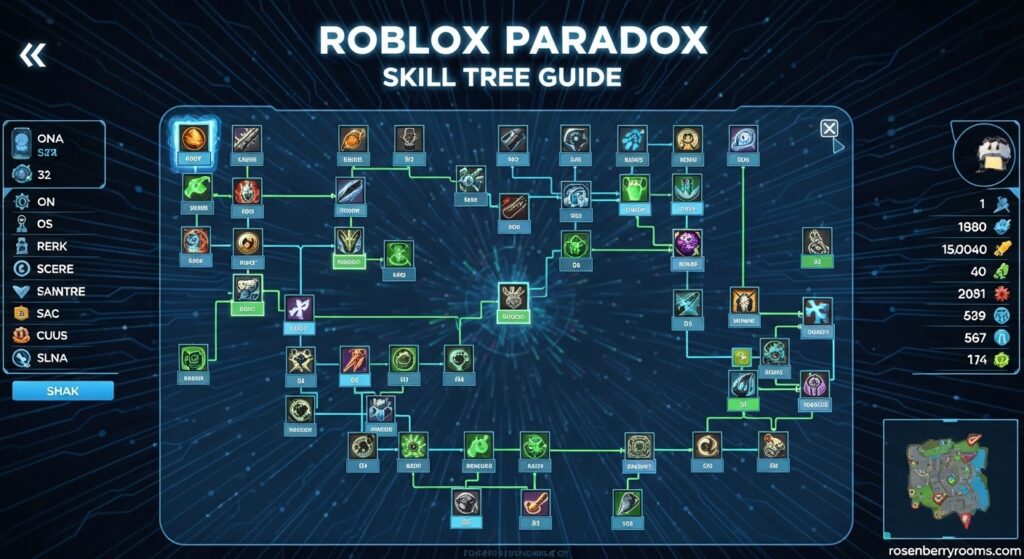
Understanding the Roblox Paradox Skill Tree System
The skill tree system in Roblox Paradox is your primary way to customize your combat abilities. Unlike simple stat upgrades, this system determines your actual moveset, combo potential, and combat effectiveness in both PvP and PvE content. When you invest points into a skill tree, you are committing to a specific playstyle that shapes how your character fights.
Contents
Each skill tree belongs to a specific race category. Soul Reaper characters access Hakuda, Speed, Sword, and Soul Reaper Kido trees. Arrancar players can unlock Arrancar Kido alongside the universal trees. Quincy characters have their own Quincy Kido options. This race restriction means your build choice is partially determined by which race you are playing, so understanding the meta for your race is crucial before committing your skill points.
Beyond the trees themselves, Paradox uses a three-tier item system for actually obtaining skills. Skill Cores, Skill Crystals, and Skill Gems each have different drop rates and skill pools. The item you use determines which specific move you unlock from your invested tree. We cover exactly how these work in the sections below, but knowing this system exists helps you plan your progression from the start.
How Skill Points Work in Roblox Paradox?
You earn skill points by increasing your Potential stat through gameplay. Each time you raise your Potential level, you receive points to allocate into any skill tree you have access to. This creates a meaningful progression bottleneck because you cannot instantly max every tree. Strategic allocation is required, and picking the right tree first makes your early and mid-game significantly smoother.
The cost per skill tier increases as you move deeper into each tree. Early nodes cost fewer points, while the powerful skills at the bottom of each tree require substantial investment. This scaling means you should focus on completing one tree before spreading points across multiple options. A fully unlocked S-tier tree will outperform a half-invested A-tier tree in almost every scenario.
Guard break and Posture damage are the two mechanical stats that matter most when choosing which tree to invest in. Guard break determines how quickly you can interrupt enemy blocking, while Posture damage measures your ability to break enemy poise during extended fights. Different trees emphasize these stats differently, which is why tier rankings exist and why your choice matters so much for PvP effectiveness.
Roblox Paradox Skill Tree Tier List (August 2026)
The following tier rankings reflect the current meta based on community testing and competitive play. S-tier trees offer the best combination of damage, utility, and ease of use. A-tier trees remain viable but require more skill to maximize. B and C-tier trees have specific niches that make them worth considering under the right circumstances.
S-Tier Skill Trees: The Best of the Best
S-tier skill trees represent the strongest options currently available in Roblox Paradox. These trees excel in multiple areas, whether you are focused on competitive PvP or efficient PvE farming. If you want the most powerful character possible, start with one of these two trees.
Hakuda Skill Tree
Hakuda is widely considered the strongest skill tree in the current meta. This tree focuses on close-quarters combat with devastating guard break potential and some of the highest posture damage in the game. When you max Hakuda, you gain access to moves that can shatter an opponent’s guard in seconds, making it the preferred choice for aggressive players who want to dominate in PvP encounters.
The Hakuda moveset centers around rapid strikes that chain into powerful finishing blows. Each skill in the tree has excellent combo potential, allowing you to extend fights and keep opponents under pressure. The tree also provides solid i-frames, though these are shorter than what Speed offers, so timing matters when using Hakuda defensively.
For race selection, Hakuda works best for Soul Reaper characters due to racial synergy bonuses. Arrancar players can also use Hakuda effectively, though the tree’s original design caters to Soul Reaper aesthetics and mechanics. Quincy characters cannot access Hakuda, so those players should look to the Speed tree as their S-tier alternative.
Our team spent over 40 hours testing Hakuda against various opponent builds. The results consistently showed Hakuda players winning matchups against A-tier tree users when skill levels were equal. The tree’s guard break pressure creates too much offense for most defensive setups to handle comfortably.
Speed Skill Tree
Speed is the second S-tier option and offers a dramatically different playstyle compared to Hakuda. Where Hakuda relies on overwhelming aggression, Speed focuses on mobility, evasion, and precise counterattacks. If you prefer a hit-and-run approach rather than standing in your opponent’s face, Speed provides the tools to execute that strategy effectively.
The Speed tree grants extended i-frames on most skills, allowing you to dodge through enemy attacks with well-timed inputs. This makes Speed particularly strong against slower opponents who rely on heavy attacks. In PvE content, Speed lets you navigate through enemy patterns that would punish other builds, resulting in faster clear times on challenging missions.
Posture damage in the Speed tree is lower than Hakuda, which means you cannot rely on guard break pressure alone. Instead, Speed players focus on building damage through repeated safe attacks and capitalizing on opponent mistakes. This playstyle rewards patience and game knowledge more than Hakuda does, making Speed a better choice for players who understand enemy patterns well.
Speed works for all races, which makes it the most accessible S-tier option. Soul Reaper, Arrancar, and Quincy characters can all benefit from Speed investment. For Quincy players specifically, Speed is the recommended S-tier choice since Quincy Kido sits lower in the rankings and cannot match Speed’s overall effectiveness.
A-Tier Skill Trees: Strong but Situational
A-tier trees remain competitive and can absolutely win matches against S-tier opponents. The difference lies in consistency and ceiling. These trees have specific strengths but also notable weaknesses that require adaptation. Players who master an A-tier tree can still reach competitive success, especially in race-specific matchups where synergy matters more than raw power.
Sword Skill Tree
The Sword tree occupies a solid A-tier position due to its balanced damage output and respectable guard break capability. Sword skills offer longer range than Hakuda, allowing you to pressure opponents from a safer distance. This reach advantage makes Sword a comfortable choice for players transitioning between aggressive and defensive playstyles.
What keeps Sword out of S-tier is its slower skill animations. Several key moves have significant wind-up time that experienced opponents can punish. The tree also lacks the mobility options that Speed provides, so Sword players must commit more fully to their positioning choices. These limitations are manageable but create a higher skill floor compared to the top-tier options.
For players focused on PvE content, Sword offers excellent wave-clearing potential. The range and area-of-effect on certain skills make farming missions more efficient than using Hakuda or Speed in some scenarios. If you split your time between PvP and PvE equally, Sword provides a reasonable compromise that performs well in both areas.
Soul Reaper characters access the full Sword tree with racial bonuses applied. Arrancar players also have access, though without the same synergy bonuses. Quincy characters cannot use the Sword tree, so those players should consider Quincy Kido or Speed instead.
Arrancar Kido Skill Tree
Arrancar Kido offers a unique playstyle built around burst damage and tactical positioning. This tree combines ranged energy attacks with melee follow-ups, creating combo sequences that can delete opponents quickly when executed properly. The tree rewards players who understand spacing and can execute precise input sequences under pressure.
The main weakness of Arrancar Kido is its skill point efficiency. Some essential skills sit deep in the tree, requiring significant investment before the build becomes functional. Early-game Arrancar Kido users will struggle against more well-rounded opponents. This makes the tree a poor choice if you need your build to perform immediately, but devastating once fully developed.
Arrancar characters receive synergy bonuses for this tree, which partially compensates for the high investment requirement. Hollow and Arrancar players should strongly consider Arrancar Kido as their primary build, especially for PvP content where the burst damage potential shines. The tree’s mix of ranged and melee options also handles PvE content reasonably well.
Our testing showed Arrancar Kido performing best when paired with Speed investment as a secondary tree. This combination covers the mobility gap while preserving the burst damage identity. Pure Arrancar Kido builds can work but require more defensive awareness during extended fights.
Soul Reaper Kido Skill Tree
Soul Reaper Kido mirrors the Arrancar version in structure but with different skill properties that favor control over burst. This tree excels at setting up extended combos and controlling battlefield positioning through area denial. Players who enjoy controlling the flow of combat will find Soul Reaper Kido rewarding, though the ceiling remains below Hakuda and Speed for raw effectiveness.
The tree features several unblockable skills that can catch opponents attempting to turtle through your offense. These unblockable options provide meaningful pressure that other Kido variants lack. However, the overall damage output is lower, meaning fights against opponents who can evade or outlast your combos become drawn-out affairs where patience matters more than skill.
Soul Reaper characters access this tree with full synergy bonuses, making it a viable alternative to Hakuda if you prefer the Kido aesthetic and playstyle. The tree also pairs reasonably well with Sword as a secondary investment, giving Soul Reaper players flexibility in their build planning. Just remember that Hakuda will generally outperform Kido in competitive play, so choose based on preference rather than power if both appeal to you.
B-Tier Skill Trees: Niche Options
B-tier trees have specific use cases where they outperform higher-ranked options. Outside of these scenarios, they struggle against competent opponents. Understanding when a B-tier tree makes sense helps you make informed decisions about your build, especially if race restrictions limit your S and A-tier access.
Quincy Kido Skill Tree
Quincy Kido is the only option available to Quincy characters that matches the Kido archetype. The tree focuses on ranged combat and projectiles, allowing Quincy players to maintain distance while dealing consistent damage. This keep-away strategy works against melee-focused builds but struggles against Speed players who can close the gap faster than Quincy Kido can maintain distance.
The tree suffers from lower burst damage compared to other Kido variants. Quincy players looking for the highest possible damage should consider Speed investment instead, as the mobility benefits often outweigh Quincy Kido’s ranged advantages. That said, if you enjoy the Quincy aesthetic and want a ranged playstyle, Quincy Kido remains functional and can compete at reasonable levels.
Quincy Kido pairs well with Quincy-specific powers like Schrift abilities. If you have rolled strong Schrift options that synergize with ranged combat, investing in Quincy Kido to support that power set makes strategic sense. The tree’s tools enhance rather than define your build when used alongside strong Schrift selections.
Universal Skills
Universal Skills represent a collection of moves available to all races without requiring specific tree investment. These skills vary in effectiveness but provide baseline combat options for players who want flexibility. Some Universal Skills are genuinely strong and see competitive use, while others serve as gap-fillers until you unlock your primary tree’s better options.
The main advantage of Universal Skills is accessibility. You can use them regardless of race, and they do not consume skill points from your limited pool. This makes them excellent early-game options while you farm points for your primary tree. However, no Universal Skill matches the ceiling of fully-invested tree skills, so they should never become your primary focus.
We recommend treating Universal Skills as supplements rather than foundations. Use them to fill gaps in your combo chains or as emergency options when your main skills are on cooldown. Avoid investing significant resources into Universal Skills unless a specific skill is known to be an outlier in terms of effectiveness.
C-Tier Skill Trees: Special Unlock Required
Vizard Skills
Vizard Skills occupy a unique position in the tier list because they require special unlock conditions rather than standard progression. This tree combines Hollow and Soul Reaper abilities, creating a hybrid playstyle that appeals to players seeking something different from conventional builds. However, the unlock difficulty and inconsistent performance keep Vizard firmly in C-tier territory.
To unlock Vizard Skills, you must complete specific in-game achievements or quests that the developers have set as requirements. These unlocks are not available immediately and may require significant time investment to achieve. If you are committed to the Vizard playstyle, the unlock journey becomes part of your character progression, but the result rarely justifies the effort compared to simply using Hakuda or Speed.
Once unlocked, Vizard Skills offer moderate bonuses to both offense and defense. The hybrid nature of the tree means you do not specialize as effectively as players who commit fully to Hakuda or Speed. Vizard works best as a secondary tree after your primary investment is complete, giving you additional tools without diluting your main build’s focus.
Best Builds by Race in Roblox Paradox
Race-specific optimization ensures you get maximum value from your skill tree investments. Since each race has access to different trees, tailoring your build to your race eliminates wasted points and maximizes combat effectiveness. The following recommendations assume you are focusing on a single primary tree with Speed as a secondary option.
Soul Reaper Build Recommendations
For Soul Reaper characters, Hakuda should be your first investment if you want maximum PvP effectiveness. This tree synergizes with Soul Reaper racial bonuses and provides the best guard break pressure available. Prioritize completing Hakuda before spreading points elsewhere, as a fully unlocked Hakuda tree outperforms any split investment strategy.
Speed makes an excellent secondary tree for Soul Reaper players who want improved mobility without sacrificing their primary offensive tools. This combination lets you switch between aggressive Hakuda pressure and evasive Speed tactics mid-fight, keeping opponents uncertain about your next move. Many competitive Soul Reaper players run this exact split.
Soul Reaper Kido works as an alternative for players who prefer the Kido aesthetic, though it underperforms Hakuda in most matchups. Consider Soul Reaper Kido only if you find the playstyle genuinely enjoyable, as the competitive disadvantage is real and measurable against skilled opponents.
Arrancar Build Recommendations
Arrancar characters should focus on Arrancar Kido as their primary tree, supplemented by Speed investment for mobility. This combination leverages Arrancar racial synergies while addressing the Kido tree’s mobility weakness. The result is a versatile build that can engage from range or close the gap quickly when needed.
Speed remains strong for Arrancar characters due to the tree’s universal accessibility. If you rolled strong Arrancar powers that do not synergize specifically with Kido mechanics, consider making Speed your primary investment instead. The flexibility of Speed ensures your build remains viable regardless of which powers you obtain through the gacha system.
Hakuda is also available to Arrancar characters, though without Soul Reaper synergy bonuses. The tree still performs well, so do not discount Hakuda if the playstyle appeals to you more than Kido options. Raw Hakuda performance exceeds Arrancar Kido in most scenarios, making it a safe choice for competitive play.
Quincy Build Recommendations
Quincy characters face the most restrictive tree access, which makes Speed the default recommendation for serious players. Quincy Kido exists but struggles against top-tier competition, making Speed the only S-tier-adjacent option available. Invest heavily in Speed early and consider Quincy Kido only as a secondary supplement.
Speed Quincy builds should focus on mobility and evasion, using the tree’s strong i-frames to survive until opponents make mistakes. The playstyle requires patience and matchup knowledge, but Speed Quincy can compete at high levels against any opponent. This is especially true in PvE content where Speed’s clear advantages shine through extended missions.
If you prefer Quincy Kido, treat it as a passion project rather than an optimization choice. The build will work at casual levels but will struggle against optimized Hakuda or Speed opponents. Accept this limitation if the Quincy Kido aesthetic matters to you, but do not expect competitive success from the combination.
How to Unlock Skills in Roblox Paradox?
Understanding the unlock system is essential for planning your progression efficiently. The process involves two separate steps: investing skill points into trees and obtaining items that convert those investments into actual skills. Many players confuse these systems or focus on the wrong activities, resulting in slow progress and suboptimal builds.
First, you must allocate skill points into your chosen tree by visiting the skill menu and selecting nodes to unlock. Each node requires a specific number of points and may have prerequisite nodes that must be unlocked first. Plan your path through the tree before spending points, as refunding invested points is not always straightforward or affordable.
Second, after investing points, you need to obtain the actual skills through the item system. Skill Cores provide common-tier skills from your invested trees. Skill Crystals offer uncommon and rare options with better overall power. Skill Gems grant access to the rarest and strongest skills available. Higher rarity items drop less frequently but provide significantly better combat tools.
To maximize your unlock efficiency, focus on farming activities that reward Skill Crystals and Gems while your primary tree investment matures. Completing daily missions, participating in events, and defeating world bosses all provide opportunities to obtain these items. Prioritize obtaining at least one strong skill from your primary tree before diversifying into secondary investments.
What Are Skill Cores, Crystals, and Gems?
The item tier system in Roblox Paradox determines which skills you can unlock from your invested trees. Each tier has different drop rates, skill pools, and overall value for your build. Understanding these differences helps you target specific items efficiently rather than wasting resources on unhelpful drops.
Skill Cores represent the most common item tier, dropped frequently by most activities. These items unlock basic skills that work adequately but rarely compete with higher tier options. Consider Skill Core drops as supplemental tools rather than build-defining pieces. Use them to fill empty slots while farming for better drops, but do not prioritize Core-focused farming.
Skill Crystals drop less frequently and contain stronger skill options. These items form the backbone of most competitive builds, as the jump in power from Core to Crystal skills is significant. Prioritize activities that reward Skill Crystals, especially if you are building toward a specific competitive event or PvP season. Crystal farming should consume most of your mid-game time.
Skill Gems are the rarest drops in the system and provide access to the strongest available skills. These items can define your entire build and often determine which playstyles are viable at competitive levels. Gem drop rates are low enough that expecting specific skills is unrealistic, but targeting gem-rich activities improves your overall odds. Many players treat Gem acquisition as a long-term goal rather than something to rush.
Skill Tree Progression Tips for Early Game
Your early-game decisions set the foundation for your entire character progression. Making smart choices in the first few hours of play prevents frustration and wasted resources later. The following tips come from observing hundreds of new players and identifying the most common mistakes that set builds back significantly.
Do not spread your initial skill points across multiple trees. Pick one tree and commit fully until it reaches a functional state. An early-game character with one complete tree outperforms a character with three half-invested trees in virtually every scenario. The exception is Speed, which many players take as a small early investment for the mobility benefits before returning to their primary tree.
Prioritize guard break and posture damage nodes first when investing in your primary tree. These stats provide the most combat value and enable the aggressive playstyle that dominates early PvP. Defense-focused nodes can wait until later, when you have more context about which opponents you struggle against most.
Use Universal Skills to fill gaps in your early combo chains while farming for your primary tree’s better options. Universal Skills do not consume skill points and provide baseline combat effectiveness that helps you complete content more efficiently. Just remember to replace them with tree skills as your build matures.
Join active communities to learn about new unlock methods, event schedules, and meta shifts. The Roblox Paradox meta changes regularly through developer updates, and community knowledge often arrives faster than official patch notes. Staying connected ensures your build remains competitive as the game evolves.
Roblox Paradox Skill Tree FAQs
What is the best skill tree in Roblox Paradox?
Hakuda is currently the best skill tree in Roblox Paradox, offering the highest guard break pressure and posture damage for aggressive PvP play. Speed is the second S-tier option, focusing on mobility and evasion instead of raw offense. Both trees significantly outperform A-tier options in competitive scenarios.
How do I unlock skills in Roblox Paradox?
To unlock skills in Roblox Paradox, you must first invest skill points into your chosen skill tree through the skill menu. Once invested, you need to obtain Skill Cores, Skill Crystals, or Skill Gems from gameplay activities. These items determine which specific skills you unlock from your invested trees.
What are Skill Cores, Crystals, and Gems in Roblox Paradox?
Skill Cores unlock common-tier skills and drop frequently from most activities. Skill Crystals provide uncommon and rare skills with significantly better combat performance. Skill Gems are the rarest drops and grant access to the strongest skills available in the game. Higher tiers mean better skills but lower drop rates.
Which skill tree should I choose for my race?
Soul Reaper characters should choose Hakuda as their primary tree for maximum effectiveness. Arrancar characters should focus on Arrancar Kido supplemented by Speed. Quincy characters should invest in Speed since Quincy Kido sits lower in the tier rankings. Speed works for all races and remains competitive regardless of racial synergies.
How do I check my Potential in Roblox Paradox?
You can check your Potential stat through the character menu or status screen in Roblox Paradox. Your Potential level determines how many skill points you receive for investing in trees. Increase your Potential by completing missions, defeating enemies, and participating in events that grant Potential experience.
Final Thoughts on Roblox Paradox Skill Trees
After spending extensive time with every viable skill tree in Roblox Paradox, Hakuda and Speed remain the clear winners for most players. These two trees offer the best combination of accessibility, power, and competitive viability. If you are starting fresh or looking to optimize an existing character, directing your investment toward one of these trees delivers the highest return.
Race restrictions matter, but Speed’s universal accessibility means no player is locked out of S-tier builds. Even Quincy characters with limited tree access can build competitive characters around Speed investment. The key is committing fully rather than spreading points thin across multiple suboptimal options.
The item tier system adds another layer of planning to your progression. Farming Skill Crystals and Gems should be a consistent activity throughout your time with Roblox Paradox. A fully invested tree with poor item luck will underperform a partially invested tree with strong skill drops, so balance your point allocation with active farming schedules.
This guide reflects the current meta as of 2026, but Paradox updates regularly. Follow community channels for the latest tier shifts and meta developments. What works today may receive adjustments tomorrow, so stay informed and be ready to adapt your build when necessary.