Minecraft Sea Pickle (September 2026 Guide) Uses, Crafting & Farming
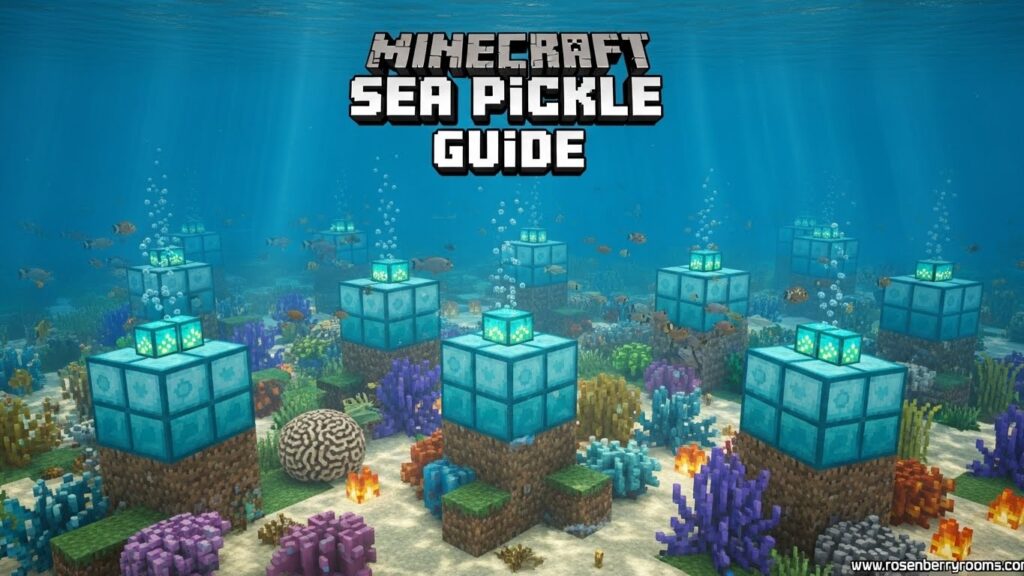
A sea pickle is a small block in Minecraft that emits light underwater and is typically found in colonies of up to four sea pickles. These versatile blocks serve multiple purposes including providing underwater illumination, creating lime dye through smelting, supporting coral growth, and contributing to composting. Sea pickles naturally generate in warm ocean biomes, most commonly on coral blocks within coral reefs, and can be harvested by hand without tools.
Key Information Summary:
| Feature | Details |
|---|---|
| Light Emission | 6-15 light level (depends on pickle count) |
| Max Group Size | 4 sea pickles per block |
| Natural Generation | Warm ocean biomes on coral blocks |
| Renewable | Yes (can be farmed indefinitely) |
| Primary Uses | Underwater lighting, lime dye, composting |
This comprehensive guide covers everything you need to know about Minecraft sea pickles, from basic information and finding methods to advanced farming techniques and creative building applications. Whether you’re a beginner looking to understand these underwater blocks or an experienced builder seeking to master sea pickle mechanics, this article provides detailed strategies, tips, and insights that go beyond what other guides offer.
Contents
What Is a Sea Pickle in Minecraft?
A sea pickle is a light-emitting vegetation block that naturally generates underwater in Minecraft. While it may appear as simple underwater plants at first glance, sea pickles play a crucial role in ocean builds and underwater survival setups. These blocks were introduced in Minecraft Java Edition 1.13 as part of the Aquatic Update, bringing significant enhancements to the game’s underwater experience.
Sea pickles have several distinctive properties:
- They emit light when underwater (6-15 light level depending on the number of pickles)
- They can be stacked in groups of 1-4 on the same block
- They can be grown using bone meal on coral blocks
- They’re renewable and can be farmed indefinitely
- They drop themselves when broken by hand
- They’re affected by waterlogging mechanics
The sea pickle is modeled after real-world pyrosomes, strange colonial marine organisms that emit bioluminescence. This attention to biological accuracy adds depth to Minecraft’s underwater ecosystem and makes sea pickles more than just functional blocks – they’re part of the game’s immersive world-building.
Where Sea Pickles Spawn Naturally?
Sea pickles generate naturally at the bottom of warm ocean biomes, most commonly on coral blocks within coral reefs. Each chunk has a chance to generate sea pickle colonies in groups of one to four pickles. Because of this natural generation pattern, coral reefs are the best locations to search when looking for sea pickles.
Optimal Biomes for Finding Sea Pickles:
- Warm Ocean Biomes: Highest concentration of sea pickles
- Lukewarm Ocean Biomes: Moderate spawn rate
- Deep Warm Ocean Biomes: Less common but still present
Specific Locations to Search:
- Look for coral reefs, particularly those with live coral blocks
- Check underwater caves and ravines within ocean biomes
- Explore shipwrecks and underwater structures where coral may have spread
- Search around underwater mountains and ridges
Alternative Methods to Obtain Sea Pickles:
Beyond natural generation, sea pickles can be obtained through several alternative methods:
- Wandering Traders: These NPC traders occasionally offer sea pickles in exchange for emeralds
- Desert Villages: Sea pickles sometimes appear as decorative items in flower pots within desert village buildings
- Ocean Monuments: Rarely, sea pickles can be found in ocean monument structures
- Fishing: While uncommon, sea pickles can occasionally be caught while fishing in ocean biomes
Once you obtain your first sea pickle, you can begin the process of farming and multiplying them indefinitely, making them a sustainable resource for your Minecraft projects.
How to Place Sea Pickles?
Sea pickles are remarkably flexible when it comes to placement options. Understanding their placement mechanics is crucial for effective use in your builds and farms.
Basic Placement Rules:
- Sea pickles can be placed on most solid blocks
- They require water or being waterlogged to emit light
- Multiple sea pickles can occupy the same block space (up to 4)
- They can be placed on top of each other in the same block
- They follow the same placement rules as other underwater plants
Placement Techniques:
- Underwater Lighting: Place sea pickles directly on the ocean floor or attach them to underwater structures
- Building Decor: Use sea pickles as decorative elements in underwater bases and coral reef builds
- Farming Setup: Position sea pickles on coral blocks to begin the farming process
- Composting: Place sea pickles in composters for bone meal or other composting applications
The flexibility of sea pickle placement makes them valuable for both functional builds (like underwater lighting systems) and aesthetic projects (like vibrant coral reef ecosystems).
Sea Pickle Light Levels and Properties
Understanding sea pickle light emission is essential for effective use in underwater builds and farms.
Light Emission by Pickle Count:
- 1 Sea Pickle: Emits light level 6
- 2 Sea Pickles: Emits light level 9
- 3 Sea Pickles: Emits light level 12
- 4 Sea Pickles: Emits light level 15 (maximum brightness)
Additional Properties:
- Water Sensitivity: Sea pickles only emit light when waterlogged or underwater
- Transparency: They’re transparent blocks that don’t obstruct vision
- Hardness: Zero hardness makes them easy to break by hand
- Blast Resistance: Zero blast resistance means they’re easily destroyed by explosions
- Flammability: Non-flammable and won’t catch fire from lava
These properties make sea pickles ideal for underwater applications where visibility and ease of manipulation are important factors.
How to Grow Sea Pickles?
Growing sea pickles is a straightforward process that allows you to create sustainable farms for these valuable blocks.
Basic Growing Requirements:
- Coral Blocks: Sea pickles grow on live coral blocks
- Bone Meal: Used to stimulate growth
- Water: Essential for the growing process
- Space: Adequate room for pickle expansion
Step-by-Step Growing Process:
- Locate a live coral block underwater
- Place a single sea pickle on the coral block
- Apply bone meal to the sea pickle
- The sea pickle will multiply to fill the block (up to 4 pickles)
- Harvest the sea pickles and repeat the process
Advanced Farming Techniques:
Semi-Automatic Farming: Create a dispenser system connected to a redstone clock that automatically applies bone meal to coral blocks. This setup requires:
- Dispensers filled with bone meal
- Redstone clock circuit for timing
- Water source to keep coral alive
- Collection mechanism for harvested pickles
AFK Farming: For automated farming while away from keyboard:
- Plant sea pickles on coral blocks
- Use dispensers with bone meal
- Implement piston systems to harvest pickles
- Ensure proper water flow and coral maintenance
Automatic Farming: The most complex but efficient method involves:
- Redstone circuitry for automated bone meal application
- Piston harvesters for pickle collection
- Water circulation systems
- Coral block regeneration mechanisms
Sea Pickle Crafting and Smelting Recipes
Sea pickles have limited crafting applications but significant smelting value.
Smelting Recipe:
- Input: Sea Pickle
- Fuel: Any suitable fuel (coal, wood, etc.)
- Output: Lime Dye
- Experience: 0.1 XP
Crafting Applications:
Unlike many Minecraft items, sea pickles don’t have traditional crafting recipes. Their primary value comes from:
- Direct use as underwater light sources
- Smelting into lime dye
- Composting applications
- Decorative building elements
Uses for Sea Pickles in Minecraft
Sea pickles serve multiple practical and creative purposes in Minecraft gameplay.
Primary Uses:
- Underwater Lighting: The most common use, providing illumination for underwater bases and structures
- Lime Dye Production: Smelting sea pickles creates lime dye for crafting and decoration
- Composting: Sea pickles have a 65% chance to raise compost levels when placed in a composter
- Coral Reef Ecosystems: Essential for creating realistic underwater environments
- Building Decoration: Adds visual interest to aquatic builds and structures
Creative Applications:
- Underwater Cities: Use sea pickles for street lighting and building illumination
- Aquariums and Zoos: Create realistic marine environments in your builds
- Decorative Patterns: Arrange sea pickles in artistic formations on ocean floors
- Thematic Builds: Incorporate sea pickles into pirate ship wrecks, underwater temples, and other ocean-themed structures
The versatility of sea pickles makes them valuable for both survival gameplay and creative building projects.
Sea Pickle Farming Strategies
Mastering sea pickle farming ensures you have a sustainable supply for all your underwater projects.
Basic Farming Setup:
- Find a suitable underwater location with live coral blocks
- Clear the area of hostile mobs and obstacles
- Place initial sea pickles on coral blocks
- Apply bone meal to stimulate growth
- Harvest mature sea pickles and repeat
Efficiency Tips:
- Location Selection: Choose areas with high coral density for faster farming
- Bone Meal Management: Use bone meal strategically to maximize growth
- Protection Measures: Build barriers to protect your farm from hostile mobs
- Harvest Timing: Collect pickles at optimal growth stages
Troubleshooting Common Issues:
- Coral Dying: Ensure adequate water flow and prevent complete darkness
- Slow Growth: Check for sufficient bone meal and proper placement
- Pickles Disappearing: Verify water presence and prevent drying out
- Mob Interference: Implement protection systems like fences or walls
Advanced Sea Pickle Techniques
For experienced players, several advanced techniques can enhance your sea pickle usage.
Redstone Applications:
- Automated Harvesting: Use pistons and redstone to create automatic pickle harvesters
- Growth Monitoring: Implement redstone circuits to detect pickle growth stages
- Fuel Management: Create systems to automatically supply bone meal to farms
Building Innovations:
- Dynamic Lighting Systems: Design underwater lighting that responds to player presence
- Self-Sustaining Ecosystems: Create coral reef systems that maintain themselves
- Hidden Structures: Use sea pickles as markers or triggers for secret builds
Performance Optimization:
- Chunk Loading: Ensure your farm is in a regularly loaded chunk
- Render Distance: Adjust settings for optimal sea pickle visibility
- Server Performance: Consider the impact of large sea pickle farms on server resources
Common Mistakes to Avoid
Even experienced players can make mistakes when working with sea pickles. Here are key pitfalls to avoid:
Placement Errors:
- Dry Placement: Forgetting that sea pickles need water to emit light
- Incorrect Blocks: Trying to place sea pickles on unsuitable surfaces
- Overcrowding: Placing too many pickles in inefficient patterns
Farming Mistakes:
- Insufficient Bone Meal: Not using enough bone meal for optimal growth
- Poor Location Choice: Farming in areas with low coral density
- Neglecting Maintenance: Failing to harvest pickles at the right time
Usage Oversights:
- Wasting Lime Dye: Not smelting sea pickles for dye when needed
- Ignoring Composting Value: Forgetting sea pickles’ composting applications
- Underutilizing Aesthetics: Not incorporating sea pickles into builds effectively
Platform-Specific Information
Sea pickle behavior varies slightly between Minecraft editions:
Java Edition:
- More consistent growth patterns
- Better redstone integration for farming
- Enhanced visual effects for underwater lighting
Bedrock Edition:
- Slightly different growth mechanics
- Mobile-friendly farming approaches
- Console-specific optimization tips
Legacy Console Edition:
- Limited redstone capabilities
- Simplified farming methods
- Different control schemes for placement
Frequently Asked Questions
How do I find sea pickles in Minecraft?
Sea pickles naturally generate in warm ocean biomes, primarily on coral blocks within coral reefs. Search underwater areas with visible coral formations, particularly in shallow to medium-depth waters.
Can sea pickles be grown without bone meal?
While bone meal significantly speeds up growth, sea pickles can spread naturally over time through adjacent coral blocks, though this process is much slower.
What’s the best way to farm sea pickles?
The most efficient method involves creating an automated farm with dispensers applying bone meal to coral blocks, combined with piston harvesters for collection.
How much light do sea pickles emit?
Sea pickles emit light levels from 6 (single pickle) to 15 (four pickles), making them effective underwater light sources.
Can sea pickles be used for anything besides lighting?
Yes, sea pickles can be smelted into lime dye and used in composters, plus they serve decorative purposes in underwater builds.
Do sea pickles work in all water types?
Sea pickles function in all water types but are most commonly found and effective in ocean biomes.
How do I protect my sea pickle farm?
Build barriers or enclosures, use lighting to prevent mob spawns, and consider implementing redstone-based protection systems.
Can sea pickles be traded with villagers?
Sea pickles cannot be traded with villagers, but wandering traders may offer them occasionally.
Do sea pickles have any special mechanics?
Sea pickles are affected by waterlogging, emit light only when wet, and can be stacked in groups of up to four on the same block.
What’s the rarest sea pickle configuration?
The four-pickle configuration is the rarest naturally occurring form and emits the most light.
Final Tips and Strategies
Maximize your sea pickle usage with these expert tips:
- Combine with Other Light Sources: Use sea pickles alongside sea lanterns and glowstone for optimal underwater lighting
- Create Thematic Builds: Incorporate sea pickles into coral reef ecosystems for realistic underwater environments
- Batch Process Pickles: Smelt multiple sea pickles at once to efficiently produce lime dye
- Share Your Creations: Document and share your sea pickle builds with the Minecraft community
- Stay Updated: Monitor Minecraft updates for potential changes to sea pickle mechanics
Sea pickles may be one of Minecraft’s most underrated blocks, but their versatility and unique properties make them invaluable for underwater exploration and building. Whether you’re lighting up your ocean base, creating vibrant coral reefs, or producing lime dye for your crafting projects, mastering sea pickle mechanics will enhance your Minecraft experience significantly.
Remember to experiment with different placement patterns, farming techniques, and building applications to discover the full potential of these remarkable underwater blocks. The more you work with sea pickles, the more creative and efficient uses you’ll discover for them in your Minecraft worlds.