
12 Best Whole House Water Filters for Well Water (July 2026) Honest Reviews
The best whole house water filters for well water are not interchangeable. A point-of-entry filter treats water before it reaches every faucet, shower, appliance, and laundry connection, but the right media depends on what a laboratory test finds.
I would not choose a system from a rotten-egg smell, orange stains, or cloudy water alone. Those symptoms can suggest hydrogen sulfide, iron, manganese, sediment, or other issues, yet a certified test is what tells you which treatment stage belongs on your plumbing.
Contents
This guide compares 12 analyzed whole-home systems using their documented features, ratings, flow specifications, capacity, and maintenance approach. I focus on where each system fits, where it does not fit, and the installation questions that prevent a filter from becoming a pressure-loss problem.
Top 3 Picks for Best Whole House Water Filters for Well Water (July 2026)
The iSpring WGB21BM is our best all-around cartridge choice for sediment plus moderate iron and manganese. The iSpring WGB32BM adds a third stage for a broader group of common well-water concerns, while the Waterdrop WHF21-FG combines a stated 15 GPM rating with a 50,000-gallon lifespan.

As an Amazon Associate we earn from qualifying purchases.
12 Best Whole House Water Filters for Well Water In 2026
Use this overview to create a shortlist, then compare it with your test results and peak fixture demand. A filter with iron media is not automatically a bacteria filter, and a UV stage is not a sediment or hardness solution.
| Product | Features | |
|---|---|---|
| iSpring WGB21BM |
|
Check Latest Price |
 VEVOR 3-Stage VEVOR 3-Stage |
|
Check Latest Price |
 iSpring WGB32BM iSpring WGB32BM |
|
Check Latest Price |
 Fleck 5600 SXT Iron Eater Fleck 5600 SXT Iron Eater |
|
Check Latest Price |
 Express Water 3-Stage Express Water 3-Stage |
|
Check Latest Price |
 Waterdrop WHF21-FG Waterdrop WHF21-FG |
|
Check Latest Price |
 APEC CB3 APEC CB3 |
|
Check Latest Price |
 iSpring WCFM500K iSpring WCFM500K |
|
Check Latest Price |
 Home Master HMF3SdgFeC Home Master HMF3SdgFeC |
|
Check Latest Price |
 BLUONICS 110W UV BLUONICS 110W UV |
|
Check Latest Price |
 PUREPLUS 2-Stage PUREPLUS 2-Stage |
|
Check Latest Price |
 PRO+AQUA Elite 5-Stage PRO+AQUA Elite 5-Stage |
|
Check Latest Price |
We earn from qualifying purchases.
1. The iSpring WGB21BM is the best all-around cartridge system for moderate iron and manganese.
iSpring WGB21BM 2-Stage Whole House Water Filtration System...
2 stages
15 GPM
100,000 gallons
Pros
- 4.7 rating from 4
- 200+ reviews
- 15 GPM flow
- 100
- 000-gallon capacity
- DIY-friendly
Cons
- Manual operation
- Periodic cartridge changes
The iSpring WGB21BM starts with a 5-micron sediment filter for dust, silt, and rust. Its second Big Blue housing uses a KDF55/GAC carbon filter that is documented to reduce iron, manganese, and chlorine.
I would put this model first on a shortlist for a test showing moderate metal staining plus ordinary well sediment. It has one-inch ports, a stated maximum flow of 15 GPM, a listed 100,000-gallon capacity, and a six-month filter life.
The best fit is a household that wants simple two-stage treatment with substantial review history.
The 4.7 average from 4,200+ reviews is the strongest rating-and-volume combination in this group. Replaceable filters and manual operation make the service routine easy to understand, especially where there is room below the housings.
Monitor pressure after installation rather than treating six months as a fixed rule. A sediment-heavy well can load the first stage sooner, and a clean baseline reading gives you a better service signal than a guess.
The poor fit is a well with confirmed bacteria, strong sulfur odor, or a need for automatic cleaning.
This product is not documented as a UV sterilizer or an air-injection hydrogen sulfide system. A positive coliform result needs prompt guidance from local health authorities or a qualified water-treatment professional, not an assumption that an iron filter handles microbes.
For a severe sulfur issue, compare systems with direct hydrogen sulfide claims such as the Fleck Iron Eater or iSpring WCFM500K. That distinction matters more than adding generic carbon filtration to an untested problem.
2. The VEVOR 3-Stage is the broad cartridge answer with 20-inch Big Blue housings.
VEVOR Whole House Water Filter System, 3-Stage | Sediment...
3 stages
20-inch housings
3-6 months
Pros
- Three filtration stages
- Iron and manganese reduction
- Large Big Blue housings
- 4.7 rating
Cons
- 48-review sample
- Manual operation
VEVOR uses a sediment, IMR, and CTO sequence in 4.5 by 20 inch Big Blue housings. The analyzed listing says it reduces iron, manganese, chlorine, bad taste, odor, and rust, with a stated three- to six-month filter cycle.
The 20-inch housing format is the reason I would consider it for a well that sends enough sediment to make short filters tedious. More filter media can be helpful, though the actual interval still depends on water use and particle load.
The best fit is an owner who wants three separate cartridge jobs in a larger housing format.
The three-stage order gives sediment, metal reduction, and taste-and-odor treatment distinct places to work. That makes diagnosis easier if one stage becomes dirty much sooner than the others.
The product has a 4.7 rating, but it comes from 48 reviews. I would call that encouraging, not a replacement for a larger review base or a lab report that confirms the contaminant match.
The poor fit is a property that needs a documented high-flow rating or self-cleaning tank.
No maximum GPM appears in the analyzed data. Before mounting it in a multi-bathroom home, verify the current manufacturer flow specification and compare it with simultaneous shower, laundry, sink, and dishwasher use.
The system also has no listed UV stage or automatic backwash. Treat those as separate needs if the test identifies bacteria or the well repeatedly overwhelms cartridge media.
3. The iSpring WGB32BM is the best value three-stage choice for common well-water concerns.
iSpring Whole House Water Filter System, Reduces Iron...
3 stages
15 GPM
6-month cycle
Pros
- Three treatment stages
- 15 GPM flow
- 4.6 rating from 1
- 300+ reviews
- Targets several common issues
Cons
- Manual operation
- Periodic filter changes
The iSpring WGB32BM is a three-stage Big Blue system documented to reduce iron, manganese, chlorine, sediment, taste, and odor. I see it as the sensible step up from the two-stage WGB21BM when a test shows more than sediment and metal staining.
Its listed 15 GPM maximum flow rate and six-month filter cycle are practical whole-home figures. The product has a 4.6 average across 1,300+ reviews, which gives it a much deeper feedback pool than recently introduced models.
The best fit is a well with mixed sediment, iron, manganese, and everyday taste or odor concerns.
The extra stage gives this model a broader documented treatment list without moving into a tank-and-valve installation. For many households, that is a useful balance between accessible filter changes and coverage for several ordinary well-water symptoms.
Give the housings a bypass and enough vertical clearance to remove cartridges. Those small plumbing choices make it far easier to maintain the system on its real schedule.
The poor fit is a test result that calls for UV disinfection or automatic regeneration.
This is a manual cartridge system, not a bacteria-treatment device or self-cleaning iron tank. It should not be selected as the sole response to a positive bacterial test or a hard-to-control hydrogen sulfide result.
It is also worth remembering that taste and odor have many causes. Confirm the source in the laboratory report before assuming a three-stage filter is the complete answer.
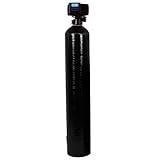
4. The Fleck 5600 SXT Iron Eater is the direct answer for tested iron, manganese, and hydrogen sulfide.
DuraWater Fleck 5600 SXT Air Injection Iron Eater Filter...
Air injection
Catalytic carbon
Auto backwash
Pros
- Targets iron manganese and H2S
- Automatic backwashing
- Catalytic carbon media
- Electronic control valve
Cons
- Professional installation likely
- Electronic components
- No stated flow figure
The Fleck 5600 SXT Air Injection Iron Eater uses air injection oxidation, 1.5 cubic feet of catalytic carbon, and automatic backwashing. Its product data specifically names iron, manganese, and hydrogen sulfide removal.
That makes this product a different class of treatment from a cartridge rack. I would investigate it when a test confirms sulfur odor alongside staining metals, because air injection and catalytic carbon are directed at that reported contaminant mix.
The best fit is a property with rotten-egg odor plus iron or manganese results.
The electronic Fleck control head automates the backwash process, reducing the routine cartridge workload that a persistent metal or sulfur problem can create. The model has a 4.5 rating based on 362 reviews.
Plan for electrical power and a suitable drain before choosing it. The automatic cleaning cycle is a benefit only when the installation can safely support the backwash discharge.
The poor fit is a light-sediment issue, a no-drain location, or an unmeasured odor.
A basic particulate problem may be handled more simply with sediment filtration. Backwashing equipment adds installation decisions that are not necessary when large sand or silt is the only confirmed concern.
The analyzed data does not state a maximum GPM. Ask for current sizing and flow documentation before connecting it to a high-demand plumbing system.
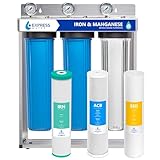
5. The Express Water 3-Stage is the answer for iron staining with lead and arsenic reduction claims.
Express Water Whole House Water Filter System | IRON...
3 stages
Iron and manganese
Lead and arsenic
Pros
- Three filtration stages
- Iron and manganese treatment
- Lead and arsenic reduction
- Targets stains
Cons
- 19-review sample
- Manual operation
Express Water describes this as a three-stage full-home filter for iron and manganese, with stated reduction for lead and arsenic. It also targets stains and color on glassware, fixtures, and laundry, which makes the intended use clear for a home dealing with metal marks.
I would keep lead and arsenic claims tied tightly to laboratory results. Neither contaminant is diagnosed by stain color or odor, so a test should identify the concern before this becomes part of the treatment plan.
The best fit is a well with confirmed staining metals and a report that makes heavy-metal reduction relevant.
The three-stage layout and six-month filter-life listing suit owners who are comfortable with cartridge service. It has a 4.5 rating, though the analyzed data has only 19 reviews, so the rating sample is small.
Track flow and pressure from the first cartridge set. That record makes it easier to see whether sediment is exhausting an upstream stage before the listed service interval.
The poor fit is a buyer who expects UV disinfection, air injection, or automatic backwashing.
The data does not list a UV chamber, an air injection process, or a regeneration valve. It is not a reason to skip a bacteria response after a positive test or to ignore a confirmed high hydrogen sulfide level.
It also makes sense to confirm the exact reduction claims against the current product documentation and your water chemistry. No whole-home cartridge system should be treated as a universal remedy for every dissolved contaminant.
6. The Waterdrop WHF21-FG is the budget pick with 15 GPM and a documented 50,000-gallon lifespan.
Waterdrop WHF21-FG 2-Stage Whole House Water Filter System...
5-stage process
15 GPM
50,000 gallons
Pros
- 15 GPM flow
- 50
- 000-gallon lifespan
- Lead-free components
- Leak-resistant construction
Cons
- Manual operation
- No smart-home support
The Waterdrop WHF21-FG is a two-stage whole-home system that the manufacturer describes as a five-stage process. Its documented target list includes iron, manganese, lead, chlorine, and odor, with a stated maximum flow rate of 15 GPM.
The listing also cites a 50,000-gallon lifespan, one-inch inlet and outlet connections, brass threads, dual O-rings, and a leak-free structure. I like having those plumbing details available because a good treatment concept is not enough if the housing is difficult to maintain reliably.
The best fit is a home that needs a published 15 GPM rating and common contaminant reduction claims.
A stated 15 GPM capability is useful for households concerned about weak showers when appliances are running. Actual flow still depends on feed pressure, pipe size, cartridge condition, and the number of fixtures used at the same time.
The model has a 4.4 average from 1,553 reviews, one of the larger review pools here. Its NSF/ANSI 372 statement concerns lead-free wetted components; it is not the same as a performance certification for every listed reduction claim.
The poor fit is a home that needs regeneration, UV, or specialized sulfur treatment.
This is a manual carbon-and-filter system, not a water softener and not a UV disinfection stage. Hardness, bacteria, and difficult H2S problems need treatment selected from the test result.
Use pressure drop and water appearance to set the change rhythm. A calendar reminder is helpful, but the condition of the actual well water should lead the decision.
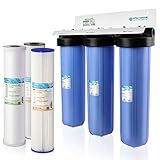
7. The APEC CB3 is the answer for light sediment, staining, and a reusable first stage.
APEC 3-Stage Whole House Water Filter System with Iron...
3 stages
80,000 gallons
4 GPM
Pros
- Reusable 30-micron sediment stage
- Iron and carbon filters
- 80
- 000-gallon capacity
- Pre-assembled
Cons
- 4 GPM maximum flow
- Temporarily out of stock
The pre-assembled APEC CB3 has a 30-micron reusable sediment filter, a high-capacity iron filter, and a 25-micron carbon filter. The listing identifies it for light sediment, odor, and staining concerns and states an 80,000-gallon capacity.
The reusable first stage is its defining feature. I would consider it where larger debris is common and the owner is prepared to clean that stage before it passes excess dirt downstream.
The best fit is a modest-demand household with larger sediment and visible iron stains.
The first filter can capture coarse material, while the iron and carbon stages address the named staining and odor concerns. Pre-assembly also reduces the amount of manifold building needed before mounting.
Its 4.4 rating from 98 reviews is useful context, but the analyzed listing reports temporary out-of-stock status. Verify availability before making it the answer to an immediate water-quality issue.
The poor fit is a home with high simultaneous fixture demand.
The stated maximum flow rate is 4 GPM, far below the 15 GPM and 24 GPM figures elsewhere in this group. Treat that as a primary sizing limitation, not a footnote.
The 30-micron and 25-micron figures also show that it is not designed as a fine-polishing sediment path. Match the micron choice to the particle size and pressure condition in your own water supply.
8. The iSpring WCFM500K is the low-touch answer for documented iron, manganese, and hydrogen sulfide levels.
iSpring WCFM500K Whole House Water Filtration System for...
500,000 gallons
12 GPM
Digital auto-flush
Pros
- Iron up to 12 ppm
- H2S up to 20 ppm
- 500
- 000-gallon capacity
- No replacement filters stated
Cons
- Requires electricity
- 56-review sample
- Limited stock
The iSpring WCFM500K is a freestanding system with digital LED controls and programmable auto-flush intervals. It is documented to reduce iron up to 12 ppm, manganese, and hydrogen sulfide up to 20 ppm using air-based regeneration with no chemicals stated.
Its listed capacity is 500,000 gallons, with a stated lifespan up to ten years without replacement filters. The maximum flow is documented as 12 GPM, and the system includes 3-micron sediment filtration.
The best fit is a tested iron or sulfur well where low routine cartridge work matters.
Automatic flushing and a high stated capacity are the reasons to investigate this model. Its treatment limits give you values to compare directly with a laboratory report instead of choosing from a vague promise.
The 4.4 average is based on 56 reviews, so the review sample is limited. I would give more weight to the confirmed ppm match, installation requirements, and the ability to support a tall 64.8-inch system.
The poor fit is a no-power location or a home that requires more than 12 GPM.
This model uses corded electric power for its controls and has a stated 12 GPM maximum. High-demand homes should calculate their likely peak use instead of assuming any whole-home tank will meet it.
It still does not replace microbial testing. A system selected for iron and H2S should not be treated as the complete answer if a laboratory report also identifies bacteria.
9. The Home Master HMF3SdgFeC is the progressive-filtration answer for varied sediment sizes.
Home Master Whole House Three Stage Water Filtration System...
25-10-5-1 micron
15 GPM
100,000 gallons
Pros
- Progressive four-layer sediment filter
- 15 GPM flow
- 100
- 000-gallon capacity
- Iron and manganese reduction
Cons
- Manual operation
- Limited stock
The Home Master HMF3SdgFeC uses three stages and a four-layer 25-10-5-1 micron replaceable sediment filter. The data says it removes up to 95% of iron, manganese, sediment, and chemicals, with Radial Flow Filters technology.
I would look closely at the progressive micron sequence for a well that carries a mix of visible grit and finer cloudy material. Coarser layers can catch larger particles first, leaving the finer layer to work on what remains.
The best fit is a mixed-sediment well that also has iron and manganese results.
It has one-inch ports, a stated 15 GPM maximum flow rate, and 100,000 gallons of listed capacity. Those figures are well suited to a whole-house line where normal fixture performance matters.
The 4.3 rating from 204 reviews provides a moderate review base. Record clean pressure after installation so you can tell when the progressive filter has reached the end of its useful service period.
The poor fit is a home wanting automatic backwash or a dedicated hydrogen sulfide solution.
The product is manual, and its specifications do not claim a UV stage or an H2S-focused air-injection process. High sediment loads may still create regular cartridge maintenance even with several micron layers.
For sulfur odor, compare a system with direct hydrogen sulfide documentation. For bacteria, keep UV and proper pre-filtration in the conversation after testing.
10. The BLUONICS 110W UV is the high-flow answer for sediment, carbon, and a UV stage.
Bluonics Whole House Water Filter System for Well Water...
24 GPM
110W UV
Sediment and carbon
Pros
- 24 GPM stated flow
- 110W UV chamber
- Sediment carbon and UV stages
- Pressure gauges included
Cons
- Not a TDS reduction system
- Not Prime eligible
The BLUONICS system combines sediment and carbon filtration with a 110W stainless-steel UV chamber. Its stated maximum flow is 24 GPM, the highest documented number in this selection, and it uses 20 by 4.5 inch housings with one-inch NPT ports.
It also includes pressure gauges and a metal stand. Those details matter because a high-flow setup needs both routine monitoring and a stable, serviceable location.
The best fit is a high-demand home whose treatment plan includes UV after pre-filtration.
Sediment treatment should occur before UV because particles can block ultraviolet exposure. The 24 GPM figure makes this the system to investigate when a larger home needs strong stated flow and a UV component.
UV equipment needs lamp and sleeve maintenance according to the manufacturer. A glowing lamp does not substitute for routine service or follow-up testing when microbial safety is the reason for adding it.
The poor fit is a buyer seeking dissolved-solids reduction or a cure for every well-water issue.
The listing says it is not a TDS reduction system. Carbon, sediment filtration, and ultraviolet disinfection do not play the same role as a reverse osmosis membrane for drinking water.
UV also does not remove iron staining or hydrogen sulfide on its own. Use it as a defined treatment stage rather than a general-purpose well filter.
11. The PUREPLUS 2-Stage is the compact answer for basic sediment, iron, and odor filtering.
PUREPLUS 2-Stage Whole House Water Filtration System...
2 stages
30,000 gallons
Pressure gauges
Pros
- Pressure gauge included
- Iron and manganese reduction
- Carbon block for odor
- Space-saving design
Cons
- 4.1 rating
- 3-month filter shelf life
- No listed GPM
PUREPLUS pairs a dual-function composite filter with a natural activated-carbon block filter in clear ten-inch universal housings. It is documented to reduce sediment, iron or manganese, chlorine, taste, and odor, and it has one-inch inlet and outlet connections.
The included pressure gauge is the feature I would use most. It lets you compare running pressure with a clean baseline instead of waiting for household flow to become noticeably poor.
The best fit is a space-conscious home with ordinary sediment and odor needs.
The two stages give particles and iron or manganese one job, then give the carbon block a role in chlorine, odor, and organic-compound reduction. This simple order suits an owner willing to monitor and service a cartridge system.
The analyzed data lists 30,000 gallons of capacity and a 4.1 rating from 76 reviews. It also lists a three-month filter shelf life, which should not be confused with the service life of a cartridge already installed in a well-water line.
The poor fit is a high-demand home or a test that calls for specialized media.
No maximum GPM is provided in the analyzed data, so verify it before placing the system on a line with heavy simultaneous use. A smaller compact design should not be assumed to match a published 15 GPM system.
It is not listed with UV, softening resin, air injection, or automatic cleaning. Hardness, bacteria, and persistent sulfur issues require a more specific treatment plan.
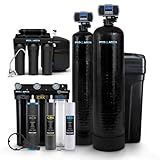
12. The PRO+AQUA Elite bundle is the integrated answer for a softener, filter, and drinking-water RO package.
PRO+AQUA Elite 5-Stage Whole House Water Softener and Filter...
5 stages
10.31 GPM
Auto regeneration
Pros
- Five-stage treatment
- Auto regeneration
- Iron sulfur and sediment reduction
- RO system included
Cons
- 325-pound unit
- 3.9 rating
- Corded electric
The PRO+AQUA Elite is a five-stage bundle described for well water and homes with three to four bathrooms. The listing says it reduces heavy metals, iron, sulfur, sediment, and chlorine, includes auto regeneration, and comes with an RO system.
I would view this as a treatment-package project, not a simple filter swap. The specifications state a 10.31 GPM maximum, corded electric power, commercial-grade materials, and a 325-pound unit.
The best fit is a multi-contaminant well that needs whole-home treatment plus a separate RO drinking stage.
Whole-house filtration can protect plumbing and improve water at every tap, while a dedicated RO stage can serve drinking and cooking water when the laboratory report supports membrane treatment. The auto-regeneration feature can reduce manual work compared with cartridge-only systems.
Confirm the physical layout before ordering. The listing title describes a whole-house bundle, while one analyzed installation field says under sink, so the exact placement and included components should be verified.
The poor fit is a small utility room or a buyer not ready for a planned installation.
A heavy unit with electricity and regeneration needs calls for stable placement, plumbing access, a drain plan, and service clearance. Hiring a qualified installer is sensible if any of those requirements are unfamiliar.
Its 3.9 average from 126 reviews is the lowest rating in this group. That does not remove its broad documented treatment scope, but it makes a precise test match and current documentation check especially important.
How To Choose The Best Whole House Water Filters for Well Water?
Private well water is not treated by a municipal utility, so a whole house water filtration system should be matched to your source. Orange or brown marks can point toward iron or manganese, a rotten-egg smell can point toward hydrogen sulfide, and cloudy water may be sediment, but none of those signs replaces measured results.
Iron bacteria needs special attention because it is an organism, not simply a dissolved-iron reading. It can contribute to slime and clogging in plumbing or treatment equipment, so homeowners who suspect it should ask a qualified local professional about well cleaning or disinfection as well as filtration.
The five testing steps are simple when you separate sample collection from product shopping.
Choose a certified laboratory or follow private-well advice from your local health department.
Request tests that fit your symptoms, such as iron, manganese, hydrogen sulfide, hardness, pH, tannins, and bacteria where relevant.
Use the laboratory container and sampling instructions exactly, particularly for bacteria testing.
Record water symptoms, existing treatment, and whether the sample came before or after any filter.
Match every measured result with a treatment stage rather than buying one system for every possible contaminant.
The report-reading answer is to separate particles, dissolved contaminants, and microbes.
Sediment is particulate and is commonly addressed with a micron-rated pre-filter. Dissolved iron, manganese, hardness minerals, and tannins need media selected for those specific compounds, while bacterial treatment is a separate concern that may call for UV after appropriate pre-filtration.
For hard water, a water softener and filter combo can make sense because softening and filtration do different jobs. For drinking water, an under-sink reverse osmosis unit can complement a whole-home system when a lab result calls for an additional membrane stage.
The right system type follows the contaminant and the household flow requirement.
Use sediment filtration for sand, silt, rust, or cloudiness; use iron-and-manganese media for tested staining metals; and investigate air injection or catalytic carbon for documented hydrogen sulfide. Use UV as a treatment stage only when a bacteria-focused plan calls for it, and do not expect it to remove sediment or hardness.
The stated flow figures here range from 4 GPM on the APEC CB3 to 24 GPM on the BLUONICS. The iSpring WGB21BM, WGB32BM, Waterdrop, and Home Master state 15 GPM; the WCFM500K states 12 GPM; and PRO+AQUA states 10.31 GPM. VEVOR, Fleck, Express Water, and PUREPLUS have no documented maximum flow figure in the analyzed data.
The micron answer is that 5 micron is finer than 20 micron, not automatically better.
A 20-micron stage catches larger particles and may resist quick clogging in a sandy well. A 5-micron stage catches smaller particles but can load faster when used as the first filter on a very dirty supply.
I favor a staged approach when sediment is heavy: use a coarse pre-filter before a finer stage. The Home Master’s documented 25-10-5-1 micron sequence is one example, while the iSpring WGB21BM has a 5-micron sediment first stage.
The maintenance answer is to choose cartridge or backwashing service based on your water load.
Cartridge systems are familiar and straightforward, but filter changes are part of ownership. The reviewed cartridge products list intervals from three to six months where stated, while forum discussions commonly report six to twelve months depending on water condition and filter type.
Backwashing and auto-flush systems need a drain, power in the analyzed Fleck and iSpring tank examples, and setup space. They can reduce hands-on filter changes for persistent iron, manganese, or sulfur, but they are more involved to install.
The installation answer is to plan service access, a bypass, and pressure monitoring before mounting.
Install a point-of-entry system where the well supply enters the home, commonly after the pressure tank when that arrangement applies and before interior branch lines. Include shutoff valves, a bypass, and unions so the system can be serviced without making routine maintenance a plumbing emergency.
Leave enough vertical space to remove cartridge housings. Tank systems need room around their valve, drain connection, and power source, while UV assemblies need access for lamp and sleeve maintenance.
The pressure-loss answer is to take a clean baseline reading and compare it over time.
Pressure gauges are included on the BLUONICS and PUREPLUS systems, and they can be added to other installations. Read pressure after a clean installation, then watch for decline as a practical sign that a filter is loading with sediment.
Pressure loss may mean a stage has done its job, but it can also reveal an undersized system, an overly fine first filter, or inadequate GPM for the home. That is why actual measurement beats a generic replacement schedule.
The DIY answer is that cartridges are often simpler than backwashing equipment, but plumbing skill still matters.
Forum users often report handling cartridge systems themselves, while tank systems with backwash drains more often lead to a plumber. I would not turn that into a rule: a careful DIY installation can work, but only when the owner understands shutoffs, bypassing, connections, leak testing, and local requirements.
Qualified installation is a sound choice for a heavy system, electrical work, a required drain route, or a positive bacteria result that needs a coordinated treatment response. Good installation is part of filter performance, not an afterthought.
FAQs
What type of whole house water filter is best for well water?
The best type is matched to a laboratory water test. Use sediment filtration for particles, iron or manganese media for staining metals, air injection or catalytic carbon for documented hydrogen sulfide, a softener for hardness, and UV after pre-filtration when a treatment plan calls for disinfection.
Which filter is best for well water?
For sediment plus moderate iron and manganese, the iSpring WGB21BM is a strong starting point with a 5-micron sediment stage, stated 15 GPM flow, 100,000-gallon capacity, and a 4.7 rating from 4,200+ reviews. Testing still decides whether its treatment fits your well.
What is the top rated whole house water filter?
Among the analyzed products, the iSpring WGB21BM has the highest documented rating and review base at 4.7 from 4,200+ reviews. It is for sediment plus iron and manganese reduction, not a universal answer for bacteria, sulfur, or hardness.
Which is better, 5 micron or 20 micron for well water?
A 5-micron filter catches smaller particles, while a 20-micron filter catches larger particles and may clog less quickly in sandy water. Use a coarser pre-filter before a finer filter when sediment is heavy, and watch pressure drop to judge service timing.
What are the disadvantages of a whole house water filter?
Whole-house systems need space, routine service, and correct flow sizing. Cartridges can reduce flow when dirty, backwashing systems may need power and a drain, UV needs clean upstream water and lamp service, and no single system removes every contaminant.
The final answer is to buy the system your water test supports.
The iSpring WGB21BM is the clearest all-around choice for documented sediment plus moderate iron and manganese because it states 15 GPM, 100,000-gallon capacity, and a 4.7 rating from 4,200+ reviews. The WGB32BM adds broader three-stage treatment, while the Fleck 5600 SXT and iSpring WCFM500K have the more direct hydrogen sulfide documentation.
For high stated flow and a UV component, consider the BLUONICS. For a full treatment plan that pairs whole-home work with an RO drinking-water stage, the PRO+AQUA bundle is the more integrated option.
The best whole house water filters for well water in 2026 are the ones that fit the test result, fixture demand, and maintenance routine you can actually follow. Start with the lab report, keep a pressure baseline, and give every treatment stage a defined job.
