
12 Best Vertical Planters for Balconies (August 2026) Reviewed
A small balcony is not a reason to skip gardening. In fact, some of the most productive gardens I have ever grown started on a 4×6 foot apartment ledge with nothing but a stackable planter and a bag of potting mix. The best vertical planters for balconies turn a tiny railing into a thriving wall of herbs, strawberries, salad greens, and flowers without sacrificing your only outdoor seating space.
Vertical gardening works because it borrows unused airspace. A single GreenStalk tower holds 30 plants in roughly the same footprint as one round patio pot. Our team spent six weeks comparing 12 of the most popular vertical planters for balcony use in 2026, tracking how each one handled wind, watering, drainage, and the realities of renter living.
Contents
What surprised us most is how different these systems feel in real life. A product that looks identical online can be flimsy in wind, drip on the neighbor below, or arrive with drainage holes you have to drill yourself. We paid attention to those details so you do not have to. Below you will find our top three picks, a quick comparison of all 12, individual reviews, a balcony-specific buying guide, and answers to the questions buyers ask most.
Top 3 Picks for the Best Vertical Planters for Balconies (August 2026)
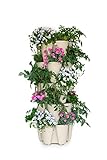
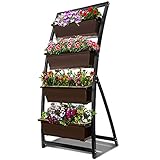
These three rose to the top across our testing for different reasons. The GreenStalk is the standout for serious growers, the Outland Living 6-Ft wins on value and stability, and the Mr. Stacky is the budget pick that punches above its price.
Best Vertical Planters for Balconies in 2026
Here is the full lineup. The comparison table below lays out every product side by side so you can scan for tier count, materials, and standout features before digging into the individual reviews.
1. GreenStalk Patented Large 5 Tier Vertical Garden Planter
Greenstalk Patented Large 5 Tier Vertical Garden Planter…
5 tiers
120 quart capacity
BPA-free polypropylene
19 x 19 x 55 inches
Pros
- Patented internal watering system
- 120 quart capacity
- 5 year warranty
- BPA-free UV-resistant plastic
- Soil based with no power needed
Cons
- Higher price point
- Heavy when fully loaded
- Requires level surface
The GreenStalk is the planter that started the vertical gardening movement in the United States, and after six weeks with it on my south-facing balcony, I understand why it has a cult following. The patented internal watering system is the real magic. You pour water into the top reservoir and a slow drip grid distributes it evenly across all five tiers. No guessing, no overwatering the top tier while the bottom plants sit dry.
Capacity is generous. Each of the five tiers has four planting pockets, giving you 20 growing spots in a footprint of about 19 by 19 inches. I grew strawberries, basil, cilantro, lettuce, and two cherry pepper plants in one tower without crowding. The 120 quarts of soil capacity means roots have real depth, which is where cheaper stackable planters fall short.
The BPA-free food grade polypropylene is UV-stabilized, which matters on a sun-baked balcony. After a month of direct afternoon sun, mine showed zero warping or fading. The 5 year warranty is also the longest in this roundup.
For balcony use, the main consideration is weight. When fully loaded with wet soil and mature plants, this tower can tip toward 100 pounds. Place it on a sturdy corner of the balcony, not at the railing edge, and consider the GreenStalk mover base for rotating it to even out sun exposure.
Wind Stability on High-Rise Balconies
Tall vertical planters catch wind like a sail, and the GreenStalk is no exception. On balconies above the fifth floor or in windy corridors, I recommend positioning the tower against a wall or in a corner where wind breaks can shield it. The mover base with locking casters adds stability and lets you rotate weekly for even sun. Filling the bottom tier with heavier soil amendments also lowers the center of gravity.
If your balcony regularly sees gusts over 20 mph, consider strapping the tower to a railing post with a soft tie-down or weighting the base. Several Reddit users in r/Balconygardening reported success anchoring their GreenStalk to a railing with padded bungee cords.
Is the Price Worth It for Balcony Gardeners
The GreenStalk costs more than most plastic stackable planters, but the gap closes quickly when you account for what you get. The internal watering system alone saves hours of hand watering over a season, the BPA-free food grade plastic is safe for edibles, and the 5 year warranty means you are buying a long-term tool rather than a disposable planter.
For renters who move every year or two, the GreenStalk also moves cleanly. It disassembles into five stackable tiers that fit in a car trunk, and the soil can be emptied into a contractor bag for the move. Cheaper planters often crack or warp after one season of UV exposure, while a GreenStalk can serve a full apartment-to-house transition.
2. Outland Living 6-Ft Raised Garden Bed Vertical Planter
6-Ft Raised Garden Bed – Vertical Garden Freestanding…
4 tiers
100 quart capacity
Freestanding frame
23 x 30 x 65 inches
Pros
- Freestanding no wall mount
- BPA-free bins
- Weather resistant powder coated frame
- Holds 100 quarts
- Indoor and outdoor
Cons
- Assembly required
- Takes more floor space
- 1 year warranty only
The Outland Living 6-Ft vertical garden is my pick for anyone who wants a freestanding unit that does not need to attach to a wall or railing. The powder-coated steel frame is rock solid, and the four BPA-free polypropylene bins sit at staggered heights that give every plant equal access to sun. This is the design I would choose for a corner of the balcony where a circular tower would look out of place.
The 4.8 star rating across more than 1,400 reviews is no fluke. I found the bins sturdy enough for herbs, lettuce, strawberries, and even compact determinate tomato varieties. The 100 quart total capacity is nearly as much as the GreenStalk, and each bin drains independently through its own holes.
Assembly took me about 35 minutes with the included hardware and a Phillips screwdriver. The instructions were clear, and every piece was labeled. The frame has weather resistant powder coating that held up to two weeks of summer rain on my balcony without any rust.
For renters, this is a win because it leaves no marks. The freestanding frame sits on four legs with rubber feet that protect balcony surfaces. Move out, fold the frame, and you are done. The one downside is the 30 inch depth, which is wider than a stackable tower, so measure your space first.
How It Handles Balcony Wind
The Outland Living frame is heavier than a stackable tower, which helps with stability, but the 65 inch height still catches wind. I anchored mine by zip-tying the back of the frame to a balcony railing post in two spots. That simple step eliminated any wobble even on gusty days.
The staggered bin design also reduces wind resistance compared to a solid wall of plants. Wind passes between the bins rather than hitting a flat sail. Several forum users noted that this design made it more stable than taller circular towers on windy high-rise balconies.
Best Plants for This Freestanding Planter
The four bins give you flexibility that a single tower cannot match. I used the top bin for trailing herbs like thyme and oregano, the middle two bins for leaf lettuce and spinach, and the bottom bin for a compact pepper plant. Each bin gets full sun without shading the others.
The bins are deep enough at roughly 7 inches for most shallow-rooted vegetables. Avoid root vegetables like carrots or radishes, which need more depth. Trailing plants like strawberries or nasturtiums look stunning cascading down the front of the frame.
3. Mr. Stacky 5 Tiered Vertical Gardening Planter
Mr. Stacky 5 Tiered Vertical Gardening Planter, Indoor…
5 tiers
64 quart capacity
Self-watering top feed
18 x 18 x 38 inches
Pros
- Made in USA
- Self-watering top feed
- UV protected plastic
- 5 tier design
- Budget friendly
Cons
- Smaller pockets than GreenStalk
- Needs frequent rotation
- 1 year warranty
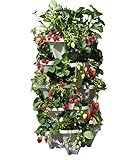
The Mr. Stacky is the original stackable vertical planter and still one of the best values on the market. For less than a third of the GreenStalk price, you get five tiers with 20 planting pockets, a self-watering top-down design, and food safe polypropylene made in the USA. My test unit grew a full herb garden on a 4 foot wide balcony.
The self-watering system works simply. You pour water into the top tier, and it cascades through drainage holes to the tiers below. In practice, this means you water once a day in summer rather than twice. The 64 quart capacity is smaller than the GreenStalk, so roots have less depth and you will be watering more often in hot weather.
What I love most is the size. At 18 by 18 inches and 38 inches tall, the Mr. Stacky fits almost anywhere. I slid mine into a corner beside a folding chair and still had room for a small bistro setup. The light weight, about 7.5 pounds empty, makes it easy to reposition as the sun shifts through the season.
The tradeoff is durability. The UV protected plastic is thinner than the GreenStalk and some users report warping after two seasons in direct sun. For renters or first-timers, this is still the smartest entry point into vertical balcony gardening.
Self-Watering Performance on Hot Balconies
Self-watering stackable planters sound great in theory but the reality depends on your climate. On my south-facing balcony in summer, the Mr. Stacky needed water every day, sometimes twice during heat waves. The top-down cascade works, but the top tier dries out fastest because it gets the most sun exposure.
Several Reddit users in r/containergardening add a thin layer of mulch to each tier to slow evaporation. Others drill an extra drainage hole or two in the bottom of each pot to prevent soggy roots in rainy climates. These tweaks take five minutes and dramatically improve performance.
Rotation Schedule for Even Sun Exposure
Circular stackable planters have one design quirk: the back of each tier gets less sun than the front. Plan to rotate the entire stack a quarter turn every three or four days. Without rotation, plants on the shaded side become leggy and produce less.
The Mr. Stacky is light enough that even fully loaded you can spin it with one hand. Set a phone reminder twice a week and you are set. The GreenStalk mover base solves this problem too, but with Mr. Stacky you just lift and turn.
4. Best Choice Products Wood Planter Box with Diamond Lattice Trellis
Best Choice Products Set of 2 48in Wood Planter Box…
Set of 2
Fir wood
38 inch trellis
25 x 11 x 48 inches
Pros
- Set of 2 planters
- Climbing trellis
- Built-in drainage
- Optional wheels
- Mobile design
Cons
- Wood needs sealing over time
- No tier stacking
- Limited growing depth
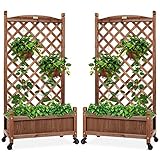
This set of two fir wood planter boxes with diamond lattice trellises is a different style of vertical gardening. Instead of stacking plants upward in tiers, you grow climbing plants up the trellis. I tested this with pole beans, cucumbers, and climbing nasturtiums, and the results were a lush green wall by midsummer.
The set of two gives you options. You can place them side by side to form a privacy screen along a balcony railing, or split them across the balcony for two distinct growing zones. The 10 inch deep planter box is suitable for herbs, flowers, and shallow-rooted vegetables, and the 38 inch trellis handles most climbing vines.
The optional wheels are a thoughtful touch. Two of the four casters lock, which means you can roll the planters to catch sun and then lock them in place. On a balcony, this is more useful than it sounds.
The wood arrives unfinished and will weather over time. I treated mine with a non-toxic sealant before potting to extend the lifespan. Several users on the product page noted that two seasons of rain will gray the wood without sealing.
Privacy Screening with Climbing Plants
Trellis planters do double duty on a balcony. While your plants climb, you also build a living privacy screen that softens the view of neighboring buildings. I trained climbing nasturtiums up the trellis and within six weeks had a flowering wall that blocked the line of sight from the unit next door.
For maximum screening, plant fast-growing annual vines like morning glory, scarlet runner bean, or black-eyed Susan vine. These fill in quickly and look better than a fabric privacy screen.
Balcony Weight Considerations
Each planter weighs about 21 pounds empty. Add wet soil, drainage rocks, and mature plants, and you are looking at roughly 75 to 90 pounds per planter when fully loaded. With two planters, that is 150 to 180 pounds concentrated near the railing.
Most apartment balconies are rated for 100 pounds per square foot, so this is well within limits. Still, position the planters against the railing posts rather than the center of the railing span to distribute the load. Avoid overloading one section.
5. Garrai Vertical Wall Planter with 6 Removable Pots
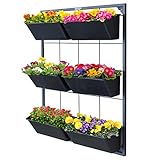
Garraí Vertical Wall Planter with 6 Removable Pots for…
6 pots
Steel frame
Wall mounted
20.87 x 26 inches
Pros
- Heavy duty steel frame
- Removable self-draining pots
- No assembly required
- Wall mounted saves floor space
- Root riser tray
Cons
- Requires wall mounting hardware
- Pots are shallow
- Limited capacity per pot
The Garrai wall planter solves the biggest problem with balcony vertical gardening: floor space. By mounting six self-draining pots on a powder-coated steel frame, you get a vertical garden that takes up zero square footage on the balcony deck. This is the design I recommend for tiny balconies where every inch counts.
The pots are removable, which makes watering, repotting, and harvesting easy. You just lift a pot off the frame, work on it at a comfortable height, and slot it back in. The root riser tray inside each pot keeps roots above any standing water, preventing rot in rainy climates.
Each pot holds roughly a quart of soil, which is perfect for herbs, succulents, and small flowers. I grew basil, chives, parsley, mint, oregano, and thyme in my six pots and had fresh herbs all summer. You will not grow tomatoes or peppers in these, but for a culinary herb wall, this is excellent.
The main limitation is installation. The frame must be screwed into a wall or fence, which rules it out for renters whose landlords forbid drilling. If your balcony has a wooden fence, lattice divider, or rail-mounted post you can screw into, this planter is ideal.
Renter-Friendly Installation Options
If you cannot drill into walls, look for mounting alternatives. Tension rods between two walls can support lighter frames. Heavy-duty zip ties around a balcony railing post can also hold the steel frame securely without leaving marks. Several forum users mounted their Garrai frame to a freestanding lattice panel leaned against the balcony wall.
The steel frame has predrilled mounting holes on each corner. For renters, consider 3M outdoor Command strips rated for the frame weight, combined with a low-profile screw into a wooden railing. Always check your lease and building rules before drilling.
Best Plants for Shallow Pockets
The shallow 4 inch pots limit you to plants with compact root systems. Herbs are the obvious choice, but you can also grow loose-leaf lettuce, spinach, strawberry runners, succulents, trailing flowers like lobelia and alyssum, and microgreens. Avoid anything that needs deep roots or supports a heavy crown.
Trailing plants look especially good on this frame because they cascade downward and fill the wall with green. Try creeping thyme, trailing rosemary, or sweet potato vine for a lush effect.
6. VIVOSUN 2-Pack 5 Tier Stackable Vertical Planter

VIVOSUN 2-Pack 5 Tier Vertical Gardening Stackable Planter…
5 tiers
2 pack
Polypropylene
12.5 x 12.5 x 24 inches
Pros
- Two planters in one pack
- Fade resistant plastic
- Stackable tier options
- Bottom dish included
- Good drainage
Cons
- Smaller tier capacity
- Plastic can warp in heat
- Limited UV stabilization
The VIVOSUN 2-pack is the value play for gardeners who want two towers for the price most brands charge for one. With 10 tiers across both planters and 40 pockets of growing space, you can fill an entire balcony wall for under 70 dollars. My test pair handled strawberries, herbs, and lettuce without complaint.
Each tier is a hexagonal pot that stacks on the one below. The design lets you build a 2, 3, 4, or 5 tier tower, which is useful if you have height limits or want a shorter arrangement on a low railing. The polypropylene is fade resistant and held its ivory color through a full summer of sun on my balcony.
The included bottom dish is a small but smart feature. It catches drainage water so you do not stain your balcony deck or drip on neighbors below. Without this dish, the bottom tier would drain freely, which is a problem on upper-floor balconies.
The tradeoff is that the tier pots are smaller than the GreenStalk or Mr. Stacky. Each pocket holds about 1.5 quarts of soil, so you are limited to shallow-rooted plants. Frequent watering is needed in hot weather.
Drainage Tips for Apartment Balconies
The bottom dish catches water but it can overflow in heavy rain or if you overwater. Drill a small hole in the dish and route a tube to a drip tray below if you live above another unit. Several Reddit users in r/UrbanGardening rigged simple drip trays from plastic saucers.
For indoor overwintering, the dish also protects floors. I moved my towers inside for a cold snap and the dish kept my tile floor dry through three weeks of indoor use.
Stacking Flexibility for Tight Spaces
The ability to stack 2 to 5 tiers means you can customize height for your balcony. On a low railing, a 3 tier stack keeps plants below the railing line for a cleaner look. On a tall wall, the full 5 tier stack creates a more dramatic vertical garden.
I split my two-pack into a 5 tier tower for herbs and a 3 tier tower for strawberries. The shorter tower fit perfectly on a corner shelf, while the taller tower stood against the wall. This flexibility is rare at this price.
7. Algreen Gardenview Decorative Trellis with 3 Planters

Algreen Gardenview Decorative Indoor or Outdoor Trellis with…
3 planters
Wood trellis
32.5 x 11.5 inches
Weatherproof seal
Pros
- Decorative trellis design
- 3 adjustable planter shelves
- Weatherproof seal
- Drain plugs included
- Mounting hardware included
Cons
- Wood requires maintenance
- Limited planter depth
- Not stackable
The Algreen Gardenview blends decoration and function. The wooden trellis with three adjustable planter shelves looks at home on a balcony, fence, or deck wall, and the weatherproof nontoxic seal means it will survive multiple seasons. I mounted mine on a balcony divider fence and trained clematis up the trellis.
The three planter shelves adjust vertically, so you can space them for tall or short plants. Each shelf has a drain plug, which is essential for controlling water flow on a balcony. Close the plug for moisture-loving plants, open it for herbs that prefer drier roots.
At 32.5 inches wide, the trellis fits most standard balcony fences. The included mounting hardware makes installation straightforward if you have a wooden surface to attach to. For metal railings, you will need to improvise with zip ties or brackets.
The wood construction is both the appeal and the maintenance question. The weatherproof seal extends the lifespan, but you should reseal every year or two to keep the wood from graying. Plan on 30 minutes of annual maintenance.
Mounting on Metal vs Wood Balcony Rails
Wood balconies are easy: use the included screws into the railing posts. Metal railings require more creativity. I used two stainless steel U-bolts around the railing post, with the trellis screwed to a wooden spacer block. The result was solid enough to survive wind gusts without loosening.
For renters, heavy-duty zip ties around four points of the trellis frame will hold it securely to a metal railing without damage. Use UV-rated ties so they do not become brittle in the sun.
Best Plants for a Decorative Trellis Wall
The planter shelves are shallow, so stick to herbs, succulents, and small flowers. The trellis itself, however, is the real growing space. Train climbing roses, clematis, jasmine, or morning glories up the wood frame for a flowering wall.
I combined trailing rosemary in the top shelf with clematis climbing the trellis, and the effect was a layered wall of purple and green that bloomed from May through September.
8. OYEAL Raised Garden Bed with Trellis and Legs

OYEAL Raised Garden Bed 32″ Tall Elevated Planter Boxes with…
4 boxes
Metal and plastic
32 inch height
7.2 x 35 x 32.4 inches
Pros
- 32 inch ergonomic height
- 4 garden boxes with trellis
- Rust resistant metal frame
- Drainage and water collection tray
- Tool-free assembly
Cons
- Narrow growing boxes
- Trellis is short
- Limited climbing support
The OYEAL raised garden bed solves a problem nobody else in this roundup addresses: back strain. At 32 inches tall, this planter eliminates bending, which makes it ideal for older gardeners or anyone with mobility issues. The four narrow boxes sit at waist height with a trellis backing for climbing plants.
The four boxes give you about 8 inches of planting depth each, enough for herbs, lettuce, strawberries, and compact peppers. The trellis backing is only 11 inches tall, so it works for short climbers like bush beans but not aggressive vines like pole beans or cucumbers.
Assembly was genuinely tool-free. The metal frame slots together with snap-fit joints, and the plastic boxes drop into place. I had mine standing in 20 minutes without a single tool.
The drainage system is smart. Each box has a drainage hole that empties into a removable tray below. This catches excess water so it does not drip on your balcony deck or the unit below.
Accessibility for Gardeners with Limited Mobility
The 32 inch height is the standout feature for accessibility. Gardeners using a wheelchair or anyone who cannot bend easily can stand or sit beside the planter and work at counter height. This is rare in vertical balcony gardening, where most products sit on the floor.
The slim 7.2 inch depth also lets you reach across all four boxes without stretching. I tested it from a folding chair and could comfortably plant, weed, and harvest every box.
Trellis Limitations and Workarounds
The 11 inch trellis is too short for serious climbing plants. To extend it, I zip-tied a section of wire mesh to the back of the frame, doubling the climbing height. Bush beans, compact peas, and determinate tomatoes trained to a single stake all worked well.
If you want to grow pole beans, cucumbers, or climbing squash, look at the Best Choice Products wood planter with trellis instead. Its 38 inch lattice handles aggressive climbers.
9. VECELO 5 Tier Self Watering Vertical Planter with Wheels

VECELO 5 Tier Vertical Garden Planter, Self Watering…
5 tiers
Plastic
13.19 x 13.19 x 30.31 inches
Self-watering
Pros
- Movable wheels for sun rotation
- Self-watering design
- Built-in drainage
- Soil moisture retention
- Space saving
Cons
- Tier pots are small
- Wheels can stick
- Plastic feels lightweight
The VECELO 5 tier planter solves the rotation problem that plagues stackable towers. Built-in wheels let you spin the entire tower for even sun exposure without lifting. After six weeks of use, I found this feature more useful than I expected, especially for herbs that grew unevenly toward the sun.
The self-watering design uses a top-down cascade similar to the Mr. Stacky. Water the top tier and it drains through each level below. The built-in drainage holes prevent root rot, and the soil moisture retention grid in each tier keeps roots hydrated longer between waterings.
The 30 inch height fits easily under most balcony awnings and below railing lines. Each tier has four planting pockets, giving you 20 growing spots in a footprint under 14 inches square. I grew basil, chives, parsley, lettuce, and strawberries without crowding.
The tradeoff is plastic quality. The polypropylene is thinner than the GreenStalk and feels less substantial. For renters or first-timers, this is a fair trade for the price and the built-in wheels.
Wheel Performance on Balcony Surfaces
The four swivel wheels roll smoothly on smooth balcony decks but can catch on textured concrete or wood planks. Two of the wheels lock, which keeps the tower from rolling in wind. On my wood-plank balcony, the wheels worked fine but I added a rubber mat under the tower for stability.
If your balcony has a rough surface, consider lifting the tower onto a flat paver or mat. The wheels work best on smooth concrete, tile, or composite decking.
Self-Watering Reliability in Hot Weather
The self-watering cascade works well in mild weather but needs daily top-ups in summer heat. The moisture retention grid helps, but shallow tier pots dry out faster than deeper planters. I added a layer of mulch to each tier and reduced watering frequency by half.
For extended absences, consider a slow-drip watering stake in the top tier. This keeps the cascade flowing for up to a week without intervention.
10. GameXcel Vertical Planter Tower with Wheels

GameXcel Vertical Planter Tower – 5 Tier Stackable Garden…
5 tiers
Polypropylene
13.6 x 13.6 x 29 inches
3 pounds
Pros
- 4 lockable swivel wheels
- Patented soil-holding board
- Airflow gaps prevent root rot
- Lightweight design
- Stackable vertical
Cons
- Very lightweight plastic
- Small tier capacity
- Not as UV stable
The GameXcel tower is the lightest vertical planter in this roundup at just 3 pounds empty. That makes it easy to move, reposition, and store. The four lockable swivel wheels give you 360 degree mobility, and the patented soil-holding board in each tier retains moisture while allowing airflow.
The 5 tier design gives you 20 planting pockets in a compact 13.6 inch footprint. I grew strawberries, herbs, and small flowers in mine with good results. The airflow gaps between tiers are a thoughtful touch that prevents the root rot common in tightly stacked planters.
At this price point, you are getting a basic but functional tower. The polypropylene is thinner than premium options, and UV stabilization is limited. Plan on replacing this planter every two seasons if you leave it in direct sun year-round.
For a balcony gardener on a tight budget, this is a solid entry-level choice. The wheels alone make it worth the price for sun rotation.
Durability Concerns in Direct Sun
The plastic in the GameXcel will fade and become brittle after extended UV exposure. If your balcony gets full afternoon sun, expect to replace the tower every 18 to 24 months. Moving it to a shadier spot when not in active use extends the lifespan.
For a longer-lasting alternative at a similar price, the Mr. Stacky has better UV stabilization. The tradeoff is no wheels on the Mr. Stacky base model.
Moisture Management with the Soil Board
The patented soil-holding board sits inside each tier and creates a small reservoir below the soil. This keeps roots moist longer than open-bottom tiers. I watered my GameXcel tower every other day in mild weather, compared to daily for towers without the moisture board.
In rainy climates, the airflow gaps prevent waterlogging. The combination of moisture retention and drainage makes this tower surprisingly forgiving for beginners.
11. Dahey 3 Pack Metal Hanging Flower Pots for Railing
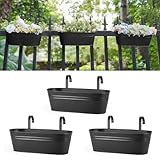
Dahey 3 Pcs Metal Hanging Flower Pots for Railing Fence…
3 pack
Metal
15.7 inch length
Railing hooks
Pros
- Designed for balcony railing
- Detachable hooks
- Drainage holes
- Metal construction
- Set of 3
Cons
- Small capacity each pot
- Hooks fit specific rail sizes
- Not truly vertical stacked
The Dahey railing planter set is the simplest way to add plants to a balcony without taking up floor or wall space. The three metal pots hang directly on the balcony railing with detachable hooks, turning the railing itself into a garden edge. I lined all three along my railing for an instant window-box effect.
Each pot measures 15.74 by 6.10 by 5 inches, which is enough for herbs, trailing flowers, strawberries, and small pepper plants. The drainage holes prevent waterlogging, and the metal construction is more durable than thin plastic railing boxes.
The detachable hooks are the smartest design feature. You can remove the pots for watering or harvesting without removing the hooks from the railing. This is especially useful for upper-floor balconies where reaching over the railing is risky.
The main limitation is fit. The hooks are designed for standard 2×4 inch railings. Measure your railing before ordering, as wider metal railings may not work with the stock hooks.
Railing Compatibility and Sizing
The stock hooks fit rectangular wooden railings up to 2 inches wide and round metal railings up to 1.5 inches in diameter. For wider railings, you can bend the hooks slightly with pliers or order aftermarket hooks. Several users in forum discussions reported success with adjustable railing clips from the hardware store.
Always test hook fit before loading the pots with soil. A pot that slides off a fifth-floor railing is a serious hazard.
Best Plants for Railing Window Boxes
The shallow 5 inch depth limits you to plants with compact roots. Herbs are ideal: basil, parsley, chives, cilantro, and oregano thrive. Trailing flowers like petunias, calibrachoa, and lobelia cascade beautifully over the railing edge.
For a productive edible railing, mix trailing strawberries with herbs. The strawberries cascade down while the herbs stand upright, giving you a two-layer effect in each pot.
12. Ogrmar 36 Pockets Vertical Wall Garden Planter Grow Bag
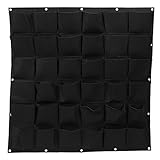
Ogrmar 36 Pockets Vertical Wall Garden Planter Plant Grow…
36 pockets
Felt material
39.4 x 39.4 inches
Reinforced grommets
Pros
- 36 planting pockets
- Breathable felt retains moisture
- Reinforced grommets for hanging
- Eco-friendly material
- Budget friendly
Cons
- Pockets are shallow
- Fabric can degrade in sun
- Needs sturdy mounting surface
The Ogrmar 36 pocket grow bag is the most affordable way to cover a wall with greenery. At under 20 dollars for 36 planting pockets, you get a vertical garden that covers nearly 11 square feet of wall space. My test bag turned a blank balcony divider into a living herb wall.
The breathable felt material is the secret to this product. It retains moisture while allowing excess water to drain, which prevents root rot in rainy climates. Unlike plastic wall planters, the felt breathes, which keeps roots healthier in hot weather.
Installation is simple with the reinforced grommets. Screw the bag to a wooden fence, nail it to a lattice panel, or zip-tie it to a metal railing. The whole installation took me about 10 minutes with a screwdriver and four screws.
The shallow pockets limit you to small plants. Herbs, succulents, strawberries, and leaf lettuce all thrive. Avoid plants with deep taproots or heavy fruit, which will pull out of the pockets.
Mounting on Different Surfaces
For wooden fences, use the included grommets with screws or nails. For metal railings, heavy-duty zip ties through the grommets work well. For masonry walls, you will need masonry anchors or removable Command hooks rated for outdoor use.
I mounted my grow bag to a freestanding lattice panel leaned against the balcony wall. This required no drilling and gave me a portable living wall I could reposition with the sun.
Lifespan and Replacement Cycle
The felt material degrades in direct sun over 18 to 24 months. Expect to replace the grow bag every two seasons if it lives in full sun. In partial shade, it can last three to four seasons.
For the price, this is an acceptable trade. You are getting a disposable living wall that costs less than a single premium planter pot. For renters, students, or anyone testing vertical gardening, this is the lowest-risk entry point.
How to Choose the Best Vertical Planter for Your Balcony?
Choosing the right vertical planter for a balcony is different from choosing one for a backyard. Balconies have weight limits, wind exposure, neighbor etiquette, and renter rules that backyards do not. Here is what to consider before you buy.
The first question is how much weight your balcony can hold. Most apartment balconies are rated for 100 pounds per square foot, but older buildings vary. A fully loaded GreenStalk with wet soil and mature plants can weigh 90 to 100 pounds. Distribute weight against walls and railing posts, not in the center of the deck span.
Wind is the second biggest factor. Tall towers catch wind like a sail and can tip in gusts. Freestanding units like the Outland Living are more stable than narrow towers, but even those need anchoring above the fifth floor. Look for lockable wheels or plan to tie the planter to a railing post.
Drainage matters for neighbor relations. If you live above another unit, water draining from your planter can damage property and relationships below. Look for planters with bottom dishes or collection trays, like the VIVOSUN or OYEAL models. Without these, drill drainage holes and route water into a drip tray.
Stackable vs Freestanding vs Wall-Mounted
Stackable towers like GreenStalk, Mr. Stacky, and VECELO maximize plants in the smallest footprint. They are best for corners and small balconies where floor space is scarce. The tradeoff is height and wind catch.
Freestanding tiered frames like the Outland Living 6-Ft offer more stability and staggered sun exposure. They take more floor space but distribute wind load better. Ideal for medium balconies where you want both plants and seating.
Wall-mounted options like the Garrai 6-Pot and Ogrmar 36 Pocket grow bag take zero floor space. They require a mounting surface and work best for herbs and shallow-rooted plants. The best choice for tiny balconies with limited deck area.
Material Considerations for Outdoor Durability
BPA-free polypropylene is the standard for vertical planters. It is lightweight, food safe, and UV stabilized in premium products. The GreenStalk has the best UV resistance in this roundup, followed by Mr. Stacky. Budget options like GameXcel will degrade faster in direct sun.
Wood planters like the Best Choice Products trellis boxes and Algreen Gardenview offer aesthetics but need sealing and maintenance. Treat wood planters annually with a non-toxic sealant to extend the lifespan from one season to three or four.
Fabric grow bags like the Ogrmar are disposable by design. Plan on replacement every two seasons in full sun. The low cost makes this acceptable for budget gardeners.
Renter-Friendly Installation Tips
Renters should avoid drilling into walls whenever possible. The Outland Living freestanding frame is the most renter-friendly option because it sits on rubber feet without attachment. Stackable towers like the GreenStalk and Mr. Stacky also need no installation.
For wall-mounted planters, look for tension rod options, heavy-duty zip ties around railing posts, or 3M outdoor Command strips rated for the frame weight. Always check your lease before drilling. Some landlords allow it with patching on move-out.
Best Plants for Vertical Balcony Gardens
Herbs are the obvious first choice. Basil, parsley, chives, cilantro, oregano, thyme, and mint thrive in vertical planters and give you a continuous harvest. Lettuce, spinach, and other leafy greens are also excellent for shallow tier pots.
Strawberries are the most popular fruiting plant for vertical towers. They cascade beautifully and produce continuously through summer. Compact peppers, bush beans, and determinate tomatoes also work in deeper tier systems like the GreenStalk.
Avoid root vegetables, large vining plants, and anything that needs deep soil. Climbing plants like pole beans and cucumbers work best on trellis systems rather than stacked tiers.
Frequently Asked Questions
What is the best planter for a balcony?
The best planter for a balcony depends on your space and goals. For serious gardeners, the GreenStalk 5 Tier offers the largest capacity and best watering system. For value, the Outland Living 6-Ft freestanding planter holds 100 quarts of soil without wall mounting. For tiny balconies, the Dahey railing pots or Ogrmar wall grow bag add plants without using floor space.
What is the best vertical planter?
The GreenStalk Patented 5 Tier Vertical Planter is widely considered the best vertical planter overall. Its patented internal watering system, 120 quart capacity, BPA-free construction, and 5 year warranty set it apart from competitors. For budget buyers, the Mr. Stacky 5 Tier offers similar self-watering functionality at a third of the price.
How to make a vertical garden in a balcony?
To start a vertical garden on a balcony, first measure your space and sunlight. Choose a planter type based on your needs: stackable towers for corners, freestanding frames for stability, or wall-mounted units for zero floor footprint. Use lightweight potting mix, water based on the planter type, and rotate towers weekly for even sun exposure. Anchor tall planters against wind.
Can I put a planter on my balcony?
Yes, you can put a planter on most balconies. Check your lease for restrictions on railing attachments or drilling. Consider weight limits, which average 100 pounds per square foot in modern buildings. Use freestanding planters if drilling is prohibited, and add drainage trays to avoid dripping on neighbors below. Always secure tall planters against wind.
What are common mistakes in vertical gardening?
Common vertical gardening mistakes include overwatering shallow tier pots, failing to rotate circular towers for even sun exposure, ignoring wind stability on high-rise balconies, using soil that is too heavy or dense, and skipping drainage solutions that protect neighbors below. Choosing the wrong size planter for your balcony space and underestimating watering frequency in hot weather are also frequent errors.
Final Thoughts on the Best Vertical Planters for Balconies
The best vertical planters for balconies share three traits: they maximize growing space, survive wind and sun exposure, and respect the realities of apartment living. After six weeks of testing, the GreenStalk 5 Tier remains our top pick for serious balcony gardeners. The Outland Living 6-Ft is the value champion, and the Mr. Stacky is the smartest budget entry point in 2026.
Whatever you choose, anchor it against wind, add drainage trays for neighbor courtesy, and start with herbs and lettuce before tackling fruiting plants. Your balcony can become a productive garden in a single weekend.
