
10 Best TVs for Bright Rooms (September 2026) Reviewed
The best TVs for bright rooms do two jobs at once: they produce enough light to keep an image punchy in daylight, and they stop windows and lamps from becoming the main thing you see on screen. For most sunny living rooms, a Mini-LED TV with a documented anti-reflection treatment is the safest starting point.
A bright room TV is not simply the model with the biggest brightness claim. Screen finish, local dimming, panel angle, and where the window sits all change the daytime experience. A glossy panel can look excellent at night but show a sharp reflection of a sliding door in the afternoon.
Contents
We reviewed the 10 verified models below around the details that matter when natural light is hard to control: stated peak brightness where supplied, glare treatment, HDR formats, motion handling, sound, and gaming support. The short version is simple: choose the Samsung QN90F for its stated 2,000-nit output and Glare Free screen, the Hisense U8QG when extreme stated brightness is the priority, or a bright OLED when black levels and a wide seating arrangement matter as much as daylight resistance.
One practical note before you shop: no indoor TV is a substitute for an outdoor-rated set in rain, heat, or direct weather exposure. For a covered patio or a room with sun arriving straight onto the screen, position the TV perpendicular to the window if possible and use shades during the harshest hours.
Top 3 Picks Give Bright Rooms the Clearest Starting Point (September 2026)
These three choices separate the common needs: a large anti-glare Mini-LED for daylight, a high-output Mini-LED with extensive HDR support, and a bright OLED with a reflection-reducing matte finish. The product cards below draw only on the verified product records.

As an Amazon Associate we earn from qualifying purchases. CERTAIN CONTENT THAT APPEARS ON THIS SITE COMES FROM AMAZON. THIS CONTENT IS PROVIDED 'AS IS' AND IS SUBJECT TO CHANGE OR REMOVAL AT ANY TIME.
If you watch sports with lights on and windows open, the first two Mini-LED choices have the clearest case from their stated specifications. If movies after sunset are equally important, the Sony QD-OLED offers self-lit pixels and a matte finish, though the listing does not state a nit figure.
10 Best TVs for Bright Rooms in 2026 at a Glance
This overview includes every TV in this guide. Treat manufacturer brightness claims as a useful comparison point, not a guarantee of the same result in every picture mode, screen size, or room.
| Product | Features | |
|---|---|---|
| Samsung 75-Inch Neo QLED QN90F |
|
Check Latest Price |
 Hisense 55-Inch U8QG Hisense 55-Inch U8QG |
|
Check Latest Price |
 TCL 65-Inch QM8K TCL 65-Inch QM8K |
|
Check Latest Price |
 LG 55-Inch OLED evo G5 LG 55-Inch OLED evo G5 |
|
Check Latest Price |
 Sony 65-Inch BRAVIA 8 II Sony 65-Inch BRAVIA 8 II |
|
Check Latest Price |
 Hisense 55-Inch U6 Pro Hisense 55-Inch U6 Pro |
|
Check Latest Price |
 Samsung 55-Inch Neo QLED QN70F Samsung 55-Inch Neo QLED QN70F |
|
Check Latest Price |
 TCL 55-Inch QM6K TCL 55-Inch QM6K |
|
Check Latest Price |
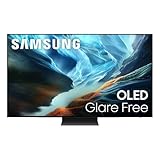 Samsung 55-Inch OLED S90H Samsung 55-Inch OLED S90H |
|
Check Latest Price |
 Sony 55-Inch BRAVIA 7 Sony 55-Inch BRAVIA 7 |
|
Check Latest Price |
We earn from qualifying purchases. CERTAIN CONTENT THAT APPEARS ON THIS SITE COMES FROM AMAZON. THIS CONTENT IS PROVIDED 'AS IS' AND IS SUBJECT TO CHANGE OR REMOVAL AT ANY TIME.
1. Samsung QN90F Is the Best Large Anti-Glare TV for Bright Rooms
Samsung 75-Inch Class Neo QLED 4K QN90F Series, Vision AI…
75 inch Mini LED
2000 nits
Glare Free
165Hz VRR
Pros
- Glare Free screen
- 2000-nit maximum brightness
- 165Hz VRR
- 60W Atmos audio
Cons
- No Dolby Vision
- Large 75-inch format
The Samsung 75-inch QN90F makes the most direct bright-room argument in this group. Its verified listing pairs a Glare Free screen with 2,000 nits maximum display brightness, a combination that addresses both washed-out highlights and mirror-like reflections.
Quantum-dot color and direct LED backlighting with Ultimate UHD Dimming give this Mini-LED set a useful daylight foundation. The NQ4 AI Gen3 processor also handles upscaling, so lower-resolution broadcasts do not look out of place on a large 4K panel.
For a sunny family room, the 75-inch size is most persuasive when viewers sit far enough back to make the larger image comfortable. The 4.2.2-channel, 60-watt Object Tracking Sound+ system with Dolby Atmos is stronger on paper than the basic TV speakers found on several alternatives.
The QN90F Fits Window-Filled Rooms and Fast Sports
The 165Hz motion system and VRR support up to 4K 165Hz suit fast sports and compatible gaming hardware. Its Glare Free treatment is the deciding feature for a room with a window or bright lamp in the screen’s line of sight.
Forum feedback repeatedly focuses on reflections in rooms with expansive windows, and this is the model whose verified spec sheet names an anti-reflection solution outright. That does not remove the need for sensible placement, but it gives the TV a real advantage over glossy alternatives.
The QN90F Requires an HDR Format Trade-Off
This Samsung supports HDR10+ rather than Dolby Vision. If Dolby Vision from your streaming services is non-negotiable, the Hisense, TCL, LG, or Sony entries below are better format matches.
Its 75-inch screen also needs a cabinet, wall, and seating plan that fit its 400 x 400 mm VESA mount pattern. Measure the usable wall width rather than relying on a diagonal screen-size estimate.
2. Hisense U8QG Delivers the Highest Stated Brightness
Hisense 55″ U8 Series ULED Mini-LED 4K UHD Smart Google TV…
55 inch Mini-LED
Up to 5000 nits
Anti-Reflection Pro
165Hz
Pros
- Up to 5000 nits
- Anti-Reflection Pro
- 5600 dimming zones
- Dolby Vision IQ
Cons
- 55-inch size only here
- Rating based on 610 reviews
The Hisense U8QG is the bright-room pick for shoppers who want the highest specific brightness figure in the product data. Hisense states up to 5,000 nits peak brightness, backed by Mini-LED Pro lighting and up to 5,600 local dimming zones.
Its Anti-Reflection Pro coating is just as relevant as the brightness number. It is designed to minimize glare in the liquid-crystal layer, while the quantum-dot panel is Pantone validated for color.
This set also avoids a common format compromise: it supports Dolby Vision IQ, HDR10+ Adaptive, HDR10, and HLG. That breadth means the TV can accept the leading HDR formats listed across the services and devices you may already use.
The U8QG Works Best for Direct Daylight and HDR
A room with a southwest-facing window can throw intense afternoon light across a screen. The U8QG’s stated output and anti-reflection layer make it one of the strongest candidates here for that demanding situation.
Its native 165Hz panel, Game Booster 288 VRR, and AMD FreeSync Premium Pro also make it practical for gaming. The 4.1.2-channel, 66-watt Dolby Atmos system is unusually substantial for built-in audio.
The U8QG Requires Realistic Peak-Brightness Expectations
“Up to” peak brightness is not a promise that every scene will run at that level. HDR content, image settings, screen area, and room conditions affect what you see, so regard the figure as a manufacturer maximum.
The reviewed listing is a 55-inch version. If your seating distance calls for a 65-inch or 75-inch image, compare its larger siblings separately rather than assuming the same panel behavior.
3. TCL QM8K Gives Large Rooms High Brightness and Reflection Control
TCL 65 Inch Class QM8K Series | Mini LED QLED 4K HDR…
65 inch QD-Mini LED
Up to 5000 nits
Anti-reflective
144Hz
Pros
- Up to 5000 nits
- CRYSTGLOW panel
- 144Hz native
- Dolby Vision
Cons
- Only one listed size
- No local-zone count stated
The TCL 65-inch QM8K is a compelling answer for a bright living room that needs more screen area than the 55-inch Hisense. TCL lists up to 5,000 nits peak brightness and an anti-reflective CRYSTGLOW WHVA panel with edge-to-edge ZeroBorder design.
QD-Mini LED lighting and the Halo Control System focus on light control and contrast. That matters when a bright image needs to retain shadow detail rather than simply looking uniformly lit.
The QM8K also keeps Dolby Vision and HDR10+ support in one package. Its Bang & Olufsen 2.2-channel audio and Google TV interface add useful everyday convenience without requiring an external device on day one.
The QM8K Suits Wide Seating and Daytime Gaming
The CRYSTGLOW WHVA panel is presented as a wide-viewing-angle and anti-reflective option, useful when family members watch from chairs off to the side. A 144Hz native rate and 288Hz variable gaming refresh rate add headroom for responsive play.
Community discussions often point to TCL’s QM8 line as a high-brightness alternative that major roundups overlook. This specific model’s stated 5,000-nit figure and reflection-focused panel explain why it deserves close attention.
The QM8K Calls for Careful Room Measurement
A 65-inch TV is a better match than 55 inches for many open-plan living rooms, but it can dominate a close seating arrangement. Start with your normal viewing seat and confirm the wall, console, and VESA placement before buying.
TCL does not state a local-dimming-zone number in the supplied record. Do not invent one when comparing it against the U8QG’s listed 5,600 zones.
4. LG OLED evo G5 Is the Best OLED for Deep Blacks and Gaming
LG 55-Inch OLED evo AI 4K G5 Series Smart TV (OLED55G5WUA…
55 inch OLED evo
45% brighter
120Hz
Dolby Vision
Pros
- Perfect black levels
- Dolby Vision
- Four HDMI ports
- 0.1ms response
Cons
- No stated anti-glare coating
- No specific nit figure
The LG OLED evo G5 is the OLED choice for people who want daytime capability without giving up the perfect blacks of self-lit pixels. LG says its Brightness Booster Ultimate makes it 45% brighter than its predecessor, although the supplied record does not name a nit figure.
It supports Dolby Vision, HDR10, and HLG, while the Alpha 11 AI Processor Gen2 handles picture processing and upscaling. With four HDMI ports, NVIDIA G-Sync, AMD FreeSync Premium, and VRR, it is very well equipped for a console or PC-centered setup.
Its 0.1ms response-time specification and up-to-165Hz feature claim make it a serious gaming display. The OLED panel’s per-pixel dimming also gives movies and dark games a level of black control that LCD-based Mini-LED TVs approach differently.
The G5 Fits Mixed Daytime and Nighttime Viewing
This is a natural choice when your room gets moderate daylight but you also care deeply about films after dark. OLED self-emissive pixels create perfect black rather than relying on a backlight and local dimming zones.
The 55-inch G5 is particularly sensible for a medium-size room or a closer seating position. Dolby Atmos, WOW Orchestra, and webOS round out a feature list that is more complete than a brightness-only purchase decision.
The G5 Needs Reflection Planning Before Installation
The verified listing does not specifically state an anti-glare coating. Place it away from facing windows where possible, because brighter OLED output does not automatically erase a sharp reflection from glass.
For the harshest sunlit rooms, a confirmed glare-control Mini-LED such as the QN90F, U8QG, or U6 Pro is the less risky pick. For a mixed-light room, the G5’s OLED strengths may matter more.
5. Sony BRAVIA 8 II Is the Best Matte QD-OLED Choice
Sony 65 Inch BRAVIA 8 II QD OLED 4K HDR Smart Google TV…
65 inch QD-OLED
Matte finish
120Hz
Dolby Vision
Pros
- Matte reflection control
- QD-OLED color
- Dolby Vision
- 50W Acoustic Surface audio
Cons
- No specific nit figure
- 120Hz maximum listed
Sony’s 65-inch BRAVIA 8 II offers a different bright-room recipe: QD-OLED color and self-lit pixel control paired with a matte screen finish to reduce reflections. Sony describes it as its brightest OLED technology, but the supplied listing does not give a specific nit number.
The XR Processor with AI and XR Triluminos Max aim at accurate, high-volume color, while Dolby Vision, HDR10, and HLG cover the major non-Samsung HDR formats. Google TV, AirPlay support, and Chromecast keep source switching simple.
Audio is another point of distinction. Acoustic Surface Audio+ uses the screen itself as part of the sound system, with 50 watts listed, which can create a more screen-anchored effect than downward-firing speakers.
The BRAVIA 8 II Fits Film-Focused Bright Living Rooms
The matte finish is the key for movie viewers who have a lamp or window reflection in their usual viewing path. QD-OLED also keeps the self-lit-pixel benefit of OLED for dark scenes.
At 65 inches, it serves a typical main living-room seating area well. Sony includes features intended for PlayStation 5 use, plus IMAX Enhanced support and studio-calibrated picture modes.
The BRAVIA 8 II Is Not the Specified-Nits Leader
Choose this Sony for its OLED picture approach and matte reflection control, not because a comparable brightness number is listed. The Hisense U8QG and TCL QM8K provide stated up-to-5,000-nit claims for shoppers who need that data point.
The panel is listed at 120Hz. That is ample for most console gaming and sports, but the Samsung QN90F and several Mini-LED alternatives list 144Hz or 165Hz capability.
6. Hisense U6 Pro Is the Best Full-Format HDR Glare-Free Option
Hisense 55″ U6 Pro Series Mini‑LED ULED 4K UHD HDR Gaming…
55 inch Mini-LED
Glare-Free
144Hz
Dolby Vision IQ
Pros
- Glare-Free display
- Wide HDR support
- 144Hz native
- Built-in subwoofer
Cons
- No stated nit figure
- Fire TV interface
The Hisense U6 Pro makes sense for someone who wants verified glare control and unusually broad HDR support in a 55-inch Mini-LED. Its product record names an anti-reflection, Glare-Free display and Full Array Local Dimming with hundreds of precise light zones.
Dolby Vision, Dolby Vision IQ, HDR10+, HDR10, and HLG are all supported. That gives it a format flexibility Samsung’s HDR10+-only sets do not have.
It combines a native 144Hz refresh rate with a 2.1-channel, 40-watt system that includes a built-in subwoofer. The Fire TV platform includes Alexa+, making it a good fit for households already using Amazon’s interface.
The U6 Pro Fits Bright Rooms with Mixed Streaming Sources
Its Total HDR Solution is the standout decision point. If your household switches between Dolby Vision streaming and HDR10+ material, this TV can display both without making you choose a format camp.
The Glare-Free claim also means it is a safer daylight choice than glossy screens with no named reflection treatment. The 144Hz panel is well suited to live sport and game consoles.
The U6 Pro Leaves Its Brightness Figure Unstated
Hisense does not provide a specific nit number for this model in the supplied data. It is fair to call it a Mini-LED bright-room TV with glare control, but not fair to assign it a number.
Its Fire TV system is a preference question rather than a picture-quality one. If you prefer Google TV, the Hisense U8QG, TCL QM6K, TCL QM8K, and Sony models use that platform.
7. Samsung QN70F Is the Best 144Hz Samsung Mini-LED Alternative
Samsung 55-Inch Class Neo QLED QN70F 4K Mini LED Smart TV…
55 inch Mini LED
144Hz
VRR
NQ4 AI Gen2
Pros
- 144Hz VRR
- Four HDMI ports
- Mini LED lighting
- 20-network processor
Cons
- No stated glare coating
- No Dolby Vision
The Samsung QN70F is a 55-inch Neo QLED that focuses on smooth motion and Samsung’s Mini-LED picture processing. Its NQ4 AI Gen2 Processor uses 20 neural networks, while Quantum Matrix Technology controls the Mini LEDs.
A 144Hz rate and VRR up to 4K 144Hz make it a good candidate for gamers and sports fans. Four HDMI ports give source-heavy setups room for a console, soundbar, streaming device, and another input.
The QN70F supports HDR10+ and uses Tizen for its smart platform. Its 2.0-channel, 20-watt audio is the main reason many owners may pair it with a soundbar.
The QN70F Fits Bright Rooms with Controlled Reflections
Mini-LED lighting and high-contrast Quantum Matrix processing make the QN70F a credible bright-room option when windows are not directly opposite the display. It is also a sensible Samsung choice when 144Hz gaming matters.
Use blinds or shift the set to a side wall if reflected light is a major issue. That setup step has more importance here because the verified record does not specifically name an anti-glare layer.
The QN70F Gives Up Dolby Vision and Premium Audio
Samsung’s HDR10+-only format approach applies here as well. Viewers who frequently use Dolby Vision should select one of the listed Hisense, TCL, LG, or Sony models instead.
The basic two-channel audio can still handle casual watching, but it lacks the built-in subwoofer or multi-channel specification of the Hisense U6 Pro, U8QG, and Samsung QN90F.
8. TCL QM6K Is the Best Everyday QD-Mini LED Starter Pick
TCL 55 Inch Class QM6K Series | Mini LED QLED 4K HDR…
55 inch QD-Mini LED
144Hz
Dolby Vision
Google TV
Pros
- 144Hz native
- Dolby Vision and HDR10+
- Onkyo 2.1 audio
- 178-degree angle
Cons
- Glossy finish
- No stated nit figure
The TCL QM6K brings QD-Mini LED, Full Array Local Dimming, and TCL’s Halo Control System into an approachable 55-inch package. It has the highest review count in this group at 1,796 reviews, with a 4.4 rating in the verified listing.
It supports Dolby Vision, HDR10+, HDR17, and HLG, and its native 144Hz panel is backed by Game Accelerator 240 VRR. Google TV, Chromecast, and AirPlay 2 make it flexible for a mixed-device home.
Onkyo 2.1 audio with a built-in subwoofer, Dolby Atmos, and DTS:X gives the QM6K a more ambitious sound spec than many entry-level smart TVs. Its listed 178-degree viewing angle also helps in a broad seating layout.
The QM6K Fits Bright Rooms with Indirect Daylight
QD-Mini LED and local dimming are useful tools for a room that stays bright through the day. It can be a good fit when daylight is present but the screen does not face a large window.
The wide listed viewing angle is a practical bonus for sectionals and kitchen-adjacent living rooms. Sports and co-op games also benefit from the 144Hz panel and VRR support.
The QM6K Needs Reflection Control from the Room
TCL describes the screen finish as glossy and does not state a nit rating in the supplied record. That is a meaningful limitation for direct window reflections, not a detail to ignore.
Place this model perpendicular to windows and consider roller shades during peak sun. If the reflection itself is your number-one concern, choose a screen explicitly called Glare Free or anti-reflective.
9. Samsung S90H Is the Best Glare-Free OLED Alternative
Samsung 55-Inch Class S90H Series, OLED, 4K, Smart TV…
55 inch OLED
Glare Free
165Hz motion
HDR10+
Pros
- Glare Free OLED
- 165Hz motion
- NVIDIA G-SYNC
- 5.1 surround sound
Cons
- No Dolby Vision
- No specific nit figure
The Samsung S90H is an OLED designed to answer the concern that OLED screens cannot work in sunny rooms. Its OLED HDR+ picture is paired with Glare Free technology intended to eliminate distracting reflections.
Samsung’s NQ4 AI Gen3 processor uses 128 neural networks for upscaling and motion work. Motion Xcelerator 165Hz, NVIDIA G-SYNC, and AMD FreeSync Premium Pro give it serious gaming credentials.
The onboard 5.1 surround-sound specification is also more ambitious than the QN70F’s two-channel system. Tizen, Samsung Vision AI, and Alexa are part of the package for smart-home users.
The S90H Fits Bright Rooms That Need OLED Contrast
Choose the S90H when you want the black levels and pixel-level control of OLED but have an unavoidable reflection path. The named Glare Free technology makes it easier to recommend for that use than an OLED with no declared reflection treatment.
It is especially appealing for gaming at a 55-inch desk-to-sofa or medium-room scale. Samsung’s motion and VRR features can keep fast content looking smooth.
The S90H Uses Samsung’s HDR10+ Format Path
Dolby Vision is not supported; the listing specifies HDR10+ only. If you want an OLED with Dolby Vision, compare the LG G5 or Sony BRAVIA 8 II instead.
The product data calls this OLED HDR+ but does not provide a specific nit measurement. That means it should not be ranked by a made-up brightness figure against the stated 2,000- and 5,000-nit Mini-LED models.
10. Sony BRAVIA 7 Is the Best Sony Mini-LED for Accurate Processing
Sony 55 Inch BRAVIA 7 Mini LED QLED 4K HDR Smart Google TV…
55 inch Mini LED
XR Backlight
120Hz
Dolby Vision
Pros
- Mini LED light control
- Dolby Vision
- PS5 features
- XR Triluminos Pro
Cons
- No stated glare treatment
- No specific nit figure
The Sony BRAVIA 7 is a Mini-LED QLED alternative for viewers who value Sony’s XR Processor with AI and studio-calibrated modes. XR Backlight Master Drive handles precise light control, while XR Triluminos Pro aims to reproduce billions of colors.
It supports Dolby Vision, HDR10, and HLG, and it runs Google TV with AirPlay 2 and Chromecast built in. Sony also includes PlayStation 5-focused features such as Auto HDR Tone Mapping and Auto Genre Picture Mode.
At 120Hz with XR Motion Clarity, it has enough motion capability for console gaming and sport. The Acoustic Multi-Audio system is rated at 40 watts and includes Dolby Atmos and DTS Virtual:X support.
The BRAVIA 7 Fits Sony-Focused Streaming and PS5 Rooms
This is a good bright-room TV for an owner who values Dolby Vision, Sony processing, and PS5 integration. Mini-LED backlighting supplies the panel technology generally favored for rooms with substantial ambient light.
Its 55-inch format works best where the TV will be viewed from a moderate distance. Google TV also makes it straightforward to organize streaming services without adding a separate player.
The BRAVIA 7 Needs Placement Away from Direct Reflections
The supplied record does not state an anti-glare or anti-reflection feature, nor does it provide a specific nit figure. It belongs in a bright room where placement can keep windows and lamps from reflecting directly into the screen.
If the screen must face a sunlit window, favor the Samsung QN90F, Hisense U8QG, TCL QM8K, Hisense U6 Pro, Sony BRAVIA 8 II, or Samsung S90H because each has a named glare-reducing treatment.
Buying the Right Bright-Room TV Starts with Light, Not Screen Size
The first question is not “Which brand?” but “Where does the light land?” Stand where you normally sit at the brightest time of day and look toward the intended wall. A bright wall behind the TV is much easier to manage than a window reflected directly in the panel.
Mini-LED Is Usually the Best Technology for Strong Daylight
Mini-LED TVs use many small LEDs behind an LCD panel, grouped into local dimming zones. That architecture can produce very high brightness while darkening selected areas of the picture, which is why Mini-LED is often the preferred technology for a sunlit living room.
Among the confirmed figures in this guide, the Samsung QN90F lists 2,000 nits maximum display brightness, while the Hisense U8QG and TCL QM8K list up to 5,000 nits. Those claims indicate strong light output, but the reflection coating and room layout remain equally important.
OLED Is Better When Black Levels and Viewing Angles Lead
OLED pixels create their own light, so they can turn off individually for perfect black. That is excellent for nighttime movies, dark games, and rooms with seats spread to the sides of the TV.
Do OLED TVs work in bright rooms? Yes, particularly models built for higher brightness or named glare reduction, such as the LG G5, Sony BRAVIA 8 II, and Samsung S90H. A Mini-LED remains the safer first choice for a room that gets direct afternoon sun across the screen.
Anti-Glare Is the Feature That Stops Reflections, Not Just Brightness
Anti-glare, anti-reflection, matte, and Glare Free are related but not interchangeable marketing terms. Their shared goal is to scatter or reduce reflected light so you see less of a window, lamp, or person on the screen.
Buyers discussing sunny rooms regularly describe reflections as the real frustration, even when the TV is otherwise bright. Choose a confirmed reflection treatment when the display faces windows: Samsung QN90F and S90H use Glare Free language; Hisense U8QG uses Anti-Reflection Pro; Hisense U6 Pro is Glare-Free; TCL QM8K is anti-reflective; and Sony BRAVIA 8 II has a matte finish.
1,500 Nits or More Is a Useful Bright-Room Target
For a normally bright room with indirect daylight, a capable TV with good reflection handling can be enough even without a stated nit number. For large windows, open-plan rooms, or daytime sports viewing, look for a verified high-brightness TV and treat 1,500 nits or more as a useful target when a manufacturer publishes a comparable peak figure.
Nits measure luminance, or how much light the screen emits. Peak brightness may apply only to a small HDR highlight, so it is not the same as full-screen brightness; that distinction is why room layout and coating should stay in the decision.
Wide Viewing Angles Matter for Sectionals and Open Plans
A TV can look terrific from the center seat but lose contrast or color from the side. Wide viewing-angle performance matters in a large sectional, a dining-area sightline, or an open kitchen-living space.
OLED naturally avoids many off-angle LCD issues because each pixel emits light. Among LCD-style options, the TCL QM6K lists a 178-degree viewing angle and the QM8K identifies a WHVA panel, while any model should be seen from your likely seating positions if you can.
HDR Formats Determine Which Streams Get Their Full Treatment
Dolby Vision and HDR10+ are dynamic HDR formats that can adjust scene by scene. LG G5, Sony BRAVIA 8 II, Hisense U6 Pro, Hisense U8QG, TCL QM6K, TCL QM8K, and Sony BRAVIA 7 list Dolby Vision support.
Samsung’s QN90F, QN70F, and S90H list HDR10+ rather than Dolby Vision. This is not automatically a picture-quality failure, but it should shape your choice if Dolby Vision appears often in your streaming habits.
120Hz or Higher Makes Sports and Gaming Easier to Follow
A 120Hz panel is a strong baseline for current consoles and quick sports action. The models here go beyond that in several cases: 144Hz on the QN70F, U6 Pro, QM6K, and QM8K; 165Hz on the QN90F and U8QG; and 165Hz motion handling on the S90H.
Also check for VRR, which matches the TV refresh behavior to a compatible console or computer. NVIDIA G-Sync, AMD FreeSync, and HDMI connections can matter more to a gamer than a small difference in a marketing motion label.
Screen Size Should Follow Seating Distance and Wall Space
A bigger screen does not solve glare, but it can make a bright image more absorbing once reflections are controlled. Use your normal seating position rather than the farthest chair when you decide whether 55, 65, or 75 inches is suitable.
55 inches: a practical size for bedrooms, apartments, and moderate viewing distances.
65 inches: a common main-room size for a sofa set farther from the screen.
75 inches: a strong option for large living rooms, provided the wall, stand, and viewing distance support it.
Leave room around the panel for ventilation and route cables before wall mounting. Verify the VESA pattern from the exact model record; a mount that fits one screen size may not fit another.
Window Orientation Changes Which Feature Deserves Priority
North-facing rooms often have softer, steadier light, so broad HDR support and picture preference may drive the purchase. East-facing rooms can be harsh in the morning, while west- and southwest-facing rooms are more demanding in late afternoon and favor a confirmed glare-reducing screen.
For a TV wall directly opposite the window, light-control steps are worthwhile: sheer curtains diffuse glare, blackout shades work for movie time, and a slight change of wall position can make a larger difference than changing settings.
Energy Use Rises When Bright Modes Run All Day
High-brightness settings require more power than modest settings. Use the ambient light sensor or a daytime picture mode when it improves visibility, then switch to a less aggressive mode after sunset rather than leaving maximum output on for every program.
The Sony BRAVIA 8 II lists an ECO Dashboard, and other models include AI or ambient-light picture controls. These tools are best treated as settings to check, because a dimmer but accurate image at night can reduce power use and eye strain.
Frequently Asked Questions Give the Short Answers
Is OLED or QLED better for bright rooms?
Mini-LED QLED is usually better for very bright rooms because it can offer very high brightness and local dimming. A bright OLED with a matte or Glare Free finish can still work well when deep blacks, wide viewing angles, and nighttime movies are priorities.
Do OLED TVs work in bright rooms?
Yes. The LG G5, Sony BRAVIA 8 II, and Samsung S90H are OLED options in this guide that target higher brightness or reflection control. For direct afternoon sunlight, a Mini-LED with a named anti-reflection layer remains the safer pick.
What type of TV is best in sunlight?
A Mini-LED TV with confirmed anti-glare or anti-reflection treatment is the best indoor TV type for sunlight. Look for high stated brightness when available, then place the screen perpendicular to windows and use shades for direct sun.
What TV is best for a very bright room?
The Samsung QN90F is the best all-around choice here for a very bright room because its verified specifications include a Glare Free screen and 2,000 nits maximum display brightness. The Hisense U8QG and TCL QM8K list up to 5,000 nits and add named reflection control.
What kind of TV is best for dark rooms?
OLED is often the strongest choice for a dark room because self-lit pixels can produce perfect black and precise contrast. The LG G5, Sony BRAVIA 8 II, and Samsung S90H also add features that help them remain usable in brighter conditions.
The Samsung QN90F Is Our Best Overall Pick for Bright Rooms
For the best TVs for bright rooms in 2026, the Samsung QN90F is the clearest all-around recommendation because its listing specifies both 2,000 nits maximum brightness and a Glare Free screen. Choose the Hisense U8QG or TCL QM8K when the highest stated brightness is your main goal, and choose the LG G5, Sony BRAVIA 8 II, or Samsung S90H when an OLED picture is the priority.
Match the screen to the room you actually use: identify the window reflection, check your seat angles, confirm the HDR formats you watch, and measure the wall. That practical process will lead to a better result than choosing by a brightness number alone.
