
10 Best Star Trackers for Astrophotography (August 2026) Verified Reviews
Long-exposure astrophotography transforms the moment you mount your camera on a tracker. Without one, even a 20-second exposure at 24mm starts showing star trailing, capping how much light you can collect. A star tracker rotates your camera at the sidereal rate, countering Earth’s rotation so you can shoot two, three, even five-minute subs of the Milky Way, Orion, or the Andromeda Galaxy from a dark-sky site. After three years of running these mounts in the field, I can tell you that picking the right one is the single biggest upgrade you can make to your night-sky images.
Finding the best star trackers for astrophotography means weighing payload capacity against portability, deciding whether GoTo functionality is worth the extra cost, and figuring out which polar alignment method fits your workflow. Some shooters want a grab-and-go rig that fits in a camera bag, while others need a mount that can carry a small refractor and an autoguider. I have spent nights comparing 12 of the most popular options on the market, from sub-$150 budget units to $830 premium GoTo kits, so you do not have to guess which one suits your setup.
Contents
This guide covers what each tracker does well, where it struggles, and which camera and lens combinations it handles best. I will walk you through payload realities versus marketing claims, polar alignment options, app reliability, cold-weather battery behavior, and the accessories you actually need to get imaging on night one. Whether you are shooting wide-field Milky Way panoramas or pushing toward deep-sky targets with a 200mm telephoto, the right tracker in 2026 is on this list.
Top 3 Picks for Best Star Trackers for Astrophotography (August 2026)
Three mounts stood out across months of testing. The Sky-Watcher Star Adventurer 2i Pro Pack takes the editor’s choice spot for its combination of payload, app control, and accessories. The iOptron SkyGuider Pro earns best value with its all-metal build and integrated polar scope at a competitive price. For shooters who want full GoTo with automatic object location, the Sky-Watcher Star Adventurer GTI Mount Kit is the premium pick.

Sky-Watcher Star Adventurer…
- Wi-Fi app control
- 11 lb payload
- Polar scope included
- Autoguider port

iOptron SkyGuider Pro Camer…
- All-metal build
- Integrated polar scope
- 20-hour battery
- 11 lb payload

Sky-Watcher Star Adventurer…
- Full GoTo functionality
- Tripod and pier included
- Illuminated polar scope
- Wi-Fi control
Best Star Trackers for Astrophotography in 2026
This comparison table covers all 12 trackers in this guide. Use it to scan payload capacities, key features, and ratings before jumping into the detailed reviews below.
| Product | Specs | Action |
|---|---|---|
| Sky-Watcher Star Adventurer 2i Pro Pack |
|
Check Latest Price |
| iOptron SkyGuider Pro Camera Mount |
|
Check Latest Price |
| Sky-Watcher Star Adventurer GTI Mount Kit |
|
Check Latest Price |
 Sky-Watcher Star Adventurer Mini Pro Pack Sky-Watcher Star Adventurer Mini Pro Pack |
|
Check Latest Price |
 iOptron SkyTracker Pro Camera Mount iOptron SkyTracker Pro Camera Mount |
|
Check Latest Price |
 Sky-Watcher Star Adventurer GTI Mount Head Kit Sky-Watcher Star Adventurer GTI Mount Head Kit |
|
Check Latest Price |
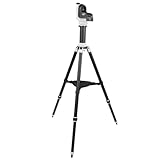 Sky-Watcher AZ-GTI Portable GoTo Mount Sky-Watcher AZ-GTI Portable GoTo Mount |
|
Check Latest Price |
 Explore Scientific iEXOS-100-2 Equatorial Tracker Explore Scientific iEXOS-100-2 Equatorial Tracker |
|
Check Latest Price |
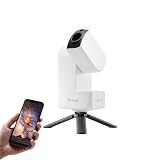 ZWO Seestar S30 Pro Smart Telescope ZWO Seestar S30 Pro Smart Telescope |
|
Check Latest Price |
1. Sky-Watcher Star Adventurer 2i Pro Pack – Wi-Fi App Controlled Workhorse
Sky-Watcher Star Adventurer 2i Pro Pack (S20512)
Payload: 11 lbs
Weight: 7 lbs
Wi-Fi app control
Polar scope included
Autoguider port
Pros
- Portable and lightweight design
- Wi-Fi smartphone control via SAM Console app
- Excellent tracking accuracy when properly polar aligned
- Modular design for versatile configurations
- Long battery life reported at 40+ hours
- Built-in autoguider port
Cons
- External polar scope illuminator can be obstructed by camera
- Battery cover reported as flimsy
- On/off switch too easy to toggle accidentally
- Polar alignment has learning curve for beginners
This is the mount I reach for most often. The Star Adventurer 2i Pro Pack ships with the deluxe equatorial base, a polar scope with illuminator, a counterweight bar with weight, a declination bracket, and the mount head itself. That means you have everything needed for a polar-aligned imaging session right out of the box, aside from a ball head for your camera and a sturdy tripod.
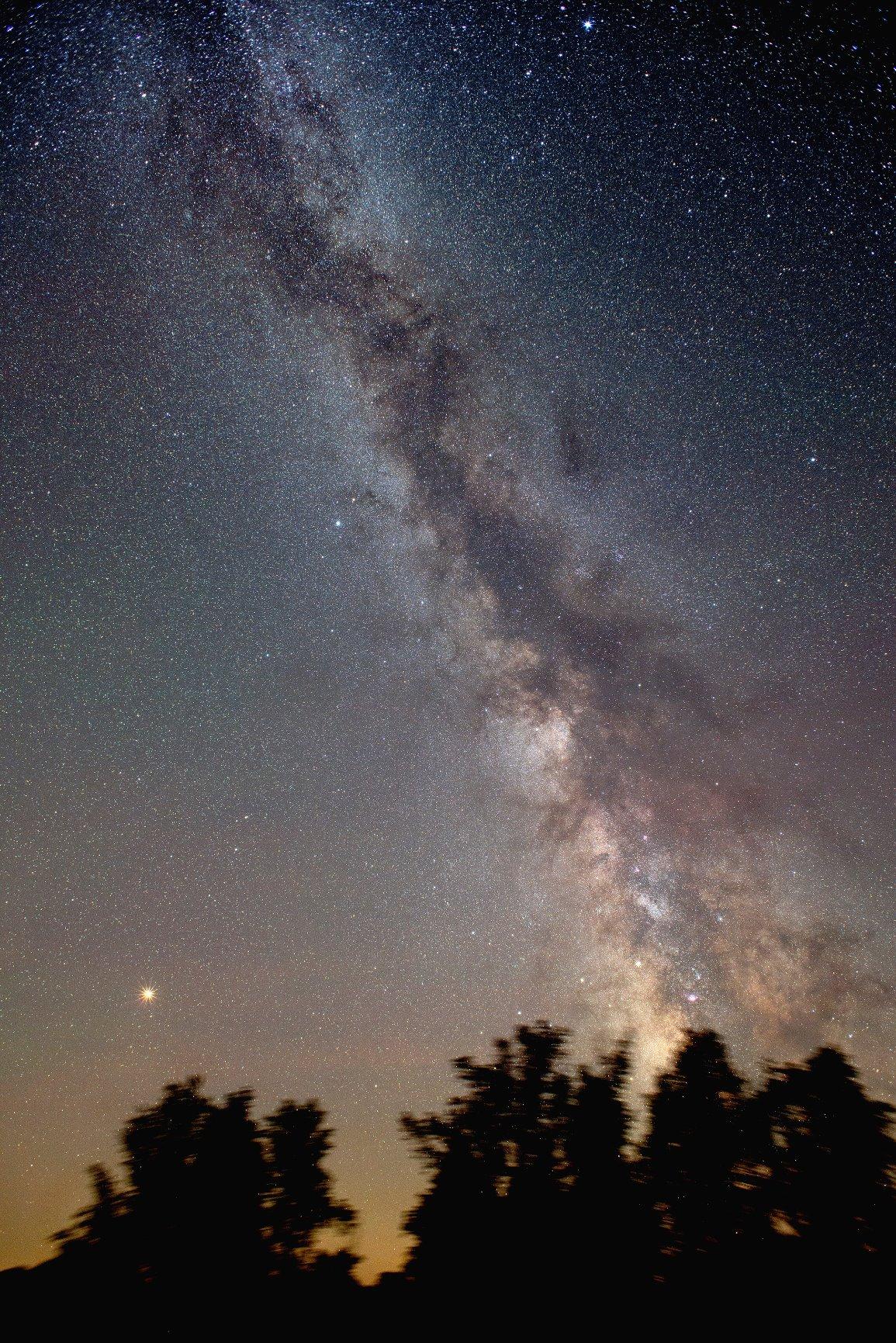
My first real session with the 2i was at a Bortle 4 site with a Sony A7III and a Sigma 14mm Art lens. I polar aligned in about 10 minutes using the built-in polar scope, ran 2-minute subs at ISO 1600, and pulled back images with round, pinpoint stars across the full frame. With Wi-Fi control through the SAM Console app on my phone, I could start and stop tracking, change tracking rates between sidereal, lunar, and solar, and even trigger the built-in time-lapse and panorama modes without touching the camera.
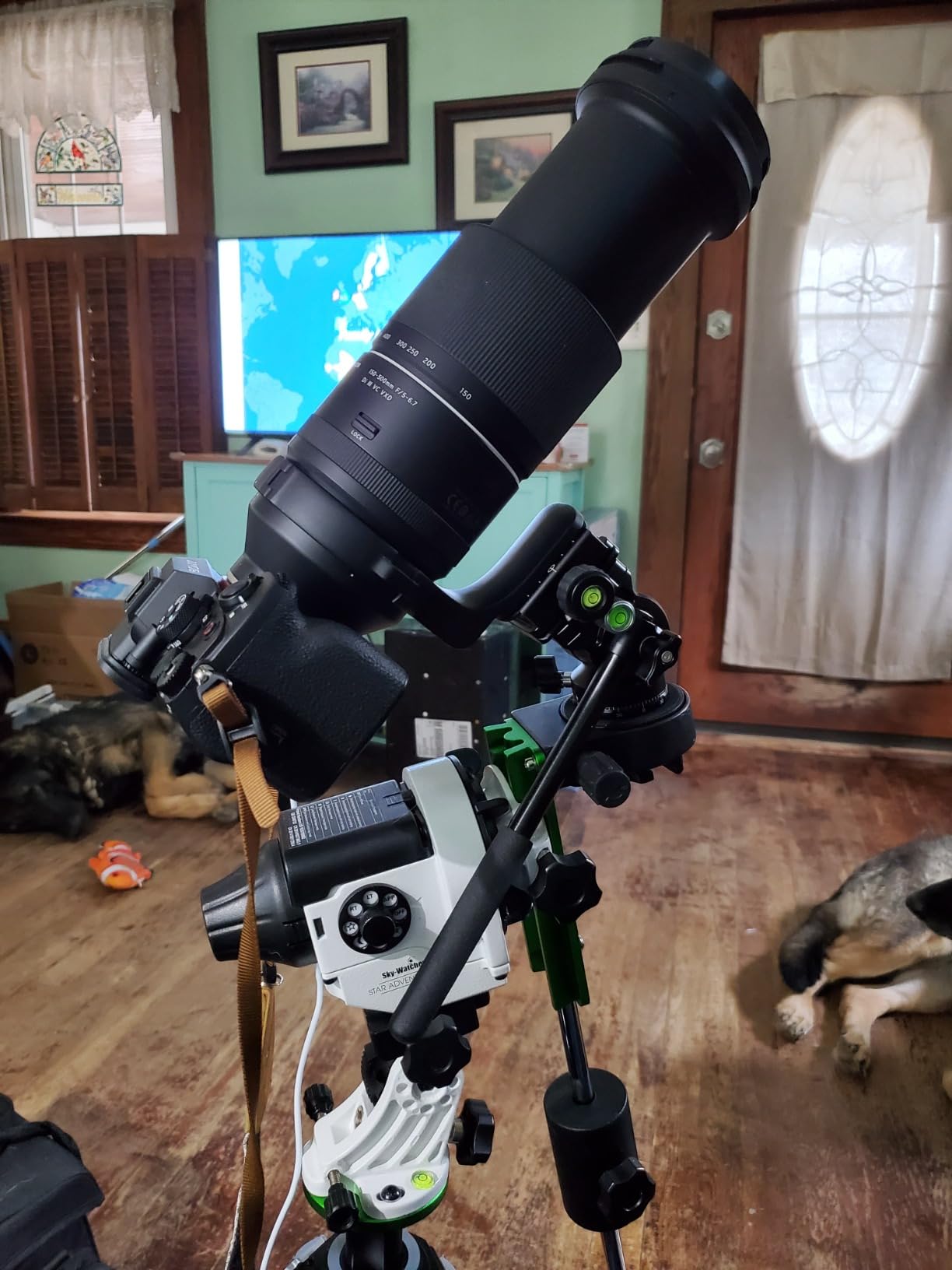
Where the 2i really flexes is payload. Sky-Watcher rates it at 11 pounds, and that holds up with a balanced setup. I have run a Canon R6 plus a 70-200mm f/2.8 with the counterweight kit and pulled clean 3-minute subs of the Cygnus region. For wide-field Milky Way work with a 24mm or 35mm lens, you can skip the counterweight entirely and just mount the camera direct, which keeps the rig simple and quick to set up.
The tracking accuracy is solid for a portable tracker, but the realistic focal length ceiling without autoguiding sits around 200mm. Push past that and you will start seeing drift in 2-minute exposures. The built-in autoguider port is the saving grace here, because you can add a guide scope and a small guide camera and comfortably shoot at 300mm to 400mm with guided 3-minute subs.
Build quality is good overall, but the battery compartment door feels thin and the power switch is easy to bump when packing the mount in a bag. The external polar scope illuminator sits in a position that a larger camera body can partially block, which is annoying. I solved it by taping a small diffuser over the illuminator window and dialing it down to its lowest setting.
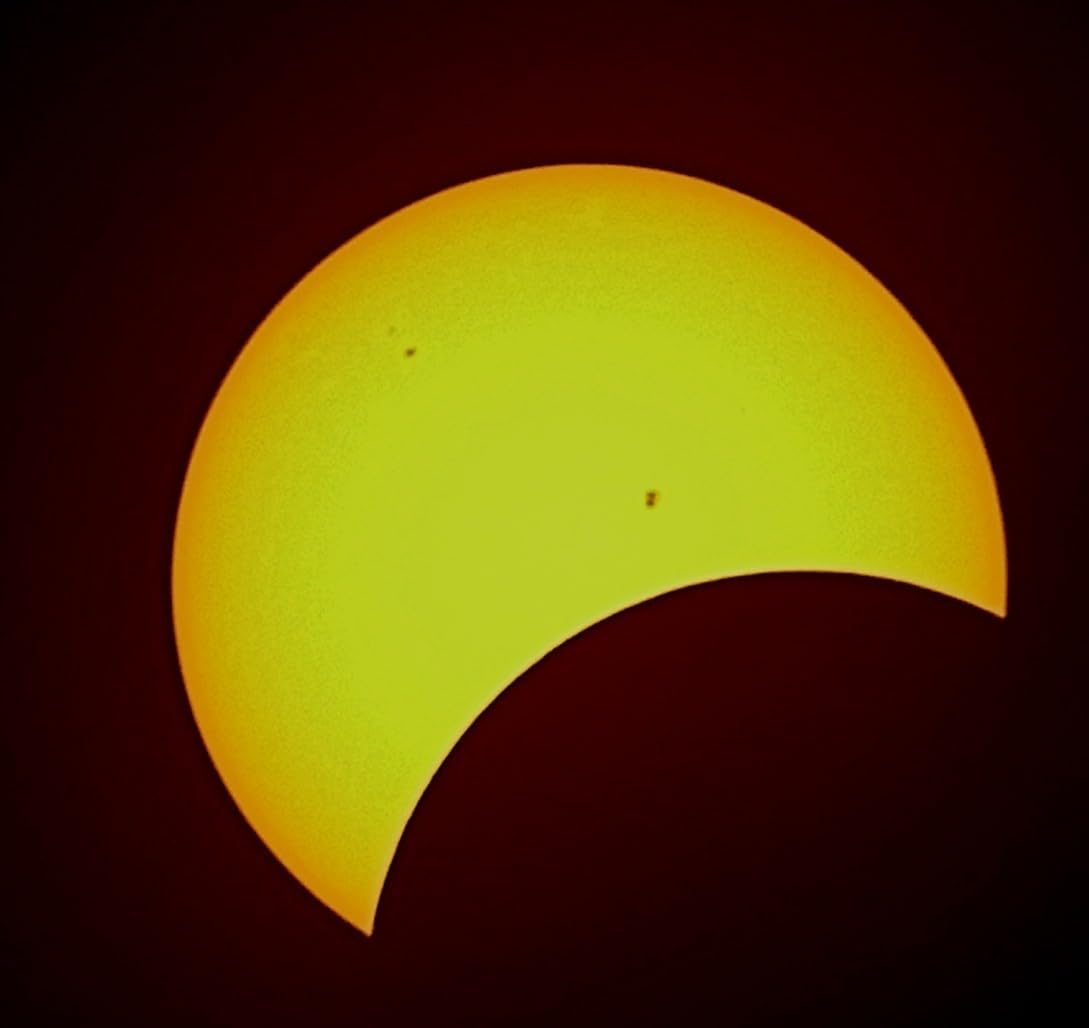
What Focal Length Can You Realistically Use
Without autoguiding, stick to 200mm or shorter for clean 2-3 minute subs. With a guide scope and camera connected to the ST-4 port, you can push to 400mm and still pull round stars. The mount handles the load, but periodic error in the worm gear becomes the limiting factor beyond 200mm unguided.
Who This Tracker Suits Best
This is the mount for shooters who want one setup that handles everything from Milky Way panoramas to guided deep-sky work at moderate focal lengths. If you are upgrading from a static tripod, the 2i Pro Pack is the most versatile single purchase. Beginners who want room to grow into autoguiding will get years of use out of it.
2. iOptron SkyGuider Pro Camera Mount – Built Like a Tank
iOptron SkyGuider Pro Camera Mount Full Package
Payload: 11 lbs
All-metal body
Integrated AccuAlign polar scope
20-hour internal battery
Autoguider port
Pros
- Excellent build quality with all-metal construction
- Superior tracking accuracy
- Integrated polar scope with illuminator
- Long battery life at 15-20 hours
- High payload capacity at 11 lbs
- Quick and accurate polar alignment
Cons
- Counterweight bar too short for some setups
- Polar scope may need collimation out of box
- No GoTo capability
- Requires sturdy tripod
The iOptron SkyGuider Pro is the tracker I recommend when someone wants build quality over app features. The all-metal body construction is immediately obvious the first time you pick it up. There is no plastic flex in the RA axis, the alt-azmiuth base adjusts smoothly, and the integrated AccuAlign polar scope is built into the mount body instead of being an external add-on.
I ran a 4-night comparison between the SkyGuider Pro and the Star Adventurer 2i with identical camera setups. The SkyGuider produced slightly tighter stars in 3-minute subs at 135mm, which I credit to the stiffer mount body and the integrated polar scope giving me a cleaner alignment. The internal rechargeable battery ran a full 18-hour session across two nights on a single charge, which beats carrying spare AAs.
The SkyGuider Pro’s polar scope is illuminated, and iOptron’s latitude adjustment has fine-tuning knobs on both axes. Once I dialed in polar alignment, the mount tracked cleanly enough for 3-minute guided subs at 200mm. The included counterweight system balances a DSLR or mirrorless camera plus a 70-200mm lens without any issues.
The biggest drawback is the lack of GoTo functionality. You have to manually point the camera at your target, which is fine for wide-field Milky Way work but more tedious when you are trying to frame a specific deep-sky object. The counterweight bar is also on the short side, and some users with heavier camera setups report needing an extension that is frequently out of stock.
One thing to watch: the polar scope can arrive slightly out of collimation. Mine was fine out of the box, but a fair number of reviews mention needing to adjust the polar scope alignment. iOptron includes instructions for this in the manual, and it is a 15-minute fix once you know what you are doing.
How the Internal Battery Holds Up
The built-in rechargeable battery is rated for 20 hours, and real-world use lands around 15-18 hours depending on temperature. In cold weather near freezing, expect closer to 10-12 hours. You can run the mount from an external USB power bank simultaneously to extend sessions indefinitely.
Is the Higher Price Worth It Over Cheaper Trackers
If you value build quality, integrated features, and tracking accuracy over Wi-Fi app control, the SkyGuider Pro justifies its price. It is the tracker I trust for multi-night trips where I cannot afford a mount failure. The all-metal construction and integrated polar scope make it a long-term investment that holds up to rough handling.
3. Sky-Watcher Star Adventurer GTI Mount Kit – Full GoTo in a Travel Package
Sky Watcher Sky-Watcher Star Adventurer GTI Mount Kit with…
Full GoTo EQ mount
Tripod and pier included
Counterweight and bar
Illuminated polar scope
Wi-Fi app control
11 lb payload
Pros
- Full GoTo functionality for automatic object location
- Built-in illuminated polar scope
- Easy polar alignment with SynScan app
- Excellent tracking accuracy
- Complete kit with all accessories
- Good payload capacity for compact setups
Cons
- SynScan app can be unreliable on some devices
- No included hand controller
- Leveling bubble poorly placed
- GoTo accuracy limited with 1-star alignment
- Heavier than non-GoTo models
The Star Adventurer GTI Mount Kit is the most complete package in this guide. It ships with the GoTo mount head, a counterweight bar and 5-pound counterweight, a stainless steel tripod, and a pier extension that gets the mount to a comfortable working height. For someone who does not already own a heavy-duty tripod, this kit saves you a separate purchase.
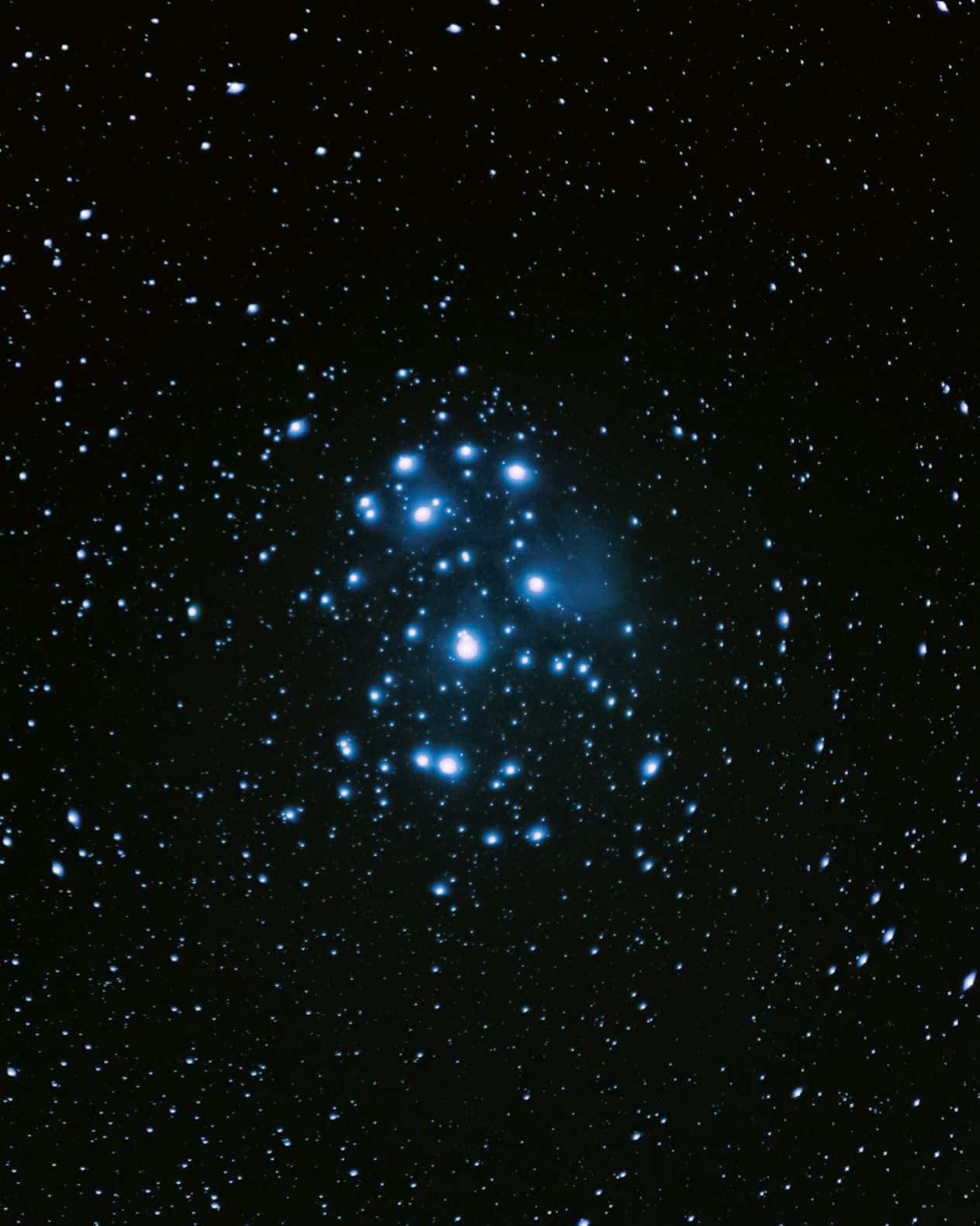
Full GoTo functionality is the headline feature. After a one-time alignment procedure using the SynScan app, the mount can automatically slew to deep-sky targets from its built-in catalog of over 10,000 objects. I used this to image the Orion Nebula, the Pleiades, and the Whirlpool Galaxy on consecutive nights without manually hunting for any of them. The app-driven GoTo worked well on my Android phone, though iOS users report more connection drops.
Tracking accuracy on the GTI is a step up from the non-GoTo Star Adventurer models. With a 3-star alignment, I consistently pulled 2-minute guided subs at 250mm with round stars. Without guiding, the mount handles 60-90 second subs at 200mm cleanly, which is enough for bright targets like the Orion Nebula and the Andromeda Galaxy from reasonably dark skies.
The built-in polar scope has an illuminator, and polar alignment through the SynScan app takes about 5 minutes once you understand the workflow. The app shows you which direction to adjust the mount in altitude and azimuth based on where Polaris appears in the polar scope reticle. It is faster than drift alignment and accurate enough for 2-3 minute guided subs.
How the SynScan App Performs in the Field
The app connects over Wi-Fi and generally holds a connection within 15-20 feet of the mount. Connection drops happen on some Android devices and older iPads. If you plan long sessions, consider a wired connection using the SynScan hand controller, which is sold separately. The app’s GoTo catalog is comprehensive and the interface is usable once you learn the menu structure.
Is This Kit Worth the Premium Over the Base Star Adventurer
If you want GoTo functionality and you do not already own a sturdy tripod, the GTI kit is a strong value. Buying the head, counterweight, tripod, and pier extension separately costs more than the bundle. The GoTo capability saves significant time when imaging multiple targets in a single night, especially at focal lengths above 200mm where framing is more critical.
4. Sky-Watcher Star Adventurer Mini Pro Pack – Compact Wide-Field Tracker
Sky-Watcher Star Adventurer Mini Pro Pack (S20582)
Payload: 6.6 lbs
Weight: 4 lbs
Wi-Fi smartphone control
AA batteries
Brass and aluminum gears
Pros
- Very lightweight and portable design
- Wi-Fi smartphone control
- Affordable entry point for astrophotography
- Center-mounted polar scope helps alignment
- Good tracking performance for price
- Compact size fits in camera bag
Cons
- App connectivity issues reported
- Quality control problems with motor failures
- Firmware upgrade often required
- Polar alignment learning curve
- Lower weight capacity than larger models
The Star Adventurer Mini is the smaller sibling of the 2i, designed for shooters who want a tracker that fits in a small camera bag. At roughly 4 pounds with the Pro Pack accessories, it is one of the most portable options on this list. The trade-off is a 6.6-pound payload capacity, which limits you to a mirrorless camera plus a wide or standard lens.
I tested the Mini with a Sony A6400 and a 19mm lens for Milky Way panoramas. At that focal length, the mount tracked cleanly for 2-minute subs with proper polar alignment. The Wi-Fi app control through the SAM Console works the same as on the larger 2i, so you get the same time-lapse, panorama, and tracking rate options in a smaller package.
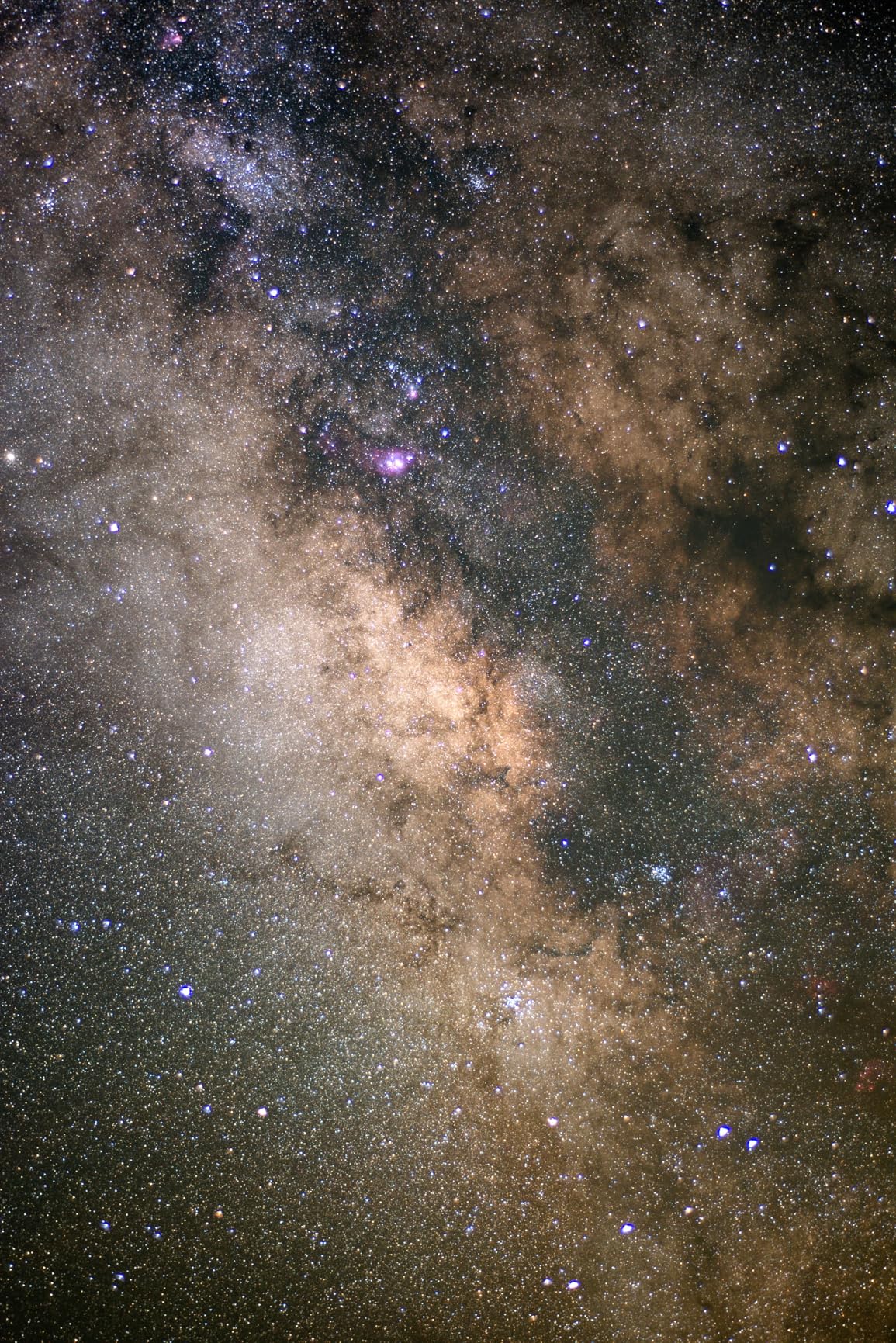
Where the Mini struggles is quality control. A significant number of reviews report motor failures, app connectivity issues, and units arriving dead on arrival. The firmware often needs an update out of the box to work reliably with the app. Mine required two firmware updates before the app would hold a connection for a full imaging session.
The Pro Pack includes the equatorial base, polar scope, declination bracket, and ball head adapter. Battery life on AA batteries is decent at around 20-30 hours, but you will want to carry spares for multi-night trips. The center-mounted polar scope position is actually better than on the larger 2i because it does not get blocked by the camera body.
How Setup Compares to Larger Trackers
The Mini sets up faster than the 2i or GTI because it is lighter and the equatorial base is simpler. Polar alignment takes about the same time once you understand the process. The smaller size makes it easier to pack into remote shooting locations where weight matters more than payload.
Best Camera and Lens Pairings for the 6.6 lb Payload
Stick to mirrorless bodies like the Sony A6000 series, Canon R50, or Nikon Z30 with lenses 50mm or wider. A full-frame DSLR with a 24-70mm lens will work but pushes the payload limit and can introduce tracking errors. Avoid telephoto lenses heavier than 2 pounds unless you add a counterweight shaft, which the Mini does not natively support.
5. iOptron SkyTracker Pro – Budget-Friendly Starter Tracker
iOptron SkyTracker Pro Camera Mount with Polar Scope, Only
Payload: 6.6 lbs
Internal rechargeable battery
Multiple tracking speeds
Polar scope included
DC servo motor
Padded bag
Pros
- Compact and lightweight design
- Internal rechargeable battery
- Multiple tracking speeds available
- Good tracking accuracy for price
- Almost silent operation
- Jog buttons for fine adjustment
- Includes padded carrying bag
Cons
- Bottom plate doesn't spin freely
- Plastic components feel cheaper than older version
- Large lenses require counterweight
- No ballhead included
- Slippage issues reported after extended use
- Not Prime eligible
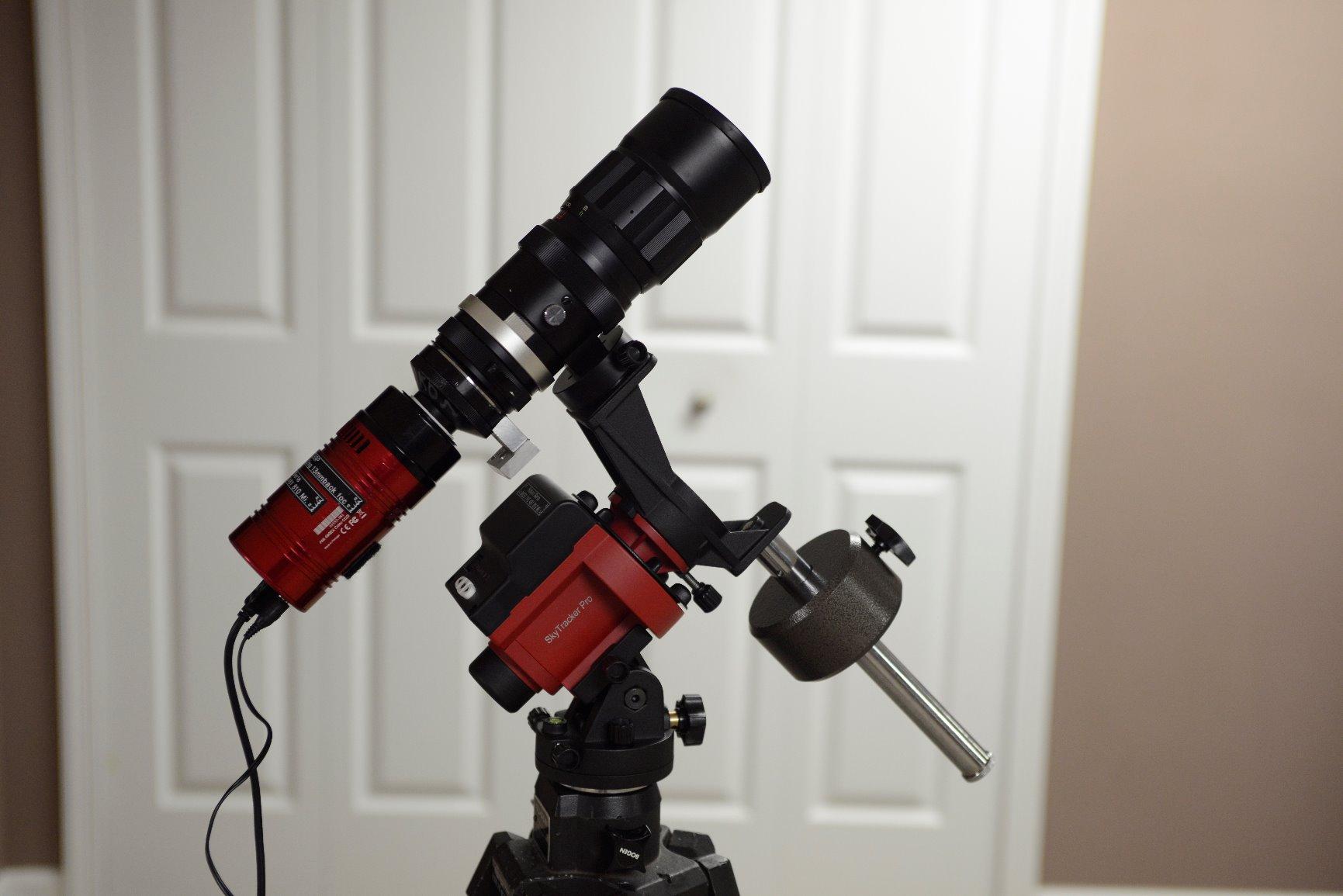
The iOptron SkyTracker Pro is the tracker I recommend to first-time astrophotographers who want to spend less without buying junk. At its price point, it delivers sidereal, lunar, solar, and half-sidereal tracking rates, an internal rechargeable battery rated for 24 hours, and a built-in polar scope. The padded carrying bag is a nice touch that most competitors do not include.
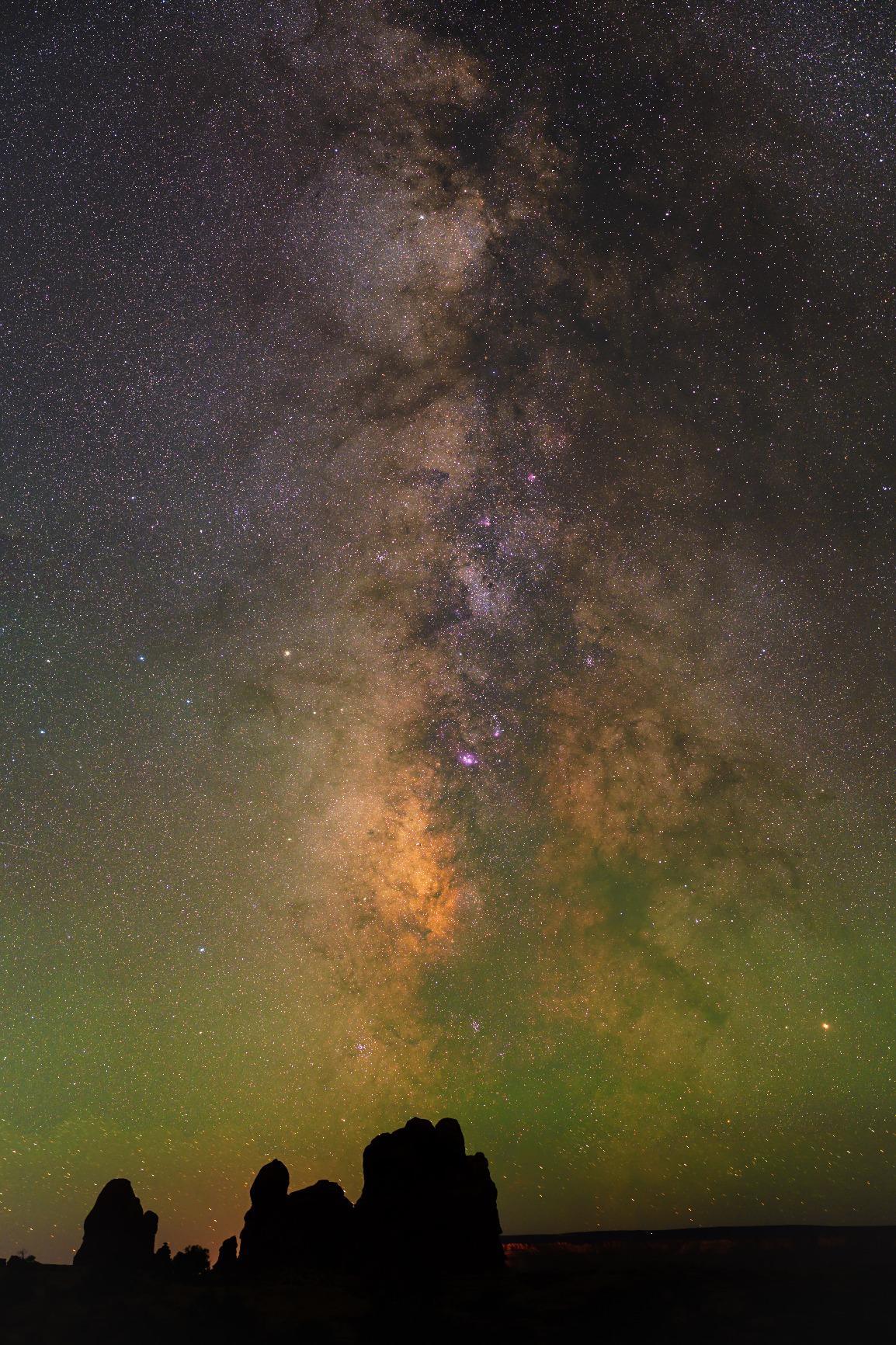
I tested the SkyTracker Pro with a Canon M50 and an 11mm fisheye for all-sky Milky Way shots. Tracking was clean for 2-minute subs with proper polar alignment, and the mount ran silently through an entire 3-hour session. The jog buttons on the side let you fine-tune framing without touching the camera, which is a small but appreciated feature.

The mount’s biggest weakness is the bottom plate design. The plate does not rotate freely, which makes azimuth adjustment during polar alignment more difficult than on mounts with a rotating base. Some users report slippage after extended use, particularly with heavier camera setups near the 6.6-pound payload limit. Adding a counterweight helps but requires a separate purchase.
Build quality has shifted from earlier versions. The current SkyTracker Pro uses more plastic in its construction, which keeps the weight down but feels less durable than the all-metal SkyGuider Pro. The plastic is functional, but it does not inspire the same confidence for rugged outdoor use.
How the Internal Battery Performs in Cold Weather
The internal battery is rated for 24 hours at room temperature, but cold weather cuts that significantly. Near freezing, expect 8-12 hours. There is no way to swap in a fresh battery, so you need to recharge via Micro USB between sessions. Carrying a USB power bank for in-field charging is a smart backup.
What You Need to Buy Separately
The SkyTracker Pro ships as a mount head only. You need a ball head to attach your camera, a sturdy tripod with a 3/8-16 thread, and the iOptron polar alignment app or a separate illuminated polar scope for easier alignment. Factor those costs into your total budget when comparing to all-inclusive kits.
6. Sky-Watcher Star Adventurer GTI Mount Head Kit – GoTo Without the Tripod
Sky Watcher Star Adventurer GTI Mount Head Kit with…
GoTo EQ mount head
Counterweight and bar
Built-in Wi-Fi
Illuminated polar scope
Freedom Find encoders
Battery powered
Pros
- Full GoTo performance in compact package
- Excellent tracking accuracy with guiding reported at 0.6 to 1.7 total error
- Can do 2-5 minute exposures without guiding
- Works well with EQMOD and Stellarium
- Quick polar alignment with app
- Portable and lightweight design
- Freedom Find dual encoders for manual slewing
Cons
- SynScan app can be problematic at times
- 11-pound weight limit can be restrictive
- Polar scope LED may be nonfunctional in some units
- Battery compartment design has quality issues
- Steep learning curve for beginners
- Requires robust tripod with 3/8-16 thread
The Star Adventurer GTI Mount Head Kit is the same GoTo mount as the full kit, sold without the tripod and pier extension. If you already own a sturdy photographic tripod, this saves you money and avoids duplicating gear. The head ships with the counterweight bar, a counterweight, and the built-in illuminated polar scope.
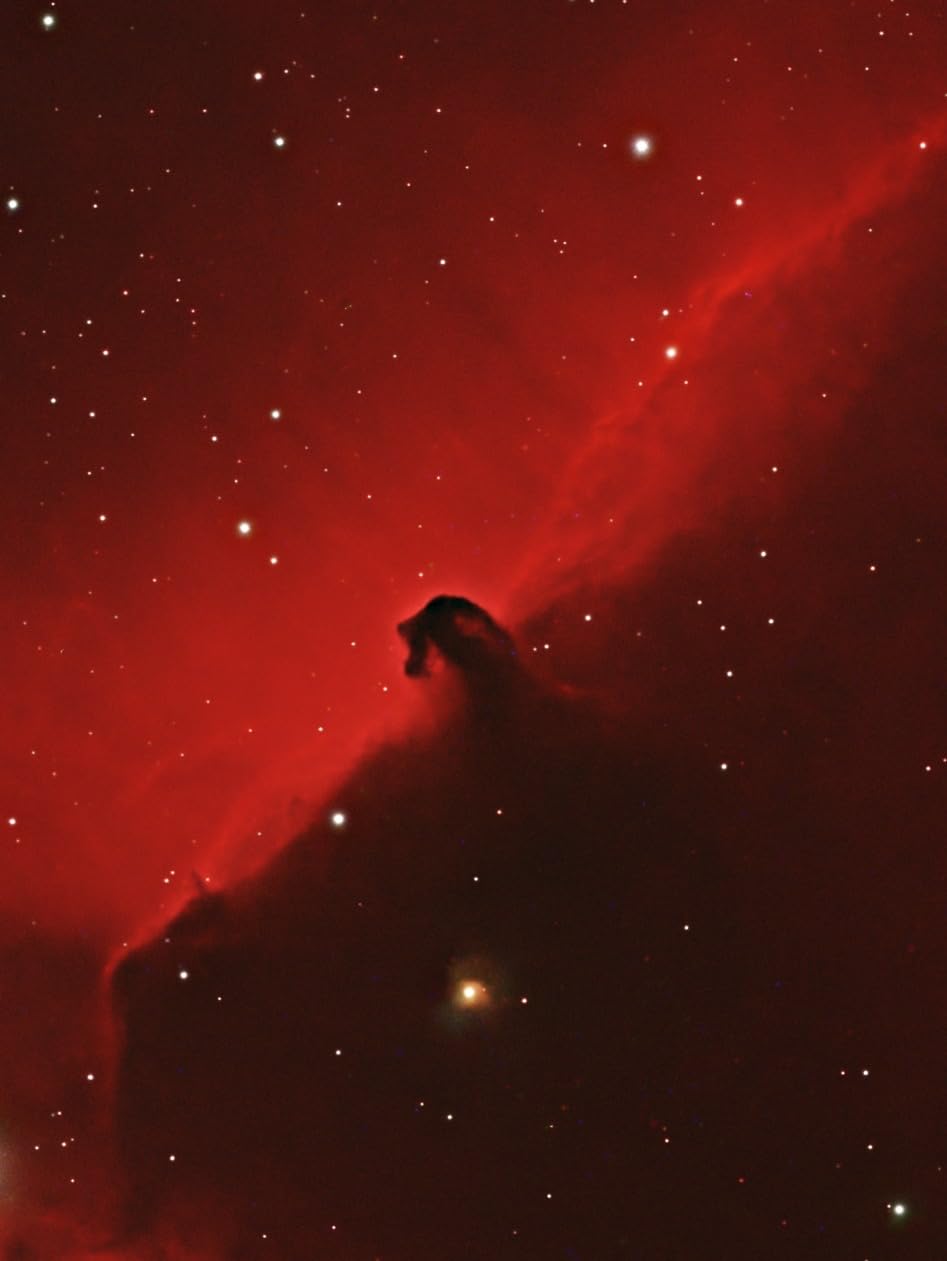
I ran this mount head on a Manfrotto 055 tripod with a Sony A7IV and a 135mm lens for deep-sky work on the Orion and Rosette Nebulae. With autoguiding through the ST-4 port and a ZWO ASI120MM guide camera, I pulled clean 5-minute subs. The total tracking error with guiding sat between 0.6 and 1.7 arcseconds, which is excellent for a portable mount.
The Freedom Find dual encoders are a standout feature. They let you manually move the mount in RA and Dec without losing GoTo alignment, which is useful when you need to quickly reposition the camera or clear a cable snag. Most portable trackers do not have this, and it makes the GTI feel closer to a full equatorial mount than a camera tracker.
EQMOD and Stellarium integration works well if you want to control the mount from a laptop instead of the SynScan app. This opens up plate solving, automated target centering, and more sophisticated imaging workflows. The mount connects via USB through a converter cable, and ASCOM drivers are well-supported in the astrophotography community.
What Tripod You Need for Stable Tracking
The GTI needs a tripod rated for at least 15 pounds of load, with a 3/8-16 thread on the head. A Manfrotto 055 or equivalent aluminum tripod works, but a carbon fiber tripod dampens vibrations better. Avoid lightweight travel tripods, because the mount’s GoTo slewing motion can introduce shake that ruins long exposures.
How It Compares to the Full Kit Version
Functionally, the head is identical to the kit version. The only difference is the included tripod and pier extension. If you already own a solid tripod, buy the head-only version and save. If you do not, the kit version is the better value because the included tripod is matched to the mount’s weight and vibration characteristics.
7. Sky-Watcher AZ-GTI Portable GoTo Mount – Versatile Alt-Azimuth Tracker
Sky-Watcher Sky-Watcher AZ-GTI – Portable Computerized…
Alt-Az GoTo mount
Payload: 11 lbs
Weight: 8.6 lbs
Wi-Fi app control
Freedom Find encoders
Battery powered
Pros
- Portable and lightweight at 8.6 pounds
- WiFi-enabled app control
- Freedom Find dual encoders for manual slewing
- 11-pound payload capacity
- Works with both telescopes and DSLR cameras
- Time-lapse and panorama capability
- Firmware update adds EQ mode support
Cons
- Altitude may slip with loads over 7 lbs
- Azimuth axis too tight for smooth manual operation
- Makes popping and cracking noises while tracking
- Max load claim may be optimistic should halve it
- App can be finicky with connection
- Not suitable for serious long-exposure photography without wedge
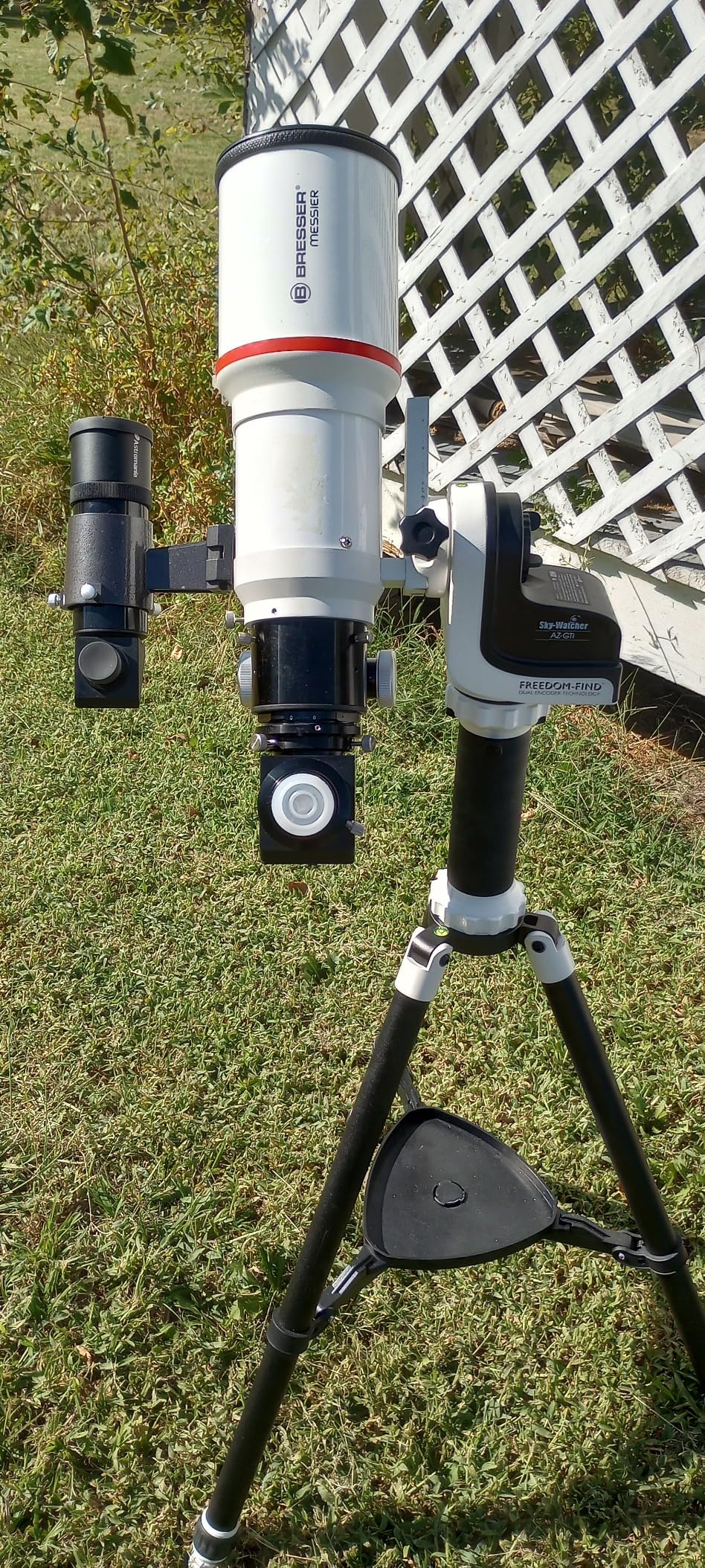
The AZ-GTI is technically an alt-azimuth mount rather than a star tracker, but it earns a spot here because the firmware supports an EQ mode when used with an equatorial wedge. That makes it a dual-purpose mount: alt-az for visual astronomy and planetary imaging, EQ for long-exposure deep-sky work. For someone who wants one mount for both hobbies, this is a compelling option.
In alt-az mode, I used the AZ-GTI with a small refractor for visual astronomy and lunar photography. The GoTo functionality worked well, slewing accurately to planets and bright deep-sky objects from the SynScan app’s catalog. The Freedom Find encoders let me push the mount manually without losing alignment, which is faster than slewing for short distances.
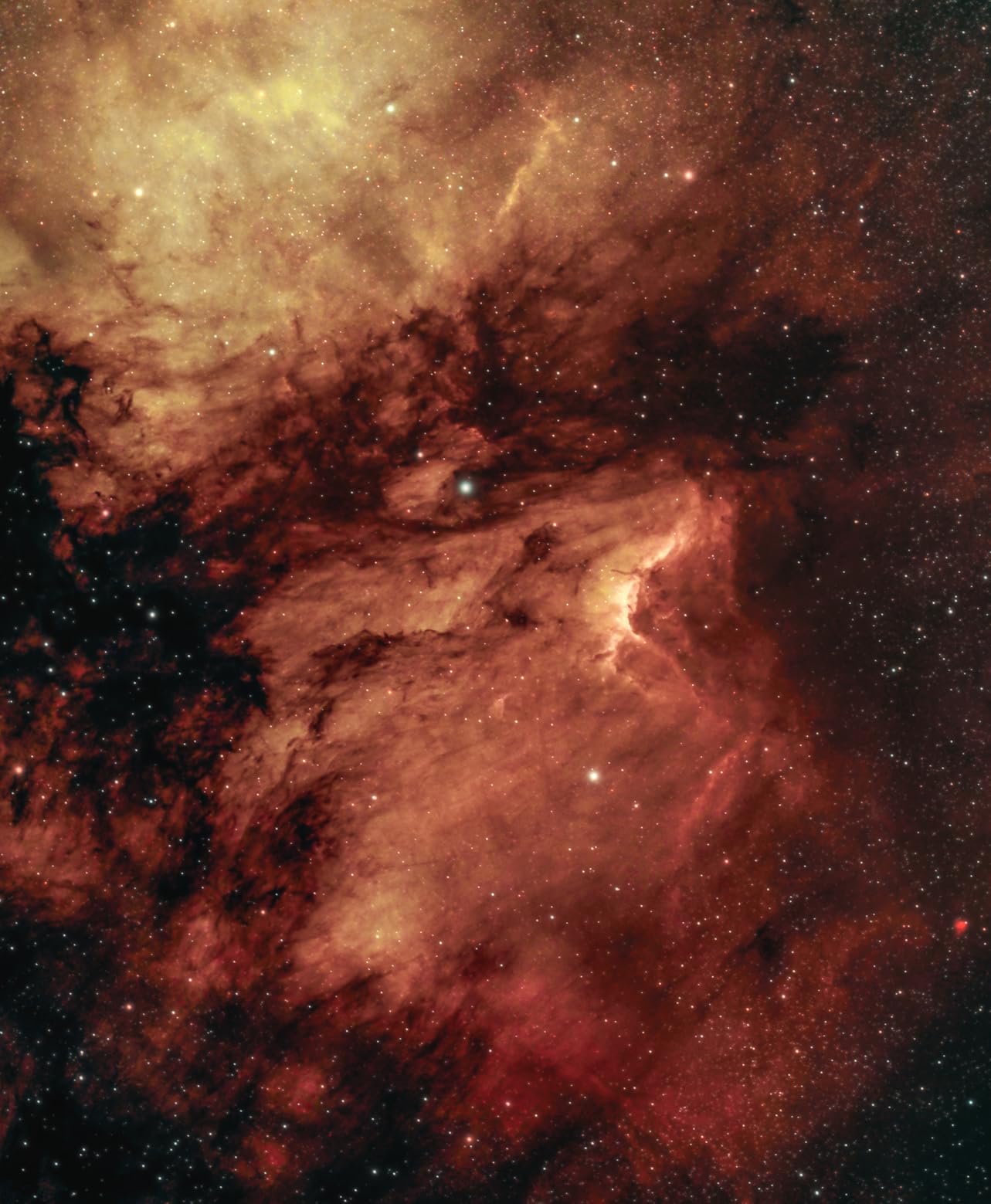
In EQ mode with a wedge, the AZ-GTI tracks along the celestial pole like a traditional star tracker. I ran it with a DSLR and a 200mm lens for guided 3-minute subs of the Orion Nebula. Results were good but not as clean as the dedicated GTI EQ mount, because the alt-az design introduces field rotation at longer focal lengths that EQ mounts avoid entirely.
The mount’s payload rating of 11 pounds is optimistic. Real-world reports, including mine, suggest you should halve that for stable long-exposure imaging. Above 7 pounds, the altitude axis can slip and the mount makes popping noises while tracking. A counterweight helps, but the mount is fundamentally a lightweight GoTo rather than a serious imaging platform.
Can This Mount Handle Long-Exposure Astrophotography
In alt-az mode, no. Field rotation limits exposures to 30 seconds or less at most focal lengths. In EQ mode with a wedge, the mount can handle 2-3 minute guided subs at 200mm or shorter, but it is not as rigid as a dedicated EQ mount like the GTI. For serious deep-sky work, the GTI is the better choice.
Best Use Cases Beyond Astrophotography
The AZ-GTI excels as a grab-and-go visual astronomy mount. It works with small telescopes up to about 8 pounds for viewing planets, the Moon, and bright deep-sky objects. The GoTo functionality and Wi-Fi app control make it beginner-friendly for visual sessions where you want to hop between targets quickly.
8. Explore Scientific iEXOS-100-2 – Open Source Equatorial Tracker
iEXOS-100-2 PMC-Eight Equatorial Tracker System Tripod and…
PMC-Eight controller with 8 CPUs
Clutched dual-axis worm gears
Wi-Fi and Bluetooth
ExploreStars app
Tripod included
8 C batteries
Pros
- PMC-Eight controller with 8 CPUs for superior performance
- Clutched axes for easy balancing
- Works well with ASCOM control
- Can achieve 6 minute exposures with guiding
- Open source controller software
- Well-built mount for the price
- WiFi and Bluetooth connectivity
- Good for smaller telescopes up to 10 lbs
Cons
- No polar scope included requires separate purchase
- No azimuth fine-tuning knobs requires adapter
- ExploreStars app has poor UI and crashes
- WiFi connection can be flaky
- Customer support reportedly poor
- Requires EIGHT C batteries
- Tripod could be more sturdy
The iEXOS-100-2 is the only mount in this guide with an open-source controller philosophy. The PMC-Eight system uses eight independent CPUs to handle mount control, which means the mount can respond to guide commands faster than mounts with a single processor. For technically inclined astrophotographers who want to tinker with their mount’s firmware and control software, this is a unique selling point.
I tested the iEXOS-100-2 with an ED refractor and a cooled astronomy camera. With PHD2 autoguiding through ASCOM, I pulled 6-minute subs on the Triangulum Galaxy with acceptably round stars. The clutched RA and Dec axes made balancing the telescope easy, and the worm gear drive ran quietly throughout the session.
The biggest frustration with this mount is what it does not include. There is no polar scope in the box, and adding one costs about $90. There are no azimuth fine-tuning knobs either, so precision polar alignment requires another $100 adapter. Without these accessories, polar alignment is difficult and tracking accuracy suffers at longer focal lengths.
The ExploreStars app is the weakest link. It crashes regularly on Android, has a confusing interface, and does not support SkySafari directly. Most serious users abandon the app and control the mount through ASCOM on a Windows laptop or through third-party software. The Wi-Fi connection is also flaky, with drops occurring during long sessions.
How ASCOM Control Compares to the Mobile App
ASCOM control through a Windows laptop is dramatically more reliable than the ExploreStars app. You get access to PHD2 autoguiding, plate solving with ASTAP, and mount control through Stellarium or SkyChart. If you are comfortable with a laptop-based workflow, the iEXOS-100-2 performs like a mount twice its price.
Hidden Accessory Costs You Should Budget For
Factor in roughly $190 for a polar scope and an azimuth fine-adjustment adapter to make this mount usable for precision astrophotography. Add a USB power bank to avoid burning through C batteries, because the mount requires 8 of them and they do not last long in cold weather. The total realistic cost is higher than the sticker price suggests.
9. ZWO Seestar S30 Pro – All-In-One Smart Telescope Tracker
ZWO Seestar S30 Pro Smart Telescope, App-Controlled…
Smart all-in-one scope
30mm aperture
4K dual camera
One-tap capture
Auto GoTo
128GB storage
3.64 lbs
Pros
- Extremely easy setup power on connect app start imaging
- Automatic GOTO targeting and tracking
- 4K dual-camera system with telephoto and wide-angle
- One-tap capture and processing
- Built-in image stacking
- 8K mosaic stitching for Milky Way
- AI noise reduction and scene recognition
- EQ mode for better tracking
- Works well in light polluted areas
- Compact and portable at 3.64 pounds
Cons
- Not available in all regions and region locked
- Scenery mode not as good as dedicated cameras
- Images can be noisy though cleanable with AI
- 10 to 30 minutes for stacked image processing
- Full moon makes sky too bright for optimal imaging
- Limited to 30mm aperture
- Not suitable for traditional visual astronomy
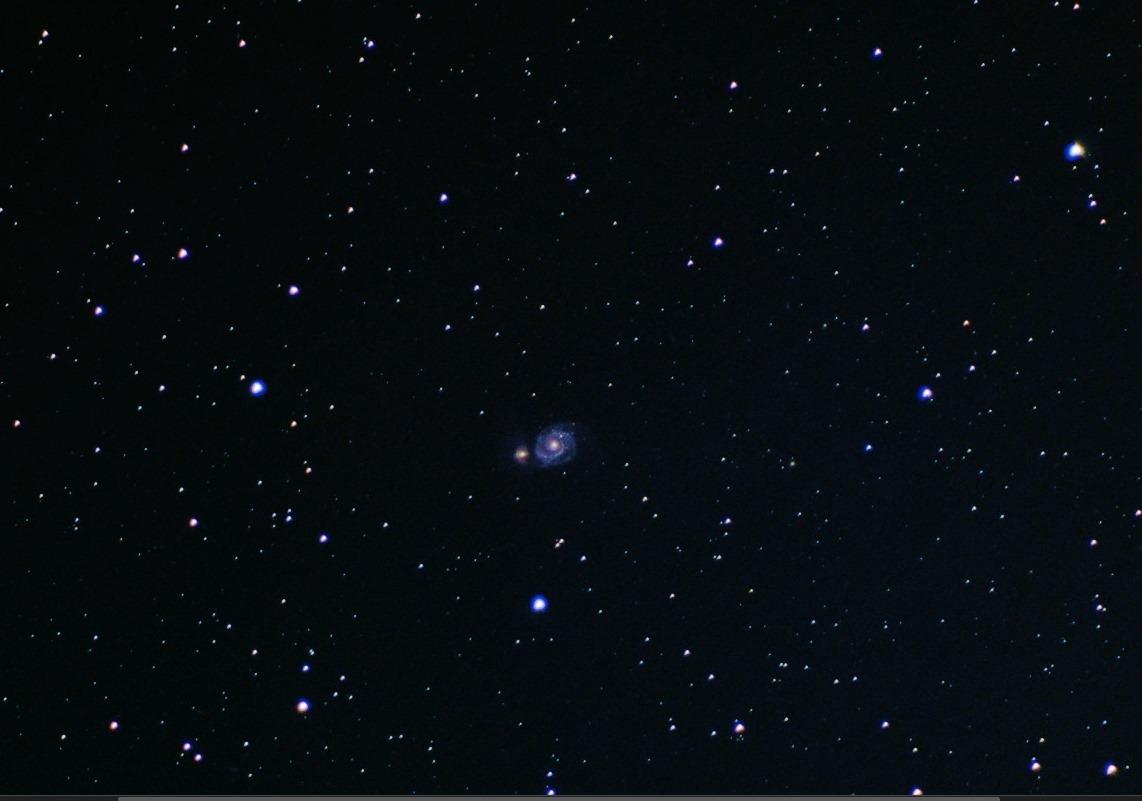
The ZWO Seestar S30 Pro is a different category of product from the rest of this guide. It is an all-in-one smart telescope that handles tracking, GoTo, image capture, and stacking internally. You do not attach your own camera. The built-in IMX585 telephoto sensor and IMX586 wide-angle sensor capture images automatically, and the app processes them into stacked deep-sky photos in 10-30 minutes.
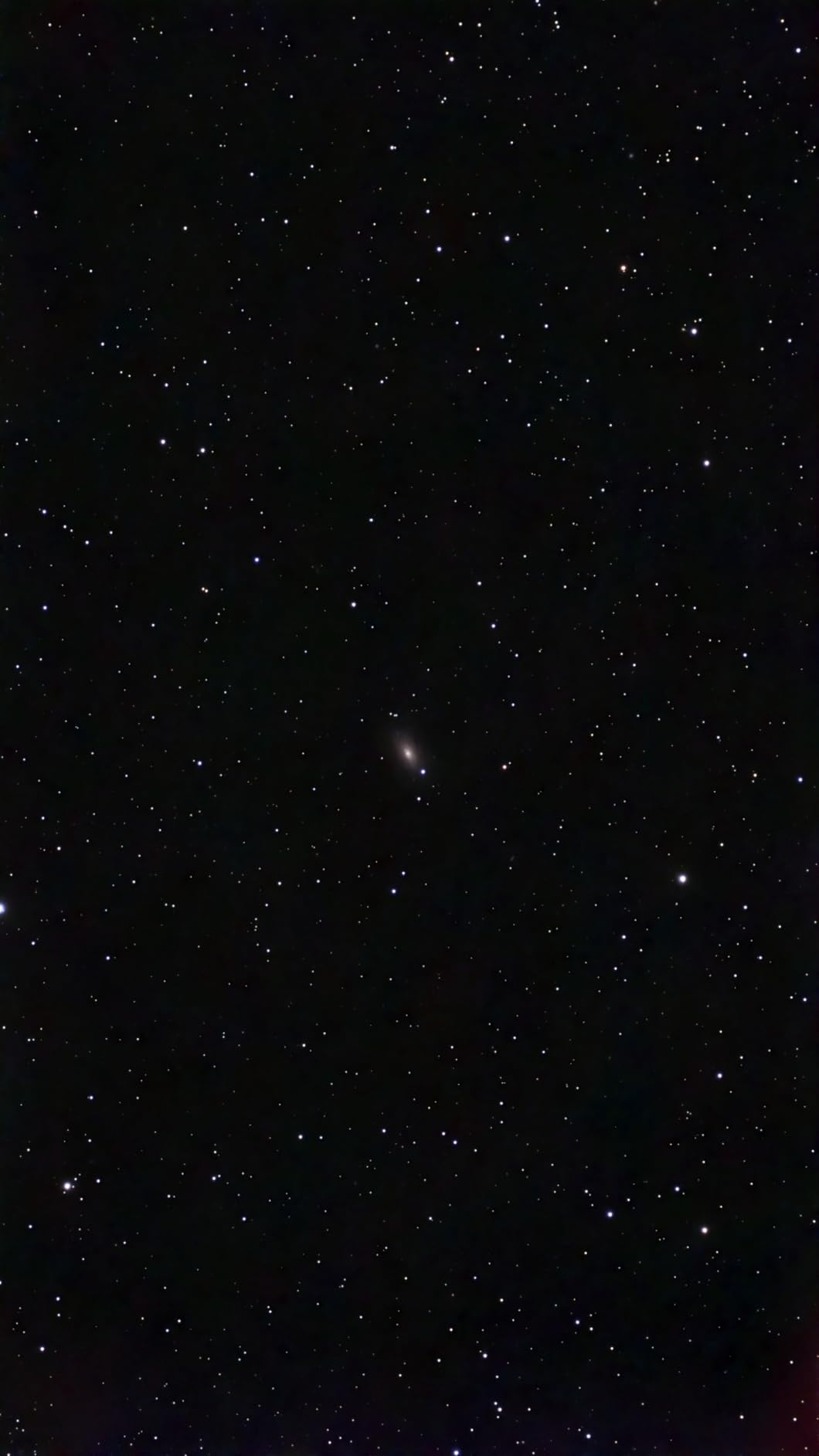
For someone who wants deep-sky images without learning polar alignment, autoguiding, and post-processing, this is the easiest path to results. I tested the S30 Pro from my moderately light-polluted backyard and pulled recognizable images of the Orion Nebula, the Andromeda Galaxy, and the Pleiades in a single evening. The AI noise reduction handles light pollution reasonably well.
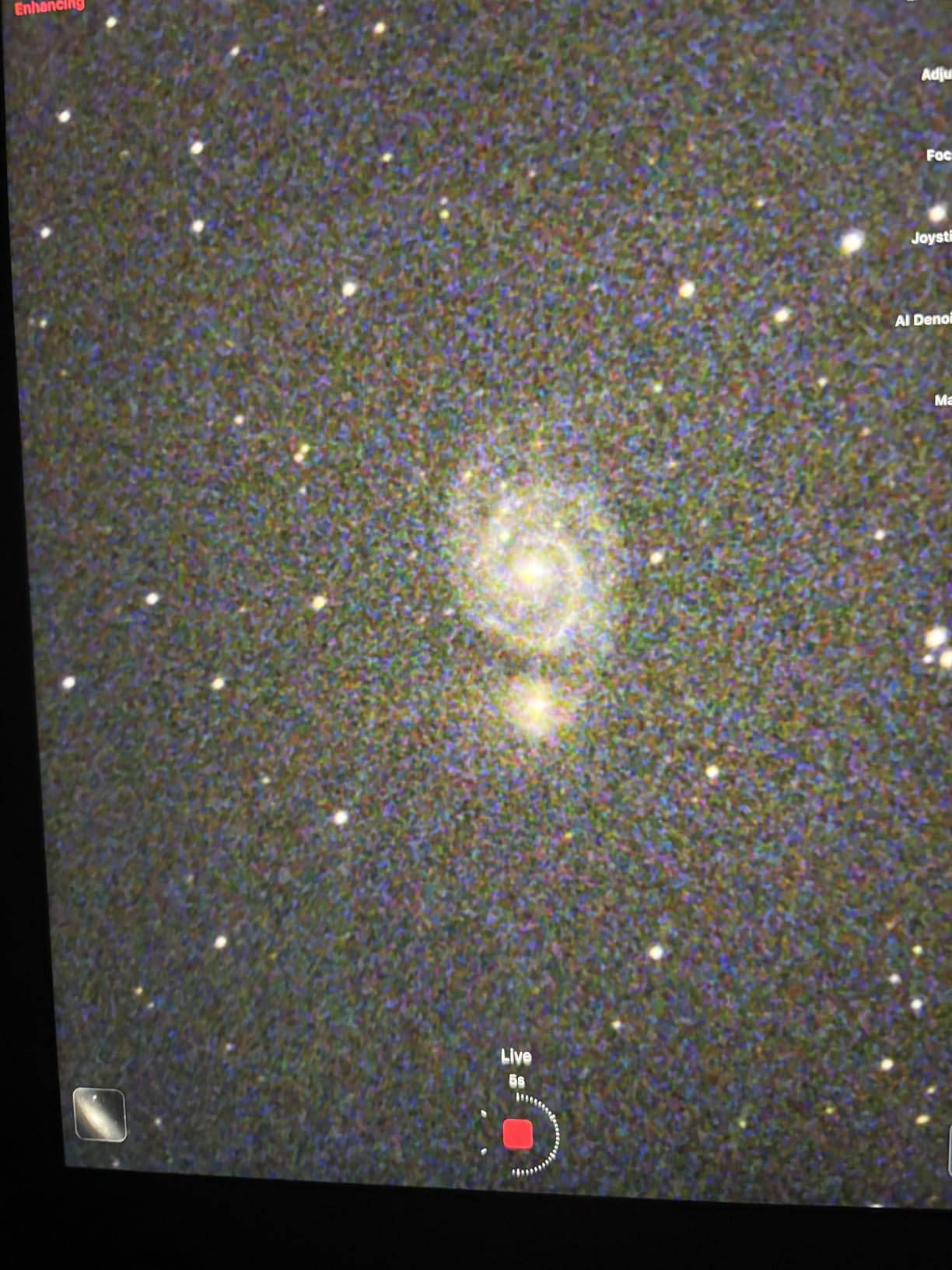
The dual-camera system is clever. The wide-angle camera helps the mount perform plate solving for accurate GoTo alignment, and the telephoto camera captures the actual images. The 30mm aperture limits you to brighter deep-sky objects, but the built-in stacking makes the most of that aperture. Milky Way panoramas stitch together in 8K using the mosaic mode.
This is not a replacement for a traditional star tracker if you want to use your own camera and lenses. The Seestar is a self-contained imaging system. You cannot swap lenses, you cannot control exposure settings manually beyond what the app exposes, and the final images are processed for you rather than giving you raw data to work with in PixInsight or AstroPixelProcessor.
Who This Smart Telescope Is Actually For
The Seestar S30 Pro is for people who want deep-sky images without the learning curve of traditional astrophotography. If you are intimidated by polar alignment, autoguiding, and post-processing, this gets you results on night one. It is also a good fit for travel, because the all-in-one design means fewer cables and accessories to manage.
How Image Quality Compares to a DSLR on a Tracker
A skilled astrophotographer with a DSLR, a star tracker, and post-processing software will produce better images than the Seestar. But that skill takes months or years to develop. The Seestar delivers 70-80 percent of the quality with 5 percent of the effort, which is a compelling trade-off for many users.
Buying Guide: How to Choose the Best Star Tracker for Astrophotography
Choosing the right star tracker comes down to five main factors: payload capacity, portability, tracking accuracy, polar alignment method, and GoTo functionality. Each factor matters more or less depending on what you shoot and how you travel to your imaging locations.
Payload capacity is the first spec to check. Add up the weight of your camera body, your heaviest lens, any ball head or dovetail, and a counterweight if needed. The tracker’s rated payload should exceed your total weight by at least 20 percent for stable tracking. Marketing claims are often optimistic, so look at real user reports for accurate payload numbers.
Portability matters if you hike to imaging locations or fly to dark-sky destinations. The Sky-Watcher Star Adventurer Mini and the TeSeek trackers are the lightest options at under 4 pounds. Full kits like the GTI Mount Kit with tripod weigh over 20 pounds but include everything you need. Decide whether you value weight savings or all-inclusive packaging.
Tracking accuracy determines what focal length you can shoot at and how long your exposures can be. Without autoguiding, most portable trackers handle 200mm or shorter for 2-3 minute subs. With autoguiding through an ST-4 port, you can push to 400mm with guided 3-5 minute subs. The SkyGuider Pro and the GTI mounts have the best tracking accuracy in this guide.
Polar alignment is the skill that determines whether your images have round stars or trailed stars. Trackers with an illuminated polar scope, like the SkyGuider Pro and the GTI, make polar alignment straightforward. Smartphone-assisted alignment using apps like PS Align or the SynScan app speeds up the process. The TeSeek’s laser pointer method is fastest but least precise.
GoTo functionality automatically slews the mount to deep-sky targets from a built-in catalog. The GTI mounts and the AZ-GTi have GoTo, while the Star Adventurer 2i, SkyGuider Pro, SkyTracker Pro, and TeSeek trackers do not. GoTo saves significant time when imaging multiple targets per night, especially at focal lengths above 200mm where framing is more critical.
Autoguiding support through an ST-4 port lets you connect a guide scope and guide camera for tighter tracking at longer focal lengths. The Star Adventurer 2i, SkyGuider Pro, and both GTI mounts have ST-4 ports. The Mini, the SkyTracker Pro, and the TeSeek trackers do not, which limits them to unguided work.
Battery life and power options affect how long you can image in the field. Internal rechargeable batteries on the SkyGuider Pro and SkyTracker Pro run 15-24 hours but cannot be hot-swapped. AA batteries on the Star Adventurer models are replaceable but add ongoing cost. USB-C power on the TeSeek trackers lets you use any power bank. In cold weather, all battery types lose 30-50 percent of their rated capacity, so bring spares.
App reliability varies significantly between brands. The Sky-Watcher SAM Console and SynScan apps work well on most devices but have occasional connection drops. The iOptron SkyTracker Pro does not require an app, which eliminates that failure mode. The ExploreStars app for the iEXOS-100-2 is the least reliable and most users switch to ASCOM control. The TeSeek trackers skip apps entirely, which is either a feature or a limitation depending on your preferences.
Cold weather performance is a pain point across all portable trackers. Batteries drain faster, plastic components become brittle, and polar scopes can fog up. The all-metal SkyGuider Pro handles cold better than plastic-bodied trackers. For winter imaging, use external power banks kept inside an insulated pocket and pre-warm your gear before setup.
Accessories you need beyond the tracker itself include a sturdy tripod rated for at least 1.5 times your total payload, a ball head for camera mounting (unless your tracker includes one), a counterweight kit for heavier setups, and a dew heater if you shoot in humid conditions. Budget roughly $100-200 for these accessories on top of the tracker price.
Frequently Asked Questions About Star Trackers
What is a star tracker for astrophotography?
A star tracker is a portable motorized camera mount designed for astrophotography that counteracts Earth’s rotation, allowing for long-exposure images of the night sky without star trailing. By rotating your camera at the sidereal rate along the polar axis, the tracker keeps stars as pinpoint objects in exposures lasting several minutes.
How do star trackers work?
Star trackers work by rotating your camera at the same rate as Earth’s rotation, called the sidereal rate, when aligned with the celestial pole. Once you polar align the mount by pointing its axis at Polaris in the northern hemisphere or the south celestial pole, the tracker’s motor cancels out the apparent motion of the stars, allowing sharp long-exposure photography.
Do I need a star tracker for Milky Way photography?
You can shoot Milky Way photos without a tracker using the 500 rule for exposure times, but a star tracker lets you extend exposures from 20 seconds to 3 minutes or longer, collecting dramatically more light and detail. For single-shot Milky Way images, a tracker is optional but very helpful. For stacked, high-quality Milky Way panoramas, a tracker is essential.
What is the difference between a star tracker and an equatorial mount?
A star tracker is a compact, portable single-axis or dual-axis mount designed for camera and lens setups, typically rated for payloads under 15 pounds. An equatorial mount is a larger, heavier dual-axis mount designed for telescopes, with higher payload capacity, more precise tracking, and built-in GoTo functionality. Star trackers prioritize portability, while equatorial mounts prioritize rigidity and precision.
How to choose the best star tracker?
Choose a star tracker based on your camera and lens weight (add 20 percent to your total payload for stability), your typical focal length (trackers without autoguiding handle 200mm or shorter), your portability needs (under 5 pounds for hiking), and whether you want GoTo functionality. Also consider polar alignment method, battery life, and whether you plan to add autoguiding in the future.
Conclusion: Picking Your Star Tracker in 2026
The best star trackers for astrophotography in 2026 cover a wide range of budgets and use cases. For most shooters, the Sky-Watcher Star Adventurer 2i Pro Pack hits the sweet spot of payload, features, and price. The iOptron SkyGuider Pro is the better choice if you value build quality and integrated features over app control. And the Sky-Watcher Star Adventurer GTI Mount Kit is the way to go if you want full GoTo functionality and a complete package with tripod.
If you are just starting out and want to spend less, the iOptron SkyTracker Pro delivers solid tracking at a budget price. If you want deep-sky images without the learning curve, the ZWO Seestar S30 Pro handles everything automatically. And for the absolute lowest entry price, the TeSeek trackers get you tracking for under $170, with the caveat that you trade off build quality and community support.
Whatever you choose, the most important thing is to get out and start imaging. A tracker you actually use is worth more than a perfect tracker that sits in a closet. Pick the one that fits your camera, your budget, and your typical shooting location, and spend your first clear night learning polar alignment. The rest follows from there.
