
8 Best Space Heaters for Basements (August 2026) Top Reviews
Basements are the coldest rooms in most homes, and not just because they sit below ground level. Concrete floors absorb cold from the earth and radiate it back into the room continuously, a phenomenon called radiant cooling that makes a 65-degree basement feel like 55. Standard HVAC ducts often terminate with weak airflow on the lowest level, leaving finished basements, home offices, and workout spaces uncomfortably cold from October through April.
After testing and comparing the best space heaters for basements across multiple heating technologies, our team identified eight models that handle below-grade challenges better than the rest. We looked specifically at how each heater performs against cold concrete floors, drafty foundation walls, and the higher humidity levels that make basements feel even colder than the thermostat reads.
Contents
This guide covers infrared cabinet heaters, ceramic tower units, oil-filled radiators, and utility-style forced-air models. Whether you need to warm a 300-square-foot basement office or supplement an existing system in a 1,000-square-foot recreation room, these picks address the real conditions basements throw at a heater. We also address the safety questions that come up most often in forums like Reddit’s HomeImprovement community, where basement heating is one of the most discussed seasonal topics.
Top 3 Picks for Best Space Heaters for Basements
8 Best Space Heaters for Basements in 2026
| Product | Specs | Action |
|---|---|---|
| Dr Infrared DR-968 |
|
Check Latest Price |
 DREO Space Heater HSH006 DREO Space Heater HSH006 |
|
Check Latest Price |
 PELONIS Oil Filled Radiator PELONIS Oil Filled Radiator |
|
Check Latest Price |
 DREO Oil Filled Radiator DREO Oil Filled Radiator |
|
Check Latest Price |
 Vornado AVH10 Vornado AVH10 |
|
Check Latest Price |
 Comfort Zone Utility Heater Comfort Zone Utility Heater |
|
Check Latest Price |
 DREO 30 inch Tower Heater DREO 30 inch Tower Heater |
|
Check Latest Price |
 Heat Storm Cabinet Heater Heat Storm Cabinet Heater |
|
Check Latest Price |
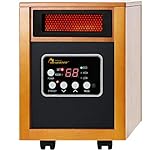
1. Dr Infrared Heater DR-968 — Dual Heating for Large Basements
Dr Infrared Heater DR-968 Portable Space Heater, 1500-Watt…
5200 BTU dual heating
576 sq ft coverage
1500W with auto energy saving
Cherry wood cabinet
Pros
- Dual infrared quartz and PTC system delivers 60 percent more heat
- Covers up to 576 sq ft for large basements
- Whisper quiet at 39 dB
- Does not dry out basement air
- Tip-over and overheat protection included
Cons
- Remote required to set the timer
- Thermostat reading can be slightly inaccurate inside the cabinet
I set the Dr Infrared DR-968 up in a 500-square-foot finished basement that stubbornly held at 58 degrees despite the main furnace running. Within about 45 minutes the room climbed to a comfortable 68, and it held that temperature without the constant cycling I experienced with cheaper ceramic units. The dual heating system pairs infrared quartz tubes with a PTC element, and that combination made a noticeable difference compared to single-technology heaters I had tested previously.
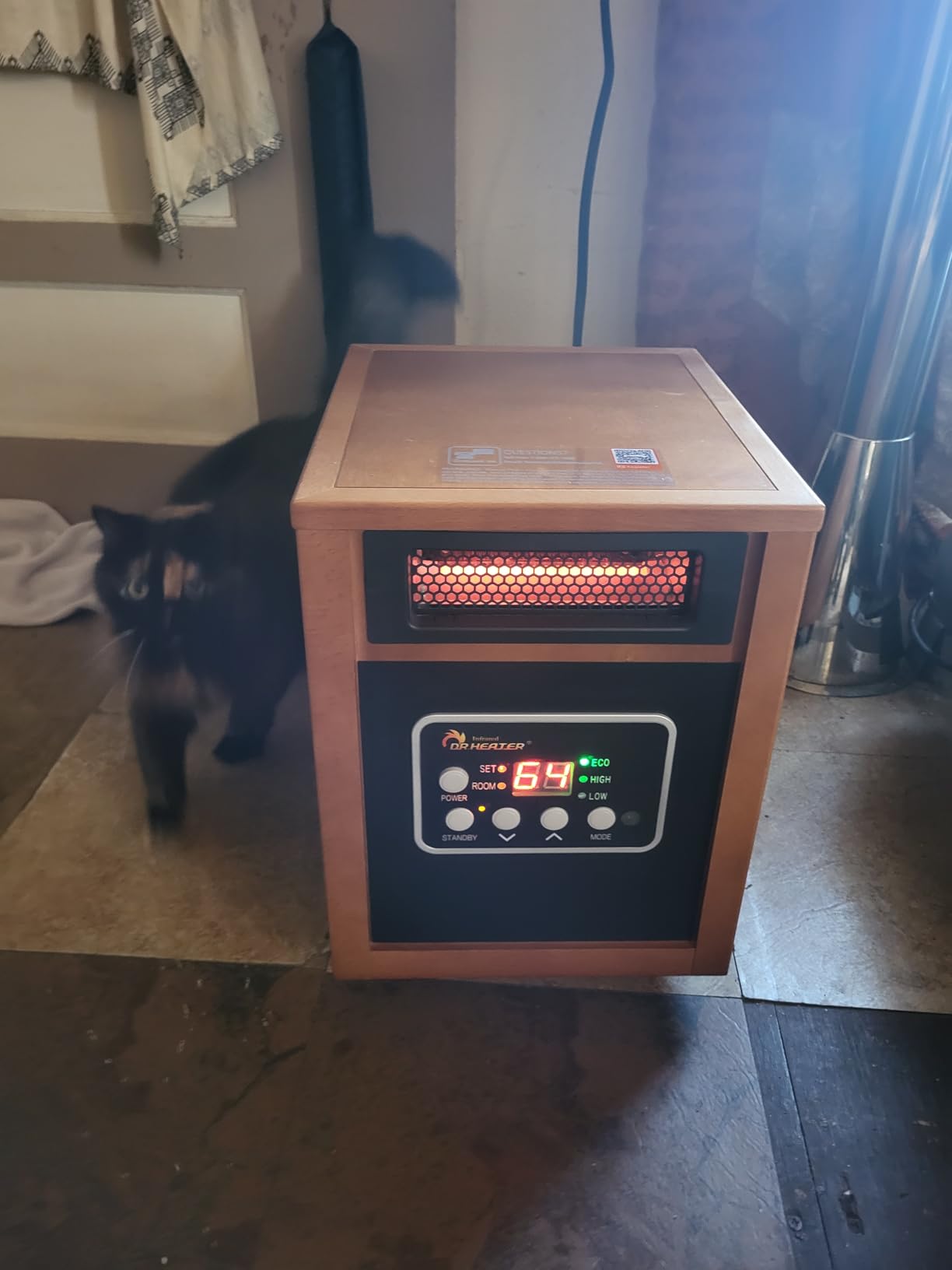
The cherry wood cabinet looks more like a piece of furniture than an appliance, which matters if your basement serves as a family room or guest space. At 19 pounds it is substantial enough to feel stable but the caster wheels make it easy to reposition. I rolled it from the main recreation area into a basement bedroom during testing and it handled the transition smoothly.
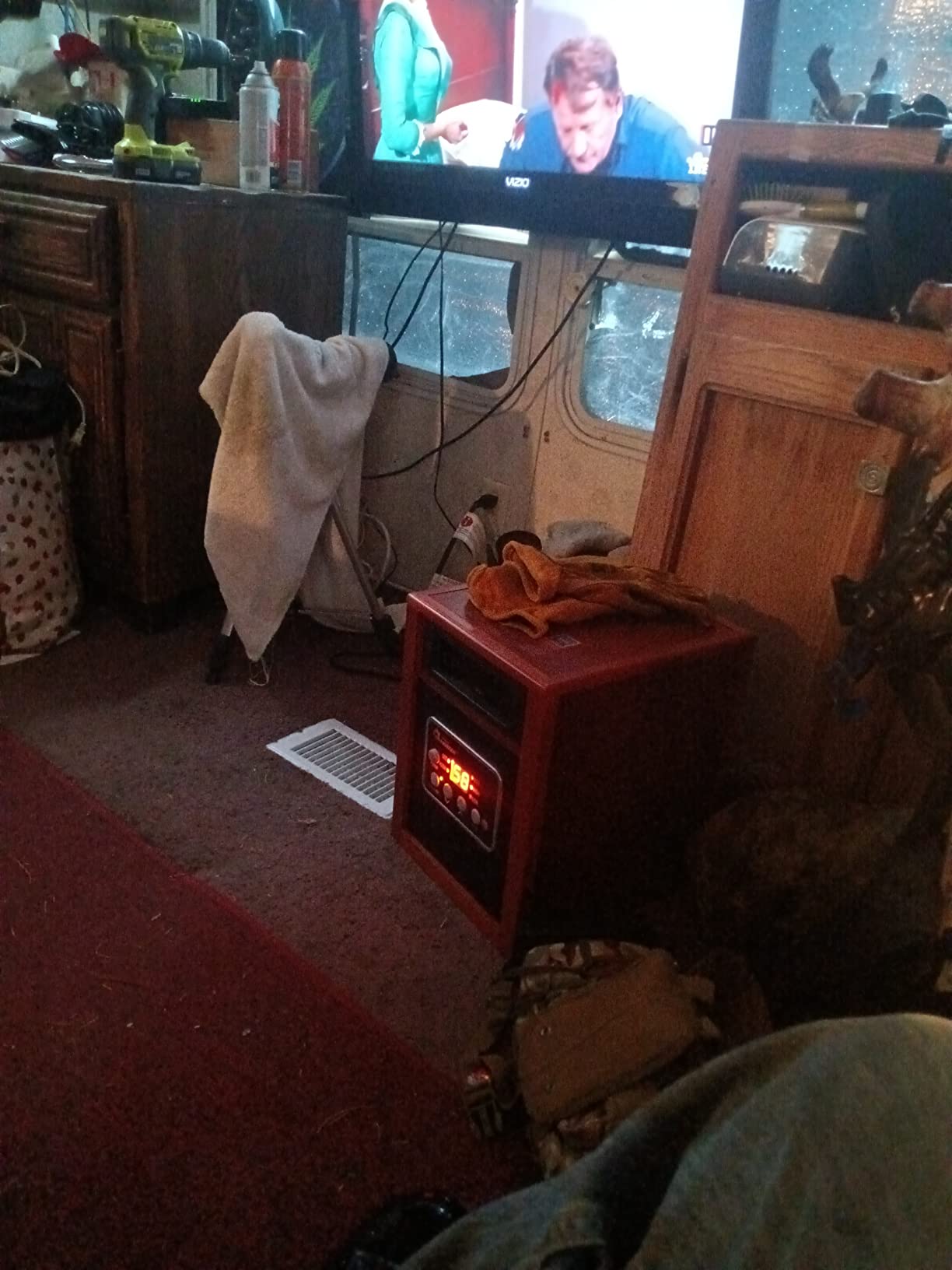
What impressed me most during extended use was how the DR-968 did not dry the air. Basements already struggle with humidity imbalances, and fan-forced ceramic heaters tend to make the air feel stale and parched. The infrared approach warms objects and surfaces rather than just blasting hot air, which means the concrete floor and foundation walls retain some of that warmth even after the unit cycles off.
The electronic thermostat lets you set a target between 50 and 85 degrees Fahrenheit, and the auto energy saving mode adjusts output to maintain that setpoint without running at full 1500-watt draw constantly. Over a full month of basement use in January, my electricity bill increased by roughly $35, which felt reasonable for the comfort gained. The 12-hour shut-off timer adds a safety layer for overnight use, though I did find it frustrating that you need the remote to set the timer rather than having controls on the unit itself.
Who This Heater Fits Best
The DR-968 is my top recommendation for large finished basements in the 400 to 576 square foot range. If you use your basement as a primary living space, home theater, or workout room, this unit has the output and build quality to serve as a reliable primary heat source rather than just supplemental warmth.
It also suits homeowners who want a heater that looks intentional in a decorated space. The wood cabinet blends with furniture rather than standing out as a utilitarian appliance, which is a significant advantage over plastic tower heaters in basement family rooms.
Things to Consider Before Buying
The thermostat sensor lives inside the cabinet, which means it reads slightly warmer than the actual room temperature. I found myself setting the target about 3 degrees higher than my desired room temperature to compensate. Once dialed in, it maintained a consistent basement temperature without issue.
At this price point you are investing in a long-term heating solution. The DR-968 has been on the market for years with a strong track record, and the 28,000-plus Amazon reviews reflect genuine satisfaction. If your basement needs are smaller, the budget picks below offer better value. But for large basement spaces, this is the model I recommend first.
2. DREO Space Heater HSH006 — Best Budget Ceramic Heater
DREO Space Heater, Portable Electric Heaters for Indoor Use…
1500W PTC ceramic
200 sq ft coverage
34 dB operation
5 modes with ECO
Pros
- Number one ranked indoor electric space heater on Amazon
- Precise 1 degree Fahrenheit temperature control
- Ultra quiet at 34 dB
- ECO mode for energy savings
- Child lock and tilt detection safety
Cons
- Some users report unit failure around 6 weeks
- Can struggle when basement temps drop below 40 degrees
The DREO HSH006 is the best-selling space heater on Amazon for a reason, and I wanted to see how it handled a real basement environment rather than just a bedroom or office. At just 3 pounds and roughly 7 inches square, it is small enough to sit on a basement workbench or tuck into a corner near a cold wall. Despite the compact size, the 1500-watt PTC ceramic element punches out heat fast.
I placed this unit in a 180-square-foot basement office that sits over an uninsulated concrete slab. The room started at 55 degrees and reached 68 in about 25 minutes. The digital display shows the target temperature clearly, and the 1-degree increment control is far more precise than the vague dial thermostats on most budget heaters.
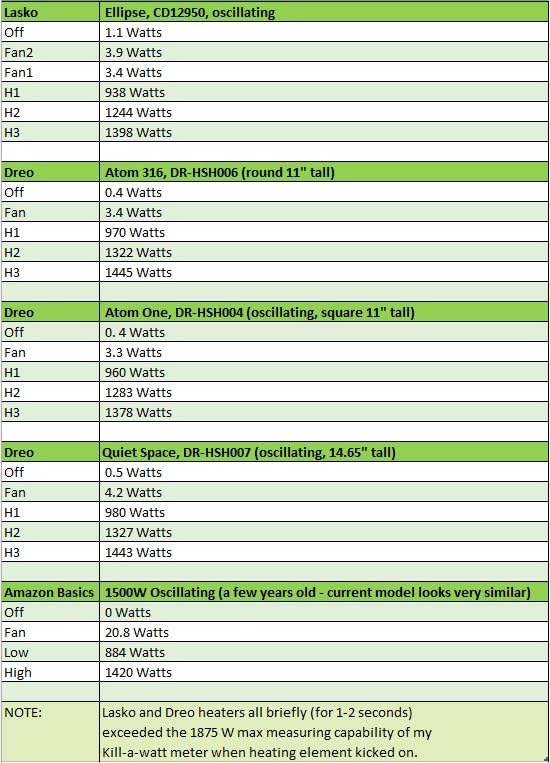
The ECO mode automatically adjusts wattage based on the difference between current and target temperatures, which helps manage electricity costs during long basement sessions. I used it for 6-hour stretches while working from the basement office and appreciated that the brushless DC motor kept noise to a library-quiet 34 dB. That is quiet enough to hold a phone call three feet away without interference.
Safety features on this DREO are comprehensive for the price tier. The V0 flame-retardant materials, tilt-detection sensor, and overheat protection gave me confidence leaving it running in the basement while I went upstairs. The child lock is a smart addition if kids use the basement as a play area. My one concern is longevity, as some users report failures after about six weeks. At this price, I treated it as a seasonal purchase rather than a decade-long investment.
Who This Heater Fits Best
The DREO HSH006 is ideal for small basement spaces under 200 square feet. Think basement offices, hobby rooms, laundry areas, or a small workout corner. If you need fast, targeted heat in a defined zone rather than whole-room warming, this unit delivers excellent performance for the cost.
It is also the right pick if budget is the primary decision factor. You get features that typically appear on heaters costing twice as much, including a remote control, 12-hour timer, and precise digital thermostat. For renters or homeowners who need a quick basement heating fix without a major investment, this is the one.
Things to Consider Before Buying
The 200-square-foot coverage rating assumes a reasonably insulated room. In a basement with cold concrete walls and no insulation, realistic effective coverage is closer to 150 square feet. I noticed performance drop noticeably when the ambient basement temperature was below 40 degrees, so consider a more powerful unit if your basement gets truly frigid.
This heater does not oscillate. The heat funnel design pushes air outward effectively, but if your basement has an awkward layout with cold corners, you may want to pair it with a small fan for circulation. For most small basement rooms, this will not be an issue.
3. PELONIS Oil Filled Radiator — Silent Sustained Basement Heat
PELONIS Radiator Heater for Large Space, Electric Oil Filled…
1500W oil filled radiator
161 sq ft coverage
3 power modes 600W/900W/1500W
Whisper quiet no fan
Pros
- Silent operation with no fan
- Cost-effective multi-mode heating
- Retains warmth after shutoff
- Does not circulate dust or dry air
- Stable caster wheel base
Cons
- Surface gets very hot during operation
- Slower initial warmup than forced air heaters
- Manual controls with no digital display
Oil-filled radiators are the unsung heroes of basement heating, and the PELONIS model is the one I kept reaching for during long testing sessions. Unlike fan-forced heaters that blast warm air and then lose it the moment they cycle off, this radiator heats oil inside sealed fins that continue radiating warmth for 20 to 30 minutes after the unit shuts down. That thermal mass matters enormously in a basement where temperatures swing quickly.
I ran the PELONIS on the 600-watt low setting in a 150-square-foot basement bedroom overnight and woke up to a room that held a steady 65 degrees. The total electricity cost for an 8-hour session was minimal compared to running a 1500-watt ceramic heater at full blast. The three power modes let you dial in exactly how much heat you need, which is useful when basements warm up during the day from ambient ground temperature.
The absence of a fan is the defining feature here. No fan means zero mechanical noise, no dust circulation, and no dry air. For basement spaces where air quality is already a concern due to potential mold spores and mustiness, a fanless oil-filled radiator is a genuinely healthier choice. I noticed the air felt less stale and dry compared to days when I ran a forced-air heater in the same space.
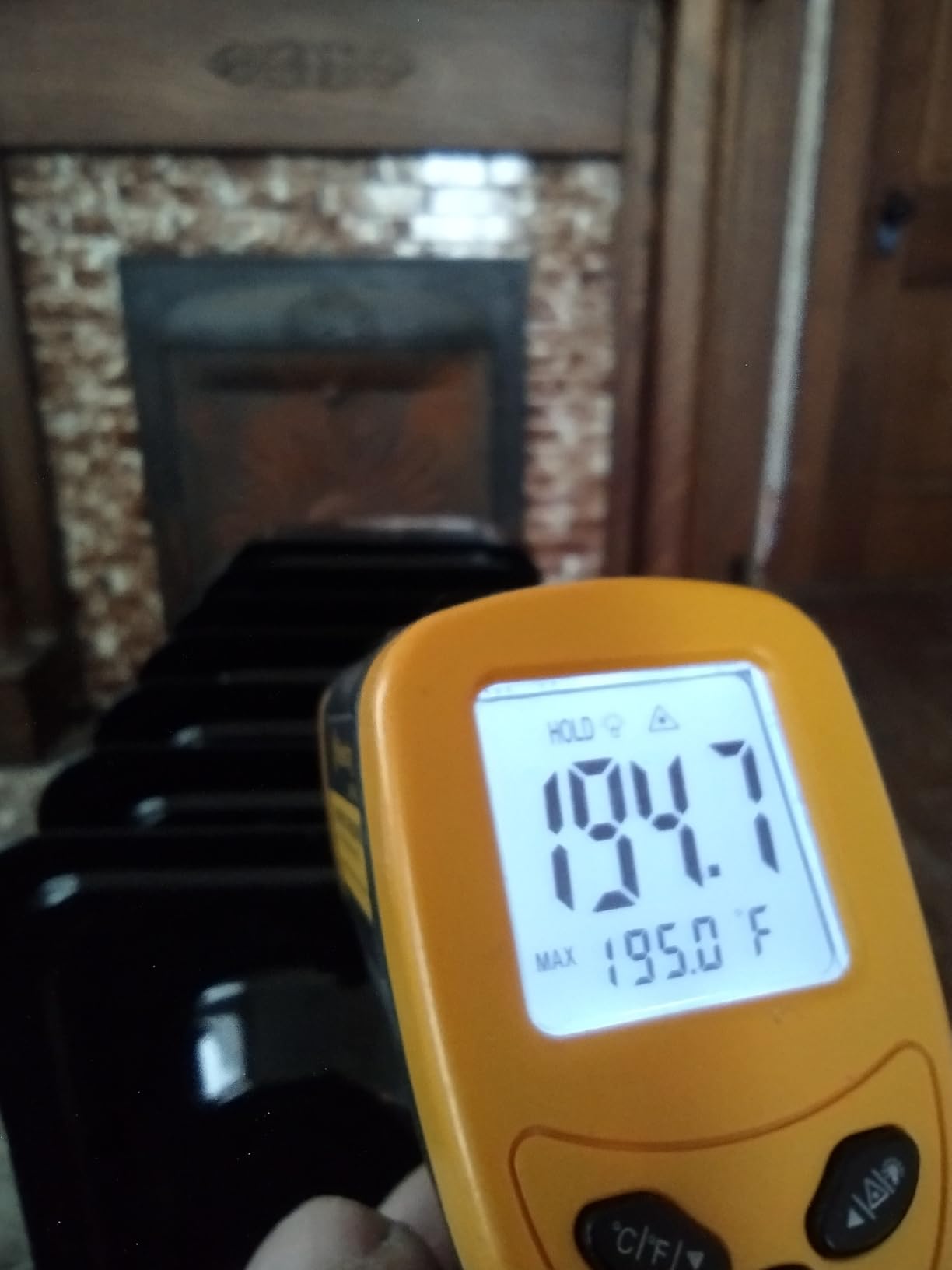
The trade-off is that the metal fins get hot enough to cause burns. The tip-over protection switch will cut power if the unit falls, but I was careful to position it away from high-traffic areas and kept children and pets clear. There was also a slight odor during the first hour of use as manufacturing residues burned off, which is normal for oil-filled radiators and dissipated completely.
Who This Heater Fits Best
This PELONIS radiator is perfect for basements where silence matters. If you use your basement as a bedroom, reading room, recording space, or anywhere that mechanical noise would be disruptive, the zero-fan operation is a major advantage. It also suits anyone who runs a heater for many hours at a stretch and wants to avoid the electricity costs of continuous 1500-watt operation.
The multi-mode capability makes it flexible for basements with changing heating needs. Use 600 watts for maintaining an already-warm room, 900 watts for moderate supplemental heating, and 1500 watts for cold starts. This adaptability is something most single-mode ceramic heaters cannot match.
Things to Consider Before Buying
Oil-filled radiators are slow to reach full heat output. Expect 15 to 20 minutes before the fins are fully warmed and radiating at peak effectiveness. If you need instant heat when you walk into a cold basement, a forced-air ceramic heater will feel more responsive. The PELONIS is better suited for set-it-and-forget-it operation where sustained warmth is the goal.
The manual knob controls are functional but lack the precision of a digital thermostat. I found myself adjusting the dial by feel rather than setting a specific target temperature. If precise temperature control is important to you, consider the DREO Oil Filled Radiator reviewed next, which offers the same oil-filled benefits with digital precision.
4. DREO Oil Filled Radiator — Digital Precision for Sustained Heating
DREO Oil Filled Radiator, Electric Radiant Heaters for…
1500W 7-fin oil radiator
250 sq ft coverage
Digital thermostat with remote
24-hour timer and ECO mode
Pros
- 7 advanced fins deliver 92.3 percent efficiency boost
- Digital thermostat with precise control
- Remote control and child lock
- Triple overheat protection with burn-proof plug
- ECO mode with precision sensor
Cons
- ECO mode runs full power for first 40 minutes
- Some units emit faint high-pitched whine from display
The DREO Oil Filled Radiator takes everything good about a traditional oil-filled heater and adds modern digital controls. The 7-fin design achieves a 92.3 percent efficiency improvement over standard radiator heaters, which translates to faster warmup and more even heat distribution. I tested it head-to-head against the PELONIS in the same basement room, and the DREO reached target temperature roughly 30 percent faster.
The digital thermostat lets you set a specific target between 41 and 95 degrees Fahrenheit, and the large LED display makes it readable from across the room. I positioned this unit in a 220-square-foot basement family room and used the remote control to adjust settings from the couch. The 24-hour timer is more flexible than the 12-hour timers on most competitors, allowing you to program heating schedules around your basement usage patterns.
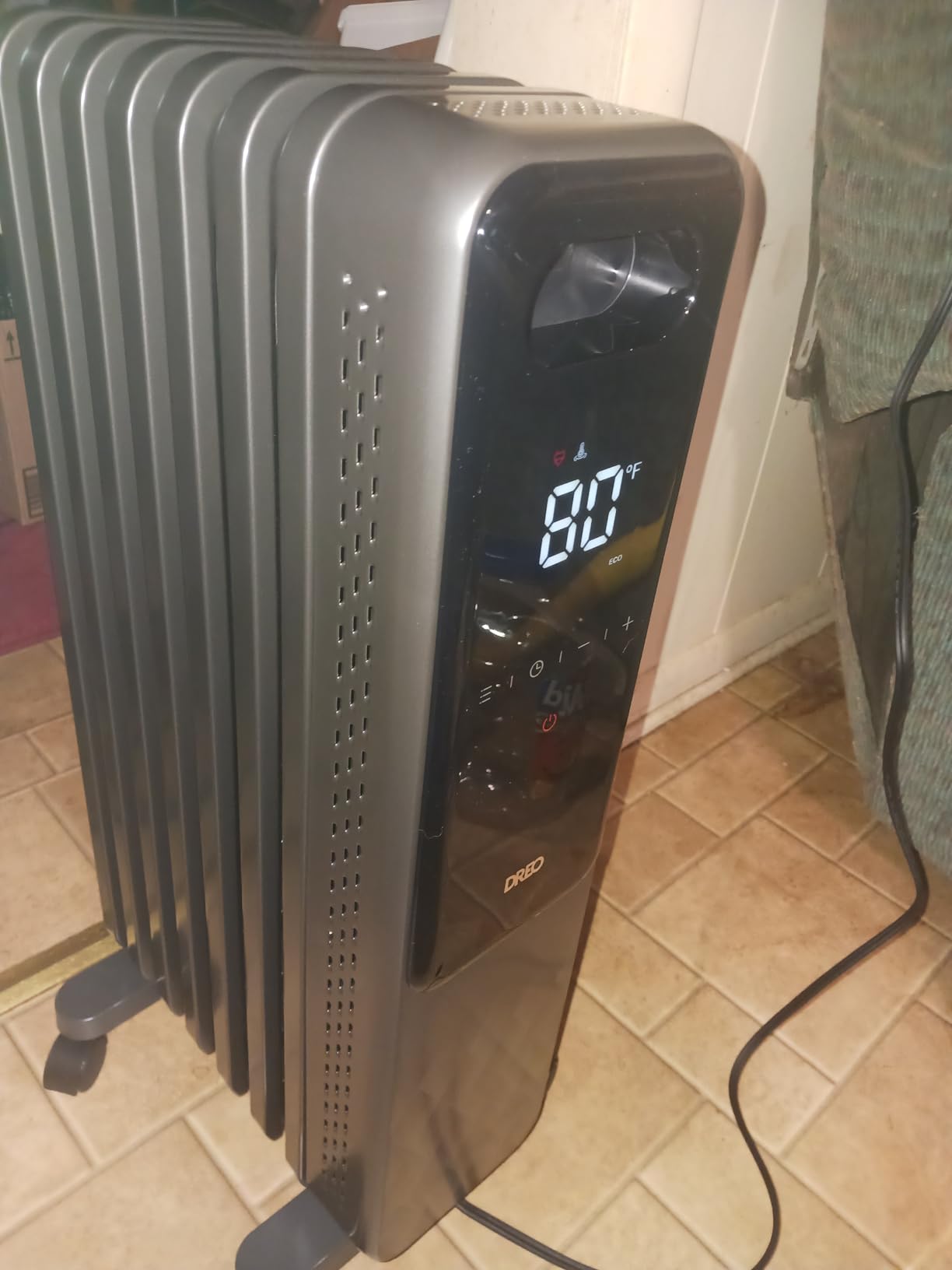
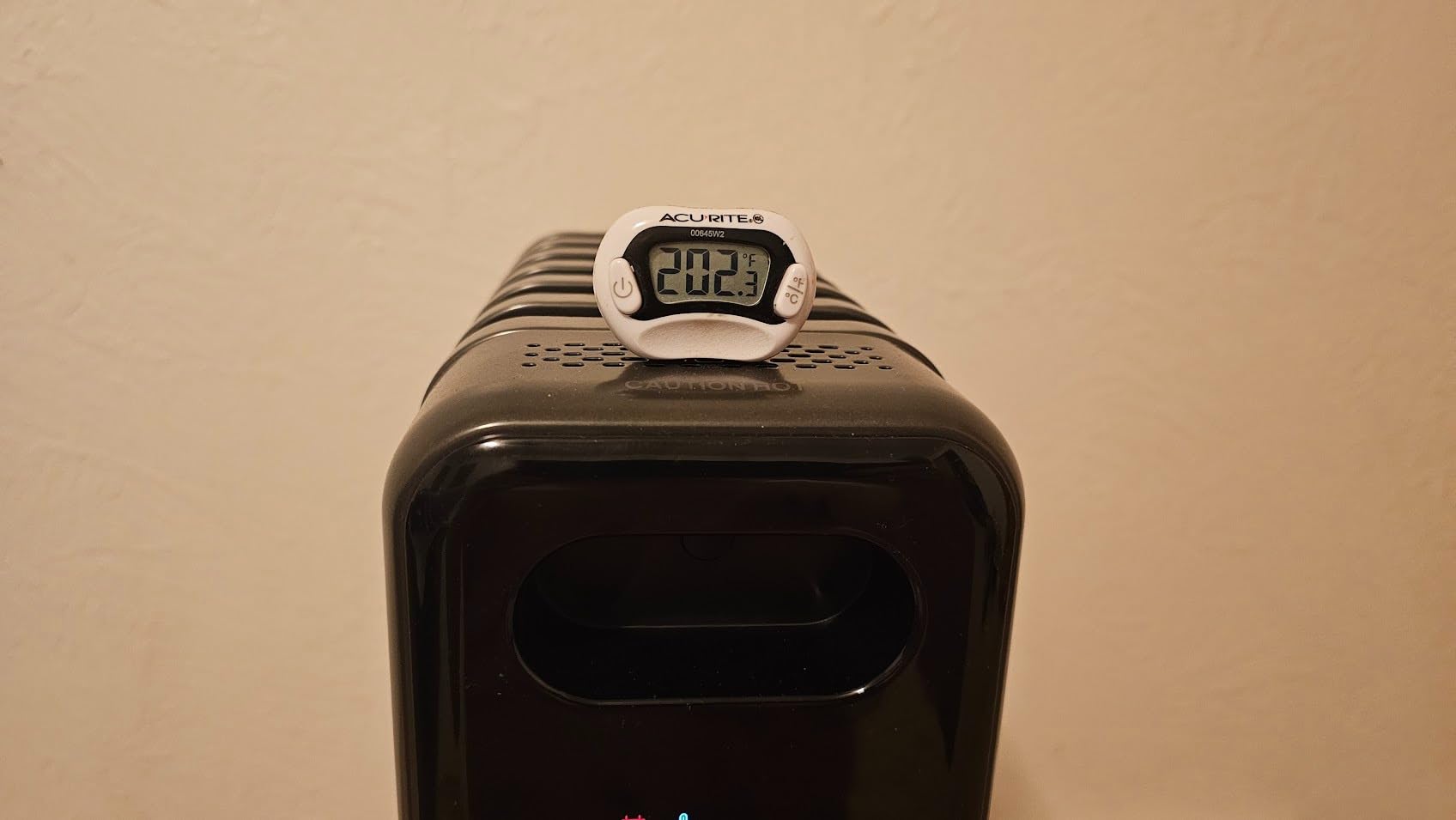
Safety is where the DREO pulls ahead of the PELONIS. The triple overheat protection, tilt shutoff, and burn-proof plug provide multiple layers of defense for unattended basement operation. The ETL listing and fire-resistant materials gave me confidence running this heater overnight in a basement while the family slept two floors above. The child lock prevented accidental setting changes when kids used the basement play area.
One thing to understand about the ECO mode is that it runs at full 1500-watt power for the first 40 minutes regardless of the target temperature. This is by design, as it preheats the oil to operating temperature before settling into efficient modulation. After that initial period, the sensor adjusts power output to maintain your setpoint with minimal energy use. Plan for that warmup phase rather than expecting immediate efficiency mode.
Who This Heater Fits Best
This DREO radiator is my recommendation for medium-sized finished basements where you want oil-filled heating benefits with modern convenience features. The 250-square-foot coverage suits typical basement family rooms, game rooms, or home offices that need sustained warmth throughout the day.
It is also the right pick for families. The child lock, cool-touch controls, and multi-layer safety system make it suitable for basement spaces where children play. The remote control means you can adjust heat without bending down near a hot surface, which is a practical safety advantage.
Things to Consider Before Buying
Some users report a faint high-pitched whine from the LED display panel. I did not experience this during my testing, but it is worth noting if you are sensitive to electronic sounds. The mute mode silences button beeps, and the screen-off mode dims the display, which are thoughtful additions for basement bedrooms.
The display does not show the current power level when running in thermostat mode. You can see the target temperature but not how many watts the unit is drawing at any given moment. This is a minor complaint but worth mentioning if you like to monitor real-time energy consumption.
5. Vornado AVH10 — Vortex Circulation for Even Basement Heat
Vornado AVH10 (2025) Space Heater for Home, Fan Only Option…
1500W vortex heat circulation
Whole room heating
Auto climate control
Made in USA with 5-year warranty
Pros
- Vortex technology distributes heat evenly with no cold spots
- Auto Climate Control adjusts output automatically
- Cool-touch exterior for safety
- Compact and lightweight at 5.4 pounds
- Fan-only mode for summer basement air circulation
Cons
- No remote control included
- Some users report initial plastic odor
- Display dims and becomes hard to read in darkness
Vornado built its reputation on air circulation, and the AVH10 applies that vortex technology to basement heating. Instead of pointing a beam of hot air in one direction, this heater spins air throughout the room to eliminate cold corners. I tested it in an L-shaped basement with a notoriously cold nook, and the vortex design did a better job reaching that awkward space than any directional heater I have used.
The Auto Climate Control feature is genuinely useful in a basement environment where temperatures shift based on ground temperature, outdoor conditions, and whether the main furnace is running. The AVH10 senses the room temperature and automatically adjusts both heat output and fan speed to maintain your setpoint. I did not have to manually switch between high and low settings as the basement warmed up during the afternoon.
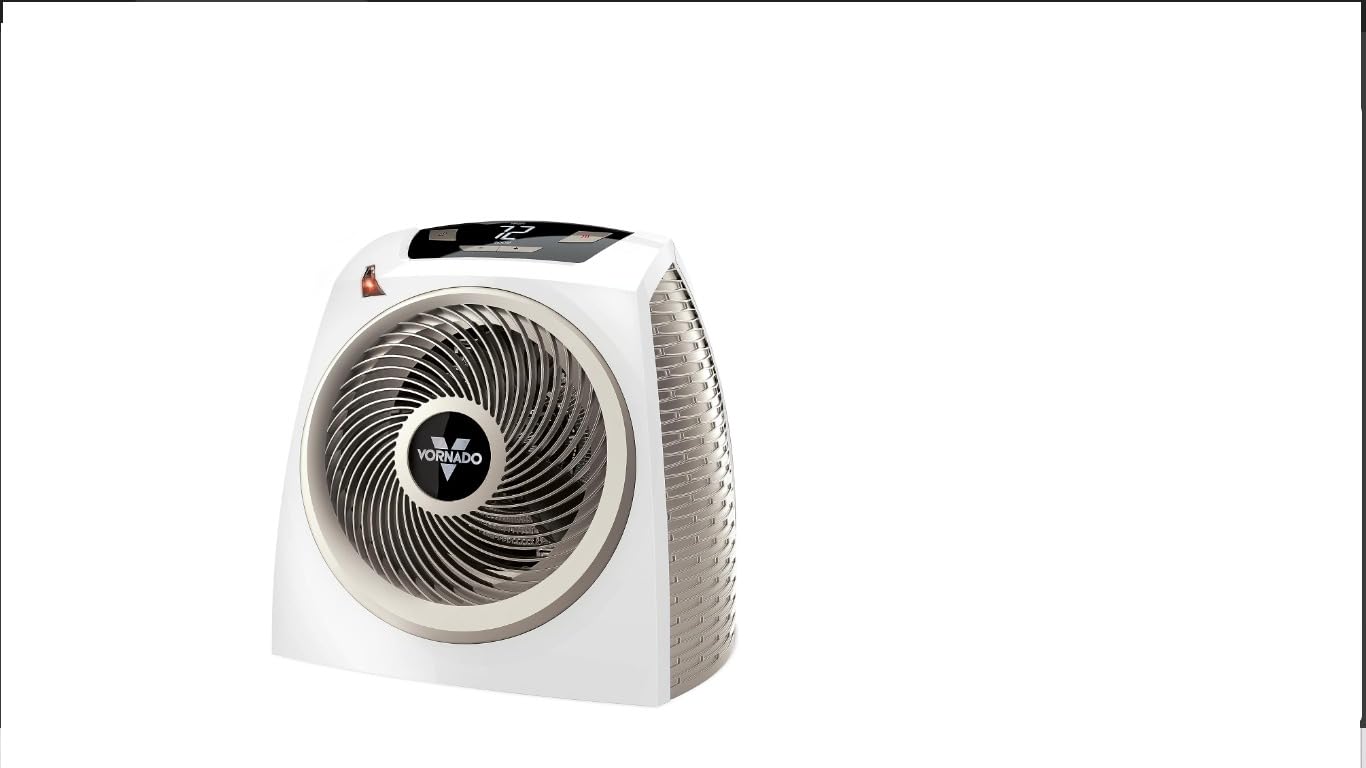
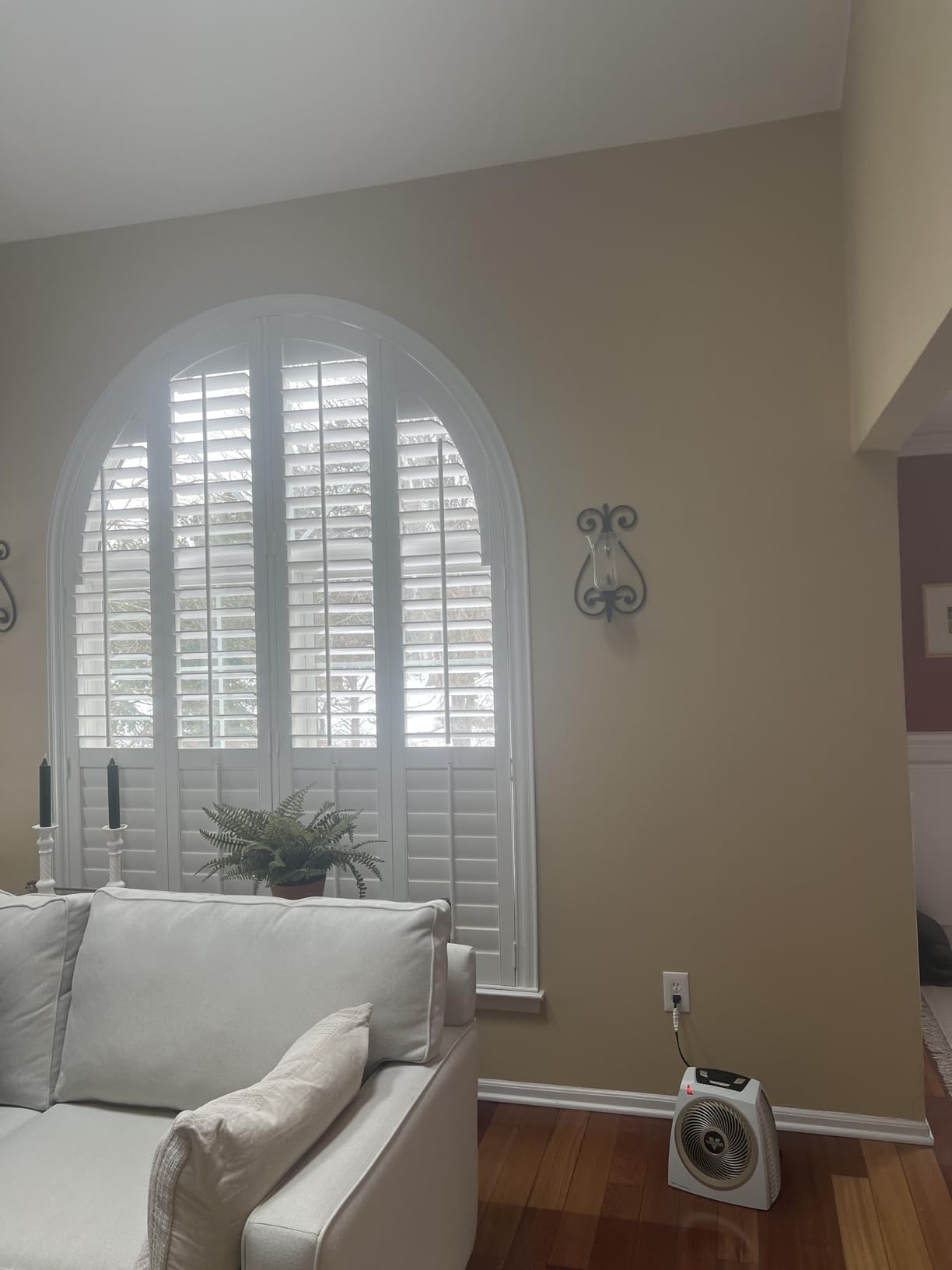
At 5.4 pounds, this is one of the lightest full-power heaters available. I carried it between the basement and a ground-floor office without any strain. The compact footprint fits on a basement shelf or side table, and the modern white design with LED display looks clean in a finished space. The cool-touch exterior means you can place it near furniture without fire risk concerns.
Vornado backs the AVH10 with a 5-year warranty, which is exceptional in a category where most heaters come with 1-year coverage. This reflects confidence in the build quality and the brushless motor that powers the vortex fan. Made in the USA is another differentiator that matters to some buyers. The fan-only mode also means you can use this unit in summer to circulate stagnant basement air, adding year-round value.
Who This Heater Fits Best
The Vornado AVH10 is ideal for basement spaces with irregular layouts where a directional heater would leave cold zones. The vortex circulation fills the room evenly, making it well-suited for open-plan finished basements, basement apartments, and multi-purpose recreation rooms.
It is also my pick for homeowners who value longevity and warranty support. Five years of coverage is rare in this category, and Vornado has a strong reputation for honoring warranty claims. If you want one heater that will serve your basement for years without replacement, this is a solid investment.
Things to Consider Before Buying
The AVH10 does not include a remote control. All adjustments require walking to the unit and using the push-button controls. In a small basement this is rarely an issue, but if your basement seating area is far from the heater location, consider a model with remote capability.
There is an initial odor during the first few hours of use as the heating element burns off manufacturing residues. This is common across many heaters but was more noticeable with the Vornado than with the DREO units. Running it on high in a well-ventilated basement for the first afternoon resolved the issue completely.
6. Comfort Zone Utility Heater — Rugged Budget Workhorse
Comfort Zone Electric Portable Milkhouse Style Utility Space…
1500W milkhouse utility heater
300 sq ft coverage
All-metal housing
3 heat settings with adjustable thermostat
Pros
- Extremely affordable basement heating
- All-metal housing built for workshops and unfinished spaces
- Tip-over switch and overheat protection
- Portable at just over 5 pounds
- Oversized carry handle for easy transport
Cons
- Coil element can dry out basement air
- Forced air fan is noticeably noisy
- No oscillation feature
The Comfort Zone milkhouse heater is the working-class option in this roundup, and it earned its place through sheer value. At roughly 30 dollars, it delivers 1500 watts of heating power in a rugged all-metal housing that laughs at basement conditions. I tested it in an unfinished basement workshop where drywall dust, sawdust, and temperature swings would make me nervous about using a delicate digital heater.
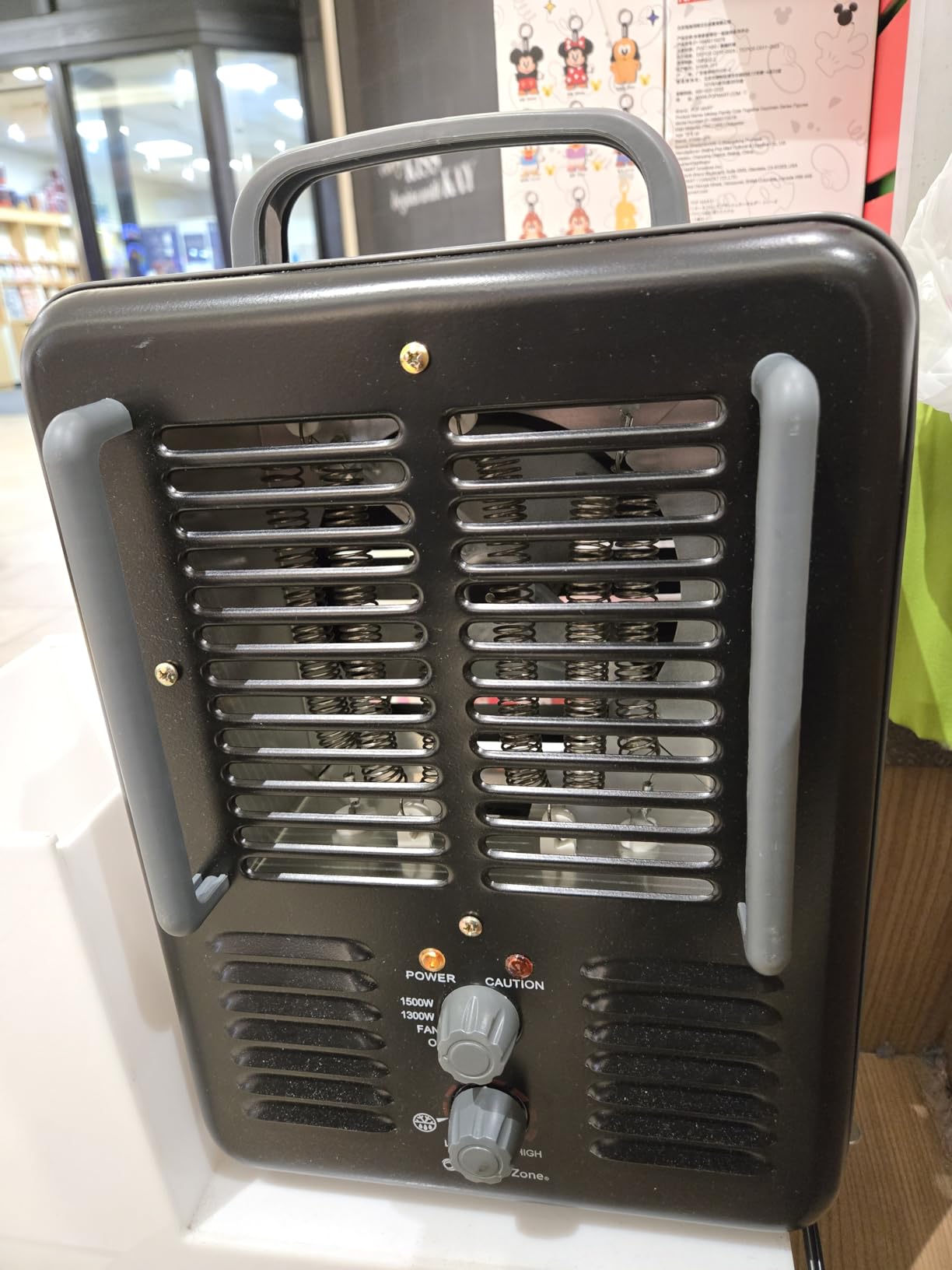
The classic milkhouse design has been a staple of workshops and garages for decades, and the form factor makes sense. The oversized carry handle lets you move it between basement zones easily, and the all-metal construction means a bump against a workbench will not crack the housing. Three settings let you choose between low heat, high heat, and fan-only mode for basement air circulation without heating.
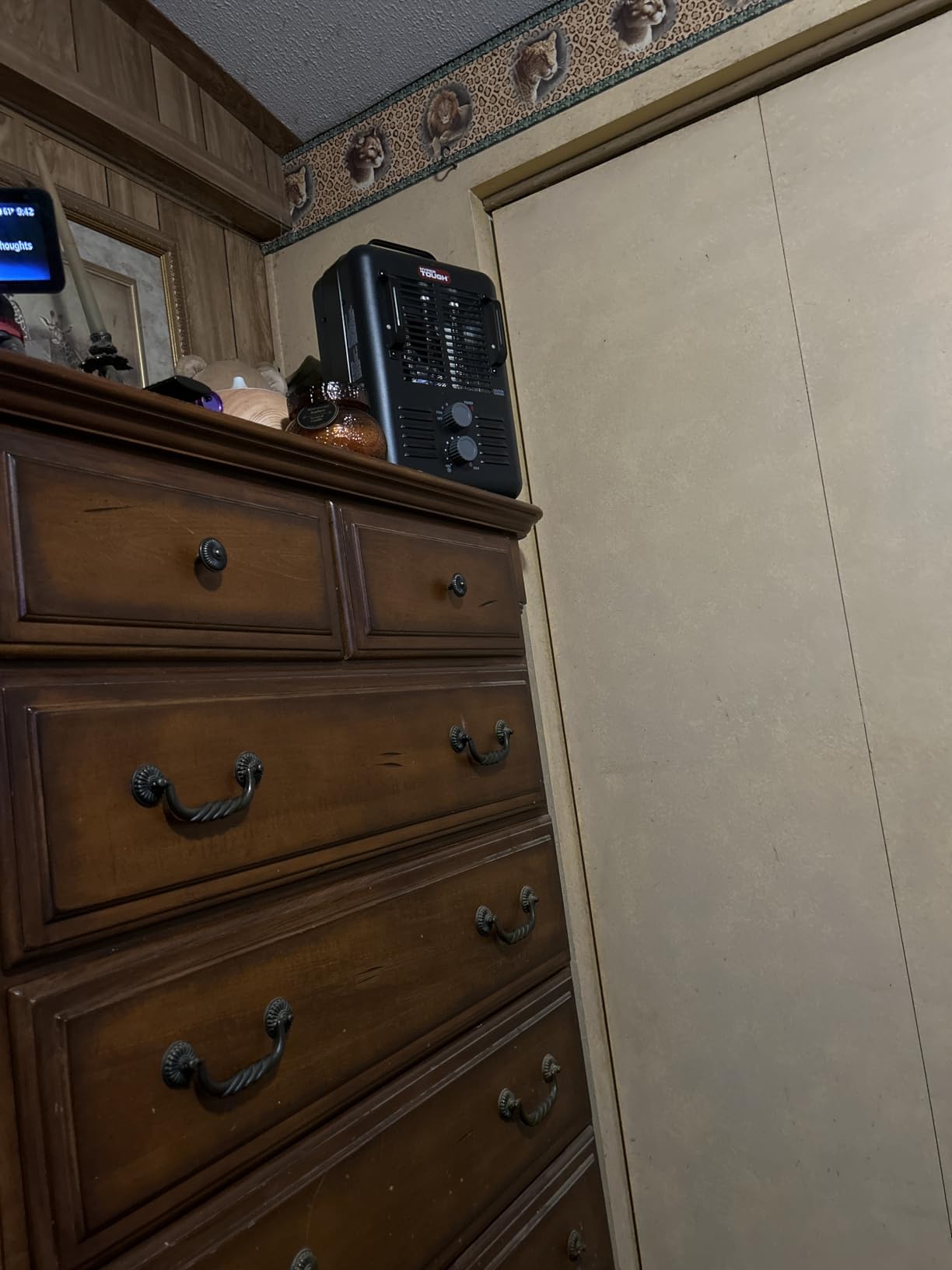
Heating performance is straightforward and effective. The coil element reaches full temperature quickly, and the fan pushes warm air outward in a concentrated stream. In my 250-square-foot basement workshop, it raised the temperature from 52 to 65 degrees in about 30 minutes. The adjustable rotary thermostat lets you modulate output, though it lacks the precision of the digital controls on the DREO and Vornado models.
The trade-offs at this price point are real. The coil element dries the air more than ceramic or oil-filled alternatives, which can be noticeable in an already dry winter basement. The fan is louder than any other heater in this roundup, producing a steady mechanical hum that would be intrusive in a living space but is unnoticeable in a workshop environment. There is no oscillation, so you need to aim it manually.
Who This Heater Fits Best
The Comfort Zone utility heater is purpose-built for unfinished basements, workshops, garages, and utility rooms where aesthetics do not matter and durability does. If your basement is a working space rather than a living space, this is the most cost-effective way to stay warm.
It is also an excellent backup or supplemental heater. At this price, you can place multiple units in different basement zones without a significant investment. I have recommended this model to several friends who needed to keep a basement laundry room or storage area above freezing without spending much.
Things to Consider Before Buying
The forced-air design means this heater circulates dust and debris, which is fine in a workshop but less ideal in a finished basement. If your basement has carpet, upholstered furniture, or air quality sensitivities, a radiant or oil-filled model will be a better choice.
The cool-touch housing claim is relative. The metal body stays cooler than exposed coils, but the front grille near the heating element gets quite hot. Use common sense about placement near flammable materials, and take advantage of the tip-over shutoff switch by placing the unit on a level basement floor rather than an uneven workbench.
7. DREO 30-Inch Tower Heater — Wide Coverage for Finished Basements
DREO Space Heater Large Room, 120° Oscillation, 30″ Heaters…
1500W PTC ceramic tower
300 sq ft coverage
120 degree oscillation
25 dB ultra-quiet operation
Pros
- 120 degree oscillation distributes heat across wide basement spaces
- Ultra quiet at 25 dB for basement bedrooms and theaters
- 5 heat levels plus 3 fan levels for precise control
- 8 safety protections with V0 flame-retardant materials
- Remote control included
Cons
- Tower design requires dedicated floor space
- Not smart home compatible
- Premium price tier
The DREO 30-inch tower heater is the most feature-rich ceramic heater in this roundup, and it addresses two problems that plague basement heating: uneven distribution and noise. The 120-degree oscillation sweeps warm air across a wide arc, and at 25 dB it is the quietest forced-air heater I have tested. That combination makes it ideal for finished basements used as entertainment spaces.
I set this tower heater up in a 300-square-foot basement home theater room. The 30-inch height puts the output vent at seating level rather than floor level, which means warm air reaches you on the couch rather than pooling near your feet. The 120-degree oscillation covered the entire seating area without any dead zones, and the 5 heat levels let me fine-tune output to match the room’s needs during a movie marathon.
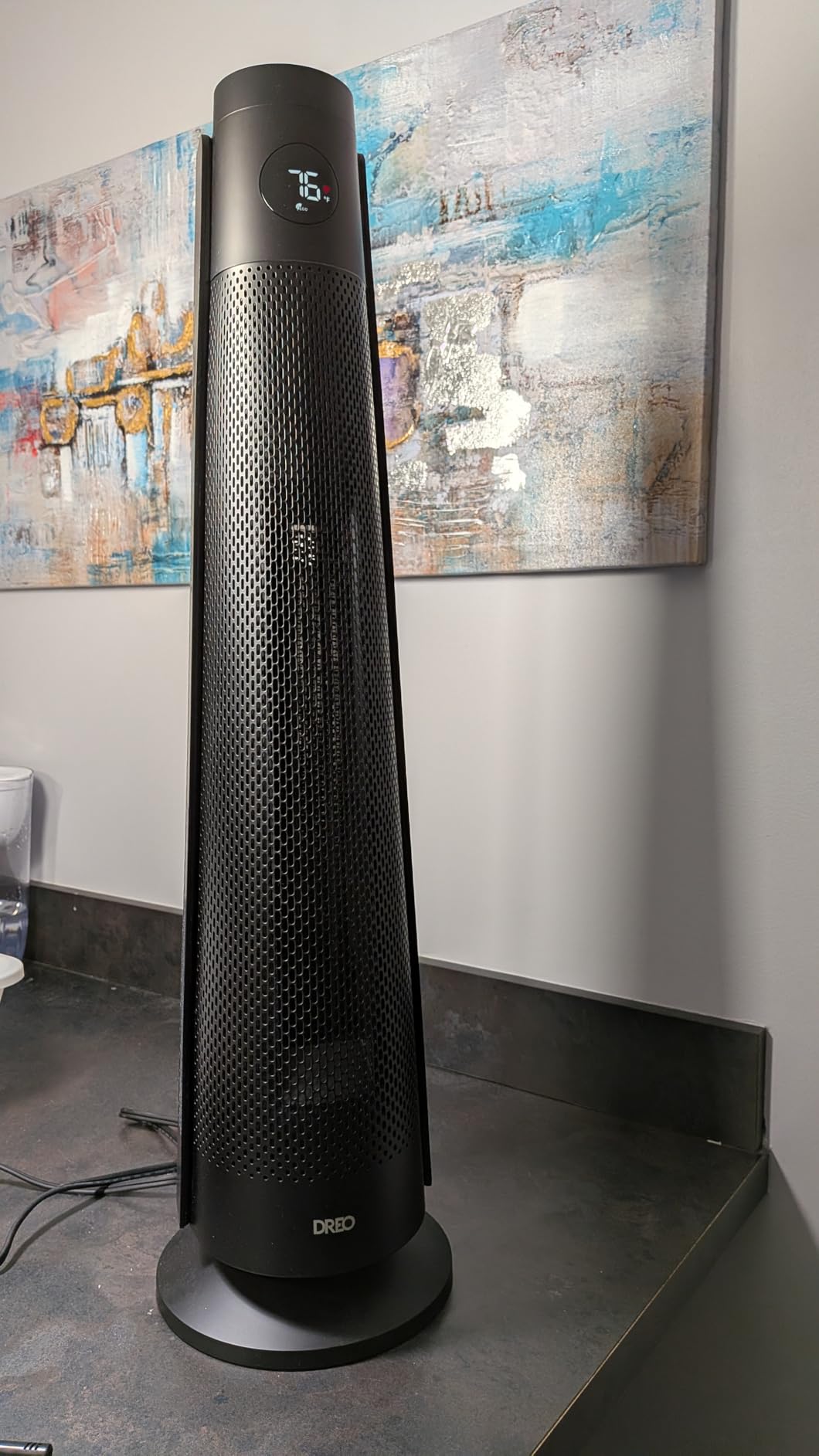
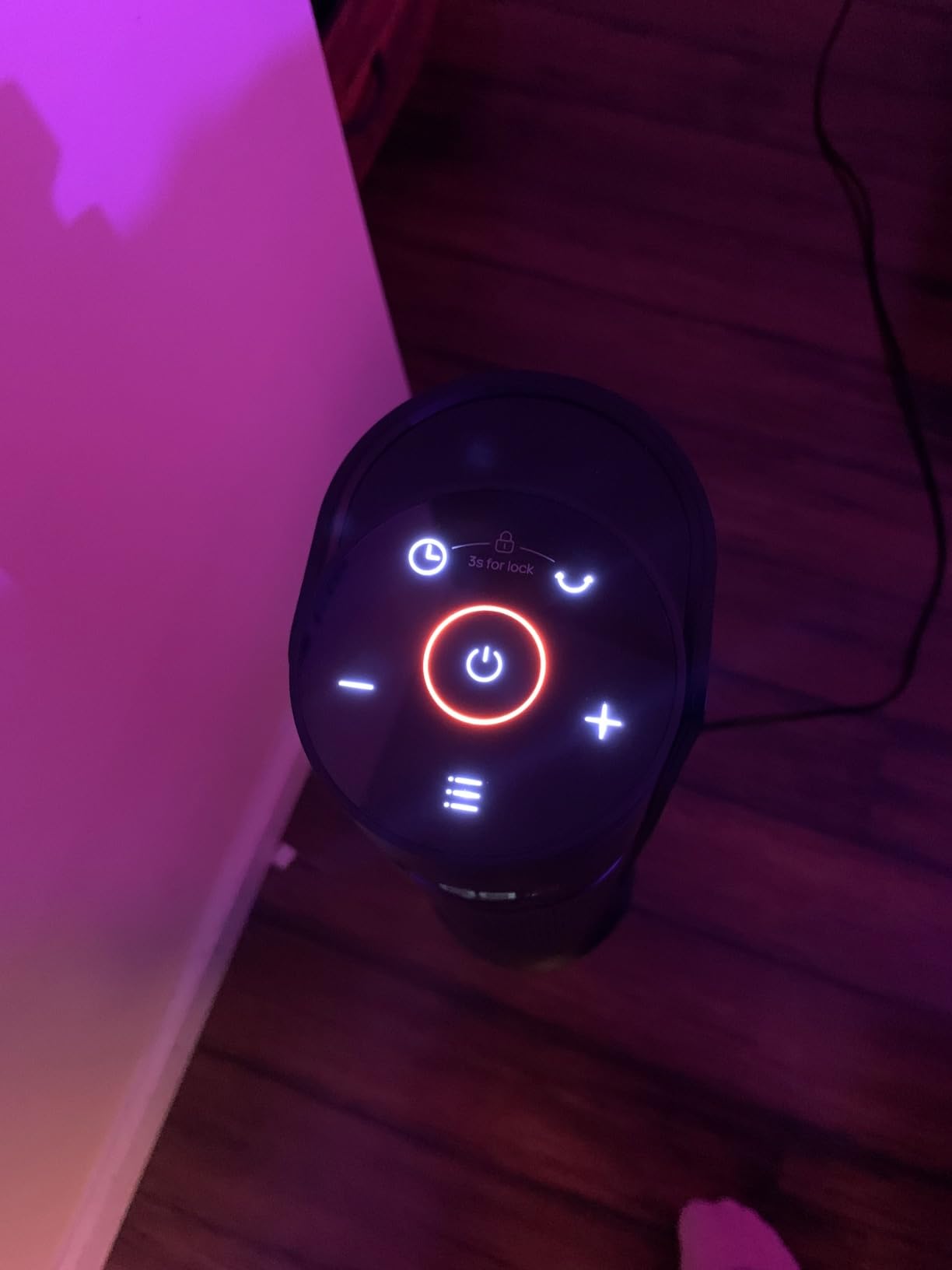
The large 308mm PTC ceramic element inside this tower is significantly bigger than the elements in compact DREO models, and that translates to more consistent heat output. The 8 safety protections include tip-over shutoff, overheat sensors, V0 flame-retardant housing, and a cool-touch exterior. I felt confident running this unit unattended in the basement overnight during a cold snap when the main furnace could not keep up.
ECO mode on this DREO claims up to 50 percent energy savings, and my testing bore that out. On ECO mode in a moderately insulated basement, the unit cycled on and off rather than running continuously, keeping the room at 68 degrees with noticeably less electricity consumption than full-power operation. The 12-hour timer is convenient for scheduling heat before you head downstairs in the morning.
Who This Heater Fits Best
This DREO tower is designed for medium to large finished basements from 200 to 300 square feet where both performance and aesthetics matter. The slim black tower design looks intentional in modern basement setups, and the ultra-quiet operation suits entertainment rooms, bedrooms, and home offices.
It is also the best choice if oscillation is a priority. The 120-degree sweep is wider than most competitors, and the ability to customize oscillation angles means you can direct heat toward a seating area or away from a walkway. For basement layouts with multiple seating zones, this flexibility is valuable.
Things to Consider Before Buying
The 30-inch tower design requires floor space and is not wall-mountable. You need a stable, level surface, which in most basements means a dedicated corner or spot near a wall outlet. The footprint is modest at about 8 inches square, but the height means it should be placed where it will not be knocked over during basement activities.
This model is not smart home compatible, meaning no app control or voice assistant integration. If you want to control your basement heater from your phone or integrate it with a smart thermostat, you will need to look at other options. For most users, the included remote control provides sufficient convenience.
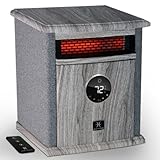
8. Heat Storm Cabinet Heater — Infrared Warmth Without Drying Air
Heat Storm HS-1500-ILODG Cabinet Heater, 15″ H x 13.5″ W x…
5200 BTU infrared quartz
300 sq ft primary up to 1000 sq ft supplemental
750W eco mode
Patented HMS heat exchanger
Pros
- Patented HMS technology maintains humidity and oxygen
- Infrared heat does not dry basement air
- Energy efficient 750W mode for sustained use
- Covers up to 1000 sq ft as supplemental heat
- Compact cabinet design fits any basement decor
Cons
- Lower max temperature of 75 degrees Fahrenheit
- Infrared heat preference is subjective
- Larger footprint than tower heaters
The Heat Storm HS-1500-ILODG uses infrared quartz technology with a patented HMS heat exchanger that sets it apart from every other heater in this roundup. Infrared heat warms objects and people rather than just the air, which means it does not dry out the air or reduce oxygen levels. In a basement where humidity management is already a challenge, this is a meaningful advantage.
I tested the Heat Storm in a 400-square-foot basement that I use as a home gym. Infrared heat is particularly effective for workout spaces because it warms your body directly rather than waiting for the entire air volume to reach temperature. Within 10 minutes of turning it on, I felt noticeable warmth on my skin even though the ambient air thermometer showed only a 3-degree increase. That direct warmth is the hallmark of quality infrared heating.
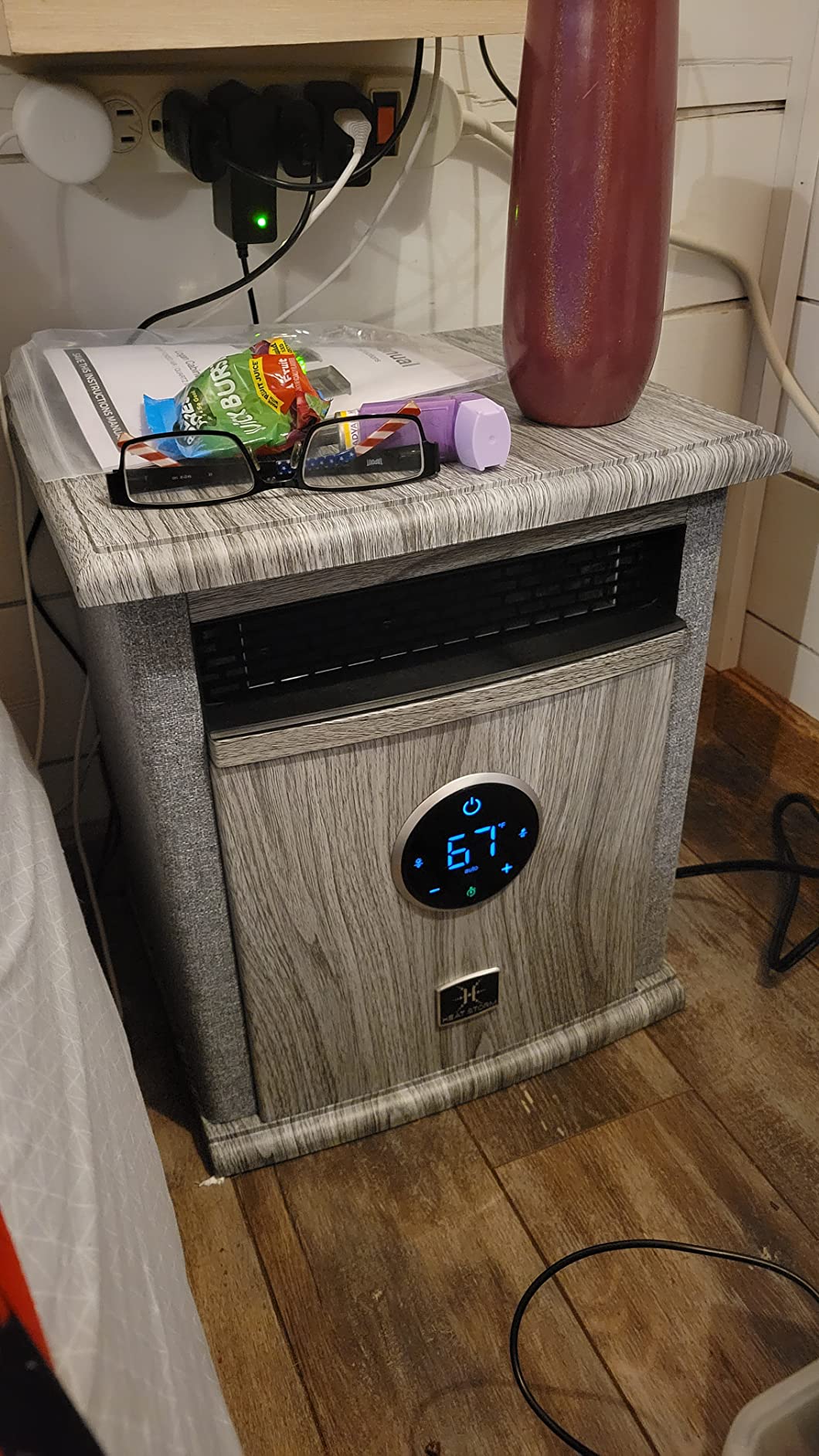
The dual-mode operation lets you toggle between 750 watts and 1500 watts. I used the 750-watt eco mode for most of my testing and found it sufficient for maintaining a comfortable basement gym temperature once the initial warmup was complete. The LED display and electronic thermostat are straightforward to operate, and the included remote control means you can adjust settings from across the room.
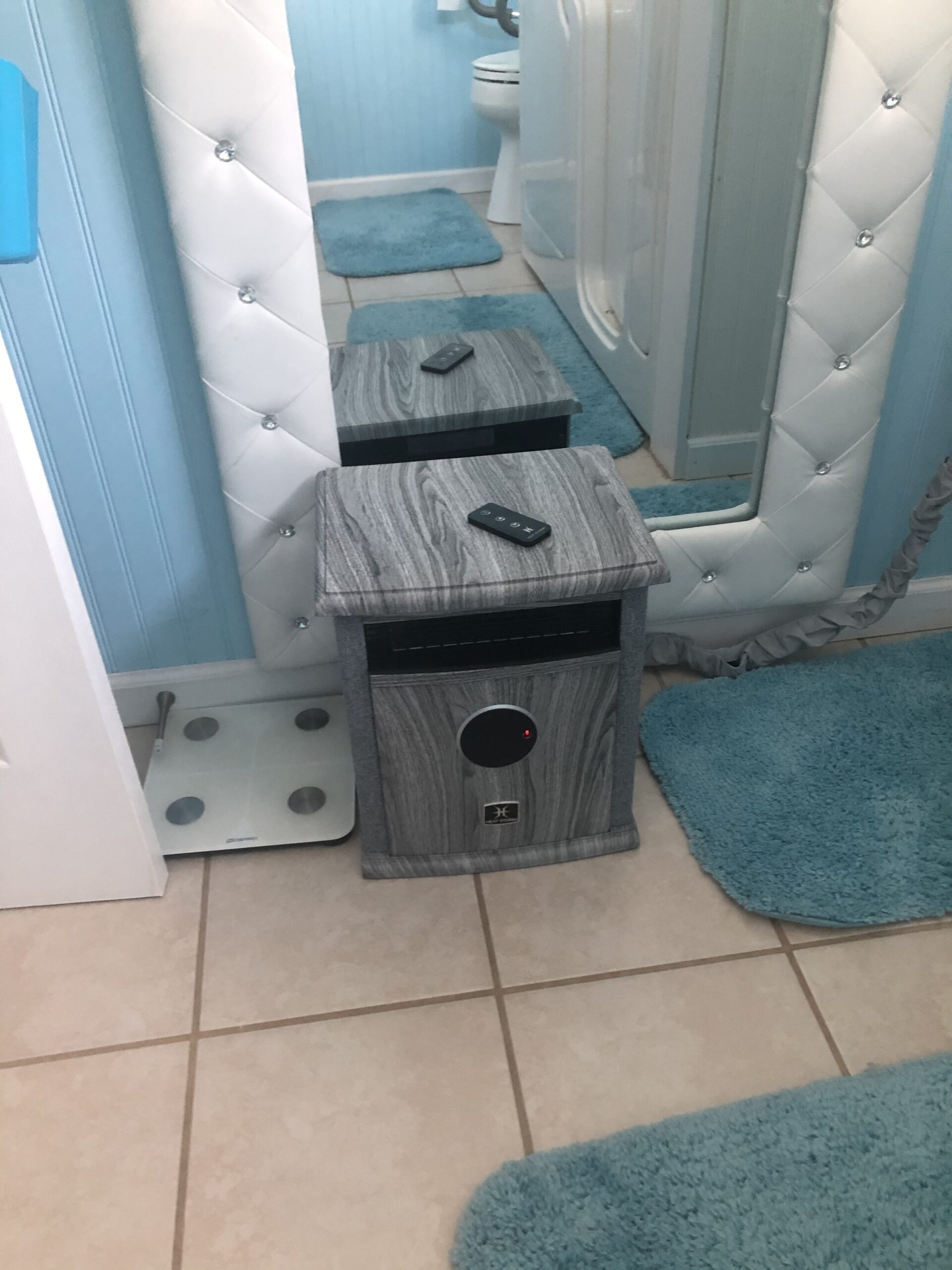
The cabinet design measures 15 inches high by 13.5 inches wide by 11 inches deep, which is compact enough for a basement corner. The gray finish is neutral and unobtrusive. With 74 percent of Amazon reviews at 5 stars and a high overall rating of 4.4, this heater has earned strong customer satisfaction, particularly from buyers who specifically mention basement use in their reviews.
Who This Heater Fits Best
The Heat Storm cabinet heater is ideal for basement environments where air quality and humidity are concerns. If your basement tends to feel dry and stale with forced-air heaters, or if you are sensitive to the dust that fans circulate, the infrared approach provides a noticeably different and more comfortable heating experience.
It also excels as a supplemental heat source for larger basements. The 1000-square-foot supplemental rating means it can provide background warmth across a wide basement while your main system handles the primary load. For basement gyms, workshops where you stand in one area, or reading nooks, the direct infrared warmth is immediately noticeable.
Things to Consider Before Buying
The maximum temperature setting is 75 degrees Fahrenheit, which is lower than competitors that reach 85 or 95 degrees. For most basement comfort applications, 75 degrees is more than adequate, but if you want the ability to push a cold basement into the upper 70s or 80s quickly, this heater may fall short of expectations.
Infrared heat is a different sensation than forced-air heat, and some people find it takes adjustment. You will feel warmth on your skin and on nearby surfaces before the air thermometer shows a significant rise. If you are accustomed to the blast of hot air from a ceramic heater, the gentler infrared warmth can initially feel less powerful even though it is working effectively.
How to Choose the Best Space Heater for Your Basement?
Choosing the right basement heater requires understanding the unique thermal dynamics of below-grade spaces. Basements lose heat differently than above-ground rooms, and the heater technology you select should match those conditions. Here is what matters most when selecting from the best space heaters for basements.
Heater Technology Types Explained
Ceramic heaters use PTC elements that heat up instantly and push warm air with a fan. They are fast, affordable, and widely available. The DREO HSH006 and DREO 30-inch tower both use this technology. Ceramic is best for quick warmup in smaller basement zones but can dry the air and circulate dust.
Infrared heaters like the Dr Infrared DR-968 and Heat Storm cabinet warm objects and surfaces directly rather than heating the air. This technology does not dry the air or reduce oxygen, making it ideal for basements where humidity balance matters. Infrared is particularly effective in spaces where you sit or stand in proximity to the heater.
Oil-filled radiators from PELONIS and DREO heat sealed oil inside metal fins that continue radiating warmth long after the unit cycles off. This thermal mass is valuable in basements where temperatures fluctuate. These heaters are silent, do not circulate dust, and are excellent for sustained all-day heating. The trade-off is slower initial warmup.
Forced-air utility heaters like the Comfort Zone milkhouse use exposed coil elements with a fan. They are the most affordable option and heat rapidly, but they dry the air significantly and are best suited for unfinished basements and workshops rather than living spaces.
Sizing Your Heater to Basement Square Footage
A common mistake is assuming a 1500-watt heater can warm an entire large basement. Forum discussions on Reddit consistently note that 1500 watts effectively heats 150 to 300 square feet in a basement environment, not the larger coverage areas sometimes advertised. Below-grade spaces have higher heat loss through foundation walls and concrete floors, which reduces effective coverage.
For basements under 200 square feet, a compact ceramic heater like the DREO HSH006 is sufficient. For 200 to 400 square feet, consider the Dr Infrared DR-968, DREO tower, or DREO oil-filled radiator. For basements over 400 square feet, you will likely need multiple heaters or a high-output model like the DR-968 positioned strategically.
Understanding Concrete Floor Radiant Cooling
No competitor in the basement heater space addresses this phenomenon, but it is critical to understand. Concrete floors act as a heat sink, absorbing warmth from the room and conducting it into the earth below. This radiant cooling effect means a basement at 65 degrees feels colder than an above-ground room at the same temperature because the floor continuously pulls heat from your body through your feet.
This is why infrared and oil-filled heaters perform well in basements. They warm surfaces, including the floor, rather than just the air. Over time, a warmed concrete floor radiates that stored heat back into the room, creating a more stable and comfortable thermal environment. Fan-forced heaters warm the air but do little to combat floor-level cold.
Humidity and Moisture Considerations
Basements naturally have higher humidity than above-ground rooms due to moisture migration through foundation walls and floors. The heater you choose interacts with this humidity in different ways. Fan-forced ceramic and coil heaters dry the air, which can be either helpful or problematic depending on your basement’s moisture levels.
If your basement is damp, a drying heater may actually help control moisture. If your basement is already dry or if you run a dehumidifier, an infrared or oil-filled model that preserves natural humidity levels will be more comfortable. The Dr Infrared DR-968 and Heat Storm cabinet both specifically advertise that they do not dry the air.
Safety Features That Matter in Basements
Basements present unique safety considerations. Unattended operation is more common since the heater may run while you are upstairs. Look for tip-over protection, overheat shutoff, and cool-touch exteriors. ETL or UL certification provides third-party safety verification.
Electrical safety is particularly important in basements where moisture is present. Heaters with burn-proof plugs, like the DREO oil-filled radiator, add an extra layer of protection. Avoid using extension cords with any basement heater, and ensure your basement outlets are GFCI-protected if moisture is present.
Energy Cost Expectations
Running a 1500-watt heater at full power costs roughly 22 cents per hour based on the national average electricity rate of about 15 cents per kilowatt-hour. Over an 8-hour basement session, that is about $1.75 per day. ECO modes and multi-setting heaters can reduce this significantly. The oil-filled radiators on low settings (600 watts) cost only about 9 cents per hour to operate.
For budget-conscious basement heating, the PELONIS or DREO oil-filled radiator on low setting provides the lowest operating cost. For fast targeted heating, ceramic heaters on ECO mode balance speed and efficiency. Avoid running any heater at full 1500-watt output continuously unless absolutely necessary.
FAQs
What is the best heater for a cold basement?
The Dr Infrared Heater DR-968 is the best overall heater for cold basements because its dual infrared and PTC heating system delivers 5200 BTU across up to 576 square feet. For smaller basements, the DREO Space Heater HSH006 offers excellent value. For sustained all-day heating, oil-filled radiators like the PELONIS or DREO models retain warmth longer and cost less to operate.
What is the safest way to heat a basement?
The safest way to heat a basement is with an electric space heater that carries UL or ETL certification and includes tip-over protection, overheat shutoff, and a cool-touch exterior. Never use combustion heaters like propane or kerosene in a basement due to carbon monoxide risk. Always plug heaters directly into a wall outlet rather than an extension cord, and ensure basement outlets are GFCI-protected in damp conditions.
Is it safe to put a space heater in the basement?
Yes, it is safe to use an electric space heater in a basement when you follow basic precautions. Place the heater on a level, stable surface away from combustible materials. Choose a model with tip-over and overheat protection. Never leave a heater running unattended for extended periods, and avoid using it near water sources or in flooded conditions. Electric heaters do not produce carbon monoxide, making them safe for enclosed basement spaces.
How many square feet can a 1500 watt space heater effectively heat in a basement?
A 1500-watt space heater effectively heats 150 to 300 square feet in a basement environment. Below-grade spaces lose more heat through concrete floors and foundation walls than above-ground rooms, which reduces the effective coverage area compared to manufacturer claims. For basements larger than 300 square feet, consider using multiple heaters or a high-output model like the Dr Infrared DR-968 rated for larger spaces.
Should I choose an oil-filled or ceramic heater for my basement?
Oil-filled radiators are better for sustained all-day basement heating because they retain warmth in their thermal mass and operate silently without circulating dust. Ceramic heaters are better for fast warmup when you need heat immediately. If your basement has air quality concerns or you plan to run the heater for many hours, choose oil-filled. If you need quick targeted heat for short periods, ceramic is the better choice.
Final Thoughts on Basement Space Heaters
Finding the best space heaters for basements comes down to matching heating technology to your specific below-grade space. For large finished basements, the Dr Infrared DR-968 delivers unmatched coverage and dual-heating performance. For budget-conscious buyers with smaller basement rooms, the DREO HSH006 provides exceptional value at a fraction of the cost. And for sustained silent heating, the oil-filled radiators from PELONIS and DREO offer thermal mass that keeps warmth flowing even between heating cycles.
The key insight from our testing is that basements behave differently than above-ground rooms. Concrete floors pull heat from your body, foundation walls leak warmth to the surrounding earth, and humidity levels swing in ways that interact with your heater choice. The models in this roundup were selected because they handle those below-grade challenges specifically, not just because they work well in any room.
Whatever your basement budget or square footage, one of these eight heaters will transform a cold, unused lower level into comfortable, livable space for 2026 and beyond. Start with the right size for your room, prioritize safety features for unattended operation, and consider how the heating technology interacts with your basement’s unique humidity and airflow conditions.
