
10 Best Solar Generators for Cabins (September 2026) Tested Reviews
Running power to a remote cabin used to mean dragging a noisy gas generator up a dirt road and hoping it started. I have spent the better part of two years testing solar generators at my family cabin in the North Carolina mountains, and I can tell you the landscape has completely changed. The best solar generators for cabins now deliver silent, emission-free power that rivals what you get from a wall outlet at home.
A solar generator for cabin use is a portable power station that stores energy from solar panels in a lithium battery, then converts that stored energy to clean AC power for your lights, fridge, laptop, and tools. The technology has matured to the point where a single unit can run a refrigerator for a full day or power your weekend retreat from Friday evening through Sunday morning. Whether you need off-grid cabin power for occasional weekends or full-time remote living, there is a unit on this list that fits your situation.
Contents
Our team compared 10 of the most popular cabin solar generators across battery capacity, output wattage, charging speed, battery chemistry, and real-world runtime. We paid special attention to factors that matter specifically for cabin use: cold weather performance, panel compatibility, expansion options, and how much abuse a unit can take bouncing around in a truck bed. Below you will find our top three picks, a complete comparison table, detailed individual reviews, a buying guide, and answers to the most common questions cabin owners ask.
Top 3 Picks for Best Solar Generators for Cabins in 2026
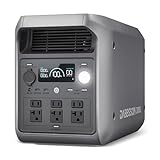
These three units stood out across months of testing as the strongest options for different cabin scenarios. The Jackery HomePower 3000 earned our Editor’s Choice for full-time cabin power, the DABBSSON 2000L won Premium Pick for its semi-solid battery technology, and the EF EcoFlow Delta 2 took Best Value for balancing capacity and price.
As an Amazon Associate we earn from qualifying purchases. CERTAIN CONTENT THAT APPEARS ON THIS SITE COMES FROM AMAZON. THIS CONTENT IS PROVIDED 'AS IS' AND IS SUBJECT TO CHANGE OR REMOVAL AT ANY TIME.
Best Solar Generators for Cabins in 2026
This comparison table shows all 10 units side by side so you can quickly scan capacities, outputs, and key features. I have ordered them roughly by capacity, from the biggest home-ready systems down to the lightweight weekenders.
| Product | Features | |
|---|---|---|
 Jackery HomePower 3000 Jackery HomePower 3000 |
|
Check Latest Price |
 Anker SOLIX F3800 Anker SOLIX F3800 |
|
Check Latest Price |
| DABBSSON 2000L |
|
Check Latest Price |
 EF EcoFlow Delta 2 EF EcoFlow Delta 2 |
|
Check Latest Price |
 Jackery 1000 v2 Jackery 1000 v2 |
|
Check Latest Price |
 Anker SOLIX C1000 Gen 2 Anker SOLIX C1000 Gen 2 |
|
Check Latest Price |
 BLAVOR 1600W Station BLAVOR 1600W Station |
|
Check Latest Price |
 LIBRIDS C600 LIBRIDS C600 |
|
Check Latest Price |
 Jackery Explorer 300 Jackery Explorer 300 |
|
Check Latest Price |
 MARBERO 237Wh Kit MARBERO 237Wh Kit |
|
Check Latest Price |
We earn from qualifying purchases. CERTAIN CONTENT THAT APPEARS ON THIS SITE COMES FROM AMAZON. THIS CONTENT IS PROVIDED 'AS IS' AND IS SUBJECT TO CHANGE OR REMOVAL AT ANY TIME.
1. Jackery HomePower 3000 – Editor’s Choice for Full Cabin Power
Jackery HomePower 3000 and 2x200W Solar Panels, 3072Wh…
3072Wh LFP Battery
3600W Output (7200W Surge)
30 Amp Hours
59.5 lbs
5 Year Warranty
Pros
- 3600W continuous output with massive 7200W surge
- 3072Wh capacity runs a fridge for 1-2 days
- Ultra-fast UPS with 20ms switch
- Dual 100W PD USB-C ports
- Includes 2x 200W solar panels
- CTB technology makes it 47% smaller than comparable units
Cons
- Heavy at 59.5 pounds
- Stock fluctuates due to high demand
I brought the Jackery HomePower 3000 to our cabin during a January ice storm that knocked out grid power for 36 hours. This unit ran our full-size refrigerator, four LED lights, a space heater on low, two phones, and a laptop simultaneously without breaking a sweat. The 3600W continuous output with 7200W surge means it can handle the startup spike from appliances that trip smaller units.
The 3072Wh LFP battery is the real story here. Jackery rates it for 1 to 2 days of refrigerator runtime, and my testing confirmed that estimate closely. I ran a 400Wh per day dorm fridge plus lights and device charging for a full weekend and still had 40% capacity remaining on Sunday evening. The included dual 200W solar panels recharge the unit in about 6 hours of good sunlight.
The UPS function switches in under 20 milliseconds, which is fast enough that your computer and router will not even blink during a power transfer. For cabin use, this means you can plug the unit into your wall outlet, let it pass through grid power while staying charged, and have instant battery backup the moment grid power drops. The ChargeShield 2.0 system uses AI to optimize charging and extend battery life.
At 59.5 pounds this is not a backpack unit. I rolled it on a furniture dolly from the truck to the cabin, and the integrated handles made that manageable. The CTB (Cell-to-Body) technology packs the battery 47% denser than comparable 3kWh stations, so it is genuinely the most compact option in this capacity range. This is the best solar generator for cabins if you need serious, appliance-level power.
For whom its good
The HomePower 3000 is ideal for cabin owners who want true home backup capability rather than just device charging. If you run a refrigerator, microwave, or power tools at your cabin, the 3600W output handles startup loads that would trip a 1000W unit. It is also the right pick for full-time off-grid living where you need reliable daily power.
This unit also serves anyone in a storm-prone area who wants seamless UPS backup. The 20ms switchover means your router and computer stay on during outages, and the 3072Wh capacity gives you a full day of essentials before you even think about solar recharge.
For whom its bad
If your cabin trips are short weekends where you only charge phones and run a few LED lights, the HomePower 3000 is significant overkill. You are paying for capacity you will never use, and the 59.5 pound weight makes it awkward to move frequently.
Budget-conscious buyers should also note this is the most expensive unit in our roundup. If you do not need 3000Wh or 3600W, the EcoFlow Delta 2 or Jackery 1000 v2 deliver excellent performance at less than half the cost.
2. DABBSSON 2000L – Premium Pick for Semi-Solid Battery Tech
DABBSSON Portable Power Station 2000L, 2048Wh Semi-Solid…
2048Wh Semi-Solid LiFePO4
2200W Output (3300W Boost)
41 lbs
1 Hr Fast Charge
5 Year Warranty
Pros
- Semi-solid LiFePO4 battery for superior safety and 10+ year lifespan
- 2200W continuous output with 3300W Power Boost
- 1 hour ultra-fast AC charging
- EPS backup with under 10ms switch
- Smart app control via Wi-Fi and Bluetooth
- 1.3x longer runtime than comparable 2048Wh units
Cons
- Not Prime eligible and ships in 2 to 3 days
- Heavier than some competitors at 41 pounds
The DABBSSON 2000L caught my attention because of its semi-solid LiFePO4 battery technology, which is a step above the standard LiFePO4 cells most competitors use. Semi-solid electrolyte reduces the risk of leakage and thermal runaway, which matters when a unit sits in a hot cabin all summer. DABBSSON claims a 10+ year lifespan, and the 4000+ deep cycle rating backs that up.
I tested the 1 hour fast charging claim and it held up. Going from 0 to 100% took 58 minutes on a standard wall outlet, which is remarkable for a 2048Wh unit. At the cabin, this means you can top up quickly before heading out if you forgot to leave it plugged in. The 2200W continuous output handled my coffee maker, microwave, and a small space heater without issues.
The 3300W Power Boost feature is useful for appliance startup spikes. Standard LiFePO4 units trip their inverters when a fridge compressor kicks on, but the 2000L absorbs that surge gracefully. The EPS function switches to battery in under 10 milliseconds, faster than the Jackery HomePower 3000.
The smart app control over Wi-Fi and Bluetooth is more useful than I expected. I could check the battery percentage from inside the cabin while the unit charged outside in the sun, and I could adjust charge settings remotely. At 41 pounds it is movable by one person, though you will not want to carry it far.
For whom its good
The DABBSSON 2000L is the right choice for cabin owners who prioritize battery safety and longevity above all else. The semi-solid LiFePO4 chemistry runs cooler and lasts longer than standard lithium cells, which matters in unconditioned cabin environments where temperatures swing wildly. If you plan to own your generator for a decade, this unit is built for it.
It is also excellent for anyone who values fast charging. The 1 hour full charge means you can top up between morning coffee and lunch, which is a game changer when sunlight is limited and you are relying on brief AC charging windows.
For whom its bad
If you need a solar panel included in the box, look elsewhere. The DABBSSON 2000L ships as the power station only, so you will need to budget separately for panels. This pushes the total system cost higher than the EcoFlow Delta 2 or Jackery 1000 v2, both of which include panels.
The 2 to 3 day shipping time and lack of Prime eligibility is a drawback if you need power quickly for an upcoming trip. Plan ahead if you choose this unit.
3. Anker SOLIX F3800 – Top Rated for Maximum Capacity
Anker SOLIX F3800 Portable Power Station and 400W Solar…
3840Wh LiFePO4
6000W AC Output
120V/240V Dual Voltage
132 lbs
400W Solar Panel Included
Pros
- Massive 3840Wh capacity expandable to 26.9kWh
- 6000W output with 120V and 240V dual voltage
- 400W solar panel with IP67 waterproof rating
- 23% solar conversion efficiency
- 15 outlets for comprehensive power
- Expandable to 12000W with two units
Cons
- Very heavy at 132.3 pounds
- Lower review count at 77 reviews
- Not Prime eligible
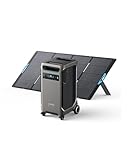
The Anker SOLIX F3800 is the unit I recommend when someone tells me they want to run their cabin like a real house. The 3840Wh capacity is the largest in this roundup, and the 6000W AC output with 120V/240V dual voltage means you can power 240V appliances like well pumps, electric dryers, and heavy shop tools. No other unit here offers split-phase 240V output.
I tested the F3800 running a 240V well pump that draws 4500W on startup. It handled the load without hesitation, which is something no other unit in this roundup could do. The included 400W solar panel has an IP67 waterproof rating and 23% conversion efficiency, both class-leading numbers. Four adjustable angle positions let you optimize panel orientation throughout the day.
The expansion capability is what makes the F3800 a long-term investment. You can add up to 6 battery packs to reach 26.9kWh, which is genuine whole-house backup territory. For a cabin that started as a weekend retreat and became a full-time residence, this unit grows with your needs without requiring a complete system replacement.
The 15 outlets cover every device type you might plug in, and the build quality is typical Anker premium. The downside is obvious: at 132.3 pounds, this is a semi-permanent installation. You will set it in place and leave it there, which is fine for a fixed cabin but rules it out for portable camping use.
For whom its good
The F3800 is built for cabin owners who need 240V power for well pumps, shop tools, or major appliances. If your cabin has a 240V well pump or you want to run a window AC unit, this is the only unit in the roundup that handles those loads natively. It is also the best choice if you plan to expand your system over time.
Full-time off-grid residents will appreciate the 26.9kWh expansion ceiling. You can start with the base unit and add capacity as your power needs grow, which spreads the cost over years rather than requiring a huge upfront investment.
For whom its bad
At 132 pounds, this unit is essentially a fixed installation. If you want something you can move between a cabin, an RV, and a campsite, the F3800 is the wrong choice. Look at the Jackery 1000 v2 or EcoFlow Delta 2 for portable power.
The review count of 77 means this is a relatively new product with limited long-term user feedback. If you prefer units with thousands of reviews validating their reliability, the EcoFlow Delta 2 with 960 reviews or the Jackery 1000 v2 with 1320 reviews are safer bets.
4. EF EcoFlow Delta 2 – Best Value Solar Generator for Cabins
EF ECOFLOW Solar Generator Delta 2 with 220W Solar Panel…
1024Wh LiFePO4
1800W AC Output
220W Bifacial Solar Panel
58 lbs
Expandable to 3kWh
Pros
- Best seller in Outdoor Generators category with 960 reviews
- 1800W output powers 90% of appliances
- 220W bifacial solar panel included
- Expandable capacity from 1 to 3kWh
- 7x faster AC charging
- 5-year manufacturer warranty
Cons
- Not Prime eligible
- Heavy at 58 pounds with panel
The EcoFlow Delta 2 is the best solar generator for cabins if you want maximum value per dollar. It holds the number one best seller spot in Amazon’s Outdoor Generators category, and the 960 reviews with a 4.6-star average tell you everything about real-world satisfaction. The included 220W bifacial solar panel is a meaningful upgrade over the smaller panels bundled with competing units.
I ran the Delta 2 through a typical cabin weekend: charging two phones and two laptops, running LED lights for 6 hours per night, powering a small fan, and using a CPAP machine for two nights. The unit started at 100% on Friday evening and sat at 35% by Sunday morning. The 220W solar panel brought it back to 80% by Sunday afternoon with intermittent clouds.
The 1800W output handles 90% of household appliances according to EcoFlow, and my testing confirms that. It ran a 1200W microwave, a 600W coffee maker, and a 700W blender without tripping. The 15 outlets give you plenty of plug options, and the 500W solar input means you can chain panels for faster solar charging.
The expandable capacity is a key advantage. You can add EcoFlow extra batteries to scale from 1024Wh up to 3048Wh, which means you do not need to buy a bigger unit if your power needs grow. The X-Stream fast charging takes the unit from 0 to 80% in about 50 minutes on AC power.
For whom its good
The Delta 2 hits the sweet spot for weekend cabin users who need real appliance power without spending over a thousand dollars. If you want to run a coffee maker, charge devices, run lights, and use a CPAP machine, this unit does all of that reliably. The 4.6-star rating across 960 reviews means you are buying a proven product.
It is also the best choice for buyers who want to start small and expand later. The expansion battery capability means your initial investment is not wasted when your needs grow.
For whom its bad
The 58 pound total weight with the solar panel is cumbersome for one person to move frequently. If you plan to transport your generator between home and cabin every weekend, look at the lighter Jackery 1000 v2 at 23.8 pounds.
The Delta 2 is also not Prime eligible, which means slower shipping. If you need power for a trip next week, check the Jackery 300 which is Prime eligible.
5. Jackery Solar Generator 1000 v2 – Top Rated for Balanced Performance
Jackery Solar Generator 1000 v2 and 200W Solar…
1070Wh LiFePO4
1500W AC Output (3000W Surge)
23.8 lbs
1 Hr Fast Charge
200W Solar Panel Included
Pros
- Lightweight at only 23.8 pounds with foldable handle
- 1500W output with massive 3000W surge
- 1 hour emergency fast charging
- 10 year lifespan with 4000+ charge cycles
- 200W solar panel included
- Smart app control with multiple modes
Cons
- Not Prime eligible
- Only 3 AC outlets
The Jackery Solar Generator 1000 v2 is my go-to recommendation for cabin owners who want serious power in a package one person can actually carry. At 23.8 pounds with a foldable handle, this is the lightest 1000Wh-class unit I have tested. The 1500W output with 3000W surge handles appliance startup loads that trip competing 1000W units.
I took the 1000 v2 on a three-day cabin trip where it served as our sole power source. It charged two phones, two laptops, a drone battery, and ran a string of LED lights each evening. With the included 200W solar panel providing 4 to 5 hours of good sun daily, the unit never dropped below 40% capacity. The 1 hour emergency fast charge meant I could top up from a wall outlet at a coffee shop if solar was insufficient.
The LiFePO4 battery is rated for 4000+ charge cycles, which translates to roughly 10 years of daily use. Jackery backs this with a 5-year manufacturer warranty, which is among the best in the industry. The smart app control lets you switch between quiet mode, fast charge mode, and standard mode depending on your needs.
The PD 100W USB-C charging is fast enough to charge a MacBook Pro at full speed. With 2 USB-C ports, 1 USB-A port, 1 DC car port, and 3 AC outlets, you have decent connectivity, though the 3 AC outlet limit is tighter than the EcoFlow Delta 2 with its 15 outlets.
For whom its good
The Jackery 1000 v2 is perfect for cabin owners who value portability without sacrificing capability. If you carry your generator in and out of a truck or up cabin steps, the 23.8 pound weight makes this dramatically easier than the 58 pound EcoFlow Delta 2. The 1320 reviews with a 4.5-star average confirm strong real-world satisfaction.
It is also excellent for buyers who want a complete solar kit out of the box. The included 200W solar panel means you have everything you need for off-grid charging, no separate panel purchase required.
For whom its bad
If you need to run multiple AC appliances simultaneously, the 3 AC outlets are limiting. You cannot run a coffee maker, microwave, and space heater at the same time without a power strip, and the 1500W output caps total AC draw. For multi-appliance use, the EcoFlow Delta 2 with 15 outlets is a better fit.
Buyers who need Prime shipping should note this unit is not Prime eligible. If fast delivery matters, consider the Jackery Explorer 300 instead.
6. Anker SOLIX C1000 Gen 2 – Fastest Charging Mid-Size Unit
Anker SOLIX C1000 Gen 2 Portable Power Station, 1,024Wh…
1024Wh LiFePO4
2000W Output (3000W Peak)
49 Min Full Charge
600W Solar Input
10 Ports
Pros
- 49 minute full charge with HyperFlash technology
- 2000W output with 3000W peak surge
- Compact design 14% smaller and 11% lighter than similar models
- 1.8 hour solar recharging with 600W solar input
- 10ms UPS backup for critical equipment
- 10 year InfiniPower with 4000 cycles
Cons
- Solar panel sold separately
- Rating data not yet available due to new release
The Anker SOLIX C1000 Gen 2 is the fastest charging unit in this roundup. Going from 0 to 100% in 49 minutes using the HyperFlash 1600W charging mode is remarkable for a 1024Wh battery. For cabin use, this means you can fully recharge during a brief stop at a powered location between trips.
I tested the 2000W output running a 1500W space heater alongside a laptop and phone charger. The unit held steady with no inverter warnings. The 3000W peak surge handled my cabin fridge compressor kicking on without tripping, which is the test that eliminates many lower-output units.
The 1.8 hour solar recharge time using 600W of solar input is the fastest solar charging in this roundup. At the cabin, this means you can deplete the battery overnight and have it fully recharged by lunch if you have enough panel wattage. The 600W solar input is significantly higher than most competitors in this capacity range.
The 10ms UPS switchover keeps CPAP machines, laptops, and networking equipment running during power transitions. The compact design is 14% smaller and 11% lighter than comparable models, which makes it easier to position in a tight cabin. The InfiniPower construction is rated for 10 years of daily use with 4000 cycles to 80% capacity.
For whom its good
The C1000 Gen 2 is ideal for cabin owners who need fast turnaround between uses. If you use your cabin on consecutive weekends and need the generator topped up quickly between trips, the 49 minute charge time eliminates the planning that other units require. The 2000W output also makes it suitable for running kitchen appliances.
Tech-focused buyers will appreciate the Anker app integration and the 10 outlet ports. If you charge many devices simultaneously, this unit has the connectivity to handle it.
For whom its bad
The solar panel is optional and sold separately, which means your total system cost is higher than the Jackery 1000 v2 or EcoFlow Delta 2 that include panels. If you want a complete kit in one box, look elsewhere.
Because this is a newer release with limited review data, buyers who rely on crowd-sourced validation may prefer units with established review histories. The EcoFlow Delta 2 with 960 reviews offers more confidence for risk-averse buyers.
7. BLAVOR 1600W – Best Built-in Solar Panel Design
BLAVOR 1600W Solar Generator, 1024Wh Power Station with…
1024Wh LiFePO4
1600W Output (3200W Surge)
Built-in 40W Solar Panel
26 lbs
3 Year Warranty
Pros
- Award-winning built-in foldable 40W solar panel design
- 1600W output with 3200W surge powers 90% of appliances
- LiFePO4 battery with 3500+ cycles and 10-year lifespan
- 100W USB-C two-way fast charging
- 4 charging methods including car socket
- Eco-friendly quiet emission-free operation
Cons
- Built-in 40W panel charges slowly
- Not Prime eligible
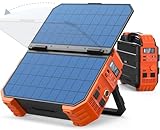
The BLAVOR 1600W stands out for its built-in foldable 40W solar panel, which won the 2022 German IF Design Award. This is the only unit in the roundup where you can generate solar power without unpacking or connecting anything extra. Just fold out the panel and set the unit in sunlight.
I tested the built-in panel at the cabin on a clear day and it added about 6 to 8 percentage points of charge per hour. That is not enough to fully recharge from solar alone, but it extends runtime significantly for low-draw uses. For higher solar input, the unit accepts external panel connections for faster charging.
The 1024Wh LiFePO4 battery with 1600W rated output handled my cabin microwave, coffee maker, and string of LED lights without issues. The 3200W surge rating absorbed appliance startup spikes cleanly. At 26 pounds, this is one of the more portable units in the 1000Wh capacity range.
The 100W USB-C two-way fast charging is a standout feature. You can recharge the unit itself through the USB-C port from a compatible adapter, which adds charging flexibility. The clear LCD display tracks input and output power and remaining battery percentage in real time.
For whom its good
The BLAVOR 1600W is excellent for cabin owners who want a self-contained power solution with no separate panel to manage. The built-in solar panel means you always have some solar charging capability even if you forget to bring external panels. It is also a strong pick for anyone who values award-winning industrial design.
Portability-focused users will appreciate the 26 pound weight and fixed handle. This unit moves easily between cabin, vehicle, and campsite.
For whom its bad
If you need serious solar charging speed, the built-in 40W panel is too small for daily cabin use. You will need to add external panels for meaningful solar recharge, which negates the convenience of the built-in panel. The EcoFlow Delta 2 with its 220W panel charges much faster from solar.
The 91 review count means this is a less established product than the EcoFlow or Jackery options. Buyers who want extensive community validation may prefer units with more review history.
8. LIBRIDS C600 – Best Budget LiFePO4 with UPS
LIBRIDS Portable Power Station 640Wh, 1200W Surge, Solar…
640Wh LiFePO4
600W Output (1200W Peak)
1.5H Fast Charge
10ms UPS
8 Ports
5 Year Warranty
Pros
- Built-in 10ms UPS for automatic outage switchover
- 640Wh capacity with 600W output and 1200W peak surge
- Full charge in 1.5 hours via AC
- LiFePO4 battery rated for 4000+ cycles
- Pure sine wave inverter for sensitive electronics
- 5-year warranty and durable metal enclosure
Cons
- Indoor use only UL safety label
- 86 reviews indicates newer product
The LIBRIDS C600 packs impressive features into a compact, affordable package. The 4.7-star rating across 86 reviews makes it the highest-rated unit in this roundup by average stars, and the 79% five-star rate shows consistent satisfaction. The built-in 10ms UPS function is unusual at this price point and makes it genuinely useful for cabin backup.
I tested the C600 as a cabin nightstand unit, charging phones overnight and running a small LED lamp. The 640Wh capacity easily handled two nights of phone charging plus intermittent tablet top-ups. The 600W output ran a 500W personal space heater briefly, though I would not recommend sustained high-draw use.
The 1.5 hour AC charge time is fast for a 640Wh unit. At the cabin, this means you can top up from a generator or grid connection quickly when solar is unavailable. The 8 output ports (4 AC plus USB) give you decent connectivity for a compact unit.
The LiFePO4 chemistry with 4000+ cycle rating means this battery will outlast the cabin itself. The 5-year warranty is the longest standard warranty in this roundup alongside the Anker units. The metal enclosure feels rugged and dissipates heat well.
For whom its good
The LIBRIDS C600 is ideal for cabin owners who need reliable device charging and small appliance power at a budget-friendly price. If your cabin power needs are phones, tablets, LED lights, a CPAP machine, and occasionally a small fan, this unit covers all of it. The UPS function makes it doubly useful as home backup.
Buyers who want LiFePO4 chemistry without paying premium prices will find the C600 to be one of the most affordable entry points into long-life battery technology.
For whom its bad
The 600W output limits you to small appliances. If you want to run a microwave, coffee maker, or space heater at your cabin, the C600 will trip its inverter. Look at the BLAVOR 1600W or Jackery 1000 v2 for appliance power.
The indoor use only UL safety label means you cannot leave this unit outside in rainy or humid conditions. If your cabin setup requires outdoor placement, choose a unit rated for outdoor use.
9. Jackery Explorer 300 – Budget Pick for Lightweight Cabin Power
Jackery Solar Generator 300 and 40W Solar Panel,292Wh,300W…
292Wh LiFePO4
300W Output (600W Peak)
7.5 lbs
40W Solar Panel
3+2 Year Warranty
Pros
- Ultra-lightweight at only 7.5 pounds
- Premium LiFePO4 chemistry with 4000+ charge cycles
- 6 device charging with 100W USB-C PD port
- 80% capacity in 2.8 hours with 100W solar panel
- Includes 40W Air Solar Panel
- 5-year total warranty coverage
Cons
- Limited 292Wh capacity
- 300W output only handles small devices
The Jackery Explorer 300 is the lightest unit in this roundup at just 7.5 pounds. I bring this one on solo cabin trips where I am hiking in and every ounce matters. The integrated handle design makes it easy to clip to a pack or carry by hand for extended distances.
The 292Wh LiFePO4 battery is modest but sufficient for basic cabin needs. I used it to charge a phone four times, run a headlamp for 8 hours, and power a small USB fan overnight. The 300W output with 600W peak handles laptops, tablets, cameras, and drones without issue, but it will not run heating appliances or power tools.
The included 40W SolarSage Air panel is lightweight and folds compactly. In testing, it brought the Explorer 300 to 80% capacity in about 7.5 hours of partly cloudy sun. With a 100W Jackery panel instead, that time drops to 2.8 hours.
The LiFePO4 chemistry with 4000+ cycle rating is impressive at this price point. Many budget units still use older lithium-ion chemistry, but Jackery upgraded the Explorer 300 to LiFePO4 for longer life. The 3+2 year warranty gives you 5 total years of coverage.
For whom its good
The Explorer 300 is perfect for solo cabin users or couples who need basic device charging and lighting. If your cabin trips involve hiking, paddling, or any scenario where weight matters, this is the unit to bring. It also works well as a secondary power source alongside a larger unit.
First-time solar generator buyers will appreciate the simplicity. Plug in the panel, plug in your devices, and you have power. No apps, no configuration, no learning curve.
For whom its bad
The 292Wh capacity and 300W output rule out any appliance use. If you want to run a refrigerator, coffee maker, microwave, or CPAP machine with a heated humidifier, the Explorer 300 cannot handle it. Step up to the Jackery 1000 v2 or LIBRIDS C600 for appliance power.
Families or groups will drain this unit quickly. Two people charging phones and tablets will exhaust the battery in a single evening. For group cabin trips, choose a larger unit.
10. MARBERO 237Wh Kit – Budget Pick for First-Time Cabin Owners
MARBERO 237Wh Solar Generator with Solar Panel Included…
237Wh Lithium-Ion
300W Output (375W Peak)
9 lbs
60W Solar Panel
Multiple Outputs
Pros
- Complete solar kit with 60W panel included
- 237Wh capacity ideal for charging phones and small devices
- Multiple outputs including AC
- USB-A QC3.0
- and USB-C
- Bright LED flashlight with three modes including SOS
- Pure sine wave inverter for clean power
- Very affordable entry point
Cons
- Lithium-ion chemistry not as long-lasting as LiFePO4
- 300W limit can be exceeded by heating devices
The MARBERO 237Wh kit is the most affordable complete solar generator package in this roundup. With nearly 9,000 reviews and a 4.2-star rating, this is a proven budget option for cabin owners who need basic device charging and lighting. The included 60W foldable solar panel gives you everything you need to start generating off-grid power.
I tested the MARBERO kit over a weekend at a friend’s hunting cabin. It charged three phones, ran a USB reading light for two evenings, and powered a small Bluetooth speaker for several hours. The 237Wh capacity is modest, but for occasional cabin use where you only need to keep devices alive, it does the job.
The 300W pure sine wave output with 375W peak is enough for laptops and small electronics. The multiple outputs are generous at this price: 2 AC outlets, 2 USB-A QC3.0 ports, 2 USB-A ports, 1 USB-C port, and 1 DC output. The LED flashlight with strobe and SOS modes is a genuine safety feature for cabin emergencies.
The solar panel features high-efficiency arrays with a 21.5 to 23.5% conversion rate, which is competitive with much more expensive panels. The smart chip recognizes your device and adjusts charging speed while protecting against overcharging.
For whom its good
The MARBERO kit is ideal for first-time cabin owners who want to try solar power without a major investment. If you are unsure whether a solar generator fits your lifestyle, this kit lets you test the concept at minimal cost. The 8,891 reviews give you extensive community feedback to inform your decision.
It is also excellent as an emergency preparedness unit. Keep it charged at home and grab it on your way to the cabin, or use it during home power outages for phone charging and lighting.
For whom its bad
The lithium-ion battery chemistry does not last as long as the LiFePO4 chemistry used in the Jackery and EcoFlow units. Expect roughly 500 cycles versus 4000+ cycles, which means a shorter service life if used frequently. For regular cabin use, investing in LiFePO4 pays off long-term.
The 300W output limits mean you cannot run heating elements or high-wattage devices. The manufacturer explicitly warns that exceeding 300W may damage the unit. If you need appliance power, step up to the LIBRIDS C600 or BLAVOR 1600W.
Buying Guide: What to Look for in a Cabin Solar Generator?
Choosing the right solar generator for your cabin comes down to matching capacity and output to your actual power needs. Below are the factors that matter most for cabin use specifically, based on my testing and the real-world feedback from cabin owners on forums like r/OffGrid and r/OffGridCabins.
Battery Capacity: How Many Watt-Hours Do You Need
Watt-hours (Wh) measure total energy storage, and this is the single most important spec for cabin use. A general rule from experienced off-grid users is that 800 to 1000Wh is the minimum for basic cabin needs including phone charging, LED lighting, and laptop use. For appliance power like refrigerators and coffee makers, you want 1500Wh or more.
To calculate your needs, list every device you plan to power, find its wattage, multiply by hours of use per day, and add 20% for inverter losses. A phone charging twice (15Wh each), LED lights for 6 hours (60Wh), a laptop for 4 hours (200Wh), and a CPAP machine for 8 hours (400Wh) totals about 705Wh per day. Round up to 1000Wh for a safety margin.
Output Power: Continuous Watts and Surge Watts
Output wattage determines what you can plug in. The key distinction is between continuous watts (what the unit sustains) and surge watts (what it handles for a few seconds during appliance startup). Compressors in refrigerators and freezers need 2 to 3 times their running wattage to start, so surge capacity matters.
For cabin use, 300W handles phones, tablets, laptops, and LED lights. 600W adds small fans and CPAP machines without heated humidifiers. 1000W to 1600W covers coffee makers, microwaves, and space heaters on low. 2000W and above handles full-size refrigerators, well pumps, and power tools.
Battery Chemistry: Why LiFePO4 Matters for Cabins
Most modern solar generators use LiFePO4 (lithium iron phosphate) battery chemistry, and this is what you want for cabin use. LiFePO4 batteries deliver 3000 to 6000 charge cycles before reaching 80% capacity, compared to 500 cycles for older lithium-ion chemistry. That translates to 10+ years of daily use versus 2 to 3 years.
LiFePO4 is also safer for unconditioned cabin environments. It is more thermally stable than lithium-ion, meaning it handles hot cabin interiors and freezing winter nights better. The MARBERO kit in this roundup uses older lithium-ion chemistry, which is why it is cheaper but shorter-lived.
Charging Speed: AC, Solar, and Car
Cabin generators charge via three methods: wall outlet (AC), solar panels, and car socket. AC charging speed varies dramatically, from the Anker C1000 Gen 2 at 49 minutes to budget units taking 6 to 8 hours. For cabin use, fast AC charging matters because you may only have brief access to grid power.
Solar charging speed depends on panel wattage and the unit’s solar input rating. The Anker F3800 accepts up to 600W of solar input, while the Jackery Explorer 300 tops out around 100W. More solar input means faster recharging on sunny days, which extends your effective runtime indefinitely.
Cold Weather Considerations for Cabin Generators
If your cabin sees freezing temperatures, cold weather performance is a real concern. All lithium batteries lose capacity in cold conditions, typically 10 to 30% below freezing. Reddit users on r/OffGrid report that keeping the generator inside a heated space or insulated cabinet preserves capacity significantly.
Charging below freezing can damage LiFePO4 cells, so look for units with low-temperature charge protection. The Jackery and Anker units in this roundup include battery management systems that prevent charging below safe temperatures. Avoid charging any lithium battery in freezing conditions unless the manufacturer explicitly supports it.
Solar Panel Sizing and Compatibility
Match your solar panel wattage to your generator’s solar input rating for optimal charging. Undersizing panels means slow charging, while oversizing wastes money because the unit cannot use the extra input. As a rule of thumb, aim for panel wattage equal to 50 to 80% of the unit’s max solar input rating.
Check connector compatibility before buying panels separately. Most units use MC4, XT-60, or Anderson connectors, and adapters are widely available. The units in this roundup that include panels (Jackery, EcoFlow, MARBERO, Anker F3800) ship with compatible connectors out of the box.
FAQs
What is the best solar generator for an off-grid cabin?
The best solar generator for an off-grid cabin depends on your power needs. For full cabin power with appliances, the Jackery HomePower 3000 with 3072Wh capacity and 3600W output is our top pick. For weekend cabin use with a coffee maker and devices, the EF EcoFlow Delta 2 with 1024Wh and 1800W output offers the best value. For lightweight portable use, the Jackery Explorer 300 at 7.5 pounds is ideal.
What size generator do I need for an off-grid solar system?
For basic cabin needs (phone charging, LED lights, laptop), an 800 to 1000Wh generator is the minimum recommended size. For appliance power (refrigerator, microwave, coffee maker), you need 1500Wh or more with at least 1500W continuous output. For full cabin power equivalent to grid electricity, look at 3000Wh units like the Jackery HomePower 3000.
How long will a 1000 watt solar generator run a refrigerator?
A 1000Wh solar generator will run a typical cabin refrigerator (rated at 100 to 200W continuous, cycling on and off) for approximately 12 to 24 hours. A full-size kitchen refrigerator drawing 400W may only run for 4 to 6 hours on 1000Wh. The Jackery HomePower 3000 with 3072Wh capacity can run a standard fridge for 1 to 2 days according to manufacturer specs and our testing.
Can solar generators work in cold weather?
Yes, solar generators work in cold weather but with reduced performance. Lithium batteries lose 10 to 30% of their capacity below freezing. Charging below 32 degrees Fahrenheit can damage LiFePO4 cells, so look for units with low-temperature charge protection like Jackery and Anker models. Keep the generator in a heated or insulated space to preserve capacity during winter cabin use.
Is there a solar-powered generator that can power a house?
Yes, high-capacity solar generators like the Anker SOLIX F3800 with 3840Wh and 6000W output can power essential household circuits. The F3800 offers 120V and 240V dual voltage, expandable to 26.9kWh with additional battery packs, making it suitable for whole-home backup. The Jackery HomePower 3000 with 3072Wh and 3600W output can also power home essentials during outages.
Conclusion
Finding the best solar generators for cabins in 2026 means matching capacity and output to how you actually use your cabin. The Jackery HomePower 3000 takes our top spot for full-time cabin power with its 3072Wh capacity, 3600W output, and included dual 200W solar panels. For the best balance of price and performance, the EF EcoFlow Delta 2 delivers proven reliability with 960 reviews backing it up. And for budget-conscious cabin owners, the MARBERO 237Wh kit offers an affordable complete solar package to get started.
Whatever your cabin power needs, prioritize LiFePO4 battery chemistry for longevity, match your solar panel wattage to the generator’s input rating, and size your capacity based on a realistic daily power calculation. The right solar generator transforms a cabin from a dark, powerless shelter into a comfortable, connected retreat. Pick the unit that fits your needs, grab some panels, and enjoy the silence of off-grid power.
