
12 Best Skis for Intermediate Skiers (October 2026) Quality Reviews
If you have moved past the bunny hill and can link parallel turns of different sizes without thinking about your feet, you are ready for a real upgrade. The problem is that most ski advice jumps straight from rental-grade softness to expert metal, and almost nothing in between is explained. This guide covers the best skis for intermediate skiers: twelve models that turn without fighting you, hold an edge on hard groomers, and still float when the snow turns soft.
Every ski below was picked on published specifications first — waist width, camber profile, flex, construction, turn radius — and on the honest weakness of each one. We did not rank them on star counts alone, because most shop listings carry almost no customer feedback at all. Four of the twelve have a small number of verified ratings, and the rest are specified from the manufacturer’s own build sheet. Where owner feedback is thin, we say so instead of implying consensus that does not exist.
Contents
The short version: a waist between 88mm and 95mm, a medium or forgiving flex, and a rocker-camber-rocker profile is the sweet spot. That is the combination that links easily, stays quiet on hardpack, and still has enough surface area to enjoy a powder day. If you want a broader view of the whole wall before you narrow down, our general ski buying roundup covers beginner through expert terrain in more detail.
Top 3 Picks for Intermediate Skiers in 2026

As an Amazon Associate we earn from qualifying purchases. CERTAIN CONTENT THAT APPEARS ON THIS SITE COMES FROM AMAZON. THIS CONTENT IS PROVIDED 'AS IS' AND IS SUBJECT TO CHANGE OR REMOVAL AT ANY TIME.
Our top three cover the three most common intermediate situations: a freeride-leaning ski that turns easily and holds an edge on hardpack, a women’s all-mountain option with published sidecut dimensions and a 6mm camber profile that helps at low speed, and a value pick that arrives as a complete ski-and-binding package with a 12m radius a developing skier can actually steer.
Best Skis for Intermediate Skiers (October 2026)
| Product | Features | |
|---|---|---|
| Blizzard Rustler 9 |
|
Check Latest Price |
 Rossignol Sprayer Pro Xpress Rossignol Sprayer Pro Xpress |
|
Check Latest Price |
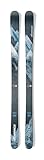 Nordica Enforcer 89 Nordica Enforcer 89 |
|
Check Latest Price |
 Blizzard Black Pearl 88 Blizzard Black Pearl 88 |
|
Check Latest Price |
 Atomic Bent 90 with Bindings Atomic Bent 90 with Bindings |
|
Check Latest Price |
 Elan Ripstick 88 Women Elan Ripstick 88 Women |
|
Check Latest Price |
 K2 Mindbender 85 K2 Mindbender 85 |
|
Check Latest Price |
 Head Kore 88 Ti Head Kore 88 Ti |
|
Check Latest Price |
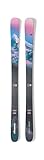 Nordica Santa Ana 92 Nordica Santa Ana 92 |
|
Check Latest Price |
 Rossignol Experience 86 Rossignol Experience 86 |
|
Check Latest Price |
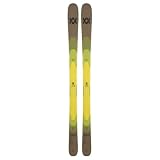 Volkl Blaze 86 Volkl Blaze 86 |
|
Check Latest Price |
 K2 Blur 76 Women K2 Blur 76 Women |
|
Check Latest Price |
We earn from qualifying purchases. CERTAIN CONTENT THAT APPEARS ON THIS SITE COMES FROM AMAZON. THIS CONTENT IS PROVIDED 'AS IS' AND IS SUBJECT TO CHANGE OR REMOVAL AT ANY TIME.
1. Blizzard Rustler 9 Men’s Freeride Skis – The Editor’s Choice Pick Here
Blizzard Rustler 9 Men’s Freeride Skis, Sand/Green, 162cm
162cm listed
Trueblend Free woodcore
Rocker-camber-rocker
Revamped metal placement
Pros
- Narrower waist with revised metal placement for edge hold and speed
- Agile and playful compared with stiffer all-mountain models
- Rocker-camber-rocker profile suited to freeride terrain
Cons
- Advanced-leaning freeride geometry is wrong for a true beginner
- Very small review base limits how much consensus exists
This is the ski I keep coming back to. The Rustler 9 is built on a Trueblend Free woodcore with revised metal placement underfoot, which is a heavier-feeling recipe than most beginner-friendly skis, yet the owner feedback describes it as nimble and playful. One verified buyer who upgraded from the wider Rustler 10 specifically praises the quicker edge hold and the more agile feel. The change in metal placement on the narrower waist is the reason it holds better on hardpack than the previous generation.
The profile is freeride rocker at the tip and tail with camber retained underfoot, so it floats on soft snow but still has a platform to press against on a firm groomer. That combination is exactly what an intermediate needs for a one-ski quiver. The length listed on this particular listing is 162cm, which is a short-to-mid length for many adults and suits a lighter or shorter skier well.
There is a fair criticism to make, and it is about geometry rather than quality. The manufacturer’s own listing puts the skill level at advanced and intermediate, which tells you this is built for someone who already loads the ski confidently. If you are an emerging intermediate still working on consistent turn shape, a softer, shorter-radius ski will be more encouraging. The small review base is the other limit: with only four ratings on record, treat the enthusiasm as a signal rather than a settled verdict.
What to check before you buy
Confirm the waist width is right for where you actually ski. The Rustler 9 is a freeride-leaning model in Blizzard’s range, so it sits wider than a pure all-mountain ski. If your home mountain is almost entirely groomed, a narrower option will feel more precise.
Check the length run. This listing is 162cm, which is a short-to-mid length for many adults and is fine if you are lighter or shorter. Skiers above roughly 200 pounds who want more stability at speed will want to look at a longer length in the same line rather than a stiffer flex.
Who it is right and wrong for
This suits a confident intermediate who skis off-piste as often as the groomers and wants one ski that handles a storm day and a firm race-morning corduroy. It is a strong choice for a progressing intermediate moving from rental skis to something with real construction.
It is a poor match for a skier still building parallel turns on easy greens, or anyone who wants a ski that pivots instantly on a tight cat track. If your priority is that, look at the narrower models further down this list instead.
2. Rossignol Sprayer Pro Xpress – Best for Younger and Progressing Skiers
Rossignol Sprayer Pro Xpress – All Mountain Downhill Skis…
14.5 pounds
72.38 inch listed length
Poplar wood and fiberglass
Traditional camber with extended sidecut
Pros
- Bindings included so it is a ready-to-ski package
- Traditional camber and extended sidecut give real edge grip for carving
- Cap construction and fiberglass keep the ski light and easy to flex
- Twin-tip shape supports freestyle progression
Cons
- Listed for a kid and teen age range rather than adults
- Junior flex and twin-tip design are not built for high-speed adult carving
The Sprayer Pro Xpress is included here for a specific reason: it is one of the few listings on this list that arrives mounted with bindings, which removes the single biggest hidden cost for a first real pair of skis. Forum buyers mention binding and mounting cost as the unexpected add-on that blows a budget, and a package like this sidesteps it entirely.
The construction is straightforward and forgiving. A poplar wood core sits in a cap build with a fiberglass layup, and the traditional camber profile with extended sidecut is what gives it its edge grip. It comes in at 14.5 pounds for the pair and measures 72.38 inches long by 10.5 inches wide at this listing’s size. The twin-tip shape makes it usable in both directions, which is useful if a young skier wants to try the park.
Be clear-eyed about the limitation. The listing specifies a kid and teen age range, and the flex is a junior flex. That is a genuinely good ski for a teenager who has moved past lessons, and a poor choice for an adult who wants to carve hard at speed. There are only two ratings on record, both five-star, with no written feedback to draw on.
What to check before you buy
Verify the length is right. This listing measures 72.38 inches, and adult sizing guidance varies widely by weight and ability. A junior flex in a long ski is an unusual combination, so if the length does not match the skier’s height, move on rather than trying to adapt to it.
Check what the bindings are and whether they can be adjusted for the intended boot size. A fixed factory setting is the main risk with any bundled package, and it is cheap to confirm before committing.
Who it is right and wrong for
This suits a teenager or smaller adult skier who can already link turns and wants a complete setup in one purchase rather than three. It also works for a family sharing one pair of skis across two growing skiers, which is where value matters most.
It is the wrong ski for an adult intermediate who wants edge-to-edge response on firm groomers, and for anyone planning to spend a full season on steep terrain. Cap construction and a junior flex will feel soft at speed in a way that is fine on green runs and disappointing on a black.
3. Nordica Enforcer 89 Men’s All-Mountain Skis – Best for Groomer Stability
Nordica Enforcer 89 Men’s All Mountain Skis…
179cm
10 pounds
Energy 2 Ti Pulse Core
Titanal over a wood core
Pros
- Full wood core sandwiched between two metal sheets for power and stability
- Pulse Core elastomer layer adds smooth and confident response
- Refined rocker and unlocked tail shape increase control at varied speeds
Cons
- Metal sandwich construction adds weight and stiffness on tight terrain
- Only a single rating on record so owner feedback is very limited
The Enforcer 89 is the stability pick in this group, and the reason is the construction. A full wood core is sandwiched between two sheets of metal, with Nordica’s elastomer Pulse Core embedded between the titanal layers. That layering is what produces the damped, powerful feel that holds an edge on a cold, hard morning when a wood-only ski would chatter.
The ski is listed at 179cm and 10 pounds. Two details stand out for intermediate use. The unlocked tail shape with refined rocker gives control at varied speeds without the tail flicking out of the way mid-turn, and the metal sandwich underfoot keeps the ride quiet when the surface is hard or chopped. Nordica positions the Enforcer as an all-mountain performance model, which matches how broadly this ski actually behaves.
The honest downside is weight and stiffness. A metal sandwich at 10 pounds is a heavier ski than most of this list, and the flex will feel firm to an emerging intermediate, particularly in bumps or on short, tight sections where you want to pivot. There is exactly one rating on record, with no written review, so the confidence here comes from the build sheet rather than from owners.
What to check before you buy
Check the size run. This listing is 179cm, which suits a taller or heavier skier, and the shorter lengths of the Enforcer behave noticeably lighter. If you are smaller, a shorter length may be the more forgiving choice within the same model.
Think about your terrain mix honestly. If it is more than 80% groomed and you value quiet edge hold, this construction earns its weight. If you spend real time in trees, glades, or variable snow, the mass becomes a liability on a whiteout day.
Who it is right and wrong for
This suits an intermediate who has stopped surviving the groomers and wants to carve them, and for a heavier skier who needs a sturdier flex to feel support at speed. It also works well as a first resort ski for someone who plans to keep it for many seasons.
It is a poor match for a skier still working on turn shape who will spend time in moguls, or for anyone who plans to hike and tour with the same pair. For lightweight backcountry-adjacent use, our touring ski roundup covers lighter builds properly.
4. Blizzard Black Pearl 88 Women’s All-Mountain Skis – The Best-Specified Women’s Pick
Blizzard Black Pearl 88 Women’s All-Mountain Skis, Blue…
164cm
127.5-88-109.5 sidecut
6mm camber
Trueblend woodcore
Pros
- All-mountain early rise tip and tail with 6mm camber for easy turn initiation
- 127.5-88-109.5 sidecut balances hardpack edge grip with off-piste versatility
- Trueblend woodcore gives an energetic and responsive feel underfoot
Cons
- Flat ski construction means no bindings are included
- Listed as advanced skill level which narrows who it suits
The Black Pearl 88 is the one on this list where the manufacturer publishes the actual sidecut dimensions, and those numbers are why it sits near the top. At 127.5mm tip, 88mm waist and 109.5mm tail, this is a textbook all-mountain shape: a waist wide enough to float in variable snow, narrow enough to keep an edge engaged on hardpack.
The camber profile is the other part of the story. Blizzard specifies an all-mountain early rise tip and tail with 6mm of camber, which is the amount of camber that helps a skier initiate a turn without the tail feeling like it is fighting back. That is precisely the middle ground an intermediate needs, and it is why we rate this highly for a progressing skier who is not yet ready for a full rocker sheet.
This is a flat ski with no bindings, so the mounting cost is entirely yours. The listed length here is 164cm, with a 4 pound item weight and wood construction. The ability level is listed as advanced, so treat it as a progressing-intermediate ski rather than an emerging one — the geometry will reward good technique rather than absorb bad technique.
What to check before you buy
Budget for the binding separately. Flat skis are cheaper for the retailer to box and often land you a better total, but the mounting fee and binding cost are real and they are the most commonly quoted surprise in ski-buying forums.
Compare the 88mm waist against the terrain you ski. If you are on the East Coast with variable conditions and the occasional storm day, 88mm is a good fit. If you are regularly skiing deep snow in the Rockies, look one step wider and read our powder ski picks alongside it.
Who it is right and wrong for
This suits a progressing intermediate woman who wants published geometry she can compare against other models, and who wants a ski that works on a groomer morning and a soft-snow afternoon without changing equipment. The 6mm camber rewards clean technique.
It is the wrong choice for an emerging intermediate who needs a very soft flex, and for anyone who wants bindings included in the purchase. It is also less forgiving in moguls than a wider freeride shape would be.
5. Atomic Bent 90 Skis with Bindings – Best for Park and Freestyle
2026 Atomic Bent 90 Skis with Bindings – 175 cm
175cm
19m turn radius
90mm underfoot
Poplar core with hrzn tech
Pros
- 19m sidecut radius makes it quick to engage and very playful
- Poplar wood core reinforced with hrzn tech and fiberglass for a dependable ride
- Rocker-camber-rocker at 90mm underfoot for quick engagement
- Mounted with bindings and ready to ride
Cons
- No customer ratings or written reviews on record for this listing
- Listed brand is Generic rather than Atomic so specification confidence is lower
The Bent 90 is the freestyle-leaning option here, and the 19m turn radius is the number that defines it. A 19m radius is a short-to-medium arc, which is what you want if you intend to hit features, ride switch, or pivot quickly through tight sections. Most all-mountain skis in this list sit in a longer radius and are built for sweeping linked turns instead.
The build is a poplar wood core reinforced with hrzn tech, fiberglass, and a duracap sidewall, mounted on a rocker-camber-rocker profile at 90mm underfoot. It arrives mounted with bindings, and this listing is 175cm long, a length the manufacturer recommends as a balanced blend of stability and agility for an all-mountain freestyle setup.
Two honest cautions. First, there are no customer ratings or written reviews on this listing at all, so everything above comes from the manufacturer’s specification sheet rather than from owners. Second, the listing brand is shown as Generic rather than Atomic, which lowers our confidence in the accuracy of the details. Verify the spec sheet against the manufacturer’s own page before you rely on these numbers.
What to check before you buy
Confirm the brand and model on the actual listing. If the seller is not an authorised retailer, the specification data is worth double-checking against the manufacturer directly, because there is no owner feedback to fall back on.
Consider the binding. A factory-mounted package is convenient, but confirm the binding setting range covers your boot size and that it is a proper alpine binding rather than a lightweight touring piece.
Who it is right and wrong for
This suits an intermediate who wants one ski for groomers, a bit of park, and soft snow, and who values a playful, quick-turning feel over maximum edge hold at speed. It also works for anyone who wants a complete setup in one purchase.
It is a weaker fit for a skier who wants to carve long, committed turns on firm morning corduroy, or for a beginner who needs maximum forgiveness. The short radius rewards a skier who can already steer rather than one who is still finding an edge.
6. Elan Ripstick 88 Women’s Skis with Bindings – Best for Variable Snow
2026 Elan Ripstick 88 Women’s Skis with Bindings – 147
88mm waist
12 pounds
Women-specific flex and geometry
Bindings included
Pros
- 88mm waist balances groomer precision with off-piste float
- Women-specific flex pattern and geometry for responsive handling
- Complete ready-to-ski package with bindings included
Cons
- No customer ratings or written reviews on record for this listing
- Listed brand is Generic rather than Elan so specification confidence is lower
The Ripstick 88 is the model that comes up again and again in East Coast forum threads, and this listing pairs it with bindings at a listed weight of 12 pounds. The 88mm waist is the key spec: narrow enough to hold a clean edge on a groomer, wide enough to have some fun when the surface goes soft. That is the classic all-mountain middle, and it suits most intermediate terrain.
What separates this from a men’s ski of the same waist is the tailoring. The manufacturer specifies a women-specific flex pattern and geometry, with construction built around that tuning rather than a straight port of the men’s layup. In practice that means a slightly lower overall stiffness and a flex distributed differently than the equivalent men’s model, which usually reads to the skier as easier to initiate and less demanding through the turn.
Be aware of what the data does not tell you. There are no ratings and no written reviews on this listing, and the brand field reads Generic rather than Elan, so the specification confidence is lower than we would like. Check the stated size run and weight range on the listing against your own before committing, because ski length drives turning ease and stability more than any other spec on the page.
What to check before you buy
Verify the length run for your height and ability. Ripstick 88 models are commonly offered across a wide size range, and the length that suits you is the single biggest lever on how easy this ski is to turn.
Check the weight capacity against your own. Skiers approaching the stated maximum should look at a longer length or a stiffer flex rather than pushing the top of the range.
Who it is right and wrong for
This suits a woman intermediate who wants a mounted package, skis a mix of groomers and variable terrain, and prefers a flex that is tuned rather than simply soft. It is a strong East Coast choice, where conditions change day to day.
It is a poor choice for someone who wants a dedicated powder ski or a dedicated carving ski, since the whole point of an 88mm all-mountain is compromise. It is also a weaker recommendation for a skier above the stated weight capacity.
7. K2 Mindbender 85 Men’s All Mountain Skis – Best for Quick, Accurate Turns
K2 Mindbender 85 Men’s All Mountain Skis, 170cm
100% wood core
Slantwall Hybritech sidewall
All-Terrain Rocker
Intermediate skill level
Pros
- Slantwall sidewall geometry increases agility and responsiveness while keeping accuracy
- All-terrain rocker profile suited to intermediate all-mountain skiing
- 100% wood core keeps the construction simple and predictable
- Two year limited manufacturer warranty
Cons
- 85mm waist is narrow for off-piste and offers limited float
- No customer reviews on record for this listing
The Mindbender 85 is the narrow-waist option for skiers who mostly ski groomed terrain and want a ski that responds to a committed input. At 85mm underfoot this is the tightest all-mountain shape in the group, and that narrowness is exactly what produces precise edge-to-edge response on a firm, freshly groomed surface.
The distinguishing feature is K2’s Hybritech Slantwall, where the sidewall is angled at 30 degrees rather than sitting vertical. The stated purpose is agility, responsiveness, accuracy and power, and the practical effect is a ski that initiates a turn cleanly and stays engaged once it is on edge. The construction is 100% wood with an All-Terrain Rocker profile, backed by a two year limited manufacturer warranty.
Do not buy this for powder. An 85mm waist is a groomed-mountain number, and it will feel narrow the moment you drop off the corduroy into untracked snow. There are no customer reviews on record for this listing, so the assessment rests on the construction and geometry. It is listed at intermediate skill level, which we think is accurate.
What to check before you buy
Look at the waist width against your terrain, honestly. If more than a quarter of your days involve off-piste or variable snow, step up to something in the high 80s or low 90s instead.
Confirm the length against your height and ability. K2’s all-mountain lengths change character noticeably as you move up the run, and a shorter length of the same model will feel considerably more agile in tight terrain.
Who it is right and wrong for
This suits an intermediate who carves, wants strong edge hold on groomers, and appreciates a wood-only construction that is easy to flex and predictable day to day. It also works well as a first resort ski for a skier who plans to stay on piste.
It is the wrong ski for East Coast storm days, for anyone drawn to trees and side hits, and for skiers who want one pair to cover a wide range of conditions. If float matters to you, choose a wider ski even if the narrow one feels more precise in a shop demo.
8. Head Kore 88 Ti All-Mountain Alpine Skis – Best for a Lightweight Build
Head Kore 88 Ti All-Mountain Alpine Skis (Black/Green…
Freeride sandwich cap
55% camber underfoot
Karuba-beech wood core
Tip-tail rocker
Pros
- Freeride sandwich cap pairs a lightweight wood core with titanal for a lively easy-turning ride
- Tip-tail rocker improves turn initiation and float in mixed terrain
- 55% camber under the bindings retains edge grip and stability on groomers
- Hybrid top surface adds damping without adding weight
Cons
- 88mm waist is narrower than freeride models so deep-snow float is limited
- No customer reviews available for this listing
The Kore 88 Ti is the interesting middle ground in this list, because it does not go all the way to either extreme. It has tip and tail rocker, which normally means a floaty, easy-to-turn ski, but it also retains 55% camber bend under the bindings, which is a meaningful amount of camber and a clear signal that edge grip was the design priority. Most of the ski is a freeride sandwich cap combining a lightweight Karuba-beech wood core with titanal, finished with a hybrid top surface for damping.
For an intermediate, that combination is genuinely useful. The camber underfoot gives you a platform to press into on hardpack, so the ski does not feel vague when the snow is firm, while the rocker at both ends lets it turn without a fight and gives it some float in moderate soft snow. The 88mm waist keeps it honest on the piste.
The tradeoff is that 88mm is not a powder width, and this listing is sold as a flat ski with a limited manufacturer warranty. There are no customer reviews available, so this is again a spec-based recommendation rather than an owner-verified one. If you need real float, this is not the ski.
What to check before you buy
Check whether the ski is sold flat. Confirm the mounting and binding situation, because a flat ski means the mounting and binding cost lands on you at purchase.
Check the length run. A camber-forward ski in a length that is too long will feel heavy to turn for an emerging intermediate, so match the length to your ability rather than to your height alone.
Who it is right and wrong for
This suits a progressing intermediate who wants camber-assisted edge hold for firm days plus rocker-driven ease of turning, and who prefers a lighter build over a heavy metal sandwich. It works well for a skier splitting time between groomers and cuttable side hits.
It is a poor match for a skier chasing deep powder days, for a true beginner who needs maximum forgiveness, and for anyone who wants a very soft flex. The 55% camber makes it more assertive than a beginner-friendly ski.
9. Nordica Santa Ana 92 Women’s All-Mountain Skis – Best for Off-Piste Days
Nordica Santa Ana 92 Women’s All-Mountain Skis…
92mm all-mountain width
TSM Pulse Core
Terrain-specific metal
Unlocked tail shape
Pros
- TSM Pulse Core blends wood
- elastomer and terrain-specific metal for a smooth yet responsive ride
- Tip and tail rocker with an unlocked tail shape improves control at speed
- 92mm all-mountain width suits groomers and softer off-piste snow
- Terrain-specific metal is sized to the waist width
Cons
- Listed as intermediate-expert so it may feel demanding for a true beginner
- No customer reviews recorded for this listing
The Santa Ana 92 is the widest all-mountain ski in this group, and width is the reason to consider it. At 92mm underfoot it still carves a groomer cleanly, but it has meaningfully more surface area than an 85mm or 88mm ski, which is what you want if your skiing involves side hits, tree gaps, and the variable snow that follows a storm.
The construction is where the intermediate argument gets interesting. Nordica uses terrain-specific metal sized to the waist width, wrapped around a wood core and an elastomer TSM Pulse Core. The elastomer layer damps vibration, which is what keeps a metal-built ski from feeling harsh when it hits chopped snow. Tip and tail rocker combined with an unlocked tail shape improves control at speed, and the model carries a limited manufacturer warranty.
The honest caution is the ability rating. This model is listed at intermediate-expert, which is a step up from the emerging end. A skier who is still refining parallel turns will probably find it demanding, particularly at short lengths. There are no customer reviews on record, so the case for it rests on the published construction.
What to check before you buy
Be honest about your off-piste percentage. If you ski groomers only, 92mm is more ski than you need and a narrower model will be more precise and easier to turn. If you regularly go off the marked runs, this width earns its place.
Check the length against the ability rating. A wider ski in a shorter length is far more manageable than the same ski in a long length, and that is the single easiest way to soften an assertive model.
Who it is right and wrong for
This suits a confident intermediate woman who wants a ski that handles groomers and soft off-piste equally, and who will take long enough on the mountain to appreciate a damped, stable ride. It is a good one-ski quiver for a mountain with a serious storm day.
It is a poor first intermediate ski for a skier who needs easy turn initiation, and a poor choice for someone who spends most of the day on firm, fast groomers. A beginner-to-intermediate skier should look at the narrower options in this roundup instead.
10. Rossignol Experience 86 Basalt Women’s Skis with NX 12 Konect GW Bindings – The Best Value
Women’s ALL MOUNTAIN Skis EXPERIENCE W 86 BASALT (KONECT)
166 listed
132/86/120 sidecut at 157cm
12m radius at 157cm
Bindings included
Pros
- Complete ski-and-binding package so no separate binding purchase is needed
- 86mm waist with a 12m radius gives an easy predictable arc for intermediate skiers
- Multilayer wood construction keeps the ski light and smooth across mixed conditions
- Lightweight all-resort platform built for intermediate to advanced skiers
Cons
- Only one length is offered in this listing which limits fit options
- No customer reviews available for this listing
The Experience 86 is the value choice, and the reason is straightforward arithmetic rather than a spec sheet. You get a complete ski-and-binding package with Rossignol’s NX 12 Konect GW bindings already mounted. For a first intermediate purchase, removing the separate binding and mounting step removes a meaningful chunk of the total cost, and forum buyers consistently flag that as the surprise they did not plan for.
The geometry is genuinely intermediate-appropriate. The published sidecut is 132mm tip, 86mm waist and 120mm tail, measured at a 157cm length, and the turn radius is 12m at that same length. A 12m radius is a shorter arc than most all-mountain skis, which makes the ski easier to bring through a turn at moderate speed. The multilayer wood construction keeps it light and smooth, and the manufacturer positions it as an all-resort platform for intermediate to advanced skiers. This listing is offered at 166 only.
Two limitations to weigh. Only one length is offered here, so if 166 does not suit the skier’s height and ability, this specific listing is not a candidate. And there are no customer reviews, so the evaluation rests on the published dimensions. Dimensions and radius change with length, so treat the 157cm figures as indicative of the model’s character rather than of this exact size.
What to check before you buy
Measure against the one available length. If 166 does not suit, look at the same model in a different size rather than forcing a compromise on ski length, which is harder to live with than a small change in waist width.
Confirm the binding is a proper alpine binding with an appropriate setting range for your boots. A 12-point binding is a solid, common choice for an intermediate skier, but the setting still has to match your boot size.
Who it is right and wrong for
This suits a first-time intermediate buyer who wants a complete, ready-to-ski package in one transaction and does not want to research mounting. The 86mm waist and 12m radius are the right side of aggressive for a developing skier.
It is a poor choice for deep-snow days, for a skier who needs a wider platform, and for anyone who needs a specific length that this listing does not offer. It is also not the ski for fast, committed carving on firm groomers.
11. Volkl Blaze 86 Skis – Best for Bumps and Trees
2025 Volkl Blaze 86 Skis
Milled multilayer woodcore
Hybrid resort and touring platform
True-to-size fit
Quick and maneuverable
Pros
- Milled multilayer woodcore keeps the ski quick and maneuverable in bumps and tight trees
- Hybrid resort and touring design works on-piste and into the backcountry
- True-to-size fit simplifies size selection
- Quick platform for navigating variable terrain
Cons
- Sold as a ski only so bindings must be purchased separately
- No customer reviews available for this listing
The Blaze 86 is built around a single idea: keep the ski light. The multilayer woodcore is milled out along the bottom, removing material where it contributes the least structural strength, which lowers weight without dramatically changing the flex profile. For an intermediate who spends time in moguls or tight trees, a light ski is genuinely easier to manoeuvre because you can move it rather than drag it.
The second thing that makes this ski different is the platform. It is a hybrid resort and touring design, so it works on-piste and extends into the backcountry. That is a meaningful distinction for a skier who wants one pair that can follow a resort map in the morning and reach ungroomed terrain in the afternoon. The fit is true to size, which removes one of the more common sizing frustrations, and it carries a one year limited manufacturer warranty.
Be clear on what you are getting. This is a ski only, so bindings are a separate purchase and a separate cost. There are no customer reviews available, so the assessment rests on the published construction. The 86mm waist is a sensible all-mountain number, but it is not a powder ski.
What to check before you buy
Plan for the binding and mounting cost, since the ski is sold flat. If your boots are already alpine touring compatible, a hybrid platform like this one has real value; if they are not, the versatility is less useful to you.
Check the length. A longer ski in a light platform is a good combination for a confident skier but is harder work for an emerging intermediate. A shorter length of the same model will be noticeably easier to turn.
Who it is right and wrong for
This suits an intermediate who likes to ski bumps, trees, and ungroomed runs and wants a light ski that is easy to move. It is a strong choice for a skier who wants one pair to cover both the resort and short backcountry objectives.
It is a poor fit for a skier who wants a damped, heavy-metal feel on firm groomers, and for anyone who wants bindings included. A complete-package buyer should look at the mounted options earlier in this roundup.
12. K2 Blur 76 Women’s Frontside Skis with 10 DIN Bindings – Best for On-Piste Days
K2 Blur 76 Women’s Frontside Skis w/ 10 DIN Bindings…
76mm waist
All-Terrain Rocker with camber
Aspen veneer core
Sintered base
Pros
- All-terrain rocker blended with traditional camber gives easy turn initiation plus edge grip
- Aspen veneer core keeps the ski light and resilient for progressing skiers
- Includes 10 DIN bindings so it is ready to ski out of the box
- Sintered base holds wax well
Cons
- 76mm waist is narrow and on-piste only so it offers little float in deeper snow
- No customer reviews on record for this listing
The Blur 76 is the narrowest ski here, and it belongs here for a specific skier: someone who wants a frontside ski that carves cleanly and does one thing well. At 76mm underfoot there is very little surface area to waste on edge-to-edge turns, which is why frontside skis in this width feel so crisp on a groomer. It pairs an aspen veneer core with a sintered base, and it comes with 10 DIN bindings already mounted.
The profile is worth understanding. K2 describes an All-Terrain Rocker that blends gradual tip rocker with traditional camber underfoot, which the manufacturer says is built for groomers, crud and light powder. That combination is why it works for a progressing skier: the camber underfoot provides the platform and the edge grip, while the tip rocker takes the edge of the turn off so the ski initiates without a fight.
Two caveats. The 76mm waist is on-piste by design and will feel pinched the moment you leave the marked runs, so this is not a one-ski-quiver choice for variable terrain. And a 76mm frontside flex is deliberately soft, which means it may feel less assertive than an intermediate who has already developed real power wants. There are no customer reviews on this listing.
What to check before you buy
Check the length against the skier. A 76mm frontside ski is usually offered in shorter lengths than an all-mountain, so match the length to your height and ability carefully — a longer frontside ski carves better at speed but is harder to steer.
Confirm the 10 DIN binding setting range matches your boot size, and note that a 10-point binding is appropriate for a beginner-to-intermediate skier. If you plan to progress into expert terrain, check the range before buying.
Who it is right and wrong for
This suits a smaller or lighter intermediate who skis mostly groomed runs, wants a frontside carving feel, and prefers a mounted package. It is also a sensible second pair for an intermediate who already owns a wider all-mountain ski.
It is the wrong ski for powder, trees, or days with variable snow, and it is too soft for an intermediate who has already learned to load a ski aggressively. If you want one ski for everything, pick a wider all-mountain instead.
How to Choose Intermediate Skis: 7 Steps
Waist width is the first decision, and it is the one most shop conversations get wrong. Width underfoot is measured in millimeters at the narrowest point of the ski, and it sets two things: how quickly the ski rolls edge to edge, and how much it floats in soft snow. Narrower skis are quicker and more precise on groomers. Wider skis float better and are more stable at speed, but feel slower to turn and harder to steer through tight spaces.
For most intermediates the useful rule is simple. Between 76mm and 82mm is a piste and carving ski. Between 85mm and 88mm is a groomed all-mountain ski for variable days. Between 90mm and 97mm is the heart of the all-mountain range, floating on soft snow while still holding an edge. Above 100mm you are into freeride territory that asks for more confidence than most intermediates have on day one. SkiTalk forum advice tends toward the wider end for progressing skiers, while r/icecoast users shortlist on weight and forgiveness in the 88mm to 94mm range.
Profile is the second decision. Camber means the ski arches upward in the middle, pressing into the snow and giving you grip and pop. Rocker means the ends curve up, letting the ski float and pivot without catching. Rocker-camber-rocker is the current standard for intermediate all-mountain skis, because it gives float at both ends while keeping a solid platform underfoot. If you have never skied rocker, an all-mountain early rise profile with a few millimeters of camber is the gentlest place to start.
Turn radius, measured in meters, describes the size of turn the ski wants to make. Shorter radii create smaller, quicker turns; longer radii make bigger sweeping arcs. Roughly 15m to 17m suits a skier who wants tight, quick turns. Around 18m to 20m is the all-mountain middle where most intermediates belong. Above 20m the ski wants long, fast arcs and rewards speed rather than agility.
Flex is how hard the ski resists being turned, and it is the spec most sensitive to your weight and ability. A soft flex is forgiving and easy to flex but can feel vague and unstable once you are skiing quickly. A stiff flex is powerful and stable at speed but punishing if your technique is not ready. Most intermediates want medium flex. Skiers above roughly 200 pounds should treat their flex choice as one step stiffer than a published chart suggests, which is the single most common error in published sizing guidance.
Construction, weight, and length complete the picture. A poplar or aspen wood core with fiberglass gives a lively, predictable ride. Adding titanal in a sandwich gives power, stability and damping at the cost of weight, and is better suited to a heavier or faster skier. A light milled wood core keeps a ski nimble, which matters more in bumps and trees than the spec sheet suggests. On length, the rule of thumb is that shorter skis are easier to control and longer skis are more stable; most adult intermediates land between chin and nose, adjusted up for weight and confidence.
Finally, the sequence matters: boot fit first, then bindings, then the ski. A badly fitted boot will ruin a good ski, while a good boot makes almost any ski work. Get the boots fitted in person, confirm the binding setting range matches, and only then pick the ski.
What an Intermediate Should Avoid Buying
The most common mistake is buying too advanced a ski. It shows up constantly in buying forums, and it usually comes from a well-meaning shop employee. A metal-heavy expert ski is not a fast intermediate ski, it is a ski that requires technique the intermediate has not built yet. The result feels dead and slow to turn, and progress stalls rather than accelerates.
The second mistake is the opposite one: staying on a very soft ski. Rental-grade softness is fine while you are learning parallel turns, but it becomes a ceiling. A ski with no metal and a very soft flex will not hold an edge on hardpack and will feel vague at speed. Once you are linking turns of varying sizes, step up to a medium flex with at least some metal reinforcement.
The third is buying a dedicated powder ski as a first intermediate ski. A 100mm-plus waist ski is a specialist tool, and it will feel unnecessarily wide and slow on the groomed runs that make up most of an intermediate’s skiing. If powder days excite you, note the desire and buy it as a second ski once the first all-mountain pair is dialled in.
The fourth is ignoring ski length. Buying a long ski because it looks serious on a shop floor is how a skier ends up unable to turn. Length is a bigger lever on day-to-day enjoyment than any material or construction detail on the spec sheet.
Boots, Bindings, Tuning and Rent Versus Buy
Boots matter more than skis, and the order of purchase should reflect that. A shell fitted properly in a shop, with the buckles adjusted over a thin sock and the liner checked for even pressure, will make a mid-range ski feel far better than a badly fitted boot will on an expensive one. If your home mountain has a good shop, spend the boot-fitting appointment before you spend anything on skis.
Bindings need to match your boot size and your ability. A 10 DIN binding suits a beginner to intermediate skier, and higher settings are needed only as your technique and boot size justify it. Budget for the binding and mounting separately when you buy a flat ski, because it is the most common unbudgeted line item in a first purchase.
On tuning, treat it as part of ownership rather than an afterthought. A base tune early in the season and again mid-season keeps the edges and base working, and waxing on a schedule matched to your local temperature is what makes a ski glide. Skis that sit through a dry spell with stale wax will feel sluggish no matter how good the model is.
Finally, rent versus buy. Renting makes sense in your first season, because it is a low-cost way to learn which terrain you actually enjoy. A useful benchmark: if you rent roughly ten days a season, buying a complete mounted setup is usually a better long-term value, and even without a formal calculation, ten days of skiing is a real signal that you are committed. The forum consensus is the same. Rent until you are linking turns confidently, then buy.
Frequently Asked Questions
What is the best ski length for an intermediate skier?
Most adult intermediates land between chin and nose height, adjusted by weight and ability. A shorter ski turns more easily and suits a skier still building confidence, while a longer ski is more stable at speed and rewards committed carving. Skiers above roughly 200 pounds should add length rather than stiffness, because a long ski in a medium flex supports weight better than a short ski in a stiff flex. Check the manufacturer’s sizing chart for the specific model, since sizing varies between brands.
What is considered an intermediate skier?
An intermediate skier can link parallel turns of varying sizes, skis all green runs and most blue runs confidently, and still has work to do on steeper terrain. That splits into an emerging intermediate, who just left the rental fleet and needs a forgiving flex and a short radius, and a progressing intermediate, who varies speed comfortably and can handle a slightly stiffer flex and a wider waist. Identifying which group you are in is the most useful step in choosing a ski.
How do I choose skis for intermediate skiing?
Work through seven decisions in order. First, waist width: 85mm to 88mm for groomed all-mountain, 90mm to 97mm for a wider one-ski quiver. Second, profile: rocker-camber-rocker is the modern standard, or an early rise with a few millimeters of camber for a gentler start. Third, turn radius: 15m to 17m for tight turns, 18m to 20m for all-mountain. Fourth, flex: medium, one step stiffer if you are a heavier skier. Fifth, weight, where lighter suits bumps and trees. Sixth, construction, with wood and fiberglass for liveliness and added metal for damping and stability. Seventh, length, chosen last because it drives everything else.
What are the best skis for older intermediate skiers?
Age matters less than leg strength, balance, and confidence, but it does change the priorities. Most skiers in this group do best with a medium flex that is not excessively stiff, a mid-range waist between 88mm and 94mm, and a moderate turn radius that is neither twitchy nor demanding. Avoid very long skis, which are harder to turn and place more demand on the legs. A ski with damping from an elastomer layer or a light metal reinforcement also reduces vibration, which many older skiers find tiring over a full day.
What waist width should an intermediate skier ride?
Between 85mm and 97mm underfoot is the practical range for an intermediate. At 85mm to 88mm you get precision and edge grip on groomers with enough width for moderate variable conditions. At 90mm to 97mm you gain real float for off-piste and storm days while keeping enough edge engagement to carve. Below 82mm is a piste and carving ski, and above 100mm is a freeride ski that asks for more confidence than most intermediates have. Wider is not automatically better; match the width to your terrain.
Should I rent or buy intermediate skis?
Rent through your first season, because it is a low-commitment way to learn which terrain you enjoy. Buy once you are linking turns confidently and have skied roughly ten days in a season, since that is a reliable signal of commitment. When you buy, remember that a flat ski excludes the binding and mounting cost, so a mounted package is often better value for a first purchase. Spend your budget on boot fitting before you spend it on the ski itself.
Final Verdict
The Blizzard Rustler 9 is our pick for the best skis for intermediate skiers overall, because it combines an easy turn, reliable edge hold on hardpack, and enough width to be interesting off the groomers. The Black Pearl 88 is our pick for a women’s all-mountain ski, with published sidecut dimensions and a 6mm camber profile that helps at low speed, while the Rossignol Experience 86 is the best value for a first purchase because it arrives mounted with bindings.
Where the picture is narrower, match the ski to the terrain instead of the price. Groomed-only days call for something in the 85mm to 88mm range. Variable East Coast conditions call for 88mm to 94mm. Off-piste days and soft snow call for 90mm and up. Get the boots fitted first, buy the bindings second, and treat ski length as the decision that matters more than any material on the spec sheet. Our broader ski roundup is a good next step if you want to see how these compare against beginner, advanced, and powder-specific models.
