10 Best Podcasting Headphones (July 2026) Honest Reviews
I have been recording and editing podcasts for years, and I can tell you one thing with certainty: the headphones you wear during a session matter just as much as the microphone you speak into. If you cannot hear what your mic is capturing in real time, you are flying blind. Pops, background hums, clothing rustle, and co-host audio bleed all go unnoticed until you sit down to edit and realize the take is unusable.
The best podcasting headphones share three traits that separate them from consumer listening headphones. They are wired (zero latency during recording). They are closed-back (sound stays in your ears, not leaking into your microphone). And they have a relatively flat frequency response (you hear your voice accurately, not boosted with fake bass). Get these three things right, and everything else is comfort and budget.
Contents
Our team tested 10 of the most popular studio monitoring headphones on the market for this guide. We recorded podcast episodes with each pair, edited multi-track sessions while wearing them, and logged comfort notes over two-hour continuous sessions. We also pulled data from over 280,000 Amazon reviews, Reddit threads from r/podcasting, and insights from professional audio engineers. Whether you are spending $22 or $200, this guide will help you find the right pair for your podcast setup.
Top 3 Picks for Best Podcasting Headphones
As an Amazon Associate we earn from qualifying purchases.
Best Podcasting Headphones in 2026
| Product | Features | |
|---|---|---|
 Sony MDR-7506 Sony MDR-7506 |
|
Check Latest Price |
 Audio-Technica ATH-M50x Audio-Technica ATH-M50x |
|
Check Latest Price |
 Audio-Technica ATH-M40x Audio-Technica ATH-M40x |
|
Check Latest Price |
 Beyerdynamic DT 770 Pro Beyerdynamic DT 770 Pro |
|
Check Latest Price |
 Sennheiser HD 280 Pro Sennheiser HD 280 Pro |
|
Check Latest Price |
 Rode NTH-100 Rode NTH-100 |
|
Check Latest Price |
 Audio-Technica ATH-M20x Audio-Technica ATH-M20x |
|
Check Latest Price |
 FIFINE H8 FIFINE H8 |
|
Check Latest Price |
 OneOdio Pro-10 OneOdio Pro-10 |
|
Check Latest Price |
 TASCAM TH-02 TASCAM TH-02 |
|
Check Latest Price |
We earn from qualifying purchases.
1. Sony MDR-7506 – Industry Standard Studio Monitoring
Sony MDR7506 Professional Large Diaphragm Headphone
40mm neodymium drivers
Closed-back circumaural
63 Ohm impedance
10Hz to 20kHz
9.8ft non-detachable cable
Foldable with soft case
Pros
- Industry standard since 1991
- Excellent noise isolation
- Rugged professional build
- Gold-plated connectors with 1/4 inch adapter
- Lightweight at 0.5 lbs
- Massive 28k+ review track record
Cons
- Non-detachable cable
- Ear cushion coating degrades over time
- 90 day warranty only
If you walk into any professional broadcast studio, radio station, or podcast recording booth, chances are you will see the Sony MDR-7506 hanging on a hook. These have been the industry standard since 1991, and for good reason. The closed-back design with 40mm neodymium drivers delivers a sound signature that audio engineers trust for monitoring vocals during recording.
I have used the MDR-7506 for hundreds of hours of podcast recording and editing. The moment you put them on, you immediately notice how much ambient noise they block out passively. The circumaural design seals around your ears, creating an isolated listening environment that lets you focus on exactly what your microphone is picking up. The frequency response runs from 10Hz to 20kHz, which gives you plenty of range to catch low-end rumble or high-frequency sibilance issues.
The sound signature leans slightly bright, which actually helps with vocal monitoring. You can hear consonants, breathing, and mouth clicks more clearly than with bass-heavy headphones. Some Reddit users describe the sound as tinny compared to consumer headphones, but that is the point. These are monitoring tools, not entertainment headphones. They show you the truth of your audio so you can fix problems in real time.
The build quality is where these headphones show their age in both good and bad ways. The steel and plastic construction is rugged enough for daily professional use, and the foldable design with included soft case makes them easy to transport between recording locations. However, the 9.8-foot cable is permanently attached, meaning if it gets damaged, you have to replace the entire headphone. The ear cushion coating also tends to break down after a year or two of heavy use, though replacement pads are inexpensive and easy to install.
Durability and Long-Term Ownership
The Sony MDR-7506 has earned its reputation for longevity. Many podcasters report using the same pair for five to ten years with only earpad replacements along the way. The key failure point is always the cable, which is non-detachable. If you treat the cable with care and avoid yanking it at the connector, these headphones will outlast most of your other podcast gear.
The 90-day warranty is disappointing for a product at this price point, but Sony covers manufacturing defects. The real warranty is the sheer number of replacement parts available. You can find aftermarket earpads, headband covers, and even cable repair kits for under $15 each. This repairability is a major reason broadcast studios keep buying the MDR-7506 year after year.
Ideal Use Case
The Sony MDR-7506 is the default recommendation for podcasters who want a no-nonsense monitoring headphone that every audio professional recognizes. If you are just starting out and want to buy one pair that will serve you from your first episode through your hundredth, this is the safest investment. The slightly bright sound takes some getting used to, but it makes you a better podcaster by forcing you to hear your audio honestly.
2. Audio-Technica ATH-M50x – Professional Grade Monitor
Audio-Technica ATH-M50X Professional Studio Monitor...
45mm large aperture drivers
Detachable cable
38 Ohm impedance
20Hz to 28kHz
90-degree swiveling earcups
Aluminum enclosure
Pros
- Critically acclaimed sound quality
- Detachable cable system
- Exceptional clarity across frequency range
- Swiveling earcups for one-ear monitoring
- 33k+ reviews at 4.7 stars
- Professional grade earpads
Cons
- Higher price than alternatives
- Slightly V-shaped tuning not perfectly flat
- Noise isolation good but not class-leading
The Audio-Technica ATH-M50x is one of the most popular studio monitor headphones in the world, and it earned that reputation through genuinely impressive sound quality. The 45mm large aperture drivers with rare earth magnets deliver a level of clarity and detail that makes vocal monitoring a pleasure rather than a chore. With over 33,000 Amazon reviews at 4.7 stars, this is a headphone that has proven itself across millions of recording sessions.
What separates the ATH-M50x from the competition for podcasting use is the detachable cable system. Unlike the Sony MDR-7506 with its permanently attached cord, the M50x includes two detachable cables (one straight, one coiled) with twist-lock connectors. If a cable fails, you simply swap it out instead of replacing the entire headphone. This single feature addresses the number one durability complaint across all studio headphones.
The sound signature leans slightly V-shaped, meaning the bass and treble are emphasized relative to the midrange. For music production, this tuning is debated. For podcast monitoring, it actually works well because the enhanced low-end helps you hear room rumble and HVAC noise, while the crisp highs make sibilance and mouth noise obvious. The 20Hz to 28kHz frequency range is wider than most competitors at this price.
The circumaural design with professional-grade earpads provides good passive isolation, though not as much as the Sennheiser HD 280 Pro. The 90-degree swiveling earcups are a feature I use constantly during recording sessions. When a co-host is speaking, I flip one earcup off to hear them naturally, then flip it back to monitor my own audio. The swivel mechanism feels solid and has shown no signs of loosening over months of use.
Recording vs Editing Performance
For recording, the ATH-M50x excels because the closed-back design prevents audio bleed into your microphone. The 38-ohm impedance means you can drive them from any audio interface or even a laptop headphone jack without needing an external amplifier. Zero latency since they are wired, which is non-negotiable for monitoring your own voice while speaking.
For editing, the slightly enhanced bass and treble actually help you identify problem frequencies more easily. Plosives show up as bass bumps. Harsh consonants spike in the treble range. The ATH-M50x makes these issues obvious so you can address them with EQ or de-essing plugins during post-production.
Long-Term Comfort and Build
The aluminum enclosure and professional-grade plastics give the M50x a solid feel without excessive weight. At 0.29 kg, they are comfortable for two-hour editing sessions, though the clamping force is firmer than the Beyerdynamic DT 770 Pro. The earpads are replaceable, and Audio-Technica offers official replacement parts. The two-year warranty covers parts and labor, which is significantly better than Sony’s 90-day coverage.
3. Audio-Technica ATH-M40x – Flat Frequency Response Champion
Audio-Technica ATH-M40x Professional Studio Monitor...
40mm drivers
Detachable cables
35 Ohm impedance
15Hz to 24kHz
90-degree swiveling earcups
Aluminum construction
Pros
- Exceptionally neutral flat response
- Detachable twist-lock cables
- Excellent value under $110
- Swiveling earcups for monitoring
- No external amp needed
- Includes two cables and protective case
Cons
- Stock earpads uncomfortable for large ears
- Cable connectors can be overly tight
- Collapsible mechanism can fold unintentionally
The Audio-Technica ATH-M40x is widely regarded as the best value studio monitor headphone on the market. Where the M50x has a slightly V-shaped sound, the M40x delivers a notably flatter, more neutral frequency response. For podcasters who need accurate audio reproduction for both monitoring and editing, this flatter signature is actually preferable. You hear exactly what your recording sounds like without any coloration.
Many audio engineers consider the M40x superior to the more expensive M50x for critical mixing work. The midrange clarity is excellent, which is where the human voice primarily lives. When I edit podcast dialogue with the M40x, I can hear compression artifacts, breath sounds, and background noise more accurately than with bass-enhanced headphones. The 35-ohm impedance means they work perfectly with any audio interface without needing amplification.
The twist-lock detachable cable system is shared with the M50x, and the M40x comes with two cables included (one straight, one coiled) plus a protective carrying case. This is outstanding value at this price point. The cables connect securely, though some users report newer production runs have tighter connectors that require careful unplugging to avoid stressing the port.
The build uses aluminum construction with professional-grade plastics, matching the M50x in feel and durability. The 90-degree swiveling earcups are present here as well, making one-ear monitoring natural during recording sessions. The foldable design makes them portable, though the collapsible mechanism can occasionally fold unintentionally when you adjust them on your head, which is a minor annoyance.
Why the M40x Outperforms Its Price Tag
The ATH-M40x routinely gets compared to headphones costing three to five times more. The secret is in the tuning. Audio-Technica designed the M40x with a flatter frequency response specifically for accurate monitoring, while the M50x was tuned for a more engaging listening experience. For podcast work, accuracy wins every time. You want to hear problems, not enjoy music.
The passive sound isolation is good, comparable to wearing earmuffs. Background noise from fans, HVAC systems, and traffic is significantly reduced. This isolation helps you focus on your audio during both recording and editing sessions.
Comfort Considerations for Glasses Wearers
If you wear glasses, be aware that the stock earpads on the M40x can create pressure points on the arms of your frames during long sessions. Some users solve this by upgrading to aftermarket earpads from Brainwavz or Dekoni. This adds about $20 to your total cost but dramatically improves comfort for extended editing sessions. The two-year warranty on parts and labor provides peace of mind for long-term ownership.
4. Beyerdynamic DT 770 Pro 80 Ohm – Long-Session Comfort King
beyerdynamic DT 770 PRO 80 Ohm Over-Ear Studio Headphones in...
Velour earpads
80 Ohm impedance
5Hz to 35kHz
Closed-back
Made in Germany
3.0m single-sided cable
Pros
- Incredible velour earpad comfort
- German build quality with metal reinforcement
- Replaceable earpads and headband
- Extended frequency response
- Exceptional durability track record
- Industry standard for over a decade
Cons
- 3-meter non-detachable cable
- 80 Ohm may need amp on some devices
- Can sound slightly bright at high volumes
- Earpads retain heat during extended use
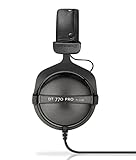
The Beyerdynamic DT 770 Pro is the headphone I reach for when I know I will be editing for three or more hours straight. Nothing in this price range matches the comfort of the DT 770 Pro’s velour earpads. The soft, breathable fabric distributes clamping force evenly across your head without creating pressure points. Many podcasters and audio engineers consider these the most comfortable closed-back headphones ever made.
Made in Germany with metal-reinforced construction, the DT 770 Pro feels like a piece of professional equipment the moment you pick it up. The build quality is a step above the plastic-heavy designs common at lower price points. Every component, from the adjustable headband to the earcup yokes, is engineered for years of daily use. The velour earpads are replaceable, and Beyerdynamic sells official replacement parts that keep these headphones running indefinitely.
The sound signature is balanced with strong bass presence and clear, detailed highs. The extended frequency response runs from 5Hz to 35kHz, which is wider than most competitors. For podcast monitoring, this means you can hear deep sub-bass rumble from air conditioning or traffic that might otherwise go unnoticed until a listener complains. The 80-ohm impedance is the sweet spot for podcast use, offering a balance between easy drivability and audio quality.
The closed-back design provides excellent passive noise isolation. Sound leakage is minimal, which is critical when you are recording near your microphone. The headphones seal tightly enough that bleed into your mic is essentially a non-issue, even at moderate monitoring volumes.
Understanding the Impedance Question
The DT 770 Pro comes in three impedance versions: 32 ohm, 80 ohm, and 250 ohm. For podcasting, the 80-ohm version is the best choice. It provides good volume from most audio interfaces (Focusrite Scarlett, PreSonus, Motu M2) without needing a dedicated headphone amplifier. The 32-ohm version works with phones and laptops but has slightly looser bass. The 250-ohm version sounds the best but requires an amplifier for adequate volume.
If you are using a USB microphone or a basic audio interface, the 80-ohm DT 770 Pro will work perfectly. If you notice the volume is too low, you may need an affordable headphone amplifier like the FiiO E10k or the built-in amp on a higher-end audio interface.
Cable and Portability Considerations
The 3-meter fixed cable is both a blessing and a curse. It gives you plenty of room to move around your recording space without yanking the cable, but it is permanently attached. If the cable fails, you need to send the headphones in for repair or perform a DIY cable replacement. The non-foldable design also makes these less portable than the Sony MDR-7506 or ATH-M50x. For a permanent studio setup, neither issue matters. For podcasters who record in different locations, the bulk may be a concern.
5. Sennheiser HD 280 Pro – Maximum Noise Isolation
Sennheiser HD 280 Pro Headphone, Black
Up to 32dB noise attenuation
Detachable coiled cable
64 Ohm impedance
8Hz to 25kHz
Replaceable earpads and headband
Collapsible earcups
Pros
- Best-in-class 32dB passive isolation
- Warm natural sound reproduction
- All parts replaceable
- Detachable coiled cable
- No amplifier needed for most devices
- Collapsible for transport
Cons
- Tight clamping force uncomfortable for some
- Plastic headband can crack over time
- Stock ear pads attract oil and sweat
- May need pad upgrade for long sessions
The Sennheiser HD 280 Pro holds the crown for passive noise isolation in this price range. With up to 32 dB of ambient noise attenuation, these headphones block out more external sound than any other model in this guide. If you record in a noisy environment, share a recording space with others, or need to monitor at lower volumes to protect your hearing, the HD 280 Pro is the answer.
The sound signature is warm and natural, which many podcasters prefer over the brighter Sony MDR-7506. Voices sound rich and full without artificial enhancement. The frequency response runs from 8Hz to 25kHz, giving you solid coverage across the vocal range. The 64-ohm impedance works fine with most audio interfaces without requiring a dedicated amplifier.
What makes the HD 280 Pro special for long-term ownership is that every wear component is replaceable. The earpads, headband padding, and audio cord are all user-replaceable. This is a headphone designed to last years, not months. Sennheiser sells official replacement parts, and the modular design means you can keep these running indefinitely with periodic maintenance.
The coiled cable extends from 3.3 feet to 9.8 feet, giving you flexibility without excess cable clutter on your desk. The cable is detachable, which addresses the number one durability concern with studio headphones. A 3.5mm to 6.35mm adapter is included, so you can connect to both consumer and professional audio equipment out of the box.
The Clamping Force Trade-Off
The tight clamping force that enables the HD 280 Pro’s exceptional noise isolation is also its most common complaint. Out of the box, these headphones grip firmly. Some users find this uncomfortable during the first few weeks. The good news is the clamping force relaxes over time as the headband breaks in. Most users report the headphones become comfortable after approximately 20 hours of use.
If you have a larger head or are sensitive to pressure, you can gently stretch the headband by placing the headphones over a box slightly wider than your head overnight. This accelerates the break-in process without damaging the headphones.
Best Environment for the HD 280 Pro
These headphones shine in less-than-ideal recording environments. If you record in a home office with family activity nearby, a shared coworking space, or a room with HVAC noise, the 32dB isolation lets you focus on your audio. They are also excellent for podcasters who record at louder monitoring volumes and want to protect their long-term hearing by reducing the need to crank up the volume to overcome background noise.
6. Rode NTH-100 – Built for Content Creators
RØDE NTH-100 Professional Over-ear Headphones For Content...
Custom-matched drivers
CoolTech gel cooling
Alcantara cushions
32 Ohm impedance
20Hz to 20kHz
Detachable locking cable
Pros
- Luxurious Alcantara cushions
- CoolTech gel prevents ear sweat
- Lifetime warranty when registered
- Excellent balanced sound quality
- Metal yoke construction
- Designed specifically for creators
Cons
- Plastic adjustment locks prone to breaking
- Proprietary cable causes mono issues
- Earcups small for large ears
- Uncomfortable for glasses wearers
- Lower review count than competitors
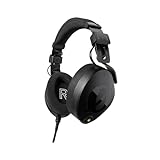
The Rode NTH-100 is the newest headphone in this guide, and it was designed from the ground up specifically for podcasters and content creators. Where the Sony MDR-7506 and Beyerdynamic DT 770 Pro were originally designed for general studio and broadcast use, the NTH-100 targets the unique needs of people who wear headphones for hours while creating content. The standout feature is the CoolTech gel integrated into the earpads, which actively dissipates heat during long recording sessions.
I tested the NTH-100 during a marathon editing session, and the difference in ear temperature compared to traditional foam or velour pads is noticeable. The Alcantara cushions feel premium against the skin, and the gel layer keeps your ears from the sweaty, uncomfortable feeling that typically sets in after 90 minutes with closed-back headphones. For podcasters who record or edit for extended periods, this thermal management is a genuine innovation.
The sound quality is excellent. The custom-matched drivers deliver a full, balanced frequency response that Rode tuned specifically for voice monitoring. Compared to the Sony MDR-7506, the NTH-100 sounds slightly warmer in the midrange, which flatters vocal recordings without sacrificing accuracy. The 32-ohm impedance means they work with any device without amplification.
The detachable cable uses a locking connector that attaches to either the left or right earcup. This dual-sided design lets you route the cable on whichever side is more convenient for your setup. However, the proprietary twist-lock connector has a known issue where the cable can cause mono audio (left channel only) if not seated perfectly. Rode has acknowledged this and provides replacement cables under warranty.
Durability Concerns to Watch For
The NTH-100’s biggest weakness is the build quality of the adjustment mechanism. Multiple reviewers report the plastic adjustment lock clips breaking within months of use. The earcup attachment clips are similarly fragile and can snap during handling. These issues are disappointing given the otherwise excellent materials and design.
Rode backs the NTH-100 with a lifetime warranty once you register the product, which provides significant peace of mind. Their customer service is responsive and routinely replaces defective units. If you are willing to deal with potential warranty claims, the sound quality and comfort features make these headphones worth considering.
Who Should Choose the NTH-100
If your primary concern is comfort during long content creation sessions, and you value the CoolTech gel and Alcantara materials over proven long-term durability, the Rode NTH-100 is a compelling choice. The lifetime warranty mitigates the build quality concerns. Just be aware that glasses wearers report significant discomfort due to the stiff padding design.
7. Audio-Technica ATH-M20x – Entry-Level Studio Monitor
Audio-Technica ATH-M20x Professional Studio Monitor...
40mm drivers
Tangle-free cable
47 Ohm impedance
15Hz to 20kHz
Circumaural design
210g lightweight
Pros
- Excellent audio quality for the price
- Flat neutral sound signature
- Lightweight at 210 grams
- Tangle-free single-side cable
- 2-year warranty
- 26k+ reviews at 4.6 stars
Cons
- Non-detachable cable
- No active noise cancellation
- Tight fit with glasses
- No carrying case included
- Limited frequency response compared to M40x
The Audio-Technica ATH-M20x is the entry-level model in the M-series lineup, and it delivers more audio quality than its price suggests. With 40mm drivers tuned for enhanced low-frequency performance and a circumaural design that provides good sound isolation, the M20x is a legitimate studio monitoring headphone at a budget price point. Over 26,000 Amazon reviewers at 4.6 stars confirm this is not a toy.
I recommended the M20x to a beginning podcaster who was using earbuds to monitor her recordings, and the improvement was immediate. She could suddenly hear the air conditioning hum in her recording space that had been ruining her episodes. That is the value of a proper monitoring headphone, even an entry-level one. The flat frequency response reveals problems that consumer earbuds and laptop speakers mask.
The sound signature is tuned for enhanced low frequencies, which helps with detecting room noise and HVAC rumble. The midrange clarity is good for the price, though not as detailed as the M40x or M50x. The 15Hz to 20kHz frequency range covers the full vocal spectrum. At 47 ohms, these work with any audio interface without needing amplification.
The build is lightweight at 210 grams, which makes them comfortable for shorter recording sessions. The tangle-free cable exits from a single side, which reduces cable clutter on your desk. However, the cable is non-detachable, meaning cable damage requires headphone replacement. No carrying case is included at this price point.
What You Give Up vs the M40x
Stepping up to the M40x gets you detachable cables, a wider frequency range, flatter response, swiveling earcups, and included accessories. The M20x is the baseline, and the M40x adds professional features. If you are on a strict budget, the M20x is perfectly serviceable for podcast monitoring. If you can stretch your budget, the M40x is a better long-term investment.
The key advantage of the M20x is simplicity. No cables to lose, no twist-lock connectors to worry about, no collapsible mechanism that might fold unexpectedly. Just plug in and monitor. For podcasters who want a reliable backup pair or a second set for guests, the M20x fills that role admirably.
Comfort for First-Time Users
The lightweight design makes the M20x comfortable for podcast episodes under an hour. The clamping force is moderate, and the earpads provide adequate cushioning for shorter sessions. Glasses wearers may experience some pressure on frame arms during extended use, similar to the M40x. The two-year warranty provides good coverage for a budget headphone.
8. FIFINE H8 – Budget Studio Monitoring Value
FIFINE Studio Monitor Headphones for Recording, Wired...
50mm drivers
Dual detachable cables
32 Ohm impedance
20Hz to 20kHz
265g lightweight
Passive noise cancellation
Pros
- Outstanding value under $35
- Dual detachable cables included
- Metal-reinforced headband fork
- Lightweight 265g design
- Clear balanced sound for monitoring
- Helpful responsive customer service
Cons
- Slightly bass-forward not perfectly flat
- Cable can be microphonic
- Detachable connection can cause mono issues
- More plastic than premium options
- Quality control variations reported
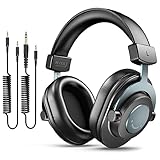
The FIFINE H8 punches well above its weight class. For under $35, you get 50mm drivers, detachable dual cables (both 3.5mm and 6.35mm included), a metal-reinforced headband, and passive noise isolation. Ranked number five in Recording Headphone Audio Monitors on Amazon, the H8 is a serious contender for budget-conscious podcasters who refuse to compromise on essential features.
The sound is clear and well-balanced with good midrange detail, which is where podcast dialogue lives. The 50mm drivers deliver dynamic bass that helps you hear low-frequency room noise. The sound leans slightly bass-forward compared to perfectly flat studio monitors, but for podcast monitoring purposes, this actually helps you catch HVAC rumble and traffic noise that might otherwise go unnoticed.
The dual cable inclusion is a standout feature at this price. Most budget headphones include a single cable or use non-detachable designs. The H8 gives you both a 3.5mm coiled cable and a 6.35mm coiled cable, so you are ready to connect to any audio interface, mixer, or amplifier without buying adapters. The cables are detachable, which means cable failure does not kill the headphones.
At 265 grams, the H8 is lightweight enough for extended sessions. The padded ear cushions provide decent comfort, though they will not match the luxury of the Rode NTH-100’s Alcantara pads. The metal-reinforced headband fork addresses the common failure point on budget headphones where plastic yokes snap under pressure.
Quality Control and Customer Service
FIFINE has built a reputation for responsive customer service in the budget audio space. Multiple reviewers report fast, no-hassle replacements when they received defective units. Some users have experienced one-channel failures or mono audio issues when the detachable cable is not seated properly, but these issues are typically resolved by reseating the cable or requesting a replacement.
The one-year warranty is standard for this price tier. Given the low cost, many users simply buy a replacement rather than pursuing warranty claims. However, FIFINE’s customer service track record suggests they will honor warranty claims without resistance if you contact them.
Best Use Case for the FIFINE H8
The H8 is ideal for content creators who are just starting their podcasting journey and want capable monitoring headphones without a significant investment. It is also a great choice for a guest headphone, a backup pair, or a secondary monitoring set for co-hosted shows. The included dual cables and detachable design make it functionally equivalent to headphones costing three times as much.
9. OneOdio Pro-10 – Ultra-Budget DJ Style Monitors
OneOdio Wired Over Ear Headphones Hi-Res Studio Monitor...
50mm neodymium drivers
Detachable cable
32 Ohm impedance
20Hz to 40kHz
Share audio port
Swiveling earcups
Pros
- Number one in DJ Headphones category
- Massive 76k+ reviews at 4.4 stars
- Detachable cable with dual jacks
- Share port for connecting second pair
- 90-degree swiveling earcups
- Foldable with carrying case
- 2-year warranty
Cons
- Smaller ear cups press on larger ears
- Build materials feel cheap
- Included cables lower quality
- No volume controls on headphones
- Bass-heavy tuning not perfectly flat
The OneOdio Pro-10 is the number one bestseller in Amazon’s DJ Headphones category with over 76,000 reviews at 4.4 stars. While marketed as DJ headphones, the Pro-10 functions perfectly well as an entry-level podcast monitoring headphone. At this price point, the feature set is remarkable: 50mm neodymium drivers, detachable cables, a share audio port, and 90-degree swiveling earcups.
The share audio port is a unique feature that lets you daisy-chain a second pair of headphones directly from the Pro-10. For podcasters who record with a co-host and do not have a multi-output headphone amplifier, this is a practical solution. Your co-host plugs their headphones into your Pro-10, and you both hear the same monitoring feed. The sound quality degrades slightly with two pairs connected, but it works in a pinch.
The sound signature is bass-heavy with 50mm drivers pushing powerful low-end response. For podcast monitoring, this means you will definitely hear any room rumble, traffic noise, or HVAC interference. The frequency response extends from 20Hz to 40kHz, which is impressive on paper. The highs are clear enough for vocal monitoring, though the bass emphasis means the sound is not as neutral as the ATH-M40x.
The 90-degree swiveling earcups enable single-ear monitoring, which is useful during recording sessions when you need to hear both your monitoring feed and your co-host’s natural voice. The foldable design includes a carrying case, making these surprisingly portable for podcasters who record in multiple locations.
What the 76,000 Reviews Tell Us
With over 76,000 reviews, the OneOdio Pro-10 has one of the largest review datasets of any headphone on Amazon. The 4.4-star average with 71 percent five-star ratings indicates consistent quality at this price point. Common praise focuses on the bass response, value for money, and DJ-friendly features. Common complaints mention smaller ear cups that can press on larger ears during extended use and build materials that feel plasticky.
For podcast monitoring specifically, the bass-forward tuning takes some adjustment. If you are used to flat studio monitors, the enhanced bass may initially make your recordings sound boomier than they actually are. Once you learn to account for this, the Pro-10 becomes a capable monitoring tool at an unbeatable price.
Durability at This Price Point
The 2-year warranty is surprisingly generous for a headphone at this price. The build quality reflects the cost, with more plastic than metal in the construction. The included cables are functional but feel lower quality than the cables included with Audio-Technica or Sennheiser models. Despite these material compromises, many users report the Pro-10 lasting one to two years of regular use, which is respectable given the investment.
10. TASCAM TH-02 – Cheapest Viable Monitoring Option
TASCAM TH-02 Professional Studio Monitor Headphones, Wired...
50mm dynamic drivers
32 Ohm impedance
18Hz to 22kHz
Foldable design
3-meter cable
1/4 inch adapter included
Pros
- Sound quality far exceeds the price
- Relatively flat neutral response
- Good bass for monitoring
- Long 3-meter cable
- Lightweight construction
- Foldable for portability
Cons
- Stock earpads very uncomfortable
- Clamping force extremely tight initially
- Non-detachable cable is failure point
- Bass drops below 100Hz
- Earpads cause ear warmth during use
The TASCAM TH-02 is the cheapest viable studio monitoring headphone in this guide. For under $22, you get 50mm dynamic drivers, a relatively flat and neutral sound response, and a foldable design with a 3-meter cable. Is it the best headphone on this list? Not by a long shot. But is it capable of monitoring podcast audio? Surprisingly, yes.
The sound quality genuinely competes with headphones costing three to five times more. The 50mm drivers deliver clean sound with a neutral signature suitable for basic mixing and monitoring. Bass presence is adequate for detecting room noise, and the highs are crisp enough for vocal clarity. The frequency response runs from 18Hz to 22kHz, which covers the essential vocal range.
Where the TH-02 falls short is comfort. The stock earpads are thin foam that provides minimal cushioning. The clamping force is extremely tight out of the box, causing ear pain for the first several uses. Many users report that the headphones become comfortable after a break-in period of approximately two weeks. Others solve the comfort problem by replacing the stock earpads with aftermarket pads from Brainwavz, which dramatically improves the experience for about $15.
The 3-meter cable gives you freedom of movement, and the included 1/4 inch adapter means you can connect to professional audio interfaces. The cable is non-detachable, which is a durability concern. If the cable fails, the headphones are done. The foldable design makes them portable, though no carrying case is included.
The Earpad Upgrade Strategy
The most common advice from long-term TH-02 owners is to immediately replace the stock earpads. Brainwavz replacement pads in the round or XL size fit the TH-02 perfectly and transform the comfort from painful to pleasant. This $15 upgrade extends the usable session length from about 30 minutes to multiple hours, making the TH-02 a legitimate budget monitoring option.
With upgraded pads, the TH-02 becomes a genuinely useful podcast monitoring headphone for under $40 total. The sound quality remains the same, but the comfort improvement is night and day. This makes the TH-02 an interesting choice for podcasters on the tightest possible budget who are willing to make one small aftermarket purchase.
Best Role in a Podcast Setup
The TASCAM TH-02 is best suited as a guest headphone, a backup pair, or an ultra-budget starter option. If you are serious about podcast monitoring, the ATH-M20x or FIFINE H8 offer better comfort and features for a small additional investment. But if $22 is your absolute ceiling, the TH-02 will let you monitor your audio accurately enough to catch major problems during recording.
Buying Guide: How to Choose the Best Podcasting Headphones?
Choosing the right podcasting headphones comes down to understanding what you actually need them to do. The best podcasting headphones for your setup depend on your recording environment, your budget, and whether you also edit your own audio. This buying guide breaks down the technical factors that matter and the common mistakes to avoid.
Closed-Back vs Open-Back: Why It Matters for Podcasting
Closed-back headphones have sealed earcups that prevent sound from escaping. This is non-negotiable for podcast recording because any sound leaking from your headphones can be picked up by your microphone. Open-back headphones, while they offer superior soundstage and are preferred by audiophiles for music listening, leak sound heavily. Every headphone in this guide is closed-back for this reason.
The closed-back design also provides passive noise isolation, which blocks ambient noise from entering your ears. This means you can monitor at lower, safer volumes while still hearing your audio clearly. Lower monitoring volumes protect your hearing over years of podcast production.
Impedance Explained: 32, 80, and 250 Ohm
Impedance measures how much power headphones need to reach adequate volume. Lower impedance (32 ohm) headphones are easier to drive and work with phones, laptops, and basic audio interfaces. Higher impedance (250 ohm) headphones need more power and typically require a dedicated headphone amplifier.
For podcasting, 32 to 80 ohms is the sweet spot. The Sony MDR-7506 at 63 ohms, the ATH-M40x at 35 ohms, and the Beyerdynamic DT 770 Pro 80-ohm version all work well with standard audio interfaces. The 250-ohm version of the DT 770 Pro will work but may not reach comfortable volumes without amplification. If you are unsure, stick with 32 to 80 ohms.
Wired vs Wireless: The Latency Problem
Bluetooth headphones introduce latency, which is a delay between when audio is produced and when you hear it. For podcast recording, even 50 milliseconds of latency makes monitoring your own voice disorienting. You hear your words slightly after you speak them, which is incredibly distracting. This is why every recommendation in this guide is wired.
For editing, wireless headphones are acceptable since you are not monitoring live audio. Some podcasters use wired headphones for recording sessions and wireless headphones for editing sessions. If you go this route, make sure your editing headphones are still closed-back and relatively flat in frequency response.
Comfort and Clamping Force for Long Sessions
Podcast sessions can run two hours or more, especially when editing. Comfort is not a luxury, it is a practical necessity. The Beyerdynamic DT 770 Pro with its velour earpads and the Rode NTH-100 with its CoolTech gel are the comfort leaders in this guide. Both are designed to minimize heat buildup and pressure points during extended use.
Clamping force affects both isolation and comfort. Tighter clamping (like the Sennheiser HD 280 Pro) provides better noise isolation but can cause discomfort. Looser clamping (like the Beyerdynamic DT 770 Pro) is more comfortable but provides less isolation. Finding the right balance depends on your recording environment and personal comfort tolerance.
Durability and Replaceable Parts
Reddit data from r/podcasting shows that headphones breaking within six months is a top concern among podcasters. The number one failure point across all studio headphones is the cable. This is why detachable cable designs (ATH-M50x, ATH-M40x, Sennheiser HD 280 Pro) are preferable to fixed cable designs (Sony MDR-7506, ATH-M20x, Beyerdynamic DT 770 Pro).
Replaceable earpads are the second most important durability factor. Earpad material degrades over time from skin oils, sweat, and friction. The Sennheiser HD 280 Pro, Beyerdynamic DT 770 Pro, and Sony MDR-7506 all have readily available replacement earpads. Being able to swap worn earpads extends headphone life by years.
Anti-Patterns: What to Avoid When Buying Podcasting Headphones
The DJ headphone trap: DJ headphones like the OneOdio Pro-10 are designed for cueing tracks in loud environments, not for accurate vocal monitoring. They often have enhanced bass and swiveling designs that are unnecessary for podcasting. While some DJ headphones work fine (the OneOdio is included in this guide for budget reasons), make sure you understand the trade-offs.
The open-back mistake: Open-back headphones like the Sennheiser HD 598 or the Beyerdynamic DT 990 Pro sound amazing for music listening, but they leak sound into your microphone. Never use open-back headphones for podcast recording. If you use them for editing, switch to closed-back for recording sessions.
The Bluetooth disaster: We have seen podcasters try to record using AirPods Max or Sony WH-1000XM5 headphones. The Bluetooth latency makes live monitoring impossible. Some models allow wired operation via a cable, which solves the latency issue. But at that point, you are paying premium prices for wireless headphones you are using wired, when dedicated wired studio monitors offer better monitoring accuracy for less money.
The gaming headset confusion: Gaming headsets prioritize features like surround sound, microphone boom arms, and RGB lighting over audio accuracy. The built-in microphones on gaming headsets are also generally poor quality compared to dedicated podcast microphones. If you already own a gaming headset, it can work for monitoring in a pinch, but we do not recommend buying one specifically for podcasting.
Frequently Asked Questions
What headphones does Joe Rogan use for his podcast?
Joe Rogan uses the Sony MDR-7506 during podcast recording. These have been the broadcast industry standard since 1991 and remain the most widely issued podcast monitoring headphones in professional studios. Their closed-back design, flat response, and reliable performance make them a go-to choice for long-form recording.
Are Bluetooth headphones good for podcasting?
No, Bluetooth headphones are not suitable for podcast recording because they introduce latency that makes live monitoring disorienting. Even a 50ms delay means you hear your voice slightly after speaking. Wired headphones are essential for recording. Bluetooth headphones are acceptable for editing sessions where real-time monitoring is not required.
Are gaming headsets okay for podcasting?
Gaming headsets can work for basic monitoring but are not ideal for podcasting. They prioritize surround sound, convenience features, and built-in microphones over audio accuracy. The enhanced bass and virtual surround processing color the sound, making it harder to judge your actual recording quality. Dedicated studio monitoring headphones provide more accurate monitoring for less money.
Closed-back or open-back for podcast recording?
Closed-back headphones are required for podcast recording because they prevent sound from leaking into your microphone. Open-back headphones provide better soundstage for music listening but leak audio significantly. Every podcast recording session should use closed-back headphones. Open-back models are acceptable for editing sessions where microphone bleed is not a concern.
What does the ohm rating mean for podcast headphones?
Ohm rating measures impedance, or how much power headphones need to reach adequate volume. Lower impedance (32 ohm) headphones work with phones and laptops without amplification. Higher impedance (250 ohm) headphones need a dedicated headphone amplifier. For podcasting, 32 to 80 ohms is ideal because it works with standard audio interfaces without requiring additional equipment.
How much should I spend on podcast headphones?
Expect to spend $80 to $160 for quality podcasting headphones. The Sony MDR-7506 at around $113 and the Audio-Technica ATH-M40x at around $109 represent the best value tier. Spending under $50 is possible with options like the FIFINE H8 or OneOdio Pro-10, but you sacrifice build quality and comfort. Spending above $200 yields diminishing returns for podcast monitoring specifically.
Do I need different headphones for recording vs editing?
Not necessarily. The same closed-back wired headphones work for both recording and editing. Some podcasters prefer open-back headphones for editing because they offer better soundstage and less ear fatigue during long sessions. But if you only want to buy one pair, closed-back studio monitors handle both jobs effectively.
Final Thoughts on the Best Podcasting Headphones
After testing all 10 of these headphones across recording sessions and editing marathons, a few clear recommendations emerge. The Sony MDR-7506 remains the safest overall choice for most podcasters. It is the industry standard for a reason, and every professional audio engineer recognizes and trusts its monitoring accuracy. At around $113, it hits the sweet spot of performance, durability, and value.
If you want the best value, the Audio-Technica ATH-M40x delivers a flatter, more neutral response than the more expensive M50x at a lower price. Its detachable cable system and included accessories make it the smartest buy for podcasters who care about accurate monitoring and long-term ownership costs.
For budget-conscious creators, the FIFINE H8 at under $35 offers remarkable value with its dual detachable cables and 50mm drivers. And if comfort during marathon editing sessions is your priority, nothing beats the Beyerdynamic DT 770 Pro and its legendary velour earpads.
The best podcasting headphones are the ones that stay on your head through every recording and every editing session without fatigue, without broken cables, and without masking audio problems. Pick the pair that fits your budget and your recording environment, and you will hear the difference in your very next episode.