
12 Best Laptops Under $1000 (August 2026) Latest Reviews
The best laptops under $1000 are no longer limited to slow processors and cramped storage. In 2026, this budget can cover a capable 14-inch portable, a roomy 17.3-inch work machine, or a well-equipped 15.6-inch laptop with 16GB of memory and a 512GB SSD.
The important distinction is between a basic computer and one that stays comfortable after you open a video call, a research-heavy browser session, and several documents. I would make 16GB RAM and solid-state storage the starting point for students, remote workers, and anyone who keeps more than a few tabs open.
Contents
Our list reviews all 12 analyzed configurations, not just the familiar brands. We compared their published processor, RAM, storage, display, operating system, and included features, then matched them to realistic jobs instead of treating every affordable laptop as interchangeable.
That means the HP models with Intel N-series chips belong in a different conversation from the Acer and Lenovo machines with Core Ultra, Core i5, or Ryzen 7 processors. It also means a large 17.3-inch display can be excellent at a desk while being a poor fit for someone carrying a laptop between classes every day.
Forum discussions raise the same warning repeatedly: 4GB and 8GB machines can feel restrictive with modern multitasking, and 256GB can fill sooner than expected. Battery figures below are listed product claims rather than our own battery test results, so treat them as a comparison clue rather than a guarantee.
Every choice here fits the stated best laptops under $1000 brief according to the analyzed product data. Availability and configurations can change, so confirm the processor, memory, display, operating system, and warranty shown on the listing before ordering.
Top 3 Picks for Best Laptops Under $1000 (August 2026)
The Acer Aspire 14 AI is our editor’s choice because its Core Ultra 5 processor, 16GB LPDDR5X memory, 512GB SSD, WUXGA screen, and Thunderbolt 4 connection create the most balanced portable setup here. It is the sensible starting point for college work, remote work, coding, and everyday creative tasks.
The Acer Aspire Go 15 gives value-focused buyers a larger FHD IPS display, Ryzen 7 processor, 16GB RAM, and 512GB SSD. For intensive multitasking, the Acer Aspire AI with Core Ultra 7, 32GB RAM, and a 1TB SSD has the strongest published memory and storage specification in this group.
Best Laptops Under $1000 in 2026
This overview is deliberately specification-led. A laptop’s screen size, resolution, memory, and storage are often more useful filters than a brand name when two models appear similar at first glance.
| Product | Specs | Action |
|---|---|---|
 Acer Aspire 14 AI Copilot+ Acer Aspire 14 AI Copilot+ |
|
View on Amazon |
 Acer Aspire Go 15 AI Ready Acer Aspire Go 15 AI Ready |
|
View on Amazon |
 Acer Aspire AI Core Ultra 7 Acer Aspire AI Core Ultra 7 |
|
View on Amazon |
 Lenovo V15 Gen 4 Business Lenovo V15 Gen 4 Business |
|
View on Amazon |
 Lenovo Premium 16-inch Lenovo Premium 16-inch |
|
View on Amazon |
 HP 17.3-inch Ryzen 5 HP 17.3-inch Ryzen 5 |
|
View on Amazon |
 HP OmniBook 3 17.3-inch HP OmniBook 3 17.3-inch |
|
View on Amazon |
 HP 17.3-inch N100 Touch HP 17.3-inch N100 Touch |
|
View on Amazon |
 HP 15.6-inch Ryzen 3 Touch HP 15.6-inch Ryzen 3 Touch |
|
View on Amazon |
 ASUS Vivobook Go 15 ASUS Vivobook Go 15 |
|
View on Amazon |
 HP 15.6-inch N100 Pro HP 15.6-inch N100 Pro |
|
View on Amazon |
 HP 14-inch N150 HP 14-inch N150 |
|
View on Amazon |
1. The Acer Aspire 14 AI is the best balanced portable laptop
Acer Aspire 14 AI Copilot+ PC | 14″ WUXGA Display | Intel…
Core Ultra 5
16GB LPDDR5X
512GB SSD
14 inch WUXGA
Pros
- 16GB memory
- 512GB SSD
- Thunderbolt 4
- WUXGA display
Cons
- No dedicated GPU listed
- Memory type should be verified for upgrades
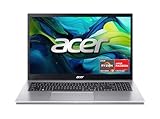
The Acer Aspire 14 AI earns the first position because it avoids the common compromises that make a portable laptop feel dated early. Its Intel Core Ultra 5 226V processor, 16GB LPDDR5X RAM, and 512GB SSD are a strong published foundation for browser-heavy work, document editing, programming, and video meetings.
The 14-inch 1920×1200 WUXGA panel provides extra vertical room compared with a 1920×1080 display. That added height is useful when reading a long paper, reviewing a spreadsheet, or keeping a document visible beside a smaller app window.
Acer lists Copilot+ capability, a 40 TOPS NPU, Thunderbolt 4, and a 22-hour battery figure. The NPU may matter to people using compatible Windows AI features, while Thunderbolt 4 is the practical feature for a desk setup with a dock or fast external storage.
The portable work setup is this model’s strongest reason to buy
I would pick this Acer for a student or remote worker who carries a laptop regularly but still wants enough memory for serious multitasking. The 14-inch format is easier to pack than the 16-inch and 17.3-inch choices here, yet the display resolution and 512GB SSD keep it from feeling like a stripped-down travel device.
The graphics limits matter before choosing this Acer
This specification does not list a discrete graphics card, so it is not the right purchase for someone planning demanding modern games or graphics-intensive 3D work. Confirm whether the LPDDR5X memory is user-serviceable if future upgrades are a priority, because thin laptops often trade access for a compact design.
2. The Acer Aspire Go 15 is the best value productivity laptop
Acer Aspire Go 15 AI Ready Laptop | 15.6″ FHD (1920 x…
Ryzen 7 7730U
16GB DDR4
512GB SSD
15.6 inch FHD IPS
Pros
- Ryzen 7 processor
- 16GB RAM
- FHD IPS panel
- HDMI 2.1
Cons
- No touchscreen listed
- No dedicated GPU listed
The Acer Aspire Go 15 combines an AMD Ryzen 7 7730U processor with 16GB DDR4 memory and a 512GB PCIe Gen4 SSD. That is the component mix I would seek for an everyday productivity laptop that has to manage research, cloud documents, streaming, and many browser tabs without leaning on bare-minimum memory.
Its 15.6-inch 1920×1080 IPS display is a sensible middle ground for home office work and college assignments. IPS matters here because it is generally the display technology you want over a basic low-resolution panel when screen comfort and viewing angles are priorities.
The published feature list includes an AI-ready label, a Copilot key, Wi-Fi 6, and HDMI 2.1. HDMI is particularly useful for a monitor or television connection, while Wi-Fi 6 is worth having when a busy home network is part of daily life.
The large FHD screen makes this the practical all-purpose choice
This is the laptop I would steer toward for someone who works mostly at a desk but does not want a 17.3-inch chassis. The full-HD panel, 16GB RAM, and 512GB SSD are balanced for remote work, school, casual home use, and light content work without requiring a narrow use case.
The lack of a dedicated GPU sets a clear gaming boundary
A Ryzen 7 name does not mean this is a budget gaming laptop for demanding titles; the analyzed specifications do not list dedicated graphics. It can suit lighter games and general media work, but buyers focused on high-detail gaming should specifically look for a model with a named discrete GPU rather than guessing from the CPU.
3. The Acer Aspire AI Core Ultra 7 is the strongest multitasking pick
Acer 2026 Aspire AI Laptop for Business & Creators | Intel…
Core Ultra 7
32GB LPDDR5X
1TB SSD
14 inch FHD touchscreen
Pros
- 32GB RAM
- 1TB SSD
- Core Ultra 7
- touchscreen
Cons
- No dedicated GPU listed
- Upgrade access should be confirmed
The Acer Aspire AI with Intel Core Ultra 7 258V has the most generous memory-and-storage pairing in this roundup: 32GB LPDDR5X and a 1TB PCIe SSD. For a buyer who regularly runs large spreadsheets, many browser tabs, virtual meetings, and multiple desktop apps, that specification gives the most comfortable headroom on paper.
The 14-inch 1920×1200 touchscreen maintains a portable footprint while offering a sharper workspace than a standard HD screen. A touchscreen is not mandatory for productivity, but it can be handy for scrolling, marking up material, and quick navigation when the device is used away from a desk.
Published extras include Copilot+ support, a USB-C hub, and lifetime Office 365. Verify the exact software terms and hardware configuration on the retailer listing, since bundled software and port accessories are details that can differ across listings.
The 32GB and 1TB configuration answers power-user needs directly
This Acer is the clearest match for a power user who would otherwise outgrow an 8GB or 16GB configuration. It is especially appealing for content organization, large local files, programming projects, and work that benefits from keeping numerous applications active at once.
The touchscreen does not replace a discrete graphics card
There is no dedicated GPU in the published specifications, so the strong RAM figure should not be read as a promise of high-end gaming or professional 3D performance. Also ask whether memory or storage can be upgraded later, because LPDDR5X memory is commonly integrated rather than a simple user replacement.
4. The Lenovo V15 Gen 4 is the clearest business-work laptop
Lenovo V15 Gen 4 Business Laptop, 15.6″ FHD Display, Intel…
Core i5-13420H
16GB DDR4
512GB SSD
15.6 inch FHD
Pros
- Core i5 H-series CPU
- Windows 11 Pro
- Numeric keypad
- 512GB SSD
Cons
- No touchscreen listed
- No dedicated GPU listed
The Lenovo V15 Gen 4 makes sense for office-focused work because it pairs a Core i5-13420H processor with 16GB DDR4 RAM, a 512GB PCIe NVMe SSD, and Windows 11 Pro. The H-series Core i5 is a meaningful distinction from the low-power N-series processors in several other entries.
Its 15.6-inch FHD display and numeric keypad target spreadsheet, invoicing, data-entry, and administrative tasks well. Windows 11 Pro may also matter when a workplace requires business-oriented management or security features that are not included with Windows 11 Home.
Multiple ports are listed, although the analyzed data does not name every connector. Before relying on a dock, wired display, or legacy accessory, I would verify the exact ports shown on the current listing rather than assuming one V15 configuration matches another.
The keyboard layout supports number-heavy office work
A numeric keypad is an understated advantage for accountants, administrators, students in quantitative courses, and anyone who works in spreadsheets. Combined with 16GB RAM and a 512GB SSD, it makes this Lenovo a straightforward productivity laptop rather than a media-first machine.
The business focus may not suit entertainment-first buyers
Buy this model for desktop-style work, not for touch input or graphics-led recreation, because neither a touchscreen nor a discrete graphics card is listed. Its FHD resolution is the right baseline, but shoppers who want a more compact travel computer may prefer the 14-inch Acer above.
5. The Lenovo Premium 16-inch is the durable student-and-office option
Lenovo 15.6″ Business Laptop, 2026 Edition, 8GB DDR5 256GB…
Core i5-13420H
16GB DDR5
256GB SSD
16 inch WUXGA IPS
Pros
- 16GB DDR5
- WUXGA IPS display
- privacy shutter
- fast charging
Cons
- 256GB storage
- No touchscreen listed
This Lenovo pairing offers a Core i5-13420H processor, 16GB DDR5 RAM, a 256GB PCIe 4.0 SSD, and a 16-inch 1920×1200 IPS panel. The screen has the same useful extra vertical space as other WUXGA models, but the 16-inch size gives it more room for side-by-side windows.
The published MIL-STD-810H designation, privacy shutter, and 65W fast charging make it worth considering for a college or shared-space routine. The rating relates to a testing standard, but it should not be treated as a promise that the laptop will tolerate every accident.
Its 256GB SSD is the main trade-off. It can work for documents, web-based coursework, and cloud storage, but forum users are right to flag that it fills faster once photos, offline media, games, or large project files enter the picture.
The 16-inch WUXGA panel gives students extra working space
This machine suits a student or office worker who likes a larger viewing area without stepping all the way up to a 17.3-inch laptop. The Core i5 H-series chip and 16GB DDR5 make it more appropriate for demanding coursework and multitasking than models that start at 8GB.
The 256GB SSD requires an honest storage plan
Choose this Lenovo only if cloud storage, an external drive, or a future SSD upgrade fits your workflow. Before buying, check whether the storage slot is accessible and whether the retailer configuration leaves room for expansion; that answer is often more useful than a generic claim about brand reliability.
6. The HP 17.3-inch Ryzen 5 is the large-screen home-office choice
HP 17.3 inch Laptop, HD+ Display, AMD Ryzen 5 7520U, 16 GB…
Ryzen 5 7520U
16GB LPDDR5
512GB SSD
17.3 inch HD+
Pros
- 17.3 inch screen
- 16GB RAM
- 512GB SSD
- Ryzen 5 CPU
Cons
- 1600x900 resolution
- Large chassis
The HP 17.3-inch Ryzen 5 model is built around screen size and comfortable general multitasking. Its AMD Ryzen 5 7520U, 16GB LPDDR5 memory, and 512GB PCIe NVMe SSD give it a more balanced working specification than a big screen paired with tiny storage would.
The display is 1600×900 HD+, not full HD. That is adequate for documents, video calls, and streaming at a desk, but it provides less workspace and detail than the 1920×1080 or 1920×1200 panels found on several smaller laptops in this guide.
HP lists a True Vision HD camera and lift-hinge design. Those are worthwhile convenience features for remote work, though video-call quality also depends on room light, internet connection, and the microphone setup around the laptop.
The 17.3-inch display favors desk work over daily carrying
I would choose this configuration for a home user who wants a laptop to replace much of a desktop routine without adding an external monitor. The large panel is friendly for split-screen documents and watching video, while 16GB RAM and 512GB storage provide practical everyday capacity.
The lower display resolution is the key compromise
Buyers who edit photos, read small text for long periods, or want more visible spreadsheet rows should prefer a similarly specified laptop with an FHD or WUXGA display. The larger screen does not automatically mean a sharper screen, and the 1600×900 specification is the detail to weigh here.
7. The HP OmniBook 3 is the large FHD display pick for everyday use
HP OmniBook 3 17.3 inch Laptop PC, FHD Display, AMD Ryzen…
AMD Ryzen 3
8GB LPDDR5
512GB SSD
17.3 inch FHD IPS
Pros
- FHD IPS display
- 512GB SSD
- FHD camera
- Fast Charge
Cons
- 8GB RAM
- Ryzen 3 processor
The HP OmniBook 3 is notable because it gives a 17.3-inch 1920×1080 IPS display and 512GB PCIe NVMe SSD to a general-use configuration. Its AMD Ryzen 3 processor and 8GB LPDDR5 RAM place it below the 16GB workhorses for multitasking, but the screen specification is appealing for media and large-format home use.
The product data lists a 14-hour battery figure, HP Fast Charge, a Full HD camera, and EPEAT Silver. As with every battery figure in this roundup, actual endurance changes with brightness, streaming, app load, and Wi-Fi activity.
The FHD IPS panel is a meaningful advantage over the 1600×900 and 1366×768 entries. A larger display with 1920×1080 resolution offers a clearer fit for long documents, online learning, and watching shows without immediately needing an external monitor.
The FHD IPS screen makes this a friendly home-use computer
This is a reasonable choice for someone whose priorities are a very large, sharper screen, web use, office documents, and video calls. The 512GB SSD gives more breathing room than a 128GB or 256GB drive, which helps when the computer becomes a family’s shared media and file device.
The 8GB RAM limits heavy multitasking sooner
For college, remote work, or demanding browser habits, I would still favor 16GB because it is the recurring practical recommendation in forum discussions. The OmniBook 3 can handle basic tasks well, but its memory and Ryzen 3 specification are less suited to several active applications and large projects at once.
8. The HP 17.3-inch N100 Touch prioritizes storage and accessibility
HP 17.3″ Touchscreen Laptop w/Microsoft 365, 16GB RAM, 1TB…
Intel N100
16GB DDR4
1TB SSD plus 128GB UFS
17.3 inch touch
Pros
- 1TB SSD
- 16GB RAM
- touchscreen
- backlit keyboard
Cons
- N100 processor
- 1600x900 display
This HP configuration has an unusually generous listed storage arrangement: a 1TB SSD plus 128GB UFS, alongside 16GB DDR4 RAM. Its Intel Quad-Core N100 processor is the limiting component, so it should be chosen for abundant file space and general productivity rather than CPU-heavy creative or gaming work.
The 17.3-inch touchscreen runs at 1600×900, and the laptop includes a fingerprint reader, backlit keyboard, and Microsoft 365. A fingerprint reader can make sign-in easier in a shared household, while a backlit keyboard is welcome for early-morning or late-evening work.
Large internal storage makes this a practical option for people who keep local documents, photos, or media libraries. Still, storage capacity cannot compensate for a low-end processor when the job involves complex calculations, demanding editing, or many heavy applications.
The large SSD capacity is this HP’s defining advantage
Pick this model for an everyday desktop-replacement role where keeping files locally matters as much as screen size. It can be comfortable for household records, office files, browsing, and basic media, especially for someone who benefits from touch input and a large keyboard area.
The N100 processor defines the workload ceiling
The Intel N100 is not the processor I would choose for power users, serious programming projects, or current high-demand games. The 1600×900 display is also less crisp than FHD, so buyers who value a sharper panel should compare it carefully against the HP OmniBook 3 and the FHD Acer and Lenovo options.
9. The HP 15.6-inch Ryzen 3 Touch is the simple touchscreen option
HP 15.6 inch Laptop, HD Touchscreen Display, AMD Ryzen…
Ryzen 3 7320U
8GB LPDDR5
128GB SSD
15.6 inch HD touch
Pros
- Touchscreen
- WiFi 6
- LPDDR5 memory
- listed 12-hour battery
Cons
- 128GB SSD
- HD resolution
The HP 15.6-inch touchscreen laptop offers an AMD Ryzen 3 7320U, 8GB LPDDR5 RAM, and 128GB PCIe NVMe SSD. That specification is enough for browsing, web applications, word processing, online classes, and streaming, but its storage and memory are the two limits to understand before making it a main work machine.
Its 1366×768 HD touchscreen is easy to use for basic navigation, yet it is well below the FHD standard I recommend for frequent writing and detailed multitasking. The product is listed with Windows 11 Home in S Mode, which is another detail buyers should understand before deciding.
Wi-Fi 6, Bluetooth 5.3, and a listed 12-hour battery figure round out the feature set. S Mode limits app installation to Microsoft Store sources until it is switched out, so people who need specialized school or work software should check compatibility first.
The touchscreen supports simple home and classroom tasks
This HP can work for a user who values touch navigation, does most work in a browser, and keeps files in cloud storage. It is also a reasonable secondary household laptop for email, streaming, forms, and straightforward document edits rather than a power-user workstation.
The 128GB drive and HD display need clear expectations
I would not choose this configuration for large photo libraries, offline video, or a full local game library because 128GB storage fills quickly. The HD panel also leaves less room for split-screen work, making an FHD laptop with 16GB RAM a stronger long-term choice when the workload may grow.
10. The ASUS Vivobook Go 15 is the straightforward FHD budget laptop
ASUS Vivobook Go 15.6” FHD Slim Laptop, AMD Ryzen 3 7320U…
Ryzen 3 7320U
8GB DDR5
256GB SSD
15.6 inch FHD
Pros
- FHD display
- DDR5 RAM
- privacy shutter
- 256GB SSD
Cons
- 8GB RAM
- No touchscreen listed
The ASUS Vivobook Go 15 has a more sensible screen-and-storage combination than many entry systems: a 15.6-inch 1920×1080 display and 256GB SSD. It pairs those with an AMD Ryzen 3 7320U and 8GB DDR5 RAM, which makes it a basic productivity choice rather than a machine for heavy multitasking.
ASUS lists military-grade durability, a webcam privacy shutter, and an 11-hour battery figure. The privacy shutter is a plain but useful feature for students and remote workers who want a physical camera cover instead of depending only on software controls.
FHD resolution makes a difference during long writing sessions and video playback. Compared with a 1366×768 display, it gives clearer text and more usable desktop space even though both laptops share a 15.6-inch diagonal size.
The FHD display is the reason to choose this entry-level model
I would choose the Vivobook Go 15 over a similarly basic HD-screen laptop when screen comfort is non-negotiable. It suits web research, papers, email, streaming, and general household tasks where a clear 1080p display, privacy shutter, and moderate local storage matter most.
The 8GB configuration needs a lighter workload
Its 8GB RAM is adequate for simple work but leaves less margin for a crowded browser, video meeting, and several desktop apps at once. Before committing, verify whether the RAM can be expanded; if it cannot, a 16GB laptop from this list is the safer selection for several years of use.
11. The HP 15.6-inch N100 Pro is the memory-and-storage basic work pick
HP New 15.6 inch Laptop Computer, 2025/2026 Edition, Intel…
Intel N100
16GB DDR4
512GB SSD
15.6 inch LED
Pros
- 16GB RAM
- 512GB SSD
- Windows 11 Pro
- WiFi 6
Cons
- 1366x768 display
- N100 processor
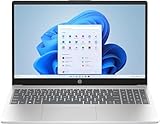
This HP puts 16GB DDR4 RAM and a 512GB SSD beside an Intel four-core N100 CPU and Windows 11 Pro. That combination is interesting for basic office work because memory and local storage are healthier than in many low-end systems, while the processor remains intended for lighter day-to-day tasks.
The 15.6-inch LED display is 1366×768, which is its largest compromise. Microsoft 365, Wi-Fi 6, a listed 11-hour battery, and HP Fast Charge are included in the analyzed data, but they do not change the fact that the screen has less detail than an FHD panel.
Windows 11 Pro could be useful for a small-business user who needs its business-oriented feature set. Buyers should still confirm the software licensing terms and check that any workplace program is compatible with the CPU and display arrangement they are considering.
The 16GB RAM and 512GB SSD help basic work stay comfortable
This model makes sense for email, documents, browser work, light bookkeeping, and basic remote administration where keeping several ordinary programs open matters. It offers more practical room for local files than the 128GB and 256GB alternatives, and 16GB helps reduce memory pressure in ordinary multitasking.
The HD screen and N100 chip rule out demanding use
Do not buy this HP for intensive creative projects, high-detail games, or a screen-centric job that needs sharp text and many windows at once. A 1920×1080 display is the better minimum for most people who work on a laptop for hours, even when other specifications look attractive.
12. The HP 14-inch N150 is the light-duty entry laptop
HP 14″ Laptop, Intel Processor N150 (Beat i3) 4GB RAM 128GB…
Intel N150
4GB DDR4
128GB UFS
14 inch HD
Pros
- Compact 14 inch size
- WiFi 6
- Office 365
- listed 11-hour battery
Cons
- 4GB RAM
- 128GB UFS storage
- HD display
The HP 14-inch N150 is the most limited configuration in this group, with an Intel Processor N150, 4GB DDR4 RAM, and 128GB UFS storage. It is aimed at very light computing such as email, a few browser tabs, basic web forms, streaming, and simple documents rather than broad multitasking.
The 14-inch LED display is 1366×768, and the listed features include Wi-Fi 6, Bluetooth 5.4, a 720p camera, Office 365, and an 11-hour battery figure. Its compact screen may be easier to carry than larger models, although no weight was supplied in the analyzed data.
The 4GB memory figure deserves special attention. Modern browsers, video calls, and several open applications can consume that quickly, which aligns with the most common budget-laptop frustration reported in community discussions: a machine that is technically functional but feels constrained in normal use.
The small, simple workload is the appropriate match for this HP
This model can fit a buyer who needs a secondary computer for occasional online access, documents, and streaming, and who understands its limitations from day one. It may also suit a highly cloud-based workflow with modest files, as long as applications and browser tabs are kept under control.
The 4GB RAM makes this the least future-ready choice here
I would not select this as a primary laptop for college, remote work, programming, or households that expect several people to use it for varied tasks. A 16GB system with an FHD display will offer a much better working margin, while even the 8GB options are more realistic for basic multitasking.
The buying guide answers what matters before you buy
The best laptops under $1000 work when the components match the workload, not when the product page has the longest feature list. Start with the jobs you need to do every week: writing, spreadsheets, research, coding, calls, media, photo work, or games all stress the hardware in different ways.
The processor tier should match the work you expect to do
Intel Core i5, Intel Core Ultra 5, AMD Ryzen 5, and AMD Ryzen 7 processors are the safer starting point for regular productivity and multitasking. The Core i5-13420H, Core Ultra chips, Ryzen 5 7520U, and Ryzen 7 7730U in this list are better aligned with heavier daily workloads than Intel N100, N150, or entry Ryzen 3 configurations.
An N100 or N150 processor can still work for email, browser-based tasks, and simple documents. The mistake is buying one for a workflow that includes multiple video calls, large spreadsheets, local editing, or many simultaneous applications and then blaming the brand when the hardware is simply undersized.
The memory answer is 16GB for most people and 8GB only for light work
RAM holds the apps and browser data you are actively using. With 16GB, a laptop has a more comfortable margin for a video call, a browser with many tabs, cloud documents, and background utilities; 32GB makes even more sense for unusually heavy multitasking and larger project files.
8GB is workable for lighter home use, streaming, basic coursework, and a controlled number of tabs. The HP N150’s 4GB configuration is the exception to approach with care, since it has the least room for the way modern browsers and Windows tasks consume memory.
The storage answer is 512GB when you keep files locally
A 512GB SSD is the practical middle point for most people because it allows room for Windows, apps, documents, photos, and some offline media. A 1TB SSD is better for larger local libraries, while 256GB can be fine for cloud-first work if you plan the storage deliberately.
A 128GB drive can become restrictive quickly after system files, application updates, and personal files are included. SSD storage also matters more than raw capacity alone because it keeps startup, application loading, and file access responsive compared with older hard-drive-based systems.
The display answer is FHD or WUXGA for frequent laptop work
For a 14-inch, 15.6-inch, or 16-inch laptop, 1920×1080 FHD or 1920×1200 WUXGA should be the goal if you read, write, study, or work for long stretches. WUXGA adds vertical pixels, which is especially helpful for documents and spreadsheets, while IPS panels generally give better viewing angles than basic panels.
The HD and HD+ screens in this guide can perform basic tasks, but their 1366×768 or 1600×900 resolutions leave less usable room. A 17.3-inch panel can feel spacious at a desk, but check the resolution separately because screen size alone does not tell you how much detail you receive.
The portability answer depends on whether the laptop leaves the desk
A 14-inch system such as the Acer Aspire 14 AI is the logical shape for commuters and students moving between rooms. A 15.6-inch machine is the flexible middle ground, while a 16-inch or 17.3-inch model offers a more desktop-like workspace but is less convenient to carry regularly.
Do not infer a model’s weight from display size or from a product image. The analyzed records do not provide weights, so check the current manufacturer specifications if travel is central to your decision.
The battery answer is to treat listed hours as a starting point
Several products list battery figures ranging from 11 hours to 22 hours, but a published figure is not the same as an independent result. Screen brightness, display resolution, video streaming, video calls, Wi-Fi signal, and active software all change how long a charge lasts in daily use.
For someone who spends full days away from a plug, look for independent battery reviews of the exact configuration and consider USB-C charging support where it is listed. The Acer Aspire 14 AI is the only model here whose analyzed features specifically name Thunderbolt 4, a useful detail for many docking setups.
The gaming answer is to require a named dedicated GPU
None of the 12 published configurations lists a dedicated graphics card. They can handle general media and potentially lighter games, but they are not the recommendation for buyers who want reliable performance in demanding current games at higher settings.
For a true budget gaming laptop, begin with the GPU model, then check cooling, screen refresh rate, RAM, and storage. A processor label, a large screen, or abundant memory does not substitute for dedicated graphics hardware when gaming is the central purpose.
The reliability answer is to verify the configuration and support plan
No brand name alone guarantees a trouble-free laptop. Community advice correctly points buyers toward the exact configuration, retailer return policy, warranty terms, local repair options, and verified recent owner feedback rather than relying on a logo.
Before checkout, confirm whether RAM and SSD storage are upgradeable, whether the included operating system meets your needs, and what support channel is available. Those details matter over several years of ownership and address content gaps that quick recommendation lists often skip.
FAQs
What is the best laptop under $1000 for college students?
The Acer Aspire 14 AI is the best fit in this list for many college students because it combines a 14-inch 1920×1200 display, Core Ultra 5 processor, 16GB LPDDR5X memory, 512GB SSD, and Thunderbolt 4. Students who want a larger screen can consider the Lenovo Premium 16-inch, but should plan around its 256GB SSD.
Which laptop brand is most reliable for the price?
There is no single most reliable brand based on the brand name alone. Compare the exact processor, RAM, storage, display, warranty, support options, return policy, and recent owner feedback; Acer, HP, Lenovo, and ASUS all have configurations in this guide with very different strengths.
What specs should I look for in a laptop under $1000?
Look for 16GB RAM, a 512GB SSD, and an FHD or WUXGA display for regular work, school, or remote use. Choose a Core i5, Core Ultra 5, Ryzen 5, or Ryzen 7 processor for stronger multitasking, and seek a named dedicated GPU if demanding games are the priority.
Is it better to get a MacBook or Windows laptop under $1000?
Choose the operating system that supports your required software and devices. The analyzed products in this guide are Windows laptops, and they offer a broad range of screen sizes, touch options, business-focused Windows 11 Pro configurations, and memory-storage combinations; check your school or employer requirements before choosing either platform.
What is the best gaming laptop under $1000?
None of the 12 analyzed laptops is the best choice for demanding gaming because none lists a dedicated graphics card. For gaming, select a laptop with a named discrete GPU and then confirm its RAM, SSD capacity, cooling, display refresh rate, and independent performance testing for the games you play.
The best choice depends on how you will use the laptop
The Acer Aspire 14 AI is the most balanced recommendation for portable work, school, and daily productivity, while the Acer Aspire Go 15 offers a practical 15.6-inch FHD alternative with Ryzen 7, 16GB RAM, and a 512GB SSD. For the heaviest multitasking, the Acer Core Ultra 7 configuration’s published 32GB memory and 1TB storage stand apart.
Choose a 17.3-inch HP only when a desk-friendly large screen matters more than portability, and reserve the 4GB HP N150 for light secondary use. The best laptops under $1000 in 2026 are the ones that fit your real software, storage, display, and travel needs without asking you to compromise blindly.
Check the current listing for the exact configuration, upgrade options, software terms, warranty, and return conditions, then select the model that matches the work you actually plan to do.
