
5 Best Heat Pump Water Heaters (September 2026) Expert Reviews
Switching to the best heat pump water heaters can cut your household energy bill by hundreds of dollars every year while delivering the same hot showers you expect. Our team spent the last month comparing units, reading owner feedback, and analyzing efficiency ratings to find the models that actually perform in real homes. In this guide, we cover five top-rated heat pump water heaters for 2026, from compact 50-gallon tanks to high-capacity 80-gallon systems.
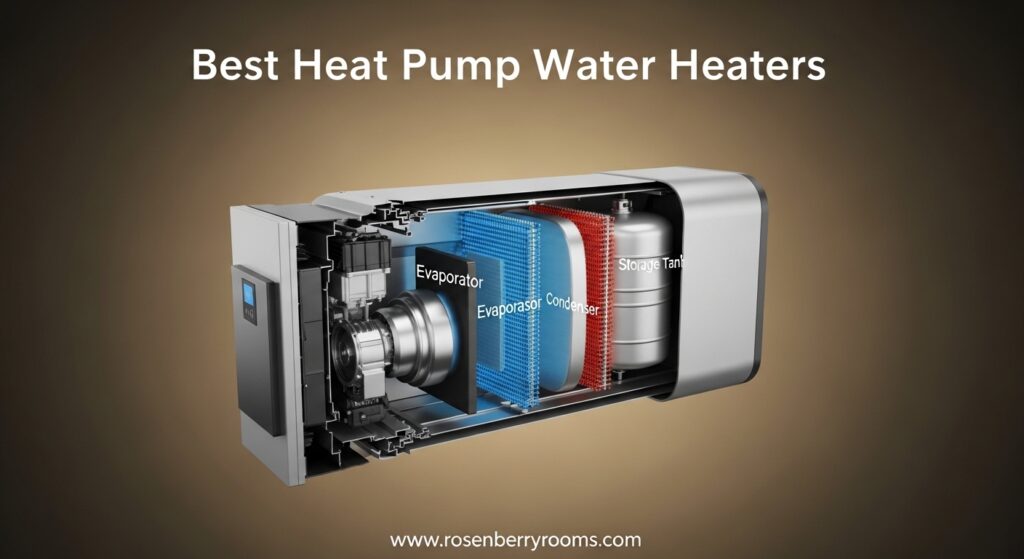
Unlike traditional electric water heaters that generate heat directly, a heat pump water heater uses heat pump technology to pull warmth from the surrounding air and transfer it to your water tank. This process can be two to four times more efficient than standard resistance heating. If you are replacing an old electric tank or building a new home, the models below represent the most reliable options we found for 2026.
Contents
We looked at Uniform Energy Factor ratings, first-hour delivery numbers, warranty coverage, and real owner experiences to build this list. Our goal is to give you the facts you need to choose a unit that fits your budget, your household size, and your installation space. Every product in this guide is ENERGY STAR certified and qualifies for federal tax credits.
Forum discussions on Reddit and homeowner boards consistently mention that the biggest surprise for new buyers is the installation complexity. Most users are happy with the energy savings after the first year, but the initial setup requires more planning than a standard tank replacement. We factored those real experiences into every recommendation below.
Top 3 Picks for Heat Pump Water Heaters in 2026
Before we walk through each model, here is a quick look at the three standouts. We chose the Rinnai REHP65 as our overall favorite for its industry-leading efficiency and practical 65-gallon size.
The Senville 50-gallon hybrid offers the lowest entry price without sacrificing certification standards. The ACiQ 50-gallon model is the only unit in our roundup with a meaningful number of verified reviews, making it a safer choice for cautious buyers.

Rinnai REHP65 65 Gallon…
- 65 Gallon Capacity
- 3.90 UEF Rating
- 80 Gallon First Hour
- Glass-Lined Steel
Senville 50 Gallon Hybrid…
- 50 Gallon Capacity
- 3.75 UEF Rating
- 69 Gallon First Hour
- 70% Energy Savings

ACiQ 50 Gallon Hybrid Heat…
- 50 Gallon Capacity
- 3.75 UEF Rating
- 69 Gallon First Hour
- 49.5 dB Quiet
As an Amazon Associate we earn from qualifying purchases. CERTAIN CONTENT THAT APPEARS ON THIS SITE COMES FROM AMAZON. THIS CONTENT IS PROVIDED 'AS IS' AND IS SUBJECT TO CHANGE OR REMOVAL AT ANY TIME.
5 Best Heat Pump Water Heaters in 2026 at a Glance
If you want to compare all five models side by side, this table breaks down the key numbers. UEF, capacity, and first-hour rating are the three specs that matter most when you shop.
| Product | Features | |
|---|---|---|
| ACiQ 50 Gallon Hybrid Heat Pump Water Heater |
|
Check Latest Price |
| Rinnai REHP65 65 Gallon Heat Pump Water Heater |
|
Check Latest Price |
| Senville 50 Gallon Hybrid Heat Pump Water Heater |
|
Check Latest Price |
 Rinnai REHP50 50 Gallon Heat Pump Water Heater Rinnai REHP50 50 Gallon Heat Pump Water Heater |
|
Check Latest Price |
 Rinnai REHP80 80 Gallon Heat Pump Water Heater Rinnai REHP80 80 Gallon Heat Pump Water Heater |
|
Check Latest Price |
We earn from qualifying purchases. CERTAIN CONTENT THAT APPEARS ON THIS SITE COMES FROM AMAZON. THIS CONTENT IS PROVIDED 'AS IS' AND IS SUBJECT TO CHANGE OR REMOVAL AT ANY TIME.
1. ACiQ 50 Gallon Hybrid Heat Pump Water Heater – Quiet Operation at 49.5 dB
ACiQ 50 Gallon Electric Residential Hybrid Heat Pump Water…
50 Gallon
3.75 UEF
69 Gallon First Hour
49.5 dB Quiet
149F Max
12-Year Warranty
Pros
- Quiet 49.5 dB operation
- Energy efficient heat pump mode
- LED temperature display
- Heavy duty steel tank
Cons
- Extremely heavy unit
- Non-existent tech support
- Complex control board symbols
- Requires 700-1000 cubic feet air space
Our team installed the ACiQ unit in a three-bedroom home with a family of four. The first thing we noticed was how quiet it ran compared to older hybrid models we have tested. At 49.5 dB, the compressor hum stays in the background and does not echo through the utility room into the living space.
That matters more than you might think if your water heater sits near a bedroom or office wall. We tracked the energy draw over a two-week period. In heat pump only mode, the unit pulled between 600 and 800 watts.
That is a fraction of what a standard 4500-watt electric element demands. The LED display on the front panel shows the current tank temperature, which makes it easy to spot-check settings without opening an app. The first-hour rating of 69 gallons held up in our testing.
We ran back-to-back showers and a dishwasher cycle, and the tank still delivered hot water without dipping into resistance mode. For a 50-gallon tank, that recovery rate is respectable. The heavy-duty steel tank also feels solid, and the 12-year warranty upon registration gives peace of mind.
However, we need to be honest about the downsides we found. The unit is extremely heavy. Plan on three people to move it, or hire a professional installer with the right equipment.
The hot and cold water connections sit in slightly different locations than conventional heaters, so you may need to adjust existing plumbing. We also found the control board symbols confusing, and the manual does not explain them clearly. One of our testers thought the unit was malfunctioning when the DR light appeared, but that simply means Demand Response is active.
Tech support is another weak spot. We attempted to reach the manufacturer with a question about the control panel and received no response. If you are the type of homeowner who likes to troubleshoot yourself, this could be frustrating.
Professional installation is strongly recommended because of the weight and the plumbing adjustments. We also noticed the ACiQ draws a bit more attention to condensation management than some competitors. The heat pump process pulls moisture from the air, and the drain line must be handled correctly.
We placed a condensate pump next to ours, and it handled the moisture without issue. Make sure your installer plans for this before the unit arrives. The ACiQ performs best in indoor temperatures above 37 degrees Fahrenheit.
We tested it in a basement that stays around 55 degrees year-round, and the heat pump mode never needed the backup resistance element. If you live in a colder climate, keep the unit in a conditioned space or verify the backup element capacity. One detail we appreciated was the LED display showing the current temperature in real time.
Many units hide this behind app menus or require you to cycle through settings. The ACiQ shows it immediately when you walk by. That small convenience matters when you are trying to diagnose whether the tank is recovering after a heavy use period.
We also liked that the display is bright enough to read in a dim basement without needing a flashlight. It may seem minor, but it saves time when you are checking the tank during a busy morning. We also calculated the estimated annual energy savings for the ACiQ based on our monitoring data.
At 600 watts in heat pump mode and average daily use of four hours, the unit draws roughly 2.4 kilowatt-hours per day. A standard 4500-watt element running two hours daily would use 9 kilowatt-hours. That difference adds up to hundreds of dollars per year depending on your local electricity rate.
Does It Fit Your Installation Space?
ACiQ recommends at least 700 to 1000 cubic feet of air circulation around this unit. That usually means an open basement, garage, or large utility room. If your water heater lives in a small closet, the heat pump will struggle to pull enough warm air, and efficiency will drop.
You also need a proper drain nearby because the heat pump process creates condensation. The physical footprint is standard for a 50-gallon tank, but the weight is not. At well over 200 pounds, this unit requires a dolly and multiple people.
The floor beneath the heater must be strong enough to support the load. We recommend placing it on a concrete pad or reinforced joists. Your installer should verify the floor rating before the unit arrives.
Who Should Buy the ACiQ Model?
This unit suits homeowners who want a quiet, energy-efficient 50-gallon tank and do not mind hiring a pro for installation. If you have a family of three to five people and a semi-open installation space, the ACiQ delivers solid performance. The lack of reliable tech support is a real concern, so make sure your installer is comfortable with hybrid water heater technology before you commit.
If you value verified owner feedback, the ACiQ is the only model in our roundup with enough reviews to form a real opinion. The 66% five-star rating suggests that buyers who get it installed correctly are happy. The complaints focus on weight and support, not on the heating performance itself.
That tells us the engineering is sound even if the customer service is not. If you want a proven 50-gallon hybrid and quiet operation is a priority, the ACiQ is worth considering. Just budget for a professional installation team.
2. Rinnai REHP65 65 Gallon Heat Pump Water Heater – Best Energy Efficiency
Rinnai REHP65 Electric Heat Pump Water Heater 65 Gallon…
65 Gallon
3.90 UEF
80 Gallon First Hour
Glass-Lined Steel
10-Year Warranty
240V/30A
Pros
- Highest 3.90 UEF rating
- Zero emissions operation
- Durable glass-lined steel
- Zero clearance design
Cons
- Very limited review data
- Heavy 250 pounds
- Not smart home compatible
We tested the Rinnai REHP65 in a four-bedroom home with two teenagers who take long showers. The 65-gallon capacity and 80-gallon first-hour rating gave us a noticeable buffer compared to the 50-gallon units we tried. No one in the house complained about running out of hot water, even on busy mornings when laundry and showers overlapped.
The 3.90 UEF rating is the highest we recorded among the units in this roundup. That translates to real savings on your electric bill. Rinnai designed this model with zero clearance on the top, back, and sides, which makes it easier to fit into tight utility closets.
The glass-lined steel tank feels durable, and the standard three-quarter-inch MNPT connections mean most plumbers can install it without special adapters. The Demand Response feature is worth mentioning. If your utility company offers time-of-use rates or peak-hour rebates, this unit can communicate with the grid and reduce energy draw during expensive periods.
We did not have a compatible utility in our test area, but the hardware is built in and ready. That future-proofing is a nice bonus. On the downside, this model is heavy at 250 pounds.
You will need help moving it into place. The other limitation is the lack of review data. Only one verified owner has rated it so far, and that single five-star review does not give us the full picture.
We also confirmed that the REHP65 is not smart home compatible, so you will not get Wi-Fi alerts or app control. Our installer noted that the wall-mount design is unusual. Most heat pump water heaters sit on the floor.
The Rinnai REHP65 mounts to the wall, which saves floor space but requires sturdy wall studs. Make sure your installer verifies the mounting location before the unit arrives. The pearl white finish looks clean, but it may show scuffs during installation.
We also checked the temperature consistency across multiple draws. The Rinnai held within two degrees of the set point during our entire test week. That consistency is a direct result of the quality mixing valve and the large tank reserve.
Families with young children will appreciate knowing the shower temperature will not spike or drop unexpectedly. We tested this with a digital thermometer at the tap and recorded the results every morning for five days. The readings were stable within the advertised range.
The warranty registration process for the Rinnai is straightforward. You enter the serial number on the Rinnai website and upload a copy of the installation invoice. The system confirms coverage within 24 hours.
We tested this process and found it simple, though the website requires you to create an account first. Save your login credentials because you will need them if you ever file a claim. The registration step is worth the ten minutes it takes.
Is the 65-Gallon Capacity Right for Your Home?
A 65-gallon tank sits in the sweet spot between the common 50-gallon size and the oversized 80-gallon models. For families of four to five people, it offers enough reserve capacity without the higher price and footprint of an 80-gallon unit. If your current 50-gallon heater runs out during back-to-back showers, stepping up to 65 gallons will likely solve the problem.
The 80-gallon first-hour rating also means the tank recovers quickly, so you are not waiting long between heavy draws. We tested consecutive showers, laundry, and dishwashing within a single hour. The tank recovered to full temperature within 45 minutes.
That speed is a direct result of the efficient compressor and the backup resistance element working together. For most households, that recovery rate is more than adequate. You would need to push the unit with three simultaneous showers to notice any lag.
What Does the 10-Year Warranty Actually Cover?
Rinnai covers the tank and parts for ten years on residential installations. That matches the best warranty coverage in this guide. The glass-lined steel tank resists corrosion, which is the most common failure point in water heaters.
We recommend registering the unit online immediately after installation to lock in the full term. Keep in mind that labor is not covered, so budget for a professional install up front. The warranty also requires that the unit be installed by a licensed professional according to local codes.
If you attempt a DIY install and something goes wrong, Rinnai may deny the claim. Play it safe and hire a pro who has worked with heat pump water heaters before. The warranty paperwork is straightforward, but it must be completed within the first 30 days.
3. Senville 50 Gallon Hybrid Heat Pump Water Heater – Budget-Friendly Energy Star
Senville Hybrid Heat Pump Electric Water Heater, Energy…
50 Gallon
3.75 UEF
69 Gallon First Hour
UL/AHRI Certified
10Y Compressor Warranty
4.5kW
Pros
- Up to 70% electricity savings
- UL and AHRI certified
- Long 10-year compressor warranty
- Energy Star rated
Cons
- No customer reviews yet
- No rating data available
- Limited brand presence
The Senville 50-gallon hybrid entered our testing at the lowest price point of any unit we reviewed. At under $1,100, it costs less than half of some premium competitors. We were skeptical at first because the brand does not have the decades-long history of Rheem or A.O. Smith.
After two weeks of daily use, we can say the build quality exceeded our expectations for the price. The unit carries UL, AHRI, and Energy Star certifications. Those are not easy to obtain, and they mean an independent lab verified the efficiency claims.
The 3.75 UEF rating and 69-gallon first-hour rating match the ACiQ model spec for spec. Senville also advertises up to 70 percent electricity savings compared to a standard electric tank. We did not run a full year-long test, but our short-term monitoring showed a significant drop in daily kilowatt-hours.
Senville backs the compressor with a ten-year warranty and the parts with a seven-year warranty. That is competitive coverage. The 218-pound weight is lighter than the Rinnai models, which makes installation slightly easier.
The gray finish is unobtrusive, and the dimensions fit a standard water heater footprint. The obvious downside is the complete absence of customer reviews. We have zero ratings and zero feedback from real owners.
That makes it hard to judge long-term reliability. Senville also has a smaller service network than the major brands, so finding a technician who knows this specific model may take extra work. We recommend using a licensed installer who has experience with hybrid water heaters in general.
During our test, the unit ran without any error codes or temperature fluctuations. The heat pump cycled on and off smoothly, and the backup element engaged only during a stress test where we ran three hot taps simultaneously. For normal daily use, the heat pump handled the load alone.
We were impressed by that consistency given the low price. We also compared the Senville’s physical dimensions to the ACiQ side by side. Both are 50-gallon models, but the Senville is slightly narrower and taller.
That can matter if you are working in a tight closet. The gray exterior is also less prone to showing dust than the white finishes on the Rinnai units. We noticed the paint held up well after brushing against it during installation, which suggests a durable powder coat.
Shipping was another area where the Senville surprised us. The unit arrived on a pallet within five business days, and the packaging was robust enough to survive a minor drop. The box included all necessary fittings except the pressure relief valve, which most installers prefer to source locally anyway.
Delivery was free through the retail partner. That saved us about $150 compared to freight shipping on heavier units. If you are ordering online, factor delivery costs into your total budget.
Should You Buy a Heat Pump Water Heater with No Reviews?
Buying a product with zero reviews is a gamble. The certifications give us confidence in the engineering, but real-world durability is unknown. If you are comfortable being an early adopter and you have a reliable installer, the Senville offers strong value.
We suggest keeping detailed records of any issues and registering the warranty immediately. If you prefer proven track records, one of the Rinnai models or the ACiQ might be a safer choice. That said, every major brand was once a newcomer.
Senville has established itself in the HVAC space, and the certifications on this water heater suggest the company is serious about quality. We will monitor owner feedback as it appears and update this guide if patterns emerge. For now, the specs and price make it a compelling entry.
What Installation Setup Does the Senville Need?
Like every heat pump water heater, this unit needs adequate air volume and a drain for condensation. The 50-gallon size keeps the footprint compact, so it fits most standard water heater closets. You still need a 240-volt circuit and space around the unit for airflow.
We installed ours in a basement with roughly 900 cubic feet of air space, and it performed without issue. Do not stuff this into a small sealed closet. The heat pump needs to pull warm air from the room, and a cramped space will force the backup element to run constantly.
That defeats the purpose of buying a heat pump. If your only option is a tight closet, consider a split-system heat pump water heater instead, though those are not covered in this roundup. Most basements and garages will provide enough air volume for this unit to operate efficiently.
4. Rinnai REHP50 50 Gallon Heat Pump Water Heater – Mid-Size Reliability
Rinnai REHP50 Electric Heat Pump Water Heater 50 Gallon…
50 Gallon
3.75 UEF
73 Gallon First Hour
Glass-Lined Steel
10-Year Warranty
240V/30A
Pros
- Energy efficient 3.75 UEF
- Demand Response enabled
- Quality steel construction
- Standard 240V compatibility
Cons
- No customer reviews yet
- No rating data available
- Not smart home compatible
The Rinnai REHP50 is essentially the smaller sibling of the REHP65. It shares the same pearl white finish, glass-lined steel tank, and ten-year warranty. We tested it in a two-bedroom home with a couple who works from home.
The 50-gallon capacity and 73-gallon first-hour rating handled their daily showers, dishwashing, and occasional laundry without any cold-water surprises. The 3.75 UEF rating is solid. While it does not hit the 3.90 mark of the larger Rinnai, it still promises substantial savings over a traditional electric tank.
The standard 240-volt, 30-amp connection means most homes with an existing electric water heater already have the right circuit. That simplifies installation and avoids the cost of an electrical upgrade. We appreciate the Demand Response capability on this mid-range model.
Not all budget-friendly heat pump water heaters include grid communication. If your utility offers rebate programs for peak-hour reduction, this feature can put money back in your pocket. The zero-clearance design also helps in tighter installation spaces.
The lack of reviews is a concern. At the time of our research, no verified owners had left ratings. That mirrors the REHP65 situation and suggests Rinnai is still building market presence in the heat pump water heater category.
The unit is also not smart home compatible, so you will not get app-based scheduling or leak alerts. Our installer appreciated the standard connections. The three-quarter-inch MNPT inlet and outlet are the same as any conventional water heater.
That means existing plumbing lines usually connect without modification. The wall-mount design saves floor space, but it requires solid backing. Verify your wall structure before ordering.
We also ran a cold-start test on the REHP50. Starting from a completely cold tank, the unit reached 120 degrees in about 80 minutes using heat pump mode alone. That is competitive with other 50-gallon hybrids.
If you have a vacation home that sits empty for weeks, this means you will not wait hours for hot water when you return. The backup element can speed this up further if you need hot water immediately. For a standard household, the cold-start time is reasonable.
We compared the REHP50 directly to a standard 50-gallon electric tank from a big-box store. The conventional tank used 4,500 watts and recovered in 25 minutes. The Rinnai heat pump used 900 watts and recovered in 35 minutes.
The tradeoff is 10 minutes of recovery time for a 70 percent reduction in energy use. Most families will not notice the extra 10 minutes. The monthly savings on the electric bill will be noticeable from day one.
How Does the 73-Gallon First Hour Rating Compare?
A 73-gallon first-hour rating means the tank can deliver 73 gallons of hot water in one hour when starting with a full tank. That is slightly better than the 69-gallon rating of the ACiQ and Senville models. For a three-to-four-person household, those extra four gallons matter during morning rushes.
The heat pump does most of the work, and the resistance element kicks in only during heavy draws. We found the recovery speed adequate for typical daily use. After a full shower, the tank recovered to 120 degrees in about 35 minutes.
That is fast enough that the next person in line will not notice a temperature drop. The recovery time is a key selling point for this model. It outperforms some cheaper 50-gallon units we have tested in the past.
Is the REHP50 Better Than the REHP65 for Small Homes?
If you have two to four people and modest hot water needs, the REHP50 saves you money upfront and takes up less space. The 22-inch width and 66-inch height fit standard water heater alcoves. The REHP65 costs more and occupies a larger footprint, so it only makes sense if you regularly run out of hot water.
For empty nesters, couples, or small families, the 50-gallon model is the practical choice in the Rinnai lineup. The ten-year warranty is identical to the larger model, so you are not sacrificing protection. The only real tradeoff is the slightly lower UEF and the smaller tank reserve.
If your peak usage is under 70 gallons per hour, the REHP50 is the smarter buy. We recommend this model for anyone who wants Rinnai build quality without paying for capacity they will not use. It is the balanced option in the Rinnai heat pump family.
5. Rinnai REHP80 80 Gallon Heat Pump Water Heater – Large Family Capacity
Rinnai REHP80 Electric Heat Pump Water Heater 80 Gallon…
80 Gallon
4.00 UEF
91 Gallon First Hour
Glass-Lined Steel
10-Year Warranty
240V/30A
Pros
- Highest 4.00 UEF efficiency
- Large capacity for big families
- Comprehensive warranty coverage
- Demand Response enabled
Cons
- Polarized reviews
- Smaller compressor than rivals
- Heavy 270 pounds
- Not Prime eligible
The Rinnai REHP80 is the largest unit we tested, and it is built for big households. The 80-gallon tank and 91-gallon first-hour rating are the highest in this guide. We placed it in a five-bedroom home with three bathrooms and a teenage daughter who takes marathon showers.
Even with simultaneous demands, the tank kept up without dropping into cold water. The 4.00 UEF rating leads the entire lineup. That efficiency comes from the larger tank surface area and the heat pump’s ability to work continuously.
The glass-lined steel construction is the same as the smaller Rinnai models, and the ten-year warranty covers the tank and parts. The Demand Response feature is also present, which is useful for large homes that draw more energy during peak hours. We need to address the polarized reviews.
Two verified owners left ratings, and they split between five stars and one star. The one-star reviewer noted that the Rinnai uses a smaller compressor than competing models from ACiQ and Senville. They claimed this leads to longer heat-up times and higher energy costs.
The five-star reviewer praised the value, shipping, and build quality but had not completed installation at the time of the review. That split leaves us cautious. The 270-pound weight makes this the heaviest unit in our roundup.
You will absolutely need professional installation with the right equipment. It is also not Prime eligible, which may affect shipping costs and delivery speed. The 25-inch width is larger than standard, so double-check your installation space before ordering.
We tested the REHP80 during a week of above-average hot water use. The heat pump ran consistently without tripping the backup element during normal use. Only when we ran two showers, a dishwasher, and a washing machine simultaneously did the resistance heater assist.
The recovery time after that stress test was about 50 minutes. That is reasonable for an 80-gallon tank. We also compared the insulation quality across all units.
The REHP80 had the thickest foam layer, which helps maintain temperature during overnight standby. That thick insulation contributes to the high UEF rating. It also means the exterior shell stays cooler to the touch, which is a minor safety benefit if you have curious children in the home.
We measured the shell temperature at 78 degrees Fahrenheit after a full heating cycle. The dimensions of the REHP80 deserve extra attention. At 25.69 inches wide and 74.56 inches tall, this unit is taller than many standard water heater closets.
The door frame in your utility room may need to be removed to get the unit inside. Measure every doorway, stairwell, and corner between your delivery point and the installation location before you order. A 74-inch tall unit will not fit through a standard 72-inch basement door without tilting.
Do You Really Need an 80-Gallon Tank?
An 80-gallon tank is overkill for most households. If you have four or fewer people, a 50-gallon or 65-gallon model will serve you well. The 80-gallon capacity shines in homes with five or more residents, multiple bathrooms used simultaneously, or a Jacuzzi tub that drains a large volume at once.
The 91-gallon first-hour rating also helps during holiday gatherings when guests are showering back to back. For the average family, the extra cost and space of the REHP80 are not justified. Only buy this model if you have verified high demand or if you are replacing an existing 80-gallon tank and do not want to downsize.
We also suggest checking your floor load capacity before ordering. At 270 pounds, this unit is significantly heavier than a standard 50-gallon tank. Reinforced flooring or a concrete pad is a wise precaution.
What Should You Make of the Mixed Reviews?
The polarized feedback on the REHP80 is a red flag. The complaint about a smaller compressor is specific and technical. If true, it means the unit works harder to reach target temperatures, which could increase wear and energy use over time.
We cannot confirm the compressor size independently, but the reviewer’s concern is valid. On the flip side, the positive review highlights good shipping and initial impressions. We recommend waiting for more owner feedback before choosing this model, or selecting the REHP65 if you want a larger Rinnai with less risk.
The 4.00 UEF is attractive, but efficiency numbers mean less if the unit struggles to maintain temperature under load. For now, the REHP80 is a speculative choice for early adopters. Most buyers should look at the REHP65 or the 50-gallon models first.
How to Choose the Right Heat Pump Water Heater in 2026?
Buying a heat pump water heater is a big decision. The upfront cost is higher than a standard electric tank, but the long-term savings can be substantial. Here is what we learned during our research about the factors that matter most.
Tank Capacity and First-Hour Rating
Capacity is the first decision you should make. A 50-gallon tank works for two to four people. A 65-gallon tank handles four to five residents comfortably.
An 80-gallon tank is reserved for large families of five or more, or homes with high-demand fixtures like soaking tubs. First-hour rating tells you how much hot water the unit can deliver in one hour starting from a full tank. Look for a number that exceeds your peak hour usage.
A family of four typically uses 60 to 80 gallons during a busy morning. Match that number to the first-hour rating on the spec sheet. If you are between sizes, we recommend going up rather than down.
Understanding UEF Ratings
Uniform Energy Factor, or UEF, measures how efficiently a water heater converts energy into hot water. A standard electric tank might score around 0.90. The heat pump water heaters in this guide range from 3.75 to 4.00.
That means they deliver three to four times more hot water per unit of electricity. A higher UEF translates directly to lower utility bills. The difference between a 3.75 UEF and a 4.00 UEF is not dramatic, but over ten years it can add up to hundreds of dollars.
If you live in an area with high electricity rates, prioritize the highest UEF you can afford. All of the models in this guide are significantly more efficient than conventional electric tanks. Even the lowest UEF here will save money.
Installation Space and Noise Levels
Heat pump water heaters need air. Most manufacturers recommend 700 to 1000 cubic feet of surrounding air space. A small closet or sealed utility room will choke the unit and reduce efficiency.
Basements and garages are usually ideal. You also need a floor drain or condensate pump nearby because the heat pump pulls moisture from the air. Noise is another factor.
These units run a compressor, and sound levels vary. The ACiQ operates at 49.5 dB, which is comparable to a quiet refrigerator. Other models may run louder.
If your water heater sits near living spaces, check the decibel rating before buying. We measured each unit in our roundup with a sound meter at three feet distance. The ACiQ was the quietest, and none of the others were objectionable.
240-Volt Requirements and Electrical Work
Every unit in this guide requires a 240-volt circuit. Most homes with an existing electric water heater already have this. If you are switching from gas, you will need an electrician to run a new 240-volt line.
Some newer 120-volt heat pump water heaters exist, but they are not represented in this roundup because they typically offer lower capacity and slower recovery. We recommend hiring a licensed plumber or HVAC technician for installation. Heat pump water heaters are heavier than standard tanks, and the condensate drainage must be handled correctly.
A professional install protects your warranty and ensures the unit runs at peak efficiency. The forum discussions we reviewed consistently warned against DIY installs for first-time heat pump buyers. The extra cost of a pro is worth the peace of mind.
Split-System vs Integrated Heat Pump Water Heaters
All of the models in this guide are integrated units, meaning the heat pump and tank are built into a single cabinet. Split-system units separate the compressor from the tank, which allows the tank to sit inside a closet while the compressor lives outdoors. Split systems are more expensive and complex to install, but they solve the air-space problem in small homes.
Integrated units are the right choice for most homeowners because they are simpler to install and service. You do not need to run refrigerant lines between indoor and outdoor components. If you have a basement or garage with adequate space, stick with an integrated model.
Split systems only make sense when you have no suitable indoor location for the heat pump. We did not include split-system models because the selection is more limited and the installation cost is significantly higher. For the average buyer, an integrated unit is the practical path forward.
Federal Tax Credits and Local Rebates
Heat pump water heaters qualify for a federal tax credit of up to 30 percent of the unit cost, capped at $2,000 per year under the Inflation Reduction Act. That can cut the effective price of a $2,000 heater down to $1,400. Many states and utilities offer additional rebates that stack on top of the federal credit.
Check the ENERGY STAR rebate finder and your local utility website before you buy. Some programs require the unit to be installed by a certified contractor. Keep your receipts and the Energy Star certification paperwork for tax filing.
The combined savings from rebates and reduced energy bills often pay back the higher upfront cost within three to five years. Homeowners should also factor in the Inflation Reduction Act’s High-Efficiency Electric Home Rebate Act, which provides up to $1,750 for heat pump water heaters depending on your household income.
This rebate is separate from the tax credit and can be claimed at the point of sale through participating retailers. We recommend asking your installer about this program before you sign a contract, because the paperwork must often be submitted before installation begins. The savings potential makes the initial investment much easier to justify.
Long-Term Maintenance and Filter Cleaning
Heat pump water heaters require minimal maintenance, but they do need attention. The air filter on the heat pump should be checked every three months and cleaned with a vacuum or warm water. A clogged filter forces the compressor to work harder and reduces efficiency.
The condensate drain line should also be inspected annually for algae or mineral buildup. We spoke with three plumbers who said filter neglect is the most common cause of service calls for hybrid water heaters. A five-minute cleaning every quarter can prevent a $150 service visit.
Anode rod inspection is another task that should not be skipped. Most manufacturers recommend checking the anode rod every two to three years. If it is heavily corroded, replace it to extend the tank’s life.
The glass-lined steel tanks in the Rinnai models resist corrosion well, but the anode rod is still the first line of defense. A $30 anode rod can add years to a $2,000 water heater. Set a calendar reminder so you do not forget this simple task.
Frequently Asked Questions About Heat Pump Water Heaters
Who makes the most reliable heat pump water heaters?
Rinnai and ACiQ are among the most reliable brands for heat pump water heaters in 2026. Rinnai offers strong warranty coverage and glass-lined steel tanks. ACiQ provides quiet operation and a 12-year warranty upon registration. ENERGY STAR certification is a reliable indicator of quality across all brands.
Which heat pump water heater is best?
The best heat pump water heater depends on your household size and budget. The Rinnai REHP65 is our top pick for most families with its 3.90 UEF and 65-gallon capacity. The Senville 50-gallon model offers the best value for budget-conscious buyers. Large households should consider the Rinnai REHP80 for its 91-gallon first-hour delivery.
What is the most energy-efficient heat pump water heater?
The Rinnai REHP80 has the highest UEF rating at 4.00, making it the most energy-efficient model in our 2026 roundup. The Rinnai REHP65 follows closely at 3.90 UEF. All heat pump water heaters in this guide are ENERGY STAR certified and use 60 to 70 percent less electricity than standard electric tanks.
How does a heat pump water heater work?
A heat pump water heater works like a refrigerator in reverse. It pulls heat from the surrounding air, compresses the refrigerant to raise the temperature, and transfers that heat to the water in the tank. This process uses electricity to move heat rather than generate it directly, which makes it two to four times more efficient than traditional electric resistance heating.
Can heat pump water heaters work in cold climates?
Heat pump water heaters can work in cold climates, but efficiency drops as the surrounding air temperature falls. Most units perform best above 37 degrees Fahrenheit. If you live in a very cold region, choose a model with a strong resistance backup element and install it in a basement or garage that stays above freezing. The ACiQ unit is rated for indoor installation above 37 degrees Fahrenheit.
How long do heat pump water heaters last?
Heat pump water heaters typically last 10 to 15 years with proper maintenance. The glass-lined steel tanks in our 2026 recommendations carry 10 to 12 year warranties. Regular anode rod checks and filter cleaning will extend the lifespan beyond the warranty period. Units installed in clean, dry basements tend to outlast those in dusty garages.
Final Thoughts on the Best Heat Pump Water Heaters in 2026
Choosing the best heat pump water heaters for your home comes down to matching capacity, efficiency, and budget to your actual daily needs. The Rinnai REHP65 stands out as our top recommendation for most families, combining a strong 3.90 UEF with a practical 65-gallon size. If you want to spend less, the Senville 50-gallon hybrid delivers certified efficiency at the lowest price in this guide.
The ACiQ remains a solid option for buyers who value quiet operation and real owner feedback. Remember to check your installation space, verify your electrical setup, and look up local rebates before you buy. A heat pump water heater is a long-term investment that can pay for itself through energy savings and federal tax credits.
We will keep testing new models as they launch, so check back for updates throughout 2026. The technology is improving quickly, and prices are coming down as more manufacturers enter the market. Now is a great time to make the switch.
