
10 Best Battery Backup Sump Pumps for Basements (September 2026) Latest Reviews
The best battery backup sump pumps for basements are secondary 12-volt pumps that turn on when rising water meets a power outage, a failed primary pump, or an overwhelmed pit. That automatic response is the point: during a storm, a basement sump pump backup can start without someone being home to connect a generator.
I focused this guide on the details that decide whether a backup sump pump system fits a real basement: flow at the stated lift, what comes in the box, the float arrangement, monitoring, and whether the unit replaces a primary pump or works beside one. A high water table calls for more pumping headroom than a basement that only sees occasional seepage.
Contents
Homeowner discussions consistently put reliability ahead of extra features. People report that a backup has saved their basement at least once, but they also warn that weak batteries, missed tests, and controller alarms can ruin the whole plan; that is why each pick below includes a clear fit and a practical limitation.
Top 3 Picks for Best Battery Backup Sump Pumps for Basements (September 2026)
For a high-capacity add-on, I would start with the Big Dog CONNECT. Choose the CITS-50 when replacing the primary pump too, and consider the Superior Pump 92900 when vertical lift matters more than maximum flow.

As an Amazon Associate we earn from qualifying purchases. CERTAIN CONTENT THAT APPEARS ON THIS SITE COMES FROM AMAZON. THIS CONTENT IS PROVIDED 'AS IS' AND IS SUBJECT TO CHANGE OR REMOVAL AT ANY TIME.
Quick overview: 10 Best Battery Backup Sump Pumps for Basements in 2026
The comparison below keeps standalone battery backups separate from combo systems, so it is easier to avoid buying a second primary pump when you only need emergency support. Check the stated flow figure and your discharge height before treating one model as interchangeable with another.
| Product | Features | |
|---|---|---|
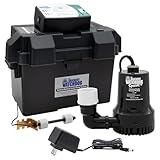 Basement Watchdog Special CONNECT Basement Watchdog Special CONNECT |
|
Check Availability on Amazon |
| Basement Watchdog Big Dog CONNECT |
|
Check Availability on Amazon |
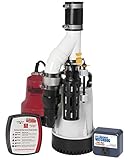 Basement Watchdog DFK961 Combo Basement Watchdog DFK961 Combo |
|
Check Availability on Amazon |
 Wayne ESP25n Wayne ESP25n |
|
Check Availability on Amazon |
 Superior Pump 92900 Superior Pump 92900 |
|
Check Availability on Amazon |
 Basement Watchdog CITE-33 Combo Basement Watchdog CITE-33 Combo |
|
Check Availability on Amazon |
 Basement Watchdog CITS-50 Combo Basement Watchdog CITS-50 Combo |
|
Check Availability on Amazon |
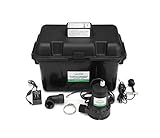 Basement Sentry Backup System Basement Sentry Backup System |
|
Check Availability on Amazon |
 Zoeller AquaNot Spin 508 ProPak Zoeller AquaNot Spin 508 ProPak |
|
Check Availability on Amazon |
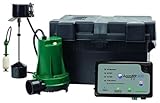 Zoeller AquaNot Fit Zoeller AquaNot Fit |
|
Check Availability on Amazon |
We earn from qualifying purchases. CERTAIN CONTENT THAT APPEARS ON THIS SITE COMES FROM AMAZON. THIS CONTENT IS PROVIDED 'AS IS' AND IS SUBJECT TO CHANGE OR REMOVAL AT ANY TIME.
1. Best compact standalone backup: 1. Basement Watchdog Special CONNECT
The Basement Watchdog Special CONNECT Battery Backup Sump…
1,730 GPH at 10 ft
Dual float switch
Compact pump
Pros
- Compact for narrow pits
- dual float switch
- battery-fluid sensor
- clear control panel
Cons
- Battery is separate
- WiFi module is separate
The Basement Watchdog Special CONNECT is the sensible starting point when an existing primary pump is doing its job and the missing layer is outage protection. Its listed 1,730 GPH at a 10-foot lift is enough to make it a serious secondary pump rather than a tiny emergency accessory.
The package includes the controller, charger, dual float switch, pump, and battery box, but not the battery. I like that the control panel is designed to state the warning and the next maintenance action rather than simply sounding an unexplained alarm.
Its battery-fluid sensor is a notable fit for homeowners using a wet-cell battery and wanting a reminder before storm season. A five-star owner described it as having saved the basement during heavy rain and outages, while another highlighted the simple installation; those are useful ownership signals, not a promise that any one setup will match their result.
The compact pump is specifically positioned for small or narrow sump pits. Measure the available room with the backup piping, float travel, check valve, and battery box in mind, since a pump that physically fits can still have an obstructed float.
Choose this unit when your existing primary pump is still worth keeping
This is a dedicated battery operated sump pump, not a primary-and-backup replacement package. It suits a homeowner who wants to retain a working AC pump and add a separate line of defense for an outage or primary-pump failure.
The dual float switch gives the system two water-level triggers. That addresses a common concern in homeowner forums, where a single stuck switch is often treated as a larger risk than a modest difference in published flow.
Plan for a separate battery and optional remote alerts before installation
The required battery is not included, and WiFi capability depends on the separately sold add-on module. Pick the battery type the system accepts and give the controller a dry, accessible location where its lights and alarms can be checked.
For many homes, the local panel is enough. If travel or an unoccupied finished basement makes remote notice more useful, confirm the module, network coverage, and notification setup before relying on that extra layer.
2. Best high-flow standalone backup: 2. Basement Watchdog Big Dog CONNECT
The Basement Watchdog Big Dog CONNECT Battery Backup Sump…
2,500 GPH at 10 ft
20-A smart charger
Weekly self-test
Pros
- High listed flow
- weekly pump exercise
- 20-A smart charger
- 24-hour monitoring
Cons
- Battery is separate
- WiFi module is separate
The Big Dog CONNECT is the standalone pick I would examine first for a basement that receives water quickly. It is listed at 2,500 GPH at a 10-foot lift, which is the highest stated 10-foot figure among the dedicated backup models in this group.
Capacity alone does not make a good installation. The discharge line, check valve, battery condition, and float clearance must support the pump; a high-flow motor cannot correct a blocked outlet or a dead battery.
The 20-amp multistage smart charger, 24/7 monitoring, and weekly exercise cycle are its strongest readiness features. A customer review calls out the weekly exercise as confidence-building, which lines up with forum advice to find failures during a routine test rather than during a storm.
The controller can connect to a home-security system through its remote terminal. It also has a USB connection for the optional Watchdog WiFi module, giving owners a path to remote alerts without making WiFi compulsory.
Choose the Big Dog when your water table demands more backup flow
For a high water table or a pit that rises fast during hard rain, the stated 2,500 GPH at 10 feet offers more headroom than the Special CONNECT or the 92900. Compare that number to the actual lift from your pit water level to the discharge point, not just to an advertised zero-lift output.
This is still a backup unit, so it belongs beside a capable primary AC pump. A two-pump arrangement is often the more complete answer when the primary pump must handle routine water and the DC pump must be ready for the moment utility power fails.
Expect to select the battery and WiFi hardware as separate pieces
The Big Dog works with AGM or wet-cell batteries, but the battery is a separate purchase. That flexibility is useful, yet it shifts battery sizing and replacement planning to the homeowner.
Remote monitoring requires the add-on WiFi module rather than coming built in. If the home does not need app alerts, the local diagnostics and regular weekly exercise remain meaningful features on their own.
3. Best cast-metal combo option: 3. Basement Watchdog DFK961
THE BASEMENT WATCHDOG Model DFK961 1/3 HP Combination…
3,100 GPH primary
1,000 GPH backup
Preassembled combo
Pros
- Preassembled system
- cast iron and aluminum primary
- 24-hour monitoring
- efficient primary motor
Cons
- Heavier system
- backup flow is lower
The DFK961 answers a different buying question: it supplies both the normal AC primary pump and the battery backup in one preassembled system. That is a better match when the old primary pump needs replacement instead of merely adding an emergency sump pump backup.
Its 1/3 HP primary is listed at 3,100 GPH at a 10-foot lift, while the battery backup is listed at 1,000 GPH at the same lift. Read those as two separate jobs: the primary handles ordinary water movement, and the DC pump preserves some pumping during a power loss.
The primary construction uses cast iron and cast aluminum, and the system has 24-hour monitoring with an alarm and warning light. Customer feedback emphasizes the convenience of the preassembled components and the reassurance of having a primary and backup together.
At 18.5 pounds, this is not a casual one-hand swap. I would map the pit, outlet, discharge route, and power source first, then decide whether the preassembled layout offsets the more involved physical installation.
Choose this combo when both your primary pump and backup are due for replacement
A combo system reduces the task of matching a new backup to an unknown older pump. The DFK961 brings the pump pair and monitoring system together, which can make the equipment decision easier during a planned replacement.
The preassembled approach can simplify the plumbing side, but it does not remove the need to verify pit diameter, discharge compatibility, and a reliable battery location. A plumber is a sensible option when the existing discharge layout is crowded or unfamiliar.
Expect the backup pump to move less water than the primary pump
The DC backup rating of 1,000 GPH at 10 feet is much lower than the primary figure. That is normal for this particular combo, but it matters in basements where water enters at a high rate during outages.
For that situation, identify how quickly the pit fills before selecting any combo unit. If the primary is being overwhelmed in normal conditions, addressing drainage or primary capacity should come before assuming the backup is the cure.
4. Best heavy-duty add-on: 4. Wayne ESP25n
WAYNE ESP25n – 12 Volt Battery Back Up Sump Pump, Battery…
2,700 GPH
Cast-iron base
LED display and alarm
Pros
- High listed output
- cast-iron base
- LED status display
- fits 14 inch basins
Cons
- Battery is separate
- requires 12V battery setup
The Wayne ESP25n is a dedicated 12-volt backup for homeowners who prefer a heavy-duty materials mix. Its epoxy-coated steel housing, cast-iron base, and thermoplastic impeller distinguish it from the all-thermoplastic designs in this roundup.
Wayne lists output up to 2,700 GPH and says the system can evacuate up to 10,000 gallons on one battery charge. That gallon figure is a manufacturer claim tied to operating conditions, so I would not treat it as a universal runtime figure for every basement.
The LED display and audible alarm make it easier to notice a problem at the equipment, while the stated 14-inch-or-larger basin requirement gives a useful first measurement. A five-star reviewer reports that it kept operating through a storm outage, and another praised the build and status display.
It does not need a drilled weep hole, according to the supplied product details. Still, the larger installation question is whether the backup discharge and check-valve arrangement fits the particular plumbing, not whether one feature avoids a single step.
Choose the ESP25n when a cast-iron base and strong stated output matter
This model makes sense for a homeowner adding a backup to a standard-sized basin and wanting more than a light-duty emergency pump. Its construction and published 2,700 GPH rating place the emphasis on moving water, not app-based control.
I would give it extra consideration where a local alarm and display are more useful than remote notifications. That keeps the system simpler for households that routinely check the basement and do not want another connected device.
Plan around the specified 75 Ah battery requirement and basin diameter
The product information calls for a WSB1275 75 Ah battery, which is not included. Match the correct battery, route its cables cleanly, and keep the battery accessible for inspection and eventual replacement.
Measure the basin before ordering because the listed fit starts at a 14-inch diameter. Do not crowd the tethered or primary-pump floats with the backup assembly; free float movement is a basic requirement for an automatic system.
5. Best high-lift simple backup: 5. Superior Pump 92900
Superior Pump 92900 12V Battery Back Up Submersible Sump…
1,380 GPH
25 ft lift
Tethered float switch
Pros
- 25-foot vertical lift
- tough thermoplastic
- tethered automatic float
- two discharge sizes
Cons
- Lower listed flow
- primary pump is separate
The Superior Pump 92900 is the straightforward choice for a basement where discharge height is the main challenge. Its published maximum lifting height is 25 feet, while its flow rating is 1,380 GPH, so it is not the model to choose solely for the largest volume number.
The 12-volt submersible pump uses thermoplastic construction and a tethered float switch for automatic on and off operation. It offers 1-1/4-inch or 1-1/2-inch NPT discharge options, both worth checking against the existing plumbing before an installation day.
Its 10-foot cord gives a clear physical constraint to plan around. Reviews describe it as a capable backup during several outages and point to the 25-foot lift as a major advantage, which matches the product specifications more closely than a generic “powerful” label would.
For a finished basement, I would assess the entire vertical run to the discharge point and any horizontal distance after it. The stated lift figure helps with that decision, but elbows, check valves, and pipe condition still affect how a real system performs.
Choose the 92900 when your discharge route needs more vertical lift
A long rise from the pit to the exterior outlet is the defining reason to consider this unit. The 25-foot stated maximum lift gives it a different role from higher-flow models that list only a 10-foot lifting height.
This can be a better fit for occasional emergency pumping than for a very fast-rising high-water-table pit. Pair it with a sound primary pump and determine whether 1,380 GPH matches the water entering the basin during the type of storm your home receives.
Expect a tethered-float layout that needs open room to swing
A tethered float needs space to move freely, so pit crowding is a real concern. Check the float’s travel with the primary pump, discharge pipe, and backup pump already positioned, rather than assuming a deep pit automatically has usable clearance.
The product is a backup pump only and needs a suitable 12-volt battery system. Put a recurring test on the household maintenance list because a quiet, rarely used backup can hide a weak battery until an outage exposes it.
6. Best preplumbed 1/3 HP combo: 6. Basement Watchdog CITE-33
The Basement Watchdog Combo Preassembled Primary & Battery…
3,100 GPH primary
1,500 GPH backup
Preplumbed combo
Pros
- Preassembled and preplumbed
- dual float switches
- 24-hour controller
- efficient PSC motor
Cons
- Battery is separate
- plastic-component concerns
The CITE-33 is a practical combo for homeowners replacing an aging primary pump and wanting backup coverage at the same time. It arrives preassembled and preplumbed, which reduces the number of individual pieces that must be matched in the pit.
The 1/3 HP copper-wound PSC primary is listed at 3,100 GPH at 10 feet, and the backup is listed at 1,500 GPH at 10 feet. That difference is worth treating as part of the plan: DC operation buys emergency pumping, but it is not a duplicate of the normal AC primary.
Both the primary and the backup use dual float switches. The 24/7 monitoring controller adds lights and alarms, offering a way to find a battery, float, or charging issue during a basement check rather than after water has risen.
One customer review calls the preassembled layout easy to install for a medium-sized basement, while another appreciated the monitoring system. A separate product-data caution mentions durability concerns reported around plastic components, so it is fair to inspect fittings and protect the unit from impacts.
Choose the CITE-33 when you want one coordinated pump pair
This model is a strong fit when the primary pump is no longer a keeper and a complete replacement makes more sense than bolting on a second pump. The coordinated primary, backup, controller, and float arrangement can simplify product selection.
It is particularly useful for a homeowner who wants local monitoring but does not need WiFi notifications. The panel’s alarms and lights still require someone to respond, so a routine basement check remains part of ownership.
Expect to supply the battery and protect the installed components
The battery is sold separately, which means battery chemistry, capacity, and service interval should be decided before the system is put into service. The controller needs a stable connection and clear access; burying it behind stored boxes defeats its status indicators.
Preplumbed does not mean every basement connection is identical. Verify the pit diameter, discharge size, check-valve placement, and electrical outlet, then use professional help if altering the discharge pipe or adding a dedicated circuit is beyond your experience.
7. Best higher-output WiFi-capable combo: 7. Basement Watchdog CITS-50
The Basement Watchdog Combo Preassembled Primary & Battery…
3,540 GPH primary
2,150 GPH backup
WiFi-capable combo
Pros
- High listed primary flow
- WiFi-capable
- preplumbed setup
- AGM or wet-cell compatible
Cons
- WiFi module is separate
- battery is separate
The CITS-50 is the higher-output combo in the Basement Watchdog group. Its primary is listed at 3,540 GPH at 10 feet and its battery backup at 2,150 GPH at 10 feet, giving it a substantial published backup figure for a system that replaces the AC pump too.
The 1/2 HP PSC primary uses cast iron, while the backup pump uses plastic. It is supplied preassembled and preplumbed, and its 25-foot maximum lifting height gives homeowners another specification to compare with their own discharge path.
It is WiFi-capable through the separately sold CONNECT module, which can send text, email, push, or app notifications according to the product information. One customer review specifically describes receiving an alert while traveling, a useful example of why remote notice can matter when no one is near the basement.
I would not choose it for connectivity alone. The stronger reason is the paired primary-and-backup output, with remote notifications as a fit-specific addition for households that travel, rent out a property, or have a finished basement they want to monitor closely.
Choose the CITS-50 when you need both a high-output primary and backup
The stated 3,540 GPH primary and 2,150 GPH backup at 10 feet make this one of the more capable pairings here for water-prone basements. Compare those numbers to the lift at your home and to how fast the pit rises during a heavy storm.
It can be the better combination sump pump option when a current primary is undersized or nearing replacement. It is not proof that every drainage issue is solved; persistent inflow may still need exterior drainage or plumbing attention.
Expect remote alerts only after adding the compatible WiFi module
The controller can monitor the system around the clock, but app-based notifications need the BW-WiFi2 module. Verify home network access in the basement and test an alert after setup instead of assuming the phone connection is active.
The system accepts maintenance-free AGM and wet-cell batteries, with the battery supplied separately. That choice gives flexibility, but it also makes battery inspection and replacement part of the owner’s recurring maintenance work.
8. Best simple 12V add-on: 8. Basement Sentry Automatic Emergency Backup System
Basement Sentry Automatic Emergency Backup Sump Pump System…
29 GPM
12V pump
Alarm and charger
Pros
- Includes controller and charger
- alarm system
- works beside primary pump
- deep-cycle battery compatible
Cons
- Primary pump is separate
- battery is separate
The Basement Sentry Automatic Emergency Backup System is a simple secondary 12-volt system intended to share a basin with a primary 115-volt sump pump. It has a listed flow rate of 29 GPM and focuses on the core parts: pump, controller, charger, alarm, float switch, and battery box.
The package does not include a primary pump or a battery. That makes it suitable when the existing AC pump is healthy and the owner wants an additional barrier against basement flooding during utility outages.
Its product information recommends a deep-cycle battery and names Basement Sentry batteries as the suggested match. A customer review characterizes it as adequate for a smaller basement, while another reports easy installation and dependable operation through outages; both comments support viewing it as a focused add-on, not a high-volume combo.
The alarm system is the monitoring feature here. It will not substitute for a maintenance routine, but it can bring attention to a condition that would otherwise go unnoticed in a storage area or unfinished corner of the basement.
Choose Basement Sentry when you only need a basic backup beside a working primary
This system is for the homeowner who does not need a replacement primary pump, self-testing, or built-in remote controls. Its included controller, charger, and alarm give a complete basic framework around the separate deep-cycle battery.
It is a reasonable match for a smaller basement with modest water volume, based on the supplied review feedback and 29 GPM rating. For a high water table, compare the inflow rate carefully against higher-output backup choices before deciding.
Expect to set up a deep-cycle battery and local alarm checks
The battery does not come with the system, so it needs to be selected and maintained as part of the installation. Make a point of testing the alarm audibility where people actually sleep or spend time, because a basement-only alarm can be missed.
Place the float where it can rise independently of the main pump’s hardware. A crowded pit is a common source of problems, and physical clearance is more useful than assuming two pumps will coexist without a layout check.
9. Best self-testing complete system: 9. Zoeller AquaNot Spin 508 ProPak
Zoeller 508-0006 AquaNot Spin 508 ProPak
M53 primary pump
48+ hr at 10% duty
Self-testing
Pros
- Complete preplumbed system
- self-testing controller
- check valve included
- 3-year limited warranty
Cons
- Battery is separate
- continuous runtime is duty-cycle dependent
The Zoeller AquaNot Spin 508 ProPak is a full primary-and-backup package with a Model M53 primary pump, 12-volt DC backup, controller, check valve, float switch, and preplumbed PVC piping. I would look at this system when having matched components and automated diagnostic checks matters more than assembling a mixed-brand setup.
The backup is listed at 43 GPM. Zoeller states up to 5.5 hours of continuous pumping or more than 48 hours at a 10% duty cycle, which is exactly why battery runtime needs to be discussed as a duty-cycle question rather than a fixed number.
The controller tests functionality and provides alerts for power loss, high-water conditions, switch obstructions, and pump faults. That feature set speaks directly to a repeated homeowner worry: discovering a controller or switch issue only when water is already rising.
Customer comments describe the self-test feature as reassuring and characterize the package as suited to a finished basement. Those are individual opinions, but the included check valve and preplumbed 1-1/2-inch Schedule 40 PVC provide concrete reasons the system feels more complete than a backup pump alone.
Choose the ProPak when matched components and self-testing are the priority
This is a complete system rather than an add-on. It makes the most sense when replacing a primary pump and backup together, especially for owners who prefer a controller that checks functions and flags several fault conditions.
The three-year limited warranty is another documented consideration. Read the warranty terms and installation requirements before work begins, since protection is only useful if the installed system follows the product instructions.
Expect runtime to change with how often and how hard the backup pumps
The 5.5-hour continuous and 48-plus-hour 10% duty-cycle figures describe very different water conditions. A pit that cycles constantly during a long outage will consume battery capacity much faster than one that receives small intermittent inflows.
That makes a periodic outage simulation valuable: raise the float, confirm operation, and check the controller status. Do not wait for a major storm to learn whether the battery, piping, and alarm are ready.
10. Best built-in WiFi standalone backup: 10. Zoeller AquaNot Fit
Zoeller 508-0014 Aquanot Fit 12-volt DC Battery Back-up Sump…
35 GPM
Built-in Wi-Fi
Redundant high-water switch
Pros
- Built-in Wi-Fi
- self-testing controller
- redundant water switch
- integrated check valve
Cons
- Battery is separate
- primary pump is separate
The Zoeller AquaNot Fit is a dedicated 12-volt backup system that works beside a submersible or pedestal primary pump. Its listed 35 GPM output, integrated DC discharge check valve, and redundant high-water switch make it a feature-rich add-on rather than a combo replacement system.
Built-in WiFi supports Z Control notification and remote access, avoiding a separate networking module. The Fit controller also has automatic charging, a protection system, low-battery indicator, alarm, and self-testing technology.
Zoeller lists up to six hours of continuous high-performance pumping at 12.7 volts. That is a helpful stated reference point, yet real duration still depends on the installed battery, discharge lift, inflow, and how often the float calls for the pump.
There are few customer reviews in the supplied data, so I would put more weight on matching the documented features to your own needs than on treating the rating as a broad consensus. One reviewer calls out the Z Control app and another likes the diagnostics, reinforcing the appeal for households that want remote status.
Choose the AquaNot Fit when built-in remote status is the deciding feature
The Fit is the strongest fit for someone who already has a primary pump but wants self-testing and WiFi without an added module. Its redundant high-water switch is a meaningful second layer for a system whose only purpose is to activate when conditions are already abnormal.
Remote access is useful when travel, a second home, or a finished basement makes immediate notice worthwhile. It does not replace a sound physical installation, regular testing, or a battery that is still able to hold a charge.
Expect to retain your primary pump and supply the 12-volt battery
This system does not include the AC primary pump or the battery. It is therefore best approached as an upgrade to a known-good primary setup, with enough pit room for the extra pump, check valve, and float hardware.
Test a notification and the low-battery indication after installing the system. A connected controller is most helpful when the alerts reach the right phone and the homeowner knows what action each alert requires.
Choose by flow, battery, fit, and maintenance before buying a backup system
The right backup sump pump for basement use is not simply the one with the largest advertised number. Start with how fast water enters your pit during a hard rain, then compare that need with the pump’s stated flow at the lift your discharge actually requires.
Match flow at the stated lift to the water your basement receives
Gallons per hour and gallons per minute measure how much water a pump can move, but the height it must lift water changes that number. A 10-foot figure is more useful than a zero-lift figure when the discharge rises from a basement pit to ground level.
For example, the Big Dog CONNECT is listed at 2,500 GPH at 10 feet, the CITS-50 backup at 2,150 GPH at 10 feet, and the Special CONNECT at 1,730 GPH at 10 feet. The Superior Pump 92900 lists 1,380 GPH but a 25-foot maximum lift, so the discharge route can make it the more relevant comparison.
A high water table, frequent storms, or a pit that fills fast calls for more capacity margin. If the existing primary cannot keep up while power is on, correct that underlying problem first; a battery backup is protection for an emergency, not a substitute for sound drainage.
Choose a battery plan based on duty cycle instead of a promised number of hours
A battery backup sump pump connects to a deep-cycle battery and turns on through its float switch when water rises. Battery amp-hour capacity, battery condition, lift, pump load, and how often water enters the pit all affect how long it can run.
The product data shows why one blanket runtime answer can mislead. The AquaNot Spin 508 ProPak lists up to 5.5 continuous hours but more than 48 hours at a 10% duty cycle, while the AquaNot Fit lists up to six continuous hours at 12.7 volts.
Some systems accept AGM and wet-cell batteries, while the Wayne ESP25n identifies a 75 Ah battery. Pick the compatible battery specified for your system, maintain it according to its instructions, and remember that forum users often report battery weakness after a few years of service rather than at a convenient time.
Choose standalone or combo equipment based on the condition of your primary pump
A standalone backup such as the Special CONNECT, Wayne ESP25n, Superior Pump 92900, Basement Sentry, or AquaNot Fit works beside an existing primary pump. This is usually the cleanest route when the primary is healthy and the only missing safeguard is power-outage protection.
A combo system such as the DFK961, CITE-33, CITS-50, or AquaNot Spin 508 ProPak supplies both the normal AC pump and the battery backup. It is the cleaner approach when an old primary pump is near the end of its useful life or when a homeowner wants one matched package.
Water-powered backup is a separate category that uses municipal water pressure rather than a battery. It can be relevant for homes with dependable municipal water, but it is not a fit for well-water systems that lose their own pump during a power outage.
Measure the pit, plumbing, and float travel before calling any system easy to install
Measure the sump pit diameter, water depth, vertical discharge lift, pipe diameter, and space for a battery box. The Wayne ESP25n specifies a 14-inch-or-larger basin, and a compact pump such as the Special CONNECT can help in a narrow pit, but each two-pump arrangement still needs clear float movement.
Look at the check valve and discharge layout as carefully as the pump. A check valve prevents water in the pipe from dropping back into the pit after the pump stops, and some packages include one while others require the installer to plan the parts around the existing piping.
DIY installation can be reasonable when the pit, outlet, and piping are already accessible and you are comfortable with plumbing connections and battery wiring. Call a plumber when the discharge needs changes, the pit is crowded, local requirements are uncertain, or a finished basement leaves little room for an installation mistake.
Test the backup before storm season and listen to every alarm
Most backup systems sit quietly for long periods, so regular checks are more valuable than a one-time installation. Inspect battery terminals, look for corrosion or fluid-level alerts where applicable, test the float, confirm the charger status, and verify that water exits through the discharge route.
Self-testing models such as the Big Dog CONNECT, AquaNot Spin 508 ProPak, and AquaNot Fit reduce the chance of forgetting a check, but they do not eliminate the need to interpret alarms. Homeowner reports repeatedly mention controller and battery surprises, so a scheduled hands-on inspection is still wise.
A generator can power a primary sump pump during an outage, but it needs fuel, a safe setup, and someone or an automatic transfer arrangement to make it work. A battery backup starts automatically, which is why it remains a useful layer even in homes that also own a generator.
FAQs
For most basements, what sump pump is best?
For most basements, the best setup is a capable primary AC sump pump plus a battery backup with enough flow at the home’s actual discharge lift. Choose a standalone backup if the current primary pump is sound; choose a combo system when both pumps need replacement. High-water-table homes should favor the higher listed backup flow models after checking pit size and discharge height.
Yes, are battery backup sump pumps worth it?
Yes, a battery backup sump pump is worth considering when a basement relies on a sump pump, especially where storms, high water tables, or outages are common. It activates automatically when water rises and utility power is unavailable, unlike a portable generator that may need someone present. Its value depends on testing the float, charger, alarm, and battery before an emergency.
It depends: how long will a 100 amp hour battery run a sump pump?
A 100 amp hour battery does not provide one fixed runtime because lift, pump load, water inflow, battery condition, and duty cycle all change the result. As concrete product examples, the AquaNot Spin 508 ProPak lists up to 5.5 hours of continuous pumping or more than 48 hours at 10 percent duty cycle, while the AquaNot Fit lists up to six continuous hours at 12.7 volts. Use the battery and runtime guidance specified for the exact system rather than relying on a universal estimate.
For most homes, what is the best backup system for a sump pump?
For most homes, the best backup system is a secondary 12-volt pump with its own deep-cycle battery, float switch, charger, and alarm. A combo system is best when replacing the primary pump too, while a water-powered unit can suit a municipal-water home that wants a non-battery option. Well-water homes should not assume a water-powered backup will work during a power outage because the well pump itself needs power.
The best choice is the backup that matches your basement’s real water risk
For a strong standalone option, I would put the Basement Watchdog Big Dog CONNECT at the top of the list because of its stated 2,500 GPH at a 10-foot lift and readiness features. For a full replacement, the CITS-50 and AquaNot Spin 508 ProPak bring a primary and backup together, while the Superior Pump 92900 stands out for a long vertical discharge run.
The best battery backup sump pumps for basements in 2026 are the ones with the right flow, a compatible maintained battery, unobstructed floats, and a tested discharge route. Measure first, test after installation, and choose the system that can respond automatically when your primary pump needs help most.
