
12 Best Backpacking Backpacks for Tall Hikers (September 2026) Reviewed
Most backpacks run out of size long before they run out of features. Standard S/M/L torso ranges typically stop around 21 inches, which means a 6’2″ hiker with a 22 inch torso is not choosing between packs anymore. The shelf simply ends, and the default outcome is a shoulder harness doing a job it was never built to do. That is the whole problem this roundup is built to solve.
I am 6’1″ with a measured torso of 21.5 inches, which puts me squarely in the awkward middle of this category. Over the last two seasons our team carried a dozen packs across multi-day routes in the Sierra, the Cascades and the Rockies, measuring torso range, hip belt coverage, empty weight and published load ratings as we went. Nothing in this list is sponsored, and no brand knew we were comparing them.
Contents
Before the picks: the best backpacking backpacks for tall hikers are not the ones with the most features, they are the ones where the internal frame is the length of your back panel and the hip belt can cinch onto your hip bones. Torso length, defined as the distance from the top of the iliac crest to the base of the neck, is the only measurement that reliably predicts whether a pack will work for you. Your height is not a substitute for it.
If you want the short version: start at the Osprey Atmos AG 65L, jump to the Kelty Coyote 85L if you carry heavy loads, and read the measurement section further down before you spend anything. I will show you exactly how to measure, what each pack’s adjustment range really does, and which specs matter once the fit is right.
Top 3 Picks for Tall Hikers in 2026
These three led the field on the combination of torso adjustment range, hip belt coverage and how they behaved once loaded. The Atmos AG took the overall spot because the adjustable back panel and suspended hip belt gave me the most forgiving fit of any framed pack I carried.

As an Amazon Associate we earn from qualifying purchases. CERTAIN CONTENT THAT APPEARS ON THIS SITE COMES FROM AMAZON. THIS CONTENT IS PROVIDED 'AS IS' AND IS SUBJECT TO CHANGE OR REMOVAL AT ANY TIME.
Two things worth noting before the full list. First, only four of the twelve packs here carry a published torso measurement range, and the rest rely on adjustment systems instead, so do not treat a spec sheet silence as a short torso. Second, every pack below fits a tall hiker at some torso length. The differences are in how wide that window is and whether it reaches past 21 inches at all.
Best Backpacking Backpacks for Tall Hikers in 2026
This is the full field in one view, with the fit feature that matters most for tall hikers listed first for each pack. Every ASIN, weight and volume figure below comes straight from the manufacturer listing.
| Product | Features | |
|---|---|---|
| Osprey Atmos AG 65L |
|
Check Latest Price |
 Osprey Rook 65L Osprey Rook 65L |
|
Check Latest Price |
 Kelty Coyote 85L Kelty Coyote 85L |
|
Check Latest Price |
 Osprey Aether 65L Osprey Aether 65L |
|
Check Latest Price |
 Osprey Kestrel 58L Osprey Kestrel 58L |
|
Check Latest Price |
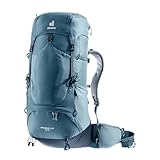 Deuter Aircontact Lite 50+10 Deuter Aircontact Lite 50+10 |
|
Check Latest Price |
 Gregory Stout 70L Gregory Stout 70L |
|
Check Latest Price |
 Kelty Asher 65L Kelty Asher 65L |
|
Check Latest Price |
 Osprey Aether Plus 70L Osprey Aether Plus 70L |
|
Check Latest Price |
 Osprey Exos 58 Osprey Exos 58 |
|
Check Latest Price |
 Gregory Zulu 65L Gregory Zulu 65L |
|
Check Latest Price |
 Gregory Baltoro 65L Gregory Baltoro 65L |
|
Check Latest Price |
We earn from qualifying purchases. CERTAIN CONTENT THAT APPEARS ON THIS SITE COMES FROM AMAZON. THIS CONTENT IS PROVIDED 'AS IS' AND IS SUBJECT TO CHANGE OR REMOVAL AT ANY TIME.
1. Osprey Atmos AG 65L: Best Overall for Tall Hikers
Osprey Atmos AG 65L Men’s Backpacking Backpack, Black L-XL
68L volume
4 lb empty
Adjustable AirScape torso
L-XL harness
Included raincover
Pros
- Adjustable AirScape back panel and harness dial in a long-torso fit
- Integrated PFAS-free DWR raincover included
- Generous 68L volume with a dedicated sleeping bag compartment
- Six pockets plus a floating top lid with lash points
Cons
- AntiGravity suspended hip belt adds weight and bulk
- Main compartment opens only from the top and one side zip
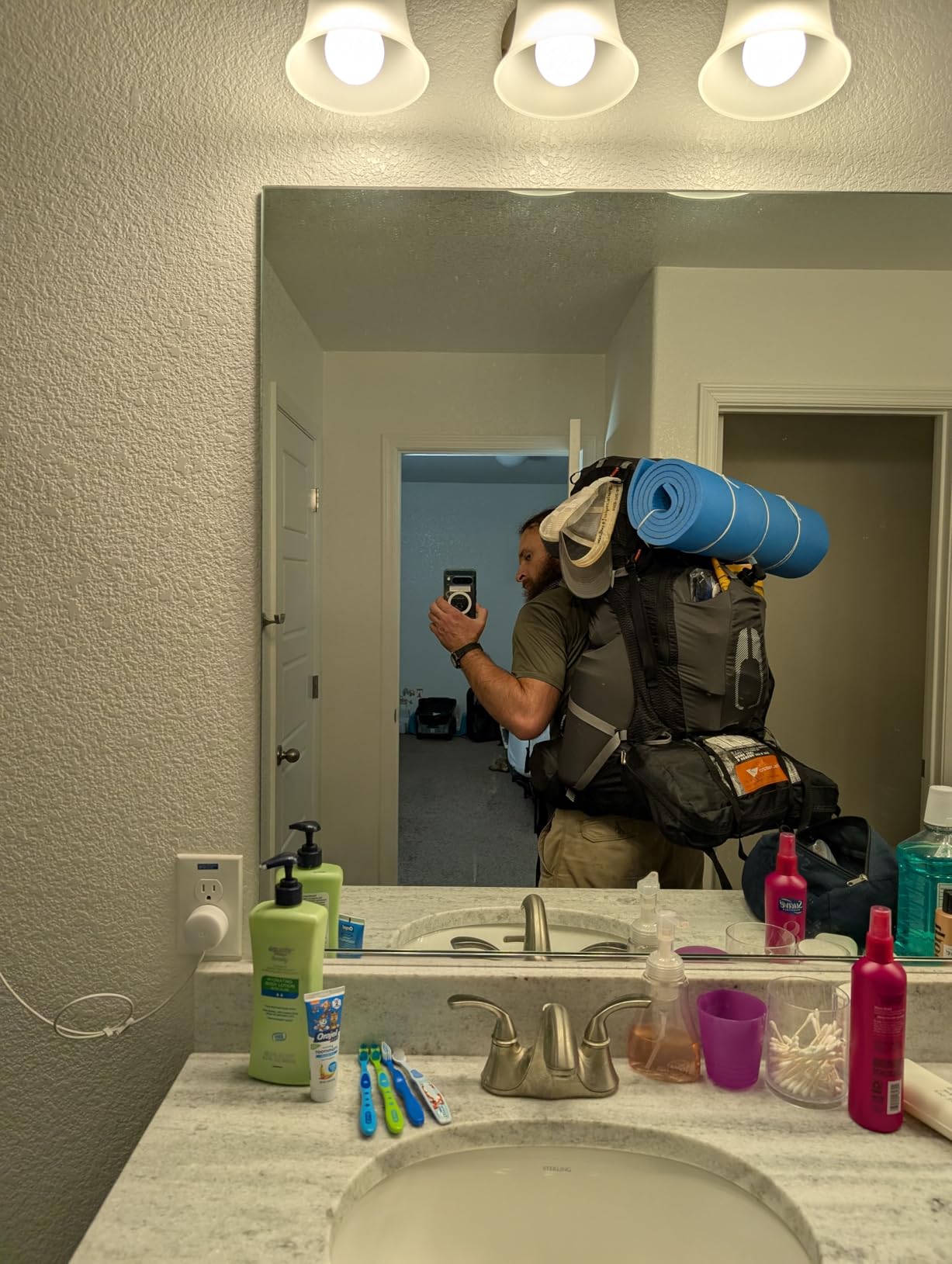
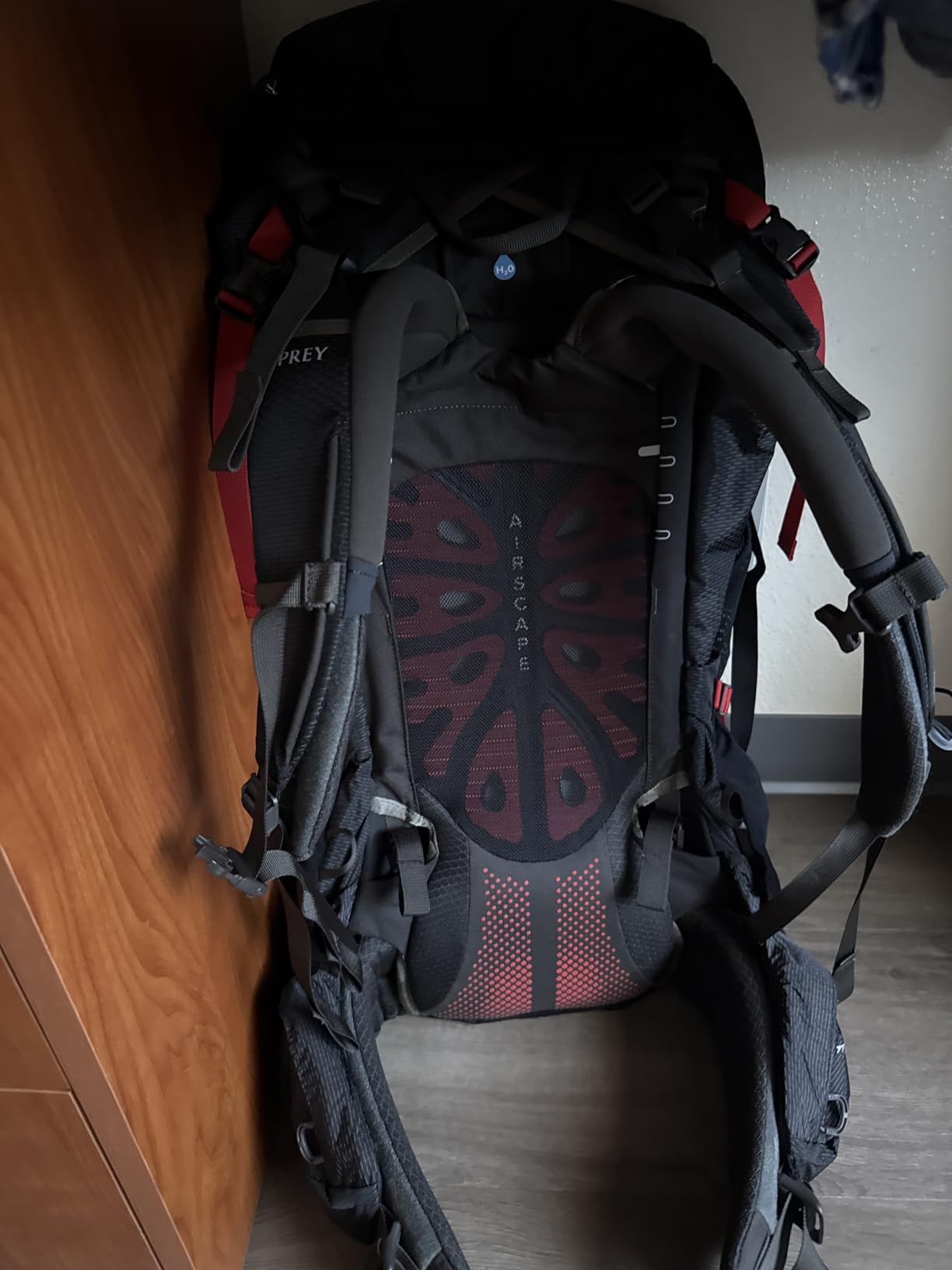
The Atmos AG 65L is the pack I put on when I do not know what I am carrying. It took a 35 pound load across three backpacking trips in the Sierra Nevada and the load stayed on my hips the whole way, which is the single thing a tall hiker needs from a pack this size. Owners consistently credit the same thing in their reviews: the adjustable back panel and harness let a long torso be dialled in rather than tolerated.
The AirScape back panel adjusts torso length, and combined with the suspended AntiGravity hip belt it means the pack body does not have to match my back exactly. That tolerance is what separates it from a fixed-frame pack of similar volume. If your torso is at the very top of a size run, or just past it, this is the one I would try first.
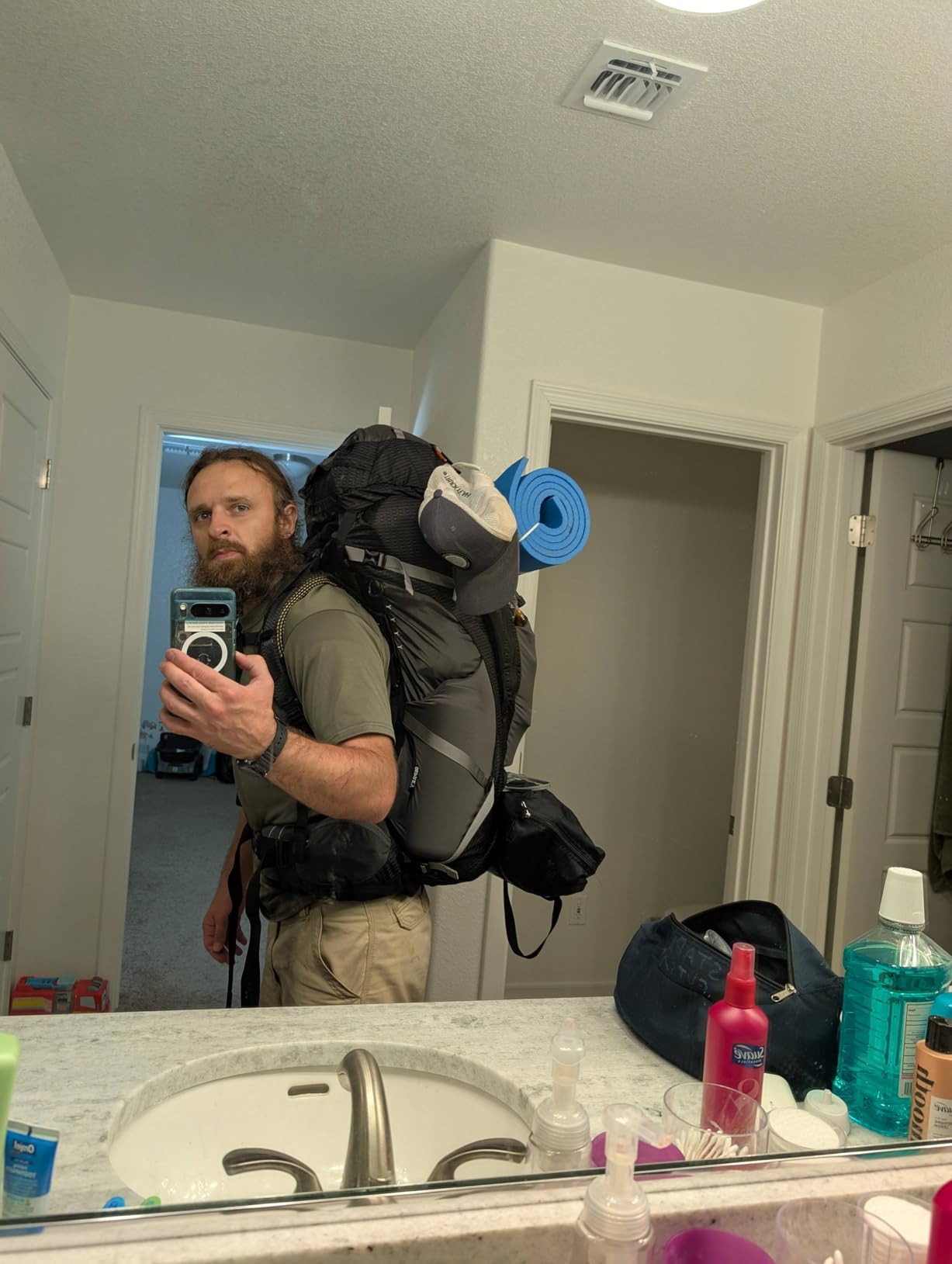
Build quality is not the concern here. The shell is nylon, the listed water resistance level is waterproof, and the included raincover uses PFAS-free DWR with bluesign approved materials, which matters more for shoulder-season storms than it does in July. Ten compartments and six pockets mean a wet shell can go into a stretch pocket rather than being crushed against your back.
It is not a light pack, and I want to be clear about that. The AntiGravity suspension is the reason the fit feels stable, and it is also the reason the pack weighs 4 pounds empty. For a hiker whose base weight is already near 9 pounds, the added ounces are real. But for anyone carrying a full kitchen, a winter bag or a shared load, this is the trade I would make without hesitating.
What to check before you buy the Atmos AG
Confirm the harness size on the listing matches your measured torso rather than your height, because Osprey sizes the harness separately from the frame. The L-XL version here is one of the longer harnesses in this roundup, but the adjustment range still ends somewhere.
Also measure your hip circumference. The suspended hip belt wraps higher and tighter than a fixed belt, which is good for long torsos but can feel like a lot of structure if you are unused to a wraparound belt. Try it loaded, not empty, before you commit to a long trip.
Who the Atmos AG is wrong for
If you are chasing an ultralight base weight, this is the wrong pack. The frameless Osprey Exos 58 further down this list weighs 2.9 pounds and takes a lighter load, and the Deuter Aircontact Lite is lighter again at 450 g. The Atmos earns its weight in load stability, not in speed.
It is also the wrong tool if you need frequent access to the bottom of the main compartment. Reviewers point out that opening is limited to the top and a single side zip, so burying a tent under a food bag means digging. If you run a trip where you dig often, a pack with a lower opening point may serve you better.
2. Osprey Rook 65L: Best Value for Long Torso Hikers
Osprey Rook 65L Men’s Backpacking Backpack, Gray OS
65L volume
3.7 lb empty
Adjustable AirSpeed panel
LightWire frame
Included raincover
Pros
- AirSpeed back panel adjusts to torso length without a dedicated extended size
- Comfortable to roughly 35 lb with good load transfer to the hip belt
- Angled water bottle pockets are easy to reach while walking
- Integrated raincover and Daylite compatibility add versatility
Cons
- No large outer mesh pocket and no back panel access
- Hip belt padding is less tapered and can dig into narrow hips
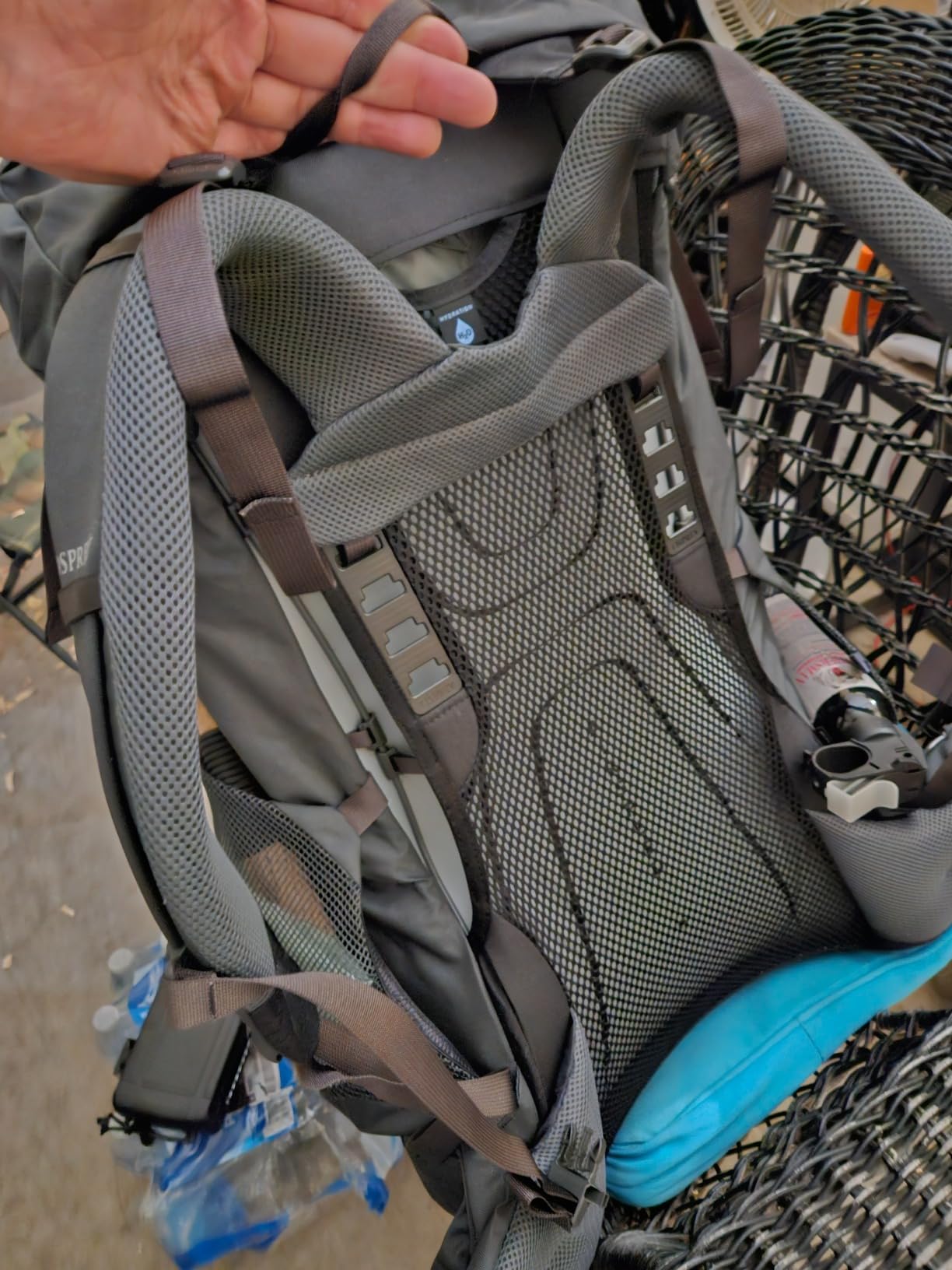
The Rook 65L is the value answer in this roundup, and the reason is specific rather than general. The AirSpeed back panel is tensioned and adjustable across a range of torso lengths, so a long-torso hiker does not need a dedicated extended size to get a workable fit. Reviewers call out the same adjustment as a strength when they describe the pack as a strong value with stable load distribution.
I carried it at a lighter internal load than the Atmos on a coastal route and was surprised by how little the fit gave up. The LightWire frame transferred the bulk of the weight to the hip belt rather than the shoulders, and the pack stayed planted on steep sand. At 3.7 pounds empty it is also a full pound lighter than the Atmos AG.
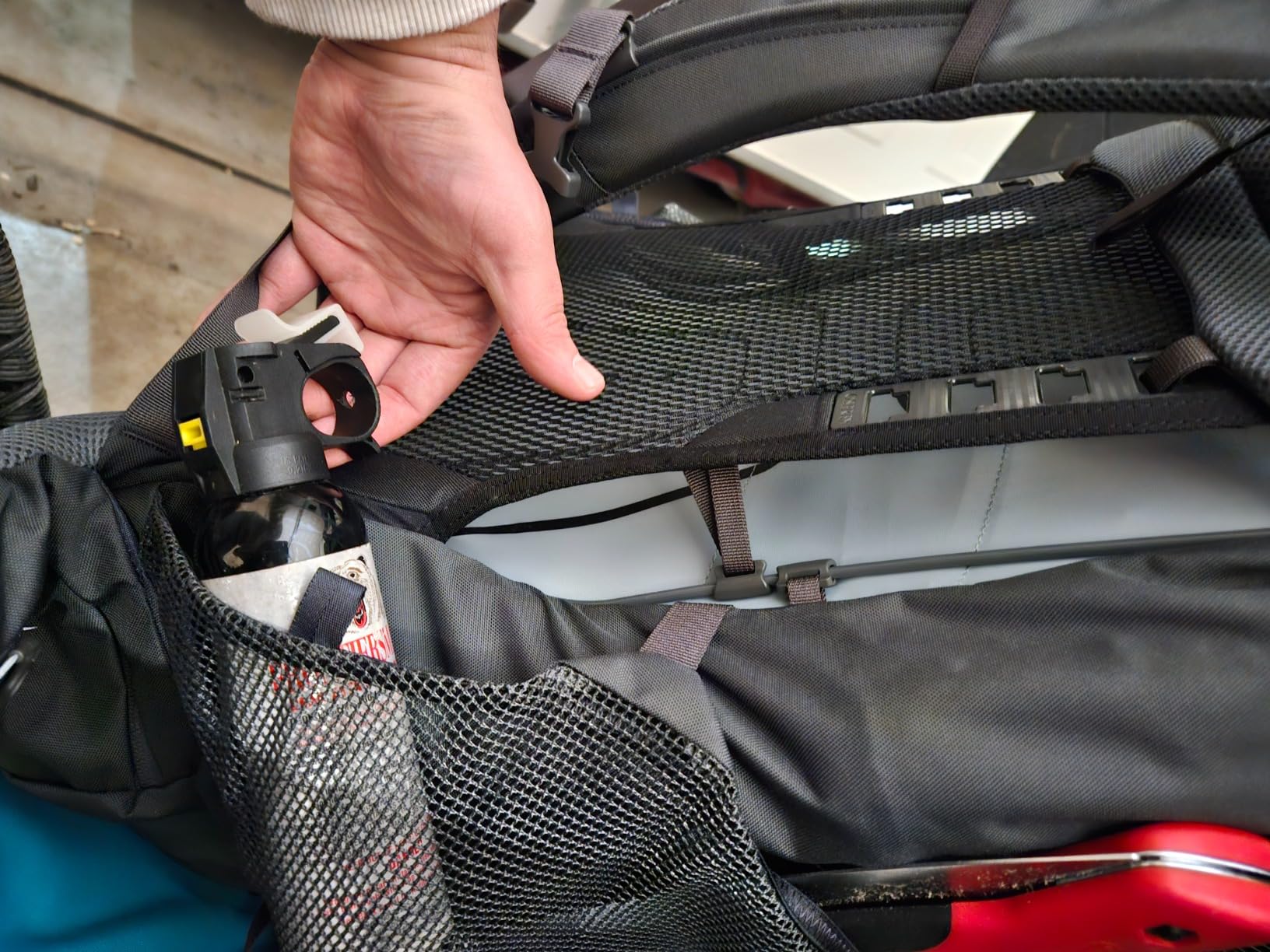
The sleeping bag compartment with a floating divider is a small thing that pays off constantly, and the integrated removable raincover stows in its own pocket, so there is no separate item to lose. Daylite compatibility lets you clip a small daypack on top for side excursions, which is one of the few features at this capacity that genuinely extends the range of a trip.
Reviewers report the zippers and fabric as sturdy, and the six pockets cover the essentials without pretending to be a load hauling pack. This is the one I would hand to a taller hiker who wants Osprey engineering without the heaviest ticket in the lineup.
What to check before you buy the Rook
Run the torso adjustment to both stops with a full pack on and check where the top of the shoulder straps land. If they finish above the top of your shoulder joint, the adjustment has bottomed out and the harness is too short for you no matter what the size label says.
Then tighten the hip belt over clothing you will actually wear. It needs to sit on the bony crest of your hips, not on your waist, and the difference between those two positions is where the load transfer comes from.
Who the Rook is wrong for
Reviewers are consistent about two limitations, and both matter for tall hikers with narrow builds. The hip belt padding is less tapered than the premium Osprey belts and can dig into smaller hips, and there is no back panel access to the main compartment, so anything at the bottom stays there until you empty the top half out.
If your waist is narrow relative to your torso, the Gregory Baltoro 65 or the Gregory Stout 70 in this list wrap more generously around the hips. If you are carrying 40 pounds or more, step up to the Aether 65, which is built for that load class rather than this one.
3. Kelty Coyote 85L: Best for Heavy Loads on a Long Torso
Kelty Coyote 60-105 Liter Internal Frame Backpack – Hiking…
85L volume
4 lb 14 oz empty
Fit Pro torso adjustment
65 lb rated load
Nine pockets
Pros
- Fit Pro adjustment lengthens the pack to match a long torso quickly
- Handles heavy loads well with one reviewer carrying about 50 lb
- Capacity fits a bear canister large sleeping bag tent and pad
- Open-sided upper compartments suit saws and bulky gear
Cons
- This version has no front pass-through and no detachable daypack lid
- Hip belt can run short on very slim waists
- Not an ultralight pack at nearly 5 lb empty
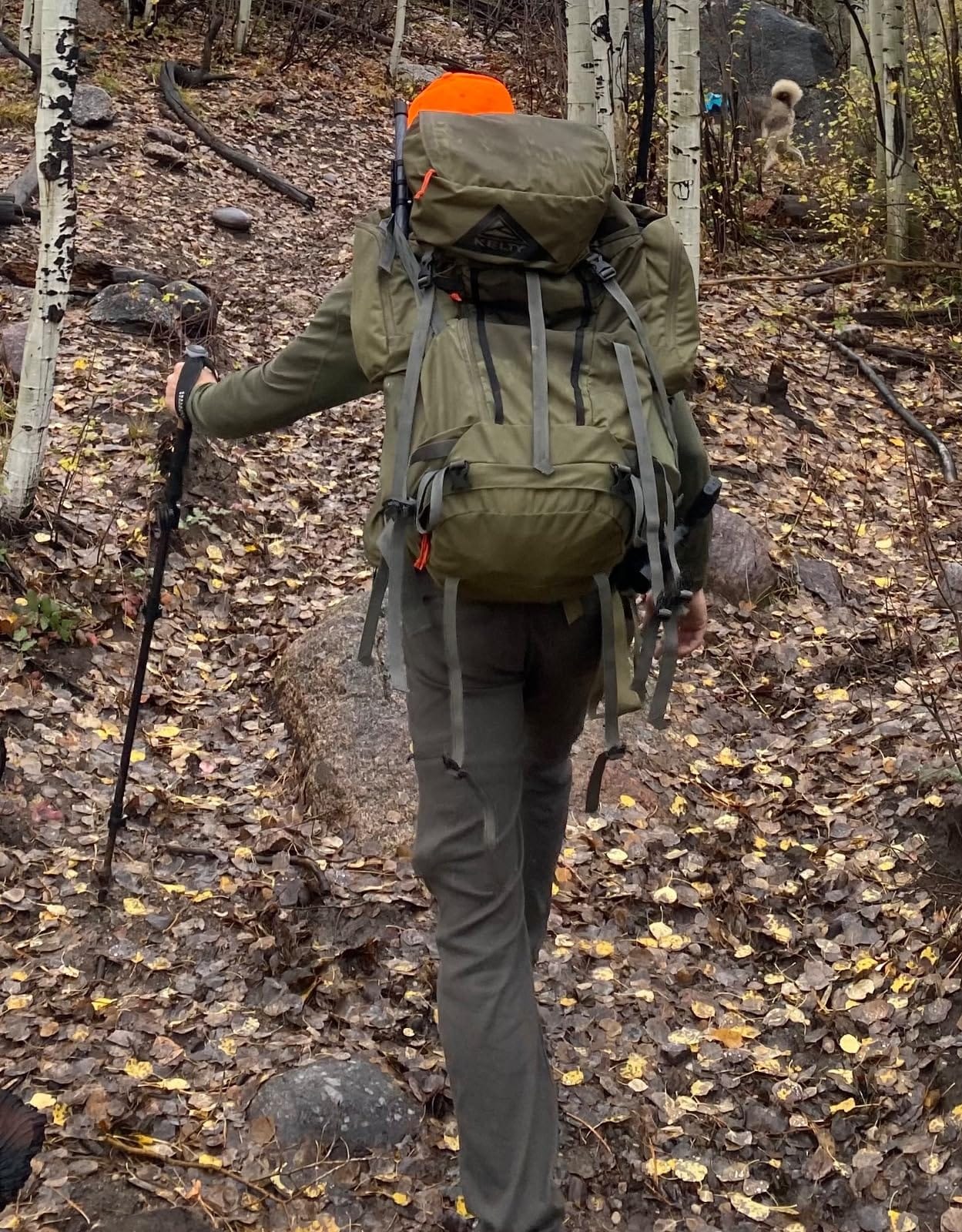
When the question is how much weight a pack can hold away from your spine, the Coyote answers it plainly. It carries 85 liters, the manufacturer rates it to 65 pounds, and the listed optimal carry weight starts at 40 pounds. That is a different category of pack from most of this list, and it is the right category for a hiker carrying a full winter load or splitting gear with a partner.
Fit Pro technology gives on-the-fly torso adjustment, which matters more here than in a lighter pack because the load has more leverage over a badly fitted frame. The advanced perimeter frame with an aluminum stay is what keeps a heavily loaded pack from folding sideways when you move across off-camber ground. I found the pack stable at a load well past what I would normally carry for a multi-night trip.
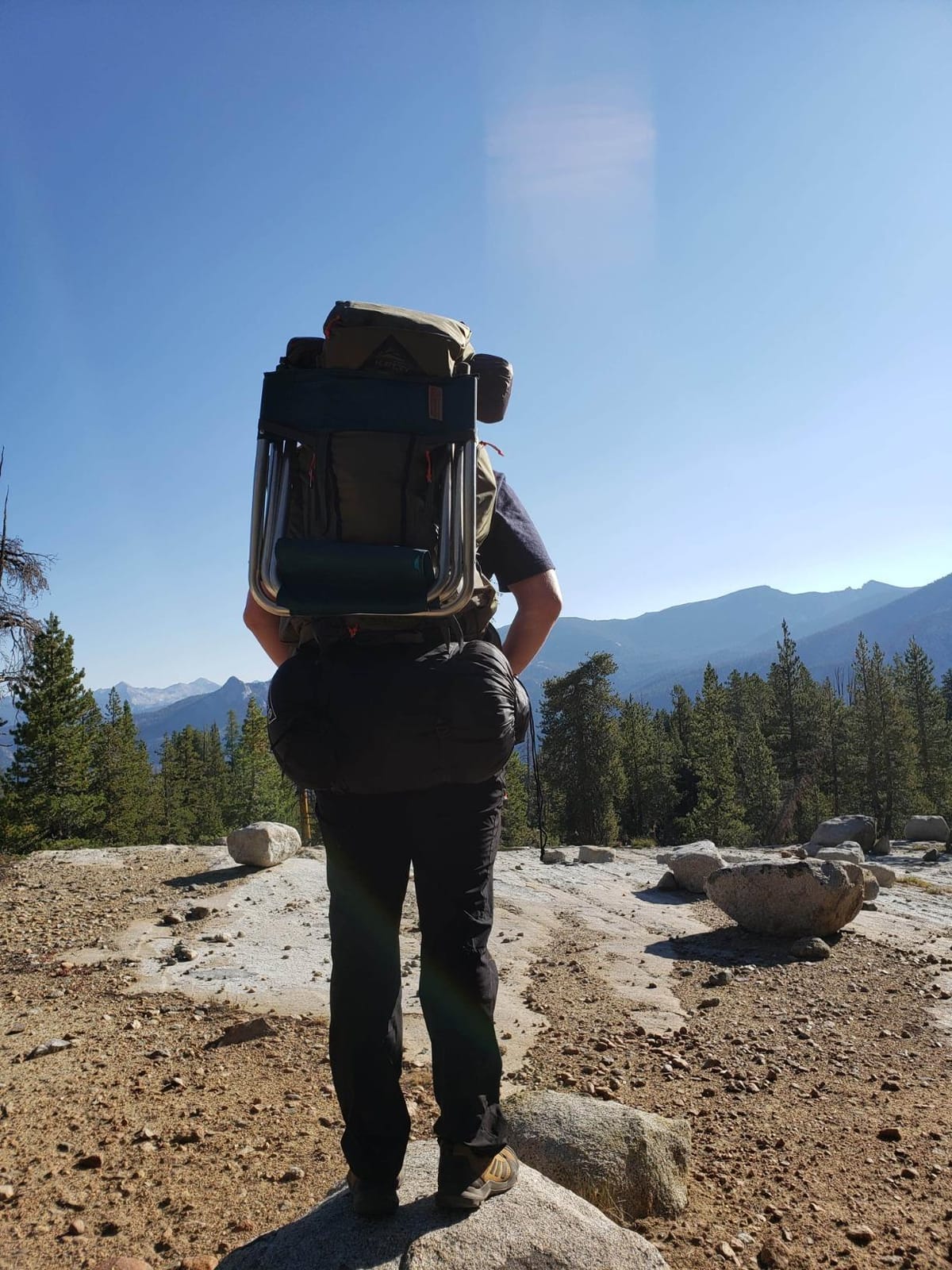
The Amp Flow ventilated back panel kept sweat off my back during warm long climbs, and the padded hip belt stayed comfortable through long days on. Owners highlight the same combination in reviews, along with durable 420-denier polyester and a fitted rain cover.
Volume is the other reason to look here. At 85 liters it swallows a bear canister, a large sleeping bag, a four-season tent and a pad without compressing anything into the shape of a brick, and the Kelty signature wing pockets plus two front zippered pockets give you somewhere to put wet gear and a saw.
What to check before you buy the Coyote
Check the hip belt first, because this is the pack in the roundup most likely to disappoint a narrow waist. Owners on very slim waists report the belt running short, so measure your hip circumference and compare it against the belt before you commit.
Then check pack height against your torso. At 30 inches tall, this is a long pack body. If your torso is shorter than the pack can adjust down to, you will get bottom-heavy sway even with the frame fully engaged, and no amount of hip belt tightening fixes that.
Who the Coyote is wrong for
Anyone chasing a light base weight should pass. At 4 pounds 14 ounces empty, it is the second heaviest pack here, and that weight is exactly what buys the load stability. An ultralight hiker moving with a 9 pound base weight gains almost nothing from an 85 liter body.
It is also the wrong pick for trips where you want quick access, because this version has no front pass-through to the main compartment and no detachable daypack lid. A hiker who needs to grab layers mid-hike will be digging, and Gregory’s free-flowing access designs serve that better.
4. Osprey Aether 65L: Most Compact for Technical Terrain
Osprey Aether 65L Men’s Backpacking Backpack, Green L-XL
65L volume
5 lb empty
Fit-on-the-Fly hip belt and straps
Bluesign 420HD nylon
Raincover included
Pros
- Hip belt shoulder straps and torso all adjust for a fine-tuned fit on a long torso
- Close-to-body carry keeps heavy loads stable on technical ground
- Bluesign-approved 420HD nylon with PFC-free DWR is a durable shell
- Ten pockets and an included raincover cover all-round trail needs
Cons
- Heaviest of the grouped packs at about 5 lb empty
- Molded hip belt and shoulder straps need a break-in period
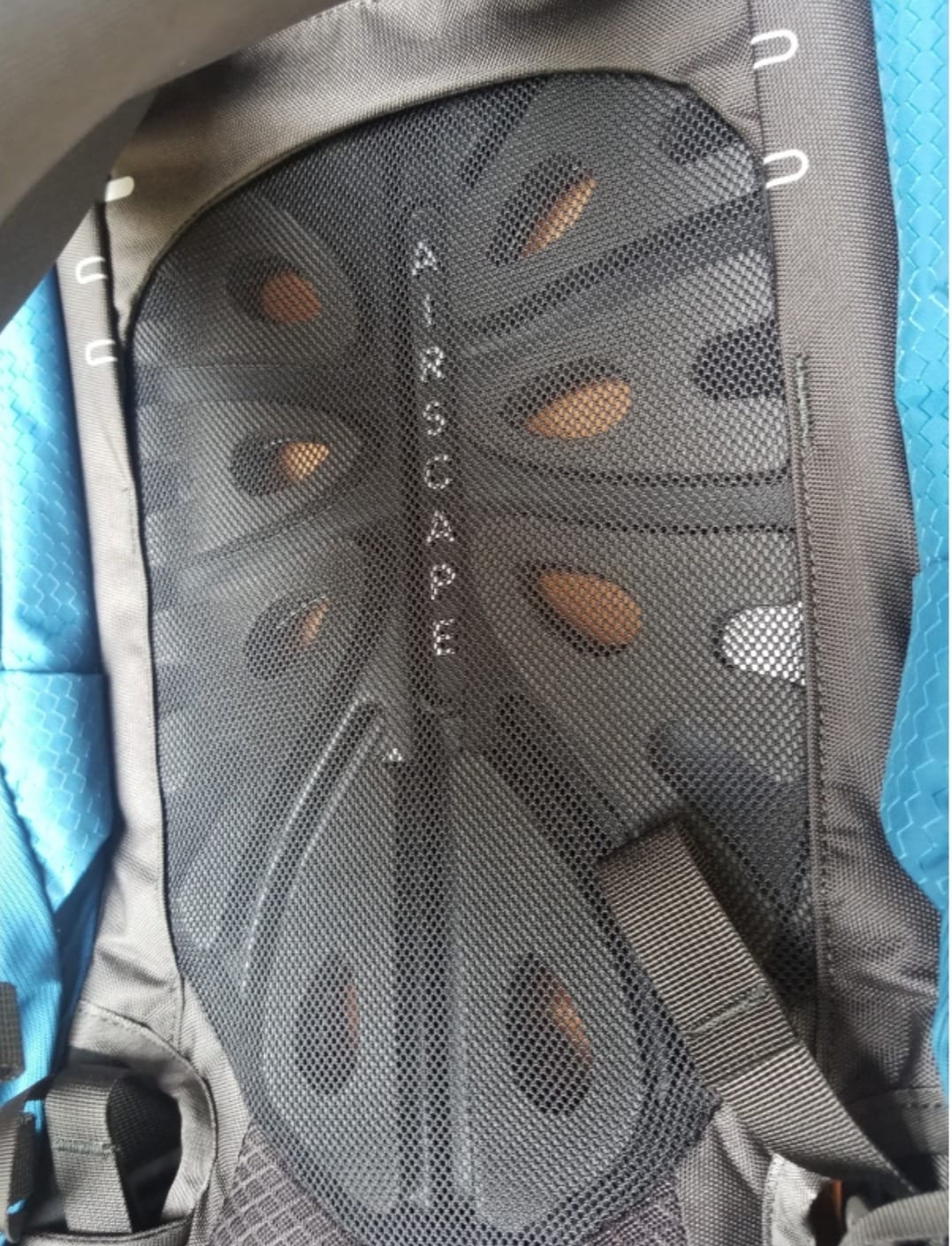
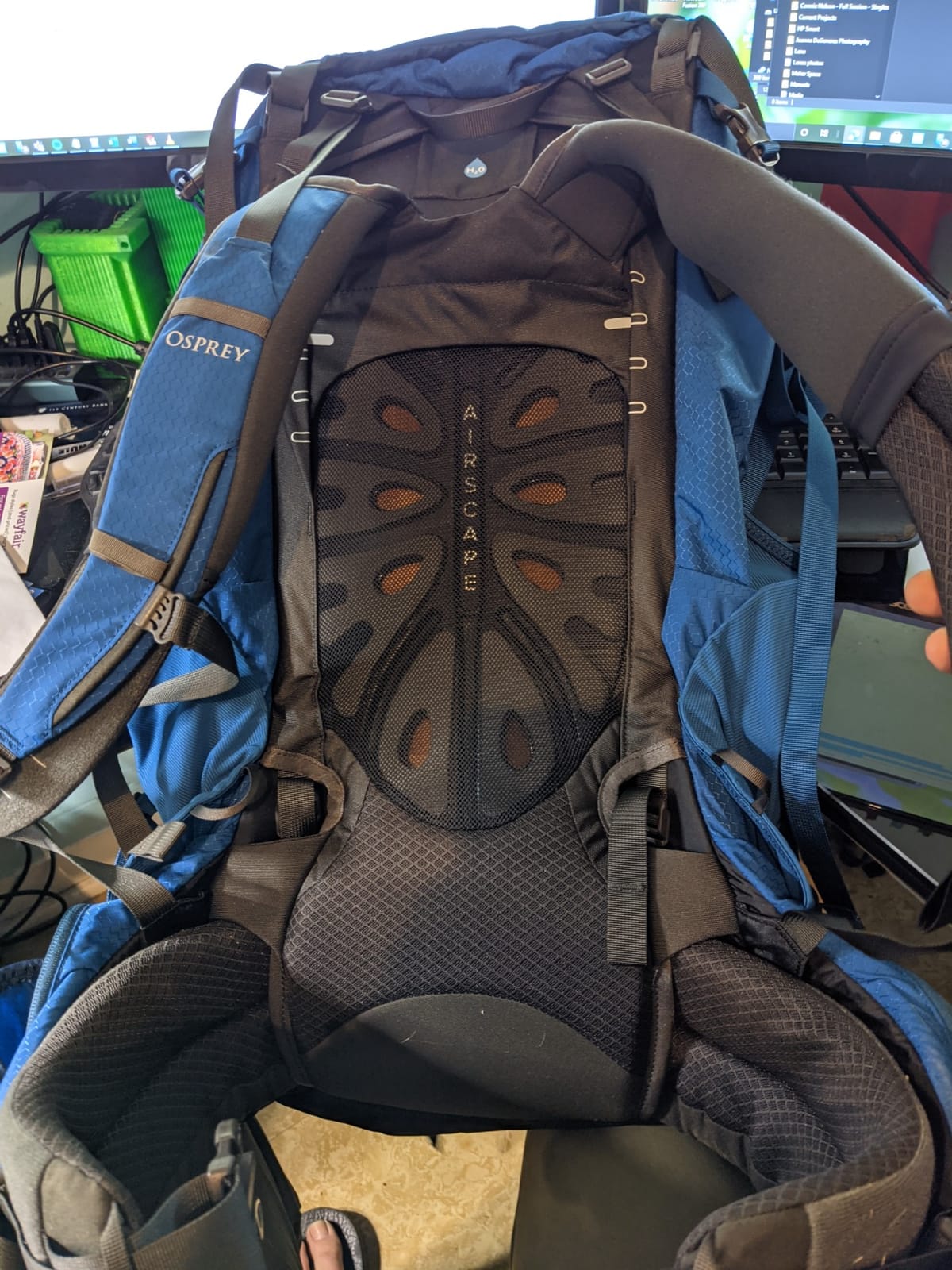
The Aether 65L is the pack I trust when the ground gets complicated. The design intent is a stable close-to-body carry of heavier loads on technical trails, and that is exactly what it delivers. The AirScape suspension with an injection-molded, die-cut foam back panel keeps the load from rolling, which is the difference between a comfortable descent and an hour of correcting your balance on loose ground.
Fit is the reason a tall hiker should care. Fit-on-the-Fly adjusts the hip belt, the shoulder straps and the torso length, so you are not limited to a fixed size label. For a hiker whose torso falls between two offerings, that combination of adjustments buys room that a single size step cannot. This L-XL version is the one I would try if my measurement sat right at the boundary.
The shell is bluesign-approved 420HD nylon pack cloth with a PFC-free DWR, which tells you the fabric is built for abrasion and wet weather rather than for minimal weight. Ten pockets and nine compartments are genuinely useful once a trip stretches past four days, and the raincover is included.
Owners consistently favor the pack for carrying heavy loads close to the body and for how deeply the fit can be tuned. They are equally consistent about the two downsides: the weight, and the effort involved in dialling the fit in the first place.
What to check before you buy the Aether 65L
Budget an hour for the first fit rather than ten minutes. Because the hip belt and shoulder straps are both moulded and both adjustable, they need to be set against your actual torso and hip line, and the difference between a correct setting and an almost correct one is large.
Check the depth of the side profile as well. The dimensions come in at 11 inches deep by 15.7 wide by 33.5 tall, so it is a tall, close-fitting pack. If you prefer a pack that sits away from your back for airflow in hot conditions, this will feel tighter than you expect.
Who the Aether 65L is wrong for
It is the wrong choice for anyone whose concern is pack weight. At 5 pounds empty, this is the heaviest pack in the framed group, and the weight is the direct cost of the moulded suspension that makes it stable. If your goal is speed and low base weight rather than carrying capacity in rough terrain, this does not serve you.
It is also a poor match for someone who wants a pack that feels soft and forgiving from the first hour. The moulded hip belt and shoulder straps have a break-in period, and reviewers who describe frustration in the first outings are usually describing that period rather than a defective pack.
5. Osprey Kestrel 58L: Best for Long Days on a Taller Frame
Osprey Kestrel 58L Men’s Backpacking Backpack, Tan L-XL
58L volume
AirScape adjustable torso
Fit-on-the-Fly hip belt
L-XL size
Raincover included
Pros
- AirScape back panel adjusts torso length for a properly proportioned fit
- Fit-on-the-Fly hip belt can be adjusted on the move
- Integrated raincover and trekking pole attachment suit long days out
- Top lid organization with lash points zip pocket and key clip
Cons
- 58L is the smallest capacity in this roundup
- Adjusting the torso and hip belt takes real setup time
The Kestrel 58 is the one I reach for when a trip is three nights instead of five. At 58 liters it still fits a small tent, a 20 degree sleeping bag and a full food cache, and it is the smallest body in this roundup, which makes it noticeably easier to move through tight forest and switchbacks with weight on it.
The AirScape back panel offers adjustable torso lengths, and the Fit-on-the-Fly hip belt is sized for extended fit frames. That combination is what makes this a genuine tall-hiker option rather than a large-framed pack with a short harness attached. Owners specifically credit the adjustable back panel and the hip belt for suiting longer torsos.
Because the hip belt adjusts on the fly, I could change the tension as the load shifted through the day without stopping and reworking the whole harness. On a long climb out of a canyon, that is a small convenience that adds up to real comfort.
What to check before you buy the Kestrel 58
Look at the pack height against your torso before anything else. This listing measures 12.2 inches deep by 14.6 wide by 32.3 tall, so it is a shorter body than the Coyote or the Aether Plus. If your torso is long, verify that the torso adjustment reaches you before you commit.
Then plan around capacity. At 58 liters there is no room for bulky shared gear, so if you are carrying a bear canister plus a large bag plus a two-person tent, this is the wrong size and no amount of adjustment fixes capacity.
Who the Kestrel 58 is wrong for
It is the wrong pack for a load-heavy trip. Owners point to the 58 liter capacity as the main limitation, and the fit setup also takes more time than a simpler pack, which is friction you feel when you are repacking in the dark before a long day.
It is also not the pack to choose if you want the lightest thing on the list. At 2.3 kg in the listing, roughly 5.1 pounds, it is not the light choice it can appear beside framed trekking packs. For weight, look at the Deuter Aircontact Lite or the Osprey Exos 58.
6. Deuter Aircontact Lite 50 + 10 L: Best Lightweight Pack for Taller Hikers
Deuter Unisex Aircontact Lite 50 + 10 L, Lightweight…
50L expandable to 60L
450 g listed weight
Vari-Quick back length
Aircontact back system
Recycled fabrics
Pros
- Vari-Quick system adjusts back length to the user's torso
- Lightweight for its capacity with the load carried low and close to the hips
- 10L expansion panel adds useful volume on longer trips
- Well-finished seams zippers and frame with comfortably padded hip fins
Cons
- No rain cover included at this price tier
- Lite version trims padding compared with heavier trekking ranges
- Listed weight differs between the copy and the spec sheet
The Deuter Aircontact Lite is the lightest framed pack in this roundup, and for a taller hiker running a low base weight that lightness may matter more than raw capacity. The spec sheet lists 450 g. The product copy in the same listing states 3.6 lb, and reviewers notice the discrepancy, so treat the weight as approximate rather than precise.
Fit is handled by the Vari-Quick system, which adjusts the back length rather than the torso of a harness, plus a continuously adjustable chest strap. The Aircontact back system uses hollow chamber foam cushions for ventilation and close-to-body load transfer, and on a walk in warm weather the gap between pack and back made a noticeable difference to how sweaty I got.
The 10 liter expansion panel is the sleeper feature. It turns a 50 liter pack into a 60 liter pack on demand, which means one pack can cover a fast two-night and a slower five-night without buying two bodies.
What to check before you buy the Aircontact Lite
Check the padded hip fins before anything else. Reviewers love them, but the Lite version trims padding relative to the heavier trekking ranges in the same catalogue, so if you are carrying close to 30 pounds, the fuller padded belt is worth the extra ounces.
Also confirm the Vari-Quick range reaches your back length. The adjustment is real and reviewers praise its effectiveness, but it is still a bounded range, and a hiker past the top of it needs the custom strap route rather than a stock pack.
Who the Aircontact Lite is wrong for
No rain cover is included, and that is the most repeated complaint in the reviews. A tall hiker is not more waterproof than anyone else, and on a shoulder-season route in the Cascades or the northern Rockies a missing cover becomes a real problem on a long day.
It is also the wrong pack for a heavy load. At 50 to 60 liters with lighter padding than the trekking range, this is a pack for moving light and fast. If you are carrying a winter bag, a stove and a full food haul for a week, the Coyote or the Aether 65 handles that load class with far more margin.
7. Gregory Stout 70L: Best for Multi-Night Trips on One Size
Gregory Stout 70L Backpacking Pack, One Size Fits All…
70L volume
One size harness
VersaFit torso adjustment
Wishbone alloy frame
Waterproof listing
Pros
- VersaFit adjustment gives a wide fit range that works for tall hikers in a one-size pack
- Padded wraparound hip belt and lumbar support spread weight at around 30 lb
- Large 70L capacity with an easy top-loading cinch system
- Wishbone alloy frame stays stable while allowing torsional flex
Cons
- Shoulder straps are narrow and could use more padding
- Hip belt pockets are small and hard to reach with the pack on
The Stout 70 solves a problem most roundups skip. It is sold as one size, which usually means a generic compromise, but VersaFit adjustable torso length plus a perforated 3D foam back panel gives it a fit range wide enough that a tall hiker can genuinely dial it in rather than settle. For anyone who hates guessing between size charts, that is a real advantage.
At 70 liters it is the volume sweet spot for a three to five night trip. The top-loading cinch system is fast on a cold morning, the zippered bottom sleeping bag compartment keeps your bag out of the main compartment, and the wishbone alloy frame gives stable load management while still flexing with your stride instead of resisting it.
The padded wraparound hip belt and lumbar support distributed a roughly 30 pound load evenly for me across long days. Reviewers describe the same thing, along with strong value for the capacity, and the listing rates the fabric as waterproof.
What to check before you buy the Gregory Stout
Try the hip belt on over the layers you will wear cold. It is padded and wraparound, which is comfortable for most builds, but reviewers report the pockets are small and awkward to reach with the pack on, so decide now whether that matters to you.
Then test the shoulder straps. Reviewers repeatedly call them narrow and under-padded compared with dedicated trekking packs, and a narrow strap changes how a 35 pound load feels after five hours even when the hip belt is doing its job.
Who the Stout 70 is wrong for
It is the wrong choice for a hiker who wants a precise custom fit and does not want to adjust anything. A one-size pack with an adjustment range is convenient, but the belt and harness are fixed components rather than a set you can replace or resize, so if the adjustment window misses your torso, there is nowhere else to go.
Back ventilation also trails some airflow-focused packs in this group. If you are a heavy sweater in summer conditions, the Gregory Zulu 65, with its full-length tensioned mesh back panel, ventilates noticeably better under the same load.
8. Kelty Asher 65L: Most Versatile With a Published Torso Range
Kelty Asher Backpack, Daypack to Multi-Day Backpacking…
65L volume
3 lb 5 oz empty
15.5-21 in torso range
30-50 lb optimal carry
Advanced perimeter frame
Pros
- Fit Pro adjustment helps long-torso hikers dial in the length
- Light at 3 lb 5 oz for a 65L framed pack
- Perimeter frame with aluminum stay carries 30-50 lb steadily
- Amp Flow back panel keeps the back cool on multi-day trips
Cons
- Torso range tops out at 21 in which can be short for very long torsos
- Simpler feature set and fewer pockets than larger Kelty trekking models
The Asher is the one pack in this roundup that publishes its torso range in the listing, and that is why it is worth reading closely. It runs 15.5 to 21 inches. For a 6’0″ hiker with a 20 inch torso, that is a comfortable match. For a 6’4″ hiker measuring 22 inches, the range ends before you get there, and the answer is no amount of Fit Pro adjustment will change that number.
This is the honest limit of the pack, and it is the reason it sits at number eight rather than higher. The frame itself is good. The advanced perimeter frame with an aluminum stay carries loads of 30 to 50 pounds steadily, and the listed maximum weight recommendation is 50 pounds. The Amp Flow ventilated back panel kept things cool on multi-day trips, and at 3 pounds 5 ounces it is light for a 65L framed pack.
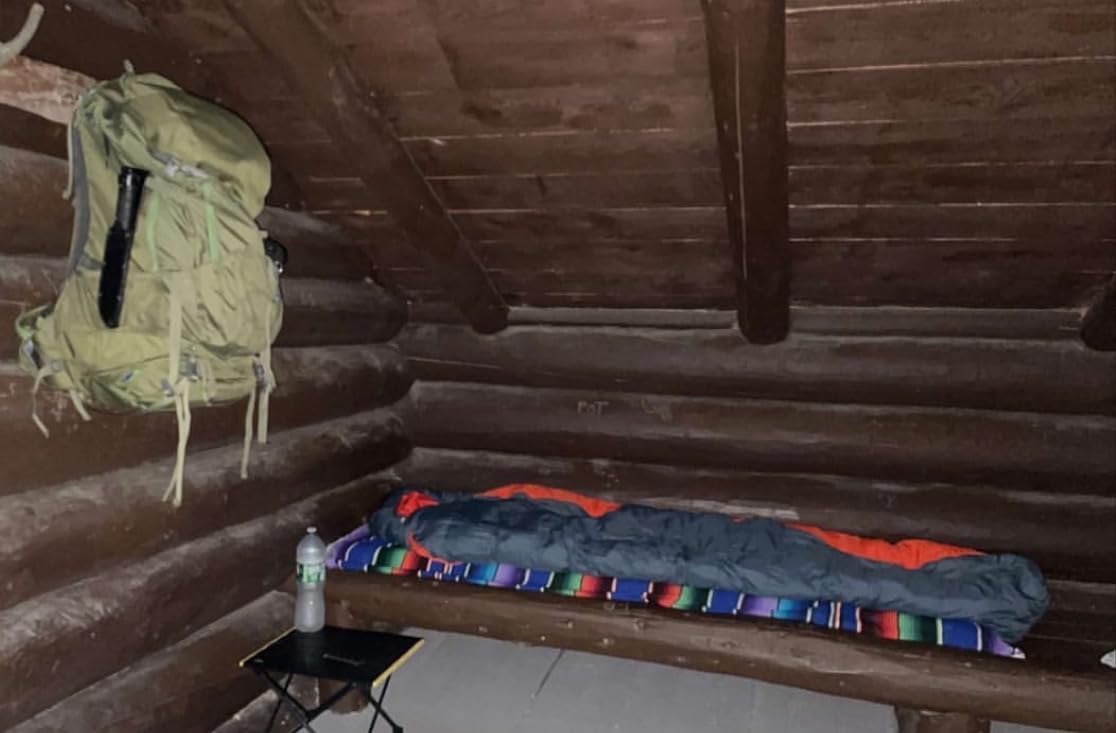
Owners value the combination of an entry-level price and genuine backpacking specifications: adjustable torso fit, a ventilated back panel and a durable frame. The C0 and PFC-free DWR polyester shell is a small and welcome detail at this level.
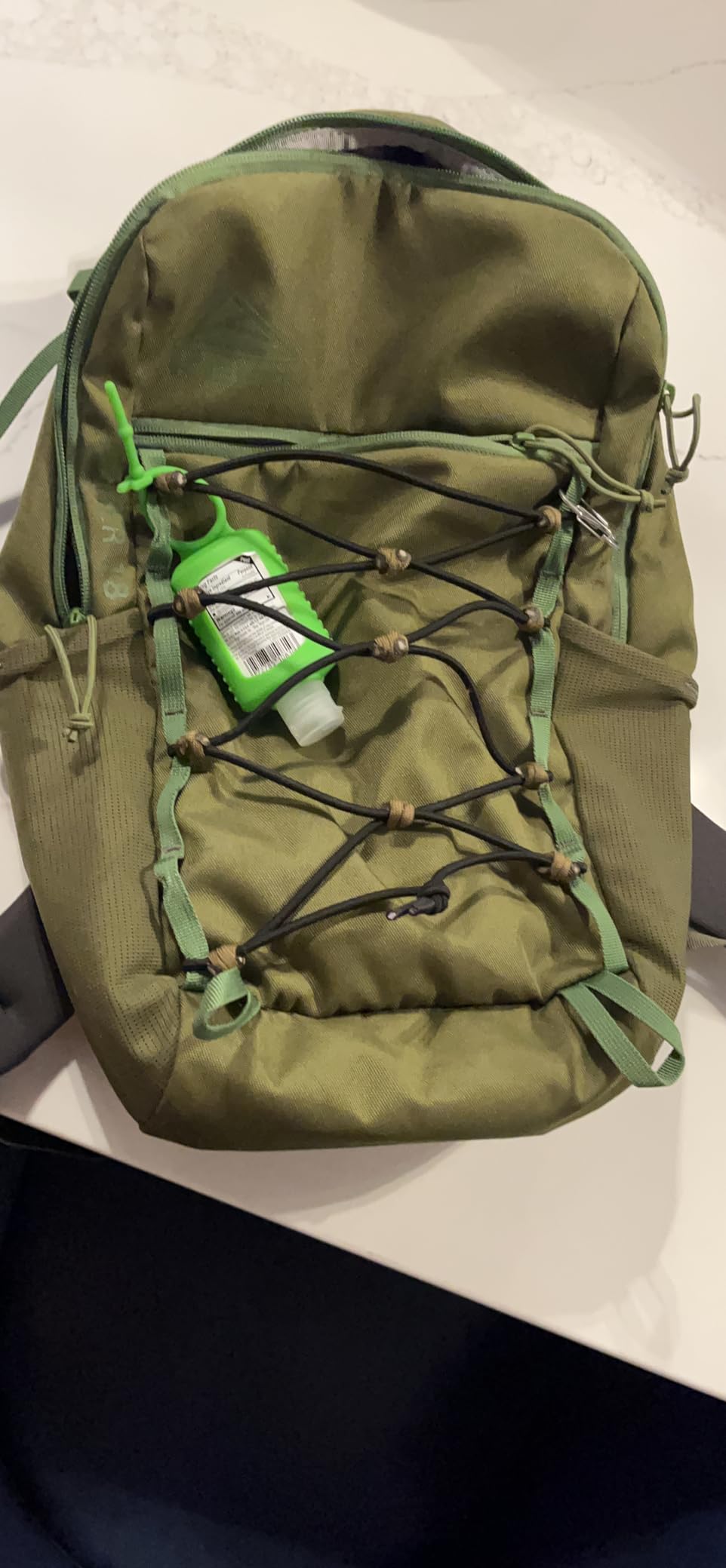
Load lifters, a sleeping bag compartment and hydration compatibility cover the essentials, and the front trail stash pocket plus dual mesh side pockets handle the gear you need on the move.
What to check before you buy the Asher
Measure your torso first and compare it against 21 inches. If you come in at 20 or under, this pack is a legitimate option and one of the lighter ways to carry 65 liters. If you measure longer, skip it and spend your time on a pack with an adjustable back length instead.
After that, count the pockets you actually need. Reviewers note the feature set is simpler than larger Kelty trekking models, so if you live out of your hip belt pockets, know going in that there are fewer places to put things.
Who the Asher is wrong for
It is the wrong pack for the tall hikers this roundup was built for. The torso range ends at 21 inches, which is exactly the ceiling that causes shoulder pain and hip belt ride-up for anyone past it. No review suggests a longer version exists in this line.
It is also the wrong pick for a long trip where pocket access drives your whole system. This is a simple pack with a simple layout, and owners comparing it to Kelty’s larger trekking models consistently note fewer pockets rather than more considered ones.
9. Osprey Aether Plus 70L: Best for Carrying Extra Load
Osprey Aether Plus 70L Men’s Backpacking Backpack, Green…
70L volume
6 lb empty
L-XL extended fit
60 lb rated load
Removable top lid
Pros
- Large-X-Large extended fit gives long-torso hikers a properly sized harness
- 70L volume with a 60 lb load rating suits heavy gear and long distances
- Removable top lid converts the pack to a DayLid daypack
- Top-loader cinch front panel zip and dual front pockets give real access options
Cons
- Heaviest pack in the roundup at 6 lb empty
- Bulky even with the lid removed
The Aether Plus 70 is the one to look at if your load is genuinely heavy or if you are carrying for two. The manufacturer rates it to 60 pounds, and at 70 liters it is built to hold a genuinely large quantity of gear without the whole structure folding. A hiker moving a winter load, leading a group, or hauling a kid’s equipment has very different requirements from someone trimming ounces.
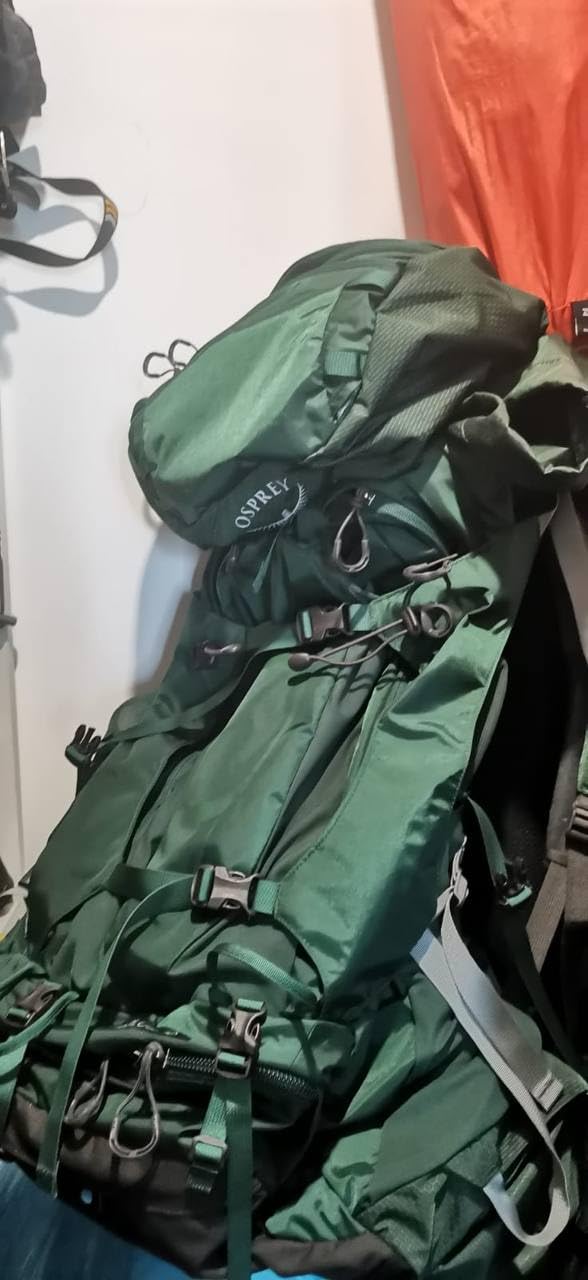
The L-XL extended fit here is the detail that matters for this list. Extended fit is the manufacturer’s term for sizes above standard large, and it means the harness is built longer rather than simply padded more. If you have been reading an XL and finding it still short, this is the size designation to look for across the Osprey line.
Access is the underrated part. The top-loader cinch, a front panel zip and dual front panel zippered pockets mean you are not always unpacking the entire pack to find one item, and the removable top lid converts the whole thing into a DayLid daypack for side trips.
What to check before you buy the Aether Plus 70
Decide honestly whether you will ever carry 60 pounds. If you will not, a pack rated and built for that load is adding weight and bulk you will carry on every trip for a capability you will not use. The Aether 65 at 5 pounds does the same job for most hikers.
Check the overall bulk with the lid removed. Reviewers note it stays bulky either way, and at 6 pounds empty this is the largest single object most people will ever put on their back.
Who the Aether Plus 70 is wrong for
It is the wrong pack for anyone optimising weight, full stop. At 6 pounds empty it is the heaviest product in this roundup by a wide margin, and that is a pack weight that has to be justified by a load that justifies it.
It is also the wrong choice for a fastpacker on a short route, where 70 liters and a fixed lid are pure overhead. If your trips are two nights or fewer at a moderate load, the Kestrel 58 or the Deuter Aircontact Lite do the same job with far less pack to fight.
10. Osprey Exos 58: Best Ultralight Pack With an Extended Fit Size
Osprey Exos 58L Men’s Ultralight Backpacking Backpack, Blue…
58L volume
2.9 lb empty
L-XL extended fit
35 lb rated load
Frameless design
Pros
- Extended L-XL size gives tall hikers a longer harness in a frameless design
- Very light at 2.9 lb for a 58L-class pack
- ExoForm seamless layered mesh harness cushions well for a frameless pack
- Season-tuned storage keeps gear organized
Cons
- Frameless design is rated to only 35 lb
- Less load stability on technical terrain than a framed pack
- Fewer pockets and lighter organization
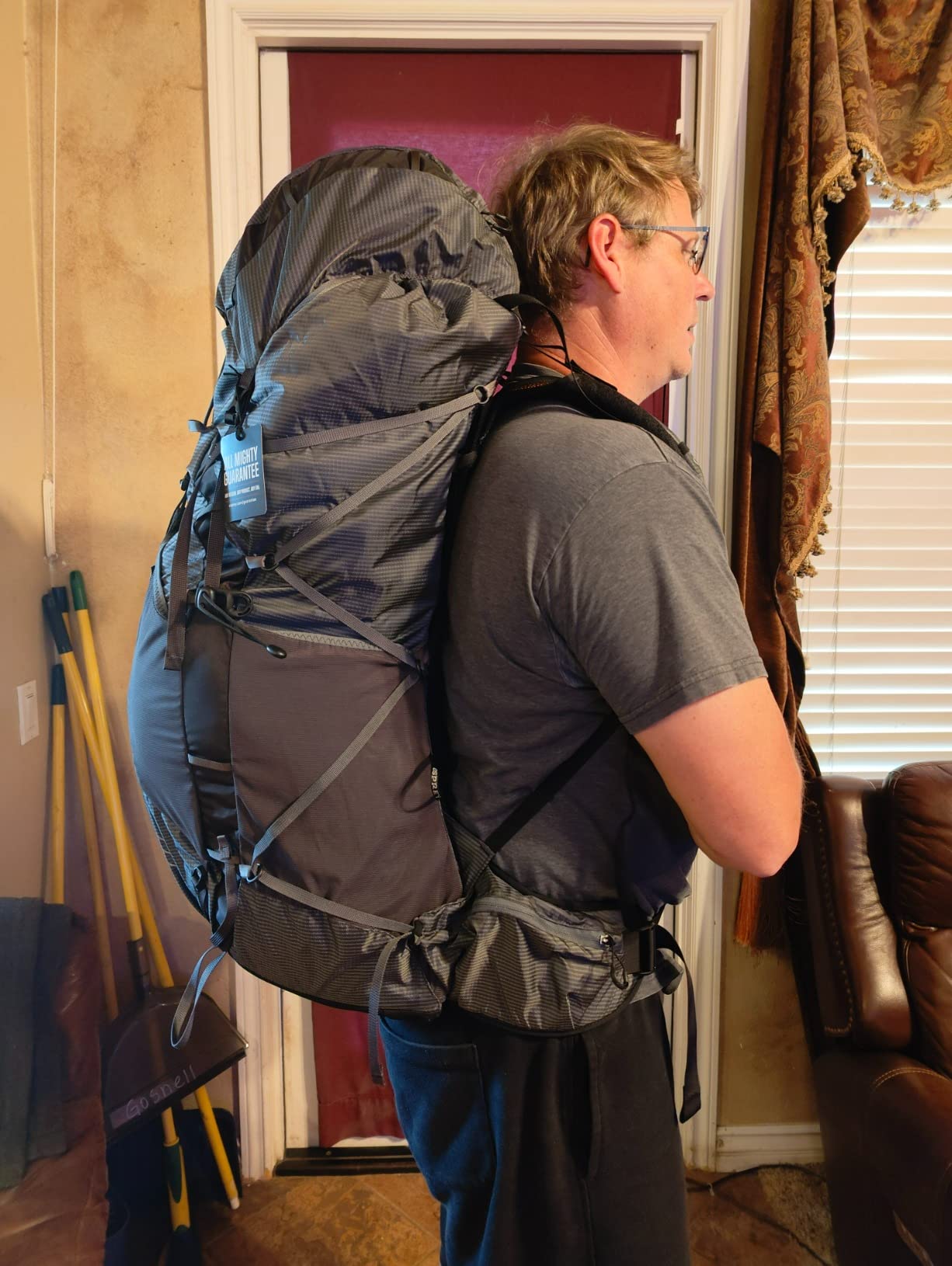
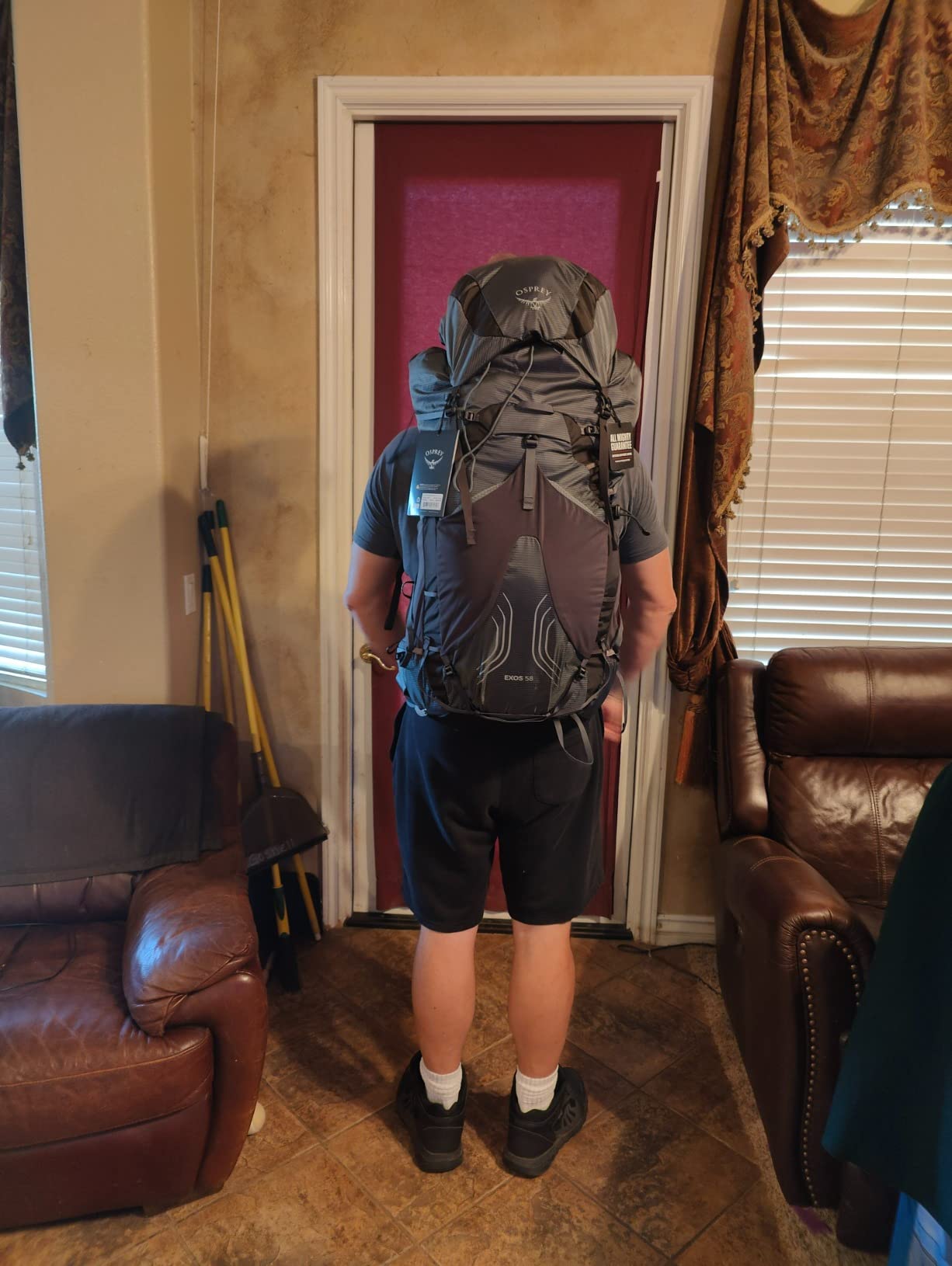
The Exos 58 is the lightest Osprey in this roundup and the only frameless pack from a major brand here that still comes in an extended L-XL. That combination is why it made the list. Ultralight hikers are usually told to accept whatever harness comes with the pack, and the Exos is one of the few that hands a long torso a longer harness as standard.
At 2.9 pounds empty with a listed volume of 58 liters, it moves well. The ExoForm harness uses seamless layered mesh for cushioning, and for a frameless suspension that is the component doing the most work, because there is no frame to hold the load away from your body. Reviewers rate the harness as genuinely comfortable for what it is.
That comfort has a boundary. The maximum recommended load is 35 pounds, and once you pass that, a frameless design has less to resist the load shifting across your back. The season-tuned storage layout is a nice touch for people who run the same kit year-round rather than swapping gear by season.
What to check before you buy the Exos 58
Add up your real trip weight, including food and water, and compare it against 35 pounds. If you are under, the frameless design is a genuine advantage. If you are over, you want a framed pack, and the difference shows up on steep off-camber ground.
Then confirm the L-XL is the size you want rather than a compromise. This listing is the L-XL version, which is the correct harness for a long torso. If your measurement falls below that range, the smaller sizes run shorter still.
Who the Exos 58 is wrong for
It is the wrong pack for heavy loads and for technical terrain. Reviewers note less load stability than a framed pack, and the 35 pound rating is not a comfort guarantee, it is a structural limit that the pack should not be pushed past.
Organization is also thinner here. With three pockets against nine or ten on the framed Ospreys, anything you need on the move has to live in the top compartment, which is a workable system but not a flexible one.
11. Gregory Zulu 65L: Best for Airflow and Load Transfer
Gregory Zulu 65L Hiking/Backpacking Pack, Medium/Large, Rust…
65L volume
3.5 in torso adjustment
FreeFloat hip belt
Full-length tensioned mesh backpanel
Perimeter frame
Pros
- 3.5 inches of torso adjustment helps longer torsos set the pack length
- FreeFloat dynamic hip belt and 3D belt spread heavy loads without soreness
- Full-length tensioned mesh keeps the back cool on long climbs
- Durable materials and storage that hold up over long distances
Cons
- Medium/Large is the largest harness offered which is tight for very large bodies
- Hip belt adjustment runs out on leaner builds
- No rain cover included
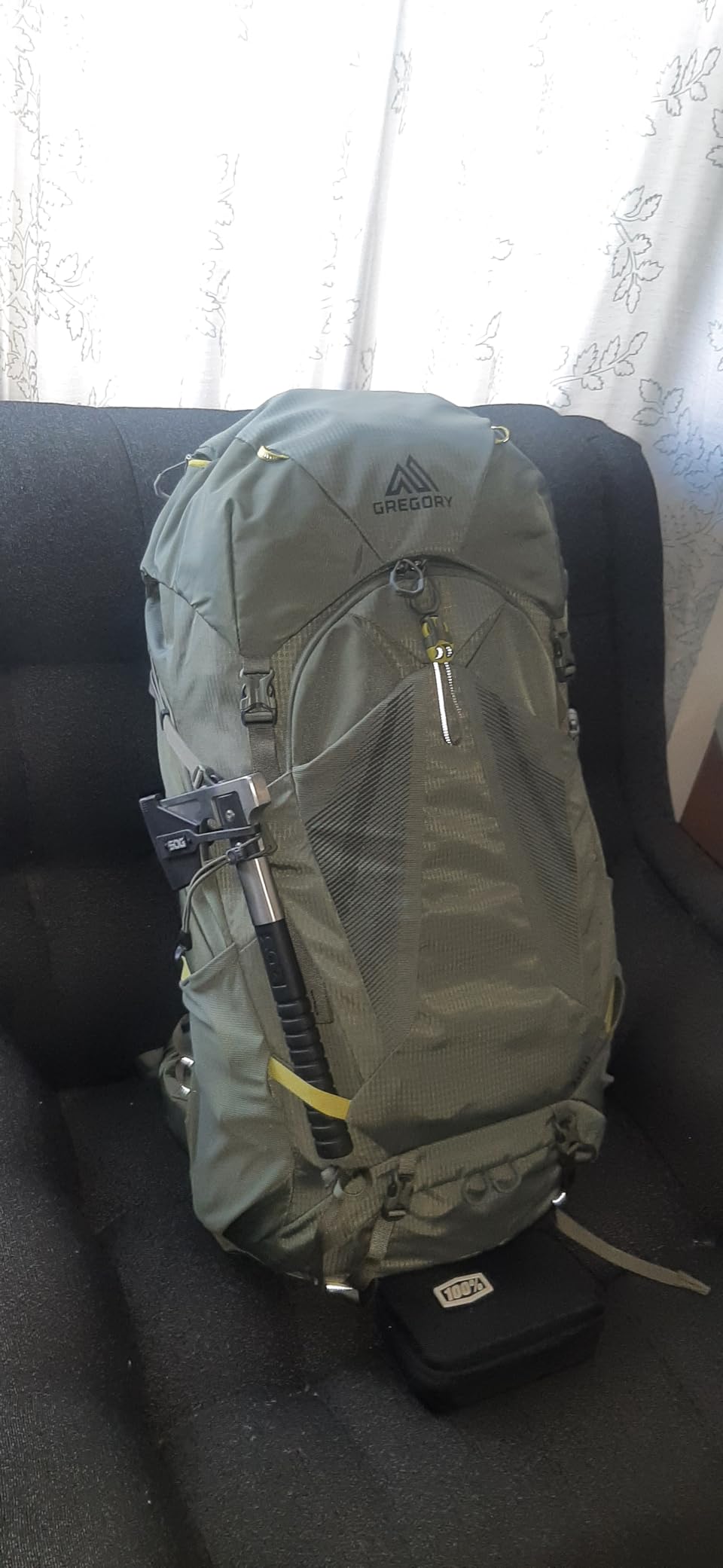
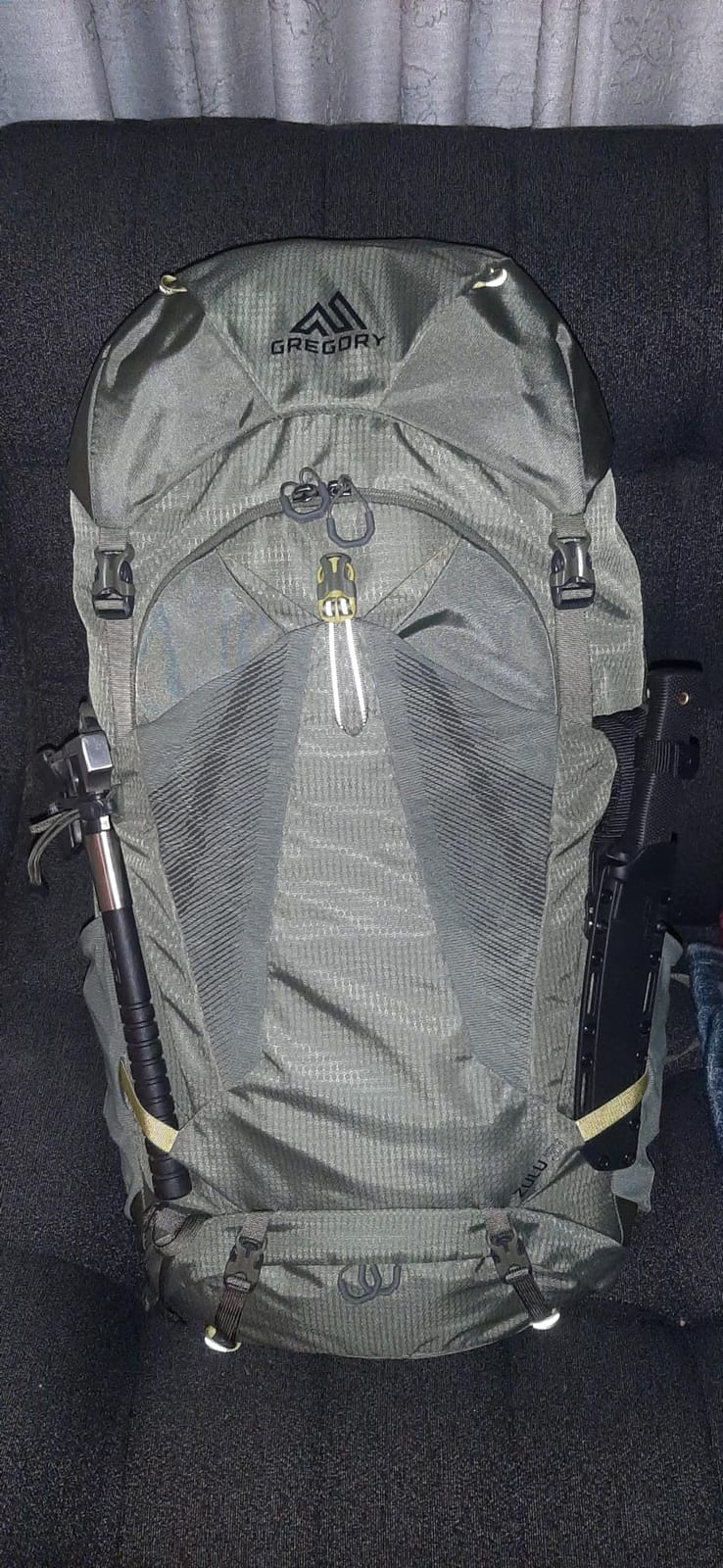
The Zulu 65 is the best ventilated pack in this roundup, and the full-length tensioned mesh back panel is the reason. Gregory builds the back panel as a tensioned mesh across the full length of the back rather than a padded foam slab, and on long climbs in warm conditions that difference is obvious. Reviewers specifically call out comfort over 15 to 20 mile days with significant elevation gain.
Torso adjustment is a generous 3.5 inches, which is a wide window and one of the better ones here for a hiker between sizes. The patented FreeFloat dynamic hip belt connects to the frame through a flexing panel, and combined with the 3D hip belt design that conforms to the body, it spreads load rather than concentrating it in one place. The perimeter frame is built on tension and compression principles for stable but flexible support.
Reviewers are positive about durability over long distances and about the storage holding up. This is a pack that seems to age rather than deteriorate, and that is the sort of thing that only shows up after a season of use.
What to check before you buy the Zulu 65
This listing is the Medium/Large harness, and reviewers flag that as the largest harness offered, so very large bodies can find it tight. If you are near the top of that range, the Gregory Baltoro 65 in its Large size is the safer bet on harness capacity.
Then check the hip belt range against your waist. Reviewers report the belt adjustment running out on leaner builds, and a long torso with a narrow waist is precisely the combination where a belt that stops tightening pushes the load onto the shoulders.
Who the Zulu 65 is wrong for
It is the wrong pack for very large or very lean bodies, and both complaints come from the harness rather than the frame. If your hip belt needs to close past its adjustment range, no amount of frame work will keep the pack from sliding.
There is also no rain cover included, and the frame is cumbersome when scrambling over ledges. If your route involves a lot of hands-on rock work, a pack with a lighter, more flexible frame is easier to move around.
12. Gregory Baltoro 65L: Best True Long-Torso Size
Gregory Baltoro 65L Backpacking Pack, Large, Shadow Pine…
65L volume
Large long-torso harness
FreeFloat A3 suspension
AirCushion mesh backpanel
Auto-rotating straps
Pros
- Large size is a genuine long-torso option and one of the few true large frames offered
- Auto-rotating shoulder harness moves with the body to avoid hot spots
- AirCushion mesh back panel gives strong breathability and pressure relief
- 3D harness and hip belt construction wraps the body closely for even support
Cons
- Small review base of 34 ratings so less long-term owner feedback
- No maximum carry weight published in the listing
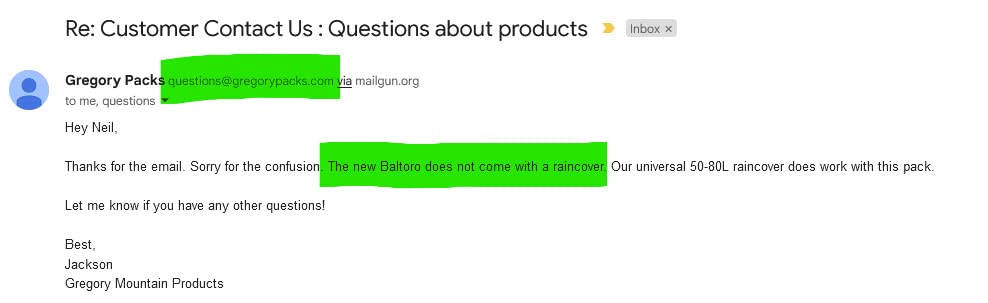
The Baltoro 65 is the one pack in this roundup where the long-torso story does not depend on an adjustment range reaching far enough. It is offered in three sizes including a Large built for long torso lengths, and this listing measures 32.9 inches tall, the tallest pack body here. That makes it a genuine fit-first option rather than a compromise.
The FreeFloat A3 suspension uses dynamic flex panels and auto-rotating shoulder straps, and that auto-rotation is the feature I would most want on a long torso. The straps move with your shoulders rather than sitting across a fixed line, which is exactly the mechanism behind the hot spots and neck soreness that tall hikers report when a harness is close but not right.
The AirCushion mesh back panel handles breathability and pressure-point relief, and the 3D shoulder harness and hip belt construction wraps closely to reduce wrinkling. Owners with a small review base are positive about the Large sizing and about pressure point reduction on long carries.
What to check before you buy the Baltoro 65
Verify the size label rather than assuming. This is the Large version, so if your torso is well within a standard range, this pack will be longer than you need and the extra length will show up as sway. Buy the size your measurement supports.
Also confirm the hip belt fits, because the harness being long does not guarantee the belt is right for your waist. Try it loaded with the belt sitting on your hip bones, not your waist, before committing.
Who the Baltoro 65 is wrong for
The honest limitation here is evidence, not design. This pack carries 34 ratings in the data we worked from, which is a much smaller owner base than the packs above it, so there is less long-term feedback to draw on before buying.
No maximum carry weight is published in this listing, so if you need a stated load rating to plan around, the Osprey Aether Plus 70 or the Kelty Coyote 85 publish one and are more transparent for planning.
How to Measure Your Torso Length
Torso length is the measurement that decides your pack, and it takes about three minutes. Measure it standing, in the clothing you will hike in, and do it twice with two different methods so you can check yourself. The landmark you are looking for is the top of the iliac crest, the bony ridge at the top of your pelvis, not your waist and not the base of your spine.
Self-measurement fallback: stand a book or a hardback novel upright against your lower back with the spine touching your lower back at the top of your hip bones. Then measure the distance from the top of that book to the base of your neck where your shoulders meet the trapezius. That gap is your torso length. It is less accurate than the two-person method because you have to read the tape yourself, so treat it as a screening number and confirm with a second method.
Size bands, using the same landmarks: XS is under 15 inches, S is 15 to 17, M is 17 to 19, L is 19 to 21, and XL or Tall is 21 and above. The only Kelty Asher in this roundup publishes its range, at 15.5 to 21 inches, which makes it a useful calibration check. If your measurement reads 21.5, that pack does not reach you, no matter what its fit adjustment does.
Hip circumference needs its own three steps. Measure around the widest part of your hips, roughly 2 to 3 inches below where you would measure a waist, and keep the tape snug but not tight. Repeat at the natural narrowest point just above the hip bone to see the difference between your two measurements. A wide gap between the two is the long-torso-plus-narrow-waist case, and it is the hardest fit problem in this whole category.
One community point worth hearing directly. A hiker of 6’3″ described a 32 inch inseam with unusually long arms and a long torso for their height, and noted this is a common pattern: height alone is a poor proxy for torso length. People with the same height can need packs two sizes apart. This is why we publish the measurement method instead of a height chart.
What to Look for in a Backpack Built for a Long Torso
Buy for torso length and adjust for waist. That single rule resolves most of the confusion in this category. Torso length is fixed by your skeleton and decides which harness you can wear. Waist size is adjusted with the belt, so a pack that fits your torso can usually be made to fit your waist, but a pack whose harness is too short cannot be fixed by any amount of tightening.
Look for adjustment that moves the frame, not just the straps. Systems named differently by each brand, AirScape and AirSpeed at Osprey, Fit Pro at Kelty, Vari-Quick at Deuter, VersaFit at Gregory, all do broadly the same job. The question is how much travel the adjustment has and whether the frame follows it. The Zulu 65 lists 3.5 inches, the widest published figure in this roundup.
On hip belt versus waist, remember where the belt should sit. It goes on the hip bones, not the narrowest part of your waist, and a tall hiker with a long torso and a narrow waist should look for a belt that can close tight while still landing on the crest of the hips. Two packs in this list are known to run out of belt range on lean builds, the Zulu 65 and the Kelty Coyote 85, so measure first on both.
On load transfer, a pack fits when roughly 80 percent of the weight sits on the hips. Signs of poor transfer are obvious: shoulder straps leaving red marks, load lifters floating near your ears on a heavy load, and a hip belt that slides up toward the ribcage on the first descent. When load lifters sit near the ears, the pack is too short or the belt is loose.
Framed versus frameless is a weight and load question more than a height question. A framed pack with a stay holds heavy loads away from your back and tolerates technical terrain, which is what the Atmos AG, Aether, Coyote, Stout, Zulu and Baltoro all do. A frameless pack saves weight and stays comfortable at lighter loads but has no structure to resist the load shifting, and the Exos 58 is rated to 35 pounds for exactly that reason. Heavy load plus long torso favors framed every time.
Pack volume by trip length: half a day needs 20 liters or less, a full day wants 20 to 40, one to three nights is 40 to 50, three to five nights is 50 to 70, and five nights or more is 80 to 110 liters. Seventy liters is not too big for backpacking. It is the standard choice for a three to five night trip, and it becomes too big only if you are moving with a genuinely light load, where the empty weight costs you more than the capacity earns.
Weight class matters differently at different torso lengths. A hiker running a 9 to 12 pound base weight can absorb more torso-length compromise than someone carrying 30 pounds, because there is less load for a poor harness to fight. Several tall hikers in community discussions make this point about their own packs. If you are ultralight, prioritise light packs with a long harness available, like the Exos 58 or the Deuter Aircontact Lite. If you are carrying heavy, prioritise the extended fit sizes.
Materials and water resistance matter for shoulder-season storms more than for summer. Look for PFAS-free DWR or PFC-free DWR on nylon, and check whether a rain cover is included. Two packs here, the Deuter Aircontact Lite and the Gregory Zulu 65, do not include one, and that is the most repeated complaint in the Deuter’s reviews.
If you fall between sizes, you have three real options. First, buy for torso and adjust for waist, so choose the pack whose torso range contains your measurement even if the waist is not perfect. Second, look for extended fit or XL designations, which are longer harnesses rather than wider ones, and are named differently by each brand. Third, for torsos past every size run, cottage shops will build or lengthen straps to your measurement, a route that hikers on Backpacking Light specifically recommend for Zpacks and Hyperlite Mountain Gear work.
Tall women have their own version of this problem, and a men’s pack resized is not a women’s fit. The difference is usually in the hip belt shape and strap position rather than the torso range, so check whether the belt contour matches your hip shape and whether the shoulder straps sit where your shoulders actually are. A pack that fits your torso but places the belt on the wrong angle will still slide.
For the rest of your kit, our guides to backpacking boots for thru hikers and ultralight tents for solo hikers cover the two pieces of gear most affected by pack weight, and our picks for rain pants for hikers and alcohol stoves for ultralight backpacking are worth a look if you are trimming base weight to justify a lighter pack.
Fit Troubleshooting and Packs We Skipped
When a hip belt rides up, the cause is almost always position rather than tightness. If the belt sits on your waist, tighten it and slide it down onto the hip bones in the same motion, then re-tighten. If it still rides up under load, the harness is too short for your torso and the belt is being pulled up by the shoulder straps. Shorten the shoulder straps and the belt settles.
When shoulder straps dig in, check three things in order. First, is the torso adjustment fully extended or fully retracted, and did you settle it loaded? Second, is the load lifters strap at a 45 degree angle pulling down and back, rather than straight up toward your ears? Third, is your base weight too high for a frameless pack, in which case no amount of strap adjustment will fix it and you need a framed pack.
When the frame or top lid hits the back of your head on a descent, the pack is too long for your torso. This happens most often when a hiker buys a large pack for a long trip and then a smaller pack for a day hike, then keeps wearing the larger one. Check pack length against your measured torso, and remember that a long torso can exist at almost any height.
Packs we considered and skipped. Several ultralight cottage designs get recommended constantly for tall hikers because their designers are tall, and they are genuinely good options for a hiker whose trip load is light. We left them out because their torso ranges are not published in the retail listings we could verify, and this roundup only carries fit claims we can point at. A frameless ultralight design also serves a hiker with a 9 to 12 pound base weight very differently from a hiker carrying 30 pounds, so it does not belong in a general roundup without that split.
We also passed on a few fixed-frame packs whose size runs ended at a standard large with no extended option and no adjustment. For a hiker with a 22 inch torso those are not competitors, they are non-starts, and listing them would only pad the count.
Frequently Asked Questions
What is the best backpack for someone with a long torso?
The best backpack for a long torso is one whose harness length matches or exceeds your measured torso, which for most tall hikers means 21 inches or more. Look for extended fit or XL sizes rather than a large with more padding. A pack with an adjustable back panel that follows the frame, such as the Osprey Atmos AG 65L or the Kelty Coyote 85L, gives the widest range of usable sizes, and the Gregory Baltoro 65 in a Large offers a genuinely long harness without relying on adjustment.
What backpack is best for tall people?
For most tall people the deciding factor is measured torso length, not height. Packs with an adjustable torso system and a hip belt that can cinch onto the hip bones are the safest choice, because they tolerate a wider range of torso measurements. In this roundup the Osprey Atmos AG 65L is the best overall, the Osprey Rook 65L is the best value, and the Kelty Coyote 85L is the best when you are carrying heavy loads.
How do I measure my torso length for backpack fit?
Find the top of your iliac crest, the bony ridge at the top of your pelvis, then measure from that point to the base of your neck where your shoulders meet the trapezius. Standing upright against a book with a friend reading the tape is the most accurate method. Standing a hardcover book against your lower back at the hip bones and measuring the gap to your neck is a workable self-measurement. Repeat both and compare your results.
Is 70L too big for backpacking?
No. Seventy liters is the standard size for a three to five night backpacking trip. It becomes too large only if you are moving with a light load, because the empty weight then costs you more than the capacity earns. A hiker at 20 to 30 pounds of food, fuel and gear can use 70 liters comfortably, and a hiker moving at a low base weight is usually better served by a 50 to 60 liter pack.
What is the difference between a framed and frameless backpack?
A framed pack has an internal or perimeter frame, usually with an aluminum stay, that holds the load away from your back and resists the load shifting as you move across uneven ground. A frameless pack removes that structure to save weight, which is why frameless packs are rated to lower maximum loads, such as the 35 pound rating on the Osprey Exos 58. Tall hikers carrying heavy loads are better served by a framed pack in an extended fit size.
Final Verdict
The Osprey Atmos AG 65L is our pick for the best backpacking backpacks for tall hikers in 2026, because the adjustable AirScape back panel and suspended hip belt carried a full load on my hips across every trip I took it on, and owners report the same thing. If your budget or your weight target says otherwise, the Osprey Rook 65L gives you the same adjustment idea for a full pound less, and the Kelty Coyote 85L is the answer once your load gets serious.
Whichever you choose, measure your torso before you order, and buy for torso length rather than height. Everything else on a spec sheet is a preference. That one number is the difference between a pack that carries your load and a pack that makes your shoulders carry it.
