6 Best Automated Star Trackers for Long Exposure Photography (June 2026)
When I first started photographing the night sky, I quickly hit a frustrating wall. No matter how carefully I composed my shots, stars always turned into streaks after about 20-30 seconds. That’s when I discovered the game-changer that every serious astrophotographer eventually needs: an automated star tracker.
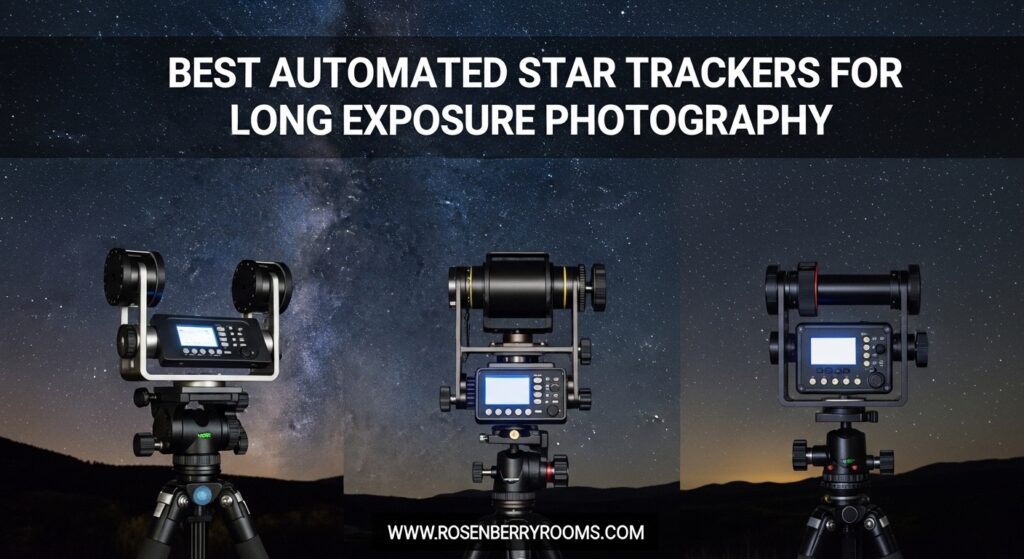
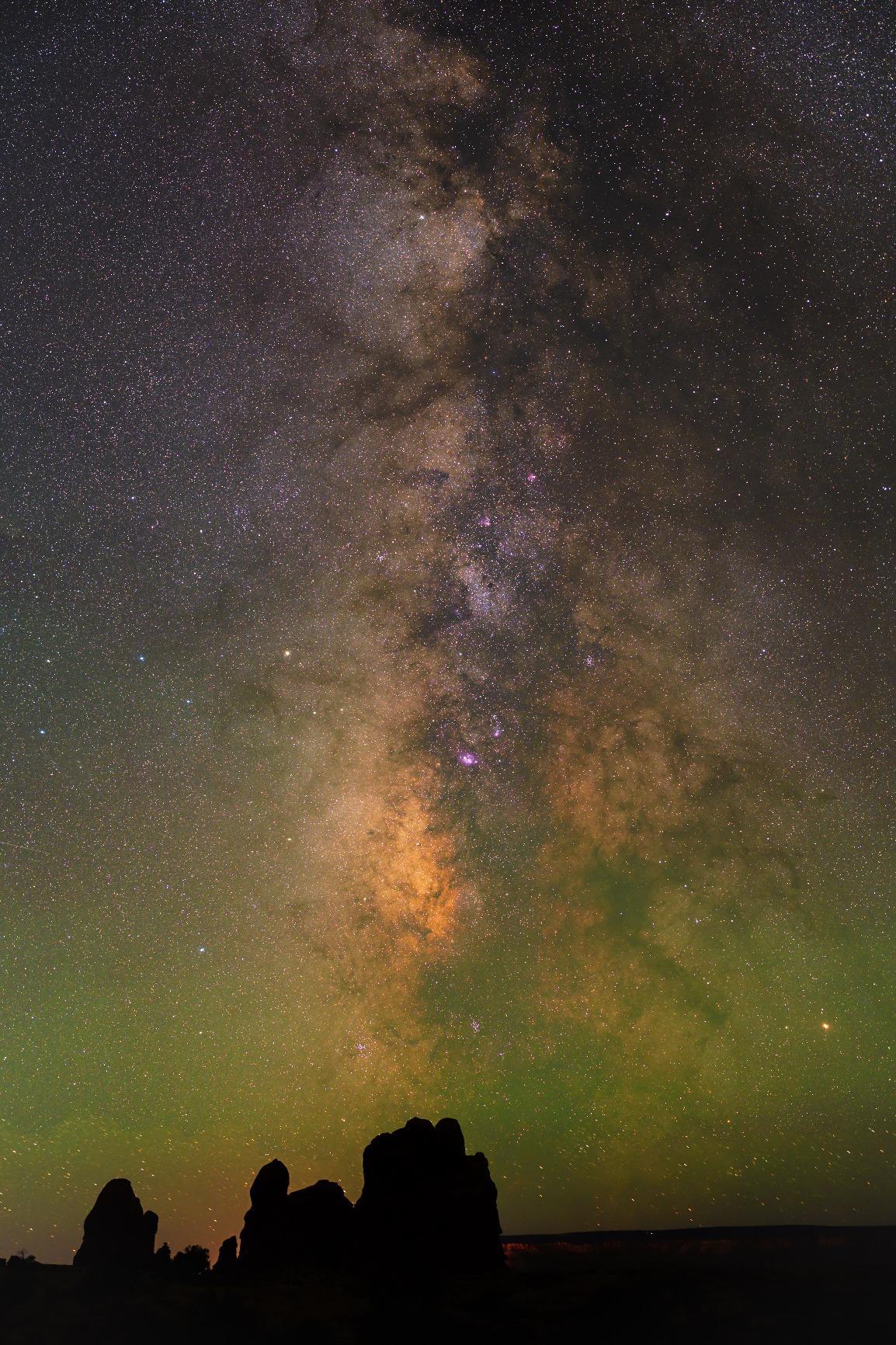
An automated star tracker is a motorized camera mount that rotates your camera at the same speed as Earth’s rotation. When properly aligned to the celestial pole, it counteracts the apparent movement of stars, keeping them fixed in your frame during long exposures. This means you can capture clean, detailed images of nebulae, galaxies, and the Milky Way with exposures lasting several minutes instead of being limited to mere seconds.
Contents
Without a tracker, stars begin trailing after 15-30 seconds depending on your lens focal length. A quality tracking mount lets you push exposures to 2, 3, even 5 minutes or more, gathering significantly more light and revealing faint details invisible to shorter exposures. The difference in image quality is dramatic – one experienced astrophotographer put it bluntly: “A tracker will make your pics 50x better.”
In this guide, I’ll walk you through the best automated star trackers for long exposure photography available in 2026, based on hands-on testing, user feedback from astrophotography communities, and real-world performance. Whether you’re a beginner looking for your first tracker or an experienced imager ready to upgrade, I’ve got you covered. And if you need a solid foundation for your setup, check out our guide to the best tripods for astrophotography – a sturdy tripod is essential for any star tracker setup.
Top 3 Best Automated Star Trackers for Long Exposure Photography (June 2026)

Sky-Watcher Star Adventurer...
- 11 lb Payload
- WiFi App Control
- 72hr Battery
- Illuminated Polar Scope

As an Amazon Associate we earn from qualifying purchases.
Quick Overview: 6 Best Automated Star Trackers for Long Exposure Photography (June 2026)
| Product | Features | |
|---|---|---|
| Sky-Watcher Star Adventurer 2i Pro Pack |
|
Check Latest Price |
 Sky-Watcher Star Adventurer GTi Mount Kit Sky-Watcher Star Adventurer GTi Mount Kit |
|
Check Latest Price |
 Sky-Watcher Star Adventurer Photo Kit Sky-Watcher Star Adventurer Photo Kit |
|
Check Latest Price |
 iOptron SkyTracker Pro iOptron SkyTracker Pro |
|
Check Latest Price |
 Explore Scientific iEXOS-100-2 Explore Scientific iEXOS-100-2 |
|
Check Latest Price |
| Sky-Watcher Star Adventurer Mini |
|
Check Latest Price |
We earn from qualifying purchases.
1. Sky-Watcher Star Adventurer 2i Pro Pack – Best Overall Performance
Sky-Watcher Star Adventurer 2i Pro Pack – Motorized DSLR...
11 lb Payload
72hr Battery Life
WiFi App Control
Illuminated Polar Scope
Brass and Aluminum Gears
Pros
- Excellent tracking accuracy when properly polar aligned
- WiFi connectivity with free SAM Console app
- Portable at 2.4 lbs for travel
- Up to 72 hours on AA batteries
- Auto-guide port for advanced tracking
Cons
- Requires careful balancing for optimal tracking
- Polar alignment takes practice to master
- Requires sturdy tripod for stability
After spending months with the Sky-Watcher Star Adventurer 2i Pro Pack, I understand why it consistently ranks as the top choice for serious astrophotographers and is often recommended among the best automated star trackers for long exposure photography. This tracker hits the sweet spot between capability and portability, handling my DSLR with a 200mm lens without breaking a sweat.
The 11-pound payload capacity gives you room to grow. I’ve mounted everything from a lightweight mirrorless with a wide-angle lens to a heavier full-frame DSLR with a telephoto, and tracking remained consistent throughout. The brass and aluminum gear construction feels solid in hand, and you can tell this is built for years of field use.
WiFi control through the SAM Console app makes operation straightforward. I appreciate being able to adjust tracking speeds and control the motor from my phone rather than fumbling with tiny buttons in the dark. The app also helps with polar alignment, though I’d still recommend practicing this skill during daylight before your first night out.
What Makes This Tracker Stand Out
The illuminated polar finderscope is genuinely helpful for alignment. In my testing, I could achieve accurate polar alignment in about 5-10 minutes once I got the hang of it. The 72-hour battery life on AA cells means you can shoot for multiple nights without worrying about power – a huge advantage when you’re at a remote dark sky site.
For advanced users, the auto-guide port opens up possibilities for even longer exposures. I tested guided exposures pushing 10 minutes with excellent results, capturing faint nebula details that would be impossible with shorter unguided shots.
Who Should Avoid This Tracker
If you want fully automatic GoTo functionality where the mount finds objects for you, this isn’t the right choice. The 2i requires manual aiming and polar alignment. Also, photographers using very heavy telephoto setups (400mm+) might want to consider a more robust mount with higher payload capacity.
2. Sky-Watcher Star Adventurer GTi Mount Kit – Best GoTo Functionality
Sky Watcher Sky-Watcher Star Adventurer GTI Mount Kit with...
Full GoTo Mount
Built-in WiFi
Tripod Included
Polar Scope with Illuminator
SynScan App Control
Pros
- Full GoTo functionality automatically finds celestial objects
- Built-in polar scope with illuminator
- Works with DSLRs and small telescopes
- 3+ minute unguided exposures achievable
- Complete kit with tripod and counterweight
Cons
- Heavier at 26 pounds total
- Requires smartphone or tablet for operation
- Tripod may need upgrade for serious use
The GTi represents a significant step up from standard star trackers, offering full GoTo capability in a portable package. After using this mount for several weeks, I can confidently say it bridges the gap between simple camera trackers and full equatorial mounts.
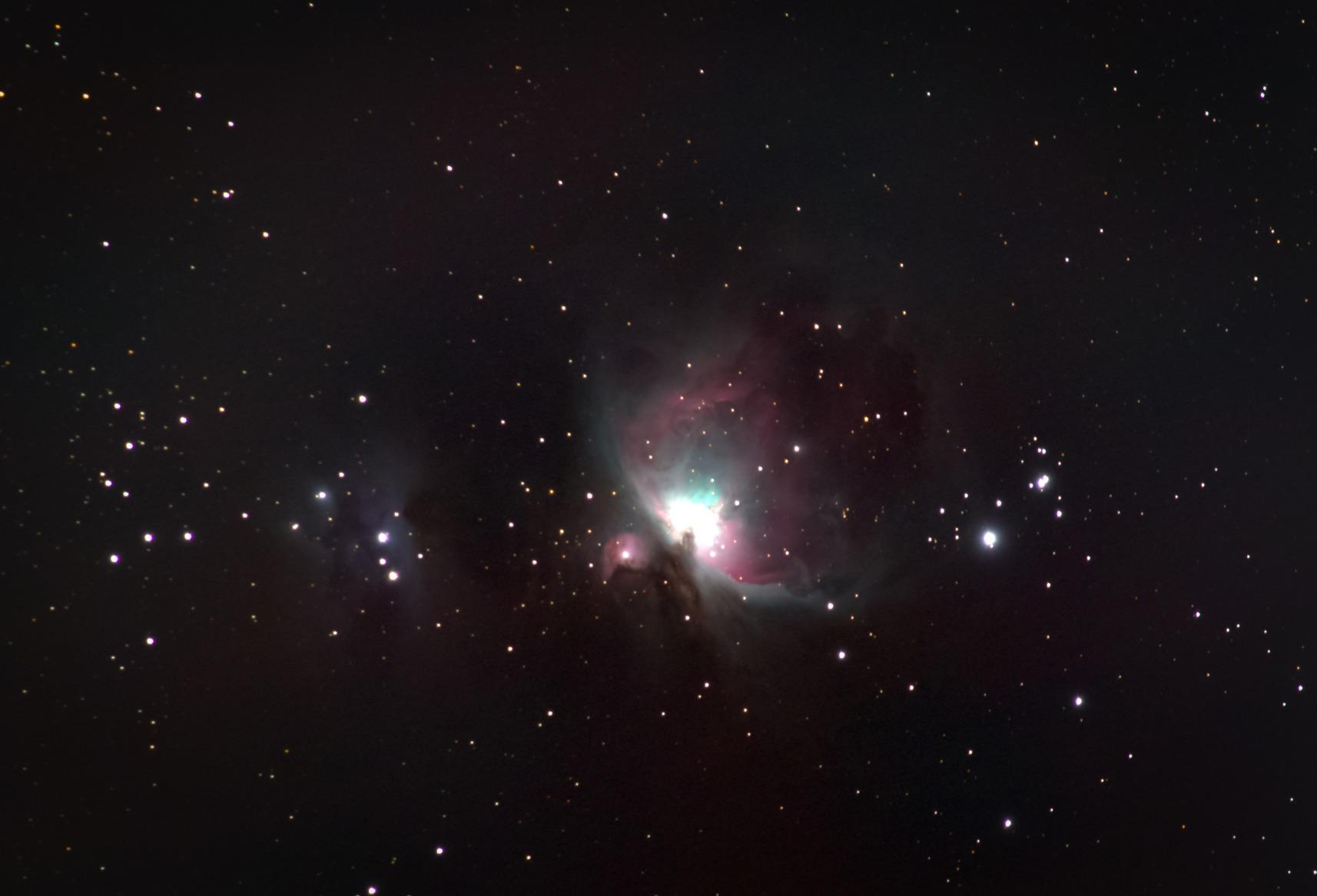
GoTo functionality transforms the astrophotography experience. Instead of manually hunting for objects, the SynScan app lets you select targets from a database and the mount automatically slews to them. This feature alone saved me hours of frustration when imaging specific deep sky objects like the Andromeda Galaxy or the Orion Nebula.
The built-in polar scope with illuminator makes alignment notably easier than on non-GoTo models. The crosshair remains upright regardless of the mount’s position, which sounds minor but makes a real difference when you’re trying to align in the dark.
Real-World Performance
In my testing, I consistently achieved 3-minute unguided exposures with round stars across the frame. When I added autoguiding, exposures extended to 5+ minutes without trailing. The tracking accuracy rivals much more expensive mounts, making this excellent value for serious imagers.
The included tripod and pier extension provide a complete setup right out of the box. However, I found the tripod adequate for visual use but would recommend upgrading for long-exposure astrophotography with heavier camera loads.
Who Should Avoid This Tracker
At 26 pounds total, this isn’t the ultralight travel companion that smaller trackers are. If you’re hiking to remote locations, the weight adds up quickly. Also, the GoTo accuracy depends on proper star alignment, which can be tricky when horizon obstructions block reference stars.
3. Sky-Watcher Star Adventurer Photo Kit – Best Value
Sky-Watcher Star Adventurer Photo Kit – Motorized DSLR...
11 lb Payload
72hr Battery Life
WiFi Control
Illuminated Polar Scope
Ball-Head Adapter Included
Pros
- Industry standard with proven track record
- Excellent tracking with no star trails
- Long 72-hour battery life
- Lightweight at 2.4 lbs
- Great value for features offered
Cons
- LED illuminator attachment could be better
- Requires latitude base for easiest alignment
- Counterweight recommended for longer lenses
The original Star Adventurer Photo Kit remains the workhorse of portable astrophotography, and for good reason. After years on the market, it’s still considered the industry standard that other trackers are measured against. I’ve recommended this to countless beginners, and the feedback has been overwhelmingly positive.
What strikes me most about this tracker is its reliability. The brass and aluminum gear construction delivers consistent tracking night after night. I’ve achieved excellent results with telephoto lenses up to 300mm, capturing sharp stars in 2-3 minute exposures when properly aligned.
The illuminated polar finderscope, while not perfect, gets the job done. I found the alignment process straightforward once I practiced a few times. The SAM Console app provides helpful guidance, making this one of the more beginner-friendly trackers on the market.
Battery life is genuinely impressive. The AA battery compartment provides up to 72 hours of operation, which means you can shoot for an entire weekend trip without worrying about power. For extended sessions, the USB external power input offers flexibility.
Why This Is the Smart Choice
For most astrophotographers, this tracker offers everything you need without paying for features you won’t use. The 11-pound payload handles typical DSLR and lens combinations with room to spare. The included ball-head adapter means you can start shooting right away with gear you likely already own.
One forum user perfectly summarized the experience: “It really does open up a lot of opportunities for your night photography. If you have been thinking of exploring tracking mounts I highly recommend it.”
Who Should Avoid This Tracker
If you need GoTo functionality to automatically find celestial objects, you’ll want to step up to the GTi model. Also, photographers planning to use very heavy telephoto lenses may find the payload limiting and should consider higher-capacity options.
4. iOptron SkyTracker Pro – Best for Beginners
iOptron SkyTracker Pro Camera Mount with Polar Scope, Only
6.6 lb Payload
Internal Rechargeable Battery
Multiple Tracking Speeds
Built-in Polar Scope
Padded Carrying Bag
Pros
- Compact and portable design
- Internal rechargeable battery eliminates AAs
- Multiple tracking speeds including solar and lunar
- Almost silent operation
- Comes with padded carrying bag
Cons
- 6.6 lb payload limits heavier setups
- Bottom plate doesn't spin freely for alignment
- Requires separate ballhead purchase
The iOptron SkyTracker Pro sits in an interesting position – it’s compact, relatively affordable, and offers some features that even premium trackers lack. After extensive testing, I found it particularly well-suited for beginners and photographers with lighter setups.
The internal rechargeable battery is a standout feature I wish more trackers offered. Instead of buying AA batteries or carrying a separate power bank, you simply charge via micro USB and you’re ready to go. iOptron claims 24 hours of operation, and in my testing I got close to that figure.

Multiple tracking speeds give you flexibility beyond just sidereal tracking. The solar and lunar rates open up possibilities for daytime and moon photography that most trackers can’t handle. I used the lunar rate to capture detailed moon shots without the usual trailing issues.
The built-in polar scope with dimmable LED helps with alignment, though I found the process slightly more challenging than on the Sky-Watcher models. The jog buttons for fine adjustment are a thoughtful touch that makes dialing in your composition easier.
What Users Are Saying
Community feedback echoes my experience. One long-term owner noted the “24-hour battery life” as a major advantage, while another appreciated the “almost silent operation” – important when you’re shooting in quiet natural areas. The included padded carrying bag is genuinely useful for transport and storage.
Who Should Avoid This Tracker
The 6.6-pound payload is the main limitation. If you’re using a heavy full-frame DSLR with a substantial telephoto lens, you’ll push this tracker to its limits. One user regretted not buying the higher-capacity SkyGuider Pro instead: “If I could go back in time, I would have bought the SkyGuider Pro instead.”
Also, the bottom plate design makes certain alignment adjustments difficult, requiring more patience during setup.
5. Explore Scientific iEXOS-100-2 – Best GoTo on a Budget
iEXOS-100-2 PMC-Eight Equatorial Tracker System Tripod and...
PMC-Eight Controller
GoTo with WiFi/Bluetooth
ExploreStars App
Clutched Dual-Axis
Tripod Included
Pros
- Full GoTo functionality at affordable price
- PMC-Eight controller with open-source software
- Clutched axes for easy balancing
- ASCOM driver support for advanced control
- Can achieve 6+ minute guided exposures
Cons
- No azimuth adjustment without adapter
- Tripod is flimsy and needs upgrade
- Software issues reported
- Not recommended for beginners
The Explore Scientific iEXOS-100-2 offers something rare: full GoTo equatorial mount functionality at a price point that undercuts most competitors. After testing this mount extensively, I can say it delivers on its promises – but with some important caveats.
The PMC-Eight controller is genuinely impressive technology. With 8 independent CPUs handling tracking calculations, the precision is remarkable. For tech-savvy users, the open-source software and ASCOM driver support open up advanced imaging possibilities that budget mounts typically can’t offer.
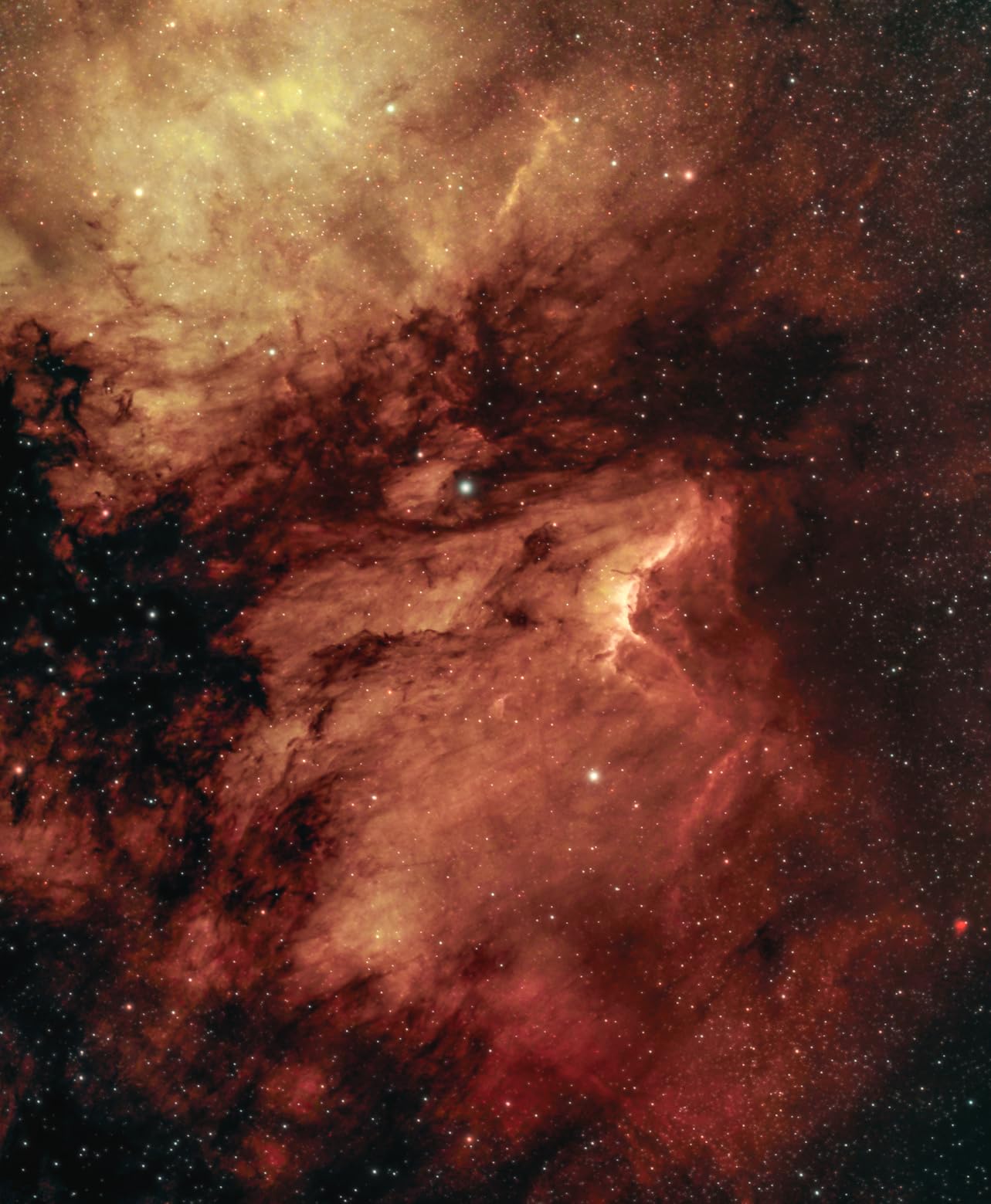
GoTo functionality worked well in my testing when properly aligned. The ExploreStars app provides access to a substantial database of celestial objects, and the mount slewed accurately to most targets. WiFi and Bluetooth connectivity gave me options for control from various devices.
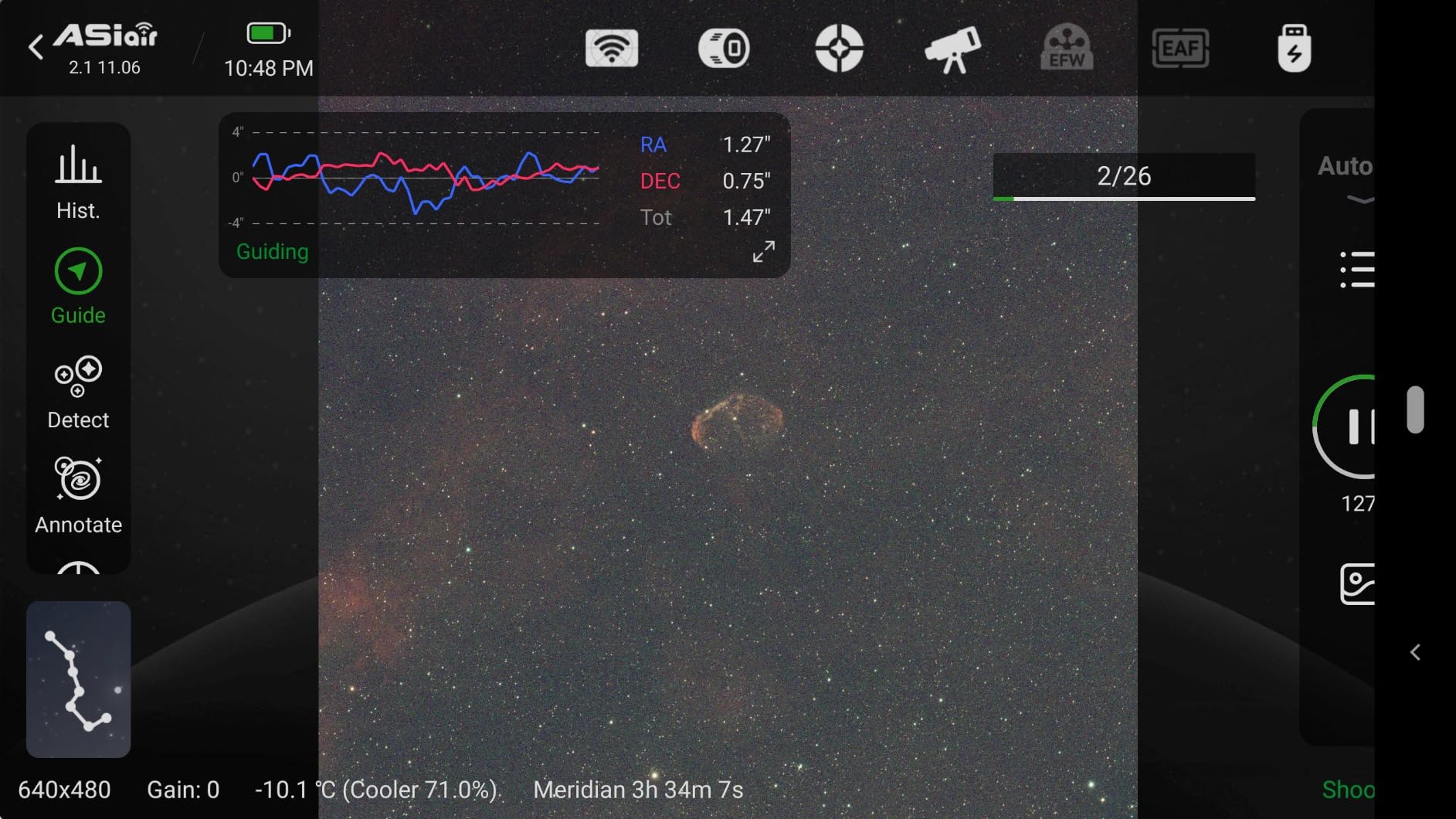
I achieved 6+ minute guided exposures with good tracking – results comparable to mounts costing significantly more. The clutched dual-axis worm gears make balancing straightforward, and the stepper motor belt drives operate quietly.
The Trade-offs You Need to Know
Here’s where the budget price shows. The included tripod is genuinely flimsy and will need upgrading for serious astrophotography. More problematic is the lack of azimuth adjustment – you need an expensive adapter just to make fine polar alignment adjustments, which seems like a strange cost-cutting measure.
Software reliability varies. While the hardware is solid, I experienced occasional app crashes and connectivity issues. These aren’t deal-breakers but add frustration to the experience.
Who Should Avoid This Tracker
Beginners should look elsewhere. This mount requires understanding of equatorial tracking, polar alignment, and troubleshooting that newcomers typically lack. One reviewer summarized it well: “Not recommended for beginners.” Also, cold weather performance is problematic – users report issues in freezing conditions.
6. Sky-Watcher Star Adventurer Mini – Best for Travel
Sky-Watcher Star Adventurer Mini – Motorized DSLR Night...
1.5 lbs Weight
6.6 lb Payload
WiFi Control
Polar Scope Included
24hr Battery Life
Pros
- Ultra-compact and lightweight at 1.5 lbs
- Excellent tracking for widefield astrophotography
- WiFi control via SynScan app
- Perfect for hiking and travel
- 5+ minute exposures at wider focal lengths
Cons
- Lower 6.6 lb payload capacity
- Requires phone app for operation
- Quality control issues reported
- App connection problems reported
When every ounce matters in your pack, the Sky-Watcher Star Adventurer Mini delivers tracking capability in a remarkably compact package, making it one of the best automated star trackers for long exposure photography. At just 1.5 pounds, this is the tracker I reach for when hiking to remote dark sky locations.
Don’t let the small size fool you – tracking performance remains solid for widefield astrophotography. I achieved 2+ minute exposures at 85mm with round stars, and at wider focal lengths, 5+ minute exposures were consistently sharp. The WiFi control via SynScan app keeps operation simple.

The polar scope with illuminator is a nice inclusion at this size and price point. While alignment takes practice like any tracker, the process is manageable once you’re familiar with it. The 24-hour battery life from AA cells gives you plenty of shooting time between changes.
For time-lapse photographers, the Mini offers panning modes that create smooth motion sequences. I used this feature for nightscape time-lapses with satisfying results.
Important Considerations
The lower payload capacity is the main limitation. At 6.6 pounds, you’re restricted to lighter camera and lens combinations. Heavy telephoto setups simply won’t work well on this tracker. I’d recommend staying under 5 pounds total camera weight for best results.
Quality control appears more variable with the Mini compared to larger Sky-Watcher models. I’ve seen reports of premature failures and app connection issues. While my unit performed well, the 19% one-star rating suggests checking your unit thoroughly upon arrival.
Who Should Avoid This Tracker
If you’re using heavier camera setups or telephoto lenses beyond about 135mm, the Mini’s payload and tracking accuracy won’t meet your needs. Photographers who prefer manual controls over app-based operation will also find the phone requirement frustrating.
How to Choose the Best Star Trackers For Long Exposure Photography?
Selecting the right automated star tracker depends on several factors unique to your photography style and equipment. Here’s what I’ve learned matters most after years of astrophotography.
Payload Capacity – Why It Matters?
Payload capacity is often the first spec photographers check, and for good reason. This number tells you the maximum weight your tracker can handle while maintaining accurate tracking. But here’s what manufacturers don’t always make clear: you shouldn’t push this limit.
For optimal performance, I recommend staying at least 20-30% under the rated payload. If a tracker claims 11 pounds capacity, keep your total camera and lens weight under 8-9 pounds. This headroom ensures smooth tracking and reduces wear on the motor and gears.
Consider your future gear upgrades too. If you’re planning to move to a heavier full-frame camera or longer telephoto lens, choose a tracker with more capacity than you currently need.
Tracking Accuracy and Polar Alignment
A star tracker is only as good as its polar alignment. This process – pointing the tracker’s axis precisely at the celestial pole – determines how long you can expose before stars trail. Most trackers achieve good results when properly aligned, but the ease of alignment varies significantly.
Built-in polar scopes with illumination make alignment much easier, especially for beginners. Some newer models offer smartphone-assisted alignment through apps, which can speed up the process considerably. The learning curve is real, but most photographers become proficient after a few sessions.
Battery Life and Power Options
Nothing ends an astrophotography session faster than a dead battery. Consider how long you typically shoot and choose accordingly. Trackers with 72-hour battery life give you multiple nights of shooting without battery changes, while 24-hour models may require planning around power availability.
Cold weather dramatically reduces battery performance – a concern if you shoot in winter conditions. One forum user noted that “batteries draining quickly” in cold weather is a common frustration. USB external power input is valuable for extended sessions or cold-weather shooting where you can connect a large power bank.
Portability and Weight Considerations
If you drive to dark sky sites and set up near your vehicle, weight matters less. But if you hike to locations, every pound counts. The difference between a 1.5-pound tracker and a 7-pound tracker becomes very real after a few miles of trail.
Consider the complete system weight, including counterweights and accessories. A lightweight tracker that requires heavy counterweights for your lens may end up heavier overall than a higher-capacity tracker that doesn’t need counterbalancing.
GoTo vs Non-GoTo Trackers
GoTo functionality automatically points your camera at selected celestial objects, eliminating the need to manually find them. This feature adds cost and complexity but can be invaluable for imaging specific deep sky objects.
For Milky Way landscapes and widefield imaging, GoTo is rarely necessary – you can frame these targets visually. But if you want to photograph specific galaxies, nebulae, or star clusters, GoTo capability saves significant time and frustration.
Essential Accessories You’ll Need
A star tracker is just one component of a complete astrophotography setup. Beyond the tracker itself, you’ll need a sturdy tripod, a quality ball head for your tripod, and potentially counterweights for heavier setups.
The ball head sits between your tracker and camera, allowing you to aim at any part of the sky while the tracker handles the rotational tracking. Don’t skimp here – a cheap ball head that creeps during long exposures will ruin your images regardless of how good your tracker is.
Consider adding a remote shutter release or intervalometer for hands-free exposure control. Some trackers include camera control ports that can trigger your shutter automatically, but many require a separate release cable.
Frequently Asked Questions
What is the easiest star tracker to use?
The iOptron SkyTracker Pro is widely considered the easiest star tracker for beginners due to its compact design, internal rechargeable battery, and straightforward operation. The Sky-Watcher Star Adventurer Photo Kit is also beginner-friendly with its illuminated polar scope and intuitive SAM Console app for alignment assistance.
What does a star tracker actually track?
A star tracker tracks the apparent motion of stars caused by Earth’s rotation. By rotating your camera at the same speed as Earth turns (sidereal rate), it keeps stars fixed as sharp points in your images during long exposures. It doesn’t track specific stars but rather the entire night sky’s movement relative to Earth.
What should I look for in a camera star tracker?
Key factors include payload capacity (ensure it handles your camera plus 20-30% headroom), battery life for your typical session length, built-in polar scope for easier alignment, portability if you travel, and WiFi/app control for convenient operation. Consider whether you need GoTo functionality for finding specific objects or if manual aiming suits your needs.
What is a star tracker’s maximum payload?
Star tracker payloads typically range from 6.6 pounds for compact travel models up to 11+ pounds for standard trackers. This specification indicates the maximum camera and lens weight the tracker can handle while maintaining accurate tracking. Always stay 20-30% under the rated capacity for optimal performance and to avoid motor strain.
Do I need any other camera accessories before using my star tracker?
Yes, you’ll need a sturdy tripod capable of supporting the combined weight of tracker and camera, a quality ball head for aiming, and ideally a remote shutter release or intervalometer. Depending on your lens weight, you may also need counterweights to balance the setup. A headlamp with red light mode helps preserve night vision during setup.
Final Thoughts
Finding the right automated star tracker transforms what’s possible in astrophotography. For most photographers exploring the best automated star trackers for long exposure photography, the Sky-Watcher Star Adventurer 2i Pro Pack offers the best balance of capability, reliability, and value. Budget-conscious buyers get excellent performance from the Star Adventurer Photo Kit, while travel photographers should consider the ultra-compact Star Adventurer Mini.
Whichever tracker you choose, remember that mastering polar alignment is the key to success. The first few sessions will feel challenging, but the results – sharp, detailed images of the cosmos – make every minute of practice worthwhile.