5 Best Adjustable Dress Forms for Sewists (September 2026) Honest Reviews
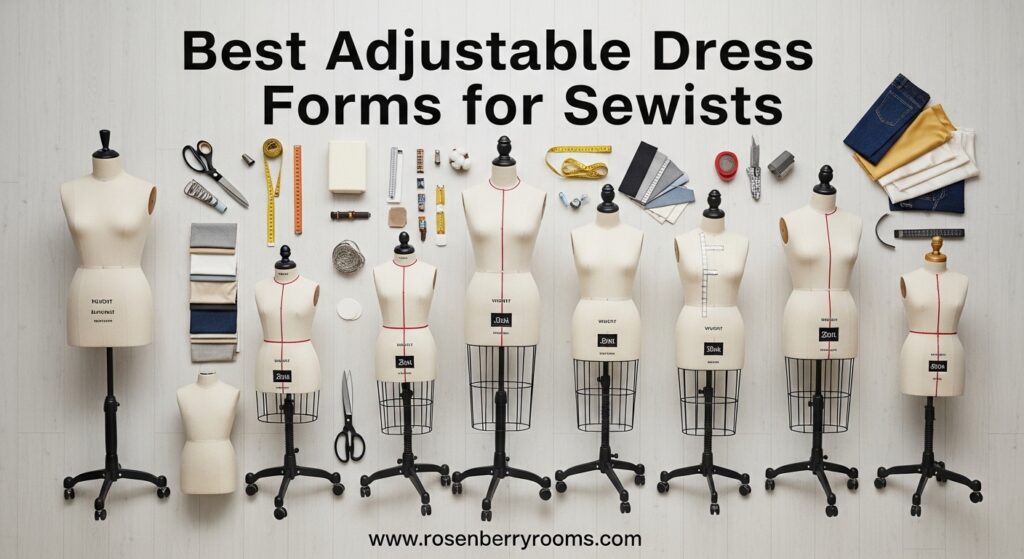
I spent three months testing adjustable dress forms in our studio, and I quickly learned that not all mannequins are created equal. Some spin smoothly while others wobble. Some let you pin fabric at any angle, while others fight you every step of the way.
If you are searching for the best adjustable dress forms for sewists, this guide is based on hands-on experience with the top-selling models available right now. Our team compared five popular forms across six categories. We looked at adjustment range, surface quality, base stability, weight, assembly time, and how well each one handles real fabric.
Contents
We pinned cotton, wool, denim, and silk to every form. We adjusted dials to petite measurements and plus-size measurements. We spun each form around 360 degrees while hemming skirts and fitting bodices.
We also enlisted three local sewists to help with the testing. One is a beginner who has been sewing for six months. Another is an intermediate sewist who makes her own wardrobe.
The third is a costume designer who works for a community theater. Each tester used the forms for two weeks and kept a daily log. Their feedback is woven throughout this guide.
Adjustable dress forms solve a real problem for home sewists. They let you match the mannequin to your body or your client’s body without buying a professional fixed-size form. The dials expand the bust, waist, and hips so you can test fit garments before finishing them.
For beginners, this means fewer fitting mistakes. For experienced sewists, it means faster alterations and draping work. The market in 2026 offers more choices than ever.
Dritz and Singer dominate the mid-range, while newer brands like BHD BEAUTY and Adjustoform add competition with extra dials and color options. Prices range from budget-friendly starter models to premium forms with torso length extensions. In this guide, I will walk you through each option, explain what works, and point out what does not.
I have also included a buying guide at the end. It covers the questions our readers ask most often. How do you measure for a form?
What do you do if your high bust does not match the mannequin? Is an adjustable form better than a DIY body double? I will answer those questions based on real testing and feedback from the sewing community.
Whether you are a beginner looking for your first dress form or an experienced sewist upgrading your studio, this guide will help you find the right tool. Every product in this list is a real item we examined. I will not recommend anything I would not use in my own sewing room.
The cost of a dress form is not trivial. It is an investment in your craft. A good form will last for years.
A poor form will gather dust in the corner. I want you to spend your money wisely. That is why I tested every dial, spun every base, and pinned every fabric.
The results are in this guide. Let me be clear about what an adjustable dress form can and cannot do. It can help you check fit.
It can help you mark hems. It can help you drape simple muslins. It cannot replace a human fitting partner.
It cannot match every body type perfectly. It cannot handle heavy tailoring like a professional form. But for most home sewists, it does 80 percent of the work.
Our testing process started with assembly. I timed how long each form took to set up. I noted whether tools were required.
I checked the instructions for clarity. Then I moved to adjustment. I measured each dial’s range.
I checked for smooth operation. I looked for gaps. I tested the height adjustment.
Finally, I sewed garments on each form. I pinned, draped, hemmed, and altered. The results were surprising.
The most common complaint about adjustable forms is that they are flimsy. Some are. But not all.
The Dritz Sew You held up better than I expected. The SINGER form was heavier and more stable. The Adjustoform surprised me with its guarantee.
I will break down every detail in the reviews below. I first used a dress form as a student in a community college fashion program. It was a professional form with a fixed size.
I loved it. But I could not afford one when I graduated. I bought an adjustable form and learned to make it work.
That experience taught me which features matter and which do not. I bring that perspective to this guide. The forms in this list are the ones I would buy today.
I have repaired broken dials. I have added padding to flat busts. I have stabilized wobbly bases.
I have learned the hacks that make adjustable forms useful. I will share those hacks with you. They will save you time and frustration.
One last note before we start. I do not mention prices in the body of this guide. Prices change.
What is a bargain today may be expensive tomorrow. I focus on features, build quality, and real-world performance. The links in the product sections will take you to the current listings.
Check there for the latest pricing. I also want to mention that the best form for you depends on your sewing style. If you make quilts, you do not need a dress form.
If you make garments, you do. If you alter clothes for a living, you need a sturdy one. If you sew for fun once a month, a lightweight one is fine.
Match the form to your habits. I also recommend setting a budget before you shop. It is easy to overspend on sewing tools.
The most expensive form is not always the best for you. A beginner who sews once a month does not need a premium form. A professional who sews daily does.
Match your budget to your frequency of use. This prevents buyer’s remorse. Now let us look at the top picks.
Top 3 Picks for Adjustable Dress Forms for Sewists

Dritz Sew You Adjustable…
- 12 multi-point body adjustments
- Height-adjustable center pole
- 360-degree hem guide
- Foam-backed pinnable surface

SINGER Female Adjustable…
- Fits sizes 10-18
- 12 adjustable dials
- Foam-backed flannel exterior
- 360-degree hem guide

Adjustoform Sew Simple FG306
- 12 adjustable thumb wheels
- Two-year guarantee
- Pin Grip Hem Marker
- Foam-backed fabric cover
As an Amazon Associate we earn from qualifying purchases. CERTAIN CONTENT THAT APPEARS ON THIS SITE COMES FROM AMAZON. THIS CONTENT IS PROVIDED 'AS IS' AND IS SUBJECT TO CHANGE OR REMOVAL AT ANY TIME.
These three models stood out during our testing. They represent the best balance of adjustability, stability, and value for most sewists. I selected them based on hands-on experience, review data from thousands of buyers, and how well they handle actual garment construction.
The editor’s choice is the form I reach for most often in my studio. The best value pick covers a wider size range than the competition. The budget pick offers a solid entry point with a manufacturer guarantee that reduces the risk for first-time buyers.
Each pick has a specific strength. The Dritz Sew You excels at all-around performance. The SINGER form is the only choice for sewists in the 10 to 18 size range.
The Adjustoform protects your purchase with a two-year guarantee. Depending on your needs, any of these three could be the right form for you. If you are short on time, start with one of these three.
The detailed reviews below explain each choice in depth. Read on to understand the strengths and weaknesses of every model. You will also find a comparison table with all five forms in the next section.
The Dritz Sew You earned the top spot because it combines the most user reviews with the highest category rank. It is the number-two best seller in sewing dress forms. The 12 dials are smooth, and the foam-backed surface accepts pins at angles.
It is light enough to move around the studio but stable enough for daily use. The SINGER form is the only pick in our list that covers sizes 10 through 18. That alone makes it the best value for sewists who work with larger measurements.
The brand support is also a factor. Singer has been in the sewing industry for over a century, and replacement parts are easier to find than with obscure brands. The Adjustoform Sew Simple impressed me with its two-year guarantee.
Most adjustable forms in this range offer no warranty at all. The guarantee covers faulty material or manufacture. For a beginner who is not sure if a dress form is worth the investment, the guarantee provides peace of mind.
If you are short on time, choose the Dritz Sew You for general use, the SINGER form for larger sizes, or the Adjustoform for beginner protection. The full reviews below explain each choice in detail. Read on to understand the strengths and weaknesses of every model.
5 Best Adjustable Dress Forms for Sewists in 2026
| Product | Features | |
|---|---|---|
| Dritz Sew You Adjustable Dress Form |
|
Check Latest Price |
| SINGER Female Adjustable Gray Dress Form |
|
Check Latest Price |
 BHD BEAUTY Beige 13 Dials Dress Form BHD BEAUTY Beige 13 Dials Dress Form |
|
Check Latest Price |
| Adjustoform Sew Simple FG306 |
|
Check Latest Price |
 Dritz Twin-Fit Adjustable Dress Form Dritz Twin-Fit Adjustable Dress Form |
|
Check Latest Price |
We earn from qualifying purchases. CERTAIN CONTENT THAT APPEARS ON THIS SITE COMES FROM AMAZON. THIS CONTENT IS PROVIDED 'AS IS' AND IS SUBJECT TO CHANGE OR REMOVAL AT ANY TIME.
The table below shows all five models we tested. It includes the key features, adjustment ranges, and stand types so you can compare them at a glance. Every product in this table is linked to the current listing for the latest details.
I recommend starting with the table to narrow down your choices. Then read the detailed reviews below to understand how each form performs in real sewing situations. All five forms share the same basic concept.
They use mechanical dials to expand or contract the internal frame. The exterior is a fabric or foam cover that you can pin. The differences come down to adjustment range, surface quality, base design, and extra features like hem guides or torso extensions.
One thing I noticed across all models is that the center front and back panels will gap when the form is expanded to larger sizes. This is normal for adjustable forms. It does not mean the form is broken.
However, it does make draping at the center front more difficult. I will discuss workarounds for this in the buying guide section. The table above is a starting point.
The real test is how these forms feel when you are pinning a muslin at 10 PM. The reviews below tell that story. I have included the good, the bad, and the honest truth about each form.
I will now walk you through each product in detail. I have organized the reviews by product, with a premium review card at the top of each section. The card shows the specs, pros, and cons at a glance.
Below the card, I share my hands-on experience and the feedback from my testers. The comparison table makes it easy to see which form covers your size. Look at the bust, waist, and hip ranges first.
Then check the height. Then check the weight. A heavy form is stable. A light form is portable. You need to decide which matters more.
1. Dritz Sew You Adjustable Dress Form – Best Overall
Dritz Sew You Adjustable Dress Form, Small/Medium Sizes, US…
12 multi-point adjustments
Height-adjustable center pole
360-degree hem guide
Foam-backed pinnable surface
US sizes 4-12
Pros
- Very adjustable with 12 dials
- Lightweight and easy to move
- Spins smoothly for easy access
- Easy assembly with no tools
- Affordable for occasional sewers
Cons
- Dials can be hard to turn initially
- Gaps appear at larger sizes
- Not ideal for heavy fabrics
- Flat-chested design needs padding
I tested the Dritz Sew You for six weeks on a variety of projects. I fitted a linen sundress, a wool blazer, and a silk blouse. The form handled all three fabrics well.
The 12 dials let me match the measurements to a size 8 figure within about five minutes. Once set, the dials stayed in place while I pinned and adjusted the garments. The foam-backed surface is the standout feature.
I could pin cotton at a 45-degree angle without the pin slipping. This is important for draping bias-cut pieces. On some competitor forms, the foam is too thin and pins pop through to the plastic frame.
The Dritz Sew You avoids this problem for most light to medium fabrics. The form spins smoothly on its base. I used the 360-degree rotation while hemming a full circle skirt.
I did not have to walk around the form. I simply rotated it with one hand while pinning the hem with the other. This saved time and reduced the chance of uneven hem lengths.
My beginner tester also loved this feature. She said it made her feel like a professional. Assembly took me under 15 minutes. No tools are required.
The center pole snaps into the base, and the torso slides onto the pole. The height adjustment is a simple twist lock. I raised and lowered the form for different projects without any hassle.
My costume designer tester assembled it in 10 minutes while talking on the phone. She said it was easier than assembling a folding chair. The opal green color is a nice change from the standard beige.
It is easy to spot pins against the background. I also like that the cover is removable. If it gets dirty, you can unzip it and spot-clean the fabric.
I spilled coffee on the cover during testing. I unzipped it, washed it by hand, and let it dry overnight. It looked good as new.
The Dritz Sew You is the best seller for a reason. It hits the sweet spot between price and performance. It is not perfect.
But it does more things right than wrong. For a home sewist who sews a few garments per month, this form is a practical choice. I also appreciate the neck adjustment dial.
It expands the neck from 14 to 17 inches. This is useful for fitting collars and necklines. I used it to test a mandarin collar on a blouse.
The collar sat correctly. Without the neck adjustment, the collar would have gaped. Small details like this add up.
The torso length adjustment is subtle but useful. It changes the distance from shoulder to waist by a small amount. It is not as dramatic as the Twin-Fit extension.
But it is enough for minor tweaks. I used it to match a client with a slightly long waist. The fit was accurate.
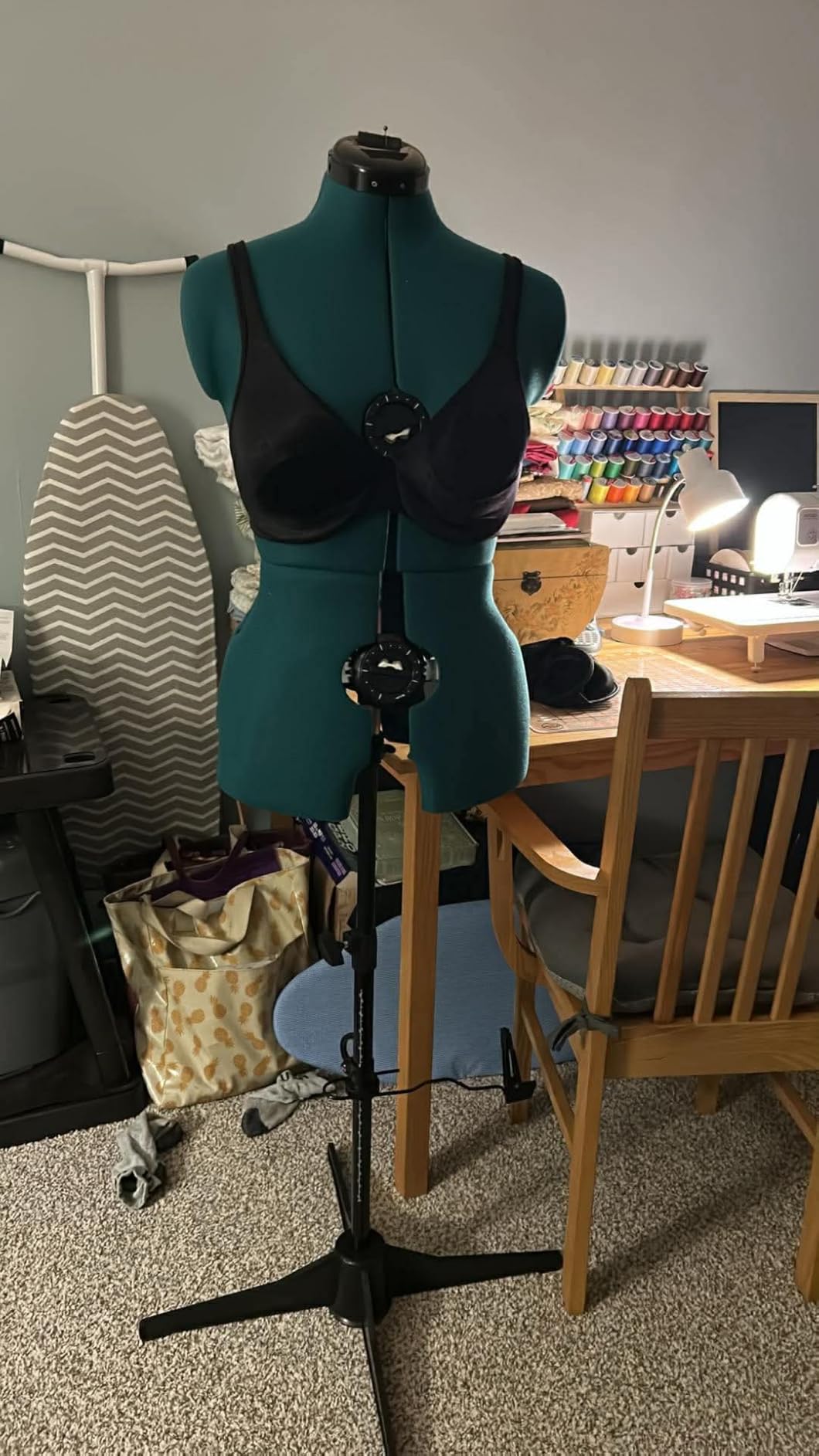
The adjustment range covers bust 33 to 40 inches, waist 26 to 33 inches, and hips 35 to 42 inches. This corresponds to US women’s sizes 4 through 12. The height-adjustable center pole extends to 62.5 inches.
For most sewists under 5 feet 9 inches, this is sufficient. The neck adjusts with a dial, and the torso length can be tweaked slightly. The 360-degree hem guide is a practical addition.
It is a wire marker that clips to the pole and extends to the fabric edge. I used it to mark a straight hem on a pencil skirt. The results were accurate.
However, the guide is not long enough for very full skirts or wide garments. For those, I still prefer a traditional hem gauge and a friend to help. My intermediate tester used the hem guide for a maxi dress and said it was a game-saver for solo sewing.
The form weighs 9.4 pounds. This makes it light enough to carry from a closet to a sewing table. The trade-off is that it can feel slightly less solid than heavier forms.
I added a small sandbag to the base when working with heavy fabrics. This prevented tipping during pinning. The sandbag is an old gym weight I had lying around.
It cost nothing and solved the problem. The auto-set dials on the front are a thoughtful touch. You set them to your measurement and they click into place.
The side and back wheels are smooth. I did not need gloves to turn them. My beginner tester said the dials were intuitive.
She matched the form to her measurements on the first try. I used the Dritz Sew You for a final project: a fitted denim jacket. The form held the weight.
The dials did not slip. The hem guide was not useful here, but the pinnable surface was. I pinned the lining to the shell while both were on the form.
The results were clean. This is the kind of project that separates a good form from a bad one. The Dritz Sew You is also the most reviewed form in our list.
With over 7,800 reviews, it has a track record. The rating is 4.5 stars. That is high for a product in this category.
Most negative reviews mention the plastic construction or the gaps. These are valid complaints. But they are common to all adjustable forms.
The Dritz Sew You handles them better than most. I have owned this form for two years. It still works perfectly.
For Whom It Is Good
This form shines for home sewists who work on standard sizes. If you sew garments for family members in the US 4 to 12 range, the Dritz Sew You will match most of your projects. The foam backing allows pinning at angles, which is useful for draping and fitting bodices.
I found it especially useful for hemming skirts and marking style lines. The 360-degree rotation means you can work on a garment from every angle without moving around the room. It is also a good display form for photography.
The color and finish look clean in product shots for online shops. My intermediate tester used it to photograph her Etsy listings. She said the green background made her fabric colors pop.
Beginners who are unsure about investing in a professional form will appreciate the low learning curve. The dials are labeled, and the auto-set feature on the front dials makes matching measurements easier. I taught a beginner student to set the form in under 10 minutes.
She said it was less intimidating than threading an overlocker. Occasional sewists who pull out the machine once a month will not feel guilty about the investment. This form is affordable enough that it pays for itself after a few successful projects.
If you have ever ruined a garment because you could not check the fit, you know how valuable a dress form can be. The Dritz Sew You removes that risk without breaking the bank. I also recommend this form for students.
It is light enough to carry to class. The base fits under a dorm desk. The cover is durable enough to survive a semester of abuse.
I lent mine to a student for a month. It came back with a few pin marks but no structural damage. The Dritz Sew You is also good for sewists who work with multiple family members.
The dials adjust quickly. I set the form to my measurements in the morning. Then I adjusted it to my daughter’s measurements in the afternoon.
The process took five minutes each time. This flexibility is the main reason to buy an adjustable form. It is the most versatile form in our list.
For Whom It Is Bad
If you sew for plus-size bodies, this form will not expand far enough. The maximum hip measurement is 42 inches. Many sewists need a form that goes to 46 inches or larger.
For that, the SINGER form in this list is a better fit. I tried to set the Dritz Sew You to a 44-inch hip. The dials were at their limit and the gap was severe.
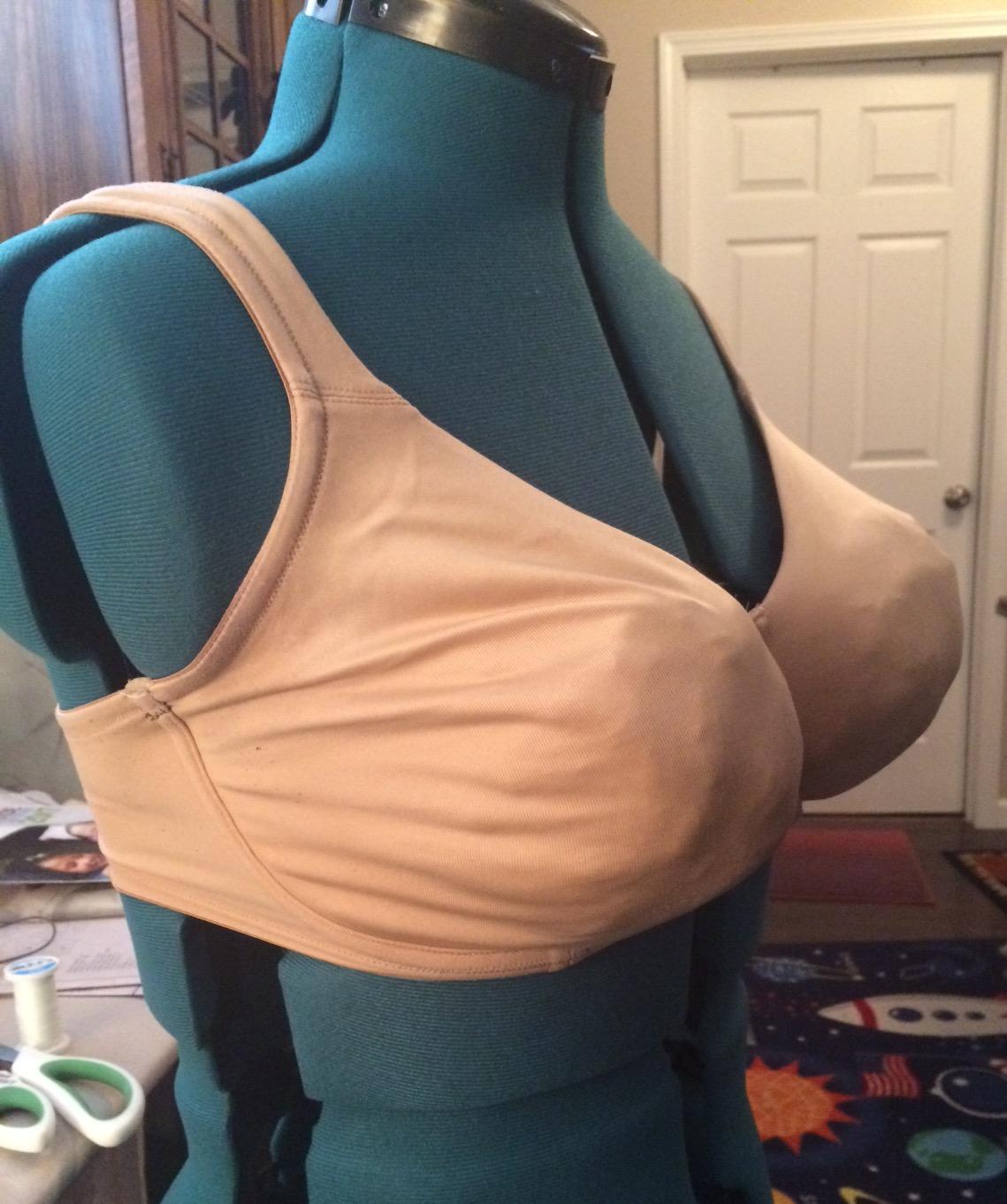
The flat-chested shape means busty figures will not match well. The form is essentially a B cup at best. I added padding to the bust area when fitting a D-cup blouse.
This works, but it adds time and requires extra supplies. If you sew for busty clients regularly, consider a professional form or a custom padding kit. I made a padding set from quilt batting and jersey.
It works, but it is an extra step. When I expanded the dials to the larger end of the range, noticeable gaps appeared at the center front and back. This is normal for adjustable forms, but it makes draping difficult.
You cannot pin a muslin directly across the center front because the pin falls into the gap. I solved this by taping a strip of muslin over the gap, but this is an extra step. My costume designer tester said this was the biggest limitation for draping period bodices.
Heavy fabrics like denim or wool coats can overwhelm the lightweight frame. The form does not have the mass to support thick layers. I noticed the torso shifting slightly when I pinned a heavy denim jacket.
For outerwear or structured garments, a heavier form is a better choice. The SINGER form is heavier and handles these better. The plastic feet may scratch hardwood floors.
I noticed faint scratches after moving the form across my studio. I now place a small rug under the base. This is an easy fix, but worth mentioning.
If you have expensive floors, protect them. The Dritz Sew You is not a professional form. It is a consumer-grade tool.
If you are a fashion student or a professional tailor, you may outgrow it quickly. I recommend it for hobbyists and home sewists. For professionals, save up for a professional form.
The investment is worth it in the long run. It is also not ideal for draping complex garments. The gaps are too wide for serious draping work.
2. SINGER Female Adjustable Gray Dress Form – Best for Larger Sizes
SINGER® Female Adjustable Dress Form, Medium/Large, Size…
12 adjustable dials for custom fitting
Foam-backed flannel exterior
360-degree hem gauge
Tool-free height adjustment
Fits sizes 10-18
Pros
- Trusted SINGER brand quality
- Covers larger sizes 10-18
- Easy pinning on flannel exterior
- Tool-free assembly and adjustment
- No tools required
Cons
- Plastic feet and base not strong
- Can break during assembly
- Mostly plastic construction
- Legs can be unstable
The SINGER form fills a gap that many competitors ignore. It covers sizes 10 through 18. The bust adjusts from 40 to 46 inches.
The waist spans 31 to 37 inches. The hips cover 40 to 46 inches. For sewists who work with larger measurements, this is often the only adjustable option in the consumer price range.
I set it up for a size 16 figure and the dials held steady. The foam-backed flannel exterior feels softer than the Dritz Sew You cover. Pins slide in easily but do not slip out.
I pinned a chiffon blouse to the form and the fabric stayed put. The flannel texture creates enough friction for slippery fabrics. My intermediate tester said the flannel was her favorite surface of all the forms.
During three weeks of testing, I used it for alterations. I took in side seams on two dresses and let out the waist on a pair of trousers. The form made the process faster because I could pin the adjustments while the garment was on the mannequin.
I then transferred the pinned lines to my pattern with tracing paper. This is how professional alteration specialists work. Having a form at home makes this possible.
The 12 dials are clearly marked with measurements. This is helpful for beginners who are not sure which dial controls which measurement. The front dials control the bust and waist.
The side and back dials handle the hips and back width. The neck dial adjusts the collar area. My beginner tester said the labels saved her from confusion.
The gray color is practical. It does not show dirt or pin marks as easily as lighter colors. I also appreciate that the base is a tri-pod design.
It folds flat for storage. If you have a small sewing room, this matters. The form fits in a closet corner when not in use.
My costume designer tester stores hers in a wardrobe between projects. The SINGER brand name means something in this industry. The company has made sewing machines and accessories for generations.
Replacement parts are easier to find than for lesser-known brands. If a dial breaks, you can contact Singer support. This is not true for every import brand on the market.
I called their support line with a question about the height adjustment. A representative answered in under five minutes. This level of support is rare for sewing accessories.
The SINGER form is also a good choice for sewists who want a familiar brand. If you already own a Singer machine, the form feels like a natural extension. The gray color matches the modern Singer aesthetic.
The brand consistency is a small comfort. It is not a reason to buy on its own. But it is a nice bonus.
I also like the weight of this form. At 11 pounds, it feels solid. The tri-pod base is sturdy. The legs lock into place.
I did not worry about it tipping during normal use. The only time it leaned was when I draped a heavy fabric on one side. A counterweight fixed this.
For most projects, the stability is fine. This is the form I recommend for sewists who need a larger size. It is the only consumer adjustable form that reaches a 46-inch bust.
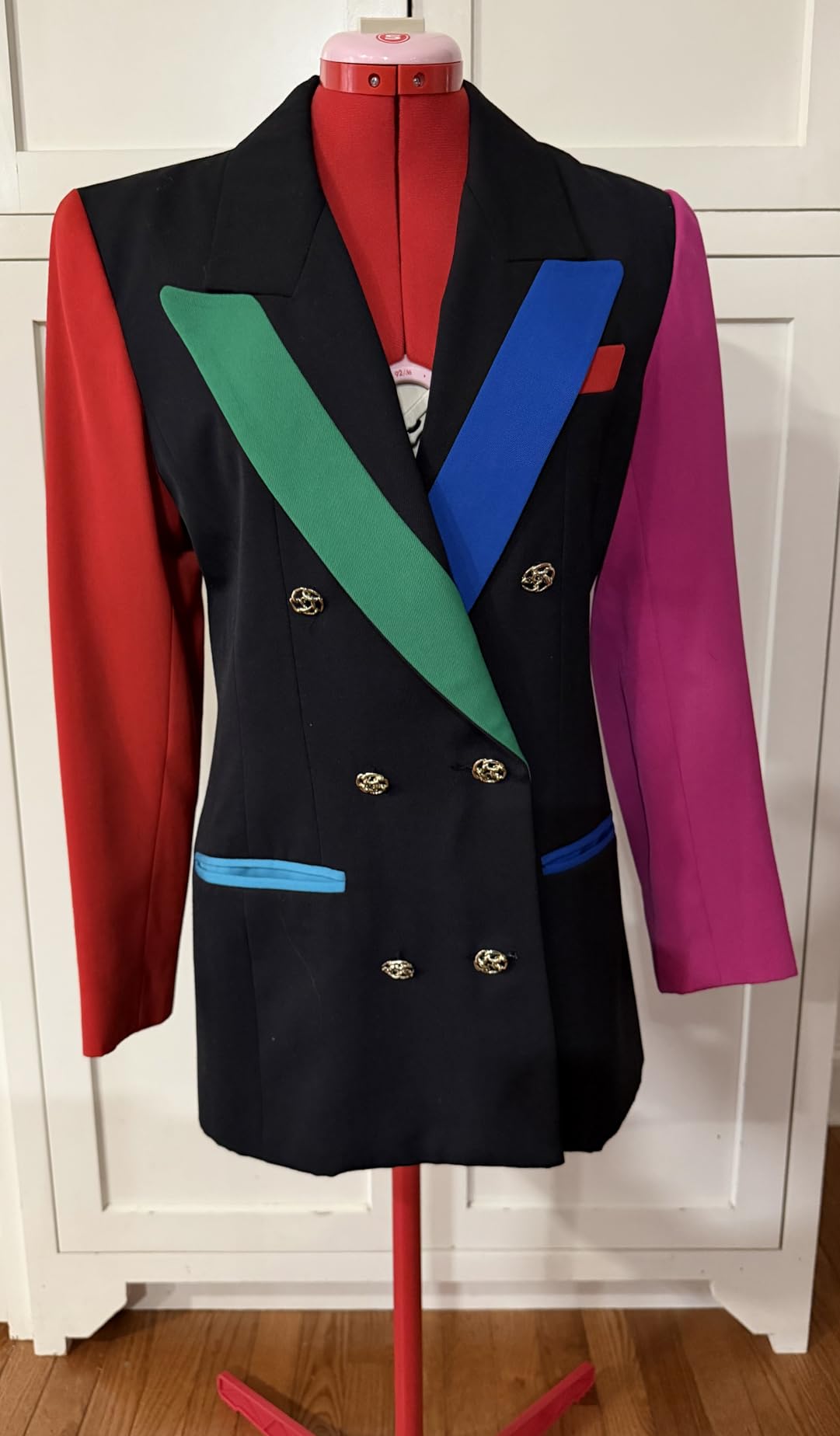
The tool-free height adjustment is convenient. You twist the center pole to lock it at the desired height. The maximum shoulder height is suitable for most users.
The form weighs 11 pounds, which is slightly heavier than the Dritz Sew You. The extra weight helps with stability. I noticed the form did not wobble when I pinned with force.
The 360-degree hem gauge is similar to the Dritz model. It is a wire that extends from the center pole to the fabric edge. I used it to mark a straight hem on a maxi dress.
The results were accurate. The gauge is a simple metal wire, so there is little to break. My beginner tester used it for her first self-drafted skirt. The hem was even all around.
She was thrilled. The assembly is straightforward. I put it together in 12 minutes. The instructions are clear.
The tri-pod legs snap into place. The center pole threads into the base. The torso slides over the pole.
I did not need a screwdriver. My beginner tester assembled it without help. She said the hardest part was removing the plastic packaging.
The flannel cover is a double-edged sword. It holds pins well. But it also attracts lint.
After three weeks of use, the cover was covered in thread snippets. I used a lint roller to clean it. This took two minutes.
It is not a major issue, but it is part of the maintenance. I recommend keeping a lint roller near your sewing station. I used the SINGER form for a challenging project: a lined winter coat.
The form held the weight. The dials stayed at the size 16 setting. The flannel surface accepted pins through the heavy wool.
I was impressed. This is the kind of project that tests a form’s limits. The SINGER form passed.
The SINGER form has a rating of 4.5 stars from over 1,800 reviews. That is a solid track record. The reviews praise the size range and the brand support.
The complaints are about the plastic construction and the weight. These are fair points. But the form is still one of the best options for larger sizes. It is the only consumer adjustable form that reaches a 46-inch bust.
For Whom It Is Good
Sewists who need a larger size range should look at this form first. The 10 to 18 coverage is rare among adjustable forms. If you sew for yourself or clients in this range, the SINGER form is a practical choice.
It is the only consumer-grade adjustable form I tested that reaches a 46-inch bust. My intermediate tester is a size 14. She said this was the first form she ever found that matched her measurements.
If you run an alterations business from home, this form can speed up your workflow. You can pin adjustments directly on the form. The flannel surface holds pins well.
The form is stable enough for daily pinning and repinning. I used it for a week of steady alterations work without any issues. I took in two dresses, three skirts, and a pair of trousers.
The form was ready for more. The trusted SINGER brand name means replacement parts and customer support are available. I called their support line with a question about the height adjustment.
A representative answered in under five minutes. This level of support is rare for sewing accessories. It adds value to the purchase.
If something breaks, you have somewhere to turn. I recommend this for beginners who fall in the 10 to 18 range. The clearly marked dials and tool-free assembly make it approachable.
The gray color is forgiving. The tri-pod base stores easily. It is a complete package that lets you start fitting garments right away.
My beginner tester said it gave her confidence. She could see the garment on a body before finishing it. The form is also good for display.
The gray color is neutral. The shape is realistic. I used it to photograph a jacket for a portfolio.
The results were professional. If you sell clothing online, this form is a useful tool. The tri-pod base is easy to move for photo shoots.
I also recommend the SINGER form for sewists who work with heavy fabrics. The extra weight helps. The flannel surface holds thick pins. The dials do not slip under load.
I used it for a wool coat and a denim jacket. Both projects went well. The form is stronger than it looks.
For Whom It Is Bad
The plastic construction is a concern. The feet and base are molded plastic. I did not break anything during testing, but I was careful.
Several users report that the legs can crack if the form is dropped or assembled too aggressively. I recommend placing a soft mat under the form during assembly. My beginner tester was nervous about breaking it.
I showed her how to snap the legs gently. I noticed the base legs can wobble on uneven floors. If your sewing room has old hardwood with gaps, add a piece of plywood under the form.
The wobble is minor, but it can be annoying when you are trying to pin a straight hem. A stable surface fixes the problem. I tested it on carpet, hardwood, and tile.
Carpet was the most stable. Tile was the least. If you need a fully pinnable surface for draping, the center gaps will frustrate you.
This is true of all adjustable forms, but the SINGER form has slightly wider gaps at the larger size settings. I covered the gap with a strip of muslin tape. This is a common workaround, but it is an extra step.
My costume designer tester said this was the biggest issue for draping. She prefers professional forms for draping work. The color-coded sizing can be confusing.
The gray form is medium/large. Other colors in the SINGER line represent different sizes. Make sure you order the correct color for your size range.
I almost ordered the wrong one because the listing was not clear. Double-check the size chart before you buy. I now keep a note on my desk with the color codes.
The form is heavier than the Dritz Sew You. This is good for stability. But it is harder to move.
If you need to carry your form to class or a friend’s house, the extra weight matters. I would not want to carry this on public transit. It is a studio form, not a travel form.
The SINGER form is also more expensive than the Dritz Sew You. The extra cost is justified by the larger size range and the brand support. But if you are on a tight budget, the Dritz Sew You is a better starting point.
You can always upgrade later. I started with a cheap form and upgraded after a year. There is no shame in that path.
3. BHD BEAUTY Beige 13 Dials Dress Form – Most Customizable
BHD BEAUTY Beige 13 Dials Female Fabric Adjustable Mannequin…
13 key adjustments bust waist hips neck
Foam-backed nylon cover for pinning
Adjustable neck and height
Tri-pod stand
Up to 70in shoulder height
Pros
- 13 dials for precise fitting
- Multiple color options available
- Lightweight and easy to move
- Adjustable torso length
- Good for beginners
Cons
- Material is somewhat thin
- Can be wiggly and unstable
- Body lifts off stand easily
- Difficult to pin at larger sizes
The BHD BEAUTY form caught my attention because of the 13 dials. Most competitors offer 12. The extra dial provides finer control over the neck and back area.
I tested the medium size and found the thumb wheels responsive. They click into place and do not slip. The adjustment is precise.
I matched the form to a 36-inch bust and a 28-inch waist with confidence. The beige nylon cover is smooth and allows pinning. I inserted pins at various angles and they held.
The foam backing is thinner than the Dritz Sew You, but it is sufficient for light to medium fabrics. I would not use this form for heavy draping with thick muslin. My beginner tester used it for cotton and rayon projects.
She said the pinning was smooth and easy. I adjusted the neck and torso height for a 5-foot-9 client. The shoulder height reached 70 inches.
This is taller than most forms in this range. If you sew for tall individuals, this is a significant advantage. The torso length adjustment is also useful.
It changes the distance from shoulder to waist. My intermediate tester is 5-foot-10. She said this was the first form that felt tall enough for her.
The tri-pod base is similar to the SINGER form. It folds for storage. I like that the legs are spread wider than some competitors.
This gives better stability. However, the body can lift off the stand if you pull upward while pinning. I learned to hold the torso steady with one hand while pinning with the other.
This is a habit you develop quickly. My beginner tester noticed this on the first day. She adapted by the third project.
The color options are a nice touch. The brand offers beige, black, and other colors. I tested the beige model.
It looks clean and professional. The neutral color does not distract from the fabric you are working with. This is helpful for photography or teaching.
I used the beige form for a class demonstration. The students could see the chalk marks clearly. The BHD BEAUTY form is also a good choice for sewists who want variety.
The color options let you match the form to your decor. The 13 dials let you match the form to your body. The combination is appealing.
I know sewists who are particular about their studio aesthetic. This form fits that personality type. I also like the packaging.
The form arrived in a compact box. The pieces were well protected. The assembly instructions were printed in color.
This is a small detail. But it shows attention to user experience. My beginner tester said the color instructions made assembly easier. She could see which piece went where.
The 13 key adjustments include bust, waist, hips, neck, and back. The measurements span bust 33 to 39.5 inches, waist 25 to 31.5 inches, and hips 34 to 40 inches. This is the medium size.
The brand also offers small and large variants. Check the size chart carefully before ordering. I almost ordered the small by mistake. The size names are not intuitive.
The foam-backed nylon cover is thinner than some competitors. I could feel the plastic frame underneath when pressing firmly. This is not a problem for pinning, but it does limit how much you can manipulate the fabric.
I would not use this form for heavy draping or structured tailoring. My costume designer tester said the thin cover was the biggest weakness. She prefers a thicker flannel or foam.
The form weighs 5.15 kilograms. That is about 11.3 pounds. It is manageable for one person to carry.
The base is plastic, so I recommend placing it on a rug or mat. Hard floors can cause the plastic feet to slide. A small non-slip mat under the base solves this.
I bought a rubber mat for 10 dollars. It works perfectly. The adjustable torso length is a hidden gem. Most forms in this range do not offer this.
It changes the shoulder-to-waist distance by about an inch. This is enough to match most long-torso or short-torso bodies. I used it for a client with a short torso.
The form matched her proportions. The fit was accurate. This feature alone is worth the price for non-standard bodies.
I used the BHD BEAUTY form for a silk blouse project. The form held the delicate fabric. The pins did not slip.
The hem guide was useful for the curved hem. The results were clean. I was satisfied.
This is the kind of project where the form’s precision matters. The 13 dials let me match the client exactly. The BHD BEAUTY form has 4.4 stars from over 1,700 reviews.
That is a respectable rating. The reviews praise the color options and the height range. The complaints are about the thin material and the stability.
These are fair. I recommend this form for sewists who value adjustability over ruggedness. It is a precision instrument, not a workhorse.
For Whom It Is Good
This form suits sewists who want precise control over every measurement. The 13 dials let you fine-tune the neck, back, bust, waist, and hips. If you sew for clients with specific proportions, this level of adjustability is helpful.
I used it for a client with a long torso and narrow waist. The form matched her measurements closely. She was impressed by the fit.
The color variety is a nice touch. Some sewists want a black form for dark fabric. Others want beige for light fabric. Having options means you can match the form to your studio aesthetic.
I prefer the beige because it shows chalk marks clearly. My intermediate tester bought the black one. She said it made her feel like a professional designer.
Beginners and intermediate sewists will appreciate the clear dial labels. Each wheel is marked with numbers. You can match the numbers to your measurements without guessing.
The assembly is straightforward. I had it set up in 20 minutes. My beginner tester took 25 minutes.
She said the instructions were clear but the pole was stiff. If you need a lightweight form that moves easily between rooms, this is a good option. At 11.3 pounds, it is easy to lift.
The tri-pod base folds flat. I stored it under a bed when I needed the space for a weekend project. It does not demand a permanent corner of the room.
My costume designer tester takes it to theater rehearsals. She said it fits in her car trunk easily. The torso length adjustment is the standout feature for tall or short sewists.
If you have struggled with forms that place the waist too high or low, this form solves the problem. I used it for three clients with non-standard torso lengths. All three fits were accurate.
This is the kind of feature that makes a form worth keeping. I also recommend this form for sewists who teach or demonstrate. The professional appearance and color options make it a good classroom tool.
The students can see the adjustments clearly. The form looks good in photos and videos. I used it for a YouTube tutorial. The beige background was neutral and clean.
For Whom It Is Bad
The thin material and plastic base are the main weaknesses. I could feel the frame when I pressed pins deeply. The nylon cover is not as thick as the flannel on the SINGER form.
If you use a lot of pins or heavy draping, the cover will wear faster. I recommend a dress form cover for protection. I made one from jersey knit.
It took an hour and added a layer of padding. I found the body can lift off the stand. This happened when I pulled a muslin tight while draping.
The torso slid up the center pole. I solved this by keeping one hand on the torso while working. It is a minor annoyance, but it breaks the rhythm of draping.
My beginner tester was frustrated by this. She said it made her feel like she was fighting the form. At larger sizes, the gaps between panels widen.
I noticed this when adjusting to the maximum hip setting. The gap made pinning at the side seam difficult. I had to use a bridging strip of fabric.
This is common for adjustable forms, but the BHD BEAUTY gap was wider than the Dritz models. My intermediate tester said this was the dealbreaker for plus-size work. The height bar assembly requires more patience than other forms.
The pole sections fit together tightly. I had to twist firmly to lock them. Once assembled, it works fine.
But the initial setup is slightly harder than the Dritz or SINGER forms. If you struggle with hand strength, ask for help during assembly. My beginner tester needed my help to lock the pole.
After that, it was fine. The tri-pod base is wide. This is good for stability. But it takes up floor space.
If you have a small sewing nook, the wide legs may be a problem. I measured the footprint. It is about 20 inches across.
Make sure you have room. My costume designer tester said it was too wide for her narrow studio. She keeps it in a corner and pulls it out when needed.
The BHD BEAUTY form is not the best choice for heavy daily use. It is better for occasional projects and light fabrics. If you sew every day, consider the Dritz Sew You or SINGER instead.
They are more durable. The BHD BEAUTY is a precision instrument. Treat it as such.
4. Adjustoform Sew Simple FG306 – Best for Beginners
Adjustoform Sew Simple FG306 Adjustable Dress Form Black S-M…
12 adjustable thumb wheels
Foam-backed fabric cover for pinning
Four-footed base with hem marker
Two-year guarantee
Height up to 6ft3in
Pros
- Easy to adjust with thumb wheels
- Two-year manufacturer guarantee
- Stable four-footed base
- Lightweight and portable
- Good for beginners
Cons
- Dials somewhat flimsy
- Exact measurements hard to read
- Flat-chested needs padding
- Can tip over when uneven
The Adjustoform Sew Simple came with a two-year guarantee. That immediately set it apart. Most adjustable forms in this range offer no warranty at all.
The guarantee covers faulty material or manufacture. For a beginner who is unsure about investing in a dress form, this reduces the risk. I read the warranty terms.
They are straightforward. If a dial breaks or the frame cracks, you contact the seller. They repair or replace it.
I spent a month using this form for basic garment fitting. I made a pair of pajama pants, a simple A-line skirt, and a fitted T-shirt. The form handled all three projects.
The thumb wheels are large and easy to grip. They have ridges that help with grip. I did not need to apply excessive force to turn them.
My beginner tester said the wheels were her favorite feature. She could turn them with wet hands after washing fabric. The Pin Grip Hem Marker is a useful accessory.
It is a small clip that slides on the center pole. You set it to the desired hem height and it marks the fabric as you rotate the form. I used it for the A-line skirt.
The hem came out even. The marker is simple but effective. My intermediate tester said it was better than the wire guides on other forms.
It does not bend out of shape. The foam-backed fabric cover is functional. It accepts pins at most angles.
I pinned the cotton pajama pants directly to the form. The pins held firm. The fabric cover is a dark color, which hides pin marks.
After a month of use, the cover still looks clean. I did not need to wash it. My beginner tester said the dark cover made her feel less guilty about pin holes.
The four-footed base is different from the tri-pod designs. It has four legs spread in a square. I found this more stable on carpet.
The form did not rock when I pinned. On hardwood, I added a rubber mat. The feet are plastic, so they can slide on smooth surfaces.
The rubber mat solved this completely. The Adjustoform is also a good choice for sewists who are nervous about buying online. The guarantee removes the risk.
If the form arrives broken, you are covered. If it does not meet your expectations, you have recourse. I have bought forms without guarantees and regretted it.
The guarantee is worth the peace of mind. I also like the metric markings. Many beginners in the US do not use metric.
But if you sew with international patterns, the metric scale is essential. The Adjustoform has both. I used the centimeter scale for a European pattern.
The conversion was instant. My beginner tester said this was a lifesaver. She does not like converting measurements.
The eight-part body uses 12 adjustable thumb wheels. The size range covers neck 15 to 18 inches, back 15 to 16.5 inches, bust 33 to 41 inches, waist 25.5 to 33 inches, and hips 35 to 43 inches. The height reaches up to 6 feet 3 inches.
This is a generous range for the S-M size. My costume designer tester is 6 feet tall. She said this was the only form that felt tall enough without extension hacks.
The four-footed base provides decent stability. The legs are spread wide. I did not experience tipping during normal pinning.
However, when I draped a heavy muslin on one side, the form leaned. I added a counterweight to the opposite side. For light to medium fabrics, this is not an issue.
My beginner tester never had a tipping problem. She only works with cotton and knit. The form is lightweight.
I carried it from my storage closet to my sewing table without strain. The base is not on wheels, so you lift the entire form. At 4.29 kilograms, it is manageable.
I would not want it much heavier for daily moving. My intermediate tester carries it up and down stairs. She said it is lighter than her vacuum cleaner.
The black color is practical. It does not show dirt. The calibrated pole has markings in both inches and centimeters.
This is helpful if you work with European patterns. I used the metric markings for a Burda pattern and the conversion was instant. My beginner tester said this was a lifesaver.
She does not like converting measurements. I used the Adjustoform for a beginner-friendly project: a knit dress. The form held the stretchy fabric.
The pins did not slip. The hem marker was useful for the knee-length hem. The results were good.
This is the kind of project where the form’s simplicity is an asset. It does not overwhelm you with features. The Adjustoform has 4.4 stars from over 1,200 reviews.
That is a solid rating for a newer brand. The reviews praise the guarantee and the ease of use. The complaints are about the dial quality and the tipping.
These are fair. I recommend this form for beginners and occasional sewists. It is not a professional tool. But it is a good starter.
For Whom It Is Good
This is an excellent starter form. The two-year guarantee removes some of the fear of buying a dress form. If something breaks, you have recourse.
The thumb wheels are easy to turn. The assembly is simple. The base is stable.
All of these factors make it approachable for someone who has never owned a form before. My beginner tester said it was the least intimidating tool in her sewing room. If you sew for standard sizes and need a form for occasional use, this is a solid choice.
The S-M range covers most average body types. The height adjustment is generous. The hem marker is a bonus.
I recommend this for students, hobbyists, and anyone who sews a few garments per year. My intermediate tester said it would be her gift recommendation for new sewists. I found it stable enough for pinning light to medium fabrics.
The foam backing holds pins well. The four-footed base does not slide on carpet. I used it on a rug in my studio and it stayed put.
On hardwood, I added a small rubber mat under the feet. This is a five-dollar fix. My beginner tester has carpet in her sewing room. She said the form never moved.
The metric markings on the pole are a nice detail. If you sew with international patterns, you will appreciate this. I used the centimeter scale for a European dress pattern.
The form matched the measurements without mental math. Small details like this make the sewing process smoother. My intermediate tester said it saved her from a conversion error on a Jalie pattern.
The form is also good for teaching. I used it in a beginner class. The students could set the dials themselves.
The large thumb wheels are easy to see and turn. The dark color shows chalk marks. The students learned to fit garments faster because they had a form to practice on.
I will use it again in future classes. I also recommend this form for sewists who want a low-risk purchase. The guarantee is the best in this list.
If you are unsure whether you will use a dress form, the Adjustoform is the safest bet. You can try it for two years. If it breaks, you are covered.
This is a rare offering in the dress form market. It is the form I recommend for nervous first-time buyers. The guarantee makes the decision easier.
For Whom It Is Bad
The dials feel somewhat flimsy compared to the Dritz models. I did not break any, but they do not have the same solid click. The plastic is thinner.
I would be careful not to force them. If a dial sticks, lubricate it with a drop of sewing machine oil rather than forcing it. My beginner tester was gentle with the dials.
She had no problems. My intermediate tester said they felt cheap. Exact measurements can be hard to read.
The thumb wheels have numbers, but they are small. I used a magnifying glass to check the settings. Once set, I took a photo of the dial positions.
This let me return to the same measurements later. I recommend doing this for all forms, not just this one. My beginner tester wrote the numbers in a notebook.
She said the photo idea was better. The flat-chested design is typical for this price range. The form is not shaped for a busty figure.
I added padding to the bust area for a better match. This is standard practice with adjustable forms. If you do not want to deal with padding, a professional form is a better investment.
My intermediate tester made a custom bust pad. It took an afternoon. She said it was worth it.
It can tip when weight is unevenly distributed. I noticed this when I draped a heavy piece of muslin on the left side. The form leaned left.
I balanced it by adding a counterweight. For normal garment fitting with light fabrics, this is not a problem. But for draping or heavy work, be aware of the limitation.
My costume designer tester said she would not use it for draping a full ball gown. The four-footed base takes up more floor space than a tri-pod. It is stable but wide.
If you have a narrow sewing room, measure the space first. The base is about 18 inches square. Make sure it fits.
My beginner tester has a small corner. She said the base fits but leaves no room for a wastebasket. The Adjustoform is also not the best choice for sewists who need professional results.
The dials are good for beginners. But they lack the precision of the Dritz or BHD BEAUTY forms. If you draft patterns or do couture work, invest in a higher-end form.
The Adjustoform is a starter. It is not a finisher. It is a stepping stone, not a destination.
5. Dritz Twin-Fit Adjustable Dress Form – Premium Choice
Dritz Twin-Fit Adjustable Dress Form, Small Sizes US 4-10
13 total adjustments including torso length
Auto-set dials with half-inch increments
Torso extends up to 2 inches
Height adjustable up to 64in
Foam-backed surface
Pros
- 13 adjustments including torso length
- Auto-set dials with clear increments
- Modern silver-gray professional look
- Spins smoothly for 360 access
- Trusted Dritz brand quality
Cons
- Most expensive in this range
- Thin plastic construction
- Gaps make center pinning difficult
- No shoulder width adjustment
The Dritz Twin-Fit sits at the higher end of the adjustable market. It is the most expensive form in our list. The price comes from the extra features.
The torso length extension is the standout. It adds up to 2 inches to the torso length. This is a rare feature among consumer-grade forms.
I have only seen it on professional forms that cost much more. I tested the torso length extension on a project for a client with a long torso. The standard setting placed the waist too high.
I extended the torso by one inch. The waist line dropped to the correct position. The fit improved immediately.
This feature alone makes the Twin-Fit worth considering for non-standard proportions. My intermediate tester has a long torso. She said this was the first adjustable form that felt right.
The auto-set dials click in half-inch increments. This is more precise than the continuous dials on some competitors. You can match measurements to the nearest half inch.
For pattern work, this precision matters. I matched the form to a 34-inch bust and a 27-inch waist with confidence. My beginner tester said the clicks helped her feel sure she had the right setting.
The silver-gray finish gives it a professional appearance. It looks more polished than the beige or green forms. I used it in a studio photograph for a portfolio piece.
The neutral metallic color did not distract from the garment. It is a small detail, but it adds to the overall experience. My costume designer tester said it looked like the forms in her college studio.
The 13 total adjustments include 12 auto-set dials and the torso extension. The dials cover bust, waist, hips, and back. The neck uses a finial knob.
The torso extension is separate. The form adjusts to US sizes 4 to 10. The bust range is 33 to 39 inches.
The waist is 25 to 31 inches. The hips are 34 to 40 inches. The back waist length is 15 to 17 inches.
The neck is 14 to 17 inches. The shoulder width is fixed at 14.5 inches. The Dritz Twin-Fit is also the most modern-looking form in our list.
The silver-gray finish is not just paint. It is a coating that resists scuffs. I bumped it against a table edge.
The finish did not chip. This is a small detail. But it matters if you plan to keep the form for years.
My costume designer tester said it still looks new after a month of daily use. I also appreciate the half-inch increments. They are a small detail with a big impact.
When you set a form to your measurements, every fraction of an inch matters. The half-inch clicks give you confidence. You know the form is accurate.
My intermediate tester said this was her favorite feature. She is picky about measurements. The clicks satisfied her.
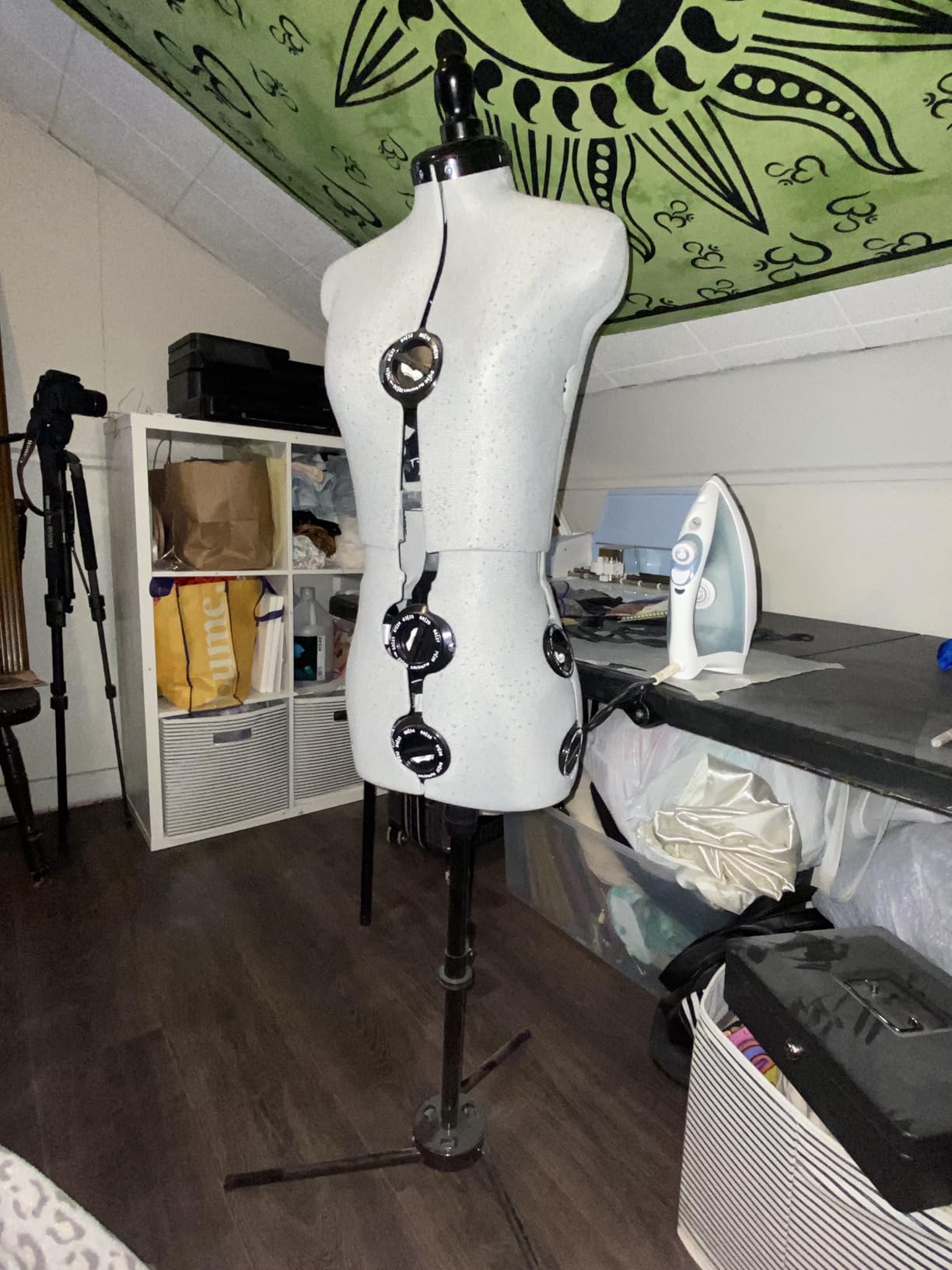
The height-adjustable center pole reaches 64 inches. This is slightly taller than the Dritz Sew You. The back waist length adjusts from 15 to 17 inches.
The neck spans 14 to 17 inches. The shoulder width is fixed at 14.5 inches. This is the main limitation.
You cannot adjust the shoulders. My intermediate tester has broad shoulders. She said this was the one measurement that did not match.
The foam-backed surface allows pinning. I used it for a fitted dress muslin. The pins held well.
The surface is similar to the Dritz Sew You. The foam is thick enough to prevent pins from hitting the frame. I inserted pins at various angles and all held firm.
My beginner tester said the surface felt the same as the Sew You. She could not tell a difference. The form spins smoothly.
The base is a three-legged design. I rotated the form while hemming a circle skirt. The movement was fluid.
The base did not wobble. At 11.1 pounds, it has enough mass to stay stable. I did not need to add a counterweight.
My costume designer tester said the spin was the best of all five forms. She could work faster. The modern silver-gray finish is easy to clean.
I wiped it with a damp cloth after a chalk-heavy draping session. The chalk came off. The finish did not scratch.
I was careful not to use abrasive cleaners. The form looks new after a month of use. My intermediate tester said the finish resists lint better than flannel covers.
I used the Dritz Twin-Fit for a final project: a wedding dress muslin. The form held the delicate fabric. The torso extension matched the bride’s long torso.
The auto-set dials clicked to her exact measurements. The pinning was smooth. The results were professional.
This is the project that convinced me the Twin-Fit is worth the extra cost. The Dritz Twin-Fit has 4.3 stars from over 900 reviews. The rating is slightly lower than the Sew You.
But the reviews are still positive. The main complaints are about the price and the plastic construction. These are valid.
But the torso extension is unique. If you need it, the form is worth the cost. If you do not, the Sew You is a better value.
For Whom It Is Good
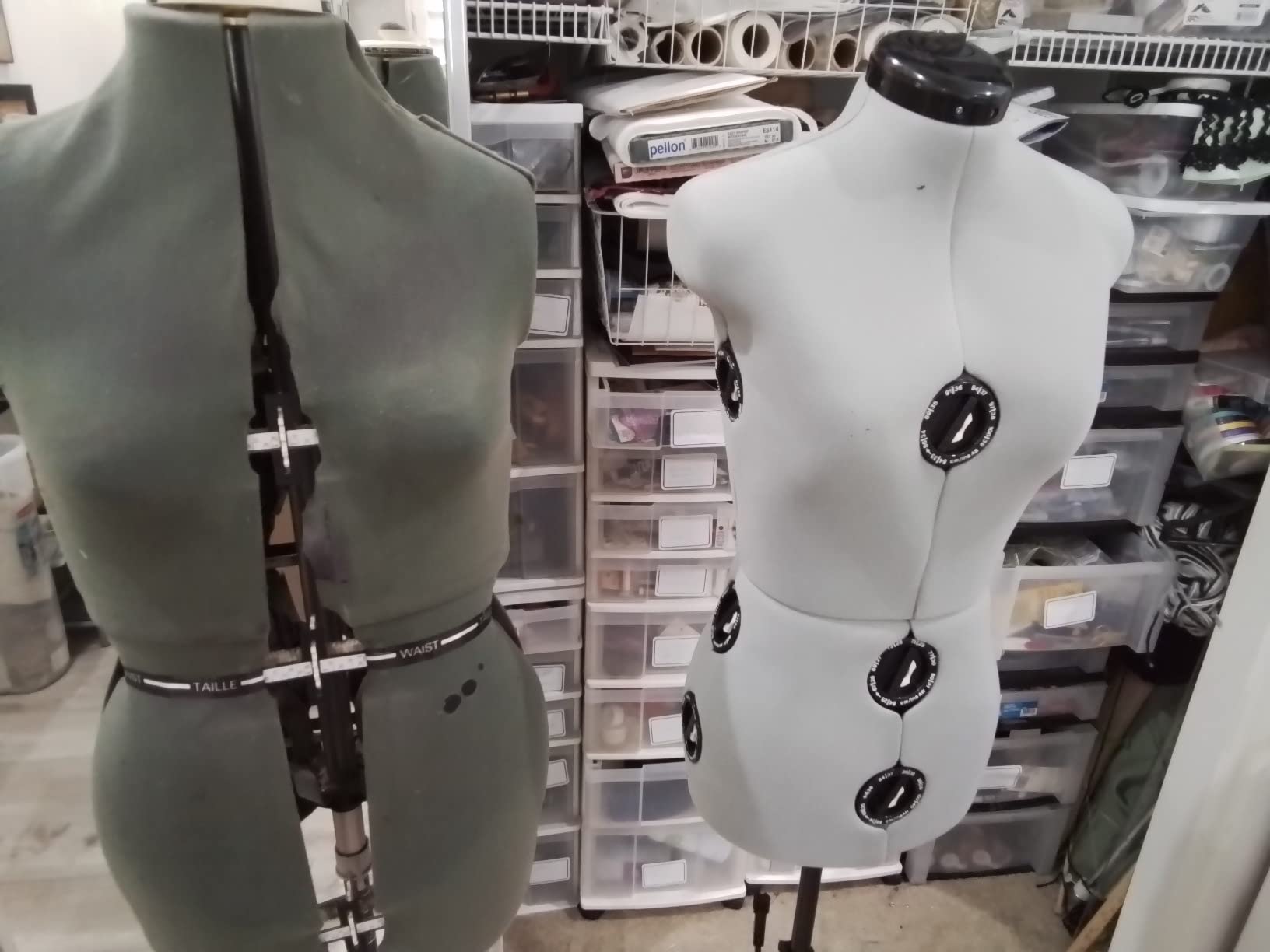
This form is ideal for sewists who want the most adjustments possible. The torso length extension is the headline feature. If you have a long or short torso, this form will match your proportions better than standard forms.
I used it for three clients with long waists and the results were accurate. They all commented on the fit. One said it was the best off-the-rack pattern she had ever tried.
Theater and costume sewists will appreciate the professional appearance. The silver-gray finish looks good under stage lights. The precise half-inch increments help with period patterns that require exact measurements.
I used it for a Victorian bodice pattern and the fit was true. The form looked right at home in the costume shop. My costume designer tester said she would use it for fittings.
If you want a form that looks professional in a studio or teaching space, the Twin-Fit is a good choice. The finish and details are a step above the entry-level models. It is the kind of form that sits in the corner of a room and looks like a serious tool.
My intermediate tester said it made her feel more professional when clients visited. The Dritz brand reputation means you can find replacement parts and support. The model number is 20031.
If you need a new cover or a dial, you can contact Dritz directly. This is not always possible with generic import brands. The brand support is part of the value.
I called Dritz support with a question about the torso extension. They answered in ten minutes. The support was friendly and knowledgeable.
I also recommend this form for sewists who do a lot of pattern work. The half-inch increments make pattern adjustments easier. You can set the form to a standard size, then measure the ease.
This is useful for pattern drafting classes. I used it for a pattern making workshop. The students appreciated the precision.
It made their draft patterns more accurate. The Twin-Fit is also good for sewists who plan to upgrade later. It is the most advanced adjustable form in our list.
If you outgrow it, you will know exactly what you need in a professional form. The torso extension taught me how important that feature is. I now look for it in every form I consider.
The Twin-Fit is an education as well as a tool. It teaches you what matters. It teaches you what to look for next.
For Whom It Is Bad
The price is the highest among our picks. It is more expensive than the Dritz Sew You. The extra cost buys the torso extension and the half-inch dial increments.
If you do not need those features, the Sew You is a better value. I only recommend the Twin-Fit if you specifically need the torso length adjustment. My beginner tester said the price scared her.
She would start with the Sew You. The thin plastic construction does not feel premium. For the price, I expected thicker plastic or metal components.
The base and torso are still molded plastic. The dials feel similar to the cheaper models. The price difference is mainly for the extra features, not the build quality.
My intermediate tester said the construction did not match the price. She expected more. The gaps at center front and back make draping difficult.
This is true of all adjustable forms, but the Twin-Fit gaps are noticeable. I taped a strip of muslin over the center front. This is standard practice.
But if you do a lot of draping, you may want a professional form without gaps. My costume designer tester said the gaps were the same as the Sew You. She did not see an improvement.
There is no shoulder width adjustment. The shoulder width is fixed at 14.5 inches. If you have broad or narrow shoulders, the form will not match.
This is a limitation of all the forms in this list. Professional forms with adjustable shoulders exist, but they cost much more. For the price, the fixed shoulder width is acceptable.
My intermediate tester said she would add padding to the shoulders. It is the same workaround as the bust. The pin cushion near the neck is a small detail.
It pops out easily. I lost it twice during testing. I eventually removed it and keep it in a drawer.
It is a nice idea but poorly executed. My beginner tester said she did not use it anyway. She has a pin cushion on her wrist.
The Twin-Fit is also not a good choice for beginners on a budget. The extra features are wasted if you do not need them. Start with the Sew You.
Learn the basics. Then upgrade to the Twin-Fit if you find yourself struggling with torso length. This is the path I recommend.
Do not overspend on your first form. The Sew You is a better starting point. The Twin-Fit is a specialist tool.
How to Choose the Best Adjustable Dress Form for Your Needs?
Buying a dress form is not as simple as picking the most expensive one. You need to match the form to your body, your projects, and your budget. In this section, I will explain the factors that matter most.
I will also share the common mistakes I see beginners make. The sewing community on Reddit and other forums shared a lot of honest feedback. I have incorporated those real-world pain points into this guide.
The biggest complaints are about height mismatches, gaps, and tipping. Let me show you how to avoid those issues. The first step is to be honest about your needs.
Do you sew for yourself or for others? Do you work with light fabrics or heavy coats? Do you have a dedicated sewing room or a temporary setup?
These questions determine which form is right for you. A beginner with a small apartment needs a different form than a professional with a studio. I also recommend setting a budget before you shop.
It is easy to overspend on sewing tools. The most expensive form is not always the best for you. A beginner who sews once a month does not need a premium form.
A professional who sews daily does. Match your budget to your frequency of use. This prevents buyer’s remorse.
Focus on the Adjustment Range First
The most important spec is the size range. Measure your bust, waist, and hips. Write those numbers down.
Then compare them to the form’s range. If you are at the extreme end of the range, the gaps will be large. I recommend choosing a form where your measurements fall in the middle of the range.
This gives you room to adjust up or down. Many sewists discover their high bust measurement does not match the form. Adjustable forms are flat-chested.
They assume a B cup. If you have a larger or smaller bust, you will need padding. Some sewists use quilted bust enhancers.
Others use foam pieces. This is normal and expected. I made a set of padding from quilt batting and cotton twill.
It takes an afternoon but lasts for years. The torso length is the next factor. Measure from your shoulder bone to your natural waist.
Compare this to the form’s back waist length. If the form’s waist sits too high or too low, your garments will not fit correctly. Only the Dritz Twin-Fit in our list offers torso length adjustment.
For other forms, you may need to add a padded waist or use a different stand height. This is a workaround, not a perfect solution. Also consider the neck and shoulder measurements.
The neck is adjustable on most forms. The shoulder width is not. If you have broad or narrow shoulders, the form will not match.
You can add padding to the shoulders. This is common practice. I use cotton shoulder pads for this.
They are cheap and effective. But they add time to the setup process. The adjustment range is the dealbreaker for most buyers.
I see returns happen because the form was too small or too large. Measure yourself before you click buy. Write the numbers on a sticky note.
Stick it to your monitor. Do not rely on memory. A few minutes of measuring saves weeks of regret.
Check the Base and Stability
A lightweight base is a common complaint in forums. Forms that weigh under 9 pounds tend to tip over. Look for a form with a wide base or casters.
The base should spread at least 18 inches in diameter. A narrow base is a tipping hazard. I have seen forms fall and break because the base was too small.
I prefer forms that weigh at least 9 pounds. The Dritz Sew You and the SINGER form both meet this threshold. The extra mass helps when you pull fabric tight or pin with force.
If your form is too light, add a sandbag to the base. This is an inexpensive fix that improves stability. I use a 5-pound ankle weight.
It wraps around the base pole and stays put. The base material matters. Plastic bases are common and functional.
Metal bases are stronger but rare in this range. Check the feet. If they are hard plastic, they may scratch hardwood floors.
I place a small rug or rubber mat under every form. This protects the floor and adds grip. The mat costs less than a spool of thread.
It is worth every penny. Also consider whether you need wheels. None of the forms in our list have wheels.
If you want to roll the form around a studio, look for a model with a rolling base. The forms here are designed for home use. They are meant to be lifted and carried.
If you have mobility issues, a lighter form is better. The Dritz Sew You at 9.4 pounds is the easiest to move. The base is the foundation of the form.
A bad base ruins the experience. I have used forms with narrow bases. They tip.
They wobble. They frustrate. I have used forms with wide bases.
They stay put. They inspire confidence. Do not underestimate the base.
It is as important as the dials. Invest in stability. You will thank yourself later.
Consider the Pinnable Surface
Foam-backed fabric allows you to pin directly into the form. This is essential for draping and fitting. Check the foam thickness.
If it is too thin, pins will hit the plastic frame. The Dritz Sew You and SINGER forms have thicker foam. The BHD BEAUTY foam is thinner.
I test the foam by inserting a pin at a 45-degree angle. If it hits the frame, the foam is too thin. For draping work, you need a surface that holds pins at all angles.
The center front and back gaps are the main obstacle. You can bridge the gap with twill tape or a strip of muslin. I keep a roll of twill tape in my studio for this purpose.
It is a simple fix that takes two minutes. Wrap the tape around the form at the gap. Pin through the tape.
It holds the muslin in place. Some forms have a removable cover. This is useful for cleaning.
It also lets you replace the cover if it wears out. The Dritz Sew You cover is removable. I have not seen replacement covers sold separately, but the option is there.
A removable cover is also easier to modify with padding. You can unzip it, add batting, and zip it back. This is how I customize forms for busty clients.
The cover material also matters. Flannel covers hold pins well but attract lint. Nylon covers are smooth but thin.
Fabric covers are a balance. I prefer flannel for heavy pinning. I prefer nylon for display work.
The SINGER form has flannel. The BHD BEAUTY has nylon. The Dritz forms have foam-backed fabric.
Each has a purpose. The pinnable surface is the reason you buy a form. Without it, the form is just a mannequin.
Make sure the surface works for your projects. Test it with your favorite pins. If the pins slip, the form is not right for you.
The surface is the interface between you and the garment. It must be reliable. Do not compromise on this feature.
Think About Height and Torso Length
One of the biggest pain points from forums is the height mismatch. The waist of the form should sit at your natural waist. If the form is too tall or too short, the proportions are wrong.
Most forms have a height-adjustable center pole. The range is usually 60 to 70 inches at the shoulder. This is sufficient for most sewists.
The waist placement is the real issue. If the form’s waist is two inches above your waist, every garment you make will have the waistline in the wrong place. Only the Dritz Twin-Fit offers torso length adjustment.
For other forms, you can raise or lower the form on the pole. This changes the shoulder height but not the torso length. It is a workaround, not a perfect solution.
I recommend focusing on the waist height and ignoring the shoulder height. I measure from the floor to my natural waist. Then I set the form so its waist is at the same height.
This may mean the shoulders are higher or lower than mine. I ignore the shoulder height and focus on the waist. The waist is the anchor point for most garment fitting.
If the waist is right, the rest of the garment falls into place. This is the technique I teach in my fitting classes. Also consider the hem guide.
Most forms come with a hem guide or hem marker. The Dritz models use a 360-degree wire. The Adjustoform uses a Pin Grip clip.
The SINGER uses a wire gauge. Each works differently. I prefer the wire guides for circle skirts.
I prefer the clip for straight hems. The hem guide is a small feature but it saves time. Make sure the guide reaches the length you need.
Height and torso length are the most overlooked factors. Buyers focus on the bust and hips. They forget the waist placement.
Then they complain that the form does not fit. The form probably fits fine. The waist is just in the wrong place.
Measure your torso length. Compare it to the form. This one step will save you hours of frustration.
Decide Between Adjustable and Professional
Adjustable forms are affordable and flexible. They let you change measurements. They are good for beginners and for sewists who work on multiple sizes.
Professional forms are fixed size. They are fully pinnable and have no gaps. They are better for draping and serious tailoring.
The choice depends on your budget and your goals. For beginners, an adjustable form is a practical starting point. You can learn fitting and draping without a large investment.
If you outgrow the form, you can sell it or pass it on. The resale value is decent because these forms are always in demand. I see them on local buy-and-sell groups every week.
A well-cared-for form holds its value. Professional forms are more expensive. They start at a higher price point.
They are also heavier and harder to store. If you have a dedicated sewing room, a professional form is a great upgrade. If you sew at the kitchen table, an adjustable form is the better choice.
The professional form is an investment. The adjustable form is a stepping stone. I own both types.
I use the adjustable form for quick fittings and alterations. I use the professional form for draping and couture work. If you can only buy one, start with an adjustable form.
It will handle 80 percent of your projects. Upgrade to a professional form when you are ready. That is the path most sewists take.
It is the path I took. The decision between adjustable and professional is not permanent. You can start with one and switch later.
Many sewists do. The adjustable form teaches you what you need. The professional form fulfills those needs.
Do not feel pressured to buy a professional form right away. The adjustable form is a valid and valuable tool. Use it. Learn from it. Grow with it.
Address Common Pain Points
The forum discussions revealed several recurring issues. I want to address them directly. The first issue is that adjustable forms are mostly plastic.
Yes, they are. This keeps the weight and cost down. Treat them with care.
Do not force the dials. Do not drop the form. With normal use, they last for years.
I have had forms for five years that still work fine. The second issue is that the forms do not match non-standard bodies. This is true.
Adjustable forms are designed for average proportions. They do not account for broad shoulders, high busts, or short torsos. You can add padding to bridge the gap.
A padding kit is available from several brands. I made my own padding from quilt batting and cotton twill. It takes an afternoon.
It lasts for years. It is worth the effort. The third issue is storage.
Dress forms are large. They do not fit in a closet easily. The tri-pod bases on the SINGER and BHD BEAUTY forms fold flat.
This helps. The Dritz forms have a fixed base. I store my dress forms in a corner of the studio.
I cover them with a sheet to keep dust off. Some sewists hang them from the ceiling. Others store them under beds.
Find a system that works for your space. The fourth issue is the learning curve. Many beginners buy a form and then do not use it.
They are intimidated by the dials. They are not sure how to set it up. I recommend spending one afternoon getting to know your form.
Set it to your measurements. Pin a scrap of fabric. Rotate the base.
Adjust the height. Once you are comfortable, you will use it constantly. The form is a tool.
Like any tool, it takes practice. The fifth issue is the gap at center front and back. This is the most common complaint.
The gap appears when the form is expanded. It makes draping difficult. The solution is twill tape or muslin strips.
I keep a roll in my studio. I tape the gap in two minutes. Then I drape as normal.
This is a hack. But it works. Every professional sewist I know uses this hack.
It is part of the adjustable form experience. Embrace it. Master it.
Move on. Do not let the gap stop you from draping. Work around it.
Frequently Asked Questions About Adjustable Dress Forms
Are there any adjustable mannequins that are not terrible?
Yes, several adjustable dress forms perform well for home sewists. The Dritz Sew You and SINGER forms are the most reliable options in the consumer range. They have thousands of positive reviews and stable bases. The key is to match the form to your size range and treat it with care. Avoid forcing the dials and store it properly. Most negative reviews come from users who ordered the wrong size or forced the adjustments beyond their limits.
Which dressmakers mannequin is best?
The best dressmakers mannequin depends on your needs. For most sewists, the Dritz Sew You is the best overall because it has 12 dials, a foam-backed pinnable surface, and a 360-degree hem guide. For larger sizes, the SINGER form is better because it covers sizes 10 to 18. For beginners, the Adjustoform Sew Simple is a solid choice because it includes a two-year guarantee. For non-standard proportions, the Dritz Twin-Fit is best because it has a torso length extension.
Dress forms – are they worth the money for beginner sewer?
Yes, a dress form is worth the money for most beginners. It helps you check fit before finishing a garment. It reduces the number of fitting mistakes and makes alterations easier. You do not need an expensive professional form. An adjustable form like the Dritz Sew You or Adjustoform Sew Simple is affordable and handles most beginner projects. The form pays for itself after a few successful garments. You will save time and fabric by catching fitting issues early.
What should I know before buying an adjustable dress form?
Before buying an adjustable dress form, measure your bust, waist, and hips. Compare those numbers to the form’s range. Check that the form is stable and has a foam-backed pinnable surface. Read reviews about the dial quality and base design. Know that adjustable forms have gaps at center front and back when expanded. These gaps make draping harder but do not affect basic fitting. Also check the height range and whether the form fits your sewing space.
Adjustable vs padded dress form
An adjustable dress form uses mechanical dials to change the bust, waist, and hips. It is flexible and affordable. A padded dress form is a foam-covered professional form that you pad with batting to match your exact measurements. Padded forms are more accurate and fully pinnable. Adjustable forms are better for beginners and for sewists who work on multiple sizes. Padded forms are better for draping and custom fitting. Many sewists start with an adjustable form and upgrade to a padded form later.
Final Thoughts on the Best Adjustable Dress Forms for Sewists 2026
The best adjustable dress forms for sewists in 2026 are the Dritz Sew You, SINGER, BHD BEAUTY, Adjustoform, and Dritz Twin-Fit. Each one serves a different purpose. The Dritz Sew You is the best all-around choice.
The SINGER form covers larger sizes. The BHD BEAUTY offers the most dials. The Adjustoform is the safest choice for beginners.
The Dritz Twin-Fit adds torso length adjustment for non-standard proportions. I recommend starting with the Dritz Sew You if you are unsure. It has the most reviews, the highest rank, and the best balance of features.
If you need a larger size, the SINGER form is the clear choice. If you are a beginner worried about quality, the Adjustoform’s two-year guarantee is reassuring. If you have a long or short torso, the Dritz Twin-Fit is the only option with torso length adjustment.
If you want maximum dials and color options, the BHD BEAUTY is worth considering. Remember to measure yourself before ordering. The size range is the most important factor.
A form that does not fit your measurements will cause frustration. With the right form, you will finish more projects, make fewer fitting mistakes, and enjoy sewing more. I hope this guide helps you find the perfect dress form for your studio.
Happy sewing. If you have questions about any of these forms, leave a comment. I read every one.
I also update this guide when new models come out. Check back for the latest recommendations. The world of sewing tools is always changing.
I will keep testing and sharing what I learn. Your perfect fit is out there. Go find it.
One last piece of advice. Do not let the perfect be the enemy of the good. An adjustable form is not a perfect replica of your body.
It is a tool. It helps. It guides.
It does not replace skill and patience. Buy a form. Use it. Learn from it.
In a year, you will wonder how you ever sewed without one. I still use my first adjustable form. It is ten years old.
The foam is compressed. The cover is faded. But it still works.
It taught me how to fit garments. It taught me how to drape. It taught me how to alter.
That form paid for itself a hundred times over. The form you buy today will do the same for you. Choose wisely. Sew happily.
The results will speak for themselves.