How To Arrange Throw Pillows On A Sectional Sofa
I’ve helped dozens of friends style their living rooms over the past fifteen years, and throw pillows consistently create the most confusion. Everyone wants that effortless, pulled-together look from design magazines, but instead ends up with a jumbled pile that family members immediately toss on the floor. I get it.
My own sectional sofa went through five different pillow arrangements before I figured out the formulas that actually work. The struggle is real – you want visual interest without sacrificing seating space, and coordinating colors without looking like you’re trying too hard.
Contents
In this updated guide, I’m cutting through the noise with specific pillow formulas, tested arrangements for different sectional configurations, and practical advice for real households (kids, pets, and skeptical spouses included). No more guesswork – just proven techniques that balance style with actual livability.
Significance of Styling Throw Pillows for Sofas
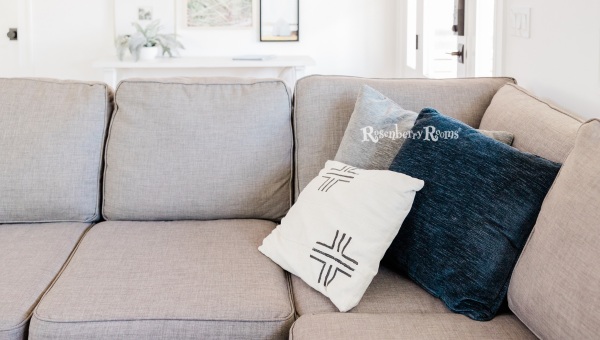
Throw pillows aren’t just decorative accents – they’re design tools that transform the visual weight distribution of your living room. A well-arranged sectional creates a focal point that anchors your entire space, while poorly placed pillows create chaotic visual noise that actually makes the room feel smaller.
I’ve seen this transformation firsthand in my own home. Before I understood visual balance, my L-shaped sectional looked cluttered regardless of how few pillows I used. The breakthrough came when I stopped thinking about individual pillows and started treating the arrangement as a cohesive composition.
The benefits go beyond aesthetics. Proper pillow arrangements provide necessary lumbar support, define seating zones on large sectionals, and create scale progression that makes deep sectionals more inviting rather than overwhelming.
For anyone shopping for a new sectional sofa, understanding pillow styling helps you evaluate the true design potential of different configurations before making your purchase.
Assessing Your Sectional Sofa Canvas
Measuring for Pillow Success
Before buying a single pillow, grab your tape measure. The depth of your sectional’s seating area determines your base pillow size more than any other factor.
- Seating depth under 22 inches: 16-18 inch square pillows as your foundation layer
- Seating depth 22-28 inches: 20-22 inch squares work best for proper back support
- Seating depth over 28 inches: 24 inch squares create the scale needed for deep, comfortable lounging
Measure sofa length section by section, not just total length. This matters because each seating area needs its own anchor points. The corner junction – that tricky 90-degree angle where sections meet – requires specific attention as it’s your visual pivot point that balances the entire arrangement.
Pro tip: Take photos with measurements written on paper placed on each section. This visual reference saves countless trips back and forth when shopping for pillows.
Configuration-Specific Considerations
Your sectional’s shape dramatically impacts pillow strategy. Consider sectional sofa deals when shopping, as different configurations offer unique styling opportunities. L-shaped sectionals require mirror-image arrangements on each arm, but the short chaise section needs fewer pillows to avoid overwhelming the visual flow. I typically place two pillows max on a chaise – one larger base pillow and one smaller accent.
U-shaped sectionals demand the most discipline. With three sides competing for attention, I recommend treating each arm as its own vignette while maintaining consistent color palette and textural contrast across all three sections.
Sectionals with built-in chaise sections present a unique challenge. The chaise functions differently than standard seating – it’s for lounging, not upright sitting. This means bolster pillows excel here, providing arm support for reading or napping positions.
Proven Pillow Formulas That Actually Work
After testing countless combinations, I’ve identified specific formulas that deliver consistent results. These aren’t rigid rules but starting points that eliminate the guesswork.
Maria Killam’s Shortcut Formula
This designer-approved approach creates visual interest while maintaining cohesion. For each seating section, use:
- 1 patterned square (19×19 inches) – your statement piece
- 1 patterned lumbar (12×21 inches) – breaks up angular monotony
- 3 solid color pillows – these create visual breathing room
- 3 similar solid pillows – slightly different shade or tone for depth
The magic lies in the ratio: one bold pattern to anchor, one elongated shape for contrast, and six solids that create a cohesive color story. This formula works because it provides enough visual variety without overwhelming the space.
Size-Based Sectional Formulas
Your sectional’s scale determines pillow quantity. Here’s what I use based on actual seating capacity:
- Small sectionals (2-3 seat capacity): 5-6 pillows total. Start with two 20-inch squares as anchors, add one lumbar pillow centered, and finish with two 18-inch accent pillows in front corners.
- Medium sectionals (4-5 seat capacity): 7-9 pillows. Three 22-inch squares for the foundation, two lumbar pillows for lower back support, and 3-4 smaller 16-18 inch pillows for layering.
- Large sectionals (6+ seat capacity): 10-12 pillows. Four 24-inch squares create the base, three lumbar pillows break up the expanse, and 4-5 smaller pillows add personality and depth.
Remember, these numbers assume you’re styling the entire sectional. If you have a chaise, subtract 1-2 pillows from the main seating count and add them to the chaise section instead.
The “2 2 1 Rule” for Effortless Styling
This simple pattern creates visual rhythm across your sectional. Place two pillows in your main accent color on each arm, plus one contrasting pillow in the center. The result is a balanced composition that feels intentional, not random.
For a classic blue and white living room, you might use two solid navy pillows on each arm and one white lumbar with a subtle pattern centered. The formula scales for larger sectionals by adding pairs rather than single pillows.
The beauty of 2 2 1 is its flexibility. You can apply it with colors, patterns, or textures. Two velvet pillows paired with two linen pillows and one leather accent creates sophisticated textural contrast without color complexity.
Choosing Colors, Patterns, and Textures
Color Palette Development
I always start with existing room elements. Pull your primary color from the rug or curtains, then identify two secondary colors from artwork or accent furniture. This creates a 3-color palette that feels cohesive, not matchy-matchy.
For pillows that last season to season, I recommend the 60-30-10 rule: 60% in your base neutral, 30% in a coordinating color, and 10% in a bold accent that can be swapped easily.
Pattern Mixing Without Clashing
The most common mistake I see is mixing patterns of the same scale. Vary your pattern sizes: one large-scale floral, one medium geometric, and one small-scale texture print. This hierarchy creates visual depth.
Anchor your patterns with at least two solid pillows. These visual breathing spaces prevent the arrangement from feeling overwhelming. I typically place solids at the corners where they ground the composition.
Texture Comparison for Visual Depth
Texture does the heavy lifting when your color palette is limited. Here’s how I pair materials for maximum impact:
| Texture Type | Character | Best Placement | Ideal Pairing |
| Velvet | Luxurious, heavy visual weight | Anchor corners or center lumbar | Linen, cotton canvas |
| Linen | Relaxed, breathable | Side positions, layering pieces | Velvet, faux fur |
| Faux Fur | Soft, high-contrast | Accent pieces, chaise section | Smooth cotton, leather |
| Boucle | Tactile, modern | Front layer, textural interest | Smooth textures, solid colors |
| Leather | Structured, masculine | Center accent, grounding element | Soft textures like velvet |
| Chunky Knit | Cozy, seasonal | Seasonal rotation, reading nook | Smooth solids, simple patterns |
The key is contrast – if you use velvet, balance it with something matte. If you choose chunky textures, anchor them with smooth surfaces. This tension creates the layered look that makes arrangements feel intentional.
For complementary pillow shams, I often use the same texture family but different patterns. Velvet pillows with shams in a coordinating tone-on-tone pattern adds sophistication without visual clutter.
Arrangement Styles: Symmetry vs. Asymmetry
Symmetrical Arrangement Techniques
Perfect symmetry creates formal elegance. Place identical pillow pairs at each corner, then mirror your layering toward the center. This works beautifully in traditional spaces or rooms with clear focal points like fireplaces.
On L-shaped sectionals, symmetry means matching arrangements on each arm section. The corner junction becomes your visual pivot point – place similar but slightly different pillows here to acknowledge the turn while maintaining balance.
Asymmetrical Intentionality
Casual modern spaces thrive on asymmetry, but it must be intentional. Vary pillow sizes dramatically – one oversized 24-inch pillow on the left corner balanced by two smaller 16-inch pillows on the right. The visual weight remains balanced even though the pillow count differs.
I use asymmetry most often on sectionals with chaise sections. The chaise naturally breaks symmetry, so I lean into it – three pillows on the main section, just two on the chaise, creating a relaxed flow that feels intentional rather than accidental.
Corner Junction Styling
The corner where L-shape sections meet is your make-or-break point. This area determines whether your arrangement feels cohesive or disjointed. I always place my most interesting pillow here – a bold pattern, unique shape, or textural standout – because it draws the eye and unites both sections.
For U-shaped sectionals, each corner needs its own anchor point. I use the 2 2 1 rule in triplicate – two pillows of one type on each corner, with a central pillow in each section creating rhythm across the entire U.
L-Shaped Sectional Specific Arrangements
L-shaped sectionals present unique challenges because each arm serves different functions. The long arm typically faces your room’s focal point (TV, fireplace), while the short arm often creates a conversational nook or reading area.
My go-to formula for standard L-sectionals: Place two 22-inch square pillows at the outer corner and one 20-inch pillow on the short arm’s outer corner. Add a lumbar pillow in the elbow corner to soften the angle. Finish with two 18-inch accent pillows positioned where people actually sit – not just for show.
For L-sectionals with chaise: The chaise gets special treatment. Use one 24-inch square pillow against the back corner and one 12×21 lumbar pillow positioned for lower back support when lounging. Don’t overcrowd the chaise – it’s for stretching out, not for pillow displays.
The key is acknowledging that each section has different usage patterns. The main section needs more pillows because it seats more people and faces your room’s focal point. The short arm requires fewer pillows positioned for actual comfort, not just visual balance.
The Reality Check: Functionality vs. Aesthetics
Let’s address the elephant in the room – or rather, the pillows scattered on your floor. Nearly every forum post I read mentioned the same frustration: “My husband/kids immediately throw the pillows on the ground.” This is the reality of living with pillows.
Here’s my honest take: some households aren’t suited for elaborate pillow arrangements. If your family actively resists decorative pillows, choose quality over quantity. Three substantial, comfortable pillows that people actually use beat nine decorative pillows that become daily obstacles.
For households with children and pets, I recommend performance fabrics in medium-dark tones. These pillows serve a dual purpose – they look good but can withstand real life. The best pillow shams in these situations have removable, washable covers.
A practical compromise: create a basket or storage ottoman nearby where decorative pillows can live when not in use. My sister keeps a lidded basket next to her sectional – pillows come out when guests arrive, tuck away when her three kids need sprawling space.
Seasonal Updates and Special Occasions
One advantage of following the formulas above is that you can rotate accent pillows seasonally without disrupting the foundational arrangement. Keep your base pillows (the largest squares and lumbar pillows) consistent year-round, swapping only the smaller accent pillows.
For spring and summer, I bring in lighter textures like linen and cotton in brighter tones. Fall and winter call for chunky knits, velvet, and deeper colors. This approach costs less because you’re only buying 2-3 new pillows per season, not an entirely new collection.
When hosting gatherings, temporarily remove half your accent pillows to create more seating space. Stack them in a decorative basket or on a nearby chair. Your guests will appreciate the extra room, and your arrangement returns to full glory once everyone leaves.
Finishing Touches That Make the Difference
Once your pillows are arranged, the final adjustments separate amateur from professional styling:
- Fluff and karate chop: Firmly fluff each pillow, then give firm pillows a sharp chop across the center to create that designer indentation. This small gesture makes arrangements look intentional, not accidental.
- Check from multiple angles: Step back and view from across the room. Rearrange any pillows that look off from your primary viewing position.
- Perfect the angles: Slightly angle corner pillows toward the room’s center rather than facing straight forward. This subtle adjustment makes the arrangement feel more welcoming and less rigid.
Most importantly, live with your arrangement for a week before making changes. Sometimes what looks perfect in photos feels different during actual use. Adjust based on real life, not just aesthetics.
FAQs About Arranging Throw Pillows on Sectional Sofas
How many throw pillows should be on a sectional sofa?
Small sectionals (2-3 seats): 5-6 pillows. Medium sectionals (4-5 seats): 7-9 pillows. Large sectionals (6+ seats): 10-12 pillows. The key is using the formulas above: base pillows in corners, lumbar pillows for support, and accent pillows for visual interest. Always prioritize function over hitting a specific number.
What sizes of throw pillows work best on a sectional sofa?
Base your selection on seating depth: Under 22″ depth = 16-18″ squares. 22-28″ depth = 20-22″ squares. Over 28″ depth = 24″ squares. Always include at least one lumbar pillow (12×21 inches) per seating section. The 19×19 pattern square is ideal for adding bold pattern without overwhelming.
Can I mix different patterns on my throw pillows?
Yes, but follow the pattern hierarchy: one large-scale pattern, one medium geometric, and one small-scale texture print. Anchor patterns with at least two solid pillows. Ensure all patterns share one common color to maintain cohesion. Bold patterns work best on corners or center lumbar pillows.
How can I arrange throw pillows for maximum comfort?
Place larger, firmer pillows against the backrest for lumbar support. Position pillows where people actually sit, not just for display. Use lumbar pillows at lower back level. Avoid placing pillows where they’ll obstruct seating or require constant removal. Quality over quantity – fewer substantial pillows beat many decorative ones.
What is the 2 2 1 rule for sofas?
The 2 2 1 rule creates visual rhythm: Place two pillows in your main accent color on each arm, plus one contrasting pillow in the center. This works with colors, patterns, or textures. For larger sectionals, scale up by adding pairs rather than single pillows. The result feels balanced and intentional.
How do I arrange pillows on an L-shaped sectional with chaise?
Treat the chaise separately: Use one 24-inch square at the back corner and one 12×21 lumbar for lower back support. Don’t overcrowd the chaise. On the main section, place two 22-inch squares at corners, one lumbar in the elbow, and two 18-inch accent pillows where people actually sit. The chaise corner is your visual pivot point.
Conclusion
Styling throw pillows on a sectional sofa doesn’t require innate design talent – it requires the right formulas and an understanding of visual balance. From the Maria Killam shortcut to size-specific counts to the 2 2 1 rule, these tested approaches eliminate guesswork while allowing for personal expression.
The most important lessons from fifteen years of arranging pillows: measure first, create visual weight distribution that makes sense for your specific sectional, and don’t sacrifice functionality for aesthetics. The best arrangements work for real households where people actually live.
Start with one formula, adjust based on your space and household needs, and remember that even designers live with arrangements for a week before finalizing. Your perfectly styled sectional is achievable – you just needed the shortcut formulas to get there.