9 Best Stage Monitors for Small Venues (October 2026) Trusted Reviews
A stage monitor is a speaker that sends a performer their own separate mix, so they can hear their voice or instrument without leaning on the front-of-house speakers. In a small venue, that monitor is doing three jobs at once: cutting through whatever is already loud onstage, staying light enough for one person to load, and sitting on a stage that is often only six feet wide.
That last point is where most published roundups go wrong. They rank by wattage and peak SPL, then send you home with a 33-pound cabinet for a coffee shop gig. The forums where gigging musicians actually talk treat weight as the deciding spec, and they treat personal and hot-spot monitors as a serious alternative to a floor wedge in the tightest rooms.
Contents
So this is our list of the best stage monitors for small venues in 2026, built around the constraints that actually show up on a small stage: carryability, stage footprint, off-axis consistency, and whether the box has onboard processing that helps you kill feedback. Nine monitors, all of them real products with published specifications and owner feedback, and every one of them a genuine candidate for a pub, restaurant, coffee shop, church or rehearsal room.
We also want to be upfront about one thing. This list skews toward powered and self-contained boxes because that is what a small venue usually wants. If you already own an amplifier, the passive sections still make sense. If you want the full reasoning behind our picks, read the reviews, then use the buying guide at the end to narrow down by stage size and room type.
Top 3 Best Stage Monitors for Small Venues (October 2026)
These are the three that came out ahead once we weighed owner feedback against how much trouble each box causes on a small stage. The B205D wins on portability and owner volume, the F1320D wins on headroom, and the F1220D hits the middle ground most worship and hospitality rooms need.

Behringer Eurolive B205D
- 150W Class-D active
- 5.25 inch full-range driver
- 3-channel mixer
- 7.05 lb

Behringer Eurolive F1320D
- 300W bi-amped
- 12 inch woofer plus 1 inch compression
- feedback filter
- 33.1 lb

Behringer Eurolive F1220D
- 250W bi-amped
- 12 inch woofer plus 3 inch tweeter
- adjustable feedback filter
- 23.6 lb
As an Amazon Associate we earn from qualifying purchases. CERTAIN CONTENT THAT APPEARS ON THIS SITE COMES FROM AMAZON. THIS CONTENT IS PROVIDED 'AS IS' AND IS SUBJECT TO CHANGE OR REMOVAL AT ANY TIME.
Quick Comparison of All Nine Monitors in 2026
All nine cabinets in one place, ordered the same way as the reviews below. Driver size and output come from the manufacturer listings, and weight is the published shipping weight where the manufacturer does not state it themselves.
| Product | Features | |
|---|---|---|
| Behringer Eurolive B205D Active 150-Watt PA/Monitor Speaker System |
|
Check Latest Price |
 Mackie SRM150 5.25-Inch Compact Active PA System Mackie SRM150 5.25-Inch Compact Active PA System |
|
Check Latest Price |
| Behringer EUROLIVE F1220D Bi-Amped 250 Watt Monitor Speaker |
|
Check Latest Price |
 Seismic Audio SA-10MSingle Wedge Floor Monitor Seismic Audio SA-10MSingle Wedge Floor Monitor |
|
Check Latest Price |
| Behringer EUROLIVE F1320D Active 300 Watt 2-Way Monitor |
|
Check Latest Price |
 Samson RSXM10A 800W 2-Way Active Stage Monitor Samson RSXM10A 800W 2-Way Active Stage Monitor |
|
Check Latest Price |
 Sound Town METIS-10MPW Powered 10 Inch Stage Monitor Sound Town METIS-10MPW Powered 10 Inch Stage Monitor |
|
Check Latest Price |
 Grindhouse Speakers GH10M 10 Inch Passive Wedge Grindhouse Speakers GH10M 10 Inch Passive Wedge |
|
Check Latest Price |
 Seismic Audio SA-10MT-PW Powered 10 Inch Wedge Monitor Seismic Audio SA-10MT-PW Powered 10 Inch Wedge Monitor |
|
Check Latest Price |
We earn from qualifying purchases. CERTAIN CONTENT THAT APPEARS ON THIS SITE COMES FROM AMAZON. THIS CONTENT IS PROVIDED 'AS IS' AND IS SUBJECT TO CHANGE OR REMOVAL AT ANY TIME.
1. Behringer Eurolive B205D: The Lightest Monitor That Most Performers Can Carry Alone
Behringer Eurolive B205D Active 150-Watt PA/Monitor Speaker…
150W Class-D active
5.25 inch full-range driver
3-channel mixer with 3-band EQ
7.05 lb
Pros
- Lightest unit here at 7.05 pounds
- Integrated 3-channel mixer with two mic preamps and phantom power
- Class-D amp keeps a full-range driver clean and portable
- Through output lets you daisy-chain to a bigger system
- Works well mounted on a mic stand as a personal monitor
Cons
- Single full-range driver does not behave like a true 2-way cabinet
- Limited bass at the bottom end
- Only two inputs
- which is tight for duets
The B205D is the answer for anyone whose stage is really a rug in a coffee shop. At 7.05 pounds it is by a wide margin the lightest box in this group, and that changes how you plan a load-in when you are carrying everything yourself up a set of stairs.
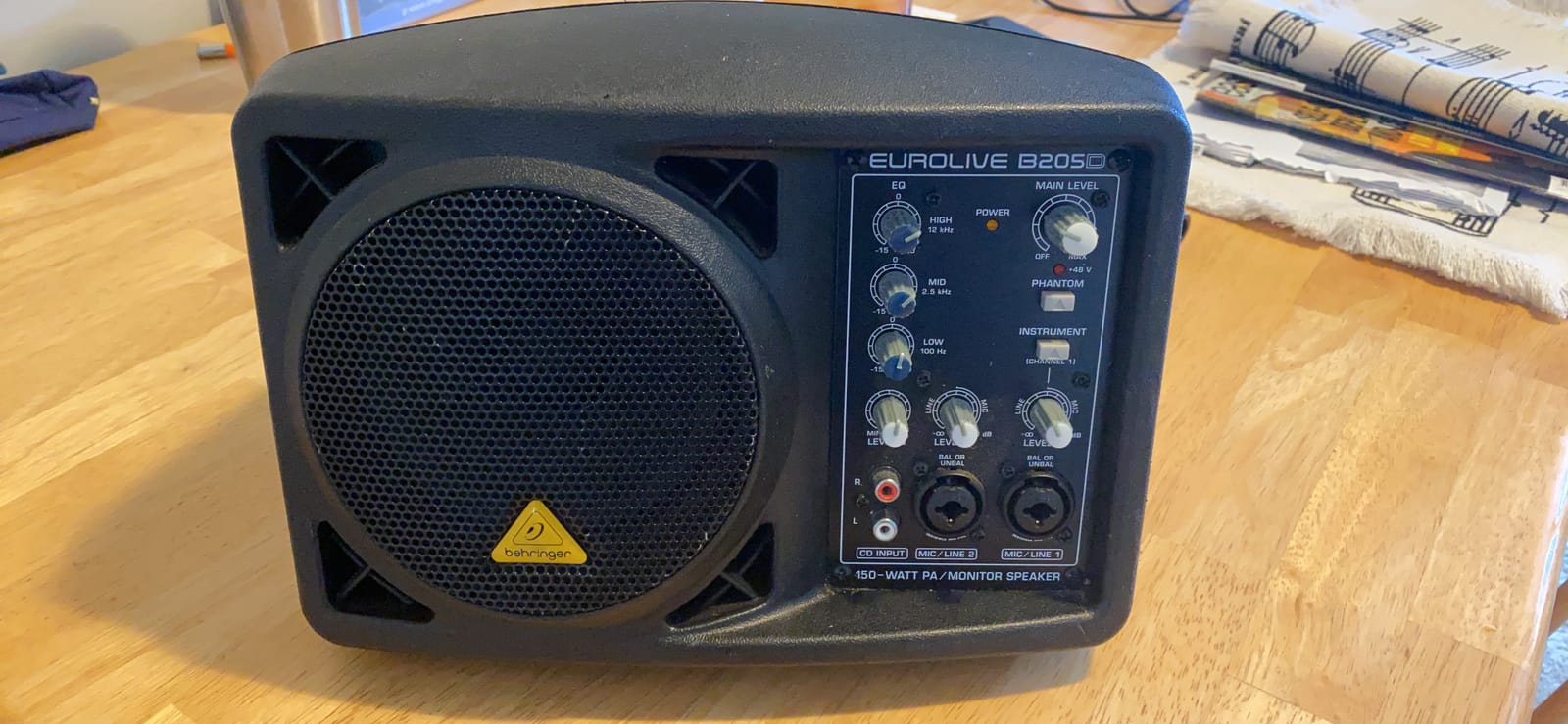
What makes it unusual is the built-in three-channel mixer. It has two invisible mic preamps with phantom power and an instrument-ready input, so a solo acoustic act can plug a vocal mic and a guitar straight in and get a usable mix with no console at all. There is a three-band EQ and a through output for adding a second box later.
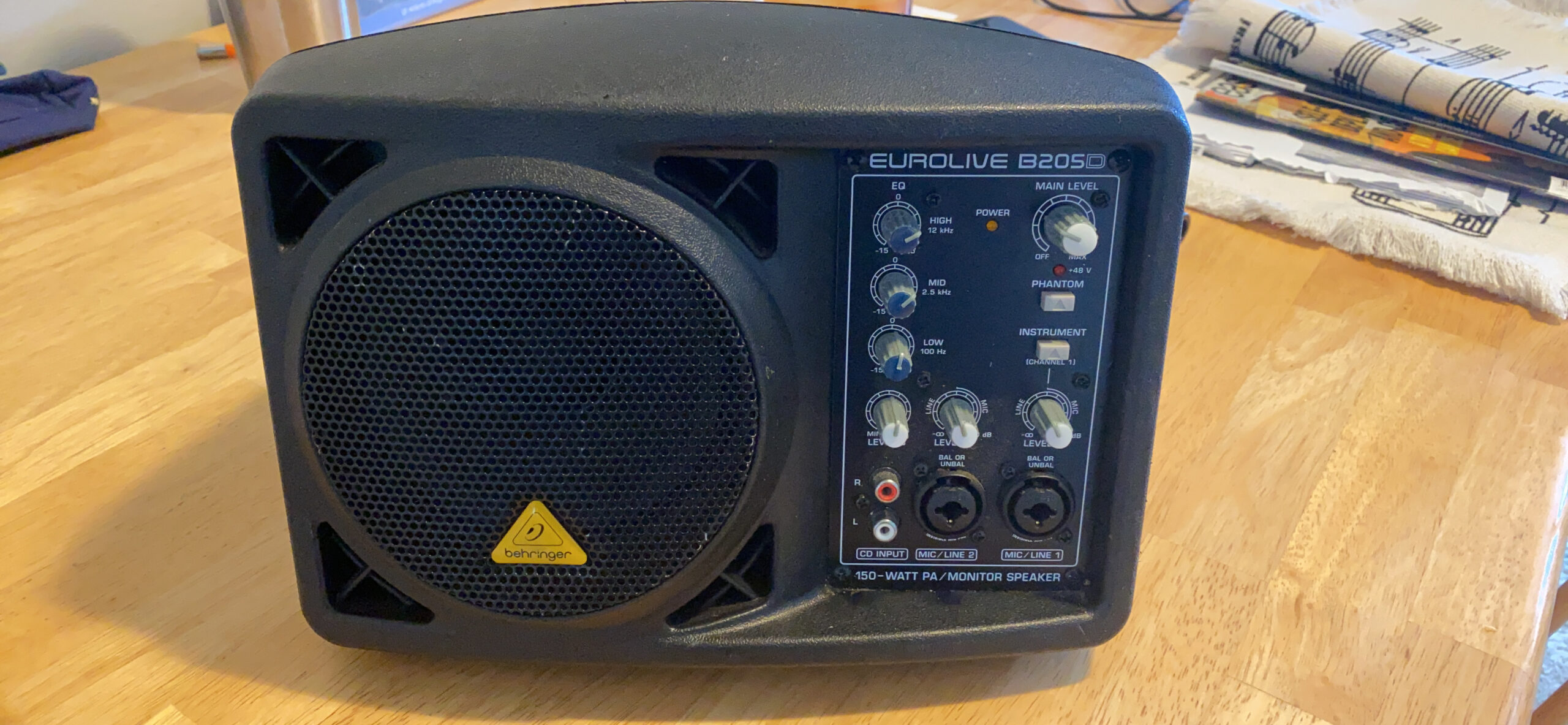
Be clear-eyed about the compromise. A single 5.25-inch full-range driver handles every frequency, so it will not give you the separation between a vocal and a kick drum that a proper 2-way wedge delivers. Owners describe the sound as clean and intelligible, which is exactly what a singer wants to hear their pitch, and they consistently note that it is not a substitute for a full 2-way PA.
This is also the box that owners most often repurpose as a personal monitor on a mic stand, which is a smart play for very narrow stages where a floor wedge would eat the entire downstage edge.
When the B205D is the right call for a small stage
It is right when the stage is tiny, the act is solo or a duo, and the person carrying gear does not want a back injury. It is also right for rehearsal, open mic nights and busking, where the 3-channel mixer and phantom power do more work than any amount of amplifier headroom would.
When a bigger wedge is the smarter buy
Reach for something else if the act includes a full drum kit, a loud guitar amp, or a second vocalist who needs a separate mix. In those situations a single full-range driver runs out of both output and low-end, and the shared single EQ means you cannot give each source its own tone.
2. Mackie SRM150: A Rugged Personal Monitor With Real Knobs
Mackie SRM150 5.25-Inch Compact Active PA System, Black
150W Class-D active
5.25 inch full-range neodymium driver
100Hz to 17.5kHz
7.6 lb
Pros
- Loud and clean without obvious distortion
- Real physical volume and tone knobs instead of menu-driven controls
- Built-in 3-band EQ plus XLR and 1/4 inch inputs
- Hi-Z input and 48V phantom power
- Dense enclosure with carry handle and built-in limiter
Cons
- No per-channel tone controls
- Mic-stand mount is top-heavy at roughly 25 degrees of upward angle
- Limited low-frequency extension below 100Hz
- One reviewer measured output below the advertised 150W
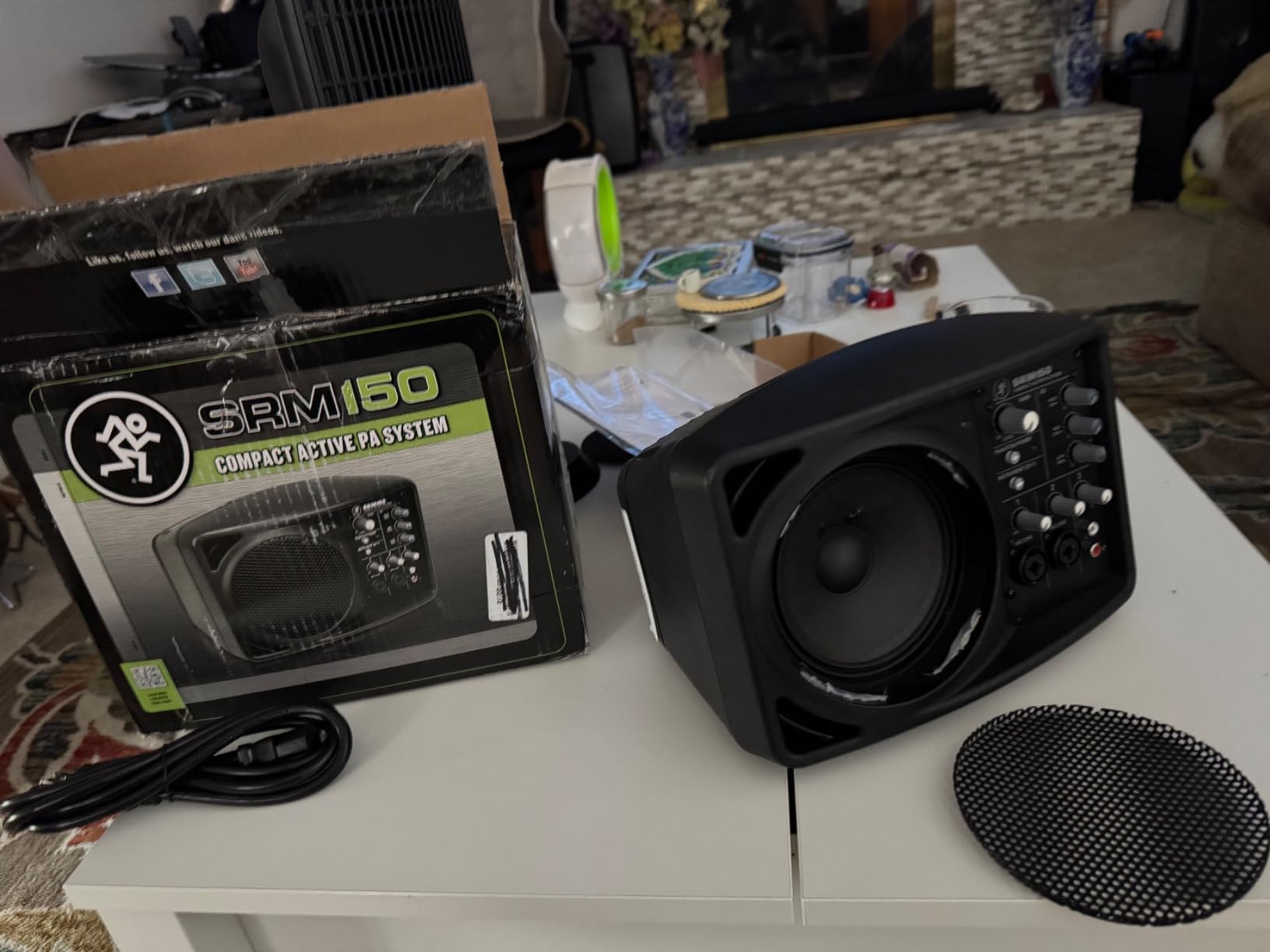
The SRM150 is the SRM140 in spirit with more output headroom, and it fills the same role as the B205D: a compact active box for keyboards, vocals and rehearsal rather than a main PA. Owners use it for rooms of up to roughly 50 to 100 people and report clear, loud output without the wobble cheaper plastic boxes show at higher levels.
What sets it apart slightly is the control surface. Physical volume and tone knobs are easier to find in the dark during a changeover than any app or menu system, and it accepts XLR and quarter-inch inputs with a Hi-Z instrument channel and 48V phantom power.
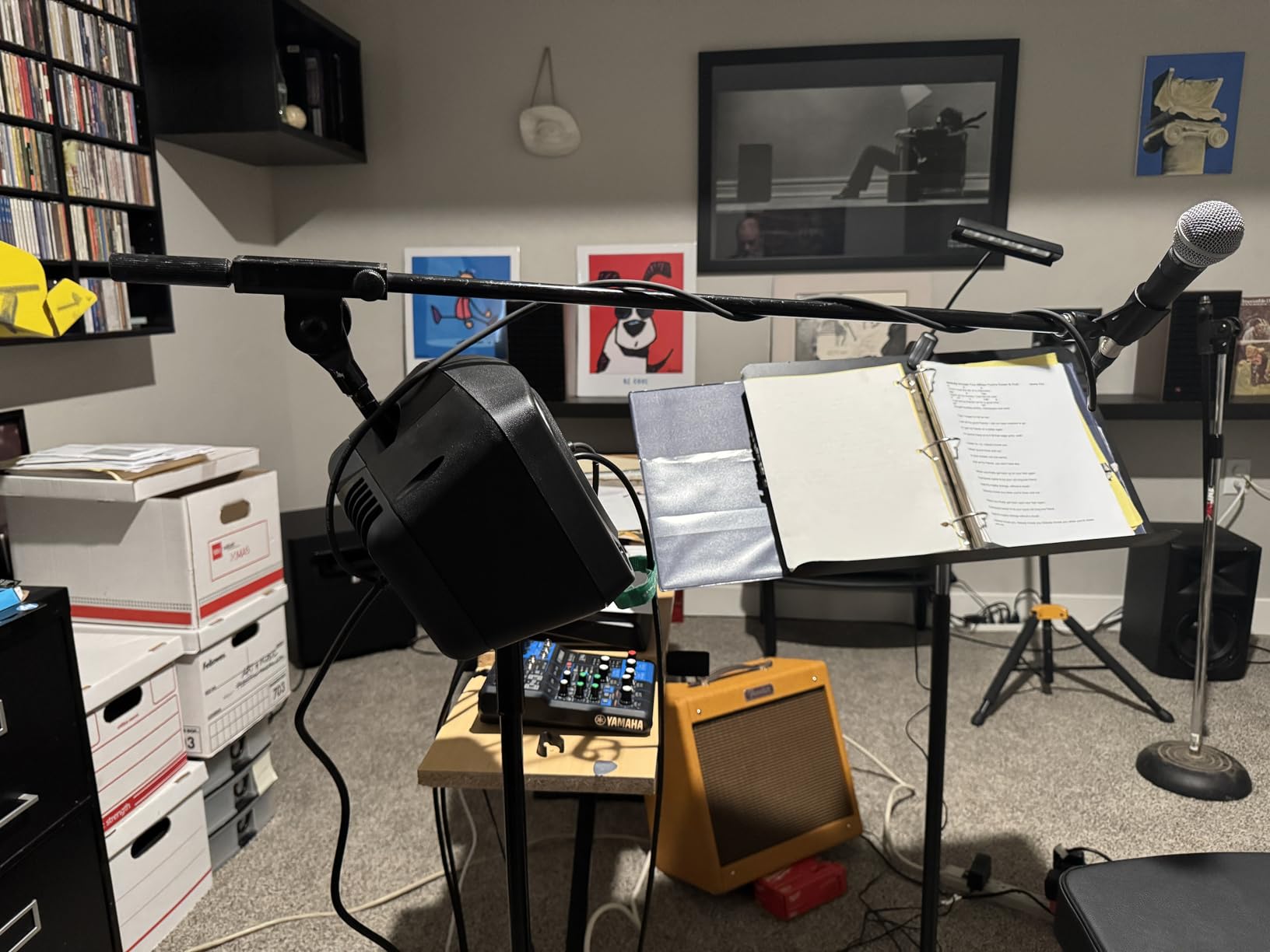
Two caveats matter for a wedge application. The mic-stand mount angles the cabinet up about 25 degrees and the box is very top-heavy in that position, so a tripod rather than a slim mic stand is the safer call. And with a single three-band EQ for the whole mix, you are shaping everything together rather than each source separately.
One reviewer also measured output well below the advertised 150 watts, which is a reminder to read wattage on any of these cabinets as a marketing figure rather than a promise.
When the SRM150 earns its place
It suits keyboardists and vocalists who want a monitor they can dial with their hands, and the 3-year warranty on electronics is the longest coverage in this group. It is a strong rehearsal-room and home-practice choice for the same reason.
When to pick something else
Do not use it as a full-band wedge with a drummer, and do not balance it on a plain mic stand. Its stated frequency response starts at 100Hz, so it will not reinforce low end the way a 12-inch bi-amped cabinet does, and the mount angle makes it awkward to aim precisely at a performer’s ears.
3. Behringer EUROLIVE F1220D: The Sweet Spot for Worship and Hospitality Rooms
Behringer EUROLIVE F1220D Bi-Amped 250 Watt Monitor Speaker…
250W bi-amped
12 inch woofer with 3 inch tweeter
Adjustable feedback filter
23.6 lb
Pros
- Strong 12 inch woofer delivers real output with wide bandwidth
- Adjustable feedback filter plus integrated limiter for system control
- Bi-amped design gives separate woofer and tweeter amplification
- Class-D construction keeps 250W under 24 pounds
Cons
- Heavier than compact 10 inch or 5 inch monitors at 23.6 pounds
- Feedback filter adjustment takes time to dial in per room
- Large footprint for a very small or crowded stage
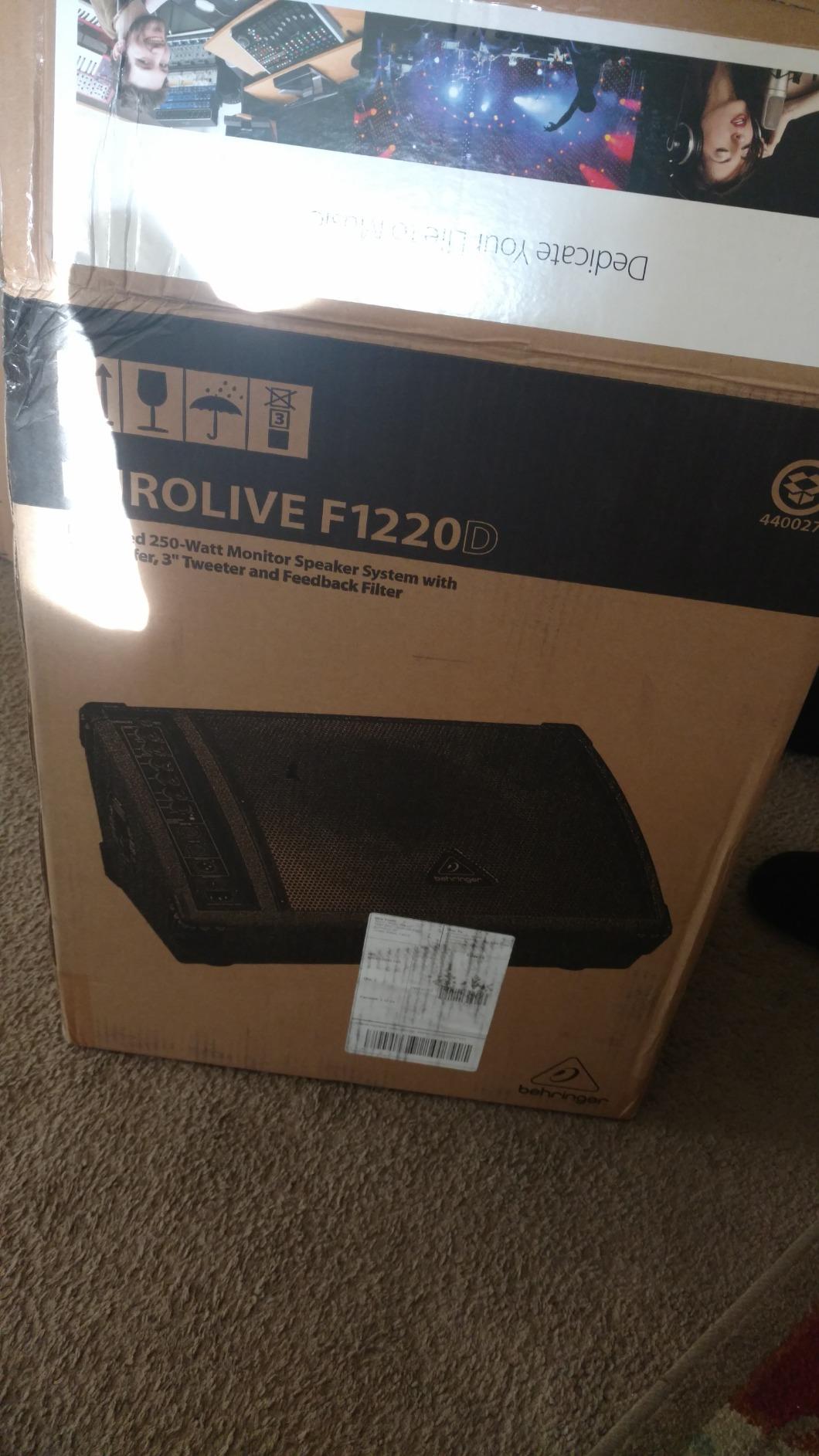
The F1220D is the middle of this list and the middle of what most small venues actually need. It is a genuine bi-amped two-way monitor with a 12-inch woofer and a 3-inch tweeter, frequency response listed at 45Hz, and 250 watts of Class-D power in a 23.6-pound cabinet.
The adjustable feedback filter is the feature that owners single out most. It lets you notch out a problem frequency for a specific room and instrument instead of guessing, and the integrated limiter adds driver protection. For a worship team or a restaurant with a house band, that is worth more than raw output.
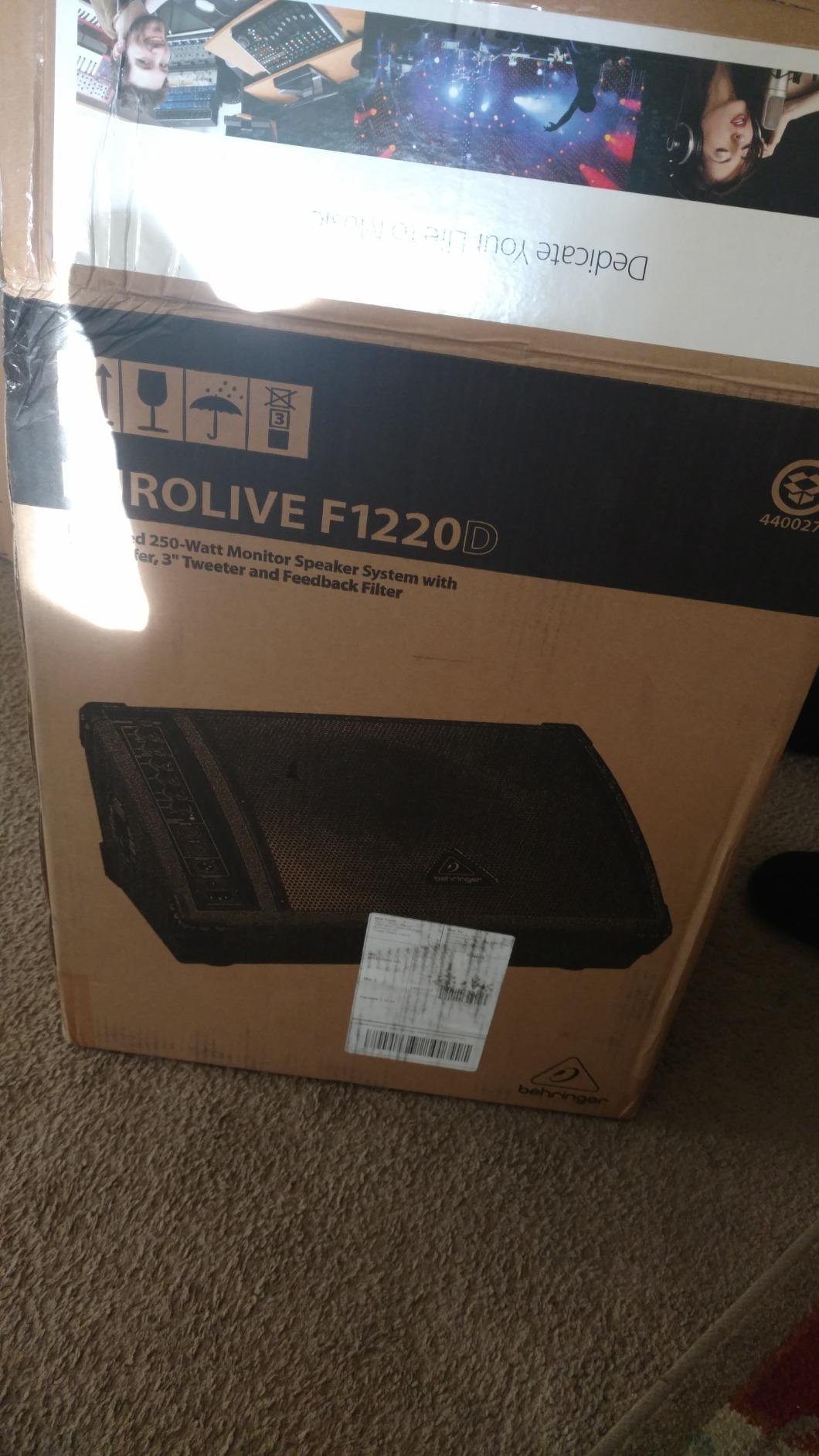
The tradeoff is size. At 23.6 pounds with an 18 by 18 by 12.25 inch footprint, two of these fill a lot of a shallow stage, and the feedback filter needs real attention in each new space. Owners report clean output, solid low end and usefulness in both front-of-house reinforcement and worship use.
It is also the cabinet most often described as underrated value in owner reviews for this category, with units still in service after years of regular use.
When the F1220D is the right call
Pick it when the room is hard and you fight feedback every week, when the band has more than three people, or when you want a monitor that can double as a front-of-house cabinet for a small pulpit or party. The 12-inch cone gives you low end the small full-range boxes cannot.
When it is too much
Skip it for a six-foot coffee-shop stage where the monitor has to be moved during the set, and skip it if you are a duo moving gear solo. Carrying two of these up stairs alone is a real cost, and the footprint claims downstage space you may need for a mic stand.
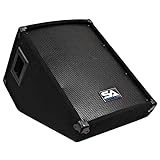
4. Seismic Audio SA-10MSingle: The Cheapest Real Wedge When You Already Own an Amp
Seismic Audio Speakers Single Wedge Style Floor Monitor…
Passive 10 inch 2-way
100W RMS and 200W peak
45Hz to 20,000 Hz
22 lb
Pros
- Lowest cost per unit in this group at 100W RMS
- Steel grille and metal enclosure built for repeated transport
- 8 ohm impedance pairs easily with standard mixer and amp outputs
- Wide 45Hz to 20kHz response from the horn-loaded 10 inch design
Cons
- Passive only
- so it needs a separate amplifier and mixer
- 22 pounds is heavy for its class
- No onboard EQ or feedback filtering
- so tone depends on the amp and desk
If you are already running an amplifier and a mixer for front of house, a passive wedge is simply the cheapest way to add monitor output. The SA-10MSingle is a 10-inch two-way with a 4 by 8 inch piezo horn, rated 100W RMS and 200W peak at 8 ohms, with response from 45Hz to 20,000Hz.
Owner feedback clusters around the build. The 18-gauge full-face steel grille and metal enclosure are built for the repeated transport that touring players put through gear, and at 8 ohms it drops onto a standard amp output without impedance gymnastics.
The catch is that you own the whole signal chain. There is no amplifier, no EQ and no feedback filter inside, so the tone you hear on stage is entirely a product of your amp and your desk. That is a disadvantage in a hard room and an advantage for a player who already knows how to ring one out.
When a passive wedge is the smart money
It is smart when an amp and mixer are already in the case, when you want a second monitor mix without spending on a powered box, and when budget matters more than onboard processing. It is also the easiest wedge to sell on or trade up later.
When to spend on a powered box instead
Choose a powered monitor if this is your first wedge, if you play different rooms every week and want consistent settings, or if you want the feedback filter to do work for you. Carrying an amp as well as a mixer on a small stage is two more things to load.
5. Behringer EUROLIVE F1320D: The Most Stage Volume a Dedicated Monitor Gives You
Behringer EUROLIVE F1320D Active 300 Watt 2-Way Monitor…
300W active 2-way
12 inch woofer with 1 inch compression driver
Feedback filter and 3-band EQ
33.1 lb
Pros
- Designed as a true low-profile monitor
- so off-axis response stays even
- Plenty of stage volume from a 300W built-in amp
- Onboard feedback filter and 3-band EQ for performer tuning
- Reported by owners as durable over years of regular high-volume use
- Also usable as a standalone PA for parties and worship pulpits
Cons
- 33.1 pounds is heavy to lift onto a stand
- Limited headroom with powerful singers leads to aggressive clipping on peaks
- Musician-facing controls are easy to bump mid-show
- Wood cabinet finish picks up debris outdoors
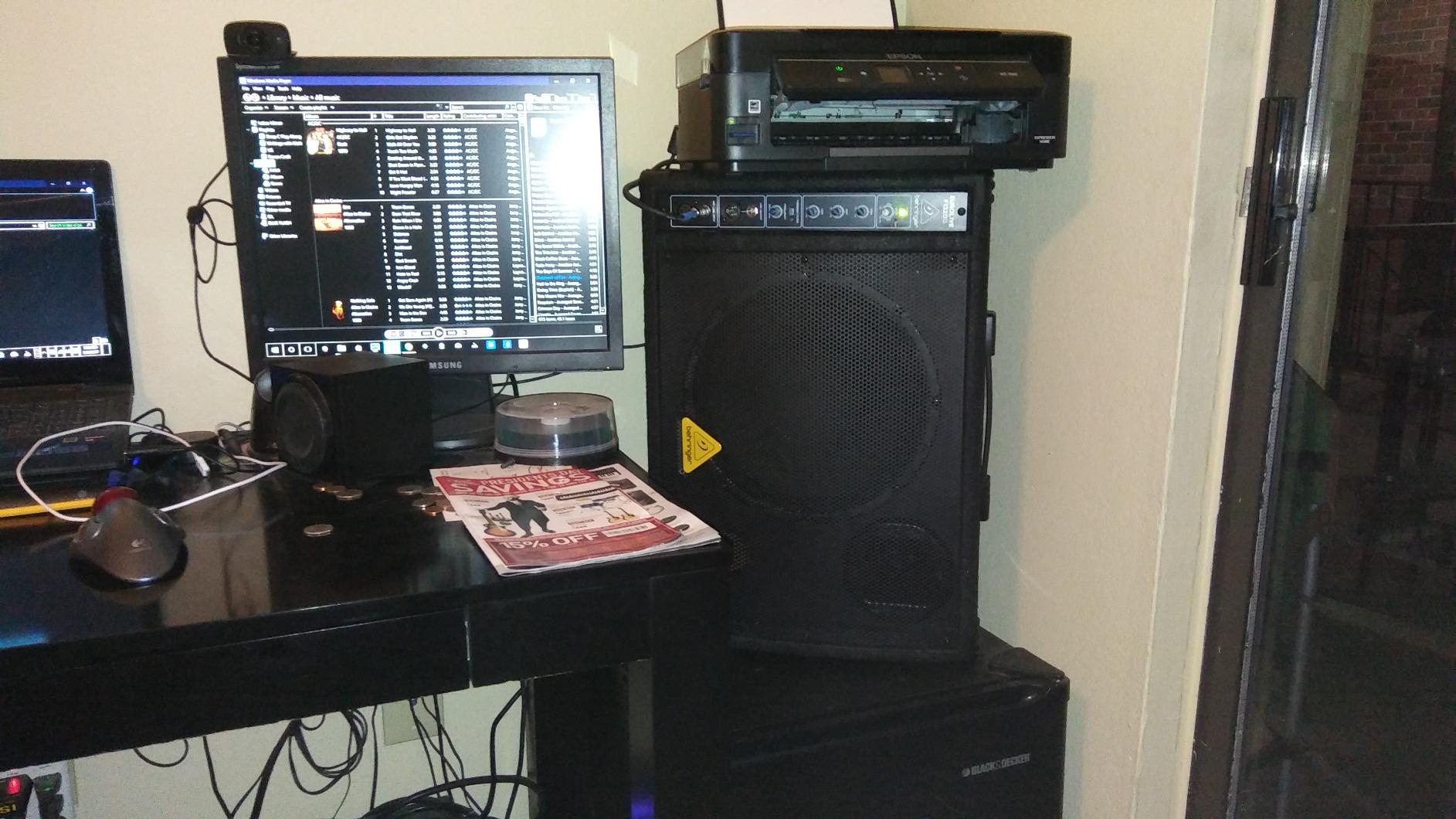
The F1320D is the only cabinet here built as a low-profile monitor from the start rather than a PA speaker turned on its side. That matters more than it sounds: even off-axis response means the monitor still sounds like a monitor when it is angled up at a performer who is not standing directly in front of it.
It carries 300 watts through a 12-inch woofer and a 1-inch compression driver, with the same adjustable feedback filter and integrated limiter as the F1220D plus a front-panel three-band EQ and an integrated sound processor. Signal-to-noise ratio is listed at 94dB.
Owners describe these as genuinely underrated and report units still going after years of regular high-volume use. The consistent complaint is weight, at 33.1 pounds, which is a real load-in cost for one person.
Second on the complaint list is headroom with powerful singers, where peaks can clip hard. The third is that the musician-facing controls are easy to adjust accidentally during a show, so a strip of tape is not a bad idea.
When the F1320D is the right call
It is right for a full band in a room with a loud drum kit, for worship teams pushing a full mix, and for anyone who wants a monitor that doubles as a small PA. The 12-inch cone and 300 watts give you the most headroom of any dedicated wedge on this list.
When it is the wrong call
It is wrong for a solo act, a coffee shop stage, or any gig where you load in alone. If you cannot comfortably lift 33 pounds onto a stand without a second person, choose something lighter even if you give up output you do not need.
6. Samson RSXM10A: One Box That Works Front of House and Onstage
Samson RSXM10A – 800W 2-Way Active Stage Monitor, Black
800W Class-D active
10 inch driver with 1 inch tweeter
XLR combo in and XLR link out
30 lb
Pros
- Most rated output wattage in this group with headroom for loud singers
- Compact coaxial 10 inch and 1 inch design in an all-wood cabinet
- FOH/Monitor selector switch lets one unit serve both jobs
- XLR combo input with XLR link output for easy daisy-chaining
- Two-year parts and labor warranty
Cons
- 30 pounds is heavy for a portable wedge
- Highest cost per unit in this comparison
- 10 inch coaxial driver gives less deep bass than a 12 inch bi-amped design
The RSXM10A is the most flexible box here. The FOH/Monitor selector switch switches the internal processing so one cabinet can be a front-of-house speaker in one set and a wedge in the next, which is exactly the reuse pattern that shows up constantly in small-venue rigs.
It is a compact coaxial 10-inch with a 1-inch tweeter in an all-wood cabinet, frequency response listed at 55Hz, with an XLR and quarter-inch combo input and an XLR link output for daisy-chaining a pair. Response starts at 55Hz, which is respectable for a 10-inch.
Connection options are genuinely practical: XLR combo in, XLR link out, and a 1/8 inch pole mount receptacle for standing it on a stand. The warranty is two years parts and labor, longer than most in this group.
When the RSXM10A is the right call
It is right when the act plays a mixed program of speaking, backing tracks and live sets, or when one cabinet has to do double duty. It is also a good pick for players who want a single-box rehearsal setup and a wedge from the same purchase.
When to pick a 12-inch instead
Choose a 12-inch bi-amped design if your mix is full-band and low end matters on stage. The coaxial 10-inch here will not deliver the deep low end of the F1220D or F1320D, and the 30-pound weight means it still needs two hands to load.
7. Sound Town METIS-10MPW: A Rugged Powered Wedge for Bars and Churches
Sound Town Powered DJ PA Stage Monitor Speaker 10” 300W…
300W integrated amplifier
10 inch woofer with titanium compression driver
3-band EQ
Low-profile wedge with recessed handle
Pros
- Punchy
- thick
- full-sounding output for a compact 10 inch powered wedge
- Built-in 3-band EQ for quick tonal adjustment per room
- XLR in and XLR link out make pairing two units straightforward
- Carpeted cabinet with steel grille and reinforced corners survives transport
- Responsive customer service reported by owners
Cons
- Some buyers report real-world output below the advertised 300W
- One review reported an out-of-box failure on one of a pair
- 1 inch titanium compression driver lacks the smoothness of larger horns
- Only a one-year warranty
The METIS-10MPW is a straightforward powered wedge built for the reality of bar and church work. It has a 10-inch low-frequency woofer, a 1-inch titanium compression driver and an integrated 300W amplifier, in a low-profile wedge enclosure with a recessed carry handle, black carpet covering, heavy-duty metal grille and reinforced metal corners.
The I/O is generous for a monitor at this level. You get one XLR line input, one XLR line output for daisy chaining, one quarter-inch auxiliary input and one eighth-inch MP3 input, plus a three-band EQ with bass, mid and treble on the front panel.
Owners rate it well for power-to-size ratio and report repeat purchases, particularly in church and bar settings. The build details are the ones that matter for a monitor that gets loaded in and out of a van weekly.
When the METIS-10MPW is the right call
It fits an acoustic duo, a trio, or a solo act moving between rooms where the stage is barely a stage. The low-profile wedge shape leaves more downstage space than an upright box, and the recessed handle makes it easy to grab in a dark room.
When to choose something with more protection
Look elsewhere if your act needs more headroom than a 10-inch gives, since some buyers report output below the stated 300W. The one-year warranty is the shortest here, and owners also report the 1-inch titanium horn is less smooth than a larger-format horn on top end.
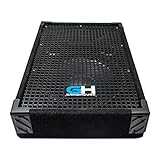
8. Grindhouse Speakers GH10M: The Budget Passive Wedge for Acoustic Acts
Grindhouse Speakers – GH10M – 10 Inch Passive Wedge Floor…
Passive 10 inch wedge
300W RMS and 600W peak
8 ohm impedance
1/4 inch TS and terminals
Pros
- Very low cost for a 300W RMS passive wedge
- Lightweight and easy to move between setups
- Clear sound that lets acoustic performers hear themselves in a small club
- Solid construction that holds up to regular transport
- Sold as a single or a pair with simple hookup
Cons
- Passive only
- requiring an external amplifier and mixer
- Can distort or peak when run hard or daisy-chained without independent level control
- Some buyers find the build lighter than expected
- 1 inch tweeter is small relative to the 10 inch woofer
The GH10M is the value pick for an acoustic act that already has amplification somewhere else. It is a passive 10-inch wedge rated 300W RMS and 600W peak at 8 ohms, with quarter-inch TS and speaker wire terminal connections, sold as a single or a pair.
Owner ratings for budget acoustic acts and small-club bands come back on value, weight and clarity. Players report being able to hear vocals and an acoustic instrument in a small club without a full PA, and the construction holds up to regular transport.
The distortion warning is the one to take seriously. If you daisy-chain two of these from the same amp channel with no independent monitor level control, they will be pushed into each other and peak, which is exactly the failure that turns a cheap wedge into a useless one.
When the GH10M is the right call
It is right for a duo or trio with an amp and mixer in the van who wants monitor coverage for the least money per channel. The lightweight build makes it easy to move between setups without a fight.
When it stops being a bargain
Stop at this one if you do not already own amplification, or if you want onboard EQ and feedback filtering. The small 1-inch tweeter against a 10-inch woofer also means the top end will be less articulate than a dedicated monitor with a larger horn.
9. Seismic Audio SA-10MT-PW: A Titanium Horn in a Powered 10-Inch Wedge
Seismic Audio – SA-10MT-PW – Powered 2-Way 10″ Floor / Stage…
Powered 2-way with titanium horn
250W RMS
8 ohm impedance
XLR plus 3.5mm aux
35 lb
Pros
- Titanium horn gives clearer highs than budget piezo or small-driver monitors
- 250W RMS of onboard power removes the need for a separate amp
- XLR plus aux connectivity covers mic
- instrument
- phone or laptop sources
- Available as a single or a pair
- 8 ohm impedance is easy to match
Cons
- Heaviest unit here at 35 pounds
- Only 64 reviews
- so less long-term owner feedback than the rest
- Only a one-year warranty
- Large cabinet footprint for very small stages
The SA-10MT-PW is the one powered box here with a proper titanium horn rather than a small compression driver or a piezo. Owners who buy it for vocal monitoring notice the difference first, describing cleaner and more present vocals than cheaper single-driver alternatives.
It is rated 250W RMS with a listed maximum of 500 watts, at 8 ohms, and connectivity covers XLR plus a 3.5mm aux input. That aux jack means you can feed it from a phone, a laptop or a small interface for rehearsal, not just from a console.
The practical caveat is weight, at 35 pounds, which makes it the heaviest monitor on this list. The 22 by 19 by 17 inch footprint is also the largest, and it will dominate a small stage.
When the SA-10MT-PW is the right call
It is right for a vocalist-first act who wants intelligible, present monitoring and already has two people or a cart for load-in. The aux input also makes it a one-box rehearsal and busking rig with no console at all.
When to choose lighter
Choose something lighter if you move alone or the stage is under eight feet wide. With only 64 reviews, there is also less long-term owner history here than for the other models, which matters if you want to know how a box ages.
What Size Stage Monitor Do You Need?
Driver size is the fastest way to match a monitor to a room, and for small venues the range that matters runs from 5 inches to 12 inches.
Five-inch full-range boxes such as the B205D and SRM150 are for solo acoustic work, keyboards and rehearsal. They are cheap to carry and take up almost no stage space, but a single full-range driver cannot project or articulate like a two-way design.
Ten-inch cabinets are the small-venue default. A 10-inch two-way with a horn, whether coaxial or not, gives you a real crossover point, enough low end for an acoustic guitar, and output for a room of 50 to 100 people without dominating a shallow stage.
Twelve-inch bi-amped designs are for full bands, worship teams and any room where the stage is louder than the monitor. You gain low end and headroom and pay for it in weight and footprint. Above 12 inches, you are into territory a small venue rarely needs.
Powered vs Passive Wedges: Which One a Small Venue Needs
A powered, or active, monitor has its amplifier, crossover and processing built in. A passive monitor is a driver in a cabinet that needs an external amp to make sound. For most small venues the answer is powered, and the reason is simplicity rather than sound quality.
Powered means one cable per monitor, one gain knob, and settings that travel with the box. When you play a different room each week, onboard EQ and a feedback filter mean you are not rebuilding a monitor mix from scratch on a stage riser in the dark.
Passive wins on cost per channel if you already run an amp. The cabinet itself is cheaper and the electronics are repairable separately. The costs you inherit are the amp, the extra cable runs, and the fact that tone now depends on a chain you have to carry and maintain.
One real forum concern worth planning for: a budget monitor that fails outside its warranty can cost more in return shipping than the unit cost you saved. A longer warranty is worth something even when you never plan to use it.
How Many Monitors and Mixes Does Your Band Need?
Count performers first, then count the auxiliary outputs your console actually has. The number of monitor mixes caps everything else, and buying a second louder monitor does nothing for a mixer with one aux send.
Start here as a working rule. A solo act needs one monitor and one mix. A duo needs two, and this is where many players get their first pair. A trio needs two minimum, and a full band needs one per performer or at least one per section.
Then ask the harder question, which is whether you need more mixes or better ones. Two vocalists who both sing harmony need separate mixes. A guitarist and a bassist fighting over one shared mix will be happier with a hot spot or personal monitor than with a second wedge that solves nothing.
Common small-format mixers have a limited number of aux outputs, and pre-fader versus post-fader matters too. A pre-fader send gives each performer independent level control, which is what most players expect from a monitor mix.
How to Place a Floor Wedge and Kill Feedback ?
Most monitor feedback in small rooms is a placement problem, not a power problem. Work through these steps in order before you reach for the EQ.
First, put the wedge behind the microphone, aimed up at the performer’s ears rather than across the mic’s pickup axis. A cardioid vocal mic is most vulnerable to sound arriving on its axis, which is exactly where a badly aimed wedge puts it.
Second, place the wedge as close to the performer as the stage allows. Distance weakens the direct sound and lets the room’s reflected energy take over, which is the real driver of feedback in tile-floored rooms.
Third, cover the reflective surface. Rubber feet, a piece of carpet or a small rug under the wedge breaks the direct reflection path back to the mic, which matters enormously in coffee shops and restaurants with tile and glass.
Fourth, set gain structure before tone. Ring the mic input up to a clean level with the fader and aux at zero, then bring the monitor up on the aux. Skipping this order is the most common cause of a howl that will not go away.
Fifth, set the wedge volume to the level that lets the performer sing, and no higher. A monitor turned up past the point of usefulness only adds stage spill and picks up more room reflections.
Sixth, high-pass any source that does not need low end on stage. Kick and bass in a vocal wedge in a low-end-heavy room increase both muddiness and feedback risk, and the onboard filters on the F1220D and F1320D are useful here.
Seventh, ring out the feedback frequencies by speaking into the mic and walking the EQ until the frequency that howls drops. Once you know it, do not cut deeply; pull the surrounding low-mid energy instead so the voice still sounds natural.
Eighth, recheck after you move the wedge. Small changes in angle make large differences in a hard room, and a monitor that worked at soundcheck can fail once the audience fills the space and absorbs less energy.
When In-Ear Monitors Beat a Floor Wedge ?
In a very small or very reflective room, in-ear monitors usually beat a floor wedge, and the forums are nearly unanimous on this. The reason is simple: once the monitor is in the ear, there is no speaker on stage at all, so there is nothing to feed back.
The crossover rule is about room size and stage volume, not about which is better. If your stage is producing more level than the wedge can usefully deliver, or if the room is tile, glass and bare walls, IEMs solve a problem no wedge can.
There is a middle path that shows up constantly in small-venue discussion, which is a personal or hot-spot monitor mounted on a mic stand. It gives one performer a much more “me” mix than a shared wedge, is far lighter than a floor cabinet, and often has an XLR pass-through so a second performer can plug in.
The downside of a powered personal monitor is that it can be too loud for a single unit, and reviewers have reported blowing units out when one player pushed one hard in a small room. Keep the level modest and treat these as supplements, not replacements, for a two-person wedge pair.
What to Check Before You Buy
Weight is the spec people regret. If you load in alone, check what you can carry up stairs twice in a night before you commit to a 33-pound cabinet.
Check stage footprint next. Measure the usable downstage depth and the width between mic stands. A low-profile wedge leaves far more usable space than a deep box, and on a six-foot stage that can be the difference between fitting and not fitting.
Look at the inputs and outputs. A combo XLR input accepts both a mic cable and a line cable, an XLR link output lets you daisy-chain two monitors from one aux, and a 3.5mm aux input is useful for rehearsal and busking.
Check what processing is onboard. A feedback filter, a three-band EQ and a limiter give a performer the ability to fix their own mix, which matters enormously when one person is running sound and playing an instrument at the same time.
Consider the warranty and the repair logistics. Warranty length on this list ranges from one year to three years, and shipping a failed unit to a single service center can cost more in postage than the monitor cost you saved. Verify the model generation too, because this category turns over fast and listings for older generations are common.
Plan accessories with the budget. Short balanced XLR cables, a cable ramp, rubber feet or a small rug under the wedge, and a padded cover will do more for your monitor setup than a second few pounds of amplifier power. Once the mix is clean, ambient effects like a haze machine for concert venues add visible atmosphere without adding stage volume you have to fight.
Frequently Asked Questions
What is the best monitor for a stage?
The best monitor for a stage is the one that is loud enough to hear over the band, light enough for one person to load, and sized to fit your stage. For most small venues, a 10-inch powered two-way wedge is the best all-around starting point. For a solo act on a tiny stage, a compact 5-inch powered box is easier to carry and often easier to fit.
What are the best monitors for small spaces?
For small spaces, prioritize weight and footprint over output. Compact 5-inch powered boxes work for solo vocalists and acoustic duos on narrow stages, while 10-inch two-way wedges are the sweet spot for trios and small bands. A 12-inch bi-amped monitor adds low end and headroom but only makes sense if you have the load-in capacity and the stage depth for it.
How many watts should a stage monitor be?
Watts alone are a poor ranking metric for stage monitors because brands measure peak and continuous power differently. Judge output by max SPL at 1 meter, by whether the manufacturer states the measurement distance, and by real owner reports in the room type you play. One reviewer of the Mackie SRM150 measured well below its advertised 150 watts, which is why the number alone tells you little.
Are powered or passive stage monitors better?
For most small venues, powered monitors are better because they need one cable, have onboard EQ and often a feedback filter, and carry their settings with them between rooms. Passive monitors cost less per unit and are the right choice if you already run an amplifier and mixer, but you then own the whole signal chain including the amp, the cables and the tuning.
Is 10 inch or 12 inch better for vocals?
A 10-inch is usually better for a vocal-only mix, because it is lighter, smaller and easier to aim at a performer’s ears. A 12-inch adds low end and headroom, which matters for a full band mix or a loud room rather than for a single singer. The Behringer F1220D and F1320D are 12-inch designs, while the Samson RSXM10A and Sound Town METIS-10MPW are 10-inch.
How do I stop a stage monitor from feeding back?
Most feedback in a small room is a placement problem. Put the wedge behind the mic and aim it at the performer’s ears, put it as close to them as the stage allows, cover the reflective floor beneath it, set gain structure before tone, high-pass kick and bass out of vocal wedges, and ring out the offending frequencies by speaking into the mic. A built-in feedback filter on models like the Behringer F1220D and F1320D makes the last step much faster.
Bottom Line
For most people searching for the best stage monitors for small venues, the Behringer Eurolive B205D is the pick. It is the lightest option, it has the largest body of owner feedback in the group, and its built-in mixer with phantom power means a solo act can get a working monitor mix with no console at all.
If you need more than that, the Behringer F1220D is the best value for a worship team or restaurant band, and the F1320D is the choice when a full band needs every dB a dedicated monitor can give. For a 10-inch all-rounder with a proper horn, the Samson RSXM10A is the most flexible, and for a singer who already owns amplification, the Seismic Audio SA-10MSingle is the cheapest real wedge.
Whichever you choose, weigh the box before you buy it, count your console’s aux outputs before you count your monitors, and buy the pair of short XLR cables and the rug that kills feedback. For the rest of your stage setup, our guides to stage lighting kits and stage pianos for live performance cover the other two things most small-venue acts underestimate.