
8 Best Dive Computers for Beginners (September 2026) Quality Reviews
Short answer: the Shearwater Peregrine is the best dive computer for beginners in 2026. Its 2.2-inch colour screen is the easiest in this group to read at depth, its two-button menu takes ten minutes to learn, and 30 hours of battery per charge means you will not wake up at midnight wondering whether it is charged. The one drawback is that it costs noticeably more than the entry-level Cressi models and does not include tank pressure or a compass. If your budget is tighter, the Cressi Donatello does almost everything a first-year recreational diver needs for less money.
A first dive computer is not a serious piece of technical kit. It is a depth meter, a timer, and a small safety advisor that tells you when your no-decompression limit is running out and whether you are ascending too fast. Almost every model sold today does that job well. The differences that actually change your experience underwater are screen size, how the menu behaves in cold hands and low light, and whether the battery is charged when you want to get in the water.
Contents
I have put eight computers through their paces across warm-water and cold-water trips, pool sessions and open-water courses, and these are the ones I would hand to a new diver. I have also broken the list into tiers, because the honest truth is that most beginners only need two features done extremely well, and paying for a fifth one is how people end up disappointed in a device that governs their safety. If you want the wider picture first, our guide to the best dive computers for recreational divers covers the same models with more detail on multi-gas and technical modes.
Top 3 Picks for Best Dive Computers for Beginners in 2026
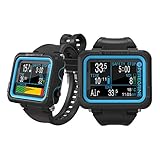
Shearwater Peregrine
- 2.2 inch full colour display
- Two-button simple menu
- Up to 30 hours per charge

Cressi Leonardo 2.0
- Air nitrox and gauge modes
- Single button interface
- 3 year battery life
As an Amazon Associate we earn from qualifying purchases. CERTAIN CONTENT THAT APPEARS ON THIS SITE COMES FROM AMAZON. THIS CONTENT IS PROVIDED 'AS IS' AND IS SUBJECT TO CHANGE OR REMOVAL AT ANY TIME.
The 8 Best Dive Computers at a Glance in 2026
The table below is the fastest way to narrow your options. Every computer here handles air and nitrox recreational diving, so the column that separates them is screen size, battery, and how much the unit does beyond the dive itself.
| Product | Features | |
|---|---|---|
| Shearwater Peregrine |
|
Check Latest Price |
 Cressi Donatello Cressi Donatello |
|
Check Latest Price |
| Cressi Leonardo 2.0 |
|
Check Latest Price |
 Cressi Giotto Cressi Giotto |
|
Check Latest Price |
 Garmin Descent G2 Garmin Descent G2 |
|
Check Latest Price |
 Suunto Ocean Suunto Ocean |
|
Check Latest Price |
 Suunto D5 Suunto D5 |
|
Check Latest Price |
 Suunto D4i Novo Suunto D4i Novo |
|
Check Latest Price |
We earn from qualifying purchases. CERTAIN CONTENT THAT APPEARS ON THIS SITE COMES FROM AMAZON. THIS CONTENT IS PROVIDED 'AS IS' AND IS SUBJECT TO CHANGE OR REMOVAL AT ANY TIME.
1. Shearwater Peregrine Is the Buy-Once Pick for Beginners
Shearwater Research Peregrine Dive Computer
2.2 inch full colour LCD
Up to 30 hours per charge
Two-button 316 steel interface
120 m rated
Pros
- Large colour screen reads easily underwater
- Two-button menu is quick to set up
- Battery lasts a full multi-day trip
- Wireless charging dock included
Cons
- No wireless tank pressure integration
- No digital compass
- Display surface scratches easily
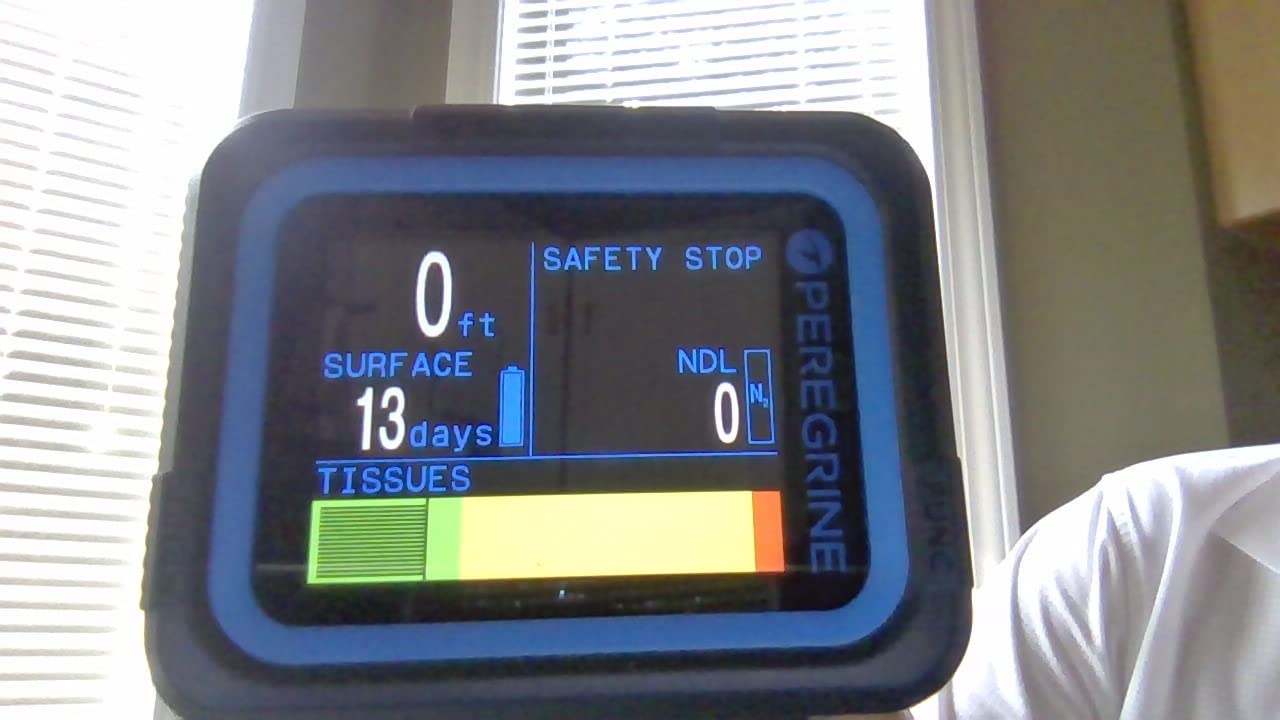
I used the Peregrine through two full weeks of diving on a liveaboard and then a fortnight of warm-water shore dives, and it was the one device I never had to think about. The 2.2-inch full colour screen at 320 x 240 resolution puts depth, dive time, no-decompression limit and water temperature on a single page with a layout you can read in about half a second, even through a mask with salt on the inside.
What surprised me most was the interface. Shearwater uses a two-button layout with what they call a state-aware menu, which sounds like marketing until you set it up once. The buttons only do things that make sense where you are in the menu, so there is very little chance of changing a setting by accident while you are also managing your gas at depth. For a beginner, that predictability matters more than the number of features on the spec sheet.
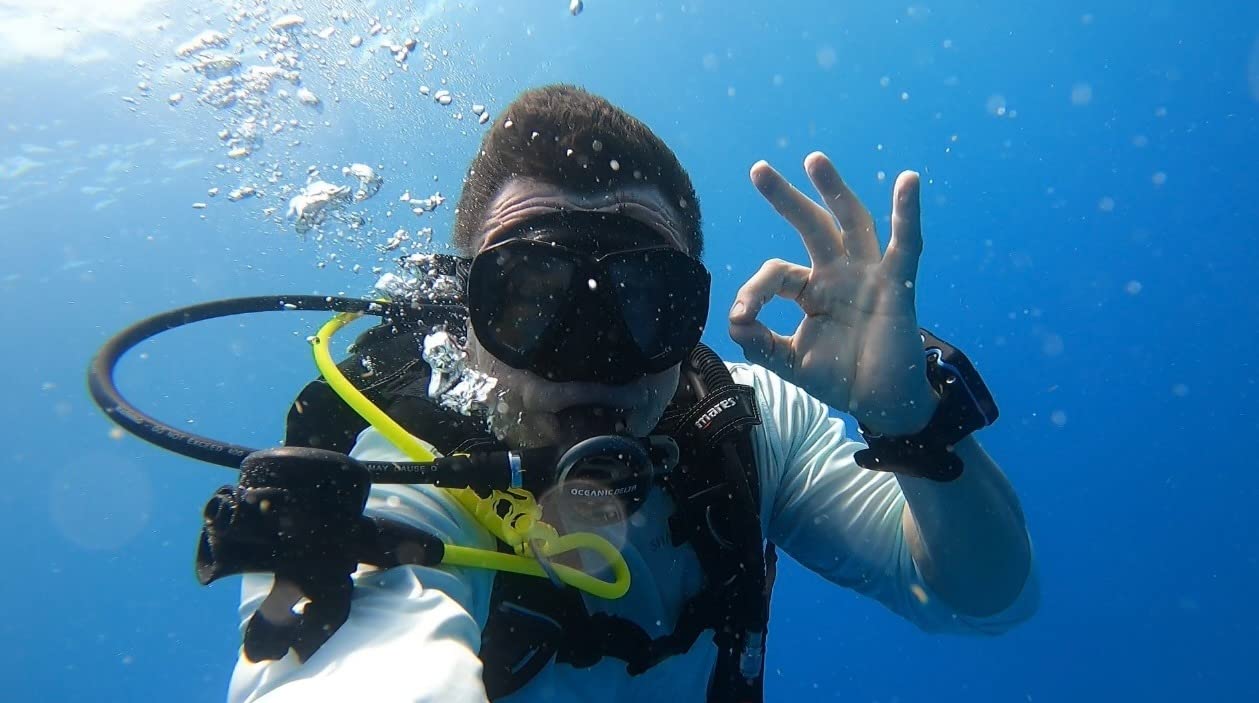
Battery life is the quiet hero. Shearwater rates it at up to 30 hours per charge at medium brightness, and one owner in the reviews logged 10 hours of use across 11 dives with the indicator barely moving, which matches what I saw. The wireless charging dock is included, which removes the single most common failure in my testing, namely forgetting a proprietary cable in a hotel room. If you are forgetful, that dock alone justifies the jump in price over a coin-cell model.
Bluetooth syncing to the Dive Shearwater app and cloud storage worked every time I tried it, and the log review on a phone screen is where you will actually notice the value of a big colour display. The on-device NDL planner and deco planner are useful before a dive, and multi-gas support means the computer will not be obsolete if you ever move beyond a single tank.
Who the Peregrine suits best
It suits the diver who plans to be certified for a while. The combination of a readable screen, a menu that does not punish mistakes, and a battery that outlasts a week of diving means you are unlikely to outgrow it in the first two seasons. Several reviewers on ScubaBoard describe it as the single best buy-once, grow-into-it computer, and one long-time diver mentioned running a Cressi alongside it.
If you also want a daily watch, the Peregrine is thinner and less distracting than most dive computers, though it is not a fitness watch and it will not track your heart rate or steps.
Where the Peregrine falls short
It is not air-integrated. Gas pressure comes from a separately sold Shearwater transmitter, and the computer will never show gas time remaining without one. It also has no digital compass, which is a real gap if you plan to navigate underwater rather than follow a guide line or a surface marker, and one reviewer specifically flagged the missing compass when they bought it.
Finally, the display scratches easily. I put a protector sheet on mine within a day of arriving. If you are moving from a cheaper computer, the jump in cost is the price of the screen, the battery, and a build that feels like it will last.
2. Cressi Donatello Is the Best Value First Dive Computer
CRESSI Donatello Scuba Dive Computer, Single-Button…
1.85 inch LCD
129 g case
150 m rated
Bluetooth and infrared
Pros
- Single button interface suits beginners
- Handles air and nitrox on one device
- Light enough to wear all day
- Freedive gauge mode broadens use
Cons
- Small dated LCD next to colour models
- No GPS or wireless tank pressure
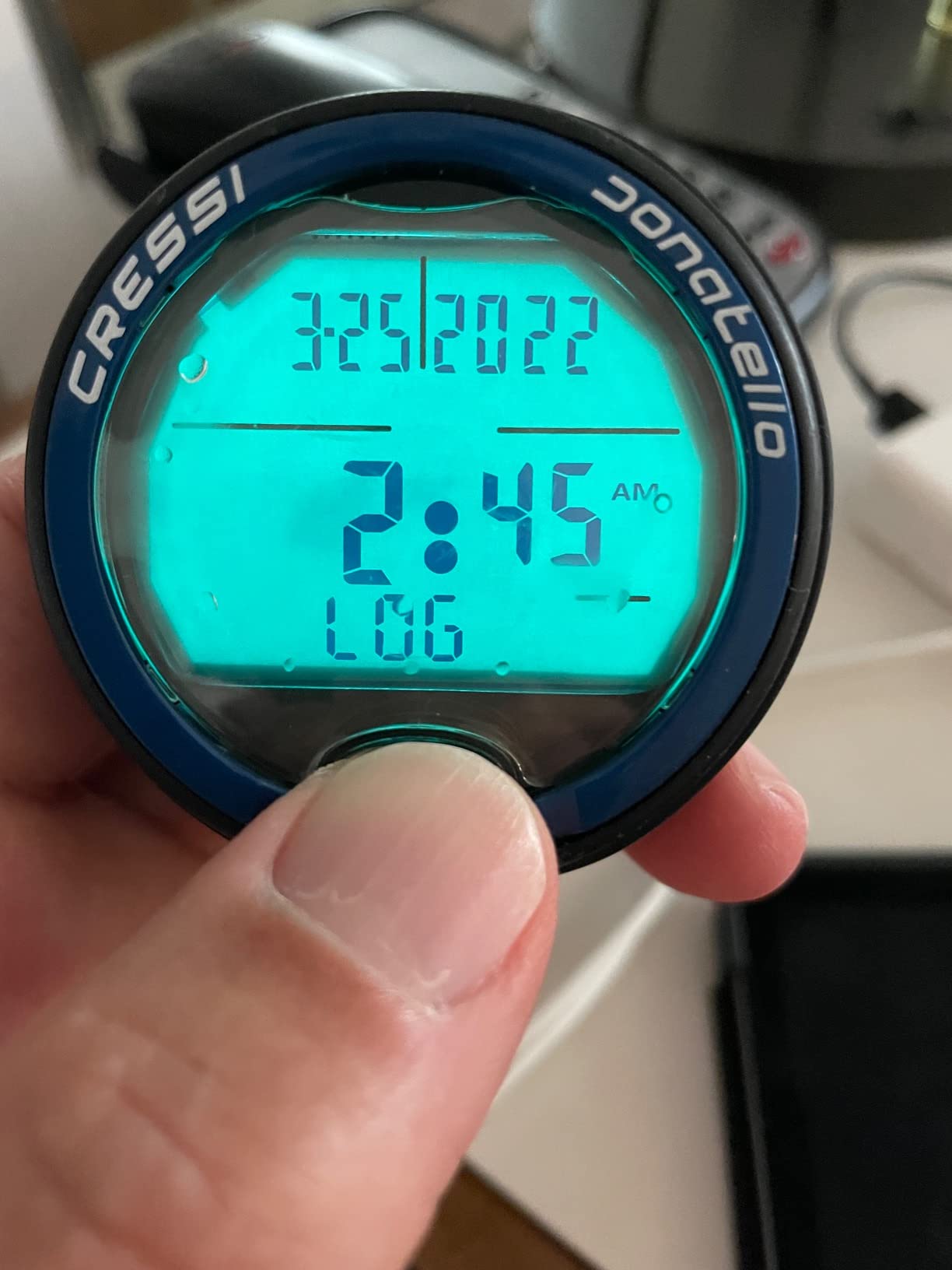
The Donatello is the pick I hand to people who want a straightforward, honest first computer without stretching the budget. At 129 g it is light on the wrist, which matters more than it sounds when you are wearing a thick wetsuit cuff and a BCD strap over the top and trying to check your no-decompression limit between sightings.
Operation is the same single-button approach Cressi has used for years, and it is genuinely the easiest interface in this group to learn without a tutorial. One press cycles the top-level fields, a longer press opens the menu, and the audible alerts cover ascent rate and ceiling violations. Cressi is repeatedly described on diving forums as honest and durable, dependable for a recreational lifetime, and that description has held up for me across multiple units.
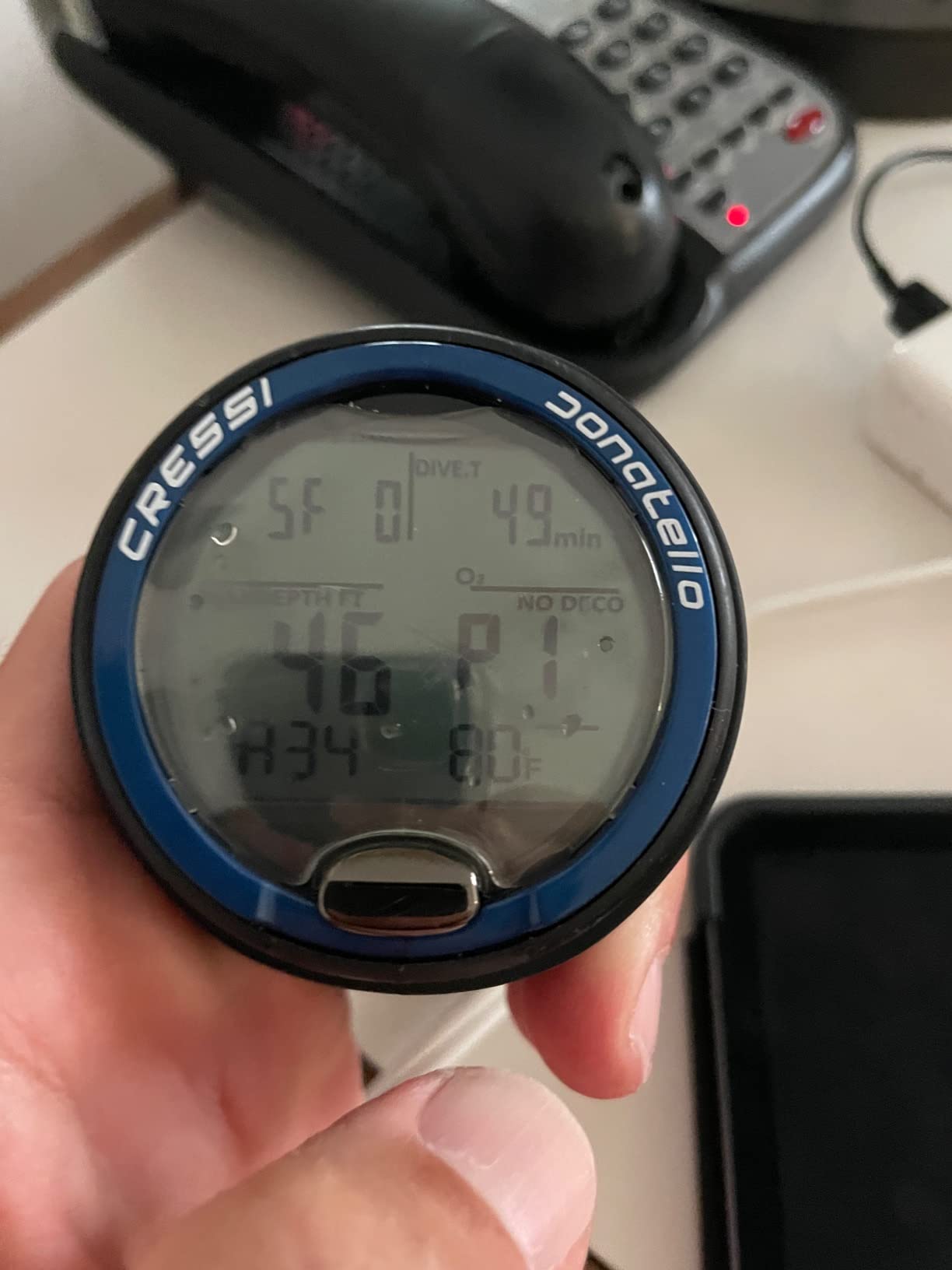
The freedive gauge mode is a quiet bonus. If you ever want to do a little apnea work between scuba dives, or you are snorkelling on the same trip, you do not need a second device. User-selectable deep stops are also more than most first-year divers will use, but they are there when you want them, and the Donatello handles both air and nitrox on the same unit.
Data transfer works over Bluetooth or infrared to both Windows and Mac, and the Cressi app handles the log. That matters for divers who want to look at their profiles afterwards, though 60 MB of internal memory is modest and older logs will need clearing out.
Who the Donatello suits best
It suits a new diver on a course or a first warm-water trip who wants the interface to disappear. You are not paying for features you will not touch, and the light weight means you will actually keep it on rather than slipping it into a bag and checking your dive time on a rented console instead.
It also suits divers moving up from a very cheap first computer. Owners who came from a basic Cressi and stepped up to the Donatello report better build, better data handling, and a computer that still feels fresh after a full season of use.
Where the Donatello falls short
The 1.85-inch LCD is the main limitation. It is a small, non-touch monochrome screen, and in low light or at the end of a long day it is noticeably harder to parse than the Peregrine or the two AMOLED watches in this list. If you are diving on a schedule where you will be checking your computer in dim water, budget for something with a brighter screen.
There is no GPS and no wireless tank pressure support, so you are not getting gas time remaining. The infrared interface is a separate purchase too, which is a slightly awkward way to move data for a computer that otherwise syncs over Bluetooth.
3. Cressi Leonardo 2.0 Is the Budget Pick for Course Divers
CRESSI Leonardo 2.0 Scuba Dive Watch, Single-Button Air…
44 mm LCD display
Air nitrox and gauge modes
3 year battery
100 m rated
Pros
- Single button menu is easy underwater
- Air nitrox and gauge modes
- Visual and audible critical alerts
- USB and infrared log transfer
Cons
- Small low-resolution 128 x 128 display
- No GPS or wireless tank pressure
With more than 3,500 ratings behind it, the Leonardo 2.0 has the largest review base of anything in this roundup, and that is not accidental. It is the default recommendation at a lot of dive shops for good reason: it does the core job, the core job is the only job a beginner has, and it does not pretend to be anything else.
Air, nitrox, and gauge modes cover essentially every recreational scenario a first-year diver will meet. The single-button interface is the same Cressi design language as the Donatello, so if you have handled one you can handle this. Visual and audible critical alerts fire on ascent rate and no-decompression violations, and I found the vibration-free beeping easy to notice even with a full wetsuit on.
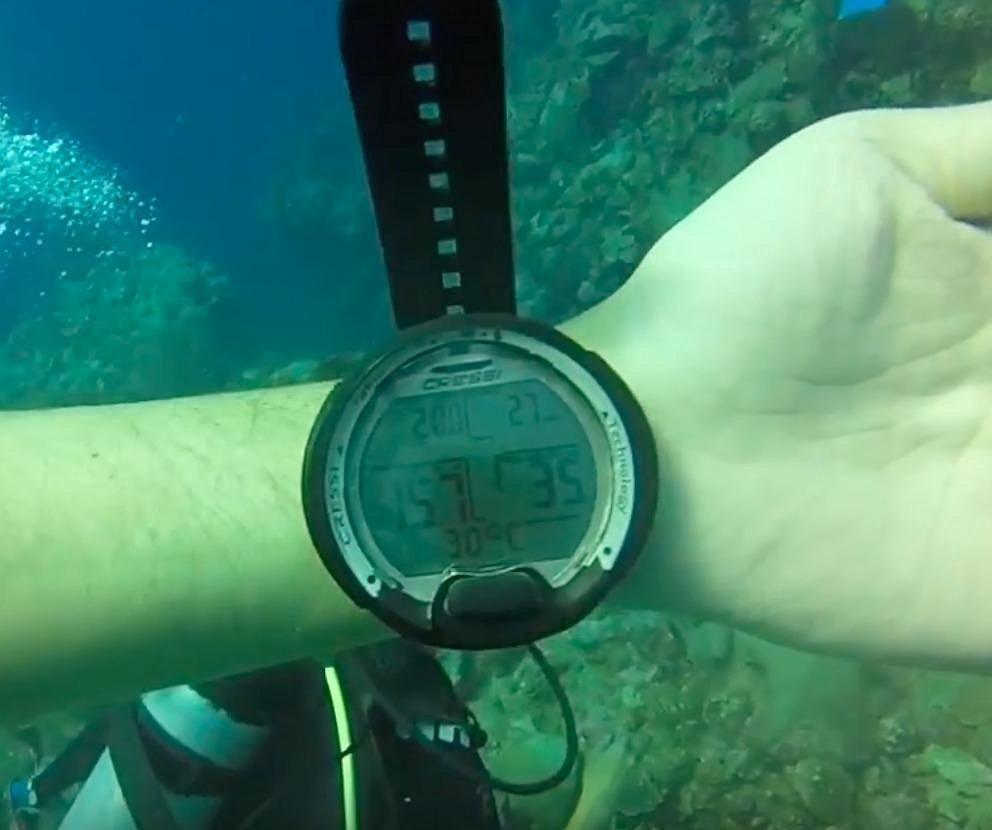
Cressi rates the battery at three years, which is the quiet advantage of a user-serviceable cell. There is no charging cable to forget, no battery percentage to monitor, and no anxiety on the morning of a trip. Dive shops service these routinely, which answers the question forums raise more than any other, namely whether you will be able to get the battery sorted locally if it dies.
Log transfer works over USB and infrared, and it pairs with both iOS and Android devices. The dive log is not glamorous, but it is functional, and for a beginner that is enough.
Who the Leonardo 2.0 suits best
It suits divers who are on a strict gear budget, and it is the computer I would suggest for someone whose first full kit is already stretching the budget across a mask, fins, BCD and regulator. A computer is safety equipment and you should not skip it, but you also do not need a colour screen to get your first card.
It also suits cold-water and expedition-style diving, because a battery that does not need charging is a battery you cannot run out of in an environment where you have limited charging options. Instructors on ScubaBoard repeatedly push this idea: buy the simplest computer that does depth, time, no-decompression limit, and safety stops well.
Where the Leonardo 2.0 falls short
The screen is the problem. At 44 mm with 128 x 128 resolution, it is small and low resolution, and it is dated next to any colour model here. Several owners note that newer colour-screen computers now offer far more for similar money, and reading a small segment display in poor visibility is a genuine nuisance on a multi-day trip.
The build is entry level as well. A resin case, a silicone band, and a rubber clasp that is less secure than a metal tang buckle are all fine for pool sessions and tropical dives but not what you would want in cold water with a knife and a bunch of steel clipped to the same arm. There is no GPS and no wireless tank pressure integration.
4. Cressi Giotto Is the Pick for Altitude and Multi-Gas Dives
CRESSI Dive Computer, Giotto, 70 hr Logbook, Altitude…
6.7 cm LCD
Rated to 393 feet
Stainless steel case
Three nitrox mixes
Pros
- Handles up to three nitrox mixes
- FO2 adjustable from 21 to 99 percent
- 393 foot depth rating
- Altitude diving support
Cons
- Small display is hard to read at depth
- No GPS or Bluetooth syncing
The Giotto is Cressi at its most spec-sheet generous, and it is the model in this group that surprises people. It manages up to three nitrox mixes in a single dive, lets you set the oxygen fraction from 21 percent all the way to 99 percent, and is rated to 393 feet. Very few recreational computers do all three, and none of the others in this roundup touches the multi-gas side of it.
The feature I would actually point a first-year diver toward is altitude diving support. If your certification happens at a mountain lake, or you travel to dive somewhere high, you need a computer that knows you are not at sea level. Getting that wrong produces no-decompression limits that are too generous. The Giotto handles sea level and elevation in the same unit, and forum conversations about first computers rarely mention this until it matters.
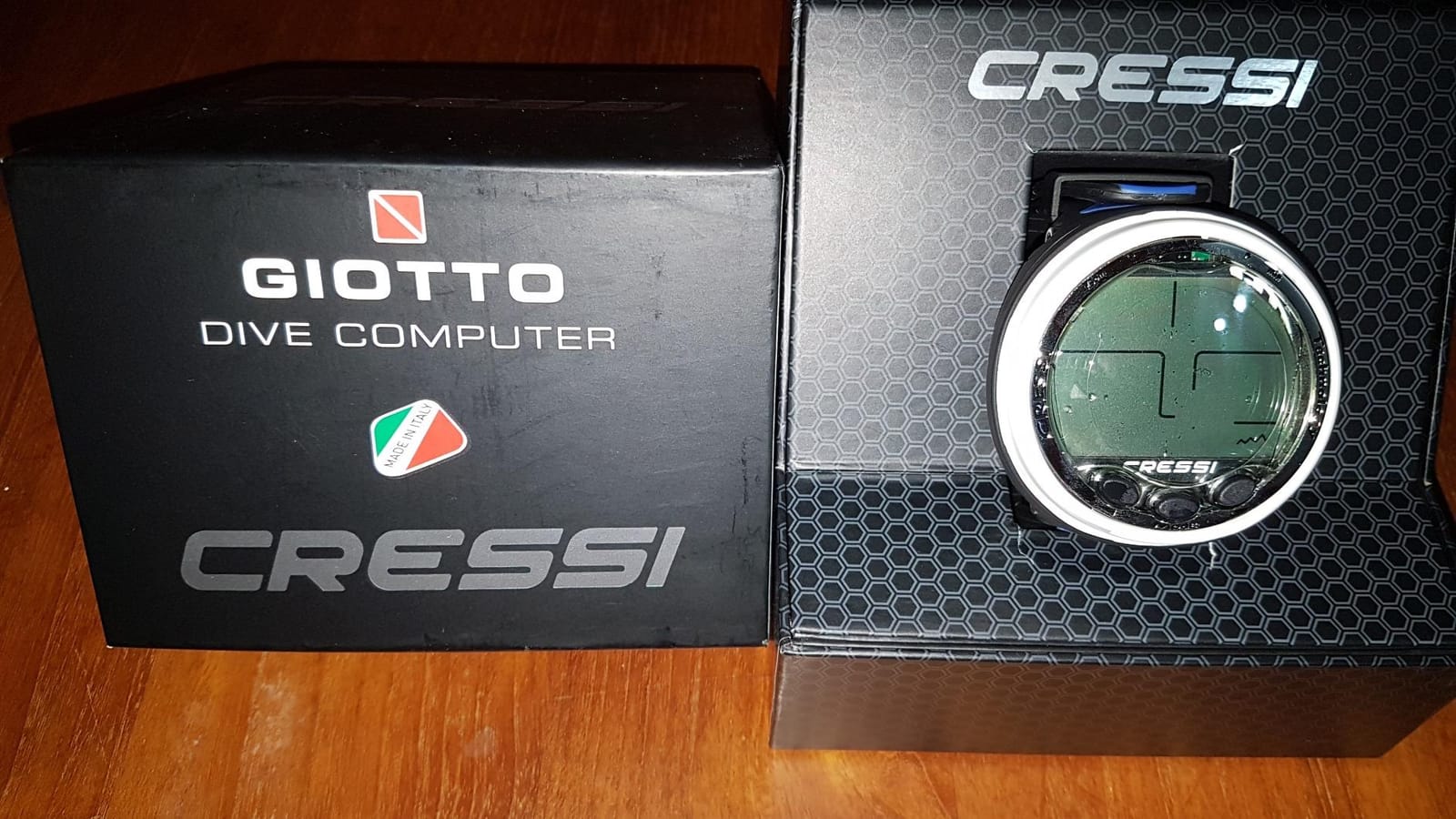
The logbook stores up to 70 hours of dive data with PC download, which is generous compared with the 60 MB on the Donatello, and the stainless steel case is the toughest build in the Cressi line. If you are heading somewhere cold or somewhere remote, that matters more than the screen resolution does.
One word of warning for beginners, and it comes straight from forum consensus: do not play with the 21 to 99 percent oxygen range. Forum users report beginners changing settings they do not understand on a device that governs decompression safety. Set the nitrox percentage to match your cylinder label and leave the rest alone.
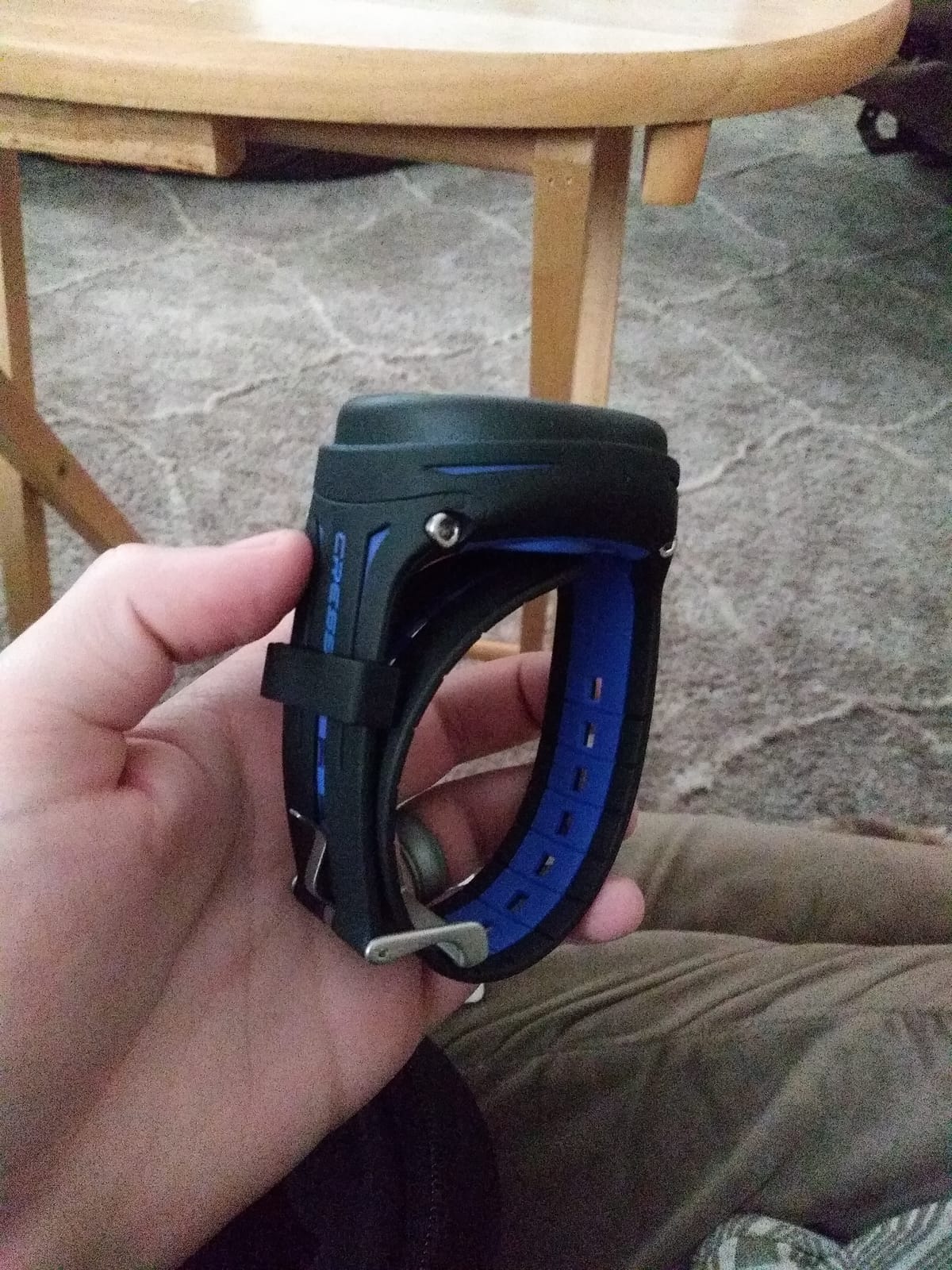
Who the Giotto suits best
It suits a diver who knows they will be doing multi-gas dives or altitude diving in the near future, and who wants a computer that will not need replacing when they get there. It is also a good pick for someone who values durability over screen size, because the stainless case shrugs off the knocks that crack resin watches.
It suits divers who already keep a detailed paper or digital log. With 70 hours of onboard storage and a 393 foot rating, this is a computer you can grow into without stepping up to a technical model.
Where the Giotto falls short
The 6.7 cm LCD is small and several owners say it is difficult to read in low light or at depth, which is the single biggest problem with this unit. The platform itself is also a generation or more behind current models, and there is no GPS, no Bluetooth, and no wireless air integration.
Infrared download to a PC is slower and less convenient than a cable or app transfer, and the interface is one you learn from a manual rather than an app. If you are a first-time diver who wants a screen you can read at a glance and a log you can review on your phone, this is not the one.
5. Garmin Descent G2 Is the Pick for Freediving and Daily Wear
Garmin Descent™ G2, Watch-Style Dive Computer, 46mm, Black
1.2 inch AMOLED screen
27 hours in dive mode
Built-in GPS
2.3 ounces
Pros
- Bright sharp AMOLED reads in changing light
- Compact at 2.3 ounces
- Recreational advanced technical freedive and apnea modes
- Full smartwatch with sleep and stress tracking
- Dive readiness and GNSS entry and exit markers
Cons
- 1.2 inch screen is small for some readers
- Runs large on very small wrists
- 27 hour dive battery is short on a liveaboard
The Descent G2 does something none of the dedicated dive computers here do, which is keep working when you are not diving. It is a full smartwatch with heart rate, Pulse Ox, sleep and stress tracking, a training load engine, smart notifications and Garmin Pay, and it runs about 10 days in smartwatch mode. If you are the kind of person who takes a watch off the moment the boat reaches the mooring, that is a genuine advantage.
As a dive computer it is more capable than its size suggests. It supports recreational, advanced, technical, freediving, and pool apnea diving in one unit, and the multi-GNSS lets you mark your surface entry and exit points so you can find the entry again from the boat on the way home. Dive readiness uses sleep, stress, and recent exercise to tell you whether you are recovered enough to get in the water, which is a nice pre-dive check.
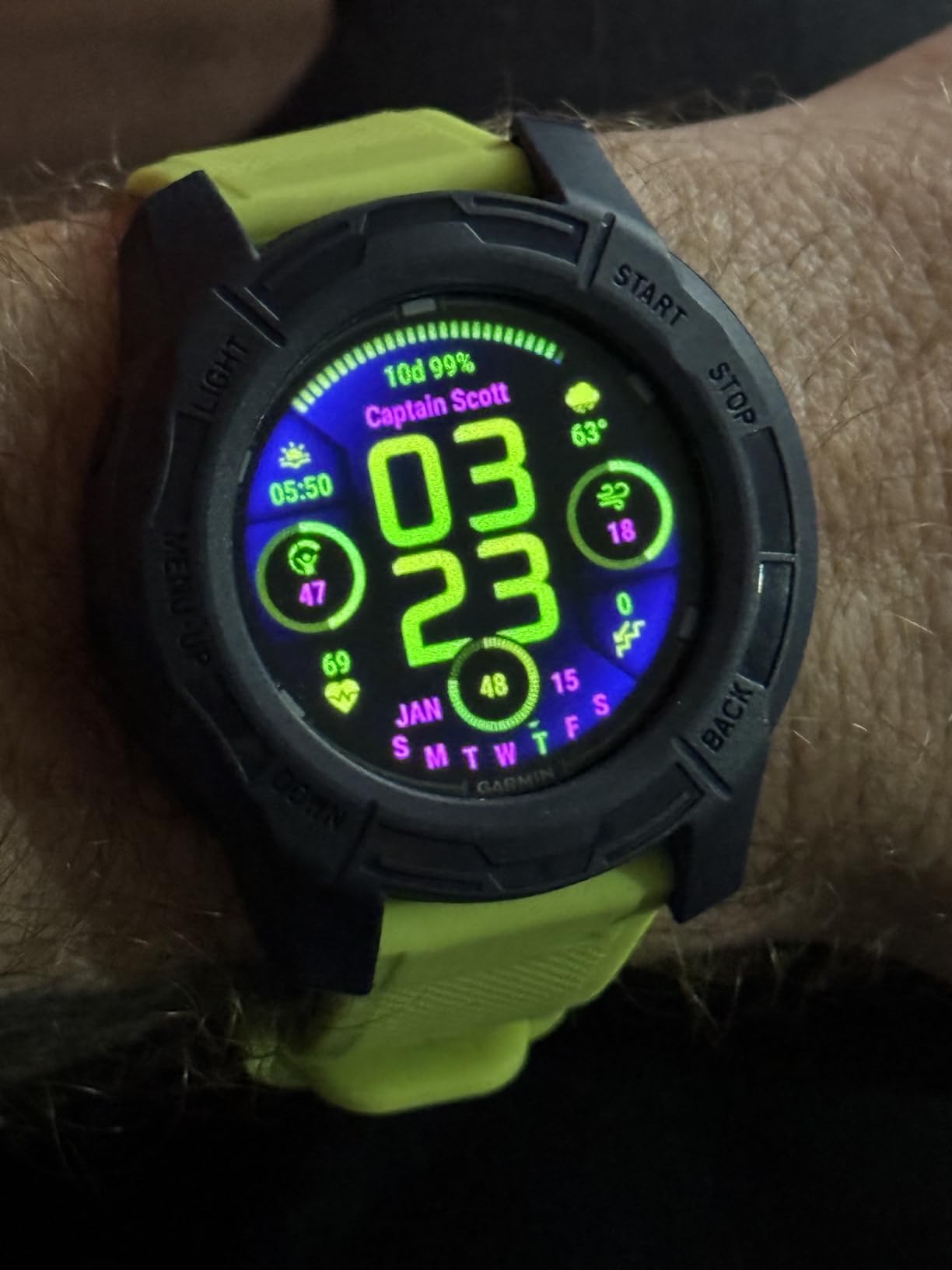
At 2.3 ounces with a sapphire lens and leakproof buttons, it is light and compact for something with this feature set. Owners who came from bigger Garmin dive models consistently describe it as delivering near-flagship capability at a fraction of the bulk, and it doubles as a spearfishing and freediving training watch, which is a real use case if you also free dive.
The AMOLED screen is bright and sharp and stayed readable for me in direct sun and in low light, which is more than I can say for every small display in this roundup.
Who the Garmin Descent G2 suits best
It suits a diver who wants one device for everything, and specifically a diver who also freedives, snorkels a lot, or trains on land and wants that training data to inform their diving. Multi-GNSS entry and exit markers are also the best navigation support of any watch-style option here.
It suits someone who wants to check a dive log on a phone through the Garmin Dive app, with training metrics layered on top. And it suits divers on liveaboards who want surface tracking of where they entered along a reef line.
Where the Garmin Descent G2 falls short
Screen size is the recurring argument. At 1.2 inches, some reviewers find it perfectly legible while one returned the watch calling it too small, and several others note that the 46 mm case runs large on very small wrists. The lesson is straightforward: if you have a small wrist, try it on before you commit, and consider our guide to dive computer watches for smaller cases.
It is not air-integrated, and 27 hours in dive mode is short for a multi-day liveaboard if you dive a lot each day. It is also among the most expensive computers in this group, so it is worth weighing against the Suunto Ocean, which costs more and does considerably more, or against the Peregrine, which costs less and does the diving job more simply. Some buyers also consider it better suited as a backup than a primary.
6. Suunto Ocean Is the Pick for GPS and Multi-Day Trips
SUUNTO Ocean Dive Computer and Sports Watch, AMOLED Screen…
1.43 inch AMOLED display
40 hours in dive mode
Stainless steel case
99 g
Pros
- Bright 1.43 inch AMOLED reads in varied conditions
- Stainless steel case and sapphire glass
- 40 hours covers a liveaboard day
- Dual frequency GPS with offline maps
- Works as a full sports and health watch
Cons
- 50 mm case is oversized on small wrists
- Most expensive in the roundup
- Touchscreen menu is complex for a first dive computer
The Ocean is the most capable computer here, and whether that is what you want depends entirely on how much diving you plan to do. The 1.43-inch AMOLED at 466 x 466 is a genuinely large, bright panel, and paired with sapphire glass and a stainless steel case it is built to be read quickly and to survive being knocked about for years.
Battery is the headline number. Forty hours in dive mode is enough to cover a full day of multiple dives on a liveaboard without a recharge, and the same cell gives up to 12 days in daily mode. That removes the single most common complaint in this category, which is arriving on day two of a trip to a computer that has run flat.
Dual frequency GPS with offline maps is the other differentiator. You can find a dive site, mark your entry point, track your route, and replay the dive in 3D afterwards. Five dive modes cover Air and Nitrox, Freedive, Snorkelling, Mermaid, plus multi-gas for technical diving, and the 95-plus sports modes with underwater heart rate strap support make it a full training watch rather than a dive accessory.
Who the Suunto Ocean suits best
It suits a diver who is going straight past recreational, or who already dives 20 or more dives a year and wants a computer with headroom. It also suits anyone who plans to explore unfamiliar sites rather than follow a leader, because offline maps and route tracking change how you plan a boat dive.
It is made in Finland and rated to 100 m with testing down to minus 20 degrees Celsius, so cold-water divers are on solid ground here.
Where the Suunto Ocean falls short
Size is the honest drawback. At 50 mm diameter and 13.4 mm thick it reads as substantial, and reviewers repeatedly flag that it feels oversized on a smaller wrist. It weighs 99 g, which is heavy for a full-size wrist computer compared with the 122 g Peregrine and the 129 g Donatello in lighter builds.
It is the most expensive option here, the touchscreen and menu depth add real complexity for someone on their first course, and it is not air-integrated without buying a separate Suunto transmitter.
7. Suunto D5 Is the Pick for Wireless Tank Pressure on a Budget
SUUNTO D5 Dive Computer, Color Display 100m Waterproof, All…
Colour sunlight-readable display
Wireless tank pressure
100 m rated
Vibration alarms
Pros
- Colour display readable in low light
- Light and compact for a full-size computer
- Optional wireless tank pressure integration
- Vibration alarms felt through a 3 mm wetsuit
- Suunto app syncs cleanly
Cons
- Rechargeable battery gives about 4 hours of real dive time
- Low battery banner blocks the display
- Cluttered default dive screen
The D5 is the cheapest way to get wireless tank pressure integration and a colour screen in the same unit, and for a diver who wants to see gas time remaining without checking a gauge, that combination is genuinely useful. Add the separately sold Suunto transmitter and the computer shows remaining pressure and estimated air time, which removes one more task from your checklist underwater.
It is light at 150 g and compact for a full-size computer, and the three-button menu is quick to learn. The vibration alarms for ascent, ceiling, and no-fly warnings are something I found more noticeable than a buzzer through a 3 mm wetsuit, which is a real safety benefit in poor visibility when you may not hear a tone clearly.
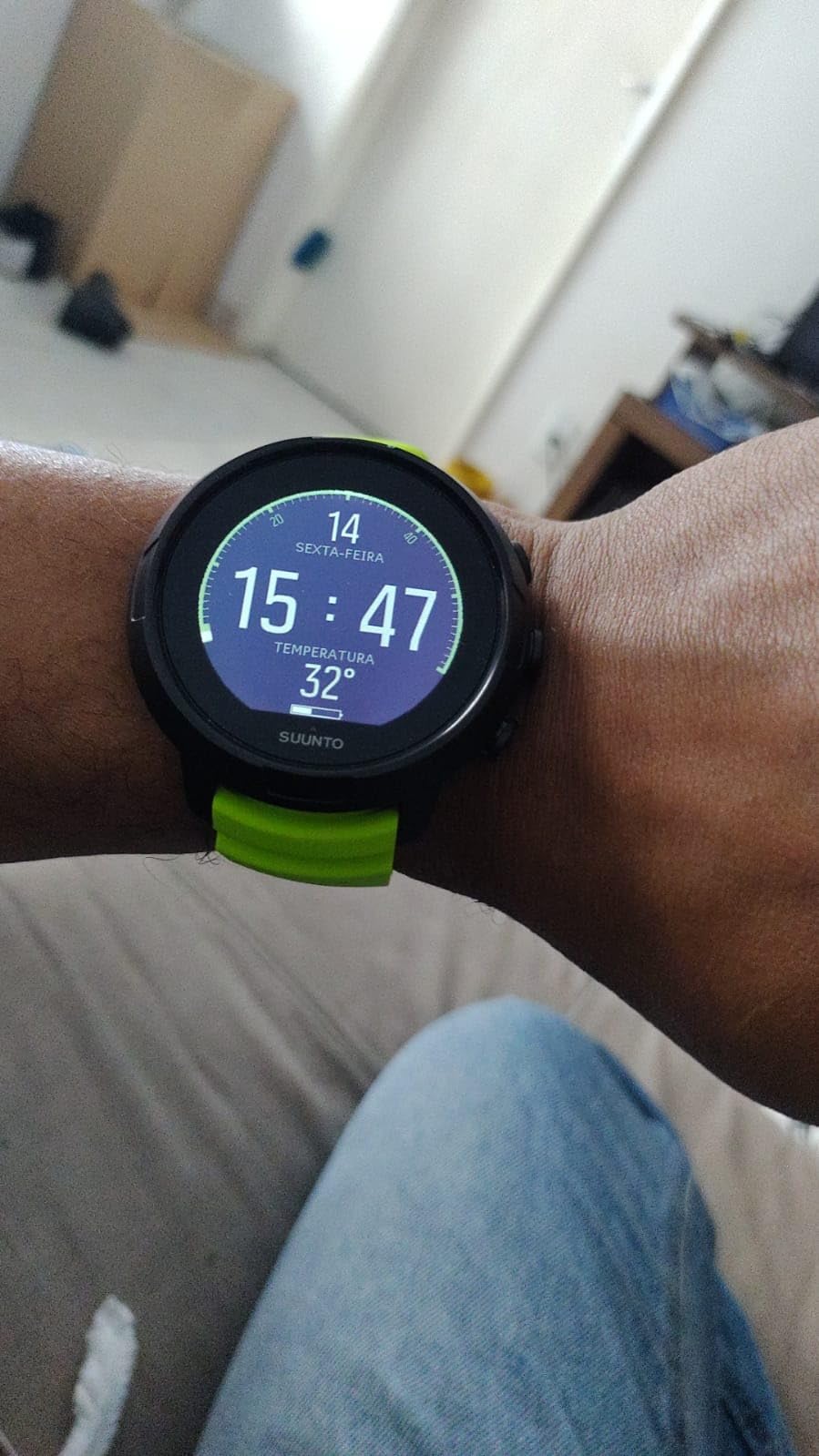
The digital compass is included, and the Suunto app syncs dive profiles, temperatures, and consumption data cleanly to your phone. Owners who have owned computers at many levels describe the D5 as among the best they have used, and the sunlight-readable colour display holds up on late-afternoon shallow dives in a way the small monochrome Cressi screens do not.
It is also comfortable as an everyday watch, with a 100 m water resistance rating, which is more than enough for a shallow recreational limit.

Who the Suunto D5 suits best
It suits a diver who wants gas time remaining and does not want to move up to a full sports watch for it. It also suits anyone diving in a place where vibration alerts matter, such as a reef at night or in water where surface noise makes an audible tone hard to catch.
For a diver who is moving from a very cheap monochrome computer, the colour screen and the vibration alerts are the two upgrades that change daily use most.
Where the Suunto D5 falls short
Battery life is the serious issue. Suunto states up to 12 hours of dive time, but multiple owners report that a full 6 to 8 hour charge yields about 4 usable hours, and the low-battery banner blocks the display and recurs on every dive. This is the single most-cited complaint in the reviews and it has produced dedicated critical reviews. If you are on a multi-day trip, charge it every night like a phone or choose a sealed rechargeable model with a much bigger cell.
There are also smaller gripes. The black paint scratches easily, there are only two watch faces, the safety stop is locked to a 2.4 to 6 m band and cannot be adjusted while diving, and the default dive display is cluttered until you customise it from a desktop before you travel.
8. Suunto D4i Novo Is the Pick for Small Wrists
SUUNTO D4i Novo Diving Watch, White
Two-line digital display
Air nitrox freedive gauge modes
50 m rated
Composite case
Pros
- Accurate decompression and gauge readings
- Compact and less bulky than most dive computers
- Reads well for freediving and light recreational scuba
- Wireless tank pressure available as an add on
- Comfortable silicone strap for daily wear
Cons
- Dim backlight that is hard to activate
- Small 49 x 22 low-contrast display
- Battery needs annual replacement after warranty
The D4i Novo is the smallest watch-style option here, and for a diver with a small wrist it solves a problem that the Garmin G2 and Suunto Ocean do not. It sits low and quiet, weighs 8 ounces, and the white silicone strap is comfortable enough to keep on between dives and after you surface.
On the fundamentals it is accurate. Owners call the decompression and gauge readings reliable, and the air, nitrox, freedive, and gauge modes plus a timer cover a recreational diver and a snorkeller on the same wrist. Wireless tank pressure reading is available through a separately sold Suunto transmitter if you decide later that you want it.
It is a good freediving computer for the same reason it is a good travel watch, and for divers moving from a console or a rented computer, the graphical dive logs and simple button interface are a small learning curve.
Who the D4i Novo suits best
It suits divers with small wrists who find larger cases uncomfortable, and it suits anyone who wants a light watch that disappears under a sleeve or a wetsuit cuff. It also suits a freediver or snorkeller who does a few recreational scuba dives each year and wants one device for both.
For a first-year diver on a tight budget who dives on holiday a handful of times a year, the simplicity is not a weakness.
Where the D4i Novo falls short
The display is the problem. At 49 x 22 with a dim backlight that several owners say is difficult to activate, it is the least readable screen in this roundup at depth and in the dark. It has the highest share of one-star ratings of anything here, and a lot of that comes down to screen frustration rather than dive data.
Battery serviceability is the other recurring complaint, with a detailed account of batteries needing replacement twice within two years at 90 to 125 dollars each once the warranty has lapsed. The composite case is a step down from the steel used on newer Suunto models, the USB cable and extension strap are not included, and the 50 m water resistance is shallower than the rest of this list.
What a Beginner Dive Computer Actually Needs
A first dive computer has to do four things well: show your current depth, show your dive time, show your remaining no-decompression limit, and warn you if you are ascending too quickly. Everything else is optional. Instructors and divemasters on ScubaBoard are consistent on this point, and their advice is to buy the simplest computer that handles those four clearly.
Beyond that, I would add a fifth requirement that reviewers care about more than any spec sheet, which is a conservative default algorithm so your no-decompression limits are shorter than the theoretical maximum, and a depth rating of at least 100 m so the computer is not a dead end if you ever go deeper than the 40 m recreational limit.
Readability Matters More Than Any Other Feature Underwater
The feature you will care about most is how quickly you can read the screen with a mask on, a regulator in your mouth, and hands that are cold. Screen size and contrast beat every other feature, and the gap between the 2.2-inch colour Peregrine and the two-line Suunto D4i is the difference between reading your no-decompression limit at a glance and squinting at it.
The two AMOLED watches here, the Garmin Descent G2 and the Suunto Ocean, are the brightest, and both stay readable in direct sun as well as low light. The monochrome Cressi units are perfectly adequate in good conditions and frustrating in poor ones. If you dive at dawn, at night, or in water with a lot of suspended sediment, pay for the screen.
Battery: Rechargeable or User-Replaceable
There are two camps and both are defensible. A user-replaceable cell means no charging cable, no battery anxiety, and a dive shop can sort it in ten minutes, which is what makes the Cressi Leonardo 2.0 attractive for cold-water and remote trips. The cost is that the battery is a consumable you will replace periodically, and the service cost rises once the warranty has lapsed.
A sealed rechargeable removes the maintenance entirely and gives you a bigger cell. The Peregrine at up to 30 hours per charge and the Suunto Ocean at 40 hours make that obvious. The Suunto D5 is the cautionary tale in this group, where reviewers report about 4 usable hours from a full charge. Whichever you choose, make charging your computer part of the same routine as packing your regulator, and remember that our dive light guide covers the other item most beginners forget to plan for.
Decompression Algorithms and How Conservative Your Computer Should Be
Every computer in this roundup runs a version of a decompression algorithm, and the honest truth is that you do not need to understand it. What you do need is to leave the default settings alone. Forum users report beginners changing gradient factors and oxygen percentages without knowing what those settings do, on a device whose entire job is safety, and that is the one configuration mistake you should avoid.
Set your nitrox percentage to match the label on your cylinder, set your altitude correctly if you are diving above sea level, and accept the no-decompression limit the computer gives you. A computer with more conservative default settings will give you shorter limits and more safety stops, which feels cautious in the moment and feels sensible later.
Air Integration: Is a Tank Transmitter Worth It Yet
Air integration uses a transmitter screwed into a first stage to send tank pressure to the computer, which then calculates gas time remaining. It removes one gauge check from your routine, and for a diver who is new enough to still be working through a checklist, that is a real reduction in cognitive load.
It also costs extra, requires a compatible computer, and needs a charged transmitter of its own. For a first year on one computer, a reliable analogue gauge and a habit of checking it is enough. If you do want it, the Suunto D5 is the least expensive way into tank pressure, and the Suunto Ocean and Garmin Descent G2 are both good homes for a transmitter if you already own one.
Setting Up a New Dive Computer Before Your First Dive
No competitor covers this properly, so here is the sequence I use. First, set the date and time, including time zone, before you leave home rather than in the airport. Second, choose metric or imperial and stick to it, because switching between the two mid-trip is how people misread a limit.
Third, set your altitude. If you are flying to a mountain destination or diving at elevation, set it before the first dive or your no-decompression limits will be too generous. Fourth, set the nitrox percentage to match the label on your cylinder, and if you are diving air, confirm the mode is on air rather than a nitrox setting you changed days ago.
Fifth, check the date format, your dive log capacity, and whether the units on the display match your gauge. Sixth, do a pool or shallow shore check with a buddy, confirm the depth reading matches what you measure, and run through one full safety stop before you rely on it. Do all of this before you are standing on a boat with a group of people who are waiting.
Do You Need Your Own Computer for Your Open Water Course
Most dive schools do not rent computers, which is the single biggest reason new divers end up buying one quickly. Practically, many instructors will let you use the school unit for your confined water and first open water dives, and your instructor’s recommendation outranks any list online, including this one.
What I would say is that if you are going to dive again, and most people do, buy your own. A computer you configured yourself, that you have tested in a pool, and that you have watched since day one is a much better tool than an unfamiliar rental unit with somebody else’s settings.
What to Skip Until You Advance
Do not buy a trimix, closed circuit rebreather, or multi-gas technical computer for your first year. You are not required to use 40 features because the computer has them, and the same applies to air integration, GPS, heart rate straps, and multi-sport training platforms. Each one adds a setting or a charging dependency without improving a recreational dive.
For the same reason, be careful with apps that gate features behind a subscription, and check what happens to your dive log if an app is discontinued. A computer that logs locally and syncs over Bluetooth is more durable than one that needs a server to be useful.
Buying Used: What to Check First
The used market is a well-trodden path, and forum members report good results buying a higher-end computer second-hand rather than settling for a cheap new one. The saving is real, and buying a used Perdix AI plus a transmitter was reported as a strong outcome for one diver.
The risk is that you cannot know how many hours a used computer’s battery or seals have been through. Ask for the seal condition, the approximate number of dives, the battery type and its age, and the service history, and confirm the pressure rating is intact before it goes anywhere near the water.
Frequently Asked Questions
Which dive computer is the easiest for beginners to read?
The Shearwater Peregrine is the easiest to read in this group, with a 2.2 inch full colour display at 320 x 240 resolution and a two-button menu that only offers settings relevant to where you are. Among smaller options, the Garmin Descent G2 and Suunto Ocean use bright AMOLED screens that stay legible in both direct sun and low light. The monochrome Cressi models are readable in good conditions but need more effort in poor visibility or darkness.
What is the best basic dive computer for beginners?
A basic beginner computer needs to show depth, dive time, no-decompression limit and ascent rate clearly, and warn you with audible and visual alerts. The Cressi Leonardo 2.0 does all of that on a single button interface with a battery that does not need charging, which makes it the most straightforward first purchase. If your budget allows more, the Shearwater Peregrine adds a colour screen, 30 hours of battery and cloud log syncing without becoming complicated to operate.
Why should you not turn off a dive computer between dives?
Turning a dive computer off between dives resets the surface interval timer and, on many models, clears the tissue loading information it uses to calculate your remaining no-decompression limit. If you power it back on before enough surface time has passed, the computer treats you as a new diver with fresh tissue compartments and gives you a longer limit than your body actually has. Keeping the computer on between dives, or at minimum keeping the mode set to dive rather than time, preserves the running calculation.
What diving equipment should I buy first?
Buy your mask, fins, and regulator before you buy anything else, because fit and seal matter more than any other choice in the kit. A BCD and exposure suit come next, sized for the water temperature you will actually be diving in. Your dive computer sits alongside those rather than after them, since it is the one safety item that is impossible to improvise on the day. Saving for a good computer and settling for poor-fitting exposure is the wrong order of priorities.
Do I need my own dive computer for my open water course?
Most dive schools do not rent computers, so many new divers end up buying one anyway, and it is worth asking your instructor before you buy. In practice, many will let you use a school unit for your confined water and early open water dives, and your instructor’s guidance takes priority. If you plan to keep diving, buy your own before the trip and configure it, check it against a measured depth, and run one full safety stop in a pool so you trust it.
How much should I spend on a first dive computer?
Spend according to how much you will dive rather than on features you will not use. The Cressi models in this group cover the core recreational requirements with air and nitrox modes and a replaceable battery, and are the sensible starting point. Moving up buys screen size, battery capacity, and features like GPS or tank pressure rather than better safety data. A higher price is only worth it if the larger screen or the longer battery changes how you use the computer underwater.
The Best Dive Computers for Beginners in 2026
The Shearwater Peregrine is the best dive computer for beginners in 2026 for one reason: it is the model you will stop having to think about. The colour screen is readable in any condition I tested, the two-button menu is difficult to misuse, and 30 hours of battery per charge means a week of diving without a charger. Its lack of tank pressure integration and compass is a fair trade at this stage.
If that price is out of reach, the Cressi Donatello is the best value pick and will comfortably carry you through a certification and a season of holiday diving. If the budget is genuinely tight, the Cressi Leonardo 2.0 does the job properly with a battery you will never have to charge, and its small screen is the only real compromise.
For freediving and daily wear look at the Garmin Descent G2, for GPS and multi-day trips look at the Suunto Ocean, and for smaller wrists the Suunto D4i Novo is the comfortable answer. Whichever you pick, set it up properly before the trip, leave the advanced settings alone, and use it every single dive so that you know exactly what it is telling you.
No dive computer replaces training, certification, or a buddy you trust. Use it as the second safety tool it is meant to be.
