
10 Best Backpacking Stoves for Thru Hiking (September 2026) Latest Reviews
Most thru hikers end up with the same stove, and for good reason. The MSR PocketRocket 2 at 2.6 oz is the default pick for the best backpacking stoves for thru hiking in 2026 because it needs no priming, boils a liter in about 3.5 minutes, and uses the same screw-on canister you can buy in any trail town from California to Maine. The SOTO WindMaster is the runner-up for anyone walking above treeline or in wind, and the Jetboil MiniMo wins the lane for hikers who cook real meals instead of only boiling water.
What changes when your trip is 2,600 miles instead of three nights is the list of things that matter. A weekend hiker optimizes for the lightest number on a spec sheet. A thru hiker optimizes for whether fuel exists at mile 1,800, whether the flame survives a crosswind on an exposed plateau, and whether the part that breaks can be replaced with something carried in a sock rather than mailed home. Those are different questions, and they produce a different ranking than the generic best-backpacking-stove lists you will find elsewhere.
Contents
We built this guide from manufacturer spec sheets and from aggregated customer reviews, not from field testing. Where we quote a boil time, a weight or a burn duration, it comes from the product data rather than from our own measurement, and boil times from different brands are not tested on identical pots at identical temperatures. Pricing changes constantly, so use the buttons below to check current figures. We earn a commission on qualifying purchases.
One safety note before anything else. A backpacking stove produces carbon monoxide, and carbon monoxide kills. Never cook inside a tent, a tarp without ventilation, a snow cave or a bothy. Every stove in this list is fine to use outdoors with open airflow, and none of them is fine to use in an enclosed shelter.
Top 3 Picks for Thru Hiking in 2026


As an Amazon Associate we earn from qualifying purchases. CERTAIN CONTENT THAT APPEARS ON THIS SITE COMES FROM AMAZON. THIS CONTENT IS PROVIDED 'AS IS' AND IS SUBJECT TO CHANGE OR REMOVAL AT ANY TIME.
Best Backpacking Stoves for Thru Hiking at a Glance
| Product | Features | |
|---|---|---|
| MSR PocketRocket 2 |
|
Check Latest Price |
| SOTO WindMaster |
|
Check Latest Price |
 Jetboil Flash 1.0L Jetboil Flash 1.0L |
|
Check Latest Price |
 Jetboil MiniMo Jetboil MiniMo |
|
Check Latest Price |
 BRS-3000T BRS-3000T |
|
Check Latest Price |
 SOTO Amicus SOTO Amicus |
|
Check Latest Price |
 Fire-Maple Greenpeak 1 Fire-Maple Greenpeak 1 |
|
Check Latest Price |
 Coleman Classic Coleman Classic |
|
Check Latest Price |
 Optimus Svea Optimus Svea |
|
Check Latest Price |
 Desert and Fox Mini Stove Desert and Fox Mini Stove |
|
Check Latest Price |
We earn from qualifying purchases. CERTAIN CONTENT THAT APPEARS ON THIS SITE COMES FROM AMAZON. THIS CONTENT IS PROVIDED 'AS IS' AND IS SUBJECT TO CHANGE OR REMOVAL AT ANY TIME.
1. MSR PocketRocket 2 – Best Overall for Thru Hiking
MSR PocketRocket 2 Ultralight Camping and Backpacking Stove
Weight: 2.6 oz
Fuel: isobutane
Boils 1 L in 3.5 min
Case included
Pros
- 2.6 oz and packs to 2x2x3 inches
- No priming or preheating
- Boils a liter in roughly 3.5 minutes
- Adjusts from simmer to rolling boil
- Hard shell case included
Cons
- No built-in igniter so a lighter is needed
- Runs hot near the valve during long cooks
- Noisy compared with titanium stoves
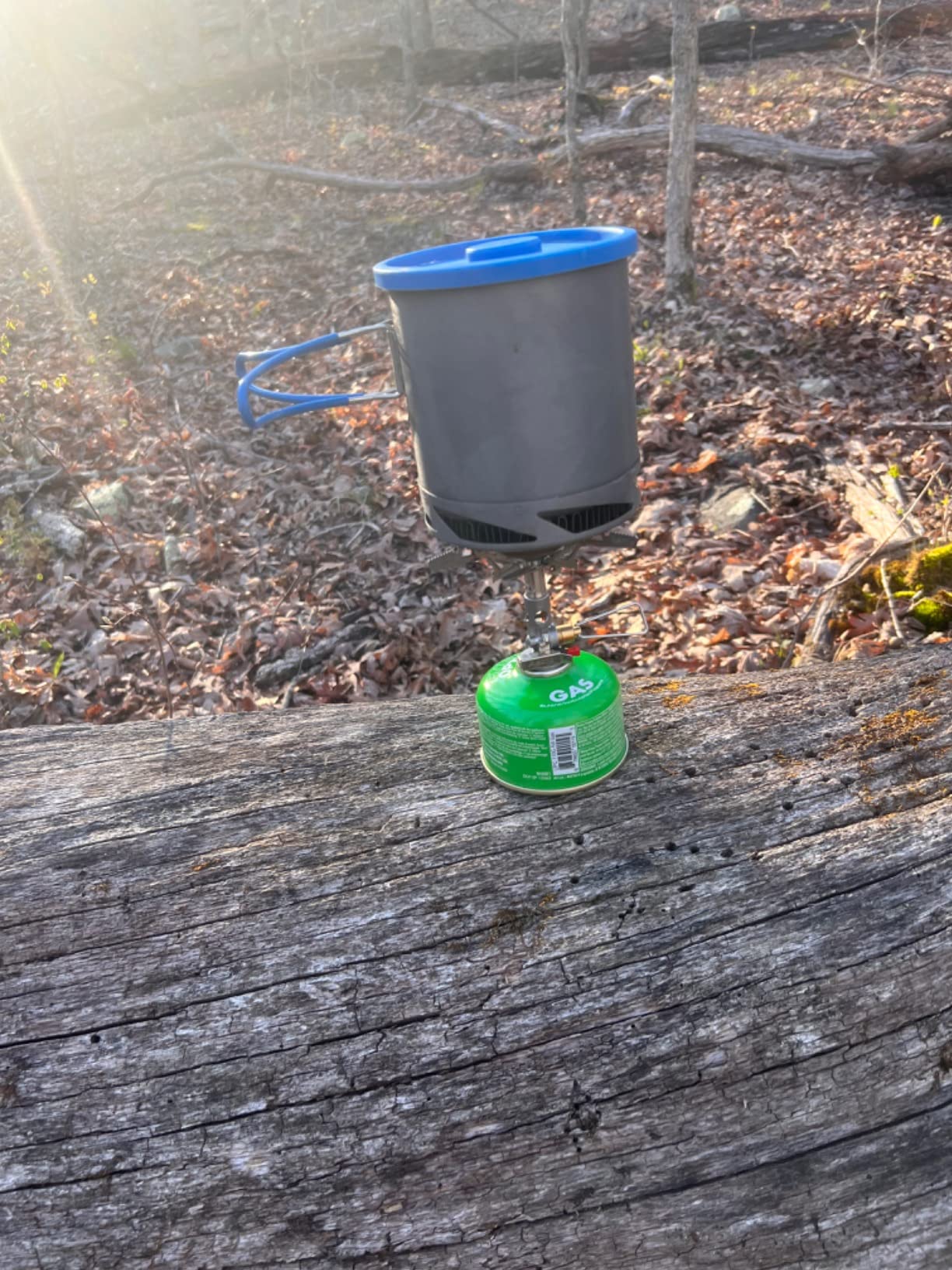
At 2.6 ounces, packing down to a 2x2x3 inch block, the PocketRocket 2 is the stove most thru hikers buy first and the one they usually still own at the end of the season. It folds flat, it screws onto a standard isobutane canister, and it needs no priming, no preheating and no pressurising. You open the case, twist it on, and light it. That simplicity is worth more over 2,600 miles than any gram you might save elsewhere.
The boil claim is 3.5 minutes for a liter, and owners report a real-world range of roughly 2.5 to 3.5 minutes depending on the pot, the altitude and whether you have a windscreen. On a clear cold morning at a PCT resupply, that is the difference between drinking water now and drinking water in four minutes.
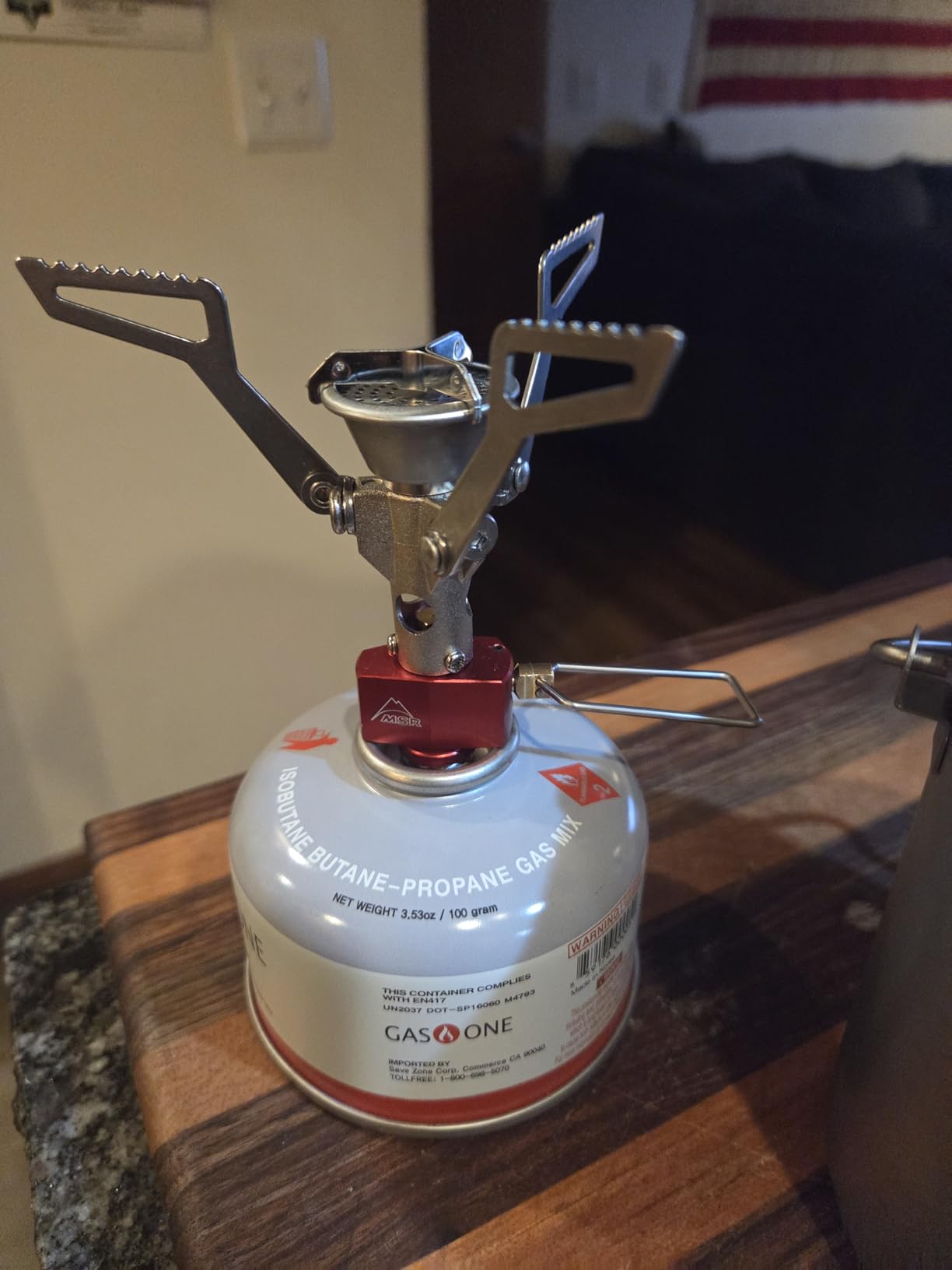
The serrated pot supports are the detail that matters more than any spec number. They accept a wide range of pot diameters and styles, which means you are not stuck cooking in whatever pot the stove shipped with. Owners migrating from a titanium boil-only setup almost always end up using a 750 ml pot, and the PocketRocket 2 seats it without drama.
Two things to plan for. There is no built-in igniter, so a lighter or waterproof matches go in the same pocket as the stove, every time. And the burner and valve area runs hot enough that some owners are wary of long unattended cooks, which is reasonable when you are simmering a pot of lentils for twenty minutes after a long climb.
What you should check before buying
Check the packed size against your pot. At 2x2x3 inches the stove itself nests inside most 750 ml pots, and the included hard shell case is what protects it from the rest of your kitchen gear. If you cook with a larger 900 ml pot, confirm your cookware nests or accept that the stove rides on the outside of the pot.
Check your lighter habit honestly. A piezo stove can fail from a cracked crystal, a soaked spring or a dropped impact, and owners rate this unit’s no-igniter design as a real trade rather than a flaw. Carry a backup ignition source regardless of what your stove has built in.
Where it falls short
It has no windscreen. The concave-burner trick that makes the WindMaster shrug off a crosswind does nothing here, and owners in exposed terrain report the flame leaning hard in any breeze. A folding windscreen costs very little weight and fixes the problem on windy ridges.
It is also the loudest of the small metal stoves, which matters less than most guides suggest. Sound carries differently at 3 a.m. in a quiet drainage than it does at a busy campground, but it is not a dealbreaker for a solo boil-and-drink setup.
2. SOTO WindMaster – Best for Wind and Cold Above Treeline
SOTO WindMaster Backpacking Stove with 4Flex, Canister Not…
Weight: 2.3 oz
Fuel: isobutane
Output: 11000 BTU
Replaceable piezo
Pros
- Concave burner head acts as a built-in windscreen
- 2.3 oz with a small footprint
- Regulator holds output as the canister empties
- Replaceable piezo and cheap O-rings
- Quiet for its output
Cons
- Pot support arms must be opened fully before lighting
- Bulkier than the smallest titanium stoves
- Canister sold separately
Listed at 67 g or 2.3 oz, the WindMaster is the stove that most often wins a head-to-head boil test against bigger, more expensive models. The mechanism is a concave burner head, which is effectively a windscreen built into the stove. Flame sits in a recessed cup rather than on an exposed flat disc, so a crosswind hits the metal rim instead of the flame itself. That single design decision is why owners describe it as the stove that holds a steady flame in strong and gusty conditions.
Long-distance owners report thousands of trail miles on this stove, and side-by-side testing against smaller titanium stoves has it boiling faster while using less fuel. The output is rated at 3260 W, or 11000 BTU, and it burns roughly 1.5 hours on a 250 g canister.
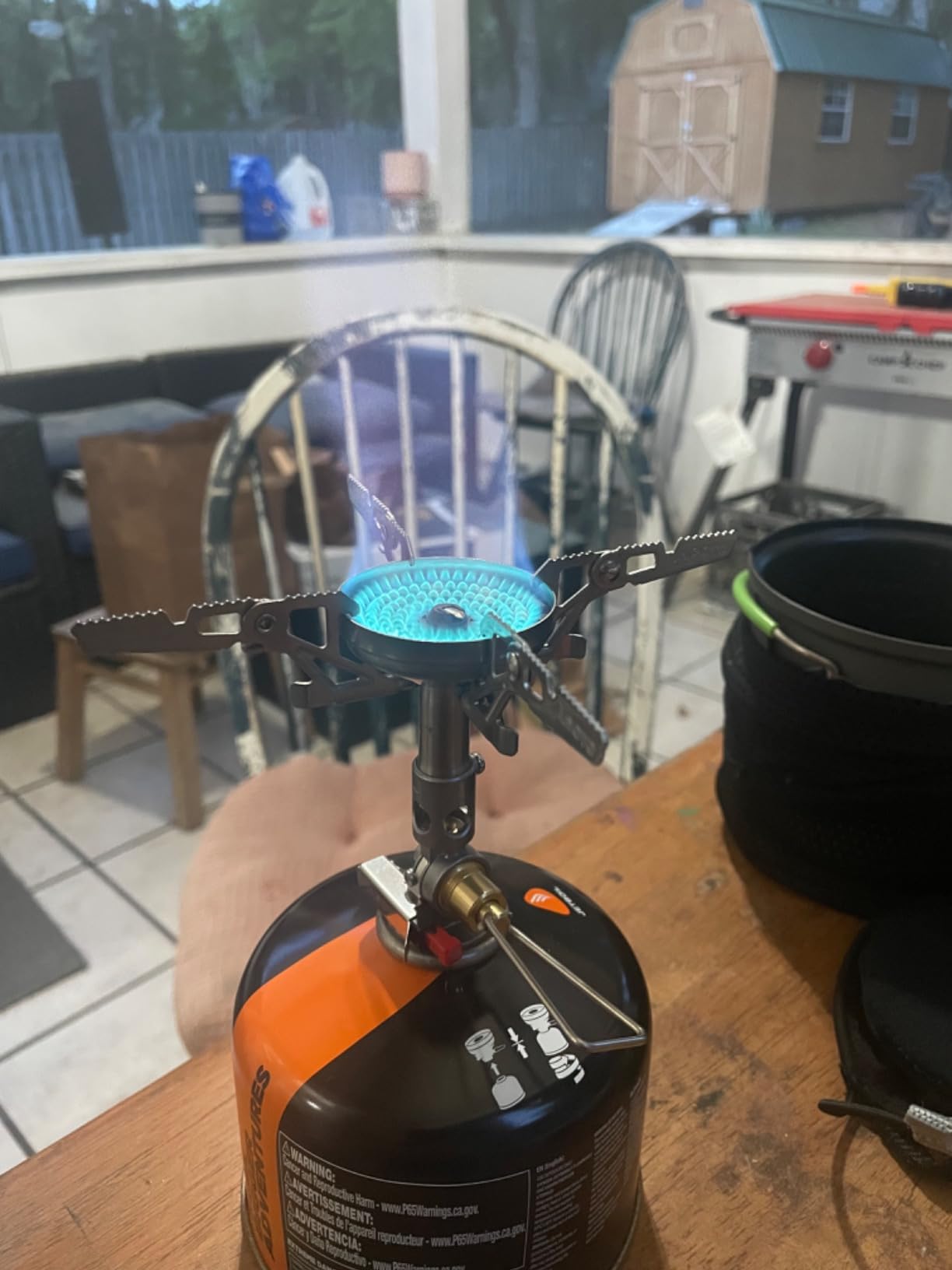
The pressure regulator is the other half of why it works on a long trail. A canister stove without a regulator loses output as the canister empties and cools, which is exactly the moment at the end of a cold day when you need heat most. The WindMaster holds consistent output on low-pressure and nearly empty canisters, so your last cup of the evening cooks the same as your first cup of the morning.
Field repairability is the quiet advantage. The stealth shock-resistant piezo igniter post is replaceable, and the O-ring is a standard cheap part available at any hardware or outdoor store. On a 90-day season that removes the single most common failure mode from the list of things that can end your day.
The 4Flex pot support included here is sturdier and broader than most three-arm stands, which matters if you ever cook with a larger pot instead of a small titanium one. Owners also report it holds larger cookware securely where cheaper three-arm stands flex.
What you should check before buying
Check the configuration, because SOTO sells the WindMaster in versions with and without an igniter. The model here is the version with the built-in piezo, which is the one you want on a thru hike. Spending the first evening with a lighter is a waste of a resupply stop.
Check how the pot support opens. Owners report that the stand arms are not held rigidly until they are flipped out fully, and that a partly opened support under a full pot is how you get a spill on your sleeping bag. Open it all the way, then set the pot down.
Where it falls short
It is bulkier than the smallest titanium canister stoves. At 2.3 oz the weight is competitive, but the folded footprint is not the smallest available, and if your entire kitchen system is built around nesting everything inside a 550 ml pot, the WindMaster will not go in with the rest.
It is also the more expensive of the two light regulated options here. Over a season that is a one-time difference rather than a running cost, since fuel dominates the money you spend on trail food, but it is a real factor for a first-season budget.
3. Jetboil Flash 1.0L – Best for Boil-and-Go Mornings
Jetboil Flash 1.0L Portable Fast Boil Stove for Camping and…
Weight: 13.12 oz with pot
Fuel: isobutane propane mix
Boils 16 oz in 2 min
Pros
- Boils 16 ounces in about 2 minutes
- One-step automatic ignition
- All parts and a 100 g canister nest in the cup
- Cool-touch color-coded grips
- Insulated cozy holds heat
Cons
- Heaviest and bulkiest option here
- Proprietary pot lock limits older cups
- JetPower fuel is a separate system
- Dedicated pot is awkward for real cooking
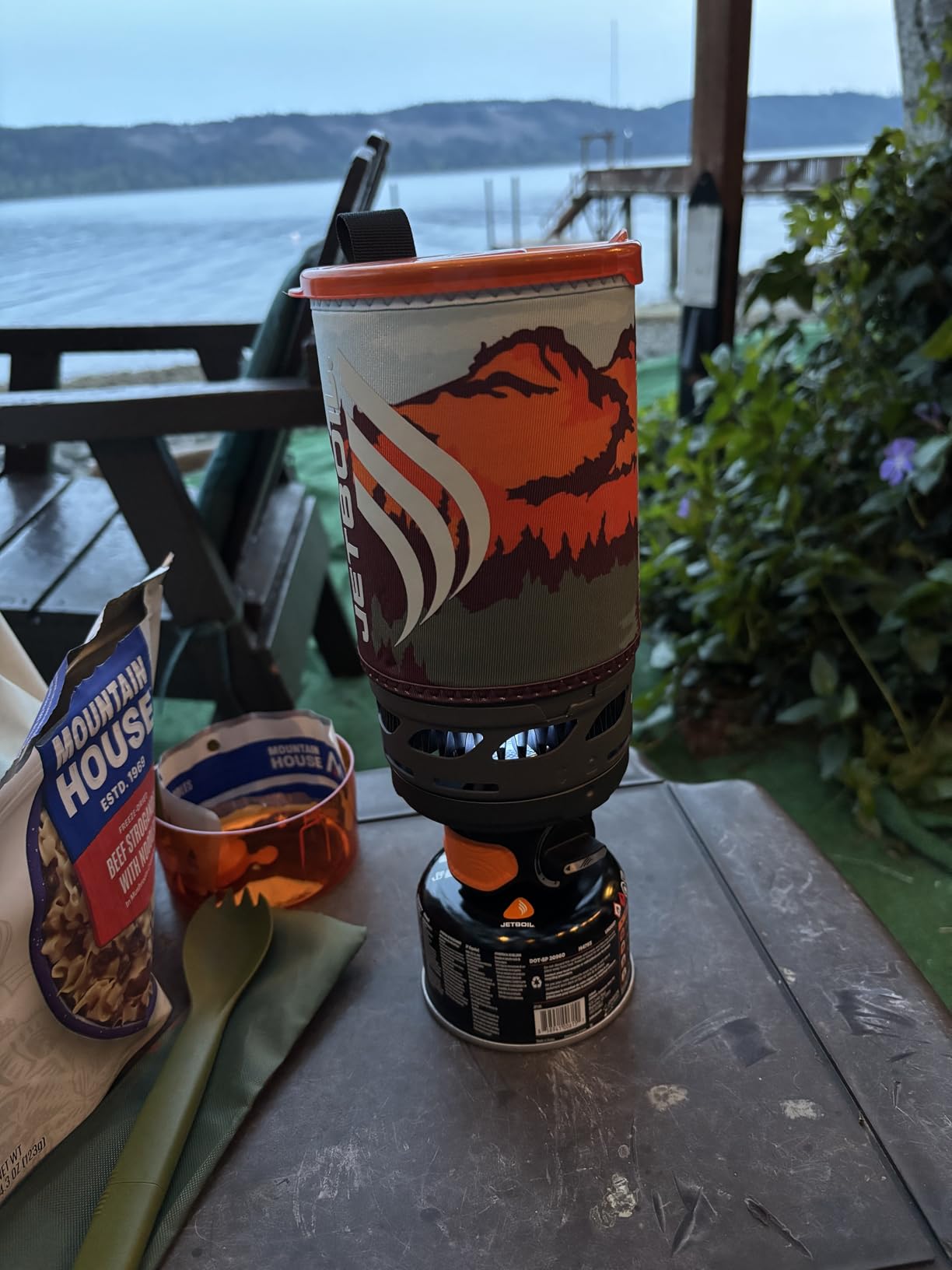
The Flash is a different category of object from the other nine. It is not a stove you pair with a pot, it is a pot with a burner attached, and if your mornings are coffee and a dehydrated meal then that difference is a straight win. Water boils in about 2 minutes for 16 ounces, which is the fastest figure in this roundup, and the insulated cozy keeps it hot for longer afterwards.
Ignition is one step. Turn the knob and click, and the burner lights. Reviewers consistently name this as the feature that removes an entire category of prep from the start of the day, and on a long trail where you are half-asleep and cold, removing steps is worth grams.
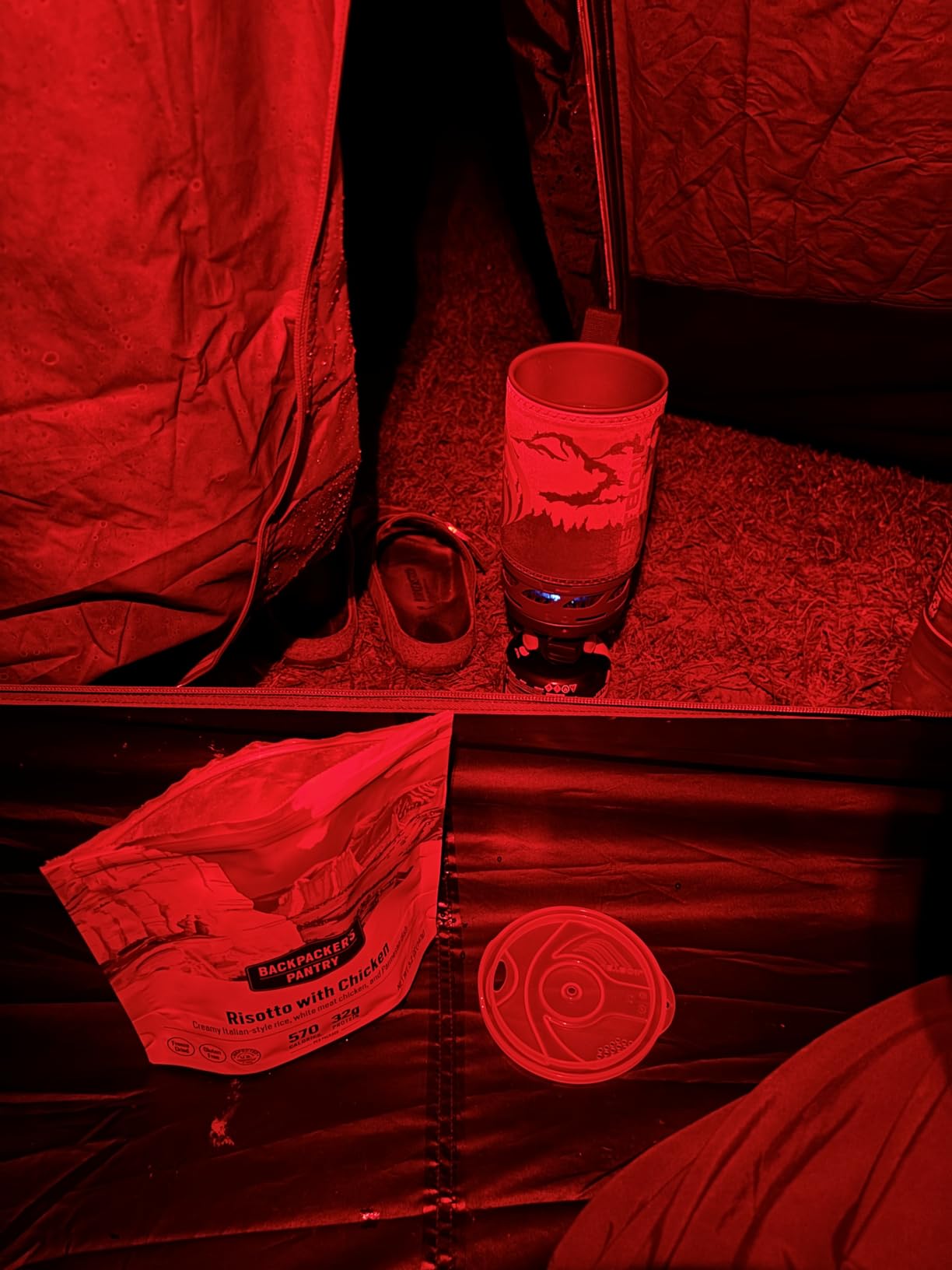
Everything packs into the 1 litre cook cup. The burner, the cozy, the fuel canister stabilizer, the lid and the bottom cup all nest inside, and a 100 g canister fits too. That turns a kitchen kit into a single cylinder, which is genuinely convenient when your entire cooking system has to live in one compartment of a pack that also holds a sleeping bag.
The three-point locking system has visual indicators for the pot-to-burner connection. That sounds like marketing, but it is a real safety feature on a stove you light while holding a full pot of boiling water, and reviewers treat the color-coded cool-touch grips as a meaningful upgrade for handling the vessel right after a boil.
Output comes from a stainless steel burner with a FluxRing-style design, which is the heat exchanger concept that gives integrated systems their wind resistance and their fuel efficiency relative to a bare burner sitting under a pot.
What you should check before buying
Check your cooking ambitions. If you are cooking for two people, or if you want to simmer a real sauce rather than rehydrate a freeze-dried meal, the dedicated pot is a limitation. A pot-lock system is optimised for one job, and doing a second job means carrying a separate pot anyway.
Check fuel compatibility before you commit to the ecosystem. Jetboil sells its own JetPower fuel, and while the burner runs on standard screw-on isobutane-propane canisters, the nesting benefit only applies to the 100 g JetPower can. Larger canisters are carried separately and eat pack volume.
Where it falls short
At 13.12 ounces including the pot, it is by a wide margin the heaviest item in this roundup. If you are a boil-only hiker optimising base weight, that number is disqualifying no matter how fast the system performs.
The proprietary pot lock also means older Jetboil cups may not fit newer burners, so check compatibility if you already own a Jetboil piece. And because the whole thing is one closed system, a damaged cup means a non-functional kitchen until you source a replacement, which on a remote section of trail is a genuine risk.
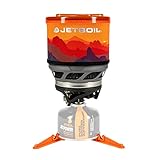
4. Jetboil MiniMo – Best for Cooking Real Meals
Jetboil MiniMo Portable Stove Control for Camping and…
Weight: 14.56 oz with cup
Fuel: isobutane and propane
Simmer to full boil
Pros
- Precise simmer control down to a low flame
- FluxRing reaches a rolling boil in just over 2 min
- Entire kit nests into the cup
- Pushbutton igniter works in wind and at altitude
- Pot support included for other cookware
Cons
- Heavier and costlier than bare-bones canister stoves
- Only two volume indents on the cup
- Hot cup is awkward to lift off the burner
- Large canisters do not nest with the system
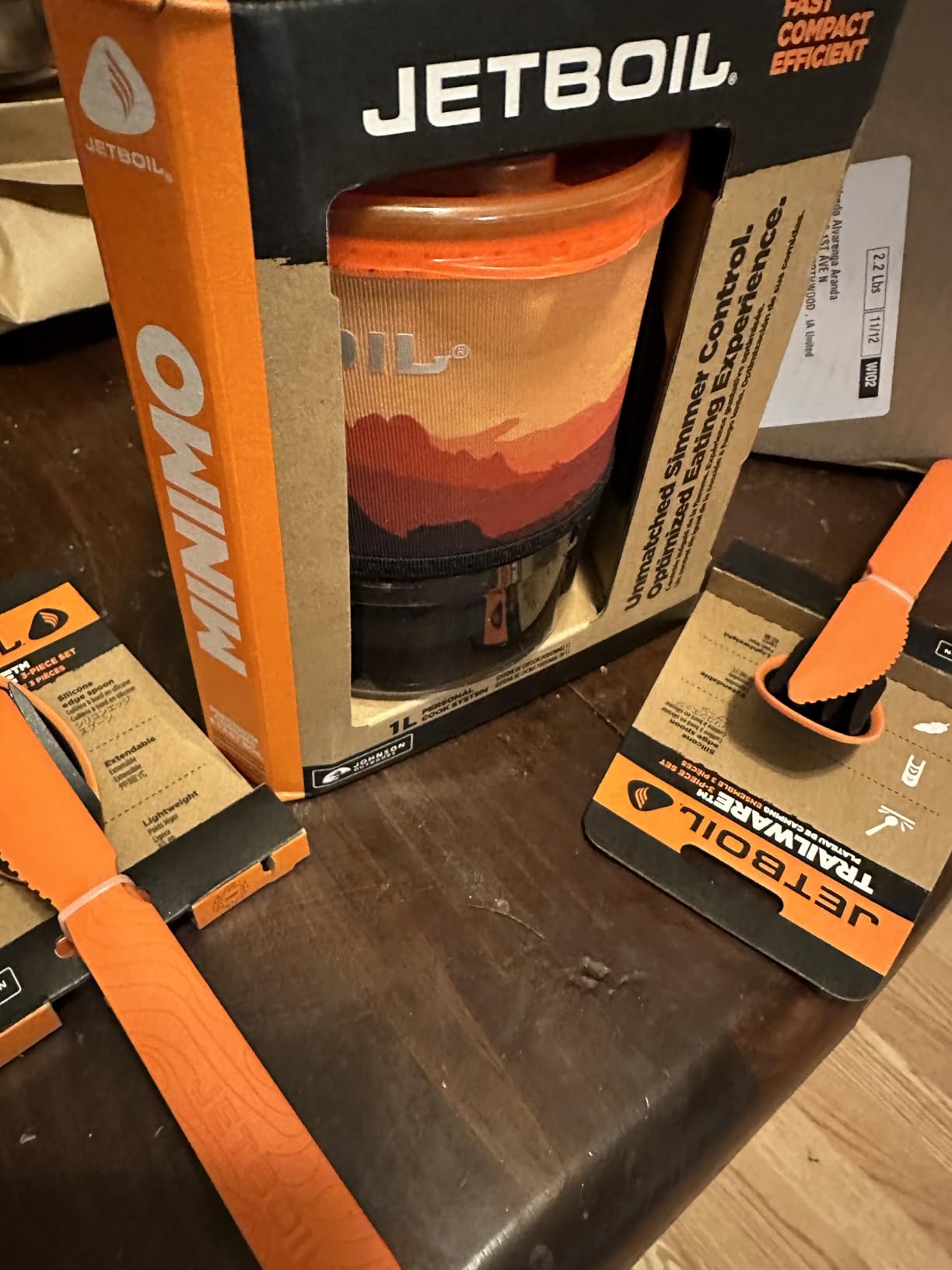
If the MiniMo and the Flash were the same product, the MiniMo would be the one to buy. The Flash wins the boil race, and the MiniMo wins every other cooking task, because its proprietary regulator gives incremental heat adjustment from a light simmer all the way to a full boil. On a stove that flip-flops between a roar and a splutter, that control is the difference between cooking a meal and heating it.
Reviews repeatedly praise the MiniMo for precise flame control, and they are the reason buyers choose it over the Flash. At 4.8 stars across more than 2,100 reviews, it is one of the strongest-rated products in this roundup, and the sentiment is consistent enough to be useful: people cooking actual meals buy it and are happy with it.
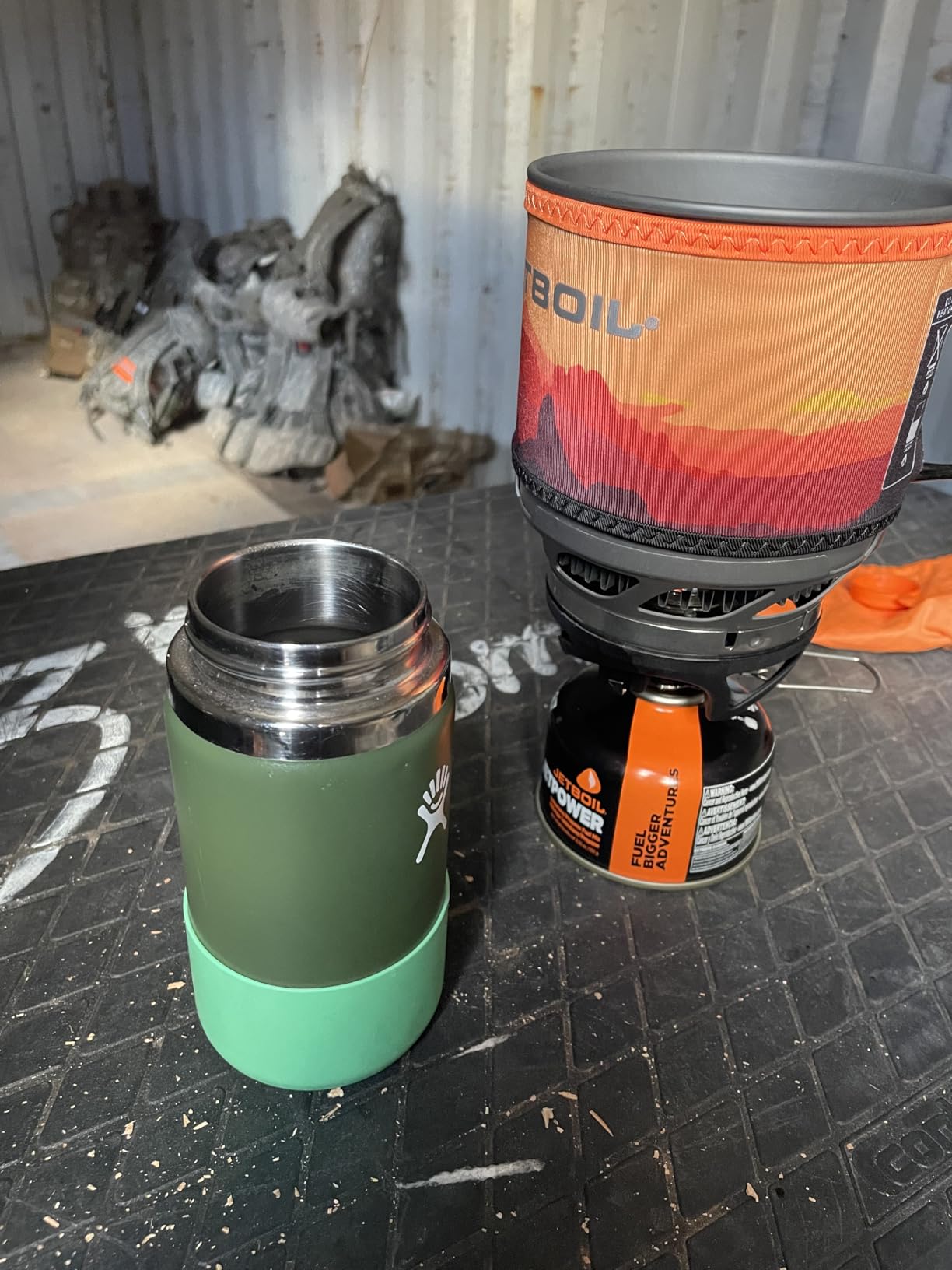
The FluxRing technology reaches a rolling boil in just over two minutes while using roughly half the fuel of traditional systems, and the cooking cup doubles as a measuring cup with the bottom cup serving as a bowl or measure. Metal handles and a redesigned cup angle are aimed at a low spoon position, which sounds minor and turns out not to be when you are eating something hot at 6 a.m.
Two details separate it from the Flash. The pushbutton igniter starts heating instantly and owners report it working in high wind and at altitude. And a pot support is included, so you can use other cookware with it, which is what makes it a stove for a hiker who cooks rather than a system for a hiker who boils.
What you should check before buying
Check whether you will actually use a second pot. The pot support opens up cookware options, but if you never cook with anything other than the included cup, you are carrying an extra piece of gear for a feature you will not touch. That is fine as insurance, less good as a plan.
Check canister size against your pack. The system is designed around a 100 g canister nesting in the cup. Larger 250 g canisters do not nest and must be carried separately, and fitting them in a comfortable place on a loaded pack is a real packing problem, not a footnote.
Where it falls short
It is the heaviest system in this roundup at 14.56 ounces, and the concentrated burner heat can scorch thin or stainless cookware if you leave it unattended. Owners also note the hot cup is genuinely awkward to remove from the burner right after cooking.
The cup has only two volume indents, which is a nuisance in low light, and the whole system costs more than a bare-bones canister stove. For a boil-only hiker that is money and weight spent on control they will never use.
5. BRS-3000T – Best for Base Weight on a Budget
BRS Outdoor BRS-3000T Ultra-Light Titanium Alloy Miniature…
Weight: 25 g
Fuel: screw-on canister
Boils 1 L in about 3 min
Pros
- Absolute ultralight class at 25 g
- Nests with a 110 g canister in a 750 ml pot
- Boils a liter in about 3 minutes
- Smooth flame adjustment from low simmer
- Easy to carry as a backup stove
Cons
- Titanium pot supports can warp over time
- Poor in wind without a windscreen
- No integrated igniter
- Small burner head concentrates heat
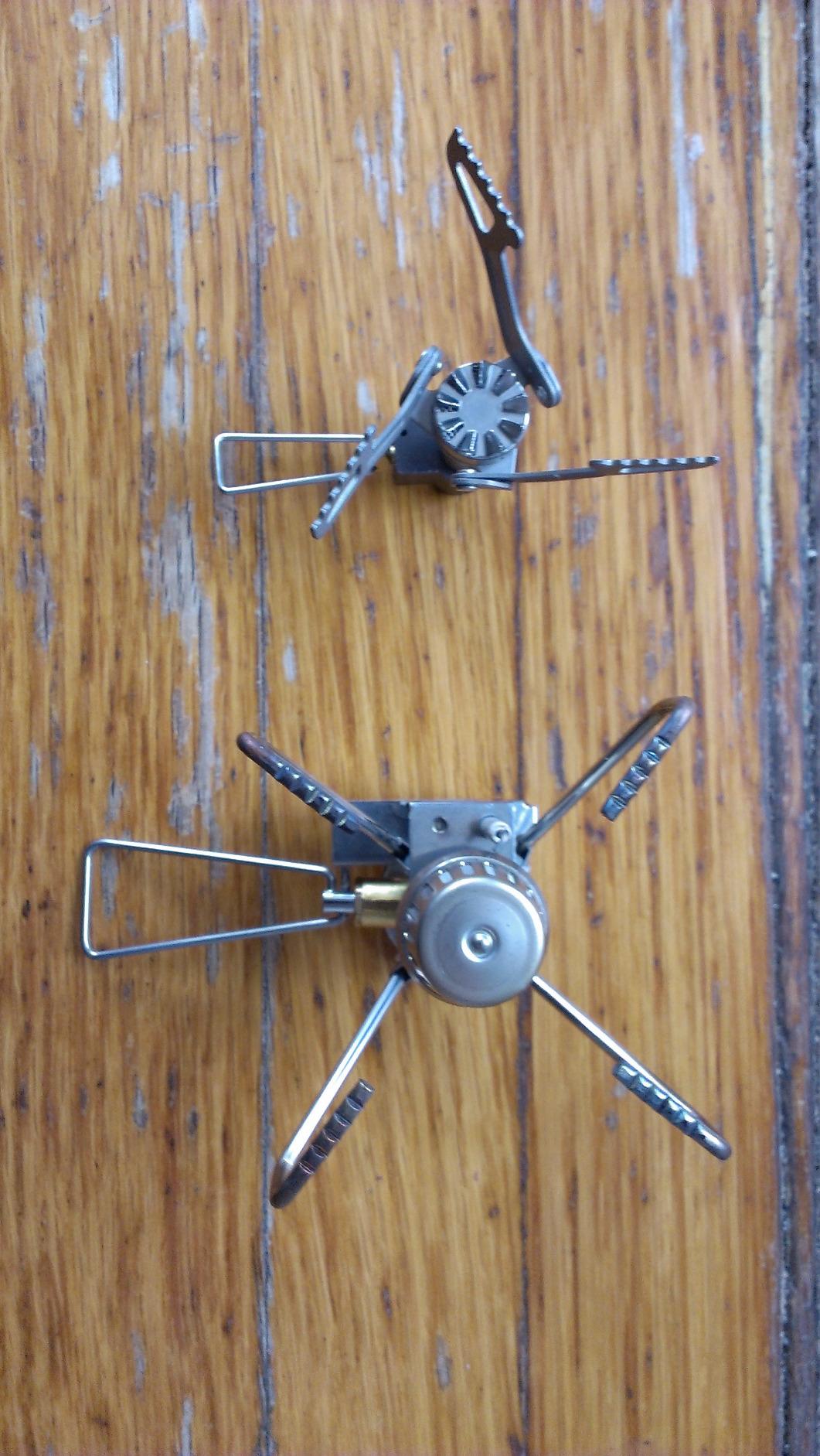
Twenty-five grams. The BRS-3000T weighs less than a roll of tape, packs into essentially nothing, and boils a litre of water in about 2 minutes 58 seconds, which is faster than its size suggests. Output is rated at 2700 W with smooth adjustment, and gas consumption is around 140 g per hour at full tilt.
It screws onto a standard canister and it is genuinely the right pick for a hiker whose base weight budget is the binding constraint. Buyers treat it as the budget ultralight option, and the enthusiasm for weight and boil speed in the reviews is real and consistent.
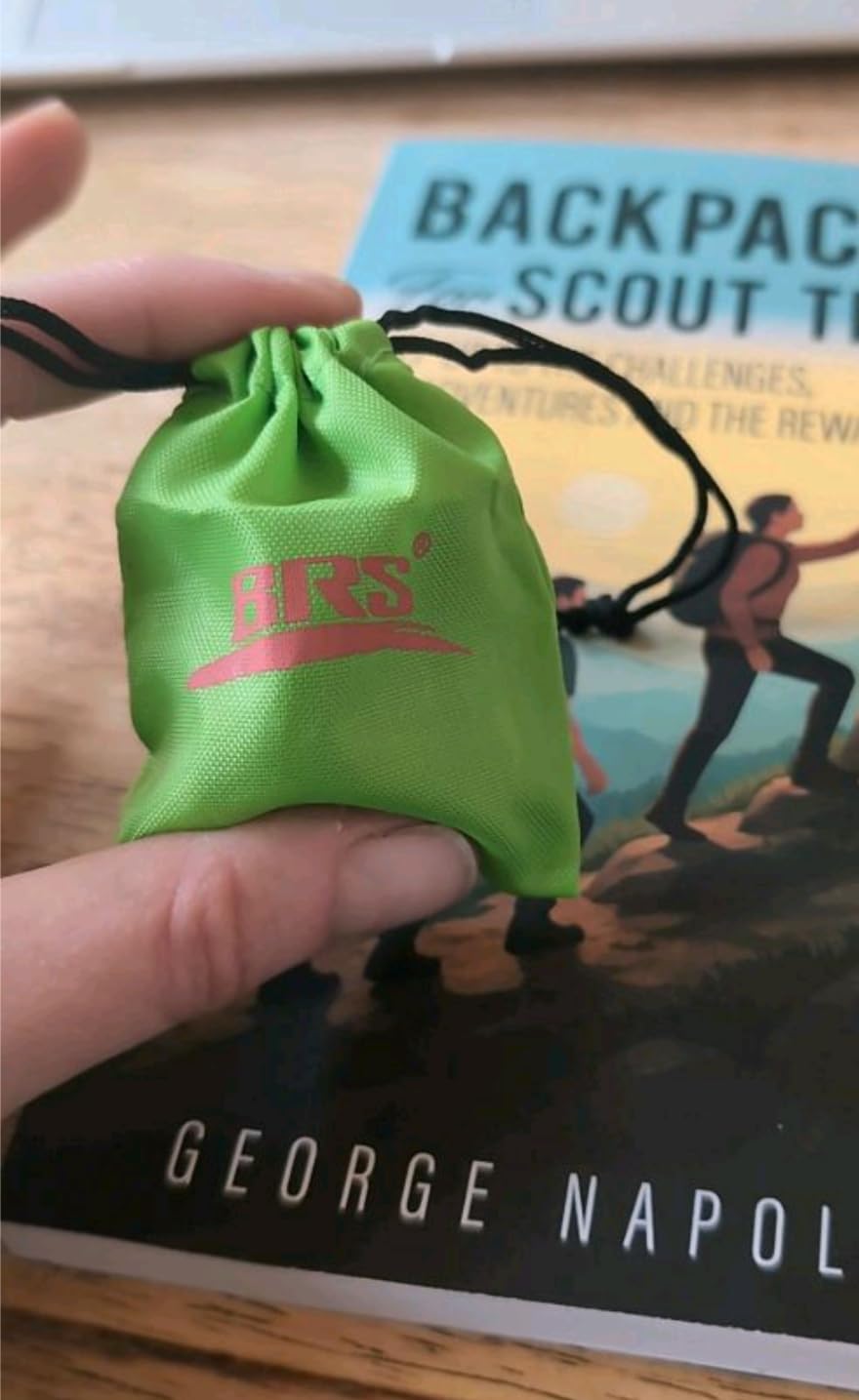
The nesting design is what makes it feel like a complete kit rather than a loose part. The stove and a 110 g canister fit together inside a 750 ml pot, so for boil-only hikers the entire cooking system is one object you scoop up and carry. Package contents include the stove, a pouch and a spare O-ring.
The honest caveat is durability, and it is worth stating plainly. The 4.5 average rating is lower than the 4.8s in this roundup, and the difference comes from durability reports rather than from output. Owners report titanium pot supports that can warp under heat stress over time, and ultralight communities report batch-to-batch quality variation, where two identical-looking units do not behave identically.
If you are walking 2,600 miles, that matters. A warped pot support at mile 900 is a real problem. A spare O-ring costs nothing, but a warped support is a stove you replace rather than repair.
What you should check before buying
Check whether you are boil-only. Nothing in this stove supports a real meal. There is no meaningful simmer range for cooking, no integrated windscreen, and a burner head small enough that it concentrates heat in the centre of a pot, which is fine for heating water and poor for anything else.
Check your wind exposure. This is an exposed burner with no windscreen, and owners report poor wind performance compared with stoves that have an integrated one. If your route has long exposed sections, budget for a folding windscreen and treat it as part of the system.
Where it falls short
There is no integrated igniter, so a lighter is required, and the titanium pot supports can warp over a season of use. Reviews also flag the small burner head and the concentrated flame as limits on anything beyond boiling.
It is the one stove in this list where I would carry a backup rather than trust it solo. Its low weight makes that easy to do, and pairing it with a tiny backup stove is a strategy some ultralight hikers use precisely because of the low cost of redundancy here.
6. SOTO Amicus – Best Value Metal Canister Stove
SOTO Amicus Backpacking Stove & Pot – Camping Stove With or…
Weight: 3.84 oz
Fuel: isobutane propane
Output: 11000 BTU
Pros
- Steady flame in windy conditions
- Triple O-ring plus metal seal
- Same 11000 BTU output as higher-end SOTO stoves
- Precise flame control from simmer to boil
- Shock resistant build
Cons
- Sold in igniter and no-igniter versions
- About 1.5 hours burn time on a 250 g canister
- Wind performance below the WindMaster
- Smaller review base than the big names
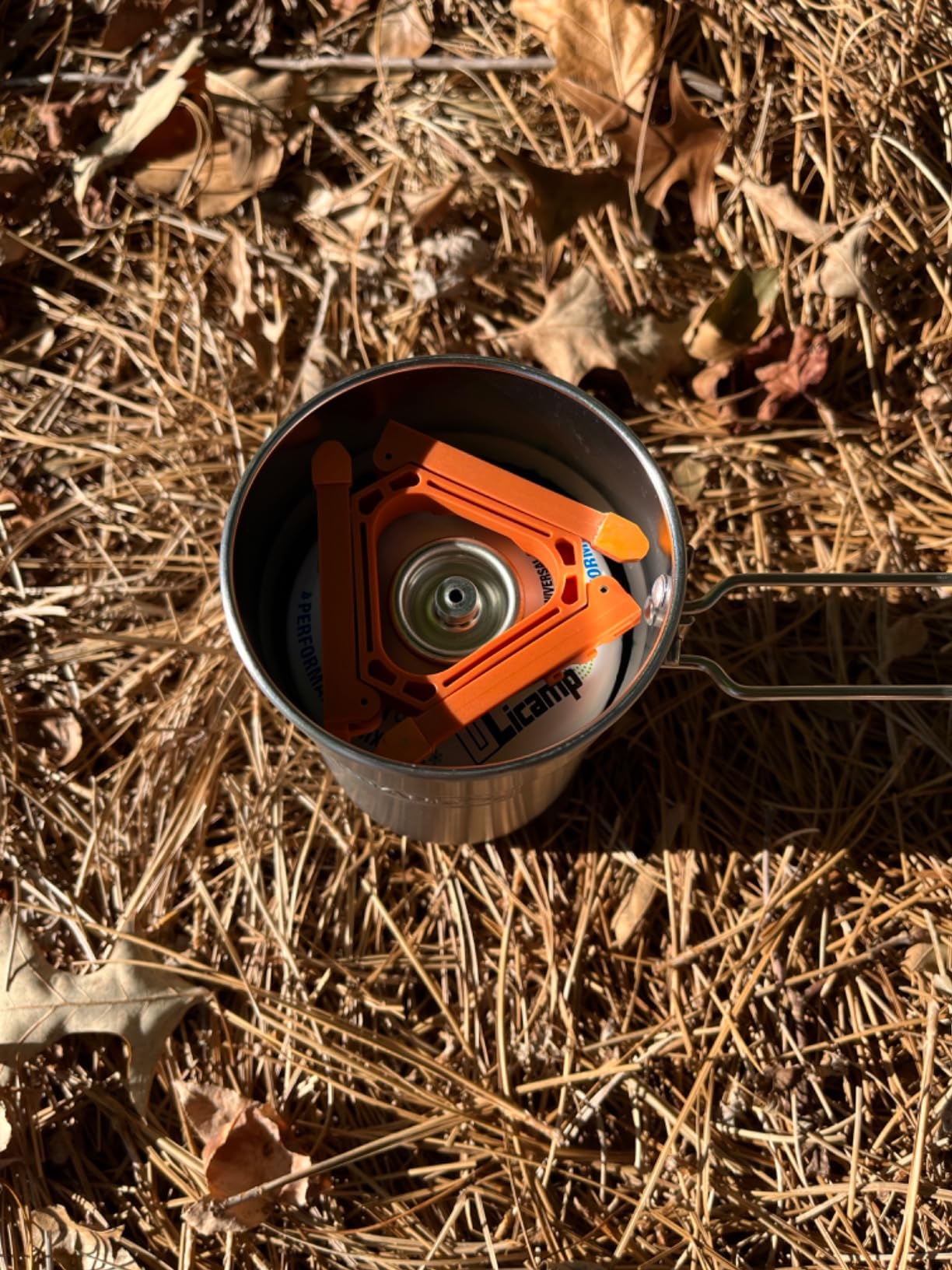
The Amicus is the WindMaster’s cheaper sibling and it keeps the parts that matter most. Output is identical at 2800 kcal/h, or 3260 W and 11000 BTU, and the sealing design uses a triple O-ring plus a metal seal that gives a very secure, leak-free canister connection. At 3.84 oz it is heavier than the WindMaster, but it is a metal stove with real burner head geometry, not a titanium budget unit.
Owners report that it maintains a steady flame in windy conditions and that it handles both simmering and boiling with proper control. Reddit video reviews in particular describe it as the best overall stove for price, weight and wind performance, and that framing is consistent with what the specification says.
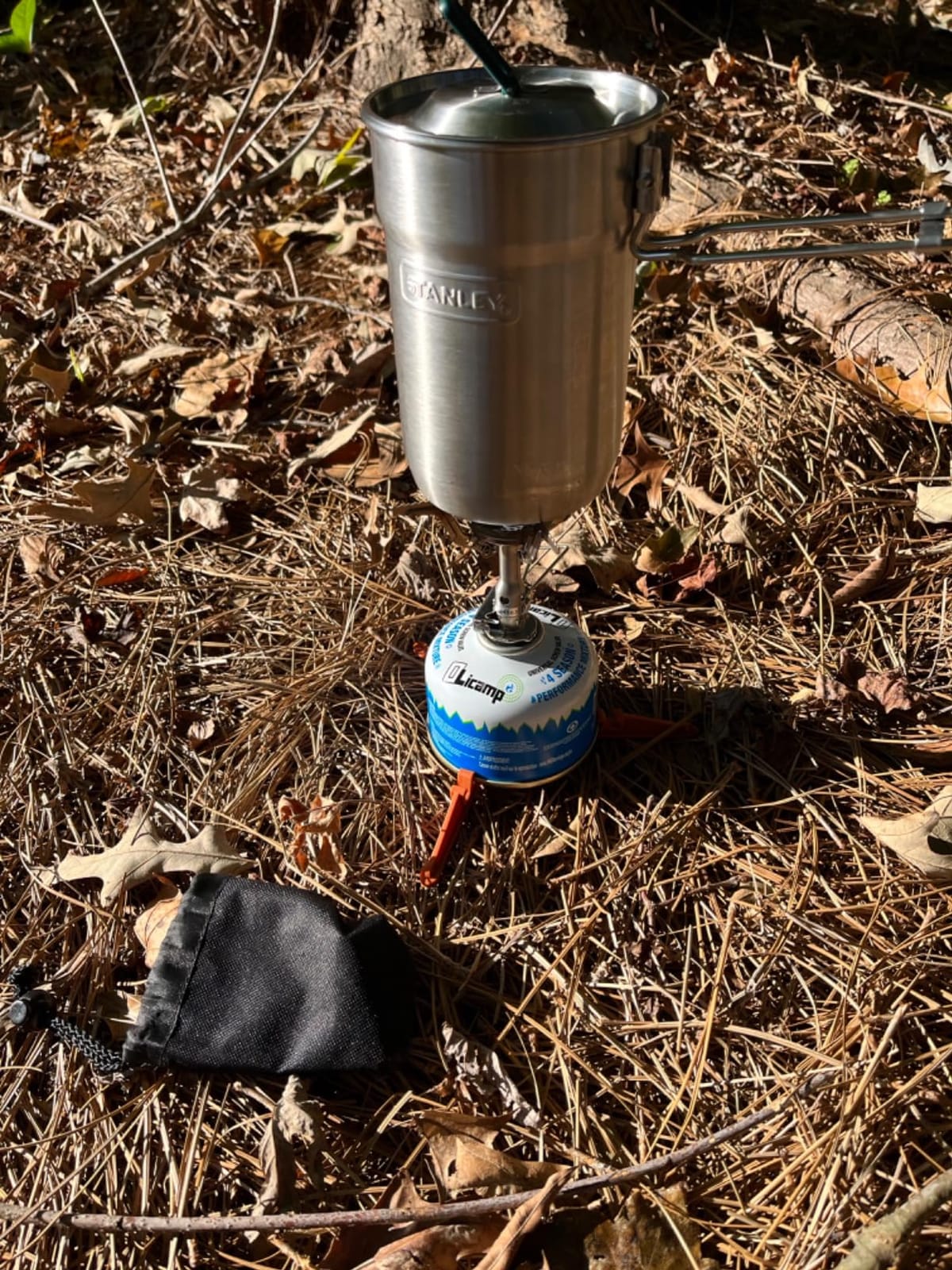
Burn time is around 1.5 hours on a full 250 g canister, which matches the WindMaster figure and is worth knowing when you are calculating how much fuel to carry between resupply points. The construction is shock resistant, which on a thru hike is not a marketing adjective, because stoves spend most of their lives being knocked around inside a pack.
The important configuration decision is the variant. This listing is the version with the built-in igniter. There is also a version without one, and buying that one means carrying a lighter for the rest of your life on this stove. Make sure the listing you order is the igniter version.
What you should check before buying
Check the igniter variant carefully, because the model number differs between the two and they look identical in a product photo. On a season-long trip the igniter version is the correct choice and the saving is trivial by the time it is on the trail.
Check your wind exposure honestly. It is good in wind but owners are clear that it is not on the level of the WindMaster’s concave burner head, so if your route is genuinely exposed you will still want a windscreen.
Where it falls short
It has a smaller review base than the bigger-name competitors, so there is less long-term field history attached to it. That is not a fault, but it is a reason to carry a backup lighter and to inspect the seals before each leg.
It is also heavier than the two lightest picks here at 3.84 oz, and at that weight you are carrying the cost of the metal build without getting the WindMaster’s windscreen. If wind is your binding constraint, pay the difference. If it is not, this is the sensible middle.
7. Fire-Maple Greenpeak 1 – Best for Field Repairability
Fire-Maple Greenpeak 1 Camping Stove with Piezo Ignition…
Weight: 85 g
Fuel: isobutane
Built-in piezo igniter
Folds to 2.1 x 2.8 in
Pros
- 85 g with a compact folding footprint
- Built-in piezo so no lighter to lose
- Larger and more powerful flame than most ultralight stoves
- Micro windshield holds the flame in wind
- Standard cheap O-ring seal
Cons
- Not compatible with the Z1 adapter
- First light-up is unusually loud
- Pot fit varies across the brand range
- A backup lighter is still worth carrying
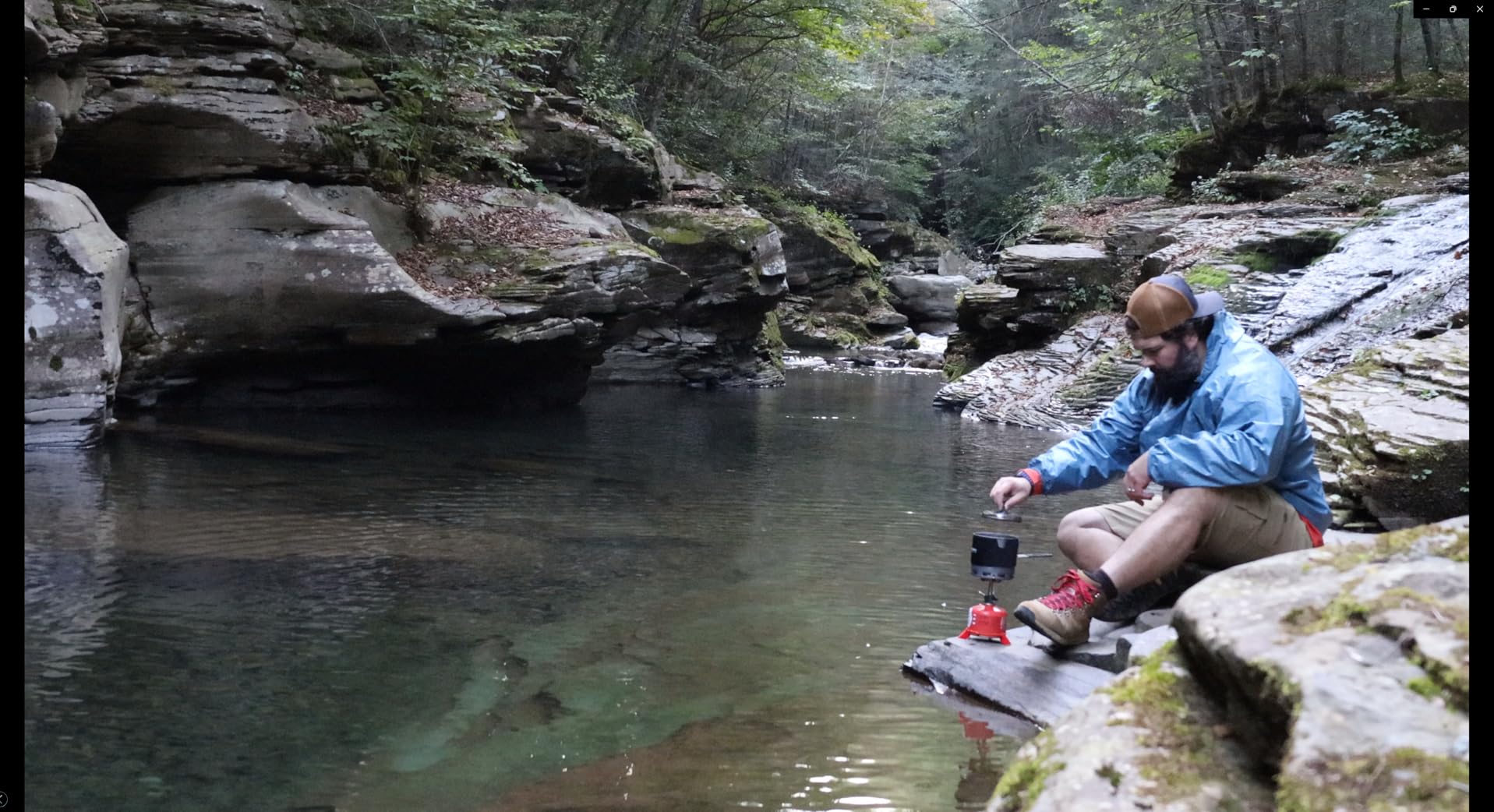
At 85 g or 3 oz, folding down to 2.1 by 2.8 inches, the Greenpeak 1 is the stove that surprises people. It has a built-in piezo igniter, an EN417 valve and a micro windshield in a package smaller than the Jetboil cup alone, and reviewers routinely report it outperforming pricier integrated stoves on flame power.
That flame power is the distinguishing feature. It runs well on partly full canisters, which matters because a small burner struggling at the end of a canister is a poor companion at the end of a long day. Users report it never blew out on a four-day trip in wind, which is the kind of statement that is easy to make about a micro windshield and hard to make about an open burner.
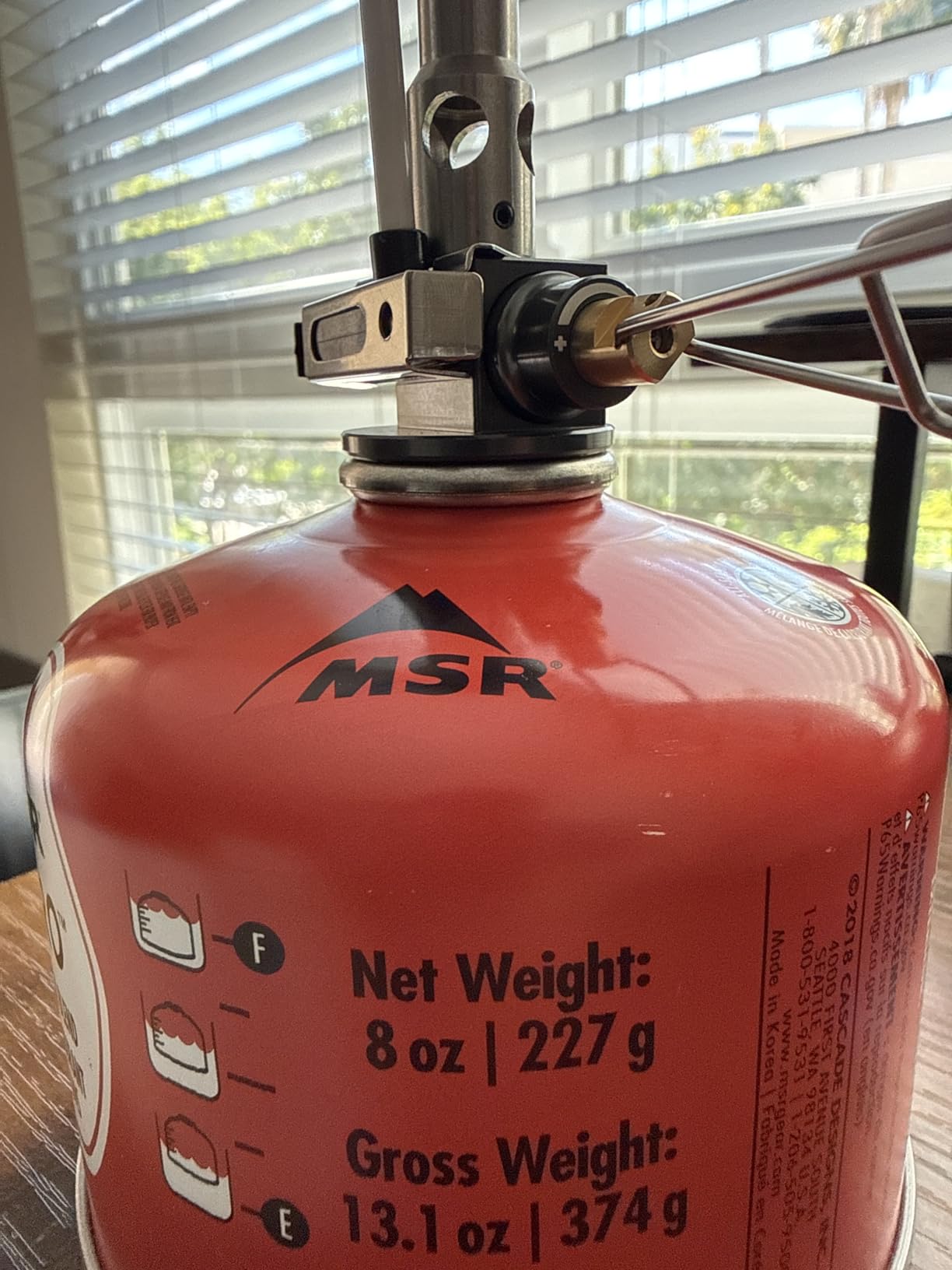
Field repairability is where it wins outright. The seal is a standard O-ring rather than a proprietary gasket, and it is cheap and easy to replace in a trail town. Over a 90-day season, that single design decision removes the most common canister-stove leak point from your list of trail problems.
The build uses stainless steel, ceramic, aluminium alloy and silicone, which is a better material mix for a stove that gets dropped on granite than the titanium construction in this roundup, though it is heavier than those units. The stove pairs with the Fire-Maple G3 pot, and it takes standard EN417 screw-on canisters.
What you should check before buying
Check your pot compatibility before you buy any Fire-Maple cookware. Not all Fire-Maple pots fit all Fire-Maple stoves, and this stove is not compatible with the Z1 adapter, which is the recurring caution in the reviews. If you already own Fire-Maple cookware, confirm the pairing before ordering.
Check that you are ready for the first light-up. Owners describe a pronounced boom the first time it is lit, and it is loud. Everyone who mentions it also mentions that it is a one-time surprise rather than a running condition.
Where it falls short
It has no integrated windscreen to speak of beyond the micro windshield, so in genuinely exposed terrain you will still add one. And despite the built-in igniter, a backup lighter remains worth carrying, because piezo crystals crack and igniters get wet.
The review base is smaller than the established names, at 4.6 stars across a few hundred reviews, so long-term field history is thinner. For a first full season on a moderate route, that is a reasonable trade for the repairability.
8. Coleman Classic – Best for Durability and Service
Coleman Classic 1-Burner Backpacking Stove, 10000 BTU
Weight: 6.7 oz
Fuel: propane style canister
Output: 10000 BTU
Warranty: 3 years
Pros
- Backed by a 3-year limited warranty
- Folds down for packing
- Adjustable burner gives decent control
- Consistent performance in changing conditions
- Widely available canisters and service
Cons
- Noticeably heavier than titanium ultralight stoves
- Larger packed footprint
- Slower boil times than premium ultralights
- Screw-on canisters carry more fuel weight
The Coleman Classic is not a thru-hiking weight-optimised stove and it is not trying to be. It weighs about 6.7 oz, boils a litre in roughly 3.25 minutes at up to 10000 BTU, and it carries a three-year limited warranty. Buyers treat it as a dependable, widely serviced entry stove rather than a serious base-weight option, and the review sentiment matches that framing exactly.
What makes it worth including is the three-year warranty and the availability of parts. On a season where something is going to fail, having a stove brand with a long warranty and a wide service network is a genuine advantage, particularly on a route that passes near towns rather than in the backcountry.
PerfectFlow technology is the manufacturer term for consistent performance in changing conditions, and PerfectHeat is the efficiency claim that reduces fuel use during cooking. The generated fuel system minimises flare-ups after lighting, which is a real safety consideration when you are lighting a burner in a dry, brushy corridor on a fire-ban trail.
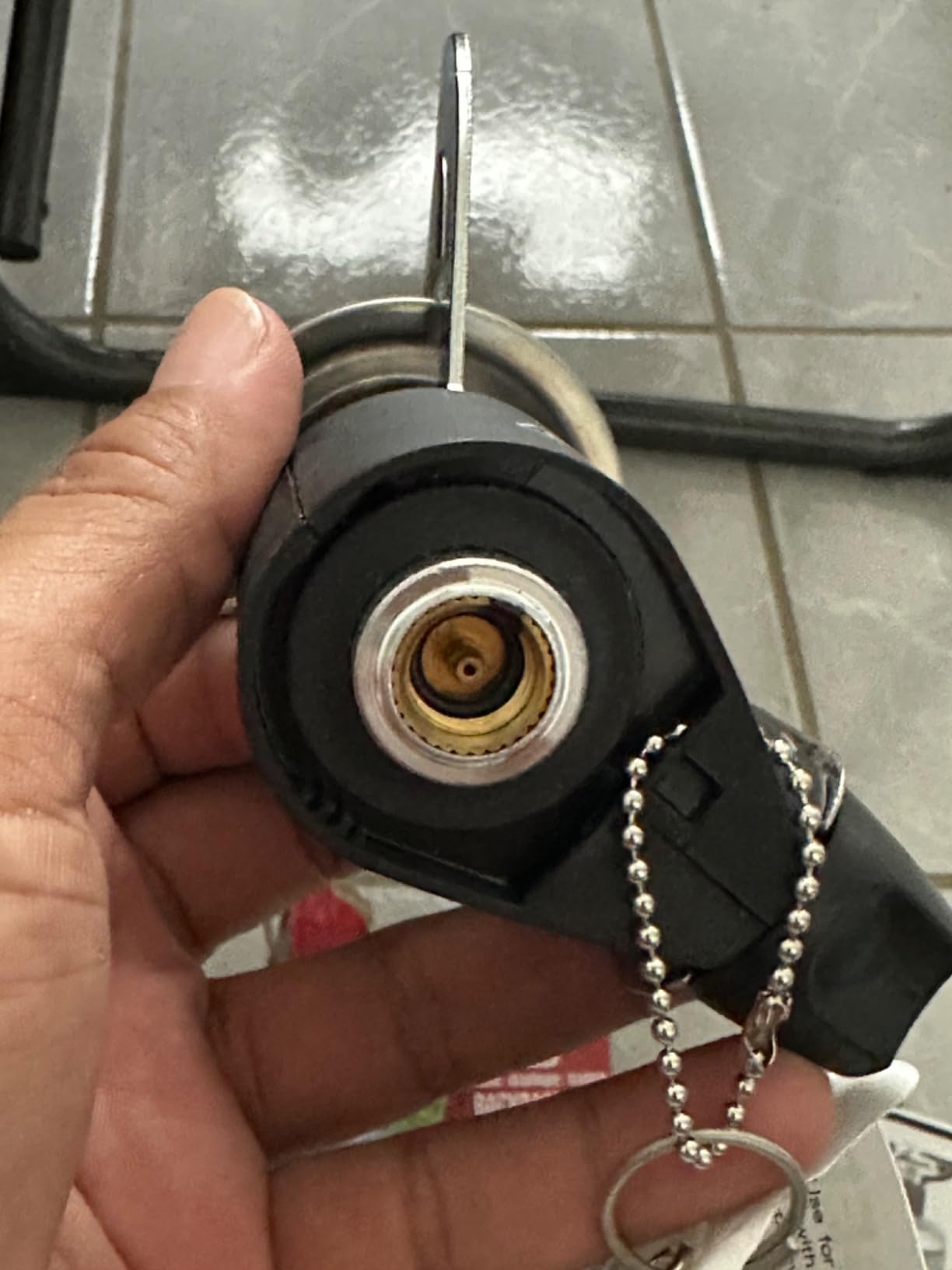
The bright red body is not a gimmick. On a 2,600-mile trip, being able to find a piece of gear quickly in a dark pack matters more than a coordinated colour scheme, and the serrated pan supports fit a 6-inch pan.
What you should check before buying
Check the fuel type and canister weight. It runs on standard propane-style screw-on canisters, which carry more fuel weight per litre of output than the lighter isobutane mixes. If fuel weight is your constraint, that difference compounds over a season.
Check your cookware. The pan supports are sized for a 6-inch pan, and owners report that smaller titanium pots sit awkwardly on it. If your kitchen is built around 750 ml titanium pots, this is the wrong geometry for you.
Where it falls short
It is noticeably heavier than the titanium and ultralight canister stoves in this roundup, and the packed footprint is larger than the 25 g and 45 g units. Boil times are slower than premium ultralight stoves, and a 3.25 minute litre is not competitive on paper.
The listed weight also varies between the product copy and the listing, at 6.7 oz in the description against a higher figure in the specification, so treat the weight as approximate. It is a hiker choosing durability over base weight, and for that hiker the trade is usually correct.
9. Optimus Svea – Best for High Altitude and Deep Winter
Optimus Svea Brass White Gas Backpacking Stove
Weight: about 1.3 lb
Fuel: white gas
Output: 4780 BTU
Self-pressurizing
Pros
- Extremely reliable with decades of service history
- No pump to fail or maintain
- Self-cleaning jet with chained needle
- 4780 BTU output for cold and altitude
- Brass windscreen doubles as a 0.6 L pot
Cons
- Heaviest stove here and fuel adds more
- Requires priming before every lighting
- Jet fouls with soot when priming
- Poor in wind without shelter
- Soft brass dents and is heat sensitive
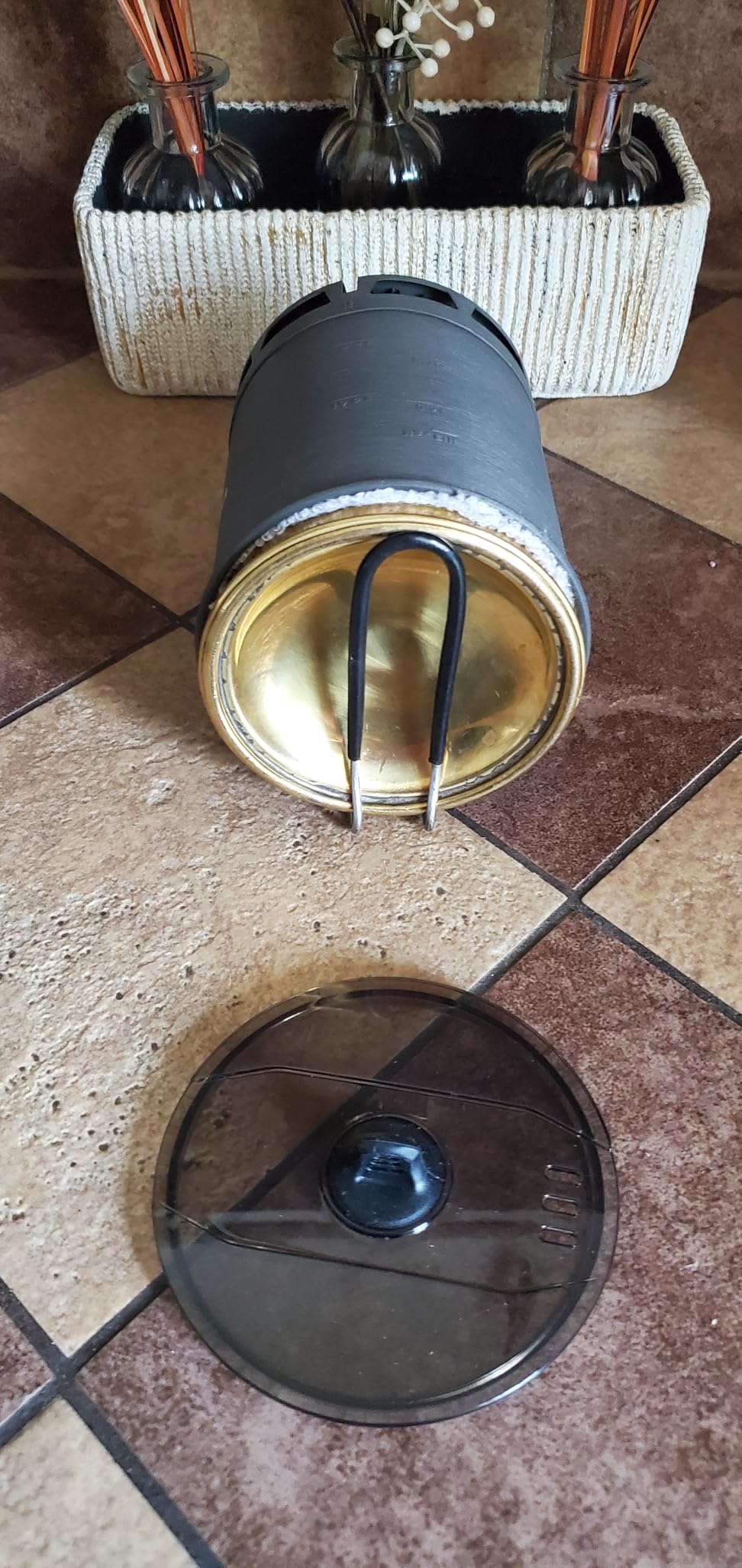
The Svea has been in production since 1955, and veteran owners describe it as the last truly bombproof stove design. It is a white gas stove, not a canister stove, and that single fact changes everything about how you plan a season. It runs on refillable fuel from a separate bottle, so the fuel weight is a choice you make each morning rather than a fixed constraint baked into the stove.
The self-pressurising brass tank is the reason there is no pump. Radiant heat from the burner pressures the tank, which means no pump to fail, freeze, or pack, and one moving part in the whole mechanism: the flow control needle. That is a very different reliability profile from a piezo igniter that can crack when you drop the stove on a rock at mile 1,200.
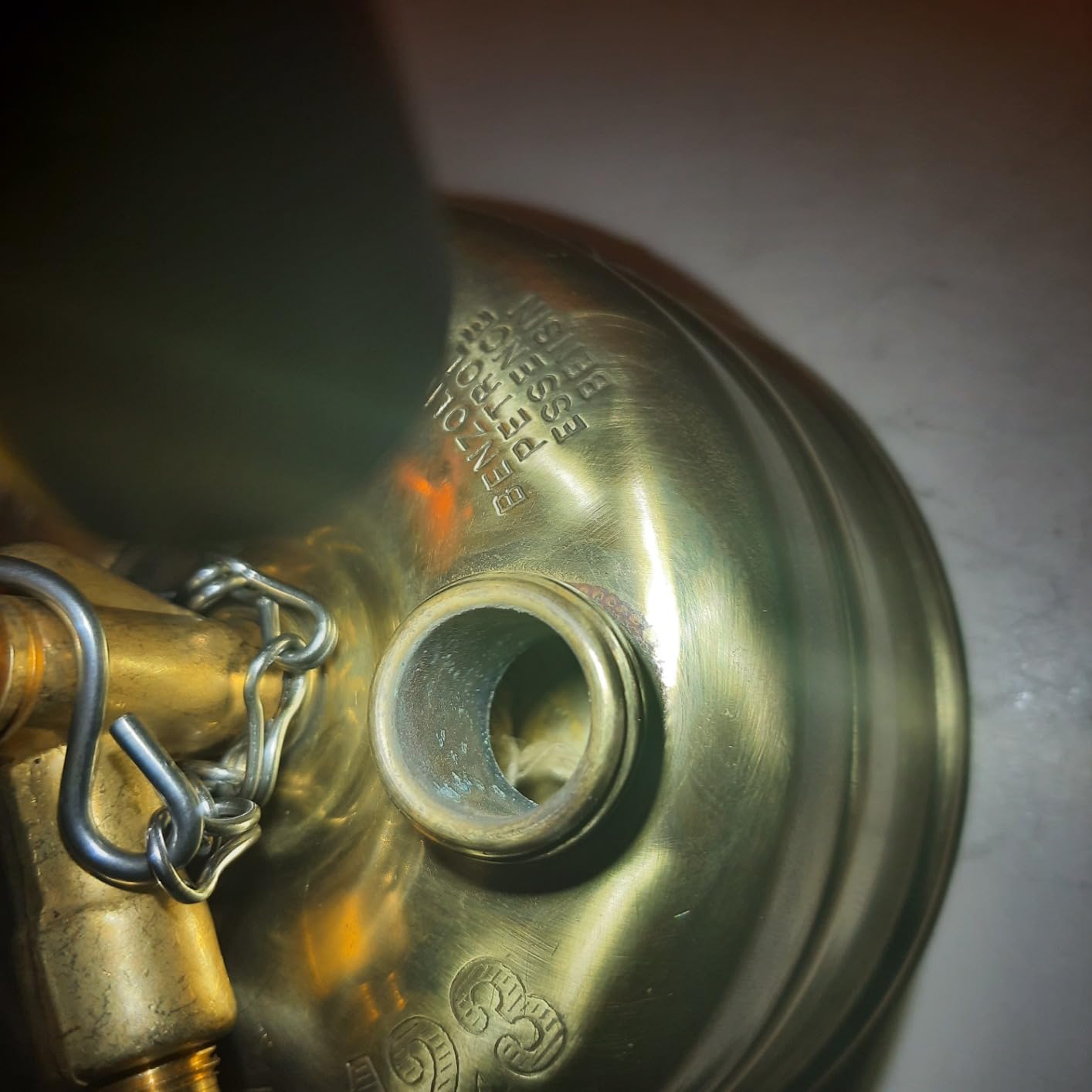
Output is 4780 BTU, and that figure is why it belongs in this roundup at all. Canister stoves lose output as the pressure drops and the mix gets cold. A liquid fuel stove running on white gas holds output where canister stoves falter, which is exactly the margin you want above treeline, on a snowy pass, or on a January traverse of the CDT.
The built-in self-cleaning jet has a needle cleaning tool chained to the stove, so it cannot be lost. Owners report use from -10 F to 110 F, and the brass windscreen doubles as a 0.6 L cookpot, combining two pieces of kit into one.
What you should check before buying
Check whether your route has white gas. This is the whole argument against it. White gas is available in some trail towns and completely absent in others, and if your resupply plan does not cover it, a beautiful stove is a heavy, beautiful paperweight. Refillable fuel is cheap where you can find it, and that is where the economics of liquid fuel work.
Check your wind exposure, honestly and carefully. The Svea is poor in wind and a windscreen is essential, and the soft brass is vulnerable to heat damage, which means you cannot use a tall windscreen that contacts the tank. A broad shallow windbreak is the correct approach and it is fiddly to set up.
Where it falls short
It is by far the heaviest stove here at about 1.3 pounds, before you count the fuel bottle. It also requires priming before every lighting, which takes practice, and priming with white gas fouls the jet with soot and requires regular cleaning. Owners also note it cannot be run until empty or the wick burns out, and the 4 oz fuel tank is small for multi-day trips without refilling.
This is not a stove for a first-time thru hiker or a solo boil-only walker. It is a stove for someone walking a cold route who has solved resupply and wants a burner that will still work in year ten. If that is not you, look at the Fire-Maple Greenpeak 1 or the WindMaster instead.
10. Desert and Fox Mini Stove – Best as a Backup
DESERT & FOX Ultralight Mini Camping Stove, 2600W Power…
Weight: 1.7 oz net
Fuel: threaded butane
Boils 1 L in about 3 min
Folds to 2 x 1.2 in
Pros
- Incredibly small at 1.7 oz and folds to golf-ball size
- Boils a liter in about 3 minutes
- Adjustable valve gives a wider flame range than most mini stoves
- Titanium alloy copper and stainless construction
- Drawstring storage sack included
Cons
- Small triangular pot supports suit small pots only
- Concentrated high-intensity flame scorches food if unattended
- No integrated windscreen so exposed sites need shelter
- Needs an adapter for nozzle-style canisters
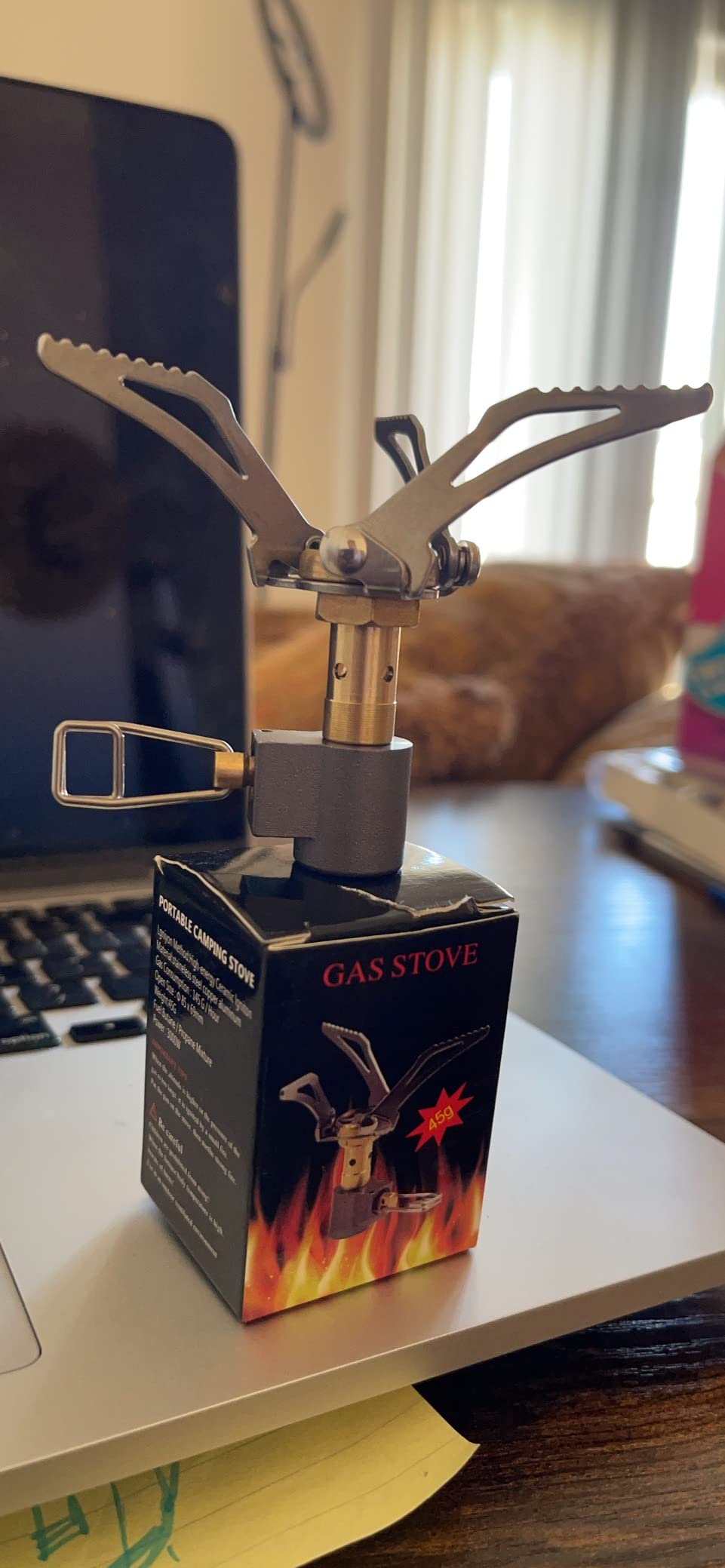
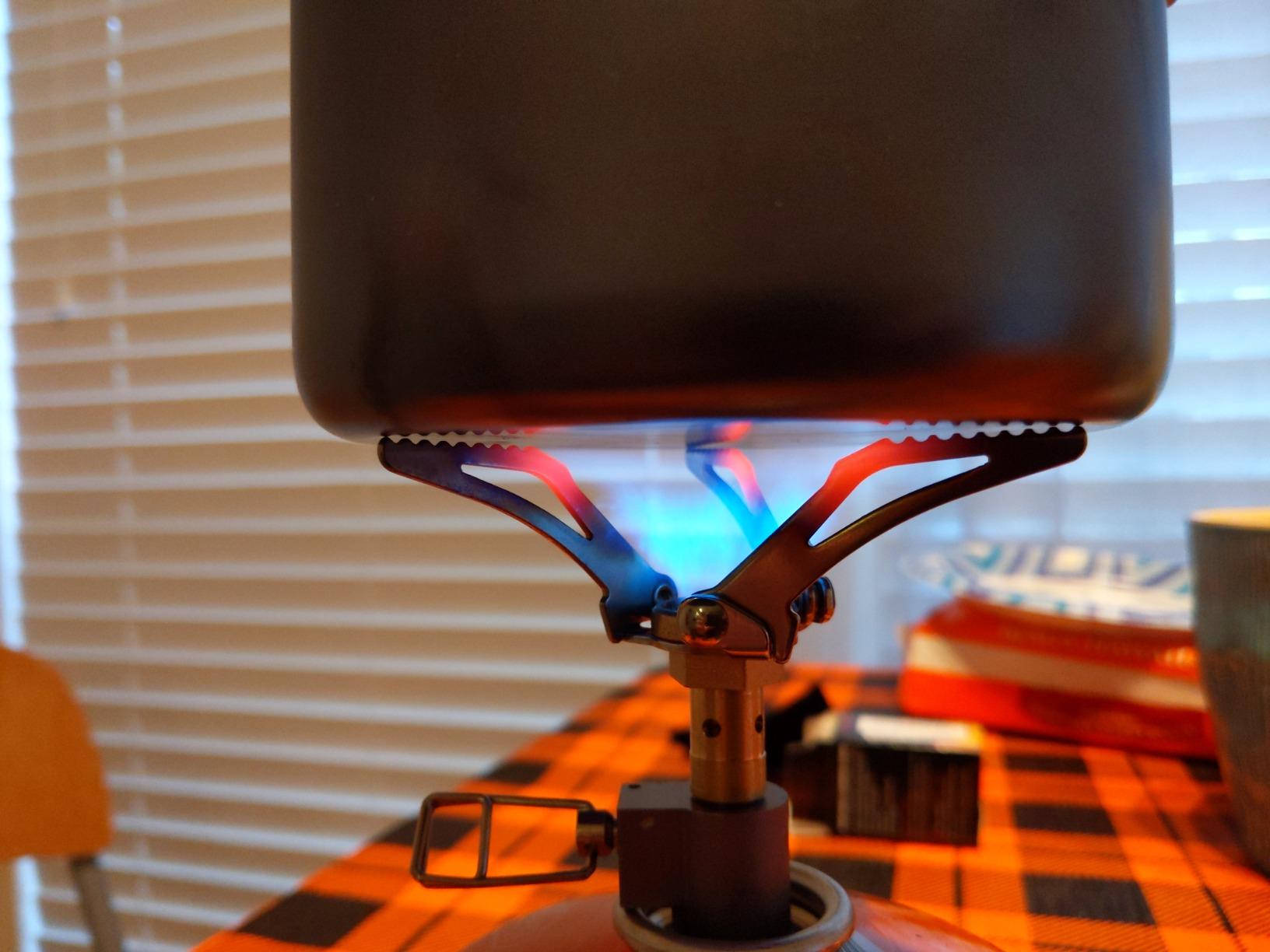
At 1.7 oz net, folding to 2 by 1.2 inches, the Desert and Fox mini stove exists in a category of its own: a stove small enough that carrying it as a second unit costs you less than carrying a spare lighter and a bit of optimism. Owners buy it as an emergency or stovetop backup and rate it favorably for build quality and for the price.
Construction is 60 percent titanium alloy, 10 percent copper and 20 percent stainless steel, with a triangular support design rated to bear about 11 pounds of cookware. Rated power is 2600 W, it boils a litre in about 3 minutes, and gas consumption is roughly 0.3 pounds per hour. The adjustable control valve gives a wider flame range than most ultra-mini stoves manage.
It also runs reliably off a firestarter stick, which owners consider a real feature rather than a curiosity. When your lighter is wet, your matches are gone, and your stove piezo is dead at mile 900, a stove that lights from a spark is worth more than its weight in titanium. There are variants in a two-pack and with an adapter, which matters if you carry it as the primary for a stovetop-only trip.
The screw thread connector fits threaded butane tanks, and an adapter is needed for nozzle-style canisters. Plan for that before you rely on it in a resupply town where the cans on the shelf are the wrong type.
What you should check before buying
Check the pot situation, because this is where it has limits. The small triangular pot supports are marginal for larger pots and need careful balancing, and the narrow, high-intensity flame concentrates heat in one spot and scorches food if you do not stir. Owners nest it inside a Toaks 550 ml cup with a small canister, and that pairing is the realistic one.
Check your canister interface. Threaded butane is the native fit, and nozzle-style canisters need the adapter. This is a small thing to get wrong and a big thing to discover in a resupply shop with limited choice.
Where it falls short
It has no integrated windscreen, so exposed sites need shelter, and the burner roar at full output is loud. It also runs hot enough at full output to heat pot handles, which is a burn risk when you are handling a small pot over a narrow flame in the dark.
Treated as a primary stove for anything beyond boiling, it will disappoint you. Treated as the 1.7 oz backup that gets you a hot meal on the day the main stove dies, it is one of the better decisions in this roundup. That is the lane I would buy it for.
How to Choose a Backpacking Stove for a Thru Hike
Start with fuel type, because it is the decision that constrains everything else. A canister stove screws onto a standard EN417 isobutane or isobutane-propane canister, and canisters are sold in essentially every trail town on the major long trails. A liquid fuel stove burns white gas or a multifuel blend from a separate bottle, which is cheaper per hour where you can find it and impossible where you cannot. If your resupply plan is not written down and tested, a canister stove is the only responsible choice.
Regulated or unregulated is the next question, and it matters more than gram count. A regulated burner holds output as the canister empties and cools. An unregulated one gets weaker, which is the exact moment at the end of a cold day when you need it most. Several stoves here, including the SOTO WindMaster, include a pressure regulator; the BRS-3000T and the Desert and Fox mini do not.
EN417 is the thread standard every canister uses, and the Lindal valve is the fitting on top. When you unscrew a canister, the valve is what your stove threads onto, and any screw-on stove here will take any standard canister you can buy in a trail town. That interchangeability is the single most important reliability property on a long trail.
Wind resistance comes down to burner head geometry. A concave burner head, which is what the WindMaster uses, is effectively a built-in windscreen because the flame sits recessed inside a metal cup. Integrated systems get the same benefit from a FluxRing heat exchanger around the burner. A flat, exposed burner on a small titanium stove will not hold a flame on an open ridge, and a folding windscreen is the cheapest fix available.
Ignition is a small detail that becomes a large one. A built-in piezo means one fewer thing to lose, and the SOTO Amicus and Fire-Maple Greenpeak 1 both include one. If you pick a stove without an igniter, carry a lighter and a backup, because piezo crystals crack, springs get wet, and dropped stoves fail.
Weight is the number everyone quotes and the least useful one. Your stove is carried every day of the season. Your fuel is carried only on the days you have not resupplied. On a section with a three-day gap, a 45 g difference in stove weight is irrelevant next to the canister weight you are carrying, which is why the stoves that nest with a canister inside a pot are so popular with long-distance hikers. If your trip is short and your base weight is tight, read our alcohol stove roundup before you settle.
Stability deserves more attention than it gets. Tall canister stoves on sloped, rocky or talus ground get knocked over, and forum complaints about spilled dinners and tip-overs are among the most repeated in the category. Integrated systems are the most stable because the pot locks to the burner. Wide three-arm stands like the 4Flex are better than a narrow mini. Whichever stove you pick, set it on flat ground, and never light a burner on a loose rock face. If you are shopping for car camping or a base camp kitchen rather than a trail kit, our camping stove roundup covers the higher-output options.
Repairability is the criterion nobody puts in a comparison table and the one that matters most at mile 800. A stove with a replaceable piezo and a standard O-ring can be fixed in a trail town for a few dollars. A sealed unit or one with a proprietary gasket can end your season. This is a larger part of the decision than the last half ounce of titanium.
For the rest of your kit, our guides to thru-hiking boots and first aid kits for backpacking cover the other two pieces most worth getting right before a long season.
Fuel Budgeting and Resupply on a Long Trail
Nobody publishes a fuel budget for a full thru hike, and it is the most useful calculation in this guide. A boil-only hiker drinking one to two litres of water a day at roughly 3 g of fuel per litre will use somewhere in the region of 3 to 6 g of fuel per day. Multiply that by the number of days between resupply points, not by the length of the trip, and that is your fuel carry.
That produces a specific answer. On a section with a five-day gap, you are carrying 15 to 30 g of fuel, which fits comfortably inside one or two small canisters. On a twelve-day section with no resupply, you are carrying 36 to 72 g and the weight becomes the dominant factor in your resupply planning rather than an afterthought.
Cooked meals change the number substantially. Boiling is fast; simmering a pot of grains for twenty minutes is not. Hikers cooking real food use closer to double the fuel of a boil-only hiker on the same daily water volume, which is the single biggest reason to buy a stove with genuine simmer control rather than the smallest titanium unit available.
Resupply reality matters as much as the arithmetic. Canister stoves and canisters are the default fuel of long trails, and that is not accidental: the 2016 Appalachian Trail thru-hiker survey found hikers overwhelmingly used canister stoves. Trail towns stock isobutane and isobutane-propane mixes; proprietary fuels like JetPower are less reliably present outside major resupply points.
The Backpacking Light forum debate on liquid versus canister efficiency is worth reading if you are weighing them, because the conclusion that keeps coming back is that liquid fuel’s weight advantage only pays off on long trips with large fuel loads. Over most seasons, on most routes, that is not your situation.
Two practical rules fall out of this. First, carry fuel for the longest gap on your route plus one extra day, because weather delays a resupply more often than hikers expect. Second, know which stove you will be carrying in month two, because swapping stove ecosystems mid-season means carrying two pot systems for weeks.
What Actually Breaks at Mile 800
Piezo igniters are the most repeated failure across retailer reviews and backpacking forums, and the fix is cheap. A cracked crystal, a soaked spring or an impact from a fall takes out an igniter that looked fine that morning. The stoves that let you replace the igniter post, as the SOTO WindMaster does, are the ones that keep hiking. Carry a lighter regardless, because an igniter that works in August can fail in a March storm.
Leg loosening and pot support hinges come second. Folding titanium arms develop play at the hinge, and a support that flexes under a full pot is how a pot ends up in your lap. The SOTO 4Flex support is sturdier and broader than most three-arm stands, which is the relevant difference on a stove you will use every night for three months.
Canister valve threads and O-rings are the third category, and they are entirely preventable. Carry two or three spare O-rings, they weigh nothing, and a failed seal is a fuel leak in your pack. Every stove in this roundup except the integrated systems uses a standard O-ring you can buy by the roll.
The failure that is not a failure is output loss. When a canister runs low, an unregulated stove simply gets weaker, and a hiker reads that as a broken stove. A regulated burner keeps going. If you carry an unregulated stove, buy an empty canister and keep it at altitude so you can see the level, and do not treat a weak flame at the end of a can as a fault.
My pre-season routine is short. Clean the burner head and the jet ports, check the valve threads for burrs, replace the O-ring whether it looks fine or not, and test the igniter three times in a row. Add a full inspection every 500 miles. That takes twenty minutes and it is the difference between fixing a problem in a town and walking out with cold food.
Stove Safety on the Trail
Never cook inside a tent. A backpacking stove produces carbon monoxide, and carbon monoxide is odourless and lethal. Tents, snow caves, bothies, closed vestibules and unventilated tarps are all enclosed spaces. Every stove in this roundup should be used outdoors, with the burner downwind of your face so the flame is not in your breathing zone.
Be careful about knockover burns, which is the practical risk on sloped ground. Set the stove on flat, stable ground, never on a loose rock face or a slope where a pot can slide. Integrated systems are the most stable because the pot locks to the burner; wide-arm canister stands are next; a small triangular-support mini stove at full output is the least stable of the group.
Fire restrictions apply to cooking equipment. Long trail corridors including sections of the PCT, CDT and AT run fire bans in summer, and those bans typically cover camp stoves as well as campfires. Carry a windscreen made of a non-flammable material, never use natural bark or fabric, and check current corridor regulations for the season you are walking.
Handle the hot vessel. The Jetboil systems run hot at the burner connection, which is why the colour-coded cool-touch zones exist. Let a pot sit for a moment before lifting it off, and treat the area around the burner on any stove as hot even when the flame is low.
Finally, store fuel as you would store any flammable liquid. Keep canisters away from your food and your sleeping bag, cap the valve when the stove is off, and never pressurise or heat a canister. A spare lighter and a folded windscreen in the same pocket as the stove is a system, and treating them as one is what makes it reliable.
Frequently Asked Questions
What is the best stove for thru-hiking?
The MSR PocketRocket 2 is the best stove for most thru-hikers. At 2.6 oz it needs no priming, boils a litre in about 3.5 minutes, fits standard screw-on isobutane canisters and includes a hard case. Hikers walking above treeline or in strong wind should choose the SOTO WindMaster, whose concave burner head works as a built-in windscreen. Anyone cooking real meals rather than only boiling water is better served by the Jetboil MiniMo.
What is the most reliable backpacking stove?
Reliability over a long season comes down to repairability rather than the strongest flame. The SOTO WindMaster has a replaceable piezo igniter post and a standard O-ring, both of which can be replaced in a trail town. The Optimus Svea has a single moving part and no pump, which is why veteran owners report decades of service. Among canister stoves, pick the one whose seals and igniter you can actually replace.
Is MSR or Jetboil better?
For boil-only hikers, MSR. The PocketRocket 2 is 2.6 oz and pairs with any pot you own, while the Jetboil systems weigh 13 to 14.5 oz including their cook cups. For hikers cooking real meals, Jetboil. The MiniMo has a proprietary regulator with genuine simmer control, a pot support for other cookware and a pushbutton igniter, none of which the MSR has. Neither is better in the abstract; they suit different kitchens.
Which is better than a Jetboil?
A standalone canister stove is better than a Jetboil when you want to cook with your own pot, when weight is your binding constraint, or when you resupply where proprietary fuel is hard to find. The MSR PocketRocket 2 and the SOTO WindMaster both accept any standard isobutane canister and work with any cookware. The reverse is rarely true, because the Jetboil pot-lock system is proprietary to that ecosystem.
Which backpacking stove lasts the longest?
A stove with a replaceable igniter and standard seals lasts longest, because parts can be swapped rather than the whole unit replaced. The SOTO WindMaster’s replaceable piezo post and standard O-ring make it the easiest to keep running. Integrated systems such as the Jetboil Flash are harder to keep alive, since a damaged cup or burner means sourcing a replacement, and the Optimus Svea outlasts most because it has one moving part.
What are the downsides of using a liquid fuel stove?
The downsides are weight, complexity and resupply risk. A liquid fuel stove like the Optimus Svea weighs about 1.3 pounds before fuel, requires priming before every lighting, and fouls its jet with soot when priming. It runs on white gas, which is not stocked in every trail town. Liquid fuel pays off only on trips with long gaps between resupply and large fuel loads.
How much gas do I need for a thru hike?
A boil-only hiker typically uses 3 to 6 g of fuel per day, and cooking real meals roughly doubles that. Multiply your daily figure by the longest number of days between resupply points, then add one day of margin. A five-day gap means carrying 15 to 30 g; a twelve-day gap means 36 to 72 g. Use 100 g canisters as your unit and count how many you will need between towns.
Do I need a regulated backpacking stove?
On a thru hike, yes. A regulated burner holds output as the canister empties and cools, while an unregulated one weakens at exactly the moment at the end of a cold day when you need heat most. The SOTO WindMaster and SOTO Amicus both include a pressure regulator, as do the Jetboil systems. The BRS-3000T and the Desert and Fox mini stove do not, so buy a spare canister for those and use them before they are empty.
Can you use a backpacking stove inside a tent?
No. Never cook inside a tent, tarp, bothy, snow cave or any enclosed shelter. A backpacking stove produces carbon monoxide, which is odourless and can kill, and enclosed shelters concentrate it. Every stove in this roundup is intended for outdoor use with open airflow, with the burner positioned downwind of your face so you are not breathing the flame.
Final Verdict
The MSR PocketRocket 2 is the default answer for the best backpacking stoves for thru hiking in 2026. It is the stove most season-long hikers finish with, because it needs no priming, uses any canister you can buy in a trail town, boils fast, and costs you almost nothing in base weight. If you carry one stove, carry that one.
Deviate in two directions. Walk above treeline, in winter, or on genuinely exposed ground and take the SOTO WindMaster, whose concave burner head and replaceable igniter are built for exactly that. Cook real meals and take the Jetboil MiniMo, accepting the weight for simmer control you will actually use. Carry a budget and a strict base weight and take the BRS-3000T with a folding windscreen and a spare O-ring in the same pocket.
Whichever one you choose, buy the lighter, the windscreen and two spare O-rings before you walk out the door. Those three small things have ended more long days than any stove failure on this list.
