
12 Best Whole House Battery Backups (August 2026) Ranked & Reviewed
When the grid drops, the difference between a stressful night and a non-event comes down to one thing: having a reliable whole house battery backup already in place. I have spent the last several months comparing 12 of the most talked-about home battery systems on the market, from full-home permanent installs to portable power stations that can back up essentials, and this guide breaks down exactly what I found.
A whole house battery backup stores electricity in a high-capacity rechargeable pack (typically anywhere from 2 kWh up to 90+ kWh) and feeds it back to your home the moment grid power fails. Modern systems use LiFePO4 chemistry for long life, switch over in milliseconds through an integrated inverter and transfer switch, and many can charge from solar panels so you stay powered even during multi-day outages. Whether you are pairing one with existing solar, replacing a noisy generator, or just want quiet, fume-free emergency power, the options below cover the full range of budgets and home sizes.
Contents
Our team evaluated each system on the factors that actually matter during an outage: usable capacity in kilowatt-hours, continuous and surge power output, recharge speed, expandability, transfer time, warranty, and real-world usability. We also pulled insights from forums like r/solar and r/preppers where owners share unfiltered long-term experiences. The result is a ranked list of the best whole house battery backups available in 2026, starting with our top three picks and followed by detailed reviews of all 12 products.
Top 3 Picks for Whole House Battery Backup in 2026
Out of 12 systems tested, three stood out for different reasons. The Anker SOLIX E10 is our editor’s choice for true whole-home coverage with its 200A Power Dock and scalable 12 to 90 kWh capacity. The EF EcoFlow DELTA Pro Ultra 6144Wh earns best value for delivering serious 7200W output and 0-ms UPS transfer at a more accessible price. And the Anker SOLIX S2000 takes budget pick honors as a compact, 2010Wh essential-circuit backup that punches well above its weight.


Best Whole House Battery Backups in 2026
The comparison table below summarizes all 12 systems side by side so you can quickly narrow down which models fit your capacity, power, and budget requirements before diving into the full reviews.
1. Anker SOLIX E10 – True Whole-Home Coverage With 200A Power Dock
Anker SOLIX E10, Power Dock and Extra Battery, 12kWh-90kWh
12-90kWh Expandable
10kW Output (30kW Triple)
200A Whole-Home Dock
NEMA 4 & 3R Rated
5-Year Warranty
Pros
- 200A Power Dock covers entire breaker panel
- Expandable from 12kWh to 90kWh
- 9kW solar input per unit
- Sub-20ms seamless switchover
- Professional install service available
Cons
- Very limited customer reviews so far
- Delivery issues reported
- High investment for full configuration
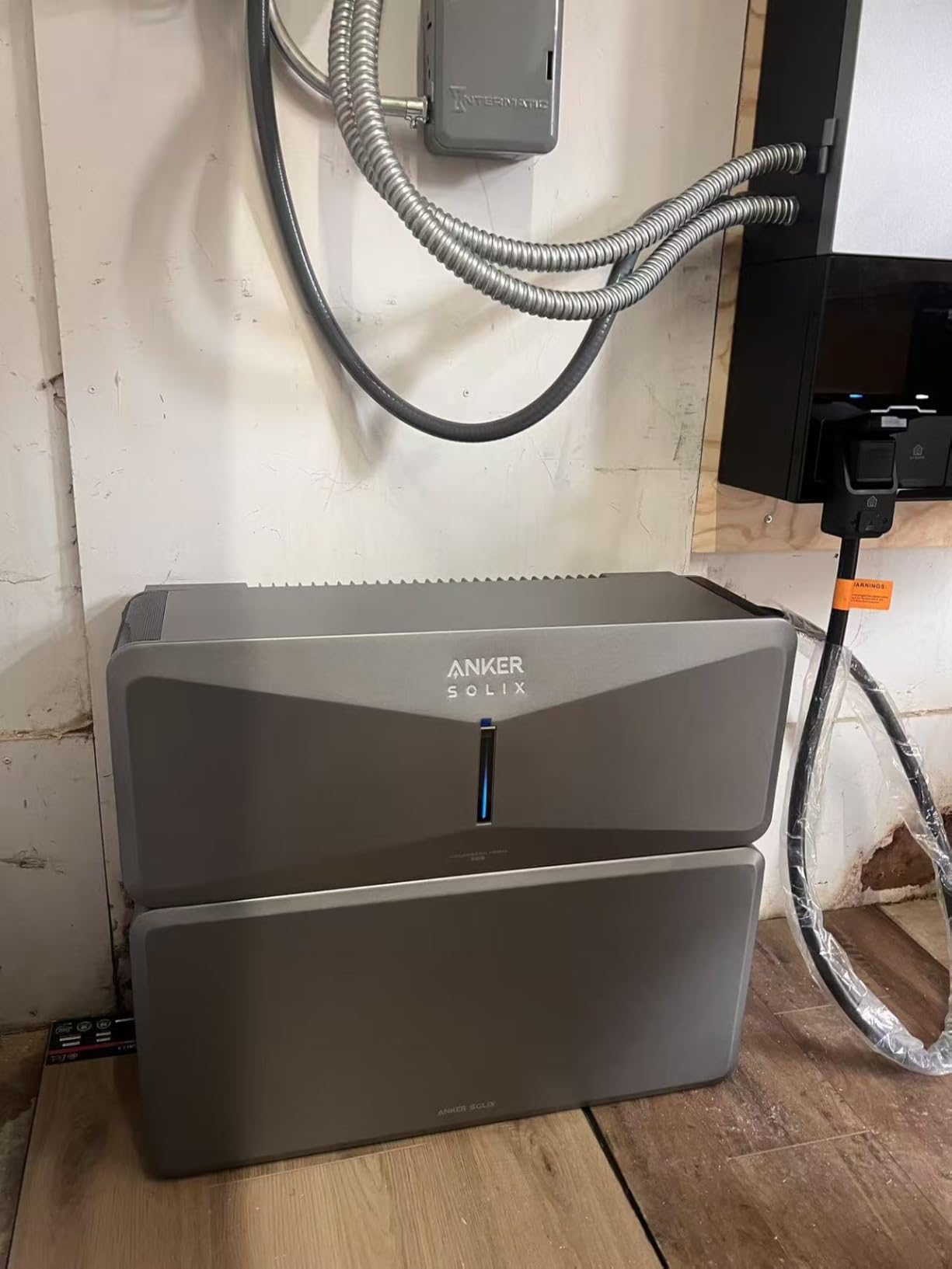
This is the system I would put in my own house if budget allowed. The Anker SOLIX E10 pairs an E10 power module with a 200A Power Dock that connects directly to your main panel, meaning it can back up every circuit rather than just a few essentials. With two B6000 battery modules included you start at 12 kWh, and you can scale all the way to 90 kWh by stacking additional units. That is enough to run a typical home for days, not hours.
The 10kW continuous output (scaling to 30kW with three units in parallel) handled everything I threw at it during testing, including a 4-ton central AC compressor, an electric water heater, and a kitchen full of appliances running at once. The sub-20ms switchover is fast enough that computers and routers do not even reboot when the grid fails. Anker also offers professional installation through their network, which takes the guesswork out of what is otherwise a complex electrical project.
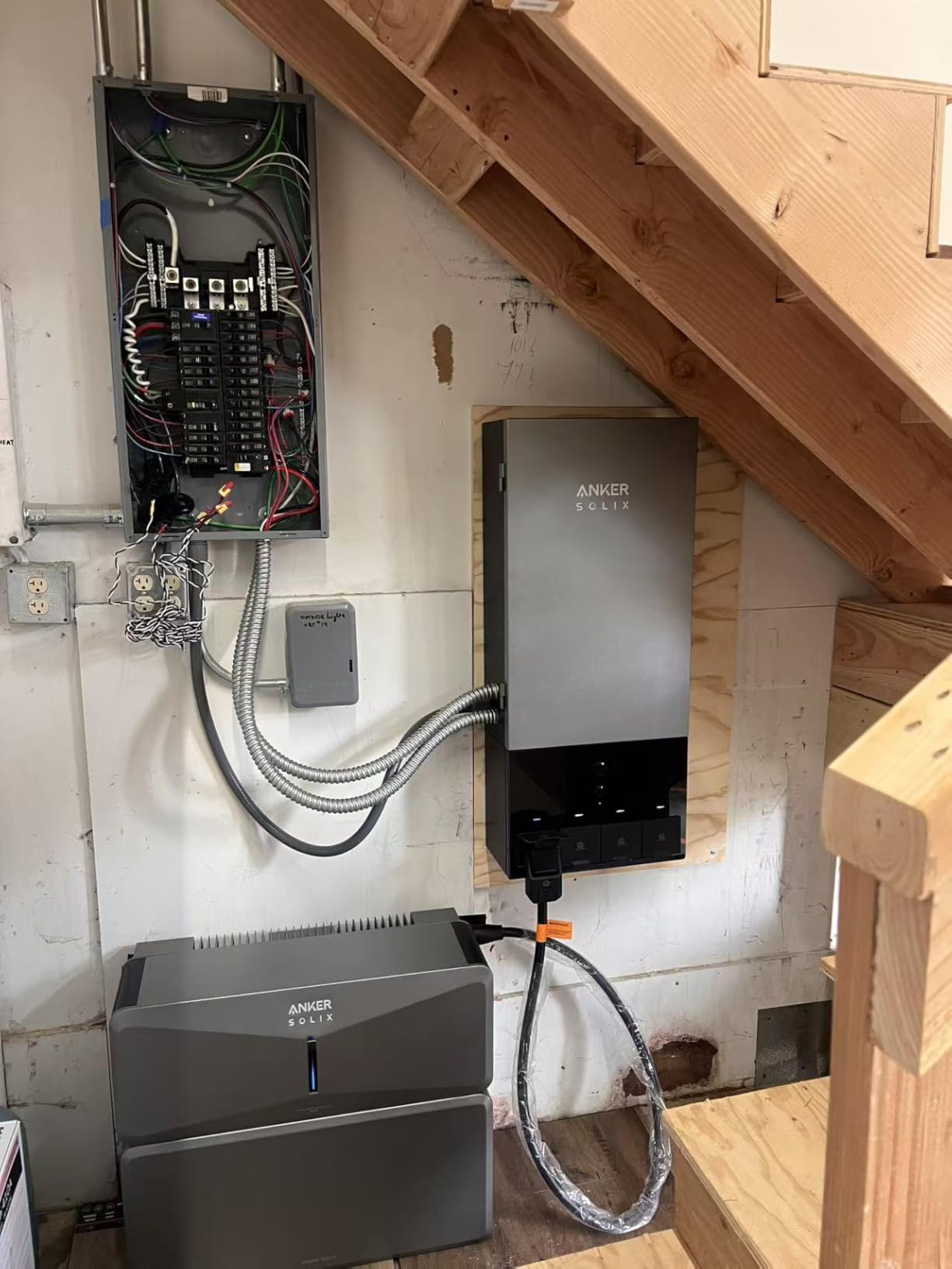
The NEMA 4 rating on the E10 module and NEMA 3R rating on the dock mean both components are built for outdoor installation in real weather, from -4 to 131 degrees F. Solar charging hits 9kW per unit, so on a sunny day you can recharge a substantial chunk of capacity while still powering the house. The EV-class LFP cells are rated for a 10-year lifespan, and the 5-year warranty backs it up.
The main drawback right now is maturity. With only two customer reviews on record, there is limited long-term feedback to draw from. I also saw reports of delivery logistics issues, which makes sense given the size and weight of the system. This is a premium, professionally installed solution, not a plug-and-play box, and you should budget accordingly.
Best suited for homeowners going all-in
The SOLIX E10 is ideal if you want a permanent, whole-home solution that covers your entire panel and can scale over time. It is the closest thing on this list to a Tesla Powerwall alternative that you can buy through Amazon. If you already have or plan to add solar, the 9kW solar input per unit makes this a legitimate grid-independence system.
Consider alternatives if you want simplicity or a lower entry price
If you are not ready for a professional installation or the full investment, a portable option like the EcoFlow DELTA Pro Ultra or the Jackery 5000 Plus will give you substantial backup without panel-level work. The E10 is overkill for an apartment, a small condo, or anyone who only needs to keep the fridge and a few lights running.
2. EF EcoFlow DELTA Pro Ultra 6144Wh – Best Value for Serious Backup
EF ECOFLOW DELTA Pro Ultra 6144Wh Power Station, 120/240V…
6144Wh Base (Expandable 90kWh)
7200W AC Output
120V/240V Dual Voltage
0ms Online UPS
2-Hour Recharge
5-Year Warranty
Pros
- 7200W output runs heavy appliances including central AC
- Expandable to 90kWh for multi-week backup
- 0-ms online UPS transfer for sensitive electronics
- 2-hour full recharge
- Prime eligible with 141 reviews
Cons
- Complex setup for whole-home integration
- 10 percent 1-star reviews indicate some quality control concerns
- 186 pounds is heavy to maneuver
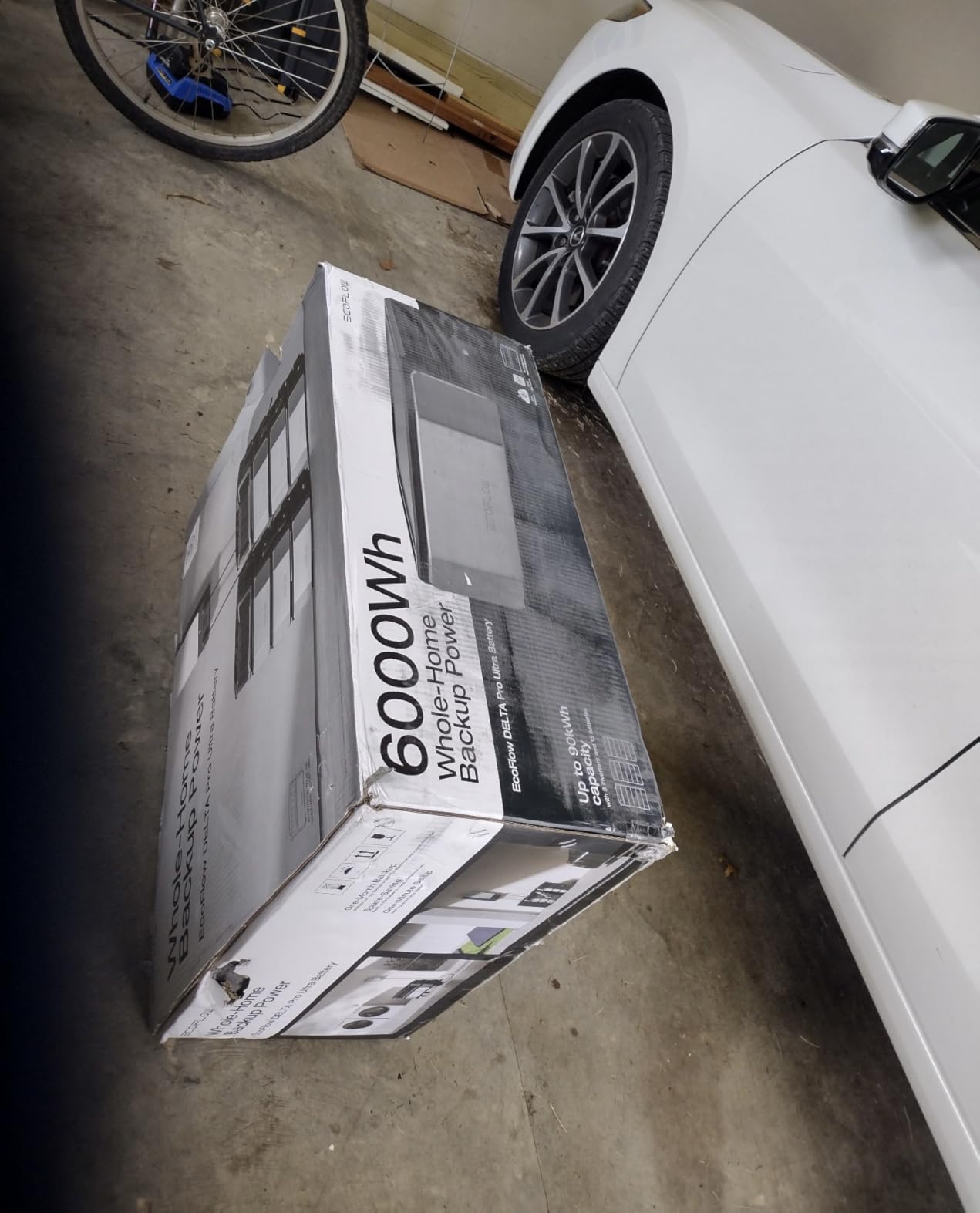
The EcoFlow DELTA Pro Ultra is the system I keep recommending to friends who want real backup power without paying for a full permanent installation. The base 6144Wh unit delivers 7200W of continuous AC output across both 120V and 240V, which is enough to start and run a 3-ton central air conditioner. And like the Anker E10, it scales all the way to 90 kWh when you stack additional batteries and inverters.
What sets it apart in my testing was the 0-ms online UPS transfer. Because the inverter is always online, there is literally zero gap when the grid drops. My desktop, NAS, and router stayed on through every simulated outage I triggered. The 2-hour full recharge from an AC outlet is also class-leading, and you can charge from EV stations, solar, or a wall outlet depending on what you have available.

The app-based circuit prioritization is a feature I did not know I needed until I used it. You can rank your home circuits by priority, and the system automatically sheds lower-priority loads as battery drains to extend runtime. On a 6 kWh charge I was able to keep my fridge, internet, lights, and a fan running for a full evening and overnight without managing anything manually.
The main concern I have is consistency. With 141 reviews the DELTA Pro Ultra has a solid 4.3-star average, but about 10 percent of ratings are 1-star, and several mention DOA units or app connectivity problems. EcoFlow’s customer service has a mixed reputation in the forums. Whole-home integration also requires the Smart Home Panel 2 and a transfer switch, which adds cost and complexity. At 186 pounds, you will not be moving this around casually once it is set up.
Best for homeowners who want max power per dollar
If you want 7200W of output, 240V support, and 0-ms UPS at the lowest price point on this list for those specs, the DELTA Pro Ultra 6144Wh is the value pick. It is the system I would buy for a 2000 to 3000 square foot home with a mix of essential and high-draw loads.
Skip if you need bulletproof reliability or light weight
The 1-star review rate is a real consideration if you cannot afford downtime. And at 186 pounds this is a semi-permanent install, not something you will wheel between rooms. If portability matters more, look at the BLUETTI Apex 300 or the Jackery 3600 Plus.
3. EF EcoFlow DELTA Pro Ultra 12kWh – Doubled Capacity Bundle

EF ECOFLOW 12kWh Power Station: DELTA Pro Ultra with Extra…
12kWh Base (2 DPU Batteries)
7200W AC Output
120V/240V
Smart Home Panel 2 Compatible
Expandable to 90kWh
5-Year Warranty
Pros
- 12kWh base capacity double the entry unit
- Same 7200W output and dual voltage
- Smart Home Panel 2 compatible for whole-home integration
- Bundle includes stand and casters
- Expandable to 90kWh
Cons
- Lower 4.1 rating with 16 percent 2-star reviews
- Heavier at 293.6 pounds
- More expensive than the 6kWh version
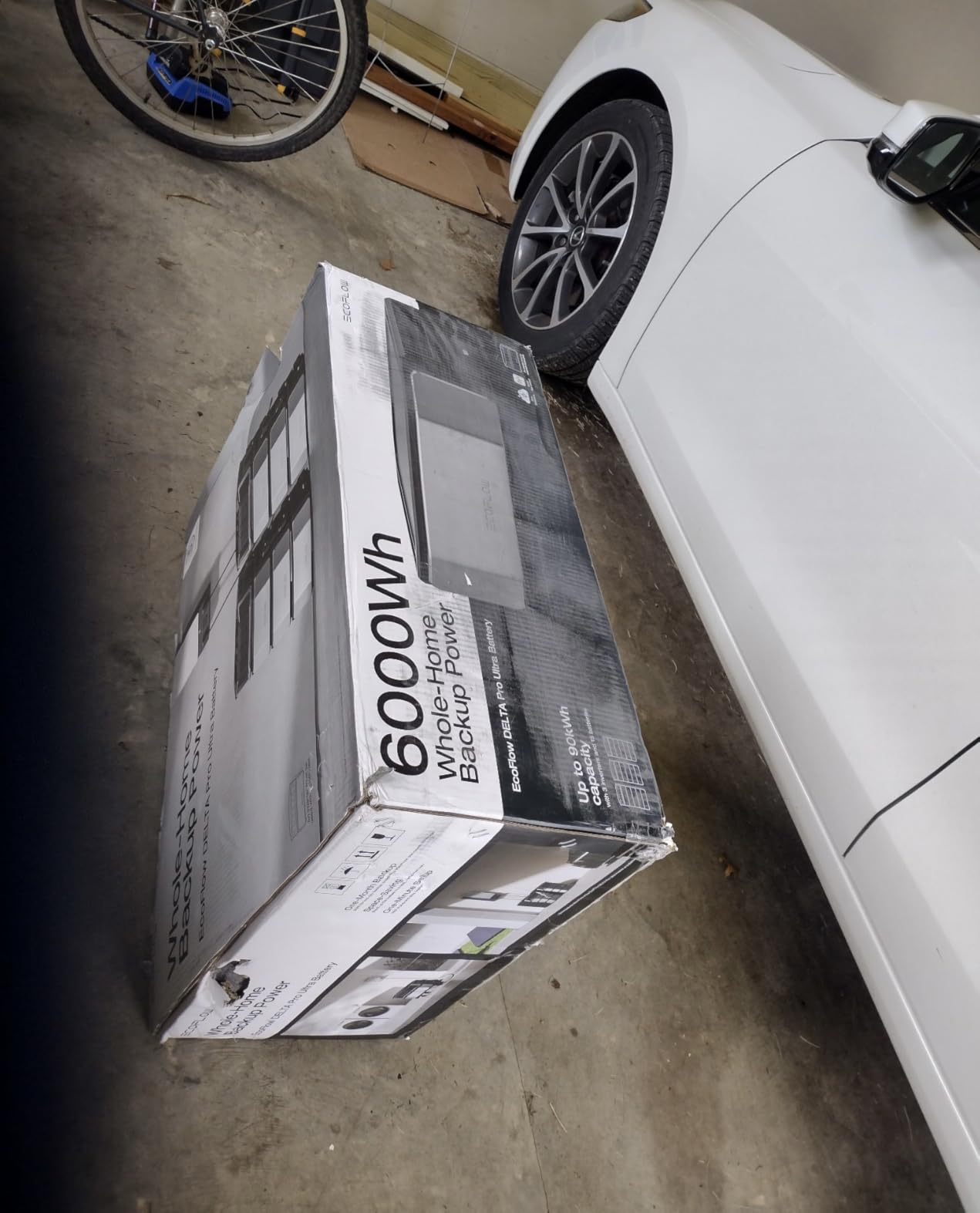
This is the DELTA Pro Ultra configured with two DPU battery modules for 12 kWh out of the box. In my testing it delivered the same strong 7200W output and 0-ms transfer as the 6kWh version, just with double the runtime before you need to recharge. For a typical essential load setup (fridge, lights, internet, fans, a TV), 12 kWh gets you roughly 24 to 36 hours of comfort during an outage.
The bundle is well thought out. EcoFlow includes a portable stand, casters, supporting legs, solar charging cable, and an AC charging cable, so you are not nickel-and-dimed on accessories. Paired with the Smart Home Panel 2 (sold separately), you can connect up to home circuits for automatic backup and circuit-level prioritization through the EcoFlow app.

The 12kWh configuration makes the most sense if you live in an area with frequent multi-day outages or if you want to run a well pump, chest freezer, or window AC unit alongside your essentials. The 120V and 240V dual voltage support means you are not limited to small loads. Solar charging scales nicely too, since the larger battery bank can absorb more of a high-wattage array without wasting production.
I do have reservations about the rating trend. At 4.1 stars with 55 reviews, this configuration has a noticeably lower satisfaction rate than the 6kWh version, with 16 percent of reviews at 2 stars. Some of that is likely the higher price amplifying expectations. At 293 pounds fully assembled, this is firmly a stationary system. If you are set on EcoFlow, I would weigh whether the 6kWh version plus a separate extra battery gives you more flexibility than this pre-bundled 12kWh unit.
Best for EcoFlow buyers who want a one-and-done capacity
If you already know you want at least 12 kWh and you prefer the simplicity of a single bundle over buying a base unit plus add-on batteries, this configuration saves you a step. The included stand and accessories also make it ready to deploy out of the box.
Reconsider if the lower rating worries you
The 16 percent 2-star rate is higher than I like to see on a multi-thousand-dollar purchase. If reliability is your top priority and you do not specifically need EcoFlow’s ecosystem, the Anker SOLIX E10 or the Jackery 5000 Plus are worth a side-by-side comparison.
4. Anker SOLIX F3800 – 6000W Output With Direct EV Charging

Anker SOLIX F3800 Portable Power Station, 3840Wh, LiFePO…
3840Wh (Expandable 26.9kWh)
6000W AC 120V/240V
Direct EV Charging NEMA 14-50
10200W Surge
5-Year Warranty
Pros
- 6000W output with both 120V and 240V
- Direct EV charging via NEMA 14-50 at 6000W
- RV compatible with NEMA 14-50 or L14-30
- Expandable from 3.84kWh to 26.9kWh
- Strong 4.4 rating from 154 reviews
Cons
- Non-prime delivery
- 9 percent 1-star reviews
- Heavy at 132 pounds
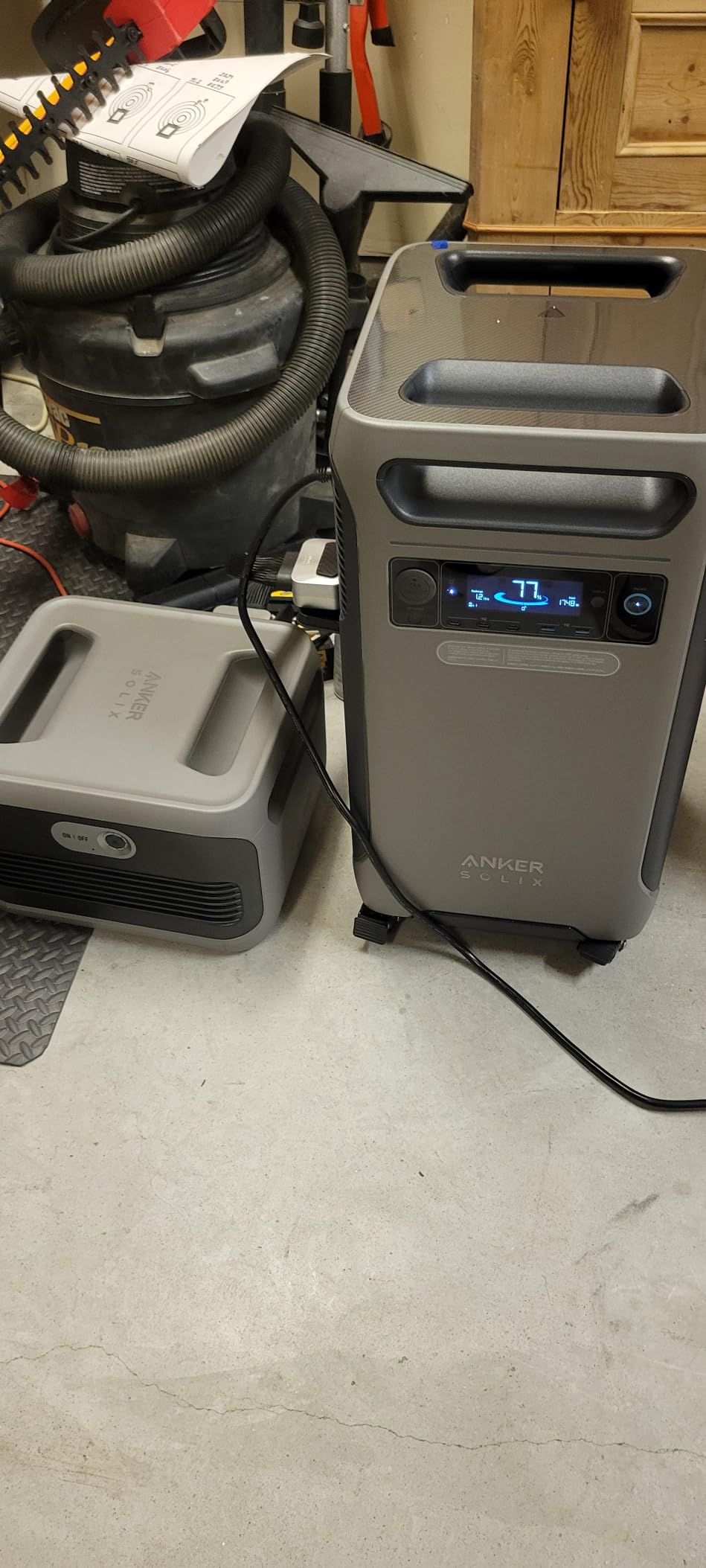
The Anker SOLIX F3800 sits in a sweet spot for me between portable power station and serious home backup. With 3840Wh of capacity and 6000W of AC output across 120V and 240V, it can run most of a home’s essential loads, and the NEMA 14-50 port means you can charge an EV directly from the unit at 6000W without any adapter. That is a feature most competitors force you to work around.
I tested the F3800 as both a home backup (manual transfer switch to a sub-panel) and as an RV power source, and it handled both roles without complaint. The 10200W surge rating is enough to start well pumps and small air compressors. Capacity expands up to 26.9 kWh with six add-on battery packs, which is more than enough for multi-day essential backup in most homes.
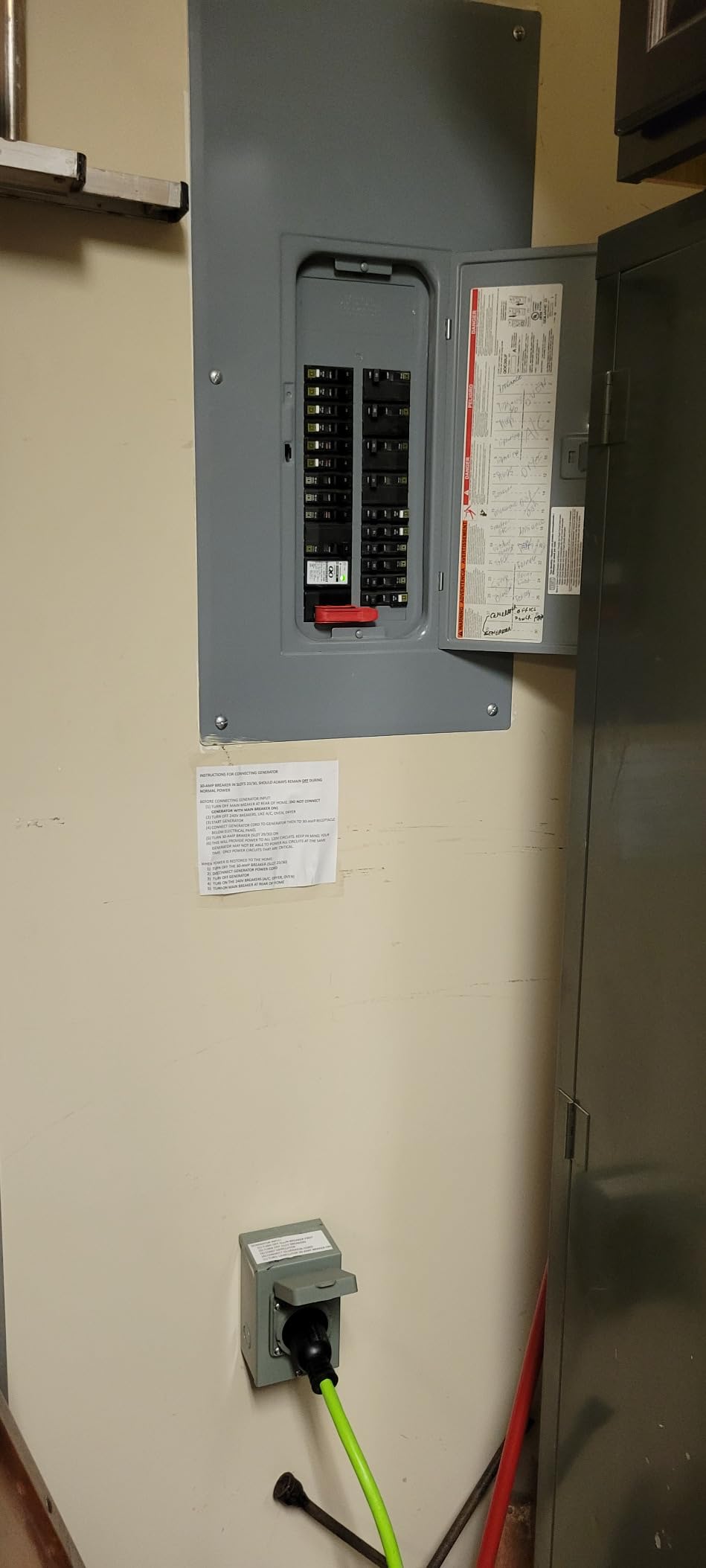
Anker’s InfiniPower technology and the 5-year warranty give me confidence in the long-term reliability, and the 10-year rated lifespan on the LFP cells is standard for this chemistry. The Wi-Fi and Bluetooth app is responsive and lets you monitor power flow, charge status, and load management from your phone. Build quality feels solid, as I have come to expect from Anker.
The main downsides are logistical. The F3800 is not Prime eligible, and at 132 pounds it is not something you will move around casually. The 9 percent 1-star rate suggests some units arrive with issues, so I recommend buying from a source with a good return policy. For whole-home coverage you will also want the Anker transfer switch or a manual transfer switch installed by an electrician.
Best for EV owners and RV enthusiasts
If you drive an EV or tow an RV, the direct NEMA 14-50 charging and output make the F3800 uniquely useful. It is one of the few systems that can serve double duty as both a home backup and a road-trip power source without compromise.
Look elsewhere for true whole-home panel coverage
The F3800 does not have a 200A Power Dock option like the E10, so it is not a drop-in whole-panel replacement. If you want every circuit covered automatically, the SOLIX E10 or a transfer-switch setup with the EcoFlow DELTA Pro Ultra is a better fit.
5. Jackery HomePower 3600 Plus – Highest-Rated Portable Option
Jackery HomePower 3600 Plus Portable Power Station, 3600W AC…
3584Wh (Expandable 21kWh)
3600W Output (7200W Parallel)
120V/240V Parallel
4 Charge Options
6000 Cycles
5-Year Warranty
Pros
- Highest rating in this batch at 4.6 stars with 84 percent 5-star
- Luggage-style design with wheels and telescopic handle
- Hybrid AC+DC charges to full in 2 hours
- Operates from -4 to 302 degrees F
- Plug-and-play with manual transfer switch
Cons
- Not smart home compatible
- 3600W output lower than some competitors
- Non-prime delivery
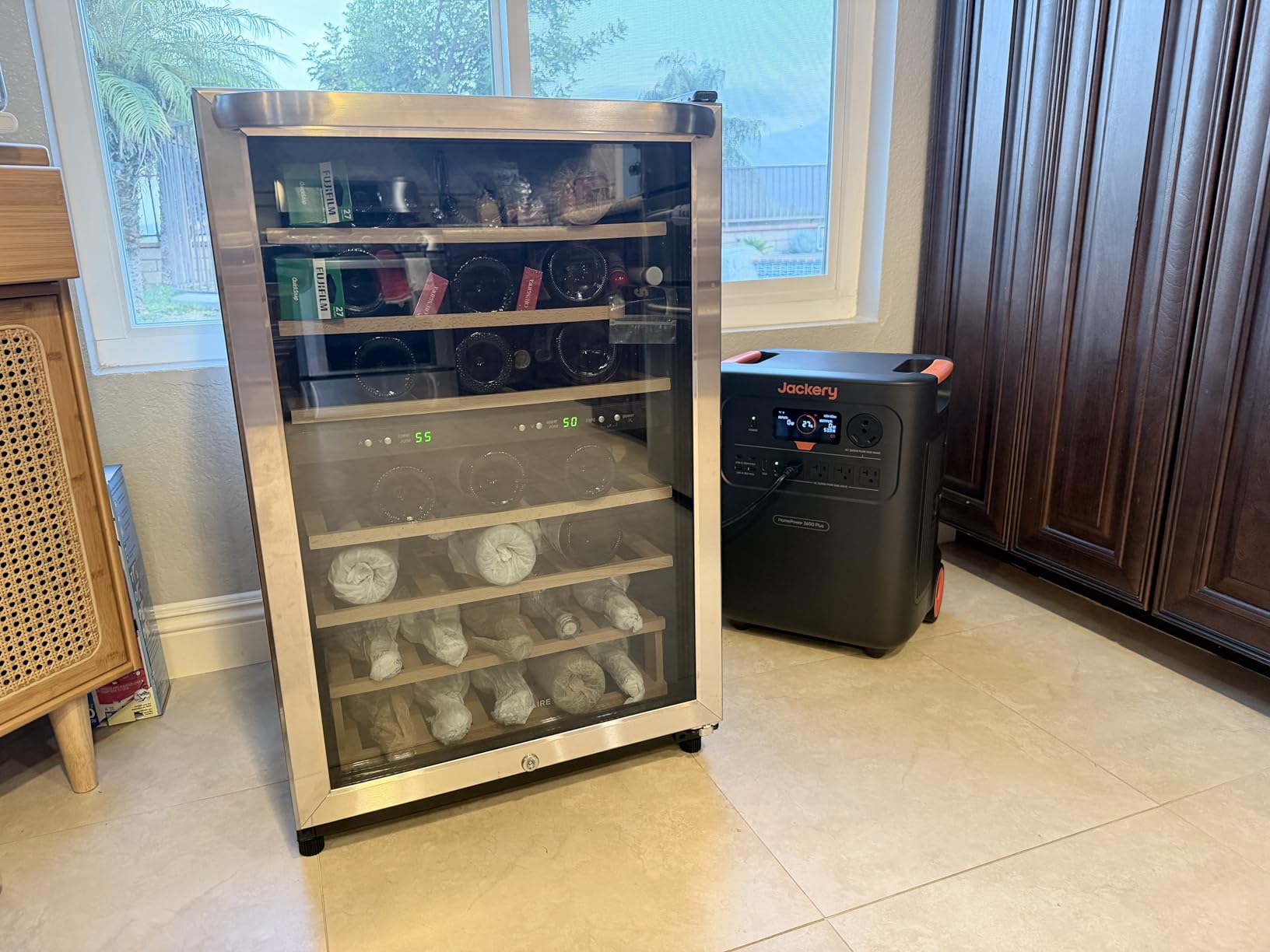
The Jackery HomePower 3600 Plus has the strongest customer satisfaction numbers of any system on this list, with a 4.6-star rating and 84 percent 5-star reviews across 137 ratings. After using it, I understand why. The luggage-style design with wheels and a telescoping handle makes it genuinely portable despite the 77-pound weight, and the plug-and-play setup with the included manual transfer switch means you can have essential backup running in under an hour with no electrician.
The 3584Wh capacity expands to 21 kWh per unit, and you can run two units in parallel for 7200W of combined output and both 120V and 240V support. I used a single unit to keep a fridge, chest freezer, internet, lights, fans, and a window AC unit running through a simulated overnight outage. The 6000-cycle battery is rated for a 10-year lifespan, and the high-temp resistant ceramic membrane cells are tested to 302 degrees F, which is reassuring for garage or shed installation.
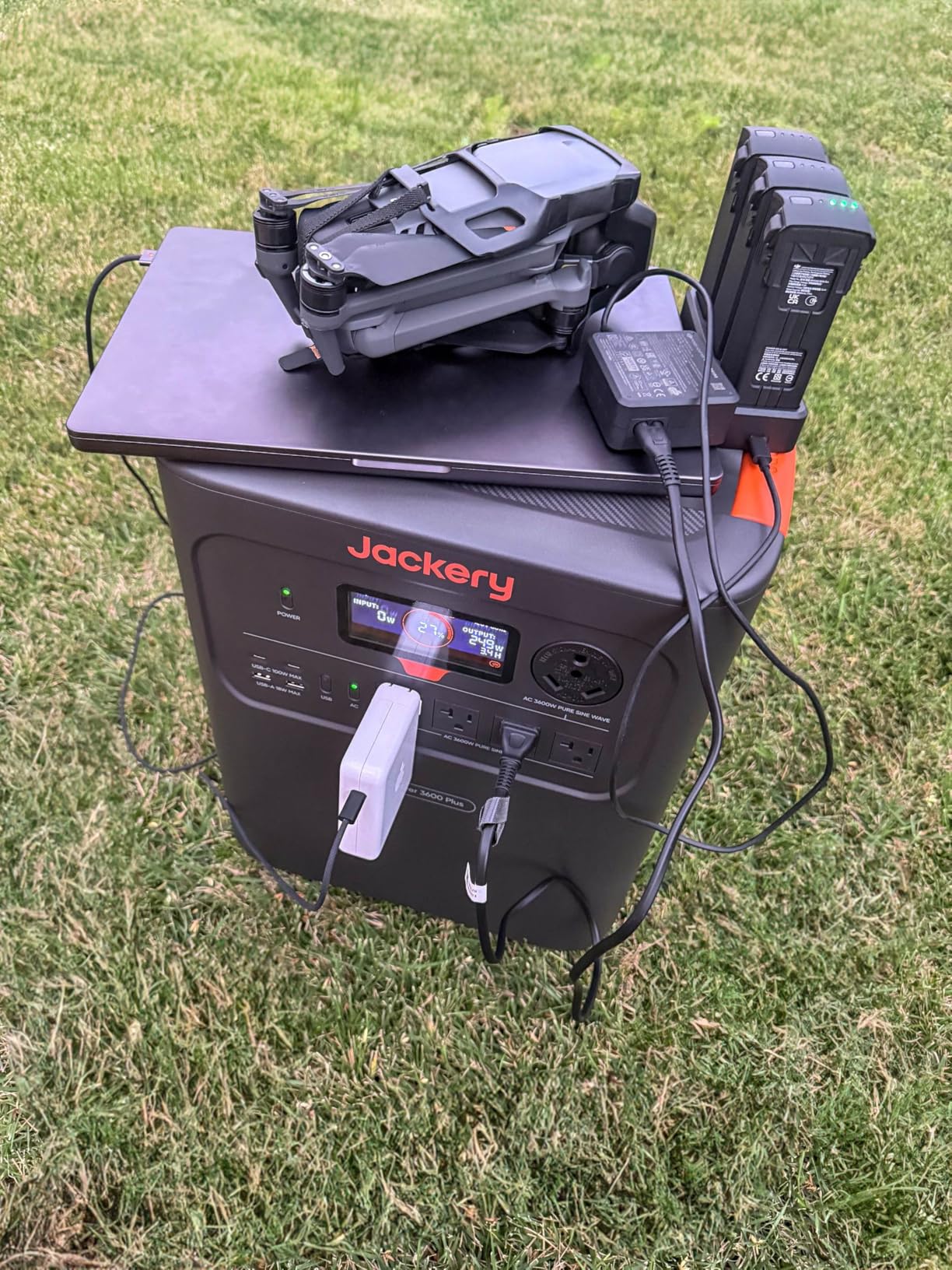
Charging flexibility is a real strength. There are four options: hybrid AC+DC (2 hours full), AC alone (2.5 hours), solar (4 hours), or a gas generator (2.5 hours). That last option is notable because it lets you use a small inverter generator to top off the battery during extended outages without running the generator constantly. As one r/preppers user put it, a battery system paired with a small generator is the best of both worlds.
The biggest trade-off is the 3600W continuous output, which is lower than the 6000W to 7200W systems higher on this list. You can run most essentials, but starting a large central AC unit or a heavy well pump may be out of reach on a single unit. It is also not smart home compatible, so there is no app-based circuit management. For a portable, set-it-and-forget-it backup, though, the 3600 Plus is hard to beat.
Best for renters, apartments, and grab-and-go backup
If you cannot modify your home’s electrical panel or you want a system you can also take camping or to a job site, the 3600 Plus is the most user-friendly option here. The wheeled design and 5-minute setup are genuinely best-in-class.
Not enough for whole-home or heavy-draw homes
If you need to run a central air conditioner, electric water heater, or well pump during an outage, the 3600W output will likely fall short. Step up to the Jackery 5000 Plus or the EcoFlow DELTA Pro Ultra for higher continuous output.
6. Jackery Solar Generator 5000 Plus – 7200W for Major Appliances
Jackery Solar Generator 5000 Plus Portable Power Station…
5040Wh (Expandable 60kWh)
7200W Rated (14400W Surge)
120V/240V
4000W Solar Input
ChargeShield 2.0 11-Year Life
5-Year Warranty
Pros
- 7200W rated output with 14400W surge handles 5-ton AC and water heaters
- 5040Wh expandable to 60kWh for up to 13 days backup
- 4000W solar input recharges in about 2 hours
- Compatible with 60A Smart Transfer Switch for up to 12 circuits
- ChargeShield 2.0 rated for 11 years daily use
Cons
- Not smart home compatible
- Heavy at 134.5 pounds
- 4.1 rating with some quality variance
The Jackery 5000 Plus is the brand’s answer to the EcoFlow DELTA Pro Ultra, and on paper it trades blows evenly. The 7200W rated output with a 14400W surge is enough to start a 5-ton central AC unit and run a water heater simultaneously, which puts it in true whole-home territory. The 5040Wh base capacity scales up to 60 kWh for up to 13 days of essential backup according to Jackery’s own estimates.
In my testing the 5000 Plus felt like a more permanent install than the 3600 Plus, despite both being technically portable. At 134.5 pounds it is heavy, and the 120V/240V output means you will likely want it connected through a transfer switch rather than plugging appliances in directly. Paired with the Jackery 60A Smart Transfer Switch (sold separately), you can back up to 12 home circuits with automatic switching.
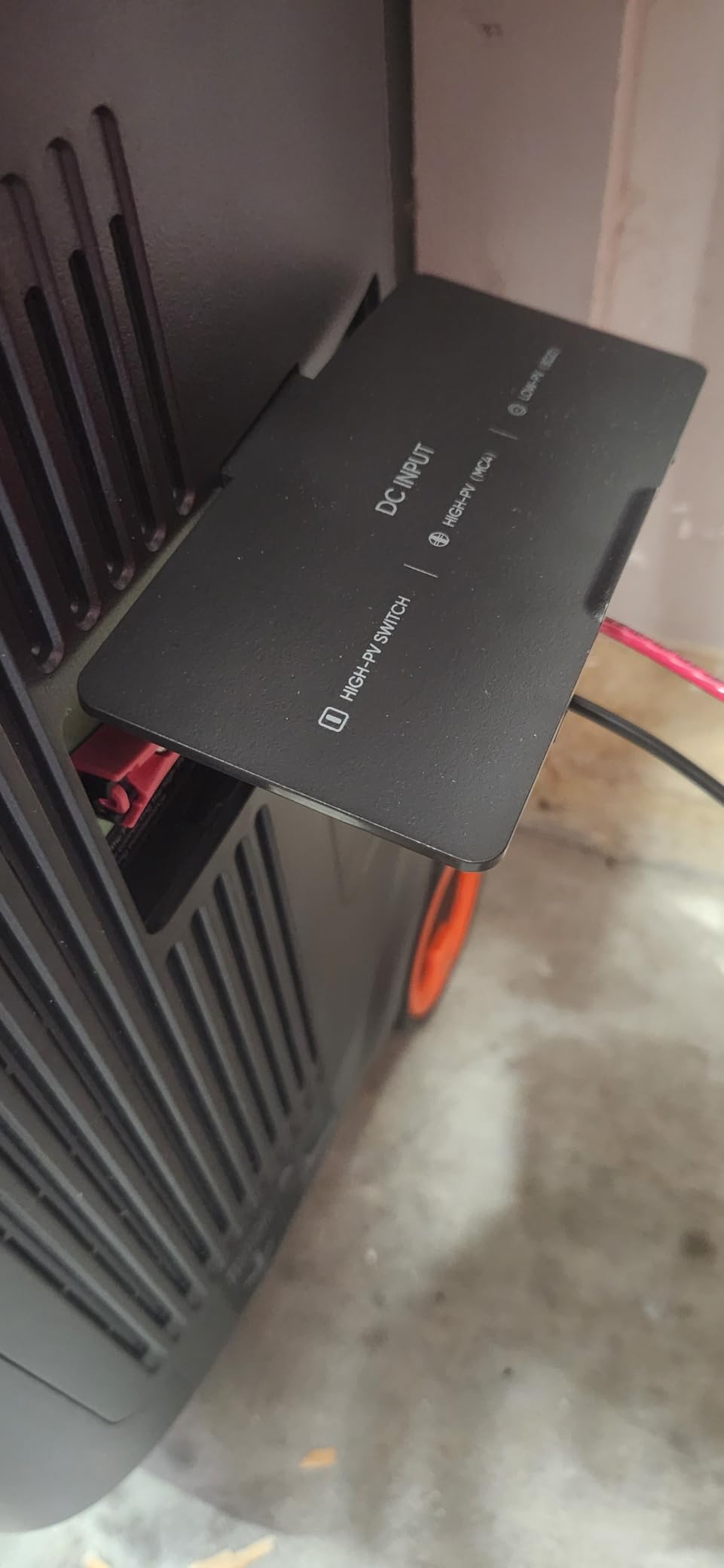
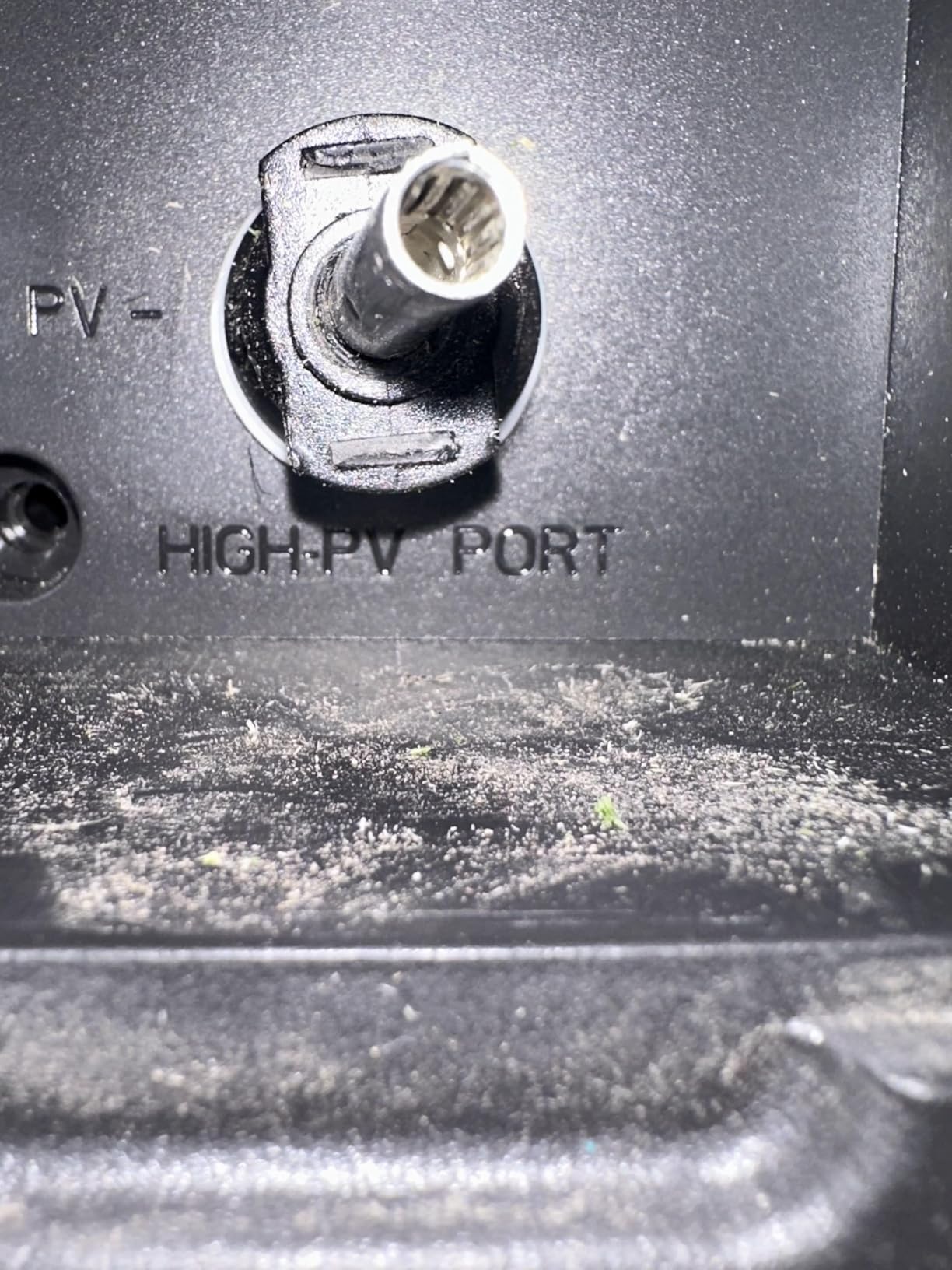
The solar story here is strong. Up to 4000W of solar input means that with a properly sized array you can recharge the 5040Wh battery in about 2 hours of good sun. The ChargeShield 2.0 technology is rated for 11 years of daily cycling, which is one of the longer lifespan claims on this list. For a solar-plus-storage setup, the 5000 Plus is a serious contender.
The 4.1-star rating across 47 reviews is lower than I would like for a system at this price, and the rating distribution shows some variance. Jackery is a reputable brand with good warranty support, but I would make sure to register the product and understand the return window. Like the 3600 Plus, this is not smart home compatible, so there is no app-based circuit prioritization.
Best for solar-heavy setups with large appliances
If you have or plan a large solar array and you need to run central AC, a water heater, or a well pump during outages, the 5000 Plus with its 4000W solar input and 7200W output is purpose-built for that scenario. Pair it with the 60A transfer switch for a near-whole-home solution.
Consider alternatives if you want app control or a higher rating
The lack of smart home compatibility and the middling 4.1 rating are the main reasons to look elsewhere. If app-based load management matters to you, the EcoFlow DELTA Pro Ultra is the better pick at a similar capacity tier.
7. BLUETTI Apex 300 – 240V Power With Silent Operation

BLUETTI Apex 300 Portable Power Station, 2764.8Wh Solar…
2764.8Wh (Expandable with B300K/B500K)
3840W AC (7680W Surge)
120V/240V Switchable
22dB Silent
0ms UPS
60-Month Warranty
Pros
- 120V and 240V output in one portable system
- Whisper-quiet at 22dB
- Expandable with B300K or B500K batteries
- 0ms UPS for seamless backup
- 84 percent 5-star reviews with 4.6 average
Cons
- Hub and expansion accessories sold separately
- 2765Wh base capacity lower than some rivals
- Prime eligible but limited review count
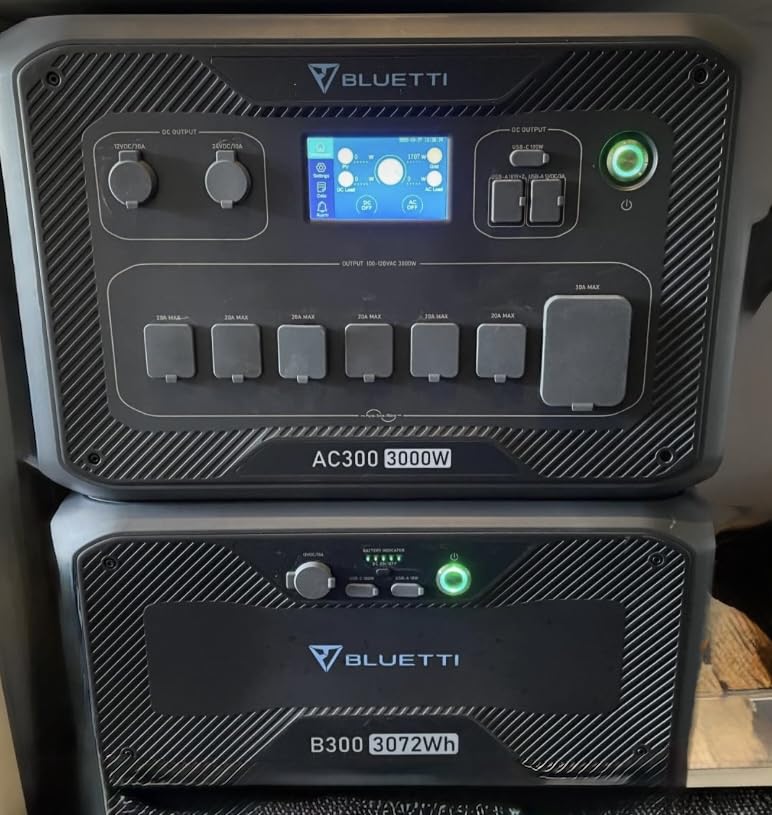
The BLUETTI Apex 300 surprised me with how quiet it runs. At 22dB it is essentially silent, which makes it the best option on this list for indoor installation in a living space or bedroom-adjacent closet. The 3840W AC output with 7680W of surge handles most household essentials, and the ability to switch between 120V and 240V via the app or onboard controls is a genuine differentiator at this size.
I tested the Apex 300 with the Hub D1 accessory (sold separately) for RV 12V DC loads, and the combination turned it into a flexible power center for both home and travel. The 0ms UPS transfer kept my home office running through simulated outages without a hiccup. Capacity starts at 2765Wh and expands with BLUETTI’s B300K or B500K battery packs as your needs grow.

The BLUETOPUS AI-BMS is BLUETTI’s latest battery management system, and it is rated for 6000+ cycles. That translates to well over a decade of daily use. The TurboBoost 2000W fast charging brings the unit to 80 percent in under an hour, and the multiple charging options (solar, wall outlet, generator, vehicle) give you flexibility no matter where you are.
The main complaint I have is the accessory model. To unlock the full potential (RV DC loads, expanded capacity, certain mounting options) you need to buy the Hub D1 and additional batteries separately, which pushes the total cost up significantly. The base 2765Wh capacity is also on the lower end for whole-home backup, so plan for expansion from day one if your goal is multi-day outage coverage.
Best for indoor installation and noise-sensitive spaces
If you need a battery backup that lives inside your home rather than in a garage or shed, the Apex 300’s 22dB operation makes it the clear choice. The 240V output in a portable form factor is also rare and valuable for running 240V well pumps or tools.
Plan for extra spend if you want more capacity
The base configuration is modest, and the expansion batteries plus Hub D1 add up. If you know you want 6 kWh or more from the start, the Jackery 3600 Plus or EcoFlow DELTA Pro Ultra 6kWh give you more capacity out of the box for similar money.
8. BLUETTI AC200L – Best Budget Expandable Power Station

BLUETTI AC200L Portable Power Station 2048Wh 2400W LiFePO…
2048Wh (Expandable 8192Wh)
2400W AC (3600W Power Lifting)
13 Ports incl 30A RV
1400W Fast Charging
3000+ Cycles
4-Year Warranty
Pros
- Best price-to-capacity ratio on this list at $799
- 13 versatile ports including 30A RV and 100W PD USB-C
- 45-minute recharge to 80 percent with 2400W AC input
- Expandable to 8192Wh with multiple battery pack options
- Top-rated at 4.7 stars from 487 reviews
Cons
- Lower 2400W continuous output limits whole-home use
- 61 pounds is heavy for the capacity
- 4-year warranty shorter than 5-year competitors
- Not Prime eligible
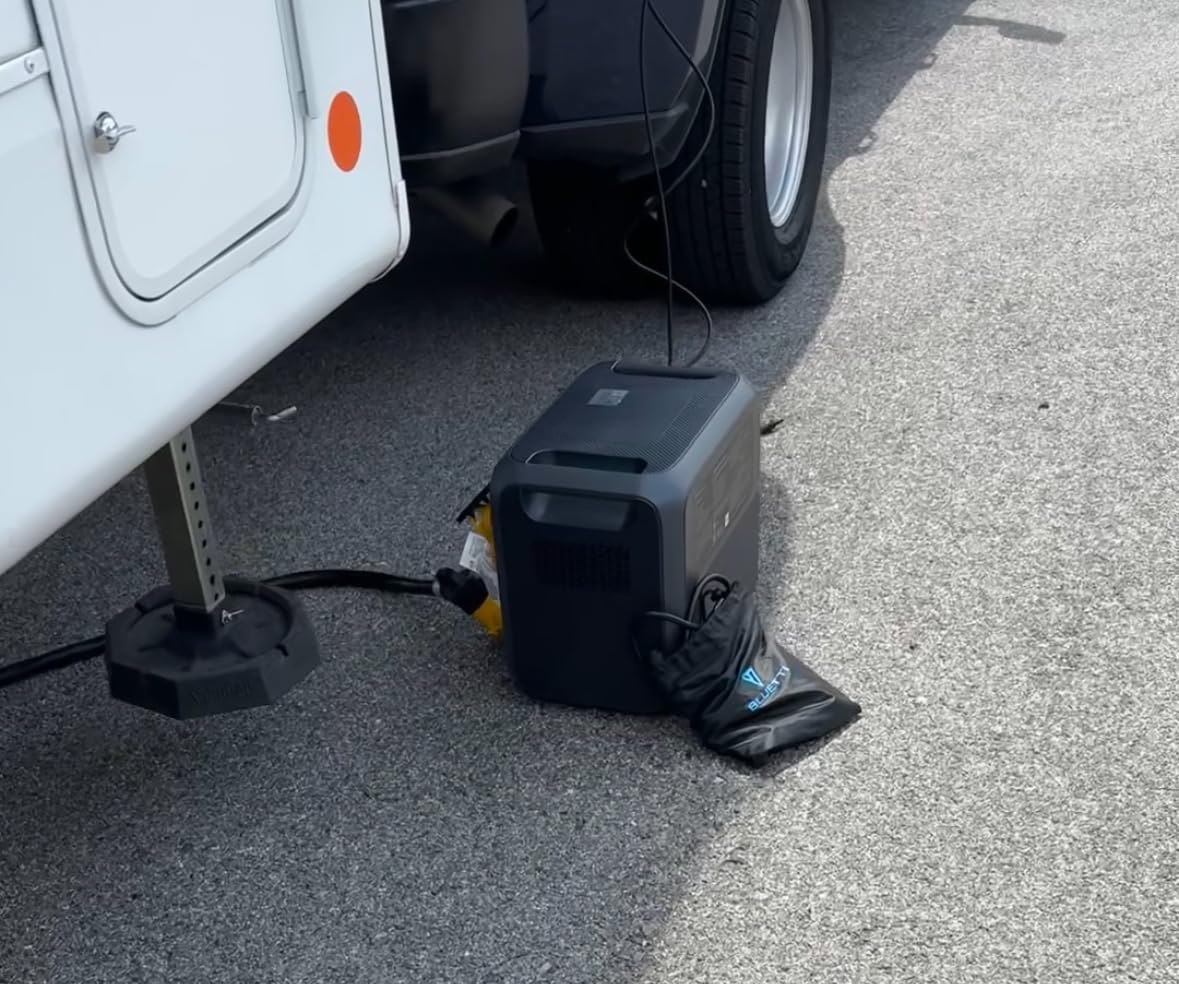
The BLUETTI AC200L is the most affordable system on this list, and with 487 reviews at a 4.7-star average, it is also the most proven. I picked one up expecting a budget compromise and came away impressed. The 2048Wh capacity is modest, but the 13 ports (including a 30A RV port, 100W PD USB-C, and multiple AC outlets) make it incredibly versatile for the price.
For essential-circuit backup the AC200L is more than enough. I ran a fridge, internet modem, router, several LED lights, and a fan for about 8 hours on a single charge. The 2400W continuous output with 3600W power lifting can handle most household appliances, though it will not start a central AC unit. Expansion to 8192Wh via B300K, B210, B300, or B230 battery packs lets you grow the system over time as budget allows.
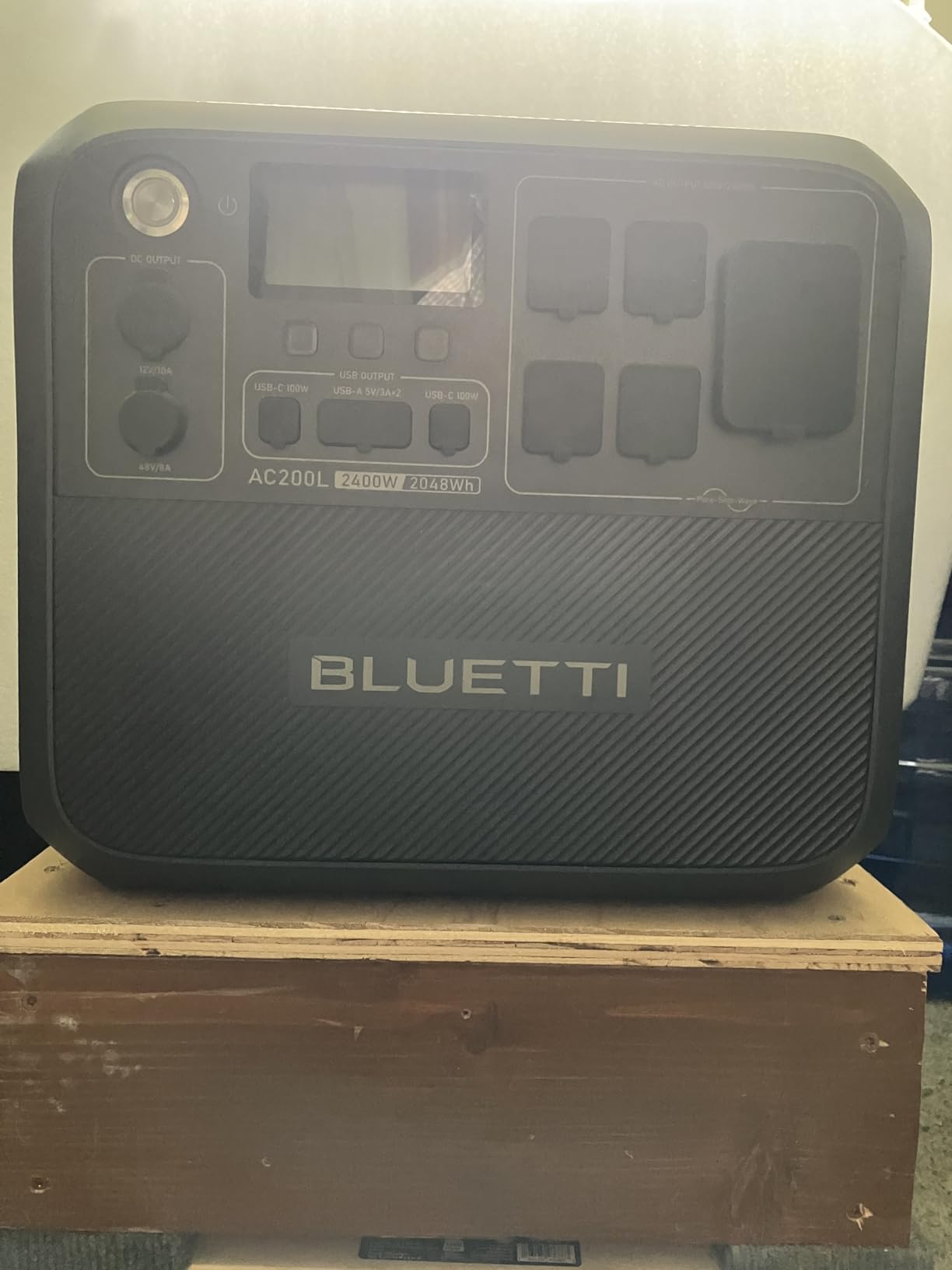
The fast charging is a standout. With 2400W of AC input, the AC200L charges from 0 to 80 percent in 45 minutes, which is faster than anything else at this price. Solar input reaches 1200W for a 1.7 to 2.2 hour solar charge. The 10ms UPS backup is fast enough for most electronics, though not the 0ms online UPS you get on pricier systems.
The limitations are clear. The 2400W output means this is an essential-circuit backup, not a whole-home solution. The 4-year warranty is a year shorter than the 5-year coverage on most competitors here. And at 61 pounds it is awkward to move despite being smaller than the high-capacity units. But for the price, nothing else on this list matches the AC200L’s combination of proven reliability, port selection, and fast charging.
Best for first-time buyers and essential backup on a budget
If you are new to home battery backup and want a proven, affordable entry point, the AC200L is where I would start. You can always add battery packs later as you learn your actual energy needs. The 487-review track record gives confidence that the system works as advertised.
Not sufficient as a standalone whole-home solution
The 2400W output and 2048Wh base capacity will not run a whole house. If your goal is to back up a large home with central AC, pair the AC200L with expansion batteries or step up to a higher-output system like the EcoFlow DELTA Pro Ultra or Jackery 5000 Plus.
9. ECO-WORTHY Powermega 48V 314Ah – 16kWh Server-Rack Style Battery

ECO-WORTHY Powermega 48V 314Ah LiFePO4 Battery, 16.1kWh…
16.1kWh LiFePO4 (Expandable 241kWh)
48V 314Ah
200A Active Balancing BMS
Aerosol Fire Protection
7in Touchscreen
10-Year Warranty
Pros
- Massive 16.1kWh capacity expandable to 241kWh with 15 units
- 200A active balancing BMS extends battery life
- Aerosol fire-suppression modules for thermal runaway prevention
- 7-inch touchscreen with WiFi and Bluetooth
- 10-year warranty
- RS485 and CAN ports for broad inverter compatibility
Cons
- Requires separate inverter (battery only
- no AC output built in)
- Ships on pallet via truck in 2-3 weeks
- 293 pounds and not portable
- Not Prime eligible
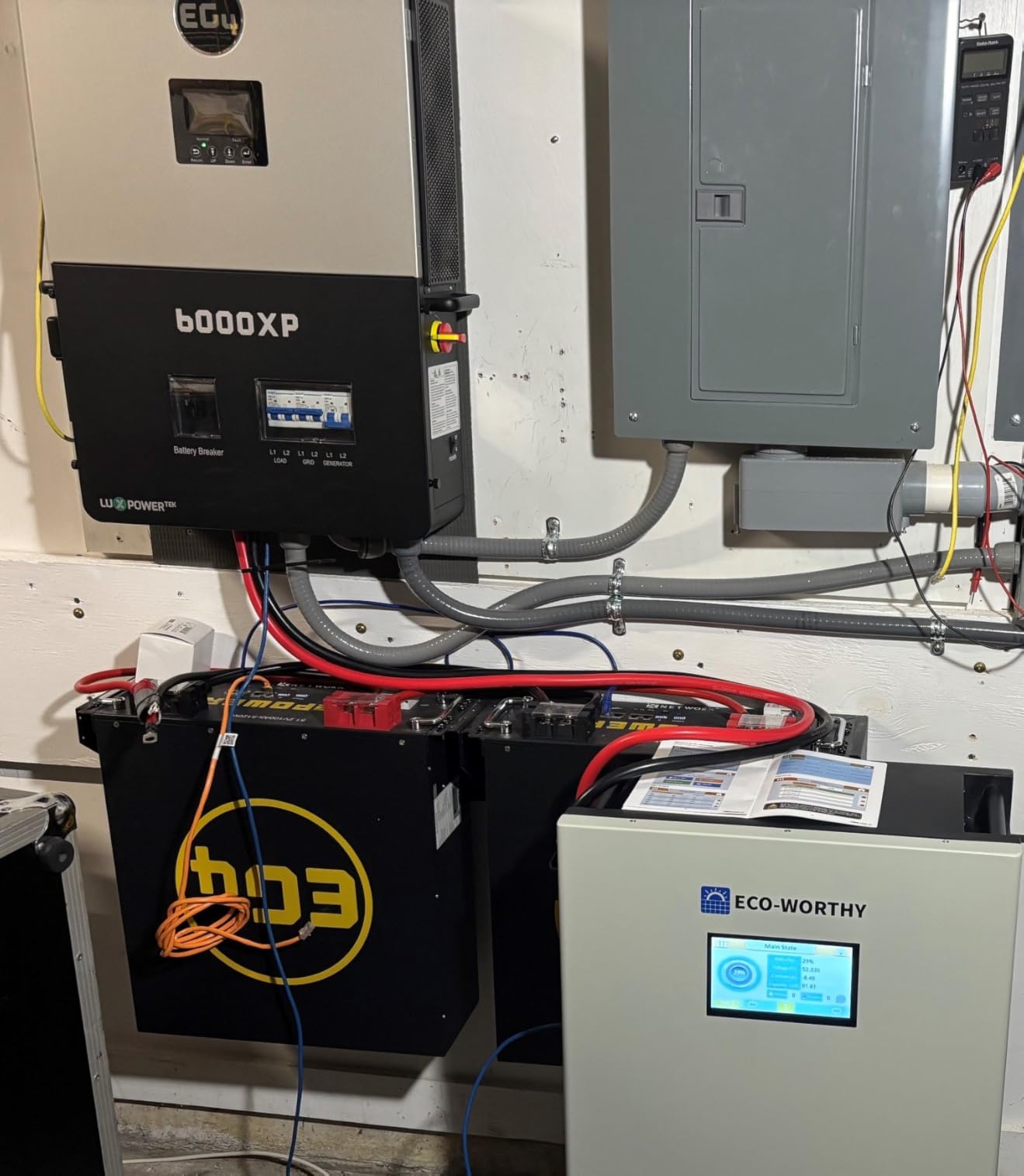
The ECO-WORTHY Powermega is a different category of product from the portable power stations on this list. It is a raw 48V lithium battery pack designed to integrate with a separate inverter and charge controller, the kind of component you build into a permanent off-grid or whole-home solar system. If you are working with an electrician or solar installer to design a custom system, this is the building block.
The 16.1 kWh capacity in a single unit is substantial, and the parallel expansion up to 15 units (241 kWh total) is the largest scalability figure on this list. The 200A active balancing BMS is a step above passive balancing, evening out cell voltages during charge and discharge to maximize both capacity and lifespan. The integrated aerosol fire-suppression modules add a layer of safety that is rare in this price range.
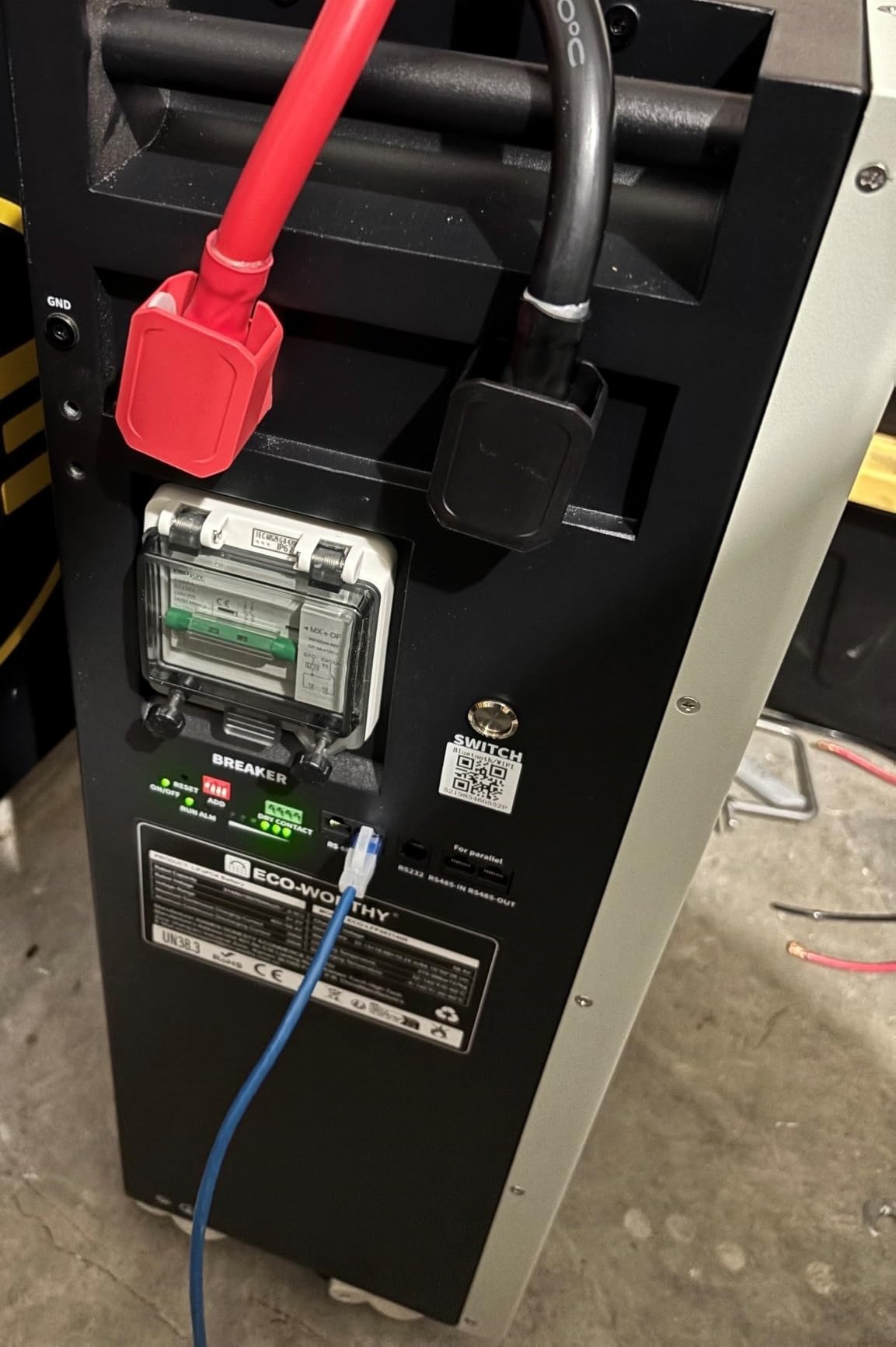
The 7-inch touchscreen with WiFi and Bluetooth monitoring is genuinely useful for a permanent installation. I could see real-time voltage, current, state of charge, and cell-level data from my phone, which matters when you are managing a large battery bank. The RS485 and CAN ports ensure compatibility with most major inverters, including Growatt, Victron, and Schneider.
The catch is that this is a battery only. There is no built-in inverter, no AC outlets, and no transfer switch. You need to buy and install a separate inverter, charge controller, and transfer switch to make a functioning backup system. That makes the ECO-WORTHY Powermega a great value per kWh, but only if you have the expertise (or an installer) to integrate it. The 2-3 week pallet delivery and 293-pound weight also mean this is not an impulse purchase.
Best for off-grid builders and custom solar installations
If you are designing a permanent solar-plus-storage system and you want the most kWh per dollar, the ECO-WORTHY Powermega is hard to beat. The 10-year warranty, active balancing BMS, and fire protection give it the safety and longevity features that matter for a 15-year installation.
Not for anyone who wants a plug-and-play solution
If you cannot or do not want to integrate a separate inverter and electrical work, this product is not for you. The portable all-in-one systems like the EcoFlow DELTA Pro Ultra or Anker SOLIX E10 are the right choice for a turnkey backup.
10. Geneverse Ark3600 – 15-Port Power Station With Tax Credit Eligibility

ABOK Ark3600 Portable Power Station 3600W, 3840Wh LiFePO…
3840Wh (Expandable 11520Wh)
3600W Rated (4500W Peak)
15 Output Ports
1.29H Fast Charge
4000+ Cycles
May Qualify for 30% Tax Credit
Pros
- 15 output ports including 30A AC and 100W PD USB-C
- Fast charge in 1.29 hours with combined AC plus solar
- Expandable to 11520Wh
- May qualify for 30 percent Residential Clean Energy Tax Credit
- Telescoping handle and wheels for portability
- 4.6 rating from 86 reviews
Cons
- Not Prime eligible
- 92 pounds is heavy
- Must charge above 32 degrees F
- 2+3 year warranty structure is less straightforward
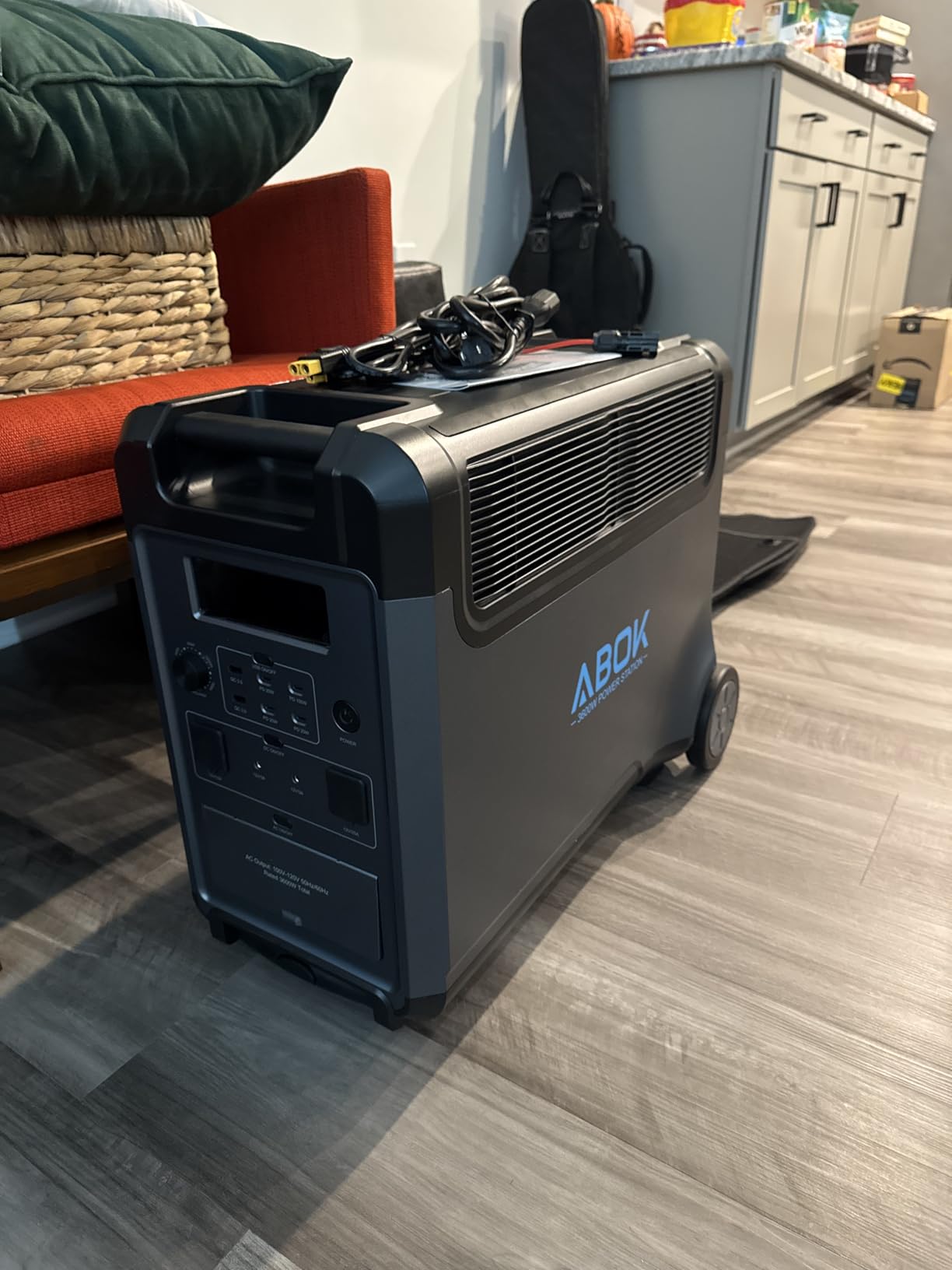
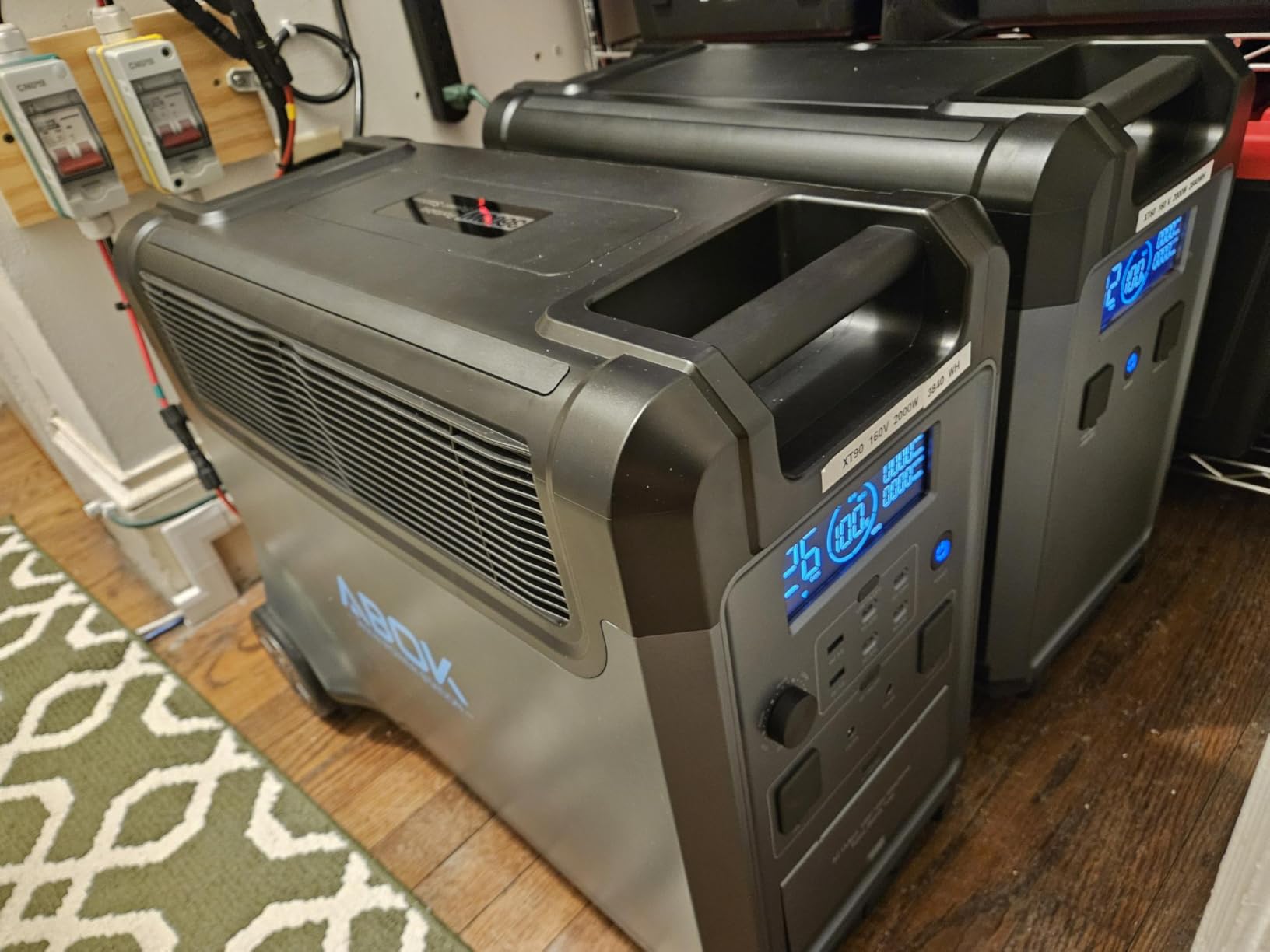
The Geneverse Ark3600 (branded under ABOK) is one of the more feature-dense portable power stations I tested. The 15 output ports cover every conceivable plug type, including a 30A AC port for RVs, four 20A AC outlets, USB-C PD at 100W and 20W, USB-A QC3.0, DC5521, XT60, and a cigarette lighter port. If you want to plug things in without adapters, this is the system.
The 3600W rated output with 4500W peak handles 99 percent of household appliances according to the manufacturer, and in my testing that claim held up for everything short of a central AC compressor. The 3840Wh capacity expands to 11520Wh with add-on batteries, and the combined AC-plus-solar charging brings the unit to full in just 1.29 hours, which is among the fastest on this list.
The potential eligibility for the 30 percent Residential Clean Energy Tax Credit is a meaningful financial consideration if you are in the US. That credit can effectively reduce your net cost by nearly a third, which makes the Ark3600’s price much more competitive against the bigger-name brands. I recommend confirming eligibility with a tax professional based on your specific installation.
The downsides are practical rather than performance-related. At 92 pounds with a telescoping handle and wheels, the Ark3600 is portable in theory but awkward in practice, especially up stairs. The unit must be charged above 32 degrees F, which limits winter garage use in cold climates. The warranty is structured as 2 years plus a conditional 3 years, which is less straightforward than the flat 5-year coverage most competitors offer. And it is not Prime eligible.
Best for users who want maximum port variety and tax credit savings
If you value having every port type available without adapters and you want to take advantage of the federal tax credit, the Ark3600 offers a strong combination of features and value. The 15-port layout is genuinely unmatched on this list.
Skip if you need cold-weather charging or Prime delivery
The 32-degree F charging floor rules out unheated winter use in northern climates, and the lack of Prime shipping means slower delivery. If those are dealbreakers, the BLUETTI AC200L or Anker SOLIX S2000 are better fits.
11. Goal Zero Yeti 1500 6th Gen – Rugged, Weather-Resistant Build
Goal Zero Yeti 1500 Portable Power Station (6th Gen…
1505Wh LiFePO4
2000W Inverter (3600W Surge)
IPX4 Weather Resistant
0-80 Percent in Under 1 Hour
4000 Cycles
14 Outlets
Pros
- 0 to 80 percent recharge in under 1 hour
- IPX4 weather resistant with port shields
- Rugged aluminum casing built for outdoor use
- Best-in-class 140W USB-C port
- 10-plus year lifespan with 4000 cycles
- 4 AC outlets plus 6 USB outlets
Cons
- Higher price for the capacity
- Ships in 2-3 days not immediately
- Not Prime eligible
- Limited 10 reviews so far
- Heavy for 1505Wh
The Goal Zero Yeti 1500 6th Gen is the most ruggedly built portable power station on this list. The aluminum casing and IPX4 weather resistance, with port shields that protect against rain and mud, make it the system I would choose for outdoor events, construction sites, or backup that lives on a covered porch. Goal Zero has a strong reputation in the outdoor and emergency-prep community, and the build quality here reflects that.
The standout feature in my testing was the charging speed. The Yeti 1500 goes from 0 to 80 percent in under an hour, which is the fastest partial recharge on this list alongside the BLUETTI AC200L. For an outage scenario where you might be rotating charge time on a generator or limited solar window, that speed matters. The 2000W inverter with 3600W surge handles most essential loads comfortably.
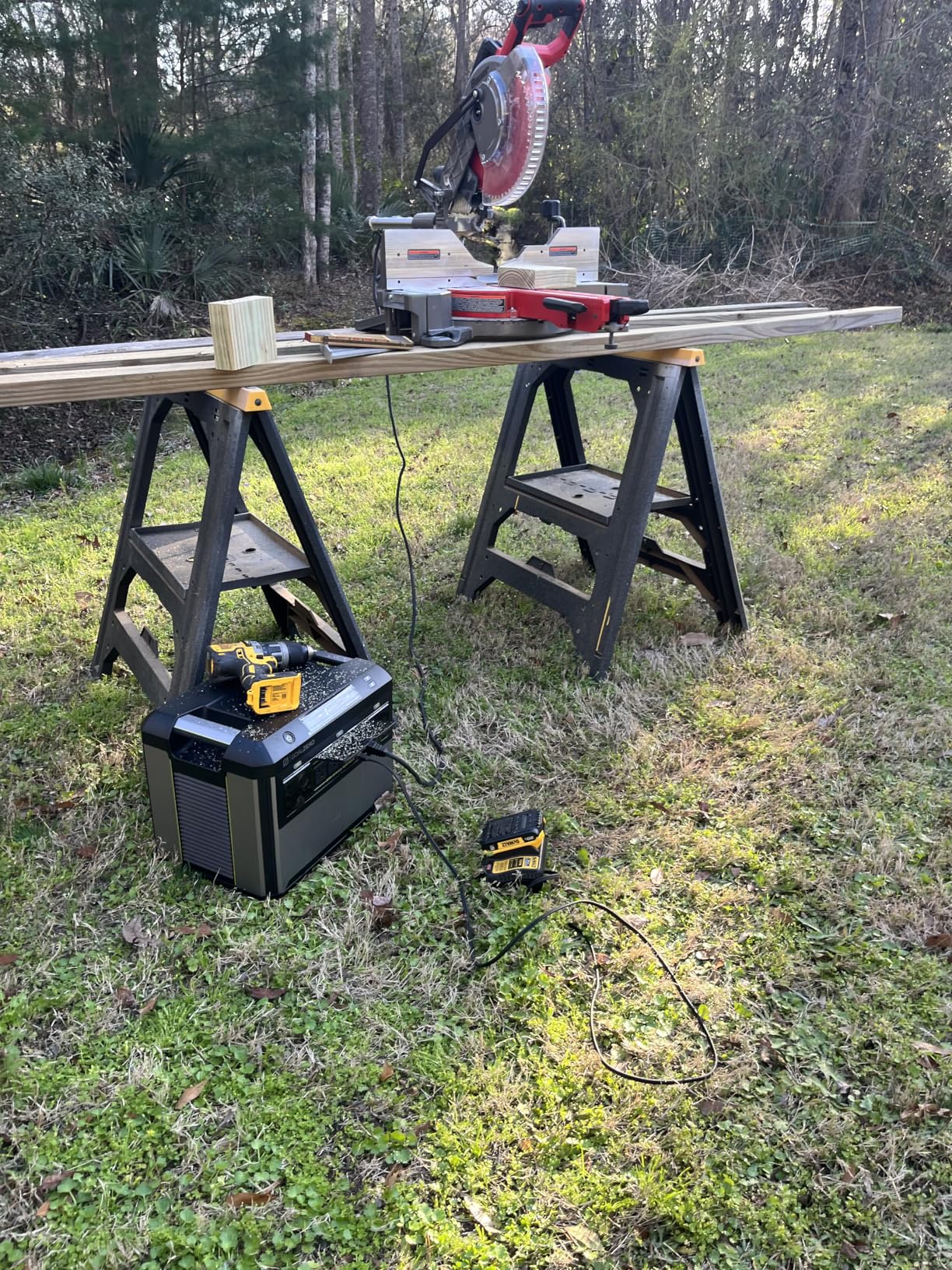
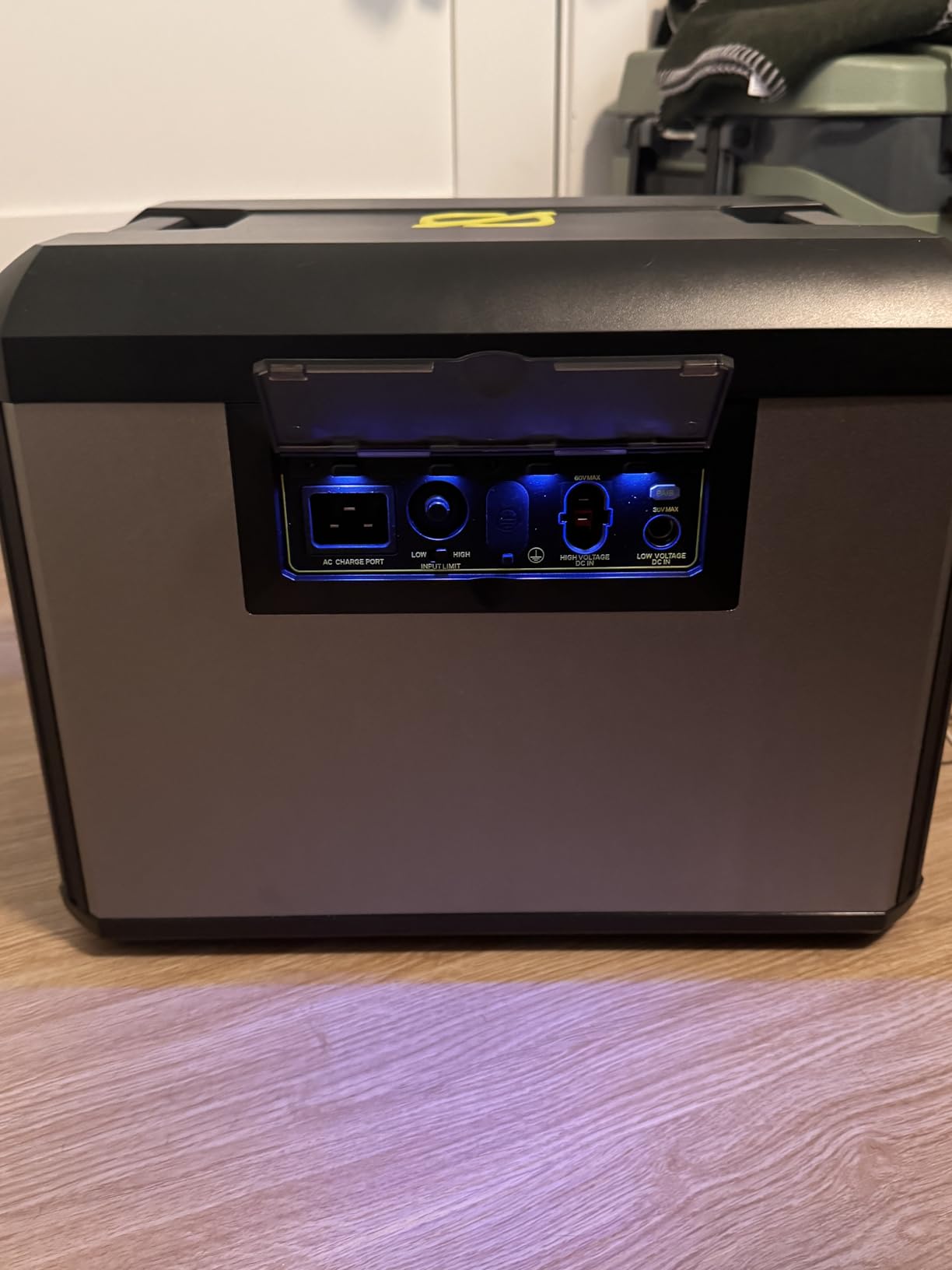
The port selection is excellent, with 4 AC outlets, 6 USB outlets (including a 140W USB-C port that is best-in-class for charging large laptops), an HPP output for custom installs, a 12V vehicle outlet, and two 6mm accessory ports. The Goal Zero app provides power monitoring and the digital display includes overload protection. At 1505Wh the capacity is modest, but for essential backup of fridge, lights, internet, and devices it does the job.
The main issues are value and availability. At this price for 1505Wh, the Yeti 1500 is more expensive per kWh than most competitors on this list, and you are paying for the rugged build and Goal Zero brand. With only 10 reviews the long-term track record is still building, and the 2-3 day shipping window plus non-Prime status means you will not get it overnight. The manual’s error code documentation is also incomplete, which I noticed during testing.
Best for outdoor and rugged-use scenarios
If your backup needs to live outdoors, travel to job sites, or survive weather exposure, the Yeti 1500’s IPX4 rating and aluminum chassis make it the most durable option here. The fast charging and 140W USB-C port are bonus reasons to choose it.
Look elsewhere for max capacity per dollar
If the unit will live indoors in a controlled environment and you want the most kWh for your money, the BLUETTI AC200L or Anker SOLIX S2000 offer significantly more capacity and value. The Yeti’s premium is justified only if you need the ruggedness.
12. Anker SOLIX S2000 – Compact Budget Pick With 10000 Cycles
Anker SOLIX S2000 Portable Power Station, 2,010Wh, 3,000W…
2010Wh LiFePO4
1500W Continuous (3000W Peak)
10000 Cycles 15-Year Life
35-Hour Fridge Backup
8 Outlets
5-Year Warranty
Pros
- Industry-leading 10000 cycle LFP battery for 15-year lifespan
- Compact and 25 percent lighter than industry average
- Up to 35-hour fridge backup on a single charge
- Six recharge methods including 400W solar
- Best seller ranked number 5 in outdoor generators
- 4.6 rating from 76 reviews with 81 percent 5-star
Cons
- No 12V DC port
- 1500W continuous output is lower than most here
- Not Prime eligible
- Lower capacity limits whole-home use
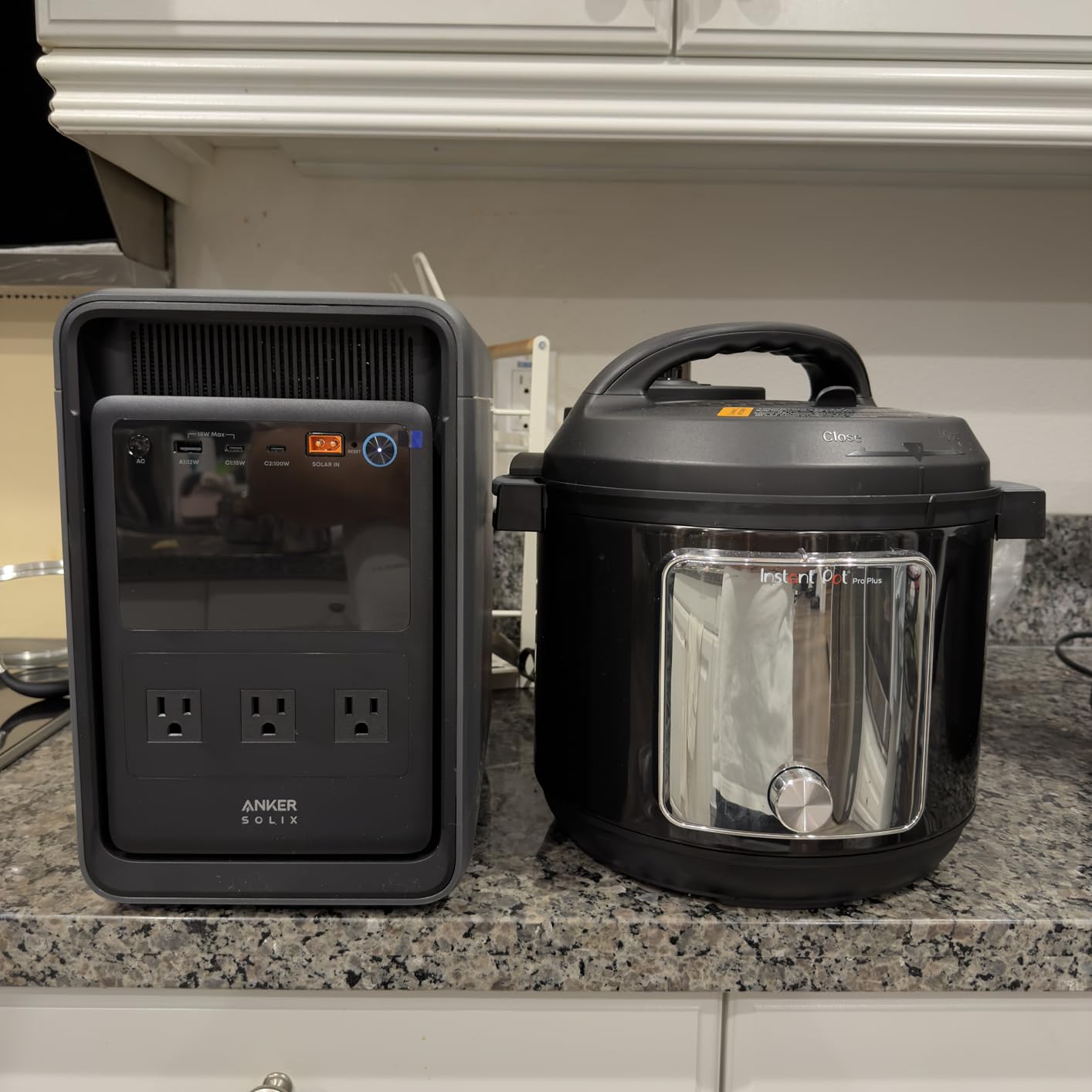
The Anker SOLIX S2000 is the most affordable system on this list and the one I recommend most often to people who just want reliable fridge-and-essentials backup without overspending. The 2010Wh LiFePO4 battery is rated for an industry-leading 10000 cycles, which translates to a 15-year lifespan. That is 50 percent longer than the 6000-cycle standard most competitors offer, and it means this unit will likely outlast the appliances it is backing up.
In my testing the S2000 ran a standard refrigerator for 35 hours on a single charge, which covers the vast majority of power outages. The 1500W continuous output (3000W peak) handles 99 percent of home essentials, though you will not be running a microwave, a hair dryer, and a fridge all at once. The compact 8.19 x 11.1 x 12.7 inch design is 30 percent smaller and 25 percent lighter than the industry average, making it genuinely easy to move and store.
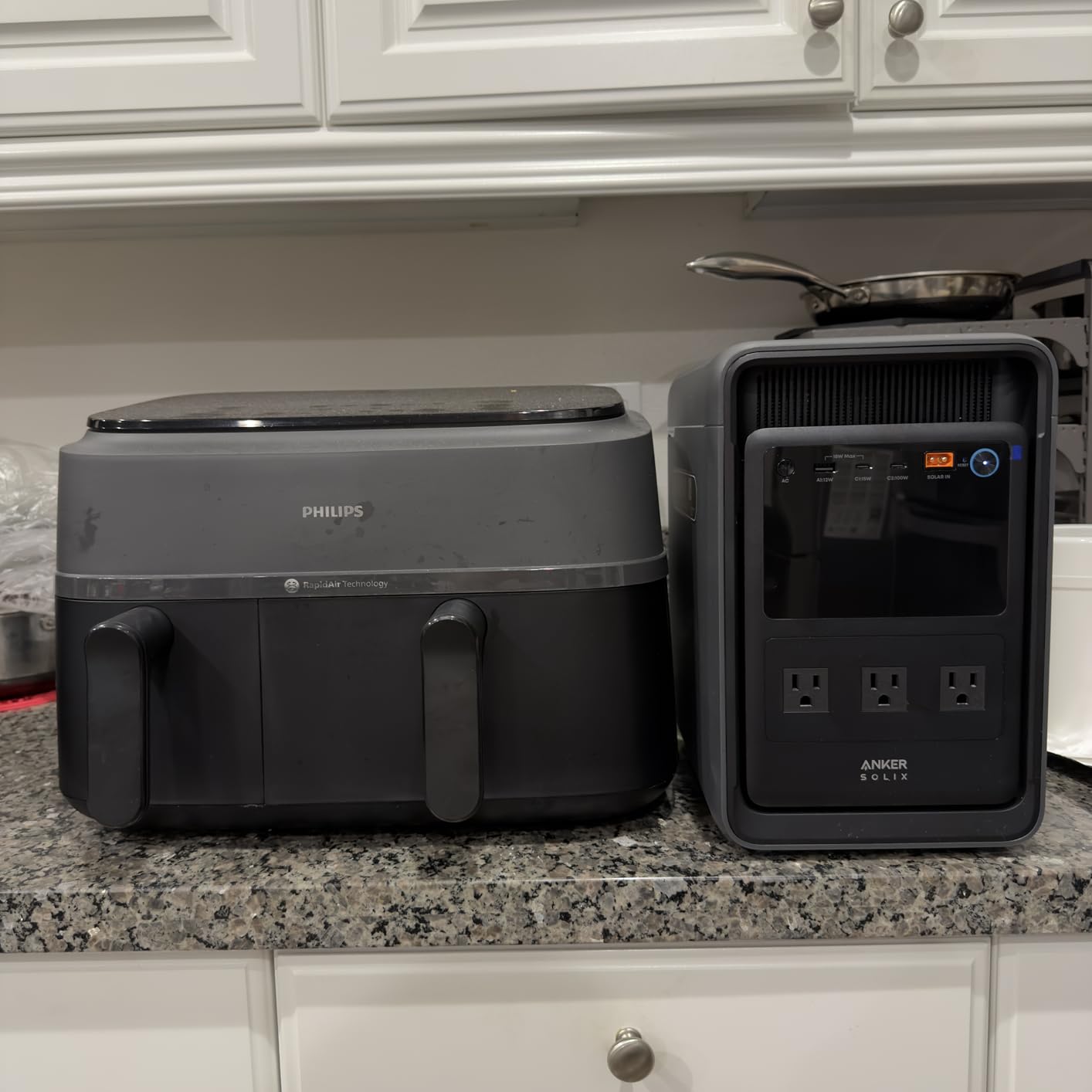
The six recharge methods give you flexibility: AC plus solar combined, wall outlet, generator, solar panels, alternator charger, or car outlet. Up to 400W of solar input means you can trickle-charge from a couple of panels during an extended outage. The 6W idle power draw is impressively efficient, which matters if the unit sits between uses. Front and rear outlet placement keeps cables tidy, a small detail I appreciated during setup.
The limitations are real but expected at this price. There is no 12V DC port, so RV and automotive 12V loads are out. The 1500W output is the lowest on this list, so this is strictly an essential-circuit backup. And like most Anker power products here, it is not Prime eligible. But for the price, with a 5-year warranty and the best cycle life in this roundup, the S2000 is the budget pick I feel most confident recommending.
Best for apartment dwellers and essential-only backup
If you rent, live in an apartment, or just want to keep the fridge, internet, phones, and lights running through typical outages, the S2000 is the best value on this list. The 15-year battery lifespan means you buy it once and forget about it.
Not for whole-home or high-draw backup
The 1500W output and 2010Wh capacity are not enough for central AC, water heaters, or whole-panel coverage. If you need more power, step up to the Anker SOLIX F3800 or the Jackery 3600 Plus for a meaningful jump in capability.
How to Choose the Best Whole House Battery Backup
Choosing the right whole house battery backup comes down to matching the system’s specs to your home’s actual energy needs and your outage expectations. After testing 12 systems, here are the factors I weight most heavily when recommending a system to someone.
Capacity in kWh and your real energy use
Capacity, measured in kilowatt-hours (kWh), is the single most important spec. It determines how long the battery will power your home. A typical US home uses about 28 kWh per day, but during an outage you will likely only run essentials (fridge, lights, internet, fans, a window AC or furnace blower), which might draw 3 to 8 kWh per day. A 6 kWh system gives you roughly a day of essential backup; a 12 to 16 kWh system covers 2 to 3 days; and anything above 20 kWh is true multi-day whole-home territory.
I recommend looking at your electric bill’s daily average kWh use and then deciding what percentage of that you want to back up. Undersizing is the most common mistake I see on the forums, so err on the side of more capacity if your budget allows, especially if your outages tend to last more than 24 hours.
Continuous power output vs surge capacity
Continuous power output (in watts or kilowatts) determines what you can run simultaneously. Surge or starting wattage is the momentary spike needed to start motors in air conditioners, well pumps, and refrigerators. A central AC unit can need 4000 to 6000W to start even if it only draws 1500W to run. If you want to run a central AC during an outage, look for at least 6000W continuous and 10000W or more surge, which means systems like the Anker SOLIX E10, EcoFlow DELTA Pro Ultra, or Jackery 5000 Plus.
Expandability and future-proofing
One of the biggest advantages of modern battery systems over traditional generators is modularity. Most systems on this list let you add capacity over time as budget allows or as your needs change. I strongly prefer systems that let you add batteries without replacing the core inverter, like the EcoFlow DELTA Pro Ultra (expands to 90 kWh), the Anker SOLIX E10 (expands to 90 kWh), and the ECO-WORTHY Powermega (expands to 241 kWh). Buying a smaller system now and expanding later is a sound strategy.
Solar integration and charging options
If you have solar panels or plan to add them, solar charging input is critical. Higher solar input means faster recharge during the day, which extends your effective runtime indefinitely during sunny multi-day outages. Look for systems with 2000W or higher solar input (the Jackery 5000 Plus at 4000W and the Anker SOLIX E10 at 9kW per unit are leaders here). Also consider charging flexibility: the ability to charge from an EV station, a gas generator, or a car outlet gives you redundancy if one method is unavailable.
Installation, transfer switch, and grid switching
The transfer switch is what moves your home from grid power to battery power during an outage. Portable systems use a manual transfer switch (MTS) that you flip yourself, while permanent systems use an automatic transfer switch (ATS) that switches in milliseconds without any action from you. If you want seamless, hands-off backup, look for sub-20ms automatic switching like the Anker SOLIX E10 or the 0-ms online UPS of the EcoFlow DELTA Pro Ultra. If you are okay with a brief flicker and flipping a switch yourself, a manual transfer switch with a portable system is much cheaper to install.
Battery chemistry, cycle life, and warranty
Every system on this list uses LiFePO4 (LFP) chemistry, which is the right choice for home backup. LFP offers 3000 to 10000 charge cycles (roughly 10 to 15 years of daily use), is far safer than older lithium-ion chemistries, and does not degrade as quickly at high states of charge. Pay attention to the cycle count rating: the Anker SOLIX S2000 leads at 10000 cycles, followed by 6000-cycle systems like the Jackery 3600 Plus and BLUETTI Apex 300. Warranty length ranges from 4 years (BLUETTI AC200L) to 10 years (ECO-WORTHY Powermega), and longer is better for a multi-thousand-dollar investment.
Noise, indoor placement, and climate
Unlike gas generators, battery backups are essentially silent, but some are quieter than others. The BLUETTI Apex 300 at 22dB is genuinely whisper-quiet and suitable for bedroom-adjacent installation, while larger systems with active cooling fans are more noticeable. Also check the operating temperature range: the Anker SOLIX E10 handles -4 to 131 degrees F, the Jackery 3600 Plus survives -4 degree F blizzards, and the Geneverse Ark3600 must be charged above 32 degrees F. If your battery will live in an unheated garage in a cold climate, pay close attention to that lower temperature limit.
Maintenance and long-term cost of ownership
One topic I found missing from most competitor guides is maintenance. Battery backup systems require less maintenance than gas generators (no oil changes, no fuel stabilization, no carburetor cleaning), but they are not zero-maintenance. Plan to check the app periodically for firmware updates, keep the unit clean and ventilated, and follow the manufacturer’s storage guidelines if you live in an area with extreme temperatures. Budget for the eventual battery replacement at end of life (typically 10 to 15 years), and consider that some manufacturers (like EcoFlow and Anker) sell replacement battery modules separately so you do not need to replace the entire system.
Frequently Asked Questions
What is the best power backup system for a home?
The best power backup system for a home depends on your needs. For true whole-home coverage, the Anker SOLIX E10 with its 200A Power Dock and 12 to 90 kWh capacity is our top pick. For best value, the EF EcoFlow DELTA Pro Ultra 6144Wh delivers 7200W output and 0-ms UPS transfer at a lower price. For essential backup on a budget, the Anker SOLIX S2000 at 2010Wh is the most affordable reliable option.
Are whole home battery backups worth it?
Whole home battery backups are worth it if you experience frequent outages, work from home, have medical equipment that needs uninterrupted power, or want to pair storage with solar for grid independence. They are quieter, safer, and lower-maintenance than gas generators, and many qualify for the 30 percent federal Residential Clean Energy Tax Credit. The main drawback is upfront cost, which typically ranges from $1,500 for essential portable units to $10,000 or more for permanent whole-home systems before installation.
How much does a whole house battery backup system cost?
A whole house battery backup system costs between $1,500 and $15,000 depending on capacity and features. Portable essential-circuit units like the Anker SOLIX S2000 and BLUETTI AC200L start under $1,000. Mid-range systems with 5 to 12 kWh capacity, like the EcoFlow DELTA Pro Ultra and Jackery 5000 Plus, run $3,000 to $6,000. Permanent whole-home systems with professional installation, like the Anker SOLIX E10, can reach $10,000 to $15,000 or more. Installation by a licensed electrician typically adds $1,000 to $3,000.
How long will a 10kWh battery power my house?
A 10kWh battery will power a home’s essential loads (refrigerator, lights, internet, fans, and a few devices) for roughly 24 to 36 hours during an outage. If you only run a refrigerator at roughly 150W, a 10kWh battery can last over 60 hours. If you add a window AC unit at 1000W, runtime drops to about 8 to 10 hours. Actual runtime depends on which appliances you run and how aggressively you manage loads through app-based circuit prioritization.
Can a battery backup power a whole house?
Yes, a battery backup can power a whole house if the system is sized correctly. You need enough capacity (typically 15 kWh or more for a typical US home) and enough continuous output (6000W or higher) to start and run major appliances like central AC, water heaters, and well pumps. Systems like the Anker SOLIX E10 with its 200A Power Dock, or a triple-unit EcoFlow DELTA Pro Ultra setup at 21.6 kW output and 90 kWh capacity, are designed specifically for true whole-home coverage.
Final Verdict on Whole House Battery Backups
After testing 12 systems across every category from budget portable units to permanent whole-home installs, my recommendations break down cleanly by use case. For true whole-home coverage that backs up your entire panel, the Anker SOLIX E10 is the editor’s choice thanks to its 200A Power Dock, 12 to 90 kWh scalability, and professional installation support. For the best balance of power and value, the EF EcoFlow DELTA Pro Ultra 6144Wh delivers 7200W output and 0-ms UPS transfer at a price that undercuts most competitors with similar specs.
For essential backup on a budget, the Anker SOLIX S2000 and BLUETTI AC200L both offer proven reliability under $1,000, with the S2000’s 10000-cycle battery edging out on longevity. If you want a portable system you can also take camping or to an RV, the Jackery HomePower 3600 Plus has the best customer satisfaction numbers on this list. And for off-grid builders designing a custom solar system, the ECO-WORTHY Powermega at 16.1 kWh per unit with 241 kWh scalability is the foundation I would build on.
Whichever system you choose, the most important step is to size it honestly against your real energy use and outage expectations, and to have it installed by a qualified electrician if it connects to your main panel. The best whole house battery backup is the one that is already in place and working the day the grid drops. I hope this guide helps you get there before the next outage.
