
12 Best Monitors Under $200 (August 2026) Tested Reviews
Buying one of the best monitors under $200 does not mean accepting a dim, sluggish screen. This budget now reaches 27-inch FHD displays for work, fast 144Hz to 200Hz gaming panels, and even one QHD IPS choice, but the right spec depends on what sits in front of the screen.
Two hundred dollars is good for a monitor when your priorities are clear. I would put resolution and stand adjustment first for long workdays, while a competitive player should put refresh rate, response time, and adaptive sync ahead of screen size.
Contents
Our list compares 12 current options by verified panel type, resolution, refresh rate, brightness when listed, contrast, and features such as speakers, VESA mounting, eye-care modes, and USB connectivity. No single cheap monitor is right for every desk, so I have called out the trade-offs instead of treating a high refresh-rate number as the whole story.
Top 3 Picks for Best Monitors Under $200 (August 2026)
The Acer Nitro is the clearest all-round pick because it pairs QHD resolution with an IPS panel and a 180Hz refresh rate. Dell’s 24 Plus is my pick for users who want a fully adjustable stand and speakers, while Philips makes sense when a small VA display with strong stated contrast is the priority.
Best Monitors Under $200 in 2026
Use this quick overview to narrow the field before reading the full notes. FHD means 1920 by 1080, while QHD means 2560 by 1440; IPS favors broad viewing angles, and VA commonly supplies higher stated contrast.
| Product | Specs | Action |
|---|---|---|
 Acer Nitro 27 QHD Acer Nitro 27 QHD |
|
Check Latest Price |
 Dell 24 Plus S2425HSM Dell 24 Plus S2425HSM |
|
Check Latest Price |
 Philips 221V8LB Philips 221V8LB |
|
Check Latest Price |
 Dell SE2725HM Dell SE2725HM |
|
Check Latest Price |
 Acer KB272 Acer KB272 |
|
Check Latest Price |
 Samsung Odyssey G3 Samsung Odyssey G3 |
|
Check Latest Price |
 SANSUI 24 200Hz SANSUI 24 200Hz |
|
Check Latest Price |
 Samsung Essential S3 Samsung Essential S3 |
|
Check Latest Price |
 Samsung S40GD Samsung S40GD |
|
Check Latest Price |
 Lenovo L27-4e Lenovo L27-4e |
|
Check Latest Price |
 Sceptre 27 Prime Sceptre 27 Prime |
|
Check Latest Price |
 ASUS VA249HG ASUS VA249HG |
|
Check Latest Price |
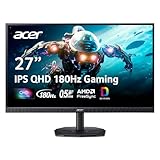
1. Acer Nitro 27 QHD is the best all-round choice for detailed gaming and color work
acer Nitro 27 Inch QHD 2560 x 1440 IPS Gaming Monitor | AMD…
27-inch QHD IPS
180Hz refresh
0.5ms GTG
95% DCI-P3
Pros
- QHD resolution
- 180Hz refresh
- IPS viewing angles
- 95% DCI-P3
Cons
- 250 cd/m² stated brightness
- No stand adjustment listed
The Nitro is the rare model here that combines a 27-inch QHD panel with 180Hz motion handling. I would choose it when a FHD screen feels too coarse for documents, photo work, strategy games, or a desktop viewed at close range.
Its IPS panel and stated 95% DCI-P3 coverage make it the most color-focused option in this group on paper. AMD FreeSync and a listed 0.5ms GTG response time also give the screen a strong gaming brief without giving up pixel density.
A 27-inch QHD panel gives this Acer more workspace than the FHD alternatives
QHD fits more text and interface space than FHD, which can reduce scrolling in spreadsheets and timelines. It is also a better match for a viewer who notices pixel structure on a 27-inch screen.
A DisplayPort-capable PC is the sensible pairing for the full high-refresh experience
Check the output options on your graphics card and the supplied monitor connections before expecting the top refresh rate. HDR 10 support is listed, but the stated 250 cd/m² brightness means I would treat HDR as a compatibility feature rather than a reason to expect a bright HDR presentation.
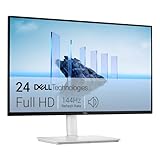
2. Dell 24 Plus S2425HSM is the best ergonomic FHD monitor for mixed work and play
Dell 24 Plus Monitor – S2425HSM – 23.8-inch FHD (1920x…
23.8-inch FHD IPS
144Hz
1ms MPRT
Adjustable stand
Pros
- Fully adjustable stand
- 144Hz refresh
- IPS panel
- Built-in speakers
Cons
- FHD only
- 23.8-inch screen
Dell’s 24 Plus has the most complete desk-friendly feature set among the FHD picks: 144Hz, a 1ms MPRT claim, two 3W speakers, and height, tilt, pivot, and swivel adjustment. That combination answers a frequent forum complaint that an inexpensive display can force a poor viewing position.
The 23.8-inch IPS screen has 300-nit stated brightness and a 1500:1 stated contrast ratio. I like this size for a shallow desk or a dual-monitor setup because FHD remains comfortably compact rather than stretched over a large panel.
A fully adjustable stand makes this Dell easier to fit into a long workday
Height, pivot, swivel, and tilt let you place the top of the display closer to eye level and turn one screen vertical for chat or reference material. This is a meaningful practical edge over tilt-only monitors.
A 144Hz IPS screen gives this Dell room for smooth casual gaming
AMD FreeSync pairs well with supported PC hardware to reduce visible tearing when frame rate varies. The integrated speakers are convenient for calls and occasional audio, though users who care about sound will still want dedicated speakers or headphones.
3. Philips 221V8LB is the best compact VA pick for contrast-focused everyday use
Philips 221V8LB 22 inch Class Thin Full HD (1920 x…
21.5-inch FHD VA
100Hz
3000:1 contrast
VESA mount
Pros
- 3000:1 contrast
- 100Hz refresh
- LowBlue Mode
- VESA support
Cons
- 21.5-inch screen
- VA panel viewing angles
The Philips 221V8LB is a compact 21.5-inch FHD monitor with a VA panel, a 100Hz refresh rate, and a stated 3000:1 contrast ratio. I would look here for a second screen, a tight workstation, or everyday video and document use where deep-looking dark scenes matter more than broad IPS-style viewing angles.
LowBlue Mode and Adaptive Sync round out the feature list, and the VESA support gives the screen a route off the desk. Its 4ms response time is less gaming-led than the faster models, but 100Hz still offers a noticeably more fluid desktop than a basic 60Hz display.
A small FHD screen keeps text density comfortable at a close desk distance
FHD has more pixel density at 21.5 inches than at 27 inches, so text can look relatively crisp without the extra graphics load of QHD. The smaller physical footprint is also useful beside a laptop or as a portrait-mounted companion screen.
A VA panel makes this Philips more suited to centered viewing than shared viewing
The stated 3000:1 contrast is higher than the IPS entries listed here, a common VA strength for dark material. For a screen viewed from several seats, I would favor IPS because its viewing angles are generally the safer bet.
4. Dell SE2725HM is the best simple 27-inch IPS monitor for office space
Dell 27 Monitor – SE2725HM – 27-inch Full HD (1920x…
27-inch FHD IPS
100Hz
250 nits
ComfortView Plus
Pros
- 27-inch IPS panel
- 100Hz refresh
- ComfortView Plus
- FreeSync
Cons
- Tilt-only stand
- FHD on 27 inches
The Dell SE2725HM keeps the formula straightforward: a 27-inch IPS panel, FHD resolution, 100Hz refresh rate, and 250-nit brightness. Its 4.8 rating from 803 reviews supports its appeal as a dependable work-oriented computer monitor.
I would select it for email, browsing, classwork, and large documents when physical screen area matters more than gaming speed. ComfortView Plus blue-light reduction and the anti-glare coating are particularly sensible for a desk near a window or under bright room lighting.
A large FHD screen makes this Dell easy to read from a relaxed desk position
At 27 inches, windows and text can be made large without making the display feel cramped. The trade-off is lower pixel density than a 24-inch FHD monitor or the QHD Acer Nitro.
A tilt stand means this Dell benefits from a monitor arm for custom ergonomics
The included adjustment is tilt only, so taller users may need a riser or compatible mount to achieve a comfortable height. FreeSync adds some PC gaming flexibility, but 100Hz places this model behind the dedicated 180Hz and 200Hz options for fast action.
5. Acer KB272 is the best FHD IPS choice for color-conscious everyday gaming
Acer 27 Inch Monitor- KB272-27 Inch FHD IPS (1920 x…
27-inch FHD IPS
120Hz
1ms VRB
99% sRGB
Pros
- 99% sRGB coverage
- 120Hz refresh
- 1ms VRB
- 3-year warranty
Cons
- 250-nit brightness
- FHD at 27 inches
Acer’s KB272 gives a 27-inch FHD IPS screen a bit more gaming pace with a 120Hz refresh rate and 1ms VRB response-time specification. The stated 99% sRGB coverage is its strongest reason to consider it over a bare-bones FHD panel.
This is a useful compromise for people who edit casual photos, watch video, and play games on one display. I would not confuse 99% sRGB with a claim of professional calibration, but it is relevant information for anyone concerned about basic color coverage.
A 120Hz refresh rate makes this Acer a measured step up from standard office displays
Pointer movement, scrolling, and supported games can look smoother at 120Hz than at 60Hz. Adaptive-Sync support that is FreeSync compatible helps a supported PC keep motion more consistent when its frame rate changes.
A 3-year warranty gives this Acer extra reassurance for a first desktop setup
Warranty length is a practical comparison point when product specifications are close. The listed 250-nit brightness should be adequate for many indoor desks, while a sunlit room may call for more control over reflections and window placement.
6. Samsung Odyssey G3 G30D is the best FHD option for competitive PC gaming
Samsung 24-Inch Odyssey G3 (G30D) Series FHD Gaming Monitor…
24-inch FHD VA
180Hz
1ms MPRT
Adjustable stand
Pros
- 180Hz refresh
- 1ms MPRT
- Adjustable stand
- FreeSync
Cons
- VA viewing-angle trade-off
- 250 cd/m² brightness
The 24-inch Odyssey G3 is built around speed: 180Hz, 1ms MPRT, AMD FreeSync, Black Equalizer, and Virtual Aim Point. I would choose this Samsung for a PC gaming desk where a smaller FHD screen and fast motion matter more than adding workspace.
Its VA panel lists a 3000:1 contrast ratio, which can help dark game scenes look more separated when viewed head-on. The adjustable stand is another major advantage because many gaming sessions expose an awkward fixed-height setup quickly.
A 24-inch FHD format keeps fast games within a compact field of view
At this size, FHD looks more concentrated than it does on a 27-inch panel, and the screen does not dominate a small desk. That can suit players who prefer to scan the whole image without moving their head far.
AMD FreeSync and gaming tools make this Samsung PC-focused rather than office-first
Black Equalizer and Virtual Aim Point are listed gaming tools, not replacements for good settings or skill. For console gaming, verify the console, cable, and specific input modes support the resolution and refresh rate you plan to use.
7. SANSUI 24-inch 200Hz is the fastest-refresh pick for FHD esports play
SANSUI 24 Inch Gaming Monitor 200Hz 1Ms FreeSync HDR…
24-inch FHD VA
200Hz
1ms MPRT
4000:1 contrast
Pros
- 200Hz refresh
- 4000:1 contrast
- 110% sRGB
- HDMI and DisplayPort
Cons
- VA panel viewing-angle trade-off
- Brand support may matter to buyers
The SANSUI stands out with the highest listed refresh rate in this group: 200Hz on a 24-inch FHD VA panel. It also lists 1ms MPRT, FreeSync, HDR support, 110% sRGB coverage, and a stated 4000:1 contrast ratio.
Those numbers make it tempting for budget gaming, yet I would base the decision on the games and PC you actually own. A graphics card must produce very high frame rates for 200Hz to be fully meaningful, and the 4.5 rating from nearly 7k reviews is still a little lower than several Dell and Acer choices here.
A 200Hz panel rewards players whose PC can consistently drive high frame rates
Fast multiplayer titles are the clearest use case for this refresh rate. For slower games, schoolwork, and streaming, the practical difference from 144Hz or 180Hz may be less important than stand flexibility or panel preference.
A 4000:1 stated contrast ratio makes this SANSUI appealing for dark game scenes
VA contrast can make blacks look deeper than on the listed IPS models when the viewer is centered. The monitor also has HDMI and DisplayPort ports, but check the manual and source device specifications for the mode each port can carry.
8. Samsung Essential S3 S36GD is the best curved 27-inch VA monitor for immersive viewing
Samsung 27″ Essential S3 (S36GD) Series FHD 1800R Curved…
27-inch curved VA
100Hz
3000:1 contrast
Eye comfort
Pros
- 1800R curve
- 100Hz refresh
- 3000:1 contrast
- Game Mode
Cons
- FHD at 27 inches
- Tilt adjustment not listed
Samsung’s Essential S3 brings a 1800R curve to a 27-inch FHD VA screen, along with 100Hz, Game Mode, and Advanced Eye Comfort features. The curved format is a preference-led choice, but I can see its appeal for a one-screen desk used mainly from the center.
The listed 3000:1 contrast and G-Sync Compatible designation give it a gaming-friendly profile, while its 4ms response time keeps expectations sensible. It is a better match for relaxed games and media than for a buyer chasing the fastest competitive response.
A 1800R curve makes this Samsung most convincing from one centered seat
The curve can keep the far edges feeling slightly closer to your line of sight on a 27-inch display. For shared viewing or frequent off-angle use, a flat IPS alternative is the more forgiving choice.
Advanced eye-comfort features support longer reading and browsing sessions
Eye-comfort modes can be useful alongside sensible brightness settings, breaks, and thoughtful room lighting. They do not change the fact that this is an FHD panel, so close viewers who prioritize fine text may prefer a smaller FHD screen or QHD.
9. Samsung S40GD is the best business-oriented IPS monitor with USB convenience
Samsung 24” (S40GD) Borderless Business Monitor with IPS…
24-inch FHD IPS
100Hz
USB hub
Height-adjustable
Pros
- USB hub
- Height-adjustable stand
- IPS panel
- 3-year warranty
Cons
- 100Hz refresh
- 5ms response time
The Samsung S40GD is aimed squarely at a working desk, with a 24-inch FHD IPS panel, 100Hz refresh rate, height-adjustable ergonomic design, USB hub, and a three-year warranty. I would pick it for a laptop-and-desktop workstation where accessories and posture matter as much as raw game speed.
Its 250 cd/m² brightness, 1000:1 contrast, 5ms response time, and FreeSync support describe a balanced general-use display. Game Picture Mode is available, though this model is less specialized for high-speed gaming than the Odyssey G3 or SANSUI.
A USB hub makes this Samsung tidier for keyboards, mice, and work accessories
Extra USB connectivity can reduce cable clutter at the desk when the monitor is connected in the required configuration. Confirm the upstream connection and the devices you need to attach, because a hub is useful only when it matches your computer setup.
A height-adjustable 24-inch IPS screen works well as a dual-monitor partner
The compact screen size and borderless business design are sensible next to another display. IPS viewing angles also help when you turn toward a second screen or share a quick reference with someone beside you.
10. Lenovo L27-4e is the best bright FHD IPS option for uncomplicated office work
Lenovo L27-4e Monitor – 27″ Flat IPS FullHD Display – 100Hz…
27-inch FHD IPS
100Hz
300 cd/m²
99% sRGB
Pros
- 300 cd/m² brightness
- 99% sRGB
- NearEdgeless design
- VESA support
Cons
- Tilt-only stand
- No adaptive sync listed
The Lenovo L27-4e is a clean 27-inch FHD IPS monitor with 100Hz refresh, 4ms response time, stated 300 cd/m² brightness, and 99% sRGB coverage. The 300-nit figure is higher than the 250-nit listings on many choices here, which is helpful in an ordinary bright room.
I would consider this model for office work, streaming, and general home computing rather than demanding gaming. Its three-sided NearEdgeless design and VESA support also make it a reasonable candidate for a tidy multi-screen setup.
A 300 cd/m² brightness rating gives this Lenovo more headroom for a bright room
Brightness ratings are not a full measure of image quality, yet they matter when window light washes out a screen. Anti-glare placement and the ability to position the desk away from direct light still matter just as much.
VESA mounting gives this Lenovo a way around its basic tilt stand
The included stand tilts, but it does not list height, pivot, or swivel adjustment. A compatible arm can add flexibility and reclaim desk space, especially when pairing this 27-inch screen with a laptop.
11. Sceptre 27 Prime is the best large FHD pick for flexible port connections
Sceptre 27-inch Prime Gaming Monitor 100Hz 1ms DisplayPort…
27-inch FHD VA
100Hz
1ms
DisplayPort and two HDMI
Pros
- DisplayPort and two HDMI
- 100% sRGB
- Built-in speakers
- VESA mount
Cons
- Brightness not listed
- VA panel viewing-angle trade-off
The Sceptre 27 Prime distinguishes itself with DisplayPort plus two HDMI inputs, two 2W speakers, 100% sRGB coverage, FreeSync, and VESA mounting on a 27-inch FHD VA panel. I would consider it when switching between a desktop, laptop, and console matters more than stand adjustments.
Its listed 100Hz refresh rate and 1ms response time are enough for casual gaming and responsive everyday use. The manufacturer does not list brightness in the supplied data, so I would not make a bright-room decision around this model without confirming that point separately.
Two HDMI ports and DisplayPort make this Sceptre useful for a multi-device desk
Multiple inputs can let you leave more than one device connected rather than swapping cables. Verify how the display changes inputs and which cable type each device supports before planning the desk around that convenience.
Built-in speakers make this Sceptre more convenient for basic audio than silent panels
The speakers are handy for system sounds, video, and temporary use. They are not a specification for room-filling sound, so audio-focused users should plan on external speakers or headphones.
12. ASUS VA249HG is the best compact IPS eye-care choice for everyday FHD use
ASUS 24” (23.8-inch viewable) 1080P VA249HG Eye Care…
23.8-inch FHD IPS
120Hz
1ms MPRT
99% sRGB
Pros
- 120Hz refresh
- 99% sRGB
- 1ms MPRT
- VESA mount
Cons
- Brightness not listed
- Stand adjustments not listed
The ASUS VA249HG combines a 23.8-inch FHD IPS panel with 120Hz, 1ms MPRT, 99% sRGB, Adaptive-Sync, VESA mounting, and DisplayWidget Center. It is an approachable all-purpose choice for a home office or student desk that also sees casual games.
I like the 23.8-inch size for FHD because it keeps text compact and sharp-looking from a normal desktop distance. Its rating is 4.4 from 119 reviews, so the review base is smaller than several products above, which is worth keeping in perspective.
A 23.8-inch IPS screen gives this ASUS a practical balance of text clarity and desk space
This size is less imposing than a 27-inch display and works well in pairs on a standard desk. The IPS panel’s 178-degree viewing angle specification is useful when you shift position during a workday.
DisplayWidget Center gives this ASUS a software-based route to adjust display settings
Software controls can be convenient for changing display settings without reaching for monitor buttons. Since brightness and stand adjustment are not listed in the available specifications, those details deserve a final check if either is important to your setup.
Choose a monitor by matching resolution, panel, speed, and desk fit to your main task
Start with the viewing distance and the work you do, not a brand name. A monitor can look impressive in a feature list yet be wrong for your desk if the screen is too large for FHD, the stand cannot reach eye level, or your computer cannot use its highest refresh mode.
A 24-inch FHD screen is usually the safer choice for close viewing and competitive gaming
FHD has the same 1920 by 1080 pixel count whether the panel measures about 24 or 27 inches. On a 24-inch screen, those pixels are packed more tightly, which favors text clarity and gives fast games a compact field of view.
A 27-inch FHD monitor works well when you sit farther back, want larger interface elements, or favor physical screen size over fine detail. For a 27-inch display used close up, the Acer Nitro’s QHD resolution is the clearest upgrade in this list.
An IPS panel is the safer general-purpose choice, while VA favors stated contrast
IPS monitors are a strong fit for office work, shared viewing, and tasks where consistent color from off-center positions matters. The Dell, Acer, Lenovo, ASUS, and Samsung S40GD IPS models suit that broad-purpose role.
VA panels often advertise higher contrast ratios, as shown by the Philips, Odyssey G3, Essential S3, and SANSUI listings. They can be attractive for dark media and centered gaming, but people who often view the screen from the side may prefer IPS.
A 100Hz screen is smooth for daily use, while 144Hz to 200Hz targets faster games
For browsing, documents, and video, 100Hz already makes pointer movement and scrolling feel more fluid than 60Hz. It is a sensible baseline for the Dell SE2725HM, Philips, Lenovo, Sceptre, Samsung S3, and Samsung S40GD.
Choose 144Hz, 180Hz, or 200Hz when your PC and favorite games can produce frames at those levels. A 240Hz screen is not automatically overkill, but it is more relevant to serious competitive play than to casual games, office work, or a console capped below that rate.
A 250-nit to 300-nit brightness figure is best judged against your room, not in isolation
The listed indoor brightness figures here range from 250 cd/m² or nits to 300 cd/m², while two products do not list brightness in the supplied data. These ratings can work well in a controlled room, but direct sun on the screen can overwhelm far brighter hardware.
Set the monitor perpendicular to a window when possible, use its anti-glare surface where supplied, and avoid raising brightness farther than needed. Eye-care modes such as Dell ComfortView Plus, Philips LowBlue Mode, Samsung Eye Saver Mode, and ASUS eye-care features are complements to good lighting and breaks.
A flexible stand or VESA mount matters as much as a fast panel on a daily desk
Forum discussions repeatedly point to weak adjustability as a budget-monitor frustration. Dell’s S2425HSM offers height, tilt, pivot, and swivel, while the Samsung S40GD and Odyssey G3 also list an adjustable or ergonomic stand.
If you select a tilt-only model, VESA mounting can be a useful fallback when the product lists that support. Check the mount pattern, arm capacity, and the monitor’s own mounting information before ordering an arm.
An HDMI or DisplayPort check prevents unpleasant surprises with PCs and consoles
Before buying, identify the ports on your desktop, laptop, PS5, or Xbox and compare them with the monitor’s listed inputs. The Sceptre has DisplayPort and two HDMI ports, the Dell SE2725HM has HDMI and VGA, and the Lenovo lists HDMI 1.4 plus VGA; each arrangement serves a different desk.
For console gaming, look beyond a marketing phrase and confirm the resolution, refresh-rate mode, cable, and input behavior the console can actually use. A high-refresh PC monitor can still be a fine console display, but it does not mean every console will output its maximum stated refresh rate.
A second monitor works best when size, height, and connection choices are planned together
For two screens, matching physical height and pixel density keeps the cursor transition and text scale more comfortable. Two compact 23.8- or 24-inch FHD monitors are often easier to place than two 27-inch panels, although a 27-inch display plus laptop can be very effective.
I would prioritize VESA support, thin borders, and stand range for a dual setup before chasing an extra few hertz. The Dell 24 Plus, Samsung S40GD, Lenovo L27-4e, Philips, Sceptre, and ASUS list features that can help build around that kind of workstation.
FAQs
Is 200 dollars good for a monitor?
Yes. This budget can buy a capable monitor for office work, school, streaming, casual gaming, or a first PC setup. Prioritize a 24-inch FHD IPS display for general use, a higher-refresh FHD panel for gaming, or QHD if added workspace and detail matter most.
Is a 27 or 32 better for gaming?
A 27-inch screen is usually the more practical gaming size in this category because it fits most desks and works well with FHD or QHD. A 32-inch screen can feel more immersive when viewed farther away, but FHD has visibly lower pixel density at that larger size.
What are some cheap but good monitors?
The Acer Nitro 27 QHD is the strongest detailed gaming and work pick here, the Dell 24 Plus adds a highly adjustable stand and speakers, and the Philips 221V8LB offers a compact VA choice with a stated 3000:1 contrast ratio. Choose based on your use rather than the rating alone.
Is 24 or 27 better for gaming?
A 24-inch FHD monitor is better for players who sit close and want a compact view with denser pixels. A 27-inch monitor gives a larger image and is more comfortable from farther back; QHD is the better resolution pairing for a 27-inch screen when detail is the priority.
Is 240Hz overkill for gaming?
For office work, casual games, and many console setups, 240Hz is more than necessary. It makes the most sense for competitive PC players whose hardware can sustain very high frame rates; 144Hz, 180Hz, or 200Hz is already a substantial step up from 60Hz for most players.
The Acer Nitro is the best monitors under $200 choice when you want QHD and 180Hz in 2026
Choose the Acer Nitro for the most complete mix of detail, color coverage, and gaming speed. Choose Dell’s 24 Plus for an adjustable FHD desk setup, and choose the Odyssey G3 or SANSUI when high refresh rate is the focus.
Before you decide, check your desk depth, viewing distance, computer outputs, and whether a monitor arm is part of the plan. Those few checks make it much easier to pick a screen that fits your day rather than just its specification list.
