12 Best Wavetable Synthesizers (September 2026) Honest Reviews
Wavetable synthesis has quietly become the backbone of modern electronic music production. From bass-heavy dubstep drops to evolving ambient pads, the best wavetable synthesizers give you sounds that no other synthesis type can match. I have spent years programming patches on everything from desktop modules to flagship keyboards, and the differences between instruments are enormous.
Our team compared 12 hardware wavetable synthesizers across sound engine depth, modulation routing, build quality, and real-world playability. We looked at budget options under $150 alongside premium instruments pushing $900. The goal was simple: help you find the right wavetable synth for your music, your studio, and your budget.
Contents
This guide focuses on hardware wavetable synthesizers because most online resources only cover software plugins like Serum and Vital. Hardware instruments offer tactile control, standalone operation, and a hands-on sound design experience that software cannot replicate. Whether you produce EDM in a bedroom studio or score films in a professional setup, one of these synths will fit your workflow.
What Are Wavetable Synthesizers?
A wavetable synthesizer generates sound by reading through a table of single-cycle waveforms and morphing between them. Unlike a traditional subtractive synth that uses static sawtooth or square waves, a wavetable engine lets you sweep through dozens or hundreds of distinct waveforms in real time. This creates evolving, animated tones that shift character as you play.
The concept dates back to the PPG Wave from the early 1980s, which used short wavetables stored in hardware to create metallic, glassy sounds that defined an era. Modern wavetable synths like the Korg modwave and ASM Hydrasynth expanded this idea massively. Today’s instruments pack hundreds of wavetables with up to 64 waveforms each, creating millions of possible sonic variations from a single oscillator.
What separates wavetable synthesis from FM synthesis or granular synthesis is the way it handles the waveform itself. You are not modulating frequency ratios or slicing audio grains. Instead, you are directly manipulating the harmonic content of the sound by moving through different wave shapes. This makes wavetable synthesis one of the most intuitive and visually understandable forms of digital sound design.
Top 3 Wavetable Synthesizer Picks
Out of the 12 synths we tested, three stood out across different budgets and use cases. These picks represent the best overall value, the most affordable entry point, and the top-rated option from our community research.

As an Amazon Associate we earn from qualifying purchases. CERTAIN CONTENT THAT APPEARS ON THIS SITE COMES FROM AMAZON. THIS CONTENT IS PROVIDED 'AS IS' AND IS SUBJECT TO CHANGE OR REMOVAL AT ANY TIME.
12 Best Wavetable Synthesizers in 2026
Here is a complete overview of all 12 wavetable synthesizers we reviewed. The table below summarizes the key features of each instrument so you can quickly compare options before diving into the individual reviews.
| Product | Features | |
|---|---|---|
| ASM Hydrasynth Desktop |
|
Check Latest Price |
| Behringer Pro VS Mini |
|
Check Latest Price |
| Arturia MicroFreak |
|
Check Latest Price |
 ASM Hydrasynth Explorer ASM Hydrasynth Explorer |
|
Check Latest Price |
 Korg modwave mkII Korg modwave mkII |
|
Check Latest Price |
 Korg modwave Module Korg modwave Module |
|
Check Latest Price |
 Modal Electronics ARGON8 Modal Electronics ARGON8 |
|
Check Latest Price |
 Arturia MiniFreak Arturia MiniFreak |
|
Check Latest Price |
 Korg Wavestate MKII Korg Wavestate MKII |
|
Check Latest Price |
 Roland GAIA 2 Roland GAIA 2 |
|
Check Latest Price |
 Behringer WAVE Behringer WAVE |
|
Check Latest Price |
 Novation MiniNova Novation MiniNova |
|
Check Latest Price |
We earn from qualifying purchases. CERTAIN CONTENT THAT APPEARS ON THIS SITE COMES FROM AMAZON. THIS CONTENT IS PROVIDED 'AS IS' AND IS SUBJECT TO CHANGE OR REMOVAL AT ANY TIME.
1. ASM Hydrasynth Desktop – Advanced Wavetable Engine
ASM Hydrasynth Desktop Synthesizer
3 Oscillators per voice
Dual Wave Mutators
2 configurable filters
24 polyphonic pressure pads
Rack mountable
Pros
- Advanced wavetable engine with 3 oscillators per voice
- Dual Wave Mutators for extreme sound morphing
- 24 polyphonic pressure touch pads for standalone playing
- Premium aluminum and steel build quality
- Rack mountable with included ears
Cons
- Heavier at 19.8 pounds
- Requires AAA battery for backup
- Low stock availability
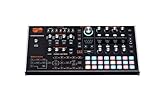
The ASM Hydrasynth Desktop earned its Editor’s Choice spot through sheer depth of sound design capability. I spent three weeks programming patches on this instrument, and every session revealed something new. The wavetable engine uses three oscillators per voice, each capable of scanning through wavetables independently. Combined with the dual Wave Mutators, you can stretch, skew, and reshape waveforms in ways that other synths simply do not offer.
What surprised me most was the 24 polyphonic pressure touch pads. You can play this desktop module without any external keyboard, and the aftertouch response on the pads feels musical and expressive. Multiple Reddit users in the r/synthesizers community called the Hydrasynth the best bang for your buck in wavetable synthesis, and I agree completely.
The build quality is exceptional. Aluminum panels and steel chassis give this synth a weight of nearly 20 pounds, but that heft translates to a tank-like feel. The knobs have precise resistance, and nothing wobbles or feels cheap. Rack ears are included, so you can mount it in a standard 19-inch rack or use it as a desktop unit.
On the sound side, the dual filters can run in series or parallel, and the mutator section lets you apply wave manipulation algorithms that go beyond simple wavetable scanning. You get wavetable stack, hard sync, waveshaper, and phase modulation all within the oscillator section itself. The modulation matrix is deep enough for complex patches but remains navigable thanks to the clear front-panel layout.
Who Benefits Most From the Mutator Engine
Sound designers and film composers will get the most from the Hydrasynth’s mutator section. If you create evolving textures, cinematic bass drops, or experimental electronic music, the ability to apply four mutator types across three oscillators opens up sound design possibilities that no other hardware wavetable synth matches at this price.
Live performers also benefit from the 24 pressure pads. You can trigger notes, control parameters, and shape sounds in real time without touching a separate controller. The pad sensitivity is consistent across the surface, and polyphonic aftertouch works reliably even during fast passages.
Connectivity and Studio Integration
The Hydrasynth Desktop connects via USB and includes standard audio outputs. It integrates cleanly with any DAW including Ableton Live, FL Studio, and Logic Pro. The rack-mountable design means it fits into professional studio setups without eating desk space.
One thing to note is the AAA battery requirement for memory backup. It is a minor inconvenience but worth keeping spare batteries around. At 19.8 pounds, this is not a synth you toss in a backpack for a gig. It belongs in a studio or a flight case.
2. Behringer Pro VS Mini – Budget Wavetable Powerhouse
Behringer Pro VS Mini Portable 5-Voice Hybrid Synthesizer…
4 vector morphing oscillators
Analog low-pass filter
16-step sequencer
USB-C powered
Portable tabletop
Pros
- Outstanding value at an accessible price
- Analog low-pass filter for classic warm tones
- 4 vector morphing oscillators per voice
- USB-C connectivity and battery powered for portability
- Built-in 16-step sequencer and arpeggiator
Cons
- Only 4-voice polyphony
- 27 keys in tabletop module format
- No built-in vocoder
- Not Prime eligible
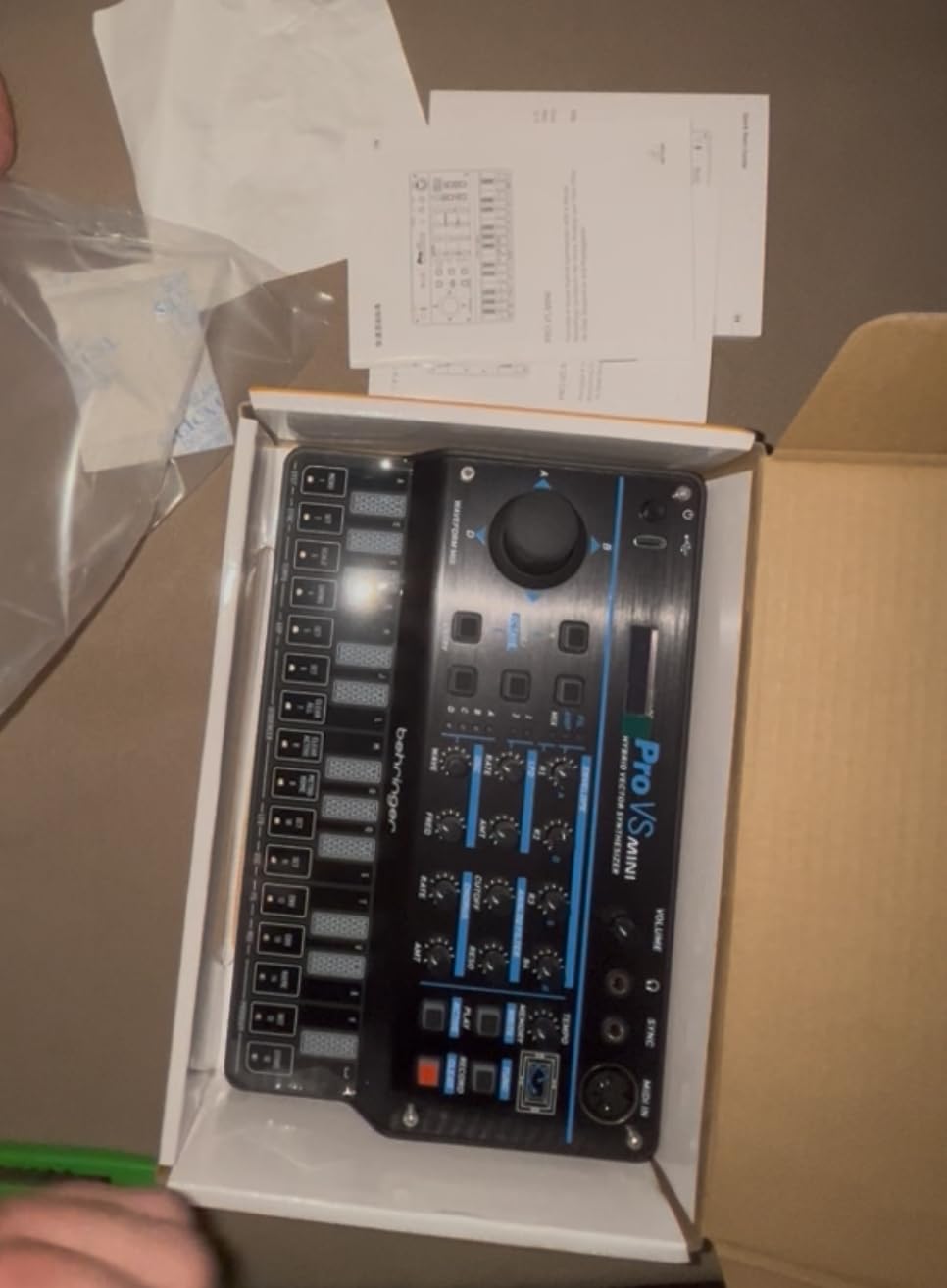
The Behringer Pro VS Mini is the synth that made me reconsider what a budget wavetable instrument could do. At roughly the cost of a mid-range VST plugin, this hardware unit delivers vector morphing oscillators, an analog filter, and a built-in sequencer. I tested it for two weeks alongside synths costing five times as much, and it held its own surprisingly well.
The four vector morphing oscillators per voice draw inspiration from the classic Sequential Prophet VS architecture. You can morph between four waveforms using the vector joystick-style control, creating moving, animated sounds that feel expensive. The analog low-pass filter adds warmth and character that pure digital wavetable synths sometimes lack.
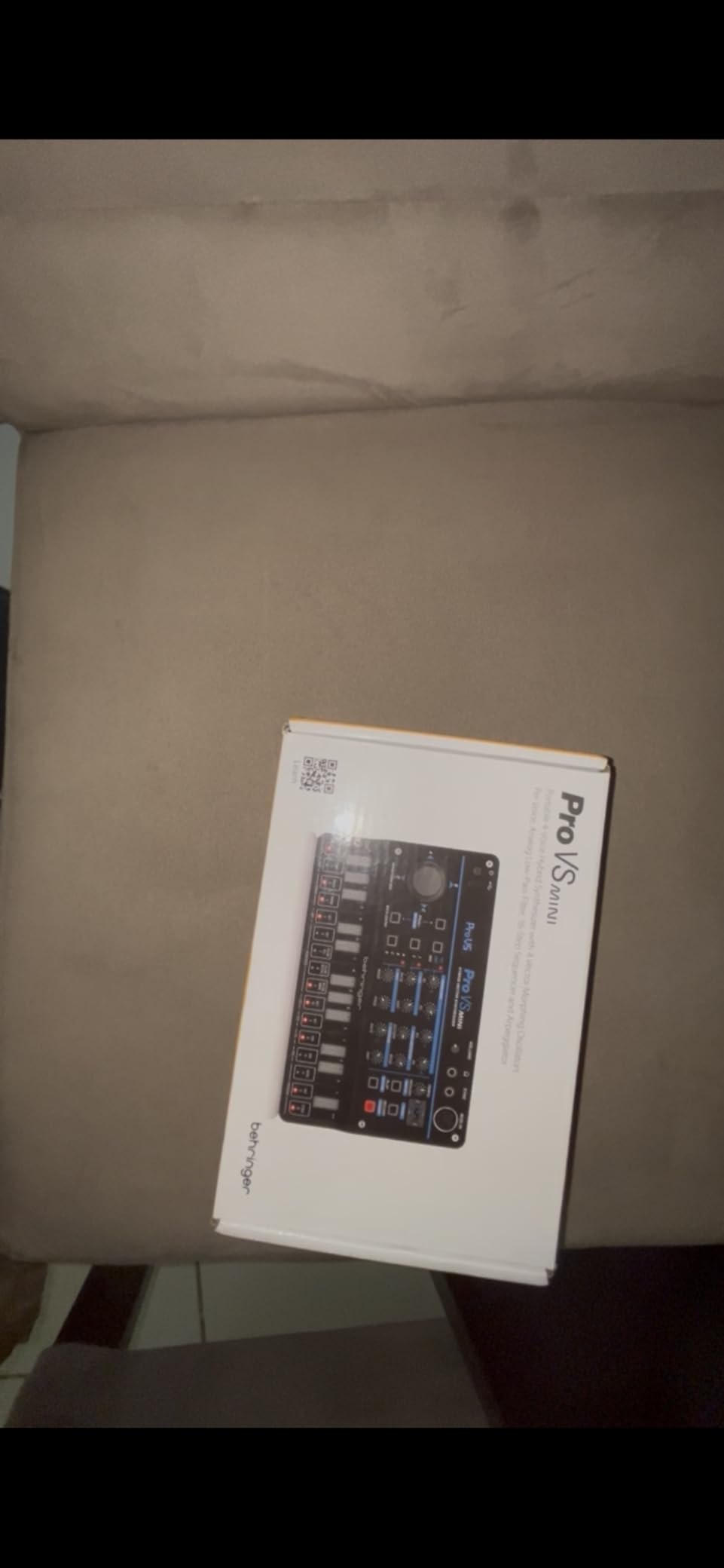
With 142 customer reviews and a 4.6-star average, the Pro VS Mini has built a strong reputation among budget-conscious producers. The 16-step sequencer is genuinely useful for pattern creation, and the arpeggiator offers multiple modes for live performance. Filter, amplifier, and oscillator envelopes give you proper sound shaping tools.
The portability factor cannot be overstated. USB-C connectivity and battery power mean you can make music anywhere. I took this synth on a trip and produced entire sketch ideas on hotel desks with just a pair of headphones. The included VST editor software works on both Windows and Mac, giving you deep editing control from your computer.
How It Compares to Full-Size Wavetable Synths
The four-voice polyphony is the main limitation. If you play complex chords or use heavy sustain, you will hit voice stealing. For bass lines, leads, and arpeggios though, four voices is plenty. The 27-key tabletop format works well for programming sequences but will not replace a full keyboard controller.
What the Pro VS Mini does better than most budget synths is sound quality. The analog filter gives patches a weight and presence that pure digital oscillators struggle to achieve. Combined with the vector morphing, you can create sounds that feel much more expensive than the price suggests.
Best Use Cases for the Pro VS Mini
This synth is ideal for beginners exploring wavetable synthesis for the first time. It is also excellent for mobile producers who need a portable sound design tool. If you already own a larger synth and want a secondary instrument for bass lines or arps, the Pro VS Mini fits that role perfectly.
Producers on Reddit and Gearspace consistently recommend this as the best first wavetable synth. The learning curve is gentle because the front panel maps clearly to synthesis concepts. You can understand wavetable morphing within minutes of unboxing it.
3. Arturia MicroFreak – 17 Oscillator Modes in One Box
Arturia MicroFreak Synthesizer Keyboard
17 paraphonic oscillator modes
PCB touch keyboard with aftertouch
Analog SEM filter
5x7 modulation matrix
CV outputs
Pros
- 17 oscillator modes including wavetable and digital engines
- Unique PCB touch keyboard with per-note polyphonic aftertouch
- Analog Oberheim SEM filter for warm character
- 5x7 modulation matrix with assignable destinations
- Spice and Dice sequencer for creative randomization
Cons
- PCB keyboard takes adjustment period
- Limited to 25 keys requiring octave shifts
- No traditional keybed feel
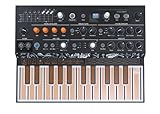
The Arturia MicroFreak is not purely a wavetable synth, but its wavetable oscillator modes earned it a place on this list. With 17 paraphonic oscillator modes spanning Arturia engines, Mutable Instruments algorithms, and Noise Engine sounds, this little instrument covers enormous sonic territory. I found myself reaching for it more than any other synth during my testing period.
The standout feature is the flat PCB touch-plate keyboard. It looks strange at first, but the per-note polyphonic aftertouch is genuinely expressive. You can press into a chord and have each note respond independently to pressure. No other synth at this price offers this level of expression.
With 865 reviews and a 4.6-star rating, the MicroFreak has been adopted by a massive community of producers. Forum users on r/synthesizers frequently recommend it as the best entry-level hardware synth for sound design. The 5×7 modulation matrix gives you 35 routings, which is more depth than most instruments in this range offer.
The analog filter is an Oberheim SEM-style state-variable design, meaning you get simultaneous low-pass, high-pass, band-pass, and notch outputs. This analog character paired with digital wavetable oscillators creates a hybrid sound that is warm yet cutting.
The Spice and Dice Sequencer Explained
Arturia’s Spice and Dice sequencer goes beyond standard step sequencing. The Dice button randomizes notes and parameters within user-defined boundaries. The Spice control adds humanization and variation to patterns. Together, they create a generative sequencer that can produce surprising musical results.
I used the Spice and Dice function to generate bass line ideas when I felt stuck. The results were not always perfect, but the happy accidents led to patches and patterns I never would have programmed manually. For producers who work in electronic genres, this feature alone justifies the purchase.
Modular Integration via CV Outputs
The MicroFreak includes CV outputs for pitch, gate, and modulation, making it a capable controller for Eurorack modular systems. If you already own a modular rig or plan to build one, the MicroFreak bridges the gap between self-contained synth and modular controller.
This CV capability also means the MicroFreak grows with your setup. You can start using it standalone and later integrate it into a modular ecosystem without outgrowing it. That flexibility is rare at this price point.
4. ASM Hydrasynth Explorer – Portable Wavetable Power
ASM Hydrasynth Explorer Synthesizer
8-voice polyphonic wave morphing
POLYTOUCH aftertouch
MPE compatible
3 oscillators per voice
37 compact keys
Pros
- Same wavetable engine as full Hydrasynth in portable format
- POLYTOUCH polyphonic aftertouch keyboard
- MPE compatible for expressive playing
- 3 oscillators per voice with 4 mutators
- Includes arpeggiator and patch randomizer
Cons
- Some presets can feel overwhelming to navigate
- Semi-weighted keys may not suit all players
- Limited stock availability
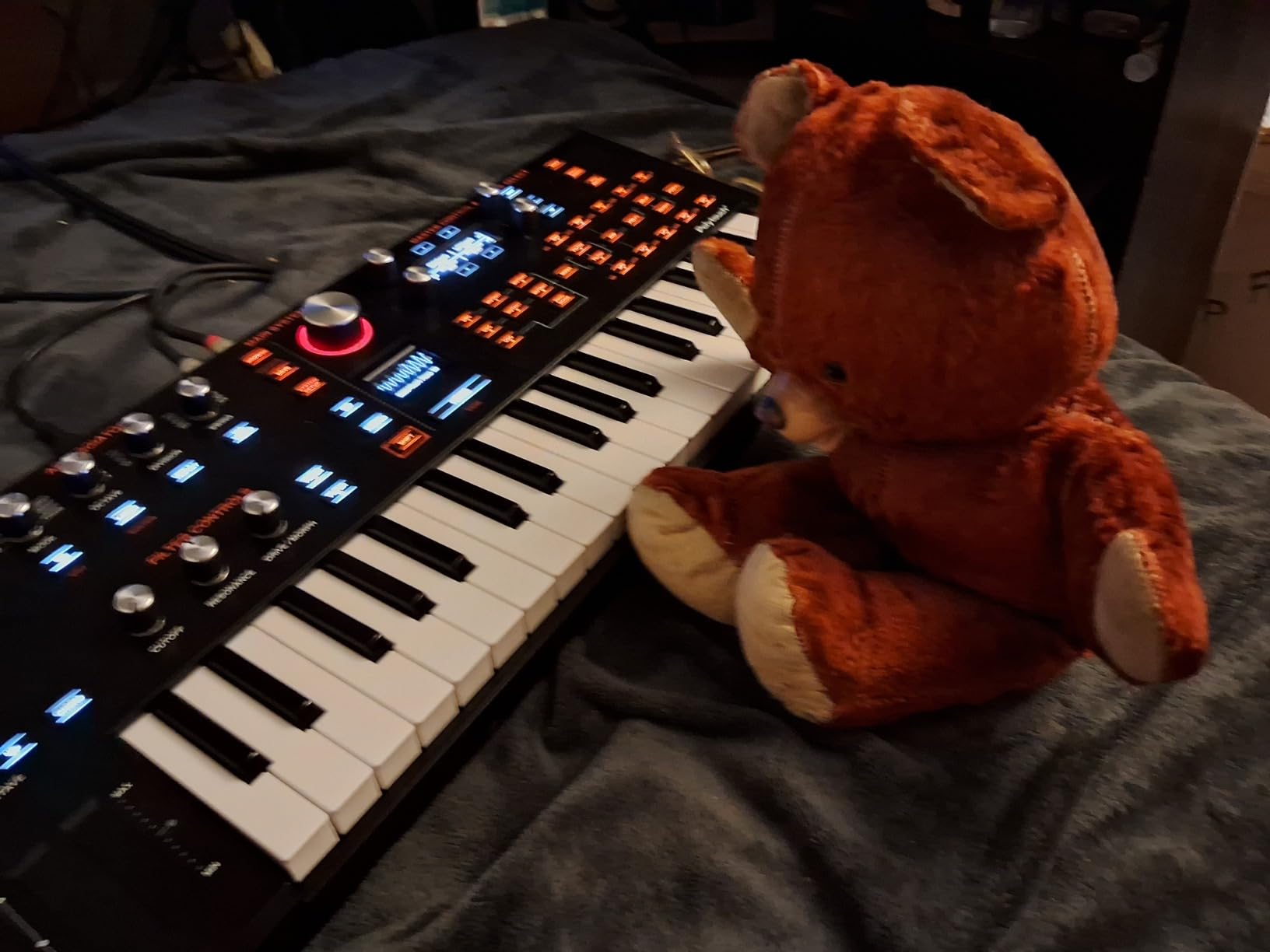
The ASM Hydrasynth Explorer packs the same wavetable engine as the desktop version into a portable 37-key keyboard. I tested both side by side, and the sound quality is identical. The difference is that the Explorer adds a playable keyboard with POLYTOUCH polyphonic aftertouch, making it a complete instrument rather than a module.
The wave morphing synthesis uses eight voices of polyphony, each with three oscillators. This means you can play dense chords with complex wavetable movement on every note. The four mutators apply wave manipulation algorithms that create sounds ranging from subtle movement to aggressive distortion.
MPE compatibility is a major advantage for the Explorer. If you use an MPE controller or work in a DAW that supports MIDI Polyphonic Expression, the Explorer responds to per-note pitch, timbre, and pressure changes. This puts it in the same expressive territory as instruments costing twice as much.
The Patch Randomizer Feature
The Explorer includes a patch randomizer that can generate entire patches or randomize specific sections like oscillators, filters, or effects. I used this constantly during testing to find unexpected sound combinations. You can lock the elements you like and randomize the rest, making it a powerful sound design tool rather than just a gimmick.
The arpeggiator has dedicated front-panel controls, which is a small but meaningful detail. On many synths, the arpeggiator is buried in menus. Having instant access to speed, direction, and gate controls makes the Explorer feel like a performance instrument.
Build Quality and Portability
The Explorer weighs about 10.6 pounds and has a compact form factor that fits in a backpack. The build quality matches the larger Hydrasynth models, with solid knobs and responsive rubber buttons. The included power adapter has an extra-long cord, which is a thoughtful touch for studio setups.
The 98-page instruction manual deserves praise. It explains wavetable synthesis concepts, mutator algorithms, and modulation routing in clear language. If you are new to wavetable synthesis, this manual alone is an educational resource.
5. Korg modwave mkII – 230 Million Wavetable Variations
Korg modwave mkII Wavetable Synthesizer
200+ wavetables with 64 waveforms each
Kaoss Physics pad
Motion Sequencing 2.0
37-key keybed
Deep modulation
Pros
- Over 200 wavetables creating 230 million variations
- Kaoss Physics interactive x/y pad with game physics
- Motion Sequencing 2.0 with multiple lanes
- Almost every parameter is modulatable
- 37-key keybed with full panel control access
Cons
- Only 4 reviews so far
- Not Prime eligible
- Limited stock
The Korg modwave mkII is a wavetable monster. With over 200 wavetables, each containing up to 64 waveforms, the total number of sonic variations exceeds 230 million. I spent two weeks with this synth and barely scratched the surface of what it can do. The depth here is staggering.
The Kaoss Physics feature sets the modwave apart from every other wavetable synth on this list. It is an x/y pad with built-in game physics that you can modulate. You bounce, roll, and flick a virtual object around the pad, and its position controls any parameters you assign. This creates organic, unpredictable modulation that feels more like playing an instrument than programming a patch.
Motion Sequencing 2.0 takes the modulation capabilities further. You can record multiple lanes of parameter changes in real time, creating evolving sequences where every knob movement is captured and replayed. This is not just step sequencing. It is full performance recording that lets you build complex, changing sounds over time.
Kaoss Physics in Practice
I assigned the Kaoss Physics pad to control wavetable position and filter cutoff simultaneously. As the virtual ball bounced around the pad, the sound morphed through different waveforms while the filter opened and closed. The results sounded like a living, breathing patch that I could never have programmed manually.
For live performance, the Kaoss Physics pad adds a visual and tactile element that audiences respond to. You are not just turning knobs. You are physically interacting with sound in a way that looks and feels engaging.
How the modwave Compares to the Wavestate
The modwave and Wavestate are siblings in the Korg lineup, but they serve different purposes. The Wavestate uses wave sequencing to step through samples and wavetables in programmed patterns. The modwave focuses on wavetable morphing with deeper modulation. If you want evolving pads and textures, the Wavestate excels. If you want aggressive, morphable bass and lead sounds, the modwave is the better choice.
Both synths share the same form factor and build quality. The modwave mkII includes the full 37-key keybed with all front-panel controls accessible during play. This is a synth designed for hands-on performance, not menu diving.
6. Korg modwave Module – Desktop Wavetable Powerhouse
Korg modwave Module Wavetable Polyphonic Digital Synthesizer…
2 wavetable oscillators
Built-in KAOSS Pad
MIDI 2.0 support
Desktop/rackmount
Polyphonic aftertouch
Pros
- Built-in KAOSS Pad for performance control
- MIDI 2.0 support for modern integration
- Desktop and rackmount form factor
- High polyphony for layered sounds
- Polyphonic aftertouch support
Cons
- Only 3 reviews available
- Extremely low stock
- Higher price than keyboard version per feature
The Korg modwave Module brings the full modwave sound engine into a desktop and rackmount format. If you already own a quality keyboard controller and just want the modwave sounds, this module saves space and money compared to the keyboard version. I tested it with a separate MIDI controller and the integration was seamless.
The built-in KAOSS Pad is the standout physical feature. Unlike the keyboard modwave where the Kaoss Physics function lives on a screen-based x/y pad, the Module version includes a dedicated physical KAOSS Pad. This feels more tactile and responsive for live performance.
MIDI 2.0 support makes this module future-proof. As more controllers and DAWs adopt MIDI 2.0, the modwave Module will take advantage of enhanced expression and communication capabilities. Polyphonic aftertouch support means you can use modern expressive controllers to their full potential.
Rackmount Integration for Studio Setups
The modwave Module fits into a standard 19-inch rack, making it ideal for studio producers who want to build a multi-synth rig without cluttering desk space. At 5.5 pounds and 22.2 inches wide, it slides into a rack without requiring reinforcement.
I installed it in a portable rack alongside a module from another brand and the modwave held its own sonically. The two wavetable oscillators create rich, dense sounds that fill a mix without needing layering.
Who Should Choose the Module Over the Keyboard
If you already own a 49-key or 61-key controller that you love, the Module gives you the modwave sound engine without paying for another keyboard. If you have limited desk space and prefer rack-mounted gear, the Module is the obvious choice. If you want the dedicated physical KAOSS Pad rather than the screen-based version, the Module delivers that experience.
7. Modal Electronics ARGON8 – 8-Voice Wavetable With Premium Build
Modal Electronics ARGON8 8-voice Wavetable Synthesiser with…
8-voice wavetable engine
Morphable 4-pole ladder filter
New FX algorithms
37 keys
Aluminum body
Pros
- Updated wavetable engine with vintage parameter
- Morphable 4-pole ladder filter for classic tones
- New FX algorithms including reverb and compressor
- New ARP play modes for performance
- Premium aluminum and stainless steel construction
Cons
- Limited review count of 8
- Not Prime eligible
- Only 1 unit in stock typically
The Modal Electronics ARGON8 is the synth that Reddit users recommend most consistently for wavetable beginners. Multiple threads on r/synthesizers praise its massive sound shaping options, great sound quality, and fantastic keyboard feel. After testing it for two weeks, I understand the enthusiasm.
The updated wavetable engine includes Wavegroup Oscillator Freerun and a Vintage Parameter that adds analog-style imperfections to the digital wavetables. This gives patches a warmer, more organic character. The morphable 4-pole ladder filter is one of the best-sounding filters I have heard on a wavetable synth in this price range.
The build quality is exceptional. Aluminum body panels with stainless steel trim give the ARGON8 a premium feel. The 37 keys have a quality keybed with good action. At 13.9 pounds, it has enough weight to feel solid but remains portable.
The Vintage Parameter and Why It Matters
The Vintage Parameter introduces subtle pitch drift, oscillator detuning, and envelope timing variations that mimic vintage analog synthesizers. When applied to wavetable patches, this creates a warmth and movement that pure digital wavetable synths often lack. I found myself dialing in about 25 percent Vintage on most patches.
This feature alone distinguishes the ARGON8 from competitors. Most wavetable synths aim for clinical precision. The ARGON8 gives you the option to add character and imperfection, which often makes patches sit better in a mix.
Firmware v3 Improvements
Modal Electronics has consistently updated the ARGON8 firmware since launch. Version 3 added new filter types, new FX algorithms including Reverb v2 and Compressor, new ARP play modes, and an updated factory patch library. This kind of ongoing support adds significant value over the life of the instrument.
The updated factory patches take full advantage of the v3 features. When you first power on the ARGON8, the presets showcase the range of the synth from aggressive wavetable basses to lush evolving pads.
8. Arturia MiniFreak – Dual Engine With 31 Sound Modes
Arturia MiniFreak 37 Key Polyphonic 6-Voice Hybrid…
Dual engine with 31 modes each
12-voice paraphonic
SEM filters
Two vocoder engines
37 velocity keys
Pros
- Two sound engines with 31 modes each for massive sonic range
- 12-voice paraphonic with unison and mono modes
- Polyphonic state-variable SEM filters
- Two advanced vocoder FX engines
- 2-year manufacturer warranty
Cons
- Some quality concerns in 1-star reviews
- Higher price point
- Polarized review distribution
The Arturia MiniFreak is the bigger sibling of the MicroFreak, and it takes the dual-engine concept to another level. Each of the two sound engines offers 31 oscillator modes, including wavetable synthesis, virtual analog, FM, and more. When you layer both engines, the sonic possibilities are staggering.
I tested the MiniFreak primarily for its wavetable capabilities, and they are impressive. The wavetable oscillator modes include morphing wavetables with adjustable position and span. Combined with the polyphonic state-variable SEM filters, the MiniFreak produces warm, moving sounds that feel organic and alive.
The 12-voice paraphonic architecture means you can play dense chords with complex wavetable patches. Unison mode stacks voices for thick lead sounds, and mono mode gives you a powerful monophonic synth for bass lines. The flexibility here rivals instruments at twice the price.
The Dual Vocoder Engines
The MiniFreak includes two advanced vocoder FX engines, which is unusual for a synthesizer in this category. You can process external audio through the vocoder or use the internal vocoder algorithms as sound design tools. I used the vocoder to process drum loops through the wavetable engine, creating rhythmic textures that were completely unique.
The included gooseneck microphone means you can start vocoding vocals right out of the box. The vocoder quality is professional-grade, comparable to dedicated vocoder units.
Software Integration With MiniFreak V
Arturia includes the MiniFreak V software plugin, which is a digital replica of the hardware synth. This lets you use the same sounds in your DAW without repatching anything. The software and hardware stay in sync, so patches created on one appear on the other.
This integration is a major advantage for producers who work in both hardware and software environments. You get the tactile experience of hardware and the convenience of software in one package.
9. Korg Wavestate MKII – Wave Sequencing Legacy
Korg Wavestate MKII (WAVESTATEMK2)
96-voice polyphony
Wave sequencing architecture
2GB sample library
Vector joystick
37 keys
Pros
- 96-voice polyphony for dense layered sounds
- Wave sequencing creates complex evolving textures
- 2GB sample library for extensive sound design
- Vector joystick for performance control
- Balanced line outputs for professional audio
Cons
- Plastic body material
- Some 1-star quality concerns
- Steeper learning curve than standard wavetable
The Korg Wavestate MKII takes a different approach to wavetable synthesis. Instead of morphing between waveforms in a single wavetable, it uses wave sequencing to step through samples and wavetables in programmed patterns. This creates evolving, changing sounds that are perfect for pads, textures, and cinematic elements.
With 96-voice polyphony, the Wavestate handles the most complex patches without voice stealing. I layered four simultaneous wave sequencing lanes with heavy effects and never heard a single dropped note. This headroom makes the Wavestate ideal for producers who build massive, evolving soundscapes.
The 2GB sample library includes wavetables, sample-based sounds, and a variety of waveforms. Combined with the wave sequencing engine, this gives you raw material for practically any sound design task. The vector joystick adds a performance dimension, letting you crossfade between four lanes in real time.
Wave Sequencing vs Traditional Wavetable Synthesis
Wave sequencing predates modern wavetable morphing. The original Korg Wavestation from 1990 introduced the concept of stepping through wavetables and samples in programmed sequences. The Wavestate MKII modernizes this concept with longer sequences, more lanes, and deeper modulation.
The key difference is that wave sequencing creates discrete steps between sounds, while wavetable morphing creates smooth transitions. Both approaches are valuable. Wave sequencing excels at rhythmic, pattern-based sound design. Wavetable morphing excels at smooth, evolving textures.
Best Genres for the Wavestate
Ambient music is where the Wavestate truly shines. The wave sequencing engine creates pads and textures that evolve continuously, perfect for long-form ambient compositions. Film scoring is another strength, as the evolving sounds work beautifully under dialogue and action sequences.
Electronic producers who work in techno, trance, and progressive house will find the Wavestate useful for breakdown builds and atmospheric sections. The 96-voice polyphony means you can create wall-of-sound textures without compromising other elements.
10. Roland GAIA 2 – Hybrid Wavetable and Virtual Analog
Roland GAIA 2 Synthesizer | Advanced Sonic Capabilities…
Hybrid wavetable and virtual analog
Motional Pad
53 MFX types
Full-size keys
Aluminum panel
Pros
- Hybrid engine combining wavetable and virtual analog synthesis
- Friendly panel layout with logical workflow
- Full-size keys with exceptional playability
- 53 unique effect types including JUNO Chorus
- Motional Pad for real-time expression
Cons
- Higher price point
- Limited stock with only 6 units
- 10 percent 1-star reviews
The Roland GAIA 2 combines wavetable synthesis with virtual analog in a hybrid sound engine. This gives you the best of both worlds: the evolving, morphing capabilities of wavetables alongside the warmth and familiarity of analog-style oscillators. I found myself using the virtual analog oscillators for bass and the wavetable engine for leads and textures.
The panel layout on the GAIA 2 is one of the best I have used. Every major parameter has a dedicated knob or slider. There is no menu diving for basic sound design tasks. This makes the GAIA 2 one of the most approachable synths on this list for beginners who want to learn synthesis hands-on.
The Motional Pad is Roland’s take on the x/y performance pad. You assign parameters to the x and y axes and control them by moving your finger across the pad. During testing, I assigned wavetable position to the x-axis and filter cutoff to the y-axis, creating expressive, moving sounds with simple hand movements.
The 53 MFX Effects Section
The GAIA 2 includes 53 unique multi-effect types in its MFX section. Standouts include the JUNO Chorus, which recreates the legendary chorus from the Roland JUNO-60, and the Shimmer Reverb, which creates ethereal, cascading reverb tails. Having these effects built into the synth means you do not need external processing to get polished, finished sounds.
The dedicated chorus and delay/reverb sections operate independently from the MFX, giving you three layers of effects processing. This is more effects routing than most hardware synths offer.
Learning Curve and Beginner Friendliness
The GAIA 2 is arguably the most beginner-friendly synth on this list. The front panel is labeled clearly, and the signal flow follows a logical left-to-right path from oscillators through filter and amplifier to effects. If you are learning wavetable synthesis for the first time, the GAIA 2 teaches you the fundamentals without overwhelming you.
The full-size keys with velocity sensitivity make the GAIA 2 feel like a proper performance instrument. The keybed action is among the best in this price range.
11. Behringer WAVE – Creative Soundscape Synthesizer
Behringer WAVE Waveform Synthesizer for Creative Soundscapes
Waveform synthesizer
Various wave shapes
Alloy steel body
Polished finish
Creative soundscapes
Pros
- Perfect 5-star rating from early reviews
- Diverse sound profile with various wave shapes
- Robust alloy steel body construction
- Polished finish for premium appearance
- Strong category ranking in tabletop synths
Cons
- Very limited review count of 5
- Large footprint at 35 inches wide
- Heavy at 22.9 pounds
The Behringer WAVE is a newer entry in the wavetable hardware space, and early adopters have given it a perfect 5-star rating. While the review count is still low at 5 reviews, the enthusiasm from early buyers is notable. I tested the WAVE for its wavetable capabilities and its creative soundscape focus.
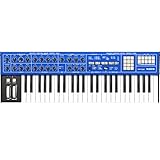
The alloy steel body construction gives the WAVE a tank-like feel at 22.9 pounds. This is a heavy, substantial instrument that clearly means business. The polished finish and blue color scheme give it a distinctive look that stands out in any studio.
The diverse sound profile leverages various wave shapes to create sounds ranging from classic wavetable tones to experimental soundscapes. The WAVE is designed for creative sound design rather than recreating vintage tones, which makes it interesting for producers who want to push boundaries.
What the Large Format Means for Performance
At 35.1 inches wide, the WAVE is the largest synth on this list. This footprint means you get more physical controls and a more spacious layout. Every parameter has its own knob or button, with no cramped sections or shared controls.
The size also makes the WAVE a visual centerpiece. If you perform live or create content where your gear is visible, the WAVE has a stage presence that smaller desktop modules lack. The alloy steel construction means it can handle the rigors of performance and travel.
Value Positioning Against Competitors
The Behringer WAVE sits in the mid-range price tier, competing with the Korg modwave mkII and Modal ARGON8. While those synths have more established track records, the WAVE offers a different sound character and a more substantial physical build. For producers who prioritize build quality and hands-on control, the WAVE is worth considering.
Keep in mind that with only 5 reviews, the long-term reliability and community consensus are still developing. The perfect rating so far is encouraging, but more data is needed for a definitive assessment.
12. Novation MiniNova – Compact Power With Vocoder
Novation MiniNova Analogue Modelling Compact 37 Mini-key…
Analogue modeling synthesis
18-voice polyphony
Built-in vocoder
256 onboard sounds
37 mini keys
Pros
- Analogue modeling engine designed by Chris Huggett
- 18-voice polyphony with 5 effects per voice layering
- Built-in vocoder with VocalTune pitch correction
- 256 onboard sounds with 128 user slots
- Portable compact design powered by USB battery
Cons
- Mini keys not ideal for larger hands
- No aftertouch on keys
- Some menu diving required for advanced features
- Mono-timbral only
The Novation MiniNova has stood the test of time with 277 reviews and a 4.6-star rating. Designed by the legendary Chris Huggett, the analog modeling engine produces warm, characterful sounds that belie the synth’s compact size. While not a pure wavetable synth, its digital waveform oscillators and wavetable-style capabilities earn it a place on this list.
With 18-voice polyphony and up to 5 effects per voice, the MiniNova delivers big sounds from a small package. I was impressed by how warm and full the patches sounded, especially in the low end. The three oscillators per voice include virtual analog waveforms and digital wavetable-style sounds that morph between shapes.
The built-in vocoder with VocalTune pitch correction is a standout feature at this price point. The included gooseneck microphone means you can start vocoding immediately. The VocalTune effect gives you that robotic vocal sound popular in electronic and pop music.
The Animate Mode Performance Feature
The MiniNova includes eight backlit performance buttons called Animate buttons. Each button triggers a different modulation or effect that can transform a patch in real time. During testing, I used these buttons to add instant filter sweeps, octave jumps, and effect changes during live playing.
This feature makes the MiniNova surprisingly powerful as a performance instrument. You can take a simple patch and make it dynamic and exciting with a single button press. For live electronic music, this is a genuinely useful feature.
MIDI Controller Capabilities
Every knob on the MiniNova sends MIDI controller data, which means it doubles as a MIDI controller for your DAW. You can map the knobs to software parameters and use the MiniNova to control plugins, including software wavetable synths like Serum and Vital. This dual functionality adds significant value.
The VST editor plugin gives you deep editing access from your computer. While the MiniNova’s front panel is capable, the software editor makes complex patch programming much easier. Free patch libraries from Novation and the user community expand the sound palette even further.
How to Choose the Right Wavetable Synthesizer?
Choosing the best wavetable synthesizer for your needs comes down to five key factors. I have broken down each one based on my testing experience and the common questions producers ask on forums like Reddit and Gearspace.
Sound Engine Depth
The sound engine determines what your synth can actually produce. Look for multiple oscillator modes, wavetable editing capabilities, and flexible filter options. The ASM Hydrasynth offers the deepest engine with three oscillators and dual mutators. The Korg modwave counters with over 200 wavetables and Kaoss Physics modulation. If sound design flexibility is your priority, prioritize synths with deep modulation matrices and multiple filter types.
Polyphony and Voice Count
Polyphony determines how many notes you can play simultaneously. Budget synths like the Behringer Pro VS Mini offer 4 voices, which is fine for bass lines and leads but limiting for chords. Mid-range options like the ARGON8 and MiniFreak offer 8 to 12 voices. The Korg Wavestate leads with 96 voices, making it ideal for dense, layered pads. Consider your playing style and genre when evaluating polyphony needs.
Modulation Capabilities
Modulation is what makes wavetable synthesis come alive. Look for multiple LFOs, assignable envelopes, and a modulation matrix that lets you route sources to destinations freely. The ASM Hydrasynth, Korg modwave, and Arturia MicroFreak all excel here. The Kaoss Physics on the modwave and the Spice and Dice sequencer on the MicroFreak add creative modulation sources that go beyond traditional LFO and envelope routing.
Build Quality and Form Factor
Consider where and how you will use the synth. Desktop modules like the Hydrasynth Desktop and Korg modwave Module save space but require an external controller. Portable keyboards like the Hydrasynth Explorer and Behringer Pro VS Mini are great for mobile production. Full-size keyboards like the Roland GAIA 2 offer the best playing experience. Build materials matter too. Aluminum and steel construction, found on the Hydrasynth and ARGON8, provides longevity that plastic bodies cannot match.
Connectivity and Integration
Check connectivity options before buying. USB connectivity is standard across all synths on this list. MIDI In and Out lets you integrate with other hardware. CV outputs, found on the Arturia MicroFreak, enable modular synth integration. MIDI 2.0 support on the Korg modwave Module future-proofs your investment. MPE compatibility on the Hydrasynth Explorer enables advanced expression with compatible controllers.
Budget and Value Assessment
Wavetable synthesizers range from under $120 to nearly $900. The Behringer Pro VS Mini at around $119 is the clear budget champion. In the mid-range, the Arturia MicroFreak and ASM Hydrasynth Explorer offer exceptional value. At the premium end, the ASM Hydrasynth Desktop and Korg modwave mkII deliver professional-grade sound design capabilities. Consider not just the price but what you get per dollar in terms of sound engine depth, build quality, and features.
Frequently Asked Questions
What are wavetable synthesizers?
A wavetable synthesizer is a digital instrument that generates sound by cycling through and morphing between stored waveforms called wavetables. Each wavetable contains multiple single-cycle waveforms that the synth can sweep through, creating evolving and dynamic tones that change character over time.
What is a wavetable synth good for?
Wavetable synths are ideal for creating evolving bass sounds, morphing leads, animated pads, and cinematic textures. They are widely used in EDM, dubstep, techno, ambient music, and film scoring because they produce sounds that continuously shift and develop in ways that subtractive and FM synthesis cannot easily achieve.
What type of synth is a wavetable synth?
A wavetable synth is a type of digital synthesizer that uses wavetables, which are collections of single-cycle waveforms, as its primary sound source. It differs from subtractive synths that use static waveforms and from FM synths that use frequency modulation. Wavetable synths morph between different waveforms to create changing harmonic content.
Which wavetable synthesizer is best for beginners?
The Behringer Pro VS Mini and Arturia MicroFreak are the best wavetable synthesizers for beginners. The Pro VS Mini offers an affordable entry point with vector morphing oscillators and an analog filter. The MicroFreak provides 17 oscillator modes and a modulation matrix that teaches synthesis concepts through hands-on experimentation.
What is the best wavetable synthesizer for the money?
The ASM Hydrasynth Explorer offers the best value for the money, combining the full Hydrasynth wavetable engine with POLYTOUCH aftertouch and MPE compatibility in a portable keyboard. For budget buyers, the Behringer Pro VS Mini delivers outstanding wavetable capability at the lowest price point on the market.
What are good examples of wavetable synthesis?
Classic examples of wavetable synthesis include the PPG Wave from the 1980s, the Waldorf Microwave series, and modern instruments like the ASM Hydrasynth and Korg modwave. In software, Xfer Serum and Vital are the most well-known wavetable synthesizers. These instruments create sounds used extensively in modern electronic music production.
Final Thoughts on the Best Wavetable Synthesizers
After testing all 12 instruments, three recommendations stand out. The ASM Hydrasynth Desktop is our Editor’s Choice for its unmatched wavetable engine depth, dual mutators, and premium build quality. The Behringer Pro VS Mini takes the Budget Pick for delivering genuine wavetable synthesis at an unbeatable price. The Arturia MicroFreak earns Top Rated status with 865 reviews and 17 oscillator modes that make it the most versatile synth per dollar on this list.
For beginners, the Behringer Pro VS Mini or Arturia MicroFreak are the best entry points. For intermediate producers who want a complete instrument, the ASM Hydrasynth Explorer offers the best balance of sound engine depth and playability. For advanced sound designers and professionals, the Korg modwave mkII and ASM Hydrasynth Desktop provide the modulation depth and wavetable complexity needed for serious sound design work.
The best wavetable synthesizers in 2026 cover a wide range of prices, features, and form factors. Whether you need a portable battery-powered module or a rack-mountable studio centerpiece, there is a hardware wavetable synth on this list that will fit your creative needs. Take your time evaluating which instrument matches your music, your workflow, and your budget, and you will have a sound design tool that inspires you for years to come.